Retail News CRM

Category: General

Retail News Asia is committed to providing both local and global retailers with the latest General Retail news throughout the Asian market. This on a daily base.

  • Parkson profits slump

    Parkson profits slump

    Parkson Retail Asia has reported a 24.6 per cent slump in net profit – largely attributed to new store establishment costs.

    The Singapore-based department store operator has reported a second quarter trading profit of S$10.23 million.

    The company’s biggest problem markets appear to be Malaysia and Vietnam where same store sales are showing negative growth. And in Vietnam the company accrued costs relating to the closure of a store in the capital city, Hanoi.

    Total sales revenue was flat at S$117.52 million in the three months to December 31, while expenses rose 6.6 per cent to S$109.5 million.

    In the half year to December 31, net profit fell 28.2 per cent to S$17.09 million, on revenue a marginal 0.6 per cent higher at S$227.51 million.

    In a statement, group CEO Toh Peng Koon said the closure of the Landmark-Keangnam store in Hanoi resulted in removing “a major drag on our operating performance” there.

    “While we expect Malaysia’s consumer sentiment to remain muted in the near term, consumer buying prior to the introduction of the Goods and Services Tax on April 1 may provide us with some buffer.

    “We feel confident that the strategies we have initiated to improve our fundamentals will reap the desired results going forward. With our healthy balance sheet and strong cash generation from our operations, we are well-positioned to continue to identify and make prudent investments necessary to growing our business.”

  • Super Bowl 2015: The biggest game in marketing

    Super Bowl 2015: The biggest game in marketing

    he streets of the Pacific Northwest’s biggest city were eerily deserted on Super Bowl Sunday. It appeared that the populace was more asleep than ‘sleepless in Seattle’.

    First impressions were deceiving though, as off the streets things were positively buzzing. Every eyeball was glued to the telecast of the most watched television program in US history, as the Seattle Seahawks took on the New England Patriots in Arizona in Super Bowl 2015.

    In a bar in the Pike Place Markets – the heart of Seattle’s downtown – I closely followed the football along with the faithful. (They call Seattle followers the ’12’s’ – more on that later.) Besides being a fan though, I was really there for the ads, placed at a cost of US$4.5 million for 30 seconds, or US$150,000 a second. In particular, I wanted to see how retail approached the Super Bowl.

    In the end, it was the big names that dominated the telecast – manufacturer brands like Budweiser and Doritos. The real retail action was in the supermarkets leading up to the event, where huge displays and promotional activations encouraged shoppers to stock up on beer and munchies.

    Still, on the screen, besides the inevitable Budweiser Clydesdale and puppy spot (far and away the people’s choice for best ad), there were two spots for retailers that stood out to me.

    The first was for McDonald’s, a company that has been battered recently by a change in food trends and a slew of nimbler brands offering higher quality, healthier choices – such as Chipotle and Five Guys.

    The spot – ‘Pay with Lovin’’ is all about McDonald’s setting out to recapture the hearts of the average American. It’s a novel promotional push. In the lead up to Valentine’s Day, Mickey D’s randomly select customers to forego paying with cash or credit, and instead pay with love. People are asked to hug their kids, or call their Mothers to say they love them. It’s heart warming, and it’s different – I liked it.

    The second spot was for Weight Watchers, and brilliantly takes a stance against the American fast food culture. With a voice over from Aaron Paul of Breaking Bad (sounding somewhat like George Clooney), the spot highlights food excess, and states that: “It’s time to take back control”. Brilliant placement, superb positioning and I bet it works its big, fat ass off.

    The other great piece of marketing is the ’12’s’ concept I wrote about earlier. There are 11 team members on the field at any one time in American football. The Seattle Seahawks have gifted the number 12 to their fans. They say that crowd support – particularly at their home ground in the Emerald City – equates to a ’12th Man’ on the field of play. The locals have enthusiastically embraced the concept. It makes them feel part of the team, and is a very smart loyalty idea.

  • Record slump in Korea retail sales

    Record slump in Korea retail sales

    Korea’s department stores suffered their worst sales drop in history in January.

    According to preliminary government data, sales fell 9.7 per cent year-on-year, the worst figure since record taking commenced in 2005.

    January marked the fifth consecutive monthly year-on-year fall.

    Discount stores fared the worst, posting a massive 20.7 per cent, according to the finance ministry. Remarkably, that’s not a record in itself – in February 2014, they fell 23.1 per cent.

    Korea retail sales data is collated by the government based on reported sales from the three department store conglomerates – Hyundai Department Store, Lotte Shopping and Shinsegae. They run discount formats and full scale department store chains.

    The ministry attributed January’s weak sales in part to the change in the timing of the Lunar New Year holidays, which fell in late January last year but in the middle of February this year.

  • Alibaba’s Ma vows deeper fight against fakes

    Alibaba’s Ma vows deeper fight against fakes

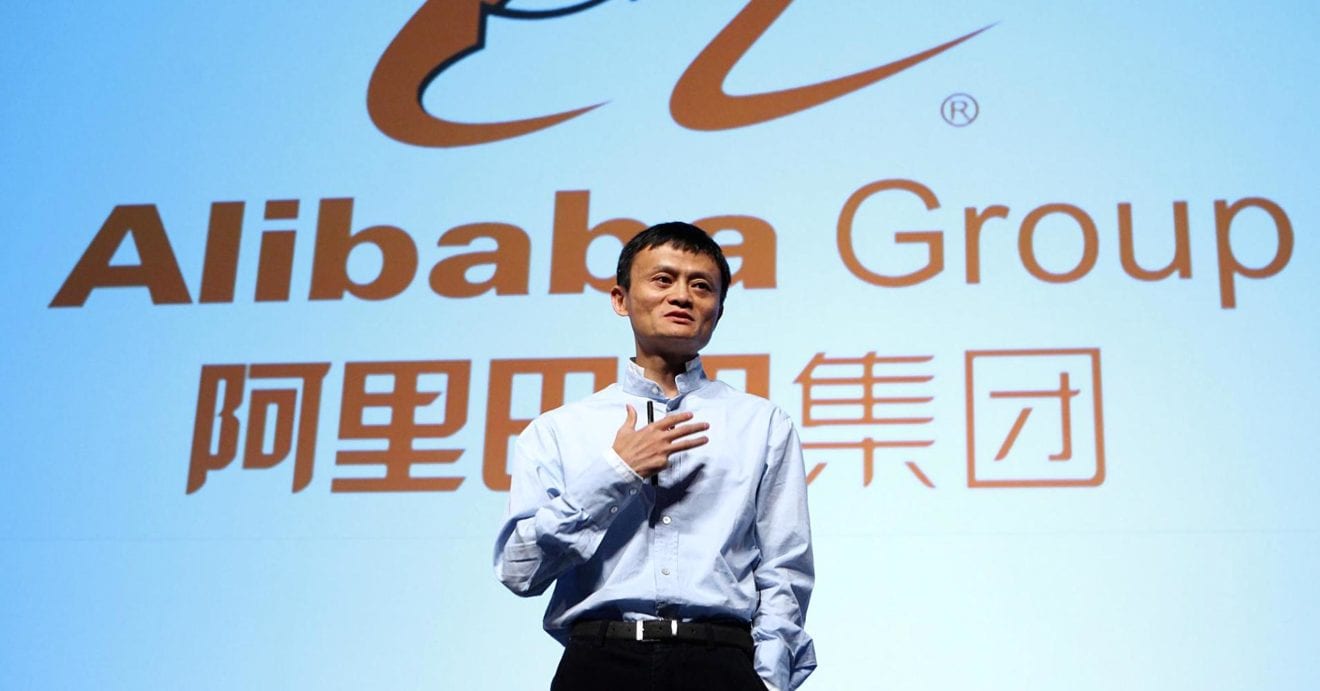
    There’s still “work to be done” to eradicate fake goods on its e-commerce platform, Alibaba Group Chairman Jack Ma has told the head of the Chinese quality watchdog, as he vowed to devote further efforts to the issue.

  • Alibaba Meizu deal a smart connection

    Alibaba Meizu deal a smart connection

    Alibaba’s surprise investment in smartphone maker Meizu will secure a technology development stream the online giant could never have hoped to create on its own.

    Alibaba this week announced it would pay US$590 million for a minority stake in Meizu Technology Corporation, one of China’s leading smartphone manufacturers. The Alibaba Meizu deal will see the two companies collaborate at both strategic and business levels “to achieve a deeper integration of Meizu’s hardware and Alibaba Group’s mobile operating system”, Alibaba said in a statement.

    It’s a win-win. Meizu gains a prime space for selling its mobile phones and other devices on the biggest suite of online marketplaces in China, further adding to Alibaba’s sales.

    Alibaba will provide Meizu with resources and support in the fields of eCommerce, mobile Internet, mobile operating system and data analysis with the aim of developing Meizu’s smartphone ecosystem.

    “The investment in Meizu represents a significant expansion of the Alibaba Group ecosystem and an important step in our overall mobile strategy as we strive to bring users a wider array of mobile offerings and experiences,” said Jian Wang, chief technology officer of Alibaba Group.

    “This strategic collaboration with Alibaba Group will enable Meizu to further develop our smartphone business and our smart devices ecosystem,” said Meizu’s president, Yongxiang Bai.

    While globally not as well known yet as rivals Xiaomi or Huawei, Meizu is known for its technology and sophisticated product design.

    The Chinese smartphone market is experiencing rapid growth, with homegrown brands gaining an increasing market share. At the end of 2014, China had more than one billion mobile phone users and about 40 per cent of them use smartphones, according to IDC.

    Alibaba online businesses include Taobao Marketplace , Tmall.com , group buying platform Juhuasuan, online travel site Alitrip, global Chinese goods store AliExpress and wholesale marketplace 1688.com.

  • Indonesia retail sales continue to slow

    Indonesia retail sales continue to slow

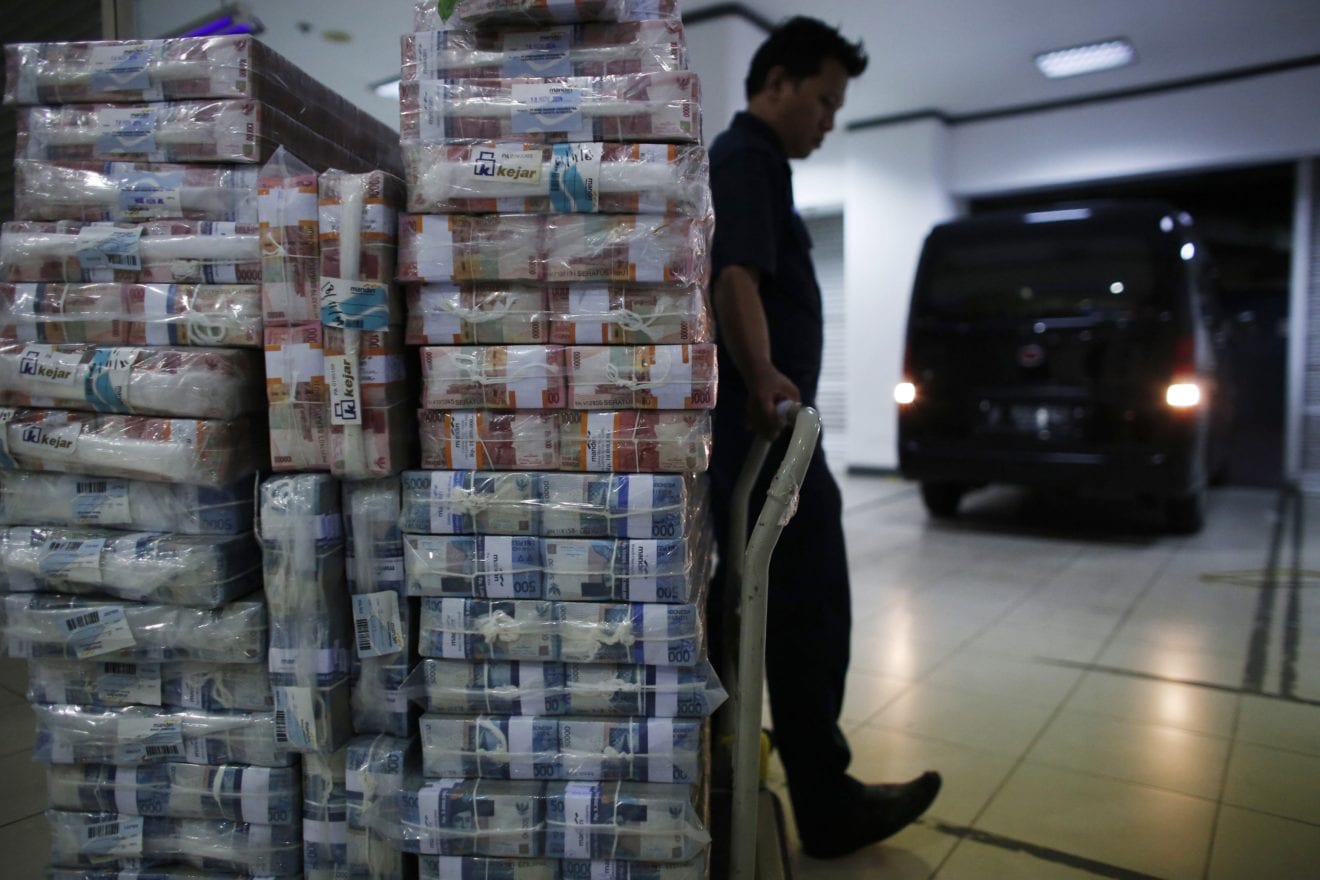
    Indonesia retail sales slowed to an ambulatory 4.3 per cent in December.

    That’s well down on the 11.4 per cent of November, a figure revised down from an early projection of 14.1 per cent by the Bank of Indonesia.

    The bank said the year-on-year growth rate slowed due to poor sales of household utensils, cultural and recreational goods and of spare parts and accessories.

    The Bank of Indonesia bases its figures on a survey of 650 retailers in 10 major cities. IT predicts a further easing in the next quarter before demand picks up in June, during Ramadan fasting.

    The bank also said it expects inflation to ease, largely due to falling fuel prices.

    December’s figure was well down on October’s 17.6 per cent and September’s 8.9 per cent.

  • Tesco China stores rebranded

    Tesco China stores rebranded

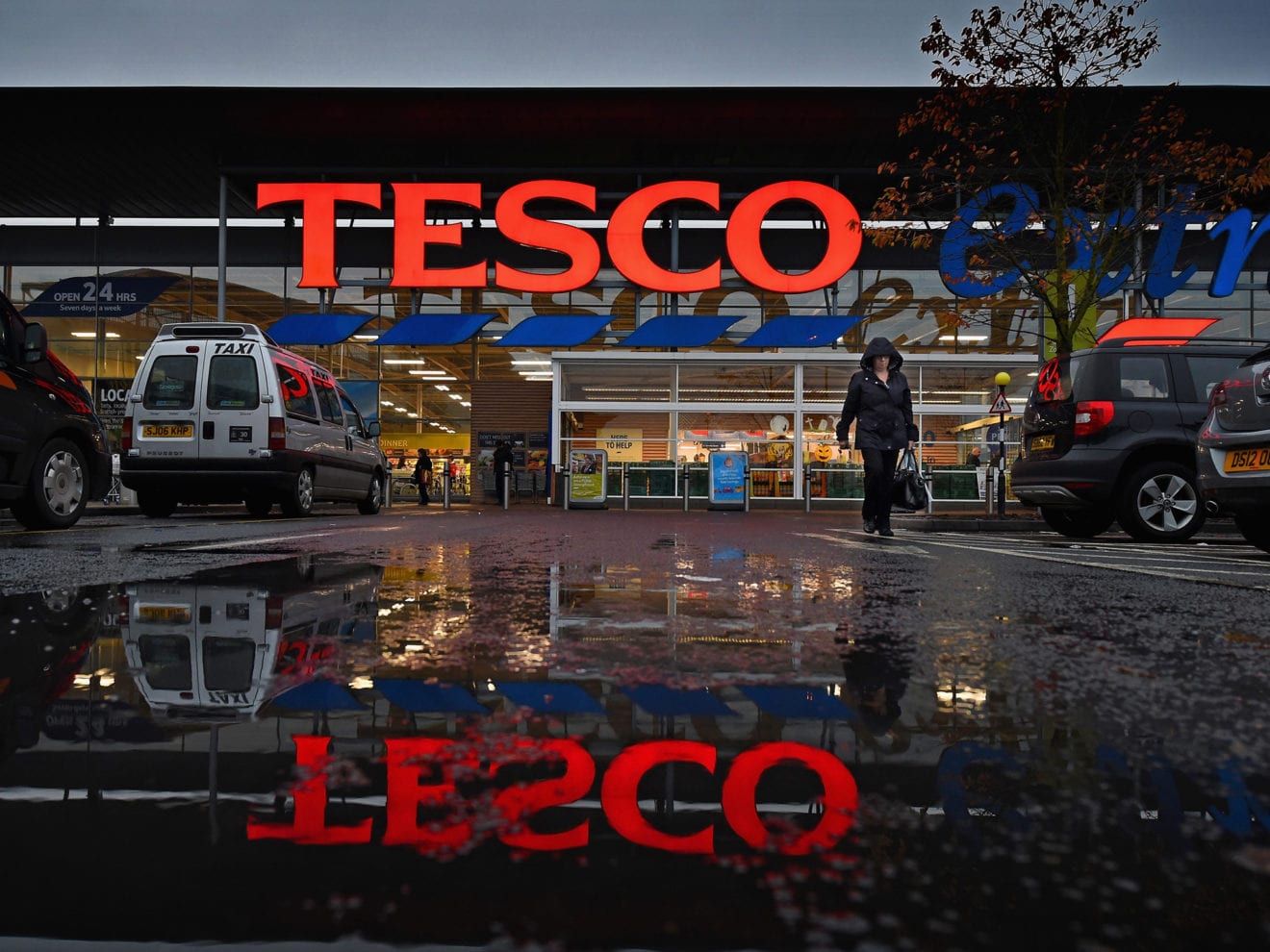
    Tesco may well be a recognised brand name globally, but it doesn’t wash with Chinese consumers.

    Last year, Tesco sold a majority stake in its China retail business to local retailer China Resources Enterprises. This month, China Resources has revealed it is rebranding all 135 Tesco China stores under its Vanguard name.

    “The decision to change the brand was made based on the overall perception in the market,” CR Vanguard CEO Hong Jie said in an interview with China Business News.

    “Tesco is a globally recognised name, but Vanguard is better known and well-received in China,” he said.

    China Resources is aiming to turn around the troubled chains profitability within three years after merging the backroom operations into Vanguard’s.

    CR Vanguard owns more than 4100 stores in China and entered a joint venture with Tesco in May last year, leaving the British retailer with just 20 per cent of the business.

    While the Tesco brand name might be about to disappear, both parties see positive benefits from the continuing partnership. CR Vanguard acquired a usefully-sized bolt-on store network to build its critical mass in the market, which should surpass the combined sales of Walmart and Carrefour in China. It gained advanced FMCG business practices from Tesco.

    China remains a strategically important growth market for Tesco, with the joint venture combining Tesco’s ‘best in class’ retail practices, international sourcing and multi-channel capabilities with CRE’s strong local knowledge and brand.

    The two companies are in the process of merging their property businesses and plan to launch an eCommerce offer at the end of March.
    Vanguard will also sell 761 Tesco own-brand products with some Vanguard-branded lines joining Tesco’s shelves, as the two brand’s supply chain networks are integrated.

    Tesco also separately has its international sourcing headquarters based in Hong Kong, from where it sources more than 50 per cent of all clothing and 40 per cent of other non-food items. It buys about £2 billion worth of goods and services from China for the Tesco Group annually.

  • Atletico Madrid plans 200 China stores

    Atletico Madrid plans 200 China stores

    La Liga football league champions Atletico Madrid are set to cash in on growing Chinese fascination of European football by opening a retail store network in China.

    Atletico Madrid will open 200 retail outlets in China, according to Chinese news agency Xinhua.

    Such a network would be considerably larger than other football teams’ retail presence in China. Manchester United, Chelsea, Real, FC Barcelona and Arsenal all have a presence, on differing scales.

    The stores will be opened in Wanda Malls, owned by Chinese businessman Wang Jianlin, who took a 20 per cent stake in the Spanish club earlier this year.

    The club sees the stores as an important tool to broaden its brand awareness in Asia.

    Atletico already has a deal with Chinese football club Shanghai Shenhua and trains a number of Chinese youngsters as part of ‘Project Wanda’ to help develop young footballers.

    Atletico is expected to tour China between seasons.

  • Woolworths bolsters David Jones team

    Woolworths bolsters David Jones team

    South African retailer Woolworths has bolstered the board of its Australian subsidiary, Vela Investments, the vehicle for its AUD2.1 billion (USD1.63b) takeover of David Jones last year.

    Woolworths has appointed four new directors to the Vela Investments board – corporate adviser Patrick Allaway, David Jones acting chief financial officer John McRae, Woolworths’ finance director Reeza Isaacs, and Woolworths’ chief operating officer Daniel Ngumeni.

    They join Woolworths chief executive Ian Moir, David Jones chief executive Iain Nairn and David Jones chief operating officer David Thomas on the Vela board.

  • China tops tax free shopping rankings

    China tops tax free shopping rankings

    The Chinese remain the world’s biggest spenders on tax free shopping according to new rankings released by Global Blue.

    Travellers originating from China spent 18 per cent more in 2014 than the previous year, extended their lead over Russians whose spending fell 17 per cent in wake of the rouble’s dramatic devaluation.

    Global Blue, a specialist in international tax free shopping, operating duty refund concessions, runs a research unit monitoring duty free spending trends around the world. The company says China and Russia are by far the most lucrative countries of origin for globe shoppers, with Chinese shoppers now accounting for one third of all tax free shopping spend globally. Chinese residents account for 30 per cent of spending and Russians 14 per cent. It’s a long way back to the US, which accounts for just four per cent (perhaps reflecting while the US economy is massive, its citizens rarely travel internationally).

    Indonesia is a surprising fourth accounting for three per cent, then Japan with two per cent.  Five of the top 10 nationalities increased their Tax Free Shopping spend by more than 15 per cent in 2014 – Taiwan, Hong Kong, China, Kuwait and Saudi Arabia.

    Almost half of purchases were related to fashion and clothing – by far the largest category globally – followed by watches and jewellery at 17 per cent.

    “Clearly we are entering a new normal in terms of Tax Free Shopping growth, however it is important to remember that for the seventh consecutive year Chinese globe shoppers are still the biggest spending nationality, spending on average 736 euros per transaction,” said David Baxby, Global Blue’s CEO.

    Top 10 Shopper Nations in 2014, with growth vs. 2013:

    1 China  +18%

    2 Russia -17%

    3 USA +8%

    4 Indonesia -10%

    5 Japan -12%

    6 Taiwan +29%

    7 Hong Hong +25%

    8 Thailand -10%

    9 Saudi Arabia +15%

    10 Kuwait +18%

    Exchange rates impact

    Fuelling the spending growth of residents of Taiwan, Hong Kong and China in 2014 was a good exchange rate against the euro, which continues to improve with little sign of a forecasted EU economic recovery.

    “Essentially residents of these countries are getting better and better value compared to shopping at home with every month that passes. In 2014, the number of Chinese transactions increased by a significant 38 per cent,” said the report.

    While spending by Russian residents may be down, there are always new nations emerging. Storming into sixth place, Taiwan recorded an enormous 29 per cent growth compared to 2013. The emergence of Taiwanese globe shoppers was not just felt in Asia – they also made their presence felt in Europe’s leading destinations.

    During October 2014 in Paris, Taiwanese were the fourth most valuable tourist nation growing their spending by 15 per cent year-on-year, while in November they grew their spending by 65 per cent.

    At this rate, Global Blue predicts their spending will overtake that of the Japanese in 2015.

    In Seoul, fast becoming the shopping honey pot of Southeast Asia, Taiwanese grew their spending by 25 per cent in October and were outspent only by the Chinese. In November they grew their spending in Seoul by 30 per cent and in December by 44 per cent.

    Meanwhile, Paris topped the list of cities for spending by all nationalities, ahead of London, with Singapore the highest placed Asian city in third. Seoul was sixth, the only other Asian destination in the top 10.

  • Asians embrace Valentines Day

    Asians embrace Valentines Day

    Indonesians, Taiwanese and Singaporeans are far more likely to splurge on Valentine’s Day than shoppers in Germany or the UK, a survey reveals.

    Japan’s home-grown global online retailer Rakuten has surveyed 7000 people across the globe to gauge attitudes to Valentine’s Day and found that Asians embrace the concept much more than Europeans.

    The Rakuten Shopping Secrets survey found Indonesians (57 per cent), Taiwanese (53 per cent) and Singaporeans (45 per cent) placed top of the multi-national poll for being the most expectant to celebrate Valentine’s Day this year, heading off other countries in the poll – the US (where the tradition has been the most commercialised), the UK, Spain and Germany.  According to the survey, love is not in the air for Germans (18 per cent) or the British (36 per cent), who were least likely to celebrate the occasion.

    The survey also revealed that the majority of Singaporeans (59 per cent) do not expect to receive gifts on Valentine’s Day. But for those that are spirited enough to celebrate the occasion – receiving a trip or vacation (41 per cent), fashion accessories (27 per cent), chocolates wine and other food or drink (26 per cent) and jewellery (22 per cent) ranked highest among what they hoped to receive.

    The survey also asked respondents about choosing shopping as “a break-up therapy”. Singaporeans, not surprisingly given their penchant for shopping, were the most likely (39 per cent), followed by neighbours Indonesia (38 per cent). Germans ranked lowest at just 19 per cent.

    For those who hit the stores upon singlehood, fashion and accessories were the items most frequently bought post-breakup.

    More than half of Singaporeans who have gone through a bad breakup or relationship prefer to drown their sorrows by shopping online rather than offline in the one month after a breakup. Not feeling like going out and interacting with people (58 per cent), wanting more privacy (55 per cent) and not wanting to let people see that they look depressed (26 per cent) were the top three reasons cited.

    Launched in Singapore in January 2014, the Rakuten Singapore Marketplace currently carries over 200,000 goods from 300 merchants with a diverse mix of product categories, including fashion apparel and accessories, health and beauty products, consumer electronics, toys and games, food and beverages and home furniture.

    Rakuten is headquartered in Tokyo, with over 10,000 employees and partner staff worldwide.

  • China online ad revenue soars

    China online ad revenue soars

    China’s online advertising revenues rose 40 per cent last year – to a record 154 billion Yuan.

    (US$24.6 billion), according to iResearch Consulting Group.

    The strong rise occurred despite slowing economic growth and subdued consumer spending. But it did come at a time online shopping rose by a similar rate.

    iResearch said in a report that the rise was slightly lower in percentage terms than the previous year, predicting the sector might now be entering a new “maturity age”.

    “Some traditional internet media faced slow growth… while some showed strong momentum driven by new advertising technology and emerging forms of advertising. Moreover, the brand advertisers’ spending flocked {from traditional media} to digital media.”

    According to iResearch, keyword search advertising made up 28.5 per cent of the total spend, the share up two per cent on 2013.

    China online ad revenues

    Next was eCommerce advertising with market share of 26 per cent, a slight fall compared with 2013. Brand graphic advertising occupied 21.2 per cent.

    Advertising on portals and social media increased, mainly due toTencent’s Guangdiantong advertising service and Sina’s Weibo.

    “It reflected that internet enterprises more efficiently match advertising demand with advertising sources via data analysis and technology in order to raise their advertising revenues.”

    In-video advertising revenues also maintained a high growth rate in China in 2014, due to widespread interest the World Cup in Brazil and popular variety shows such as I Am Singer II, Where are we going? Dad II, and Voice China III.

    “Moreover, well-known brand advertisers attached more importance to online video and their increasing online video advertising budget contributed to growth of in-video advertising revenues,” said iResearch.

    The biggest player in China’s online ad market remains Baidu’s, China’s equivalent of Google, which is blocked in the mainland. Baidu’s ad revenues surpassed 49 billion Yuan in 2014, increasing 53.5 per cent from 2013. Taobao gained 37.5 billion Yuan in revenues, ranking second. Together, Baidu and Taobao accounted for 56.2 per cent of the total online advertising market.

    iQiyi & PPS, Qihoo 360 and Tencent all posted good revenue growth. iQiyi & PPS increased their investment in exclusive broadcast of quality content and kept adding more user-generated content. Moreover, it managed to monetise its mobile business and increase its advertising revenue.

    Qihoo 360 raised brand awareness of its search business in 2014, increasing traffic, which boosted its market share. Search became the core contributor of Qihoo 360’s advertising revenue.

    iResearch predicts a broadening of WeChat’s advertising sources and development of Guangdiantong mobile advertising networks will push up Tencent’s ad revenue.

  • Paypal’s retail chief quits ahead of eBay split

    Paypal’s retail chief quits ahead of eBay split

    Paypal executive Don Kingsborough, who helped orchestrate the payments company’s move into physical retail stores, stepped down in January, the company said on Wednesday.

    His departure, which tech blog Re/code first reported, comes as the company competes with the likes of fast-growing startup Square to get its payments system adopted in more retail chains across the United States.

    PayPal, which is slated to split from eBay Inc later this year, will keep testing and investing in various in-store payments systems, eBay spokeswoman Amanda Miller said in a statement.

  • Thai consumer confidence fell in Jan

    Thai consumer confidence fell in Jan

    Thailand’s consumer confidence index fell to 80.4 points in January from 81.1 last December due to concerns about slow economic recovery, baht appreciation, weak exports and low prices for farm products.

    The University of the Thai Chamber of Commerce announced on Thursday that consumer confidence declined as the national economy was expanding more slowly than its real potential, Thai exports did not recover well, the baht appreciated slightly and prices of farm products fell.

  • Aeon nears Indonesian debut

    Aeon nears Indonesian debut

    Japan’s Aeon is completing construction of its first shopping mall in Indonesia.

    Its Indonesia debut follows success in Malaysia and Thailand where it is building strong networks of hypermarkets, supermarkets and mini-markets, and a more recent foray into Vietnam where it has two shopping centres already trading in the south and a third under construction in Hanoi.

    Aeon Mall Sinarmas Land Indonesia, its local arm, is building Aeon Mall Bumi Serpong Damai (BSD) City which will have more than 100,000 sqm of leased area and be one of the largest shopping malls in the city when complete.

    The suburban mall will have have an Aeon general merchandising store as its anchor, and lease space to a broad range of international and local brands, in similar format to its Vietnamese centres.

    It will also feature a food court, cinemas, and an amusement arcade.

    The mall will comprise four stories along with multi-level parking for more than 5000 vehicles.

    This week Aeon contracted NEC Indonesia to provide cashless payment systems for the food court in what will be the first electronic card payment project for NEC in Indonesia.

    The cashless payment system consisting of NEC retail terminals and software will enable cashless transactions for both food court customers and stallholders. Payments for food and beverage will be made via an electronic card, which can be topped up at a central cashier or kiosk.