Category: General

Retail News Asia is committed to providing both local and global retailers with the latest General Retail news throughout the Asian market. This on a daily base.

  • Dairy Farm cleared to buy Yonghui stake

    Dairy Farm cleared to buy Yonghui stake

    Dairy Farm International has been given regulatory clearance to acquire its target 19.99 per cent stake in Shanghai-listed Yonghui Superstores.

    The deal, announced last August, was conditional on regulatory approvals. Dairy Farm has now confirmed it has received the final and unconditional approval of the China Securities Regulatory Commission, which was the final clearance required.

    The deal, worth RMB5.69 billion (US$908 million), will see the Hong Kong based retail giant take a cornerstone stake in one of China’s fifth largest hypermarket operator. Yonghui had 288 hypermarkets and supermarkets across 17 provinces in China as at the end of 2013.

    Dairy Farm has more than 6100 supermarkets, health and beauty stores, home furnishings shops and restaurants across Asia on its own or in joint ventures. It will collaborate with Yonghui in procurement, fresh food processing and store development.

    “Dairy Farm has for some time been looking for opportunities to participate in the large and high growth Chinese market,” Graham Allan, CEO of Dairy Farm, said in a statement at the time the deal was announced.

    “This strategic partnership with Yonghui provides an attractive way to do that.”

    With clearances now in hand, completion of the purchase is now expected to take place in April.

  • Asia leads Samsonite sales boom

    Asia leads Samsonite sales boom

    Asia led a global sales boom for luggage specialist Samsonite last year.

    Samsonite Group’s net sales in Asia soared 16.1 per cent to US$892.3 million in the year to December 31. Excluding foreign currency effects, net sales increased by 18 per cent.

    Samsonite Group worldwide posted double-digit growth in both net sales and adjusted EBITDA for the fifth year running in 2014. Net sales rose 17.3 per cent to a record US$2.3517 billion with strong growth across all regions.

    The group attributed its success in Asia to a continued focus on country-specific product and marketing strategies to drive increased awareness of and demand for its products. It expanded its range and increased the number of point of sale region-wide.

    Sales of the American Tourister brand accounted for 43.2 per cent of the increase in net sales in Asia. The Samsonite Red sub-brand in the group’s casual category, which was first launched in South Korea in 2010 and is aimed at young fashion-conscious consumers, continued to be popular, with net sales increasing by 91.9 per cent on a constant currency basis to US$57.9 million in 2014.

    On the back of the success of American Tourister, Samsonite and Samsonite Red, China continued to lead in terms of sales and performance, contributing 25.5 per cent of the region’s net sales and recording 18.4 per cent year-on-year net sales growth, or 18.7 per cent on a constant currency basis, despite a slowing economy which affected consumer spending.

    Japan posted strong constant currency net sales gains of 32.3 per cent, driven by the Samsonite brand and the Gregory acquisition.

    South Korea, with constant currency net sales up 12.8 per cent year-on-year, continued to experience robust sales growth driven by American Tourister and Samsonite Red, while India and Hong Kong posted healthy constant currency net sales gains of 19.9 per cent and 12.2 per cent, respectively.

    Direct retail

    Over 300 points of sale were added in Asia during 2014, including 41 net new company operated retail locations, taking the total to more than 7200 points of sale.

    Samsonite’s direct retail sales accounted for 20.2 per cent of its global sales, with the 79.4 per cent balance wholesale to retailers.

    Excluding foreign currency effects, net sales in the wholesale channel increased year-on-year by 17.2 per cent, while net sales in the retail channel increased by 18.3 per cent. On a same store, constant currency basis, net sales in the retail channel increased by 7.9 per cent.

    Direct to consumer eCommerce sales accounted for 6.6 per cent of the group’s net sales in 2104, compared to 5.6 per cent the previous year.

    The group expanded its points of sale by approximately 3600 during the year to a total of over 49,000 points of sale in over 100 countries.

    In February this year, the group acquired Rolling Luggage, further expanding its retail footprint and adding some of the world’s leading airports to its network.

    CEO Ramesh Tainwala said 2014 saw Samsonite pushing for a more balanced channel mix.

    “We are integrating both online and offline distribution to create an omni-channel presence that will strengthen our engagement with consumers, increase visibility for our products and drive sales. Given the explosive growth in online retail, we believe eCommerce will be a new driver of profitable growth for our business and will be the way in which many of our newer and younger customers experience our brands.

    “As for bricks-and-mortar, we are aggressively expanding our own retail footprint around the world, including in airports under the Rolling Luggage name as well as through opening multi-brand bag and luggage specialty stores under the JS Trunk & Co name.

    “We believe an omni-channel model has the potential to grow the proportion of retail sales from around 20 per cent of our net sales in 2014 to perhaps as much as 50 per cent over the medium term.”

  • Inditex sales, profit rise

    Inditex sales, profit rise

    Same store sales and group profit both increased by five per cent at Spanish apparel giant Inditex in 2014.

    In financial statements just released, Inditex said its key same store sales growth indicator stands at 23 per cent over the past five years. Net profit totalled €2.5 billion. Group sales revenue rose by eight per cent in the year to January 31, to €18.12 billion.

    Inditex owns Zara, Zara Home, Pull&Bear, Bershka, Oysho, Stradivarius, Massimo Dutti and Uterque.

    The group has announced a profit sharing plan under which employees will participate in earnings growth in the next two years, benefitting workers in stores, manufacturing, logistics, concepts and subsidiaries all over the world, so long as they have been working for Inditex for at least two years. That adds up to about 70,000 beneficiaries in 54 markets.

    In 2014 the group generated 8741 new jobs worldwide, 1800 of them in Spain. Inditex’s headcount totalled 137,054 at January 31.

    In 2014 Inditex opened 343 stores in 54 markets, taking its network total to 6683 in 88 markets. It debuted in just one new market last year – Albania.

    In total it opened new establishments in 54 markets worldwide. Some of the most noteworthy openings included flagship Zara stores in Zurich (Bahnhofstrasse), Miami (Lincoln Rd), Madrid (Serrano), Krakow (Rynek Glowny), Hong Kong (Queens Rd) and Shanghai (East Nanjing Rd) to take its total number of stores in China to over 500 across 60 cities.

    The group’s other chains also opened high-profile stores such as the Pull&Bear stores in Milan (Vittorio Emanuelle II) and Amsterdam (Kalverstraat); the Massimo Dutti stores in Vienna (Kholmarkt) and Palma de Mallorca (Born); the Bershka store in Turin (Via Roma); the Uterqüe store in Madrid’s airport; the Stradivarius store in Osaka (Shinsaibashi); the new image Uterqüe store in Barcelona’s airport; the Oysho store in Barcelona (Pelai); and the Zara Home flagship in London (Kensington High St). In 2015, Zara Home has opened its first stores in Australia, making it the second chain in the group to boast a presence in the market, after Zara.

    New stores planned for 2015 include prominent openings on Oxford St 61 (London), in Plaza Cataluña (Barcelona) and a number of openings in various US cities, including three in New York: one on Fifth Avenue and 42nd street, inaugurated last week, another in the new World Trade Centre, in the heart of the New York’s financial district, and a third in SoHo, in a building recently acquired by the group.

  • Nike reaps rewards as shoppers trade up

    Nike reaps rewards as shoppers trade up

    Nike has reported a stellar quarter as shoppers indulge in its higher margin products.

    The sportswear giant’s net income rose 16 per cent to US$791 million in the three months to February 28. Its gross margin stretched 1.4 percentage points to 45.9 per cent and total sales rose seven per cent to $7.46 billion.

    The figures beat all market predictions and sent the company’s stock price 4.5 per cent higher in after hours trading on Friday.

    However, the company attempted to temper excitement about the figures, warning that the strengthening US dollar will impact in the current trading quarter.

    Brian Yarbrough, an analyst with Edward Jones, described the result as “really impressive” for a company of that size.

    “This is another just rock solid quarter.”

  • Rakuten buys eBook business

    Rakuten buys eBook business

    Japanese eCommerce giant Rakuten is to pay US$410 million in cash to buy OverDrive, a leading eBook and audiobook content marketplace and sharing economy pioneer.

    Cleveland, US-based OverDrive was founded in 1986 and supplies the world’s largest catalog of eBooks, audiobooks, music and streaming video to 30,000 libraries, schools and retailers around the globe.

    “OverDrive’s deep content library and relationships with publishers, libraries, schools, and retailers will allow Rakuten to extend our mission of empowerment to new market segments and accelerate the growth of our digital contents businesses,” said Takahito Aiki, head of Rakuten’s global eBook business.

    “OverDrive is a widely-respected pioneer in digital content and the sharing economy. Long before even Kobo emerged onto the global stage, OverDrive had already seen the future and was working with publishers to digitise their content to share with the world, building one of the most comprehensive online digital marketplaces in the process,” he said.

    “OverDrive’s deep content library and relationships with publishers, libraries, schools, and retailers will allow Rakuten to extend our mission of empowerment to new market segments and accelerate the growth of our digital contents businesses.”

    With the top rated eBook & audiobook app for libraries and schools and OverDrive Read, the ePub and HTML5 browser-based reading experience, OverDrive supports all major computers and devices, including iOS, Android and Kindle (in the US only). OverDrive delivers all digital media on a single platform, and offers APIs to streamline a seamless user experience. Recent innovations include in-library touchscreen stations for browsing and instant sampling, multi-lingual user interface, and eReading Rooms for kids and teens..

    OverDrive Founder and CEO, Steve Potash, said Rakuten’s vision of empowerment is perfectly aligned with OverDrive.

    “Since 1986, our vision has been to advance digital publishing and content to connect readers with books and information. We’re passionate about working with publishers, libraries, schools and retailers… and we are very excited to join an innovative company that shares and supports our vision.”

    As Rakuten expands its global Internet services ecosystem, digital content represents one of Rakuten’s three key strategic pillars, alongside eCommerce and finance. Since first acquiring eReading company Kobo in 2012, Rakuten has continued to grow its digital contents businesses, adding video streaming service Wuaki.tv in 2012 and global TV and video site Viki in 2013. The acquisition of OverDrive adds a digital distribution platform, more than 2.5 million titles, and relationships with 5000 publishers and 30,000 libraries that will strengthen Rakuten’s eBook and digital contents businesses globally.

    OverDrive returned a pre-tax profit of US$25 million in 2014. With the addition of OverDrive, Rakuten expects its global eBook business will come close to breaking even in 2015.

    The deal will close in April.

  • Costs rise for Circle K Hong Kong

    Costs rise for Circle K Hong Kong

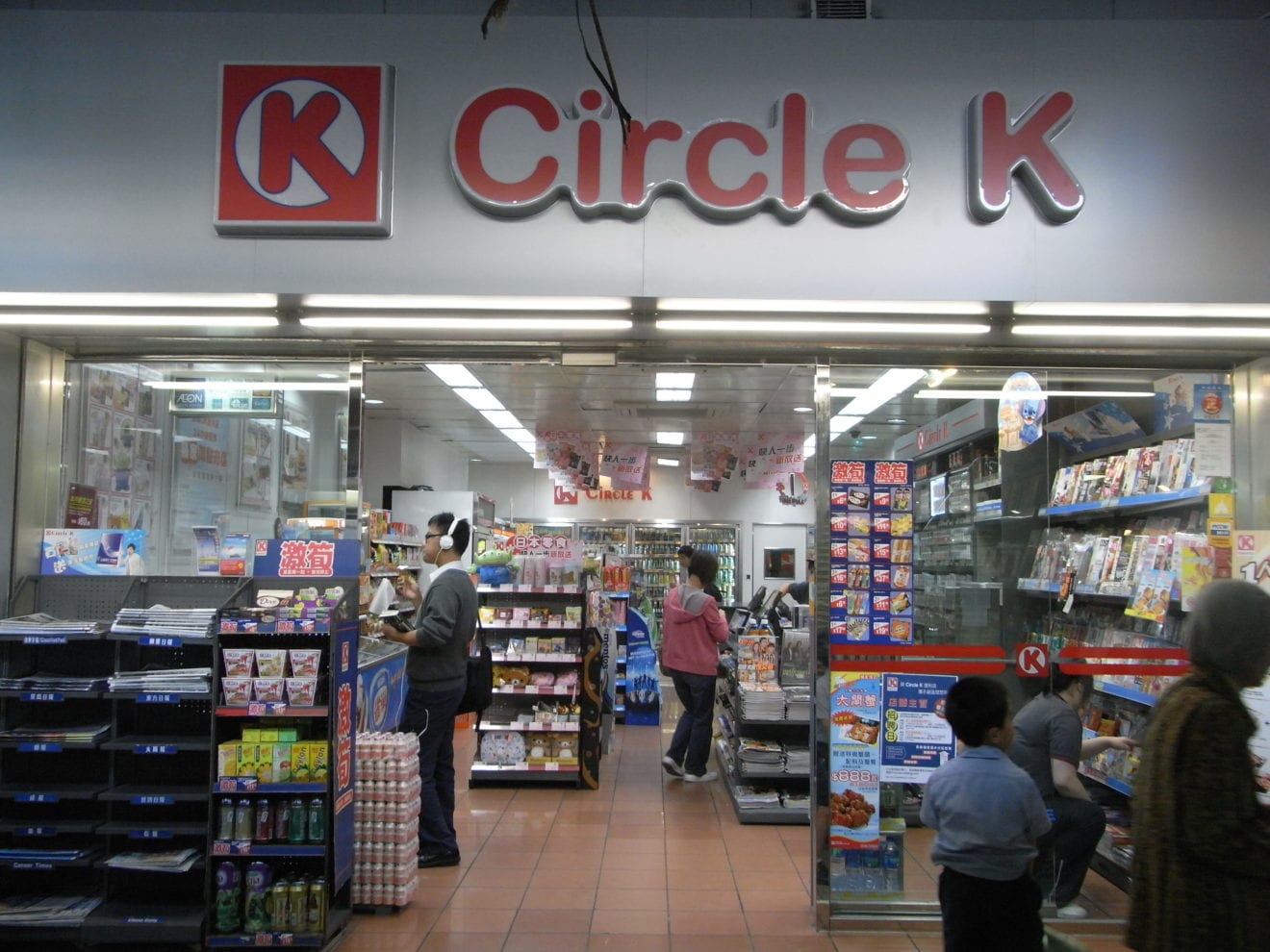
    Convenience Retail Asia says sales in its convenience stores and bakeries rose marginally last year, but rising costs dented profits.

    CRA, part of the Fung Retailing group, operates 604 retail stores in southern China. It has 329 Circle K stores in Hong Kong and 127 outside the SAR and 148 Saint Honore bakery stores in Hong Kong, Macau, Guangzhou and Shenzhen.

    The company has reported revenue of HK$4.736 billion for the year to December 31, a 4.8 per cent increase over 2013. The group says the higher sales were achieved despite unfavourable retail conditions, including flat consumer sentiment, declining spending on festive products and higher operating costs.

    But core operating profit fell nine per cent to HK$153 million compared to last year.

    “This was largely because of rising cost pressures, which outweighed growth in comparable store sales across all markets. The group made investments in its eCommerce business FingerShopping.com as well as a pilot programme with Sinopec Marketing to manage 10 petrol stations and Easy Joy convenience stores in Guangzhou.

    CRA’s net profit declined by 19.5 per cent to HK$121 million due to the same issues impacting core operating profit, as well as reduced interest income from lower bank deposits after a special dividend payout in 2013 and an exchange loss from the depreciation of the Chinese renminbi currency during the year.

    The Circle K and Saint Honore businesses delivered “satisfactory performances” in 2014 on the back of solid comparable store sales. Turnover for the convenience store business was HK$3.752 billion, up 4.9 per cent year-on-year. Comparable store sales in Hong Kong and Southern China increased by 5.4 per cent and 5.8 per cent respectively against 2013. Turnover for the Saint Honore Cake Shop business increased by 3.2 per cent to HK$1.049 billion. This was primarily due to low-single-digit comparable store sales growth in Hong Kong in 2014.

    Gross margin and other income as a percentage of turnover was stable. Operating expenses as a percentage of turnover increased from 33.2 per cent to 33.8 per cent because of higher rents and operating costs, as well as start-up expenses for FingerShopping.com and the pilot programme with Sinopec Marketing.

    CEO Richard Yeung said Circle K and Saint Honore are in “advantageous positions” to capitalise on any rebound in the domestic economy”.

    “While our outlook for 2015 is conservative, we are confident in our ability to drive results through aggressive customer acquisition and organic growth. We have many new initiatives to strengthen our brands and our businesses, especially the investment in FingerShopping.com and collaboration with Sinopec Marketing to operate petrol stations and Easy Joy convenience stores in China.

    “We believe that a favourable customer experience is the key to building brand loyalty, repeat purchases and positive word-of-mouth referral and we are very pleased with our efforts in this area. Also, our core operations and financials remain healthy.”

    The Hong Kong retail sector saw a slowdown in 2014, ending a long period of high growth. Primary causes were flat consumer sentiment among locals and a decline in spending by Chinese Mainland tourists. High rents and the on-going labour shortage continued to impact the group’s operating costs in Hong Kong. On the Chinese mainland, the year-on-year growth of total retail sales posted a slight drop from 13.1 per cent in 2013 to 12 per cent in 2014.

    CRA says it responded by focusing on strict cost controls, innovative marketing and promotions, and the continued rollout of employee satisfaction and retention initiatives. In the year ahead, CRA anticipates the slowdown in Hong Kong will continue due to flat local sentiment and moderate spending by Chinese mainland tourists.

    “The group also expects high operating costs to continue, particularly in the areas of rent and labour, as well as more challenges on the horizon in Hong Kong due to proposed standard working hours, a minimum wage review and new plastic bag levy.”

    The company is more optimistic about the mainland market: “On the Chinese Mainland, the government is expected to encourage spending by the middle class. The group believes this could benefit the convenience retail industry.”

  • PricePanda, Getprice to merge

    PricePanda, Getprice to merge

    Price comparison site, PricePanda, and Sydney-based, Getprice, will merge to create an online comparison shopping business network across the Asia Pacific.

    The newly created group will operate as Next Commerce and will operate in nine countries across Asia Pacific and reach more than four million unique visitors each month.

    Under the umbrella of Next Commerce, PricePanda and Getprice will continue to operate as standalone brands in their respective markets.

    Jared Oken, Getprice co-founder, will be the new CEO of Next Commerce. Chris Hitchen, also a co-founder of Getprice, will chair the board of directors that will include Oliver Samwer from Rocket Internet.

    As part of this transaction, PricePanda’s existing shareholders including Tengelmann Ventures, subsidiary of the German retail giant, Tengelmann; the Swedish investment company, Kinnevik; and the Asia Pacific, Internet Group, which is Rocket Internet’s joint venture with Ooredoo – formerly Qatar Telecom – in South East Asia, have reinvested in the business to fund its further growth.

    Philip Wegener, MD of PricePanda, said there are tremendous opportunities in the large and rapidly growing Asia Pacific market.

    “We are excited to capitalise on the combined expertise that will enable us to pursue new initiatives in mobile, media, and launching new products and services in the region. We are convinced of the strategic benefits of this alliance, forming a strong market leader with an impressive track record both in technology and operations,” Wegener said.

    Oken said the merger with lifts the growth potential of both businesses to a completely new level.

    “Together we will focus on both extending our lead in the Australian market as well as rapid growth in South East Asia and other emerging markets, including significant investment in scaling our operations team in Manila and our regional sales team.”

  • Retailers urged to do better on big data

    Retailers urged to do better on big data

    Retailers such as Myer and Woolworths have been urged to quiz customers when they leave stores empty-handed and grill shoppers who spend money at rival chains, to achieve better returns on their investment in big data.

    Spending on data analytics is rising by 30 percent a year and is forecast to reach USD114 billion by 2018, according to global consulting firm AT Kearney, but only one in 12 companies is achieving a satisfactory return on its investment.

    “There’s massive investment in analytics, everybody says it’s a strategic imperative, everybody believes it’s something they need to do in order to be competitive, but between 75 percent and 90 percent of people are dissatisfied with the returns they’re getting,” AT Kearney principal and analytics expert Ian St-Maurice said.

  • Indonesia retail sales bounce back

    Indonesia retail sales bounce back

    Indonesia’s retail sales grew by a surprisingly high 10.4 per cent in January, fueled by sales of IT and communication equipment, food and beverages.

    Bank of Indonesia data released Tuesday showed the growth considerably higher than December’s 3.3 per cent, which was revised down from an early indicated 4.3 per cent.

    The bank collates figures from a sample of 650 retailers in 10 major Indonesian cities to create monthly trend data.

    The retailers also collectively predicted strong growth would continue in February and that inflationary pressure would ease due to smoother distribution. Fuel prices have also fallen and individual spending power was on the rise.

    While the growth was higher, it is still below the 11.4 per cent of November and the 17.6 per cent of October, but ahead of September’s 8.9 per cent.

  • Snapdeal partners with IndiVillage to create rural employment opportunities

    Snapdeal partners with IndiVillage to create rural employment opportunities

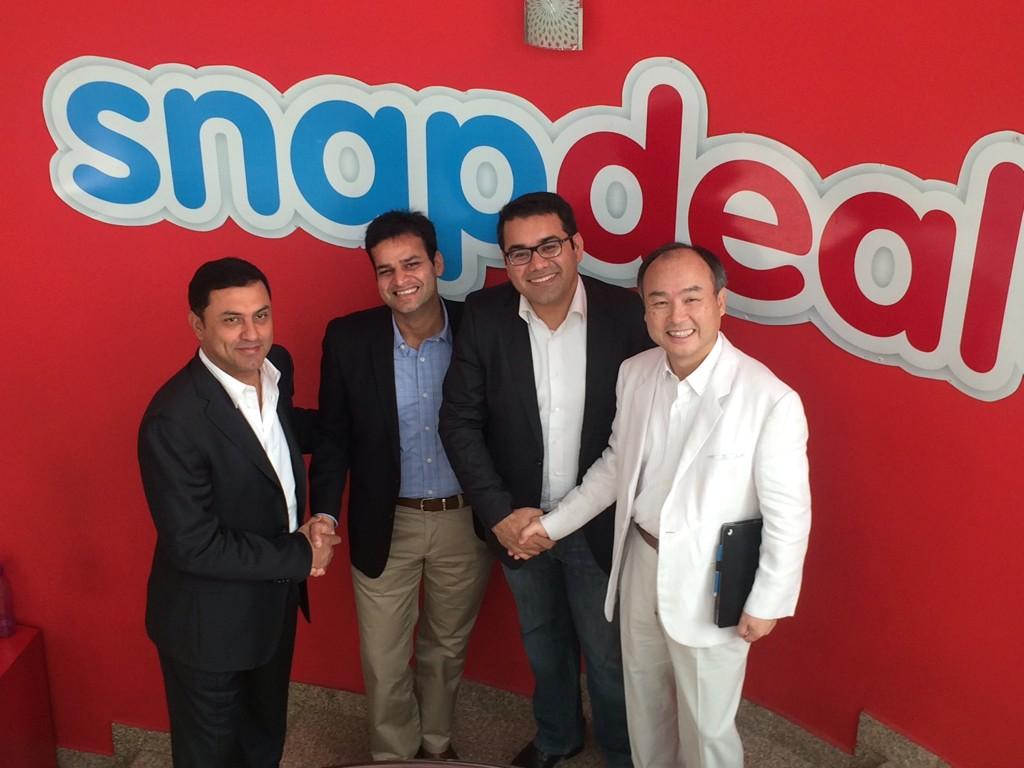
    Snapdeal.com, India’s online marketplace has entered into a partnership with IndiVillage – a social enterprise that works on creating economic opportunities for women and youth in rural India. Under the partnership, sellers on Snapdeal can cost effectively outsource their imaging tagging, transcription and content development for product descriptions to IndiVillage , hence creating significant rural employment and skilling opportunities.

    IndiVillage runs a rural business process outsourcing (BPO) where it provides training and employment on information technology functions like data entry operations, online cataloguing, content management, image tagging and transcription services among others. 100 percent of the profits are reinvested for holistic community development including skill centres for women, schools etc. With strength of over 40 people, 70 percent of them being women, the rural BPO offers both full time and part time employment.

    “We are constantly looking at partnerships that let us marry our business goals while creating quantum impact for our country and society. Rural India has immense talent in very large numbers that can be unlocked by companies like ours and thus, giving us the opportunity to make our growth story more inclusive,” said Kunal Bahl, co-Founder & CEO, Snapdeal.com.

    “The rural youth wait for their fair share of opportunity after three decades of Indian urban success. India has 600,00 villages and all we need is 600,000 entrepreneurs to each adopt a village. What we look for is chance, not charity. We are the pioneers of adopting a virtuous cycle that feeds itself from enable, earn to empower. We believe that participation from a young technology leader like Snapdeal will intensify the cause of digital inclusion and community development in rural India,” said Ravi Machani, Founder & CEO, IndiVillage.

  • South Korea retail sales rebound

    South Korea retail sales rebound

    Reported retail sales in South Korea’s largest department stores rebounded in February from the dismal January figures.

    Analysts say the turnaround is related to the later timing of Lunar New Year in 2105 – the same reason given last week for a 14 per cent plunge in Hong Kong retail sales in January.

    The Lunar New Year, a typically strong season for retail sales given the associated holiday season, occurred in January in 2014 and in February this year.

    South Korea’s Finance Ministry says combined sales at department stores owned by Lotte Shopping, Shinsegae Co and Hyundai Department Store rose by 7.1 per cent year-on-year.

    This was the biggest rise since August last year when sales increased by 10.5 per cent.

    It follows a drop of 11 per cent in January, the worst drop on record.

    South Korea retail sales at discount stores gained a stunning 30.5 per cent year-on-year after an 18.3 per cent slump in January, which was the worst drop in 11 months.

  • Alibaba taps Jeff Zhang to oversee consolidated retail division

    Alibaba taps Jeff Zhang to oversee consolidated retail division

    Alibaba Group Holding Ltd appointed Jeff Zhang to oversee its main services on Monday, bringing Taobao, Tmall and Juhuasuan into a newly created “China Retail Marketplaces” division.

    The appointment marks one of the highest-profile personnel shuffles since China’s largest e-commerce company went public in September. Together with the creation of the new division, the move will streamline operations and enhance efficiency.

    The company, which now handles more ecommerce than Amazon.com and eBay Inc combined, has been struggling to sustain the rip-roaring pace of growth it enjoyed in past years as it gains scale.

  • John Lewis to enter Singapore

    John Lewis to enter Singapore

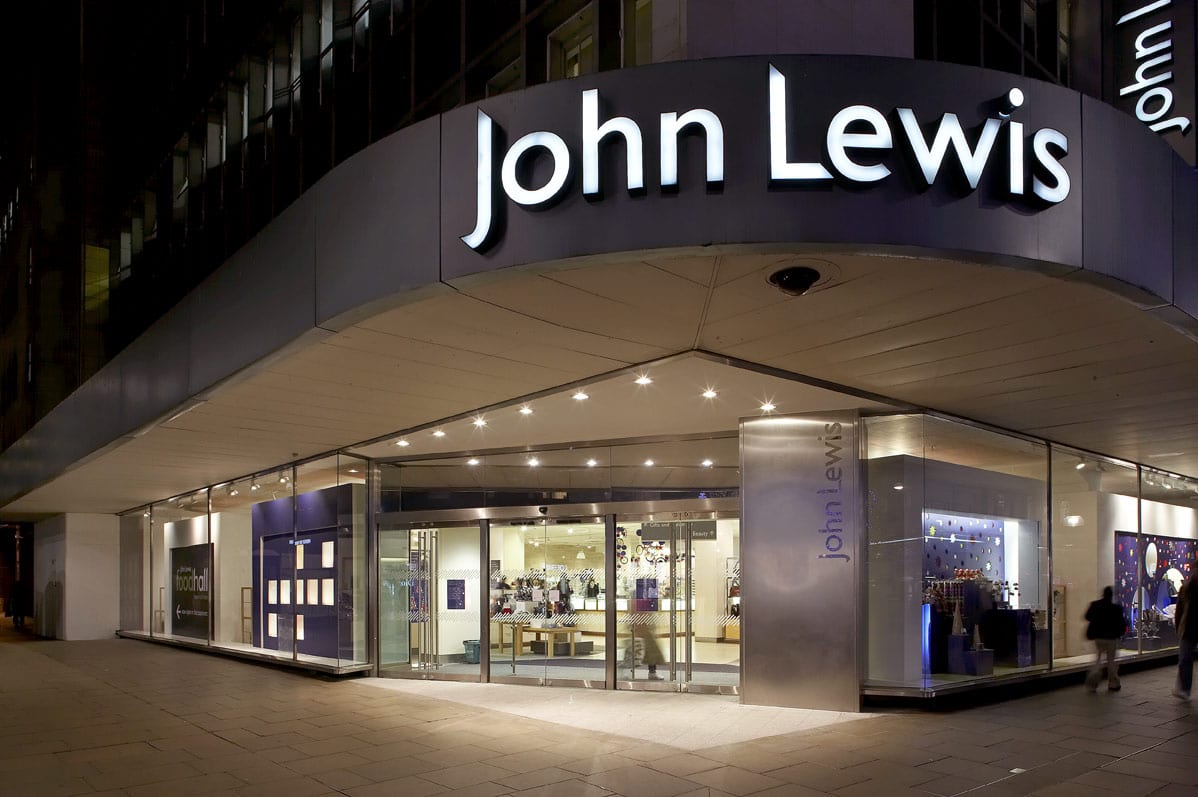
    UK department store John Lewis has chosen Singapore as the first of 15 new international markets it will expand into during the next few years. Founded in 1864, John Lewis has never opened its own stores beyond England, Scotland and Wales. But in 2012 it entered into a partnership with South Korea’s Shinsegae Department Store Co, selling linen and homewares in seven stores. The Singapore presence will be via concessions in two Robinsons department stores, scheduled to open in July, which will primarily sell homewares. CEO Andy Street says he expects to confirm deals to open in a further five foreign markets in 2015. “We have been very successful in Korea. We are really pleased and surprised that, in a market where the John Lewis brand isn’t really known, it has cut through.”

    Further expansion of the John Lewis brand abroad will for now be restricted to exclusive licensing arrangements, similar to those with Robinsons and Shinsegae. The company recently hosted executives of international department stores to an exhibition of its products in London, courting distribution partnerships. Street told The Guardian newspaper its overseas push was an attempt to “seed” the John Lewis brand abroad for the long term. “Anybody taking their eye off the domestic ball at the moment would really regret it. We are not opening shops overseas and diverting management time. This is the icing on the cake,” he said. “Our fundamental strategy is developing bricks and clicks in the UK. We have just got to put a chip or two down on the table with a view on how the world is going to be in 10 years’ time,” he said.

  • Google unveils world first store

    Google unveils world first store

    Google has unveiled its first ever shop in shop concept at Currys PC World, in the technology hub of London’s Tottenham Court Rd.

    This is the first Google Shop experience anywhere in the world. There will be two more later on in the year in Currys PC World’s Fulham and Thurrock Megastores, in the UK.

    The Google Shop offers customers the chance to sample Google’s range of android phones and tablets, Chromebook laptops and Chromecasts and learn about how they work together.

    Visitors can also sample Google’s software tools and apps on a surround screen installation called The Portal, which enables users to search through Google Earth on the big screen.

    The store features a doodle wall where budding graffiti artists can use digital spray cans to paint their own take on Google’s logo, which they are then encouraged to share on social media.

    Customers can use a Chromecast pod to watch Google Play movies, YouTube and more, through a Chromecast dongle that converts any TV into a smart TV.

    The Google Shop will host regular classes and events for the public.

    Classes will range from online security to simply learning how devices work, and understanding how different devices work together to enable a more connected lifestyle.

    Virtual Space Camps will be offered to teach children the basics of coding and teachers will be invited to Open House events, to keep up to speed on the free educational tools on offer from Google.

    Google’s James Elias said the new store concept is a genuinely unique try before you buy experience.

    “The pace of innovation of the devices we all use is incredible, yet the way we buy them has remained the same for years. With the Google shop, we want to offer people a place where they can play, experiment and learn about all of what Google has to offer; from an incredible range of devices to a totally connected, seamless online life.”

  • Seven & I in grocery pact

    Seven & I in grocery pact

    Japanese retail giant Seven & I Holdings is to partner with an Osaka supermarket chain in product development and supply chain initiatives.

    Its new partner, Mandai Co, has about 150 stores in Osaka and four other prefectures in Kansai and achieved ¥279.3 billion (US$2.2 billion) in sales in the year to February.

    While the initial partnership is a working relationship, the Japan Times reports Seven & I, which owns the 7-Eleven convenience store network and Ito-Yokado supermarket chain, may take an equity stake in Mandai.

    Commentators say the partnership will give Seven & I local product and sourcing knowledge, improving its Ito-Yokado offer in Kansai region. Especially beneficial will be food product development and know-how.

    Seven & I, will dominant in Japan’s retail industry, wants to improve the localisation of its offer, reflecting regional characteristics in its food range in particular.

    For Mandai, the partnership could have benefits in its buying power with suppliers and reduce product development costs.