Category: General

Retail News Asia is committed to providing both local and global retailers with the latest General Retail news throughout the Asian market. This on a daily base.

  • Gojek launches car service in HCMC

    Gojek launches car service in HCMC

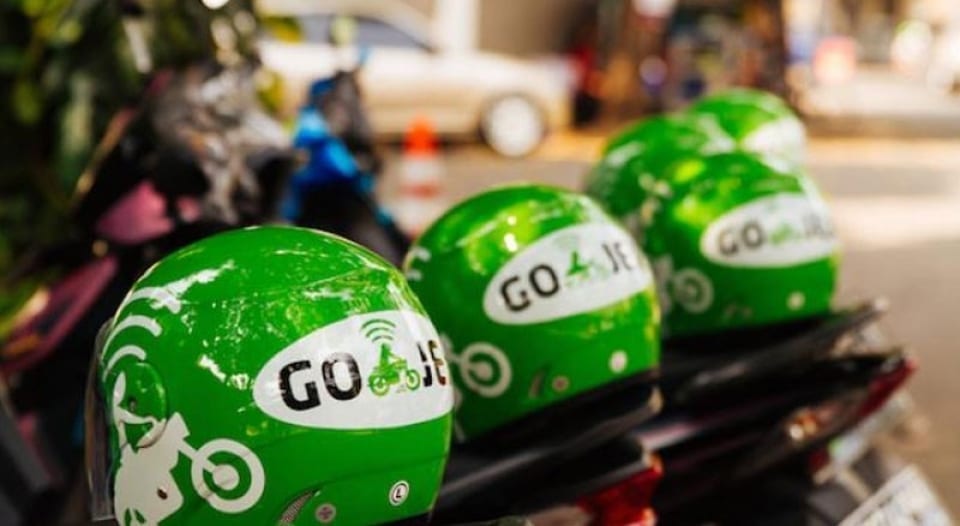
    Gojek on Thursday debuted its four-wheel ride-hailing service GoCar, first prioritizing healthcare workers before expanding to the public later this year.

    The Indonesian ride-hailing company started the service with 50 vehicles in Ho Chi Minh City dedicated to serving healthcare workers from five hospitals and medical command centers.

    All driver-partners are required to test Covid-19 negative before their first trip and on a weekly basis after that.

    Gojek has arranged for drivers to stay at hotels from now until late September when the city’s social distancing campaign is set to end.

    “We have made all the necessary preparations to launch GoCar this year,” said Duc Phung, Gojek Vietnam general manager.

    “When the pandemic escalated in HCMC and social distancing regulations were put in place, we pivoted quickly, adjusting the service to focus on supporting healthcare workers.”

    GoCar is the latest addition to Gojek’s line-up of offerings in the Vietnamese market, which include on-demand services for motorbike-hailing (GoRide), parcel delivery (GoSend) and online food delivery (GoFood).

    Its competitors Grab and Be have been offering car services for years.

  • Twitter users can now report misleading tweets

    Twitter users can now report misleading tweets

    Twitter’s Twitter Safety account sprung to life on Tuesday to announce that starting yesterday, Twitter users in the U.S., South Korea, and Australia can flag a tweet as misleading. To do so, you need to click on “Report Tweet.” That can be found by tapping on the three-dot menu found to the right of the screen in the Twitter app.

    After tapping on “Report Tweet,” you’ll be asked to explain what is wrong with the tweet. You’ll select “It’s misleading.” You’ll then be asked if the misleading tweet is about one of three subjects: Politics, Health, or Something else.” When you pick one of the three, Twitter will ask you to take a deeper dive into the subject.

    For example, choose Politics and Twitter will ask you whether the tweet you find misleading contains Election information or Other political information. You will be able to report the tweet to Twitter and choose to unfollow, mute, or block the author of the tweet that you deem misleading.

    While the new feature is currently being tested, Twitter said that it might not respond and take action against all tweets reported as misleading. However, even if it doesn’t take action, reporting a tweet as misleading will help Twitter identify trends that are taking place on the social media app. “We’re assessing if this is an effective approach so we’re starting small,” Twitter wrote in a tweet. “We may not take action on and cannot respond to each report in the experiment, but your input will help us identify trends so that we can improve the speed and scale of our broader misinformation work.”

  • Samsonite pivots more backpack

    Samsonite pivots more backpack

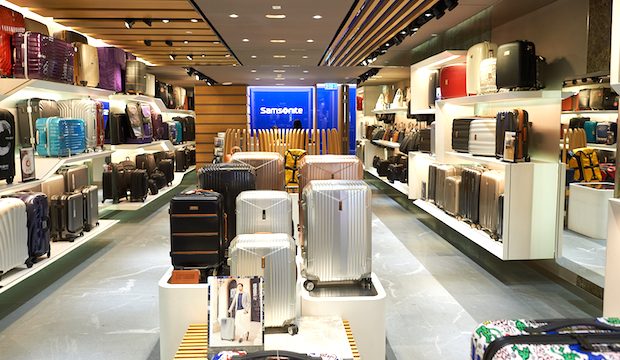
    Samsonite International SA said it’s speeding up its shift toward the emerging non-travel segment as the coronavirus pandemic devastates the global luggage business.

    With expectations that travel won’t return to normal levels for more than a year, the world’s top luggage maker is relying on backpacks, business cases and women’s bags to cushion the blow. The segment now makes up close to half of the company’s sales, up from 40% a year ago.

    “What has Covid done? It has accelerated our portion of ‘Beyond Travel,’” Paul Melkebeke, the company’s newly appointed president for APAC & Middle East, said in an interview Monday. “These were old trends that were already underlying, but with Covid it just has gone a lot faster.”

    Samsonite, based in Mansfield, Massachusetts, is facing its worst year since listing on the Hong Kong exchange in 2011, as the pandemic has hit retailers and the airline industry particularly hard. The owner of brands ranging from Tumi to American Tourister saw revenue drop 58% for the first nine months of the year. Its shares have tumbled 28% in 2020.

    Samsonite has taken aggressive steps to streamline the organization. It has closed more than 10% of its company-owned stores this year through September, according to its quarterly statement.

    “We have been obliged to say goodbye to some of our people,” Melkebeke said. “But everything was there to focus on our management and make sure that we are strong enough to bring it to the other side.”

    While he remains “bullish” on the future of travel, Melkebeke said he’s “100% certain” the industry can’t return to normal levels by the end of next year. That will likely need to wait for the widespread deployment of vaccines to bring Covid-19 under control.

    In the quarter ended September, Samsonite’s core travel brands were down 67% compared with the previous year, while its non-travel brands such as Gregory, Speck, and eBags fell a more moderate 27%.

    With the social distancing restrictions in place, people are turning to more outdoor activities, benefiting Samsonite’s backpacking brands such as Gregory and High Sierra, Melkebeke said. Samsonite is also developing antiviral technologies for its products to address consumers’ concerns about the virus.

    “Don’t forget when you travel with the plane, there’s a moment when you give your luggage away, you collect it on the other side, and you have no idea what has happened with that,” said Melkebeke. “The hygiene factor might be something that will be there forever.”

  • Google Maps faces a new Russian rival on Android Auto

    Google Maps faces a new Russian rival on Android Auto

    Earlier this spring, Google made the smart move to permit its Android Auto app-mirroring dashboard display software to become compatible with third-party apps. This was after it was fined $123 million in Italy, for its monopolistic actions in refusing to allow Italian navigation app JuicePass (which directs electric vehicle drivers to the nearest charging station) access in favor of Google’s own Maps app.

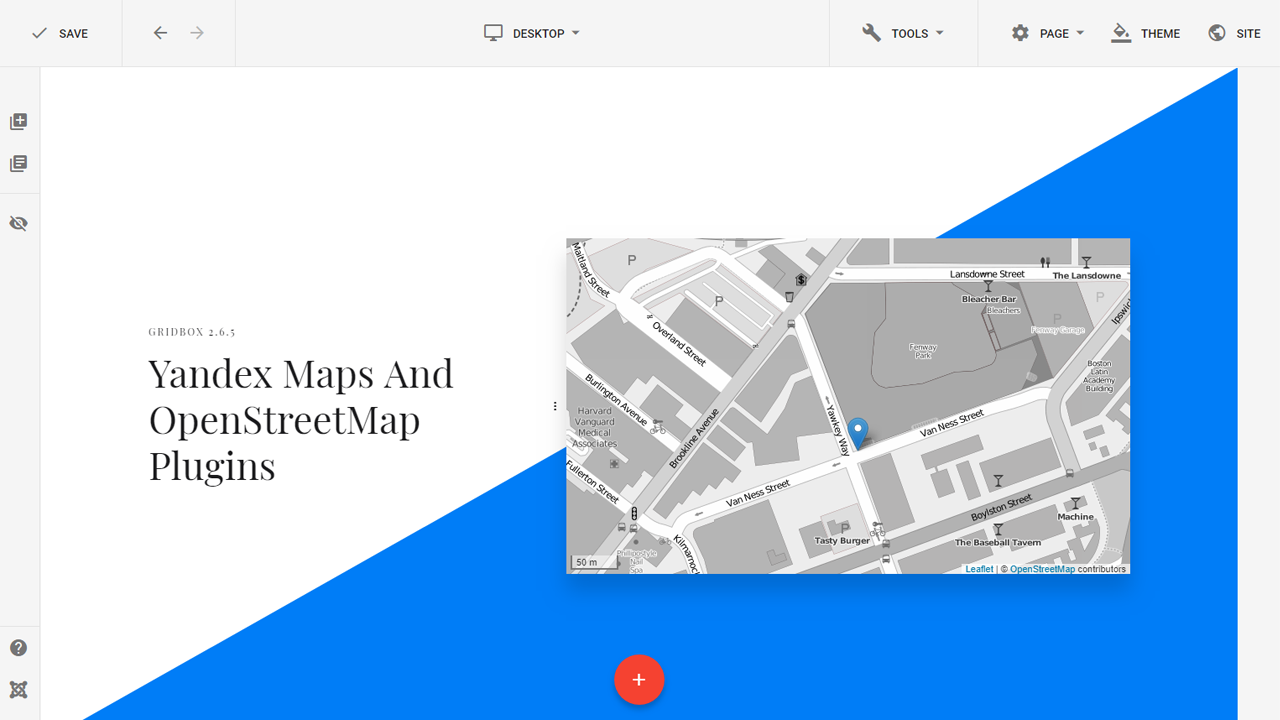
    Once the gates were open, naturally, there was an influx of navigational and other car experience-enhancing apps rushing in to compete with Google’s native navigational offerings. It was finally all healthy, fair competition, and Russia has joined the fray with one particular recent candidate: Yandex.Maps.

    Yandex is a Russian machine-learning navigational tech company, which seems to have created a perfect alternative to Google Maps, with its 10 years of experience in navigation and transportation services. Yandex.Maps offers it all to rival Google Maps, including voice prompts, alerts for upcoming speed limits and traffic cameras, and traffic congestion info updated in real-time.

    The new software even has the option to download directions into an offline mode, for when you run out of data or venture out on an off-road adventure in the bush somewhere.

    Yandex.Maps is currently only available in Russia, and requires a paid “Yandex Plus” subscription if drivers want to make use of the novel dashboard-navigation experience.

    The company does offer Russians a three-month free trial to test it out before buying, though. And for all we know, the $2.30 equivalent of the 169 Russian rubles that are charged as a monthly usage fee may just be worth it if it outperforms Google Maps in precise road mapping and route calculation.

    Google Maps isn’t always updated to reflect the opening up or blocking off of smaller streets, or acknowledge the existence of some legitimate off-road routes, for example, especially outside the USA—so it’s possible Yandex.Maps could be a truly worthy alternative.

    Even if it’s only a Russian breakthrough at the moment, it’s also a breakthrough in the sense that more developers are showing an interest in taking advantage of the free Android Auto app market and looking for ways to compete with Google in the car-optimized navigational software sphere.

  • AirAsia Super App launches Bangkok food service as it expands across ASEAN

    AirAsia Super App launches Bangkok food service as it expands across ASEAN

    AirAsia Group’s digital arm has launched a food-delivery service in Thailand as it ramps up its non-airline business operations to mitigate falling demand for travel during the Covid crisis.

    AirAsia Digital operates Super App that has already been downloaded more than 50 million times and the company says it now has 75 million people using it across Singapore, Malaysia and Thailand.

    Last month, the company bought the Thai operations of Indonesian ride-hailing app Go-Jek which gave it instant market share in passenger transport and delivery services in the market.

    At that time, Air Asia CEO Tony Fernandes said the company had already created a complete digital economy ecosystem. “We have successfully established over 15 different non-airline products and lifestyle services on our digital e-commerce platform in Malaysia. Now it’s time to take it to the next level. In response to overwhelming regional demand, we are setting our sights on bringing our Super App offerings to all of our key markets, following the successful rollout in Thailand.”

    Other features of the app include digital motor vehicle insurance, financial services, travel, lifestyle and rewards, flight and accommodation bookings, beauty, health, and content services.

    With the Thai launch this month, the Super App is offering 30,000 free meals for 30 days for users in four parts of Bangkok: Din Daeng, Chatuchak, Lat Phrao, and Huai Khwang. Partners in that program include McDonald’s, Flash Coffee and Cafe Amazon.

    The app plans to expand service delivery across more areas of Bangkok during the coming weeks.

    “AirAsia food marks the beginning of our digital revolution in Thailand, and we are currently preparing for courier, grocery, ride-hailing and beauty services, which will be launched in coming weeks,” said Amanda Woo, AirAsia Super App CEO.

    “The Covid-19 pandemic has permanently reshaped our everyday lives, food delivery and take-outs have undeniably become an integral part of our consumption behaviour. The key goal of AirAsia Super App is to be the best value one-stop travel and lifestyle application for everyone and every need.

    “AirAsia Super App aims to rise as the e-commerce marketplace of choice for everyone in ASEAN, be it for travel, food delivery or logistics.”

  • Coke, Asahi lead joint venture to recycle 1 billion PET bottles annually

    Coke, Asahi lead joint venture to recycle 1 billion PET bottles annually

    Pact Group, Cleanaway, Asahi Beverages and Coca-Cola Europacific Partners (CCEP) have announced they have signed a Memorandum of Understanding (MOU) to form a joint venture that will build and operate a new PET recycling facility. Under the MOU, the parties intend to come together to provide an industry model for recycling solutions in Australia. This will include the new facility as well as the PET recycling facility currently being built by Pact Group, Cleanaway and Asahi Beverages through Circular Plastics Australia (PET) in Albury-Wodonga, which is expected to be completed later this year.

    The proposed facility will provide a massive boost to Australian recycling by processing raw plastic material collected via Container Deposit Schemes and kerbside recycling. It is expected to process the equivalent of around 1 billion bottles each year to produce over 20,000 tonnes of new recycled PET bottles and food packaging. The facility will use state-of-the-art sorting, washing, decontamination and extrusion technology.

    The cross-industry solution combines the complementary expertise of each participant to enhance their individual sustainability goals. Cleanaway will provide available PET through its collection and sorting network, Pact will provide technical and packaging expertise and CCEP, Asahi Beverages and Pact will buy the recycled PET from the facility to use in their respective products. The plant, when fully operational, will be run by Pact.

    A decision on the plant’s location is anticipated in the coming months and construction is expected to be complete by 2023.

    CCEP and Asahi Beverages, while competitors in the beverage market, have, for the purpose of this joint venture, joined with Pact and Cleanaway to increase the production and availability of recycled PET resin in Australia. The parties are proud to work with one another to advance the cause of sustainability and recycling. This proposed plant is an important step forward in creating a local plastics circular economy in Australia. This new self-sustaining industry is expected to create dozens of new jobs during the construction phase and operation of the plant.

    In describing the deal, Peter West, CCEP Vice President and General Manager Australia, Pacific and Indonesia said, “This new joint venture will deliver a collaborative cross-industry solution to recycle the material that we use to produce our products. Together we can work towards creating a circular economy for PET within the beverages industry, ensuring that we are using more locally processed recycled content for the production of our bottles in Australia.”

    Asahi Beverages Group CEO Robert Iervasi said, “This will be a ground-breaking project that will massively boost PET recycling capacity. It will help transform recycling in Australia by providing a new, local source of high-quality recycled PET. The building of this large rPET plant along with the facility in Albury-Wodonga is a major step towards helping us deliver a truly circular economy for our consumers.”

    Cleanaway Chief Operating Officer Brendan Gill said, “This project supports Cleanaway’s Footprint 2025 by ensuring we have the right infrastructure in place to create a domestic circular economy. This PET plastic pelletising facility is a huge win for the environment by creating a high value, recycled raw material from plastics we collect and sort through our network. At Cleanaway our mission is to make a sustainable future possible and we see waste as a resource to achieve that.”

    Group CEO and Managing Director from Pact Group, Sanjay Dayal said, “We are delighted to be able to bring a scaled cross-industry solution that solves for the local production of recycled resin. We are proud to have CCEP, Asahi Beverages and Cleanaway as partners creating a local circular economy. This partnership shows the value of a solution that works for industry and consumers. This is completely aligned to Pact’s strategy which is to lead the local circular economy through reuse, recycling, and packaging solutions”.

  • China reopens border gate with Vietnam

    China reopens border gate with Vietnam

    China has reopened one of its border gates in Guangxi with Vietnam after closing it for several days due to Covid-19 fears.

    Trade resumed Wednesday at Tan Thanh Border Gate in the northern province of Lang Son after customs officials of both countries agreed on Covid-19 safety measures.

    There are over 1,000 trucks stuck at the gate and another major gate in the same province, Huu Nghi, said Nong Hai Thang, director of border gate management in Lang Son.

    “Trucks need to wait two days to pass the gate.”

    The delay is caused by China imposing more stringent examinations on vehicles and products to prevent Covid-19 contagion.

    There are 12 big and small border gates in Lang Son.

    Vietnam has recorded nearly 290,000 Covid-19 cases since the end of April.

    China was Vietnam’s second-largest export market in the first seven months with a value of $28.7 billion, up 24 percent year-on-year, according to the General Statistics Office.

  • Users can disable Night mode feature with iOS 15

    Users can disable Night mode feature with iOS 15

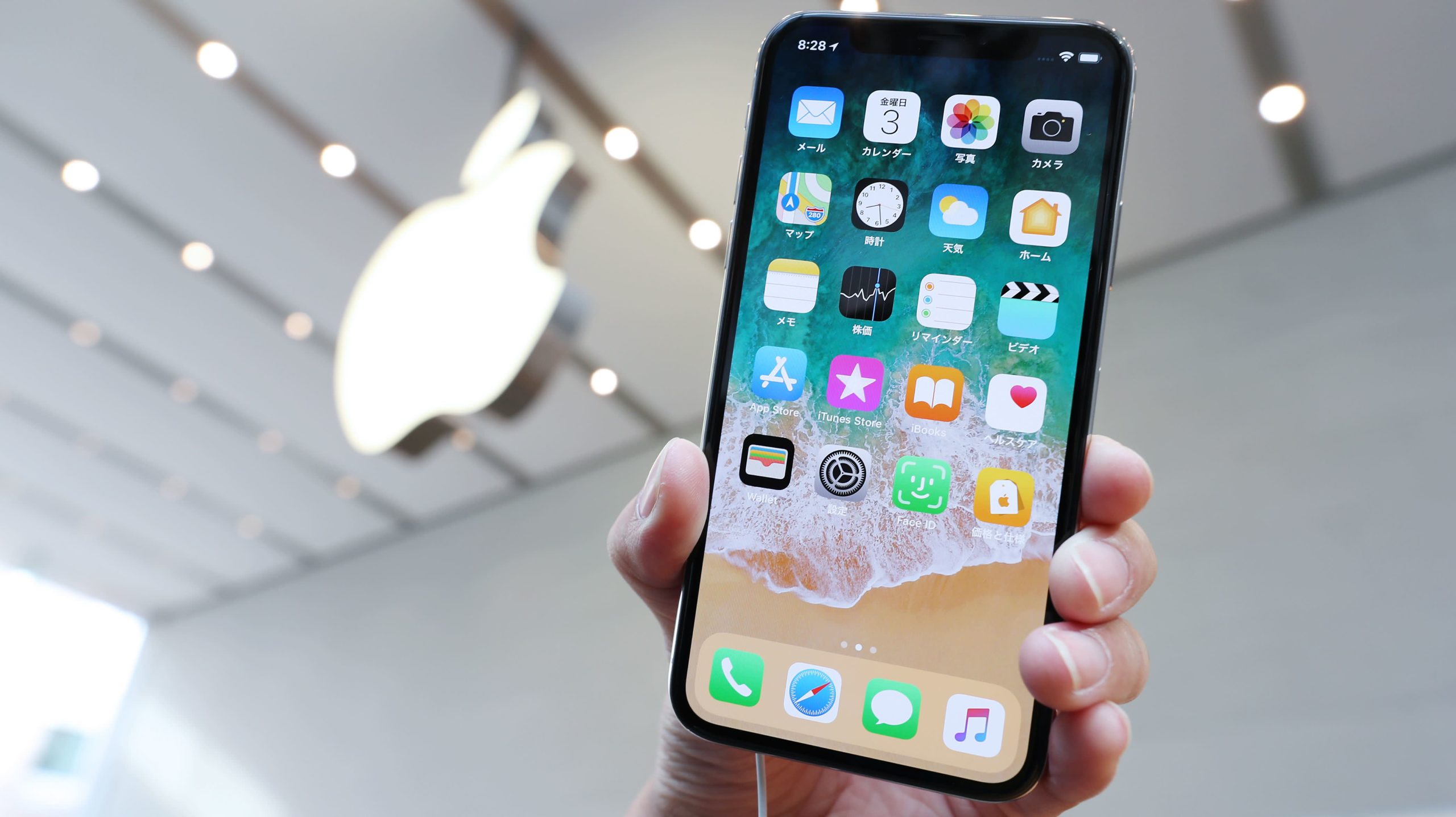
    Apple is just weeks away from releasing iOS 15 and one of the new features will allow a user to turn Night mode off. If you’re not familiar with Night mode, it allows iPhone users to snap viewable photos even under low-light conditions. This feature is available with the iPhone 11 and iPhone 12 lines and automatically turns Night mode on in low-light environments.

    You can tell that Night mode is on when the icon at the top of the screen is yellow. When a photo is snapped with Night mode enabled, a number next to the icon will tell you how long the exposure will take. Tapping the icon allows you to control the time of a Night mode exposure using a slider. Depending on how dark it is outside when taking the photo, the Night mode photo might be quick or it might take several seconds.

    With the iPhone 12 series, Night mode selfies are supported as are Night mode portraits. Because it allows you to take photos under low-light conditions, no one would want to turn off Night mode under normal circumstances. Still, some people just might want to have the ability to turn off Night mode and this is happening in iOS 15. With iOS 15 installed, go to Settings > Camera > Preserve Settings and you’ll find a new toggle for Night mode.

    When that Night mode toggle is turned on, the iPhone will know to keep Night mode turned off if you’ve disabled it for a shot. If you need Night mode, you can still manually enable it in the camera app allowing you to decide whether to use it. Personally, having Night mode turn on automatically is a time saver. Allowing you to opt-out of Night mode is also a time-saver, but only if you’re not in a low-light environment.

    Remember, this new feature is coming in iOS 15 which will be heading your way very soon.

  • How Technology is Changing the Cricket Experience

    How Technology is Changing the Cricket Experience

    Technology is present in the development of many industries and sometimes, not everyone knows how much role it has in improving overall consumer and user experience. In the field of sports, many fans don’t even know how much technology has helped improve the gameplay of the players and data-gathering.

    Cricket is no stranger to the use of technology. Technological reform allowed positive changes in the sport. These changes kept the audience interested and glued to the matches and also made things easier for the players, coaches, commentators, and everyone else involved in the sports events.

    Fans now have the luxury of streaming the cricket matches live anywhere they are in the world. They can also easily access IPL 2021 and CPL 2021 odds on numerous betting sites. Technology simply made sports and cricket, in particular, a whole lot better for everyone.

    Changes in Cricket Tech Over the Years

    The technology used in today’s cricket matches is completely different from the previous era. Back then, tech companies were mainly focused on improving the broadcasting of sports events. They used to be focused on how to deliver the matches to more countries and audiences.

    From radio broadcast to television broadcasting – these used to be the technological advancements used in the cricket industry. Today, however, these are no longer problems to be solved anymore. The internet is now the go-to of sports fans to watch the matches uninterrupted and tech companies are now looking to keep on improving the broadcasting experience.

    Aside from broadcasting, tech companies are also now looking to make the games more credible. Cricket matches now make use of tech that could help them ensure the fairness of the games like the Decision Review System or the DRS.

    The DRS is to ensure that the umpires are not making the wrong decisions. If a team felt that the umpire wasn’t right, they can challenge the decision by heading to the third umpire. The third umpire will use technologies including the DRS to review the dispute. Different camera angles will be reviewed and a decision will be made on the dispute.

    Another tech used in cricket matches is the Snick-o-meter. This graphically shows if the ball touched the bat by monitoring sound waves. This is also something useful for the umpires to check if the batsman was able to catch the ball or not.

    The sound waves created by the impact are detected by a highly sensitive microphone and are measured by the oscilloscope. This is partnered with a high-speed camera that records the movement of the ball. Through the oscilloscope, the captured video of the ball hitting the bat can then be checked for sound waves.

    The use of Hotspot is also involved in cricket games today. It is a ball-tracking technique that utilizes infrared camera systems that could identify heat signatures that will only be visible by ball impact. This helps determine whether a batsman should be dismissed. It can also help determine if the ball hit a player, equipment, or the ground.

    The Hawk-Eye is another popular technology used in this sport. It’s even considered as one of the most important tech innovations used today. This could help determine if a player is LBW or not and it also helps the umpire to give an idea of whether the ball will hit the stumps or not.

    This has to be one of the more complex technologies used in cricket as the Hawk-Eye is made up of different processing techniques. 3-D modeling techniques are also used and to ensure accuracy, it also utilizes physics rules. These are all achieved with at least four high-speed cameras that are situated throughout the field.

    What’s to Come with the Latest Tech Advancements and Trends

    While cricket seems to already be doing great with the technologies used by different leagues, we can still expect that more changes will take place in future matches. Take for example how the Caribbean Premier League will make use of a Smart Ball in its upcoming season.

    This will be the first time that a professional cricket league will make use of such equipment called the Kookaburra Smart ball. Players shouldn’t feel any different when using this ball in the matches as it looks the same as a regular ball. However, it contains a microchip that can deliver useful information to the commentators and even to the fans.

    According to Kookaburra that is in partnership with Sportcor, the ball should be able to transmit information in real-time to commentators like the spend and spin of a ball at release and when it bounces and reaches the batsman. The fans can also get to see this graphically on the live broadcast.

    Many are excited to see how this could affect the cricket scene. This is just one of the new technologies that cricket leagues may also eventually adapt. There is a lot more to look forward to if you’re a tech geek cricket fan.

  • Disney+ may close gap with Netflix by 20 million subscribers this year

    Disney+ may close gap with Netflix by 20 million subscribers this year

    Ever since Disney+ got off to a strong start in November 2019, you might have noticed Netflix executives wearing more frowns than usual. While Netflix is the top provider of streaming video content on this planet, Disney+ has used its strong slate of Marvel-related programming and original Pixar titles to pick up ground on Netflix. Last week Disney reported that it had 116 million subscribers during the second quarter compared to the consensus expectations of 112.8 million.

    For the three months from April through June, 12.4 million new subscribers joined Disney+; compare that with the measly 1.5 million net new subscribers that joined Netflix during the same three-month period. During the previous quarter Netflix added 4 million net new subscribers and expects 3.5 million for the current quarter. If you’re wondering if Disney can surpass Netflix at the current rates, let’s look at the numbers.

    According to Rosenblatt analyst Mark Zgutowicz, Disney+ is approximately 90 million subscribers behind Netflix but should pick up 20 million new customers on Netflix this year. If this were to continue, Disney would jump over Netflix in five years.

    Many analysts never expected Disney+ to challenge Netflix as they considered the former to offer content mostly for children unlike the more varied categories of video streams that Netflix offers. The truth, however, is that Disney+ has content for subscribers of all ages from pre-schoolers to adults. The recent Marvel Cinematic Universe (MCU) based mini-series including WandaVision and Loki put up some huge ratings and Disney has already announced that Thor’s brother will star in another season of the show.

    Globally Netflix has 209 million paying subscribers with 74 million of these customers living in the U.S. and Canada. Including Hotstar, Disney’s high volume but low revenue service in India, Disney+ has 116 million users worldwide. If you add Hulu and ESPN, the grand total for Disney’s streaming services amounts to close to 174 million subscribers.

    If Netflix and Disney+ are considered numbers one and two when it comes to streaming video content, HBO Max might be a legitimate third place challenger. It has 67.5 million global subscribers with 47 million of them in the states. It also outperformed Netflix in Q2 by adding 3.6 million global subscribers and 2.8 million in the U.S. It’s ARPU weighs in at $11.90.

    One area where Netflix holds a huge lead over Disney+ is with the average revenue per user (ARPU). In the U.S. Netflix garners $14.54 per subscriber compared to the measly global ARPU of $4.16 that  Disney+ has been collecting. That figure has been hit hard by Hotstar’s strong growth. Disney CEO Bob Chapek has announced that November 12th will be “Disney+ Day” with the company using cross-promotion to bolster subscription numbers.

    Rivals to Disney+ and Netflix include Amazon Prime Video, but the $12.99 monthly cost of the service actually covers the free overnight shipping that Prime members are known to receive with Amazon’s streaming video inventory basically a free throw-in. More than 175 million Prime members streamed Amazon’s video content over the last year, but you cannot compare the service to Netflix or Disney+.

    NBCUniversal’s Peacock adds paid subscribers with free users to generate a metric it calls “sign-ups.” Thanks to the platform’s Olympics coverage, Peacock had 54 million sign-ups, up 12 million on a sequential basis. Viacom/CBS has various streaming services (Paramount+, CBS All Access, Showtime, and other smaller services) that add up to 42 million subscribers. That is up 6.1 million subscribers sequentially for a 17%  quarter vs. quarter hike.

  • End-to-end encryption now covers Messenger video and audio calls

    End-to-end encryption now covers Messenger video and audio calls

    In this era where privacy reigns, end-to-end encryption (E2EE) is an important feature because it keeps messages private and only the sender and the recipient know what it says. It prevents law enforcement, employees of the platform being used, and others from reading something that was not meant for their eyes. Facebook Messenger has offered end-to-end encryption for messages since 2016 and Facebook has announced in a blog post that it is now extending this privacy protection to both Messenger voice and video calls.

    As Facebook pointed out on Friday, 150 million video calls a day are handled by Messenger, and voice calls are now being added to this chat mode to protect both video and audio calls with the same encryption protection. Facebook states that “End-to-end encryption is already widely used by apps like WhatsApp to keep personal conversations safe from hackers and criminals. It’s becoming the industry standard and works like a lock and key, where just you and the people in the chat or call have access to the conversation.

    The content of your messages and calls in an end-to-end encrypted conversation is protected from the moment it leaves your device to the moment it reaches the receiver’s device. This means that nobody else, including Facebook, can see or listen to what’s sent or said. Keep in mind, you can report an end-to-end encrypted message to us if something’s wrong.”

    Facebook also announced that it updated its disappearing messages feature within its E2EE chats. With the newly updated controls, users will be given more options as to when they want their messages to disappear. The new range runs from just five seconds to as long as 24 hours. Not only will these messages be encrypted, they could also be set to fall off of the platform by the time five seconds can be counted.

    Over the next few weeks, Facebook will test end-to-end encrypted group chats and calls in Messenger. This includes both video and voice calls for family members that have an existing chat thread or are already connected. As noted by Facebook, “We’ll also begin a test for your delivery controls to work with your end-to-end encrypted chats. That way, you can prevent unwanted interactions by deciding who can reach your chats list, who goes to your requests folder, and who can’t message you at all.”

    Instagram users will also share in this bid to expand end-to-end encryption. In certain countries, adult Instagram users will be allowed to opt-in to end-to-end encrypted messages and calls for one-on-one conversations. You will need to have an existing chat or be following each other to start an encrypted DM (the same conditions needed to start an end-to-end encrypted voice or video call in Messenger).

    Facebook points out that you can always block someone that you don’t want to DM with. The option to make video and voice calls end-to-end encrypted on Messenger, along with updated controls for disappearing messages, will start rolling out today. “People expect their messaging apps to be secure and private, and with these new features, we’re giving them more control over how private they want their calls and chats to be,” Facebook says.
    The U.S. Justice Department under William Barr in 2020 issued a statement along with Australia, Canada, New Zealand, and the United Kingdom in favor of strong encryption. A statement issued by this group, called the Five Eyes, said that end-to-end encryption “plays a crucial role in protecting personal data, privacy, intellectual property, trade secrets and cybersecurity…and also serves a vital purpose in repressive states to protect journalists, human rights defenders and other vulnerable people.”

    Yet just the year before, the Trump administration reportedly weighed the idea of outlawing end-to-end encryption, and there was talk about the DOJ asking Apple to add a backdoor to the iPhone that would allow law enforcement to read certain messages related to investigations of drug trafficking, terrorism, and child pornography. Ironically, Apple itself plans on scanning iPhones seeking images that could be considered child abuse including child porn.

  • Gold producers want proposed new tax scrapped

    Gold producers want proposed new tax scrapped

    The Vietnam Gold Traders Association has called on the government to scrap its plan to impose a 2-percent export tax, warning it could hurt the country’s competitiveness.

    Vietnam already has low competitiveness compared to other countries and would cause official exports to fall and illegal exports to avoid the tax to surge, it said in a proposal to the Ministry of Finance.

    The VGTA said companies are not allowed to import gold to produce jewelry, but has to source them domestically even though prices are often VND6-8 million ($264-352) per kilogram higher.

    Countries like Thailand, Indonesia, Malaysia, and Singapore impose no import or export tax and have more advanced technology, it said.

    They encourage jewelry exports, which are worth $10 billion for Thailand, $8 billion for Singapore, and $6 billion for Indonesia.

    Vietnam’s exports were worth $2.6 billion last year.

    There is currently no tax for jewelry with gold content under 95 percent, but the Ministry of Finance has proposed taxing all uniformly, saying customs officials have difficulty in determining gold purity.

  • Jakarta’s malls reopen – but only to the vaccinated

    Jakarta’s malls reopen – but only to the vaccinated

    Indonesia’s capital Jakarta allowed retail malls to reopen last week to an exclusive crowd – shoppers vaccinated against coronavirus.

    With restrictions still in place in much of Indonesia, Jakarta’s malls are allowed to operate at 25-per-cent capacity to try to keep the economy moving, but customers must prove via a smartphone application that they’ve received at least one vaccination.

    That puts them in a select group, with just one in five Indonesians given a shot so far under a mass-immunization program that started in January.

    “This is a positive measure for the shopping mall. So that visitors can be assured that everyone who enters the mall has been scanned and considered safe and healthy,” said Eka Dewanto, GM of Pondok Indah Mall in north Jakarta.

    Indonesia is fighting to contain a long-running outbreak fuelled by the Delta variant, with more than 3.8 million cases and 115,000 deaths recorded overall, one of Asia’s worst epidemics.

    Like many countries in Asia, Indonesia has struggled to secure vaccines fast enough amid fierce global competition, heightened by the rapid spread of the Delta variant.

    Housewife Ilona Refita, 43, approves of the application used to enter the malls and just wants to get on with life.

    “It’s impossible for us to keep staying at home and not doing things that are supposed to be done, right? We should protect ourselves,” she said.

    Student Salsabilla, 23, said the application was good, but she was uncomfortable that her whereabouts were being recorded.

    “I did wonder why my location needs to be tracked,” she said. “That worries me.”

  • Microsoft optimizes all Office mobile apps for Samsung’s new foldable phones

    Microsoft optimizes all Office mobile apps for Samsung’s new foldable phones

    The announcement of the new Galaxy Z Fold 3 and Galaxy Z Flip 3 marked a few premiers for Samsung’s flagships. For example, there are the first smartphones that allow users to seamlessly transfer all their WhatsApp chat history when they switch from an Apple iPhone to an Android phone.

    This WhatsApp feature only works on the Galaxy Z Fold 3 and Galaxy Z Flip 3, but its availability will soon be expanded to most Android and iOS devices. Another interesting premiere revealed this week focuses on Microsoft’s Office mobile apps, which have been fully optimized to work on Samsung’s new foldable phones.

    The Redmond-based giant announced a new partnership with Samsung to perfect the way its Office mobile apps work on the Galaxy Z Fold 3 and Galaxy Z Flip 3. Also, the partnership between the two companies has expanded to further integrate Teams and Outlook into the foldable smartphone experience.

    Starting with these two foldable phones, you’ll be able to run multiple apps at the same time via the Multi-Active window. For example, running Microsoft Excel and PowerPoint dragging and dropping a table right into your presentation will be a breeze now. Even running two instances of the same app will be possible.

    Samsung Galaxy Z Fold 3 and Galaxy Z Flip 3 are now available for pre-order for $1,800 and $1,000, respectively, with availability expected August 27 starting from the United States and Europe. You can pre-order either of the two flagships via the widgets below.

  • Microsoft’s Outlook for Android and iOS will no longer sync with Facebook calendar

    Microsoft’s Outlook for Android and iOS will no longer sync with Facebook calendar

    Microsoft has decided to remove one functionality from its Outlook for Android and iOS app: the ability to sync calendars. The good news is the change will only affect three services: Facebook, Meetup and Evernote.

    The Redmond giant put up a post to inform Outlook users on Android and iOS that beginning September 13, the app will no longer sync calendars from the three services mentioned above. No explanation has been given, but Microsoft promised to give users a 2-week reminder within the app, if they are currently syncing any of these calendars in Outlook.

    Apart from the fact that syncing with Facebook, Meetup and Evernote calendars will no longer be possible after September 13, the change will not affect Outlook mobile users in any other way.

    Microsoft hasn’t said whether or not the calendar sync functionality for these three services will ever return and didn’t offer any alternative solution. If you’re currently syncing Outlook calendar with any of these three services, you’ll be getting a reminder soon if you keep using the feature.