Category: General

Retail News Asia is committed to providing both local and global retailers with the latest General Retail news throughout the Asian market. This on a daily base.

  • Macau retail sales surge after Covid-19 lockdown

    Macau retail sales surge after Covid-19 lockdown

    The value of Macao’s retail sales for the second quarter of 2021 totaled 20.70 billion patacas (about 2.58 billion U.S. dollars), up 200 percent year on year, the special administrative region’s statistic department said on Tuesday.

    The latest report from the Statistics and Census Service (DSEC) showed that among the major retail trade activities, sales values of watches, clocks and jewelry, leather goods, and communication equipment witnessed a notable year-on-year growth of 957.9 percent, 504.0 percent, and 460.4 percent respectively, whereas sales value of supermarkets dropped by 11.3 percent.

    As regards the sales volume index, the indices of watches, clocks and jewelry, leather goods, and communication equipment registered a significant rise, while the index of supermarkets decreased.

    For the first half-year of 2021, the value of retail sales reached 39.46 billion patacas, an uplift of 118.4 percent year on year. Besides, the sales volume index jumped by 130.4 percent.

    The value of retail sales in the second quarter of 2021 rose by 10.3 percent as compared with the revised figure of 18.76 billion patacas in the first quarter. Sales values of department stores and watches, clocks, and jewelry increased markedly, whereas sales values of communication equipment declined.

    Moreover, the sales volume index grew by 9.9 percent quarter on quarter.

    In respect of retailers’ comments, 40.9 percent of the retailers expected the sales volume to stay stable year on year in the third quarter of 2021, 42.9 percent anticipated a decrease, and 16.2 percent forecast an increase. Meanwhile, 78.0 percent of the retailers predicted that the retail prices would remain steady year on year in the third quarter, 15.3 percent foresaw a decrease and 6.7 percent expected an increase.

    As compared with the second quarter of 2021, about 44.7 percent of the retailers envisaged sluggish business in the third quarter, whereas retailers expecting stable performance and those anticipating a favorable outlook together accounted for 55.3 percent of the total.

  • Twitter may display your Twitter Spaces listener status

    Twitter may display your Twitter Spaces listener status

    Twitter Spaces is a fairly new addition to the popular bird-themed social media platform and was launched a few months ago in competition with the exploding Clubhouse app. Its function is very similar to Clubhouse: to provide voice chat rooms which people can host and join to have discussions about anything and everything. From music, to Bitcoin, or anime, or anything else—there’s a Twitter Space for every interest.

    With Twitter Spaces growing in popularity, Twitter has been bringing new features to them—such as a variety of voice filters, web browser support, and easier management features for Space hosts. Yesterday, Twitter announced that it is also testing out the ability for Twitter users to display to their followers which Spaces they’re listening to.

    Such a feature would be a further extension of the already existing ability to show your followers which Spaces you’re currently hosting, or even currently speaking in. If you’ve only joined a space a listener, however, your status as a listener is unable to be showed on your profile

    As a listener, you have the ability to react to the conversation with emojis, follow along with live captions, as well as Tweet or send direct messages to the Space—so it would be a nice addition to have your listener status displayed on your profile, so that any interested followers can join and listen along with you. In the Twitter post announcing that the platform is working on implementing this feature, the company said that it was currently “experimenting with ways to help you discover more Spaces.”

    This hints that it’s not a guarantee that we’ll be seeing it rolled out to all everyone on the platform in the future, and Twitter also asked for users to send over their thoughts on the matter. If the response is overwhelmingly positive, it’s most likely we’ll see the option to display our listener status in Twitter Spaces sometime in the future.

  • Carriers in dire straits and need support

    Carriers in dire straits and need support

    Vietnamese carriers are confronting major financial challenges as revenues plunge and debt soars. They need urgent government intervention to improve their cash flow, a report says.

    Since Covid-19 entered the country early last year, airlines revenues have plunged by 80-90 percent, according to a recent report by the Vietnam Aviation Business Association (VABA).

    National flag carrier Vietnam Airlines posted a loss of nearly VND5 trillion ($219 million) in the first quarter, the highest quarterly loss ever, and the Ministry of Planning and Investment has said that the company is on the verge of bankruptcy.

    Budget airline Vietjet is short of VND10 trillion to cover its expenses, and startup airline Bamboo Airways shares the predicament.

    The VABA report proposes that the government extends its support on airlines’ loans to include those registered since June 10 last year.

    The current support, including a delay in payment and a reduction in interest, only applies to loans recorded before that date.

    The report also proposes that the support lasts for three to six months after the government announces that the Covid-19 pandemic has ended or the country turns to “a new normal.” The carriers need time to recover after the pandemic has been contained, the report says.

    In the first seven months of this year, Vietnamese carriers served 13.7 million passengers, down 32 percent year-on-year, according to the General Statistics Office.

  • Aldi tops Australia supermarket rankings

    Aldi tops Australia supermarket rankings

    For another year in a row, ALDI has rated best in Canstar Blue’s 2020 supermarket ratings – taking the top spot in Canstar Blue’s Most Satisfied Customers Award for 2020.

    In Canstar Blue’s latest supermarket review, the survey asked more than 2,600 shoppers about their experiences of buying groceries from a retail supermarket in the last month.

    This year, ALDI stocked up its seventh win in nine years. It rated best for the freshness of its fruit, vegetables and meat, the quality of private label products, store layout, deals and specials available, value for money and overall satisfaction.

    “We are thrilled to be rated as Australia’s best supermarket! Winning the hearts of our customers is what we strive for every day. Our commitment to providing the highest quality products at incredibly low prices is clearly being noticed by Australian shoppers. This is a proud moment for ALDI and our many Australian business partners,” said ALDI Australia Group Director – Buying Simon Padovani-Ginies.

  • South Korea set to ban Google, Apple in-app payment dominance

    South Korea set to ban Google, Apple in-app payment dominance

    South Korea is likely to bar Google and Apple from requiring software developers to use their payment systems, effectively stopping them from charging commissions on in-app purchases, the first such curbs on the tech companies by a major economy.

    An amendment of the Telecommunications Business Act, dubbed the “Anti-Google law,” that takes aim at app store operators with dominant market positions, is being considered by lawmakers in South Korea, who have pushed the issue of the commission structure since mid-2020.

    In a statement, Apple said the bill “will put users who purchase digital goods from other sources at risk of fraud, undermine their privacy protections, make it difficult to manage their purchases.”

    The iPhone maker said it believes “user trust in App Store purchases will decrease as a result of this proposal — leading to fewer opportunities for the over 482,000 registered developers in Korea who have earned more than KRW8.55 trillion to date with Apple.”

    Adam Hodge, the spokesman for the U.S. Trade Representative’s office, said U.S. officials were still considering how to balance the views of the U.S. tech companies with the Biden administration’s push to increase competition in the industry.

    “We are engaging a range of stakeholders to gather facts as legislation is considered in Korea, recognizing the need to distinguish between discrimination against American companies and promoting competition,” Hodge said.

    Both Apple and Google have faced global criticism because they require software developers using their app stores to use proprietary in-app payment systems that charge commissions of up to 30% on in-app purchases.

    “For gaming apps, Google has been forcing app developers to use its own payment system … and it wants to expand its policy to other apps like music or webtoon,” said Kwon Se-hwa, a general manager at the Korea Internet Corporations Association, a nonprofit group representing Korean IT firms.

    “If the new bill becomes the law, developers will have options to use other independent payment systems,” Kwon said.

    Naomi Wilson, vice president of policy for Asia at the Information Technology Industry Council, a trade group that includes Apple and Google, said the legislation would violate South Korea’s multilateral and bilateral trade commitments.

    “If enacted, the bill would present challenges both for app developers and app stores seeking to do business in the Korean market,” she said, urging Korean legislators to re-examine the obligations for app markets and ensure they do not disproportionately affect U.S. companies.

    The European Union last year proposed the Digital Markets Act, taking aim at app store commissions. The rules are designed to affect large companies, but some European lawmakers are in favor of tightening them to specifically target American technology giants.

    Earlier this month in the United States, a bipartisan trio of senators introduced a bill that would rein in app stores of companies that they said exert too much market control, including Apple and Google.

    In South Korea, the home market of Android phone maker Samsung Electronics, Google Play Store earned revenue of nearly 6 trillion won ($5.15 billion) in 2019, according to a government report published last year.

    Earlier this year, Google said it would lower the service fee it charges developers on its app store from 30% to 15% on the first $1 million they earn in revenue in a year. Apple has made similar moves.

    For Apple too, commissions from in-app purchases are a key part of its $53.8 billion services business and are a major expense for some app developers.

    In May, an antitrust lawsuit filed by the maker of the popular game Fortnite against Apple revealed that the game maker paid $100 million in commissions to Apple over two years.

  • Tokio Marine Hit by Ransomware Attack in Singapore

    Tokio Marine Hit by Ransomware Attack in Singapore

    Japanese-headquartered insurer Tokio Marine Group was the latest ransomware victim with an attack launched on its Singapore unit.

    Some of Tokio Marine Insurance Singapore’s (TMiS) internal servers were targeted on July 31, according to a statement, which was isolated detection to prevent further damage. The Japanese insurer also filed reports to local governmental agencies.

    We sincerely apologize for any inconvenience and concern caused to our customers or related parties, the group said.

    The group is still identifying the extent of the damage but thus far, there has been no indication of loss of any customer or confidential information and none of TMiS’ core insurance operating systems were affected.

    The life insurance unit Tokio Marine Life Insurance Singapore (TMLS) was also unaffected as it maintains different servers but TMLS still took immediate action to screen its own servers and adopt additional safeguards.

    Tokio Marine has also appointed an external specialist to perform a third-party analysis of its systems to determine the scope of the attack’s impact.

    A growing number of companies have been victims of attacks via ransomware – typically malware that threatens to publish data or block access unless a ransom is paid.

    In May, French insurer AXA also announced that it was also a ransomware victim in Asia with affected operations in Thailand, Malaysia, Hong Kong and the Philippines.

  • Auckland Airport to build outlet mall with 100+ stores

    Auckland Airport to build outlet mall with 100+ stores

    Auckland International Airport has posted an after-tax profit of $464.2m for the year to June 30, while also announcing plans to build a retail precinct with 100 stores that is expected to create 500 new jobs.

    Although its after-tax profit was up 139 percent on the previous year’s $194m profit, the airport made an underlying loss of $41.8m, its first full year underlying loss in history. The underlying loss was in line with the guidance the airport gave at the start of the year.

    The airport says underlying profit is how it measures its financial performance because it removes revaluation changes that can distort financial results or where one-off transactions, both positive and negative, can make it difficult to compare profits between years.

    The airport also recorded its lowest number of international arrivals and departures since 1972, with just 600,000 passengers, including transits, down 93 percent on the previous year.

    Total passenger numbers were 6.4 million, down 59 percent on the previous financial year.

    Shares in Auckland Airport closed at $7.10 on Wednesday. During New Zealand’s alert level 4 lockdown at the start of the Covid-19 pandemic, they dropped to about $5 per share.

    The new retail precinct would involve the development of a 23,000 square metre-plus outlet centre on undeveloped land at the north-eastern edge of the airport.

    “Premium and lifestyle brands” will be sold “at often heavily discounted prices”, the company said.

    The airport’s general manager of property and commercial Mark Thomson said there was a gap in the market for a purpose-built fashion outlet centre and the airport had been exploring the concept for several years.

    “It will be the first of its kind in New Zealand, offering an exciting new shopping experience for Kiwis and travellers arriving at and departing from the airport,” Thomson said.

    “Many New Zealanders will be familiar with visiting this type of bespoke fashion outlet shopping centre on trips overseas.”

    A start date for construction was not given.

    Thomson said development would be influenced by the strength of the retail market and the recovery of aviation.

    Auckland Airport chief executive Adrian Littlewood said the 2021 financial year had been a year like no other for the company, and it was giving permanent staff $1500 in airport shares to thank them for their efforts over the past year.

    “Covid-19 changed our business overnight bringing constant upheaval to almost every part of our operation,” Littlewood said.

    “But throughout all the uncertainty of the past 18 months, our team’s determination to get the job done and go the extra mile for New Zealand has never faltered.”

    The airport had taken steps to strengthen its financial position including reducing operating expenses, repaying $425m in US private placement borrowings, and getting bank approval to renew a $700m loan, he said.

    The airport last week said it would start work on a $1 billion-plus project to merge its domestic jet operations with its international terminal early next year as one of four anchor projects being advanced.

    Four major projects are still on hold including its expanded international airfield and taxiway capacity, new cargo precinct, new international arrivals area and a second runway.

    Auckland Airport held more conservative assumptions than those of the International Air Travel Association, which was forecasting global travel to fully recover and exceed pre-pandemic levels in 2023.

    Littlewood said a full recovery may take longer.

    “Our financial performance is strongly linked to passenger volumes, so our recovery will be greatly influenced by the return of domestic and international travel and changes in border settings.”

    There were encouraging signs with vaccination programs ramping up in New Zealand and around the world, he said.

    “But we expect to see further volatility in domestic and international travel in the short term, with the global aviation market gradually rebuilding in 2022.”

    Due to uncertainty in the market, Auckland Airport would not provide underlying earnings guidance for the 2022 financial year, Littlewood said.

    Investment in transport infrastructure projects and upgrades would continue and was expected to cost between $250m and $300m in the 2022 financial year.


  •  3 Good Reasons to Start a Laundry Service Business in the Philippines

     3 Good Reasons to Start a Laundry Service Business in the Philippines

    Once the global COVID-19 pandemic hit the Philippines, so many aspects of life were forced to change seemingly overnight. So many of the things people had become accustomed to, from meeting up with friends to being able to commute to work, were suddenly not available anymore, as a result of the need for caution. This had many unfortunate consequences, including many Filipinos being laid off from their places of employment.

    However, despite all the challenges presented by the time, Filipinos have managed to demonstrate their resourcefulness, with many successfully pivoting to new income streams and opportunities. Some have elected to explore the gig economy, while others have sought to establish home businesses. One of the more popular ones in recent months has been private laundry services, and for many people, it’s been an easy way to make ends meet despite being unable to physically report for work. Here are some of the reasons it remains an excellent idea for a business. Who knows, maybe after reading this article, you’d be inclined to buy washing machine on sale?

    It’s a Basic Need and Immune to Fads

    This is so obvious that it barely merits a mention, but to be clear: clothes are a basic corporal need, and just as important as having a sufficient amount of food to eat and keeping a roof over our heads. Keeping our clothes clean and wearable prevents them from degrading faster than they should, and also keeps away potentially harmful pathogens carried by dirt and grime embedded in clothing. Therefore, keeping clothing clean is a basic need. People can go without going to see a movie in a movie theater or eating at a fancy restaurant, but having a fresh t-shirt to change into after a long day of work is simply a non-negotiable.

    This means that the laundry industry as a whole is generally resistant to the forces of fads and even economic recession. While an estimated 74% of all micro, small, and medium enterprises, many laundry services remained open despite community quarantine measures.

    The State of the Housing Market Could Make It Very In-Demand

    Being good at business means being able to anticipate market trends and then pouncing on opportunities as they happen. The laundry services market could be that next big opportunity, given how closely it’s tied to multiple factors, including overall market penetration, the size of the laundry services market itself, and the state of the housing market in the years to come.

    First of all, having a washer-dryer at home still seems to be a luxury for most Filipinos. Only about 40% of Filipino households are equipped with a washing machine, with the rest of homes either relying on more traditional hand washing methods, or outsourcing their laundry requirements to service providers. This has resulted in the laundry services market expanding to an estimated $5 billion in value, according to statistics from the Philippine Statistics Authority.

    The next factor that indicates that the laundry services market is due for a boom is a little more complex, and it has to do with the housing market. Despite the ongoing pandemic, the expected number of condominium units in Metro Manila alone is expected to increase, from around 118,000 in 2018 to more than 152,000 in 2021. This spike in housing inventory, coupled with the recent economic downturn caused by the pandemic, is likely to cause housing prices to fall, making buying and borrowing more attractive to potential homeowners. Once these new homeowners begin to purchase their homes, they’re going to need the services of a laundromat or other outsourced service provider, and will likely cause the total evaluation of the laundry services market to rise. This represents an opportunity that new players in that industry can take advantage of. 

    Start-Up Capital for It Is Manageable

    One of the best reasons to begin a home laundry service is, with a little ingenuity, it’s relatively easy to get started. First of all, if you happen to be part of the 40% of homeowners who already have a washing machine and dryer, then congratulations! You’re well on your way to establishing your business. But even if you don’t, the estimated capital needed to start a home laundry service is estimated to be between PhP100,000 and PhP250,000. This should cover the cost of a few washer-dryers and production of some simple marketing materials, as well as initial operating costs for the first few months of operation, while your business gets its bearings. You should also be able to offer a few value-adding services such as pick-up and delivery within a one-kilometer radius of your location, to expand your potential market.

    With some careful consideration and planning, starting up a home laundry business could be just the thing to add a few zeroes to your bank account. While no venture is completely foolproof, laundry services definitely look like promising opportunities when the above factors are considered.

  • Why should companies invest in a vpn?

    Why should companies invest in a vpn?

    A VPN (Virtual Private Network) is becoming a necessity for almost everyone these days, for individuals, both also for general businesses, who are using such software to increase their security. VPN is essentially a tunnel for your internet traffic that encrypts the data you send or receive. The encryption guarantees your data safety, from hackers and malicious bots.

    Businesses usually use VPNs for ensuring that the outside users who are accessing the data centres are using the encrypted channel and are authorized to do so, but there are also other reasons why businesses use VPN more and more.

    Secure the traffic for remote users

    We are more and more working remotely, and, as a business owner, you might have some of your resources “in the cloud” (ie. private documents, applications, client’s files…). If you have remote employees who need to access these files, security should be something you might need to look after as, besides the fact that a password can easily be stolen, hackers are also more and more skilled in intercepting data on an unsecured network.

    Indeed, if an employee or a collaborator is trying to access files from a public WiFi for instance, this can cause serious threats since these networks are barely secured.

    In this case, a VPN service will help to improve the security of your assets, but also to ensure a secured access to your internal applications, as it creates a secure connection to the resources they are logged-in.

    A VPN can also be used to create a shared network between computers and devices located in different locations and therefore your traffic will not be exposed to the open Internet.

    Bypass geo-restricted content

    In case your employees are travelling to countries that have strict internet access laws, you might bump into situations where the users are blocked from accessing corporate resources on an open internet. In some countries like Mainland China for instance, even accessing Google, Gmail or WhatsApp are prohibited, due to the Great Firewall.

    Besides improving the security of a connection on a network, a VPN also helps to stay anonymous and to hide an IP address, a unique number that helps to identify a device, like a laptop or a smartphone, on the internet or a local network.

    If you install a VPN in your employee’s laptop, he or she will be able to use the internet as if he or she was still located in their original country, giving them the possibility to access your application and resources as usual.

    Restrict the access to malicious individuals or bots

    Indeed, if a VPN can encrypt your connections and provide you with better security, some companies use site-to-site VPNs in order to isolate the traffic and connections from given locations.

    The idea is to create a private network that can only be accessed when an employee is located in office A or B, however, whenever the employee leaves the office, it loses its access.

    This way of using a VPN is particularly efficient for companies that deal with sensitive data and who do not want to let their employees bring data out-of-work. Many cases of data interception from hackers were reported, and therefore, creating more secured “bubbles” are one way for companies to prevent sensitive information to end-up in the open Internet.

    An affordable way to browser safely

    The recent events pushed companies to let their employees work remotely, which creates issues regarding the security of their connections, as explained above. However, there are also serious issues with SMB that are not prepared to work online, in a secured environment, and experts have seen an increase of vulnerabilities and ransomware attacks.

    Ransomware for instance is on the rise. Some malicious hackers encrypt the data of a company, preventing the business to operate and to retrieve its accesses, the business owner will be requested to pay a ransom.

    A VPN cannot prevent such events to happen, however, whether we are talking about NAS, site-to-site or SAAS provider, a VPN can help to secure a network and therefore, to reduce the possibility for a company to suffer from ransomware. Indeed, VPN providers like NordVPN propose solutions for less than 5 USD per month, which can be a great way to start securing your data.

    Data privacy is one of the next challenges for individuals and companies. Experts have seen an increase of hacking attempts and, in a more and more connected world, making sure that digital assets are secured will be key for any business operating online.

  • AirAsia’s Teleport to acquire delivery platform Delivereat

    AirAsia’s Teleport to acquire delivery platform Delivereat

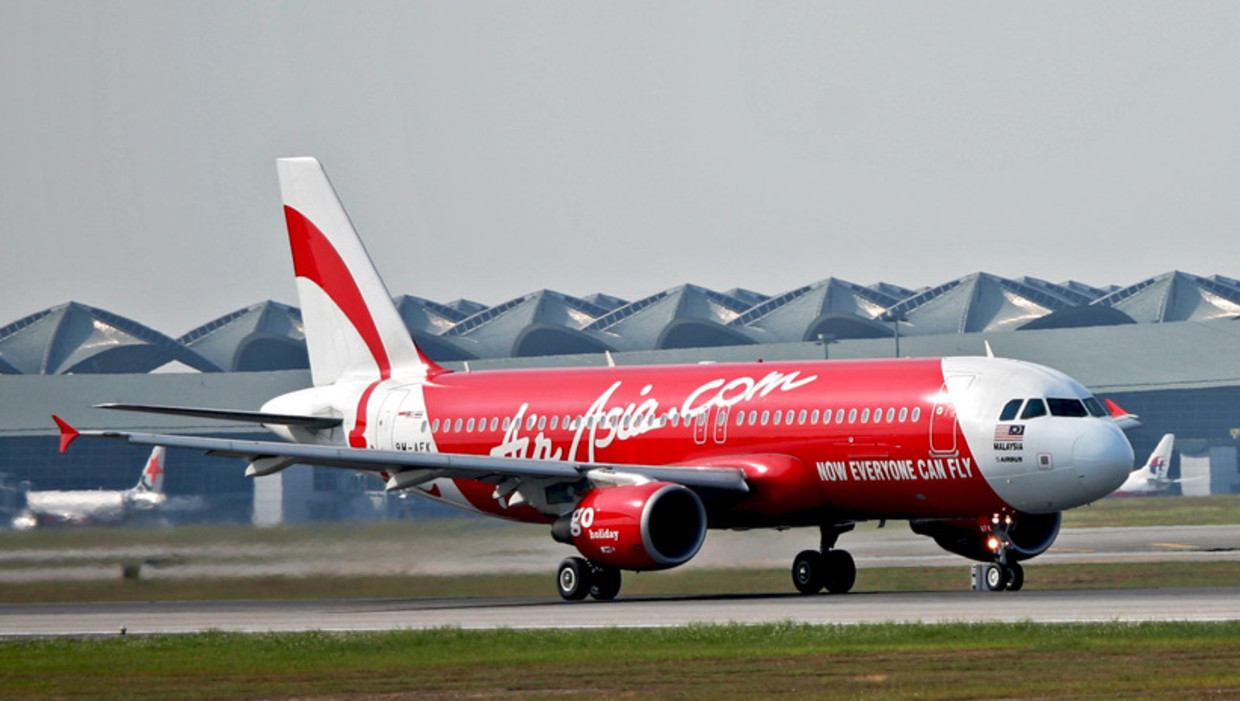
    Airasia’s digital logistics venture Teleport has signed an agreement to acquire 100% equity interest in local online food delivery platform Delivereat for US$9.8mil (RM41.52mil) to strengthen its delivery service in the country.

    Teleport chief executive officer Pete Chareonwongsak (pic) said the acquisition would be satisfied via a combination of cash and the company’s shares.

    Teleport is AirAsia’s cargo and logistics platform. It is a wholly-owned subsidiary of RedBeat Ventures, AirAsia’s corporate venture arm.

    He said the exercise would provide an opportunity for Teleport to grow its unique logistics ecosystem alongside Delivereat, which has carefully developed an extensive and cost-competitive delivery network over the last nine years.

  • Why are Asians so Good at Maths and Science?

    Why are Asians so Good at Maths and Science?

    Basing this statement on an argument of genes is completely untrue. This stereotype is statistically valid as many but not all Asians fare better than other races and communities in mathematics and science. Universities and schools in Asia have proven their scientific prowess time and again by being amongst the top when it comes to mathematics and science. Here are 5 reasons that justify their scientific capabilities.

    Teaching techniques

    Teaching methods used in Asia are quite different from those used in the West. Schools follow a rigid, streamlined curriculum that gives more importance to sciences and quantitative mastery.

    Students are expected to do well in all subjects but if they were to score low in a subject, it must only be a non-science subject such as English or History. Punishments are a normal means of shaping students into excellent students.

    Math homework resource

    If you’re planning to study math in college or are have already begun your college education, PlainMath is a great resource to use. You can find your math homework answers on on their website. All you need to do is upload your question and you’ll get the complete solution in 2 minutes. You can even study tricky concepts by browsing through their topic list and going through all the questions people have uploaded previously.

    Cultural differences

    Asian communities are more collectivistic than those in the West. Children are brought up with a mentality of upholding the name of the family by excelling academically and career-wise. Asians are also brought up with a different mentality regarding hard work. If you aren’t good at science, whether you enjoy it or not, you must put in time and study until you top your class.

    Complete dedication to academics is taught to children till it becomes ingrained. In Western communities, parents are more concerned with hard work than hard work put in specifically to excel at math and science. These differences in culture have continued to fuel the excellence of most Asian kids in math and sciences.

    Competition 

    Competition plays a key element in the Asians’ prowess in math and science. With almost all children being pushed to do well academically and pursue careers in sciences, most children face tough competition in competitive exams and school exams alike. Being intellectually gifted is, for Asian communities, the only dependent on how much time and effort children give to their studies.

    Life apart from academics is overlooked and families continue to push their children to follow a school life dedicated to academics. These practices have continued for a time sufficient enough to make it a norm. Competition pushes children to do better and continue improving until they are part of the cream of the crop of their community.

    Family pressure

    The degree of family pressure also varies between Asian and Western communities. As mentioned before, children are brought up with a mentality to excel at their academics and study to be at the top of their class in maths and science.

    Families put a huge responsibility on their students by asking them to uphold their family’s reputation. If the child fails or scores lower than average in maths and science, parents tend to harder on them and push them to give more time to studies. Encouraging children to put in hard work is healthy and can lead to more successful futures. But an unhealthy version of such pressure includes a lack of empathy towards the child’s struggles.

    Creative restriction to sciences

    Creativity is an essential element of development for children. Asians, with their inclination to see their children prosper in the field of maths and science, encourage them to use their creativity in just those fields. Mathematics and Science require creativity and the curiosity to explore new subjects, experiment with new ideas and find different solutions to the same problem.

    This method of limiting creativity to these two fields is arguably one of the biggest reasons why Asians do well in math and science. Unlike Asian families, western families accept creativity beyond maths and science, allowing their children to explore new fields and subjects. This difference between the outlook of Asians and other races towards creativity is crucial in understanding why they are so good at maths and science.

    Conclusion

    The statement is certainly not applicable to all Asians and Asian communities as a whole but stands true to characterize a significant portion of Asians. The factors mentioned above have shown most reason to make Asians good at maths and science when compared to other students.

    Author’s Bio 

    Michael Turner does one thing better than anybody else, and that’s writing. He’s a professional writer who has written numerous college and school course books, academic papers to help students who struggle in academic work and contributes high-quality content to high-authority blogs and social media platforms.


  • Philippines AirAsia to resume international flights by 1Q22

    Philippines AirAsia to resume international flights by 1Q22

    Philippines AirAsia intends to restart international flights by the first quarter of 2022 after resuming domestic services in the fourth quarter of 2021, says chief executive officer Ricky Isla.

    He told The Philippine Star newspaper that the airline’s priority is to rebuild its domestic network from Manila Ninoy Aquino Int’l, manage capacity, and control costs. “What is important is (that) we have to maintain our cost of operations. That’s the reason why we’re concentrating right now mostly on our Metro Manila hub.”

    The airline will look to restart flights from its hub at Clark in mid-to late 4Q21. “We will most likely reopen with our Clark trips towards the peak season of November and December,” he told The Philippine Star. “The best time is when there is already what you call a good herd immunity in Manila and Central Luzon like Clark. Then we will be confident that we will be extending also our Clark hub as our point of destination,” he said.

    The AirAsia Group unit has been conducting only essential flights recently in light of the government’s directive to place the capital Manila, officially called the National Capital Region (NCR), under quarantine with heightened restrictions from July 30, 2021, to August 5, 2021, and enhanced quarantine from August 6 to 20, 2021. This has meant that only people authorized to be outside their residences were allowed to travel into and out of the NCR, including Cavite, Bulacan, Laguna, and Rizal. Inbound travel to Iloilo City, Iloilo Province, and Cagayan de Oro City was also suspended from August 1 to 7, 2021, to manage the spread of the Delta variant of COVID-19.

    From August 21, 2021, the airline is scheduled to resume domestic services from Manila to 12 domestic cities, namely Bacolod, Cagayan de Oro Laguindingan, Caticlan, Cebu, Davao, General Santos, Iloilo, Kalibo, Puerto Princesa, Panglao, Tacloban, and Zamboanga, the ch-aviation schedules module shows.

    From October 1, it is scheduled to resume services to seven domestic points from Clark, including Cagayan de Oro Laguindingan, Caticlan, Cebu, Davao, Iloilo, Puerto Princesa, and Tacloban, according to ch-aviation data.

    Isla said the company also sought to strengthen its cargo business. “Cargo also has to expand its customer experience. Before, it was just airport to airport, now you have airport to your point-of-destination, and airport up-to-the-household,” he said.

    Before the latest lockdown, AirAsia had carried 171,543 passengers between April and June 2021, an increase from 168,527 passengers carried in the first quarter of 2021. Year on year, this represented a 489% jump from the 29,111 passengers carried in the second quarter of 2020. The carrier has operated more than 600 chartered repatriation flights since last year.

    Philippines AirAsia reported that 92% of its flight operations team, including pilots and cabin crew, plus 86% of its ground staff, have been vaccinated against COVID-19.

  • 7-Eleven, Simply Cups rescue 20 million cups from landfill

    7-Eleven, Simply Cups rescue 20 million cups from landfill

    “Australians love their coffee so it’s vital that they can easily and reliably recycle their disposable coffee cup and reduce the huge number of takeaway cups that currently end up in landfill each year,” Assistant Minister Evans said. “Rather than just being put into the rubbish bin and ending in landfill, Simply Cups collect and then reprocess the used coffee cups, transforming them into new items like outdoor furniture, coffee cup trays, and even traffic solutions like roadside kerbing.”

    “Simply Cups’ recycling scheme now collects almost 1 million cups every month Across Australia, with nearly 1000 collection points at 7-Eleven stores, cafes, hotels, hospitals and universities,” said Assistant Minister Evens. “Australians care deeply about recycling, and disposing of coffee cups at a designated Simply Cups collection point, they will be doing their part to increase recycling and reduce waste. This is a great practical example of Australia’s growing circular economy in action, and shows how we will all benefit from an invigorated waste and recycling industry.”

    Founded by circular economy specialist Closed Loop, Simply Cups has installed almost 1,000 cup collection points across Australia in less than three years, including 632 7-Eleven stores nationwide. Rob Pascoe, Closed Loop Managing Director, said Simply Cups aims to make cup recycling mainstream and to recycle 100 million cups every year.

    “Simply Cups is a perfect example of the circular economy in action,” said Pascoe. “It is a practical solution that increases recycling rates and reduces waste, while creating supply and demand for products made from recycled material. It is fantastic to see so many people embracing Simply Cups, because it really is a win-win for the environment and the economy.”

    “Our circular economy will grow quickly if people choose Australian-made and recycled over other alternatives. After all, recycling doesn’t actually happen when you put an item in a bin, it only happens when that item is given a second life,” Pascoe added.

    7-Eleven is the pioneering partner of Simply Cups and leads the way with the most collection points and most cups diverted from landfill (2.7 million cups since 2018).

    “Saving 10 million coffee cups from landfill is a fantastic achievement, but it’s just the tip of the iceberg,” said 7-Eleven Chief Executive Officer, Angus McKay. “We encourage customers to up the ante and deliver any brand of used coffee cup or straw to our cup collection points at store, and we’ll make sure they get recycled via Simply Cups.”

    “We agree that the best option is not to create waste in the first place. We encourage reusable coffee cups and have an rCUP available for purchase, which is a reusable coffee cup made from recycled coffee cups. We also regularly run promotions on Slurpee bottles to encourage the use of those instead of paper cups.”

    “In addition, we’re rolling out a Cup Rescue community program to fund the recycling of cups for small business, community groups and schools by providing them with their own cup collection units.  This is perfect for organisations that are either too small to set up their own recycling with Simply Cups or are community organisations like schools,” said McKay.

    As well as 7-Eleven stores, Simply Cups collection points can now be found in cafes, office buildings and shopping centres across Australia. Simply Cups has grown exponentially since starting in May 2017, collecting 1 million cups in the first 12 months and 10 million cups within 3 years.

  • Singapore Relaxes Border Restrictions for Travellers

    Singapore Relaxes Border Restrictions for Travellers

    The city-state will reopen its borders to fully vaccinated travelers from certain countries and is removing stay-home requirements for short-term visitors from several countries.

    Fully vaccinated travelers from Germany and Brunei will be able to come to Singapore without serving a stay-home notice, under a new Vaccinated Travel Lane arrangement announced on Thursday.

    At the same time, all travelers from Hong Kong and Macau, Mainland China, New Zealand and Taiwan, regardless of vaccination status, can enter without serving a stay-home notice, the Civil Aviation Authority of Singapore (CAAS) said.

    Vaccinated Travel Lane visitors will have to meet a set of criteria that includes taking designated flights that serve only vaccinated travelers, not transiting elsewhere, and undergoing PCR tests while in Singapore. Those who arrive on flights not under the Vaccinated Travel Lane will be subject to prevailing quarantine measures upon arrival, CAAS said.

    In response to the relaxed border measures, Singapore Airlines will operate five weekly Vaccinated Travel Lane flights from Frankfurt and Munich beginning September 7.

    Lufthansa, will also increase its flights to Singapore to three weekly, up from one currently – two of these will be for the designated Vaccinated Travel Lane.

    Separately, the Ministry of Transport announced that Singapore and Hong Kong have agreed not to pursue further discussions on the air travel bubble, owing to differences between the two cities in their strategy for managing the Covid-19 pandemic.

    «Both parties agreed that it would not be possible to launch or sustain the air travel bubble in its present form,» the announcement said.

  • Wind power developers in central province rush construction to get incentive tariff

    Wind power developers in central province rush construction to get incentive tariff

    Wind power farms in the central province of Quang Tri are scrambling to complete construction to benefit from the 20-year incentive feed-in tariff available until October 31.

    Under the scorching sun 800 workers are quickly building a solar plant in Huong Hoa District, hoping to finish the work before the rains begin next month.

    Tai Tam – Hoang Hai will have 31 turbines, and the foundations have been completed for more than 20 of them. Five turbines are being installed, and the investors hope the farm will become operational by the end of October.

    Then it will be eligible for the incentive feed-in tariff of 9.8 U.S. cents per kilowatt-hour for offshore projects and 8.5 cents for onshore.

    Nguyen Van Nghi, deputy director of the project, said some households have built tall structures nearby hoping to get compensation to make way for the giant turbines.

    “We need to speed up transportation to complete the project by the end of October, but if we do not pay high compensation local residents refuse to let us transport the equipment through their land.

    So far around VND200 billion has been paid as compensation. The company is seeking help from authorities to get locals to remove their structures.

    At two other wind power plants nearby, Phong Huy and Phong Nguyen, the foundations are complete but only four out of 24 towers have been built.

    Nguyen Ngoc Tien, CEO of the projects, said he has increased the number of workers and even transports materials at night to finish the projects before the deadline.

    It would take five to six weeks to finish, he added.

    After that foreign experts will make any adjustments necessary before the plants can begin operations.

    But with travel restrictions causing delays, wind power plant developers want Quang Tri authorities to allow experts to quarantine on-site upon arrival and start working immediately.

    Quang Tri has 29 wind farms under construction with a total capacity of 1,117 megawatts and costing over VND30 trillion.

    It is estimated that 16 of them will become operational before October 3.