Category: General

Retail News Asia is committed to providing both local and global retailers with the latest General Retail news throughout the Asian market. This on a daily base.

  • Japan’s retail sales rise at fastest pace in five months

    Japan’s retail sales rise at fastest pace in five months

    Japanese retail sales rose 5.2 percent year-on-year in March, representing the fastest pace of growth in five months as consumer demand returned after suffering a huge hit due to the coronavirus pandemic last year, according to a report.

    The world’s third-largest economy’s retail sales gains beat the median market forecast of 4.7 percent growth with the fastest rise since a 6.4 percent jump in October and the first positive growth seen in four months. Compared with the previous month, retail sales rose 1.2 percent on a seasonally adjusted basis.

    Fashion items were one of the categories driving growth in March and department stores saw particularly strong gains, posting a 19.3 percent jump in sales.

    This said, Japan’s slow vaccine rollout and a resurgence of Covid-19 cases, leading to new state of emergency declarations last week, are expected to weigh on consumption in the near term.

  • Google parent Alphabet reports record-breaking first quarter

    Google parent Alphabet reports record-breaking first quarter

    Now that we are in the midst of earnings season, Google parent Alphabet announced its results for the first quarter of 2021. Alphabet said that it garnered a record $55.3 billion in revenue from January through March which was a healthy 34% gain from the $41.2 billion that the company grossed during the same quarter last year.

    Net income soared from last year’s $6.84 billion (or $9.87 per share) to this year’s $17.93 billion (or $26.29 per share). Advertising revenue was $44.68 billion from last years’ $33.76 billion for a 32.3% increase. YouTube ad revenue for the quarter rose 48.8% to $6.01 billion from $4.04 billion.

    Google and Alphabet CEO Sundar Pichai said, “Over the last year, people have turned to Google Search and many online services to stay informed, connected and entertained. We’ve continued our focus on delivering trusted services to help people around the world. Our Cloud services are helping businesses, big and small, accelerate their digital transformations.”

    Ruth Porat, CFO of both Google and Alphabet, also weighed in on the release. Porat stated, “Total revenues of $55.3 billion in the first quarter reflect elevated consumer activity online and broad-based growth in advertiser revenue. We’re very pleased with the ongoing momentum in Google Cloud, with revenues of $4.0 billion in the quarter reflecting strength and opportunity in both GCP and Workspace.”

    Google spent a little more to obtain more business. For the quarter, its Total Acquisition Costs (TAC) were $9.71 billion compared to last year’s $7.45 billion. That works out to a 30% increase on an annual basis.

    Alphabet shares (GOOG) closed Tuesday’s regular trading session down $19.62 or .84% to $2,307.12 per share. After the earnings were released, the stock rose $106.28 or 4.61% to $2,413.40.

    Clubhouse is becoming an extremely popular social media app on iOS. If you don’t know what it is or how to get an invite, read this.

  • Russia fines Apple $12 million for antitrust violation

    Russia fines Apple $12 million for antitrust violation

    Apple has just been fined $12M by Russian antitrust authorities, according to a report from The Moscow Times. The tech giant has been sued by Kaspersky, a large cybersecurity company, for unfair treatment and an antitrust violation—something that’s been getting Apple into hot water quite a bit lately, it seems.

    Apple was found to have abused its dominant position in the distribution of mobile applications on the iOS operating system through a series of actions that led to a competitive advantage for its own products, and at the same time worsening the distribution conditions for competing products.

    The information was originally released in a statement from Russia’s Federal Antimonopoly Service, or FAS.

    It turns out that back in 2018, Kaspersky was updating its Safe Kids parental control app, but was unjustly blocked from Apple. At the exact same time, however, Apple released its own competing feature called Screen Time as part of iOS 12.

    Now that Kaspersky has won the lawsuit, the Russian court is ordering the Cupertino giant to do more than shell out twelve million dollars.

    In addition, Apple will be forced to change their own terms and conditions that allow them to “reject third-party applications from the App Store for any reason, even if they meet all requirements.” The court has also ordered that Apple make sure that “in-house apps do not take precedence over third-party apps.”

    Apple is currently appealing the fine, arguing that its reason for blocking Safe Kids had nothing to do with competing services. Rather, the company said that Kapersky’s app was putting “users’ privacy and security at risk” using highly invasive technology.

  • Here’s why Apple iPhone users need to install Signal even if they don’t use it

    Here’s why Apple iPhone users need to install Signal even if they don’t use it

    It has recently been revealed that Israeli company Cellebrite had nothing to do with the unlocking of the Apple iPhone 5c belonging to alleged San Bernardino shooter Syed Farook back in 2016. That honor and the $900,000 payday reportedly went to a little-known firm named Azimuth, now a part of L3Harris Technologies. But that hasn’t stopped Cellebrite from continuing to crack open iPhones on behalf of law enforcement.

    However, something has stopped Cellebrite dead in its tracks forcing it to stop using its top-of-the-line machine to open iPhone models. Cellebrite’s Physical Analyzer has been called “the industry standard for digital data examination,” but it can no longer be used to collect data from Apple’s iOS-powered smartphones. That’s because messaging app Signal, as detailed in its blog discovered several vulnerabilities in Cellebrite software which corrupted scans of the iPhone.

    These vulnerabilities, if exploited, would not only call into question the results of a current scan but also past and future scans are done with the same machine. It would be a prosecutor’s nightmare and a dream come true-with extra whipped cream on top for defense attorneys. And all Signal had to do was to place a file into the Cellebrite machine.

    With Signal installing the file for all of its users, this has proven to be an incentive for iPhone users to install the messaging app even if they never use it. In its aforementioned blog, Signal explained the process of kicking Cellebrite where it hurts. This is done “by including a specially formatted but otherwise innocuous file in an app on a device that is then scanned by Cellebrite, it’s possible to execute code that modifies not just the Cellebrite report being created in that scan, but also all previous and future generated Cellebrite reports from all previously scanned devices and all future scanned devices in any arbitrary way (inserting or removing text, email, photos, contacts, files, or any other data), with no detectable timestamp changes or checksum failures. This could even be done at random, and would seriously call the data integrity of Cellebrite’s reports into question.

    The ease with which Signal can do this is apparent from its comment that states “Any app could contain such a file, and until Cellebrite is able to accurately repair all vulnerabilities in its software with extremely high confidence, the only remedy a Cellebrite user has is to not scan devices. Cellebrite could reduce the risk to their users by updating their software to stop scanning apps it considers high risk for these types of data integrity problems, but even that is no guarantee.”

    One interesting discovery by Signal revealed that Cellebrite was using Apple DLL files to help it extract data from iOS devices. As Signal says in its blog, it is “unlikely” that Apple would give Cellebrite permission to use these files. The messaging app says that this use of Apple’s files without permission “might present a legal risk for Cellebrite and its users.”

    Explaining how the DLL files are used, Signal notes, “The Cellebrite iOS Advanced Logical tool loads these Apple DLLs and uses their functionality to extract data from iOS mobile devices. The screenshot below shows that the Apple DLLs are loaded in the UFED iPhone Logical.exe process, which is the process name of the iOS Advanced Logical tool.”

    Signal was able to find the vulnerability by getting its hands on Cellebrite’s software, including the powerful Physical Analyzer. Signal found the vulnerabilities it discusses in its blog.

    Signal said that it would be willing to “responsibly disclose the specific vulnerabilities we know about to Cellebrite.” In return, Signal wants Cellebrite to do reveal all of the vulnerabilities that it uses to physically extract data and provide all of its services now and in the future to its “respective vendors.”

  • The most important Pokemon GO event returns in 2021

    The most important Pokemon GO event returns in 2021

    Niantic is confident that one of the worst epidemics in the last century is almost over, so it decided to greenlit its most important outdoor event, the Pokemon GO Fest. The company behind one of the most successful mobile games confirmed today that Pokemon GO Fest will return this year as a two-day global event from July 17 to July 18.

    Unfortunately, the studio did not reveal any information about the challenges Trainers will have to tackle, nor the rewards they’ll gain during the Pokemon GO event. However, Niantic did point out that 2021 marks both the 25th anniversary of Pokemon and the 5th anniversary of Pokemon GO, fans should expect some big surprises this year.

    Since we’re only three months away from the event, we doubt that everyone will be vaccinated, but that doesn’t seem to bother Niantic. The developer advises participants to “be aware of their surroundings and follow guidelines from local health authorities when playing Pokemon GO.”

    Niantic also warns that upcoming events are subject to change, so here is hoping that nothing very bad happens during the three months until the next Pokem

  • FMCG brands will boost digital ad spend as consumers stick to online

    FMCG brands will boost digital ad spend as consumers stick to online

    Most Australians who started buying more of their groceries online as a result of the Covid-19 say they plan to continue to do so, even when the pandemic is over.

    A ZenPoll in early March found that 29 percent of the 1023 Australians polled started buying more groceries online as a result of the pandemic, and 21 percent of them said they would continue.

    However 74 percent still strongly prefer the in-store experience with only 24 percent preferring online.

    “As restrictions have been eased or removed, the convenience of the online experience is what has kept many new converts online, said Zenith Australia’s head of strategic insights, Kim Xavier. “So balancing the benefits of the in-store experience with the convenience of online will be a challenge for retailers.”

    The research was part of a broader international study assessing the importance of digital advertising spending by FMCG companies, resulting in Business Intelligence – FMCG Food and Drink report, published today. Zenith forecasts FMCG food and drink brands will increase their share of ad spend on digital channels by 7 percent annually through to 2023, nearly double the 4 percent increase in overall FMCG ad spend over the same period.

    “The online nature of these services is increasing supermarket retailers’ focus on digital media investment in what has otherwise been a softening market,” said Vikki Pearce, head of digital at Zenith Melbourne.

    “And FMCG brands are following suit – particularly over-indexing in their online video spend as they strive to keep top of mind and capture share of wallet not only in the growing e-commerce opportunity.”

    Globally, FMCG brands still rely heavily on traditional TV, which accounted for a 39-per-cent share of total advertising budgets last year, compared with 24 percent for brands overall.

    Zenith forecasts that FMCG digital ad spend will increase from US$12.3 billion worldwide last year to $14.9 billion in 2023, and that its market share will rise from 46 percent to 49 percent.

    “FMCG brands need a new comprehensive approach to reach-based planning,” said Ben Lukawski, global chief strategy officer at Zenith. “That means combining TV, paid advertising in online video, virtual placement in streaming video on demand platforms and perhaps even a presence in gaming, using first-party and second-party data to prevent duplication and optimize incremental reach.”

    Zenith’s report covered 12 international markets: Australia, Canada, China, France, Germany, India, Italy, Russia, Spain, Switzerland, the UK and the US, which between them account for 73 percent of global ad spend.

  • Woolworths to recycle batteries, mobile phones

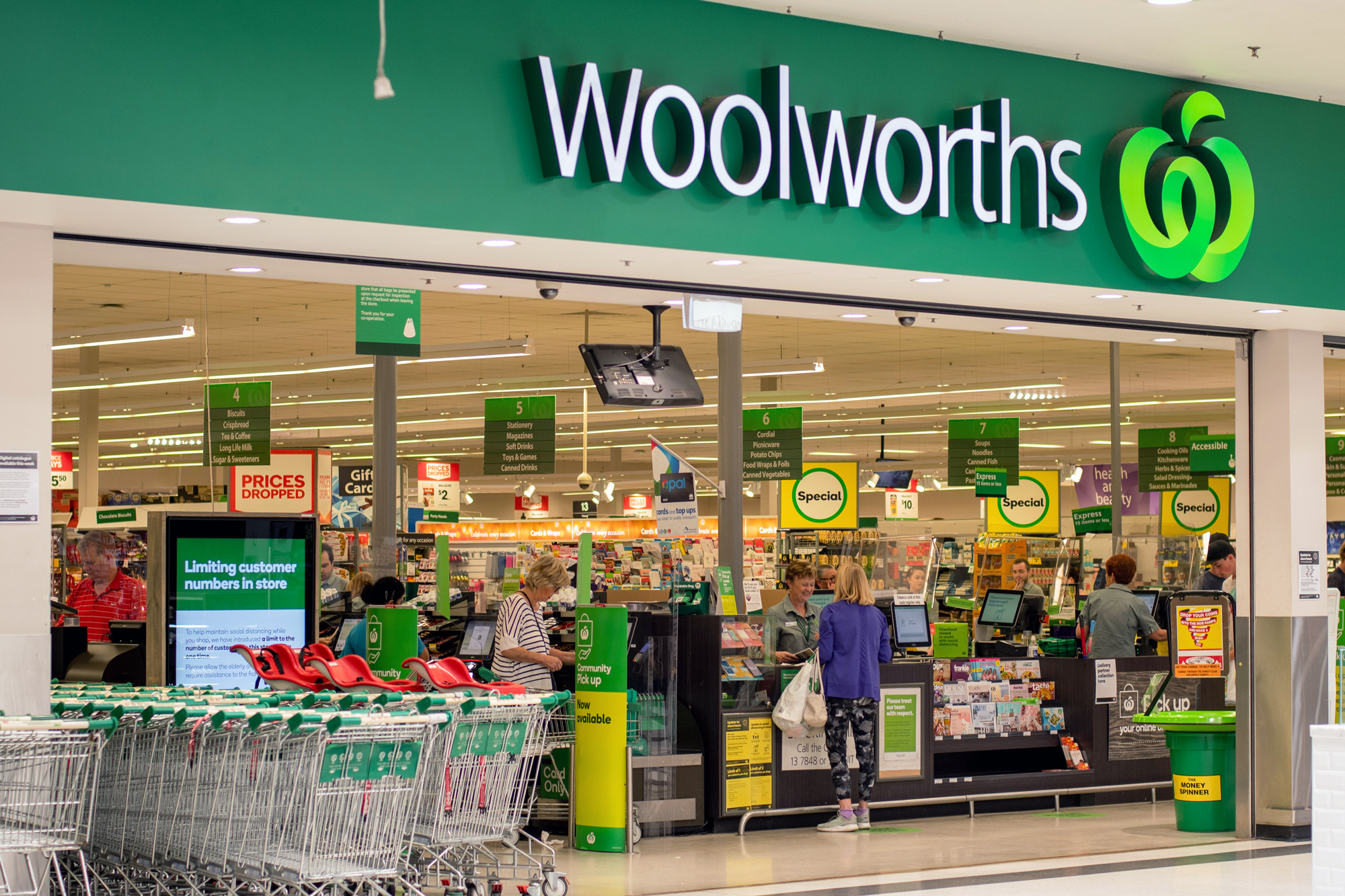
    Woolworths to recycle batteries, mobile phones

    Supermarket Woolworths is further hastening its consumer-facing sustainable initiatives by announcing a battery recycling initiative, with collection units to be placed in every Woolworths store around the country.

    The units will accept used batteries, as well as mobile phones, in an effort to bump up Australia’s rate of battery recycling – which currently sits at around 10 per cent, lagging behind other developed nations.

    “We’re working towards a better tomorrow by reducing our own environmental footprint, while also making it easier for our customers to do the same,” said Woolies’ head of sustainability Adrian Cullen.

    “By offering customers a convenient place to drop off batteries and phones as part of their regular weekly shop, not only can we help prevent batteries going to landfill, but also reduce at home stockpiles which can be a safety risk.”

    The program is operated in partnership with battery recycler Ecobatt, which will collect and process the batteries and phones. It also comes as the Federal Government produced additional funding for the Battery Stewardship Council, of which Woolies is a member, to support schemes such as this.

    “Convenience is often one of the key elements to changing consumer behaviour, so it’s wonderful to see Woolworths providing their customers drop off points for used batteries,” said Federal Minister for the Environment Sussan Ley.

    Used batteries can often leak harmful chemicals into their surroundings, and can be recycled to extract useful metals such as copper, aluminum and steel.

  • 5 Ways Universities Can Use Facebook to Market to and Connect with Students

    5 Ways Universities Can Use Facebook to Market to and Connect with Students

    If you’ve been looking at the marketing tactics that top colleges have been using to attract and enroll new students, you’ve probably noticed that social media platforms have helped a lot in this. Most college students spend several hours on social media every day. It’s quite difficult to market to college students without using social media platforms.

    Since most brands have used social media successfully to market the products and services they offer, shouldn’t universities and colleges use the same tactics to engage students? Research studies have shown that two-thirds of high school students decide to choose the college they’ll attend after looking it up on social media. The most successful colleges are using social media platforms to grab the attention of a student. Here are five ways that they can use to connect with new college students.

    1.    Focus on promoting a campus culture

    One of the things that attract new students to a university is an exciting campus culture. That’s why you need to use social media platforms to show your followers that your campus is an exciting place. Universities that use this strategy don’t just post boring announcements about various calendar events They show users every action with videos and photos in real-time.

    Whether your college is putting on a festival, hosting a sports game, or a guest speaker, you can use social media to create a sense of urgency for students who are looking for a place to study. Your brand voice plays an integral role here. You should use it to guide your social media posts with a sense of tradition and history which are the things that make your education culture unique.

    2.    Post big wins and fix plagiarism

    Every student wants to be associated with a school that excels. And current students should be proud of wearing that jacket that has the school logo. Great schools use social media platforms to share with the world their big wins. This could be a win on the field, a plagiarism-free study that was published in a famous journal thanks to essay fixer online, or top-performing students in class. Big wins help in building the school’s reputation. And it’s one of the most important factors that parents consider before spending on tuition.

    3.    Encourage students to share their stories

    The majority of students expect brands including universities to have a strong presence on social media. One of the ways learning institutions are fulfilling and exceeding their followers’ expectations is by encouraging students to share interesting stories. A good example is the University of Hampshire which came up with a hashtag on Instagram for this purpose.

    This hashtag allows students to share their experiences on their profiles and this automatically adds them to a network of students. Potential students can enroll in such posts to get a feel of what life is like at the university. Some colleges scan social media regularly to look for school mentions even in cases where they haven’t been tagged directly. Sharing positive posts from either incoming or current students is a great way to show students that their voice is important.

    4.    Share the success stories of alumni

    Alumni become champions in business, politics, and sports. Some rise so high to become presidents of big nations like the US. That’s why universities need to share the stories of their alumni. Highlighting the successes of alumni shows prospective students what they should expect from the school. Engaging with alumni helps in retaining them as advocates. They can help universities get referrals. Plus, sharing the success stories of alumni in social media can spread like wildfire and increase the chances of it landing on fresh eyes.

    5.    Engage with followers directly

    Everyone loves winning contests. Social media gives learning institutions a chance to host contests, giveaways, and polls. Such posts add variety and give followers a chance to engage by sharing their thoughts and opinions on a particular subject. Successful schools use such contests to collect information and give their followers a chance to share study posts.

    Conclusion

    Facebook is a leading social media network that was created back in 2004. And it’s the biggest social media network in the world today. It remains the most popular platform among young learners. Schools can increase the enrollment rate by sharing interesting news and updates that are relevant to their target audience.

    More features are being added to Facebook every day to make it interesting. For instance, Facebook Live is a new feature that universities to communicate with their audience directly. By using the five tips that we’ve discussed in this article, Universities will boost their productivity and performance in the long run.

    Author Bio:

    Paul Calderon is an experienced editor and writer. He enjoys painting, reading literature books, and writing essays. You’ll find him playing with his furry friend or working out during his free time.


    https://www.pexels.com/photo/facebook-application-screengrab-479358/

  • AirAsia Beauty launches in Malaysia and Indonesia as part of expansion plan

    AirAsia Beauty launches in Malaysia and Indonesia as part of expansion plan

    AirAsia.com’s Super App has launched its latest AirAsia Beauty product offering in Malaysia and Indonesia. Acknowledging the growing market demand for beauty and skincare products, AirAsia beauty has revealed a rapid expansion plan within the Association of Southeast Asian Nations.

    AirAsia Beauty has curated a range of products including skincare catering to all skin-types and fragrances, bath and body supplements for pampering.

    Accessible via the AirAsia super app (under the beauty tab) and at airasia.com/beauty, the platform features a wide range of brands including History of Whoo, Dr. Morita, Mediheal, The Mineraw, farmskin, Clio, Dashing Diva and Cosrx.

    AirAsia beauty currently delivers within Klang Valley, Malaysia and Jakarta, Indonesia by Teleport, AirAsia digital’s logistics venture.

    Lim Ben-Jie, Head of Commerce, AirAsia Super App said: “E-Commerce and home shopping has now become part of our daily life. From our experience with AirAsia shop, we observed remarkable demand for our beauty products, and we decided to carve out AirAsia beauty as a standalone service, offering authentic beauty products delivered to your doorstep.

    “We hope to share our products to the people of Asean by leveraging on AirAsia’s unique internal talent, none other than our cabin crew and grooming instructors who are the perfect beauty ambassadors. Beauty is part of their everyday regime and they are experts on always looking great and flawless.

    “The addition of AirAsia beauty will further diversify our Super App lifestyle offering, bringing us a step closer to becoming Asean’s leading one-stop lifestyle and travel app.”

    AirAsia beauty is currently offering up to 50% off selected brands and free delivery within Klang Valley. Shoppers can also pay with BIG Points to save more and earn BIG Points each time they spend on AirAsia beauty.

    Ben-Jie added: “With AirAsia beauty, consumers can look forward to an integrated online shopping experience supported by real personal beauty tips, product reviews, and favorite picks from our Allstars and other users.

    “Beauty is a continuous journey; besides providing consumers with the best items for their skin and delivering them to their doorstep, we are also here to give more resources in helping one to become their best self.

    “Kicking off in the Klang Valley in Malaysia and Jakarta in Indonesia, we have plans for nationwide expansion in Malaysia, Indonesia and other Asean markets. We are working closely with various brands to introduce new products and exclusive bundles soon, so stay tuned for more exciting developments from AirAsia beauty.”

  • Snapchat’s improved Android app has paid off big time

    Snapchat’s improved Android app has paid off big time

    Starting back in 2018, messaging app Snapchat started revising its Android app and the results have been amazing. For the first time, during the first quarter of 2021, the number of the app’s Android users exceeded the number of its iOS users. Snapchat’s Android app was slow and the update made it run faster while improving key features like Lenses.<

    Also helping the Android version of Snapchat gain traction, parent company Snap added more content geared toward certain countries and started to support more languages outside the U.S. where Android users handily exceed those using an iPhone. Snap CEO Evan Spiegel called the swap between Android and iOS users "a critical milestone that reflects the long-term value of the investment we made to rebuild our Android application."

    Additionally, for the first time since going public, Snap recorded a quarter with positive cash flow ($126 million versus negative cash flow of $95 million during the same quarter last year).

    In March, Snapchat launched "Phone Swap India" on its Discover section. That is where original programming and shows created by the app's media partners can be found. The number of Daily Active Users (DAU) rose to 280 million in Q1, a 22% annual hike, and 4.7 million users above analyst expectations of 275.3 million.

    Revenue during the period from January through March 2021 rose a stunning 66% to $770 million topping Wall Street estimates of $743 million. Snap's net loss came to $286.9 million from $305.9 million during the same quarter last year. The first-quarter net loss was 19 cents a share improving slightly from the 21 cents a share of red ink Snap reported during last year's first quarter.

    For the current quarter which ends in June, Snap Chief Financial Officer Derek Andersen says to expect a revenue gain of 80% to 85% with 290 million DAUs. CEO Spiegel said in a statement that "Augmented reality remains one of our biggest opportunities as we look to the future." Just last month the company purchased Fit Analytics, a company that uses AR to determine virtually if clothes will fit.

    Snap's shares soared on Friday, the day after the report was released. The stock closed at $61.30 up 7.39% or $4.22. A year ago, Snap was trading under $17.

  • WhatsApp disappearing messages feature may offer more time options in the future

    WhatsApp disappearing messages feature may offer more time options in the future

    Facebook-owned messaging service WhatsApp currently allows users to set their messages to disappear 7 days after they are sent. WhatsApp-centric website WABetaInfo reports that the platform may soon expand the functionality.

    WhatsApp appears to be testing a new option that would make messages vanish automatically 24 hours after they have been sent. The feature has been in development for around a month and even though the screenshot uploaded by the site only shows it’s being tested on an iPhone, it will likely be rolled out to Android users too.

    When the new version will be available is still a point for speculation.

    Ephemeral content was popularized by Snapchat, and WhatsApp’s rivals Signal and Telegram also let users send self-destructing messages. Tweet’s new fleets feature works similarly.

    When WhatsApp initially launched the feature last year, it said it was starting with seven days to offer “peace of mind that conversations aren’t permanent, while remaining practical so you don’t forget what you were chatting about.” This suggests it had plans to offer more options all along, which is hardly surprising.

    The new option will presumably be an addition to the existing 7-day option and will work the same way: posts in a chat, including photos and videos, will be deleted after a predetermined period of time and group admins will be able to turn disappearing messages on or off in group chats.

    There is still no way to prevent the other party from copying or screenshotting your messages, so be on your guard.

  • Google accidentally spills the beans about its Guacamole feature for Assistant

    Google accidentally spills the beans about its Guacamole feature for Assistant

    A new feature for Google Assistant called “Guacamole” is coming to Android. At first, it wasn’t clear what the “guac” will add to the digital helper, we now have an idea of what this feature does. It allows users to perform “time-sensitive quick tasks” such as silencing their alarms or answering their calls without having to say “Hey Google.”

    Interestingly, Guacamole appears only in version 12.5 of the Google app beta running on Android 11, not on the Android 12 Developer Preview. While Google wasn’t exactly forthcoming with information, it originally released a description about “Guacamole”: “Quickly get things done with Guacamole.”

    The feature accidentally was discovered in the main Assistant settings under “Guacamole” where it says “Skip saying Hey Google” for help with quick tasks. For example, you can cancel a ringing alarm by saying “Stop,” or “Snooze.” Handling an incoming call is as easy as saying “Answer/Decline the call” without having to say “Hey Google.”

    These settings were not meant to be viewed by non-Googlers.

    Google was testing Guacamole internally and the Assistant menu that accompanies this story was not meant for viewing by non-Googlers. A toggle switch can be used to enable the feature under Voice shortcuts.

  • Mobile World sets sights on significant 2021 improvements

    Mobile World sets sights on significant 2021 improvements

    The Mobile World Investment Joint Stock Co. targets VND125 trillion ($5.4 billion) in net revenues and VND4,750 billion ($206.6 million) in after-tax profits this year. The targets are respectively 15 and 21 percent higher than the company’s 2020 figures.

    The company has said in a statement that while the market still carries risks amidst the Covid-19 pandemic, it is determined to return to double-digit growth. This is the tenth consecutive year that it has set growth goals with increased revenue and profit targets.

    The firm plans to establish the Dien May Xanh Supermini chain with more than 1,000 stores by the end of this year. Their Bach Hoa Xanh chain that sells vegetables, seafood, meat and fast-moving consumer goods (FMCG) will be expanded with large stores with areas of more than 500 square meters in major metropolises.The company’s backbone business is retailing of smartphones and electronics, and this is expected to contribute around 75 percent of sales, with the rest coming from food and consumer goods.

    Mobile World will also focus on online sales, develop its Bluetronics chain in Cambodia, its high-tech agricultural project named 4KFarm and pharmacy chain An Khang.

    Last year, Mobile World earned VND108,546 billion ($4.72 million), up 6.2 percent year on year. Its after-tax profit was VND3,920 billion ($170.5 million).

    Mobile World has over 4,000 outlets in Vietnam and 37 in Cambodia. It opened nearly three new outlets a day on average last year. The company plans to become the top retailer in Southeast Asia by 2030.

  • China launches antitrust probe into food delivery giant Meituan

    China launches antitrust probe into food delivery giant Meituan

    China launched an antitrust investigation into food delivery giant Meituan, the market regulator said on Monday, the latest target in a crackdown on the country’s sprawling internet platform economy.

    The State Administration for Market Regulation (SAMR) said in a statement that its investigation was focused on the practice whereby a company forces vendors to use their platform exclusively, known as “choose one from two”.

    Tencent-backed Meituan, which this month raised $10 billion in a stock and convertible bonds sale, said in a statement it would cooperate with the investigation and that its business was operating normally.

    This month, SAMR imposed a record $2.75 billion fine on e-commerce giant Alibaba over the same practice and summoned 34 internet firms including Meituan to tell them to learn from Alibaba’s penalty and not use banned practices.

    Meituan, which competes with Alibaba-backed Ele.me among others, had an estimated 68.2% of China’s food delivery market in the second quarter of 2020, according to Trustdata. Meituan’s businesses also include bike-sharing, community group buying, and restaurant reviews.

    China has in recent months taken measures to rein in its once loosely-regulated internet economy in a clampdown backed by President Xi Jinping that has rattled the industry.

    Zheng Wei, a partner with Beijing-based law firm Anli Partners, said regulators aimed to reduce the impact of dominant internet players on consumers, employees, and smaller firms.

    He said that “regulators aim to prevent internet platforms from using their dominant position to exert influence over governance, including legislative and judicial process.”

    SAMR was adding staff and other resources as China revamps its competition law with proposed amendments including a sharp increase in fines and expanded criteria for judging a company’s control of a market.

    In March, Meituan was among five backers or owners of community group-buying platforms fined by SAMR over “improper pricing behavior” related to subsidies.

  • Cebu Pacific Raises $250 Million As Gokongwei’s Airline Prepares For Travel Recovery

    Cebu Pacific Raises $250 Million As Gokongwei’s Airline Prepares For Travel Recovery

    Cebu Pacific Air, the low-cost airline controlled by Philippine tycoon Lance Gokongwei and his siblings as part of JG Summit Holdings, said it has raised $250 million through the sale of convertible bonds to the International Finance Corp. and U.S. private equity firm Indigo Partners.

    The bonds can be converted into 318.75 million common Cebu Pacific shares at 68 pesos a piece, according to a filing with the Philippine Stock Exchange. The company didn’t disclose the specific investments made by IFC through its IFC Emerging Markets Fund and by Indigo partners through its Philippine subsidiary.

    The funds will provide the carrier some much-needed capital. Cebu Pacific, just like most travel-related businesses, suffered a net loss of 22.2 billion pesos ($459.4 million) last year as passenger traffic dropped 78% to 5 million. Both international and domestic travel came to an abrupt halt as the Philippines grappled with the Covid-19 pandemic. The country is among the hardest hit by the deadly virus in Southeast Asia.

    “At Cebu Pacific Air, our focus has been on bringing the vaccine into the country and getting back to regular travel,” Gokongwei told attendees to the 2021 Forbes Asia CEO Webinar late last month.

    The funds raised from the convertible bond issue form part of the the $500 million the airline aims to raise as it restructures operations in preparation for a vaccine-led recovery in the travel industry.