Category: General

Retail News Asia is committed to providing both local and global retailers with the latest General Retail news throughout the Asian market. This on a daily base.

  • Chinese mystery box retailer Pop Mart rakes in millions from millennials

    Chinese mystery box retailer Pop Mart rakes in millions from millennials

    Taking pride of place in 28-year-old Beijing lawyer Wu Ge’s bedroom are dozens of small figurines displayed on clear plastic shelves with designs ranging from cherubic dolls to characters from Japan’s Pokemon series.

    Wu estimates that she has spent over 5,000 yuan ($766) in the past three years buying the pieces from Chinese toy seller Pop Mart International Group, amassing a collection of over 80 figurines.

    Millions of young Chinese toy lovers like her are behind the popularity of Pop Mart, a Beijing-based company due to list in Hong Kong on Friday after raising $676 million in an initial public offering that priced at the top of its range, valuing the decade-old firm at as much as $7 billion.

    The company’s main product is “mystery” toy boxes that each hold a single figurine such as “pool babies” from the elf-like Pucky range, which Wu says are her favorite, or different versions of its best-selling character, the large-eyed, round-faced Molly doll.

    The boxes, which cost about $9 each, have been a big hit with China’s millennials. Consumers born after 1995 spend more on mystery toys than any other hobby, including fancy shoes and esports, according to a report last year by Alibaba-backed online shopping platform Tmall.

    Pop Mart, the market leader, more than tripled its revenues last year to 1.68 billion yuan ($256.8 million), according to its prospectus.

    The IPO drew strong interest from investors, with the retail offer 356 times oversubscribed.

    “The company operates in a niche and doesn’t really have any listed comparables in the region,” said Aequitas Research partner Sumeet Singh, who publishes on the Smartkarma research platform. “In addition, it is continuing to expand its network which will continue to aid growth.”

    Pop Mart and its advisors were so confident the deal would be popular that it elected not to take cornerstone shareholders which are common in Hong Kong IPOs.

    “I think consumer concepts will be a new focus in the market,” said a banker with direct knowledge of the matter who declined to be named as he was not authorized to speak to media. “In China, consumption is the growth engine of the economy.”

    Pop Mart’s listing will make its 33-year-old founder Wang Ning, who holds a 56% share in the firm, a billionaire. Pop Mart did not respond to requests for an interview.

    Mystery toy boxes are not new and trace their origins to Japan’s vending machine capsule models, Gashapon, a cash cow for the likes of toymaker Bandai. But Pop Mart has taken the trend to new heights, teaming up with artists to design new figurines and build up a pool of trademarks.

    The company now distributes its products in 21 countries outside China. Its customers – mostly aged 18 to 35 – are 75% female, the prospectus said.

    A key attraction for shoppers who buy the toys either online, from Pop Mart’s 136 mainland China stores, or 1,001 vending machines, is the surprise element: They do not know which exact figurine they get until they open the box.

    Some have become lucrative collectibles. Wang Di, a 19-year-old university student with more than 100 figurines, said she recently sold a rare Labubu – a rabbit-like creature with monster’s teeth – for over 700 yuan, more than 10 times what she paid for it.

    But other fans say they just love the toys for themselves.

    “Working pressure is huge for young people, and when I see these beautiful figurines on my desk, I’m cheered up. Some people prefer fresh flowers on their desk, and they are flowers for me,” said Wu.

  • Vietnam jet fuel tax cut to continue through 2021

    Vietnam jet fuel tax cut to continue through 2021

    Lawmakers have decided to continue the 30-percent cut in environment tax on jet fuel through next year to support the aviation industry.

    It will remain at VND2,100 (9.1 U.S. cents) per liter until the end of next year before returning to VND3,000 in 2022, the National Assembly Standing Committee decided on Thursday.

    Deputies had originally approved the cut from August until the end of this year.

    The government’s loss of revenues is estimated at VND360-400 billion this year, but it expects the tax break to reduce airlines’ costs and help them recover from the crisis caused by the Covid-19 pandemic.

    Airlines have gone through major difficulties due to travel restrictions and limited international flights.

    Vietnam Airlines forecasts a loss of VND14.8 trillion this year, while for budget carrier Vietjet it is likely to be VND3 trillion.

    The aviation industry served 29.4 million passengers in the first 11 months, down 41.7 percent year-on-year, according to the General Statistics Office.

  • Malaysian Mattress Start-up Launches German-Designed Mattresses with Free Delivery!

    Malaysian Mattress Start-up Launches German-Designed Mattresses with Free Delivery!

    Malaysian e-commerce, Origin, is gaining a foothold in Malaysia with its German-designed hybrid mattress — Origin Hybrid® Mattress.

    Founded by a pair of Malaysian locals and spearheaded by the German design engineer, Frank Richter, the online brand was established with the mission to simplify the process of buying a suitable mattress.

    By offering quality mattresses from an affordable price at RM1,225 and in-house services such as free, same-day delivery, the company is working to make premium mattresses accessible to Malaysians country-wide. Customers are also entitled to 120-Night Trial as a foolproof way of accessing the suitability of their mattress.

    The Origin Hybrid® Mattress went through a dozen sleeping trials, over 10 product tests, and 100 density changes before its launch. It has been recognised by Drum It Loud and for clinching the Best Mattress Design Award in “The Bester Matratze Design Preis Contest, Berlin”.

    Their Pillow is one of the best available in Singapore and Malaysia, matching even the best and highest priced Pillow in terms of features and function. The pillow was also awarded as one of The Best 8 Pillows in Singapore by Best in Singapore!

    Accolades aside, the Origin Hybrid® Mattress made its mark with this list of exclusive perks as well:

    • Micro Precision Springs™️ with motion isolation features
    • Contains a cooling Tencel layer to increase air circulation and tailored to combat Malaysia’s tropical heat
    • 3-in-1 hybrid mattress featuring memory foam and a later of natural latex for body relief, extreme comfort, and resistant to allergens like dust mites and mould.

    Origin has since expanded its collection to include bed frames, pillows, and mattress toppers.

    Customers can simply purchase their room furniture and bedding via their website or make a trip to their showroom.

    Address: No. 77 Jalan SS2/55 47300, Petaling Jaya, Selangor, Malaysia

    Opening hours:

    Monday to Friday: 10 am – 7 pm

    Saturday: 10am – 5pm

    Closed on Sunday and Public holiday.

    For more info: Website | Facebook | Instagram


  • Cebu Pacific steadily restores capacity in complex Covid-19 times

    Cebu Pacific steadily restores capacity in complex Covid-19 times

    Cebu Pacific Air has highlighted the bewildering array of coronavirus-related protocols as it works get passengers flying again.

    In a virtual media roundtable, Cebu Pacific head of commercial Alex Reyes says travelers confront “a very complex situation” when making a decision about flying. As with many airlines, Cebu Pacific has a page listing testing and other requirements for various destinations, but it is extremely difficult to keep it fully updated.

    “We try to capture all of the current regulations in place now,” he says. “It’s not perfect because the regulations are constantly changing…whether at the country level or even at the city level. They are constantly evolving and changing, as they react to the unique circumstances of their own locality.”

    More often than not, he says, people still opt to buy a ticket, but there are travelers that are put off by the complexity involved in booking a flight and dealing with the correct testing protocols.

    “I think the traveling public understands is that it is massively complex right now. Everyone is doing their part to try and make sure that yes, you can fly or no, you cannot fly. Or you get to fly as long as you do X, Y and Z.”

    The key is making the process “clear and transparent” to travelers.

    Covid-19 has hit the Philippines hard, including strict lockdowns earlier in the year that all but completely shut down air travel from mid-March to early June. According to the Johns Hopkins Coronavirus Resource Center, the country has 444,164 infections, second only to Indonesia in Southeast Asia.

    Nonetheless, Cebu Pacific has been working to restore flights after operating less than 10% of its domestic network from June to November. It is now operating 400-450 flights weekly to 28 domestic and eight international destinations.

    It has also relaunched services to leisure locations such as Bohol, Coron, Siargao, and Boracay.

    On international routes, the only service operating at normal, pre-Covid-19 capacity is Manila-Dubai, operated daily with an Airbus A330. The carrier recently increased frequencies to Nagoya and Seoul Incheon, and will restart flights to Taiwan on 18 December.

    Still, the low-cost carrier derived 66% of its third-quarter revenue from cargo. It has converted an A330 for cargo work and is carrying cargo on the seats of passenger aircraft.

    In addition, the airline is conducting a trial where passengers are tested at Manila’s Ninoy Aquino International Airport before flights to the southern city of General Santos. From 3 to 14 December, passengers will undergo a free antigen test prior to boarding their flight. Only passengers who test negative will be allowed to board.

    “It’s an approach we’re taking to assure the traveling public and local governments that we are not transporting any asymptomatic Covid-19 patients into their city or locality,” says Reyes. “It is another layer of protection to respond to the pandemic.”

    After analyzing the results of the trial, the airline will consider rolling.

  • Indonesia retail sales drops with 15 procent last October

    Indonesia retail sales drops with 15 procent last October

    Retail sales in Indonesia dropped 14.9% on a yearly basis in October, the biggest fall since June and after an 8.7% fall in September, according to a central bank survey released on Thursday.

    Sales of food, beverages and tobacco products contracted in October, after recording positive growth a month earlier, while a drop in sales of communication equipment accelerated, the survey showed.

    The survey estimated an even deeper slump in retail sales of 15.7% in November.

  • Tesco Asia sale to be settled before Christmas

    Tesco Asia sale to be settled before Christmas

    Tesco announced it has met all conditions for the £8bn ($10.8bn) sale of its businesses in Thailand and Malaysia, which means its shareholders can soon expect a £5bn payout.

    Selling around 2,000 stores in Thailand and 74 in Malaysia to Thai conglomerate CP Group is the last stage of the supermarket giant’s exit from Asia.

    “Tesco is pleased to confirm that CP Group has now reviewed and is satisfied with the formal notice of approval” from the Thai Competition Commission, it said in a statement.

    This, along with the approval it received from the Ministry of Domestic Trade and Consumer Affairs in Malaysia last month, “means there are no further conditions outstanding and the disposal is expected to complete on or around 18 December.”

    Tesco had earlier said it intends to return £5bn of the net proceeds from the sale to shareholders via a special dividend, together with a share consolidation, and plans to make a pension contribution of £2.5bn to the Tesco Pension Scheme once the sale is complete.

    Tesco Group CEO, Ken Murphy, said “I’m confident that the agreement with CP Group will ensure that they are well setup for continued success. This sale allows us to focus on our businesses across Europe and to continue delivering for customers, make a significant contribution to our pension deficit and return value to shareholders.”

    Back in the UK, Tesco announced earlier this month it will repay the government £585m it saved under a business rate holiday for retailers during the pandemic.

    But it also mounted a staunch defence of its decision to take the handout, calling it a “game-changer” and saying “every penny” had been spent responding to the pandemic

  • Facebook could be forced by the U.S. to sell Instagram and WhatsApp

    Facebook could be forced by the U.S. to sell Instagram and WhatsApp

    Facebook is going to be spending a lot of time in court after the U.S. Federal Trade Commission (FTC) and almost every U.S. state sued the social media company today. At issue is the “buy or bury” strategy used to snap up rival firms and keep smaller competitors away. Facebook was charged in two lawsuits of using its financial power to buy out rivals. In 2012, Facebook spent $1 billion to buy Instagram, which at the time was a photo-filter related app.

    Eventually, Instagram added a Stories feature that made it extremely popular. At the beginning of this year, Instagram had 1 billion monthly active users and an estimated valuation over $100 billion.. That means that Facebook was the beneficiary of one of the most profitable transactions ever made with a profit of more than $99 billion on paper. Two years later, Facebook paid $19 billion for the messaging app WhatsApp. By the time that deal closed, the rise in Facebook’s shares turned the value of the purchase to more than $21 billion.

    Both federal and state regulators want the deals to be overturned even though both were approved by the FTC years ago. If the regulators do agree to start the process of overturning the Instagram and WhatsApp deals, you can best believe that there will be legal challenges initiated by Facebook. 46 states are taking part in the suit with Alabama, Georgia, South Carolina and South Dakota sitting on the sidelines. New York Attorney General Letitia James, speaking on behalf of the coalition of the 46 states, Washington, D.C. and Guam that are suing Facebook, said, “For nearly a decade, Facebook has used its dominance and monopoly power to crush smaller rivals, snuff out competition, all at the expense of everyday users.” James said that Facebook acquired the companies before they got big enough to challenge Facebook.

    Jennifer Newstead, Facebook’s general counsel, called the lawsuits “revisionist history” and said that antitrust suits don’t exist to punish successful companies. She added that Instagram and WhatsApp became successful after Facebook spent billions of dollars on improving the apps. Newstead added that “The government now wants a do-over, sending a chilling warning to American business that no sale is ever final.” She pointed out that because of the merger, consumers benefited from the decision to make WhatsApp free. Prior to the deal, WhatsApp used to cost $1 to download and a dollar per year for service.

    Facebook co-founder and CEO Mark Zuckerberg did not help his own cause with a statement he made in 2008. According to at least one antitrust expert, Zuckerberg wrote in an email “it is better to buy than compete.” Seth Bloom of Bloom Strategic Counsel made an interesting point when he said that it will be hard for the government to “order divestitures of many years ago.” The transactions made by Facebook that are being challenged are six to eight years old and many courts would probably refuse to order Facebook to give up Instagram and WhatsApp. Daniel Morgan, a portfolio manager at Synovus Trust in Atlanta, Georgia, said, “I do not know if the FTC or DOJ will be successful in breaking Facebook up. I’m assuming this will be dragged out in the courts as FB defends itself.” Back in July, Zuckerberg made it clear that Facebook will “go to the mat” to defend itself against a federally ordered divestiture. The executive called the government’s actions “an ‘existential’ threat.”

    Interestingly, breaking up big tech seems to be something that both Democrats and Republicans are agreeing on. Both sides have been in favor of breaking up Google and Facebook. Many see the legal actions against the two tech firms as being the biggest antitrust cases against tech since Microsoft’s antitrust case from 1988.

  • Bonjour subsidiary faces winding-up petition over unpaid rent

    Bonjour subsidiary faces winding-up petition over unpaid rent

    Hong Kong’s Bonjour Holdings, parent of the namesake cosmetics retail chain, has confirmed it is being sued for unpaid rent relating to a tenancy dispute.

    In an advisory note to the city’s stock exchange, the company said its subsidiary Bonjour Cosmetic Wholesale Center, is the subject of a winding-up petition lodged by Apexwealth Investment which will be heard in court on March 10.

    Apexwealth claims Bonjour has failed to pay HK$4.03 million (US$520,000) in rent, air-conditioning charges, management fees and interest following “an alleged breach of a tenancy agreement”.

    Bonjour said in its statement that it was seeking legal advice relating to the petition which it says will have no material impact on the business and normal operations of the company and its subsidiaries.

    Like most Hong Kong retail chains whose business models rely on high volumes of spending by Mainland Chinese and other inbound visitors, Bonjour has been closing underperforming stores in tourist areas since the social unrest of last year and the advent of the Covid-19 pandemic early this year.

    In August, the company reported a loss attributable to shareholders of US$17.93 million on sales down 59.7 percent to $42.93 million. At the time it said it was continuing to review its store network, closing underperforming outlets and negotiating rent discounts with landlords.

  • Korea’s Emart set to scale back in Vietnam

    Korea’s Emart set to scale back in Vietnam

    South Korea’s largest supermarket chain operator Emart Inc. is pulling out of Vietnam, the second major Asian market after China, in the face of regulatory hurdles.

    The retailer opened its first outlet in Vietnam’s Go Vap district in 2015 and had procured a site at Ho Chi Minh City for a second opening last year. But the project has been delayed due to licensing setbacks, disrupting its plans to open five to six more outposts.

    Emart’s direct foray has proven difficult as Vietnam, like China, prioritizes joint ventures in permitting a foreign business. Emart started operation in Vietnam in 2014 after setting up a wholly-owned local entity.

    A retail industry source said a hypermarket needs at least 10 outlets to have bargaining power with vendors and maintain logistics efficiency. Unable to meet this number, Emart may have concluded it was better to fold the business, the source added.

    The retailer has been rolling back investments in the country. In its 2019 semiannual report, it had vowed to invest 460 billion won ($424.3 million) in its Vietnamese entity through 2022. But it had slashed that amount to 247.8 billion won in the third-quarter report.

    An Emart representative, however, denied the exit rumors and said it was studying other options such as strategic alliance or business partnership.

    Industry observers believe Emart is wary of making the same mistake as in its Chinese operation.

    Emart entered China in 1997 and aggressively expanded its operations, running at one point 26 outlets across the country. But it failed to overcome Beijing’s stiff regulations and saw losses snowball to 150 billion won over four years from 2013.

    In 2016, it found itself caught in the crosshairs of a diplomatic feud over Korea’s decision to build an anti-missile system, a move China vehemently opposed on national security grounds. Emart, along with many other Korean brands, suffered the brunt of Beijing’s retaliatory nationwide boycott on all things Korean. After suffering steep losses, the retail chain in 2017 sold off its remaining five outlets in China to a Thai company and pulled out of the country altogether.

    After scaling back its Asian operations, Emart is expected to focus more on the U.S. market, where Korean brands have been making rapid grounds. According to its regulatory filings, Emart generated 1.28 trillion won in the first three quarters of this year from overseas, up 122 percent from the same period last year and topping last year’s full annual sales of 778.5 billion won.

    Emarts’ robust overseas performance owes largely to its U.S. subsidiary Good Food Holdings, which the Korean retail conglomerate acquired for $275 million in 2018. The Los Angeles-based company owns five upscale food retailing brands, including Bristol Farms, Lazy Acres Natural Market, Metropolitan Market, New Seasons Market, and New Leaf Community Markets, operating mostly in the West Coast.

    Good Food Holdings raked in sales of 1.2 trillion won in the January-September period, up 136 percent from a year ago, on explosive demand for food products among people sheltering at home during the coronavirus outbreak. The company alone was responsible for nearly 93 percent of Emart’s total global sales in the period.

    Emart plans to invest 83.7 billion won through 2022 to expand its U.S. footprint. It is scheduled to launch PK Market, a shop specializing in Asian goods including Korean food, as early as next year in downtown Los Angeles.

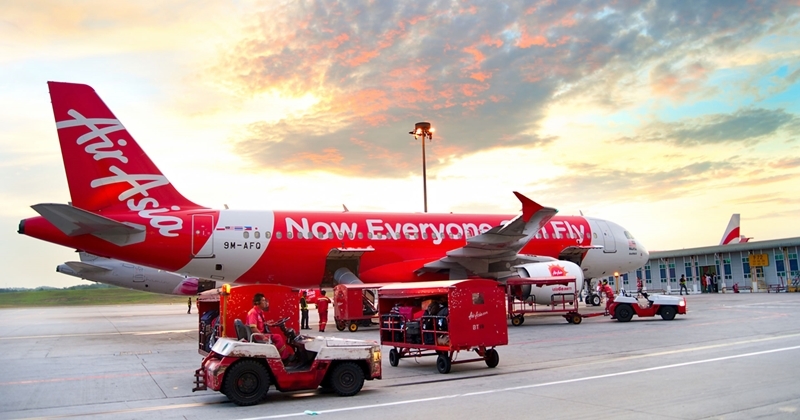
  • AirAsia up 5.49% after Fernandes said he’s ‘quietly optimistic’ about 2021, in talks for three new airlines

    AirAsia up 5.49% after Fernandes said he’s ‘quietly optimistic’ about 2021, in talks for three new airlines

    AirAsia Group Bhd rose as much as 4.5 sen or 5.49% to a five-month high of 86.5 sen in early morning trade today after the group said it expects travel to return to pre-Covid levels in the next six to 12 months.

    At 10.09am, the counter had pared some gains at 85 sen, still up three sen or 3.66%.

    The counter, among the most actively traded stocks this morning, saw 24.33 million shares traded.

    The stock has rebounded 63.46% from its recent trough of 52 sen on Nov 3.

    At 85 sen, the company was valued at RM2.82 billion.

    In an interview yesterday, group chief executive officer (CEO) Tan Sri Tony Fernandes said he is “quietly” optimistic about 2021 with a focus on expanding the group’s base in Southeast Asia.

    He added that the group is in discussions about starting three new airlines in the region, and its plan to raise up to RM2.5 billion is on schedule.

    Meanwhile, Rakuten Trade head of research Kenny Yee said yesterday a successful development of Covid-19 vaccines would lift cross-border travel restrictions and worldwide travel bans, benefiting AirAsia.

    “AirAsia’s share price is in consolidation mode now following the previous run; we expect buying momentum to resume as it is one of the potential recovery plays,” he said.

    MIDF Research also in its report last Thursday upgraded the aviation sector to “neutral” from “negative”.

    “We foresee that air travel demand will recover meaningfully, but only at a portion of pre-pandemic levels in FY21 (the financial year ending Dec 31, 2021). With vaccine introduction and subsequent administration on the horizon, we believe that there is light at the end of the tunnel for aviation players,” it said.

  • A Guide to Starting a Successful Business

    Starting your own business is anything but simple. Throughout the journey, there will be obstacles, rejection, and the chance of financial worry. Despite that, with a solid idea, your business could turn into something huge. If you have always dreamed about being your own boss, then here is a guide to starting your own successful business and joining the masters in leadership.

    Start with Education

    Like with many other endeavors, first, you must get educated. Business isn’t something anyone knows off the bat, so it’s important to give yourself all the knowledge you can. A masters in leadership will enable you to learn all the necessary skills you need to become a successful leader of a company.

    If you have already started your business, don’t worry about a lack of education. There are plenty of courses and resources online for you to level up your knowledge. Over time, you will learn all about being a leader through experience, but education is crucial for giving you a head start.

    Research, Research, Research

    Don’t jump into a business plan without first doing plenty of research. If you are selling clothes, check out any fierce competition. You could even take a leaf out of other people’s books. Market research never ends, but it is especially crucial in the beginning.

    The best masters in leadership tend to keep a notebook with them at all times. You never know what you might learn in your day-to-day life. If you’re selling a product, a trip to the mall counts as research. Research can be perusing the web in your PJs with endless cups of tea, too – it’s all about what kind of product you are putting out there. Get into good habits early on for an increased chance of success.

    Write a Detailed Business Plan

    All masters in leadership know you cannot wing your business route. A plan is an essential part of starting up, so make sure you make it as detailed as possible. Some things to include are:

    . Your competition

    . Your audience

    . Your company goals

    . Marketing strategies

    . Budgeting

    Create a folder with your business plan so you can always refer to it or adjust it if need be. It will help guide you through the highs and lows of your journey, and when you’re lost, you can use it to help you find a way forward.

    Understand the Skills Required

    Being a successful business owner takes a wide range of skills, some you’ll pick up over time, and some you’ll already have. A masters in leadership will help you acquire the skills you need to succeed, which include:

    Motivation: On the days when everything seems to be falling apart, you must be able to find the motivation to push through.

    Organization: A business without organization is destined to fail. The ability to stick to deadlines, plan, and budget properly are all crucial for masters in leadership.

    Commitment: When starting, it’s likely that you won’t find time to switch off. Commitment to your business is important for pushing through challenges.

    Leadership: When your business expands, you will need to lead other people to success. Masters in leadership start learning how to manage before even having someone under them.

    Communication: Great communication is essential. You will be speaking with clients, customers, and co-workers daily, so you must be able to use your words wisely.

    Find Your Audience

    There’s no use in marketing your business if you don’t know who your audience is. This will usually tie into research, but it is a particularly important part of it. Spend some time figuring out who your audience is, and analytics can help you get there. Once you’ve managed to decipher the types of people who are interested in what you have to offer, you must then understand what exactly they want. By doing this, you can then tailor your marketing and product towards them, resulting in more engagement and sales.

    Open a Business Bank Account

    Opening a business account is a relatively simple part of starting your business, but it’s one that should be done as early as possible.

    There is a great risk involved in combining your personal finances with your business’, so get out of the habit of that as soon as possible. It can cause issues with taxes, and you might find that you end up spending your money that was for personal bills on your company by mistake. A well thought-out budget comes in handy here. If you want to expand your organizational skills, then attaining a masters in leadership will help you.

    Find a Loan or Investor

    Another area of finance to focus on is applying for loans and finding investors. Your business plan will come in handy when applying for loans, and for it to be appealing, you will want to make it as clear and succinct as possible, highlighting why your business has a high chance of success.

    Investors can be tricky to come by, so you should get used to making connections early on. Don’t expect the first person you speak with to throw money in your lap! Masters in leadership have a natural-sounding pitch for speaking with potential clients. Create one of your own so when you come into contact with a potential investor, you know exactly how to sell your business to them.

    Find a Location

    Many small businesses start at the kitchen table, and while there is a charm to that, it is not necessarily viable in the long run. If you plan on hiring employees or you simply need extra space to store your stock, then finding a workspace is necessary.

    Office spaces come in a large variety, so you’ll need to take into account the needs of your business. Do you need lots of space? How many employees are you planning on having work there? How many desks will need to fit in? There are other aspects to consider, too, like natural light to boost workplace positivity. You must aim to find a location that is comfortable and spacious enough without going over budget. Masters in leadership understand how crucial it is to have a workspace that feels right for everyone.

    Keep an Open Mind

    When running a business, you never know what is around the corner. There will be obstacles you never expected and triumphs you never thought would occur. Surprises are all a part of the experience.

    If you had a well thought-out, detailed business plan to begin with, but evidence shows it is simply not working out, then it is your job to shift it around. As a business owner, adjusting your expectations is key. Many masters in leadership understand that there are times when things will not go according to plan, but they can adapt to whatever the business throws at them. Learn to do the same by keeping an open mind and never keeping all your eggs in one basket.

    By keeping an open mind, you open the door to a potential improvement in areas you never thought of. For example, if you never use someone else to manage your social media, then you might find that you lose time, and your social media engagement dwindles. If you dare to try something new by giving control of your accounts to a professional, there’s a chance you could save yourself lots of time and greatly increase engagement on the platforms, leading to more customers heading your way. Join the masters in leadership by keeping your mind as open as possible.

    Grow a Back Bone

    “In order to succeed, we must first believe that we can,” said Nikos Kazantzakis.

    It is no secret that running a business takes great strengths. You will face rejection, and you must learn to take it in your stride. Build yourself up so you don’t even think about falling, and you will find that you overcome each obstacle far more easily. Attaining a masters in leadership will help you learn how to stay strong even when things are tough. Over time, your backbone will only grow stronger and stronger, but to get started, you must believe in yourself from the beginning.

    Learn to Budget

    Budgeting is an enormous part of a successful business, and the greatest masters in leadership are the most organized with it. No matter how much profit is rolling in, without a budget, you could end up losing money. This is where your organizational skills come in handy. At the beginning of each year, you should make an estimate of how much profit you expect to make, how much your outgoings will be, and then leave some extra wiggle room for any emergencies. Budgeting is something you will need to do at the beginning, and you will continue to do it all the way through, so it’s important to learn how to budget efficiently early on.

    Choose Your Marketing Strategies

    Your product or services could be the best in the world, but without consistent, effective marketing, nobody will know to come to you.

    Most masters in leadership are not boring and repetitive in their marketing strategies. Remember, your competitors are likely to be adopting similar methods to you, so it helps to get creative. Of course, with some marketing strategies, repetition is necessary, for example, SEO content. When it comes to social media, however, it’s beneficial to shake things up now and again. You could host competitions, start a fundraiser, or even start a giveaway. Your goal is to keep potential customers consistently interested.

    Embrace Leadership

    “Before you are a leader, success is all about growing yourself. When you become a leader, success is all about growing others,” said Jack Welch.

    To become a successful business owner, you must become an excellent leader. Some people are born with leadership skills, whereas others need guidance to get them where they need to be. Attaining a masters in leadership is a handy step for teaching you exactly how to manage a team well. You will learn to guide others in the right direction, bringing out the best of their abilities rather than bringing up their weaknesses. If you commit to becoming a leader, soon you will join those who can call themselves masters in leadership.

    Find an Excellent Team

    When it’s time to build your business’ team, you want to find the best of the best. This takes some work, but the outcome is worth it.

    First of all, you must learn the ways of the recruiting process. You may find yourself swamped with tons of resumes without knowing what direction to go in. First, you should figure out exactly what you are looking for so you can be as specific as possible on the job description.

    When it comes to interviewing, it helps to have a range of questions ready and tailor them depending on how the interview is going. A promising interview tends to end up sounding more like a conversation rather than a simple question-answer scenario. While it might be tempting, don’t just go with your gut. Unless they’re applying for a role in customer service, charm doesn’t equal a great worker. What you should look for is passion, commitment, and whatever else you need to get your business running smoothly. The best masters in leadership start by acquiring a fantastic team.

    Focus on Quality

    Whatever distractions you may come across when leading your business, you should always prioritize the quality of your product or services. Your marketing strategies and organization skills are crucial, but without high-quality services, your customers won’t be satisfied.

    Keep the Passion – and the Motivation

    Above all else, stay passionate about your business. Remember, you started it for a reason, so when you find your motivation dwindling, remind yourself of that.

    On the days when passion seems impossible, it’s important to stay motivated. The best masters in leadership have passion, but they don’t rely on it. Committing to your business doesn’t just mean committing when you’re excited, it also means you need to stay motivated even when the day is falling apart.

    Starting a new business is an exciting adventure and one that no one is ever fully prepared for. By using this guide, you will find the road has less traffic and more green lights, resulting in you joining the ranks of the true masters in leadership.


  • GrabBike riders strike over increased commission rate

    GrabBike riders strike over increased commission rate

    Hundreds of GrabBike riders on Monday turned off their app and gathered at the company’s office to protest its increased commission rate after the government raised tax.

    The office of ride-hailing firm Grab in Hanoi’s Cau Giay District was swamped by large, green-clad-rider crowds demanding the company reimpose its previous rate of commission.

    The gathering came after Grab increased its commission on each GrabBike trip from 20 percent to 27.27 percent starting December 5 following the government’s newly-imposed 10 percent value-added tax per general ride-hailing trip, a move seeking to create a level playing field for traditional tax firms.

    The Grab riders said they had called for a strike via Facebook over the weekend and on Monday morning shut down their apps, traveling around Hanoi in groups to protest the increased commission rate.

    Hung, a rider who asked to be identified by his first name only to avoid company retribution, called the new commission rate “cruel” since after fuel costs are taken into account, he only retains around 50-60 percent of the fare for each trip compared to the previous 70 percent.

    Son, who partnered with Grab last year, works 15-16 hours a day in Hanoi to be able to transfer VND6-7 million a month to his family in central Thanh Hoa Province.

    “I’m worried the increased commission rate will make it impossible to take care of my family. I support paying taxes but I want Grab to share the tax burden with drivers.”

    Before the new tax policy took effect, Grab drivers got to keep around 80 percent of the fare, while the company only paid 10 percent tax on its 20 percent income. The driver paid 3 percent VAT on his 80 percent.

    Although the new tax policy no longer requires drivers to pay their 3 percent VAT, they said their actual income per trip has dropped because Grab has raised its commission to make up for the higher VAT.

    Grab’s calculations show drivers’ income would have been reduced by around 7.3 percent with the new tax policy.

    However, a Grab spokesperson said the company on Dec. 5 had hiked its fares by 5-6 percent to reduce drivers’ loss of income to around 1 percent.

    “The new fares still ensure Grab’s competitiveness on the market. Grab already bears a part of VAT to share the burden with customers and driver partners during this difficult time,” the spokesperson stated.

    Vietnamese officials have long been pondering whether ride-hailing companies are technology service providers or transport companies, but the new decree makes it clear they are the latter.But this hike in rates does not satisfy drivers, who said the increase might see customers opt for competing services and make their income fall even more.

    Ta Thi Phuong Lan, deputy head of the department of tax administration for small and medium enterprises and individuals, said VAT rates for companies like Grab and Gojek have hitherto been too low and tax authorities need to raise it to the correct level.

    Although Lan said the new tax rate is not aimed at drivers, the latter say they are victimized now Grab raised the commission rate.

    “We just want Grab to go back to the 20 percent commission rate, maybe an increase of 2 percent or 3 percent would be fine, but over 7 percent is too much,” Hung said.

    The rider said he and his colleagues would continue to boycott the app and drive around Hanoi in the next couple of days, hoping to “put a dent” in the company’s revenues and urge it to lower the commission.

  • Singapore retail sales down in October

    Singapore retail sales down in October

    Retail sales in Singapore fell by 8.6 percent year-on-year in October, said the Department of Statistics (SingStat) on Friday (Dec 4), although the decline was not as steep as the revised 10.7 percent fall seen in September.

    Most retail industries continued to register declines in sales in October. Food and alcohol, department stores, as well as cosmetics, toiletries and medical goods continued to be among the hardest-hit sectors, with takings down by 44.7 percent, 35.2 percent, and 30 percent respectively, according to the Retail Sales Index released on Friday.

    Wearing apparel and footwear, as well as watches and jewelry fell by more than 20 percent.

    The best-performing sector was again supermarkets and hypermarkets, with sales up by 22.3 percent.

    Takings also improved for the furniture and household equipment, recreational goods, motor vehicles, and mini-marts and convenience stores sectors.

    Compared to the previous month, seasonally adjusted retail sales expanded 0.2 percent, with most sectors reporting growths.

    Takings at petrol service stations increased the most at 5.1 percent as more people returned to the workplace. In contrast, retailers in the watches and jewellery; cosmetics, toiletries, and medical goods; and food and alcohol recorded a decline in sales.

    The estimated total value of retail sales in October was about S$3.3 billion, of which 10.5 percent was spent online.

    Food and beverage sales continued to decline in October as well on a year-on-year basis, although they showed a seasonally adjusted month-on-month improvement across the board, according to the Food & Beverage Services Index.

    “Sales of food and beverage services fell 23.5 percent in October 2020 on a year-on-year basis, an improvement over the 29.1 percent decline in September 2020,” SingStat said. “On a seasonally adjusted basis, sales of food & beverage services increased 5.6 percent in October 2020 over the previous month.”

    Food caterers again suffered the biggest drop in year-on-year turnover – 76.4 percent – although they saw a 6.4 percent increase in sales compared to September.

    “The total sales value of food and beverage services in October 2020 was estimated at S$692 million,” SingStat said. “Of these, online food and beverage sales made up an estimated 19.7 percent.”

  • Vietnam rationalizes tax regime for ride-hailing companies, to treat them as transporters

    Vietnam rationalizes tax regime for ride-hailing companies, to treat them as transporters

    Vietnam has imposed a 10-percent value-added tax for each trip by a ride-hailing company vehicle as it seeks to create a level playing field for traditional taxi firms.

    According to a new decree, with effect from December 5, the tax will have to be paid on the full fare unlike earlier when companies paid the 10 percent rate only on their share of the fare after paying off the driver.

    Thus, as Grab drivers get to keep 80 percent of the fare, the company only pays 10 percent tax on its 20 percent income. The driver pays 3 percent VAT on his 80 percent.

    The new tax rate is thus more than double the old one of around 4.4 percent, and according to Grab’s calculation, drivers’ income would have been reduced by around 7.3 percent.

    It has hiked its fares by 5-6 percent to reduce drivers’ loss of income to around 1 percent, a spokesperson said.

    Vietnamese officials have long been pondering whether ride-hailing companies are technology service providers or transport companies, but the new decree makes it clear they are the latter.

    Ta Thi Phuong Lan, deputy head of the department of tax administration for small and medium enterprises and individuals, said VAT rates for companies like Grab and Gojek have hitherto been too low and tax authorities need to raise it to the correct level.

    Luong Huy Ha, CEO of legal consulting firm Lawkey Vietnam, said the 10 percent rate is appropriate for ride-hailing firms since they operate like transport companies.

  • AirAsia Group to reduce fleet size in 2021

    AirAsia Group to reduce fleet size in 2021

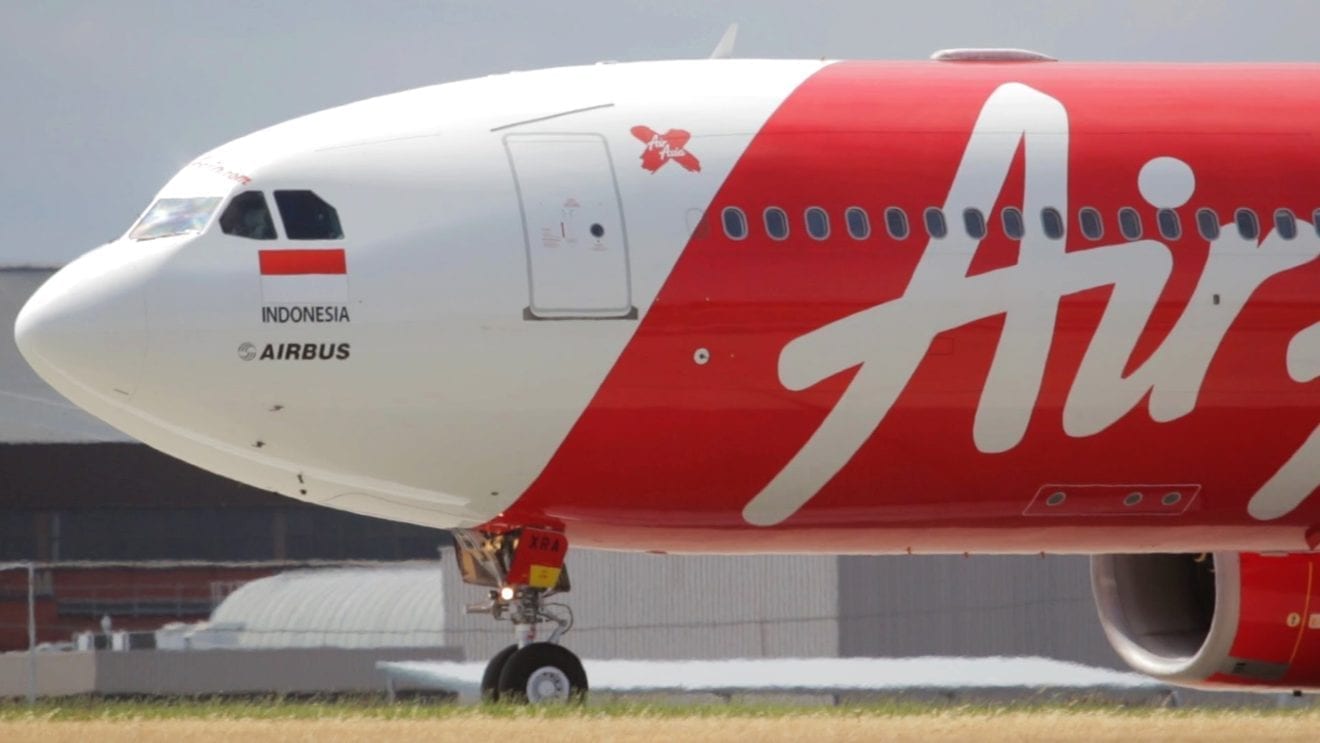
    AirAsia India will be the group’s only unit to see fleet growth by the end of 2021, amid an ongoing investment review conducted by the low-cost group.

    In slides presented at an analyst briefing following the release of its third-quarter results, AirAsia Group states in its outlook that it has “planned for a reduction in our fleet count to match our expected recovery” post-pandemic.

    AirAsia India looks set to expand its fleet by the end of 2021.

    The group, comprising units in Malaysia, Thailand, Philippines, Indonesia and India, anticipates a reduction of 23 aircraft by the end of 2021 to 221 aircraft.

    By the end of 2020, the group will have one less aircraft than the end of 2019. This is led by a decrease in fleet size from Thai AirAsia, as well as the now-shuttered AirAsia Japan.

    Malaysia-based AirAsia Berhad, as well as Indonesia AirAsia, will have zero aircraft growth for the year, while Philippines AirAsia and AirAsia India will expand their fleet by one and four aircraft respectively.

    Information from the AirAsia Group shows an overall fleet reduction of 23 aircraft by the end of 2021.

    By 2021, all of the group’s carriers, except AirAsia India, will reduce their fleet size by between one to eight aircraft. AirAsia India, meanwhile, will add one aircraft to its fleet.

    AirAsia India’s five aircraft addition between 2020 and 2021 is reported to be Airbus A320neos, of which it currently has two examples in its fleet.

    Indian media, citing an AirAsia India spokesperson, says the airline will be taking a third A320neo by December, with the remaining two aircraft arriving by 2021.

    AirAsia India, a joint venture with the group and Indian conglomerate Tata Group, was also reported to have its eyes set on expansion, with the carrier targeting to operate nearly two-thirds its pre-pandemic capacity, an increase from the current 55%.

    The carrier was most recently the subject of ongoing investment review, with AirAsia Group president for airlines Bo Lingam stating that “cost containment and reducing cash burns remain key priorities” for the group, which led to the closure of AirAsia Japan, and an “ongoing review of our investment in AirAsia India”.

    There were also rumors that the Tata Group could increase its shareholding in the carrier, effectively taking over AirAsia Group’s stake. In June, group chief Tony Fernandes was reported to be considering pulling out of the joint venture altogether. AirAsia Group has not publicly commented on the matter.

    The latest fleet update comes after the group said in April it was negotiating its outstanding orders with Airbus, and would be taking no new aircraft in 2020. The group’s earlier estimates indicate that AirAsia and AirAsia X were due to receive 14 aircraft in 2020, and a further 29 aircraft in 2021.

    Cirium fleets data shows the AirAsia Group to have more than 360 A320 family aircraft on order, the majority of them A321neos.