Category: General

Retail News Asia is committed to providing both local and global retailers with the latest General Retail news throughout the Asian market. This on a daily base.

  • Korea to boost science, technology

    Korea to boost science, technology

    Korea vowed Friday to increase its number of scientists and engineers and strengthen the quality of math and science education as it unveiled a blueprint that could set the tone for the development of science and technology.

    The government said it aims to improve its ranking in the category of availability of scientists and engineers to 20th by 2040 from 39th in the Global Competitiveness Report 2016-2017 released by the World Economic Forum.

    The plan was endorsed by the National Science and Technology Council earlier in the day.

    The government also said it is pushing to ensure that 40 Korean scientists will make it on the coveted list of Thomson Reuters’ “World’s Most Influential Scientific Minds” by 2020 from 28 in 2017.

    The government said it will foster sustained innovation in a break with the country’s decades-old practice of pursuing short-term outcomes.

    Yoo Young-min, minister of science and ICT, said that the government will monitor progress in achieving its goals on a yearly basis.

    Korea said it will push to increase the number of its universities listed among the world’s top 100 universities to 10 by 2040 from four in 2017.

    Asia’s fourth-largest economy has been racing to boost science and technology, seeing them as key engines for growth going forward.

    The blueprint also called for Korea to raise its ranking in quality of math and science education to 15th place in the Global Competitiveness Report by 2040 from 36th place in 2016.

  • Petronas Gas proposes 19 sen dividend on better Q4 earnings

    Petronas Gas proposes 19 sen dividend on better Q4 earnings

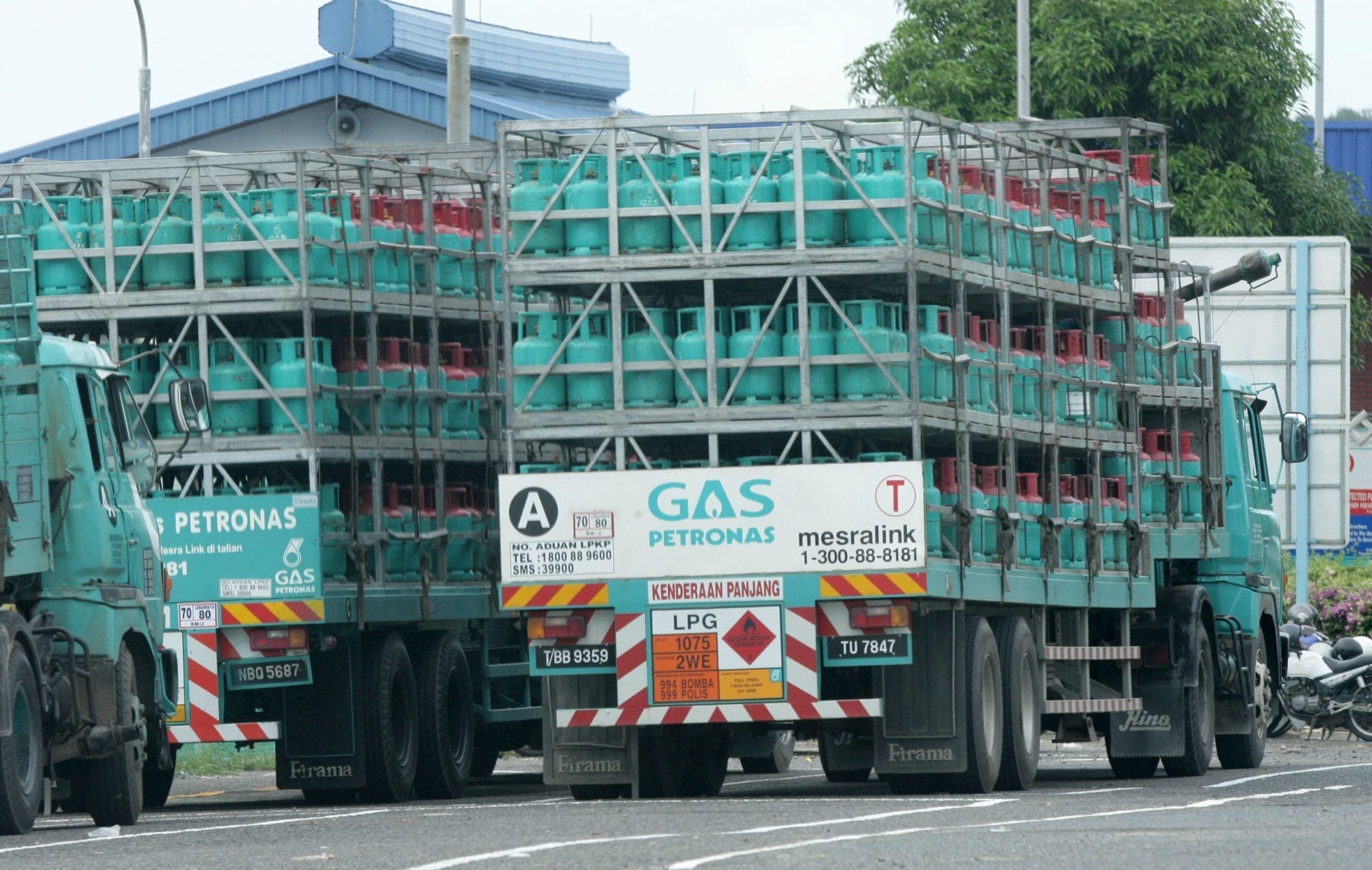
    Petronas Gas Bhd saw its net profit increase 4.7% to RM486.7 million for the fourth quarter ended December 31, 2017 compared with RM465.06 million in the same quarter a year ago, thanks to new contribution from its liquefied natural gas (LNG) regasification terminal in Pengerang, Johor and higher revenue from the gas processing and utilities segments on the back of higher performance-based structure income and favourable selling price.

    Its revenue expanded 13% from RM1.15 billion to RM1.3 billion.

    The group has proposed to declare a dividend of 19 sen per share amounting to RM376 million for the quarter under review.

    Petronas Gas’ full-year net profit rose 3.1% from RM1.74 billion to RM1.79 billion. Revenue came in at RM4.81 billion, 5.4% higher than the RM4.56 billion made a year ago.

    Looking ahead, the group expects its performance to remain robust in 2018, backed by its strong and sustainable revenue streams from existing gas processing agreement and gas transportation agreement signed with Petronas.

    “Furthermore, revenue stream for the regasification segment will grow with the first full year of operations at the group’s new LNG regasification terminal in Pengerang, Johor.”

    On Bursa Malaysia today, Petronas Gas ended down 2 sen or 0.1% at RM17.66, on volume of 827,800 shares.

  • SCIC Vietnam to sell stake in Bình Minh Plastic JSC

    SCIC Vietnam to sell stake in Bình Minh Plastic JSC

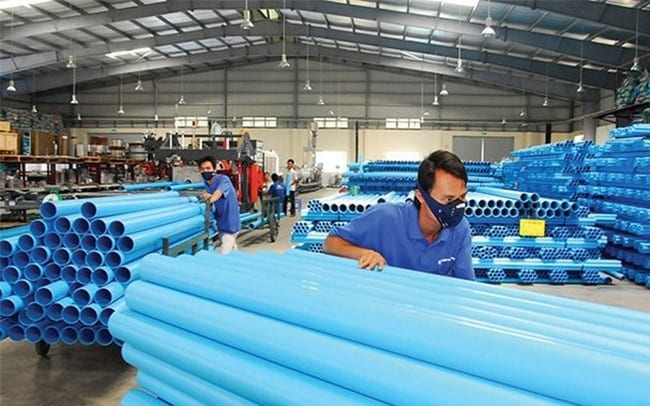
    The State Capital Investment Corporation (SCIC) plans to sell nearly 30 per cent of its stake in Bình Minh Plastic JSC or 24.1 million shares on March 9 on the HCM Stock Exchange.

    The 24.1 million shares will be sold via competitive bidding and each investor must register to buy at least 20,000 shares.

    The starting price will be announced on February 28. The bidding price must be above both the starting level and the daily decreasing band of Bình Minh Plastic Company’s share price on March 9.

    For example, if the shares are sold at the starting price of VNĐ100,000 (US$4.44) per share and the decreasing band of the shares is VNĐ95,000 per share, then the bidding price must be above VNĐ100,000 per share.

    If the decreasing band of the shares is VNĐ105,000 per share, then the bidding price must be above VNĐ105,000 per share.

    If investors forecast the required bidding price as unreasonable compared to their expectations, then they can cancel their bidding by 4pm on March 8.

    Investors must deposit at least 10 per cent of their purchase value based on the starting bidding price.

    Bình Minh Plastic JSC is listed on the HCM Stock Exchange with code BMP. The company shares jumped 4.6 per cent on Friday to VNĐ93,400.


  • Tops hopes bankruptcy filing will help it compete

    Tops hopes bankruptcy filing will help it compete

    US grocery chain Tops Markets has filed for Chapter 11 bankruptcy.

    The company says the process will not affect store operations but will enable it to pursue a financial restructure to eliminate “a substantial portion of debt” from its balance sheet and ensure its long-term survival.

    “Tops has built strong market share and our stores continue to distinguish themselves by offering quality products at affordable prices with superior customer service,” said CEO Frank Curci in a statement.

    “We believe the financing that we received from our noteholders is a vote of confidence in our business.

    Our operations are strong and we have an outstanding network of stores and a talented team to support them. We are now undertaking a financial restructuring, through which we expect to substantially reduce our debt and achieve long-term financial flexibility. This will enable us to invest further in our stores, create an even more exceptional shopping experience for our customers and compete more effectively in today’s highly competitive and evolving market.”

    Tops Markets, based in Williamsville, New York, operates 178 stores in its home state, Pennsylvania and Vermont, and employs 15,000 people. The company recently received a $140 million loan from the Bank of America and a commitment for a further US$125 million to cover debtor financing.

  • Gigya Solutions from SAP Help Companies Protect Customer Data and Build Trust

    Gigya Solutions from SAP Help Companies Protect Customer Data and Build Trust

    SAP SE  introduced three new solutions supporting organizations that have a need to collect customer data in compliance with the EU General Data Protection Regulation (GDPR) while delivering personalized experiences. The three new products are available now and can be deployed separately or as a package.

    Many brands today are struggling to initiate and build trusted relationships with their online customers. Lack of transparency and control of personal information by brands has eroded trust in digital customer experiences. In fact, a recent survey shows that data being used without their knowledge is the chief reason consumers leave brands.

    Overcoming the Compliance Challenge

    GDPR, which is effective May 25, gives extensive new rights to EU residents and visitors and applies to organizations anywhere in the world that collect personal information from within the EU.

    With the integration of its recent acquisition of Gigya, SAP now provides customers with solutions to support them in gaining transparency and control over their data, helping them overcome the compliance challenge with robust registration, consent preference and profile management. The solutions can quickly and securely scale to manage billions of identities and thousands of digital properties across hundreds of brands to help companies meet the requirements of evolving privacy and data protection regulations.

    “With GDPR around the corner, the timing of these solutions couldn’t be better,” SAP Hybris President Alex Atzberger said. “At a time when SAP is doubling down on its strategy to provide the leading front-office suite, the combination of SAP Hybris and Gigya solutions is a tremendous benefit for customers. Importantly, it turns a compliance need into a strategic business advantage and creates more trusted customer relationships.”

    Three New SAP® Hybris® Solutions from Gigya

    SAP is bringing three new solutions to market to help organizations adopt a digital approach to drive more effective marketing, sales and service through data, while keeping the customer in control of how much data is shared:

    SAP® Hybris® Identity establishes secure customer registration and login across websites, mobile applications and Internet of Things devices using flexible user authentication options, federation standards and single sign-on functionality. It captures and stores customer identity data for trusted and personalized digital experiences. Optimized registration flows increase conversion, while the platform helps protect consumers against identity fraud and data theft.

    SAP Hybris Consent presents and captures customer consent for terms of service and privacy agreements, including cookie consent and marketing communications. For auditing purposes, consent agreements and consent history are tracked across the customer lifecycle. This information can be synchronized with marketing, sales and service applications. Customers are in control of their personal information with features for consent revocation, data export and account deletion. Consent records are stored in a secure data vault.

    SAP Hybris Profile transforms customer identity information, profile attributes and other system data into a single customer view, which can be orchestrated in real time or in batch to virtually any application, service or data warehouse. Organizations can govern all the information in these single customer views throughout the customer’s lifecycle. With the platform — and providing consumer consent and transparency has been granted — SAP customers can analyze data within these single customer views to plan, predict and optimize digital experiences to support sales and services.

    “If data is the new oil, then trust is the ultimate currency that drives this new data economy,” Gigya CEO Patrick Salyer said. “To create trust, consumers demand transparency and control over how their customer data is managed. GDPR goes further by legally requiring it. With these new SAP Hybris offerings from Gigya, we can provide one of the only solutions on the market that create trusted customer relationships — just four months after SAP announced its intent to acquire Gigya.”

  • Walmart sales taps US$500 billion

    Walmart sales taps US$500 billion

    Walmart sales reached US$500.3 billion last year, an increase of $14.5 billion, or 3 per cent.

    But that failed to excite shareholders, with the share price shedding 10 per cent of its value immediately after the announcement.

    Arguably, the world’s largest retailer’s biggest success last year was its e-commerce business where it is looking to take market share away from Amazon – just as Amazon is trying to encroach on the brick-and-mortar space in the US.

    E–commerce sales rose 44 per cent for the full year, although growth slowed from 50 per cent to 23 per cent in the last quarter, partly due to the annualisation of its year-old Jet.com acquisition. It forecasts 40 per cent growth in the current quarter.

    Neil Saunders, MD of GlobalData Retail, says Walmart has more work to do to widen its e-commerce customer base.

    “There are many demographics, especially younger and professional segments, for whom Walmart is not the destination of choice online. This isn’t because it doesn’t sell what they want or because the price or delivery options are suboptimal; instead, it is because they do not associate Walmart with online or they default to Amazon. This is a tough nut for Walmart to crack, and one that it can only break by more heavily marketing its services and proposition.”

    While figures for the Walmart China business were not broken out, the international division posted 6.7 per cent year-on-year growth in the latest quarter. China and Mexico were the star performers and Walmart’s troubled UK grocery chain Asda showed long-awaited improvement.

    Bottom line blues

    The weakest part of Walmart’s figures was on the bottom line. Consolidated operating income was $20.4 billion for the year, a decrease of 10.2 per cent, however the company says that when one-off impairments and costs are taken out of the equation, operating income would have been “relatively flat”.

    Saunders says there is no cause for alarm over the bottom line performance. “Walmart remains comfortably profitable and much of the deterioration is down to the various investments Walmart is making in future-proofing its business. We applaud this long-term view, especially as it is now being coupled with some rationalisation and streamlining initiatives.”

    Meanwhile, a solid US market performance reflects higher customer traffic and higher average spend.

    “Part of this is down to a more optimistic and carefree consumer, who was in a mood to spend over the holidays.

    Arguably those shoppers did not have to visit Walmart – but many did, and from our data, Walmart increased its share of shoppers over the final quarter. We believe this is down to Walmart’s focus on low prices plus better customer service, improved ranges, and better-selling environments. The bottom line is that even in an era of stiff competition, Walmart is becoming more and not less relevant to the American consumer,” said Saunders.

    -Neil Saunders

  • Korean embracing the chill, retail sales number peak in low degrees

    Korean embracing the chill, retail sales number peak in low degrees

    A new study has revealed that Korean shoppers embrace the cold winter climate – but not much beyond minus 5 degrees.

    Supermarket operator E-Mart says the number of customers peaks during winter when the temperature hits minus 5 degrees Celsius, also known as the ‘golden temperature’ in the South Korean retail industry.

    Researchers learned that customers were most likely to come out and shop when the mercury fluctuated around the golden temperature, after analysing the shopping patterns of consumers from last December to early January on Wednesday, Thursdays and Fridays.

    The number of visitors to E-Mart reached the highest levels between December 20 and 22 of  last year, totaling 2.17 million shoppers. During this period, the temperature dropped to around minus 5 degrees Celsius.

    Between January 31 and February 2, 2.12 million people shopped at E-Mart stores across the country, with the temperature plunging to a low of minus 4.3 degrees Celsius on average.

    During the seven weeks when the study was conducted, the temperature stayed at a low of minus 4 to minus 7 degrees Celsius on the top four most visited days.

    The best temperature for retail sales didn’t come often, however.

    The number of customers dropped when the mercury rose to minus 0.3 degrees Celsius, with only 2.05 million people visiting E-Mart stores on Wednesday, Thursday and Friday during the third week of January.

    When it was too cold, retail sales were impacted negatively, with the number of customers plunging below 2 million during some days in January when the temperature dropped to minus 10 degrees Celsius.

    “When cold waves hit and temperatures drop below minus 10 degrees Celsius in the winter, shoppers tend to avoid offline shopping. At the same time, warm weather also doesn’t help retail sales as sales of seasonal products like heating supplies become sluggish. We believe around minus 5 degrees Celsius is best for retail sales,” an E-Mart spokesperson said.

  • 3 companies submit bids to operate Singapore Expo

    3 companies submit bids to operate Singapore Expo

    Singapore Expo could be managed by a different operator for the first time in its nearly 20-year history, if SingEx loses its tender bid to two new contenders.

    A tender to operate the space was launched by the Singapore Tourism Board (STB) on Dec 6 last year, and three companies including SingEx have submitted bids, according to government procurement portal GeBIZ.

    The two new contenders have put in bids of S$60 million each, above incumbent SingEx’s bid of S$50 million.

    SingEx, which is owned by Singapore investment arm, Temasek, has managed the space in the east of Singapore since it was opened in 1999.

    According to GeBIZ, the two other bidders are Futuristic Store Fixtures, a store fixture specialist that serves global retail clients such as Victoria’s Secret and L’Occitane and is part of OSIM founder Ron Sim’s V3 Group, as well as Unusual Development, a subsidiary of media entertainment and content company mm2 Asia.

    Futuristic Store Fixtures will be teaming up with AEG, a leading sports and entertainment presenter that owns, operates and provides services to some of the most successful facilities in the world.

    The bidders have signed a non-disclosure agreement and are not able to divulge details of the tender or their plans.

    Aside from price, government tenders also take into consideration criteria such as the bidder’s track record and their vision, direction and strategy of how they intend to run the project.

    The bids come amid a slowdown of Business Travel and Meetings, Incentive Travel, Conventions and Exhibition (BTMICE) visitor arrivals to Singapore.

    While overall visitor arrivals to Singapore reached a new record of 17.4 million in 2017, the BTMICE segment saw 1.75 million visitors in the first three quarters of 2017 – a dip of 5 per cent compared to the same period in 2016.

    In addition, while the 100,000sqm Singapore Expo is one of the bigger spaces in Singapore for such events, it only holds about 600 events a year.

    In comparison, Suntec Singapore holds 1,500 events a year, while Marina Bay Sands Expo and Convention holds more than 3,000 events a year.

    Group managing director of Conference and Exhibition Management Services Edward Liu said that based on the current utilisation rate at Singapore Expo, Singapore must continue to hold trade shows and find ways to differentiate its products from others to stay ahead of rising competition in the region.

    Despite regional competition heating up, experts say the dip in business travellers to Singapore is temporary due to the global economic slowdown in 2015 and 2016.

    UOB Economist Francis Tan said that 2017 was “a good growth year”, and that there was “an uptake in various segments of our economy”. “(I am) a little bit more optimistic on 2018’s BTMICE arrivals into Singapore,” he said.

    While STB has not said when results of the bid will be announced, the winning operator will take over from Jan 1, 2019.

  • Lotte’s chair resigns Japanese CEO role after bribery conviction

    Lotte’s chair resigns Japanese CEO role after bribery conviction

    Lotte Holdings held a board meeting on Wednesday and accepted Shin Dong-bin’s resignation, following a Japanese tradition of convicted chief executives stepping down, the group said in a statement. But Mr Shin will retain his post as vice-chairman of Lotte Holdings and the move will not affect his status in Lotte’s Korean units, the group added.

    Lotte Holdings is at the heart of the retail-focused conglomerate’s complex ownership structure and indirectly controls the group’s key businesses in South Korea such as Lotte Hotel and Lotte Chemical through cross shareholdings.

    Mr Shin’s resignation as chief executive of the holding company comes after a South Korean court sentenced him to two-and-a-half years in prison for bribery, in a stern warning to the country’s political and business elites. Mr Shin was found guilty of offering Won7bn in bribes to foundations of the long-time confidant of former South Korean president Park Geun-hye in return for political favours.

    Lotte said Mr Shin’s resignation would likely have a negative effect on business cooperation and synergies between the group’s South Korean and Japanese operations.

    Mr Shin is appealing the court case. However, his legal troubles could reignite a family dispute over management control at South Korea’s fifth-largest conglomerate and slow its group-wide restructuring efforts.

    Lotte officials are also concerned that Mr Shin’s detention could undermine Lotte’s major investment plans as the group grapples with ballooning losses in China.

  • Time to get serious about saving energy

    Time to get serious about saving energy

    A tax will never be welcome, but it can be timely. The carbon tax that Singapore will levy on large polluters from next year is one such example.

    The tax – details of which were announced yesterday by Finance Minister Heng Swee Keat – comes against a backdrop of rising temperatures and increasingly erratic weather.

    Last year was Singapore’s warmest year on record – excluding years influenced by El Nino, a weather phenomenon associated with hot and dry weather in this part of the world. The Republic is also experiencing more bouts of intense rainfall – such as the one on Jan 8 that led to flash floods in its eastern parts.

    That these effects can already be felt here highlights the urgent need for action. And a carbon tax is one direct way to tackle climate change – by trying to get large polluters to reduce the emission of greenhouse gases.

    Singapore’s introduction of a carbon tax is also in line with carbon pricing strategies adopted by other countries to reduce greenhouse gases.

    As Singapore marks its Year of Climate Action this year, its move to get ready for the roll-out of the carbon tax next year shows how serious it is in tackling the global threat of climate change.

    About 67 countries and jurisdictions, including China, the European Union and Japan, have implemented or announced plans to implement carbon pricing schemes, which incentivise emitters to reduce their greenhouse gas emissions and improve energy efficiency.

    In Singapore, the carbon tax will initially be set at $5 per tonne of greenhouse gas emissions until 2023, although the plan is to increase this to between $10 and $15 per tonne of emissions by 2030.

    This will be levied on the 30 to 40 companies responsible for the lion’s share of emissions here, but households will experience a knock-on effect – a 1 percentage point increase in total electricity and gas expenses on average, Mr Heng said.

    As the implementation of the carbon tax next year follows the full liberalisation of the retail electricity market in the second half of this year, households will be able to choose which retailer they wish to buy electricity from.

    Professor Euston Quah, head of the economics department at the Nanyang Technological University, said competition will put pressure on energy retailers to keep their prices competitive by not passing on the full cost of the carbon tax to consumers.

    The impact of the carbon tax will also be cushioned by the additional utilities rebates that eligible HDB households will get from next year to 2021.

    This gives consumers some time to form energy-saving habits, which could include turning off power at the socket when appliances are not in use, or using more energy-efficient appliances.

    The introduction of the carbon tax is a timely move which reminds both companies and individuals that it is time to get serious about saving energy.

  • Now you can WhatsApp and fly with AirAsia

    Now you can WhatsApp and fly with AirAsia

    Members of AirAsia’s loyalty programme will be able to enjoy free in-flight Internet on carriers with ROKKI WiFi starting from today.

    All AirAsia BIG members will receive 2MB chat plans for apps WhatsApp, WeChat, LINE, KakaoTalk and Viber that can be activated when they fly on ROKKI-enabled flights.

    Rokki chief executive officer Lalitha Sivanaser said the company recognised the importance of staying connected on the move, even during a flight.

    “Connectivity is integral to our lives. We hope this free inflight Internet will help guests stay in touch with their friends and family and get the latest updates no matter where they are.

    “ROKKI is continuously advancing the digital transformation on board, further enhancing the inflight portal that offers entertainment, news, and exciting shopping deals on their personal mobile devices while flying,” added Sivanaser.

    To redeem the plan, BIG Members need only connect to the ROKKI portal using their AirAsia BIG login details.

    The experience is available on any of AirAsia’s 44 ROKKI-enabled aircraft with free connection via personal mobile device.

    ROKKI is an inflight entertainment and connectivity platform that offers guests free entertainment, music, games and news, as well as shopping features.

  • Air Asia X to stop flights from Mumbai

    Air Asia X to stop flights from Mumbai

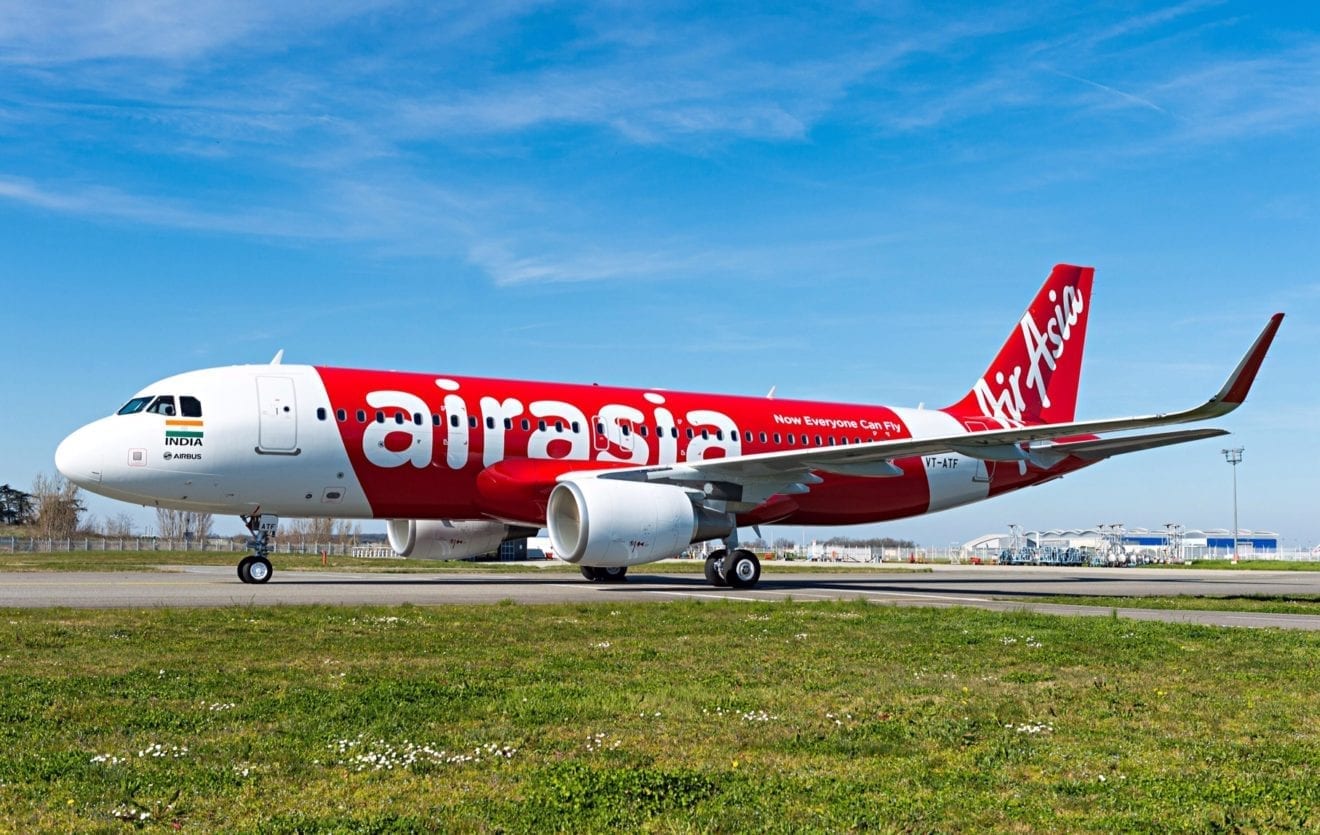
    Malaysian budget carrier AirAsia has decided to pull out its flights from Mumbai to Kuala Lumpur from April 30.

    AirAsia India spokesperson saying passengers booked on the sector after April 29 will be allowed to either re-route through other destinations, get a credit refund, change the travel date or get a full refund.

    The Mumbai-Kuala Lumpur flight has been popular with tourists to Malaysia and Bali, where Air Asia has excellent connections. If you were planning your South Asia summer holiday, you still have three good options from Mumbai. The following airlines operate non-stop flights:

    Malindo Air flies to to Kuala Lumpur from Mumbai every day, with a flight duration of 5 hours and 20 minutes. Book your tickets here.

    Malaysia Airlines also has daily non-stop flights between Mumbai and Kuala Lumpur. Book tickets here.

    Jet Airways flights, operated by Malaysia Airlines as a part of codeshare, will also take you to Kuala Lumpur in just 5 hours 20 minutes. Book here.

    Other primary carriers that will get you there with 1 short stop along the way include Singapore Airlines, Air India, Emirates, Etihad, Cathay Pacific and Sri Lankan Airlines, to name a few.

  • Chinese New Year brings retail opportunities for UK brands

    Chinese New Year brings retail opportunities for UK brands

    UK plc is an exceptional example of what London Business School expert terms an “attractive market segment”, one which has been curated and matured over a long period of time. Chinese consumers in particular are attracted to British brands, with a high percentage of shoppers in mainland China regarding British goods as “genuine and well made”. UK entrepreneurs and established retailers should leverage the appeal of “Brand Britain”, with a particular focus on Chinese New Year and an anticipated online shopping bonanza in mid-February.
    “It’s axiomatic that consumers are still eager to pay for the best, most trusted brands. However, there’s a rising number of aspirational consumers within the world’s emerging middle class who want to choose brands that have a clear purpose, set of values and meaning,” says John Mullins, Associate Professor of Management Practice at the School.

    “With its history, cultural significance and reputation for quality consumer goods, the UK regularly scores very well in international ‘nation brand’ league tables. Consistently scoring well in tourism, culture, people, exports and governance the UK is a well-rounded marque which is consistently well received by consumers.”

    This perception appears to be particularly strong with Chinese consumers. In a March 2017 Marketing to China editorial, it was acknowledged that in a market “renowned for a fake, cheaper products”, the label of ‘being British’ represents real quality. And in a recent UK Royal Mail survey it was found that within the online arena more than half (55%) of shoppers in China bought items from British brands in a three-month period, spending an average of £104 per month.

    “There is a real appetite for ‘Brand Britain’ with its goods regarded as being well made and genuine,” says Dr Mullins. “Survey after survey appears to indicate that Chinese buyers want to be certain about their purchases and obtaining a genuine article with a trusted and well-respected provenance. The UK shines in this respect.”

    In his book, The New Business Road Test, Dr Mullins asserts the view that whether one is launching a start-up or an investor sure way to mitigate the long odds is to make certain one has identified an attractive market segment. “An attractive market segment where the customers are almost certain to buy what you’ll offer. The UK is a powerful, composite nation brand which has matured over many hundreds of years. It bristles with both appeal to would-be consumers, and opportunity to entrepreneurs.”

    On the online shopping bonanza near Chinese New Year, he commented, “As Jack Ma, the founder of Alibaba, once said, ‘in other countries, e-commerce is a way to shop; in China, it is a lifestyle’. McKinsey reports that 76 percent of China’s urban population will be considered middle class by 2022, but there is already a huge consumer community in China which presents numerous opportunities to promote the UK brand to an already very receptive market.”

  • Products funded on Kickstarter sold in a store in Singapore

    Products funded on Kickstarter sold in a store in Singapore

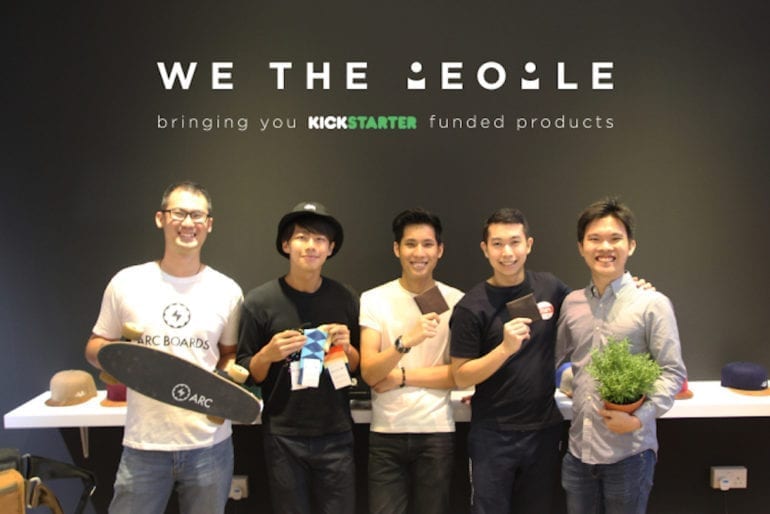
    We The People, a Singapore-based retail store, exclusively carries products that were developed through the online crowdfunding platform Kickstarter.

    It provides customers with a chance to buy Kickstarter products without having to wait or pay for shipping.

    We The People’s shop owner contacts the creators of campaigns and works with them to expand their products to the Asian market.

    All of the items in the store come with the backstory of the item, how much was raised in the crowdfunding campaign and the number of people who originally donated to the campaign.

    The We The People website also shows in-progress campaigns they would like to see fully funded.

    Four different We The People retail shops currently exist in Singapore, and the company plans to expand to other countries, such as Sweden and South Korea.

  • Large emitters, observers welcome initial carbon tax rate of S$5 per tonne of greenhouse gas emissions

    Large emitters, observers welcome initial carbon tax rate of S$5 per tonne of greenhouse gas emissions

    Large emitters and environmental observers have welcomed the progressive implementation of the carbon tax, saying that it encourages companies to adopt energy efficiency measures while giving them the time to adapt to the changes.

    Singapore’s Finance Minister Heng Swee Keat announced in his budget speech that large emitters in Singapore will be charged S$5 per tonne of greenhouse gas emissions under the carbon tax that will be implemented next year.

    The tax rate will be reviewed by 2023, with the intention of increasing it to between S$10 and S$15 per tonne by 2030. The review will consider global climate change developments, the progress of Singapore’s emissions mitigation efforts and its economic competitiveness, Mr Heng said.

    Mr Yu Tat Ming, chief executive of PacificLight, a power generation company, welcomed the Government’s proposal to review the carbon tax over time.

    “The initial imposition of S$5 per tonne encourages industry to implement efficiency improvements and consumers to adapt their consumption pattern,” he said. “Future changes in the carbon tax can be made by the government depending on how close Singapore is to achieving its emission targets.”

    The carbon tax is just one in a range of measures aimed at reducing emissions intensity in Singapore by 36 per cent from 2005 levels by 2030 under the Paris Agreement.

    Likewise Mr Steven Fries, chief economist at Royal Dutch Shell, said the carbon tax represents an “important step” in meeting Singapore’s emission targets.

    “However, it is important to design this tax so that it will be an effective incentive to cut emissions and also support industry competitiveness, both of which are Government goals,” he added.

    To that end, Mr Yu said he still supports the setting of industry benchmarks based on “best in class” targets to encourage efficiency improvements without compromising future economic growth.

    “International experience has shown a good way to deliver on both objectives is for Governments to set an appropriate carbon ‘price’ on emissions which exceed an acceptable industry performance,” Mr Fries added.

    “This allows the government to set a carbon price high enough to incentivise companies to be more efficient, while safeguarding competitiveness by keeping the average carbon tax low.”

    Still, Ernst & Young tax analyst Chia Seng Chye believes the carbon tax is a “good start”.

    “It’s also about creating the right kind of behaviour, incentivising emitters who proactively manage their carbon emissions, rather than treating it purely as a source of additional tax revenue for the Government,” he explained.

    The progressive nature of the carbon tax also lets emitters warm up to it, he added. “So after 2030, when the rate is actually increased, they would not find it so prohibitive in terms of the cost.”

    Energy Studies Institute research fellow Melissa Low said the time frame of five years before the tax is reviewed is an “adjustment period” for companies to become more efficient.

    “The current fleet of power generators, such as turbines they have for example, is about 15 years of age, and the technology purchased by them is ‘locked-in’ for decades,” she explained.

    In addition, 2023 is also when countries – as part of the Paris Agreement – will do a global stocktake on what has been achieved so far, she pointed out.

    Therefore, that will be a good time for the Government to review whether the current carbon tax has worked in reducing emissions, as well as to review its suite of measures, she said.

    More importantly, Ms Low pointed out that unlike the European Union’s Emissions Trading Scheme which provides “free allowances” to certain emitters, Singapore’s carbon tax system does not exempt anyone.

    So while the carbon tax rate might be lower than the previously announced range of between S$10 and S$20, it still sends a price signal to companies, affecting their bottom lines, she added.

    Member of Parliament (MP) for Nee Soon GRC Lee Bee Wah said the carbon tax sends a “very clear” signal that reducing carbon emissions is an issue that needs to be dealt with.

    Dr Lee, who also sits on the Government Parliamentary Committee (GPC) for Environment and Water Resources, said the progressive nature of the tax gives companies the time and space to adapt.

    “As Minister Heng mentioned just now, he’s prepared to spend more than what he collects for companies to come up with innovative solutions, so it gives a balance,” she added.

    HOUSEHOLDS SHOULD PLAY PART

    Beyond what emitters can do, Mr Yu stated that achieving emissions targets would require a “concerted effort” from all parties.

    “On the demand side, the carbon tax must achieve the intended objective of encouraging consumers to adopt efficient practices and appliances,” he said.

    To that end, he noted that the carbon tax would likely impact customers, adding that it would cost his company an additional S$8.25 million a year.

    “As an electricity retailer, we shall do our part to cushion the impact on consumers,” he said. “For example, we encourage our customers to consume energy during off-peak hours, when electricity prices are likely to be lower and we can operate our plant more efficiently.”

    The carbon tax will make up about 1 per cent of total electricity and gas expenses on average, translating to a rise in electricity prices of about 0.21 cents per kWh, assuming the full tax is passed on to end-users.

    To help households adjust, the Government will provide additional Utilities-Save (U-Save) rebates from 2019 to 2021. During this period, each eligible Housing and Development Board household will receive S$20 more per year.

    MP for Holland-Bukit Timah GRC Liang Eng Hwa, who also sits on the Environment and Water Resources GPC, said the rebates would be “more than enough” in offsetting the increase in electricity bills.

    “I think these are schemes that have to be put in place to help mitigate the impact of all these tax increases,” he said.