Category: General

Retail News Asia is committed to providing both local and global retailers with the latest General Retail news throughout the Asian market. This on a daily base.

  • Korean, Singaporean investors also want to buy Big C Vietnam

    Korean, Singaporean investors also want to buy Big C Vietnam

    The analysts said that the auction is a unique opportunity for foreign corporations to pour capital into the two retail markets of the highest profit in Southeast Asia.

    Both the two new potential investors are appreciated for financial strength. Dairy Farm Group is the 2nd largest retailer in Singapore and Hong Kong, which owns a series brands like 7-Eleven, Cold Storage, Guardian, Wellcome Giant, Hero … Its revenue in 2014 is about $13 billion.

    Meanwhile, Lotte Shopping is Korea’s largest mall chain with turnover of $23 billion and $509 million of profit in 2014.

    Another source said that Japanese retail group Aeon Co Ltd is also considering to join the race.

    Earlier, the two retail giants of Thailand – Berli Jucker and Central Group – said they wanted to buy the property.

    Central Group, the largest retailer of Thailand, owned by billionaire Tos Chirathivat is said to have upper advantage because it holds a 25% stake of Big C Thailand.

    This group wants to buy an additional 58.6% of shares, equivalent to $3.1 billion. In addition, Central Group also expects to pay from $800 million to $1 billion to own the whole Big C Vietnam system.

  • Hong Kong sees worst retail sales since 2003

    Hong Kong sees worst retail sales since 2003

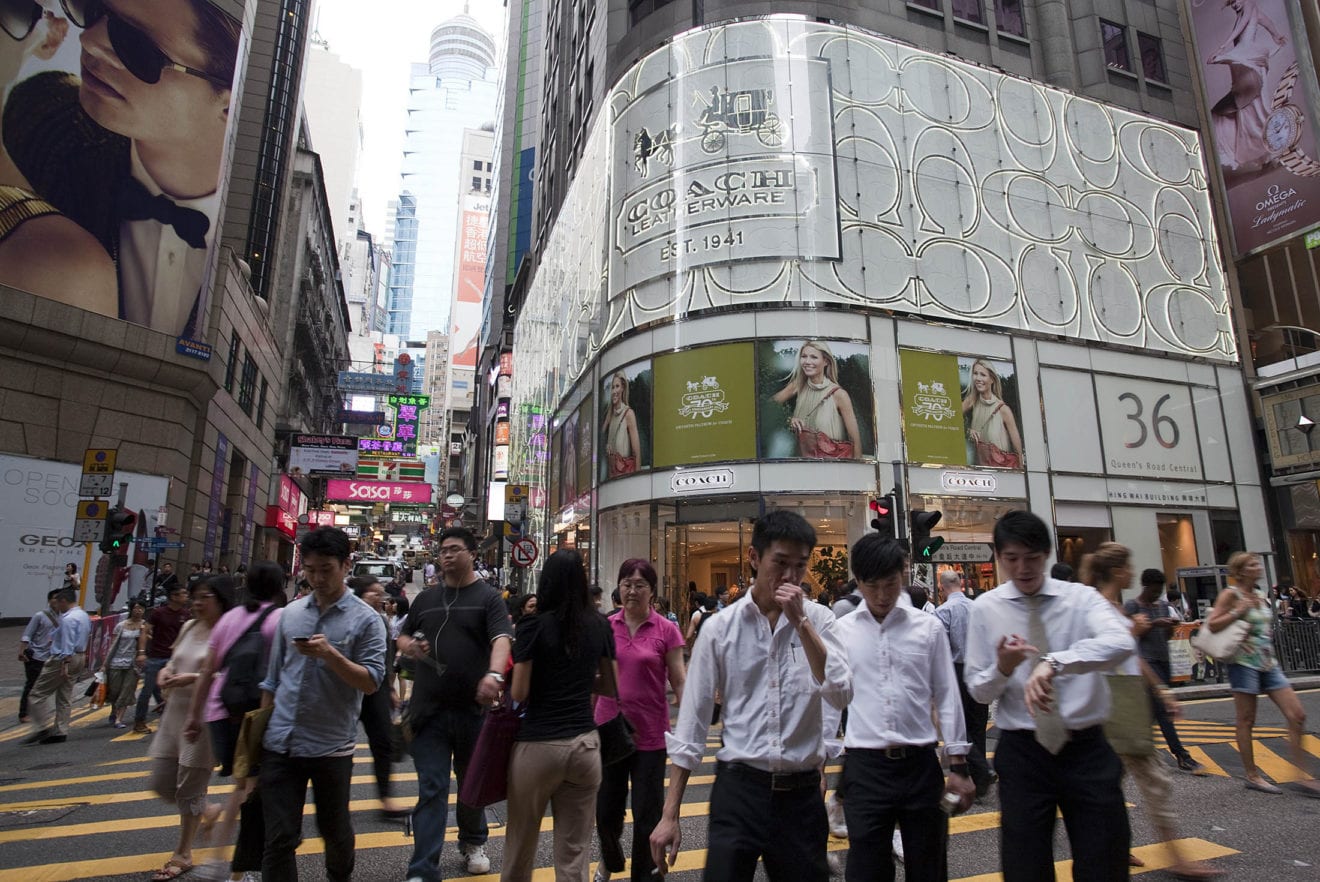
    Retail sales fell 3.7 percent in value last year, the biggest decline since the SARS outbreak in 2003, Hong Kong Retail Management Association chairman Thomson Cheng said.

    Cheng also said the value of retail sales this year is forecast to fall by at least 3 percent, the Hong Kong Economic Journal reported on Wednesday.

    Last year’s figure was further dragged down by the abnormally warm weather in December when sales slipped back to the level four years ago, Cheng said.

    Sales in 2015 reached HK$475.2 billion, with the figure for December down 8.5 percent year on year to HK$43.7 billion, government data showed.

    For last year, sales of luxury items, including jewelry and watches, posted the biggest drop of 15.6 percent among all categories while consumer durables recorded the highest gain of 6.1 percent.

    Cheng also said Lunar New Year sales could see a high single-digit fall over a year ago.

    Nonetheless, downsizing, wage cuts and shop closures are not expected to be widespread after the holidays, he said.

  • Lawsgroup’s journey from Hong Kong to Myanmar

    Lawsgroup’s journey from Hong Kong to Myanmar

    ‘I run the business just like a hobby’: says Bosco Law, Lawsgroup chief executive. Before his death in 1996, the Hong Kong textile tycoon Law Ting-pong handwrote a letter of wishes in which he expressed the hope that “those who are careful at the beginning would also be careful to the end”.

    Unfortunately, the lack of careful wording in the informal will sparked a court battle between his six children over his HK$1bn estate that dragged on until 2011.

    Now, with the row settled, his 37-year-old grandson Bosco Law is trying to live out the exhortation to cautious living in his role as chief executive of Lawsgroup, the family’s mini-conglomerate, which spans clothes manufacturing, retail and property.

    'I run the business just like a hobby': Bosco Law, Lawsgroup CEO

    “My grandfather had a saying that we should be very conservative but also aggressive,” says Mr Law, speaking at the company’s headquarters in a busy commercial area of the Kowloon district in Hong Kong.

    He explains the apparent conflict: the phrase means eschewing complicated financial products such as currency derivatives but taking an adventurous approach to expanding the core business of sewing T-shirts and knitting sweatshirts for retail customers including Gap, JC Penney and Uniqlo. “The manufacturing environment is ever changing so you always have to have a changing mindset to survive,” he says.

    He declines to release any figures indicating the size of the company but as evidence of its ambitions, cites its recent expansion into Myanmar, which has attracted much attention but where few investors are willing to take the plunge.

    Always searching for cheaper labour, Lawsgroup opened its first factory there last year and employs more than 2,000 people making T-shirts two hours’ drive north of Yangon, the commercial capital. “Opening a new factory is always tough,” says Mr Law. “Everything is new in Myanmar. Even if you talk to the [government’s] commerce department, they don’t really know the policy . . .  everything is a guess, everything is grey.”

    Politics is a further uncertainty, with talks about forming a new government taking place between opposition leader Aung San Suu Kyi and the ruling military after her party won November’s election. “Who knows what will happen? But still, if we have a 70 per cent chance [of success] we will go for it.”

    While the business is much smaller than the conglomerates built by Hong Kong tycoons such as Li Ka-shing and Lee Shau-kee, Lawsgroup’s combination of entrepreneurial endeavour and conservatism is typical of the approach that built the city’s dominant family businesses. Many started with humdrum businesses such as small-scale factories or retail stores before parlaying profits and connections into diversified business empires.

    You can make decisions faster and you can follow your will and passion, but you have to take full responsibility because it’s also your money

    Lawsgroup, which employs about 20,000 people in Bangladesh, China, Hong Kong, Myanmar and Vietnam, was founded as a textile manufacturer by Law Ting-pong in 1975 in the heyday of the “made in Hong Kong” boom. Like other Hong Kong clothes makers, it soon moved into the mainland to take advantage of low wages, a huge workforce and the opening-up of China from the late 1970s.

    Its expansion there took off only after 2005, when quotas on imported textiles in Canada, the EU and the US finally ended. That year, Mr Law joined the family business after studying architecture in Toronto and working for an architects’ firm and a bank.

    Lawsgroup was listed in Hong Kong in 1987 and a separate property and retail arm spun off into their own listings before the main holding group was taken private in 1998.

    Mr Law, who describes his management style as “firefighting” when necessary, rather than micromanaging, says his main interest is fashion. That much is clear from his quirky outfit of flowery sneakers, grey trousers and a green blazer with a robot-shaped brooch.

    A laid-back figure who rarely gives interviews, Mr Law insists he was not parachuted into his job by dint of some family succession plan but he notes that running a family-owned company has advantages.

    “You can make your decisions faster and you can follow your will and passion, but you have to take full responsibility because it’s also your money.” Yet, pushed on whether he feels pressure to maintain and enhance a rich legacy, as in many Chinese family-owned companies, he brushes off the question. “I run the business just like a hobby,” he says. “I’m pushing my vision and I like doing branding and marketing.”

    Perhaps he does not feel the weight of family expectations so heavily because his father’s siblings run their own businesses, from Crystal Group, a leading clothing manufacturer, to the Park Hotel group and Bossini, the low-cost clothing retailer that made his grandfather famous in Hong Kong.

    Mr Law’s focus is on managing Lawsgroup’s moves into new markets. With factory workers in the manufacturing heartland of Guangdong taking home more than $500 a month, Lawsgroup is expanding in countries where wages are less than half the cost, such as Myanmar, Vietnam and Bangladesh.

    Mr Law’s responses are sometimes so relaxed it is hard to tell if he is blasé, unflappable or evasive

    The death of basic manufacturing in China has long been prophesied, but Mr Law believes big producers will keep a presence there because of the scale and infrastructure advantages, as well as technical expertise.

    “Most of our research and development is in China, where we do our industrial engineering and have developed our own IT system for quality control,” he says. “We do our factory line planning and training videos in China and then have the whole package sent overseas for them to follow.”

    Mr Law’s responses are sometimes so relaxed it is hard to tell if he is blasé, unflappable or evasive.

    Asked if he worries about his safety after his cousin Queenie Law was kidnapped for ransom last year, he says “it’s just a single case”. Is he concerned about the disappearance of five Hong Kong booksellers whose store sold works critical of China’s top leaders? “It’s just a single case”.

    Like most Hong Kong businessmen with interests in mainland China, he is reluctant to be drawn into discussions about politics but his attitude might also point to a deeper self-confidence. Free from the vicissitudes and pressures of equity markets, conservative family companies such as his find it easier to endure difficult times.

    On the day of the interview, Chinese stock and currency markets were again ridden with turbulence, and global investors were jittery about the prospects for the world’s second-biggest economy. Unlike some other manufacturers, Lawsgroup has not taken out hedges against renminbi volatility but Mr Law prefers to concentrate on the fundamental business.

    “We’ve been doing this for 40 years. It’s a downtrend right now so we have to buckle up. I’m still confident about Hong Kong and China in the long term.”

  • Philippines’s Formoso new chairman of Asia-Pacific retail organization

    Philippines’s Formoso new chairman of Asia-Pacific retail organization

    The Philippines now takes the leadership role in charting the development direction of the Federation of Asia Pacific Retailers Associations (Fapra) in the next two years with the recent assumption of the Philippine Retailers Association (PRA) President Lorenzo C. Formoso as chairman of the Fapra.

    Formoso, COO of Duty Free Philippines, has assumed the Fapra chairmanship from Mehmet T. Nane, chairman of Turkish Council of Shopping Centers and Retailers, who formally turned over the federation’s leadership to him during ceremonies at the recently concluded Asia Pacific Retailers Convention and Exhibition (APRCE) 2015 that Manila hosted last October. The APRCE is the biggest and longest-running retail industry event in the region.

    The Fapra consists of the recognized national retail trade organizations in 18 member-economies—Australia, China, Chinese Taipei, Fiji, Hong Kong, India, Indonesia, Japan, Korea, Malaysia, Mongolia, Myanmar, New Zealand, the Philippines, Singapore, Thailand, Turkey and Vietnam.

    “As a veteran in the retail industry and being the concurrent president of PRA, we are confident Formoso’s chairmanship of Fapra would be very productive. We are sure he will guide the Fapra in the same way he ably shepherded the PRA,” the PRA Board said.

    Turkey held the Fapra chairmanship for two years—from 2013, the year it hosted the APRCE, to 2015, the year the Philippines hosted it.  The chairmanship of Fapra devolves to the immediate past host of
    the APRCE.

    The Philippines chairs the Fapra until 2017.

    The Fapra was founded in 1989. It has implemented various initiatives and programs designed to develop itself and promote information exchanges and sharing experiences and concerns toward the development of the retail industry and improving the retailers’ status and the welfare of their clients in the region.

    As new Fapra chairman, Formoso now presides over the federation’s policies and programs aimed at helping promote the growth and development of retailing in the Asia- Pacific region.

  • South Korea’s discount store sales fall at fastest pace in 4 mths

    South Korea’s discount store sales fall at fastest pace in 4 mths

    Sales at South Korea’s top department stores snapped three months of rises in December and marked their biggest annual fall in four months due to warmer weather compared with the previous year, government figures showed on Wednesday.

    Combined sales at department stores run by Hyundai Department Store, Lotte Shopping and Shinsegae Co fell 5.7 percent on-year, finalised data from the Ministry of Trade, Industry and Energy showed on Tuesday.

    This compared with a rise of 1.0 percent in November and was worse than a 3.8 percent decline estimated by the finance ministry. December’s drop was the biggest since a 6.5 percent fall in August last year.

    Warmer weather resulted in poor apparel sales as customers bought less winter clothes, the trade ministry said. High-end watches, jewellery and household electronics sales capped the decline.

    The average temperature in Seoul was 1.6 degrees Celsius (34.88°F) in December, compared to an average negative 2.9 degrees a year prior. The same data showed annual sales at South Korea’s major discount stores fell 5.1 percent in December in their third straight month of declines and the biggest fall since August.

    It was worse than a 2.1 percent fall estimated previously.

    Discount store sales also suffered from warm weather as well as softened demand for food products, the trade ministry said. On a whole for 2015, sales at department stores and discount stores fell 1.2 percent and 2.1 percent, respectively, mainly due to an outbreak of a deadly virus in the middle of the year and surging online shopping, according to the ministry.

    The trade ministry data came a day after fourth-quarter GDP slowed by more than half from the third quarter of 2015, as growth from private consumption was offset by poor construction investment.


  • Garuda Indonesia unveils new Business Class

    Garuda Indonesia unveils new Business Class

    The layout of Garuda Indonesia’s new Business Class with Super Diamond Seats is unveiled in this Garuda photo. The Airbus A330-300 is configured with 24 Business Class seats and 263 Economy Class seats.

    Garuda Indonesia has unveiled its new Business Class service following the arrival of its latest Airbus A330-300 aircraft on Monday.

    The aircraft, which is the first of four Airbus A330-300s that will be delivered in 2016, features 24 and 263 Business and Economy Class seats, respectively.

    The former, dubbed Super Diamond Seats,  offer an all-aisle configuration (1-2-1), fully flat-bed seat, adjustable arm-rest, head-rest, meal table and reading light, integrated baby bassinet stowage, new mini bar display, 16-inch LCD touchscreen with a touchscreen handset/remote, double USB plug and power outlet.

    “Garuda Indonesia is the first airline in the world to implement the Super Diamond Seat Business Class service on its A330-300 aircraft; as opposed to competitors who implement it only on their A350 aircraft,” said Garuda Indonesia president and CEO Arif Wibowo in a press release on Monday.

    unnamed

    Meanwhile, passengers sitting in Economy Class seats can expect new features such as a 4-inch articulating recline ability, foot-rest, 11-inch LCD touchscreen, USB plug and power outlet.

    The national flag carrier also received the delivery of its last Boeing 777-300ER aircraft on Monday, of a total of 10 that were ordered in 2013. Configured with a 393-seat capacity, the 10th aircraft consists of 26 Business Class seats and 367 Economy Class seats.

    Six out of 10 Boeing 777-300ERs operated by Garuda Indonesia are equipped with First Class service, with eight First Class seats, 38 Business Class seats and 268 Economy Class seats.

    unnamed (1)

    As part of Garuda’s fleet revitalization program, the airline is set to receive 16 new aircraft in total throughout this year, consisting of the one Boeing 777-300ER, four Airbus A330-300s, four ATR72-600s and eight Airbus A320s to be operated by Citilink.

    By the end of 2016, Garuda Indonesia Group expects to operate a total of 188 aircraft; 144 aircraft by Garuda Indonesia and 44 aircraft by Citilink.

    maxresdefault

  • The Crystal opens new mall ‘Crystal Veranda’ behind its old mall

    The Crystal opens new mall ‘Crystal Veranda’ behind its old mall

    The Crystal, the community mall near the Ramintra expressway, has just opened a new mall “Crystal Veranda” right behind it on Friday, because why not?

    Following the opening of the first mall which consists mostly of restaurants, the new Crystal Veranda sets to serve suburban customers with high purchasing power. It features a SF cinema, Fitness First (with the best view, they said) and its own children’s playground, along with a flagship Lego store.

    Taking over 25,000 sq m of space, the THB6 billion mall was built under the concept of “Five Facets of Crystal”: fun, food, fitness, fashion, and the “Full of Fascination” — which means a luxurious lobby lounge and Italian marble bathrooms.

    For food, there are the familiar franchise restaurants missing from the old mall including Dean & Deluca, Peppina, Coffee Bean by Dao, Water Library, Wine Connection, and another Starbucks.

    There may be a little something special for fashion lovers at the Crystal Boutique Store, supposedly the first ever store in Thailand to incorporate clothing and accessories from both Thai and international designers in one place including Michael Kors, ARAMIS, DKNY, Tommy Hilfiger and Tory Burch.

    As expected, the mall was already crowded when it opened on Saturday. Obviously, it drew some customers from Central Eastville, the new mall that opened in November and is located only five kilometers away.

    central-east-ville

  • President urges to accelerate development of tourism sector in 2016

    President urges to accelerate development of tourism sector in 2016

    President Joko Widodo has called on his officials to expedite the development of Indonesias tourism sector in 2016 in a bid to boost the countrys economic growth.

    President Widodo noted in his opening remarks during a limited meeting held to discuss the Lake Toba Tourism Destinations Development Plan at the presidential office in Jakarta on Tuesday.

    “I have urged the tourism minister to speed up development activities in the top ten tourist destinations,” he noted.

    The top ten tourist destinations to be developed based on the “single destination, single management” concept are the Borobudur temple, Mandalika resort, Labuhan Bajo beaches, Mount Bromo-Tengger-Semeru, Thousand Islands, Lake Toba, Wakatobi diving spot, Tanjung Lesung beaches, Morotai Islands, and Cape Tanjung Kelayang.

    President Widodo is optimistic that by developing the tourism destinations, the local small and medium enterprises (SMEs) would also boost their productivity and absorb more manpower.

    “We need a quick breakthrough in terms of regulation and work in other areas to deliver results at the earliest,” he emphasized.

    In particular, the president has called to boost connectivity and accessibility in Lake Toba by improving the airport and road infrastructure.

    “I am aware that two or three weeks ago, Coordinating Minister of Economy (Darmin Nasution), Public Works Minister (Basuki Hadimuljono), and Tourism Minister (Arief Yahya) had visited Lake Toba,” he remarked.

    President Widodo hoped that the visit would be followed up by a concrete action plan to be rolled out in the area, including organizing marketing activities, implementing international service standards, and holding cultural and art performances.

  • Bangkok gets set for Chinese New Year

    Bangkok gets set for Chinese New Year

    Dig out your red clothes, hang up paper lanterns and pick up some firecrackers — Chinese New Year is returning to Bangkok.

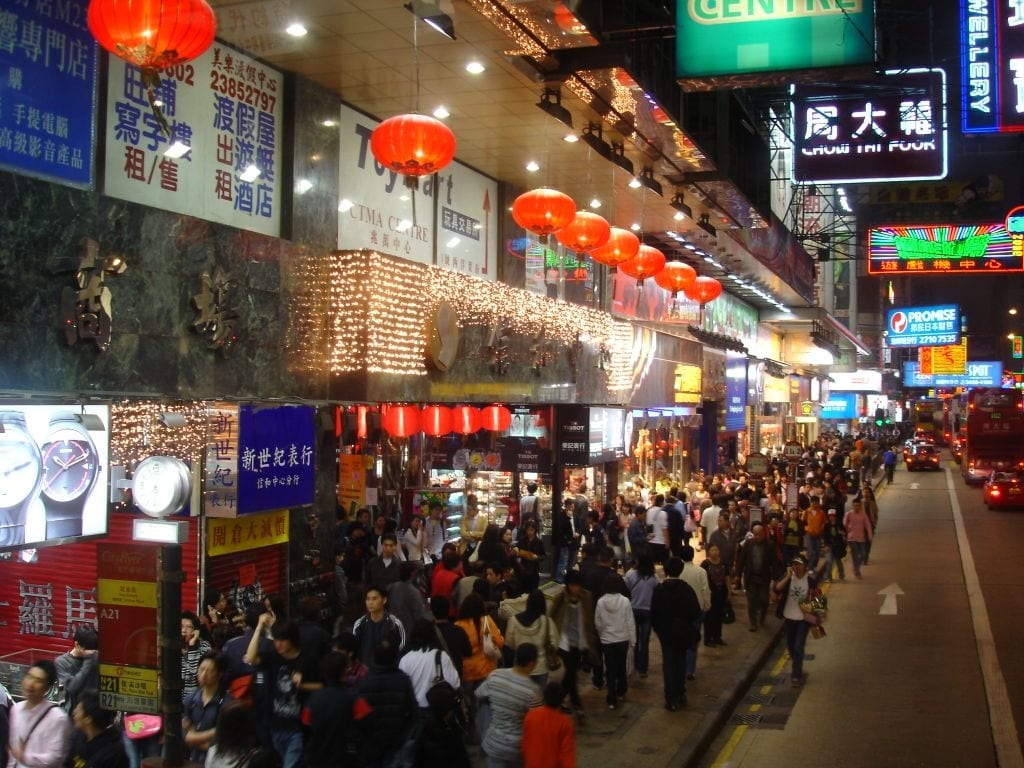
    The biggest celebrations will take place on Yaowarat Road in the heart of Chinatown, with cultural displays, dance and musical performances to usher in the Year of the Monkey.

    Kicking off on Feb. 7, the Chinatown festivities will also feature lantern decorations, dragon parades and lion dances, street stalls selling Chinese cuisine and souvenirs, and entertainment from famous artists, including troupes and performers from China.

    Visanu Jaroensilp, Tourism Authority of Thailand (TAT) deputy governor for Tourism Products and Business said: “Thailand’s celebrations to mark the 2016 Chinese New Year will be even more special, as this is a significant year for the country. 

    “This year marks the 41st year of Sino-Thai diplomatic relations, and the 12th anniversary of cooperation between TAT and the Chinese Ministry of Culture in co-hosting the Chinese New Year celebrations in Thailand.”

    TAT estimates a boost in tourism revenue from the celebrations,  with about 1.01 million international tourists are expected to visit from Feb. 6-14. 

    Of those vistorss, an estimated 476,000 are expected to come from countries with Chinese communities including China, Hong Kong, Taiwan, Singapore and Malaysia.

    For more details on Chinese New Year celebrations throughout the country, visit the TAT website.

  • Metro Holdings group MD, Jopie Ong, dies

    Metro Holdings group MD, Jopie Ong, dies

    The group managing director of retailer and property firm Metro Holdings, Mr Jopie Ong Hie Koan, died last night.

    Mr Ong, who was in his 70s, had helmed Metro Holdings since 1973.

    He was the son of the late Ong Tjoe Kim, who founded the Metro chain of department stores. He was also a member of the nominating and investment committees.

    When contacted by The Straits Times, Metro Holdings confirmed that Mr Ong had died yesterday.

    Mr Ong joined Metro in 1964 and helped to grow the retail division, introducing into Singapore luxury brands such as Cartier and Piaget, and guiding Metro to its listing in 1973.

    He had also held board positions in the retail, property development, construction, hotel and leisure industries.

    Under Mr Ong’s leadership, Metro Holdings, founded in 1957 by his father as a textile store, has grown to become a property development and investment group.

    The firm has a turnover of $145.8 million and net assets of $1.4 billion as at March 31 last year.

    Mr Ong was instrumental in the setting up of Transmarco, a group that dealt in luxury brands, watches and computers, and was previously its chairman.

    He also acted as director of Metrojaya, which operated the Metro retail arm in Malaysia, prior to its divestment.

  • Starhill Global Reit’s Q2 distribution per unit rises 2.3%

    Starhill Global Reit’s Q2 distribution per unit rises 2.3%

    YTL Starhill Global REIT (SGReit) said its second quarter distribution per unit rose by 2.3 per cent to 1.32 cents.

    Revenue for the three months ended Dec 31 grew by 13.8 per cent to S$55.6 million while net property income (NPI) rose by 10.4 per cent to S$43.7 million.

    The growth in revenue and NPI was mainly driven by the contribution from Myer Centre Adelaide which was acquired in May 2015 and the resilience of the Singapore portfolio performance.

    This was partially offset by lower contributions from China and net foreign currency movements. Income distributable to unitholders was S$28.8 million, up 3.7 per cent. On an annualised basis, the second quarter distribution represents a yield of 6.94 per cent, based on the unit closing price of 75.5 cents as at Dec 31. Unitholders can expect to receive their distribution on Feb 29.

    YTL Starhill Global chairman Francis Yeoh said the Reit delivered another strong earnings growth in the second quarter, underpinned by the resilience of the Singapore portfolio and contribution from its latest acquisition.

    “While Asia’s economic growth is expected to ease, we are confident our prime assets in key Asia-Pacific cities will remain resilient in an evolving retail landscape,” he noted.

    SGReit’s Singapore portfolio, comprising interests in Wisma Atria and Ngee Ann City on Orchard Road, contributed 60.8 per cent of total revenue or S$33.8 million.

    Its NPI increased by 2.7 per cent to S$27.3 million, led by positive rental reversions achieved in previous quarters. Singapore retail portfolio recorded flat rental reversions for leases committed during the quarter.

    Wisma Atria retail revenue increased 1.7 per cent and its NPI grew 3 per cent over the previous corresponding period on the back of higher revenue and lower operating expenses.

    On the flip side, tenant sales at Wisma Atria declined 1 per cent, mainly due to lower committed occupancies at the mall and tenant transitions during the quarter. Shopper traffic was down 2.5 per cent as the majority of Isetan’s strata-owned space remained closed for renovations since April 2015.

    Wisma Atria retail recorded lower committed occupancy of 94.9 per cent as at Dec 31, largely due to tenant mix reconfiguration at level 1. Ngee Ann City retail revenue gained 1 per cent while NPI increased 2 per cent. The next rent review for the Toshin master lease is due in June 2016.

    Meanwhile, the Singapore office portfolio continues to be supported by leasing demand as office supply pipeline in Orchard Road remains limited. The Singapore office portfolio revenue and NPI increased 3.9 per cent and 3.4 per cent respectively, on the back of 1.7 per cent positive rental reversions for leases committed in the second quarter.

    As at Dec 31, full occupancies were achieved for both Wisma Atria and Ngee Ann City offices. Some 40 per cent of the office leases due for expiry this financial year by gross rent have been either renewed or newly leased out as at Dec 31. SGReit units today ended half a cent higher at 73 cents.

  • Government operating marine vessel power plant in North Sulawesi

    Government operating marine vessel power plant in North Sulawesi

    The Indonesian government is operating a marine vessel power plant (MVVP) called Zeynep Sultan to deal with electrical power deficit in North Sulawesi province.

    “The presence of this vessel is part of the governments attention to the current electrical power deficit affecting various areas (in the country),” acting North Sulawesi governor Sono Sumarsono said while inaugurating the operation of the electrical power supplying vessel in South Minahasa on Sunday.

    The operation of the marine vessel power plant is part of the governments program to develop power plants with a combined capacity of 30 thousand megawatts to overcome electrical power deficit in several regions in the country.

    “Hopefully, this national program will be successful so all areas in Indonesia will have electricity in the future,” he said.

    Sumarsono, who is also director general of regional autonomy at the Home Affairs Ministry asked South Minahasa district head Rene Hosang to help secure the vessel while it is in the district.

    The Santiago military district command 131 will also deploy its personnel everyday to safeguard the vessel, he said.

    He expressed the hope the operation of the vessel will deal with electrical power crisis in the provinces of North Sulawesi and Gorontalo.

    “The power crisis has become cause for major concern in the two neighboring provinces. Mr Habibie (Gorontalo Governor Rusli Habibie) and I have been protested almost everyday in case of power blackout,” he said.

  • Indonesia becomes favorite destination for Chinese new year 2016

    Indonesia becomes favorite destination for Chinese new year 2016

    Chinas largest online travel agency, Ctrip.com, has revealed that Indonesia is one of the ten favorite destinations for Chinese tourists who want to celebrate Chinese New Year 2016 abroad.

    The ten favorite destinations based on the bookings made by the customers since mid January 2016 are Thailand, Japan, South Korea, Taiwan, Singapore, Hong Kong, United States of America, Indonesia, Malaysia, and Australia.

    Easy access in obtaining visas is one of the strong reasons they chose such countries, one of local media quoted the Publicity Manager of Ctrip, Yan Xin as saying here on Sunday.

    Indonesia ranked eighth of the ten countries that became the favorite destinations of Chinese tourists.

    Deputy of Sales affairs Director for the Asia Pacific Mission of the Indonesian Ministry of Tourism, Jordi Paliama said it was a good news to consider Indonesia as one of the Chinese tourists favorite destinations.

    “We would continue to improve our a variety and innovative promotions to attract more and more Chinese tourists,” he said in the event of “Indonesia Direct Promotion”, Beijing.

    The Ministry of Tourism has set a target of 200 visits of Chinese tourists for January-February 2016. It increased around 50 percent from the amount of 137,181 Chinese tourists visiting Indonesia at the same period in 2015.

    To increase the number of Chinese visits, the Ministry of Tourism also conducted a promotion programs in Wuhan, Shanghai, and Beijing.

    Ctrip.com estimated around six million Chinese people would spend their Chinese New Year holiday in foreign countries, starting from 7 February, with some 100 countries to be visited including Antarctic.

    East Asian countries such as Japan and South Korea remained the most popular destinations, while Singapore and Thailand became two Southeast Asian countries which attracted a lot of Chinese tourists during the celebration of the Year of Monkey.

    Around ten thousand Chinese tourists have been making reservations for holidays in Thailand, while some other preferred to choose Universal Studio, Singapore, to enjoy the warmth of tropical breeze.

    For a cruise tourism, around 90 percent of Chinese people chose to go to Okinawa and Kagoshima in Japan, and Jeju Island in South Korea.

    The Office of China National Tourism Administration (CNTA) reported that in 2015 there were 5.2 million Chinese people spent their Chinese New Year holiday abroad. The number was increased around 10 percent compared to the same holidays in 2014.

  • Platinum industry group to develop more investment products in Singapore

    Platinum industry group to develop more investment products in Singapore

    Singapore, which has seen a flurry of activity in its gold sector in recent years, could now see platinum take off in a similar way as the World Platinum Investment Council (WPIC) ramps up its promotional work here.

    The industry body has joined the Singapore Bullion Market Association (SBMA) here as it seeks to stimulate investor demand for physical platinum and increase the ways in which Asian investors can invest in the metal.

    As one of the most important wealth management markets globally with US$0.5 trillion in assets, Singapore offers “an abundance” of opportunities for both retail and institutional investment products, including coins and bars, and exchange-traded funds, said WPIC’s director of market development Marcus Grubb.

    SBMA chief executive Albert Cheng said WPIC is coming at “an interesting time” in the market’s development.

    “Since the removal of the Goods and Services Tax (GST) in 2012, there has been a real step-change in Singapore’s prominence as a major hub for precious metals trading and investment, a position we are working hard to consolidate,” said Mr Cheng. “The WPIC membership will undoubtedly contribute to our efforts by strengthening the region’s range and availability of investor products.”

    International Enterprise (IE) Singapore, the government agency responsible for developing the commodities sector in here, said the partnership will further strengthen the country’s position as Asia’s precious metal trading hub.

    “WPIC brings knowledge, experience and technical expertise in platinum as an investment, complementing SBMA’s role as a major association for precious metals for the region,” said IE Singapore assistant CEO Satvinder Singh.

  • Singapore’s retail sector receives boost in talent development

    Singapore’s retail sector receives boost in talent development

    This initiative sees the integration of Enhanced Internship with SkillsFuture Earn and Learn Programme; whereby five local retailers will invest in talent management and retention programmes during students’ internships.

    Singapore’s five polytechnics – Nanyang Polytechnic (NYP), Temasek Polytechnic (TP), Ngee Ann Polytechnic (NP), Singapore Polytechnic (SP) and Republic Polytechnic (RP) – together with the Institute of Technical Education (ITE) and five local retailers signed on Tuesday (26 Jan 2016) a Memorandum of Understanding (MoU) to integrate the Enhanced Internship with the SkillsFuture Earn and Learn Programme.

    The signing took place at an Industry Practitioner Seminar organised by the Singapore Institute of Retail Studies (SIRS), and was witnessed by Mr Ong Ye Kung, Acting Minister for Education (Higher Education and Skills).

    The MoU were coordinated by NYP, which leads the Retail Sector Coordination Team (SCT) in support of the national SkillsFuture movement. The Retail SCT also comprises the other four polytechnics, ITE and SIRS.

    Under this partnership, the five retailers – Charles & Keith (Singapore) Pte Ltd, Cold Storage Singapore Pte Ltd, Isetan (Singapore) Limited, StarHub Ltd and Wing Tai Retail Pte Ltd – will invest in talent management and retention programmes during students’ internships.

    Students who successfully complete at least 20 weeks of the Enhanced Internship with these firms may have a chance to be offered employment through the SkillsFuture Earn and Learn Programme.

    The duration of the SkillsFuture Earn and Learn Programme will be reduced to 12 months instead of the usual 18 months, and will culminate in a Singapore Workforce Skills Qualifications (WSQ) Specialist Diploma or WSQ Advanced Certificate in Retail Supervision. Supported by the Singapore Workforce Development Agency (WDA), this fast-track route enables a seamless integration of Enhanced Internship and the SkillsFuture Earn and Learn Programme.

    Another 11 retailers signed a separate MoU to offer Enhanced Internships to retail students. It was announced last year that Enhanced Internships would be offered to second- or third-year polytechnic or ITE students; and by 2020, all polytechnic and ITE courses will offer this.

    “As the sectoral lead for retail – an industry which is ever-changing and high in manpower demands – Nanyang Polytechnic aims to continue encouraging organisations to play a stronger role in talent growth and retention. The partnerships today will see more students getting a deeper knowledge of retail operations, and more importantly, allow companies to retain high-potential talents from the time they are interns,” said Jeanne Liew, Principal & Chief Executive Officer, Nanyang Polytechnic.

    “Integrating the Enhanced Internship with the SkillsFuture Earn and Learn Programme provides a seamless learning experience for students as they transit from school to the workplace. At the same time, the integration will boost employers’ efforts in identifying, attracting and developing skilled local talent. Both initiatives will work in tandem to better match polytechnic and ITE students with employers in their fields of study,” added Ng Cher Pong, Chief Executive of WDA.