Category: General

Retail News Asia is committed to providing both local and global retailers with the latest General Retail news throughout the Asian market. This on a daily base.

  • Brookstone Opens First Overseas Stores in China

    Brookstone Opens First Overseas Stores in China

    First Step Includes One Walk-In Retail and Three Store-in-Store Location. The company’s strategy is “to bring premium American lifestyle products to shoppers in China while providing China-based makers access to American and international retail markets.” (Image: sargarch.com)

    • Brookstone’s new retail store is located in one of China’s largest retail shopping centers in Nanjing.
    • Brookstone, founded in Massachusetts in 1965, was acquired in 2014 by the China-based Sanpower Group.
    • Brookstone’s goal in China is to offer shoppers “Easy Surprises…premium, unique and innovative products.”

    Innovative product developer and specialty retailer Brookstone has taken its first step into the global arena with the opening of one walk-in retail and three store-in-store locations in China.

    The retail store is located in one of China’s largest retail shopping centers in Nanjing with the three store-in-stores in Funtalk Telecommunication’s stores in Beijing and Shanghai.

    Brookstone company strategy will generate more shipments of export cargo and import cargo in international trade.

    “We’re thrilled with how enthusiastically customers are embracing their first Brookstone China store experience,” said Brookstone CEO Tom Via. “They love being able to try out our massagers, wear the Cat Ear Headphones and see the drones in action.”

    Brookstone, founded in Massachusetts in 1965, was acquired in 2014 by the China-based Sanpower Group, a multi-national conglomerate, and “is fulfilling its corporate mission to bring premium American lifestyle products to shoppers in China while providing China-based makers access to American and international retail markets,” the company said in a statement.

    Known in the U.S. for its memory foam pillows, sleep sound machines, massagers and checkpoint-friendly luggage, the company’s goal in China is to offer shoppers “Easy Surprises…premium, unique and innovative products” and position it “as a destination for people to find surprising innovations that make life easier,” said Brookstone China CEO Xin Kexia.

    In time, Brookstone China “will adopt a sales model that features a hands-on interactive shopping experience with stores transitioning from being simply sales channels to platforms for hands-on and interactive experiences,” the company said.

    “Store associates will be not so much salespersons as friendly guides that let customers experience products on their own. Associates will show the customers how to operate the wildly successful Brookstone cat ear headphones, massagers, and sleep machines,” it said.

    According to the Sanpower Group, plans call for Brookstone to open independent shops in airports and high-speed railway stations, and continue to launch store-in-stores in its offline retail brands, including Hisap and Smart Funtalk Telecommunications, “so as to synergize with the business resources of the Group.”

  • Hong Kong airport launches Chinese New Year promotions

    Hong Kong airport launches Chinese New Year promotions

    Hong Kong International airport (HKIA) is to offer various promotions including cash redemptions of up to HK$5,000 ($640)  in celebration of the upcoming Chinese New Year.

    From February 4 to February 15, travellers spending over HK$2,000, HK$5,000, HK$10,000 and HK$50,000 by electronic payment can redeem HKIA cash-coupons of HK$100, HK$300, HK$700 and HK$5,000 respectively. During the campaign period, designated retailers at HKIA will also offer free red packet redemption on a first-come-first-served basis.

    HKIA’s mascot will dress in the Year of the Monkey costume at T1 and distribute specially designed Fai Chuns for free.

    In departures east hall level six, travellers will find a grand display box with a selection of Chinese New Year products and an interactive-game booth. Passengers with boarding passes and any purchase receipt from HKIA can participate in the game. Among the 12,000 prizes are suitcases, massagers and necklaces, along with HKIA cash-coupons and HKIA red packets.

    Travellers spending over HK$1,000 in a single transaction at HKIA can enjoy free local delivery service. Free delivery service to Mainland China, Macao and Taiwan is also offered to travellers spending over HK$2,500 on clothing bags and accessories in a single transaction.

    Those interested in Chinese New Year traditions will also be treated to various music performances during the festive period including the lion dance.

  • Philippine growth short of target at 5.8 percent in 2015

    Philippine growth short of target at 5.8 percent in 2015

    The government initially forecast growth of 7-8 percent for 2015 but later lowered its projection to 6-6.5 percent.

    “Though this is lower than what we targeted for the year, this growth is respectable given the difficult external environment,” Economic Planning Secretary Arsenio Balisacan said Thursday.

    The Philippines has been one of the fastest growing economies in Asia for several years. Despite increased government efforts to raise living standards, the country of more than 100 million still faces considerable challenges including its vulnerability to typhoons and other natural disasters, poverty, corruption and poor infrastructure.

    The economy expanded 6.3 percent in the last quarter of the year, the fastest for 2015. It was up from 6.1 percent the previous quarter but down from 6.6 percent in the same period of 2014.

    Balisacan said growth has averaged 6.2 percent in the past six years, which is the best performance since the late 1970s. The growth has not been due to unsustainable borrowings like in the 1970s and short-lived portfolio capital but fueled by investments that create jobs and increase incomes, he said.

    He said last year’s growth was driven by much stronger domestic demand and government spending that grew 9.4 percent compared to the previous year’s 1.7 percent. Growth in public and private investments more than doubled, primarily led by public construction.

    Service industries were also robust, growing 6.7 percent in 2015 from 5.9 percent in 2014. Industry expanded 6.0 percent while agriculture grew a tepid 0.2 percent.

    Finance Secretary Cesar Purisima said the Philippines was well-positioned to withstand turbulence in financial markets caused by uncertainty about the strength of the global economy.

    He said foreign exchange reserves are more than healthy at $80.6 billion as of the end of last year, enough to cover 10.3 months of imports and equivalent to more than six times the country’s external short-term funding requirements.

  • UC browser grabs over 50 percent market share in Indonesia

    UC browser grabs over 50 percent market share in Indonesia

    Coinciding with its consistent rise in overseas markets, UCWebInc, the global leading provider of mobile Internet software and services and maker behind UC Browser, has hit a new milestone in Indonesia.

    The browser has clocked in 55.27 percent monthly page-view market share as of 2015 year-end, as per StatCounter. The announcement comes on the heels of another feat, where UC Browser became the world’s second most popular mobile browser with 18.6 percent monthly page-view market share in December 2015. UC Browser is already the undisputed leader in the Indian market with over 55 percent market share, according to StatCounter.

    Looking ahead, Kenny Ye, Director of UCWeb International Business, said: “We’re going to sustain our development by enlarging our network of local partners besides keeping innovating our product. All those learnings from partnerships with e-tailers, content providers, etc. last year have made us remain steadfast in increasing our commitment to the local community.”

    As of today, one of every two mobile pages viewed in Indonesia is processed by UC Browser, and it has become the crucial artery in the country’s mobile traffic. The achievement comes about half year after UC Browser secured first place in the local industry.

    Looking back at Indonesia’s mobile browser market in 2015, StatCounter shows that only UC Browser continued a growth trajectory to climb 3 percentage points per month on an average throughout the year. The browser closed out the year 2015 by doubling its market share compared with its share in early 2015 when it took the championship.

    UCWeb Inc. (UCWeb) is a business within Alibaba Group’s mobile business division and a leading provider of mobile internet software and services. Since its inception in 2004, UCWeb’s mission has been to provide better mobile internet experience to people around the world.

  • Gunnebo looks to expand above inflation

    Gunnebo looks to expand above inflation

    Sweden-based security service provider Gunnebo Security Group is looking to see its Indonesian business grow by better than inflation, especially with support from infrastructure projects and its newly installed cash-management facility, the company’s regional executive says.

    Senior vice president for Gunnebo’s Asia-Pacific region, Sacha de La Noe, said on Tuesday that his company would keep its investment focus on cash-management products, one of the group’s backbone businesses, while at the same time he expected growth from other lines, such as from its fire-system services.

    De La Noe said the presence of a local production facility in the country was also expected to have a significant impact on regional sales, with about 70 percent of the local production being shipped to other countries, he added.

    “With more cash to handle in society, we need to find more effective ways to manage that cash. In Indonesia, I see a high number of notes in circulation, and retailers are looking for better ways to handle the cash and that will increase,” he said.

    The group announced in a press statement dated Jan. 15 that it would optimize its cash management manufacturing footprint by transferring production from its Trier plant in Germany to manufacturing units in Binefar, Spain and in Indonesia, to improve customer service levels and manufacturing efficiency. The Trier plant has turnover of around 9 million.

    Indonesia is the second-largest market for Gunnebo in Asia Pacific, with the largest being India. Indonesia contributes around 20 percent to regional sales.

    Gunnebo Indonesia country manager Hindra C. Kurniawan said his company’s revenue normally grew by around 10 percent annually. He added that his company expected that local cash-handling facilities would be its backbone in five years.

    Among its attempts to boost its cash-handling business in Indonesia, Gunnebo has cooperated with taxi operator Express Transindo Utama (Express Group) since 2014 to provide cash-handling equipment in taxi pools in the greater Jakarta area.

    Besides focusing on the cash-handling business, Gunnebo is also looking to see growth in other businesses, such as fire systems, which will be supported by a number of infrastructure projects in the country.

    Among the company’s key projects is providing a fire system for a major power plant in Cirebon, West Java, and with the government’s massive 35-gigawatt power-generation expansion, De La Noe said the group expected an increase in future demand.

    He also said that his company would work with state-run airport operator Angkasa Pura to provide security services in 32 airports that were being built and expanded across the nation. He said that a discussion with the airport operator was scheduled in March.

    The company is also involved in Jakarta’s Mass Rapid Transport (MRT) project, providing, among other facilities, entrance security and ticketing, with De La Noe stating that the MRT’s security system was among the group’s key businesses.

    According to a previous report, Gunnebo produces 30,000 safety deposit boxes annually; 60,000 fire extinguishers and 5,000 to 10,000 cash-handling machines at its factory in Cibitung, West Java.

    Gunnebo had annual turnover of around 610 million in 2014. It has 32 sales companies worldwide, 11 factories across the globe and around 100 additional networks. Its businesses include cash management, safes and vaults, entrance security, electronic security and specifically in Indonesia, fire security.

  • Chin Teck Q1 earnings halved on losses in Indonesia

    Chin Teck Q1 earnings halved on losses in Indonesia

    Chin Teck Plantations Bhd earnings fell 43.5% to RM5.98mil in the first quarter ended Nov 30, 2015 from RM10.61mil a year ago, partly because its associates sustained losses in their Indonesian oil palm plantations.

    It said on Thursday its revenue was slightly higher at RM27.81mil from RM27.72mil a year ago due to slightly higher prices for the fresh fruit bunches (FFB).

    However, the average selling price of crude palm oil (CPO) was lower despite higher prices for the FFB. It also said that a year ago, there was a gain from the sale of investment.

    Also overall operating expenses were higher due to the increase in replanting expenses.

    Its oil palm plantations in Lampung Province, Indonesia had to suspend harvesting due to unrest in the nearby villages.

    “The plantations have commence harvesting. At end-November, the total harvested area was about 13% of the total area planted,” it said.

    Earnings per share were 6.55 sen versus 11.61 sen. It declared an interim dividend of eight sen, which was similar to a year ago.

  • Singapore supermarket lost $120000 on trolleys

    Singapore supermarket lost $120000 on trolleys

    The third largest chain of supermarkets in Singapore Sheng Siong loses 90 metal trolleys and 180 plastic ones over its outlets each month.  That interprets into a stunning $120,000 loss on just trolleys. Furthermore, this supermarket chain is not the only one. In the previous two years, NTUC FairPrice lost around 1,000 trolleys every year over more than 90 stores they operate in.

    The grocery store chain said it spends around $150,000 every year on repairing, supplanting and recovering abandoned trolleys. Sheng Siong said a few clients do return the trolleys, however not promptly, after use.  Be that as it may, in 2012, NTUC FairPrice lost just around 800 trolleys crosswise over more than 80 stores, proposing an ascent in the quantity of unreturned trolleys when contrasted to 2014 and 2015.

    For the supermarkets, store workers recover the trolleys from adjacent housing estates, asphalts and taxi stands now and then. Clients are required to store a one-dollar coin into the metal trolley when they acquire one from Sheng Siong general store, yet plastic ones don’t require any store. Similarly, NTUC FairPrice grocery stores’ trolleys require a deposite of either a one-dollar coin from the old coin series or a 50-penny coin from the new coin series. In spite of the series of un returned trolleys, Sheng Siong has not yet made any police reports in this regard.

  • Philippines leader welcomes Japan’s Emperor as ties blossom

    Philippines leader welcomes Japan’s Emperor as ties blossom

    Philippines President Benigno Aquino III gave a red-carpet welcome to Japan’s Emperor Akihito on Wednesday in a sign of blossoming ties between the two nations, both mired in territorial disputes with China, while further moving past painful memories of Japan’s World War II aggression.

    Mr. Aquino and Emperor Akihito held talks at Manila’s Malacanang presidential palace, where Philippines and Japanese flags were displayed side by side and Filipino troops fired cannons in a traditional salute.

    Mr. Aquino is to host a state banquet later for Emperor Akihito, whose visit marks 60 years of diplomatic relations between the two nations.

    Mr. Aquino and Emperor Akihito briefly discussed robust sales of Japanese-made cars that have contributed to Manila’s heavy traffic and the entry of Japanese retail store Uniqlo, presidential spokesman Herminio Coloma Jr. said.

    Emperor Akihito, a revered symbol of Japanese unity who plays no political role in his country, does not plan to discuss contentious security issues such as the territorial disputes or demands for an apology by Filipino women who accuse Japan’s wartime army of forcing them into sexual slavery, according to the Emperor’s press secretary, Hatsuhisa Takashima.

    During the meeting with Mr. Aquino, “there was no mention of the war,” he told reporters.

    But Mr. Takashima said it was well known to Mr. Aquino that the Emperor had earlier expressed his “profound remorse for the loss of lives of many Filipinos” during the war and that “the Japanese people must remember the agony and difficulty suffered, experienced by Filipino people.

    Asked if an apology could put an ending to the issue of wartime sex slaves, Mr. Takashima said it was not the Emperor’s role to address individual subjects related to the war, but that Emperor Akihito “always mentions the necessity of peace and the stability of the international relations as well as [to] never forget the war and never forget the victims of the war.”

    Relations between Japan and the Philippines have improved dramatically in the seven decades since the war, with Japan becoming a major trading partner and aid donor for the Philippines. Emperor Akihito’s visit is seen as a strong sign of a further deepening of ties as the countries, both close American allies, confront China over long-contested maritime territories.

    Japan’s Self-Defence Forces have staged joint search and rescue exercises with the Philippine Navy near the disputed South China Sea and are providing the Philippines with coast guard patrol boats.

    Still, six elderly Filipino women led a protest outside the presidential palace Wednesday asking the Japanese government to formally apologiSe and compensate them and other sex slaves abused by Japanese forces during the war. They carried placards reading, “No to rising Japanese militarism.”

    “Emperor Akihito’s foreign trips conveying a pacifist message are important because they ease concerns over perceptions that Japanese political leaders are trying to flex the country’s military muscles once again,” said Richard Heydarian, a political science professor at Manila’s De La Salle University.

    “We should forgive but we should not forget the past. That will also help Japan,” Mr. Heydarian said.

    Emperor Akihito is to pay his respects at memorials for both Philippine and Japanese war dead during his visit, which ends Saturday.

  • Jetro helping convenience stores

    Jetro helping convenience stores

    Four major convenience store chains in Japan are teaming up with a government-related body to work on expanding their businesses overseas.

    FamilyMart, Lawson, Ministop and 7-Eleven Japan have formed a council with the Japan External Trade Organization (Jetro) to accelerate their establishment of branches overseas after the Trans-Pacific Partnership (TPP) goes into effect, reports the Sankei Shimbun.

    With the TPP easing restrictions on foreign distributors entering into the markets of partner countries such as Vietnam and Malaysia, the convenience stores hope to devise a system that will enable them to sell Japanese processed food products and commodities in overseas markets.

    Jetro’s task will be to work with foreign governments to resolve problems and collect relevant retail information. It will also help the convenience store chains find partner companies in Asian countries.

  • China is facing into a period of painful economic adjustments

    China is facing into a period of painful economic adjustments

    On February 8th, China will celebrate the Year of the Monkey. The monkey is famously a smart, naughty, wily and vigilant animal, and anybody trying to make money in the rest of 2016 will have to learn how to outsmart the animal.

    A useful barometer of the Chinese economy is always to look on the streets and see what cars are clogging up the dual carriageways and main roads of the big cities like Beijing, Shanghai and Guangzhou.

    By this measure, the world’s second largest economy is doing pretty well.

    Sentiment is not good as far as monkeys go – it has remained below 90 since June 2014, far below the 100 breakeven level. According to the China Auto Purchase Sentiment Report, people are buying cars, but they are buying smaller, cheaper vehicles. Despite the fall in sentiment, this sees more Chinese households reporting that they currently own a vehicle.

    The Car Purchase Indicator is a composite indicator designed to gauge future demand for cars and it fell 4.5 per cent to 83.2 in December from 87.1 in November, the lowest reading since April 2012.

    But yet there is still obvious strength in the market. Despite a damaging emissions scandal, Volkswagen continues to lead the passenger car market in China, with deliveries of 2.63 million units from January to December. And while this is down 4.6 per cent, the fourth quarter of 2015 was a very successful one for the carmaker.

    But then you look at the stock market.

    With the nightmare of summer 2015 still fresh in the minds of badly burned retail investors, China’s stock market opened 2016 with a stark reminder that the fundamental situation in the markets remained deeply unstable.

    China was forced to twice deploy its “circuit breaker” mechanism to halt trading as stock markets nose-dived by 10 per cent in the first week of the year.

    After the second time, Beijing scrambled to abandon the mechanism, which the markets, especially overseas, had always considered a weak and useless measure. By abandoning the “circuit breaker”, the regulators appeared clueless on how to stabilise the market and the situation appeared to go back to square one.

    Unlike many western economies, the stock market in China does not offer a bellwether of the overall health of the economy and even a massive slide on the stock market would be tolerable were the data coming out of the world’s second largest economy inspiring confidence on the future outlook.

    New normal

    However, these are the days of the “new normal” when the Chinese government is trying to sell the idea of slower, consumption and services-based growth and move away from the heady days of double-digit expansion which defined the economy for the past two decades.

    Gross domestic product growth fell to a six-year low of 6.9 per cent in the July-September quarter and is forecast by the International Monetary Fund to decline further to 6.3 per cent in 2016. This level of growth is not enough to keep generating new jobs – there are more than 7.5 million graduates expected to enter the labour market later this year and robust growth is needed to keep the economy expanding at a rate that will maintain stability for the ruling Communist Party.

    Cheng Shi from ICBC international research group expects growth to continue to slow in 2016.

    “Firstly, the global economic recovery means weaker external factors for China’s economic growth. Secondly, for the last 30 years, China has accumulated massive capacity and the difficulty of keep on growing is increased and the growth rate declines naturally. Thirdly, it is affected by the ageing population and the labour cost has been growing for a long time. Fourth, the real estate market is going through an adjustment period,” said Cheng.

    In the short term, the risks caused by structural economic adjustments will keep on showing and the pain is unavoidable, said Cheng.

    “In the long run, the opportunities brought by deepening economic reform will gradually start to appear and the rise won’t stop,” he said.

    “I think at the bottom of this is a fundamental story about a slowdown in China,” Peter Oppenheimer, chief global equity strategist at Goldman Sachs told CNBC. “The focus at the moment is the ongoing weakness in the manufacturing sector but also the lack of evidence that traditional policy easing is really stabilising the economy.”

    He underlined concerns about further weakness in exchange rates, and the possibility for that to flow through the broader markets.

    The collapse in growth shows that investors are reluctant to buy into the government vision of the “new normal”.

    China’s stock market more than doubled between late 2014 and June, then dived by 30 per cent, an event that caused deep pain among retail investors.

    “We expect growth momentum to slow in the first half of 2016, and for headline growth to fall to 6.4 per cent in the second quarter of 2016, before recovering in the second half of 2016 as more easing measures kick in,” HSBC said in a research note.

    “Policymakers need to strike a balance between financial and SOE reforms and the need to reflate the economy,” HSBC said.

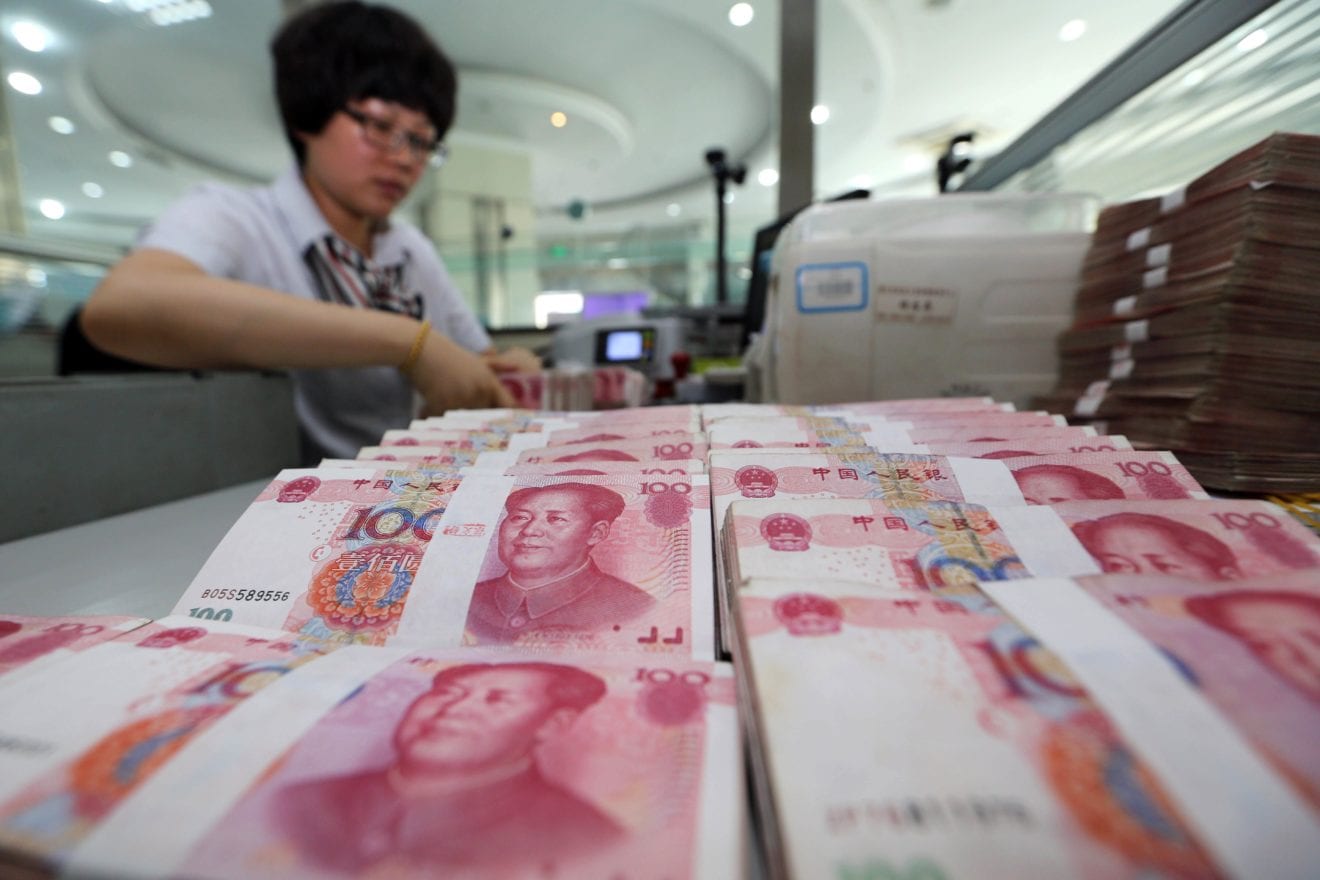
    To this heady brew, add in the slide in the Chinese yuan currency to a five-year low against the dollar, which has forced the government to spend tens of millions of dollars from its foreign currency stockpile to defend it, and you can see a perfect storm of negative factors clouding the outlook for the Monkey Year.

    Overall it was the worst beginning to the year for the Chinese yuan since 1994, on growing concerns that the economy is weakening further.

    The government last week guided the yuan 1.5 per cent lower to give a boost to the country’s export sector, which is bearing the brunt of China’s goods becoming expensive overseas compared to other Asian neighbours. The move to lower the yuan was not deftly done, and the resulting nervous reaction further weighed on share prices.

    “Upbeat trade data could go some way to reassure global investors that China’s economy is stabilising,” said Tom Rafferty, lead China analyst at the Economist Intelligence Unit. “The data is in line with other indicators that suggest China’s economy is stabilising on the back of sustained stimulus measures, some of which have been targeted at the external sector.”

    “There will be some qualms expressed about the reliability of the data, given the weaker performance in December of other major Asian exporters. However, China has consistently outperformed the region in what was a difficult year for global trade,” he said.

    Then you have other anomalies.

    During 2015, seven property developers reported annual sales of more than 100 billion yuan (€14 billion) as the property market continued to perform strongly, despite a slowdown, while a total of 104 developers reported annual sales of over 100 billion (€1.4 billion) in the same period.

    The top three by sales were Vanke, with 261 billion yuan (€36.6 billion), Greenland with 230 billion (€32.3 billion) and Evergrande with 200 billion yuan (€28 billion). All involved will be hoping they can outsmart the monkey again in 2016.

  • Spending at Changi Airport hits record high to reach $2.2 billion in 2015

    Spending at Changi Airport hits record high to reach $2.2 billion in 2015

    Sales at Changi Airport has hit another record high of $2.2 billion last year, placing it along the top three airports in the world in terms of retail business performance.

    Spending at the airport’s retail and food stores grew by 8 per cent year on year, on the back of a growing number of passengers using the airport. Passenger traffic figures are expected to be released next week.

    Travellers from China accounted for a third of the airport’s retail market, followed by Singapore consumers, who made up one-fifth. The other top spenders were from Indonesia, India and Australia.

    Ms Lim Peck Hoon, executive vice-president of commercial at Changi Airport Group, said on Sunday (Jan 24): “We are delighted to achieve yet another record high for concession sales at Changi Airport in 2015. This is positive for the Singapore air hub as profits from our retail business help to offset the cost of our aeronautical operations.”

    At Changi, shoppers’ favourite buys are liquor, tobacco, cosmetics and perfumes. They are followed by luxury goods, electronics and equipment and chocolates and candies.

    Ms Lim said last year’s retail performance was due to a successful commercial strategy, which saw the introduction of liquor and beauty duplex stores that are the first in the world. These two-storey stores have their own bar lounges and wine tasting corners.

    Last year also saw well-known brands such as Zara and Samsung launching their first stores at Changi Airport.

    Other promotions such as the Star Wars soft toys promotion during the year-end holidays and the “Be a Changi Millionaire” draw also contributed to the retail buzz.

    This afternoon, one traveller would walk away a million dollars richer from the sixth annual Changi Millionaire contest.

  • Indonesia wins three Aseanta 2016 awards

    Indonesia wins three Aseanta 2016 awards

    Indonesia has won awards in three out of the six categories of the ASEAN Tourism Awards (ASEANTA) 2016 at an event held in Manila, the Philippines, a minister said.

    “Wonderful Indonesia” won awards in three of the six categories of the ASEAN Awards, Tourism Minister Arief Yahya said in a press statement on Friday.

    “We have beaten some competing countries, including Malaysia,” Arief Yahya said.

    The three awards were in the categories of the Best ASEAN Tourism Photo, the Best ASEAN Cultural Preservation Effort, and the Best ASEAN Travel Article.

    “Morning in Bromo” by Agung Parameswara grabbed the award in the Best ASEAN Tourism Photo category.

    “Mang Udjo,” the Angklung bamboo musical instrument center in Bandung, Indonesia, was the winner of the Best ASEAN Cultural Preservation Effort category.

    And for the Best ASEAN Travel Article category, the winner was “The Perfect Wave,” published in Garuda Indonesia Color Magazine.

    “Meanwhile, Malaysia won two awards and Singapore only one award,” the minister said.

    Minister Arief Yahya was in Manila to attend the 35th ASEAN Tourism Forum (ATF), held from January 18 to 22, 2016.

    The ASEAN Tourism Forum is very strategic to Indonesia because the ASEAN market is the largest contributor to tourist arrivals, he noted.

    In the ATF held in Manila, tourism ministers from all ten member countries of ASEAN – Indonesia, Brunei Darussalam, Malaysia, Cambodia, Singapore, Thailand, the Philippines, Vietnam, Myanmar and Laos participated.

    He believed that the ASEANTA Awards would help promote Indonesian tourist destinations internationally.

    The three other ASEAN Award categories were the Best ASEAN Marketing and Promotion Campaign, the Best ASEAN New Tourism Attraction, and the Best ASEAN Airline Program.

    Filipino President Benigno S. Aquino III spoke before the ASEAN tourism ministers on Wednesday.

    He said that the number of tourist arrivals in ASEAN reached 105.1 million in 2014, a staggering 42.4 percent increase from 73.8 million tourist arrivals in 2010.

    Of those 105.1 million visitors, he said, 49.22 million came from within the ASEAN itself.

    “We belong to a region that holds vast potential in terms of tourism,” President Benigno was quoted as saying by the Philippine Information Agency (PIA).

  • Singapore-Based Courts Retail Opens Second Megastore in Indonesia

    Singapore-Based Courts Retail Opens Second Megastore in Indonesia

    “Indonesia is currently the driver of Courts’ growth. Since we first entered Indonesia in 2014, we now operate two megastores and three regular outlets. We aim to open twelve more outlets by 2018. This is our commitment in catering to the demands of Indonesians,” Roy Santoso, Courts Retial Indonesia country chief executive officer, said in a statement over the weekend.

    Courts opened its first big-box store in Indonesia last year in the Kota Harapan Indah township of Bekasi, on the eastern outskirts of the capital, before expanding with smaller stores in Bogor, West Java. Its Singapore-based headquarters currently operates 80 stores with over 1.6 million square meters of retail space in Southeast Asia.

    As of November last year, sales from Indonesia contributed to 1.7 percent of Courts Asia’s sales of S$186.1 million ($130.17 million), up 4.2 percent year-on-year, according to a listing on the Singapore Exchange.

    Retailers, both local and foreign-owned, have long touted Indonesia as an attractive market, thanks to its expanding middle class and young consumers.

    The country’s retail industry is projected to grow between 11 percent and 12 percent this year, after a modest 8 percent growth last year, as purchasing power across the country is expected to rebound alongside improving economic growth, according to Indonesia’s Retailers Association chairman Roy Mendey.

    “There was some cooling down in [purchasing power] last year because of slowing growth but we started to see an upward trend in sales during the fourth quarter,” he said recently.

  • First Internet Retailing Expo in Asia Took Place in Jakarta

    First Internet Retailing Expo in Asia Took Place in Jakarta

    On 19-20 January 2016, Internet Retailing Expo successfully launched its first edition in Jakarta. Indonesia was chosen to host the event due to the potential of country’s consumer market and an online market that is ready to take-off.

    The two-day conference happened in Pullman Hotel at Central Park, Jakarta, with focuses on both learning and the evaluation of technologies, products and services to help retailers looking to establish and grow their online retails strategies.

    IRX Indonesia 2016 was a roaring success with more than 700 industry professionals and 500 retailers attending the event. It aims to be the meeting place for the multichannel industry where retailers meet key suppliers and together will learn through best practice implementation case studies from a mature market.

    “That’s the power of mobile. Purchasing becomes easy for customers,” said Khrishnan during his interview session for IRX 2016.Throughout the event, 40 expert speakers shared their views on online retail business in Indonesia; many also touched upon the importance of having omni-channel retailing strategy. They include notable names such as Nadiem Makarim (CEO and Founder of GO-JEK Indonesia), Hadi Wenas (CEO, MatahariMall.com) and Krishnan Menon (CEO and Founder of Fabelio).

    The online retail business in Indonesia is definitely still in its developing stage and there are many challenges ahead, such as: lack of relevant talents, concentration of internet users in Jabodetabek, and inadequate infrastructure. However, it holds a tremendous potential as mobile is becoming a key role for any business who wants to be big in the country.

    Global Indonesian Voices is a proud media partner of IRX 2016.

  • Korea eyes nationwide sales event to boost consumption

    Korea eyes nationwide sales event to boost consumption

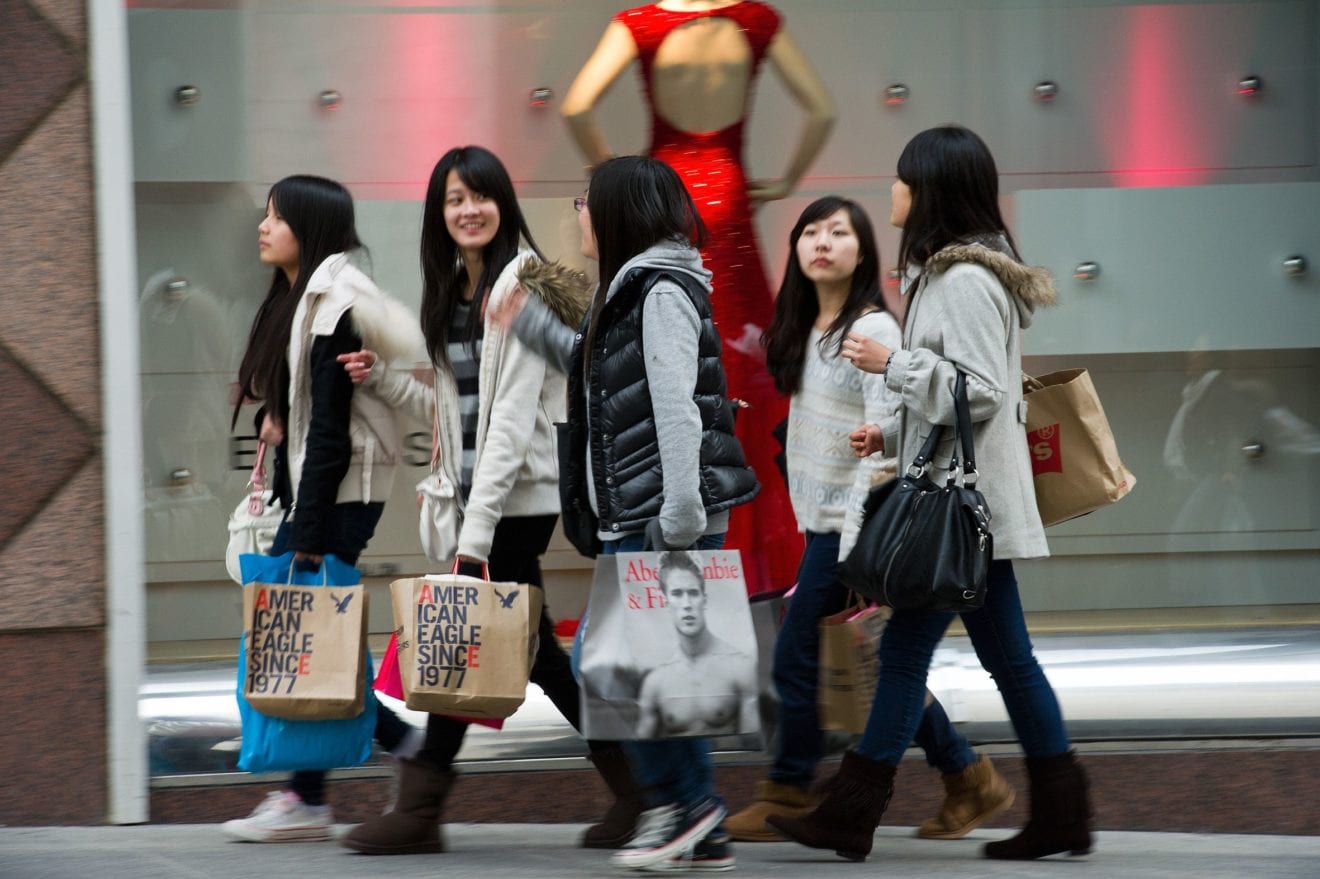
    South Korea will start another round of nationwide discount events later this month in a bid to boost domestic consumption around the Lunar New Year’s holiday, the finance ministry said Tuesday.

    The so-called Korea Grand Sale will begin on Jan. 25 and run through Feb. 7 across the nation before the holiday, with the participation of 300 local traditional markets, according to the Ministry of Strategy and Finance.

    For foreign tourists, the event will take place from Feb. 1 in duty-free shops and other retail stores to celebrate the start of the Visit Korea Year 2016-2018.

    The Lunar New Year, which shifts year to year, falls on Feb. 8 this year, with a five-day break.

    The ministry said the sales event is aimed at maintaining an uptrend in consumption that was seen in the third quarter of last year.

    Last year, the country hosted such events three times, including the K-Sale Day and Korea Black Friday, and saw local retailers post sharp sales increases, along with the government’s excise tax cut programs.

    The rise in sales helped push up the country growth to a five-year high of 1.2 percent in the third quarter, successfully escaping the sluggish mode stemming from the Middle East Respiratory Syndrome outbreak.

    “We’ve come up with plans to keep the pace of private consumption alive and revitalize domestic demand as a whole,” the finance ministry said in a release. (Yonhap)