Category: General

Retail News Asia is committed to providing both local and global retailers with the latest General Retail news throughout the Asian market. This on a daily base.

  • Thai Tycoons Said to Compete for Casino’s Southeast Asia Units

    Thai Tycoons Said to Compete for Casino’s Southeast Asia Units

    Some of Thailand’s richest families are preparing to compete for the Southeast Asian operations of French supermarket operator Casino Guichard-Perrachon SA, according to people with knowledge of the matter.

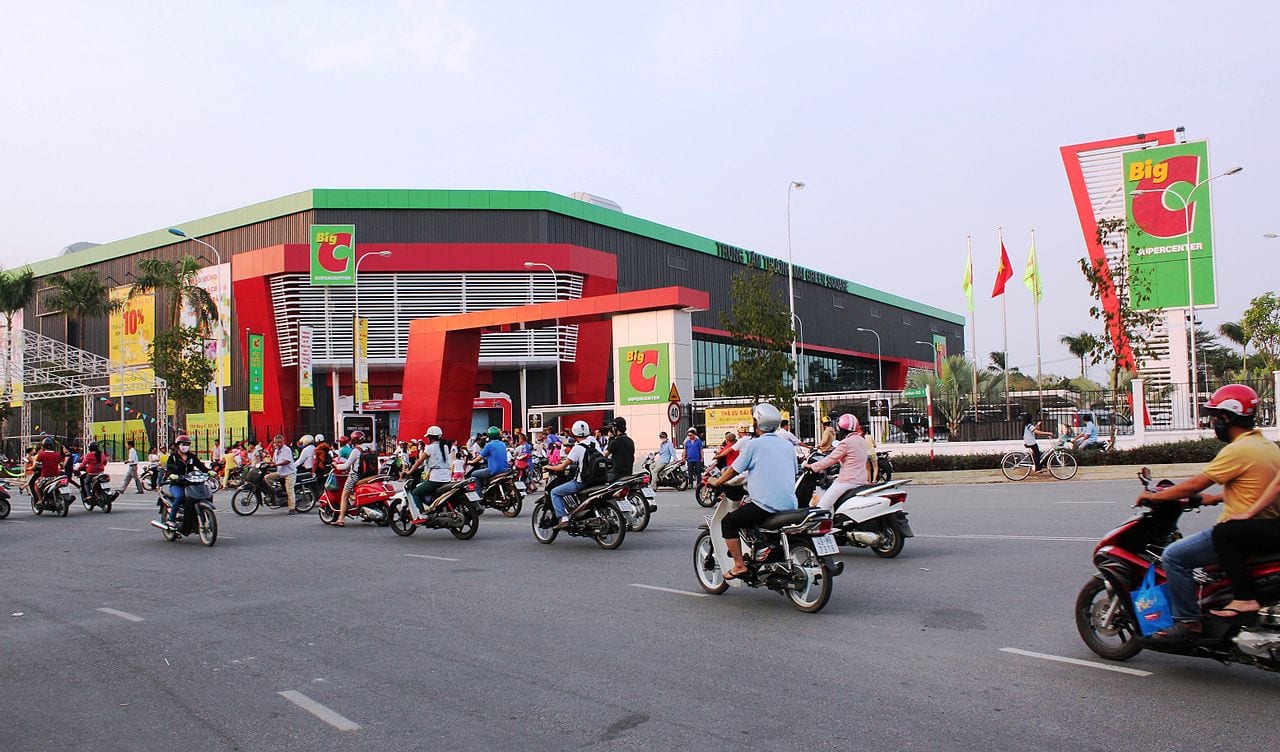
    Billionaire Charoen Sirivadhanabhakdi’s TCC Holding Co. and the Chirathivat family’s Central Group are weighing first-round bids for the Big C Supercenter chains in Thailand and Vietnam, which are due Feb. 5, the people said. The companies have been speaking with banks about advisory roles and financing options, according to the people, who asked not to be named as the process is private.

    The prospect of a competitive auction for the assets spurred Casino shares Friday, lifting the stock as much as 7.5 percent in Paris. Casino’s controlling stake in Bangkok-listed unit Big C Supercenter Pcl could fetch more than $3 billion, while a sale of its Vietnam business could raise as much as $800 million, the people said. The Vietnamese operations have also drawn interest from Tokyo-based retailer Aeon Co., two of the people said.

    A deal would add to the $54.9 billion of acquisitions in Southeast Asia over the past 12 months, data compiled by Bloomberg show. The proposed disposals are part of Casino’s plan to cut debt by more than 4 billion euros ($4.3 billion) this year, after its share price slumped 45 percent in 2015. Attacks on the grocer’s accounting by short-seller Carson Block’s Muddy Waters LLC have accelerated that drop in the past month.

    Department Stores

    Casino may sell its businesses in the two countries together or separately, depending on the offers it receives, the people said. The French company owns 58.6 percent of Bangkok-listed Big C Supercenter.

    A person who answered the phone at Charoen’s office in Bangkok said he wasn’t available for comment. Spokesmen for Aeon and Big C Supercenter declined to comment, while representatives for Casino, Central Group and TCC didn’t answer phone calls seeking comment. An investor-relations official for Berli Jucker Pcl, the Bangkok-listed consumer goods distributor controlled by TCC, also didn’t answer a phone call seeking comment.

    Central Group is among Thailand’s biggest conglomerates, employing over 70,000 people in businesses from retail to real estate, according to its website. It bought Italian luxury department store La Rinascente in 2011 and Danish department store Illum in 2013.

    Richest Man

    TCC, led by Thailand’s richest man, agreed last year to buy Metro AG’s Cash & Carry wholesale business in Vietnam for 655 million euros. The conglomerate acquired control of Singapore food and beverage maker Fraser & Neave Ltd. in 2013.

    Big C Supercenter, founded by the Chirathivat family, opened its first store in Bangkok in 1994. Casino took control of the Thai-listed company five years later.

    Shares of Big C Supercenter have gained 15 percent this year, giving it a market value of 191.4 billion baht ($5.3 billion). The company had 580 stores in Thailand at the end of March 2014, ranging from hypermarkets to convenience stores, according to its website.

  • Hong Kong foreign trade undergoes structural change

    Hong Kong foreign trade undergoes structural change

    Growth in Hong Kong’s import and export trade exceeded the world average for a long time.

    However, things started to change early last year.

    There is a “new normal” in the city’s foreign trade, which may have a far-reaching impact on its future economic growth.

    Hong Kong’s trade maintained an annual growth rate of 9 percent between 1990 and 2008, compared with an average of 6 percent in world trade.

    The city’s trade managed to grow 3.6 percent even in 2014, versus a 2.8 percent rise around the world.

    However, Hong Kong’s trade volume dropped 3 percent in the first 11 months of last year, and it’s heading for its second annual decline since the financial crisis.

    By contrast, global trade is expected to have grown 2.8 percent last year, World Trade Organization figures show.

    Hong Kong registered a contraction in trade only during the Asian financial crisis.

    What’s the underlying reason for the recent decline in trade?

    Over the last 15 years, the city’s exports to Asian cities jumped threefold, compared with 170 percent growth in the city’s overall exports.

    However, Hong Kong’s exports to other Asian cities dropped 1.7 percent between January and October last year.

    That dragged down overall export growth by 1.56 percentage points.

    Also, it’s a sign that the city’s export destinations are undergoing a structural shift.

    That is closely related to the relocation of the processing trade of multinational companies.

    These firms built a processing trade manufacturing chain in Asia centered around China for several decades.

    Hong Kong benefited from the model of “stores in front and factories behind”.

    However, many multinational companies have moved their factories to low-cost countries because of surging labor costs in China.

    It’s a persistent and structural change. That’s the key reason behind Hong Kong’s falling exports.

    Meanwhile, China is shifting from an export-led economy to a consumption-driven model.

    The country won’t maintain the rapid growth in import and export trade of the past.

    Instead, it will emphasize the service sector.

    As a result, trade between the mainland and Hong Kong will also suffer.

    In addition, the number of inbound travelers to Hong Kong is growing more slowly, and their consumption habits have changed.

    That would exert a huge impact on the city’s retail sales.

    Hong Kong’s exports to the mainland soared 3.4 times over the last 15 years, representing 76.8 percent of the city’s export growth to Asia and 65.8 percent of its overall export growth.

    Now, the city will face challenges in maintaining its role as a trade hub, since the region’s processing trade chain has gone through structural changes.

    Also, Hong Kong’s trade-related service exports surpassed HK$500 billion (US$63.9 billion) in 2014, accounting for half the city’s total exports of services.

    Slower growth in trade will therefore weigh on the exports of services.

    Declining trade growth will also affect economic growth and employment.

    In 2013, the trade and logistics sectors contributed 23.9 percent of the city’s gross domestic product, or nearly 30 percent if related services are included.

    The trade and logistics industries have created 770,000 jobs, or nearly 1 million jobs, including related services.

    Easing trade growth will mean the creation of fewer jobs.

    Nevertheless, the “One Belt One Road” strategy is expected to create several hundred billion dollars of incremental trade for the city.

    And Hong Kong is also involved in regional trade talks in an attempt to open up new markets.

  • Indonesia retail sales growth rebounds

    Indonesia retail sales growth rebounds

    Indonesia retail sales rose 10.2 per cent year on year in November, according to data from Bank Indonesia.

    The rise followed a lesser 8.7 per cent growth in October, a figure revised downwards by 0.1 per cent this week.

    But the bank predicts weaker growth in December – as little as 6.7 per cent – with retailers pessimistic despite expectations of increasing sales of recreational goods, cultural items and parts and accessories.

    Bank Indonesia surveys 700 retailers in 10 cities to compile the monthly trend data.

    Food, beverages and tobacco were the major drivers of November’s growth.

    The bank said the survey expected price pressures will cool off over the  next three months.

  • Philippines Plans to Restrict Access to Cash-Mopping Tools

    Philippines Plans to Restrict Access to Cash-Mopping Tools

    The Philippines plans to close a loophole in regulation of trust funds, by restricting those overseen by banks from parking short-term cash at the central bank.

    Bangko Sentral ng Pilipinas is considering limiting lenders’ trust units from placing funds in its short-term deposit facility, monetary board member Felipe Medalla said Tuesday. Policy makers are reviewing access to its liquidity-mopping tools “under the overall framework” of its interest-rate corridor, Governor Amando Tetangco said Wednesday.

    Banks’ trust units have undue advantage over non-bank trust groups that aren’t allowed to put money in the central bank’s special deposit account or SDA facility, and also over lenders themselves that must comply with the reserve requirement, Medalla said in an interview.

    Placements in the so-called SDA facility, which the central bank uses to control liquidity, totaled about $16.8 billion as of December 29. The central bank is preparing to shift to an interest-rate corridor by the second quarter, a move intended to strengthen its policy tools.

    Limiting fund managers’ access to SDAs will make it a purely cash-mopping tool, said Eugenia Victorino, an economist at Australia & New Zealand Banking Group Ltd. in Singapore. In line with plans to shift to an interest-rate corridor system, “the central bank may be thinking of making SDAs a liquidity-management tool that should not be thought of as an investment vehicle.”

    At present, the central bank pays 2.5 percent for funds placed at SDAs, compared with its benchmark rate of 4 percent. The 91-day Treasury bill fetched 1.684 percent at the most recent auction.

    BSP has tools to ensure liquidity growth is healthy and is seeking comments on the proposal, Medalla said.

  • Fabi launches first retail store in India

    Fabi launches first retail store in India

    Designed by Alessandro Germini, the store decor is in line with contemporary stores across Europe and the rest of the world. The store exhibits class and its décor is pristine with a touch of the latest global trends. The store’s cordial staff, international feel and strategic location in the city of Delhi will ensure the ultimate shopping experience for its customers.

    Sameer Singh, director, Mescos Shoes Ltd., was born and brought up in Delhi. He always had a burning desire to make it big in life. He completed his Mussorie Modern in 1998. Later on, he moved to Italy where he got his first job as director Vanilla Fashion. After working with the international fashion brand Vogue in Dubai, he finally joined the renowned Mescos group as director in 2014. His eye for detail, focused approach, eagerness to learn ‘something new’ and ability to seamlessly bring together the necessary resources to ‘get a job done’ gained him a lot of appreciation. As the director of Mescos, Singh has made his mark as a dynamic professional and has many responsibilities under his hat, from business expansion to charting a future growth path for the Mescos brand. With 5 years of total work experience in India and abroad, he has garnered thorough and superior skills and knowledge of the Indian market and has become the driving force of the company. His vision is to expand Mescos’s base in India and to transform it as a brand of choice for the discerning customers. When not working, Singh enjoys travelling and spending time with family and friends. His interests include theatre, music, reading and sports like tennis, squash and cricket. A bundle of energy, he is creative, goal-oriented and certainly an inspiration for the younger lot.

    Founded by Enrico Fabi in 1965, Fabi is a premium Italian brand with its headquarters in Monte San Giusto, Italy. The company has three hundred sixty five employees including master shoemakers and artisans who work closely with specialists in IT technology and state-of-the-art machinery. The brand’s first set of samples was 12 hand-stitched tubular models which instantly became hit among people. After getting success in such a short span of time, Fabi expanded its horizons and established its reputation as a dynamic brand. It has now become a perfect beacon of Italian made designs, a promoter of elegant style and an astute observer of trends who always anticipate new ways of life.

  • Walmart shuts 269 stores worldwide

    Walmart shuts 269 stores worldwide

    On Friday, Walmart announced it will close 269 stores globally as it struggles to compete with online retailers like Amazon.

    The news came as US retail figures showed lower than expected holiday sales figures across the market.

    Sales rose just 3% in November and December, falling short of the expected 3.7% growth according to the National Retail Federation.

    The Walmart closures will affect 10,000 US workers and 16,000 worldwide.

    The announcement came three months after Walmart chief executive Doug McMillon told investors the company would focus on becoming more nimble.

    “Closing stores is never an easy decision. But it is necessary to keep the company strong and positioned for the future,” Mr McMillon said in October.

    The national shortfall in holiday shopping came even as retailers offered steep discounts to attract customers.

    Online retailing did see a significant increase, rising 9% to $105bn (£73.4bn), but it was not enough lift the overall figures.

    Concerns about holiday shopping added to market concerns as stocks fell sharply. The Dow Jones fell 400 points in morning trading.

    Neil Saunders, chief executive of retail analysts Conlumino, said it was a significant move: “Walmart’s decision to scale back its store numbers in the US underlines how much the retail landscape has changed over the past few years. The blunt truth is that while stores remain a vital part of the retail mix, they are not quite as relevant as they used to be.

    “The growth of online, and especially of Amazon, has undermined that advantage and has given almost all consumers easy access to a comprehensive and relatively cheap assortment of products.”

    He added that where Walmart was going, others would follow.

    Weak

    The weak economic outlook was not confined to the service sector.

    On Friday, the Federal Reserve reported industrial production in December shank by 0.4% the second month of contractions.

    Industrial production, which includes manufacturing, mining and utilities has been hit by a strengthening dollar and global economic weakness.

    “With the dollar still rising at a rapid pace and global demand clearly pretty weak we don’t expect much from the US manufacturing sector this year,” Paul Ashworth, chief US economist at Capital Economics, wrote in a research report.

    Warm weather also hit industrial production figures.

    The unusual temperatures pushed utility output down 2% in December following a 5% decline in November.

  • Central Group eyes Casino’s units in Thailand, Vietnam

    Central Group eyes Casino’s units in Thailand, Vietnam

    Thailand’s largest retail conglomerate Central Group is keen to bid for Casino Group’s Thai and Vietnam operations, a company executive said.

    Casino owns 58.6% of Big C Supercenter Plc, which has a total a market value of $5.5 billion. Casino said last week it was keen to sell this stake after announcing it would sell its Vietnam unit in the first quarter.

    “We are interested in both Big C in Thailand and Vietnam,” Prin Chirathivat, deputy chief executive officer.

    “If the prices are not too expensive, we will be keen to bid,” Mr Prin said adding his family, the Chirathivats, has a combined 25% stake in Big C.

    Central has been actively looking to buy assets overseas as it wants to expand into Southeast Asia and Europe.

  • Kertajati airport project to cost Rp3.7 trillion

    Kertajati airport project to cost Rp3.7 trillion

    The Kertajati airport project in West Java will cost around Rp3.7 trillion, to be paid by the central governmernt West Java Governor Ahmad Heryawan said.

    The central government through the transport ministry will finance the construction of the international airport in the regency of Majalengka, the governor said here on Monday.

    President Joko Widodo announced the decision on the project financing during his visit to Majalengka on Sunday.

    The governor said construction of the runway and the monitoring tower will cost around Rp1.6 trillion and the terminal and other facilities will cost around Rp2.1 trillion.

    The West Java administration is to pay only for the 1,800 hectare land clearing, the governor said, adding land clearing has been 1,000 hectares completed.

  • National Gallery Singapore teams up with & Co to create a dynamic lifestyle space

    National Gallery Singapore teams up with & Co to create a dynamic lifestyle space

    The National Gallery Singapore and & Co just reinvented the museum store. Located on the ground floor of the newly opened museum, the lifestyle concept space, named Gallery & Co, fuses together several different elements. Comprised of a retail shop, a casual dining area that serves organic bites and a gallery, Gallery & Co seeks to engage museum visitors through its vast offerings. The gallery tapped creative collective & Co to curate and design the space. The retail area features platforms covered in grids, stripes and polka dots, while the cafe consists of clean lines and a green tile floor.

    ‘Each space has its unique aesthetic catering to a different product category and customer type, ensuring relevance and engendering engagement. They are all unified by the custom-designed grey tiles and blue-grey columns,’ says Yah-Leng Yu, co-founder of & Co and the Foreign Policy Design Group.

    The retail shop carries both international and local fashion and design brands, such as French fashion label Kitsuné and Singaporean jewellery brand Argentum. The shop also holds special collaborations between brands and the museum, like the timepiece made collaboratively with Japanese solar watch company Q&Q. The gallery will also exhibit emerging artists.

    ‘Our objective for doing the store was really to make it a living and evolving space, and the idea of the retail store was to really inspire people to be creative. That’s what the museum is for, to bring the public here, and to inspire them through art – and that’s what we aim to do in our store,’ said & Co co-founder Alwyn Chong. ‘That’s why we don’t sell the regular museum souvenirs – really we are about collaborating, about bringing people together, and about creating something special.’

  • Shoppers spent more last Xmas than in 2014

    Shoppers spent more last Xmas than in 2014

    Economic growth in Singapore may have slowed to about 2 per cent last year, but that did not dampen the spirit of shoppers last Christmas.

    Overall Christmas spending has grown from a year ago, say credit card companies.

    There was a 16 per cent increase in overall spending last December from the same month in 2014, said Mr Vincent Tan, head of cards at OCBC Bank. Visa also saw a 10 per cent growth in the volume of overall transactions.

    At the same time, the rise in spending on online platforms outpaced that at brick-and-mortar shops. In-store transactions grew by 8 per cent, said MasterCard, while e-commerce transactions grew last month by 25 per cent from the previous year. It did not give absolute figures.

    Online spending over the festive period also grew by 36 per cent last year at OCBC, compared with a 13 per cent gain at physical shops.

    At Visa, there was a 20 per cent year-on-year growth in online transactions in November and December last year. The number of Visa cardholders shopping online has also grown by the same proportion.

    Spending patterns over the festive period mirror wider trends.

    According to a study commissioned by PayPal in partnership with market research firm Ipsos, online shopping growth in Singapore is expected to hit 16 per cent next year, the third fastest in the Asia Pacific after India and China.

    Consumers are attracted to the convenience of shopping online, as well as the competitive prices offered by online retailers, according to a survey of 500 people by Visa.

    These trends have brought good news for local online retailers, which have seen a huge growth in profits from festive sales last year.

    Local e-commerce platform Shopback, which has 200,000 customers and sells a wide range of goods, enjoyed a tenfold growth in profits last month, as compared with December 2014. It declined to give absolute figures.

    Sales performance in early to middle of last month was also better than the days right before Christmas, said a spokesman. This could be due to the buffer period required for shipping, he added.

    Online fashion retailer Zalora, which has its headquarters here, also saw a growth of 73 per cent for a four-day online shopping extravaganza held last month, compared with the same event a year earlier, said a spokesman.

    Teacher Lye Pin Quan, 28, spent about $1,000 online on gifts for friends and family, as well as on Christmas decorations. He shopped on local e-commerce sites like Qoo10 and Lazada, as well as overseas ones like Taobao, purchasing mainly electronic products.

    “The long queues at retail stores are quite off-putting during the festive period, and I also find that there are better sales and discounts on items online. Sometimes, you can save as much as 50 per cent or more,” he said.

  • Investors sought for top-yielding Oud production project in Laos

    Investors sought for top-yielding Oud production project in Laos

    Two companies from Malaysia are on the lookout for investors to set up a big agarwood tree plantation in Laos to produce Oud oil and other agarwood products for markets in Asia, the Middle East and Europe.

    Agricultural contractor Aseagate on January 6 signed an agreement valued 200mn with forestry management and agriculture technology firm Richwood Capital both companies are based in Kuala Lumpur to operate and run a 2,000-hectare agarwood tree plantation in the central Lao province of Bolikhamsai, one of the largest plantations projects in the landlocked Southeast Asian country so far.

    According to Richwood Capital’s CEO Kendrick Ho Qing Tyat, the project will be implemented in four phases. The initial investment in the first phase is about 18mn for the planting of 200,000 agarwood trees aged between 18 and 22 years at costs of 90 per tree, which should yield a return of 200mn in three years based on calculations that one liter of high-quality agarwood oil fetches at least 14,000 on the wholesale market.Over four phases in the coming six to eight years, with the planting of new trees and new investors on board, the venture’s business plan is to reach a total return of no less than 7.2bn, Tyat said at a press conference in Kuala Lumpur last week. The venture plans to set up its own production plant in Laos or to collaborate with a Lao partner. To produce the resin from which the Oud essence can be distilled, a special technique developed by a Singapore laboratory using a unique and effective enzyme will be deployed to multiply the resin output per tree.

    Main export markets will be the Middle East and China, and also Southeast Asia to tap the big potential that opened up with the recent launch of the ASEAN Economic Community. Top European perfume makers are also on the potential client list. The venture will also sell agarwood leaves, which can be made into tea, and explore ways of producing wood chips from the agarwood trees as well as offer “agriland banking” to investors to tap into the growing ptential of agarwood farming.

    Both companies hailed agarwood as a safe investment, as it was “more resilient to economic fluctuations as compared to stocks and bonds,” and insurance will be purchased to provide protection against possible natural calamities.

    Aseagate has been awarded the sole rights to the management of the agarwood plantation, while Richwood Capital will supply and plant the trees. The plantation concession has been exclusively awarded by the Lao government to the Singapore branch of non-governmental organisation Global Outstanding Chinese 100, or GOC100, an association of international Chinese industrialists, business people and entrepreneurs, which will cooperate with the two Malaysian firms in setting up the plantation and is working out profit-sharing and other details for the collaboration with the Lao government.

    GOC100 in August 2015 signed an exclusive agreement with the Lao Ministry of Agriculture and Forestry for the concession of the plantation which is located within a Lao military base and guarded by the army. Infrastructure-wise, the plantation will benefit from a new railway network linking Laos with China to be set up by 2020.

    Agarwood is increasingly becoming an investment commodity due to its valuable resin of which Oud oil is being distilled. Pure Oud is highly in demand as a natural fragrance throughout East and Southeast Asia, as well as in the Middle East and by global perfume manufacturers. It is a popular fragrance for both men and women in the Arab world, while it is also used in traditional Chinese medicine, by Ayurvedic and Tibetan physicians and as meditation incense by various religious groups. In some Arab cultures, it is also used as inhaled incense as a natural remedy against insomnia.

    What makes investment in an agarwood plantation particularly attractive is the fact that, due to its scarcity, the mature wood is pricier than gold with a retail price of between 5,600 and 10,000 per kilogramme, making it one of the most expensive natural raw materials in the world.

  • African exports to China descend by 40 percent

    African exports to China descend by 40 percent

    African exports to China fell by 40 percent in 2015, China’s customs office reports. China is Africa’s greatest single trading partner and its interest for African products has fuelled the continent’s recent financial development. The decrease in exports mirrors the recent slowdown in China’s economy. This has, thus, put African economies under weight and to some extent represents the falling estimation of numerous African currencies.

    Exhibiting China’s previous year trading figures, customs representative Huang Songping advised that African exports to China aggregated $67bn (£46.3bn), which was 38% down on the figure for 2014. BBC Africa Business Report editor Matthew Davies says that as China’s economy sets out toward what numerous experts say will be a hard finding, its requirement for African oil, metals and minerals has fallen quickly, taking commodity prices lower.

    There is likewise less funds coming from China to Africa, with direct investment from China into the mainland falling by 40% in the initial six months of 2015, he says. In the mean time, Africa’s interest for Chinese products is rising. In 2015 China sent $102bn worth of products to the mainland, an expansion of 3.6%. A year ago, South Africa facilitated a China-Africa summit amid which President Xi Jinping declared $60bn of aid and loans, symbolizing the nation’s growing part on the Continent.

  • Thailand cracking down on foreign-controlled firms using locals as nominees

    Thailand cracking down on foreign-controlled firms using locals as nominees

    The Commerce Ministry’s Business Development Department will this year expand its investigation into the use of Thai nationals as nominees for foreign-controlled companies in nine provinces where it suspects the illegal practice is widespread.

    This year, three additional provinces will be monitored – Krabi, Trat (Koh Chang), and Chiang Rai. Last year, six provinces were focused on – Bangkok, Chon Buri, Surat Thani, Prachuap Khiri Khan, Chiang Mai, and Phuket – and 13 firms were suspected of breaching the Foreign Business Act (FBA) through the use of Thai nominees.

    Pongpun Gearaviriyapun, director-general of the department, said it would tackle this practice vigorously this year through stringent law enforcement in a bid to prevent problems occurring under the FBA.

    She said the department would extend its investigation of nominee cases to 10 business sectors – food and beverages, tourism, property rental, the property trade, car rentals, spas, handicraft and souvenir retail, Internet retailing, direct sales, and education consultants.

    She said those sectors would be targeted because it was believed that a high proportion of their businesses were foreign controlled through the use of Thai nominees.

    She said the department would stringently investigate those businesses in an effort to prevent enterprises and consumers being affected negatively as some foreign-owned businesses were engaged in unscrupulous activities to lure consumers.

    The inspections will focus on a business’ share structure, investment capital, and technology transfer.

    Last year, the department investigated six sectors – food and beverages, tourism, car rentals, property rental, property sales, and spas.

    Meanwhile, to facilitate foreign enterprises doing business in the country, the department is considering relaxing its regulations under the FBA. This would involve them not having to get the FBA board’s permission to operate under the act.

    Businesses that would benefit from the move include representative offices, companies that are state-owned contractors, and subsidiary firms.

    In addition, the department will focus on supporting the starting up of new enterprises and strengthening local business growth under the ASEAN seamless market.

    The department will also develop its electronic services, such as e-registration, e-filing, and e-service applications, to help enterprises register, submit account balances, and update information online so they can save costs and time.

  • Hong Kong Government Collaborates With China In Phasing Out Ivory Trade

    Hong Kong Government Collaborates With China In Phasing Out Ivory Trade

    This week, animal rights activists in Hong Kong are celebrating a huge win as their plea to eliminate global ivory trade has been heard. Hong Kong’s Chief Executive Leung Chun Ying announced in his annual policy address that the country will phase out on ivory trading in collaboration with China.

    CNN reported that Hong Kong was allegedly the world’s largest retail market for ivory and a facilitator of illegal ivory transport into mainland China.

    The Government is very concerned about the illegal poaching of elephants in Africa,” Leung said in his speech, “It will kick start legislative procedures as soon as possible to ban the import and export of elephant hunting trophies.”

    Hong Kong’s government has also vowed to impose heavy penalties against those who partake in illegal ivory trade and importation

    China reportedly has better laws regarding ivory trade compared to Hong Kong.

    According to Huffington Post, 30,000 African elephants are killed every year for their tusks, hence putting the species at a risk of extinction.  The government has reportedly begun a crackdown on the illegal trade, and the action is already making a difference.

    Earth Torch News Network asserted that the activist group initially began pinning down perpetrators three years ago, although the government was not so keen on doing the same. Additionally, reports indicate that the import and export of ivory have been banned in Hong Kong since 1989. However, there have been loopholes in the enforcement of such prohibition, thus allowing the trade to propagate.

    Meanwhile, an estimated 16.7 tons of ivory have been confiscated in Hong Kong for the past three years.

    In other news, animal rights activists are calling other Southeast Asian countries, including Thailand, to emulate China, Hongkong and the United States in banning the domestic trade of ivory.

    Wild Life reported that new fears arise as South Africa is planning to propose the re-opening of a regulated trade of rhino horn. Once the bill is passed, elephant poachers are likely to venture into rhino poaching to supply investors.

  • Thailand set to lure shoppers from Singapore

    Thailand set to lure shoppers from Singapore

    Thailand luxury goods import duties may be cut in a move to make the nation a more attractive shopping destination for foreigners, a direct challenge to Singapore.

    Such a move would put Bangkok, already a fast-growing regional retail destination, in direct competition with Singapore and Hong Kong for regional tourist spending. Both Singapore and Hong Kong have long since culled such duties.

    Thailand’s Customs Department believes removing the 30 per cent tax on luxury goods would make the country the leading tourist destination for luxury goods shopping in Asia, potentially boosting tourist spending on shopping by 15 to 20 per cent.

    The argument in favour of the cut is that if Thailand’s luxury goods tax was no different from those in Hong Kong and Singapore, Thailand could become the preferred destination, because the country overall offers more attractions at a lower cost.

    The cut might also encourage Thais to shop at home instead of abroad.

    Foreign tourists in Thailand spend about US$33 a day on average on shopping – just half the figure tourists in Singapore spend and a quarter that spent in Hong Kong (it is not clear if those figures were calculated before the current downturn which has impacted on Chinese Mainlanders’ spending in Hong Kong).

    While Thailand retail prices overall are regionally competitive, import duties on so-called luxury items and a seven per cent sales tax make luxury branded goods, and items like fragrances, are more expensive than elsewhere.

    Thailand Customs Department director Kulit Sombatsiri says the department is studying the implications of the move to ensure it will not affect local businesses, and might limit the reduction to selected products that Thailand does not make.