Category: General

Retail News Asia is committed to providing both local and global retailers with the latest General Retail news throughout the Asian market. This on a daily base.

  • Bee forces flight delay in Indonesia

    Bee forces flight delay in Indonesia

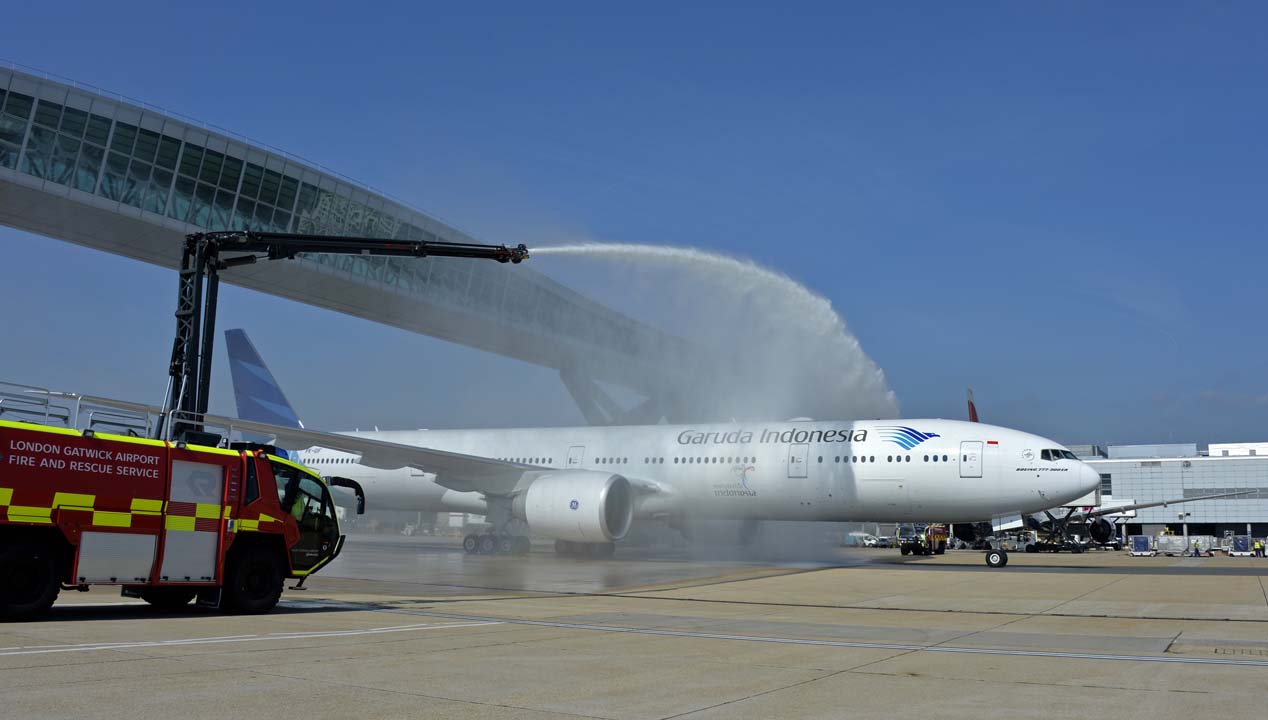
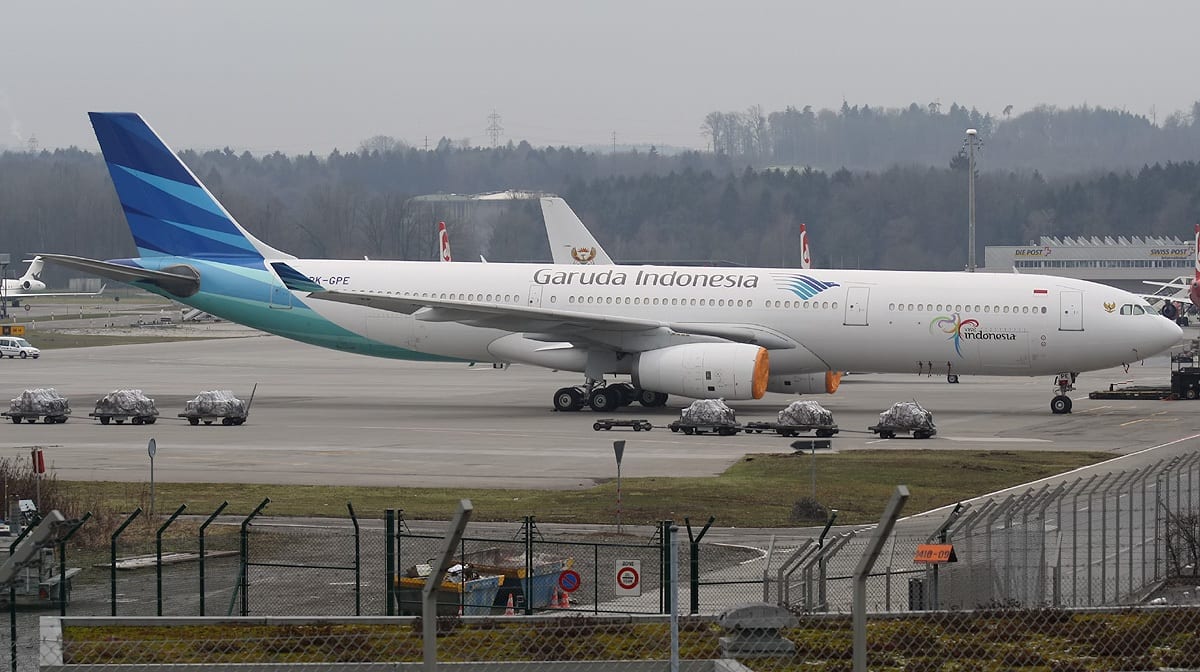
    An errant bee delayed the takeoff of a flight operated by Indonesia’s Garuda Indonesia, the flag carrier’s spokesman said Wednesday.

    Benny Butarbutar, the company’s vice president of corporate communications, told Kyodo News that the pilot of Flight GA197 decided to delay the flight for four hours Tuesday after finding some problems in one of the aircraft’s engines.

    The plane was scheduled to take off at 10.10am from Kualanamu international airport in the North Sumatra provincial capital of Medan bound for the capital Jakarta.

    “Based on a thorough investigation, the problem in the aircraft’s electronic engine control was caused by a bee entering the aircraft’s pitot tube located on the outer part of the cockpit, delaying the departure,” Mr Butarbutar said. The pitot tube measures airspeed.

    The incident, he added, “was beyond Garuda’s control and caused more by the airport’s situation and condition.”

    The problem was discovered just as the plane was about to take off, he said.

    “Considering safety aspects, Garuda Indonesia decided to delay the flight, and after a one-hour repair process, the aircraft was declared serviceable and ready to operate,” Mr Butarbutar said, adding that the incident was the first of its kind for Garuda.

  • Hong Kong Retail to Reshuffle as Sales Remain Lackluster

    Hong Kong Retail to Reshuffle as Sales Remain Lackluster

    Hong Kong retailers are far from optimistic about sales during next month’s Lunar New Year holiday as retail sales fell for nine months in a row, with a 7.8 percent plunge last November compared to a year ago.

    At the same time, the tourism industry and retail sectors have been adjusting their strategies in the hope of finding a way forward.

    The year-end period is the traditional high season for retailers, however, the latest government data shows that in November last year, sales in most categories recorded a significant drop, with jewelry, watches and clocks, as well as high value gifts continuing to be the hardest to hit.

    This is in line with sluggish inbound tourism, which dipped by 10.4 percent over the same period.

    Hong Kong’s wholesale and retail lawmaker Vincent Fang believes it’s bound to affect employment and the retail landscape.

    “For example, is it possible that I just hire three salespersons instead of four? For chain stores, if the lease expires, and I cannot afford to keep five or six shops, maybe I’ll close one down.”

    Hong Kong Retail Management Association chairman Thomson Cheng is estimating a single-digit percentage sales drop during the coming Lunar New Year holiday.

    “If people in Hong Kong ask for two days off, they’ll have a nine-day holiday, I think they’ll travel overseas. So local consumption won’t be ideal. At the same time, The Hong Kong dollar remains strong, which also makes the price unattractive to tourists.”

    A total of 10 million Hong Kong dollars have been allocated to ten local attractions to help promote them to overseas markets during winter period, but according to tourism lawmaker Yiu Si wing, the measure is not proving effective.

    “The Retail sector has been through a hard time. Tourists from the mainland are selective when consuming, they have a smaller appetite for luxury goods, as well as high-end restaurants. The government is hoping to attract tourists with higher spending capability to fill the gap, but it seems that it is failing to achieve the desired results. ”

    But it is not all bad news. Skyrocketing rents in Hong Kong are declining following disappointing retail performance, which is enabling some stores to expand their network. Digital products and home appliance provider Hong Kong Suning Commerce Groups is one of them. Kim Li is the Operations Director of the company.

    “We have entered the retail winter, but property owners also realize that they cannot keep the current rent based on how many customers we receive. So they reduce rents significantly, some drop by 40 percent. We think we still have opportunity to develop and expand our market with lower costs.”

    To better protect tourists’ interest, Hong Kong’s Travel Industry Council has asked operators to take tour groups only to the pre-registered shops, but industry practitioners are not cooperating and some say they’ll boycott the list.

    For CRI, this is Li Jing in Hong Kong.

  • Hong Kong retail sales figures fall for 12th straight month

    Hong Kong retail sales figures fall for 12th straight month

    Hong Kong retail sales fell 7.8 per cent in November – a drop worse than expected that prompted retailers to draw parallels to 2003, when the city was hit by Sars.

    Thomson Cheng Wai-hung, the chairman of the Retail Management Association, predicted the full-year figure for 2015 would have fallen at least 3 per cent “for sure”.

    When severe acute respiratory syndrome hit in 2003, the city’s full-year retail sales decreased 2.3 per cent. The first 11 months of last year saw a drop of 3.1 per cent year on year.

    And retailers can see no light at the end of the tunnel.

    “We couldn’t see any positive signs that retail would turn around in 2016,” said Cheng. He said most members surveyed by the association expected single-digit declines this year.

    The Hong Kong government also expects a gloomy year ahead. A spokesman said the retail sector would remain weak due to low numbers of inbound tourists.

    Most retail categories saw sales fall in November, with only three areas recording growth.

    Jewellery, watches, clocks and valuable gifts ranked worst, with sales down 20.6 per cent. They were followed by department store goods and clothing, with sales declining 4.8 per cent and 8.6 per cent respectively.

    Supermarket sales did better, rising 1.4 per cent – a rise matched by food, alcoholic drinks and tobacco. Motor vehicles and parts saw a rise of 7.8 per cent.

    Cheng said tourists from the mainland were “crucial” to the city’s retail sector, as they spent substantial portions of their travel budgets on shopping.

    While there has been a steady increase in visitor arrivals from overseas in recent months, Cheng said foreign tourists spent more of their budgets on leisure activities such as sightseeing and food, rather than shopping.

    “They wouldn’t help much on retail sales,” said Cheng.

    Retailers at the Hong Kong Brands and Products Expo also received disappointing sales results yesterday, with total sales standing at HK$900 million, unchanged from last year’s figure.

    Sales at the popular Macau ­baker Koi Kei Bakery declined 20 to 30 per cent compared to last year, according to the man in charge of its booth, Arthur Lee. He said tourists from the mainland used to contribute one-third of the baker’s sales at the expo, but this year had been responsible for less than 10 per cent.

    Meanwhile, the number of visitors to Hong Kong during the Christmas and new year holidays shrank compared to last year. The Immigration Department said visitor arrivals for December 24-27 and December 31-January 3 dropped to 1.46 million, down 2.53 per cent from last year.

    Tourists from the mainland were down 5.45 per cent and overseas visitors fell 1.28 per cent.

  • Retail sales slumps 7.8 per cent in HongKong

    Retail sales slumps 7.8 per cent in HongKong

    Hong Kong retail is going on its year-long downturn, with an estimate of total retail deals drooping 7.8 percent to HK$38.1 billion last November contrasted to figures a year before. This is the most noticeable bad month to month execution since January previous year ago, denoting its twelfth consecutive month of turn down.

    The city’s once blasting retail area is on its voyage to record its most exceedingly bad year since 2003 when SARS hit as the value of retail sales in the initial 11 months a year ago fell by 3.1 percent contrasted to the same period in 2014.  Among all the retail classifications, jewellery, watches and clocks and other gifts positioned most exceedingly bad, with deals down 20.6 percent. They were trailed by commodities in retail chains and attire, with deals declining 4.8 percent and 8.6 percent for each.

    Most retail classifications saw sales retreat in November, with just three outlets recording growth: sales of grocery stores; food, mixed beverages and tobacco; and motor vehicles and parts. They extended 1.4 percent, 1.4 percent and 7.8 percent respectively. Alongside the estimation of retail deals, November volumes additionally diminished by six percent contrasted to a year before.  A government representative said the “distinctly” slack retail deals were for the most part tottered by the lull in inbound tourism. Local utilization conclusions were prone to be influenced by a troubling financial viewpoint and late securities exchange remedies, he said.

  • Thai retailers call for more tax breaks

    Thai retailers call for more tax breaks

    The government should continue endorsing tax breaks for consumers and open more duty-free shops to attract foreign tourists and boost the retail business, according to the Thai Retailers Association (TRA).

    “The tax measure endorsed for the last seven days of last year has helped the whole retail sector to grow by 3.1 per cent in 2015, up from 2.8 per cent in an earlier forecast.

    “It would be great if the government could extend this scheme to cover foreign tourists in order to encourage more spending while they stay in the country,” Jariya Chirathivat, president of the TRA, said yesterday.

    For domestic tourism, the government should continue the tax-deduction measure and implement it twice annually, in the first and second halves of the year. This would increase spending by local people, particularly for tourism, during the low and back-to-school seasons.

    The government should allow more operators to open duty-free shops in major towns and tourist destinations. It is hoped this would reduce the prices of luxury products and other goods, and encourage tourists to spend more.

    “The government should give the green light to more operators to run duty-free shops at major airports and in downtown areas. Currently, there is only one duty-free operator in Thailand.

    “The government should support this by having pick-up counters at major airports for tourists buying duty-free products in downtown shops. This would benefit the tourism industry,” Jariya said.

    The average daily spending per visitor is about Bt5,000, he said. Nearly one-third of that, or about Bt1,400, is for shopping. However, the average tourist shopping expenditure in Thailand is half that in Singapore and a quarter of the outlay in Hong Kong.

    “The problem is tourists don’t come to Thailand mainly for shopping, because most luxury goods here are more expensive than in Singapore or Hong Kong,” she said.

    To strengthen the retail business in 2016, the TRA has offered more proposals to the government for consideration, including speeding up investment in infrastructure projects to create jobs and increase incomes.

    Other ideas are imposing some measures to boost local consumption by focusing on middle-to-high-income earners, restoring shoppers’ confidence, and putting consumers in a shopping mood by running some campaigns during the low season.

    Reducing duties on luxury brand-name imports to attract more shopping from foreign tourists is also needed. According to the Global Blue survey for 2012-13, Thais were ranked sixth in claiming tax refunds on overseas shopping.

    The TRA said the 2015 special tax break was one of the government’s New Year gifts for Thais. All retailers and product makers are registered in the value-added-tax system.

    The measure, which offered tax deductions of up to Bt15,000, augmented consumer purchasing power. Earlier, the government imposed another measure to allow deductions of up to Bt15,000 for individual taxpayers who bought hotel accommodations and other services from tourism operators. Both tax breaks will together allow individual taxpayers to deduct up to Bt30,000 on their personal income tax.

    It was predicted that the shopping spree during the New Year celebrations rose 20 per cent or Bt25 billion and pumped Bt125 billion into the economy in the final month of 2015.

    According to the World Bank, Thailand’s tax collections should reach 21.35 per cent of gross domestic product, but only 16.02 per cent has been collected over the last few years.

    A study of the tax structure found only 327,127 companies and partnerships registered with the corporate-income-tax system, or only 12 per cent of the 2.7 million entities registered with the Commerce Ministry’s Business Development Department.

  • Sari-sari stores in Davao City to thrive vs 7-Eleven

    Sari-sari stores in Davao City to thrive vs 7-Eleven

    Philippines’ corner stores called ‘sari-sari stores’ will be affected by growing competition from convenience stores sprouting in Davao City but they will continue to survive, according to a local government official.

    Ivan C. Cortez, officer-in-charge of Davao City Investment Promotions Center (DCIPC), said, in an interview with Sun Star Davao, that the increasing number of 7-Eleven stores in the city will affect small retailers’ sales especially those of the ‘sari-sari’ stores.

    However, Cortez said that ‘sari-sari’ stores will continue to thrive as their market is different from convenience stores.

    ‘Sari-sari’ stores, considered as neighbourhood stores, sell a variety of products in retail from a cigarette stick, shampoo sachets, to a small pack of peppercorn. They are ubiquitous in residential areas and sometimes offer goods on credit.

    The market of 7-Eleven and other convenience stores, on the other hand, are mainly young professionals.

    “7-Eleven is an upscale sari-sari store with 24 hours service, this will have an effect on local sari-sari store, on the survival rate, because 7/11 is getting the bulk the sales,” added Cortez.

    7-Eleven, the largest convenience store chain in the Philippines and operated by Philippine Seven Corp. (PSC), has more than 20 stores in the city.

    PSC aims to open 70 stores in Davao City in June this year and 120 stores by 2018 in the entire region of Mindanao.

  • Hong Kong retail sales worse than expected in November

    Hong Kong retail sales worse than expected in November

    Hong Kong’s retail sales by value declined for a ninth consecutive month in November, falling by a worse-than-expected 7.8% from a year earlier as inbound tourism slowed further, the Census and Statistics Department said Monday.

    The decline deepened from October’s 3.0% fall, and was more severe than the median forecast of a 6.5% decrease from three economists surveyed by The Wall Street Journal.

    Hong Kong’s 2015 retail sales are expected to suffer their biggest annual decline since the outbreak of severe acute respiratory syndrome, or SARS, in 2003. Retail sales by value for January-November fell 3.1% from a year earlier, steeper than the 2.3% decline recorded in 2003 when tourists shunned Hong Kong for several months during the SARS outbreak.

    Hong Kong’s retail sales by volume fell 6.0% in November from a year earlier, reversing October’s 1.2% rise, and worse than the survey’s median forecast of a 3.2% contraction.

    A government spokesman said retail sales dropped amid weak tourism. “The increased downside risks to the economic outlook and recent stock market corrections might also have resulted in more cautious local consumption sentiment,” the spokesman added.


  • TPP and RCEP ‘will be good for Thailand’

    TPP and RCEP ‘will be good for Thailand’

    In an interview with regional media, he said Thailand should benefit from joining both trade blocs as the RCEP’s centre points are China, Japan and India, while the TPP is spearheaded by the US and Japan, with Thailand’s automotive industry among the potential gainers for exports to the huge TPP markets.

    The RCEP is the extended trade bloc of the AEC, with a combined economy worth US$2.6 trillion (Bt83.8 trillion).

    Incalcaterra said the AEC, which ushered in a new era at the start of this year, would lead to more effective flows of capital and trade in services, in addition to the freer flow of goods.

    However, he said trade in services was more difficult due to non-tariff barriers, but the situation should now continue to improve as member countries hope to achieve their liberalisation goal in 2025.

    Within the AEC area, he said, the “single window” facility for cross-border trade had lowered transaction costs, while global supply chains had benefited from cost savings in the area’s single production base.

    However, the economist said Asean countries needed more political will to further integrate the member states and boost foreign direct investment from outside the region, while implementing structural reforms to boost auto and other industries, as well as infrastructure investment projects using the public-private partnership model.

    Regarding the TPP, he said, the 12-nation trade bloc should complement the RCEP of the Asean countries plus their partners – China, India, Japan, South Korea, Australia and New Zealand – as more free trade was better for the region.

    “In the AEC, Thailand is among those at the forefront with a head start due to its large consumer market, big auto industry, et cetera, hence many Thai firms can take advantage [of the opportunities],” he said, adding the country’s political challenge has, however, hindered the economy in the past one or two years.

    In addition to Thailand, he said, other Asean countries such as the Philippines and Indonesia were moving towards joining the TPP trade bloc over the next two years.

    In the case of Thailand, there are clear benefits in joining the TPP in addition to the RCEP, he added.

    At present, Singapore, Vietnam, and Malaysia are already members of both the RCEP and the TPP.

    For this year, Incalcaterra said Thailand’s economic growth rate would likely remain the lowest among Asean countries, with HSBC projecting 3.3-per-cent expansion.

    China’s slowdown will affect Thailand and Malaysia significantly, due to the two countries’ large share of exports to China, where growth this year is projected to be less at 6.7 per cent, against 7.1 per cent in 2015, he said.

    On the US Federal Reserve’s interest-rate hike – the first in nine years – the economist said the move would create short-term volatility, but the gradual cycle of rate adjustments would not lead to a major disruption.

    Meanwhile, Hai Pham, HSBC’s chief executive officer in Vietnam, said there was plenty of room for intra-trade growth among Asean economies, which currently represented only 20 per cent of their total trade, compared to more than 60 per cent among members of the European Union.

    He said cross-border investment was another high-growth area for Asean companies, citing Thailand’s Berli Jucker and other firms as examples of Asean firms investing in Vietnam’s retail and electronic-goods sectors.

    For Vietnam, GDP growth is projected to be around 6-7 per cent this year, but the challenge is for local businesses to step up their efforts to meet the challenges presented by the AEC, as many are still not ready to take on increased competition.

    The CEO also expects more consolidation of companies in Vietnam in 2016, due to the coming into effect of the AEC.

  • Singapore needs to boast about its entrepreneurial success

    Singapore needs to boast about its entrepreneurial success

    Singapore and London can use more “buzz” to promote their technology ecosystems to the world – though each is already an innovation and finance hub in its own right, said Eileen Burbidge, the UK government’s first Special Envoy for FinTech, and venture capital partner at Passion Capital.

    “Tech is a noisy industry, just look at (what’s happening on) Twitter,” she told BT in an interview. While the buzz can be a distraction, it is legitimate when “something happens”, she said, which in the startup world could entail a successful fundraise, an exit, or even a favourable review of a new product.

    But compared to Silicon Valley, London and Singapore are “not boasting enough” about their entrepreneurial successes, said Ms Burbidge. And investors care for buzz, which can also spur ambition and competition among entrepreneurs, she added.

    Asked why London is excelling as a fintech hub, she said: “London combines the innovation of Silicon Valley with the financing heritage of New York’s Wall Street and the policy-making of Washington – all in one city.”

    Plus, the UK government genuinely supports entrepreneurship, she pointed out. “The 2007/2008 financial crisis crippled London’s services industry, and London doesn’t want to go through that again. So the government encourages companies to embrace innovation, and recognises that this is an ecosystem.”

    For instance, the UK now leads the world in equity crowdfunding, an industry that has matured and burgeoned owing to “progressive” policy-making by regulators, said Ms Burbidge. Retail investors in the UK are allowed to invest in companies in exchange for shares – an act reserved only for accredited investors elsewhere – though they must certify that they are not committing more than a 10th of their net investable assets.

    While the US is reportedly following the UK’s lead, other countries, such as Singapore, remain wary. Said Ms Burbidge: “It’s tricky. Singapore is being more protective (of its retail investors) and is still testing the waters . . . It’s got to let it happen and see how it pans out.”

    Policies and standards should not be enemies of innovation, according to Steve Leonard, executive deputy chairman of the Infocomm Development Authority of Singapore (IDA).

    He had pitched this last December to an innovation festival audience at unBOUND London 2015, an event that observers said capped off a good year of fraternising between Singapore and London, the two cities having forged stronger synergies in tech and entrepreneurship.

    unBOUND, for instance, was organised by Singapore- and London-based tech conference producer AcreWhite, and supported in great measure by Singapore companies, which include Singtel Innov8, NUS Enterprise, IDA and IDA’s venture arm Infocomm Investments (IIPL).

    Jeremy Basset, head of the Unilever Foundry and a speaker at unBOUND, pointed out: “Just as Singapore is the hub to test interesting opportunities and business models for South-east Asia, London is the gateway to Europe.”

    For that reason, the London-based corporate innovation platform, which connects startups to Unilever’s over 400 consumer brands, in January 2015 set up shop in Singapore – its fourth market after the UK, Australia and the Philippines.

    Entrepreneur First (EF), another London-based initiative, a “pre-idea, pre-team” startup accelerator that finds and grooms the best technical individuals into entrepreneurs, is also considering a launch in Singapore.

    Co-founder Alice Bentinck said: “I visited Singapore (in 2014) and was impressed. There are good universities and good technical talent. The startup ecosystem is also in its nascent stage like where Britain was three years ago.” Last July, EF raised £8.5 million (S$17.7 million) in a funding round in which IIPL participated.

    Then there was the 2015 Founders Forum (FF) Smart Nation Singapore launch in April, organised by IDA and FF (a London-based private network of tech entrepreneurs) to invite global tech influencers to join Singapore in discussions on Smart Nation. That had been FF’s first meeting in Asia.

  • Metro Retail starts expansion

    Metro Retail starts expansion

    Newly listed Visayan retailing giant Metro Retail Stores Group Inc. (MRSGI) is riding on the buoyant consumer spending in the country by expanding its delivery fleet and distribution infrastructure.

    “We aim to be a leader in retail supply chain management and meet our customers’ demand for world-class services,” MRSGI chair and chief executive officer Frank Gaisano said in a recent statement.

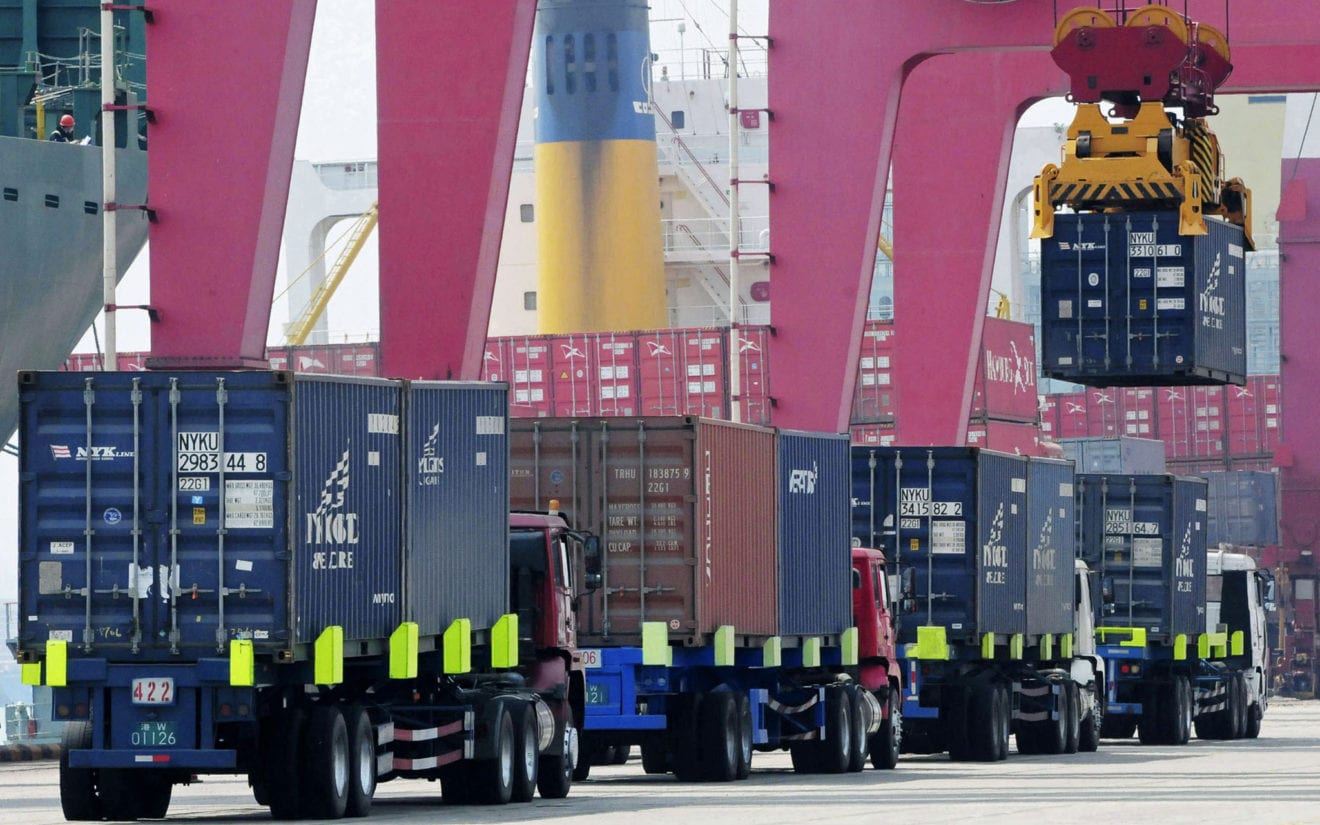
    Gaisano recently led the turnover of 37 new delivery trucks from Isuzu Philippines Corp. and 30 new delivery trucks from Hino Philippines to MRSGI’s logistics facility in Silangan, Laguna.

    In line with MRSGI’s objective to improve logistic capabilities, the company teamed up with Isuzu Philippines for the acquisition of 13 units of Isuzu FVM 10-wheeler trucks with aluminum wing van, 12 units of NKR71 with refrigerated van body and 12 units of NKR71 with aluminum body.

    The company also teamed up with Hino Philippines for the acquisition of 16 units of SH1E tractor head and 14 units of WU342L 6-wheeler truck with aluminum van body.

    The new fleet will be deployed to MRSGI’s 46-store network that serves over 250,000 customers daily, the company said.

    To ensure timely delivery of goods and improve overall cost efficiency, MRSGI plans to equip all its in-house delivery trucks with tracking devices that will enable real-time monitoring from the company’s control center. “Employing the latest technology is a key innovation that will drive our business forward,” said Gaisano, highlighting the company’s commitment to continuously upgrade its infrastructure.

    Alongside its investments in technology and equipment, MRSGI also plans to hire 130 personnel to join its team of engineers, mechanics, customer service representatives, traffic controllers, and cost and transport specialists who support the company’s growing logistics and supply chain network.

    MRSGI has also committed to train its drivers on safety, driving efficiency, and customer service delivery in line with its thrust to provide friendly and responsive service to its customers. “We have a comprehensive approach to improving service delivery,” said Gaisano, who explained that “good customer service does not stop with store associates, but is reflected in every aspect of the company’s operations, including supply chain management and back-end services.”

    Armed with fresh capital for expansion, MRSGI—which listed back in November—planned to open 50 to 70 new stores to double its nationwide retailing footprint in the next five years.  The group currently has around 400,000 square meters of gross floor area across its 46 stores, making it the largest retailer in Visayas and the fourth largest nationwide.

  • Garuda Indonesia Expects 10% Passenger Growth

    Garuda Indonesia Expects 10% Passenger Growth

    President Director of national carrier PT Garuda Indonesia Arif Wibowo predicted that passenger growth of the airline would reach 8-10 percent in 2016.

    “The growth is supported by the booming tourism industry in Indonesia,” Arif said in Jakarta on Sunday (3/1).

    For the record, in 2015, PT. Garuda Indonesia reported a positive passenger growth, that is 25 million passengers or a 3 million increase from that in 2014.

    In the meantime, its subsidiary, Citilink, also posted a quite significant growth, that is 11 million passengers or a 2 million increase from that in the previous year.

    Therefore, to anticipate the increase in the number of passengers, Arif said that the airline would purchase 23 new aircrafts, which purchased with leasing mechanism.

    Furthermore, Arif also hoped that in May 2016, Garuda Indonesia could use Terminal 3 of the Soekarno-Hatta International airport that is now under renovation.

    “We hope that with the new terminal, our services could improve,” he concluded.

  • International luxury brands abandoning China as economy slows

    International luxury brands abandoning China as economy slows

    After enjoying a decade of aggressive expansion in China, international luxury brands have begun to curtail their operations as the world’s second-largest economy is beset by a slowdown, a massive government crackdown on graft and a Chinese preference to buy expensive goods abroad.

    French retailer Louis Vuitton closed its store in the sprawling port city of Guangzhou. That was followed by two more shutdowns by the firm in Harbin and Urumqi in Xinjiang.

    The company, however, said the closures were part of a marketing strategy adjustment by headquarters.

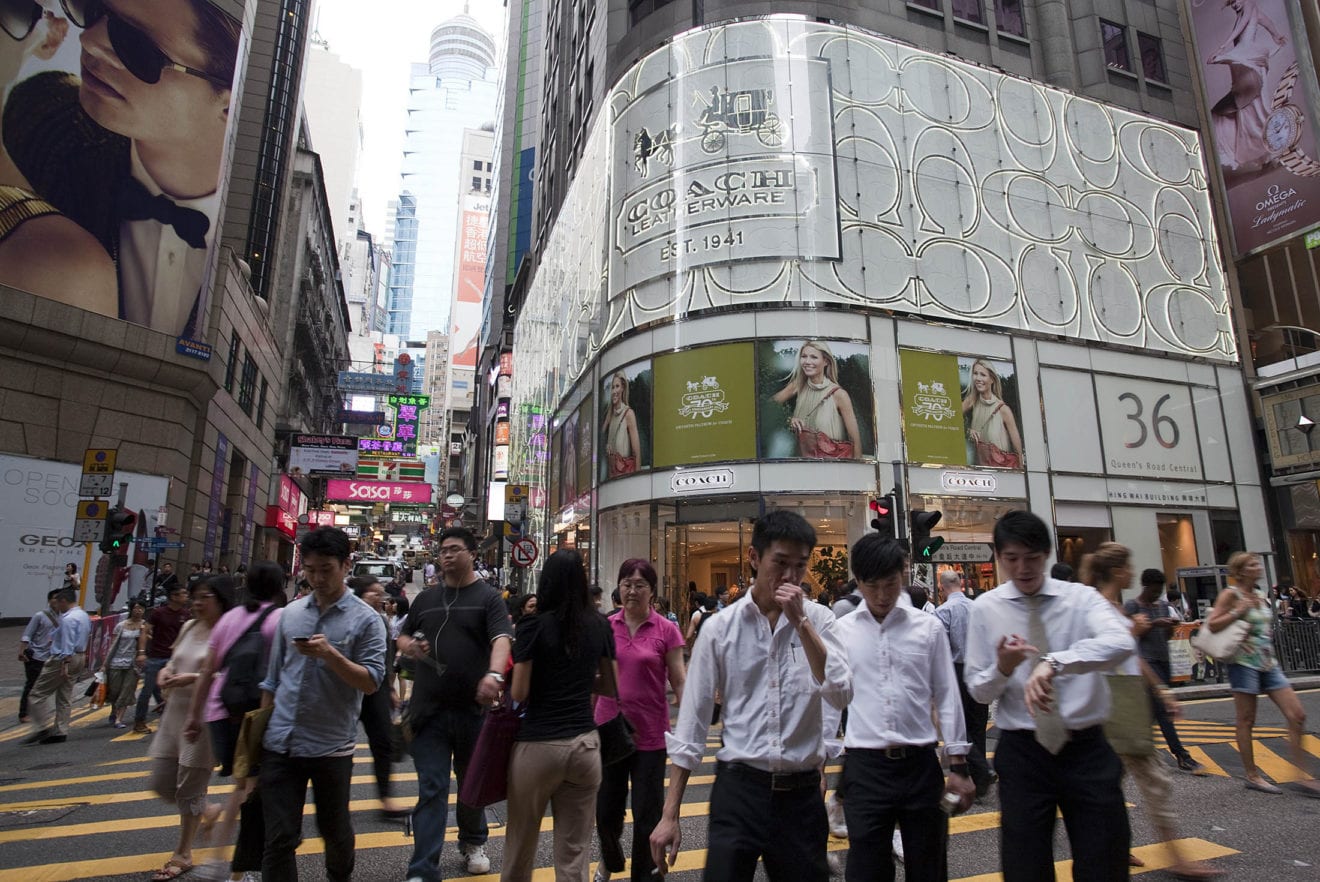
    During the past two years, Britain’s Burberry has closed four stores in China, Coach shut two, Hermes one, Armani five, and Prada went from 49 to 33.

    Following 10 years of aggressive expansion, the luxury brands have been shrinking their physical presence in China to adapt to a cooling market plagued by a slowing economy, an ongoing anti-corruption campaign and Chinese buyers’ increasing overseas purchases, Hong Kong-based South China Morning Post reported today.

    Fortune Character Institute (FCI), a Shanghai-based market research unit, forecasts mainland luxury sales to grow 3 per cent to USD 25.8 billion this year, much slower than the 11 per cent in the recovering global market.

    The institute in a study found that although Chinese shoppers consumed 46 per cent of luxury goods around the world, their purchases in their home market accounted for only 10 per cent of global sales, falling from 11 per cent in 2012 and 13 per cent in 2013.

    The sluggish growth is reflected in the expansion plans of luxury brands. They are opening fewer new stores and closing more, the report said.

    “Store openings are no longer a major way for international luxury brands to expand in the China market. Over the next two years we expect these brands to close even more stores than before,” said Zhou Ting, director of FCI.

    “But if you think luxury brands are taking a totally defensive strategy in China, you would be wrong. The closures are only a small part of a thorough strategy adjustment they are undertaking in China,” he was quoted in the report.

    The first batch of luxury brands entered China in the 1990s. Most of them set up stores in five-star hotels and high-end department stores in big cities, targeting foreign businessmen, overseas Chinese and government officials.

    The “golden era” came around 2009 and 2010 when affluent Chinese began spending on high-end goods and jewellery, making China the fastest-growing luxury market in the world.

    Encouraged by this, luxury retailers rushed to China.

    Global consultancy Bain & Co estimated that the 15 top brands it surveyed had opened more than 80 new shops during the first eight months of 2010.

    A watershed for China’s luxury market came in 2013 when President Xi Jinping launched a massive anti-corruption and austerity campaign. It had a big impact on the luxury market as government officials were banned from receiving gifts.

    Such expenditure had been a major driver of domestic luxury consumption, the report said.

  • Holland & Barrett eyes India

    Holland & Barrett eyes India

    UK health goods retailer Holland & Barrett is negotiating with a potential partner in India as its Asian retail rollout broadens.

    Holland & Barrett expects the Asian expansion to help boost its sales to £1 billion in annual sales by 2020 – turnover rose 12 per cent during the last year.

    Owned by US health group NBTY, the company opened 56 stores this year taking its network to 1071. It has also established two shopfronts on Alibaba’s Tmall.com in China.

    With retail stores in Singapore, Malta, China (34) and Kuwait already, the company changed its name to Holland & Barrett International earlier this year reflecting its growing global reach, but the majority of its shops – 744 – are in the UK.

    The company has not yet revealed details of its India plan, other than to confirm negotiations are underway with a prospective partner and the first store is scheduled to open early in 2016.

    Holland & Barrett says the consumer shift towards healthy eating and greater awareness of food allergies and intolerances is sustaining growth.

    “This year’s performance – especially our rapid growth overseas – underlines the fact that rising consumer interest in healthier living and wellness is by no means a UK or even eastern phenomenon,” says CEO Peter Aldis.

    “Our experience is that the British heritage behind our brand gives us significant advantage in our sector, and overseas consumers, such as those in China, seem to prefer the quality and reliability of our products compared with local competitors,” said Aldis.

  • South Korea cuts natural gas rates 9% from Jan on lower LNG import bill

    South Korea cuts natural gas rates 9% from Jan on lower LNG import bill

    South Korea will cut retail natural gas prices for households and industry by 9% on average from January 1 to reflect the lower LNG import bill as a result of sliding oil prices, the Ministry of Trade, Industry and Energy said Tuesday.

    “The government will further lower city gas rates if LNG imports costs continue falling,” the ministry said in a statement.

    The 9% cut will lower average retail gas prices to Won 15.69 ($0.01)/megajoule, from Won 17.24/MJ, the ministry said.

    South Korea cut city gas rates several times this year due to falling LNG imports costs — reducing prices by 5.9% in January, 10% in March and 10.3% in May but increasing prices 4.4% in September.

    LNG demand has fallen despite the price cuts. Kogas, which has a monopoly on domestic natural gas sales, sold 27.97 million mt in January-November, down 8.8% year on year.

    Kogas sold 35.17 million mt of LNG last year, down 9.1% from 2013, the first annual decline in five years.

    The trade ministry said Monday it expects South Korea’s LNG demand to fall 5% over the next 15 years due to a steep decline in consumption for power production that offsets mild growth by households and industry.

    It forecast LNG demand to fall to 33.96 million mt in 2022 and 34.65 million mt in 2029, compared with 2014 consumption of 36.49 million mt.


  • All about China and oil again as shares slip

    All about China and oil again as shares slip

    Shares in Europe and Asia fell on Monday in trade thinned by holidays in a number of financial centres, hit by slumping oil prices and concerns over Chinese growth and finances – two of the year’s major factors.

    Prices of both Brent and U.S. crude fell 1.8 percent LCOc1 CLc1, reversing a brief rebound that helped shares in the Middle East over the weekend, while Chinese stocks fell almost 3 percent after a weak batch of industrial profits data.

    While most bank dealing rooms in Europe were on skeleton staffing, and London shut, that had repercussions for a range of assets, driving the Australian and Canadian dollars down about a third of a percent and pushing bond yields lower.

    Profits at Chinese industrial companies in November fell 1.4 percent from a year earlier, the sixth consecutive month of decline and another sign that the world’s chief engine of growth for the past decade is sputtering.

    “Over-capacity and declines in producer prices are hurting the Chinese government efforts and if the government cannot come up with a solution to stop this, the picture will keep on becoming more worse,” retail brokerage AvaTrade chief market analyst, Naeem Aslam, said.

    MSCI’s broadest index of Asia-Pacific shares outside Japan .MIAPJ0000PUS gave up early modest gains to fall half a percent, putting it on track for an 11-percent loss this year.

    China’s two main share indexes .SSEC .CSI300 fell 2.6 and 2.9 percent respectively, with banking shares leading the fall. Hong Kong’s Hang Seng .HSI dropped 1 percent. South Korea’s KOSPI .KS11 fell 1.3 percent.

    Stocks affiliated with Samsung Group fell after the South Korean conglomerate said on Sunday its battery-making arm Samsung SDI will sell shares in sister firm Samsung C&T Corp to comply with regulatory requirements.

    Japan’s Nikkei .N225, however, rose 0.6 percent, with soft domestic production and retail data hinting at more pressure on the Bank of Japan to take further steps to stimulate growth.

    International Brent crude traded at $37.26 LCOc1 a barrel, just over a cent above 11-year lows hit before Christmas.

    The fall in oil prices has depressed inflation globally, in turn reducing long-term expectations for price growth that drive longer-dated bond yields. That tends to draw investors back into bond markets at the expense of stocks and pushes up the price of longer-dated government bonds.

    German 10-year Bund yields DE10YT=TWEB, which set the standard for euro zone borrowing costs, fell 2 basis points to 0.60 percent.

    “Oil prices could be part of this but it’s probably just minor trades that we’re seeing here, we shouldn’t read too much into it,” Rabobank fixed income analyst, Bas van Geffen, said. “Most market participants have already closed their books and small…(trades) can move markets quite a lot.”