Category: General

Retail News Asia is committed to providing both local and global retailers with the latest General Retail news throughout the Asian market. This on a daily base.

  • Retail suffers in HK Christmas season

    Retail suffers in HK Christmas season

    Christmas is all around, but this holiday season, Hong Kong is expected to suffer as both locals and tourists are reining in their spending.

    Christmas is in the air!

    Usually, this time marks the peak of consumption but NOT this year.

    Retailers are expecting a grimmer picture.

    A study shows that Hong Kong shoppers are cutting their Christmas budget, with 64 percent saying they won’t spend more than HK$1,000 on Christmas shopping and 52 percent saying they won’t buy any Christmas gifts this year.

    The survey, conducted by Hong Kong Research Association, found Hong Kong citizens are rather cautious about this year’s Christmas consumption, as only 16 percent of 1,084 interviewees expect to spend more money than last year, while 23 percent said they would reduce spending.

    “Even Hong Kong residents prefer to buy overseas, consumer products are much cheaper in Japan and South Korea.”, Hong Hao, the chief strategist of Becom International said.

    Luxury stores are feeling the crunch as shoppers minimize their spending.

    “In this popular shopping district, you would usually see customers waiting in lines for purchases but not this year. Some shops have fewer customers, while others have closed their doors due to high rents. The traditional shopping season is also challenged by the declining tourist arrivals in last six months. ”

    The Travel Industry Council of Hong Kong says, the number of Chinese mainland tourist groups traveling to Hong Kong has dropped 20 percent so far this year.

    “The sharp decrease is partly because the anti-parallel trading protests earlier this year, and the death of a mainland tourist in HK in October, and also some anti-mainland China sentiment.”Jason Wong Chun Tat, the chairman of Travel Industry Council of HK said.

    In October, a Chinese mainland tourist died after he was allegedly beaten unconscious by four men while trying to mediate a dispute between a fellow visitor and the tour group leader.

    “That gives people the perception of HK doesn’t welcome tourists.”,Hao said.

    “We are calling for the diversification of Hong Kong’s tourism development.” Wong said.

    Wong said the travel industry council was trying to attract more overseas tourists by regulating market operations.

    Despite their efforts, it appears a gloomy picture for the retail and travel business industry is expected to continue.

  • South Korea Industrial Production On Tap For Wednesday

    South Korea Industrial Production On Tap For Wednesday

    South Korea will on Wednesday release November figures for industrial production and retail sales, setting the pace for a light day in Asia-Pacific activity.

    In October, industrial production slipped 1.4 percent on month and gained 1.5 percent on year, while retail sales climbed 3.1 percent on month and 8.3 percent on year.

    Thailand will see November numbers for imports, exports, trade balance and current account. In October, imports were worth $13.96 billion, while exports were at $18.29 billion for a trade surplus of $4.33 billion. The current account surplus was $5.18 billion.


  • Adidas Plans New Super Brand Center In Hong Kong In 2016

    Adidas Plans New Super Brand Center In Hong Kong In 2016

    International sportswear provider Adidas announced that they will open their sixth Adidas Brand Center in the world in Hong Kong’s Central district during the first half of 2016.

    In addition, the company will open their first Hong Kong Sport Performance flagship store in Causeway Bay and the second is expected to open in Tsim Sha Tsui.

    Located at No.36 Queen’s Road Central, the new Adidas Brand Center has an area of about 1,600 square meters. This site was formerly rented by Coach and closed due to the declining luxury market prospects in Hong Kong. However, Adidas said they are optimistic about Hong Kong’s sports fashion market and this location. The company hopes the new Adidas Brand Center, along with the two Sport Performance flagship stores, can be Hong Kong’s new vigorous sports landmarks.

    Prior to this, Adidas’ chief executive officer Herbert Hainer said the year of 2016 would become the brand’s record setting year.

    Financial details of Adidas’ investment in Hong Kong were not released.

  • Lotte celebrates topping-out of Korea’s tallest building

    Lotte celebrates topping-out of Korea’s tallest building

    South Korea’s retail giant Lotte Group held a symbolic topping-out ceremony Tuesday afternoon to mark the approaching completion of the Lotte World Tower, the tallest building in the country located in Jamsil, southeastern Seoul.

    Lotte Corp. placed the last crossbeam on the top floor of the 123-story skyscraper amid much fanfare with some 200 high officials in attendance, including Lotte chairman Shin Dong-bin and Seoul City mayor Park Won-soon.

    The Lotte World Tower currently stands at 508 meters as the world’s fifth tallest building in the world. It will reach 555 meters in height once the spire is placed and the interior construction is concluded next year.

    “Offering panoramic views of Seoul, the Lotte World Tower will be able to attract some 2 million tourists every year,” said the Lotte chairman in his congratulatory speech.

    Mindful of public concerns about safety, Shin emphasized that Lotte would “work to ensure that the tower becomes a safe location that can welcome all visitors” and to “successfully wrap up the remaining construction procedures.”

    The supertall skyscraper stands at the center of Lotte’s 3.8 trillion won ($32 billion) project envisioned by Lotte founder Shin Kyuk-ho to build an unparalleled legacy for the company in Jamsil.

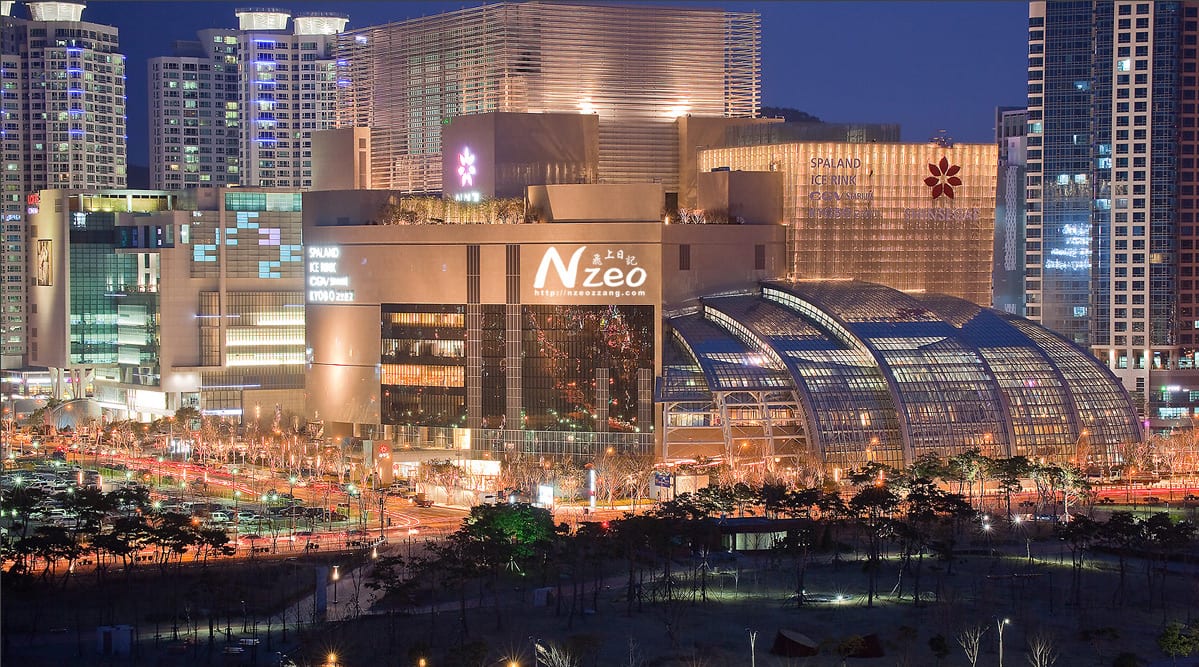
    Located adjacent to the tower is the Lotte World Mall, a mega shopping complex featuring shops, restaurants, a movie theater and aquarium. The tower is set to house a six-star hotel, office space and an observatory once it is completed next year.

    “The Lotte World Tower has been constructed in line with my father’s wish to establish a landmark building in Korea,” said the Lotte chairman, also the eldest son of the Lotte founder.

    “The tower will become a structure beloved by people from all over the world.”


  • Parkson Retail loses appeal, to pay RM93m in arbitral award

    Parkson Retail loses appeal, to pay RM93m in arbitral award

    Parkson Holdings Bhd’s retail subsidiary in China has lost its final appeal to revoke an arbitral award made in favour of its former landlord and must pay about 141 million yuan (RM93.2mil).

    The department store operator told Bursa Malaysia on Monday that a Beijing court on Dec 25 rejected the application by Hong Kong-listed Parkson Retail Group Ltd (PRGL), a 53.07% owned subsidiary, to revoke the award issued by China International Economic and Trade Arbitration Commission in March.

    “The ruling given by the court is final and no further appeal can be made by either the landlord or the tenant under China law,” it said.

    The company’s board feels the ruling does not have a material impact on the earnings of the Parkson Holdings group for this financial year ending June 30, 2016 or the group’s net assets based on the audited consolidated statement of financial position as at June 30, 2015.

    However, in a statement on April 1 regarding the profit warning issued by its Hong Kong subsidiary, Parkson Holdings said the earnings of the group for the financial year ended June 30, 2015, would be lower by about RM45mil or 4 sen per share.

    To recap, PRGL, which was a tenant at 25,140 sq m in Metro City Shopping Plaza, Beijing, had been asked by its landlord in April 2012 and repeatedly afterwards to reduce the total area of the premises under their tenancy agreement or alternatively end the agreement in return for compensation from the landlord equalling to three months’ rental payments.

    In December 2012, the landlord issued a notice of breach of contract to PRGL, asking it to vacate the premises within 30 days.

    On March 25 this year, the China International Economic and Trade Arbitration Commission made an award in favour of the landlord, saying that the 20-year tenancy agreement had been terminated on Dec 6, 2012.

    Among others, PRGL, the tenant, must pay the landlord 36.758 million yuan (RM24.36mil) in lump sum and a daily fee calculated at 3.46 yuan (RM2.29) per sq m for the period from Nov 1, 2014 up to the date on which the premises was surrendered to the landlord (March 26, 2015), totalling 12.613 million yuan (RM8.36mil).

    In addition, it must pay rental of 89.923 million yuan (RM59.57mil) and an arbitration fee of 1.102 million yuan (RM729,890) to the landlord.

    Based on the arbitral award, which represented about 57% of the PRGL group’s audited net profit for the year ended Dec 31, 2014, PRGL issued a profit warning that initially said its profit for the first quarter ended March 31, 2015, would “decline significantly” but was later revised to saying the group would record a loss for the quarter.

    However, on April 22, PRGL submitted an application for revocation of the award to the Second Intermediate Court of Beijing, which led to the enforcement of the arbotral award being suspended.

    Parkson Holdings shares closed unchanged at RM1.02 on Monday.

  • E-Mart opens first outlet in Vietnam

    E-Mart opens first outlet in Vietnam

    E-Mart said Monday it has opened its first outlet in Vietnam, with aims to expand its presence across the Southeast Asian region in the years to come.

    The discount store chain operated by Korea’s retail giant Shinsegae will be competing with Lotte Mart, which has been operating 11 stores in Vietnam since 2011.

    E-Mart’s new store located in the Go Vap District in Ho Chin Minh City, Vietnam. (E-Mart)

    The new E-Mart store — two stories tall and about 30,000 square meters wide — is located in the heart of Ho Chi Minh City at Go Vap District, one of the most developed and densely populated areas in the capital.

    The Go Vap branch marks E-Mart’s first overseas store since the brand redirected its focus to the Southeast Asian market in 2011 amid sluggish performance of its Chinese operations.

    The firm has set its sights on using the new store as a foothold to expand into other regions in Vietnam as well as neighboring countries like Laos, Indonesia and Myanmar.

    E-Mart said it has taken care to localize its services as much as possible to meet the needs and lifestyle of Vietnamese consumers while introducing a number of new services and facilities unfamiliar to locals.

    For one, 95 percent of some 300 store employees, including the store head, are Vietnamese. In line with the high motorcycle ownership (80 percent) in the country, the parking lot has been designed to accommodate 1,500 motorcycles and 150 cars.

    In terms of its product lineup, E-Mart is featuring Korean goods that are popular among Vietnamese tourists to Korea as well as imported items sourced directly by the store operator.

    Popular Korean food such as kimbap and tongdak, grilled chicken, as well as fresh baked goods catered to Vietnamese tastes will be freshly made and sold inside the store as well.

    The venue also includes a number of new dining and entertainment facilities scarce in the country including a diversified food court, a sports club for children as well as an English Club.

    At the same time, E-Mart plans to implement its flagship customer services system, including immediate refund and exchange policies and compensation for miscalculations at the checkout counter.

    “By offering items, services and facilities popular among the Vietnamese E-Mart’s Go Vap branch will seek to sweep the Vietnamese retail market,” said general director of E-Mart Vietnam Choi Kwang-ho.

    “After successfully building up a sizeable presence in downtown Ho Chi Minh, we plan to expand into the rest of the country,” he said.

    E-Mart has reportedly purchased land near Ho Chi Minh’s Tan Son Nhat International Airport, with plans to open its second branch there in the near future.

  • HKIA to create one-stop shop in West Hall

    HKIA to create one-stop shop in West Hall

    Retail performance in 2015 at Hong Kong International airport (HKIA) has been shaped by a growing portfolio of leading brands and strong passenger growth, an Airport Authority Hong Kong spokesperson told DFNIonline.

    HKIA now plans to reinvigorate the retail facilities at the West Hall to be more of a “one-stop shop” and dining destination. HKIA has added two new brands to the facility, Hermès and MCM, both of which will make their introduction from the middle of 2016. So far over 50% of the stores are currently open as part of the West Hall redevelopment programme.

    After launching a local free delivery service in February 2015, where customers spending over $1,000 can enjoy free postage within Hong Kong, HKIA has extended its service within Greater China. Launched last month, customers spending over $2,500 on clothing, bags and accessories are offered free delivery to mainland China, Taiwan and Macau.

    The airport is also embarking on substantial retail change where several tenders have been issued. The spokesperson confirmed the airport is undergoing an evaluation process.

    In keeping with its uplifting retail experience the airport installed an “I Love Hong Kong” zone this year, located on Level 7 of the East Hall comprising an “East meets West” culture. Fourteen local brands for fashion, Chinese dried goods, Chinese bakery, optical shops and tea houses now carry the prominent logo on shop-design, merchandise and packaging, as well as Hong Kong Disneyland and Giordano.

  • Dusit International Venerable Thai hotel chain expanding overseas operations

    Dusit International Venerable Thai hotel chain expanding overseas operations

    Dusit International, the venerable Thai hotel chain, is expanding its overseas operations in regions such as Africa and the Middle East, offering Asian tastes to compete with major American and European chains. While Dusit began to go abroad due to the instability of a domestic tourism industry shaken by frequent political upheavals, it now seeks to open up to 20 new hotels a year on the back of a strategy promoting the nurturing of local human resources. Dusit targets an overseas revenue ratio of 80%.

    A high-rise building in the heart of the business district in Dubai, a city in the United Arab Emirates and one of the Middle East’s main commercial hubs, is a prominent landmark because of its striking inverted Y-shaped design. It is the Dusit Thani Dubai hotel, opened by Dusit in 2001.

    The unique design represents the Thai greeting “wai,” in which the palms are pressed together in a prayer-like fashion.

    In the lobby of the hotel, staff members in Thai ethnic costumes play traditional Thai musical instruments. “I feel as if I were in Asia and relaxed,” said a businessman, 39, from Kuwait.

    Benjarong, a Thai restaurant in the hotel, is popular with local gourmets. Few hotels offer an Asian sensibility in the international market, said Chanin Donavanik, CEO of the hotel chain, also known as the Dusit Thani group.

    In Oman, which neighbors the state of Dubai, Dusit signed a deal in September to become a tenant in what is to be the country’s biggest commercial complex and has since been promoting a project to open a hotel in 2017. The complex is slated to have an aquarium and a snow park on its property. Dusit puts weight on the nurturing of human resources. In Thailand, it operates a cooking school in collaboration with a university, a vocational school and an outlet of Le Cordon Bleu, France’s cooking and hospitality education institute.

    In the Philippines, Dusit opened a class for future hotel workers at the Lyceum of the Philippines University in 2009. It has also announced a deal to open a school in Indonesia next year in a tie-up with a hospitality management school in Bali.

    Chanin is promoting plans to open universities and vocational schools in countries where Dusit operates. Dusit has agreed with Oman’s Al Jarwani Group to open a school after 2017. While the hotel industry is large, education tends to be downplayed, Chanin said in reference to his project of building schools where students can learn not only the ABCs of hotel management but also hospitality befitting Asian hotels, including manners, greetings and cooking.

    Dusit currently operates a total of 26 hotels in nine countries and half of them are outside Thailand. Principal targets for its overseas expansion are emerging markets such as the Middle East, Africa and China. It plans to open 15-20 hotels per year, mostly overseas, and raise the ratio of revenues abroad from the current 20% to 80% in 10 years’ time.

    In the business year ended in December 2014, Dusit logged 4.78 billion baht ($134 million) in revenue, down 4% from the previous year, and a net loss of 20 million baht, as it was hammered by the adverse effects of a military coup and the imposition of martial law. It is imperative for the group to expand overseas operations for the sake of risk dispersion.

    Dusit was founded by Chanin’s mother, and its flagship hotel, Dusit Thani Bangkok, is known as a venerable hotel. Early next year, Dusit will install as its new group CEO Suphajee Suthumpun, who has held executive posts at such companies as IBM of the U.S. Suphajee will be the first top executive in the group from outside the founding family.

    To further expand its operation, Dusit should leave its helm to a professional manager who has been active in the global business arena, Chanin said.

    Dusit went abroad for the first time through a joint investment in Kempinksi Hotels of Germany in 1994 but relinquished its stake only five years later, partly because of the Asian currency crisis, which struck Thailand in 1997.

    The investment was unsuccessful because Dusit failed to communicate well with its European partners, who were located far away from Thailand, Chanin said.

    Dusit thus decided to go overseas under its own brand and promote locally oriented operations through the establishment of subsidiaries and tie-ups with major local businesses.

    The strategy combining Asian hospitality and local businesses has enabled Dusit to steadily expand its business overseas.

    Venturing abroad

    Major companies in Southeast Asia are increasingly venturing abroad ahead of the establishment of an economic community by the Association of Southeast Asian Nations at the end of 2015. While capturing markets in the U.S. and Europe, they need to make investments outside the region for the sake of acquiring know-how and brand power to compete with multinational companies in their own region.

    Thai retail giant Central Group placed three German department stores, including Kaufhaus des Westens, commonly known as KaDeWe, in Berlin under its wing earlier this year. The move followed the successive acquisitions of well-established European department stores such as the 2011 purchase of Italy’s La Rinascente.

    The acquisitions of upscale European retailers are highly valuable as historic deals and landmarks, said Vittorio Radice, who oversees Central’s European operations. The deals will help the Thai group improve its business and attract tourists, he said.

    According to the United Nations Conference on Trade and Development, Southeast Asian companies’ investments outside the region totaled $80 billion in 2014, a 20-fold increase from 1998, the year after the Asian currency crisis struck.

    As the economic slump in Europe has made European companies easier takeover targets, Southeast Asian companies’ mergers and acquisitions outside the region are increasing.

  • Is Orchard Road the Champs-Élysées of Asia?

    Is Orchard Road the Champs-Élysées of Asia?

    An aunt from my husband’s side, he’s not Singaporean, came to visit Singapore recently. She took her cohort of grandchildren to Universal Studios last week.

    They spent a weekend sightseeing, eating and — of course — shopping which included a stroll down Orchard Road.

    Unfortunately her takeaway was less than favourable; all the Christmas lights gave her a headache and it was all just too much.

    Crowded, she said and tacky, she added… and ostentatious for good measure.

    Maybe I’m revealing myself to be tasteless but I have to say, I disagree with her humble assessment.

    I like it! I have always loved Orchard Road. When I was much younger — wandering to the concourse of Far East Plaza was a source of endless excitement.

    Perhaps youngsters these days will scoff at my naiveté but at 14 venturing beyond my housing estate mall to catch a movie at Lido or browse the stores at The Heeren were exceptionally exciting.

    Dozens of new malls, the addition of connectors in almost every direction makes the stroll seem that much more endless — shops in every direction bursting with people shopping, eating, laughing — living the big crowded city life.

    These days, our modest shopping street has grown up and is ready to rival any other contender on a global stage.

    I spent a few months in Paris — on exchange during university — some years ago and like a good starry-eyed South-east Asian I made frequent pilgrimages to the Champs Elyses for my dose of window shopping and it was always beautiful.

    But I yearned for the hustle and bustle of food-courts and fruit stalls in basement malls. Fifth Avenue at Christmas is magical but otherwise a little staid and Tokyo’s Chuo street is very elegant but I never saw anyone there selling potong ice cream and it doesn’t seem to house anything as frayed as my favourite Far East Shopping centre or the infamous Orchard Towers.

    And that’s the point: Orchard Road is actually rather diverse, from swanky Paragon and the Grand Hyatt down to Lucky Plaza and everything in between. It’s a living museum of Singapore’s retail history, which for a trading post is analogous with the nation’s history.

    Far Eat Plaza is the 80s, Ngee Ann City the 90s, ION the decade after and Orchard Gateway — the present.

    Despite refurbishment efforts, these retail meccas still carry the stamp of the era in which they were constructed.  Of course Orchard’s history stretches back beyond that – named for the plantations that lined it in 1800s and hosting a series of graveyards during the early 20th century, the road has been part of life (and death) on this island for over a century.

    Whether it’s the presence of the Istana on one end or the Botanic Gardens on the other, the fact that the very first hawker centre opened here, or maybe just the fact that this is where generations of Singaporeans have come to celebrate and shop, this is a place of national significance.

    It’s a strip of living history and personally I think that the road itself is more deserving of world heritage status than the now UNESCO listed Botanic Gardens.

    The Singapore Tourism Board seems to completely understand this. They’ve been busily branding and marketing the 2.2 kilometre strip for decades making it clear this is one of the nation’s principle attractions.

    Their efforts at marketing what, just a century ago was a stretch of canal and making it a draw for travellers from around the region and even the world have been relentless and successful.

    Tacky?  I wouldn’t say so – that’s just Singapore. Crowded, colourful, a little brash and full of business.

  • Latest products from China are better than ever

    Latest products from China are better than ever

    Chung Chang-mook recently bought a Tunland pickup truck, made by Chinese automaker Foton. At 33 million won ($27,951), the Tunland is more expensive than local competitor Ssangyong’s Korando, which runs between 21 million won and 28 million won. But Chung liked the fact that Tunland can hold up to 9,000 kilograms (19,841 pounds), which is more than double the capacity of the Korando.

    Tunland entered the local market in October and has already received over 200 preorders, according to an auto industry insider. “We set the sales target at 3,000 in 2016,” said a spokesman for Daewoong Auto, which manages Tunland’s sales in Korea.

    The pickup is just one example of the way in which companies from China, which are making higher-quality consumer goods than ever before, are poised to succeed in Korea.

    Perhaps the most widely recognized case is electronics maker Xiaomi. Once dubbed the “mistake of China” for its ambition to change the negative perception of Chinese goods by offering top-tier products at rock-bottom prices, Xiaomi now has Korean retailers clambering to become official distributors of its popular smartphones when it sends representatives to Seoul next month. Currently, Xiaomi products are imported to Korea independently by small and medium-sized trading companies.

    “Whoever wins an official deal with Xiaomi will be able to make a huge profit,” a retail industry insider said. “We are just waiting for them to contact and choose us.”

    “Chinese manufacturers are spending more money on research and development and getting rid of pre-existing notions about the low quality of goods from the mainland,” said Cho Cheol, a director at the Korea Institute for Industrial Economics and Trade’s auto department. “A growing number of local consumers now thinks Chinese products are worth what they have paid for them.”

    Xiaomi is adding TVs to that list, with a local importing company recently receiving certification from the National Radio Research Agency to sell Xiaomi’s 40-inch model.

    Xiaomi’s TV is currently 50 percent cheaper than similar models by local manufacturers including Samsung and LG – and that’s worrying to some.

    “It’s significant because Xiaomi has expanded its market from accessory items to actual home appliances,” an employee of a local TV manufacturing company said. “We are discussing how to compete with its mid to low-priced products.”

    Other Chinese companies are making similarly expansionary moves. Most recently, Huawei began distributing its Y6 smartphone on the local market through LG U+ on Tuesday. The Y6 allows its customers to make free phone calls when connected to Wi-Fi, boasts a 360-degree panorama camera and includes face-recognition technology – all for 154,000 won, making it the cheapest smartphone in the local market.

    “More and more consumers are appreciating Huawei products’ low prices, and that’s why we’re doing business with the company,” a spokesman for LG U+ said. “This smartphone is actually free of charge when you take into account government subsidies.”

    Syma’s drones, Novelview’s Bluetooth speakers and UNIC’s micro-projectors are also very popular in Korea, and many Koreans have dubbed them “mistakes of China” as well.

    Chinese auto brands are growing in popularity, too. China’s Sunlong Bus entered the market in 2013 and sold 100 buses that year. Since then, it has sold about 550 in Korea. Other automakers are preparing to enter the Korean market as well.

    But this is just the beginning. The Chinese government have announced new initiatives to boost the economy, such as “China Manufacturing 2025” in May. The plans lay the groundwork for the nation to further develop as a global manufacturing superpower.

    But it’s not just advances in production that are worrying Korean companies – it’s also the narrowing of the technological gap in the IT industries of the two countries. Korean manufacturers had a 2.4-year lead over Chinese companies in 2012, but that has been narrowed to 1.8 years as of last year, according to the Korea Institute of S&T Evaluation and Planning. In the energy industry, the gap is only a year, and China now leads in the aerospace industry.

    “The government needs to ease regulations in order for industries to increase the amount they spend on R&D,” said Han Jae-jin, a researcher at Hyundai Research Institute. “Manufacturing companies also have to reform themselves [to compete].”


  • Philippine associations honor key professionals

    Philippine associations honor key professionals

    The PCAAE’s inaugural Ang Susi awards open a new era for national organizations and the specialists who run them. PHILIPPINE association executives honored key members of their emerging profession at their inaugural Ang Susi Awards, this month. Organized by the 197-member Philippine Council for the Advancement of Association Executives (PCAAE), the awards recognized individials and institutions in seven categories at a beautifully catered gala at the Philippine International Convention Center.

    The highlight of the night was the warm applause for Evelyn Salire, when she was named Association Executive of the Year. She won the prize for her achievements as the Secretary-General of the Philippine Retailers Association. After decades of industry-building, behind-the-scenes event work, Salire is now a Philippine event industry role model.

    There were also six institutional categories, as follows;

    Environmental Impact Award Winner: Chamber of Furniture Industries of the Philippines (CFIP) Project entries: EU Due Diligence Guidebook and The Material Matters: A Sourcebook on Material Manipulation of the Homestyle Industry.

    The books show wood users are wood savers too, and provide the timber industry, (which supports one million households across the Philippines) with a concise and specific information on how to comply with the social, legal and environmental aspects for a sustainable timber industry. The EU Due Diligence Guidebook also came about in a time when international export markets demand, more than ever, verifiable standards of environmental compliance.

    In partnership with the Philippine Wood Producers’ Association, the Department of Environment and Natural Resources, the Department of Trade and Industry and the Global Forestry Services – and with funding from the EU and the UN’s Food and Agriculture Organization – the CFIP showed that it can make a difference in leading the timber industry and, in particular the furniture industry, in promoting good environmental governance and management practices.

    On the other hand, to repurpose and develop new applications of past raw materials used by the industry into new raw materials of mixed media, and to develop furniture products using innovations in the indigenous raw materials, CFIP has produced another publication entitled The Material Matters: A Sourcebook on Material Manipulation of the Homestyle Industry.

    The project brought about at least eight newly-manipulated raw materials undertaken by as many well-known designers in the country which were then used by small and medium enterprises to be applied in furniture design that consequently resulted in at least 16 furniture collections that are now being offered in the market.

    The project was conceptualized by CFIP and ably supported by the Design Center of the Philippines (DCP), a partnership that has led to fresh, durable and saleable designs and amplifies the world-renown talent and craftsmanship of the Filipinos.

    People Empowerment Award Winner: Girl Scouts of the Philippines (GSP) Project Entry: GSP Nationalization Scheme for Council Executives

    For 75 years, the Girl Scouts of the Philippines (GSP) continues to be the largest volunteer-led and girls-only movement in the country. With a complex governance structure, it has been a challenge for the GSP to promote and maintain responsible Council governance to ensure continuing relevance in achieving its organizational mission and vision.

    For instance, most Council Executives have been burdened with fund sourcing to pay for their own salaries, which distract their concentration in carrying out their functions. A further challenge is the need to further professionalize its CEs through capacity-building and granting of attractive remuneration. To meet these challenges, the GSP instituted the “Nationalization Scheme for Council Executives” with an aim to deliver both quality and quantity membership for the GSP. The scheme enables the Councils to focus more on effective program delivery by rationalizing the salaries of its CEs.

    Under the scheme, competent applicants and CEs are now starting to come in and join the GSP at the Council level as professional staff, due to the competitive salaries and better benefits being offered. As a result, GSP’s membership increased from 1.9 million to 2.5 million, a remarkable 24 per cent increase.

    Community Service Award Winner: National Federation of Women’s Clubs of the Philippines (NFWC) Project Entry: NFWC Learning Centers

    For the past 94 years, the National Federation of Women’s Clubs of the Philippines has believed that early childhood education is critical to people’s personal growth.

    From its beginning nursery classes initiative in a “learning while playing environment”, these educational support programs have expanded into full-blown learning centers in its own building and complemented by 91 other affiliated learning centers throughout the country, with teaching modules that are aligned with the K-to-12 program of the government.

    The NFWC Learning Centers nationwide were instrumental in the growth and development of pupils who were trained to become responsible citizens. The nursery classes in garages, living rooms and gardens of residences of NFWC leaders in 1935 are now housed in classroom-type pre-schools with complete teaching materials. At present, NFWC has continued to receive and assessing applications for accreditation of learning centers.

    Industry Development Award Winner: Philippine Retailers Association Project Entry: “Best Practices in Retailing Series”

    The Philippine Retailers Association (PRA) is the country’s recognized organization of retailers and suppliers to the retail industry.

    To assist and upgrade the capacities of its members and others in the industry, PRA embarked on a series of seminars that it provided to retailers outside Metro Manila, in the regions and provinces across the country, to level up their competitiveness and to update them with the latest trends and practices in the global retail system.

    PRA’s roadshow capacity-building project covered topics such as store operations, customer service, loss prevention and related subjects, and has helped more than 2,000 small and medium provincial retailers in Cebu, Pangasinan, Baguio, Cagayan de Oro and Davao.

    Technology Innovation Award Winner: Hewlett Packard Enterprise Project Entry: e-Health Center (Cloud-enabled Primary Healthcare Solutions)

    Hewlett Packard Enterprise (HP) leverages the power of the cloud to transform and transfer access to quality and affordable healthcare to the poor and underserved areas around the world.

    The fully functional mobile facility can be easily mounted and is quickly and cost-effectively customized with workstations equipped software networking capabilities, an open and accessible web-based electronic medical records system and an essential diagnostic equipment integrated into the cloud. These cloud-enabled technologies provide the tools for on-site staff to perform routine diagnostic tests and make results available online so physicians hundreds of miles away can provide a remote diagnosis, thus reducing the need fo highly-skilled medics onsite.

    The project serves communities that often lack doctors, functional clinics, internet access or even electricity. Deployed initially in 14 states in India, now in Bhutan and replicable in many countries, including the Philippines, the project is poised to have both local and global impact, especially now that it is being expanded in collaboration with the Manila-based Asian Development Bank (ADB).

    Change Catalyst Award Winner: Philippine Institute for Supply Management (PISM) Project Entry: “GAWAD SINOP”

    The Philippine Institute for Supply Management is a 300-membership national association of professionals in the purchasing and supply management field.

    The PISM has used an awards program as a change catalyst to impart to its members the value and importance of setting the standard to which outstanding achievements in supply management must adhere to. It also emphasizes the critical role that supply management plays in the success of an organization.

    The “Gawad Sinop” Awards delivers the message of the contribution of supply management and its four pillars, namely, purchasing, demand and replenishment, logistics and customer service, to organizational competitiveness.

    The PISM, through this awards programme, demonstrates the world-class nature of the supply management professionals in the Philippines and furthers the wealth of knowledge and best practices, not only of the award winners themselves but also other members and to the public-at-large.

    The “Gawad Sinop” award is considered the highest honor given to supply management professionals and organizations who have contributed to the upliftment of the sector.

  • China retail sales to increase 10.7 per cent

    China retail sales to increase 10.7 per cent

    China’s retail sales, a key gauge of domestic consumption, is likely to post slower growth this year compared with 2014, commerce ministry said.

    Retail sales may expand around 10.7 per cent in 2015, Shen Danyang, spokesman at the Ministry of Commerce, told a news conference in Beijing today, without giving a reason. Retail sales rose 12 per cent last year.

    In the first 11 months of 2015, retail sales grew 10.6 per cent from a year earlier. In November, retail sales increased by an annual 11.2 per cent — the strongest monthly expansion this year.

    China’s external outlook remains gloomy. Chinese firms said global demand this year was worse than that during 2008-09 financial crisis, as per a recent survey by commerce ministry of more than 6,000 firms in 70 key industries.

    Subdued external demand, rising costs, slowing investment growth and the yuan’s appreciation have all weighed on China’s trade performance this year, Shen said.

    “Feedback from firms showed foreign trade was extremely difficult this year.”

    China’s net exports are likely to contribute around 12.3 per cent to the increase in the country’s GDP this year, he said, citing data from a research unit under his ministry.

    China’s trade remained weak in November with exports falling a worse-than-expected 6.8 per cent from a year earlier and imports tumbling 8.7 per cent.

  • Garuda Indonesia Wins Transportation Safety Award

    Garuda Indonesia Wins Transportation Safety Award

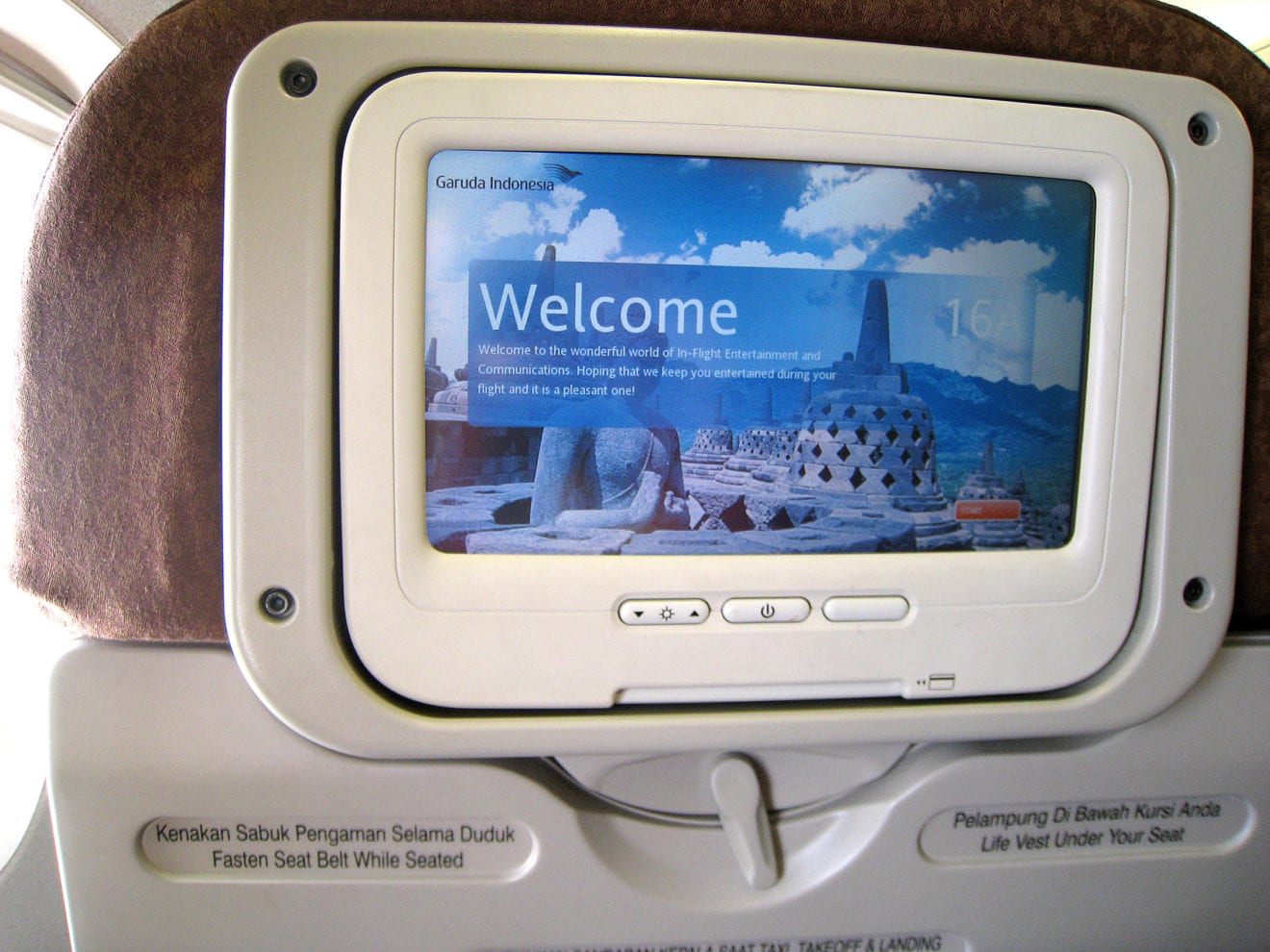
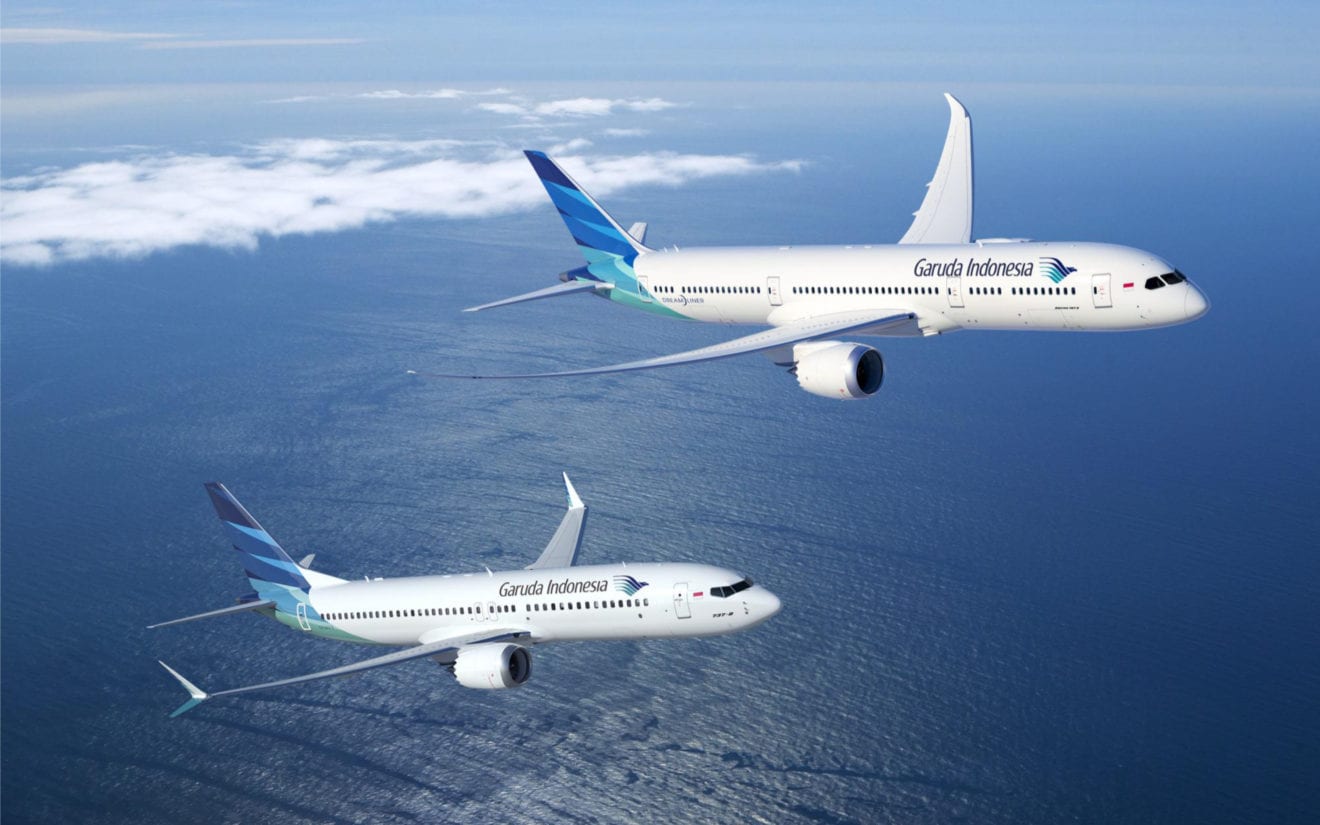
    Indonesian flag carrier Garuda Indonesia has received a Transportation Safety Award (TSA) from the Transportation Ministry. Transportation Minister Ignasius Jonan said that the award is given to encourage transportation companies to improve passenger safety.

    Jonan said that safety is an important issue in the transportation service business. “Transportation business sells two things: time and safety,” Jonan said on Tuesday, December 22, 2015.

    Punctuality, according to Jonan, mostly depends on natural factors including the weather. Meanwhile, safety is something that can be controlled by men. Therefore, Jonan encourages transport service operators to improve its safety aspects.

    In addition to Garuda Indonesia, the Transportation Ministry also awarded PT Kereta Api Indonesia Area Operation I Jakarta in second place, and state-owned bus operatir Damri in third place.

    Scoring process for the award was conducted by an independent team by considering several criteria, including organizational aspect, which contributes a 15 percent to the total score; Human Resource (40 percent); facility (35 percent); and safety management support (10 percent).

  • Internet Retailing Expo Indonesia

    Internet Retailing Expo Indonesia

    The 2-day conference and exhibition focuses on both learning and the evaluation of technologies, products and services to help retailers in establishing and growing their online strategies.

    Ever wonder why many would consider Indonesia as a good prospect to do business especially in online retailing? Interestingly, Indonesia has one of the highest number of Internet users. The number is expected to hit 3 billion users in 2015 and may possibly overtake Japan to be in the top five.

    In the retail business, the sales had amounted to USD $114.29 billion in which 0.6% (USD $2.6 billion) are online sales. It is predicted that in 2015, it will reach USD$3.56 billion. With that, Rudiantara, the Minister of Communications and Information, has expected for e-commerce to account for 8% of the country’s total retail business in the next 10 years.

    This is where Internet Retailing Expo (IRX) comes in. IRX is the leading multichannel event in the retail calendar and takes place every March in the UK. It welcomes retailers and technology providers from across multichannel landscape. In addition, it allows retailers to learn from the best on how to connect profitably with their customers and take lessons from case studies.

    startup_ecommerce_pixabayStartupStockPhotos

    Following the success of IRX in the UK, it will be launching its first edition in Asia; IRX Indonesia in 2016. The 2-day conference and exhibition focuses on both learning and the evaluation of technologies, products and services to help retailers in establishing and growing their online strategies.

    With an expected attendance of 500 delegates, retailers can look forward to meeting with many senior-level decision makers from various companies, and expanding their networking contacts. Also, there are 40+ confirmed speakers for the event, such as from Lazada Indonesia, GO-JEK, Indosat, PT Garuda Indonesia and The Body Shop, who will cover a range of topics during the event.

    A start-up pavilion will be set up which is dedicated to companies at the forefront of innovation. This allows companies to showcase their new products or services that may interest retailers; an excellent chance to meet with potential buyers. This platform is ideal for technical managers to explain how their products work to an audience of buyers and influencers. Technology categories include payment technologies, security, apps, LBS, embedded & in-store technologies.

    If you are a retailer, you can join our retailer partnership programme and attend the conference (+ expo) for free inclusive of networking breaks and lunch.  Or if you wish to be a sponsor/exhibitor, you can download our sponsorship prospectus to learn more about the business opportunities.

  • SMI secures five-year retail licence at Yangon airport

    SMI secures five-year retail licence at Yangon airport

    Singapore Myanmar Investco (SMI) subsidiary SMI Retail is to operate duty-free, retail and food and beverage facilities at Yangon International airport (YIA) terminal two from April 1 2016. The retail operator has been awarded a five-year licence, with the option to extend for a further  five years.

    Comprising 6,725sq m of retail space, SMI will host 43 shop units across the ground, first and second levels in T2, where it is expected to welcome more than triple the amount of international passengers travelling to Yangon. It will also provide a merchandising, management and consultancy service to local distribution partner Royal Golden Sky (RGS) Company Limited for the T2 duty-free retail space. The agreement is for five years and begins on April 1 2016.

    RGS has also been appointed exclusive distributor of duty-free merchandise for sale in the airport, including the new terminal. The agreement also begins on April 1 2016 with the renewable contract expiring on March 31 2021.

    Meanwhile, the group’s exclusive 10-year supply agreement with DFS, announced last May, has been secured and forms an integral part of SMI’s travel-retail business model. According to the company, both initiatives will augment the group’s market position in the burgeoning travel industry and increase its business presence of consumer-related services in Myanmar.

    Operations of the duty-free, retail and food and beverage outlets will commence from March 2016 and be progressively rolled-out over the next few months. In addition, the group has reached  agreements with international fashion and lifestyle brands and food and beverage franchises.

    SMI president and CEO Mark Bedingham said: “SMI has been able to use the capabilities of its senior executives, many of whom have extensive experience in duty-free, retail and food and beverage management, to make a compelling offer, through our local partners, to YIA and its magnificent new terminal. We have  provided them with a unique and exceptional range of duty-free, luxury and lifestyle brands and  introduced for the first time some world class food and beverage concepts. This will allow SMI to have full exposure to the expected rapid growth in tourism and business travel.”