Category: General

Retail News Asia is committed to providing both local and global retailers with the latest General Retail news throughout the Asian market. This on a daily base.

  • Upbeat outlook for Asian retail market

    Upbeat outlook for Asian retail market

    Even after the season of giving, the coming year ushers in the world’s most energetic and exciting retail market for Asia, Colliers International forecasts, as consumers in the region look for venues not only to shop, but also to jovially spend time with family and friends.

    The year 2016 will see Asian consumers continue to drive retails sales up, according to the global real estate services firm’s report.

    Citing data from the Economist Intelligence Unit, Colliers said retail sales in Asia are projected to grow by 4.8 percent in 2016, surpassing the global average of 3.2 percent.

    Colliers said the general outlook for Asia remains upbeat despite concerns about the long-term sustainability of some of China’s more ambitious developments.

    Colliers said the coming year gives investors an opportunity to look into contributing to the relatively narrow retail gene pool of specialty occupiers of shopping centers in the region.

    “Investors in existing assets will be well-advised to look at cycles in mature markets and to use softening rents as a good opportunity to be imaginative about remixing and repositioning assets,” Colliers said.

    The property advisor also said while it forecasts vacancies in the Asian retail market, it also sees a significant appetite for retail owners to diversify.

    “They [retail owners] are in prime position to occupy their own developments with made-to-suit retail concepts,” Colliers said. “These could be either domestically grown concepts or portfolios of brands acquired overseas.”

    The report emphasized that the consumer market in the region is not merely driven by pure utilitarian acquisition of physical goods but also in spending time with friends and family outside small urban domiciles.

    “We see these behaviors evolving into twin trends, with a desire for experiential retail, and a concept of wellness and lifestyle,”said the report.

    It noted that the consumer market seeks out brands and environments that help to improve one’s life or provide leisure-based experience.

    “A prime example of this would be the amorphous blending of female sports and leisurewear around themes of beauty, mindfulness and yoga by activity-specific brands and mainstream retailers alike,” noted the report.

    Colliers noted that China seems to be following other regional markets such as Singapore, Hong Kong, Korea and Japan as it aspires to build portfolio relationships with trusted mid-market Food and Beverage(F&B) quality chains.

    “Indeed, global mid-market F&B superbrands and Asia-specific F&B superbrands are for the most part underrepresented in China. For this very reason, we believe there is significant opportunity for midmarket aspirational global F&B players to increase their Asian portfolios. We expect their activity to increase in 2016,” said the report.

  • Dover Street Market Will Open a Store in Singapore

    Dover Street Market Will Open a Store in Singapore

    Dover Street Market is coming to Singapore. Founder Rei Kawakubo is opening another retail space in Southeast Asia next year. The new store will be its fifth location following New York, Beijing, Tokyo, and London, where it first began as a shop front for Kawakubo’s renowned label Comme des Garçons over 10 years ago.

    Soon, shoppers in Singapore will have access to a massive selection of noteworthy brands and exclusive products that makes the multi-brand marketplace one of the best boutiques on earth.

    The upcoming location will be seated in a retail space called “COMO Dempsey” and is likely to share the same “beautiful chaos” philosophy Kawakubo has infused in her other locations.

    An exact opening date hasn’t been released yet, but stay tuned for more details.

  • Siam Paragon in Bangkok Ranked 6th Place as the World’s Most Talked-About Places

    Siam Paragon in Bangkok Ranked 6th Place as the World’s Most Talked-About Places

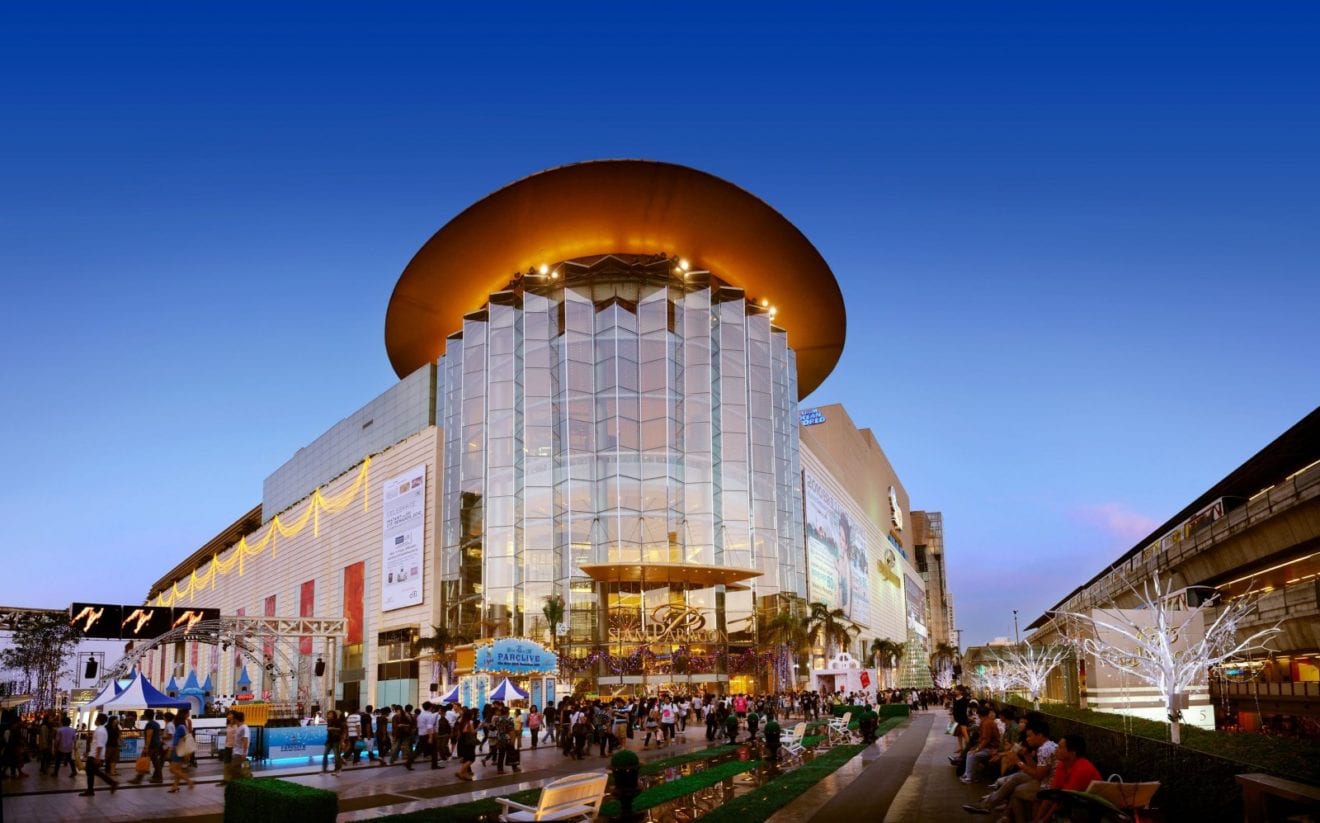
    Siam Paragon, Thailand’s world-class shopping destination, has gained prestige to Thailand after being ranked 6th as the most talked-about places among people around the world in 2015 and being the only place in Asia that has made the top 10 rankings — according to the ranking of 20 most popular places globally talked about in 2015, announced early December by Facebook.

    Opened in 2005 with an investment budget of THB 15 billion (USD 375 million), Siam Paragon Shopping Center is a world-class shopping and lifestyle phenomenon, welcoming over 300 leading international luxury labels and cutting-edge local names that suit the needs of all visitors to its 500,000 square meters of retail space in the heart of Bangkok.

  • Retail employees in Singapore set for 4.5% salary hike in 2016

    Retail employees in Singapore set for 4.5% salary hike in 2016

    If you’re presently working in the retail line in Singapore, you can expect a greater boost in your salary next year.

    According to new findings by global professional services firm Towers Watson, retail employees are on track for a 4.5 per cent pay increase in 2016, higher than the 4.1 per cent jump they got this year. This will also be the largest wage increment of any sector here in 2016.

    After retail, the next two sectors that will see healthy salary increases next year are the high-tech and professional services industries, which are expected to rise by 4.3 per cent and 3.9 per cent, respectively (up from 4 per cent and 3.7 per cent in 2015).

    These latest numbers come a week after Towers Watson released its latest Asia-Pacific salary budget planning report, a bi-annual survey conducted in July involving 2,000 responses from 22 countries in the region.

    Among the many sectors polled were automotive, chemical, financial services, energy and natural resources, media, pharmaceutical and health sciences.

    al Affairs powered in Calgary to support the development, installation and stewardship of our Aboriginal interactions beliefs and guidelines. Along with this, we formed an Aboriginal Relations Network of 24 people to encourage the sharing of best patterns in Aboriginal interactions across the company.

    Things You Might Not Like About Singapore

    Temperatures throughout the the day hover around 32 degrees Celsius while the humidity level at around 84%. To take care of this issue, most universal places while universal transport in Singapore are air-conditioned; as unless you are outdoors you hardly definitely feel the hot temperature.
    Singaporeans high energy about country’s future

    Dr Khanna, any geopolitical strategist who co-wrote the SIIA submit with Mr Fang, said that for Singapore that will be resilient, the country should invest email diversifying its economy internally, once well once its economic and geopolitical relationships externally.


    Singapore Ranks as compared to Least Emotional Country in the World


    Most Singaporeans ascribed their hopelessness on their personal financial rang (62%), health (38%) so spouse (35%). Finances so health were also the two factors which often came out on top as key hopelessness drivers across the region.


  • Hanwha Galleria to open Seoul downtown duty-free store next week

    Hanwha Galleria to open Seoul downtown duty-free store next week

    Korean department retailer Hanwha Galleria is to partially open its first duty-free store at the 63 City Building in downtown Seoul next week, Hanwha Galleria Duty Free merchandising division representative Ji Su Kim told DFNIonline.

    Kim, was unable to reveal further details, but a YonHap News Agency report indicated Hanwha Galleria plans to open 60% of the proposed space in the gold-tinted skyscraper, one of Seoul’s best known landmarks in Yeouido on December 28. Hanwha Galleria and HDC Shilla Duty Free, a joint-venture between Hotel Shilla and Hyundai Development Co were awarded the main downtown duty-free licences in Seoul by the Korea Customs Service in July following a hotly contested tender.

    The report said the pre-opening would showcase 369 brands, including cosmetics, watches and jewellery with nearly half of them Korean brands. The new duty-free shopping space will be located in the first lower level floor of the main 63 building and floors one to three of the annex building. With a total floor area of 10,072sq m, shoppers will have a  one-stop experience in a modern and comfortable space, according to the company.

    Once the entire store is complete, it is hoped the luxury boutiques and cosmetics stores in the first lower level floor and the watches and jewellery section of the first floor will feature global luxury brands.  The second floor will be filled with Korean cosmetics brands showcasing the best of “K-beauty”. This floor will also feature sections for fashion, accessories, tobacco and liquor. The third floor will be home to “K-Special Hall”, an exclusive concept to Galleria Duty Free. This unites more than 100 of Korea’s top brands and small and medium-sized enterprises.

    Shoppers looking to take a break from shopping can enjoy views of the Han River at “Studio Rue”, a media complex café located on the fourth floor, and browse a selection of Hallyu content products and purchase refreshments.

    Meanwhile, Hanwha Galleria, whose Hanwha Timeworld subsidiary runs the duty-free concession at Jeju International airport, is believed to have made little progress in terms of attracting global luxury brands.

    Hanwha Galleria CEO Hwang Yong-deuk said during a briefing. “Although we want to have luxury brands in the stores they are not yet considering opening new shops, thinking they have enough shops in South Korea.”

    The company added it would continue negotiations to house global brands when the Lotte World Tower store closes this month after the Korean powerhouse lost its licence to travel-retail newcomer Doosan Group.

    It also vowed to continue expanding its duty-free business and revealed it is targeting sales of $429.6m million in the new store next year.

    Stay close to DFNIonline and future editions of DFNI for more on the Hanwha Galleria duty-free expansion project.

  • Philippines to launch new tourism campaign next year

    Philippines to launch new tourism campaign next year

    Following the success of the “Visit the Philippines Year (VPY) 2015” campaign, the country’s Department of Tourism (DoT) will launch a similar initiative again next year. The “Visit the Philippines Again (VPA) 2016” drive is part of DoT’s intensive marketing efforts to establish the Philippines both as a tourist and business destination.

    “Visit the Philippines Again 2016 is going to be a massive retail-focused effort. We are negotiating with tour operators and travel agents to give incentives to returning visitors to the Philippines,” DoT secretary Ramon R. Jimenez, Jr. said.

    Aside from the special packages for visitors, the DoT, together with its Tourism Promotions Board (TPB), has partnered with the private sector and local government units in promising a bigger, greater, and more exciting line up of events and tourism product offerings that showcase the country’s competitive advantage as a destination.

    Among these major events are the Asean Tourism Forum 2016, Routes Asia 2016, Madrid Fusion Manila 2016, 2016 Ironman 70.3 Asia Pacific Championship, MTV Music Evolution 2016, and the Travel Blog EXchange (TBEX).

    “Our VPA campaign will again highlight the Philippines as a multi-level experience destination with our warm Filipino people, exciting activities, and endless new discoveries in our award-winning destinations that are worth a repeat visit. We are also putting together packages and rewards, so that when a tourist returns to the Philippines for a second or fifth time, he will get discounts in several establishments,” the tourism chief added.

    Of particular note for the Middle East is the “Kids Stay Free Campaign”, which has been designed exclusively for families (both nationals and expatriates), living in the GCC and offers exceptional value.

    The campaign packages provide two children per family under the age of 11 with an exciting array of activities, food, accommodations and other experiences all on a complimentary basis. Additionally the packages allow families to twin the Philippines capital Manila with another exotic destination such as Cebu, Palawan, Boracay, Bohol, Davao or Bicol, allowing for both an urban and idyllic getaway experience.

    GCC nationals require no visa to visit the Philippines. The country’s many popular shopping experiences, tranquil beaches and numerous family-friendly attractions have resulted in an increasing number of GCC residents choosing to make the Philippines their holiday destination of choice, a statement said.

    A total of 65,642 visitors from the GCC visited the Philippines between January and September 2015, resulting in a 12 per cent increase compared to 2014 figures for the same period, data showed. Saudi Arabia accounted for the highest number at 40,453 travellers, an increase of 17 per cent compared to the year before.

  • China’s internet giants investing in offline retail for growth

    China’s internet giants investing in offline retail for growth

    Alibaba’s purchase of certain media properties has dominated recent headlines, but China’s acquisition-hungry internet giants have moved on plenty of other targets lately, including brick-and-mortar retailers as they expand their commercial ecosystems.

    The triumvirate of Baidu, Alibaba and Tencent has made US$75 billion of investments in strategic partners since 2013, according to HSBC data, and analysts say China’s internet behemoths have the cash to keep on going.

    “Mergers and acquisitions will remain a main feature of China’s internet industry in 2016. We expect Alibaba’s and Tencent’s M&A spend to remain high,” wrote Fitch analyst Kelvin Ho in a recent note.

    The internet firms aren’t just gobbling up other online players. Some US$47 billion has been spent on physical retailers and another US$797 million on logistic providers. Analysts say this reflects the broad adoption of an online-to-offline, or “O2O”, strategy.

    “O2O has become the new growth driver for internet companies, especially e-commerce companies, which have been making efforts to broaden their services and product offerings and to enhance shopping experiences for online shoppers,” HSBC analysts wrote in a report last month.

    Physical distribution capabilities have been on Alibaba’s shopping list. Its partnership with Haier Electronics Group two years ago strengthened its ability to fulfil white goods, and its August investment in Suning Commerce Group is expected do likewise for consumer electronics.

    Competitor JD.com already has delivery capabilities, so its focus is on investing to broaden its product portfolio, by partnering with local supermarkets, convenience stores and pharmaceutical chains. In August it boosted its fresh food business by taking a stake in supermarket chain Yonghui Superstores.

    The impetus for these moves comes from surging online retail sales, which grew at a 57 per cent compound annual growth rate from 2010 to 2014, easily outpacing the 13.7 per cent rate for all retail, as sales from physical outlets were cannibalised.

    “The cashed up internet companies are definitely doing a land grab, in terms of O2O and other assets,” said Chi Tsang, head of Asia internet equity research at HSBC.

    But despite the growth of online retail, it contributed just 11 per cent of all retail sales in 2014. And although it’s expected to grow at a CAGR of 27 per cent up to 2018, according to iResearch, HSBC figures show year-on-year growth is actually decelerating, from 49 per cent in 2014 to 39 per cent in the first half of this year.

    In this context, analysts say it’s critical for the online and offline sides of an O2O partnership to see mutual benefit.

    “By tying up with internet companies, offline retailers can benefit from getting access to their partners’ large online user base, and can better utilise their retail infrastructure (logistics supply chain and store network) by helping online retailers to provide an omni-channel shopping experience to their customers,” HSBC analysts wrote.

    “Conversely, internet companies can further enlarge their market shares by digitalising offline partner’s product offerings and providing just-in-time services to users by utilising offline partners’ retail infrastructure.”

    As an example, Alibaba’s deal with department store operator Intime Retail Group has spawned the Girlfriend Circle programme, which promotes social spending among more than 100,000 members, and the Miao Jie app, which has boosted conversion rates by channelling department store activity for over half a million users.

    “I think of O2O as tapping into the other 90 per cent of retail sales that is not served via online shopping. Nine hundred million people have computers – smartphones – in their pockets so they are already enabled. Just need to supply them with services and payment options,” Tsang said.

    Some O2O strategies don’t involve physical infrastructure or retail premises. Baidu is focused on mobile marketing and services transactions, having invested in online travel agency Ctrip and transport provider Uber. It also targets high-frequency consumer transactions like food takeout and movie ticketing.

    Other players, like consumer electronics giant Gome and grocery retailer Sun Art, are taking a solo approach to combining physical retail and e-commerce. Future partnerships with those firms are possible, although smaller operators like Golden Eagle Retail Group, Wumart Stores or Lianhua Supermarket Holdings could be easier for the big three to swallow.

    “The pure O2O land grab is nearly over, with Meituan.com, Didi and even 58 Home spoken for. But might there might be more retailers or hypermarkets interested in cooperating,” Tsang said.

  • Davao could be next retail hotspot

    Davao could be next retail hotspot

    With strong macroeconomic fundamentals driven by a burgeoning consumer market and supporting social infrastructure, Davao City is expected to be the Philippines’ next retail hotspot outside Metro Manila. A recent report by global real estate services group Cushman and Wakefield said such progressive environment has supported the recent expansion of retail space in the city and the influx of international brands.

    Cushman and Wakefield said Davao City exhibits the trends and qualities that make for a robust retail market.

    Some of these qualities are Davao’s increasing population, the city’s high income, massive regional consumer market, and strong tourism market.

    Cushman and Wakefield noted that the rapid influx of people into the city has turned it into the largest urbanized area in terms of population and land area outside Metro Manila. The city is estimated to have a population to date of about 1.63 million.

    It also said the uptrend in the city’s population is driven by the migration of people from other regions, mainly because of the incentives that Davao has to offer, such as good social
    infrastructure like easy access to quality schools, hospitals, and an international airport.

    The advent of the Information Technology-Business Process Outsourcing (IT-BPO) sector in the city has also served as a magnet for people to settle in Davao.

    “The outlook now is that we will be seeing retail integrated into workplaces and mixed-use township communities,” the report said.

    Citing the implementation of a stringent traffic management system, Cushman and Wakefield observed in Davao the absence of traffic and infrastructure woes that bug people in Metro Manila.

    “Further, complementing the population trend, we have seen housing subdivisions and residential options increase in urban Davao, encouraging people to choose to conveniently live in the city,” it added.

    Davao is also recognized as one of the top-five high-income cities in the country, according to data from the Bureau of Local Government Finance.

    The report said the economic gains of Davao City could also be gauged from the city’s transforming economic landscape, with buildings rising in every corner.

    “We see the emergence of infrastructure like high-rise residential buildings and mixed-use developments,” the report noted.

    Among the significant upcoming developments, it cited, are the mixed-township Davao Park District, Dusit’s luxury accommodations Dusit Thani Residences and DusitD2 Hotel, and the Lubi Plantation Resort.

    “Clearly, Davao City has proven and continues to prove to be an economically healthy emerging high-income city that offers the right incentives for business and investment,” Cushman and Wakefield said.

    The report cited that the city experienced a 16-percent increase in total capital from 2011 to 2014 alone.

    The report also said Davao City serves as the regional center of the entire Davao Region, which is known to be the fastest growing region in the country, exhibiting exceptional gross regional domestic product (GDRP) growth rate in 2014 at 9.4 percent from the 6.7 percent in 2013.

    The report said one of the main drivers of this growth is the region’s locational advantage as a financial and business hub in Southern Philippines, and with the emergence of IT-BPO parks in the region.

    “This motivated business expansion into the region, resulting in the increased demand for property in the form of offices and residential and retail spaces,” the report said.

    The report also pointed out Davao Region’s emerging signs of a maturing consumer market, even surpassing Metro Manila’s and the whole Philippines’ growth in terms of per capita spending.

    “Indicators show that purchasing power is increasing in the region and this presents ample opportunity for growth in retail,” the report said.

    It said the optimism toward Davao retail and developers’ consequent response of adding more retail spaces had ushered in an influx of retailers, including foreign brands.

    “We can now observe a very international mix of tenants, especially in the newer malls of Ayala and SM,” Cushman and Wakefield said. “This is a drastic departure from six years ago, when tenants were predominantly local brands.”

    The group noted that Davao’s biggest malls now have more international tenants, especially the established brands for general retail, 90 percent of which are fast fashion.

    Cushman and Wakefield said this is especially true for Ayala Abreeza and SM Lanang Premier, which post international tenant shares of 72 percent and 63 percent, respectively.

    Cushman and Wakefield said this is anticipated, as both Ayala Abreeza and SM Lanang Premier have always marketed themselves as the premier and upscale malls in Davao.

    The group said while there is no visible major shopping mall project in the city’s pipeline yet, future retail development is looking to take place in many of Davao’s mixed-use developments.

    “Major malls tend to evolve over time, more often not expanding retail space in the process,” Cushman and Wakefield stressed. “Many of the major mall developers in Davao, like SM and Ayala, have sizable land banks that allow for any form of expansion.”

    The group further noted that the rapid take-up of retail space in major malls is sure to keep occupancy rates at a high, with optimistic projections looking at close to 100-percent occupancy by 2016.

    A popular Philippine tourist spot, Davao breached the one-million tourist arrival benchmark in 2012, and has since been growing, even if 90 percent of the tourists were locals.

    “Domestic travelers have proven to be a strong market for retail tourism, as Filipino travelers tend to include shopping in malls in travel plans,” Cushman and Wakefield said.
    The firm said the past five years has been the most vibrant for Davao City in terms of retail, as retail developers see the opportunities for retail growth in the area.

    Some of the biggest shopping malls in Davao so far are: the Ayala Abreeza Mall by Ayala Land Inc.; Gaisano Mall of Davao by DSG Sons Group Inc; and SM City Davao and SM Premier Lanang both by SM Prime Holdings.

    “While Davao retail is already more dynamic, it will become even more vibrant, as new developers and retailers enter the market,” Cushman and Wakefield concluded. “With the right demographic fundamentals, the social infrastructure to support the demographic, and an energetic and fresh retail sector, Davao City is poised for further retail development and is surely a retail destination to look out for outside the capital.”

  • Scandal-hit Toshiba cuts 6800 jobs, sells Indonesia plant, sees annual loss of $4.5 billion

    Scandal-hit Toshiba cuts 6800 jobs, sells Indonesia plant, sees annual loss of $4.5 billion

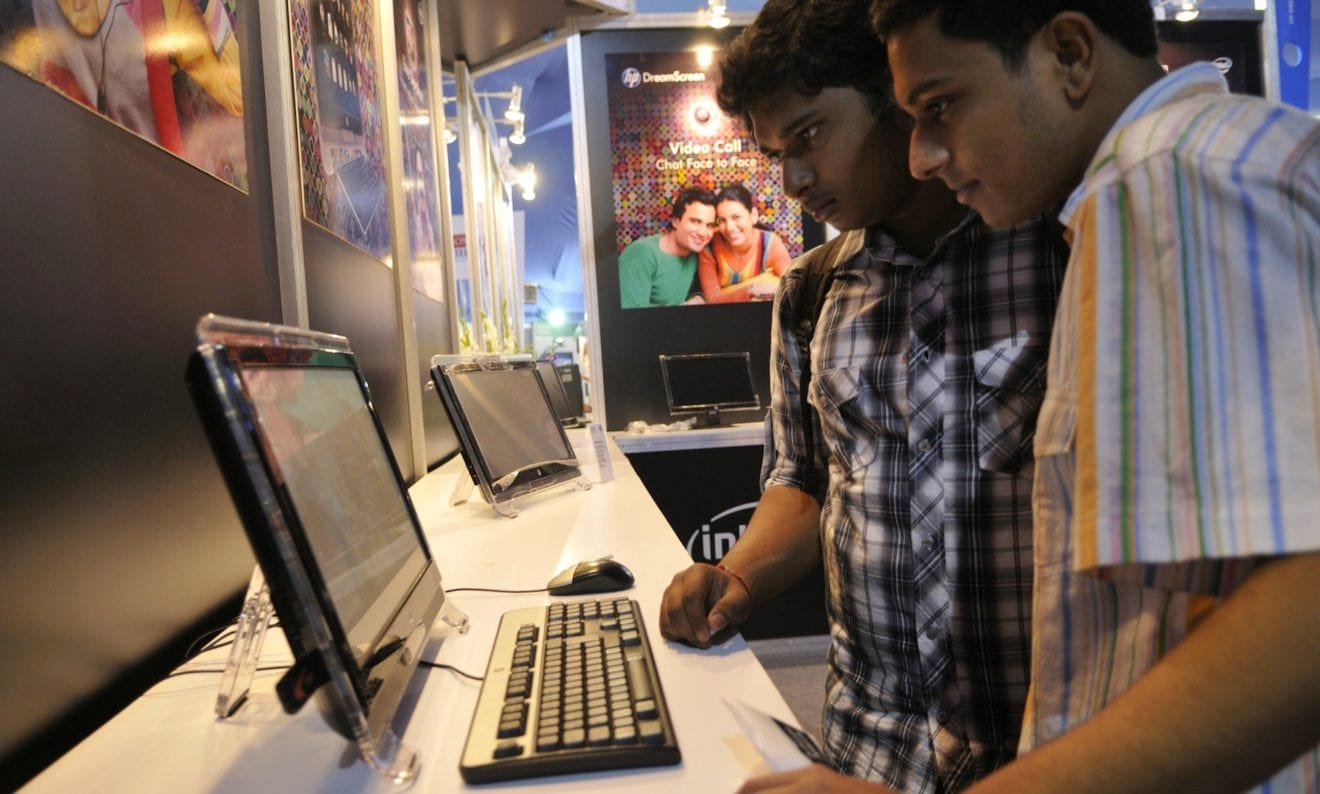
    Scandal-plagued Japanese manufacturer Toshiba Corp. is cutting 6,800 jobs after projecting a net loss of 550 billion yen ($4.5 billion) for the fiscal year through March 2016.Toshiba said Monday it will slash the jobs in its personal computer, video product and consumer electronic businesses.

    The job cuts equal about 3 per cent of Toshiba’s overall employees. It is also selling its TV plant in Indonesia.Toshiba, which also makes nuclear power plants, has repeatedly apologized after acknowledging it had systematically doctored its books over several years to inflate profits by 152 billion yen ($1.3 billion).Officials have said that mangers set unrealistic earnings targets, under the banner of creating a big “challenge,” and subordinates faked results.

    The scandal at one of the nation’s top brands highlights how Japan is still struggling to improve corporate governance, despite efforts to beef up independent oversight of companies.Toshiba said the job cuts in Japan will be by early retirement, but a significant number of overseas jobs will also be involved and steps will vary by each nation. It did not immediately have a detailed regional breakdown.Earlier this year, Toshiba said it is selling facilities for making computer chips related to image sensors to Sony Corp.Toshiba is also in trouble because it operates and is decommissioning, with Hitachi and other companies, the Fukushima Dai-ichi nuclear power plant, which went into meltdowns after the March 2011 tsunami.

    Toshiba said it had not yet fully calculated the impact of the nuclear disaster on its books.The latest earnings projection means Toshiba is sinking into its second straight year of red ink, after racking up a nearly 38 billion yen ($312 million) loss for the fiscal year that ended in March.Japanese media reports said the loss forecast for this fiscal year would be a record for Toshiba, surpassing the massive losses during the Lehman financial crisis.

  • SM Investments Corporation receives Platinum Award

    SM Investments Corporation receives Platinum Award

    SM was also awarded as the Best Investor Relations Team, a new category this year. SM is the sole Philippine company awarded this category among only seven companies in the Asian region. SM’s Investor Relations department is headed by Senior Vice President Corazon P. Guidote. She is supported by a team of IR and communications professionals whose main goal is to address the requirements of both its major and minority shareholders through direct communications, mainstream and social media communications, domestic and international IR roadshows, conferences and forums. They reach out to as many investors as possible both equity and fixed income who have interest in the Philippines given that SM is widely considered by the investment community as an ideal proxy for investing in the country.

    Attesting further to SM’s adherence to global standards across the group, its major listed subsidiaries SM Prime Holdings Inc. and BDO Unibank, Inc. likewise received the Platinum Award. BDO and SM Prime have also been excellence awardees of The Asset for the past six years.

    The Asset’s Corporate Awards, which focuses on Excellence in Governance, CSR and Investor Relations, uses a rigorous research process for benchmarking the region’s listed companies. The criteria used to assess the companies include a range of metrics on financial performance, which are also a proxy for gauging management acumen. The purpose of the awards is to recognize the importance of sustainable growth where companies are also evaluated according to the quality of their corporate governance, social responsibility, environmental responsibility and investor relations. A total of 56 companies were awarded on December 15 at the Four Seasons Hotel in Hong Kong.

  • Time to swoop on Garuda Indonesia

    Time to swoop on Garuda Indonesia

    For Indonesia’s national carrier, 2015 has been a year to forget. Shares of PT Garuda Indonesia are heading for their biggest-ever annual drop, overseas debt costs are rising and flights have gotten disrupted by forest fires and an erupting volcano.

    Timothy Ross, a top-ranked airline analyst at Credit Suisse Group AG, says this is the perfect time to buy.

    The impact of ash clouds from Mount Rinjani and haze from burning peat forests is temporary, according to Ross, the most accurate analyst for at least four Asian airline stocks tracked by Bloomberg, including Garuda. Bears who dragged down the stock by 45% this year are looking past Garuda’s market-share gains from budget rivals PT Lion Mentari Airlines and AirAsia Bhd, said Ross, who predicts the company will return to a profit this year.

    “There are fundamental changes in the company, and the stock price has dropped by half, so when you take the two together it makes me a little more positive,” said Ross, who projects Garuda will rebound 22% over the next 12 months. The Singapore-based analyst turned bullish on the shares last month for the first time in two years.

    After tumbling three times faster than the benchmark Jakarta Composite Index this year, Garuda is valued at 0.7 times net assets, the cheapest level among the 25 largest Asian airlines tracked by Bloomberg. While the rupiah’s 12% drop in 2015 has made the company’s foreign-currency liabilities more expensive, Garuda’s debt-to-equity ratio is about half that of its regional rivals. Six other analysts have buy recommendations, giving it a perfect 5 rating on a Bloomberg scale, compared with an average of 4 for its Asian peers.

    Garuda rose 1.3% at 1:25pm local time, while the Jakarta Composite slid 1.5%.

    While analysts are bullish, the nation’s top-performing fund manager in the fourth quarter isn’t buying because he sees risks related to the rupiah and oil prices.

    “The airline industry in general is too volatile and highly dependent on the exchange rate as well as oil,” said Indra Mawira, an investment manager at Panin Asset Management, whose Panin Dana Ultima fund returned 13.4% this quarter. “Although Garuda has structured itself as a better company, I still think it’s hard to make money out of it unless you’re trading the shares with a one to three-month horizon.”

    Garuda president director Arif Wibowo, who took over in December 2014, says some of the benefits of falling energy prices have failed to show up in the company’s fuel bill because the airline has been expanding capacity. Garuda will add 23 planes to its fleet in 2016, in addition to the 18 scheduled for this year, he said in an interview on Dec 8, adding that the carrier will also reduce its fuel hedging.

    New York crude has tumbled more than 30% this year, reducing the price of jet fuel and helping spark a 17% gain in the Bloomberg Asia Pacific Airlines Index.

    Garuda is luring customers after Lion Air’s cancellation record deteriorated in 2015 and an AirAsia jet crashed a year ago en route to Singapore from Surabaya, Indonesia, killing 162 people. While Indonesia has more than three times the global average rate of fatal air crashes, Garuda’s safety record is improving. The European Union lifted a flight ban on the airline in 2009 and the carrier’s last fatal accident was in 2007.

    Analysts estimate Garuda’s net income this year will be US$34.8mil, its first annual profit in three years. While 71% of the company’s US$2.2bil total short and long-term liabilities are denominated in currencies other than the rupiah, Garuda’s debt-to-equity ratio of 139% is well below the 236% average of its regional rivals.

    Investor concern about Indonesia’s air safety record is overblown when it comes to Garuda, Credit Suisse’s Ross said.

    “Those things impact share prices and customer behavior only for maybe a couple of months,” he said. “It tends to be put in the rear-view mirror pretty quickly.”

  • VN Airlines to expand operation in Indonesia, performs well in Australia

    VN Airlines to expand operation in Indonesia, performs well in Australia

    The national flag carrier Vietnam Airlines conducted 365 flights between Vietnam and Indonesia in 2015, carrying more than 100,000 passengers and over 1,000 tonnes of cargos. According to Nghiem Van Khanh, head of the firm’s branch in Indonesia, in 2015 the Vietnamese aviation sector faced a range of difficulties stemming from Indonesia’s low GDP growth rate and rupiah depreciation, which, he said, weakened Indonesia people’s purchasing power and outbound tourism demands.The statistics were released at the firm’s customer conference in Jakarta, Indonesia, on December 16 which saw the participation of Indonesia aviation officials, and distributors, customers and partners of Vietnam Airlines in the host country.

    Against the backdrop, the firm coordinated with its distributors and partners as well as Indonesian authorities to swiftly launch marketing campaigns and build up a suitable ticket distribution system in the market, he said.

    Khanh added that Vietnam Airlines is currently operating one daily flight from Ho Chi Minh City to Jakarta, using Airbus A321.

    Since 2012, the national flag carrier has run more than 1,000 flights from Vietnam’s southern metropolis to the Indonesian capital city, contributing to boosting cooperation in economic, cultural and social fields between the two countries.

    In 2016, the branch in Indonesia plans to improve its service quality and expand its ticket distribution network in the country.

    The corporation will also launch more flights from Indonesia to Vietnam in order to meet the increasing travel demands of the two countries’ people, Khanh said, noting the plan matches the development course of two nations’ strategic partnership, especially in the context of to-be-formed ASEAN Community.

    Indonesia has become one of Vietnam’s 20 largest tourism markets with about 50,000 Vietnamese holiday-makers visiting the country each year.

    Around 80,000 Indonesian tourists also choose Vietnam as their holiday destination each year.

    Vietnam Airlines in Germany performs well

    The national flag carrier Vietnam Airlines’ branch in Germany has seen an impressive business performance with an estimated 58.3 million EUR in revenue this year.

    2015 was a challenging year for the firm and the aviation sector in general with disadvantages on euro-American dollar exchange rate, fierce competitiveness among airlines, unstable politics in the Middle East and the danger of terrorism, head of the Vietnam Airlines branch Ngo Tri Hung said at a recent customer agents’ conference in Berlin.

    Despite such challenges, the firm tried its best to improve its service quality and marketing as well to operate about 400 flights with 86 per cent full occupancy, he added.

    The firm received ideas from its agents attending the conference on improving service quality.

    Also at the conference, the firm auctioned a return ticket worth 3,000 EUR and collected more than 5,000 EUR from individuals and organisations to sponsor soldiers and guards who protect Vietnam’s islands and sea.

    Vietnam Airlines records impressive change in RoK market

    This year marks an impressive performance of the national flag carrier Vietnam Airlines in the Republic of Korea (RoK) market, with improvements in operational scale, sale revenues and service quality.

    The carrier’s branch in the RoK has fulfilled its tasks excellently, surpassing the set business plan by 11 percent, Cao Anh Son, Vietnam Airlines chief representative in Seoul said at a customer conference on December 15.

    Together with rolling out the modern A350-900 aircraft for the Hanoi- Seoul route, Vietnam Airlines launched its new corporate identity as part of the “four-star service upgrade” strategy, smartening up its image and bringing convenience to customers, Son highlighted.

    Over the past two decades, Vietnam Airlines has made travel easier for passengers by opening air routes connecting Hanoi, Da Nang City and Ho Chi Minh City with Seoul, Busan and many other big cities in the RoK with 60 flights a week.

    The airline boasts 600 representative offices in the RoK.

  • Edrington raises over SGP$55000 for local children’s charity

    Edrington raises over SGP$55000 for local children’s charity

    Edrington Travel Retail raised SGP$55,950 at its inaugural charity initiative Ride for the Children at Street 11. The initiative supports local children’s charity Child at Street 11, which supports low income and dysfunctional families in Singapore by providing early years education for their children. Edrington doubled matched public donations of $18,650, bringing the total amount raised to $55,950.

    The fundraiser saw a team of 18 cyclists from Edrington’s Asia Pacific offices pedal over 400km from Kuala Lumpur to Singapore in just three days. The travel retail business was represented by Tellis Baroutsis (managing director, Global Travel Retail), Ryan Hill (managing director, Asia Travel Retail) and Alan Hsu, sales manager (Travel Retail Taiwan).

    Ahead of the cyclist’s arrival, a Welcome Party was held at The Cube at Asia Square, Edrington Asia Travel Retail and Global Travel Retail HQ, where 20 children from the charity enjoyed food and drink and entertainment by a balloon sculptor. A raucous welcome greeted the cyclists, who despite having just completed an exhausting journey, mingled with the children from the charity.

    One of the cyclists, Ryan Hill, managing director of Edrington Travel Retail comments: “This has been a truly rewarding experience and a stellar team effort from everyone in the Edrington Asia-Pacific office. Child at Street 11 does brilliant work with underprivileged children in our new home – Singapore – and it feels great to be giving back to society when we’ve been made so welcome here. Seeing the kids from Child at Street 11 as we crossed the finish line really brought home why we were doing this and the difference our efforts will make.”

  • Thailand’s Central Group cautious over 2016 expansion

    Thailand’s Central Group cautious over 2016 expansion

    Central Group sees 2016 as another year to be more conservative with expansion, as the country’s largest retail operator is still concerned about weak domestic consumption. Prin Chirathivat, deputy chief executive officer, said yesterday that both the global and domestic economies are expected to improve in the coming year. The only worry was moribund consumer spending, as the group is heavily involved in the retail business.

    Unlike the retail business, the group’s hotel business was still performing well this year.

    The group will continue to develop department stores as planned but with a cautious approach.

    “We have to be well prepared with a more flexible plan and put more focus on our core business,” he said.

    The company appears to be hedging its risk by focusing less on non-core businesses like warehousing.

    To support future growth of its hard-line business, which heavily relies on inventory management, Central Group’s CRC Power Retail is forming a 50:50 joint venture with WHA Corporation Plc.

    WHA Central Alliance was established with Bt850 million in registered capital to manage its Bt4-billion warehouse project in Ayutthaya’s Wang Noi district.

    Located on 320 rai (51.2 hectares) of land owned by Central Group, the new warehouse will offer a total of 250,000 square metres of space. As the first phase, Central Group has already built a 56,000sqm facility on 100 rai.

    The JV would take over both the land and warehouse under a sale-and-leaseback deal and carry out the next two phases to expand its capacity to 250,000sqm in three years. The Bt4-billion investment includes land.

    Jareeporn Jarukornsakul, vice chairman and chief executive officer of WHA, said that through the sale and leaseback of the first phase, the new JV will realise revenue of about Bt100 million from the beginning.

    The first phase was aimed at serving Central’s hard-line retail business consisting of Thai Watsadu, HomeWorks, Baan&Beyond and Power Buy.

    In preparation for continuing expansion, particularly of the new imported product line-up, the second phase is scheduled to be completed next year, adding 28,000sqm of rental space.

    The hard-line business has played an important role in the group accounting for 10 per cent of total revenue, with an average annual growth of at least 10 per cent in revenue.

    Somyos Anantaprayoon, chairman of WHA, said that after the completion of all phases, Central Group would lease 60 per cent of the total warehouse space for 10 years. The remaining areas would be available for new customers.

    With experience in the build-to-suit warehouse business, WHA could help clients to save about 30 per cent in costs incurred by constructing their own warehouse.

    WHA projects Bt400 million a year in income from the completed project, which would boost its rental, service and utilities income by 10 per cent.

    Jareeporn said the JV was the third collaboration with Central Group. The company already provides the group a 23,000sqm warehouse and distribution complex on Bang Na-Trad Road and a 20,000sqm cold storage facility on Rama II Road.

  • Duty Free Philippines targets $235m in 2015

    Duty Free Philippines targets $235m in 2015

    State-owned Duty Free Philippines is targeting total sales of $235m in 2015 (+2.5%) after hitting $229m in 2014, with Manila Airport accounting for nearly 45% and the downtown Fiesta Mall just under 50% as DFP’s largest single outlet.

    While the expected sales increase is modest, it is regarded as a good performance considering Manila Airport Authority reduced the number of concessions in T1 from around 30 to less than 20 due to congestion and major airlines have also transferred operations to T3.

    “T1 work is not finished. It’s work in progress,” said Duty Free Philippines Merchandising Division Manager Jennifer Start, talking exclusively to TRBusiness recently.

    “There has been a remarkable change. We have renovated our departure stores, but we heard there is more work to be done by the airport authority in T1. It’s upgrading work. They have shown us plans to expand the facility.”

    NAIA T3 departure confectionery ©

    Duty Free Philippines’ biggest-selling product category remains confectionery, accounting for 37% of total sales. It is also the biggest selling category at Manila Airport, accounting for 44%. Above: Manila NAIA Terminal 3. ©.

    Further work is also in the pipeline for T3 (which accounts for 20% of Manila Airport sales) as DFP gets to work on renovating and increasing its shops and boutiques in the departure hall.

    Meanwhile, arrival shops sales account for more than half of DFP’s total sales revenue at Manila Airport, with Filipino passengers representing the majority of customers and the number one purchase being confectionery/chocolate.

    NAIA T3 departure perfumery ©

    DFP’s perfume and cosmetics sales accounted for 11% of it total merchandise sales last year. Above: Manila NAIA Terminal 3. ©.

    By contrast, foreign passengers purchase a larger share of goods in DFP’s departure shops, with South Koreans and Mainland Chinese the highest spenders.

    Confectionery is the biggest selling category at Manila Airport, accounting for 44%, followed by liquor (26%), perfume and cosmetics (12%) and tobacco (7%). Fashion, watches and souvenirs take the remaining 11%.

    DFP Fiesta Mall-liquor ©

    The liquor section within the Duty Free Philippines Fiesta Mall. ©.

    The retailer’s downtown duty free Fiesta Mall has also undergone a total renovation and upgrade over the last two years, according to Start, and has received favourable comments from customers: “We have had a major transformation in Fiesta Mall, especially for perfume and cosmetics last year. The fashion area also has been renovated, along with liquor, tobacco and confectionery,” she said.

    “We have new Coach and Chloe boutiques, and a complete range of lingerie, bags and perfume and cosmetics in Victoria’s Secret. Another new outlet is our Bath & Bodyworks health and beauty products shop that opened here earlier in 2015.”

    Fiesta Mall Beauty Walk ©

    Wines and spirits is the second-largest product category in terms of sales across DFP’s outlets, accounting for 18% in total. ©.

    Including sales from all ten of its provincial airports, Manila Airport and the Fiesta Mall, DFP’s biggest selling product category remains confectionery, accounting for 37% of total sales, followed by liquor (18%); Perfume and cosmetics (11%); fashion (9%); and tobacco (5%).