Category: General

Retail News Asia is committed to providing both local and global retailers with the latest General Retail news throughout the Asian market. This on a daily base.

  • President to launch Rotiklot dam project in eastern border region

    President to launch Rotiklot dam project in eastern border region

    President Joko Widodo is scheduled to conduct the groundbreaking for the Rotiklot dam development project in West Timor during his visit to the region on December 20 and 28.

    The event is very important as the Rotiklot dam will be the third-largest after Tilong and Raknamo dams in the district of Kupang, East Nusa Tenggara, and the largest in the districts of Belu and Malaka,” Frans Lebu Raya, the governor of East Nusa Tenggara province, remarked here on Wednesday.

    “Currently, the technical team is still finalizing the agenda of the head of state in connection with the groundbreaking event, including the location for the ceremony,” he noted.

    The construction of the dam, worth Rp450 billion, will be completed in three years using funds from the national budget.

    “The cornerstone will be laid this year to mark the start of the construction work and will be completed in 2017 to serve the needs of the people,” he explained.

    Besides flood control, the dam is also designed for meeting electricity needs, agriculture, and tourism, he stated.

    “Once the dam is built, the people must utilize it optimally to improve their welfare,” he noted.

    The East Nusa Tenggara provincial government has proposed the development of six dams to overcome the water shortage problem in the region and to deal with the El Nino weather phenomenon.

    “The six dams, include Kolhua in Kupang city, Raknamo in Kupang district, Rotiklot in Belu district, Temef in Timor Tengah Selatan, Napunggete in Sikka, and Lambo in Nagekeo,” Andre Koreh, the head of the provinces public works service, stated at a separate occasion.

    He said the projects have already been included in the plan of the ministry of public works, and so, they will be realized in stages based on the availability of the budget.

    He pointed out that the region requires around 1.5 million cubic meters of water to meet the needs of the people during the dry season, although water supply is abundant during the rainy season, and hence, the dams are needed.

  • Indonesia’s Largest Solar Power Plant Ready for Operation

    Indonesia’s Largest Solar Power Plant Ready for Operation

    Indonesia’s largest solar power plant built by PT Len Industri in Kupang, East Nusa Tenggara, is ready for operation as soon as it is inaugurated by President Joko “Jokowi” Widodo.

    Len Industri President Director Abraham Mose said electrical power from the solar power plant with Independent Power Producer (IPP) concept will reach five megawatts. “We will conduct test for power supply of five megawatts this December,” Abraham said.

    Abraham said that his company could finish the power plant’s construction right on time, even earlier than the deadline stated in the contract with the State Electricity Company (PLN) in East Nusa Tenggara.

    Abraham said that Len Industri’s investment value for the solar power plant reaches up to Rp125 billion.

  • Charming Charlie opens first Philippines store

    Charming Charlie opens first Philippines store

    The first Charming Charlie in the Philippines is scheduled to open Saturday, Dec. 19, 2015. The Houston-based women’s jewelry and accessories retailer has opened as many as 55 U.S. stores each year, and expanded to Dubai in 2015.

    The first Charming Charlie in the Philippines is scheduled to open Saturday, Dec. 19, 2015. The Houston-based women’s jewelry and accessories retailer has opened as many as 55 U.S. stores each year, and … more.

    Houston-based women’s jewelry and accessories retailer Charming Charlie has spread its footprint across the Pacific Ocean.

    This past Saturday, the retailer’s first Philippines location opened at Bonifacio High Street Central Square, a shopping district in the capital city of Manila.

    Charming Charlie worked with distributor Stores Specialists, Inc. a member of SSI Group, to expand to Manila, according to a company statement. Additional growth is planned in Manila and in Cebu in 2016.

    “The Philippines is a fast growing territory with an increasing population of young adults and proven track record for American brands, so entering Southeast Asia following our Middle East expansion made perfect sense for the brand,” Charlie Chanaratsopon, founder and CEO, said in a statement. “SSI Group is the premier partner in the Philippines and we believe their local expertise will allow us to bring our incredible value and fun shopping experience to customers throughout the region.”

    This past summer, the retailer opened two locations in Dubai, United Arab Emirates.

    Charming Charlie has 350 retail stores across the United States, Canada, the United Arab Emirates and the Philippines.

  • Johnnie Walker unveils Singapore Airlines exclusive

    Johnnie Walker unveils Singapore Airlines exclusive

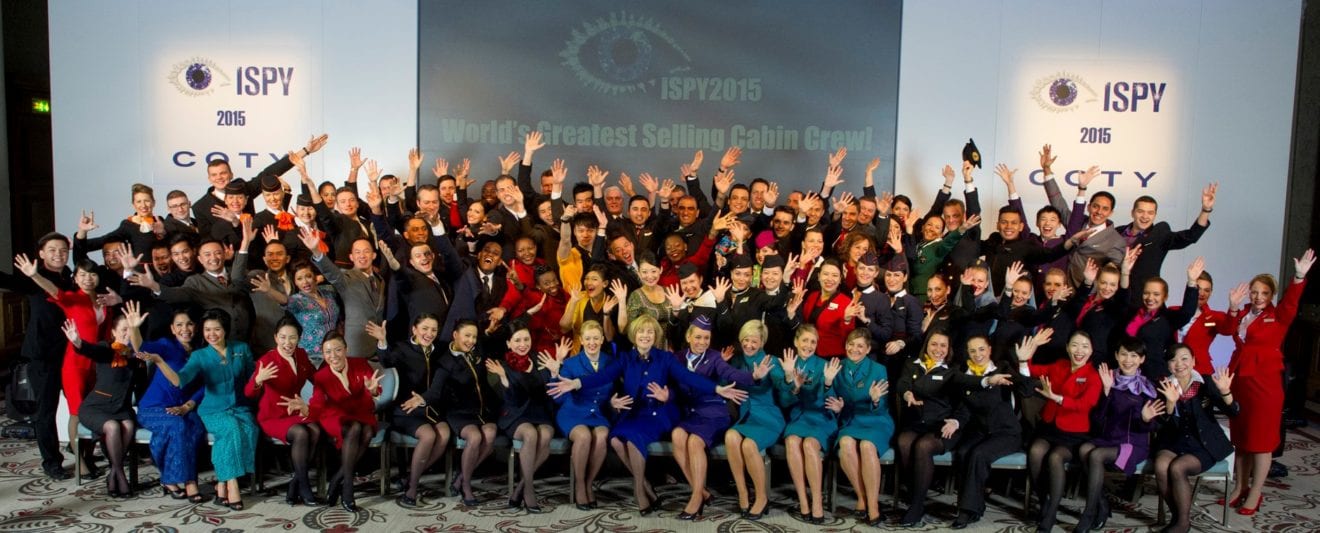
    Diageo’s Johnnie Walker House has launched Johnnie Walker Blue Label The Casks Edition, a Scotch whisky and bottle design available exclusively through Singapore Airlines. The ‘richer and more intense’ Johnnie Walker Blue Label The Casks Edition is a higher strength whisky than the main line liquid, and is bottled at 55.8% ABV.

    Johnnie Walker House, the ‘international network of luxury whisky embassies’, paired the whisky with a new bottle design based on the airline’s cabin crew uniform.

    The ‘Singapore Girl’ wears a sarong kebaya, designed by French couturier Pierre Balmain in 1968. The same shade of blue is used on the Johnnie Walker Blue Label The Casks Edition bottle design, which also features the airline’s signature batik print etched in silver.

    “It brings us great pleasure to work with Singapore Airlines, a company that shares our appreciation for the contemporary but at the same time, a great respect for heritage and progress,” said Lawrence Law, global general manager for Johnnie Walker House.

    “This partnership with Singapore Airlines provides an opportunity for consumers to buy a product that they cannot find anywhere else – an example of our continuing commitment to bringing our most successful innovations to consumers within the world of travel.”

    Mr Foo Chai Woo, Singapore Airlines divisional vice president sales and marketing added: “We are proud to be able to exclusively offer our customers the opportunity to purchase this special release in-flight via Singapore Airlines KrisShop. Having our Singapore Girl’s signature sarong kebaya batik motif reproduced on the bottle of the world’s leading luxury Blended Scotch Whisky is an honour and we are thrilled to have been selected as the first Johnnie Walker House airline partner.”

    Concessionnaire DFASS’s John Garner, president Asia and Middle East, said: “We are delighted to bring this exclusive Johnnie Walker Blue Label offering to KrisShop, for Singapore Airlines passengers. This has been a fantastic collaboration with all three parties actively involved from early ideation to getting it in-flight.

    “We believe that through this strong partnership, we will be able to provide more innovative offerings to Singapore Airlines and their passengers alike.”

    Johnnie Walker Blue Label The Casks Edition is available to purchase through Singapore Airline’s inflight retail store, KrisShop, from 1 December. Customers can pre-order via www.krisshop.com/JW.

    The whisky carries an RRSP of S$378 (US$270) for the 75cl bottle.

    Diageo’s partnership with Singapore airlines follows the publication of Generation Research data which shows that the global inflight retail market declined 6.7% in the first half of 2015.

  • Carrefour opens 4th distribution center in China in Wuqing

    Carrefour opens 4th distribution center in China in Wuqing

    The grand opening ceremony of Carrefour supply chain in China-North-West China distribution center is held in Wuqing Economic Development Area, Tianjin municipality. The foundation of the center is expected to become the overpass of Carrefour China’s supply chain in northern China, which can form the radiation of Beijing-Tianjin-Hebei integration economic cycle and Shandong, Shanxi and other provinces’ logistics and distribution network, increase the distribution efficiency, support the business of stores, and boost the regional economics.

    The northern distribution center of Carrefour launched this time has superior geographical location, which is located in ProLogis modern international distribution park, Wuqing economic development area, Tianjin municipality, covers an area of 39,000 square meters. Carrefour northern distribution center will utilize the Voice Picking System, achieving 99.997% in its picking accuracy rate. The tray utilize 100cm*120 standard operating procedure to reduce packaging and labor costs and improve efficiency; moreover, the center is equipped with professional temperature controlled room which sustain temperatures of 18-22 degrees for the storage of alcohol, chocolate and milk powder.

    To reply to the supply chain strategy development needs of Carrefour in China, the establishment of northern China distribution center will cover more than 30 stores in northern China, greatly improve the company’s northern China supply chain system to provide more high-quality, convenient products and services for numbers of consumers.

    After the establishment of the distribution center in Eastern, western and northern region, Carrefour is planning to set up 2 new distribution centers in North-East Territory and South Territory of China. It is estimated that by the end of 2016, Carrefour will complete the establishment of 6 modern distribution centers in China, and cover more than 200 hypermarkets in China to fully support the emerging industry such as E-commerce of Carrefour, “easy Carrefour” convenience stores.

  • Inditex optimistic about push into China

    Inditex optimistic about push into China

    Intidex, the parent company of fast fashion chain Zara, has revealed a sales increase of 16% year-on-year to 14.74bn (£10.6bn) over the first nine months of its financial year. Despite a dip in the economy, the Spanish group has said that it remains optimistic about its China prospects.

    The group’s profits, which include a 20% increase to £2.02bn, come not long after founder Armanocio Ortega surpassed Bill Gates as the world’s wealthiest man.

    Though luxury fashion retailers such as Burberry and Hugo Boss have experienced difficulties in the Chinese market, Inditex is positive about its expansion overseas.

    “We have no doubt that the fashion appetite in China is large, our brands are better and better known. We are still feeling very optimistic,” said Chief Executive Pablo Isla.

    During its first three fiscal quarters, the group added 136 new stores to its estate making a total of 230, the same amount as the same time last year.

    Zara had the most openings with 60 new stores, as well as 44 Zara home sites and 26 new branches for lingerie brand Oysho.

    In addition, Zara’s e-commerce platform is being extended to all of the European Union, Taiwan and Hong Kong, while a website for Zara Home has debuted in Australia.

  • Price Of Illegally Poached Ivory Halves In China

    Price Of Illegally Poached Ivory Halves In China

    The price of elephant ivory in China has fallen by almost 50 percent over the past 18 months, likely due to a shrunken demand in the country for illegally poached tusks, the Wildlife Conservation Network wrote this week in a blog post.

    Raw ivory in Beijing went from costing an average of $2,100 per kilo (about $955 per pound) in 2014 to $1,100 (or about $500) by November, ivory researchers Lucy Vigne and Esmond Martin revealed in a study scheduled to be released by Save the Elephants in early 2016. The price drop reflects China’s significant decrease in demand for the commodity, believed to be a result of the government’s explicit commitments to cut down on ivory trade and prevent illegal elephant poaching.

    Elephant poaching typically involves killing the animal, hacking off its tusk and discarding its carcass, The New York Times wrote in a gruesome report.

    Historically, China has considered ivory ornaments and carvings to be status symbols, and the country is still widely believed to be the world’s largest ivory consumer. But activists have long urged China to impose strict legislation on the ivory trade.

    Chinese authorities announced in May a commitment to phase out the country’s domestic ivory industry. In September, the United States and China also announced a deal to carry out “nearly complete bans” on ivory imports and exports. To show its dedication, mainland China destroyed almost 7 tons of ivory to show the country’s dedication to ban the wildlife crime, according to the World Wide Fund.

    Demand for ivory within the country also seems to have diminished. Vigne and Martin, who traveled across eight Chinese cities to conduct their research, said they “didn’t see a single person buying an ivory item during weeks spent surveying the ivory retail outlets.” The researchers also noted that many ivory retail outlets had cut back on floor space for displays of ivory items.

    Other countries have also ramped up their efforts to prevent illegal elephant poaching. Last year, the Obama administration announced that it would prohibit all commercial trade of elephant ivory. And in October, Tanzania arrested a number of high-level ivory traffickers accused of smuggling at least 4,200 pounds of elephant tusks from East Africa to East Asia.

    But despite the fallen demand for ivory in China, Save the Elephants founder Iain Douglas-Hamilton said the world still had a long way to go to stop the African elephant poaching business. Indeed, the number of elephants in Africa fell from 26 million in 1800 to about 400,000 in August. At least 65 percent of the continent’s forest elephants were poached between 2002 and 2013, WildAid reported last year.

  • Alibaba Group Acquires Major Hong Kong Newspaper

    Alibaba Group Acquires Major Hong Kong Newspaper

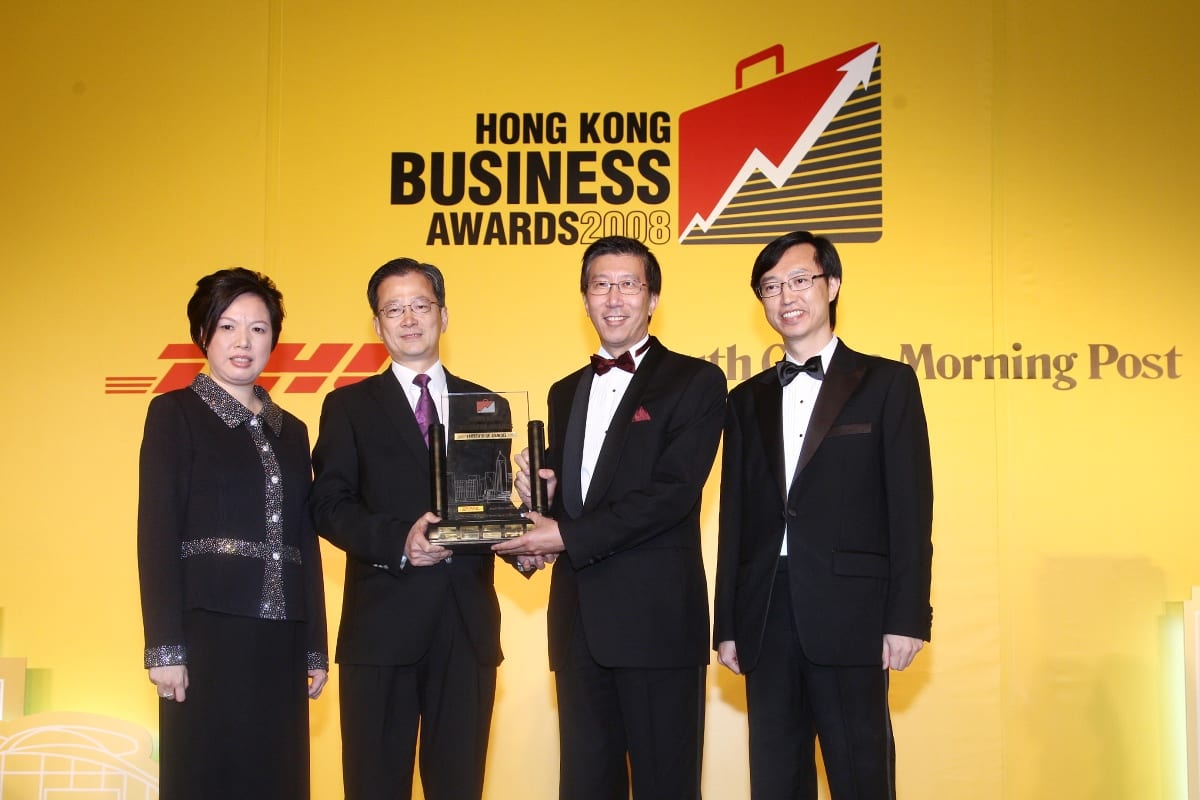
    The Alibaba Group has announced that will acquire the South China Morning Post, one of Hong Kong’s most influential English language newspapers, and other media assets of SCMP Group Limited.

    The move is reportedly part of an effort to improve China’s image in the West and combat what company executives call the “negative” portrayal of China in the Western media.

    “The South China Morning Post is unique because it focuses on coverage of China in the English language. This is a proposition that is in high demand by readers around the world who care to understand the world’s second largest economy,” said Joseph Tsai, executive vice chairman of Alibaba Group.

    The South China Morning Post has long reported on subjects that state-run publications have been forbidden to cover, such as political scandals and human-rights violations. The paper has a relatively small circulation (at about 100,000). Despite the paper’s size, it has significant influence in the West because of its proximity to China and English language format. However, critics have recently taken aim at the paper, claiming that it has become increasingly pro-Beijing.

    The acquisition is an ambitious move that sees Alibaba taking a significant stake in print journalism, with an eye to developing its digital potential.

    “Like many print media the SCMP faces challenges amid the dramatic changes in the way news is reported and distributed. But these changes play to Alibaba’s strengths, which is why we believe the two companies complement each other well,” said Tsai in an open letter to the readers of the South China Morning Post.

    As part of the changes, Alibaba will remove the pay wall on SCMP.com, allowing readers to access content for free on the internet and mobile.

    Other assets included in the acquisition are SCMP’s magazine, recruitment, outdoor media, events and conferences, education and digital media businesses. Besides the flagship South China Morning Post, other titles include SCMP.com and related apps, and Nanzao.com and Nanzaohinan.com, as well as the Hong Kong editions of Esquire, Elle, Cosmopolitan, The PEAK and Harper’s Bazaar.

    The acquisition represents a relatively minor investment on the part of Alibaba, with SCMP valued at an estimated US$100 million, a drop in the ocean compared with Alibaba’s multi-billion yearly revenue.

    It’s unclear at this point what degree of editorial control Alibaba will exercise over the controversial publication. While Hong Kong operates with a relatively free press, at least compared with mainland China, some are concerned that Alibaba will seek to water down the paper’s political stance to curry favour with Chinese leadership and advance its (Alibaba’s) own agenda, which is reportedly closely aligned with the Communist Party.

    Willy Lam, a political commentator and former editor at the South China Morning Post, said an Alibaba takeover would most likely exacerbate a trend at the paper toward self-censorship on sensitive political issues, reported the New York Times.

    The company has been quick to address this. “Some have suggested that ownership by Alibaba will compromise the SCMP’s editorial independence,” said Tsai. “This criticism reflects a bias of its own, as if to say newspaper owners must espouse certain views, while those that hold opposing views are ‘unfit’.

    “In fact, that is exactly why we think the world needs a plurality of views when it comes to China coverage. China’s rise as an economic power and its importance to world stability is too important for there to be a singular thesis.

    “In reporting the news, the SCMP will be objective, accurate and fair. This means having the courage to go against conventional wisdom, and taking care to verify stories, check sources and seek all viewpoints. These day-to-day editorial decisions will be driven by editors in the newsroom, not in the corporate boardroom,” said Tsai.

    “Alibaba and Jack Ma have done a good job maintaining good relations with the power structure and not getting involved in politics,” Orville Schell, a director at the Asia Society, told the New York Times.

    “But buying a newspaper, particularly in Hong Kong, could be hazardous,” he said, adding, “China is always tempted when things go wrong to take control.”

  • SME recognition awards to expand to Indonesia in 2016

    SME recognition awards to expand to Indonesia in 2016

    Kossan Rubber Industries Bhd group managing director and chief executive officer Datuk Lim Kuang Sia (second from right) receiving the Platinum Entrepreneur 2015 Award from Ahmad Husni. Kang (left) and working committee chairman Chey Onn Wah (right).

    THE SME Recognition Award will be “going Asean” next year, by first tapping Indonesia and later, eight other countries in the region.

    SME Association of Malaysia national president Michael Kang announced this during the SME Recognition Award 2015 Presentation and Gala Dinner held last Friday at the Sunway Pyramid Convention Centre.

    The award, in its 14th year, honours Malaysia’s top SMEs for their excellence.

    There were 101 award recipients from 17 categories such as SME Achievers Award, SME Green Excellence Award, SME Export Excellence Award, SME Women Entrepreneur Award and SME Service Excellence Award.

    The Platinum Entrepreneur 2015 Award was awarded to Kossan Rubber Industries Bhd group managing director and chief executive officer Datuk Lim Kuang Sia.

    Besides showcasing the achievements of Malaysia’s top SMEs, this award provides a premium platform to benchmark the service standards and quality of SMEs as well as enhance their intellectual properties and brand image in the global marketplace.

    The award theme this year was “Shaping up to the New Economic Landscape”.

    Kang said it represented a critical call for Malaysian SMEs to re-invent, harpen their skills, and brace themselves to match the global competition associated with a borderless business environment.

    “In terms of productivity, Malaysia ranks low with a ratio of 4:1 and 7:1 compared with Singapore and the US respectively.

    “This means that one Singaporean can do the job of four Malaysians, and one American can do the job of seven Malaysian,” said Kang.

    “As the National President of the SME Association of Malaysia, I wish to share my perspective on issues affecting SMEs in the country,” he added.

    If we continued to be contented instead of improving ourselves, Kang projected that at least 30% of SMEs would disappear when the Trans-Pacific Partnership Agreement (TPPA) comes into full force, two years after signing, because with companies from the TPPA country partners offering products and services of better quality here, SMEs would die off if they are not ready to advance.

    Second Finance Minister Datuk Seri Ahmad Husni Hanadzlah was the guest of honour for the event.

    In his speech, he saidSMEs were one of the drivers of our economic growth, contributing 335 to our Gross Domestic Product.

    “We expect it to reach 41percent by 2020. On the part of the government, we will provide endless support in order for SMEs to achieve your aim.”

    Kang also said the association has signed a Memorandum of Understanding with Next Generation Movement to promote growth of young entrepreneurs with effect from Jan 1, 2016.

    “The MOU intends to help young entrepreneurs penetrate the ASEAN market of 630 million population through business matching, investment cooperation, and the exchange of information with regard to trade, supply chain, innovation and technology,” he said.

    He added the association looked forward to work hand-in-hand with the Next Generation Movement to enhance the capabilities of young entrepreneurs by leveraging on these regional opportunities.

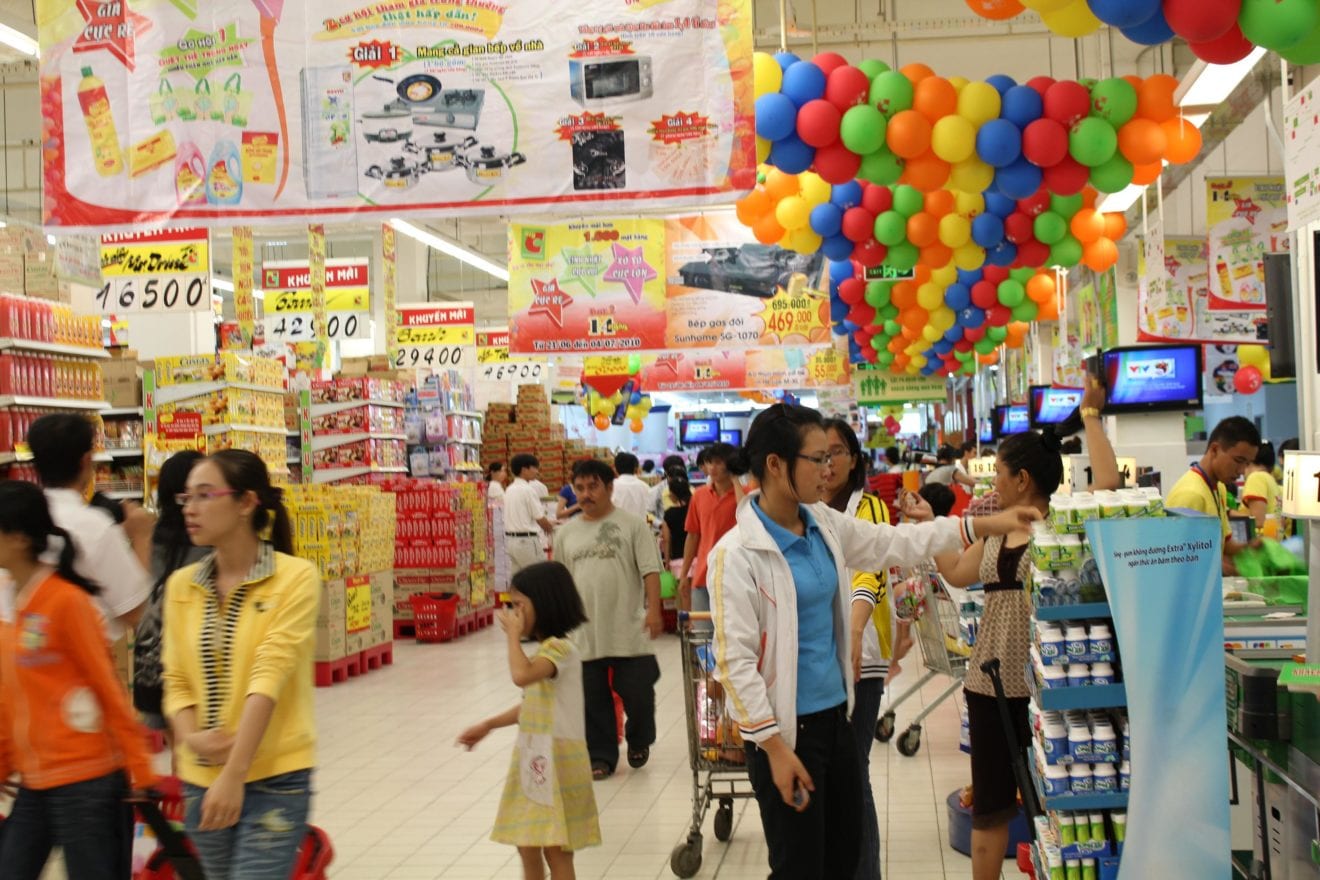
  • Vietnam seen among Asia’s top 5 retail markets

    Vietnam seen among Asia’s top 5 retail markets

    Final consumption expenditure (percent of GDP) in Vietnam was estimated at 70 percent last year by the World Bank with household consumption accounting for 90 percent, making the country among Asia’s top 5 retail markets. The country’s middle class, the most promising consumers of retailers, is forecast to triple by 2020.

    Speaking at the forum, Duong Duy Hung, deputy head of the Department of Domestic Market under the Ministry of Industry and Trade, said Vietnam has opened its door to dozens of multinational retail groups since the country joined the World Trade Organisation (WTO) five years ago.

    Domestic retailers, despite previous concern over their passive acts amid fierce competition, has tailored themselves to the new context and gradually improved their competitiveness, he noted.

    He warned that huge investment waves from foreign firms are posing numerous challenges to the local ones, which was urged to foster innovation to survive.

    President of the Vietnam Retailers Association DinhThi My Loan agreed, stressing that domestic retailers still lag behind foreign peers as they lacklong-term strategies and financial resources.

    She called on the local firms to learn from international practices, especially in Japan, the Republic of Korea, Singapore and Thailand, while restructuring themselves and set up chains of shops, small- and medium-sized supermarkets, and convenient stores to regain market share in the home playground.

    Echoing these opinions, Chau Ngoc Hanh, head of Retailer Service at Nielsen Vietnam said big fish eating little fish is only a has-been, it’s time for the fast fish to eat the slow one.

    More and more consumers in Vietnam prefer online shopping and getting their orders brought to the door thanks to its convenience, she explained, saying that today any firm which can serve it faster will have competitive edges.

    About 22 percent of responded consumers in the country said they would rather go shopping in convenient stores than shopping malls.

  • Harvey Norman expands with new flagship megastore

    Harvey Norman expands with new flagship megastore

    Australian department store giant Harvey Norman has expanded its presence in Singapore with a new flagship store in the Central Business District despite a downturn in the retail sector that has crippled many operators here.

    The three-storey, 100,000 sq ft superstore, officially opened in Millenia Walk on Thursday, may seem a risky move but chief executive Katie Page shrugged off notions that she may be betting against the market odds.

    “The retail business is competitive all the time, it didn’t just start becoming challenging. We’ve been in this business for 32 years and there is not one year for me that hasn’t been competitive,” she told The Straits Times .

    “You have to keep evolving your business, you have to make it appealing to your customers, give them an experience. You don’t just open a store, not put in the effort like (the flagship store), and expect customers to shop with you.”

    The megastore, which has replaced Harvey Norman’s old 45,000 sq ft outlet in Millenia Walk, is the largest homemaker department store in the CBD.

    The expansion comes at a time when retailer businesses across Singapore are suffering from cut-throat competition, high operating costs and fragile consumer sentiment.

    Well-known brands such as French retailer Carrefour and the Japanese fashion label Lowrys Farm have beaten a retreat from Singapore in recent times.

    The challenge is also evident in Millenia Walk, with Japanese department store Parco shutting its doors in February last year.

    But Ms Page stressed that she has no issue with the location, which was the site for Harvey Norman’s first store in 2001.

    She said the massive floor size is the strategic advantage she has been seeking for years in Singapore.

    “We never had the space for furniture and bedding like we do now, and in Millenia Walk, we have the opportunity to show Singapore what the Harvey Norman brand truly is.

    “So when some retailers say it’s tough for them to do business, I say it’s tough for us that we had not been able to show our full brand like we do in Australia or Malaysia.

    “Having a flagship like this sets the brand, something you can’t do online. You must have the physical space that tells the world what you’re about.”

    Ms Page declined to reveal how much was invested in the new shop, saying only that it was a significant amount for which its return can be achieved “very quickly”.

    “We will know over the next six months where this store really sits within our group in business terms, but I am thinking that this will be as good as our No. 1 store in the world,” she said.

    Harvey Norman, which operates 15 outlets in Singapore, has included some novel features in the shop, including Singapore’s first Fujifilm Wonder Photo Shop and the first Microsoft in-store outlet.

    Ms Page added: “When I sat down with (Millenia Walk owner and) Pontiac Land’s Kwee Liong Phing – a very good friend of mine – about 12 months ago to discuss our plans, we decided for it to be nothing short of the best homemaker department store in the world.

    “This is our largest store in Asia and we want it to be our hub for the region. We’ve got 100,000 sq ft… right in the middle of the city centre. I don’t think you will find that combination anywhere in Asia.”

  • Indonesia to Unveil First Local-made Plane after N250

    Indonesia to Unveil First Local-made Plane after N250

    PT Dirgantara Indonesia, (Persero) or PT DI, today will roll-out the N219, the first plane Indonesia has made again after the N250, which was made in 1995.  The N219 is the result of a collaboration between Dirgantara Indonesia and the National Aeronautics Space Agency (Lapan).

    The roll-out—a term for unveiling an airplane for the first time—was supposed to be done in August, but the plane was only ready by November. The roll-out marks that the N219 prototype is ready to be introduced to the public,

    Initially, President Joko Widodo was supposed to attend the unveiling ceremony. But Widodo had canceled his trip to Bandung, where he was supposed to open the 2015 Anti Corruption Festival and the N219 roll-out ceremony.

    Dirgantara Indonesia president director Budi Santoso said that the N219 could mark the beginning of the revival of Indonesia’a aerospace industry.

    “We hope it will help create synergy between industrial sectors and absorb skillful labor,” he said today, December 10.

  • Indonesia Promotes Tourism in Macau

    Indonesia Promotes Tourism in Macau

    Rizki Handayani Mustafa, deputy of Southeast Asian Development at the Tourism Ministry said that Indonesia would promote its tourism industry to Macau in a bid to increase the number of foreign tourists visiting Indonesia.

    “For the first time Indonesia will consider Macau to be a potential tourism market for Indonesia, Rizki told Antara on Thursday, December 10.

    Rizi added that the government would introduce Indonesia with its tourism potentials. Macau travel agent head Xiao Hong said that not many people in Macau knew about Indonesia and how to get there. Therefore, Xiao Hong suggested that Indonesia must conduct more campaigns in Macau.

    “The people in Macau have high expenses, so Macau is very potential as Indonesia’s tourism market. Moreover, many Chinese tourists who visited Macau can continue their trip to Indonesia,” Hong added.

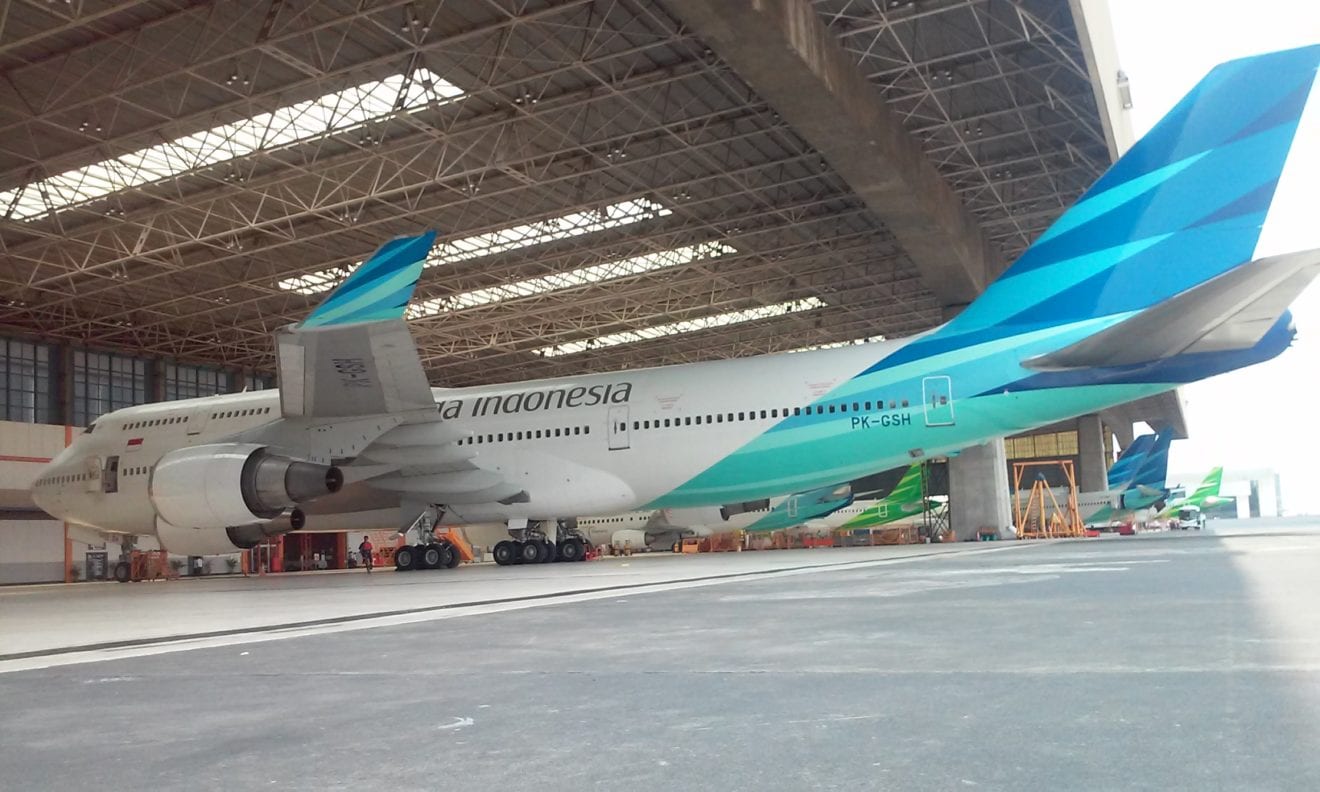
    Bobby A. Rusyandi, general manager of Garuda Indonesia Branch Office of Hong Kong, Macau and Taiwan, said that his airline would work with Ferry operator connecting Macau and Hong Kong to facilitate tourists who want to Visit Indonesia.

    “So, people from Macau who will visit Indonesia with Garuda Indonesia can use a Ferry from Macau to Hongkong, and take Garuda Indonesia from Hong Kong to Jakarta or Hong Kong to Denpasar,” Bobby explained.

    Data from the Tourism Ministry revealed that the number of Macau tourists visiting Indonesia in 2014 stood at 1,622 people.

  • Hong Kong retail sales figures released

    Hong Kong retail sales figures released

    At last: some “relative improvement” in retail sales data to encourage embattled retailers.

    Hong Kong retail sales in October fell three per cent year on year, provisionally estimated at $37.2 billion.

    A government spokesman said retail sales showed “some relative improvement in October, helped mainly by the visible growth in the sales of certain consumer durable goods amid the launch of new smartphone models”.

    “Yet the fall in the sales of jewellery, watches and clocks, and valuable gifts remained notable, reflecting the drag from the slowdown in tourist spending.”

    October’s fall was less than half the revised estimate of September’s sales which were down 6.3 per cent.

    Year to date sales are down 2.7 per cent on last year.

    After netting out the effect of price changes over the same period, the volume of total retail sales in October increased by 1.2 per cent from a year earlier. The revised estimate of the volume of total retail sales in September decreased by three per cent. For the first 10 months of 2015, retail sales rose 1.1 per cent in volume year-on-year.

    As expected, it was the jewellery, watches and clocks sector, the most valuable category, which fell the hardest – down 17 per cent in October. Apparel sales were down 5.7 per cent, electrical goods by 10.9 per cent, medicines and cosmetics by 2.4 per cent, Chinese drugs and herbs by 5.9 per cent, furniture by 4.2 per cent and department store sales by 2.2 per cent.

    Supermarket sales rose 1.5 per cent, food, alcohol and tobacco by 3.7 per cent and miscellaneous consumer durables by 36 per cent.

    “The outlook for retail sales will likely be still constrained by the lacklustre performance of inbound tourism. The possible impacts of the dimmer global economic outlook on local consumer sentiment also need to be watched over,” the spokesman said.

  • Lotte seeks more female managers

    Lotte seeks more female managers

    Lotte Group, a leading South Korean retail giant, vowed Thursday to nurture its female leaders to provide equal opportunities in its workforce.

    Group chairman Shin Dong-bin said in a forum that his conglomerate would increase female leaders to 30 percent of managers by 2020 from the current rate of 11 percent.

    “The group expects to have the first female CEO by 2020,” the chairman said, adding the group would continue to invest in building a family-friendly working environment.

    “More female talents are necessary for Lotte’s affirmative action plan to provide equal opportunities for members of minority groups,’’ Shin said during the fourth Way of Women, an internal annual event for female employees.

    About 500 female staff and executives in the group and its affiliated firms joined the event and shared their experiences and views for the development of female leaders.

    The conglomerate has adopted women-friendly policies, such as flexible working hours and support for career building.

    In its efforts to increase female talents, the company has continued to allocate 40 percent of annual job openings to women for the past few years, which has so far raised the rate of female managers to 11 percent from 1 percent in 2005.

    Lotte announced the new policy amid no signs of easing feuds among owner family members, including chairman Shin, over control of the conglomerate.

    Lotte said its Japanese shareholders support the current leadership despite the ongoing succession feud, in an effort to clear up uncertainties surrounding the preparation for listing its hotel unit.

    The listing of Hotel Lotte is one of the reform pledges that chairman Shin has made to assuage public disgust over a bitter family feud over control of the retail-focused conglomerate, which has sprawling business interests both in South Korea and Japan.

    The Korea Exchange, South Korea’s main bourse in charge of reviewing its initial public offering application, has demanded Lotte prove whether its corporate governance structure is stable enough to proceed with the current process.

    In response, Lotte said it has submitted a document showing that 60 percent of Lotte Holdings’ shareholders support the current leadership. Japan-based Lotte Holdings is the largest shareholder of Hotel Lotte with a 19.1 percent stake.

    “The Hotel Lotte IPO is expected to proceed without delay as major concerns have been cleared up,” a senior Lotte official said.

    “We will make efforts to complete its listing by the first half of next year.”

    The latest move came as Lotte has been mired in a leadership dispute between the group founder’s two sons ― Shin Dong-joo and Shin Dong-bin ― since last summer.

    The two sons had respectively controlled the company’s operations in Japan and Korea until earlier this year.