Category: General

Retail News Asia is committed to providing both local and global retailers with the latest General Retail news throughout the Asian market. This on a daily base.

  • Moody’s lowers Parkson Retail Group debt outlook to negative

    Moody’s lowers Parkson Retail Group debt outlook to negative

    Moody’s Investors Service has lowered the outlook for Parkson Retail Group Ltd’s Ba3 corporate family and senior unsecured debt ratings to negative from stable.

    In a statement issued on Wednesday, Moody’s has also affirmed Parkson’s Ba3 corporate family and senior unsecured debt ratings.

    A Moody’s vice president and senior credit officer Lina Choi said: “The outlook change reflects Parkson’s weaker-than-expected financial results for 3Q 2015.

    “Our expectation that its profitability and financial leverage will likely remain weak for its Ba3 ratings over the next 12-18 months, given the ongoing challenges apparent in China’s retail market.”

    Parkson, which is listed on the Hong Kong Stock Exchange and one of the largest operators of department store chains in China, reported a normalised operating profit of 86.7mil renminbi — after excluding a one-off litigation penalty of 140mil renminbi — in the first nine months of 2015 compared with 346.4mil renminb in 2014.

    “This decline was due to the consideration that the company faced strong competition during this time and also experienced a 9.4% decline in gross sales proceeds (GSP) in 3Q 2015, a further deterioration from the 3% fall in 1H 2015.

    “Moody’s notes that subdued retail sentiment and strong competition have prompted Parkson to offer more promotions and discounts on its products,” it said.

    Moody’s also estimated Parkson’s profitability — as measured by EBITDA/GSP — would decline to 11% for all of 2015 from 12.7% in 2014.

    At end-2014, it owned and managed 60 stores spread across 34 Chinese cities. It targets the middle-end of the Chinese retail market. It is 53.1%-owned by Parkson Holdings Bhd (unrated), an affiliate of Malaysia’s Lion Group.

    Moody’s said despite the company’s plan to improve profitability through more direct sales, Moody’s expects EBITDA/GSP to fall to around 10%-11% in the next 12-18 months. Such a range would be close to its rating downgrade trigger level.

    The ratings agency also said Moody’s expected Parkson’s retained cash flow (RCF)/net debt to decline to 8% at end-2015 from 11.3% at end-2014 due to the fall in cash holdings.

    It pointed out Parkson’s cash and cash equivalent fell to 3.6bil renminbi in 3Q 2015 from 4.8bil renminbi at end-December 2014 due to increased working capital outflow and capital expenditure on new stores.

    Moody’s expects RCF/net debt to stay around 8% over the next 12-18 months, a level which provides little space from our downgrade trigger of 8-10%.

    At the same time, Parkson’s liquidity remains adequate, although its cash buffer has narrowed. Cash and cash equivalent of 3.6bil renminbi at end-September 2015 could cover its short-term debt of 700mil renminbi.

    Moody’s said Parkson’s Ba3 corporate family rating reflects its competitive position in China’s highly fragmented department store industry, underpinned by its well-recognised brand name and national presence.

    “The rating also considers its low level of collections risk and adequate liquidity profile. However, the rating is constrained by structural challenges, such as intense competition from other retailers, rising rental rates, online retailing and the execution risks associated with its aggressive expansion into lower-tier cities in China.

    “In particular, Parkson’s dependence on leased stores is high, exposing the company to the risk of reallocations and escalating rents. These challenges, together with its ambitious investments in new stores, will continue to pressure its profitability and financial metrics.

    “The outlook could return to stable if Parkson curbs the deterioration in gross sales proceeds, and demonstrates an ability to restore profit margins,” it said.

    Moody’s said the metrics which it would consider for a return to a stable outlook include:

    (1) adjusted EBITDA/gross sales proceeds recovering to above 10%-11%; and (2) adjusted retained cash flow/net debt rising above 10% on a sustained basis.

    The ratings could experience downward pressure if Parkson fails to stabilise its profitability and financial metrics due to: (1) rising competition; (2) reduced bargaining power over its concessionaires/suppliers; or (3) the need to make large investments for store expansions.

    Credit metrics indicative of downgrade pressure include the likelihood of adjusted EBITDA/gross sales proceeds trending below 10%-12% or of adjusted retained cash flow/net debt trending below 8%-10% on a sustained basis.

    Any sign that the company is extending financial support to its parent, the Lion Group, will also pressure Parkson’s corporate family rating.

  • 759 Store Hong Kong closes four shops

    Just three months ago Hong Kong supermarket retail concept 759 Stores was boasting a 48 per cent increase in sales and the opening of 57 new shops last financial year.

    This month the chain says it will close four Hong Kong stores citing the lacklustre retail climate in Hong Kong.

    The four stores are all located in shopping centres owned by The Link REIT which according to 759 Stores has refused to grant rent reductions during negotiations over lease renewals.

    759 Store Hong Kong, the trading brand of listed business CEC International Holdings, positions itself as in between convenience stores and supermarkets, its primary point of difference its ‘self-import model’ of stock and uniform margins.

    Its 759 Store and 759 Supermarket concepts have evolved since the brand’s launch in 2010 from just selling sweets and snacks into a broader range of low margin, high turnover lines across many categories, including rice and grain, non-staple food, frozen food, alcohol, pet snacks, household goods, kitchenware, household electrical appliances, personal care supplies, cosmetics, supplies for babies, toys, novelties and accessories.

    Now CEC is planning to further diversify from its core snack and beauty products businesses, seeking a Chinese medicine license allowing it to sell packaged traditional soup in 100 of its stores.

    There are 260 759 branded shops across Hong Kong. Some of these will be expanded from the smaller store model into larger supermarkets, according to a report in today’s Hong Kong Economic Journal, which quotes 759 Stores chairman Lam Wai-chun.

    Lam said the company’s online business has already broken even and on Singles Day the company sold a record $20 million of products.

  • Lawson Japan mulls banking foray

    Lawson Japan mulls banking foray

    Convenience store operator Lawson Japan is considering a foray into banking.

    The company says that with more than 12,000 convenience stores operating across Japan it has the physical branch network in place to accept deposits from customers.

    It also has the IT infrastructure in place which could be easily modified to allow customers to pay bills, make bank transfers and other basic banking services – all of which would draw additional customers in store, or increase the frequency of visits of existing customers.

    underlying the seriousness of the planning, Japanese bank Mitsubishi UFJ Financial Group has indicated it would take a small stake in the new bank, and contribute ATMs, IT and other services to a Lawson Bank.

    If Lawson does move into banking, it would not be Japan’s first retailer to do so. Rivel Seven & I Holdings, parent of 7-Eleven, established a bank in 2001. Aeon received a banking licence in 2007 and has since expanded its banking and financial services into other markets such as Malaysia and Thailand.

    Another c-store operator, FamilyMart last year began exploring a banking partnership with Japan Net Bank, although those discussions have not yet born a finite plan.

  • China’s QKL Stores’ sales decline

    China’s QKL Stores’ sales decline

    Nasdaq-listed Chinese supermarket chain QKL Stores says its revenue fell four per cent in the last quarter, its profit by 4.5 per cent.

    “Our third quarter results generally met our levels of expectation,” said Zhuangyi Wang, chairman and CEO.

    “The variety, value and freshness of our products continue to resonate with our customers driving sales higher. This store growth was also driven by in-store promotional events such as store anniversary celebrations.”

    But he said sales and profit were impacted by “a challenging environment” for retail businesses, mainly due to the rising costs and the emerging eCommerce channel.

    “However, we are still confident on the domestic needs because of the urbanisation of the third and fourth tier cities that we will achieve a fundamental improvement in the consumer purchasing power during the process.”

    Third quarter revenue totalled $58.6 million, down from $61.1 million in the same quarter last year. Gross profit was $9.8 million, down from $10.3 million.

    “We look forward to the upcoming holiday season as we have a number of exciting marketing initiatives planned,” said Wang.

    “Our balance sheet is healthy with a strong cash position, low level of debt and stable flow of cash from operations. We continue to make progress with our store operations and that can result in greater sales and profits over time.”

    Based in Daqing, China, QKL Stores is a regional supermarket chain company operating in Northeastern China and Inner Mongolia. It operates 45 supermarkets, hypermarkets and department stores – two less than at the same time last year.

  • Singaporeans love to shop overseas

    Singaporeans love to shop overseas

    Never mind that Singapore is renowned globally as a shopping destination.

    Singaporeans want to shop elsewhere.

    A survey by insurance company AIG conducted back in April found 36 per cent of the 1205 polled go on holiday solely to shop.

    When they take a holiday for retail therapy, Singaporeans spend an average of S$336 a day.

    The three most popular overseas shopping destinations are Bangkok, Hong Kong and Taiwan.

    AIG says it had received 7500 insurance claims between November 2014 and October 2015 for baggage lost on trips home from – in order – Thailand, Taiwan and Hong Kong.

    The insurer says people should keep receipts or photographs of their overseas purchases to ensure a smooth claims process.

    Other reasons for non-business travel by Singaporeans rated far lower than retail therapy, including a weekend getaway (21 per cent), to see somewhere exotic (12 per cent) or to indulge in a luxury break (four per cent).

  • 500 TukTuks Is Even More Keen In Thai Startups Than Ever!

    500 TukTuks Is Even More Keen In Thai Startups Than Ever!

    A micro-fund focused on Thai startups reveals what has happened in the past three months of operation.

    500 Startups, one of the most active seed investors/accelerators in the world, made an announcement early this year about a $10 Million micro-fund focused on Thai promising startups — called 500 TukTuks. That announcement was such a thrill, as this definitely would make an impact to the Thailand’s startup ecosystem!

    Led by Krating Poonpol (Founder of Disrupt University) and Moo Natavudh (CEO of Ookbee), 500 TukTuks has been operating for about three months now. Today, they made an exciting announcement once again at Echelon Thailand 2015 about their fundraising and investment up to date.

    Krating stated “After the first batch of investments, 500TukTuks is more keen in Thailand’s startup ecosystem and gaining confidence from investors who believe in the potential of Thai tech startups, leading to more investment into 500 TukTuks. So we decided to increase the fund size to $12 M and will invest in 60-70 Thai startups over the next 3 years. This is a good sign for startup ecosystem and for the country as a whole because it shows that more people are willing to support Thai startup community.”

    Moo Natavudh also added “500 TukTuks is here not only to invest, but to provide Silicon Valley’s education, the access to talented mentors and other 2000+ founders in the 500 Startups network, and to grow #500Family together at the same time.”

    The highlight of the announcement was the 10 startup companies in Thailand that made it through the TukTuks’ first batch of investment.

  • AirAsia swings to Q3 loss, dragged by Indonesia and forex losses

    AirAsia swings to Q3 loss, dragged by Indonesia and forex losses

    Malaysia-based AirAsia, the region’s biggest budget carrier by fleet size, said on Thursday (Nov 26) it suffered a loss in the third quarter, bogged down by foreign exchange losses and its Indonesian operations.

    AirAsia registered a net loss of RM405.72 million (US$95.9 million) in the quarter ending Sep 30. The company had registered a profit of RM5.4 million in the corresponding period of 2014.

    Revenue increased by 15 per cent to RM1.52 billion due to an increase in passenger numbers, fuelled in particular by increased demand from Chinese travellers, AirAsia said. The discount carrier, in a statement, added that foreign exchange losses were RM435.98 million, up from RM152.66 million a year ago.

    AirAsia’s flamboyant boss Tony Fernandes, a former record industry executive, remained optimistic for the rest of the year, insisting that in Malaysia, all signs were “pointing towards rational and sustainable growth in the coming quarters.”

    The company’s Indonesian operations, Indonesia AirAsia, (IAA) took a hit with a drop in passengers and revenue fell by 14 per cent to 1,483.7 billion rupiah.

    “IAA’s turnaround plan was solid but was affected by new regulations,” Fernandes said. “Demand during the quarter was affected due to the negative equity regulation introduced which was widely covered by both local and international media. This created uncertainty and prompted travel agents to divert bookings away from IAA.”

    Meanwhile, the company’s long haul arm AirAsia X posted on Wednesday a third quarter net loss of RM288.19 million. During the same period last year it suffered a net loss of RM210.85 million.

  • China retail sales surprise

    China retail sales surprise

    October figures for China retail sales show a surprise 11 per cent leap year on year.

    It seems that while the commentators were talking about how China’s economy was nodding off, consumers were out spending.

    Total retail sales of consumer goods during the month reached 2,827.9 billion yuan, or US$442.939 billion.

    From January to October, the total retail sales of consumer goods reached 24,435.9 billion yuan, up by 10.6 percent year-on-year.

    October retail sales in urban areas rose 10.8 per cent and in rural areas by 12.2 per cent.

    From January to October, retail sales in urban areas rose 10.4 per cent and in rural areas by 11.8 per cent.

    Online sales for the first nine months of this year totalled 2,948.4 billion yuan, an increase of 34.6 per cent year-on-year. Sales of  food and clothing rose 41.2 per cent and 24.4 per cent respectively.

  • New CEO for NTUC Fairprice

    New CEO for NTUC Fairprice

    NTUC FairPrice has announced the resignation of  CEO Tan Kian Chew on December 31 after 23 years with the company.

    Tan will join the Singapore Labour Foundation as CEO.

    His replacement has been named as Seah Kian Peng, who will commence on January 1. Tan joined NTUC FairPrice in 1992 as one of its assistant GMs and quickly rose to become GM (operations and corporate planning) in 1994, COO in 1995, deputy CEO in 1996 and eventually CEO in 1997.

    NTUC FairPrice chairman Bobby Chin said he deeply appreciated Kian Chew’s 23 years of service to FairPrice.

    “In [his] time, he has helped to build and strengthen the social enterprise.  He leaves FairPrice well poised to continue to deliver significant social good and in sound financial health.  He has built strong relationships not only within Fairprice but also across the group of social enterprises and the Labour Movement.  He is not only a colleague, but a friend to all and a mentor to many.  I wish him every success in his next career and I am sure all of us at FairPrice will miss him dearly.”

    During his tenure, Tan focused NTUC FairPrice on its social mission of moderating the cost of living for daily essentials. These include absorbing the initial impact of GST, launching the Everyday Low Price basket of goods and introducing the two per cent discount for seniors (on Tuesdays) and three per cent discount for pioneers (on Mondays), benefitting over 170,000 seniors every week.

    NTUC FairPrice has regularly been voted the most socially responsible company and one of the top brands in Singapore and the region by independent survey companies.

    Apart from delivering on its social mission, under Tan’s leadership NTUC FairPrice also grew quickly to become Singapore’s leading retailer with annual sales growth from $752 million in 1997 to $3.2 billion in 2014, attaining a market share of 59 per cent in 2014. Profit before tax also rose from $49 million in 1997 to $227 million in 2014 and net assets of the cooperative rose from $217 million to $1.5 billion during this period.

    “I am grateful to have spent 23 years with this great organisation, and deeply honored to have had the opportunity to lead it for the last 18 years,” said Tan in a statement.

    “I am very proud of what my colleagues and I have accomplished together during this period; in meeting competition, overcoming challenges and leading FairPrice to becoming a clear market leader in Singapore with a strong social mission.  I am leaving FairPrice with a sense of confidence as I am handing it over to Seah Kian Peng who has proven himself to be a very capable and dynamic leader.”

    Incoming CEO Seah has worked in both the public and private sector and joined the National Trades Union Congress – administration & research unit (NTUC-ARU) in June 1996 and was seconded to NTUC FairPrice in February 2001 as COO. In November 2001, Seah was re-designated as deputy CEO and continued to be overall-in-charge of supermarket operations.  In July 2006, with the announcement of the new group corporate structure, Seah was appointed MD of Singapore and was subsequently promoted to CEO of the Singapore business in April 2010.

    Under Seah’s leadership, FairPrice increased its footprint in Singapore from 99 to 290 stores with the opening of new formats to meet the evolving needs of the people in the city.

    Said Seah today: “I am humbled and excited by this continuing opportunity to serve the people of Singapore. NTUC FairPrice is an important part of the social fabric of Singapore and we will continue to focus on our social mission of moderating the cost of living for daily essentials while meeting the evolving needs and aspirations of the people of Singapore in this area.”

  • Parkson expands into food to stem losses

    Parkson expands into food to stem losses

    Hit with a 15 per cent sales slump since the introduction of GST in Malaysia, embattled department store operator Parkson is set to enter new categories – gourmet food, supermarkets, beauty  – and import new fast fashion brands.

    The company has invested RM100 million (US$22.8 million) into a rebranding and repositioning project.

    It will also introduce variations of its reform into other countries where it operates: Vietnam, Indonesia, China, Myanmar and Cambodia.

    Parkson Retail Asia director Datuk Magic Lee said in a media briefing that the group expected sales to fall as much as 15 per cent after GST came into effect and that the company has also been hit by a heavy devaluation of the ringgit.

    “We will keep doing this. Retail needs to keep changing or it will get boring. We will continue investing in new businesses, bringing in new brands, even in food and beverage. We plan to bring in a bakery in the future.”

    Parkson plans to launch three “affordable” fast fashion brands from Korea into Malaysia soon, targeting about RM60 million in annual sales from the stores in stores. Those brands are Spao, Mixxo and Who.A.U. The first concessions will open on November 27.

    Lee says the company plans to build a portfolio of about 100 brands in its apparel offer and will also continue to open new stores throughout the region.

    “At the moment, we are very aggressive in South-East Asia. In Malaysia, we open three or four new outlets each year, and in Indonesia between three and five outlets,” he said.

    “In Southeast Asia, we are still fairly competitive. Competition here [in Malaysia] is not so severe. Many strong brands have not come to Southeast Asia yet, so we can bring these brands in.”

    Lee says while the company expects the weak consumer sentiment in Malaysia to continue, the company plans to remain proactive “so when the market is ready, we are ready too”.

    He hopes the rebranding campaign will fuel at least a 50 per cent rise in sales year on year.

  • L’Oréal CEO says Q3 slowdown in Asia is ‘temporary’

    L’Oréal CEO says Q3 slowdown in Asia is ‘temporary’

    The L’Oréal chairman has stated that despite a market that slowed in the third quarter in Asia and in Travel Retail, L’Oréal Luxe has “strengthened its worldwide position with significant gains in Western Europe, in Asia, Pacific, in the Middle East and in Latin America.”

    His statement accompanies the release of the firm’s nine-months sales results which reveal a temporary third quarter slowdown for L’Oréal Luxe in Asia; strong e-commerce sales (projected at +€1bn in 2015); a slowdown in travel retail; and ‘significant’ sales and profit growth.

    According to Agon, despite these results, the ‘Consumer Products Division’ is performing well in India, Australia and Thailand. In China, growth at L’Oréal Paris is reportedly accelerating, while Magic is undergoing a transitional period.

    Market ‘turbulence’ in Asia

    The active cosmetics division is also said to be ‘growing strongly’, thanks to the success of La Roche-Posay.

    Kiehl’s, Yves Saint Laurent and Giorgio Armani are contributing to the dynamism of L’Oréal Luxe, in a context of slower third-quarter growth in Hong Kong and Travel Retail Asia.

    Roche-Posay is renewing its expert franchise for oily skin with the launch of Effaclar K(+). The company adds that the brand is continuing to post double-digit growth in all geographic Zones, with ‘outstanding performances’ in France, Brazil and China. The successful international roll-out of SkinCeuticals is continuing.

    L’Oréal Luxe experienced a temporary slowdown as a result of market turbulence over the summer in Asia, in Hong Kong and in Travel Retail. By geographic zone, North America’s growth is gradually increasing and Western Europe confirms its positive trend. In the third quarter, the New Markets have been hampered by the difficult Brazilian market, market turbulence in Asia and the taking over of agents’ contracts in the Middle East. In China, sales growth is in line with earlier quarters,” says Agon.

    Finally, the chairman said that currency fluctuations actually had a positive impact of +8.3% and if September-end exchange rates (€1 at $1.12) are extrapolated up to December 31, then the impact of currency fluctuations would be +6.7% for the whole of 2015.

  • CP All supermarket has the lone laugh in drought hit Thailand

    Sales have tumbled at everything except one of Thailand’s prominent supermarkets as the most terrible drought season in 10 years strikes at the heart of the cultivating sector – the foundation of the rustic economy – and disappoints arrangements to open more stores in the regions.

    CP All is the only supermarket in Thailand to register a rise in same-store-sales growth, when the company reported a growth of 1.6 percent in Q3. Big C Supercenter, Thailand’s second-largest hypermarket chain after Tesco PLC, endured a 5.2 percent slide in Q3 same-store sales growth (SSSG) from a year prior, the most among its associates. About portion of Big C’s business originate from the inside Thailand where shoppers are worried about dry spell, low product costs and a feeble financial standpoint, investigators say. Tesco’s Thai unit does not report quarterly SSSG numbers.

    Big C, lion’s share claimed by Casino Group in France, has lessened its pace of extension like numerous different wary retailers. That is in sharp differentiation to the part’s forceful development arranges only a couple of years back.

    CP All, owned by billionaire Dhanin Chearavanont, is taking an alternate tack. The administrator of Thailand’s 7-Eleven stores is progressing with its extension, mostly to counterbalance slower deals at existing stores. That methodology is by all accounts working – same-store sales rose 1.6 percent in Q3. CP All was additionally the main retailer with any development in deals. The organization arrangements to open no less than 600 store a year to expand the aggregate number of stores to 10,000 by 2018.

    Analysis says retailers’ profit has bottomed in the second from last quarter, with government measures set up to invigorate utilization in the final quarter. That feeling is reflected in a pickup in purchaser trust in October, the first ascent in 10 months. In any case, the street to recuperation may be long, as general utilization could be dragged around falling homestead livelihoods one year from now. Climate forecasters say dried conditions could hold on through 2017. The agrarian area is the nation’s biggest business, representing 32 percent of Thailand’s work power.

  • HKTDC Design Gallery Wan Chai relaunched

    HKTDC Design Gallery Wan Chai relaunched

    The Hong Kong Trade Development Council has unveiled a revamped HKTDC Design Gallery shop at the Hong Kong Convention and Exhibition Centre.

    HKTDC executive director Margaret Fong was joined by famous Hong Kong actor Moses Chan and many of the city’s top designers at an opening ceremony yesterday.

    The store was created to promote products invented back in 1991.

    The diverse variety of products on offer highlights the extraordinary creativity of Hong Kong designers in areas ranging from jewellery, watches, electronics and fashion to home products, gifts and children’s items.

    The revamped HKTDC Design Gallery Wan Chai shop showcases nearly 5500 innovative products from more than 230 Hong Kong designers and brands in eight distinctly designed zones.

    Hong Kong designer brands feature in DG Discover; handbags and accessories in DG Vogue; environmentally friendly products in DG Green; baby and children’s products in DG Mini; home goods and gifts in DG Delights; electronic and digital goods in DG Smart; high-end luxury products such as jewellery, watches and leather and cashmere goods in DG Luxe; and collaborative creations by Hong Kong designers and international brands that combine the best of East and West in DG Plus.

    Featuring minimalist geometric shapes and a circular motif, the design of the revamped HKTDC Design Gallery shop creates a vibrant atmosphere to engage customers and elevate brand image. Light wood colours, grey gradients and black linear accents are used to create a comfortable, contemporary environment. The DG Luxe zone is distinguished from other areas of the shop by the use of dark wood colours and deep grey fabric lining.

    At the opening ceremony, Fong said that thanks to the support of local residents, visitors and traders, the shop has been attracting more than 1 million customers each year.

    Apart from new Design Gallery shops in Beijing, Shanghai, Chengdu, Wuhan and other mainland cities, Fong also spoke about the HKTDC’s strategy of collaborating with department stores and lifestyle shops to set up “shops in shops” in Hong Kong and on the Chinese mainland, to bring the best Hong Kong brands to more customers.

    Fong said the HKTDC is also establishing online shops on leading Hong Kong eCommerce platforms such as ShopThruPost, YesStyle and Zalora, as well as Taobao, Tmall and JD.com on the Chinese mainland, in an effort to develop eCommerce opportunities for Hong Kong businesses.

    Between now and December 2015, customers who make a one-time purchase of HK$300 or more at any HKTDC Design Gallery shop in Hong Kong will be entitled to lifetime membership with the DG Club. Members are entitled to a special shopping discount and can earn points to redeem for exclusive gifts or instant cash rebates. To celebrate the re-launch of the HKTDC Design Gallery Wan Chai shop, members will be awarded double points for purchases made between 16 and 18 November 2015.

    The HKTDC Design Gallery Wan Chai Shop is located on the ground floor of the Hong Kong Convention and Exhibition Centre, 1 Harbour Rd, Wan Chai.

  • CAPA names Dubai’s Griffiths top Asia CEO

    CAPA names Dubai’s Griffiths top Asia CEO

    The first CAPA Asia Pacific Airport CEO award has been given to Dubai Airports CEO Paul Griffiths for his ‘outstanding strategic thinking and innovative direction for the growth of their business and the industry.’

    The award was presented by CAPA Executive Director Peter Harbison in Singapore on 23 November, with Griffiths singled out for ‘successfully managing Dubai through a massive expansion programme and completing an unprecedented runway improvement project’.

    “In 2014 Mr. Griffiths oversaw one of the largest ever runway improvement projects, which required Dubai to operate with only one runway for three months,” said Harbison. “Despite the runway closures, Dubai was able to overtake Heathrow in 2014 as the world’s biggest international airport as passenger throughput increased by 6% to 70.5 million.”

    Paul Griffiths - Dubai Airports CEO

    Dubai Airports CEO Paul Griffiths.

    Now in its thirteenth year, CAPA’s Aviation Awards for Excellence are intended to reward airlines and airports that are not only successful, but have also provided industry leadership in ever-changing environments.

    In its tribute to Griffiths, CAPA noted that much of the UAE’s economic success comes from the performance and growth of Dubai International where he became CEO of Dubai Airports in 2007.

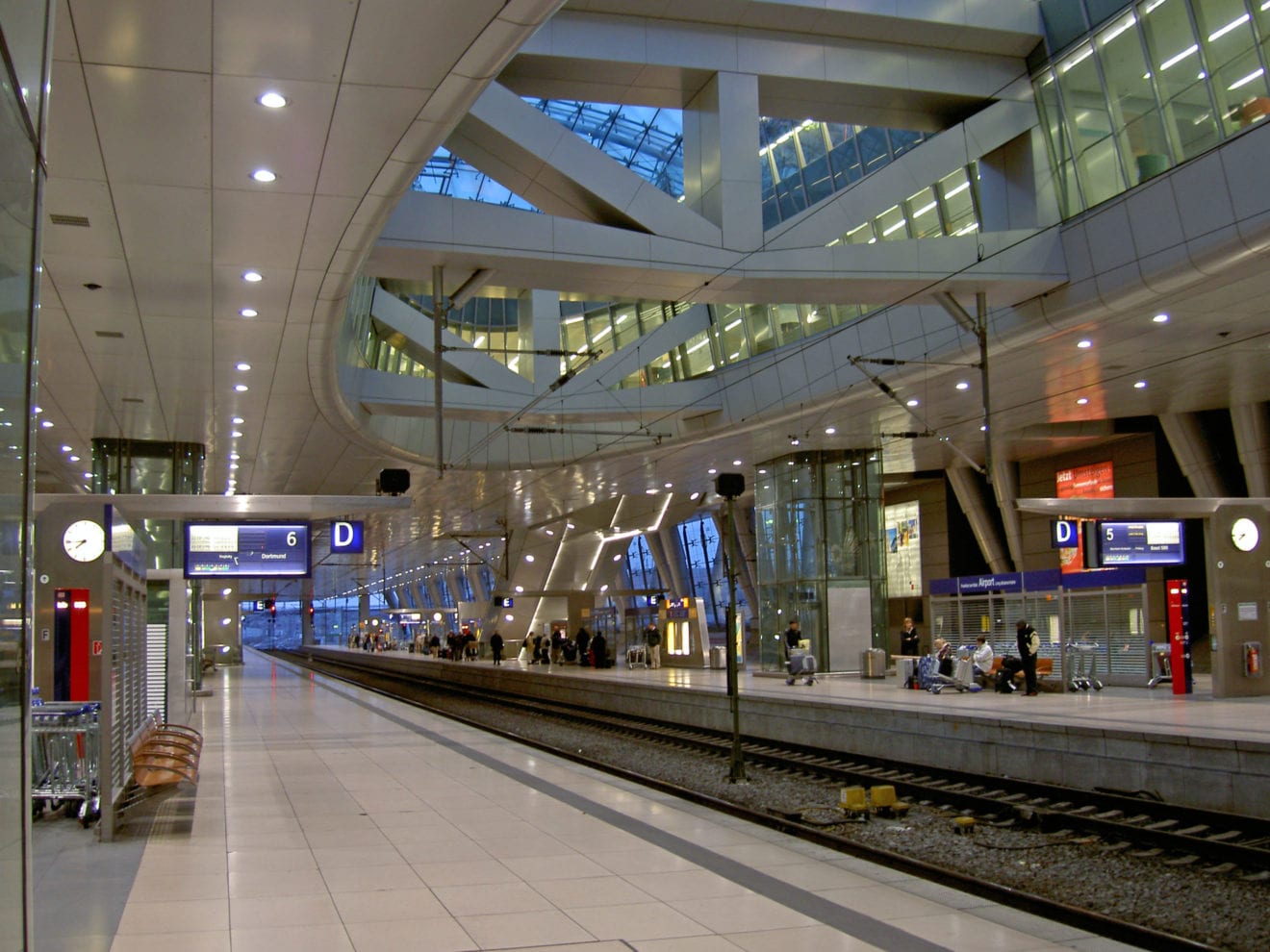
    He has since managed the airport’s successful launch of T3 (2008) and is now in the process of overseeing a $7.8bn expansion plan, including Concourse D which will open in 2016 providing 32 additional gates.

    This will increase Dubai’s passenger handling capacity from 75m to 90m. Griffiths is also heading up the ongoing operation and development of Dubai World Central (DWC), which will eventually become the world’s largest airport with an ultimate capacity of 240m passengers.

  • Isetan Singapore losses mount

    Isetan Singapore losses mount

    Isetan Singapore has reported a third straight quarterly loss. The high profile, Japanese-owned four store strong department store chain has more than doubled its loss of the same quarter last year.

    The company says sales were down in all of its stores, a trend evident in the results of other locally listed retailers in recent weeks including Metro and FJ Benjamin, and even Courts whose Singapore sales were down despite a significantly increased profit.

    In the three months to September 30, Isetan Singapore lost S$6.15 million. That compares with a $2.93 million loss in the same quarter last year and a $5.85 million loss in the preceding quarter to June 30.

    Sales fell 14 per cent year on year to $68.71 million, partly due to the March closure of its Isetan Orchard store at Wisma Atria. (The company will now lease that space to various retailers.)

    “With the exception of Isetan Jurong East which is still experiencing growth in sales, the other stores had lower sales,” Isetan Singapore said in a statement.

    “Moving forward, the slower economic growth may impact sales and the trading environment is expected to remain very competitive among retailers.”