Category: General

Retail News Asia is committed to providing both local and global retailers with the latest General Retail news throughout the Asian market. This on a daily base.

  • Real Singapore retail sales slump 4.5 per cent

    Real Singapore retail sales slump 4.5 per cent

    Real Singapore retail sales – the data which excludes motor vehicles – slumped 4.5 per cent from August to September according to government data.

    Year on year sales fell 1.4 per cent, recorded Statistics Singapore.

    The total retail sales value in September 2015 was estimated at $3.4 billion, higher than the $3.2 billion in September 2014 (including motor vehicles).

    Singapore retail sales September 2015

    Sales of food & beverage services (seasonally adjusted) decreased 1.6 per cent in September over August and by 2.7 per cent year on year.

    The total sales value of food & beverage services in September 2015 was estimated at $629 million, lower than the $647 million in September 2014.

    Adding to the concern is that September was the month the city hosted the annual Formula One Grand Prix, traditionally a high driver of inbound tourists.

    The greatest impact on retail sales was a 12.3 per cent decline in sales of watches and jewellery and a 10.2 per cent fall in sales of recreational goods, month on month.

    Sales of clothing, footwear, medical goods, toiletries, optical goods, books, furniture, household equipment; and sales at mini-marts, convenience stores and department stores declined between 2.3 per cent and 8.8 per cent.

    On the upside, retail food and beverage sales, phones, computers and sales at supermarkets rose between 0.8 per cent and 1.7 per cent.

    Singapore F&B September sales 2015

    Year on year, sales at supermarkets, department stores and of medical goods and toiletries grew between 2.8 per cent and 3.9 per cent.

    Sales of optical goods, books, recreational goods, clothing, footwear, phones, computers, watches, jewellery, food, furniture and household equipment; and at mini-marts and convenience stores, declined between 0.4 per cent and 9.9 per cent year on year.

    In the restaurant and hospitality data, fast food sales rose 6.3 per cent year on year, while restaurants declined 7.2 per cent.

  • Indonesia Invests in KFX Project

    Indonesia Invests in KFX Project

    Korea Aerospace Industries (KAI) signed a provisional contract with Indonesia for the country’s investment in the Korean Fighter Experimental (KF-X) project.

    According to the contract, Indonesia is to bear 20% of the system development cost associated with the KF-X project, which totals 8.67 trillion won, while obtaining a prototype and technical data in return for its participation in aircraft design and component production. The cost is to be shared by KAI and the Indonesian government and KAI and PTDI, Indonesia’ state-run defense company, are to be involved in work sharing.

    KAI is planning to start the development of the system within this year in contract with the Defense Acquisition Program Administration of Korea. At present, Indonesia is working on a similar program under the project name of IFX and is planning to import at least 50 fighter jets from Korea. A total of 18 trillion won is scheduled to be invested in the KF-X project and KAI is looking to sell more than 1,000 fighter jets through the project.

    In the meantime, KAI announced on November 22 that it is working on an autopilot system required for the fighter jets’ low-altitude infiltration and terrain crash prevention based on automatic topographical recognition. It added that it designed a flight control law so that the fighter jets can maintain a level flight under any circumstances.

    According to the KF-X project plan, air-to-air fighter jets are slated to be produced between 2025 and 2028 and air-to-sea and air-to-ground ones are added from 2028. The autopilot system is to be tested from the same year, too.

  • Drought holds back Thailand’s retail store expansion

    Drought holds back Thailand’s retail store expansion

    Sales have fallen at all but one of Thailand’s major supermarket retailers as the worst drought in a decade strikes at the heart of the farming sector – the backbone of the rural economy – and frustrates plans to open more stores in the provinces.

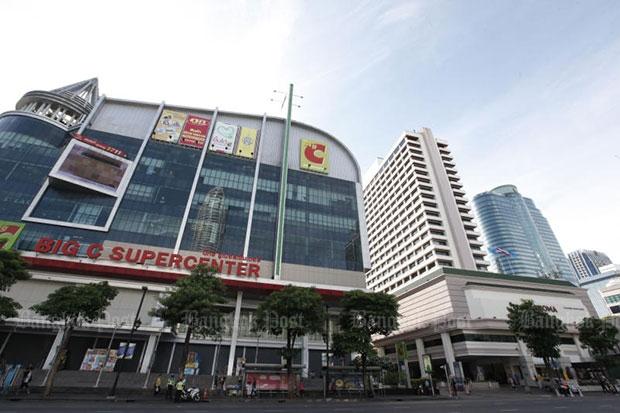
    Big C Supercenter, Thailand’s second-biggest hyper mart chain after Tesco PLC, suffered a 5.2 percent slide in third-quarter same-store sales growth (SSSG) from a year earlier, the most among its peers. About half of Big C’s sales come from the country’s interior where consumers are concerned about drought, low crop prices and a weak economic outlook, analysts say. Tesco’s Thai unit does not report quarterly SSSG numbers.

    Big C, majority-owned by Casino Group in France, has reduced its pace of expansion like many other cautious retailers. That’s in sharp contrast to the sector’s aggressive expansion plans just a few years ago.

    CP All, controlled by billionaire Dhanin Chearavanont, is taking a different tack. The operator of Thailand’s 7-Eleven stores is forging ahead with its expansion, partly to help offset slower sales at existing stores. That strategy seems to be working – same-store sales rose 1.6 percent in the third quarter. CP All was also the only retailer with any growth in sales. The company plans to open at least 600 stores a year to increase the total number of stores to 10,000 by 2018.

    Analysts say retailers’ earnings have bottomed in the third quarter, with government measures in place to stimulate consumption in the fourth quarter. That sentiment is reflected in a pickup in consumer confidence in October, the first rise in 10 months. But the road to recovery may be long, as overall consumption could be dragged down by falling farm incomes next year. Weather forecasters say parched conditions could persist through 2017. The agricultural sector is the country’s largest employer, accounting for 32 percent of Thailand’s labor force.

    “The impact of the drought will last for a long time, and that will drag down upcountry incomes and the sector’s SSSG,” said Worrapong Tuntiwutthipong, analyst at Krungsri Securities in Bangkok. “CP All will outperform others in terms of SSSG and earnings growth. Overall, consumption should remain weak, and SSSG will be at low single digits of 1-3 percent in 2016 from 0-1 percent this year.”

  • China pledges to boost retail, health and travel sectors to lift consumption

    China pledges to boost retail, health and travel sectors to lift consumption

    China will promote the development of the retail, health, travel and sports sectors in a bid to boost domestic consumption, the cabinet said on Sunday.

    In a statement on its website, the State Council said it will encourage financial institutions to accept a broader range of collateral for extending loans to “lifestyle-related businesses”.

    Other sectors that the government highlighted are service ones related to families and the elderly, culture, law, accommodation and catering as well as education and training.

    The State Council said the government will also expand consumer credit, improve the system of Internet payments and study the management of credit card fees “to further reduce overall expenses” related to their use. No details were given.

    The government will crack down on price-gouging as well the sale of counterfeit goods, and prosecute monopolies and businesses engaged in unfair competition, according to the statement.

    Top leaders have flagged a “new normal” of slower growth as it tries to shift the world’s second-largest economy to sustainable, consumption-led development.

    China’s economy is on track this year to grow at its slowest pace in more than two decades. Chinese growth dipped to 6.9 percent in the third quarter, the weakest since the global financial crisis, hurt partly by cooling investment.

    Earlier this month, the government said it will increase financial, fiscal and tax policy support to drive consumption.

  • Enhanced Air Connectivity Will Make Mauritius a Gateway to Asia

    Enhanced Air Connectivity Will Make Mauritius a Gateway to Asia

    Mauritius will become a gateway to Asia through Singapore for the islands of the Indian Ocean and countries of eastern and southern Africa as a result of the agreement signed on 14 October 2015 between Mauritius and Singapore Changi Airport.

    In reply to a Parliamentary Question the Prime Minister, Sir Anerood Jugnauth, said that this ‘Air Corridor’ offers an exceptional opportunity for growth for Air Mauritius as it taps into the tremendous potential of traffic between Asia/South East Asia and Africa. The increase of frequencies into Singapore will dovetail with the Regional Airline project.

    Given that Singapore’s Changi Airport is the seventh largest international airport in terms of passenger and air cargo traffic, this agreement will allow the development of both passenger and cargo traffic between Singapore and Mauritius as well as between Africa/Indian Ocean countries and Asia/South East Asia, using Mauritius and Singapore as hubs, he said.

    The Prime Minister outlined that on the west side of the corridor, Mauritius has already signed Memoranda of Understanding/Bilateral Air Services Agreements with the following African countries: Botswana, Comoros, republic of Congo, Egypt, Ethiopia, Kenya, Madagascar, Malawi, Mozambique, Nigeria, Rwanda, Seychelles, South Africa, Swaziland, Tanzania, Uganda, Zambia and Zimbabwe.

    On the east side Memoranda of Understanding and Bilateral Air Services Agreements have been signed with China, Hong Kong, Indonesia, Malaysia, Thailand and Viet Nam. Mauritius is in the process of finalising a Memoranda of Understanding with Japan with a view to allowing its national carrier to extend its network coverage in Asia by code sharing with its partner airlines to market points in Japan.

    This forceful move will have an enormous impact on the other sectors of the country and will promote trade, business and economic development, thereby catapulting Mauritius to the next stage of growth. Through promotion on international trade and business in the region Mauritius is poised to become a robust regional hub, he said.

  • AirAsia recognised for contribution towards Sabah tourism

    AirAsia recognised for contribution towards Sabah tourism

    AirAsia has been named ‘Best Airline’ and received ‘Minister Special Awards’ at the recent Sabah Tourism Awards 2015.

    AirAsia Berhad CEO, Aireen Omar received the award on behalf of the airline from Sabah Minister of Tourism Culture and Environment, Datuk Seri Panglima Masidi Manjun.

    The ‘Best Airline’ category recognised AirAsia’s contribution to Sabah’s tourism industry in terms of connectivity and bringing the highest number of visitors to Sabah over the past two years.

    The ‘Minister Special Awards’ was given to AirAsia for its bold expansion of direct air connectivity to Sabah both internationally and domestically with a total of 23 destinations and growing.

    On top of that, the airline also fully optimised Kota Kinabalu’s strategic geographical position, enabling visitors to discover and experience Sabah’s world-class attractions, apart from developing business opportunities in Sabah.

    In a press statement, Aireen thank the Sabah Tourism Board for recognising their hard work and contribution to the state of Sabah with two prestigious awards.

    “We have invested substantially in developing Sabah into becoming a key AirAsia hub and are very pleased that our efforts have paid off with the ever-growing numbers,”

    “We have big plans for Sabah and look forward to growing the current 3 million passengers per annum to at least 12 million passengers,” she said.

    She added that the company is confident in reaching this target with a proper low cost carrier terminal in place in Kota Kinabalu.

    “Sabah has tremendous potential to be a key regional hub and we want to make this a reality,” she said.

    AirAsia has flown over 8.4 million people in and out of Sabah in the past two years and currently serves 698 weekly flights to and from Kota Kinabalu, Tawau and Sandakan in Sabah.

    The airline has also seen a growing trend of guests travelling from the Asian region and Australia into Kota Kinabalu through AirAsia’s Fly-Thru service.

    Bangkok, Beijing, Shanghai and Perth are the top cities with people connecting into Sabah for the past year, and AirAsia currently has 24 Fly-Thru routes into Kota Kinabalu, providing easy access and convenience for visitors across the region to travel to the state of Sabah.

  • CSA Indonesia Releases Their First Profile Video

    CSA Indonesia Releases Their First Profile Video

    Today, Customer Solutions Association Indonesia (CSA Indonesia) release their first profile video on their own YouTube channel. The profile video contains a brief insight to the large professional network.

    CSA Indonesia is a not for profit organization dedicated for the improvement of service and business performance, and it’s programs covers multi industries. The main programs are Education, Recognition, Certification and Professional Networking.

    Watch the video for CSA Indonesia here:

  • Air Asia free seat promotion begins today

    Air Asia free seat promotion begins today

    The AirAsia and AirAsia X free seat promotion is back with three million seats on offer to all destinations.

    The promo seats are available at airasia.com from today until Sunday for those travelling between May 1, 2016 and Feb 5, 2017.

    AirAsia group chief commercial officer Siegtraund Teh said in a statement that the new promotion campaign would include many new destinations and connectivity in the airline’s network, such as exclusive routes to Maldives, Kaohsiung (Taiwan), Changsha (China), Goa (India) and Pattaya (Thailand).

    AirAsia BIG members can also enjoy the same priority flight redemption starting from Nov 22 with these introductory fares at airasiabig.com.

    The airline is also recommencing its direct flights from here to New Delhi with four flights weekly, starting from Feb 3.

    Passengers are offered an all-in-fare, from as low as RM399 one way to the Indian capital.

    Teh said AirAsia X’s award-winning Premium Flatbed seats were also on promotion with fares from as low as RM799 one way.

  • Single Men Power Shift in Retail Market

    Single Men Power Shift in Retail Market

    The landscape of Korea’s retail industry has shifted over the last few years due to the growing number of singles, online purchases and frugal purchasing patterns.

    Traditional retail giants like department and superstores have seen revenues drop, while convenience stores and online shopping malls are booming.

    Shinhan Card analyzed spending patterns by 700,000 heavy spenders who account for 10 percent of total credit card users in 2010 and in March to May of this year.

    It found that the proportion of credit-card spending at department stores, supermarkets and TV home shopping channels fell from 46.1 percent to 31.1 percent over the last five years, while that of convenience stores and online shopping malls rose from 30.1 percent to 43.5 percent.

    Single Men

    Convenience stores stood out among 14 retail sectors considered in the survey. Based on credit card spending, convenience stores’ share of the retail industry rose from 1.6 percent in 2010 to 5.7 percent this year, a 3.5-fold increase.

    In contrast, department stores’ share dropped by 25.7 percent, and superstores’ 34.2 percent. The share of TV home shopping channels plunged 37 percent.

    One 36-year-old single office worker frequently shops for groceries at the local convenience store. He buys mainly milk and drinks and ready-to-eat meals for two to three at a time, with an eye on special offers. “Products are more expensive in convenience stores, but I don’t really buy much,” he said.

    He rarely buys fresh produce since he does not cook at home. Only once every two to three months does he go to the supermarket. When it comes to clothes be buys online.

    Single men in their 30s are mostly responsible for boosting convenience store sales. One out of every three customers or 32.5 percent are men between the ages of 28 and 37. But a growing number of men in their 40s are also switching to convenience stores.

    The consumption patterns of singles here are similar to those in Japan, which saw a rise in one-person households and an aging society 10 to 20 years earlier than Korea.

    Online Shopping Malls

    Online shopping malls have also gained a solid share of the domestic retail market, accounting for 37.8 percent of credit card spending, which is higher than the market shares of supermarkets (18.6 percent) and superstores (18.4 percent) combined.

    In terms of per-capita monthly credit card spending, Koreans spent W365,000 at online shopping malls, compared to W159,000 at superstores and W122,000 at department stores (US$1=W1,164).

    Mobile shopping accounted for 48.5 percent of online shopping mall revenues.

    Prudent Spending

    As unemployment remains high among young people, consumers in their 20s are keeping their wallets shut. Credit card spending in March to May by men in their 20s rose only W50,000 compared to five years ago, and credit card spending by women in the age group only W90,000.

    In contrast, credit card spending among consumers in their 30s to 60s rose by around W100,000 to W220,000.

    Kim Dae-jong at Sejong University said, “Women in their 20s usually spend money on cosmetics, clothes and accessories but are cutting down on unnecessary purchases due to the tough job market. But as more and more people put off marriage until later in life, spending by working women in their 30s has increased.”

  • Apple continues clean energy push with Singapore rooftop solar deal

    Apple continues clean energy push with Singapore rooftop solar deal

    The world’s largest technology company has announced that its entire Singapore operations, including a 2,500-person corporate campus and a forthcoming retail store, will be 100% powered by solar panels.

    Analysts says the company’s recent efforts of focusing on renewable energy would help in cost-savings but will the benefit be transferred to the customers is too early to conclude, and the fact remains that Apple’s loyal consumers see Apple brand as a premium and privilege one, rather than for price.

    According to Sunseap, rooftop installations are an ideal solution for densely populated Singapore, which doesn’t have land to spare for ground-mounted solar arrays. Apple and its chief LCD supplier, Foxconn, have further plans to generate hundreds of megawatts of solar power to boost Apple supply chain’s total clean energy consumption to 2GW. The deal, worth $850 million, will provide enough renewable energy to power every Apple Store in California, offices, headquarters and a data center. This also includes its upcoming store that will be the first-ever solar-powered store in Southeast Asia.

    Currently, about 60 per cent of the power generated by Sunseap across Singapore are from panels spread over 900 tall housing blocks, also known as Housing Development Board (HDB) flats, a company spokesperson said. The island-state has always been alongside larger markets including Japan, Hong Kong and the US, but has never had an Apple Store in list of day one product launchings. Apple will be partnering with local company Sunseap group who will be providing renewable power.

    It is not yet known when the Apple store will exactly open to the public. According to The Straits Times, clothing stores Tommy Hilfiger, Topshop/Topman and Brooks Brothers, as well as watch retailer Dickson Watch & Jewellery will be moving out to make way for this mega store.

    The tech giant has also announced its employment program in Singapore, ahead of the inauguration of its store.

    Angela Ahrendts, Apple’s Senior Vice President for Retail and Online Stores, Recently affirmed that an Apple Store would be opening shortly in Singapore.

  • Swiss watch exports fall most in six years

    Swiss watch exports fall most in six years

    Watch exports from Switzerland had the biggest decline in six years with October marking a 39 percent slump in shipments to Hong Kong, which is the biggest market for Swiss watches.

    Overall, watch shipments declined 12 percent to 2 billion Swiss francs (AU$2.78 billion), the Swiss customs office said in a statement. Watch exports to the US also declined 12 percent, reports Bloomberg. Watch exports make a 10th of Switzerland’s total exports.

    “Year 2015 has been one to forget for the watchmakers,” wrote Jon Cox, the analyst with Kepler Cheuvreux in Zurich.

    On backfoot

    It was around 2008 when Hong Kong became the largest market for Swiss watches, overtaking the US market. That lead is now waning after seven years. As demand dropped, many watch makers from Switzerland are trying to pull back from Hong Kong with TAG Heuer having shut a store in August.

    Richemont, which makes Cartier jewelry and IWC timepieces, also  reported falling sales over weak demand.

    “Hong Kong’s share is likely going to remain somewhere above 10 percent in the medium-term after being over 20 percent a year ago,” analyst Cox said.

    One more reason that affected the demand for Swiss watches is the competition from Apple’s smart watch. The US watchmaker Fossil group reported its stock having plumbed 37 percent and on Nov. 13 it forecast a decline in fourth-quarter sales by 16 percent as competition from wearable technology is affecting its sales.

    Rising UK market

    Meanwhile, there is room for cheer with the UK emerging as the world’s fastest growing market for Swiss watchmakers, according to statistics from the Federation of the Swiss Watch Industry.

    According to data, in the 9 months from Jan to Sep 2015, exports of Swiss watches to the UK rose 20 percent compared to the same period in 2014. Britain has become the eighth largest market for the Swiss watch industry, reports Watch Pro.

    The report said Chinese government’s anti-corruption drive had its impact on the luxury retail sector in Hong Kong, where exports fell and the exports to China also crashed 9.2 percent.

    The top 10 Swiss watch export markets

    1.      Hong Kong

    2.      USA

    3.      China

    4.      Italy

    5.      Japan

    6.      France

    7.      Germany

    8.      UK

    9.      Singapore

    10.    UAE

  • China’s Retail Sales Rose in October

    China’s Retail Sales Rose in October

    China’s total retail sales of consumer goods rose 11.0% year-over-year (or YoY) to 2.8 trillion yuan in October. The data indicated better-than-expected growth in retail sales and a slight improvement from September’s rise of 10.9%.On a year-to-date (or YTD) basis from January to October, the total retail sales of consumer goods reached 24.4 trillion yuan, up by 10.6% YoY.

    The sale of mobile phones, building materials, and household products led to the strong growth in retail sales.

    Chinas Retail Sales Continue to Rise 2015-11-17Enlarge Graph

    A rise in retail sales is a step toward the transition of the Chinese economy from an export-oriented to a consumer-driven economy. This is highly recommended because export orders are falling due to weak global demand. This is the aim of Chinese authorities as well. However, with the slowdown in Chinese local and foreign sales, an increase in retail sales comes as a surprise and a bright spot in the Chinese economy.

    E-commerce played a major role in driving up retail sales. From January to September, the national online retail sales of goods and services grew 34.6% YoY to 3.0 billion yuan, according to the National Bureau of Statistics of China.

    Some of the leading players in China’s e-commerce segment are Alibaba Group Holding, Baidu, JD.com, NetEase, and 58.com.
    Urban retail sales of consumer goods rose 10.8% YoY to 2.4 trillion yuan in October. On a YTD basis, urban retail sales rose 10.4% YoY to 21.0 trillion yuan.
    Rural areas have become a major source of retail sales growth. Retailers are focusing on rural China to increase the penetration of e-commerce. In October, rural retail sales rose 12.2% YoY to 0.38 trillion yuan. On a YTD basis, they rose 11.8% to 3.4 trillion yuan.

    The Clough China Class A ETF (CHNAX), the Guinness Atkinson China & Hong Kong ETF, and the Eaton Vance Greater China Growth Class A ETF (EVCGX) have more than 10% exposure to the consumer discretionary sector. So a rise in retail sales would benefit them the most.

    However, the John Hancock Greater China Opportunities Class A ETF (JCOAX) had only 6.4% of its assets invested in the consumer discretionary sector. So a rise in retail sales will have a lesser impact on the performance of that fund.

  • Singapore’s retail sales rose 4.6% year-over-year

    Singapore’s retail sales rose 4.6% year-over-year

    The Oct results suggested a slowdown developing as far as consumer spending is concerned which may temper expectations of strong pickups in the economic growth of the 4th quarter. Core prices had been expected to inch up by 0.1%.

    The Commerce Department said retail sales edged up 0.1 per cent last month after being unchanged in both September and August.

    Economists watch the retail sales report closely because it provides the first indication each month of the willingness of Americans to spend. Nonstore retailers were up 7.1% from October 2014 and motor vehicle and parts dealers were up 6.2% from a year ago.

    Personal income, reflecting Americans’ pretax earnings from salaries and investments, climbed 0.1% in September.

    Substantial weakness was also visible among networking stocks, as reflected by the 2.2 percent loss posted by the NYSE Arca Networking Index.

    Holiday spending is projected to jump 3.7 percent this year to $630.5 billion, a gain that would be above the 10-year average in holiday sales growth of 2.5 percent, according to the National Retail Federation. Friday’s report showed gas station sales declined 20.1 per cent from a year earlier in October.

    But that is not necessarily a surprise, as consumers typically pare back other types of discretionary spending after a big-ticket purchase like an automobile, said Joshua Shapiro, chief USA economist for MFR Inc.

    Estimates for retail sales in the survey ranged from little change to a 0.8 per cent increase.

    Receipts at sporting goods and hobby stores gained 0.4 percent and sales at restaurants and bars rose 0.5 percent.

    Other measures have sent mixed signals about consumer spending.

    US businesses boosted their stockpiles in September by the largest amount in three months, while sales were flat.

    Sales at auto dealerships fell 0.5 percent last month after rising 1.4 percent in September.

    Federal Reserve is expected to increase interest rates next month as the jobs data has been strong and economy has shown strength. Friday’s report could be a key factor as the Fed scrutinizes economic data ahead of its decision at a December 15-16 meeting.

  • Kingsmen Q3 profit falls 84% on softer demand from high-end retailers

    Kingsmen Q3 profit falls 84% on softer demand from high-end retailers

    Kingsmen Creatives’ net profit fell 83.6 per cent in third quarter as the retail and corporate interiors business slowed for the maker of physical displays.

    Kingsmen posted earnings of S$566,000, or 0.29 Singapore cent per share, for the three months ended September. Nine-month profit haved to S$4.4 million, or 2.26 Singapore cents per share. Kingsmen shares did not trade on Thursday, but were bid at 77.5 Singapore cents and offered at 78.5 Singapore cents at the close.

    Revenue fell 11.8 per cent to S$76 million during the quarter as sales from retail and corporate interiors dropped 10.2 per cent to S$37.9 million amid soft demand from the high-end luxury retail segment. The affordable-luxury and travel retail segment, however, continues to provide demand.

    The exhibitions and museums business also saw revenue decline by 7.8 per cent to S$30.7 million.

    Kingsmen guided for demand in the high-end luxury retail segment to remain soft. The company had contracts worth S$348 million as at Oct 31, 2015, of which about S$305 million was expected to be recognised in 2015.

  • Singapore banks must innovate

    Singapore banks must innovate

    Singapore banks must now innovate in this challenging environment where economic growth is uncertain, and disruptive forces are now at play, said Prime Minister Lee Hsien Loong on Thursday.

    “Our banks are in a strong position,” said PM Lee at UOB’s 80th anniversary dinner, noting that Singapore is at the heart of a rising Asia, and banks here have a strong balance sheet.

    “But at the same time, this is a very competitive business that continues to evolve rapidly. For while overall our banks are very good, in almost every specific area, we can find others who are better than us.”

    Looking at China’s success in mobile payments, PM Lee pointed to the Alibaba sales on Singles Day on Wednesday, where 70 per cent of the billions in sales were done through mobile purchases.

    Technologies such as blockchain, which can be used for real-time gross settlement or trade finance verification, are also emerging, he said.

    “We have to continually innovate and keep up with the latest technologies and services.”

    Singapore’s financial sector was liberalised from 1997, partly as the industry was not as efficient, innovative, and responsive to the market as it should be, said PM Lee. Foreign banks were allowed into Singapore to compete, including in domestic retail banking.

    “This more competitive environment forced our local banks to consolidate. But it also spurred them to upgrade, innovate and grow,” he said.

    “Our strategy has worked. Today, our three Singapore banks have gained a reputation for being amongst the strongest and safest financial institutions in the world. And we have a strong, vibrant financial sector that we can be proud of.”