Category: General

Retail News Asia is committed to providing both local and global retailers with the latest General Retail news throughout the Asian market. This on a daily base.

  • Y&R launches retail offering Labstore in Indonesia

    Y&R launches retail offering Labstore in Indonesia

    Y&R Group Indonesia has further strengthened its capabilities with the addition of retail and shopper marketing offering Labstore. Y&R’s global retail and shopper marketing network Labstore now extends across five markets in Asia Pacific – Indonesia, Singapore, Philippines, Thailand and Australia.

    Labstore launches in Indonesia having been appointed to shopper duties for Danone brands AQUA, Mizone and VIT.

    Marjorie Garrovillo, VP Marketing. Danone Waters explained, “Given the potential we see from shopper and retail marketing, we wanted to find the right agency partner. And given our successful ongoing relationship with Y&R and VML, having displayed a strong understanding of our brands, Labstore proved the right choice for seamless integration across agency competencies.”

    Y&R Indonesia Group CEO Matthew Collier said, “The launch of Labstore in Indonesia has been a major priority for us this year. With Y&R handling Danone’s TTL (through the line) business, VML handling digital and now Labstore handling shopper, we’re truly living our philosophy of ‘great alone, better together’. This multi-channel integrated response will help bring our creative concepts closer to Danone’s consumers.”

    Effective 1st November 2015, Labstore Indonesia also reports to the network’s Southeast Asia HQ in Singapore, led by shopper and retail guru Peter Miller.

    “Compared to the US and UK, shopper marketing is still an emerging field in Asia,” said Miller. “Y&R and VML clients have been quick to embrace the concept, and more importantly the imperative to meet shoppers’ needs, accelerating Labstore’s rapid roll-out across Southeast Asia – from Philippines and Thailand last year, to Singapore and Indonesia in 2015.”

    Y&R Labstore Indonesia will be the latest in a string of openings around the world, having rolled out in more than 21 markets worldwide since 2014, across Europe, Asia, Latin America, North America and South Africa. One of the biggest networks of its kind, it is in the top five retail and shopper marketing networks geographically. In Asia Pacific, Labstore already thrives in Singapore, Thailand, the Philippines and Sydney.

  • Indonesia turns to floating power stations to meet short-term needs

    Indonesia turns to floating power stations to meet short-term needs

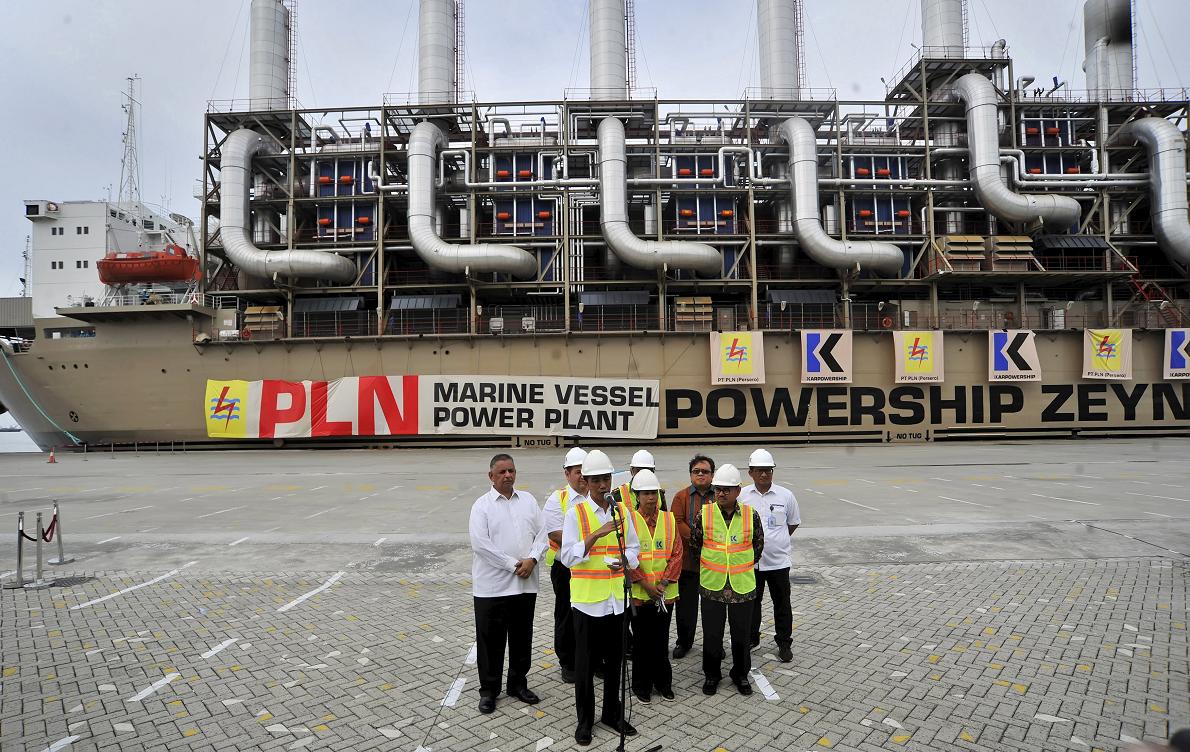
    Indonesia’s president launched the first of five new floating power stations on Tuesday, to serve as a stop gap for the country’s growing demand for power amid sluggish development of land-based plants.

    Southeast Asia’s largest economy has set an ambitious goal of building more than 35 gigawatts of power stations by 2019, the bulk of which are expected to be coal-powered.

    However, the $50 billion mega project has made slow progress since it was launched by President Joko Widodo in April, due to difficulties in acquiring land among other reasons.

    The vessels will mainly serve eastern Indonesia, an area that includes many remote islands to the east of Bali, including Sulawesi, Halmaherah, Maluku and Papua, which has suffered from slow development of power capacity.

    “Every time I go to (outer) regions it’s the same complaint: electricity crisis (and) blackouts,” Widodo said at the launch of the floating power station in Jakarta. The next four vessels will be delivered over the next six months, he said.

    “Because we are an archipelago, I think power stations on top of ships that are mobile like this are best for Indonesia,” Widodo added, referring to the five vessels owned by a subsidiary of Turkey’s Karadeniz Holdings, that will add around 540 MW of capacity to the Indonesian grid.

    Construction of a $4 billion, 2000-megawatt (MW) land-based Batang power station in Central Java has been held up by land acquisition problems since Japan’s Electric Power Development Co Ltd won the contract in 2011.

    State electricity utility Perusahaan Listrik Negara (PLN) sees the heavy fuel oil (HFO) powered floating power stations as a quick solution to meet power needs that will save costs in the short term, as heavy fuel oil is cheaper than diesel and gas.

    “The 35,000 megawatt programme still needs a long time to generate electricity that the community needs,” PLN CEO Sofyan Basir told reporters.

    Power demand is growing at around 12 percent annually in eastern Indonesia, PLN director Machnizon Masri said, adding that the region would face further shortages over the next two years if nothing was done.

    The largest of the five vessels on order, with a capacity to generate 240 MW, will be sent to North Sumatra, which has long faced power shortages due to slow progress completing projects, he said.

    Under the deal, PLN will rent the vessels for five years and only pay for the electricity they generate, Masri said.

    “This is cheaper than gas. We can save 350 billion rupiah ($25.23 million) a year if we use these in North Sulawesi and Gorontalo,” he said.

  • GS Retail replaces vice chairman

    GS Retail replaces vice chairman

    GS Retail vice chairman Huh Seung-jo stepped down from his post in the latest executive reshuffle announced by GS Group on Tuesday.

    He has been replaced by his nephew and GS Retail president Huh Yeon-soo, the son of Huh Shin-goo — the fourth son of the GS Group founder.

    The new appointment reflects the firm’s efforts to reinvigorate its operations.

    The resignation of Seung-jo, the youngest son of GS Group founder Huh Man-jung, signals the end of the leadership of the second-generation members of the controlling family.

    Meanwhile, the incoming vice chairman is credited with having made significant contributions to the growth of GS Retail’s convenience store business in Korea.


  • Retail sales decline for eighth straight month in October

    Retail sales decline for eighth straight month in October

    Retail sales in Hong Kong dropped for the eighth consecutive month in October amid a decline in the number of mainland tourists.

    October sales fell 3 percent year on year to HK$37.2 billion, against an estimated decline of 5 percent, the Hong Kong Economic Journal reported.

    By volume, retailed sales edged up 1.2 percent, compared with a 3 percent drop in September.

    The improvement in the city’s retail sales volume was attributed to Apple’s launch of iPhone 6s and iPhone 6s Plus, which pushed up sales of consumer goods.

    However, sales of luxury goods such as jewelries, watches and accessories continued to slump.

    Thomson Cheng, chairman of the Hong Kong Retail Management Association, expects the weak trend in retail sales to persist for the remainder of the year as more Hong Kong people travel abroad during the festive season.


  • Finalists for the Asia CEO Awards 2015 announced

    Finalists for the Asia CEO Awards 2015 announced

    Asia CEO Awards 2015 has announced the outstanding companies and individuals who made it to list of finalists across its 13 award categories.

    Finalists for KMPG Executive Leadership Team of the Year include Clark Development Corporation, Concepcion Industrial Corporation, Hedcor, Inc., Integrated Micro-Electronics, Inc., Magsaysay Maritime Corporation, Megaworld Corporation, PAG-IBIG Fund, Philex Mining Corporation, Pointwest Technologies Corporation, and Security Bank Corporation.

    SyncHRony Global Top Employer of the Year awards finalists are ADP Philippines, Inc., ANZ Global Services and Operations Manila, Inc., Capital One Philippines Support Services Corporation, Cognizant Technology Solutions Philippines, Inc., HSBC Electronic Data Processing (Philippines), Inc., IBEX Global Solutions Philippines, Inc., LBC Express, Inc., and TATA Consultancy Services (Philippines), Inc.

    The finalists for the Smart Enterprise Global Filipino Executive of the Year Award are Andrew Tan, chairman of Alliance Global Group, Inc.; Arnel Paciano Casanova, presi- dent and CEO of the Bases Conversion and Development Authority; Arthur Tugade, pres- ident and CEO of Clark Development Corpo- ration; Arthur Tan, president and CEO of In- tegrated Micro-Electronics, Inc.; Gilda Pico, president and CEO of Land Bank of the Philippines; Marlon Rono, president of Magsaysay Maritime Corporation; Oscar Reyes, president and CEO of Manila Electric Company (MERALCO); Darlene Marie Berberabe, president and CEO of PAG-IBIG Fund; Frederick Go, president of Robinsons Land Corporation; Alberto Villarosa, chairman of Security Bank Corporation; and Riza Mantaring, president and CEO of Sun Life of Canada (Philippines) Inc.

    JLL Expatriate Executive of the Year Award finalists are Mark Woolfrey, managing director of ANZ Global Services and Operations Manila, Inc.; Tom McCormick, COO of Capital One Philippines Support Services Corporation; Pushkar Misra, president and CEO of Hinduja Global Solutions Philippines, Inc.; David Sutherland, global CEO of International Care Ministries; and Michael Raeuber, group CEO of Royal Cargo, Inc.

    ADP Service Excellence Company of the Year Award finalists are Acquire BPO, Cognizant Technology Solutions, Healthway Medical Clinics, Inc., Infosys BPO Ltd., Lorma Medical Center, Magsaysay Maritime Corporation, Regus Global Service Center, and Seda Hotels.

    SHORE Solutions Most Innovative Company of the Year Award finalists are Bronzeoak Philippines, Inc., LBC Express, Inc., My Checkpoints (Mo-Anima, Inc.), and WiPro Philippines.

    The finalists for the Capital One Young Leader of the Year Award are Raymond Arnedo Abrea, president and CEO of the Abrea Consulting Group, Inc.; Scott Stavretis, CEO of Acquire BPO; Delfin Agnelo Wenceslao, director, president and CEO of D.M. Wenceslao and Associates, Inc.; Iyah Enciso, CEO of FAD School for Modelling; Mario Berta, founder and CEO of Flyspaces.com; Leandro Legarda Leviste, president and CEO of Solar Philippines; Apollo Tiglao, president and CEO of Subic Water and Sewage Co., Inc.; Bryce Maddock, CEO of TaskUs; and Clarissa Isabelle Delgado, CEO of Teach for the Philippines, Inc.

    ADEC Innovations Green Company of the Year Award finalists are Accenture, Inc., Emotors, Inc., Hedcor, Inc., Meralco Industrial Engineering Services Corporation (MIESCOR), Ten Knots Development Corporation/El Nido Resorts, and Tuks+Oil Technology.

    Technology Company of the Year Award finalists include Accenture, Inc., CreditBPO Tech, Inc., Eco-Systems Technologies, Inc., Elabram Systems Group, Freelancer.com, TATA Consultancy Services (Philippines), Inc., and 24/7 Philippines.

    The I-Remit Heart for OFWs Company of the Year Award finalists: ACM Landholdings, Inc., ASKI (Alalay sa Kaunlaran) Global Ltd., Ayannah Information Solutions, Inc., PAG- IBIG Fund OFW Center, PJ Lhuillier Group of Companies, and The Global Filipino Investors, Inc.

    ICM CSR Company of the Year Award finalists: ADP Philippines, Inc., ANZ Global Services and Operations Manila, Inc., BPI Foundation, Capital One Philippines Support Services Corp., Citinickel Mining and Development Corp., Cognizant Technology Solutions Philippines, Inc., Convergys Philippines, Dell Philippines, HSBC Electronic Data Processing (Philippines), Inc., JPMorgan Chase & Co., Megaworld Foundation, Inc., PMFTC, Inc., and Wipro Philippines.

    Philippine Airlines Hospitality Destination of the Year Award finalists: Acacia Hotel Manila, Marriott Manila, New World Makati Hotel, and Nurture Wellness Village.

    TCS ASEAN Company of the Year Award finalists: Hedcor, Inc., Integrated Micro-Electronics, Inc., Jones Lang LaSalle Philippines, Inc., Multimedia Development Corporation, Pointwest Technologies Corporation, and WiproPhilippines.

    Presented by PLDT Alpha Enterprise, the Asia CEO Awards is set to be one of the biggest events of its kind in the Asia Pacific re- gion. Over 1,200 business leaders from the Philippines and across the world are expected to attend this special occasion, which will culminate on November 11, 5:30 p.m., at the Grand Ballroom of the Marriott Hotel Manila.

  • Brazilian Airline Azul Sells Stake to HNA Group of China

    Brazilian Airline Azul Sells Stake to HNA Group of China

    The airline announced on Tuesday that it had sold a 23.7 percent stake to HNA Group of China for $450 million.

    HNA, which earlier this year bought Swissport International, an air cargo services company, for $2.8 billion, owns China’s Hainan Airlines. It is also active in hospitality, retail and financial services. It had about $28 billion in revenue last year.

    It is Azul’s second time turning to China for capital this year. In May, it raised $200 million from the Industrial and Commercial Bank of China, and a company spokeswoman said that it planned to raise an additional $200 million from Chinese banks before the end of the year.

    Chinese companies may be ramping up their interest in Brazil. Petrobras signed a deal in May for $10 billion in funding from the Chinese banks, then arranged another $2 billion in October.

    And China Three Gorges, a utility company, is expected to bid in a multibillion-dollar auction of electricity generation concessions scheduled for Wednesday morning.

    “We are seeing significant inbound acquisition opportunities into Brazil in recent months from Chinese entities and investors and expect this to continue as Chinese companies look to expand their influence around the globe,” said Stuart K. Fleischmann, a partner at Shearman & Sterling who acted for Azul on the HNA investment.

    Azul is not just looking to China. The company also sold a 5 percent stake to United Airlines for $100 million in June, and a spokeswoman said Tuesday the company still planned to hold an initial public offering, already delayed three times, when market conditions improve.

    Mr. Neeleman, an American born in Brazil while his father was a journalist here, founded Azul in 2008. The airline has received funding from the private equity firms TPG Growth, Weston Presidio, Bozano, Fidelity, Zweig-DiMenna and Peterson Partners.

    It has since grown to become Brazil’s third-largest airline, but after years of rapid growth in the sector, Brazil’s recession has finally started to take a toll on airline passenger transport, which in August started to decline.

    But Mr. Neeleman has been using Azul as a base to expand internationally.

    In June, Mr. Neeleman partnered with the Portuguese investor Humberto Pedroso to buy a 61 percent stake in Portugal’s national airline, TAP, in return for assuming TAP’s debt of 1.06 billion euros and a promise to inject at least 338 million euros in cash.

    And Mr. Neeleman said in a statement on Tuesday that the deal with HNA “might result in the company entering the Asian market through interline and code-share agreements.”

    Azul’s only current international destination is the United States. It operates daily flights from Brazil to Orlando and Fort Lauderdale.

    Seabury Securities advised Azul and UBS and Bravia Capital advised HNA on the transaction.

  • 7-Eleven Taiwan in MyDay eCommerce partnership

    7-Eleven Taiwan in MyDay eCommerce partnership

    Taiwan’s largest convenience store chain, 7-Eleven, says it will work with local shopping website MyDay to have online purchases from overseas delivered to its 5000-plus stores around Taiwan.

    The convenience store introduced the delivery service on Wednesday (November 25), allowing shoppers on the MyDay website to have their purchases delivered from Japan, the US and South Korea in as little as five days.

    Myday has over 10 years’ experience in cross-border eCommerce services and also partners with other sites such as Amazon in the US, Rakuten in Japan, and Gmarket in South Korea, said 7-Eleven.

    7-Eleven is the second convenience store chain in Taiwan to offer such a service, following FamilyMart, which established a similar partnership with the Japanese shopping site Tenso in September.

    Registered members of Tenso can have their purchases delivered to FamilyMart stores in Taiwan in about six days.

    Over 43 per cent of online shoppers in Taiwan buy products on overseas sites six times per year on average, according to a 2013 survey by the Market Intelligence & Consulting Institute under the Institute for Information Industry.

  • South Korean retailers binge on discounting

    South Korean retailers binge on discounting

    On top of seasonal sales and occasional promotions, major South Korean retailers have been holding a series of big discount events since summer to create an intense, promotion-heavy atmosphere through the Christmas season and beyond.

    The discount binge has indeed given a fillip to consumer spending here, but market watchers question its long-term effect as a slowdown in Asia’s fourth-largest economy has led to lower incomes for many people, prompting them to tighten their purse strings.

    Most recently, “K-Sale Day” kicked off last week to run for 26 days nationwide, led by major department stores and outlets that hope to grab shoppers’ attention ahead of the original Black Friday.’

    It came just a month after “Korea’s Black Friday”, a nationwide shopping campaign initiated by the government during the first two weeks of October to jack up the stagnant domestic consumption.

    The government-led event even overlapped with “Korea Grand Sale”, during which retailers knocked down prices from early September to mid-October to woo back both domestic consumers and Chinese travelers during the long-haul national holiday.

    One of the main reasons for the deluge of sales is the summer slump following the outbreak of Middle East Respiratory Syndrome (Mers) in late May, which poured cold water on domestic spending and dented tourist numbers.

    More fundamentally, however, the seemingly never-ending sale is seen as an early sign that South Korea is heading into a recession.

    “Although the domestic economy has long grappled with sluggish consumption, the government is ever more concerned about weak spending after exports showed signs of slowing,” says Ko Ga-young, a researcher at LG Economic Research Institute.

    “Exporters in the manufacturing sector had propelled the growth until the 2008 global financial crisis, but their prospects remain bleak due to slowdown in the Chinese economy and tougher global competition in the low-end manufacturing sector.”

    Although policy makers had expected that low oil prices and record-low interest rates would boost the economy this year, the fallout from the Mers outbreak prompted the government to lower its 2015 growth forecast from 3.8 per cent to 3.1 per cent in June.

    The retail discount events, held both online and offline, did not create much buzz like Chinese e-commerce giant Alibaba’s “Singles Day”, which recorded a blockbuster US$14.3 billion in sales on November 11, but the steep discounts did serve as the spending trigger for pent-up demand in a short period of time.

    According to the data compiled by the industry ministry, the 22 retailers that joined the Black Friday Korea campaign saw their sales rise 20.7 per cent on-year to 719.4 billion won (US$634.9 million) during the two-week period.

    While the government touted its “successful effort” in reviving the consumer sentiment, the market remained skeptical over the growth from last year’s low base during the extended holiday season.

    “Large department stores and discount chains face an unfavorable business environment because massive sales events and permanent discount policy produced a limited effect despite last year’s low base,” said Nam Sung-hyun, a researcher at Kiwoom Securities.

    Unlike a one-off factor like the viral disease, market watchers worry that the tight labor market and rising household debt could continue to discourage people from spending on concerns over their unstable future.

    The youth jobless rate reached the highest level in 15 years at 10.1 per cent in June with more college graduates landing at temporary positions, while the average consumption propensity dipped to a record low 71.5 per cent in the third quarter, according to Statistics Korea.

    “The consumption propensity is expected to further decline because households are managing their spending schedule in line with the bleak long-term growth prospect and extended life span,” Ko said.

    Bricks-and-mortar shops face an even dimmer outlook as more consumers are hunting for bargains from online marketplaces abroad.

    Traditional retailers not only have to compete with each other but also counter challenges from international online marketplaces stealing their customers with easier delivery and transaction procedures.

    “As more consumers learn they can easily buy products at a much cheaper price via online vendors, offline shops are more frequently conducting discount events to retain their customers,” said Jun Mi-young, a professor at Seoul National University and co-author of Trend Korea 2016.

    “The experience of buying foreign brands at discounted prices has created a healthy dose of cynicism about department stores’ pricing policy.”

    According to US No 1 retailer Walmart’s Black Friday advertisement, South Korean tech giant Samsung Electronics’ 55-inch HDTV was discounted to $498, less than half prices for similar models sold at Korean department stores.

    Some deals even raise questions over whether retailers set a higher price from the beginning to look like they are giving discounts.

    Lotte Department Store’s K-Sale Day promotional leaflet shows that the price of German kitchenware maker Henkel’s five-star knife block set was reduced from 550,000 won to 229,000 won.

    Sounds like a good deal. But you can buy the same product below 200,000 won at several online shopping malls on any given day.

    The desperate efforts to grab customers with lower prices, however, come at a price.

    As sales start earlier and last longer, they become less important and easier for consumers to ignore. When every day is special, none is.

    “I used to wait for the discount season to buy off-season clothes or other things at cheaper prices,” Lee Su-jin, a 35-year-old office worker in Seoul, said. “These days, I use mobile applications to buy refurbished products or find good deals at overseas websites.”

    While the discount pricing strategy is useful in driving traffic and sales for a short term, marketing professionals worry repeated sales could negatively affect the retail industry in the long run.

    To survive in the borderless digital commerce world, they advise bricks-and-mortar shops to come up with differentiated services to increase customer loyalty.

    ”As the rise of digital shopping has become an inevitable trend in the retail industry, offline sales channels should seek ways to provide better in-store experiences and quality service,” Jun said. “Squeezing margins is not a sustainable business model.”

    Experts emphasise the government’s role in setting a long-term policy to manage the record-high household debt and steer the economy clear of such economic uncertainties as China’s slowdown and market jitters over a US rate hike.

    “The government should control the pace of the household debt growth so it does not rise faster than the income growth, which could further contract spending,” Ko said.

    “Structural reforms are also needed to foster new value-added service sector for healthier growth.”

  • Philippine supermarkets revamping stores ahead of Christmas

    Philippine supermarkets revamping stores ahead of Christmas

    The Philippine high street is getting a facelift, as retail titans hope to benefit from Southeast Asia’s most reprobate customer spending area during this Christmas. The nation’s biggest supermarkets including Ayala Corp., JG Summit Holdings Inc. and SM Investments Corp. are burning through billions on shopping centers to increase their vicinity throughout the nation, while worldwide brands, for example, Swedish retailer Hennes and Mauritz AB, which once overlooked in Philippines, are announcing their arrival in the region.

    For retailers looking for development, the Philippines has risen as an uncommon spot. National GDP developed at a sound 6.1% a year ago, filled by $27 billion in abroad settlements and over $18 billion in outsourcing incomes—and a lot of that cash was spent in shops.

    A stroll to a tolerantly air conditioned shopping malls is a national leisure activity in this tropical nation and drives family unit utilization, which broke even with 72% of GDP a year ago, as per the World Bank. The Philippines has likewise demonstrating resilience to outside factors, from China’s monetary lull to discouraged product costs. That stands as opposed to its neighbors: Thailand’s family utilization was just 53% of GDP, not a long ways behind Indonesia’s 57% and Vietnam’s 64%.

    With stores being the chief receiver of the surging economy, the Philippines has risen as the star retail entertainer in Southeast Asia, posting segment development of 6% in 2014, as per Nielsen—the most elevated in the locale, and the main execution in light of strong development in both volume and worth terms.

    “The Philippines has had reasonable development driven by customer putting in for a couple of years now,” said Stuart Jamieson, Nielsen’s overseeing executive in the Philippines. “That makes it exceedingly alluring, and puts it on the radar of enormous remote players.”

    Such vigorous development is driving a multiplication of general stores, shopping centers and accommodation stores. From 2012 to mid-2015, the quantity of markets grew 53% to 644, as per Nielsen, while the quantity of accommodation stores rose 60% to 2,270—a number set to twofold again by 2018.

    Swedish design retailer H&M is one of the numerous worldwide brands belatedly grasping the Filipino buyer. Having opened its first Philippine store only one year back, it will have 13 before the end of 2015, empowered by the development of a style cognizant youth market with discretionary cashflow, said an organization representative. Zara, possessed by Spain’s Inditex, and Uniqlo, claimed by Japan’s Fast Retailing Co, have likewise entered the business sector here. Japanese chains Lawson Inc. what’s more, FamilyMart Co. as of late entered the Philippines’ accommodation store part, every arranging many branches, even as settled in players like 7-Eleven increase.

  • Indonesia promotes “Wonderful Indonesia” in Mumbai, India

    Indonesia promotes “Wonderful Indonesia” in Mumbai, India

    Indonesia will be promoting “Wonderful Indonesia,” its country branding, in Mumbai, India, from December 2-4, 2015 in order to market tour packages featuring attractive cultural performances and festivals.

    Assistant Deputy for Asia Pacific Market Development, Ministry of Tourism, Taufik Nur Hidayat, said here on Wednesday that India is a potential market as most Indian tourists are high-class travelers.

    Indian tourists generally prefer hotels with five star facilities, so a specific strategy has to be put in place to attract more tourists to Indonesia.

    “We must prepare what they need, such as adventure tour packages as well as comfortable and safe environment, Indian food, and a pleasant night atmosphere,” he said.

    The Ministry of Tourism, according to Taufik, is targeting Indian tourists, hoping that around 250 thousand people will visit the country in 2015, especially Bali, Jakarta and Batam (Riau Islands).

    The tourism ministry also facilitates various Indonesian tourism players to participate in the South Asia Travel & Tourism Expo (Satte), last of which was held in New Delhi recently.

    Taufik explained that the promotion of Wonderful Indonesia in Mumbai is part of the cultural diplomacy to strengthen emotional ties between the two countries, emphasizing that Indonesia has a close relationship with India in terms of history and culture.

    In the ninth century, some Hindu kingdoms flourished in Java. Many Hindu relics are preserved by the people and the Indonesian government.

    The spread of Islam in Indonesia also involves traders from Gujarat, India, who developed trade in various port cities in Indonesia.

    In modern times, Indonesia, along with India, initiated the Asian-African Conference (AAC) in 1955 which resulted in Dasa Sila Bandung (the ten principles of Bandung).

    The number of Indian tourists visiting Indonesia in 2016 is expected to increase by 10 percent to 300,000 visitors.

    The Wonderful Indonesia promotion campaign in Mumbai is a combination of the two programs, namely selling tour packages and cultural festivals such as dance performances, culinary exhibitions and sasando music performances (featuring a Timorese traditional musical instrument).

  • Thailand’s airlines downgraded over safety concerns

    Thailand’s airlines downgraded over safety concerns

    Thailand’s aviation industry has been downgraded for safety reasons in the US, leading to the possibility of bans on Thai-registered aircraft in Europe and Asia.

    The Federal Aviation Administration (FAA) reassessed the junta-ruled nation’s air services in July and found that it did not meet international standards.

    “Today’s announcement follows ongoing discussions with the government of Thailand which concluded on October 28,” it said on its website.

    The country has been consequently downgraded to a Category 2 rating in the US, which means that it “either lacks laws or regulations necessary to oversee air carriers in accordance with minimum international standards,” the FAA website states, “or its civil aviation authority – a body equivalent to the FAA for aviation safety matters – is deficient in one or more areas, such as technical expertise, trained personnel, record-keeping, or inspection procedures.”

    The Category 2 rating allows Thai carriers to continue their existing services to the US but prevents them from establishing new services to the US. The country achieved its Category 1 rating in 1997, and held it following its last assessment in 2008.

    In March, Thai airlines were placed under “special measures” by the International Civil Aviation Organization (ICAO) prompting Japan and South Korea to block new flights from Thai-registered airlines.

    This forced airlines, including budget carriers Thai AirAsia X, NokScoot and Asia Atlantic Airline, to cancel extra flights that they had been planning. Thai Airways, the national carrier, was also affected, which had to cancel “about five” new charter flights that were due to run in April, which is when Thailand’s new year – known as Songkran – is celebrated.

    A representative told Telegraph Travel that the audit revealed some safety concerns, primarily relating to air operator certification procedures. Thailand provided the ICAO with the details of its corrective actions and mitigation measures in early March.

    A spokesman for the ICAO said today that it is presently working with Thailand “to help rectify some aspects of how it’s civil aviation authority oversees the implementation of international aviation safety standards.”

    Thailand's airlines downgraded over safety concerns

    Thai airlines were placed under special measures in March

    The EU does not ban any Thai airlines at the moment but the next update will be published around mid-December. A spokesman for the European Aviation Safety Agency said: “We inspected in October the Thai airlines which applied for a Third Country Operators (TCO) authorisation – authorisation that any non-European Union airline willing to fly to and out of the EU must get. They were OK.”

    Thailand's airlines downgraded over safety concerns

    New flights from Thai AirAsia X were blocked by Japan and South Korea

    The FAA has previously downgraded the Philippines to a Category 2 rating while also imposing a complete flight ban on its airlines, with the EU later following its example in 2010. This was relaxed in 2013, with the country finally removed from the EU’s airline blacklist in June this year.

    Is it a bird? Is it a plane? Confusion in Bangkok after bird strike

    The FAA also banned Indonesia’s airlines for several years. It scored poorly on an ICAO safety audit in 2014. There are currently 59 of 63 Indonesian airlines banned from EU airspace, though this does not include the popular Garuda Indonesia and Indonesia Air Asia.

  • China’s Slowdown Is Killing Its Luxury Market

    China’s Slowdown Is Killing Its Luxury Market

    Many investors are unfamiliar with the Chow Tai Fook Jewellery Group, but it is in fact the world’s largest publicly traded jewelry chain.

    The company reported its first half profit for 2015 plunged 42 percent due to weak demand in Hong Kong and Macau and an economic slowdown, Macau Daily Times noted.

    Chow Tai Fook’s net income fell to HK$1.56 billion ($201 million) for the six-month period ending in September. In the same period a year ago, the company’s net income was HK$2.69 billion. Sales for the six-month period fell 4.1 percent from a year ago to HK$28.1 billion, while same-store sales fell 18 percent in Hong Kong and Macau, but rose 0.1 percent in mainland China.

    The company warned investors back in early November that its profits are expected to decline due to the weakness in Hong Kong and Macau, along with an unfavorable sales mix of lower-margin gold products and unrealized hedging losses.

    Is Tiffany Winning Where Chow Tai Fook Is Failing?

    Tiffany & Co. reported its third quarter results on Tuesday. Commenting on the Asia-Pacific region, the company said that total sales rose 6 percent in the third quarter and comparable store sales rose 2 percent. Total sales and comparable store sales in the year-to-date period rose 6 percent and 4 percent, respectively.

    On a constant-exchange-rate basis, Tiffany said that it saw “healthy sales growth” in China, but sales declined again in Hong Kong and Macau.

    Tiffany also announced a total sales and comparable store sales growth in Japan of (FX-neutral) of 34 percent and 24 percent, respectively. According to a report by Bloomberg, Tiffany is “eating Chow Tai Fook’s breakfast” as Chinese tourists accounted for a “significant” portion of the growth Tiffany experienced in Japan.

    Bloomberg also noted that Chinese goods don’t have a “particularly good” reputation among Chinese shoppers, which might also explain why Tiffany is seeing success in a region where Chow Tai Fook “should be cleaning up.”

  • Metro surges ahead

    Metro surges ahead

    Last week amid cheers and the beat of drums, Cebuano retailer Frank S. Gaisano – with his siblings Margaret, Jack and Edward by his side – rang the opening bell at the Philippine Stock Exchange (PSE) in Makati.

    The traditional ceremony marked the market debut of Metro Retail Stores Group, Inc., the first for a Gaisano —  an iconic name in Cebu’s retail industry —  and for a Cebu-based company in almost a decade.

    Gaisano said going public, which raised about P3.6 billion for Metro’s expansion, will also enable Metro to “improve margins and operating efficiency, protect our market share, and consequently create value for our investors.”

    Frank Gaisano (4th from left), chairman and CEO, leadS the bell-ringing ceremony to mark the listing of Metro Retail Stores Group Inc. on the Philippine Stock Exchange. Joining him on stage are his siblings Jack Gaisano director, Edward Gaisano, chairman and CEO of Vicsal, and Margaret Gaisano-Ang, director. PSE executives witness the milestone led by chairman Jose Pardo, president and CEO Hans Sicat, and directors Vivian Yuchingco, Emmanuel Bautista and Alejandro Yu. (CDN PHOTO/TONEE DESPOJO)

    “We are ready to compete with other industry players in serving our value-conscious market and be a leading and well-admired retailer,” Gaisano said in a statement issued after the ceremony.

    Metro, retail arm of Vicsal Development Corp., is the fourth largest retailer in the country, after SM, Puregold and Robinsons. It is the largest department store and hypermarket operator in the Visayas.

    The company is embarking on an aggressive expansion program that will see 50 to 70 new stores in the next five years, bringing the company’s network to more than 100 stores.

    This will double Metro’s footprint from the current 400,000-square meters for 46 stores, said Metro President and Chief Operating Officer Arthur Emmanuel.

    “About 100,000-square meters have been secured, including stores that will open in partnership with Megaworld and Ayala. These should open in the next two years,” said Joseph Conrad M. Balatbat, investor relations head of Metro, in a press conference after the bell-ringing ceremony.

    Margaret Gsaisano-Ang holds up the image of Sto. Nino, Cebu's patron, at the Philippine Stock Exchange in Makati as Sinulog dancers perform a dance offering on stage for a touch of Cebuano culture. (CDN PHOTO/TONEE DESPOJO)

    At least seven stores are slated to open next year, including one in northern Cebu and another in the south. Four other stores will serve as anchor stores of Ayala developments while one will rise at the Megaworld mixed-use complex in Iloilo.

    About half of the 50 to 70 new stores that will open in the next five years will be in the Visayas while the rest will be in Luzon and Mindanao, where Metro has yet to establish its presence.

    “The Visayas is our priority. We see the Visayas growing much faster than Luzon. Based on Euromonitor, retail penetration in the Philippines is only 28 percent. It’s much lower in the Visayas,” Balatbat said.

    The bulk or 67 percent of the IPO proceeds will fund this aggressive expansion. The rest will be used for mergers and acquisitions.

    Balatbat said they were in talks for the acquisition of more neighborhood stores that will be rebranded as Metro Fresh N Easy.

    FIRST TRADING DAY

    The Metro stock, with trading symbol MRSGI, opened strong at P4.30 and closed at P4.13, about 3.5 percent higher than the IPO price of P3.99.

    The listing followed an initial public offering (IPO) that issued 905.4 million common shares and raised about P3.6 billion.

    This milestone occurred 33 years after the first store — then called Metro Gaisano — was opened in Colon Street in  Cebu City in 1982.

    Before the bell-ringing ceremony, Sinulog dancers in colorful costumes performed on the trading floor and on  stage as company representatives waved Metro flaglets.

    Metro Retail is run by siblings Margaret, Jack, Edward and Frank. Their parents Victor and Sally, from whose names Vicsal was coined, started Metro with a store in Colon Street that had to compete with seven others in 1982.

    There are currently 46 Metro stores across three retail formats — department store, supermarket and hypermarket (Super Metro) — in the Visayas and Luzon. Twenty-six of these stores are in Cebu and the Visayas.

    With its listing on the PSE, Metro joined three other Cebu-based companies that have tapped the capital market: Cebu Property Ventures and Development Corp. in 1992; and Cebu Holdings, Inc. and Vivant Corp., both in 1994. Aboitiz Equity Ventures and Aboitiz Power Corp. were still based in Cebu when they went public in 1994 and 2007, respectively. Both are now based in Manila.

    “This reflects our confidence in the capital markets. We believe the Philippine economy is one of the least vulnerable among the emerging economies. We continue to leverage on this positive sentiment on our economy,” Gaisano said during the press conference.


  • Daiso, Robinsons Retail to strengthen PH partnership

    Daiso, Robinsons Retail to strengthen PH partnership

    Daiso Industries Ltd. is impressed with the growth of the Daiso Japan store chain in the country.

    Japan founder and President Hirotake Yano was recently in the country as one of the speakers of the 17th Asia-Pacific Retailers Convention and Exhibition (APRCE) Manila 2015.

    He also met with officials of Robinsons Retail Holdings Inc. (RRHI), appointed franchisee in the Philippines of Daiso Industries. RRHI is led by Robina Gokongwei-Pe, Wilfred Co and Katherine Michelle Yu.

    Yano added that he is very happy with the growth of Daiso Japan in the Philippines. “I first came here four years ago and observed that it was experiencing a very competitive growth, one that was comparable to Daiso in Japan.  I am actually quite proud of this development.”Yano reaffirmed the strong and exclusive partnership between the two companies as he expressed his satisfaction over the Supreme Court’s final ruling in June this year, preventing Japan Home Center (JHC) from using the trademark Daiso.  He reiterated that RRHI is Daiso’s only authorized and licensed partner in the Philippines. It will be recalled that Daiso Industries Co., Ltd filed a complaint with the Intellectual Property Office against Japan Home Center (JHC) in 2009.

    There are now 44 Daiso Japan stores in the Philippines and over 2,400 stores in 30 countries around the world.

    Both Yano and Gokongwei-Pe reiterated the strength of their business collaboration that was sealed in 2008. “I am very confident with the leadership of the Robinsons Group as our Daiso Industries’ exclusive retailer in the Philippines,” he said. “That is why I look forward for continued growth as customer demand increases.”

    Gokongwei-Pe is likewise very optimistic about the expansion of the Daiso Japan brand. “We brought it here knowing that it is a big brand from Japan that offers good quality and affordable products. That, for me, is the best combination that is very much suited to the Philippine market. The items in our stores are the real Daiso merchandise from Japan.  There is a guarantee behind the name and the partnership that we have with Daiso Industries,” Gokongwei-Pe said.

  • South Korean Convenience Stores Thrive

    South Korean Convenience Stores Thrive

    The growing interest in ready-made meals and other necessities—driven by an increase in single-adult households—has fueled the growth of convenience stores in South Korea, Yonhap reports. These retailers stock daily essentials and food in smaller quantities and are open 24 hours a day, which provides more opportunities for working adults to shop.

    The three biggest chains—7-Eleven, BGF Retail and GS Retail—opened a combined 2,000 new locations this year. Overall, the number of convenience stores in the country jumped to close to 26,000.

    GS Retail, which operates GS 25, generated the largest increase with $3.11 billion in sales from January to September 2015, a 36% bump from the same time period in 2014. Meanwhile, BGF Retail posted a 28.8% rise in sales, while 7-Eleven increased its sales by 26.4%, over the same time period.

    Local convenience stores are capitalizing on the boost in customers by launching their own private-label brands to provide a low-cost alternative to name brands. The stores also have changed up their merchandise mix to include more non-food items in addition to the beverages, cigarettes and instant food items.

    However, the increasing number of convenience stores has begun to saturate the market. Retailers now experience stronger competition from each other, often with stores on opposite sides of the street vying for the same customers.