Category: General

Retail News Asia is committed to providing both local and global retailers with the latest General Retail news throughout the Asian market. This on a daily base.

  • Morton’s sky bar officially opens at the IFC Mall

    Morton’s sky bar officially opens at the IFC Mall

    Sip on a mortini and dance the night away to the Sound of Shanghai DJs, bottle service and cocktail promotions from 6:00 – 11:00 p.m. on Thursdays, Fridays and Saturdays at the outdoor rooftop Morton’s Sky Bar in Lujiazui.

    Located on the 5th floor atop the Shanghai ifc mall, the rooftop terrace of the prestigious Shanghai ifc mall, Morton’s Sky Bar – the only bar atop the ifc mall rooftop, is the newest addition to the biggest Morton’s in the world.

    After stepping inside the Morton’s The Steakhouse, guests are transported to a rich and inviting environment which captures the quintessential American steakhouse experience. With the addition of the Sky Bar, a visit to Morton’s creates a unique opportunity to experience luxury nightlife in Shanghai like never before. With a spectacular view of both the iconic Oriental Pearl and Shanghai Tower – one of the latest additions to the Lujiazui skyline – after-work drinks just got a lot more interesting.

    Morton’s Sky Bar will offer a special drink menu only available on the 5th floor rooftop. For just 68 + 10% rmb per glass, guests can choose from Morton’s premium selection of 10 cocktails. Morton’s featured cocktails highlight a selection of classics cocktails; the sophisticated Cosmopolitan and straight Gin and Tonic are sure to be crowd pleasers.

    In addition, guests can also enjoy premium bottles service on Morton’s Sky Bar rooftop terrace. Purchase a bottle of Grey Goose Vodka, Bombay Sapphire Gin, Glenfiddich 12 Year Scotch Whisky or Moet & Chandon Champagne (prices vary) and Morton’s will sweeten the deal with complimentary mixers and two of Morton’s signature Bar Bites menu items. As an added bonus with bottle service, a bartender will pour and mix the cocktails tableside. For wine enthusiasts, Morton’s Shanghai glass-encased cellar also stocks more than 250 labels available from the world’s finest wineries.

    Legendary Sound of Shanghai DJs Azz and Kadwell will hold it down on the outdoor bar every upcoming Thursday, Friday and Saturday with some mixed-style house music played between 6:30 and 9:30 p.m.

    “After five years of operating in Shanghai, we’re very excited to open the outdoor rooftop terrace with the introduction of Morton’s Sky Bar,” says Frederic Fusseau, General Manager of Morton’s Shanghai Steakhouse. “We expect the popularity of our MORTini nights to spill into the rooftop where partygoers can start the night with drinks and music in our laidback rooftop bar.”

    With a name that has been synonymous with premium dining and cocktails for decades, an evening at the Morton’s Sky Bar atop ifc mall – accompanied by DJ’s and a spectacular view of the city – is sure to be a shanghai hotspot. 

  • “A-very-wear” the first exclusive multi-label fashion pop-up store of Asian designers launched at Siam Center

    “A-very-wear” the first exclusive multi-label fashion pop-up store of Asian designers launched at Siam Center

    Siam Center, as the center of endless imagination and creativity in arts, fashion, technology and lifestyle, always captures the latest fashion trends and Influences to bring Thai fashion industry to the next level. The Ideapolis is now debuting “A-very-wear”, the first exclusive multi-label fashion pop-up store of Asian designers launched in Thailand under the motto of “A piece that is very YOU to wear” on the 1st floor of Siam Center.

    Ms.Parisa Chatnilbandhu, Group Senior Vice President – Retail Business Development of Siam Piwat Co., Ltd., said that the fashion industry has grown rapidly in U.S.A., Europe or even Asia. Currently, fashion plays a major role in youngsters’ lifestyle, especially in Asia. As we can see, the Fashion Week in each season in Korea, Japan and Singapore attracted the hipster from around the world, including Thai celebrities who flew to these countries just to buy the fashion items back. Siam Center, in response to this up-and-coming movement and the needs of fashion-forward people, debuts “A-very-wear”, the first exclusive multi-label fashion pop-up store of Asian designers, to bring the ultimate Asian fashion experience to Thailand. Siam Center carefully selects a wide variety of well-designed products and introduces Absolute Siam items, which are exclusively available at Siam Center, to help the fashionistas make the style statement of their own under the motto of “ A piece that is very YOU to wear”.

    Ms. Parisa continued that, to bring a hip spirit to Thai fashionistas, “A-very-wear” carries apparel, accessories, including eyeglasses, watches and many more, of 15 renowned Asian fashion brands from six countries, namely Korea, Japan, Singapore, Hong Kong, Indonesia and Taiwan. Each designer is very popular on social media, with many followers on facebook and Instagram. During the first six months, the hipsters can update the trend from four countries, namely Korea, Japan, Singapore and Taiwan, while the other two, Hong Kong and Indonesia, will join in the next six months.

    During the opening, “A-very-wear” introduces six well-known Korean brands. Fleamadonna, launched in 2007, has bold style and unique characteristic. It was therefore very well received from numerous fashionistas and celebrity fans including Pink, Paris Hilton, Miranda Kerr and Girl’s Generation girl band. Low Classic by Lee Myoung Shin presents the simple and classic ready-to-wear that is perfect for all occasions. Drink Beer Save Water is originated from the fun idea of the designer Jim Park, who thought “Why don’t we drink beer to save the water?” From this extreme idea, he presents the unisex collection under the same name as his brand, which has been growing both male and female fan base.  The clothes reflect their true personality, having fun dressing. That is why the wearers of DBSW always capture attention and stand out of the crowd. Rocket x Lunch is woman’s fashion brand designed by the talented Jin Won Woo. The brand is popular among hipsters for its minimalist style that can be worn on any occasions. It also showcased its creation in “Who’s Next in Paris 2015 Spring Summer” in France.

    A.Bell Korean accessory brand was established in 2010 under the claim of “Made It Korea” to guarantee that every single item is made in Korea. The brand decorates crystal on the bags, necklaces and bangles to create the glamorous and trendy look.  Minuit Moins Sept, another chic Korean accessory brand, has the French name means ‘seven minutes to midnight.’ It indicates the beginning of a new day when good things are about to happen. Adhering to this concept, Minuit Moins Sept creates the accessories that are perfect for both daytime and nighttime. Popular among male and female wearers, the simple yet elegant geometric design are made of silver 925 as the key material, with the key shade of gold, silver, dark blue, red and white.

    Besides Korean brands, the shop carries Singaporean fashion labels. Mash – up, very popular among fashion-forward people in Singapore, is the brainchild of three talented designers. This street fashion brand incorporates the endless inspiration from music, movies and the designers’ travelling experience. With its strong characteristic, the brand had a chance to produce the collaboration with UNIQLO, TOPSHOP, Lomography and Pioneer. Yesah is established by Linda Hao Chinese Singaporean-born designer, who combines her experience in modeling and educational background in fashion. After her education in 2013, she launched this brand, with distinctive characteristic, to serve the lifestyle of confident ladies who enjoy life. It is no wonder why Linda Hao has become the leading figure in Singapore in no time.

    Moreover, “A-Very-Wear” presents hand-made accessory brand from Taiwan like Momo’s march by Christina Lu, Taiwanese American-born designer. The brand puts together a range of materials, such as Russian diamond, brass, seashell, pearl and gemstones, into exquisite accessories under the concept of “Wearable thought”, which are practical for any time of day. YU Square by Ringo Yu is famous for its sewing technique, which integrates the embroidery into the design. Furthermore, the fashionistas can mix and match its colorful blouses, skirts and socks to suit each occasion.

    Normal Timepieces, minimallist-style Japanese watch brand, was brought to life by American designer Ross McBride. Having spent years in Japan, he was influenced by Japanese culture and incorporates it into his creation, which projects simplicity with a great sense of style.

    Unleash your style with chic items, along with Absolute Siam collection, from “A-very-wear” the first exclusive multi-label fashion pop-up store of Asian designers launched in Thailand on the 1st floor of Siam Center.

  • Has Singapore Finally Become Too Expensive?

    Has Singapore Finally Become Too Expensive?

    Singapore has long been seen as a mecca for high-end shopping. Locals and tourists alike have miles and miles of malls and boutique-lined streets to wander through. Retail refugees from China, the Philippines, Indonesia and Malaysia come to the small city state because they can buy authentic Louis Vuitton, smell real Chanel and eat their fill of those famed Laduree macaroons.

    Something unexpected has been happening more and more over the past couple of years. Foreign visitors have been coming to Singapore’s shopping streets, but they have been keeping their wallets in their pockets.

    A haven for luxury

    Singapore has the world’s third highest per capita GDP, and locals do buy the pricey brands, but luxury boutiques still rely on tourist sales to make their profits and to justify the high cost of leasing or buying retail space in the heart of Singapore.

    These boutiques want to be in the heart of the city. That means spending big bucks to get space along Orchard Road, which is the epicenter of Singapore’s tourism scene. According to the Singapore Business Review, up to 80 percent of all luxury items sold in the country are bought in the Orchard Road area.

    Tourists are everywhere on Orchard, but most of them are opting to window shop instead of actually buying.

    Indonesian travelers are usually in the country for other reasons: business, medical tourism or to visit relatives. Some may spend time at boutiques, but this is not the main reason that they are in Singapore. Australians, meanwhile, are stuck with a weakened currency, so shopping with Singapore Dollars is not financially feasible.

    What about discounts?

    Downtown shops have been experimenting with sales and promotions. Some of these are specifically aimed at getting tourists to make purchases. Coach is offering a 10 percent discount at its Orchard Road locations, but Singaporeans don’t qualify for the price break. To get the deal, shoppers have to show their passport to prove that they are foreign visitors.

    Even this hasn’t worked. Tourist shopping statistics have held steady. Visiting buyers currently represent about 35 percent of the total sales for luxury items in Singapore.

    Has Singapore simply become too expensive?

    Yes, Singapore is expensive even if you don’t go there to add to your Vuitton bag collection. But it isn’t really fair to say that the luxury marketplace is struggling because country has become too expensive.

    The biggest expense for most tourists in Singapore is their hotel. Rooms are expensive, and if you are staying in a central location, they can be extremely pricey. At the same time, you can always eat cheaply at hawker centers and get around easily via the awesomely useful public transportation system. Also, if you can escape from Orchard Road, you will find some reasonable (if not cheap) places to shop.

    So while Singapore’s luxury brands are struggling, it is not quite right to say that the city is killing its tourism scene with high prices.

  • China’s 500m middle class consumers

    China’s 500m middle class consumers

    Within the next ten to twenty years there will be 500m middle class consumers in China, according to Jack Ma, and there will be huge opportunities for smaller Western brands to gain a foothold in this market.

    “In the last 20 years China was focused on exporting, in the next 10-20 years China will focus on importing,” the founder of ecommerce giant Alibaba told a business gathering in London. “We’re coming here to help small businesses in the UK, in Europe, to sell to China.”

    To this end the company has made its London office a regional hub and opened offices in Italy, France and Germany.

    Some 5,000 overseas brands from 25 countries are expected to take part in Singles Day, Alibaba’s annual online shopping extravaganza on November 11, which this year will feature 6m products from more than 40,000 merchants and 30,000 brands.

    Last year shoppers from 175 countries placed orders on Alibaba’s platforms during the first 40 minutes, as the company upgraded the event into a global online shopping carnival by helping Chinese shoppers purchase overseas products and overseas buyers acquire goods from China.

    The ecommerce business has announced it will this year be “merging bricks with clicks”. Jeff Zhang, president/China retail marketplaces, explained this was a theme of the 2015 event and “marks the first step in achieving the full integration of the digital economy and physical commerce”.

    Some 180,000 stores in 330 cities across China are using a variety of omnichannel strategies to make shopping more convenient and rewarding.

    So, for example, customers entering one of these stores will get text notifications from their Taobao mobile app and can then scan an event barcode to win discounted e-coupons to redeem on the 11.11 shopping day.

    Leading retail brands – including Suning, Intime and Haier – will have special in-store experience zones where consumers can try out displayed products before scanning the barcodes and purchasing them at the discounted prices reserved for sales on 11 November.

  • Trade Expo Indonesia (TEI) 2015 Opens with 118 Countries Ready to Make Transactions

    Trade Expo Indonesia (TEI) 2015 Opens with 118 Countries Ready to Make Transactions

    Indonesia is once again holding its largest international scale trade promotions exhibition, the Trade Expo Indonesia (TEI) 2015. The 30th TEI event will be attended by more than 14 thousand buyers from 118 countries. TEI this year will be carrying the theme “Sourcing at Remarkable Indonesia” and is being held at the Jakarta International Expo (JIExpo) from the 21-25 October, showcasing export oriented products and services.

    The Indonesian Minister of Trade, Thomas Trikasih Lembong, said that TEI was an important instrument for promoting Indonesian exports. “TEI is one of the tools to increase market access and export target market diversification, particularly to nontraditional and emerging markets. The same as last year, TEI this year will focus on Business to Business transactions (B2B),” said Trade Minister Tom at the opening of TEI on Wednesday.

    In order to make TEI become an effective promotional event, the Ministry of Trade is focused on ways to bring in buyers from all over the world. This was done by way of cooperation with the Ministry of Foreign Affairs; through Indonesian representative offices abroad such as Indonesian Embassies, Trade Attaches, Indonesian Trade Promotion Centers (ITPCs); and also through cooperation with the Chambers of Commerce and Industry of friendly countries to spread information abroad about the holding of TEI.

    “Efforts to diversify markets has continuously been carried out by the Ministry of Trade and it seems that now the buyers delegation list comprises mostly of countries from nontraditional markets, including Nigeria, India, Saudi Arabia, Bangladesh, and Malaysia,” said Tom.

    TEI this year will occupy a 50.000 m2 of exhibition space, larger than last year, which only occupied 40,000 m2 with occupancy reaching 99% of the target. The products that will be showcased include manufactured products (automotive products, footwear, textile products, household appliances, building materials, housewares, consumer goods, paper products, health equipment, rubber products, etc.), professional services, furniture, home decorations, processed food, fishery products, agriculture products, and other creative products.

    The “Pride of Indonesia” Pavilion has also returned with local products that are the pride of Indonesia and has been accepted in the global market. There will also be an ASEAN Pavilion set up with an information stand by ASEAN representative countries as well as an ASEAN Economic Community Center (AEC Center) to welcome the implementation of the ASEAN Economic Community (AEC), which will go into effect in December 2015.

    Events at TEI 2015 

    On the first day of TEI 2015, several trade contracts worth more than USD 8 million were already recorded. The signing of trade contracts were conducted between seven Indonesian exporters with five buyers, namely PT. Cipta Panel Buana with Kohnan Shoji Co., Ltd. from Japan, PT. Anggana Catur Prima with JANS Enterprises from the United States, PT. Perkebunan Nusantara VIII with Kong Wooi Fong Tea Merchant Sdn. Bhd from Malaysia, Sinar Sosro with Eastern Cross Trading Pty. Ltd. from Australia, and PT. Inti Bintang Mas Perkasa with Canejava Pty Ltd from Australia.

    TEI 2015 also continuously strives to inform about the latest in developments and regulations of the international export market by holding various activities such as the Trade, Tourism, and Investment (TTI) Seminar to inform exporters, buyers, and investors about taking advantage of international trade and investment opportunities. Regional Discussions will also be held to inform about potential products and foreign market access as well as discuss issues related to international trade.

    Besides that, there will also be a Business Counseling, which is a consultation event facilitated by the Trade Attache and the Head of the Indonesian Trade Promotion Center (ITPC) in order to provide information access and information on penetrating foreign markets for exporters. There will also be a Business Matching to introduce buyers to suitable Indonesian exporters that matches the products the buyers are looking for.

    Moreover, TEI 2015 have also awarded the Primaniyarta Award to 30 Indonesian exporters for various categories, namely 7 companies in the Domestic Capital Investment High-performance Exporter Category, 7 companies in the Foreign Capital Investment High-performance Exporter Category, 6 companies in the Global Brand developers Category, 7 companies in the Superior Potential Exporters Category, and 3 companies in the Exporters of New Market Pioneers Category.

    Afterwards, the presentation of the Primaduta Award to 60 loyal buyers that have been importing Indonesian products. This is a form of appreciation presented by the Government to those who have contributed to increasing Indonesian exports. “We hope that TEI this year will be able to result in even more trade cooperation between Indonesian exporters with buyers so that it could directly contribute to the growth of the national export performance,” said Trade Minister Tom.

  • Apple’s location for its official Singapore store confirmed?

    Apple’s location for its official Singapore store confirmed?

    Apple’s location for its first official store in Singapore might be confirmed in a press release… that was not released by Apple.

    The announcement started innocently enough: fitness chain Pure Fitness issued a statement saying it will be closing its branch in Knightsbridge, a distinctive retail building in Singapore. Oddly, it mentions in passing that “Pure and other tenants will be handing back space to make way for the opening of a new Apple store in late 2016.”

    We can only guess why Pure Fitness talked about Apple in the press release.knightsbridge

    Earlier, an email was apparently sent out to Pure Fitness customers stating the same news:

    apple pure fitness

    Apple has been seeking a retail space in Singapore for some time. We are reaching out to the company for comment.


  • Doosan, Shinsegae lock horns over urban duty-free license

    Doosan, Shinsegae lock horns over urban duty-free license

    Retail giant Shinsegae and industrial behemoth Doosan Group on Monday locked horns over the special license to run three urban duty-free stores in Seoul.

    With the urban duty-free stores regarded as a lucrative business for the sluggish retail industry, the chiefs of both companies vowed to win the license that could guarantee trillions of won in revenue over the next 10 years.

    Doosan Group chairman Park Yong-maan (Yonhap)

    Doonsan Group chairman Park Yong-maan said he would fully leverage his 20-year experience in publishing high-end fashion magazines. “From 1995, I have been deeply engaged in the publication of the Vogue magazine, with my name on the masthead every month,” Park told reporters on Monday.

    “The luxury goods makers know that Doosan has all its takes to create luxury contents, and trust us,” he said, referring to the endorsement of about 400 luxury goods makers — including Louis Vuitton and Ferragamo — for Doosan’s duty-free shop, which was clearly influenced by the Vogue-connection

    Park on Monday also declared the establishment of the Dongdaemun Future Foundation with investment of 10 billion won ($8.8 million) from Doosan Group and an equal amount from his own pocket. He explained that the duty-free store would revitalize the Dongdaemun fashion district with 13 large malls.

    “About 30 percent of the stores are currently empty. But if we get the license to operate a duty-free store we will be able to fill them up, create jobs and attract more foreigners to shop in Seoul’s oldest commercial district,” said Park, who also chairs the Korea Chamber of Commerce and Industry.

    Doosan joined the bidding war in September, citing its 16 years of experience in running Doota shopping mall in central Seoul.

    Its bid comes at a time when the company has been struggling in other businesses — in the first six months, Doosan Corp. marked a loss of 66.9 billion won, while Doosan Heavy Industries, Doosan Infracore and Doosan E&C saw 114 billion won, 34.4 billion won and 86.5 billion won losses, respectively. The retail industry with abundant cash flow is expected to ease the strain, business insiders said.

    Shinsegae, which joined the duty-free industry in 2012 by acquiring Paradise Group based in Busan, also started gearing up for a duty-free store in Seoul.

    Shinsegae DF — which currently operates stores inside Incheon International Airport and Paradise Hotel Busan, and will soon run another on Hainan Island in China — said it will nurture Korean products. The company is planning to create 14-story duty-free store in Mesa shopping mall and Shinsegae Department Store in Myeong-dong, Seoul. The country’s second-largest retailer led by group vice chairman Chung Yong-jin hopes the duty-free store will generate 10 trillion won in sales between 2015 and 2020.

    “With our ample know-how in the high-end retail business we will nurture Korean products as global luxury goods, just as AmorePacific’s Sulwhasoo and fashion accessory maker MCM did,” said Shinsegae DF CEO Sung Young-mok at a press conference which coincided with Doosan’s media briefing.

    Sung also pledged to attract 17 million foreign tourists to downtown Seoul by 2020, up from 9.27 million in 2014. It also vowed to invest 270 billion won into boosting the local economy.

    “We will provide more opportunity to the local producers,” Sung said.

    The customs authorities are expected to begin their field examination around next week, and the announcement of the license winners  is expected around early November.

  • Krung Thai Bank makes profit

    Krung Thai Bank makes profit

    KTB posted 3Q15 earnings of Bt5.3bn, plunging 42% YoY and 37% QoQ. The result was 11% below our forecast but 4% below the Bloomberg consensus. This was attributable to bigger loan-loss provisioning (LLP) than was modeled. KTB set its 3Q15 LLP of Bt10.5bn against our numbers of Bt8.5bn. Pre-provision operating profit was Bt17bn, up 21% YoY but down 1% QoQ. The 9M15 earnings represent 90% of our FY15 earnings projection.

    Results highlights

    Lending was up 0.2% QoQ and 1.6% YTD—in line with our forecast. NIM for the quarter came in at 3.04%, up 3bps QoQ and 19bps, boosted by greater emphasis on the corporate and retail sectors and well managed funding cost from the previous quarter. LLP soared 270% YoY and 39% QoQ to Bt10.5bn (equaling credit cost of 2.1%). Note that the bank received a tax benefit of about Bt300m from troubled debt restructuring and extra LLP for Sahaviriya Steel Industry (SSI) in the quarter. Therefore, its corporate tax rate was down to 15% in 3Q15 from 18% in the same period last year.

    KTB’s NPL/loan ratio rose to 4.03% at end-September from 2.96% three months earlier (from SSI, and the small SME and retail sectors). Likewise, its loan-loss-coverage ratio dipped to 103% in 3Q15 from 125% last quarter. Fee income inched up 41% YoY and 12% QoQ to Bt7.3bn in 3Q15. OPEX was Bt12.2bn, an increase of 19% YoY but down 1% QoQ. KTB’s 3Q15 cost/income ratio was 44.2%, close to last quarter and down from the 45.6% reached in the same period last year.

  • Singapore’s Land Transport Authority pilots wearable technology

    Singapore’s Land Transport Authority pilots wearable technology

    Singapore commuters may soon be able to enjoy greater convenience through wearable and mobile wallet technology.

    The country’s Land Transport Authority (LTA) – in collaboration with Singtel, Sony, EZ-Link, Nets and TransitLink – has launched a trial using mobile payments and the Sony SG50 SmartBand, which features near-field communication (NFC) technology, to pay fares.

    “Insights provided by the trial will help LTA assess the performance of fare transactions using the smartband and gather feedback in assessing the potential use of wearable technology in public transit,” said LTA CEO Chew Men Leong.

    Some 200 commuters are taking part in the trial which started in August 2015 and will end in February 2016.

    Participants wear the Sony SG50 SmartBand, which is encoded with a digital contactless e-purse application (CEPAS) card designed for contactless payments on public transit. They can establish a Bluetooth connection with the Singtel mWallet app to check their band’s stored value balance and transactions while on the move.

    In addition to public transit, commuters partaking in the trial are able to use their SG50 SmartBand to make retail payments at thousands of points across Singapore. They can also track their daily activities and sleep quality, and synchronise the measurements into their smartphones via Bluetooth for visual tracking and display.

    “Like any new e-payment applications for public transport fare transactions, [the trial] needs to demonstrate that [the technology] works, is convenient and provides added value to commuters. In this light, the payment application will be assessed based on its compliance to CEPAS, public demand and results of performance tests,” said an LTA spokesperson.

    Enhancing user experience

    According to IDC Asia-Pacific government insights programme manager Gerald Wang, wearable technology can be used as an extension to existing smart government initiatives and employed to enhance the mobile experience of users.

    But for wearable technology deployment success, he said, Association of Southeast Asian Nations (Asean) governments must clearly differentiate between experience enhancements and deployment of technology for the sake of deployment.

    “Ensure line-of-business officials are convinced; leverage on their improved productivity gains as well as enhanced service experiences to help government IT departments drive the adoption of these technologies organisation-wide,” said Wang.

    He also warned that the manageability of wearables must not be underestimated.

    “Continuously monitor wearables on the network,” Wang said. “Government enterprises need to ensure the collection of information from wearables is accurately collected, securely stored, effectively analysed and deliberately shared with relevant approved authorities in government operations.”

    Corporate data should have different levels of confidentiality, he added, with only selected or approved users allowed access to the data.

    Emerging trends

    According to Wang, mobile and wearable devices, and the sensors that power them, enhance operational manageability and can provide different electronic government services.

    “Though government agencies have not yet reached a tipping point for the mass adoption of enterprise mobility solutions coupled with the growing prevalence of wearables, there is definitely a growing hype toward being ready for the emerging era of internet of things,” he said.

    According to IDC’s government insights team, several Asean governments have begun conversations, while others are participating in pilot projects aimed at testing out the viability of wearable technologies.

  • Sa Sa profits down more than half

    Sa Sa profits down more than half

    The Hong Kong-based company has issued a warning for investors to prepare for a profit cut to around HK$170 mln

    Cosmetics sale company Sa Sa International Holdings Limited is expecting profits to plunge more than 50 per cent for the six months ended September, according to a filing sent to Hong Kong Stock Exchange.

    These results are explained by ‘the worsening operating environment of the retail sector which has led to significant drops in both sales and gross profit and reduced operational efficiency’.

    According to the previous interim report of the company, for the six months ended September 2014, Sa Sa posted a profit of HK$339.76 million (US$43.84 million), which at that time was also down by around 5 per cent from HK$357.38 million. Now, the profit for the period is expected to be less than HK$169.88 million.

    Regarding sales for the second quarter of fiscal 2015/2016, Sa Sa has announced in another filing that turnover for the Hong Kong and Macau market declined 13.2 per cent year-on-year to HK$1.59 billion. Over this period, same stores sales dipped 10.1 per cent, while average sales per transaction declined 7.9 per cent to HK$346.

    Second quarter results
    In the filing sent to the Hong Kong Stock Exchange with data for the second quarter, the company says ‘overall consumer sentiment and Mainland Chinese tourist arrivals continued to be adversely affected by a number of factors with no significant signs of improvement’.

    ‘The strength of the Hong Kong dollar and the weaker yuan adversely affected the attractiveness of shopping in Hong Kong for both local consumers and Mainland Chinese visitors’, the company explains. ‘The impact of the ‘one-trip-per-week’ policy has gradually gained momentum, leading to a decline of 13.1 per cent and 10.1 per cent in the Group’s retail sales and same store sales in Hong Kong and Macau markets during the second quarter, respectively.’
    It is also explained that the number of transactions of Mainland Chinese customers declined 4.1 per cent, and that their average sales per transaction went down 12.5 per cent year-on-year, dragging down the overall performance of the group.

    Regarding the group performance, including Mainland China, Singapore, Malaysia and Taiwan markets, turnover declined during the second quarter of the year, 12.4 per cent year-on-year to HK$1.96 billion. Of the group’s 281 shops and counters, 110 are in Macau and Hong Kong.

  • Garuda Indonesia Reports US$51.4 Million Third Quarter Earnings

    Garuda Indonesia Reports US$51.4 Million Third Quarter Earnings

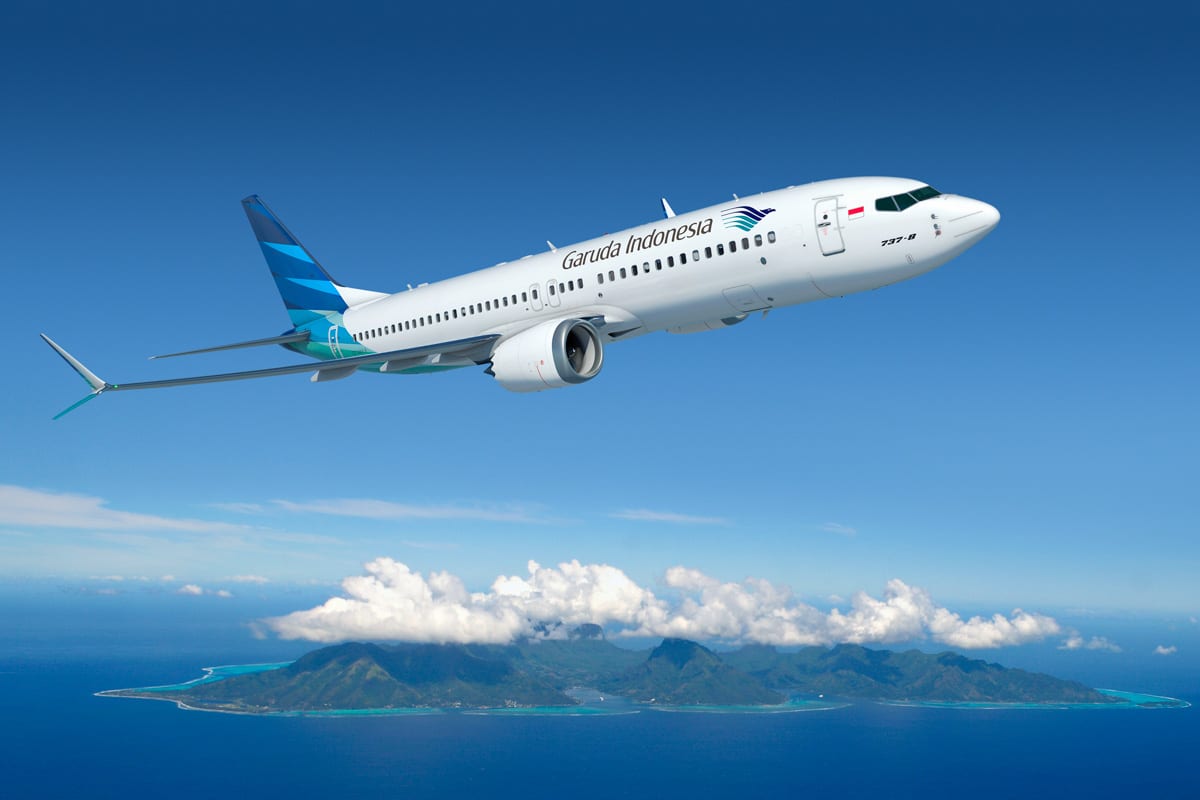
    Garuda Indonesia booked a net income of $51.4 million through the third quarter 2015, an increase of 123.4% compared to the same period last year when it incurred a loss of $220.1 million.

    Garuda Indonesia President and CEO M. Arif Wibowo said that the Company also increased total revenue from $2.83 billion through the third quarter 2014 to $2.84 billion during the same period in 2015. Meanwhile, total expenses dropped from $3.08 billion to $2.72 million.

    “Improvements in the Company’s performance are the result of strategic business development measures being carried out through the ‘Quick Wins’ program, as well as a tight cost efficiency policy that was put into effect at the beginning of the year,” he said.

    Arif, who is also the Chairman of INACA (Indonesia National Air Carriers Association), further explained that this achievement came when the airline industry is facing huge challenges, from a sluggish economy to a number of “force majeures” or natural disasters, such as volcanic eruptions and haze.

    Speaking of Garuda Indonesia’s ongoing flight network development, Citilink Indonesia’s former president said that the Garuda Indonesia Group (including Citilink) together carried a total of 24.55 million passengers during Jan-Sept 2015, or an increase of 17.5% compared to 20.89 million passengers carried during the same period in the previous year.

    Garuda Indonesia carried 17.69 million, comprising 14.51 million domestic passengers and 3.18 million international passengers, through the third quarter 2015, whereas it carried 15.56 million passengers during the same period in 2014. Its subsidiary, Citilink Indonesia, transported 6.87 million passengers between Jan-Sept 2015, an increase of 28.8% from the 5.33 million passengers carried in the same period in 2014.

    Garuda Indonesia and Citilink flight frequency in the domestic and international sectors rose from 165,642 fights in the third quarter of 2014 to 186,105 flights in the same period of 2015. In addition, Availability Seat Kilometer/ASK increased from 36.9 billion in 2014 to 38.75 billion in 2015.

    Garuda Indonesia also succeeded in increasing Seat Load Factor/SLF to 77.3% in 2015 from 70.7% in 2014. In terms of on time performance (OTP), Garuda Indonesia achieved an OTP of 88.2% in 2015, with an aircraft utilization of 09:11 hours.

    Through the third quarter 2015, Garuda Indonesia was also able to increase its market share in both the domestic and international markets. In that time, Garuda Indonesia’s domestic market share increased to 44% from the previous 37% in 2014. Meanwhile, Garuda’s international market share from Jan-Sept 2015 reached 28%, an improvement from the previous year’s 22%.

    The Garuda Indonesia Group operates a total of 181 airplanes to date, consisting of eight (8) Boeing 777-300ER, twenty-two (22) Airbus A330-200/300, two (2) Boeing 747-400, ten (10) ATR72-600, fifteen (15) Bombardier CRJ1000 NextGen, eighty-eight (88) Boeing 737-300/500/800NG, and thirty-six (36) Airbus A320, with an average age of 4.7 years. By the end of 2015, the Group will operate a total of 187 airplanes, of which 143 are Garuda Indonesia’s and 44 are part of the Citilink fleet, with an average age of 4.3 years.

    To anticipate the impact of the Rupiah’s weakening exchange rate against the US Dollar, since the first quarter 2015 Garuda Indonesia has signed hedging contracts using “Cross Currency Swaps” with several banks, on Rupiah loans into US Dollars amounting to a total of Rp2 trillion.

    By carrying out the Cross Currency Swap, the company will be able to avoid or minimize the risk of a rise in operational costs if paid in Rupiah due to the weakening of the Rupiah exchange rate against the US dollar. This is due to the fact that an airline’s operational costs that include the purchase of spare parts, aircraft maintenance, and aircraft leasing are mostly conducted in US dollar AS.

    The company is still watching market developments and at the right moment will again hedge and use Cross Currency Swap to leverage the Rupiah. This is part of the company’s ongoing Risk Management measures based on the prudence principle. Routine hedging transactions against IDR earnings and USD fuel costs have added to the risk management’s work load in the midst of an adverse economic condition at global, regional and national levels.

    Moreover, Garuda Indonesia was able to obtain new sources of funding through more competitive cost financing, and in May 2015 issued a 5-year Global Sukuk Bond worth USD 500 million with a coupon of 5.95%.

    In line with the airline’s continuous service development program, Garuda Indonesia’s cabin crew was once again presented with the “The World’s Best Cabin Crew 2015” award from Skytrax – the London-based independent airline and airport review specialist, for the second consecutive year, after beating other big players in the airline industry. During the “Skytrax Award 2015” event, Garuda Indonesia also came in eighth place in the “World’s Best Airline” list.

  • Largest 3D printing factory in SEA opens in Singapore

    Largest 3D printing factory in SEA opens in Singapore

    The largest commercial 3D printing facility in South-east Asia opened in Singapore today (Sept 28), capitalising on the rising demand for such services.

    Launched by NASDAQ-listed ­Ultra Clean Asia Pacific (UCT), which develops and supplies systems for the semiconductor industry, the UCT Additive Manufacturing Centre will target business sectors such as the aerospace, dental and medical industries. It will also offer consumer services.

    The centre, which cost more than S$5 million to establish, has 15 sets of 3D printers. There are ­12 ­employees at the facility at present, with plans for that number to double by next year, UCT said.

    “The establishment of UCT’s ­additive manufacturing facility ­reflects Singapore’s progression ­towards advanced manufacturing and engineering,” said Mr Lim Kok Kiang, Assistant Managing Director of the Singapore Economic Development Board, which supports the facility.

    “Companies can tap on Singapore’s base of skilled engineering talent, ­industry-focused public research and development ecosystem … to ­develop better products and services to serve their growing Asian customer base.”

    The Singapore Government in 2013 announced plans to set aside S$500 million over five years to support a “future of manufacturing” programme, which includes 3D printing.

    Such 3D printing functions much like conventional 2D printing. But instead of printing a flat image, a 3D printer extrudes material through a nozzle, layer by layer, to create a physical ­object.

    Although it has been around since the late 1980s, technological improvements have made the service more affordable, driving up demand.

    In Singapore, ­retail shops have reported ­increased requests from consumers seeking to print products, from figurines to jewellery.

    Mr Lavi Lev, senior vice-president of the Asia Division at UCT, added that 3D printing allows individuals and companies to manufacture parts with no capital equipment investment.

    “It allows large corporations to ­increase their R&D pace through rapid prototyping. In particular, the medical and aerospace sectors are ­using 3D printing extensively,” he said.

    For instance, he explained, if someone breaks a bone, they can take an X-ray or CT scan of it, and 3D print a bone implant.

  • Philippines’ BDO sets up first GCC branch

    Philippines’ BDO sets up first GCC branch

    Manila-headquartered BDO Unibank, the largest bank in the Philippines, has become the first Filipino bank to set up an office in the Gulf Cooperation Council (GCC) where it will operate within the premises of the UAE’s Dubai International Financial Center, a financial free zone and one of the largest financial hubs in the Middle East.

    The establishment of a GCC office is a reaction to the growing number of Philippine expats in the region and their banking needs, Nestor Tan, president and CEO of BDO Unibank, explained. Filipinos form one of the largest expat communities in the GCC, with an estimated 700,000 of them living and working in the UAE. More than 1.2mn are said to stay in Saudi Arabia and over 200,000 in Qatar, and all are the source of significant money flows back to the Philippines.

    “Setting up a representative office in the Dubai International Financial Center was driven by our objective to further widen our overseas network to provide support to Overseas Filipino Workers (OFWs) and residents,” Tan said, adding that “the expansion into Dubai will boost our capability to service the needs of our countrymen in the entire Middle East and, hopefully, make the bank a catalyst for the progress of financial inclusion of the expatriates in the Philippines.”
    The new branch comes on top of several partnerships BDO Unibank already has in the Gulf. It struck a deal with Emirates NBD in January this year to provide quick money transfer services to the Philippines. It also cooperates with UAE Exchange, Al Ansari Exchange and Al Ghurair Exchange for remittance services, as well as with Gulf Exchange in Qatar and other banks and financial service providers in Saudi Arabia, Oman, Kuwait, Bahrain and Jordan.

    OFWs are the third largest source for remittances globally, with $28bn sent back home in 2014, only being topped by Indians and Chinese who sent home the biggest chunk at $70bn and $64bn, respectively. With regards to Filipino remittances, estimates are that more than half of total remittances to the Philippines are originating from the GCC, making it a huge business for regional money remittance services.

    The new branch in Dubai, however, aims at widening the scope of banking services on offer for Filipinos, Tan indicated, as well as at extending the reach of BDO Unibank’s portfolio within GCC countries as the bank also wants to address possible Philippine expat and Middle East investors and provide more sophisticated financial services than just remittances. The bank offers a variety of corporate, commercial and retail banking services, including traditional loan and deposit products. This is in addition to treasury, trust banking, private banking, wealth and cash management, leasing and finance, insurance, retail cash cards and credit card services.

    BDO Unibank – its full name is Banco de Oro Universal Bank – was founded in 1968 as a small savings bank in Manila and became a universal bank only in 1996. Today, it has over 870 branches in the Philippines and one other foreign branch in Hong Kong. It is one of the many banks owned by Chinese-Filipino businessmen in the Philippines, namely tycoon Henry Sy – listed by Forbes Magazine as the richest man in the Philippines – through his conglomerate SM Group of Companies, one of the country’s largest business groups with activities spanning from retail, mall operations and property development to financial services.

    Since 2001, the bank grew through remarkable mergers and acquisitions, among them the Philippine operations of Banco Santander, Citibank, UOB, Deutsche Bank and GE Money. In March 2008, it was listed on the Philippine Stock Exchange. Its main competitors on the home soil are Metrobank, owned by Chinese-Filipino business tycoon George Ty, and Bank of the Philippine Islands (BPI), the oldest bank in the Philippines and a subsidiary of Ayala Corp, the country’s largest business conglomerate majority-owned by the influential Ayala family, which is of Spanish descent.

  • China’s Taobao villages show e-commerce can transform rural India

    China’s Taobao villages show e-commerce can transform rural India

    Narendra Modi’s Digital India is a scheme that includes connecting all Indian villages with broadband. He says this will empower rural Indians, without spelling out all the details. He should learn from China’s Taobao villages, which have been transformed by e-commerce.

    China’s e-commerce giant, Alibaba, has pioneered rural e-commerce through its rural arm, Taobao, claiming this has created 280,000 rural jobs in 2014 alone. The Chinese government has picked 55 poor counties for grants to develop industries using e-commerce. Taobao villages have risen from 20 in 2013 to 211 in 2014, and the trend continues. These villages now cover 70,000 rural producers.

    Some of the output of rural industries and farms is destined for big cities. But a lot is also consumed in other villages. E-commerce provides Chinese villagers the huge choice of goods enjoyed by urban folk. India’s rural market is booming, but e-commerce India is associated almost exclusively with urban distribution. We need rural e-commerce for Indian Taobaos.

    Indian villages desperately need low-end manufacturing to create jobs for youngsters who have no interest in farming. Large industries cannot do the job. What’s needed is infrastructure plus marketing and financial linkages that enable rural entrepreneurs to start small-scale industries.

    Alibaba defines a Taobao village as a cluster of rural e-tailers where at least 10 per cent of village households engage in e-commerce or at least 100 online shops have been opened by villagers, and transaction volume is at least RMB 10 million ($1.6 million). Indian Taobao equivalents will have to start with more modest targets: they have limited purchasing power and limited production capacity . But, as in China, they have access to the cheapest rural labour, giving them the potential to compete, provided they overcome logistical disadvantages.

    City manufacturers have the best infrastructure and marketing networks, and so dominate in most countries. Alibaba has shown that Taobao villages can use the e-commerce route to overcome their logistical disadvantages. Encouraging the clustering of rural units has helped create the minimum trade volume needed to attract trucking and financing services. Alibaba itself has a financing arm. None of this requires government subsidies. But government investment in rural roads, electrification and broadband is necessary .

    In effect, Taobao villages transform villages into towns. The first Taobao village, Dongfeng, became a centre for low-cost furniture production by over 1,000 households. With access to cheap local timber and labour, they were able to quote competitive e-prices.They immediately got orders, which in turn stimulated supporting services. By 2014, the Dongfeng region had 40 logistics companies providing transport.

    CNBC reported last year on Beishan, another Taobao village, that once specialized just in breadmaking. It now has a company with annual sales of $8 million worth of camping gear, such as sleeping bags, beating big brands.
    India has long tried to promote rural industries through its Khadi and Village Industries Commission, which operates through state khadi departments. KVIC runs a wide network of “Khadi Gram Udyog” shops. The results are unsatisfactory despite substantial subsidies and reservation of various products (like saris) for handlooms. The ethos of KVIC is Gandhian, not commercial. A women’s group like Lijjat Papad has been far more successful, because it is commercially oriented, and not run by bureaucracies.

    The curse of every rural area is the huge gulf between what the farmer or rural artisan gets, and he much higher price paid by urban consumers. To some extent this is justified: the cost of quality con rol, grading, transport, wholesaling and retailing is substantial. Nevertheless, e-commerce holds the promise of slashing the logistical costs and linking he producer directly to consumers, helping the rural producer get a better price even as the consumer gets a lower price.

    This indeed was the original aim of ITC’s echoupal, which got much publicity but achieved only limited success. Eliminating the middleman was again the theme of “farm-to-fork” giant retailers like Reliance. Here too, the results have been modest, even in states that abolished compulsory sales through government mandis.

    E-commerce has the potential to beat e-choupals and retail chains. It can go far beyond agriculture to rural manufacturing. But it will require supporting investment in rural roads, electrification and broadband. This cannot be done by state KVIC departments. Rather, chief ministers will have to push for good rural infrastructure, plus a climate where doing business becomes easy. Once that is done, small industries and transport companies will quickly come up on their own. E-commerce companies will rush in, just as Alibaba has in China.

    Modi won the general election promising millions of jobs for villagers. Critics say this is a pipe dream. But China has shown that the Taobao route can indeed create millions of rural jobs. So can India.

  • Fung Group launches omnichannel retail lab

    Fung Group launches omnichannel retail lab

    Virtual-reality fitting rooms, magic mirrors and 3D printing are among innovations being trialled at a large-scale laboratory in Shanghai where businesses can experiment with omnichannel techniques and trends shaping the future of retail.

    The initiative is led by the Fung Group, the Hong Kong-based multinational with international brands and retail operations across China, and parent of sourcing giant Li & Fung.

    Named ‘Explorium’, the laboratory is being operated in partnership with data and analytics technology leader IBM, and brand activation company Pico. It is located within more than 23,000 sq m (nearly 250,000 sq ft) of trade exhibition space at LiFung Plaza, where it provides a controlled setting for businesses to observe and explore in real time how consumers interact with new technologies, products and environments.

    Brands are also using Explorium to understand opportunities in China for their products and services, based on consumer feedback collected and analysed at the laboratory. Retailers are using it to test different store concepts.

    Fung Group chairman Dr Victor Fung says the initiative is sparked by challenges occurring in retail across the world, especially in China.

    “Everything we thought we knew about how consumers decide upon what they buy, where they buy, when they buy, how they buy and how they pay is changing,” he explains.

    “Technology is the catalyst empowering consumers. The internet and mobile communications are disrupting the way consumers behave and, in so doing, providing unique opportunities for retailing to come up with new business models. Nowhere is this more evident than in China, one of the world’s most exciting, challenging retail markets.”

    Dr Fung adds that he believes the future for retail in China and globally is omnichannel – either online-to-offline (O2O) or a combination of bricks and clicks.

    “Chinese consumers are setting shopping trends globally, especially with their avid use of social media. And Shanghai is home, arguably, to China’s most vibrant, tech-savvy consumers. That is why we chose Shanghai as the launch pad for this major Fung Group initiative.”

    Participating brands and retailers are encouraged to experiment, incubate and iterate at high speed “while minimising their cost and risk,” with no preconceived ideas about which omnichannel business models would emerge from Explorium.

    IBM is gathering data in the Explorium and analysing it to help retailers “deliver personalised, relevant marketing interactions to consumers in real-time, delighting them and differentiating the retailer from the competition,” according to IBM global retail industry leader Stephen Laughlin.

    Consumers will be able to opt-in to receive offers and rewards from their favourite brands via social media and their mobile device – all tailored to their location and unique preferences.

    While children’s products such as toys are a special focus during Explorium’s first phase, it will go on to feature women’s and men’s apparel.

    “Explorium’s priority in coming months is to design, build, run and measure a greater number and variety of experiments to produce a pool of data that will enable participating brands and retailers to obtain unique insights for their individual businesses,” explains the project’s Shanghai-based director Simeon Piasecki.