Category: General

Retail News Asia is committed to providing both local and global retailers with the latest General Retail news throughout the Asian market. This on a daily base.

  • Mall Group chairwoman wants lower import tariffs

    Mall Group chairwoman wants lower import tariffs

    “Thailand will be part of the Asean Economic Community [AEC], which comes into effect at the end of this year, with a combined 600-million population forming one big single market, representing 10 per cent of the world’s population.

    “AEC transformation will allow Thailand to become a tourist-destination hub of the world, benefiting from the country’s advantages, such as its strong logistics network and geographic location, plus dynamic growth from emerging markets in the region,” she said.

    However, the Kingdom’s current import duty charged for fashion and cosmetics brands is too high at between 30 per cent and 40 per cent, resulting in a loss of competitiveness compared with rival shopping destinations in the region, she stressed.

    “I would like the government to revise [the tax structure] and reduce the import tariff for fashion brands to about 10 per cent, so that we can compete with rival countries and make Bangkok truly an ultimate shopping destination of the world,” said The Mall Group chief.

    She added that Thailand was now facing a serious labour shortage, with an unemployment rate of just 0.03 per cent.

    The government could resolve the labour-shortage problem in the retail sector by allowing migrant workers from Myanmar, Cambodia and Laos to do jobs legally, especially in front-office work, such as sales representatives in stores, she suggested.

    “Between 30 and 40 per cent of shoppers visiting modern retail malls in downtown Bangkok, such as Siam Paragon, are foreign tourists, and 50 per cent of them are Asian.

    “In the retail sector, we [Thailand] play a leading role in the world in terms of innovation and creativity, as well as a sense of fashion. What we require by way of assistance from the government is in the area of political stability as well as tourism support, especially via a reduction in import duty,” she said. The country’s modern retail sector is, however, lagging behind other countries in regard to new technology development, such as e-commerce, she said.

    “For The Mall Group, the sales contribution from e-commerce activity is not significant, at less than 1 per cent of our annual turnover at the moment. And we don’t think the contribution will be higher than 1 per cent of sales over the next five years,” said the chairwoman.

    The group’s policy is to focus on developing mega-retail projects in Bangkok and other tourist destinations, including Hua Hin and Phuket.

    “We want to make the country good enough in terms of retail development, before expanding to somewhere else. Thailand has still a tremendous opportunity for new retail developments and world-class attractions for foreign tourists,” Supaluck said.

    By way of example, she cited Phuket’s potential to be promoted as a world-class resort island with the addition of key infrastructure, such as international convention, retail and entertainment complexes, and airline and cruise facilities.

  • Black Friday Campaign Provides Shopping Catalyst in South Korea

    Black Friday Campaign Provides Shopping Catalyst in South Korea

    South Korea is trying to stem a drop in retail spending by replicating an American shopping tradition — Black Friday.

    More than 34,000 stores, including three-quarters of the country’s department stores, slashed prices by as much as 80 percent in the Korean version of bargain-oriented Black Friday through Oct 14. The two-week campaign was launched by the Korean government in an effort to offset sales lost to online commerce and to attract shoppers from neighboring China and elsewhere back into stores.

    In Korea, stores already hurt by online shopping were dealt another blow by the Middle East Respiratory Syndrome, or MERS, this year, which led to an 12 percent drop in revenue at department stores in June and another 6.5 percent decline in August. In July, sales were up very slightly, at 0.7 percent, from a year earlier as Koreans shopped ahead of the summer holiday season.

    The MERS virus has infected 186 people and killed 36 since the outbreak on May 20. It scared away tourists, reducing the number of foreign visitors by 53 percent in July, and another 27 percent in August, from a year earlier.

    Though the fallout from MERS subsided after the government declared July 28 that the virus was no longer a concern, the number of foreign tourists still continued to decline, and was down 3.8 percent in September from the previous year.

    For department stores, that has created a bleak situation, as Chinese tourists in particular are important for strong sales. So the government stepped in, figuring a western-style Black Friday campaign — which has become a seasonal retail driver in the U.S. with bargain-basement deals the day after Thanksgiving — would help stimulate interest in going back into stores in Korea.

    Sales jumped. For the two weeks through Oct. 14 at three major department stores — Lotte, Hyundai and Shinsegae — sales rose 24 percent from a year earlier, according to the finance ministry. Korean discount stores including E-mart, Home Plus and Lotte Mart reported a 3.6 percent revenue increase in the same period. The ministry estimates the overall upswing in retail sales to add about 0.1 percentage point to this year’s growth, forecast at 2.7 percent by the Bank of Korea.

    “It’s a relief, albeit temporary,” said economist Lee Jun Hyup at Hyundai Research Institute, a Seoul-based private think tank focusing on the economy. “An upturn would be meaningful in that the campaign lifted consumer spending in the weeks following the national Chuseok holiday, when people tend to cut down on shopping.”

    South Korean policymakers have been trying to expand the economy with temporary consumption tax cuts on cars and home appliances. Meanwhile, exports — which account for about half of the nation’s economic output — fell every month this year.

    Seoul’s plan is to host similar retail campaigns in the future. If successful, this could redirect local consumers back to Korean malls, which lose about 800 billion won ($707 million) every year during the peak shopping period of November and December to U.S. retailers such as Amazon.com Inc., said Lee Hyoung Ryoul, the finance ministry director in charge of organizing the event.

    In South Korea, the jicgoojok — literally, a tribe of direct buyers — increasingly buy goods from overseas online retailers at much better prices than offered at local stores. The trend is a challenge to Korea’s retailers, which have enjoyed agreements with manufacturers that allow them to charge a premium for foreign and domestic products with little concern for competition.

    A report by the Korea Customs Office last year showed that some import goods sold through exclusive dealerships including wine, lipstick, cheese and car tires were as much as 9.2 times more expensive in Korea than they were overseas.

    Unlike the U.S., where retailers control prices and offer discounts to clear out inventories ahead of the Christmas shopping season, Korean department stores often lease space to vendors without control over inventories. To stem the retail decline, the government would have to include more manufacturers and not just retailers in future Black Friday events, Lee at HRI said.

    While early results show the shopping event was successful, the discounts were limited. Most foreign brands in the high-end category, such as cosmetics and jewelry, didn’t participate, unless they were featured at select shops. Home-appliance stores directly controlled by Samsung Electronics and LG Electronics also weren’t part of the sales, according to the finance ministry.

    Still, some had their own sales — Tommy Hilfiger Kids at Lotte’s headquarters store was offering some items at a 30 percent discount last week in an event separate from the nationwide Black Friday.

    Some shoppers were disappointed that the discounts weren’t deeper — especially as they had been heavily promoted.

    “This is not much different from usual sales department stores regularly hold,” Shin Ji Hye, a 37-year-old mother said while taking a break from shopping for her toddler daughter in downtown Seoul. “I have seen some discounts on women’s clothing floors but most of them offered 10 percent. I think I will go back to online malls and wait for the real Black Friday in the U.S.”

  • Airlines welcome visa free facility, offering discount

    Airlines welcome visa free facility, offering discount

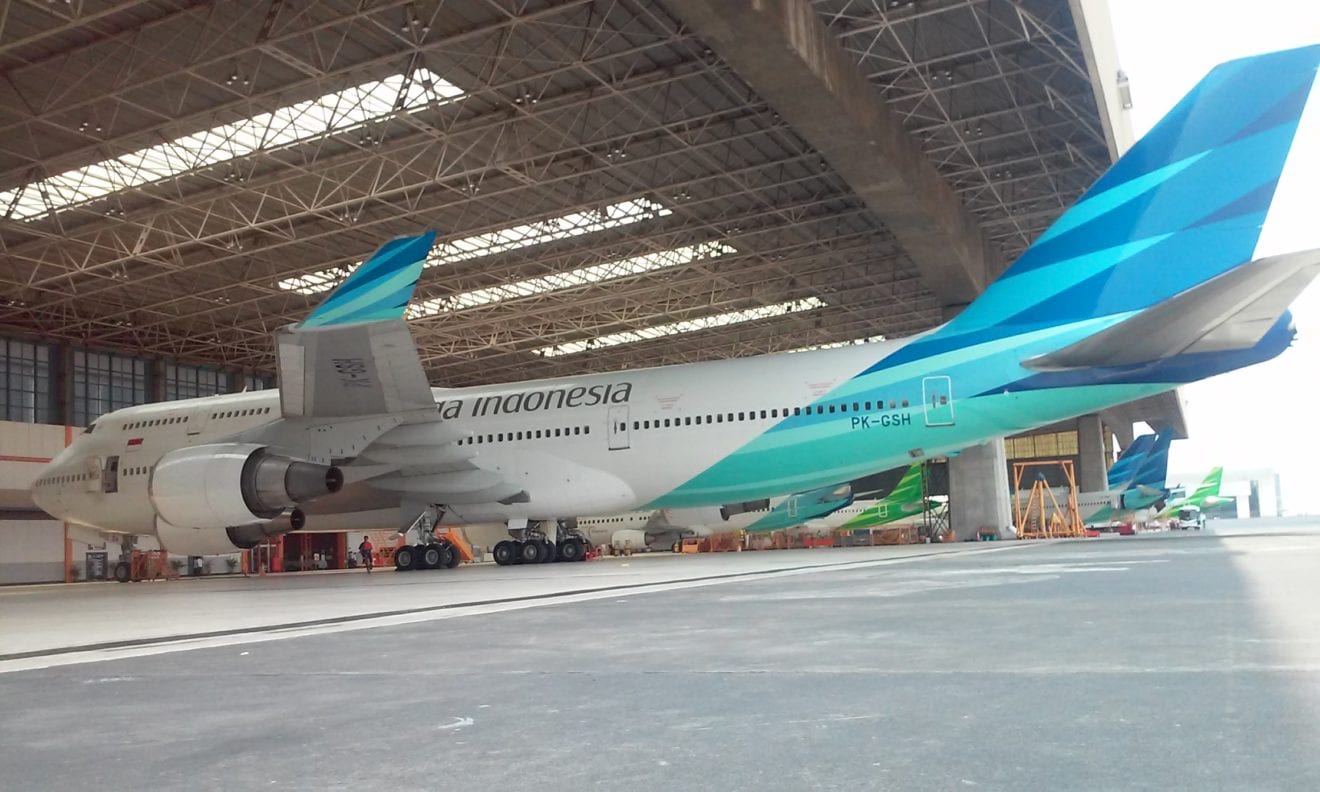
    Airlines began to race offering discount in welcoming the government policy which offers visa free facility for short term visitors to Indonesia from 75 countries.

    The facility is expected to draw more visitors to the country amid the global economic malaise.

    Indonesian airlines saw the policy as benefiting air transport business that they are ready to offer significant discount for ticket price.

    Commercial Director of AirAsia Indonesia Andy Ardian Febryanto said the budget airline offered a 30 percent discount for international flights.

    Discounts are given for direct flights such as from Surabaya- Kuala Lumpur, Surabaya-Johor Bahru, Surabaya-Penang and Surabaya-Bangkok, or “Fly-Thru” flights or with transit in Kuala Lumpur or Bali, such as Surabaya-Taipei, Surabaya-Beijing, Surabaya-Seoul, Surabaya-Tokyo and Surabaya-Sydney, Andy said here on Thursday.

    “Surabaya always has a special position as the main destination and market. Although we are aware amid the worrying condition of the economy interest in traveling has dropped sharply by 70 percent , but we are optimistic that the visa free policy would recover the interest in traveling abroad,” he said.

    He said there are 22 travel agents offering discount for international flights effective as from November 1 until April 2016.

    Therefore, foreign travelers including tourists , business visitors and others could take advantage of the visa free travel to Indonesia, he added.

    Currently the airline could only offer discount for international routes as there is regulation restricting freedom to offer discount for domestic flights, he said.

    Under the new policy, visa free facility is offered for short term visitors to Indonesia from South Africa, Algeria, the United States, Angola, Argentina, Austria, Azerbaijan, Bahrain, the Netherlands, Belarus, Belgium, Bulgaria, Czech Republic, Denmark, Dominica, Estonia, Fiji, Finland, Ghana, Hungary, India, Britain, Ireland, Island, Italy, Japan, Germany , Canada, Kazakhstan, Kyrgyzstan Croatia, South Korea, Kuwait,Latvia, Lebanon, Liechtenstein, Lithuania, Luxembourg, the Maldives, Malta, Mexico, Egypt, Monaco, Norway, Oman, Panama, Papua New Guinea, France, Poland, Portugal, Qatar, China, Romania, Russia, San Marino, Saudi Arabia, New Zealand, Seychelles, Cyprus, Slovakia, Slovenia, Spain , Suriname, Sweden, Switzerland, Taiwan, Tanzania, Timor Leste, Tunisia, Turkey, United Arab Emirates, Vatican, Venezuela, Jordan, and Greece.

  • ViewQwest exports Singapore fibre broadband network design to Oman

    ViewQwest exports Singapore fibre broadband network design to Oman

    Singapore’s fibre broadband service provider ViewQwest has exported its local network know-how to Oman, which plans to bring fibre links to some 90 per cent of homes in its capital city of Muscat and 35 per cent of other governorates.

    This translates to some 225,000 homes in Muscat, which is expected to start trialing Internet surfing at speeds of up to 1Gbps – or 100 times faster than current technologies – on November 18.Commercial launch is scheduled for an unspecified date next year.

    Oman has 500,000 households in total.

    The architecture of Oman’s fibre broadband network is similar to that of the Singapore government-backed Next Generation Nationwide Broadband Network (NGNBN), from which ViewQwest leased wholesale fibre capacity to provide a retail service.

    In Singapore, fibre links are brought all the way to homes with a termination point installed within the home. Similarly, Oman’s government-owned Oman Broadband Company is bringing fibre links to just outside homes. When a customer places an order for broadband service, the fibre optic cable is then pulled into the home with the installation of a termination point.

    “We are inspired by Singapore’s strategic approach to the implementation of NGNBN and we hope to emulate that success in Oman as we connect homes and offices nationwide,” said Ghaith Al Darmaki, programme director of Oman’s sole fibre broadband service provider, Awasr.

    “Our network has been built using the same equipment and methods as ViewQwest,” he added.

    Said Vignesa Moorthy, chief executive officer of ViewQwest: “We are proud of our role in Singapore’s successful transition to a smart nation and look forward to creating a similar experience in Oman.”

    ViewQwest is not the only local fibre broadband provider which ventured overseas. Late last year, MyRepublic started its fibre broadband services for business users in New Zealand.

    The Infocomm Development Authority (IDA), which spearheaded Singapore’s NGNBN, said it is delighted that local companies are making waves overseas.

    “The learnings that these companies have picked up through their successes here will be instrumental in helping them address the global market opportunities to propel their international growth,” said IDA assistant chief executive Khoong Hock Yun.

  • UOB sells Brunei retail banking business to Baiduri Bank for $46.6m

    UOB sells Brunei retail banking business to Baiduri Bank for $46.6m

    With the approval of a court declaration, banking and credit facilities made to customers of UOB Brunei and the current, saving and fixed deposit accounts maintained by the clients of UOB Brunei will be transferred to Baiduri.

    According to UOB, the sale consideration of $46.6 million, less the deposits in transferred accounts, will be settled as a cash payment. Arrived at on a willing-buyer-willing-seller basis, it took into consideration account income potential and estimated loan defaults of the retail banking business.

    The sale is part of a move to “rationalise its businesses and operations to achieve cost efficiencies and to focus on building a business platform that is consistent with the business prospects in the country”.

    According to official statements, the sale of its Brunei retail banking unit is also not expected to have any impact on UOB Group for FY2015.

    UOB Brunei will continue to offer wholesale banking services to Brunei clients, as well as continuing its asset management presence there through UOB Asset Management.

    This latest move gels with UOB’s aim of developing itself as a super-regional bank and growing its presence in the Asia Pacific (APAC) region, given the opportunities presented by the growth narrative defining the current economic climate of the region – notwithstanding China’s market turbulence – and the growing middle class of the region.

    In August 2014, Wee Ee Cheong, the CEO of UOB, explained to The Straits Times that due to the acquisition of Overseas Union Bank (OUB) in 2001 and its integration into the UOB Group, the large market concentration in Singapore forced them to take a regional growth approach. Wee had told the Straits Times: “How would the group grow from there? And so we said it would be timely for us to expand regionally to have an effective presence in South-east Asia.”

    Wee explained: “…growing our intra-regional businesses would make our earnings more sustainable and deepen existing relationships. If I have a regional banking relationship with my customer and the banks with me in Indonesia and Thailand because of my footprint, it will be easier for us to grow the banking relationship.”

    Since 2013, its profit growth has become skewed to foreign markets beyond its base and global headquarters in Singapore. The divestment reflects a move to consolidate its holdings in the region, as Brunei is the smallest market in the Southeast Asian region. This move is aligned with its decision to pursue organic growth and M&A opportunities as part of expanding its business operations.

    In June 2015, it disclosed that it was in the process of pursuing a digital revamp, given the recent growth of the worldwide financial technology space. As of 21 October 2015, a Bloomberg quote placed its market capitalisation at S$32.03 billion (US$23 billion).

  • LuLu Group to open first Indonesian outlet by end-2015

    LuLu Group to open first Indonesian outlet by end-2015

    The first LuLu Hypermarket in Indonesia will be opened in Jakarta by the year-end as the group has announced plans to invest $500mn in the country over the next five years. The announcement came during the visit of Indonesian President, Joko Widodo to Abu Dhabi. He visited LuLu Hypermarket along with a high-level delegation at Khalidiyah Mall in Abu Dhabi.

    “With an initial investment of $300mn in the first phase, we plan to open some 15 hypermarkets by the end of 2017 and a central logistics and warehousing facility in Jakarta. These projects are likely to generate more than 5,000 job opportunities for Indonesians and help train them at all levels” said MA Yusuffali, LuLu Group managing director. The fact that we are going to Indonesia with our Halal Hypermarket concept, is giving us the encouragement to look for a wider market segment there” Yusuffali said.

    Apart from Jakarta, LuLu intends to open hypermarkets in Bandung, Solo, Semarang, Surabaya and Yogyakarta.
    “We also plan to set up contract farming to ensure continuous supply of high-quality products and support the Indonesian agriculture sector,” Yusuffali added.

    The Indonesian president is on a five-day state visit to Saudi Arabia, the United Arab Emirates and Qatar, to boost the country’s ties with the three countries, particularly on investment, trade and Indonesian migrant worker protection.
    Coordinating Minister of Economy Darmin Nasution, Trade Minister Thomas Lembong, Minister of National Development Plans Sofyan Djalil, State Secretariat Minister Pratikno, head of the Investment Coordinating Board Franky Sibarani and Cabinet Secretary Pramono Anung were also part of Widodo’s delegation.

    The Indonesian president was given a rousing welcome at the LuLu Hypermarket by Yusuffali; Saifee Rupawala, CEO; Salim MA, director; Rajmohan Nair, director – LuLu (Far East Operations); and a large number of Indonesian expatriates.
    President Widodo and the accompanying delegation were taken to a guided tour of the hypermarket by Yusuffali who briefed him about specialties of the retail store.

    The president later said his visit to LuLu Hypermarket was to see Indonesian products mainly agricultural products and asked Yusuffali to import more products from villages and towns in Indonesia. A LuLu release said Widodo inquired about the prices as well of the various Indonesian products imported to Abu Dhabi.  The LuLu chain currently operates some 117 stores across the UAE, Oman, Bahrain, Kuwait, Qatar, Saudi Arabia, Yemen, Egypt, and India.

  • Indra Philippines mulls tie up with Indonesia’s Salim Group

    Indra Philippines mulls tie up with Indonesia’s Salim Group

    Tech company Indra Philippines Inc is mulling business expansion in Southeast Asia with a possible tie-up with the Indonesia-based conglomerate Salim Group, reports said.

    Avionics and air defense radar systems are some of the main business targets of Indra in the region, according to Manuel Pangilinan, chairman of the Metro Pacific Investments Corp (MPIC).

    Headquartered in Jakarta, Salim Group has subsidiaries operating in agribusiness, food, distribution and retail, telecommunications, automobile, building materials, infrastructure, real estate, hotels and resorts, banking and financial services, international trade, including chemical manufacturing.

    Only last week, MPIC bought a 26 per cent stake in Indra from its unit the Manila Electric Company (Meralco) for $7.1 million, reducing the latter’s ownership to 24.95 per cent.

    Indra has worked on a number of large systems projects for various MPIC portfolio companies. MPIC is now seeking to further commercialize the expertise developed as part of these projects.

    Indra is a joint venture between Meralco and Indra Sistemas SA of Spain. It has been operating in the Philippines for the past 18 years as provider of information technology solutions to various businesses and industries with engagements in utilities and telecommunications, financial services and public administration.

    The company offers its customers management solutions – consultancy, project development, integration and implementation to IT outsourcing, and business process outsourcing (BPO).

    MPIC and Meralco’s last trading prices remained at P5.07 and P308 since Friday.

  • Dollar drops against yen as risk-off mood persists

    Dollar drops against yen as risk-off mood persists

    The dollar weakened against its main rivals Wednesday after a spate of weak economic data and the Federal Reserve’s Beige Book painted a troubling picture of the U.S. economy.

    The ICE U.S. Dollar Index DXY, +0.12% a measure of the dollar’s strength against a basket of six rival currencies, was down 0.5% to 94.2800.

    U.S. producer prices fell 0.5% in September, outpacing an expected decline of 0.2% from a survey of economists conducted by MarketWatch, while retail-sales increased by just 0.1% in September. A measure of retail sales in August was revised lower to show no change.

    The Fed’s Beige Book, a collection of anecdotes from business leaders in each of the Fed’s 12 regions, indicated some slowing in the economy.

    Emerging-markets currencies also put in a strong performance Wednesday, with several — including the Brazilian real USDBRL, -0.0525% South African rand USDZAR, -0.2130%  and the Turkish lira USDTRY, -0.0686% — rising nearly 2% against the dollar.

    “The combination of [the retail sales and PPI] and the pretty awful data we’ve seen thus far in September is pushing back when the Fed will hike, lowering the odds of December and raising the odds of 2016,” said Mark McCormick, a global FX strategist based in New York.

    The U.S. currency was slightly weaker against the euro EURUSD, -0.0349% which rose to $1.1473, up 0.8% from $1.1378 late Tuesday in New York — its highest level since Sept. 18, according to FactSet data.

    The greenback USDJPY, +0.25%  was at ¥118.75, down 0.8% from ¥119.74 Tuesday, its weakest level since Oct. 2.

    Concerns about stubbornly low inflation and deteriorating jobs growth caused two voting members of the Fed’s rate-setting committee — Fed Governors Lael Brainard and Daniel Tarullo — to warn against a premature rate increase during speeches earlier this week. While Brainard refused to speculate about timing, Tarullo said outright that he doesn’t expect the Fed to hike in 2015.


  • Manny Villar eyes expansions in retail, real estate

    Manny Villar eyes expansions in retail, real estate

    Former Senator Manny Villar is all about business these days.

    Villar said his company will continue to expand into the retail industry, seeing it as an integral part of the firm’s business model.

    As chairman of MBV Retail, Villar has launched a convenience store, department store, and housing goods store under the “All” brand.

    “We have entered in a big way into retail because we feel that retail and malls, they go together. We are very happy with the results, and we are encouraged by the results,” Villar told ANC’s Cathy Yang in an exclusive interview at the sidelines of the Forbes Global CEO Conference in Solaire.

    MBV Retail was formed in 2013 to carry the brands All Shoppe, All Home, and All Day, which is the only local player in a very competitive convenience store business.

    “Family Mart, 7-Eleven and Mini Stop are Japanese brands, but the only Filipino brand is All Day. And I’m very proud of that,” said Villar.

    Villar is also chairman of property firm Vista Land, which he also expects to continue expanding its reach.

    He said that from the current 92 cities and municipalities nationwide, Vista Land is looking to expand its presence to 120 cities and municipalities.

    “There’s no limit as to how far we can go,” he said.

    Villar believes that 2015 will continue to be a banner year for the property industry in the country.

    “I don’t see any change in 2015, there are challenges though. The world market is not as stable now, with what’s happening to China, and capital markets. But the Philippines is doing OK, since we’re in the Philippines, we’ll be OK,” the former senator said.

    Villar is the 13th richest man in the Philippines with a net worth of $1.5 billion. His wife, Cynthia, took his place in politics, something the former Senate president said will not be part of his plans in the near future.

    “I’m happy where I am now, I’m enjoying business. You can still do public service while in business, that’s what I discovered. That makes me happy,” he said.

  • APAC airports rank top for international traffic

    APAC airports rank top for international traffic

    For the first time in 2014, Asia Pacific’s airports collectively qualified as the world’s number one region for commercial passenger air traffic, handling 2.3bn passengers in 2014 and leaving second-ranked Europe trailing with ‘just 1.8bn’, according to Airports Council International (ACI).

    However, DF&TR industry executives know only too well that dynamic spending patterns at airports are not always ‘guaranteed’ by sheer passenger numbers, especially considering the multiple factors that can adversely influence customer spending.

    As Asia’s leading airport with a 6.1% rise to 62.9m international passengers last year, Hong Kong International Airport (HKIA) appears to be doing reasonably well however.

    It has continued to see healthy HY1 traffic growth to 33.6m to the end of June 2015, but there is certainly concern, as downtown retail sales of luxury goods to previously high-spending Chinese visitors fall dramatically.

    While Hong Kong Airport is also expanding with its Midfield Concourse, due to open at the end of this year, so is Asia’s second biggest airport at Changi in Singapore.

    Last year, Changi’s traffic grew by just 1% to 53.2m, but its shops generated retail sales of more than S$2bn ($1.50bn) in 2014 from an average of over 120,000 transactions a day, according to Lim Peck Hoon, Executive Vice President Commercial, Changi Airport Group (CAG).

    This was achieved from a total of 54.1m passengers, corresponding to a marginal 0.7% rise on the 2013 number, reflecting CAG’s cautionary comments last year that it was expecting slower traffic growth this year.

  • Lotte chief unseated from group’s virtual holding firm

    Lotte chief unseated from group’s virtual holding firm

    In a hastily arranged shareholder meeting in Japan, Lotte Group Chairman Shin Dong-bin lost his seat on the board of Kojunsha, which is at the apex of the group’s entire governance structure, with a 28 percent stake in Lotte Holdings, the group’s holding firm, according to his elder brother Shin Dong-joo, who owns a 50 percent stake in the Japanese package manufacturing firm.

    The group’s business spans from luxury hotels to amusement parks, mostly located in South Korea and Japan.

    Dong-bin has a 38.8 percent stake in Kojunsha, and their father and group founder Shin Kyuck-ho owns 0.8 percent.

    But Lotte Group said earlier even if its chairman were to be removed from Kojunsha’s board, it would have little impact on the group management.

    Lotte Holdings is 28 percent owned by employees, 20 percent by affiliates and 11 percent by special investment vehicles.

    Lotte, a retail giant, has been mired in the family squabble involving the founder and his two sons, who are sparring to bolster their grip on the group.

    In August, Dong-bin bagged a landslide win at a shareholders meeting for Lotte Holdings, in what was thought to be the end of the family squabble.

    Last week, Dong-joo said he will lodge suits against his younger brother to regain the helm of the group.


  • Sydney hosts Indonesia AirAsia X

    Sydney hosts Indonesia AirAsia X

    “We’re pleased to welcome Indonesia AirAsia X to Sydney, providing more choice for Sydneysiders travelling to Bali, as well as greater connectivity to Indonesian and Asian destinations from the airline’s Bali hub,” Sydney Airport managing director and chief executive officer Kerrie Mather said.

    “We’re thrilled that Sydney Airport is now the world’s leading low-cost long-haul airport, with five international low-cost long-haul carriers.”

    Bali is Australia’s largest outbound leisure market. Around 416,000 Australians travelled from Sydney to Indonesia in the 12 months to July 2015, an increase of eight per cent on the prior corresponding period.

    “More than 555,000 passengers travelled between Sydney and Indonesia in the past year, and this new service will significantly increase capacity to one of Sydney’s favourite travel destinations in time for the summer holidays,” Ms Mather said.

    Indonesia AirAsia X CEO Dendy Kurniawan, who touched down in Sydney on the inaugural flight, operated by an A330-300 aircraft, said that Australia is an important market to Indonesia AirAsia X and the airline is committed to further strengthening its presence in Australia.

    “We are delighted to serve direct flights between Bali and Sydney, providing Sydneysiders the opportunity to explore Bali and beyond at affordable fares. From Bali, our guests can fly onwards to many exotic destinations within Indonesia such as Jakarta, Bandung, Surabaya and Yogykarta,” Mr Kurniawan said.

    Indonesia AirAsia X is the fourth airline servicing the Sydney-Bali route

  • Walmart China partner sells out

    Walmart China partner sells out

    Walmart China’s local business partner wants out of its joint venture.

    State-backed China Resources Group has put the minority interests it has in 21 Walmart China stores on the market, seeking US$525 million. Most of the interests equate to about 35 per cent of the respective stores.

    China-based spokesman for Wal-Mart David Fu confirmed the sale in an email to Reuters. He said the firm respected the “investment decision” of its partner.

    “Wal-Mart believes that the transfer of minority interest will not influence Wal-Mart’s operation and development in China,” he said.

    The affected stores are located in various parts of China, including the western Sichuan province and the capital city Beijing.

  • Iconic Bangkok market faces bulldozers

    Iconic Bangkok market faces bulldozers

    Famous Bangkok market Saphan Lek is to be destroyed by order of the city’s Metropolitan Administration.

    According to reports, stallholders have just 15 days to pack up and vacate before authorities force their removal. It alleges the market has caused “water management issues” for the whole city.

    Popular with students, locals and tourists alike for products as diverse as computer games, imported toys and fresh foods, the market is one of a string closed down in recent years as city officials try to “clean up” the town’s waterways and streets.

    Authorities have told traders from Saphan Lek and another recently closed market Khlong Thom – that they can relocate to other locations at SC Plaza Mall near the Southern Bus Station and Chulalongkorn University. But traders are unenthused – and shoppers, especially students – say other locations are too far away to travel to.

    “The canal is part of Bangkok’s water system. It is 20 metres wide and two kilometres long. It connects to all the other canals on the system,” Pol Maj-Gen Wichai Sangprapai, an adviser to the Bangkok Governor said, defending the decision. “These people have built into the canal with metal and concrete, which obstructs the flow of water.”

    Described in some media as “an Aladdin’s Cave’” of electronics and games well know among regional tourists, the 50 year old market is located in the heart of ‘old city’ Bangkok.

    It’s name, which translates to “metal bridge” refers to its construction over a canal.

  • Judges ready and excited for Thailand’s first Entrepreneur Now Awards 2015

    Judges ready and excited for Thailand’s first Entrepreneur Now Awards 2015

    The winners of Thailand’s very first Entrepreneur Now Awards (ENA) 2015 are soon to be announced and the judges are now faced with the daunting task of selecting the winners from over 100 nominations.

    The winners will be announced on November 17th at the ENA Awards Night at Four Points By Sheraton Bangkok.

    The ENA is the brainchild of Pacharee Pantoomano Pfirsch, founder of Bangkok Now (BNOW), one of Bangkok’s networking communities. Pacharee is also an entrepreneur and co-founder of Brand Now, a boutique marketing and PR company based in Thailand.

    “I am honored to have such a prominent panel of judges from the local and international business community, many of who are entrepreneurs with years of experience,” said Pacharee.

    “We have such a wide spectrum of both Thai and foreign nominees from various industries, making the selection of winners a challenging feat,” pointed out Pacharee, adding that the entry deadline for ENA had to be extended by two weeks due to overwhelming response and the high level of interest.

    Through ENA, Pacharee wants to recognize Thai and foreign entrepreneurs operating in the Kingdom of Thailand, as Thailand opens its doors to ASEAN Economic Community (AEC).  The award’s objective is to promote entrepreneurism, attract investors to Thailand and the ASEAN region, and revitalize the Thai economy and the SME sector.

    Judges include Pawoot Pongvitayapanu, Managing Director of founder of Thailand’s largest e-commerce service Rakuten TARAD Co., Ltd serial entrepreneur Fred Mouawad of Synergia One group of companies, Paul Robere, Managing Director of quality management consulting firm Robere & Associates, Lay Cheng Tan, Programme Officer at UNESCO, Michael I. Waitze, Managing Partner, Asia at ventureLab Growth Partners, Juthasree Kuvinichkul of GrabTaxi Thailand and   Conor Bracken, Founder and CEO of localization company Andovar.

    The ENA also hopes to champion the entrepreneurial spirit, cultivate the entrepreneur culture and support the eco-system to sustain it.

    The ENA is a great opportunity for entrepreneurs to highlight their creations and gain recognition for their achievements, said Pawoot, who also serves as ENA’s honorary advisor.

    “Innofficiency is the key to entrepreneurism. This term is derived from the words Innovation and Efficiency. Entrepreneurs are not only creative, but also possess great management skill that leads to efficient management. Entrepreneurs should also think beyond profits and create something that can make a difference in the world while at the same time, pursing their passion,” explained Pawoot.

    The judges applaud the ENA project for its recognition program and for focusing on the achievements of specific individuals and their contributions to the world of business and their society.

    Paul Robere and Fred Mouawad added that the ENA was a wonderful opportunity to recognize, encourage, and promote entrepreneurs in Thailand.  “There is no better way to build the start-up ecosystem than by encouraging budding entrepreneurs to interact, learn, and get inspired by their peers.  Success breeds success, and ENA is a boost to the entire ecosystem of entrepreneurs,” said Fred.

    This was echoed by venture capitalist Michael I Waitze, who added that the entrepreneurial and start up ecosystem is moving from a disjointed collection of participants to a connected group of professionals.  UNESCO’s Lay Cheng observed that globally, entrepreneurship is attracting a lot of attention from policy makers, educators and particularly among the young people, who are drivers of economic growth and innovations.

    Speaking from personal experience, Conor Bracken pointed out that a successful entrepreneurial ecosystem requires more than good ideas and talent. Access to capital and credit, infrastructure, and mentors are equally important.

    “The ENA is a great initiative to promote the ecosystem, providing entrepreneurs with opportunities to learn, fine-tune their business models and open more doors toward their goals,” added GrabTaxi Thailand’s Juthasree Kuvinichkul.

    The nominees will be judged on the following criteria: uniqueness, vision and potential growth, value in Thailand & ASEAN, eco-sustainability, striking achievements and how they overcame challenges.

    A total of 11 awards will be handed out to the following categories: Most Outstanding Male / Female Entrepreneur, The Eco Entrepreneur, The Creative Entrepreneur, The Social Enterprise Entrepreneur, Student Plan,  The Exceptional ASEAN/Foreign Owned Company, The Exceptional Thai Owned Company, The Most Entrepreneurial Team, SME (30 to 100 employees) and Micro Enterprise (less than 30).

    Sponsors for ENA include Thai AirAsia X, Acer, YouGov, Big Picture, Avon and Brand Now.  Partners include the American Chamber of Commerce in Thailand (AMCHAM), Bangkok Entrepreneurs, Bangkok University, Irish Thai Chamber of Commerce, Thai-Italian Chamber of Commerce and UNESCO. Class Act Media is the media partner and Friends include Busy Bees @115, Kliquedesk, ONEDAY, 63 Bangkok and The Hive Bangkok.