Category: General

Retail News Asia is committed to providing both local and global retailers with the latest General Retail news throughout the Asian market. This on a daily base.

  • South Korean retailers binge on discounting

    South Korean retailers binge on discounting

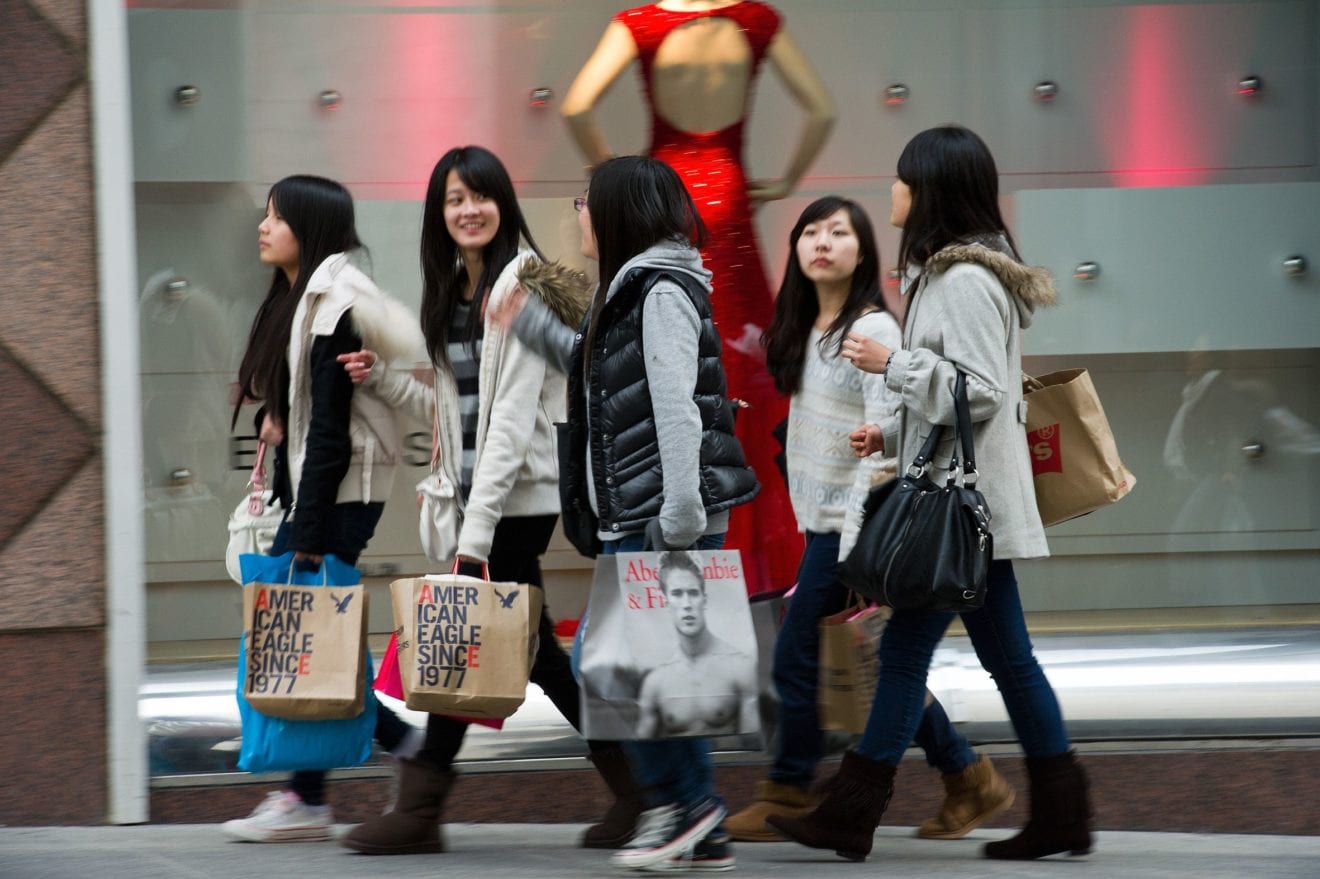
    On top of seasonal sales and occasional promotions, major South Korean retailers have been holding a series of big discount events since summer to create an intense, promotion-heavy atmosphere through the Christmas season and beyond.

    The discount binge has indeed given a fillip to consumer spending here, but market watchers question its long-term effect as a slowdown in Asia’s fourth-largest economy has led to lower incomes for many people, prompting them to tighten their purse strings.

    Most recently, “K-Sale Day” kicked off last week to run for 26 days nationwide, led by major department stores and outlets that hope to grab shoppers’ attention ahead of the original Black Friday.’

    It came just a month after “Korea’s Black Friday”, a nationwide shopping campaign initiated by the government during the first two weeks of October to jack up the stagnant domestic consumption.

    The government-led event even overlapped with “Korea Grand Sale”, during which retailers knocked down prices from early September to mid-October to woo back both domestic consumers and Chinese travelers during the long-haul national holiday.

    One of the main reasons for the deluge of sales is the summer slump following the outbreak of Middle East Respiratory Syndrome (Mers) in late May, which poured cold water on domestic spending and dented tourist numbers.

    More fundamentally, however, the seemingly never-ending sale is seen as an early sign that South Korea is heading into a recession.

    “Although the domestic economy has long grappled with sluggish consumption, the government is ever more concerned about weak spending after exports showed signs of slowing,” says Ko Ga-young, a researcher at LG Economic Research Institute.

    “Exporters in the manufacturing sector had propelled the growth until the 2008 global financial crisis, but their prospects remain bleak due to slowdown in the Chinese economy and tougher global competition in the low-end manufacturing sector.”

    Although policy makers had expected that low oil prices and record-low interest rates would boost the economy this year, the fallout from the Mers outbreak prompted the government to lower its 2015 growth forecast from 3.8 per cent to 3.1 per cent in June.

    The retail discount events, held both online and offline, did not create much buzz like Chinese e-commerce giant Alibaba’s “Singles Day”, which recorded a blockbuster US$14.3 billion in sales on November 11, but the steep discounts did serve as the spending trigger for pent-up demand in a short period of time.

    According to the data compiled by the industry ministry, the 22 retailers that joined the Black Friday Korea campaign saw their sales rise 20.7 per cent on-year to 719.4 billion won (US$634.9 million) during the two-week period.

    While the government touted its “successful effort” in reviving the consumer sentiment, the market remained skeptical over the growth from last year’s low base during the extended holiday season.

    “Large department stores and discount chains face an unfavorable business environment because massive sales events and permanent discount policy produced a limited effect despite last year’s low base,” said Nam Sung-hyun, a researcher at Kiwoom Securities.

    Unlike a one-off factor like the viral disease, market watchers worry that the tight labor market and rising household debt could continue to discourage people from spending on concerns over their unstable future.

    The youth jobless rate reached the highest level in 15 years at 10.1 per cent in June with more college graduates landing at temporary positions, while the average consumption propensity dipped to a record low 71.5 per cent in the third quarter, according to Statistics Korea.

    “The consumption propensity is expected to further decline because households are managing their spending schedule in line with the bleak long-term growth prospect and extended life span,” Ko said.

    Bricks-and-mortar shops face an even dimmer outlook as more consumers are hunting for bargains from online marketplaces abroad.

    Traditional retailers not only have to compete with each other but also counter challenges from international online marketplaces stealing their customers with easier delivery and transaction procedures.

    “As more consumers learn they can easily buy products at a much cheaper price via online vendors, offline shops are more frequently conducting discount events to retain their customers,” said Jun Mi-young, a professor at Seoul National University and co-author of Trend Korea 2016.

    “The experience of buying foreign brands at discounted prices has created a healthy dose of cynicism about department stores’ pricing policy.”

    According to US No 1 retailer Walmart’s Black Friday advertisement, South Korean tech giant Samsung Electronics’ 55-inch HDTV was discounted to $498, less than half prices for similar models sold at Korean department stores.

    Some deals even raise questions over whether retailers set a higher price from the beginning to look like they are giving discounts.

    Lotte Department Store’s K-Sale Day promotional leaflet shows that the price of German kitchenware maker Henkel’s five-star knife block set was reduced from 550,000 won to 229,000 won.

    Sounds like a good deal. But you can buy the same product below 200,000 won at several online shopping malls on any given day.

    The desperate efforts to grab customers with lower prices, however, come at a price.

    As sales start earlier and last longer, they become less important and easier for consumers to ignore. When every day is special, none is.

    “I used to wait for the discount season to buy off-season clothes or other things at cheaper prices,” Lee Su-jin, a 35-year-old office worker in Seoul, said. “These days, I use mobile applications to buy refurbished products or find good deals at overseas websites.”

    While the discount pricing strategy is useful in driving traffic and sales for a short term, marketing professionals worry repeated sales could negatively affect the retail industry in the long run.

    To survive in the borderless digital commerce world, they advise bricks-and-mortar shops to come up with differentiated services to increase customer loyalty.

    ”As the rise of digital shopping has become an inevitable trend in the retail industry, offline sales channels should seek ways to provide better in-store experiences and quality service,” Jun said. “Squeezing margins is not a sustainable business model.”

    Experts emphasise the government’s role in setting a long-term policy to manage the record-high household debt and steer the economy clear of such economic uncertainties as China’s slowdown and market jitters over a US rate hike.

    “The government should control the pace of the household debt growth so it does not rise faster than the income growth, which could further contract spending,” Ko said.

    “Structural reforms are also needed to foster new value-added service sector for healthier growth.”

  • Philippine supermarkets revamping stores ahead of Christmas

    Philippine supermarkets revamping stores ahead of Christmas

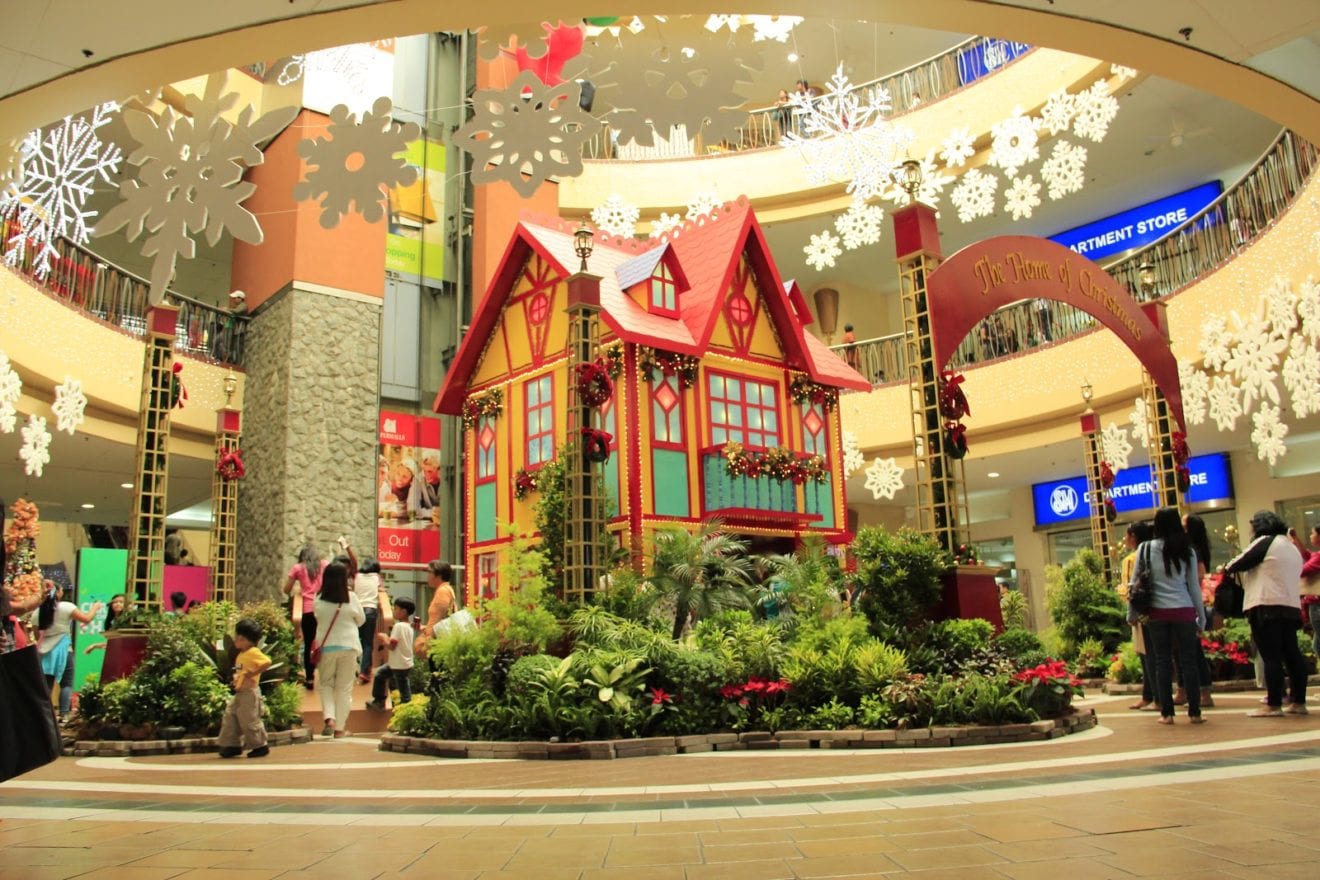
    The Philippine high street is getting a facelift, as retail titans hope to benefit from Southeast Asia’s most reprobate customer spending area during this Christmas. The nation’s biggest supermarkets including Ayala Corp., JG Summit Holdings Inc. and SM Investments Corp. are burning through billions on shopping centers to increase their vicinity throughout the nation, while worldwide brands, for example, Swedish retailer Hennes and Mauritz AB, which once overlooked in Philippines, are announcing their arrival in the region.

    For retailers looking for development, the Philippines has risen as an uncommon spot. National GDP developed at a sound 6.1% a year ago, filled by $27 billion in abroad settlements and over $18 billion in outsourcing incomes—and a lot of that cash was spent in shops.

    A stroll to a tolerantly air conditioned shopping malls is a national leisure activity in this tropical nation and drives family unit utilization, which broke even with 72% of GDP a year ago, as per the World Bank. The Philippines has likewise demonstrating resilience to outside factors, from China’s monetary lull to discouraged product costs. That stands as opposed to its neighbors: Thailand’s family utilization was just 53% of GDP, not a long ways behind Indonesia’s 57% and Vietnam’s 64%.

    With stores being the chief receiver of the surging economy, the Philippines has risen as the star retail entertainer in Southeast Asia, posting segment development of 6% in 2014, as per Nielsen—the most elevated in the locale, and the main execution in light of strong development in both volume and worth terms.

    “The Philippines has had reasonable development driven by customer putting in for a couple of years now,” said Stuart Jamieson, Nielsen’s overseeing executive in the Philippines. “That makes it exceedingly alluring, and puts it on the radar of enormous remote players.”

    Such vigorous development is driving a multiplication of general stores, shopping centers and accommodation stores. From 2012 to mid-2015, the quantity of markets grew 53% to 644, as per Nielsen, while the quantity of accommodation stores rose 60% to 2,270—a number set to twofold again by 2018.

    Swedish design retailer H&M is one of the numerous worldwide brands belatedly grasping the Filipino buyer. Having opened its first Philippine store only one year back, it will have 13 before the end of 2015, empowered by the development of a style cognizant youth market with discretionary cashflow, said an organization representative. Zara, possessed by Spain’s Inditex, and Uniqlo, claimed by Japan’s Fast Retailing Co, have likewise entered the business sector here. Japanese chains Lawson Inc. what’s more, FamilyMart Co. as of late entered the Philippines’ accommodation store part, every arranging many branches, even as settled in players like 7-Eleven increase.

  • Indonesia promotes “Wonderful Indonesia” in Mumbai, India

    Indonesia promotes “Wonderful Indonesia” in Mumbai, India

    Indonesia will be promoting “Wonderful Indonesia,” its country branding, in Mumbai, India, from December 2-4, 2015 in order to market tour packages featuring attractive cultural performances and festivals.

    Assistant Deputy for Asia Pacific Market Development, Ministry of Tourism, Taufik Nur Hidayat, said here on Wednesday that India is a potential market as most Indian tourists are high-class travelers.

    Indian tourists generally prefer hotels with five star facilities, so a specific strategy has to be put in place to attract more tourists to Indonesia.

    “We must prepare what they need, such as adventure tour packages as well as comfortable and safe environment, Indian food, and a pleasant night atmosphere,” he said.

    The Ministry of Tourism, according to Taufik, is targeting Indian tourists, hoping that around 250 thousand people will visit the country in 2015, especially Bali, Jakarta and Batam (Riau Islands).

    The tourism ministry also facilitates various Indonesian tourism players to participate in the South Asia Travel & Tourism Expo (Satte), last of which was held in New Delhi recently.

    Taufik explained that the promotion of Wonderful Indonesia in Mumbai is part of the cultural diplomacy to strengthen emotional ties between the two countries, emphasizing that Indonesia has a close relationship with India in terms of history and culture.

    In the ninth century, some Hindu kingdoms flourished in Java. Many Hindu relics are preserved by the people and the Indonesian government.

    The spread of Islam in Indonesia also involves traders from Gujarat, India, who developed trade in various port cities in Indonesia.

    In modern times, Indonesia, along with India, initiated the Asian-African Conference (AAC) in 1955 which resulted in Dasa Sila Bandung (the ten principles of Bandung).

    The number of Indian tourists visiting Indonesia in 2016 is expected to increase by 10 percent to 300,000 visitors.

    The Wonderful Indonesia promotion campaign in Mumbai is a combination of the two programs, namely selling tour packages and cultural festivals such as dance performances, culinary exhibitions and sasando music performances (featuring a Timorese traditional musical instrument).

  • Thailand’s airlines downgraded over safety concerns

    Thailand’s airlines downgraded over safety concerns

    Thailand’s aviation industry has been downgraded for safety reasons in the US, leading to the possibility of bans on Thai-registered aircraft in Europe and Asia.

    The Federal Aviation Administration (FAA) reassessed the junta-ruled nation’s air services in July and found that it did not meet international standards.

    “Today’s announcement follows ongoing discussions with the government of Thailand which concluded on October 28,” it said on its website.

    The country has been consequently downgraded to a Category 2 rating in the US, which means that it “either lacks laws or regulations necessary to oversee air carriers in accordance with minimum international standards,” the FAA website states, “or its civil aviation authority – a body equivalent to the FAA for aviation safety matters – is deficient in one or more areas, such as technical expertise, trained personnel, record-keeping, or inspection procedures.”

    The Category 2 rating allows Thai carriers to continue their existing services to the US but prevents them from establishing new services to the US. The country achieved its Category 1 rating in 1997, and held it following its last assessment in 2008.

    In March, Thai airlines were placed under “special measures” by the International Civil Aviation Organization (ICAO) prompting Japan and South Korea to block new flights from Thai-registered airlines.

    This forced airlines, including budget carriers Thai AirAsia X, NokScoot and Asia Atlantic Airline, to cancel extra flights that they had been planning. Thai Airways, the national carrier, was also affected, which had to cancel “about five” new charter flights that were due to run in April, which is when Thailand’s new year – known as Songkran – is celebrated.

    A representative told Telegraph Travel that the audit revealed some safety concerns, primarily relating to air operator certification procedures. Thailand provided the ICAO with the details of its corrective actions and mitigation measures in early March.

    A spokesman for the ICAO said today that it is presently working with Thailand “to help rectify some aspects of how it’s civil aviation authority oversees the implementation of international aviation safety standards.”

    Thailand's airlines downgraded over safety concerns

    Thai airlines were placed under special measures in March

    The EU does not ban any Thai airlines at the moment but the next update will be published around mid-December. A spokesman for the European Aviation Safety Agency said: “We inspected in October the Thai airlines which applied for a Third Country Operators (TCO) authorisation – authorisation that any non-European Union airline willing to fly to and out of the EU must get. They were OK.”

    Thailand's airlines downgraded over safety concerns

    New flights from Thai AirAsia X were blocked by Japan and South Korea

    The FAA has previously downgraded the Philippines to a Category 2 rating while also imposing a complete flight ban on its airlines, with the EU later following its example in 2010. This was relaxed in 2013, with the country finally removed from the EU’s airline blacklist in June this year.

    Is it a bird? Is it a plane? Confusion in Bangkok after bird strike

    The FAA also banned Indonesia’s airlines for several years. It scored poorly on an ICAO safety audit in 2014. There are currently 59 of 63 Indonesian airlines banned from EU airspace, though this does not include the popular Garuda Indonesia and Indonesia Air Asia.

  • China’s Slowdown Is Killing Its Luxury Market

    China’s Slowdown Is Killing Its Luxury Market

    Many investors are unfamiliar with the Chow Tai Fook Jewellery Group, but it is in fact the world’s largest publicly traded jewelry chain.

    The company reported its first half profit for 2015 plunged 42 percent due to weak demand in Hong Kong and Macau and an economic slowdown, Macau Daily Times noted.

    Chow Tai Fook’s net income fell to HK$1.56 billion ($201 million) for the six-month period ending in September. In the same period a year ago, the company’s net income was HK$2.69 billion. Sales for the six-month period fell 4.1 percent from a year ago to HK$28.1 billion, while same-store sales fell 18 percent in Hong Kong and Macau, but rose 0.1 percent in mainland China.

    The company warned investors back in early November that its profits are expected to decline due to the weakness in Hong Kong and Macau, along with an unfavorable sales mix of lower-margin gold products and unrealized hedging losses.

    Is Tiffany Winning Where Chow Tai Fook Is Failing?

    Tiffany & Co. reported its third quarter results on Tuesday. Commenting on the Asia-Pacific region, the company said that total sales rose 6 percent in the third quarter and comparable store sales rose 2 percent. Total sales and comparable store sales in the year-to-date period rose 6 percent and 4 percent, respectively.

    On a constant-exchange-rate basis, Tiffany said that it saw “healthy sales growth” in China, but sales declined again in Hong Kong and Macau.

    Tiffany also announced a total sales and comparable store sales growth in Japan of (FX-neutral) of 34 percent and 24 percent, respectively. According to a report by Bloomberg, Tiffany is “eating Chow Tai Fook’s breakfast” as Chinese tourists accounted for a “significant” portion of the growth Tiffany experienced in Japan.

    Bloomberg also noted that Chinese goods don’t have a “particularly good” reputation among Chinese shoppers, which might also explain why Tiffany is seeing success in a region where Chow Tai Fook “should be cleaning up.”

  • Metro surges ahead

    Metro surges ahead

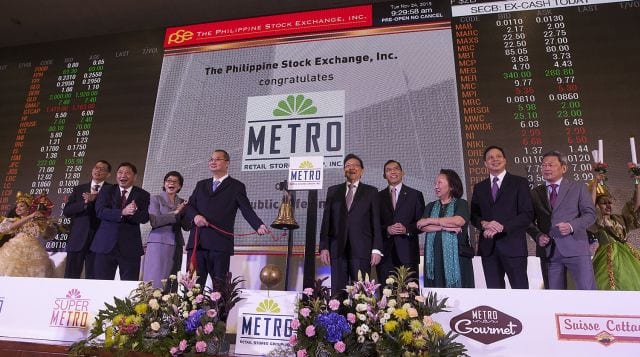
    Last week amid cheers and the beat of drums, Cebuano retailer Frank S. Gaisano – with his siblings Margaret, Jack and Edward by his side – rang the opening bell at the Philippine Stock Exchange (PSE) in Makati.

    The traditional ceremony marked the market debut of Metro Retail Stores Group, Inc., the first for a Gaisano —  an iconic name in Cebu’s retail industry —  and for a Cebu-based company in almost a decade.

    Gaisano said going public, which raised about P3.6 billion for Metro’s expansion, will also enable Metro to “improve margins and operating efficiency, protect our market share, and consequently create value for our investors.”

    Frank Gaisano (4th from left), chairman and CEO, leadS the bell-ringing ceremony to mark the listing of Metro Retail Stores Group Inc. on the Philippine Stock Exchange. Joining him on stage are his siblings Jack Gaisano director, Edward Gaisano, chairman and CEO of Vicsal, and Margaret Gaisano-Ang, director. PSE executives witness the milestone led by chairman Jose Pardo, president and CEO Hans Sicat, and directors Vivian Yuchingco, Emmanuel Bautista and Alejandro Yu. (CDN PHOTO/TONEE DESPOJO)

    “We are ready to compete with other industry players in serving our value-conscious market and be a leading and well-admired retailer,” Gaisano said in a statement issued after the ceremony.

    Metro, retail arm of Vicsal Development Corp., is the fourth largest retailer in the country, after SM, Puregold and Robinsons. It is the largest department store and hypermarket operator in the Visayas.

    The company is embarking on an aggressive expansion program that will see 50 to 70 new stores in the next five years, bringing the company’s network to more than 100 stores.

    This will double Metro’s footprint from the current 400,000-square meters for 46 stores, said Metro President and Chief Operating Officer Arthur Emmanuel.

    “About 100,000-square meters have been secured, including stores that will open in partnership with Megaworld and Ayala. These should open in the next two years,” said Joseph Conrad M. Balatbat, investor relations head of Metro, in a press conference after the bell-ringing ceremony.

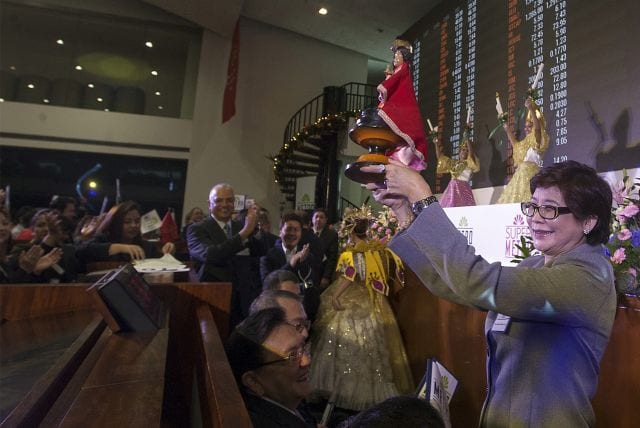
    Margaret Gsaisano-Ang holds up the image of Sto. Nino, Cebu's patron, at the Philippine Stock Exchange in Makati as Sinulog dancers perform a dance offering on stage for a touch of Cebuano culture. (CDN PHOTO/TONEE DESPOJO)

    At least seven stores are slated to open next year, including one in northern Cebu and another in the south. Four other stores will serve as anchor stores of Ayala developments while one will rise at the Megaworld mixed-use complex in Iloilo.

    About half of the 50 to 70 new stores that will open in the next five years will be in the Visayas while the rest will be in Luzon and Mindanao, where Metro has yet to establish its presence.

    “The Visayas is our priority. We see the Visayas growing much faster than Luzon. Based on Euromonitor, retail penetration in the Philippines is only 28 percent. It’s much lower in the Visayas,” Balatbat said.

    The bulk or 67 percent of the IPO proceeds will fund this aggressive expansion. The rest will be used for mergers and acquisitions.

    Balatbat said they were in talks for the acquisition of more neighborhood stores that will be rebranded as Metro Fresh N Easy.

    FIRST TRADING DAY

    The Metro stock, with trading symbol MRSGI, opened strong at P4.30 and closed at P4.13, about 3.5 percent higher than the IPO price of P3.99.

    The listing followed an initial public offering (IPO) that issued 905.4 million common shares and raised about P3.6 billion.

    This milestone occurred 33 years after the first store — then called Metro Gaisano — was opened in Colon Street in  Cebu City in 1982.

    Before the bell-ringing ceremony, Sinulog dancers in colorful costumes performed on the trading floor and on  stage as company representatives waved Metro flaglets.

    Metro Retail is run by siblings Margaret, Jack, Edward and Frank. Their parents Victor and Sally, from whose names Vicsal was coined, started Metro with a store in Colon Street that had to compete with seven others in 1982.

    There are currently 46 Metro stores across three retail formats — department store, supermarket and hypermarket (Super Metro) — in the Visayas and Luzon. Twenty-six of these stores are in Cebu and the Visayas.

    With its listing on the PSE, Metro joined three other Cebu-based companies that have tapped the capital market: Cebu Property Ventures and Development Corp. in 1992; and Cebu Holdings, Inc. and Vivant Corp., both in 1994. Aboitiz Equity Ventures and Aboitiz Power Corp. were still based in Cebu when they went public in 1994 and 2007, respectively. Both are now based in Manila.

    “This reflects our confidence in the capital markets. We believe the Philippine economy is one of the least vulnerable among the emerging economies. We continue to leverage on this positive sentiment on our economy,” Gaisano said during the press conference.


  • Daiso, Robinsons Retail to strengthen PH partnership

    Daiso, Robinsons Retail to strengthen PH partnership

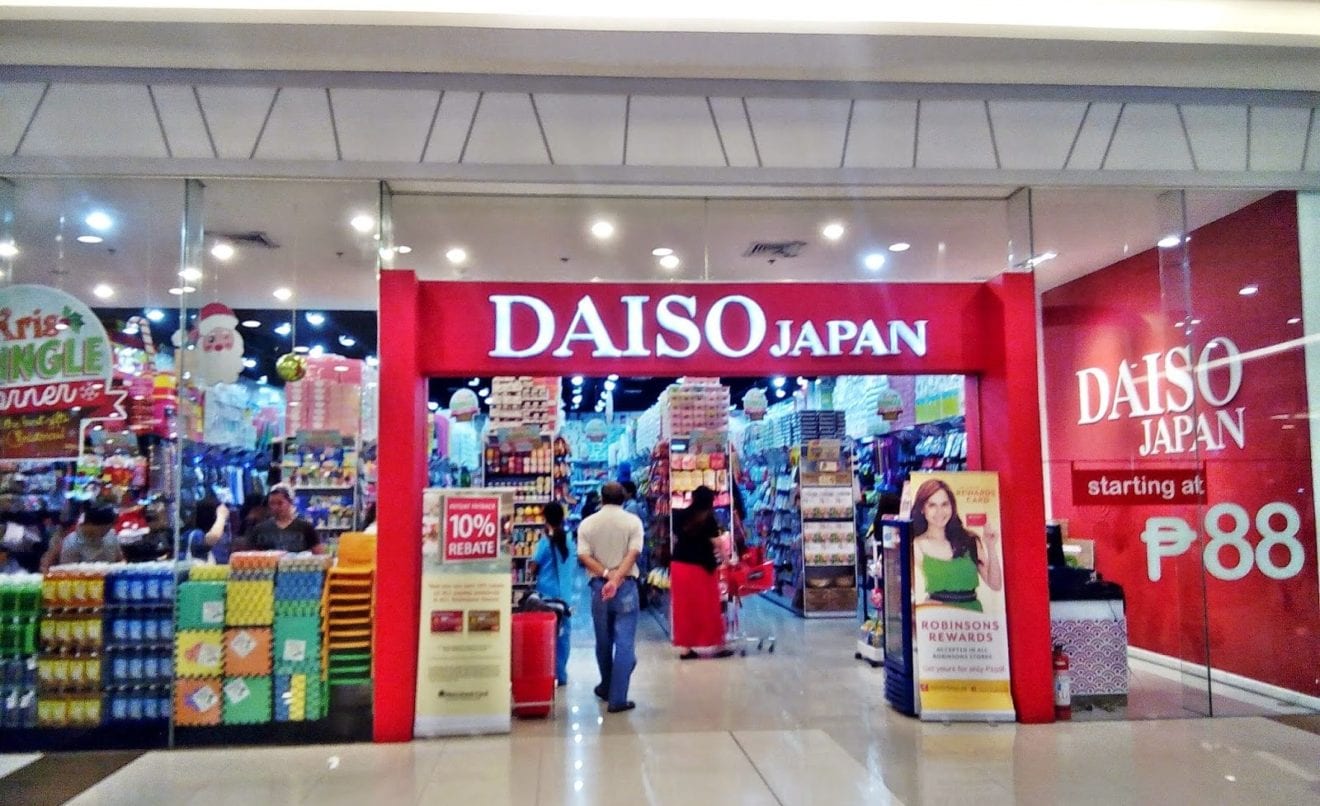
    Daiso Industries Ltd. is impressed with the growth of the Daiso Japan store chain in the country.

    Japan founder and President Hirotake Yano was recently in the country as one of the speakers of the 17th Asia-Pacific Retailers Convention and Exhibition (APRCE) Manila 2015.

    He also met with officials of Robinsons Retail Holdings Inc. (RRHI), appointed franchisee in the Philippines of Daiso Industries. RRHI is led by Robina Gokongwei-Pe, Wilfred Co and Katherine Michelle Yu.

    Yano added that he is very happy with the growth of Daiso Japan in the Philippines. “I first came here four years ago and observed that it was experiencing a very competitive growth, one that was comparable to Daiso in Japan.  I am actually quite proud of this development.”Yano reaffirmed the strong and exclusive partnership between the two companies as he expressed his satisfaction over the Supreme Court’s final ruling in June this year, preventing Japan Home Center (JHC) from using the trademark Daiso.  He reiterated that RRHI is Daiso’s only authorized and licensed partner in the Philippines. It will be recalled that Daiso Industries Co., Ltd filed a complaint with the Intellectual Property Office against Japan Home Center (JHC) in 2009.

    There are now 44 Daiso Japan stores in the Philippines and over 2,400 stores in 30 countries around the world.

    Both Yano and Gokongwei-Pe reiterated the strength of their business collaboration that was sealed in 2008. “I am very confident with the leadership of the Robinsons Group as our Daiso Industries’ exclusive retailer in the Philippines,” he said. “That is why I look forward for continued growth as customer demand increases.”

    Gokongwei-Pe is likewise very optimistic about the expansion of the Daiso Japan brand. “We brought it here knowing that it is a big brand from Japan that offers good quality and affordable products. That, for me, is the best combination that is very much suited to the Philippine market. The items in our stores are the real Daiso merchandise from Japan.  There is a guarantee behind the name and the partnership that we have with Daiso Industries,” Gokongwei-Pe said.

  • South Korean Convenience Stores Thrive

    South Korean Convenience Stores Thrive

    The growing interest in ready-made meals and other necessities—driven by an increase in single-adult households—has fueled the growth of convenience stores in South Korea, Yonhap reports. These retailers stock daily essentials and food in smaller quantities and are open 24 hours a day, which provides more opportunities for working adults to shop.

    The three biggest chains—7-Eleven, BGF Retail and GS Retail—opened a combined 2,000 new locations this year. Overall, the number of convenience stores in the country jumped to close to 26,000.

    GS Retail, which operates GS 25, generated the largest increase with $3.11 billion in sales from January to September 2015, a 36% bump from the same time period in 2014. Meanwhile, BGF Retail posted a 28.8% rise in sales, while 7-Eleven increased its sales by 26.4%, over the same time period.

    Local convenience stores are capitalizing on the boost in customers by launching their own private-label brands to provide a low-cost alternative to name brands. The stores also have changed up their merchandise mix to include more non-food items in addition to the beverages, cigarettes and instant food items.

    However, the increasing number of convenience stores has begun to saturate the market. Retailers now experience stronger competition from each other, often with stores on opposite sides of the street vying for the same customers.

  • Moody’s lowers Parkson Retail Group debt outlook to negative

    Moody’s lowers Parkson Retail Group debt outlook to negative

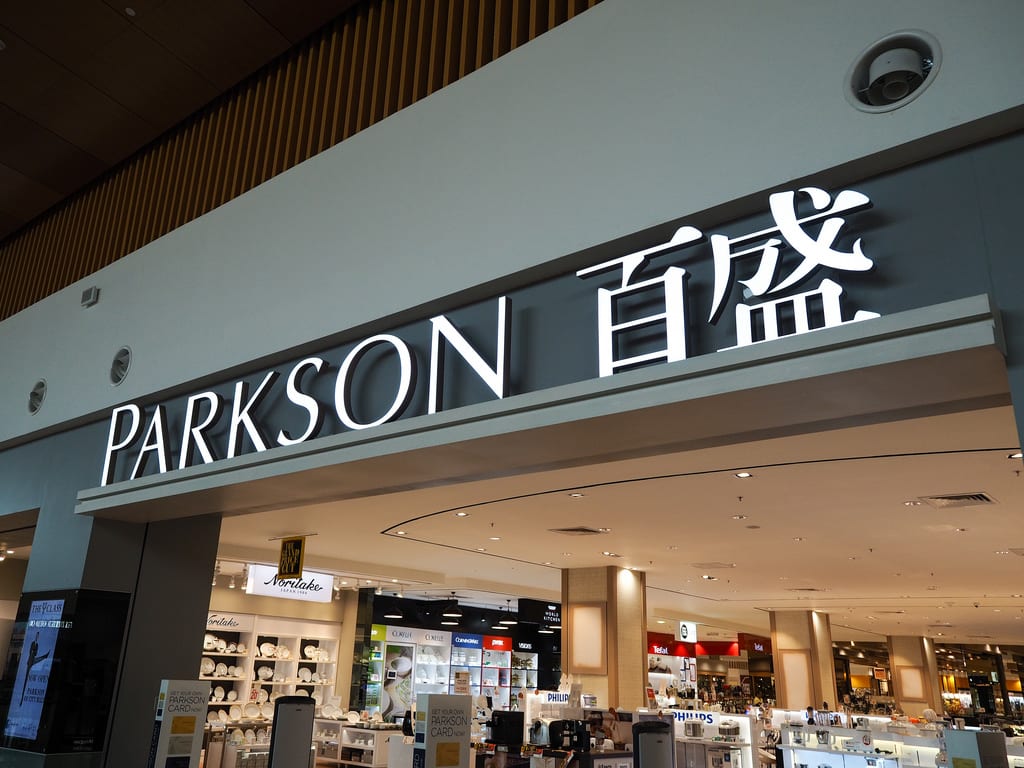
    Moody’s Investors Service has lowered the outlook for Parkson Retail Group Ltd’s Ba3 corporate family and senior unsecured debt ratings to negative from stable.

    In a statement issued on Wednesday, Moody’s has also affirmed Parkson’s Ba3 corporate family and senior unsecured debt ratings.

    A Moody’s vice president and senior credit officer Lina Choi said: “The outlook change reflects Parkson’s weaker-than-expected financial results for 3Q 2015.

    “Our expectation that its profitability and financial leverage will likely remain weak for its Ba3 ratings over the next 12-18 months, given the ongoing challenges apparent in China’s retail market.”

    Parkson, which is listed on the Hong Kong Stock Exchange and one of the largest operators of department store chains in China, reported a normalised operating profit of 86.7mil renminbi — after excluding a one-off litigation penalty of 140mil renminbi — in the first nine months of 2015 compared with 346.4mil renminb in 2014.

    “This decline was due to the consideration that the company faced strong competition during this time and also experienced a 9.4% decline in gross sales proceeds (GSP) in 3Q 2015, a further deterioration from the 3% fall in 1H 2015.

    “Moody’s notes that subdued retail sentiment and strong competition have prompted Parkson to offer more promotions and discounts on its products,” it said.

    Moody’s also estimated Parkson’s profitability — as measured by EBITDA/GSP — would decline to 11% for all of 2015 from 12.7% in 2014.

    At end-2014, it owned and managed 60 stores spread across 34 Chinese cities. It targets the middle-end of the Chinese retail market. It is 53.1%-owned by Parkson Holdings Bhd (unrated), an affiliate of Malaysia’s Lion Group.

    Moody’s said despite the company’s plan to improve profitability through more direct sales, Moody’s expects EBITDA/GSP to fall to around 10%-11% in the next 12-18 months. Such a range would be close to its rating downgrade trigger level.

    The ratings agency also said Moody’s expected Parkson’s retained cash flow (RCF)/net debt to decline to 8% at end-2015 from 11.3% at end-2014 due to the fall in cash holdings.

    It pointed out Parkson’s cash and cash equivalent fell to 3.6bil renminbi in 3Q 2015 from 4.8bil renminbi at end-December 2014 due to increased working capital outflow and capital expenditure on new stores.

    Moody’s expects RCF/net debt to stay around 8% over the next 12-18 months, a level which provides little space from our downgrade trigger of 8-10%.

    At the same time, Parkson’s liquidity remains adequate, although its cash buffer has narrowed. Cash and cash equivalent of 3.6bil renminbi at end-September 2015 could cover its short-term debt of 700mil renminbi.

    Moody’s said Parkson’s Ba3 corporate family rating reflects its competitive position in China’s highly fragmented department store industry, underpinned by its well-recognised brand name and national presence.

    “The rating also considers its low level of collections risk and adequate liquidity profile. However, the rating is constrained by structural challenges, such as intense competition from other retailers, rising rental rates, online retailing and the execution risks associated with its aggressive expansion into lower-tier cities in China.

    “In particular, Parkson’s dependence on leased stores is high, exposing the company to the risk of reallocations and escalating rents. These challenges, together with its ambitious investments in new stores, will continue to pressure its profitability and financial metrics.

    “The outlook could return to stable if Parkson curbs the deterioration in gross sales proceeds, and demonstrates an ability to restore profit margins,” it said.

    Moody’s said the metrics which it would consider for a return to a stable outlook include:

    (1) adjusted EBITDA/gross sales proceeds recovering to above 10%-11%; and (2) adjusted retained cash flow/net debt rising above 10% on a sustained basis.

    The ratings could experience downward pressure if Parkson fails to stabilise its profitability and financial metrics due to: (1) rising competition; (2) reduced bargaining power over its concessionaires/suppliers; or (3) the need to make large investments for store expansions.

    Credit metrics indicative of downgrade pressure include the likelihood of adjusted EBITDA/gross sales proceeds trending below 10%-12% or of adjusted retained cash flow/net debt trending below 8%-10% on a sustained basis.

    Any sign that the company is extending financial support to its parent, the Lion Group, will also pressure Parkson’s corporate family rating.

  • 759 Store Hong Kong closes four shops

    Just three months ago Hong Kong supermarket retail concept 759 Stores was boasting a 48 per cent increase in sales and the opening of 57 new shops last financial year.

    This month the chain says it will close four Hong Kong stores citing the lacklustre retail climate in Hong Kong.

    The four stores are all located in shopping centres owned by The Link REIT which according to 759 Stores has refused to grant rent reductions during negotiations over lease renewals.

    759 Store Hong Kong, the trading brand of listed business CEC International Holdings, positions itself as in between convenience stores and supermarkets, its primary point of difference its ‘self-import model’ of stock and uniform margins.

    Its 759 Store and 759 Supermarket concepts have evolved since the brand’s launch in 2010 from just selling sweets and snacks into a broader range of low margin, high turnover lines across many categories, including rice and grain, non-staple food, frozen food, alcohol, pet snacks, household goods, kitchenware, household electrical appliances, personal care supplies, cosmetics, supplies for babies, toys, novelties and accessories.

    Now CEC is planning to further diversify from its core snack and beauty products businesses, seeking a Chinese medicine license allowing it to sell packaged traditional soup in 100 of its stores.

    There are 260 759 branded shops across Hong Kong. Some of these will be expanded from the smaller store model into larger supermarkets, according to a report in today’s Hong Kong Economic Journal, which quotes 759 Stores chairman Lam Wai-chun.

    Lam said the company’s online business has already broken even and on Singles Day the company sold a record $20 million of products.

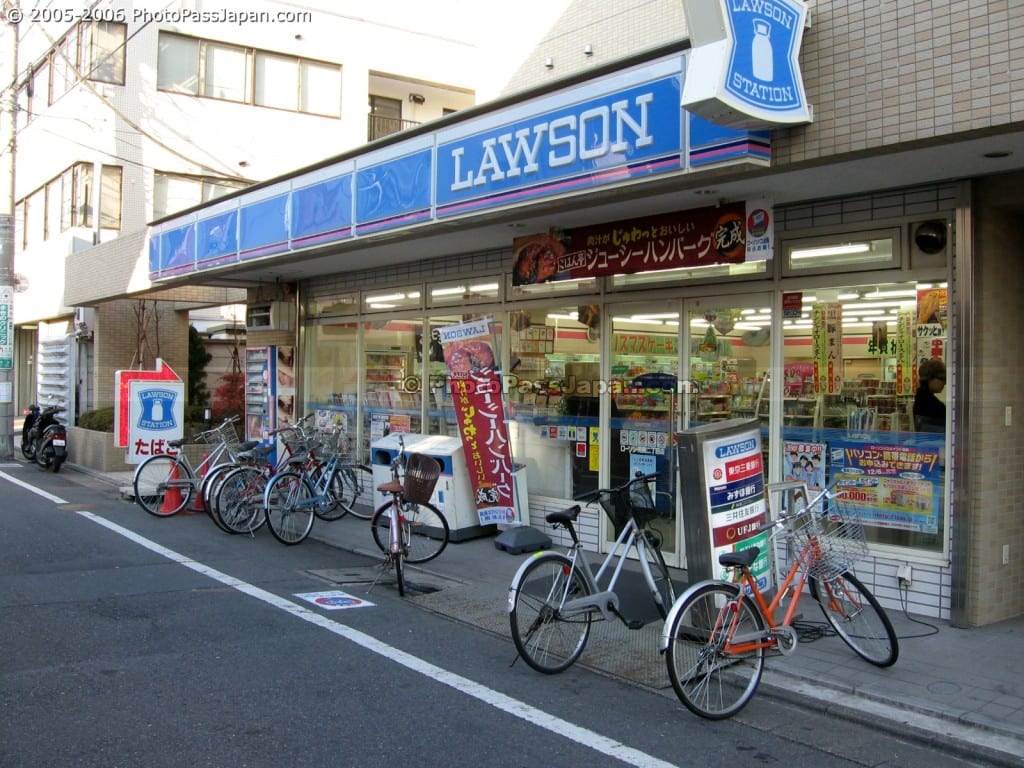
  • Lawson Japan mulls banking foray

    Lawson Japan mulls banking foray

    Convenience store operator Lawson Japan is considering a foray into banking.

    The company says that with more than 12,000 convenience stores operating across Japan it has the physical branch network in place to accept deposits from customers.

    It also has the IT infrastructure in place which could be easily modified to allow customers to pay bills, make bank transfers and other basic banking services – all of which would draw additional customers in store, or increase the frequency of visits of existing customers.

    underlying the seriousness of the planning, Japanese bank Mitsubishi UFJ Financial Group has indicated it would take a small stake in the new bank, and contribute ATMs, IT and other services to a Lawson Bank.

    If Lawson does move into banking, it would not be Japan’s first retailer to do so. Rivel Seven & I Holdings, parent of 7-Eleven, established a bank in 2001. Aeon received a banking licence in 2007 and has since expanded its banking and financial services into other markets such as Malaysia and Thailand.

    Another c-store operator, FamilyMart last year began exploring a banking partnership with Japan Net Bank, although those discussions have not yet born a finite plan.

  • China’s QKL Stores’ sales decline

    China’s QKL Stores’ sales decline

    Nasdaq-listed Chinese supermarket chain QKL Stores says its revenue fell four per cent in the last quarter, its profit by 4.5 per cent.

    “Our third quarter results generally met our levels of expectation,” said Zhuangyi Wang, chairman and CEO.

    “The variety, value and freshness of our products continue to resonate with our customers driving sales higher. This store growth was also driven by in-store promotional events such as store anniversary celebrations.”

    But he said sales and profit were impacted by “a challenging environment” for retail businesses, mainly due to the rising costs and the emerging eCommerce channel.

    “However, we are still confident on the domestic needs because of the urbanisation of the third and fourth tier cities that we will achieve a fundamental improvement in the consumer purchasing power during the process.”

    Third quarter revenue totalled $58.6 million, down from $61.1 million in the same quarter last year. Gross profit was $9.8 million, down from $10.3 million.

    “We look forward to the upcoming holiday season as we have a number of exciting marketing initiatives planned,” said Wang.

    “Our balance sheet is healthy with a strong cash position, low level of debt and stable flow of cash from operations. We continue to make progress with our store operations and that can result in greater sales and profits over time.”

    Based in Daqing, China, QKL Stores is a regional supermarket chain company operating in Northeastern China and Inner Mongolia. It operates 45 supermarkets, hypermarkets and department stores – two less than at the same time last year.

  • Singaporeans love to shop overseas

    Singaporeans love to shop overseas

    Never mind that Singapore is renowned globally as a shopping destination.

    Singaporeans want to shop elsewhere.

    A survey by insurance company AIG conducted back in April found 36 per cent of the 1205 polled go on holiday solely to shop.

    When they take a holiday for retail therapy, Singaporeans spend an average of S$336 a day.

    The three most popular overseas shopping destinations are Bangkok, Hong Kong and Taiwan.

    AIG says it had received 7500 insurance claims between November 2014 and October 2015 for baggage lost on trips home from – in order – Thailand, Taiwan and Hong Kong.

    The insurer says people should keep receipts or photographs of their overseas purchases to ensure a smooth claims process.

    Other reasons for non-business travel by Singaporeans rated far lower than retail therapy, including a weekend getaway (21 per cent), to see somewhere exotic (12 per cent) or to indulge in a luxury break (four per cent).

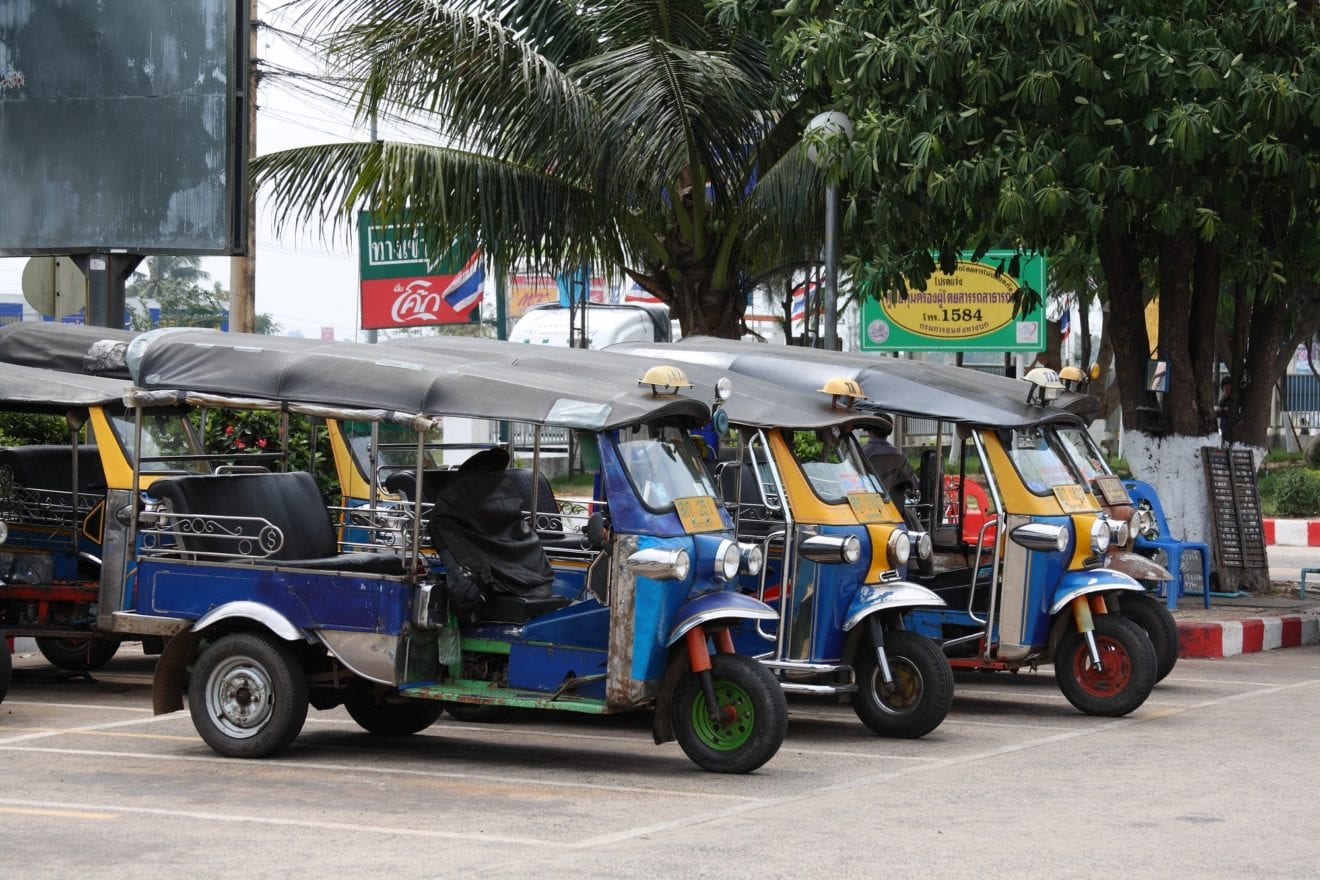
  • 500 TukTuks Is Even More Keen In Thai Startups Than Ever!

    500 TukTuks Is Even More Keen In Thai Startups Than Ever!

    A micro-fund focused on Thai startups reveals what has happened in the past three months of operation.

    500 Startups, one of the most active seed investors/accelerators in the world, made an announcement early this year about a $10 Million micro-fund focused on Thai promising startups — called 500 TukTuks. That announcement was such a thrill, as this definitely would make an impact to the Thailand’s startup ecosystem!

    Led by Krating Poonpol (Founder of Disrupt University) and Moo Natavudh (CEO of Ookbee), 500 TukTuks has been operating for about three months now. Today, they made an exciting announcement once again at Echelon Thailand 2015 about their fundraising and investment up to date.

    Krating stated “After the first batch of investments, 500TukTuks is more keen in Thailand’s startup ecosystem and gaining confidence from investors who believe in the potential of Thai tech startups, leading to more investment into 500 TukTuks. So we decided to increase the fund size to $12 M and will invest in 60-70 Thai startups over the next 3 years. This is a good sign for startup ecosystem and for the country as a whole because it shows that more people are willing to support Thai startup community.”

    Moo Natavudh also added “500 TukTuks is here not only to invest, but to provide Silicon Valley’s education, the access to talented mentors and other 2000+ founders in the 500 Startups network, and to grow #500Family together at the same time.”

    The highlight of the announcement was the 10 startup companies in Thailand that made it through the TukTuks’ first batch of investment.

  • AirAsia swings to Q3 loss, dragged by Indonesia and forex losses

    AirAsia swings to Q3 loss, dragged by Indonesia and forex losses

    Malaysia-based AirAsia, the region’s biggest budget carrier by fleet size, said on Thursday (Nov 26) it suffered a loss in the third quarter, bogged down by foreign exchange losses and its Indonesian operations.

    AirAsia registered a net loss of RM405.72 million (US$95.9 million) in the quarter ending Sep 30. The company had registered a profit of RM5.4 million in the corresponding period of 2014.

    Revenue increased by 15 per cent to RM1.52 billion due to an increase in passenger numbers, fuelled in particular by increased demand from Chinese travellers, AirAsia said. The discount carrier, in a statement, added that foreign exchange losses were RM435.98 million, up from RM152.66 million a year ago.

    AirAsia’s flamboyant boss Tony Fernandes, a former record industry executive, remained optimistic for the rest of the year, insisting that in Malaysia, all signs were “pointing towards rational and sustainable growth in the coming quarters.”

    The company’s Indonesian operations, Indonesia AirAsia, (IAA) took a hit with a drop in passengers and revenue fell by 14 per cent to 1,483.7 billion rupiah.

    “IAA’s turnaround plan was solid but was affected by new regulations,” Fernandes said. “Demand during the quarter was affected due to the negative equity regulation introduced which was widely covered by both local and international media. This created uncertainty and prompted travel agents to divert bookings away from IAA.”

    Meanwhile, the company’s long haul arm AirAsia X posted on Wednesday a third quarter net loss of RM288.19 million. During the same period last year it suffered a net loss of RM210.85 million.