Category: General

Retail News Asia is committed to providing both local and global retailers with the latest General Retail news throughout the Asian market. This on a daily base.

  • Rimowa leads the charge of new luxury retailers

    Rimowa leads the charge of new luxury retailers

    5 Martin Place, Sydney, the new home of German luxury luggage brand Rimowa. Photo: Supplied

    Rimowa, the German luxury luggage group, is set to call 5 Martin Place home as the retail sector looks to the upmarket brands for revenue growth.

    The label is being distributed exclusively through Hunt Leather, which itself has a presence in the MLC Centre.

    Sophie Hunt, whose parents founded Hunt, said the group also runs the Longchamp​ Boutique, of which there are four stores nationally and Hunt’s own five sites throughout Australia.

    Ms Hunt said the group opens a newly branded store in Australia every year and, despite the massive growth of its online business, it still invests in bricks and mortar.

    “Demand is high for luxury brands and over the years that we have stocked Rimowa, we have been pleased with the high turnover of the items,” Ms Hunt said.

    “Finding the right location was imperative to launch the store as a stand-alone and certainly, 5 Martin Place is where we want to be.”

    Ms Hunt said Rimowa is considered a destination brand and the demographics of Martin Place, being in the heart of bankers and lawyers, was the perfect fit.

    “We will be looking to expand and while online sales are strong, having a store is still our preferred option,” Ms Hunt said.

    DEXUS Property is leasing out 5 Martin Place as part of the redevelopment and has also signed up the H&M associate Collection of Style, and the Canadian apparel group Kit & Ace, in what was the former Commonwealth Bank chamber.

    Rimowa’s opening in December – the date is still be decided – comes as luxury retail is making a comeback.

    CBRE  Australia head of retail tenant representation said the country offers significant opportunities for luxury retailers at a time when the Asian market is reaching saturation point.

    In a new CBRE report, The Future of Luxury Retail in Asia Pacific: New Demand Drivers and Shifting Occupier Requirements, it says most major luxury retailers are now well established in Asia-Pacific with China and Hong Kong being two of the most penetrated markets at 89 per cent and 81 per cent respectively.

    “However, following several years of rapid expansion, these markets are approaching saturation point and several luxury brands have halted expansion amid sluggish sales,” the report says.

    “Conversely, the penetration rate of luxury retail in Australia is just 50 per cent – primarily due to the dominance of department stores in this segment of the market.”

    However, the tide is shifting, as luxury brands launch stand-alone stores in Australia to exert stronger control over their business operations and brand.

    In 2014, a total of 16 luxury retailers entered Australia or opened their first stand-alone store in five cities – double the total in 2012 and 2013 combined.

    “Australia, unlike much of Asia, is far from saturation point in terms of luxury retailing,” Mr Starling said.

    “At present we are witnessing the largest influx of new luxury brands in the country’s history. This is coming from two distinct sectors, with fashion/ready-to-wear and jewellery retailers being the most inquisitive.”

    Mr Starling said the inquiry was being driven by larger groups such as LVMH, Kering Group and Richemont, but brands such as Valentino and Moncler also had Australia on the radar.

    “Another trend we are witnessing involves brands being more willing to seek space in shopping-centre environments,” Mr Staring said.

    CBRE national director retail services Alistair Palmer said a new luxury precinct was also poised to open Pacific Fair on the Gold Coast in 2016, and Chadstone was planning to double its luxury offer.

    An increase in Chinese tourist arrivals was helping to support the luxury retail sector in Australia, Mr Palmer said, particularly in light of the fall in the Australian dollar.

    “Sydney Airport is also establishing a new luxury precinct, with many of the tier 1 and affordable luxury brands opening in order to capture the Asian tourist market,” he noted.

  • BART drawing hip retail, service outlets into stations

    BART drawing hip retail, service outlets into stations

    A Blinq concierge desk at the Montgomery BART station in downtown San Francisco, Calif., is prepared Thursday afternoon, Nov. 5, 2015 for opening later this week. The company will be offering dry cleaning, groceries and “new products and cultural finds.”

    Friday heralds the appearance of a kinder, hipper outpost of commerce in BART’s fusty, decades-old stations as the transit agency welcomes kiosks purveying groceries, dry cleaning and a changeable array of offbeat, with-it products.

    Blinq, billing itself as an online-to-offline retail organizer, is opening the doors of what it calls “pods” in the concourses of the Embarcadero and Montgomery stations to entice BART’s thousands of daily commuters with “new products and cultural finds.”

    “For instance,” Blinq marketing chief Saf Elmansour said, the company “will provide farm-to-table food 20 to 50 percent cheaper than Whole Foods. We’ll bring the actual farmers in.” That would be Grubmarket, an online purveyor of locally sourced fresh foods and other products delivered to customers’ doors and now to BART stations.

    Saf Elmansour prepares a Blinq pop-up retail space in the Montgomery BART station in downtown San Francisco, Calif.,Thursday afternoon, Nov. 5, 2015. TheSaf Elmansour prepares a Blinq pop-up retail space in the Montgomery BART station in downtown San Francisco, Calif.,Thursday afternoon, Nov. 5, 2015. The shop, as well as one at the Embarcadero station, open later this week. The company will offer dry cleaning, sell groceries and “new products and cultural finds.”

    Also selling in the pods will be EO, a Marin County-based manufacturer of organic and natural personal care shampoos and soaps; Sol Republic, a maker of headphones and speakers; and Greener Cleaners, an eco-friendly dry cleaner.

    Blinq plans to feature other products in pop-up spaces for a few months each.

    Next in line for the pods and pop-ups are the Civic Center station in San Francisco, the 12th and 19th Street stations in Oakland, and downtown Berkeley. All are to open by the end of the year, he said.

    The new kiosks may offer delectable edibles, but BART’s policy of no food or drink on trains has not changed.

    Blinq will staff concierge services such as dry cleaning, grocery delivery and pickup in one part of the pod. On the other side will be the pop-up brands that Blinq and its leasing agent, SRS Real Estate Partners, will seek out and change out with three- to nine-month leases.

    “We want to change the experience,” Elmansour said.

    Another experience, he said, will be products and services matched to the neighborhoods and cultures around the stations. For example, Blinq’s Mission Street station pod will be different from Walnut Creek’s, he said. The pods also will feature video screens with BART train times, and a mobile app will note events in station neighborhoods.

    “People will be able to use Blinq to take care of errands, access exclusive deals and giveaways, and discover great brands and local community events,” according to a news release.

    Blinq CEO Alexis Wong is said to have sought to recreate the experience of urban transit in Hong Kong, where she grew up. Stations there were also hubs of local goods and services.

    “We think this combination of experiences, shopping and community is the future of the metro hub,” she said.

  • PAL, Air Asia cancel 300 flights for Apec

    PAL, Air Asia cancel 300 flights for Apec

    The country’s flag carrier Philippine Airlines (PAL) and Air Asia Philippines cancelled nearly 300 domestic and international flights in anticipation of disruptions in runway operations on the week of the Asia-Pacific Economic Cooperation (Apec) Summit.

    In an advisory, PAL announced it was grounding 115 domestic and 96 international flights from Nov. 15 to 20 “to give way to the arrival and departure of Apec leaders.”

    The Manila International Airport Authority (MIAA) had announced periods of temporary runway closure at the Ninoy Aquino International Airport as part of the protocol for the arrival and departure of world leaders.

    Heads of state are expected to arrive on Nov. 16 and 17 for the summit which will be held on the 18th and 19th. They are expected to leave Manila on Nov. 19 and 20.

    “PAL assures affected passengers that the airline will reschedule their flights with rebooking and penalty charges waived,” the advisory said.

    Likewise, passengers with confirmed flights on Nov. 15, 16, 17, 18, 19 or 20 have the option to rebook within 30 days from their original schedule “for as long as the new schedule falls within the ticket validity period.”  They can also refund the full  ticket cost.

    PAL said that it may cancel more flights depending on the flight movements of the heads of state attending the summit.

    Meanwhile, Air Asia cancelled 74 domestic and 10 international flights from Nov. 17 to 20, also to give way to the arrival of heads of state.

    The airline gave passengers on the cancelled flights the option to rebook within 30 days of the date of their original flight schedule or get a refund.  Affected flyers may also avail of a credit shell within 90 days of the cancelled flight.

    A credit shell, according to Air Asia, is “a credit account where monies paid towards a booking  are stored.” The number issued, which is practically the booking number, in a credit shell account that may be used by passengers to transfer flights.

  • JC Decaux launches new digital signage network at Singapore mall ION Orchard

    JC Decaux launches new digital signage network at Singapore mall ION Orchard

    JCDecaux Singapore, the Best Out Of Home Media Company in the republic and subsidiary of the No.1 Outdoor Advertising Company in the world announces the launch of a brand new Digital Advertising Network at ION Orchard, Singapore’s prime retail and lifestyle destination.

    Following the successful launch of the “Digital Fashion Network” in July, JCDecaux unveils a new Network of 80-inch digital screens in the mall, packaged as the “Premium ION Link Digital Network”.

    ION Orchard

    Located at key touch points along the busiest linkways of Orchard Road, the brand new Network comprises of 9 screens unmissable to shoppers and train commuters passing by. As the exclusive media platform within the linkway, “ION Link Digital Network” is a unique opportunity for brands to effectively cover 100% of the audience. Maiden advertisers H&M, Juicy Couture and PuTien commenced advertising at this prime location.

    In addition, JCDecaux has completed its second phase of upgrading work, increasing the screen size of the “Digital Lift Lobby Network” from 19” to 24”. This network comprises 34 LCD screens installed across all Lift Lobbies and is the only media solution covering the eight levels of the award winning mall. Acuvue and Moncler are currently running their campaigns on the Digital Lift Lobby Network.

    “The new installations at ION Orchard Link delivers a high quality digital advertising footprint to the former Orchard Underpass through which more than half a million people pass every week” said Mr. Ashley Stewart, Managing Director, JCDecaux Singapore.

    “ION Orchard Link serves as a vibrant underground retail walkway that extends the mall’s current retail offerings. As our second underground link after ION Paterson Link, this high-traffic walkway provides shoppers and commuters with quick and easy way to access ION Orchard. We are certain that the new ION Link Digital Network will serve the latest trends and offerings, lending a lifestyle dimension to this fast-paced location and will enhance the overall shopper and commuter experience.” said Mr. Chris Chong, Chief Executive Officer, Orchard Turn Developments.

  • Restaurateurs see opportunities in Hong Kong as retail rents slip

    Restaurateurs see opportunities in Hong Kong as retail rents slip

    After waving goodbye to the boom in mainland Chinese arrivals, Hong Kong’s retail leasing market is refocusing on broad-based, local consumption, including food and drink.

    Hong Kong shopping streets are changing as luxury shops, including watch, handbag and jewellery retailers, close stores, and restaurateurs see opportunities.

    “New dining brands entering Hong Kong in the past year were pretty successful,” said Helen Mak, retail services group head at Colliers International. “Celebrity chefs like Gordon Ramsay and Jamie Oliver have just opened their second restaurants in Hong Kong recently.”

    Hong Kong retail sales fell for six straight months to the end of August as mainland tourists spent less. Luxury retailers have been scaling back their operations as a result. New dining brands entering Hong Kong in the past year were pretty successful.

    According to data from DTZ, in the first eight months of this year high street rents declined by 29 per cent year on year in Causeway Bay and by 34 per cent in Tsim Sha Tsui.

    In September, cosmetics retailer Colourmix paid 60 per cent less than the former tenant, luxury Swiss watch brand Jaeger-LeCoultre, to take its space in Causeway Bay’s Russell Street, one of the most expensive shopping strips in the world.

    High street rent in Hong Kong’s four top shopping districts, including Causeway Bay and Tsim Sha Tsui, surged as much as 213 per cent from 2003 to 2014.

    “Restaurant rents are much more stable than storefront luxury shop rents,” said Kevin Lam, DTZ’s head of business space. He said restaurant rents in the four top shopping districts had grown by an average of about 10 per cent a year since 2010.

    “Dining out is already an integral part of Hong Kong culture and Hong Kong people love to welcome food from different countries,” Mak said. “Even for mainland visitors, they may shop less but they won’t give up the food experience in Hong Kong. The future of dining business is promising here.”

    She said many dining brands outside Hong Kong, including some from Europe, the United States, South Korea and mainland China, wanted to expand here and were looking for places to rent. Popular mainland hotpot brand HaiDiLao is among them.

    “Shop owners used to be too reliant on luxury shops,” Mak said. “Now we finally have a supply of spaces for other business.”

  • Thai events organiser taps into Myanmar’s showbiz potential

    Thai events organiser taps into Myanmar’s showbiz potential

    Co-chief executive officer Kriangkrai Kanjanapokin said yesterday Myanmar was transforming into a new era of development that needed infrastructure, real-estate projects, accommodation and transport.

    This presented a huge opportunity for foreign investors, including Thai enterprises.

    Through its joint-venture company ICVeX based in Yangon, Index Creative Village will next year hold “Myanmar FoodBev” and “Myanmar Retail Expo” from August 18-20 and the third edition of “Myanmar Build and Decor”, from October 6-8 at Myanmar Event Park, which is owned and managed by business partner Forever Group.

    Kriangkrai said the construction industry in Myanmar was growing fast, with a compound average growth rate of 20 per cent. The residential and infrastructure sectors comprise almost 80 per cent of the industry, especially residential projects, which account for 49 per cent of investment value.

    According to the Myanmar Department of Human Settlement and Housing Development, only 7,000 houses are currently being constructed but annual demand appears to be around 20,000 units. The government has indicated its willingness to cooperate with the private sector in the construction industry in key cities such as Yangon and Mandalay while carrying out construction in other areas of the country using government loans.

    “We hope that ‘Myanmar Build and Decor’ will be a platform that enables Thai companies related to the construction industry to meet local developers for greater cooperation,” Kriangkrai said.

    He also said there were lots of opportunities for retail business, which was being transformed from traditional to modern trade.

    To cash in on this transformation, major retailer Siam Makro is reportedly keen on expanding its business in Myanmar.

    However, Kriangkrai believes that traditional shops will also look at improving their service with new equipment and management systems from Thai companies on display at Myanmar FoodBev and Myanmar Retail Expo.

    Apart from trade fairs, the company has also formed a joint venture with Suravath Pinsuwanbutr, the owner of Myanmar Alliance Travel and Tours, to offer marketing service for brands and products.

    This service includes organising direct marketing, product demonstrations at points of sale, on-the-ground event and lucky draws.

    Suravath said that after operating for two months, the JV had secured seven or eight projects. The tourism business is another area that Index Creative Village wants to focus on in the near future.

    After entering a partnership with Bagan Myanmar, a travel and hotel operator, the company invested Bt50 million on light and sound equipment for the “Dandaree” cultural show. Kriangkrai hopes the show will hit break-even point within four or five years. Next year, he plans to introduce this show to international tourism operators at the “Asia Tourism Forum” in the Philippines, “ITB Berlin” in Germany and “World Travel Market” in Britain.

    He said he was in talks with another company based in Yangon that is keen on a similar cultural show.

  • SingPost’s Q2 profit up 38.5% at S$53.4 million

    SingPost’s Q2 profit up 38.5% at S$53.4 million

    Postal services firm Singapore Post (SingPost) yesterday reported a 38.5 per cent surge in net profit for its fiscal second quarter, boosted by divestment gains and continued growth in its logistics and e-commerce businesses.

    Net profit amounted to S$53.4 million for the three months ended Sept 30, up from S$38.6 million in the corresponding period a year earlier, SingPost said. Revenue increased 19.4 per cent year-on-year to S$263.2 million.

    The nation’s postman said revenue from its traditional mail business dropped by 5.6 per cent year-on-year to S$116.5 million, following the divestment of DataPost. Excluding the impact of the divestment, mail revenue remained stable, said SingPost.

    Logistics revenue rose by 43.3 per cent to S$156.1 million on the back of growing contributions from e-commerce activities and the inclusion of new subsidiaries. Revenue from the retail and e-commerce segment was 7.1 per cent higher at S$23.9 million.

    SingPost chief executive Wolfgang Baier said the company will continue its push into the two areas of logistics and e-commerce to drive growth. “Mail volumes are coming down domestically and regionally, and we look at other fronts to compensate,” he said.

    Last week, SingPost unveiled plans to develop, by mid-2017, a S$150 million e-commerce retail mall, a Singapore first that will combine bricks-and-mortar shops and online shopping.

    Other key developments in recent months included Alibaba buying an additional 5 per cent stake in SingPost for S$187.1 million to raise its shareholding to 14.5 per cent. The Chinese e-commerce giant also announced it would invest up to S$92 million for a 34 per cent stake in Quantium Solutions International, a SingPost subsidiary that provides e-commerce logistics in the Asia-Pacific region.

    In September, SingPost used a drone to deliver a packet containing a letter and a T-shirt from Lorong Halus to Pulau Ubin in about five minutes.

    It said the trial marked the first time a postal service in the world had successfully used an unmanned aerial vehicle for “point-to-point recipient-authenticated mail delivery”.

    In October, SingPost entered into conditional agreements to acquire majority stakes in logistics provider Jagged Peak and end-to-end e-commerce firm TradeGlobal Holdings for about S$22.5 million and S$236 million, respectively. “As SingPost continues its transformation to build a strong second wing in the e-commerce logistics space, the focus in the coming months will be on post-merger integration and extracting synergies from its new acquisitions,” the group said.

    SingPost shares fell 0.3 per cent to close at S$1.89 yesterday ahead of the results announcement. Angela Teng

  • Airport Authority Hong Kong calls retail tenders at HKIA

    Airport Authority Hong Kong calls retail tenders at HKIA

    Airport Authority Hong Kong has issued audio/visual/electronics, fashion and fashion accessories and gifts/souvenir/toys tenders at Hong Kong International airport.

    Five consumer technology retail store concessions are available with a submission deadline of December 10. Four stores are located in terminal one departures check-in level seven and one in arrivals pre-immigration level five.

    The four T1 departure stores range from 18-70sq m with the arrivals store spanning 48sq m.

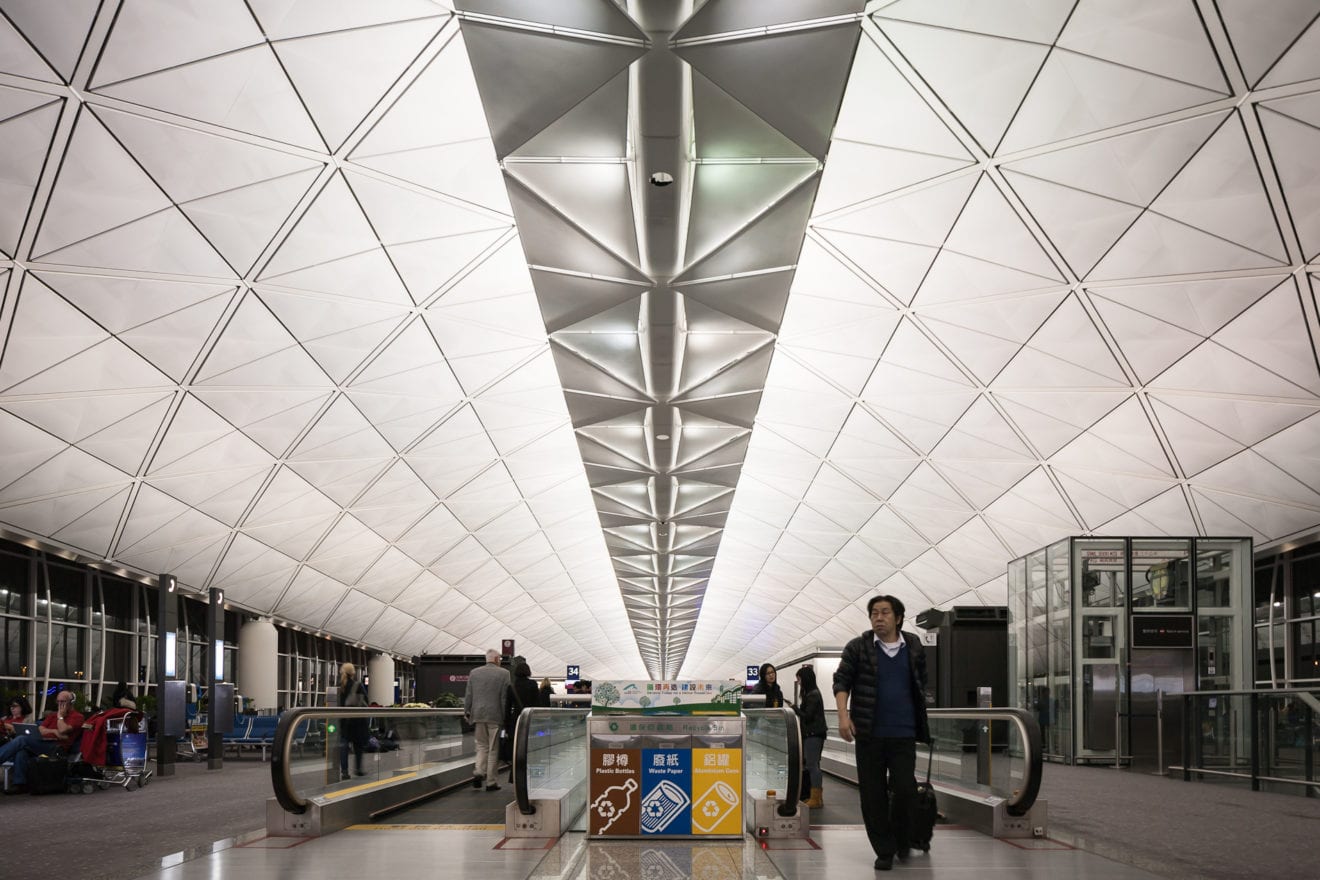
    Photo of Hong Kong airport gifts tender

    The airport, which serves over 100 airlines and handled 63.3 million passengers in 2014, an annual growth of 5.8%, said the stores represented an enticing opportunity to attract brands catering for  HKIA’s “affluent mix of passengers which come from all over the world, with over 45% being executives, professionals and proprietors.”

    Fashion and toys and gifts retailers have also been invited to bid for concessions. The deadline for submissions for the 50sq m fashion store in the north satellite concourse departures area is December 3, while interested parties have until November 5 to submit bids for a 48sqm toys and gifts store.

  • Philippine firms on billion dollar global shopping spree

    Philippine firms on billion dollar global shopping spree

    Philippine firms are on an unprecedented global shopping spree spending billions on everything from vineyards to food manufacturers and casinos reflecting the nation’s recent economic rise.

    A combination of strong domestic growth bargain prices in retreating economies abroad and rock-bottom borrowing rates have fuelled the acquisitions analysts said.

    The Southeast Asian nation has for years exported shopping malls and junk food to the region but cashed-up Filipino firms have diversified in recent years with acquisitions around the world and in many sectors.

    “It has not happened in this rapid succession. It’s like a colonial mentality in reverse” said Luis Limlingan research head at Manila stock brokerage Regina Capital.

    The pace of the acquisitions has startled both local and foreign investors according to BDO Unibank chief market strategist Jonathan Ravelas.

    “Filipino companies are moving into the global space and it’s not limited to just one sector. The opportunities abound” he said.

    In one of the most-recent big-ticket acquisitions local instant noodle firm Monde Nissin said last month it was buying British meat substitute manufacturer Quorn for 550 million pounds (833 million).

    In the last two years the private company also snapped up popular fruit juice brand Nudie and chilled dips manufacturer Black Swan both from Australia for undisclosed amounts.

    Monde Nissin is owned by Betty Ang who started her company 30 years ago and is now the nation’s 19th richest person with a net worth of 900 million according to Forbes.

    Meanwhile Emperador a company controlled by the Philippines’ fourth richest man Andrew Tan and which specialises in cheap brandy at home is looking to spend more than one billion dollars on diversifying in Europe.

    In May the company said it would bid to acquire French cognac maker Louis Royer SAS.

    There has been no resolution in that attempt yet but last year it paid 430 million pounds (726 million) for Scottish whisky maker Whyte and Mackay.

    Emperador also spent 60 million euros (82 million) last year for half of Spanish brandy producer Bodega Las Copas.

    The Philippines’ third-richest man Enrique Razon has made headlines by expanding on the port operator business that has made him his fortune by setting his sights on the Asian gaming market.

    He opened a billion-dollar casino in Manila in 2013 and then in March this year his Bloombery Resorts firm announced it was buying AN island and part of another one in South Korea for his first overseas gaming foray.

    Analysts said these were some of the highest-profile acquisitions overseas but there were many others in a wide range of sectors including telecommunications power fast food and oil.

    Awash with cash

    Filipino firms are leveraging their earnings from a robust local economy to snap up bargains in countries where growth has slowed analysts said.

    “These companies have huge stashes of cash and they are maximising it to compliment their existing businesses” said Astro del Castillo managing director at Manila stock brokerage First Grade Holdings.

    The Philippines had for decades endured low economic growth compared with other Asian tiger economies partly due to crippling corruption and red tape.

    But in recent years the economy has been one of the strongest in Asia averaging growth of 6.3 percent between 2010 and 2014.

    President Benigno Aquino whose six-year term ends in 2016 has been widely credited overseas for the economic gains due to his efforts to tackle graft and stifling government bureaucracy.

    This year the economy has slowed but still expanded by 5.3 percent in the first half.

    But many of the enduring problems remain at home and these are forcing the local firms to look elsewhere according to Victor Abola an economist at the University of Asia and the Pacific.

    “It’s not so much a lack of growth opportunities (locally)” Abola said explaining why Filipino companies were investing abroad.

    “It’s about the government changing the rules of the game midstream… and slow action on proposals.”

    The Philippines ranks 95th out of 189 economies based on ease of doing business according to The World Bank’s International Finance Group.

    But that is a huge improvement: under Aquino’s reign the Philippines has moved up 53 spots in the last four years.

  • Singapore operations still play key role in StanChart’s future

    Singapore operations still play key role in StanChart’s future

    The woes besetting British lender Standard Chartered over the past three years have left their mark on Singapore.

    As one of the bank’s regional hubs with operations spanning commercial, retail and private banking and wealth management, Singapore has had to bear some job cuts and the restructuring of some business units.

    Nonetheless, a strategy update unveiled yesterday by chief executive Bill Winters provides some hopeful indications that the operations here will continue to play an important role in StanChart’s future. With indications that more power will be given to regional bases like Singapore, it is undoubtedly the case that Singapore remains one of the strongest franchises in the group.

    And even amid cost-cutting and restructuring across the bank, StanChart has made large investments here in the past couple of years. In fact, Singapore will be a key recipient of the increased investments in key growth areas that StanChart plans to make over the next few years.

    Two of the areas that StanChart plans to invest significantly in over the next few years are private banking and wealth management, and yuan internationalisation – both businesses for which Singapore is a key hub.

    In fact, the bank said its yuan deposits in Singapore have tripled since June last year.

    Its yuan assets, such as trade loans and working capital loans, have doubled in the same period.

    Singapore is also the hub to be in for banks that want to manage Asean’s rapidly growing wealth.

    The latest earnings figures for the Singapore business are not available, but Singapore chief executive officer Judy Hsu, said the operation here is still the second-largest contributor to the group, while also providing a strong base for StanChart to grow its regional businesses.

    To be sure, things have not been all rosy here. One sign of trouble could have been the sudden departure of former long-time Singapore chief executive Ray Ferguson to a Bahrain bank early last year with little explanation.

    His exit came as a surprise not least because he had become a Singapore citizen in 2010, a move he said reflected his commitment to a country that had been home to him and his family for a long time.

    His replacement, Mr Neeraj Swaroop, lasted only about a year before wealth management head Judy Hsu took over on Oct 1.

    A former senior executive told The Straits Times that there has been a series of departures of senior managers, from private and consumer banking and retail banking, since 2013.

    That was the year the bank first reported a drop in earnings after 10 straight years of delivering record profits. In the first six months of this year, net profit plunged 36.7 per cent compared with the same period a year ago.

    The stock has fallen more than 30 per cent this year.

    StanChart Singapore employees told The Straits Times that there have been some senior departures in the past few months and that some staff are thinking about leaving now in order to avoid a sudden loss of their jobs.

    But it is understood that the impact of the bank’s latest restructuring exercise will be minimal in Singapore.

    Even as Singapore’s position remains strong, analysts say the biggest challenge remains: What will StanChart’s future income stream look like?

    “It’s not just China slowing down, but that the overall bank’s income-generating power that’s under huge pressure,” added the former StanChart executive.

    And neither is it a simple decision to just move the headquarters out of London, as there are various complex issues such as regulation.

    The consensus seems to be that StanChart Singapore will have to sit tight to see how it rides out the turmoil, but there is a reasonable chance that it will emerge in a stronger position than before.

  • Retail tech solutions showcased at Biopolis

    Retail tech solutions showcased at Biopolis

    Customers eyeing a piece of furniture often hesitate to buy it because they do not know how it would look in their homes.

    But now, an application by a team of researchers from Dimension 5, a spin-off from the Agency for Science, Technology and Research (A*Star), lets users see how an item would look in a specific room. The 3D visualisations are modelled to scale, and users would be able to drag and drop a design from a furniture company’s online catalogue onto their mobile screens for a look before they buy it.

    The team has already secured a contract with a furniture company and is planning to launch the iOS version of the app at the end of the month, with an Android version to come in two to three months.

    More than 60 of such infocomm technology-based solutions for the retail industry are on show at the two-day Media Exploits event, organised by A*Star, which ends today. While targeted at industry professionals, the event at the Bio-polis is also open to the public from 9am to 5.30pm.

    Other projects showcased are in varying stages of development. These include SoundEye, a monitoring device that detects screams or shouts so that caregivers can be alerted when elderly residents fall.

    Mr Philip Lim, chief executive officer of Exploit Technologies, A*Star’s commercialisation arm, said a major objective of the event is to bring together people from different communities, particularly those who understand markets and consumer demand.

    “You need to take teams of people and talent forward to where the technology has been groomed, maybe even to the point where they can influence the technology.

    “They can suggest better ways of doing things to researchers, based on what people need out there,” he added.

  • Trade between Thailand and Chile to double as FTA starts

    Trade between Thailand and Chile to double as FTA starts

    ANNUAL trade between Thailand and Chile should double to US$2 billion (Bt71 billion) in the next three to five years, thanks to the free-trade agreement (FTA) between the countries, which comes into force today.

    “Bilateral trade and investment should grow after the liberalisation of both markets, since Chile can be a gateway for Thailand to penetrate Latin American countries.

    “While it will help Thailand open opportunity to be part of the Trans-Pacific Partnership in the future, as Chile is already part of this, the world’s largest trade bloc,” Commerce Minister |Apiradi Tantraporn said yesterday.

    The free-trade pact with Chile is Thailand’s second bilateral FTA with a Latin American country – the other being with Peru – and the seventh overall, after the agreements with China, India, Japan, Australia and New Zealand.

    The pact should also help increase the Kingdom’s trading competitiveness with key rivals, including China and Vietnam, as Thailand has negotiated better benefits than those contained in Chile’s FTAs with those two countries, she said.

    Thai rice should also gain greater market access to Chile, as import tariffs for the produce will be reduced to zero within five years, she added.

    Besides the trade in goods, the FTA will also cover service-sector liberalisation, while negotiations between Thailand and Chile on investment liberalisation will be held within the next two years.

    Under the pact, tariffs for 90 per cent of trade in goods – 7,129 out of a total of 7,855 items – are being cut to zero immediately. For another 296 items, tariffs will gradually be reduced to zero over a three-year period, while those on a further 283 items will fall to zero in five |years.

    For the remaining 147 items, which are regarded as sensitive goods, import duties will be brought down to zero in eight years’ |time.

    Under service-sector liberalisation, Thai enterprises will be able to hold 100-per-cent ownership in service businesses in Chile, in sectors such as legal services, consultancy, engineering, computer services, retail and wholesale, and services related to the production sector.

    Apiradi said that Thai massage, Thai kick-boxing and other recreational services in which Thais have high expertise, should be able to open up more to businesses in Chile, thanks to the pact.

    She also suggested that Thai businesses and investors urgently explore the Chilean market, as the country is rich in natural resources and is a trading centre in South America.

    High potential goods

    Thai goods with the highest export potential to Chile are pickup trucks, cement, electrical appliances, plastic pellets, rubber products, as well as canned and processed foods.

    Service businesses with opportunities to grow in Chile are engineering, logistics, energy, mining and retail, hotels and hospitality, sports and recreation.

    Chile is Thailand’s third-largest trading partner in Latin America, after Brazil and Argentina, while the Kingdom is Chile’s largest trading partner among Asean countries.

    Bilateral trade was worth about $960 million last year, with Thailand enjoying a surplus of about $300 million.

  • China Apus to invest Rs 100 crore in Indian startups

    China Apus to invest Rs 100 crore in Indian startups

    China’s Apus group plans to invest an initial amount of Rs 100 crore in Indian startups as part of its aim to build a positive ecosystem for the ever growing startup community in the country.

    Apus group was founded in 2014 and is among the top 10 developers on Google Play. Apus Launcher is the group’s flagship app with more than 200 million downloads.

    “The group will offer support to these companies via programmes focussed on developing and building a positive ecosystem for their growth. These programmes will range from providing incubation to free Apus traffic,” the company said in a statement.

    The company will offer an open platform to all startups and will aim to deliver the right guidance and resources till the time they gain enough exposure in their targeted markets.

    “Startups shortlisted under this programme will also have access to tools and experts helping them to enhance decision making capabilities,” it said.

    The company said it has over 25 million users from India and targets 80 million users by 2016 by setting up a local operation centre and also by providing more localised service and experience to Indian users and augment India specific content.

    Founder and CEO of Apus Group Li Tao said as an emerging market, India’s market potential is great and it offers one of the greatest ecosystems for startups.

    “We had similar situation in China three to five years ago and India represents an important market for us. We are looking to further strengthen our presence as we evaluate more partnership opportunities with more firms as we look to strengthen our relationship with India,” Tao said.

  • Olympic hero goes for gold with new retail technique to boost sales

    Olympic hero goes for gold with new retail technique to boost sales

    Chinese gymnast Li Ning wowed the world with one of the highest double pikes in Olympic history to clinch a third gold medal at the 1984 Los Angeles Games. Now a sporting goods retailer, he is counting on another tactic to win over shoppers.

    Li is enticing customers to his namesake Li Ning Co stores, where they can look at and try on the latest range of Xiaoqiang basketball shoes, and Furious Rider and Rouge Rabbit runners-but not take them home. Instead, buyers are directed to the Internet to make purchases online.

    The Web-only strategy, which has generated 22 million yuan ($3.5 million) in sales during the first month, may help it reverse three straight years of losses.

    Companies from home appliance maker Haier Electronics Group Co to clothing purveyor Grana have also introduced the showroom model. Li sees it improving inventory management, a complex exercise in China, where there are about 140 cities with more than 1 million people.

    “In the past, we’d sell flagship products in physical stores,” Li, who founded his retail business in 1990, two years after retiring from gymnastics, said. “Even when we sell them online now, we have thousands of shops to promote the products, with only one warehouse behind us.”

    Distributing goods to online customers from a single warehouse cuts storage and handling costs, resulting in savings that can be passed to customers.

    It can also improve stock management, something the company has been working on to boost profitability.

    “The showroom approach might be a good way to boost sales in China in the face of rising rental and labor costs, ongoing logistics issues, and the boom in Internet retailing,” Sun Fangting, a senior analyst with market researcher Euromonitor International, said.

    The tactic may be especially helpful in penetrating smaller cities and urban areas. Online retail sales reached $165 billion in China last year, accounting for almost a fifth of the global total, according to Euromonitor.

    Haier Electronics plans to progressively strip inventory from 3,000 of its 38,000 stores across China, with 125 of these targeted to have display-only merchandise by the end of the year, the company said.

    The changes mean future shops will feature interactive, computer-simulated household models that enable customers to visualize how products will look and fit in their homes.

    In reformatted stores, sales staff assist customers to make purchases online and facilitate their interaction with designers. Goods such as refrigerators and washing machines can also be paid with cash, and delivered the same way as online-purchased products.

    Reformatted stores have recorded a 7 percent to 8 percent increase in sales, Chairman and CEO Zhou Yunjie said.

    In comparison, revenue from shops yet to be converted to online-only has declined as much as 20 percent, weighed down by an industry-wide slowdown in home appliance sales.

    Zhou said he expects the transformation of physical stores to lower inventory and staff costs by about 30 percent.

    “Integrating conventional shops with Haier’s online retail business will provide a better customer experience,” Zhou said. “Customers need to feel and see the products.”

    Showrooms make that integration possible.

    “The future is not a lot of stores,” Bruce Rockowitz, CEO of Global Brands Group Holding Ltd, said. “It’s going to be a future of showrooms in key places, and stores that showcase the brands and build the image.”

    Grana, a Hong Kong-based online clothing retailer, opened a permanent showroom in the special administrative region last month, enabling customers to try clothes on before buying them.

    The company, which ships its brand of garments to eight countries, plans to open showrooms in Singapore, Australia and the United States next year.

    “It’s really mixing the best of online and offline into one showroom concept,” CEO Luke Grana said. “Coming in, they can have fresh lemonade and we can talk to them. We can suggest styles and they can get their fits right. It’s what you can’t get from just pure online shopping.”

    The showroom approach may also suit other areas of retail, including home-wares, furniture and personal beauty care.

    “The whole nature of stores as we know it will change,” Tim Parker, chairman of Samsonite International SA, said. “(The showroom strategy) adds more value to businesses that have to keep very large inventories in the stores.”

  • C-star Retail Trade Fair Returns to Shanghai

    C-star Retail Trade Fair Returns to Shanghai

    After its successful premiere in 2015, C-star, Shanghai’s International Trade Fair for Solutions and Trends all about Retail, will return to the Shanghai New International Expo Centre from May 18 – 20, 2016. Next year, C-star will occupy two halls in order to give exhibitors more space to present their latest innovations and solutions for the retail sector.

    C-star will again be organized by Messe Düsseldorf Shanghai, a subsidiary of Messe Düsseldorf located in Germany. Messe Düsseldorf is renowned as the organizer of EuroShop (The World’s Leading Retail Trade Fair) held every three years in Düsseldorf, Germany,

    C-star 2016 will be clearly divided into four segments:

    • Store fitting and design, lighting, refrigeration
    • Retail technology
    • Visual merchandising and marketing
    • Stand design

    Hall N5 will be dedicated to POP marketing, expo and event marketing, store fitting and design with a strong focus on non-food retailing, while hall N4 will complete the exhibition range with food technology and equipment, energy management and retail technology.

    A new special area will be the Retail Technology Village. Modeled after the EuroCIS trade fair in Düsseldorf, the Village is a response to the fast-growing demand for state-of-the-art technology especially for the retail market, ranging from innovative payment systems and sophisticated security systems to complex IT solutions.

    Another highlight will be the Designer Village where leading design agencies will present their latest holistic solutions in visual merchandising and store design.

    An extensive supporting program will complement the C-star 2016 exhibits. One of the show’s highlights will be the C-star Retail Conference, a 2-day event with international retail experts sharing their exclusive industry insights. The conference topic will be “Local Heroes” and will focus on innovative retail concepts of both Chinese and international industry players. With conference chairman Prof. Dr. Helmut Merkel – former CEO of Karstadt, former President of the International Group of Department Stores and Chairman of Eurasia – as well as the strong support of associations such as the EHI Retail Institute and Mall China, the C-star Retail Conference will be an important meeting point of retail industry leaders.

    Another highlight will be the annual EuroShop Retail Design Award (ERDA) ceremony. At this renowned gala event, the best store concepts worldwide are rewarded by the EHI Retail Institute together with Messe Düsseldorf.

    The C-star experience will be rounded off by the in-hall C-star Forum and the C-star Retail Tour. At the Forum, leading international industry peers will talk about their experiences with the Chinese retail market. The 1-day C-star Retail Tour will visit Shanghai’s most innovative and sophisticated shopping malls.

    Despite a recent slowdown in the Chinese economy, China’s retail market is still of key importance to international retailers and has kept posting impressive year over year growth numbers of more than 10% throughout 2014 and 2015. Innovative retail solutions are in high demand on the Chinese market. With its clear structure and a unique show concept, C-star is geared to the needs of the Chinese retail sector. C-star’s international exhibitor structure will meet the demand of Chinese retailers for innovative solutions and products from international suppliers. With the extensive ancillary program, the trade fair will also cater to international retailers looking for information about the Chinese retail market.

    The first staging of C-star in 2015 attracted 162 exhibitors from 23 countries and more than 5,700 trade visitors.

    For further information on visiting or exhibiting at C-star 2016, contact Messe Düsseldorf North America, 150 North Michigan Avenue, Suite 2920, Chicago, IL 60601. Telephone: (312) 781-5180; Fax: (312) 781-5188; or visit our web site www.mdna.com.