Category: General

Retail News Asia is committed to providing both local and global retailers with the latest General Retail news throughout the Asian market. This on a daily base.

  • World-first diamond exchange set for Singapore

    World-first diamond exchange set for Singapore

    The world’s first exchange for physical diamonds, is set to launch in Singapore in the fourth quarter, with a longer-term plan of creating a diamond futures market.

    Alain Vandenborre, the man behind the Singapore Diamond Investment Exchange (SDiX), thinks they can be bought and sold in a different way.

    He said he is surprised no one has tried to bring the trading of diamonds as a commodity into the 21st century on a global scale.

    To achieve that vision, some of the biggest diamond companies in the world have been secured as suppliers, including New York-based Leo Schachter, a leading manufacturer.

    “Up until now, the industry has been old-school. There’s wholesalers, there’s retailers, people in the middle, and there’s just no room for those people anymore. This way, we as manufacturers can go directly marketplace to sell our goods at the right price,” said CEO Alex Yarrow.

    According to SDiX, it expects to see turnover of at least US$250 million in its first full-year of trading, with operational bases set-up in Singapore, Hong Kong and India. And there are bolder plans for the future.

    “We’re going to start as the spot-market, but that’s not my strategy. The strategy is to move towards a futures licence,” said Mr Vandenborre.

    “The Exchange will be as soon as we’re regulated under the Futures Trading Act and will be launching a number of derivative products, which are highly needed. The diamond industry needs to hedge its position.”

    The new exchange might be what the marketplace needs.

    According to the widely-followed Rapaport Diamond index, the August price of a one-carat stone was 13 per cent lower than a year ago. Still, at the Hong Kong and Jewellery and Gem Fair, some traders remain upbeat despite economic wobbles in China.

    “When they slowdown, it’s going to cause a lot of pressure, so the volatility has increased considerably, I think it’s stabilising now as we speak so I believe players will come back in because the market has dropped quite a bit,” said Mayank Mehta, CEO of Rosy Blue.

    The trading of polished diamonds is quiet and expectations from dealers at the Hong Kong and Jewellery and Gem Fair was muted. Retail inventory levels remain high, particularly among 0.30-carat to 0.40-carat goods, as jewellers are not stocking up on inventory because of a retail slowdown in China.

  • Singapore Retail Sales Growth Eases Less Than Expected In July

    Singapore Retail Sales Growth Eases Less Than Expected In July

    Retail sales rose 0.2 percent in August, slightly below analysts’ consensus estimate.

    “Along with a 0.3% m/m rise in core sales and an expected increase in restaurant sales, these components imply a 0.2% gain in total retail sales for August”.

    In August, spending at gasoline stations slid 1.8 percent in August. Excluding volatile autos and gasoline, sales advanced 0.3%.

    People “have chosen to spend some of their gas price windfall on services – leisure, recreation, travel, etc. – which aren’t included in the retail sales numbers”, he said in a client note.

    On a seasonally-adjusted basis, retail sales decreased 2.2 per cent in July over the previous month. Sales at clothing stores rose 0.4 percent.

    Consumer spending has picked up in recent months after a choppy showing early in the year – gains that some economists attribute to milder weather after a harsh winter and Americans’ growing belief that low pump prices will be around for a while. The hiring – 2.9 million additional jobs over the past 12 months – has translated into a surge of spending at auto dealers and restaurants. The USA economy has become increasingly reliant on consumer spending to maintain growth as Europe and China have struggled to expand at a faster pace.

    “Retail sales showed solid gains in August, despite financial market volatility and a deflationary pricing environment in retail”, said NRF Chief Economist Jack Kleinhenz in a blog posting.

    Consumers came back to life in the first two months of the third quarter after lying low in June, wrote IHS Global Insight Director of U.S. Consumer Economics Chris Christopher in a research note. Overall, however, the numbers suggest consumers have been upping their spending in the spring and summer as they begin to feel more confident about their circumstances. The strong labor market has also helped.

    The index for mining fell 0.6% in August, while the index for utilities rose 0.6%.

    “With the Fed eagerly awaiting a sign or signs the economy is strong enough to withstand a rising rate environment, the data suggests the Fed will continue to wait for some time”, Piegza said.

    Americans spent less on gas in August as prices fell and used some of the savings to buy new cars or go out to eat.

  • Lotte chief vows to improve corporate governance

    Lotte chief vows to improve corporate governance

    By Kim Eun-jung

    SEOUL, Sept. 17 (Yonhap) — The chief of South Korean retail giant Lotte Group pledged Thursday to untangle a cobweb of cross-shareholding among its affiliates and speed up the listing process of its hotel unit.

    Testifying before a parliamentary committee, Shin Dong-bin also ruled out the possibility that Lotte, the fifth-largest family-run conglomerate in South Korea, may be embroiled in another family fight over leadership.

    Shin appeared before a parliamentary audit of the antitrust watchdog the Fair Trade Commission, tasked with assuaging public discontent after a bitter fraternal feud over winning control of the nation’s fifth-largest conglomerate.

    After winning the backing of Japanese shareholders last month, the 60-year-old has vowed to improve corporate transparency and list Hotel Lotte, a hotel and duty-free operator.

    During the nationally-televised audit session, Shin apologized for the family feud and vowed to clean up 80 percent of the cross-shareholding structure by the end of October.

    “We formed a task force to improve the governance structure and restore the brand image,” Shin said.

    Lotte has listed only eight companies and the core units are linked through unlisted Japanese units. Shareholders of the small Japanese firms remain largely shrouded in darkness because they are not subject to Korea’s financial disclosure rule.

    As part of reform efforts, Shin bought 35.8 billion won in Lotte Confectionery Co. shares from Lotte Construction on Aug. 28, clearing up about 34 percent of the cross-shareholding links.

    Shin said the task force is working on the initial public offering for Hotel Lotte, with plans to complete it by the first half of next year. Last week, Lotte selected three lead managers for the planned initial public offering.

    Hotel Lotte is 99 percent controlled by Japanese shareholders, including Tokyo-based Lotte Holdings and other unlisted Japanese companies.

    Lotte said earlier the hotel unit is expected to have a market capitalization of around 10 trillion won ($8.5 billion) when it lists, but market watchers estimate it could reach as much as 20 trillion won, considering its large stakes in affiliates and strong earnings.

    When repeatedly asked about the company’s identity, Shin said Lotte is a Korean company that generates most of its sales locally.

    “Lotte is a Korean company because it pays tax according to the Korean law and its employees are Koreans,” Shin said, noting he will maintain the Korean nationality.

    Founder Kyuk-ho was born in the South Korean port city of Ulsan, 414 kilometers south of Seoul, while his sons were born and raised in Japan by a Japanese mother.

    Lotte has tried to allay public discontent over its historic links to Japan as it could deal a harsh blow to the group that heavily relies on the retail, food and travel industries.

    Lotte was first established as a confectionery store in postwar Japan in 1948. It later expanded into Korea when diplomatic ties between Japan and Korea were normalized following Japan’s colonial rule from 1910 to 1945.

    Although lawmakers’ summoning businessmen has been a longstanding ritual as a way to flex their muscles in front of cameras, it is the first time the head of one of the nation’s top 10 family-run conglomerates, called chaebol, showed up before parliament to face acrimonious questions.

    Shin was called in for a 2013 parliamentary audit, but he evaded it, citing overseas trips and instead paid fines. But this time, negative public sentiment and growing government pressure left him no choice but to clarify issues related to the governance structure and other related issues.


  • Singapore retail sales stabilise

    Singapore retail sales stabilise

    Real Singapore retail sales rose 2.6 per cent in July over June and by 0.8 per cent year on year.

    That’s according to official government data after the sales of motor vehicles are removed from the figures.

    That follows falls of 3.9 per cent and three per cent in June, respectively.

    The total retail sales value in July 2015 was estimated at $3.5 billion, higher than the $3.3 billion in July 2014.

    Singapore retail chart 1509

    Year on year, sales of watches & jewellery fared the best, up 11.7 per cent. Retail sales of medical goods & toiletries, telecommunications apparatus & computers, recreational goods and department stores all rose between three and 10 per cent.

    In contrast, retail sales of petrol service stations decreased 16.4 per cent; sales of furniture & household equipment, optical goods & books, mini-marts & convenience stores, food & beverages, wearing apparel & footwear and supermarkets declined between 0.8 per cent and 5.5 per cent.

    After seasonal adjustment, month on month sales of wearing apparel & footwear, furniture & household equipment, supermarkets and petrol service stations declined between 0.7 per cent and five per cent.

    Watches & jewellery, medical goods & toiletries and recreational goods increased between 10.6 per cent and 13.4 per cent compared to June. Sales of telecommunications apparatus & computers, optical goods & books, food & beverages, mini-marts & convenience stores and department stores rose between 0.7 per cent and 8.2 per cent.

    Singapore retail chart -1509

    Meanwhile, sales of food and beverage services (seasonally adjusted) increased 3.1 per cent in July 2015 over June, but declined one per cent year on year. The total sales value of food & beverage services in July 2015 was estimated at $640 million, lower than the $647 million in July 2014.

  • AirAsia flying high again

    AirAsia flying high again

    AirAsia Bhd has been facing strong headwinds lately. The budget carrier’s share price has been on a roller-coaster ride over the past couple of months, fluctuating dramatically.

    The airline’s shares have been under pressure for some time and plunged to 78 sen on Aug 26. Its share price has since rebounded sharply from that recent low, with analysts calling it an overshooting of its price during the selldown. AirAsia became a penny stock at the end of last month and stayed below the RM1 mark for about two weeks. Its share price has since rebounded, closing at RM1.31 yesterday.

    Year to date the counter has lost more than 50%.

    What triggered the quick recovery?

    Analysts say the recent selldown was overdone and the market has ignored the significant value of its portfolio comprising non-airline businesses within the group. In addition, they note that AirAsia’s fundamentals are intact and it is undervalued.

    Maybank Investment Bank Bhd analyst Mohshin Aziz concurs that the selldown was overdone and maintains a “buy” call on AirAsia with a target price of RM2.05.

    “It is a highly beaten down stock. Given the situation, it is the highest candidate (to be picked up by investors),” he tells StarBizWeek.

    Mohshin notes that AirAsia has been very active this year engaging the investment community by having meetings, teleconferences and so forth but to no avail as it shares continued to be beaten.

    “AirAsia is cheap. Cheapest in its history in US dollar terms and also the cheapest airline stock in the world currently,” he says.

    Mohshin says there is no point talking about valuations of AirAsia, as it is beyond fire sale.

    “We derived an alternative and tangible valuation methodology for AirAsia, given that the conventional ones are gaining no traction. We took the latest available appraised value of its fleet, net off its long-term debt and times it by the ringgit at RM4.3 to the dollar and we get an intrinsic value of RM1.34 per share. Basically, the metal value of the business is higher than the current market capitalisation.

    “Shareholders can make a nice 18% gain by just selling off the fleet whilst keeping the RM4.8bil of equity,” he remarks.

    It is worth noting that the US-based Wellington group of companies which had reduced their stakes in the low-cost carrier in June this year have started buying shares in AirAsia.

    According to the latest filings with Bursa Malaysia, Wellington Management International Ltd has 200.74 million shares, or 7.214% stake in AirAsia. Wellington Management Global Holdings Ltd has an indirect 228.19 million shares or 8.2% stake, while Wellington Group Holdings LLP has an indirect 278.99 million or 10.025% stake.

    The Employees Provident Fund (EPF) had on Sept 3 acquired 2.498 million shares in AirAsia but it disposed 892,500 on Sept 9.

    “AirAsia took a beating but it is now a V-shape recovery. Wellington and EPF are back. They have been buying and hopefully the worst is behind for AirAsia. The counter has been attracting high trading volume,” an analyst say.

    The turbulence comes not in just its shares being sold down. AirAsia is also battling with other issues such as the report by accounting research firm GMT Research that raised questions about related party transactions. GMT Research had highlighted problems with the company’s accounting practices and raised concerns regarding the firm’s cash flow, leverage and group structure.

    News that PT Indonesia AirAsia (IAA) may be shut down by the end of July also caused a panic among investors.

    AirAsia’s 49%-affiliate IAA has received a letter from Indonesia’s Transport Ministry laying out terms for it to ensure a positive equity position by July 31.

    Indonesia’s Transport Ministry has ordered 13 airlines to raise funds to reach positive equity positions out of concerns that a negative equity would affect safety oversight.

    Futhermore, the company’s latest quarterly results provided little cheer to investors. In the first six months to June 30, AirAsia’s net profit fell to RM392.36 mil from RM506.87 mil a year ago, with a relatively flat revenue of RM2.6bil.

    AirAsia is also battling the Malaysia Airport Holdings Bhd (MAHB) over its operations at KLIA2. It was reported that AirAsia and MAHB would be having a “peace dinner” at the end of the month to resolve their disputes.

    Analysts, however, are not too optimistic that their differences could be resolved over a dinner. “One dinner cannot bury the hatchet. We will just have to wait and see,” one analyst says.

    Analysts believe that another concern weighing down AirAsia is the continued weakening of the ringgit against the strong greenback as about 70% of operating expenses and 80% of debt are US dollar-denominated. So far this year, ringgit has weakened by about 20% year-to-date.

    “We believe that one overhang over AirAsia’s share price performance year-to-date is the weakening of the ringgit against the US dollar.

    “We estimate that 64% of operating expenses (jet fuel, MRO and aircraft leasing) are US dollar denominated. As 8% of operating costs are hedged to reduce the impact from US dollar over ringgit volatility, the impact of every 5% drop in the ringgit equals to an increase in operating cost by 3%. Separately, 73% of its US dollar borrowings are hedged,” MIDF Research says.

    At 50%, jet fuel constitutes the largest operating cost component for AirAsia.

    AirAsia’s exposure to spot jet fuel is 49% in fourth quarter 2015 (51% hedged) and 100% in FY16 (fully unhedged). Thus, the impact on a 5% drop in jet fuel price reduces operating cost by 1.2% in fourth quarter 2015 and 2.5% in FY16.

    MIDF Research also notes that daily short value on AirAsia has reduced from a daily average of RM706,000 in the first week of September to RM335,000 in the second week of September.

    “This is also a major improvement from RM1mil to RM2mil average seen in previous months. We also believe that short sellers have been covering their positions by buying back the stock as share price rose 60% off its 77 sen low, typical in a short-squeeze situation,” it says.

  • Breaking The Rules Phenomenon To Rock The Retail Business

    Breaking The Rules Phenomenon To Rock The Retail Business

    Siam Piwat Co., Ltd., the owner and management of the leading shopping centers in downtown Bangkok including Siam Paragon, Siam Center and Siam Discovery, invests a large sum of over 4 billion baht in revamping Siam Discovery both the interior and exterior. This is a part of strengthening the company’s vision “The Icon of Innovative Lifestyle”. Set to bring a phenomenal experience to rock the retail business world under the concept of “Break The Rules”, the captivating re-launch of Siam Discovery tends to be scheduled for the first quarter of 2016—welcoming the country’s participation in the ASEAN Economic Community (AEC).

    In the middle of a major renovation, Siam Piwat has therefore designed vinyl to wrap the whole building for safety to match international standards. Located in the center of Pathumwan Intersection, the vinyl has been formed into a gigantic billboard on which is the graphic designing of shattering glass. This symbolic image represents a familiar sight of Siam district before being changed to make a better creation. It is absolutely the talk of the town among both Thais and foreign tourists who look forward to seeing the new look of Siam Discovery. This will also modify Siam district to maintain its rank of being Thailand’s everlasting shopping destination.


  • Hong Kong retail has lost its edge

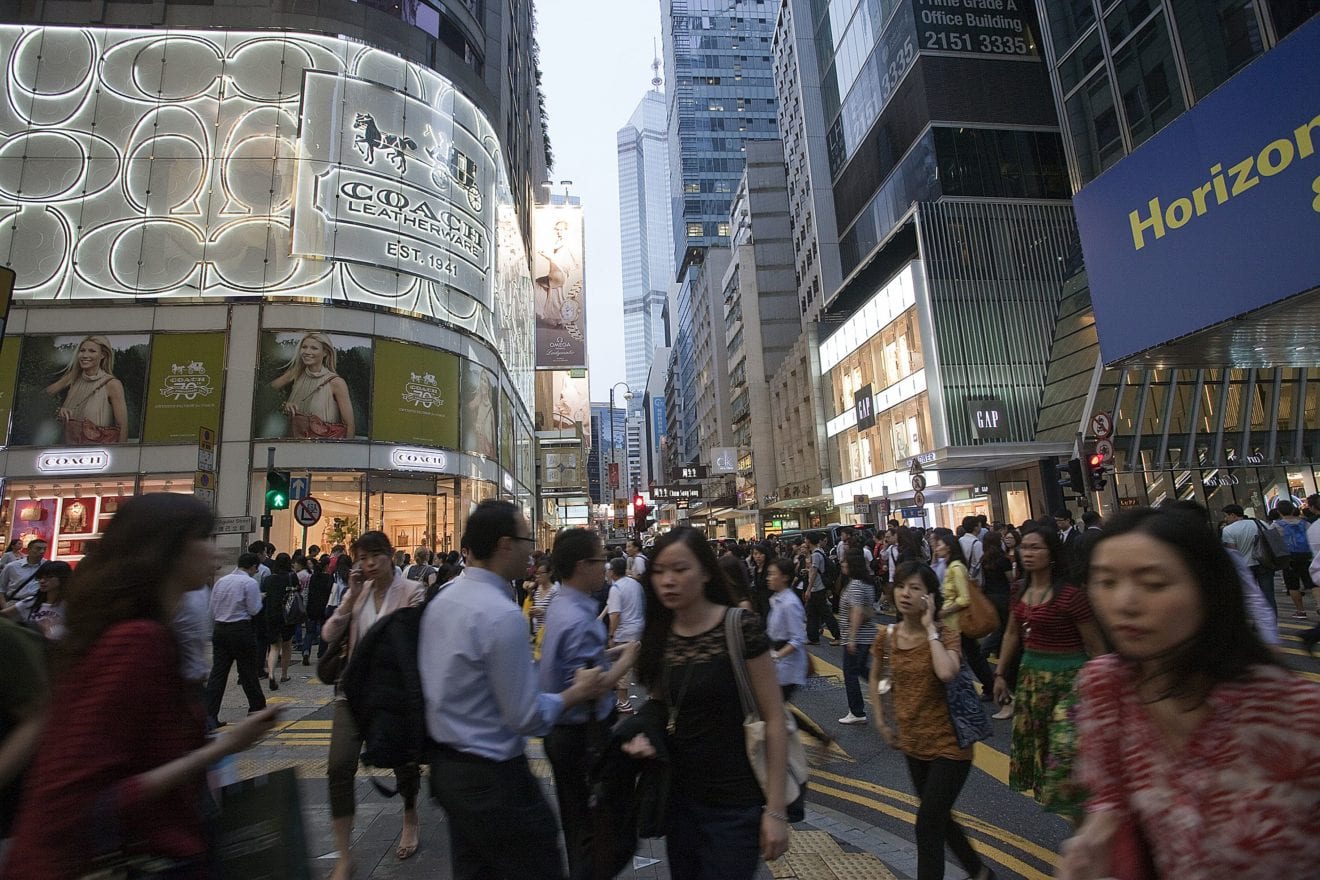
    Hong Kong has lost its edge as the go-to destination for international tourists seeking retail therapy.

    In a presentation to the 22nd CLSA Investors Forum, CLSA’s  head of consumer and gaming research Aaron Fischer, said luxury retail prices in Hong Kong are now higher than in other markets and if they stay that way “the retail market will suffer”.

    He cited an example of a Louis Vuitton handbag priced 20 per cent cheaper in Tokyo than in Hong Kong.

    Tourists – especially those from the Mainland – are now considering the price differential with Europe and other Asian destinations – and concluding there are more exciting tourist attractions, or new experiences, so deciding against Hong Kong.

    He said while there is no danger of the Hong Kong retail market “collapsing” – it would take threats to personal safety from terrorism or a pandemic to cause that – the sector needed to adjust.

    He said Hong Kong luxury brands were over-stored here. Brands like Louis Vuitton and Prada had about 10 stores in Hong Kong – and more in Macau – yet in cities like New York they had just two or three. If the profitability of these brands in Hong Kong was to be maximised, store networks would need to be cut by 20 or 30 per cent.

    “While sales declined, it does not mean these stores are loss-making. They might close one or two stores but they definitely won’t leave Hong Kong,” he added.

    The 22nd CLSA Investors’ Forum provides more than 1400 global fund managers and 230 leading listed corporations from 30 countries a platform for discussion and debate on market drivers including foreign policy and currency volatility; financial, political and structural reform; capital preservation, corporate governance and more.

  • No sale threat to Tesco Thailand

    No sale threat to Tesco Thailand

    There seems little prospect of the Tesco Thailand business – trading as tesco Lotus – being sold or scaled back in the wake of the British JV partner’s sale of its South Korean Homeplus business last week.

    Tesco PLC is under intense pressure to reduce debt and improve its trading profit, a goal which received a significant boost last week with the US$6 billion sale of the Homeplus business.

    Tesco Lotus operates some 1400 stores in Thailand, 1100 of them Express outlets, essentially oversized convenience stores, the balance hypermarkets.

    The company said in a statement that it has confidence in the Thai market’s growth prospects and planned to continue with expanding its store network.

    Early this year the company projected it would open 50 new Express format stores in 2015 and five new hypermarkets.

    Meanwhile, an “industry source” told the Bangkok Post newspaper following the Homeplus sale that it was unlikely Tesco would sell its stake in Tesco Lotus.

    “I don’t think the Thai operation will be sold, as it is healthy and profitable with a lot of market potential and expansion,” the source said.

  • Hong Kong Expo And Symposium Open In Jakarta

    Hong Kong Expo And Symposium Open In Jakarta

    Chief Executive of Hong Kong CY Leung and Minister of Tourism of Indonesia Arief Yahya officiate at event promoting closer ties

    “In Style – Hong Kong”, organised by the Hong Kong Trade Development Council (HKTDC), opened today at the Jakarta Convention Center in Indonesia. Chief Executive of the Hong Kong Special Administrative Region (HKSAR) CY Leung and Minister of Tourism of the Republic of Indonesia Arief Yahya officiated at the joint opening of the one-day business symposium and the products expo, which continues through 19 September.

    Speaking at the opening reception, Mr Leung highlighted Hong Kong’s role as a gateway for trade between the Chinese mainland and the ASEAN region, adding that a Hong Kong-ASEAN Free Trade Agreement (FTA) would be concluded within the coming year. “It (the FTA) will, I know, strengthen economic ties and cooperation between Hong Kong and Indonesia,” said Mr Leung. “With our [Hong Kong’s] help, it will encourage more Indonesian exports to the mainland of China. Inevitably, more Hong Kong and mainland investment will also find its way to Indonesia.”

    Meanwhile, Mr Yahya said “In Style – Hong Kong” was an important business gathering for Indonesia. “It is enhancing the partnership between Indonesia and Hong Kong, especially in trade, investment and tourism,” he said.

    Chairman of the HKTDC Vincent HS Lo explained that “In Style – Hong Kong” is an expansion of previous expo’s organised by the HKTDC in Jakarta. “This event is bigger and better. In addition to products, we have added today’s business symposium where you can find and network with core business leaders and find out how to take advantage of Hong Kong’s world-class services to grow your business,” said Mr Lo.

    Also speaking at the opening reception, Secretary, Ministry of Cooperatives and SMEs of the Republic of Indonesia Agus Muharram said Hong Kong was a gateway for Indonesian companies, “not only to the Hong Kong and China markets, but also the global market as well as [providing] potential for Indonesian cooperatives and small and medium-sized enterprises products.”

    “By maintaining a good relationship between Indonesia and Hong Kong, we hope that this will present good results in export market expansion and promotion of Indonesian cooperatives and small and medium-sized enterprises products,” said Mr Muharram.

    Services under the spotlight

    The services symposium features five thematic sessions highlighting ways Hong Kong services, including financial services, legal and arbitration, design and branding services, digital marketing and ICT services, can help Indonesian companies expand their business in Asia, and especially the Chinese mainland.

    Product expo features lifestyle themes

    In addition to showcasing Hong Kong’s services, more than 190 participating companies are also presenting Hong Kong lifestyle products in four major themed zones; fashion and fashion accessories, jewellery and watches, gifts and houseware, and consumer electronics. There is also a display of award-winning pieces.

    An invitation-only gala dinner will be held this evening for some 500 businesspeople from Hong Kong and Indonesia. The “In Style – Hong Kong” citywide campaign continues through 20 September, the centerpiece of which is a Hong Kong galleria at the Skybridge in Grand Indonesia Shopping Town.

  • Indonesian retailers prepare for inflation shock

    Indonesian retailers have warned consumers of prices rises ranging from five to 12 per cent.

    Roy N. Mandey, chairman of the Indonesia Retailers Association (Aprindo), says the nation’s retailers plan to increase prices to consumers by an average of six to seven per cent as they battle with the weakening value of the rupiah.

    “Price increases for food and beverage products would be around five per cent, while electronics would see a hike of between 10 and 12 percent,” Mandey said in an interview with the Jakarta Globe.

    The Indonesian currency has lost 15 per cent of its value this calendar year, and the government has disrupted the economy further by introducing new import tariffs on many consumer goods and restricting alcohol sales in convenience stores.

    Mandey said in an interview he expected retailers to increase prices in October, a typically high month for stock replenishment.

    Members of Aprindo, which include hypermarket operator Matahari Putra Prima and convenience store network Sumber Alfaria Trijaya, have been struggling to respond to stagnating retail demand as the purchasing power of consumers has slipped.

    In July, Indonesian retail sales growth fell to its lowest level since last December, rising just 4.8 per cent.

    In 2014, Indonesian retail sales topped Rp 168 trillion, but the last estimate for 2015 stood at just 152 trillion. Aprindo is hoping for Rp 175 trillion but says for that level to be reached the government would have to remove some regulatory barriers.

  • Shoppers seeking “transformation” of retail experience

    Shoppers seeking “transformation” of retail experience

    Shoppers globally are demanding their retail experience is “transformed”, a study by MasterCard has revealed on the eve of this year’s World Retail Congress.

    And one of their top priorities: “simpler and more innovative ways to pay” according to the world’s first retail focussed ‘social listening study’.

    The MasterCard Retail Social Listening Study, in partnership with Prime Research, analysed 1.6 million unprompted online conversations around shopping and retail during the last 12 months across 61 international markets in order to understand consumer experience.

    Key findings from the study indicated retailers are experiencing a shift in consumer expectations, requiring “new and richer experiences”, says MasterCard, which will enable consumers around the world to shop at the ‘speed of life’.

    Key findings include:

    • Convenience through technology innovations: Convenience was the most positively discussed aspect of new digital payment methods in shopping and retail related conversations (77 per cent), with the travel sector leading the way in terms of the highest share of coverage. Consumers specifically highlighted their preference for not necessarily needing to take their wallet on every trip and being able to use mobile payments when they travel.
    • Being rewarded: Rewards and benefits for the consumer was the most vociferously and positively discussed topic across social media when it came to shopping and retail (38 per cent share of coverage of the six aspects measured). Entertainment was the sector leading the way, where rewards and benefits was most discussed. Consumers expressed eagerness for further acceptance of NFC payments allowing them to receive rewards for using them regularly.
    • Demand for increased acceptance: After rewards and benefits, consumer discussion of which retailers do and do not accept newer forms of payment was the second most discussed topic according to the study (21 per cent share of coverage of the six aspects measured). Consumers discussed extensively their desire for retailers to integrate new payment systems, with conversations about fashion being most prominent in terms of sector. Fashion focussed shoppers were the most keen to shout about retailers who accept new methods of payment, such as contactless acceptance and mobile payment capabilities.

    Asia Pacific respondents had the highest percentage of favourable tone on the topic of Contactless Payments.

    In addition, Twitter was highlighted as the most frequently used social media platform globally when it came to online conversations about retail and shopping.

    Carlos Menendez, executive director for international markets at MasterCard said the wave of social engagement seen every time new payment innovations are rolled out truly reflects the demand and desire for new and more convenient ways to pay.

    “It also shows that payments have really moved into the heart of the shopping experience – causing frustration when not accepted and engagement when fast, easy and personal.”

  • Nike, Muji, Adidas apply for Indian retail rights

    Nike, Adidas and Muji are among eight global companies seeking single brand retailing approval from the Indian government.

    According to a report in The Indian Express the Department of Industrial Policy and Promotion (DIPP) has received eight applications from global brands including Skechers, Kiko International, Ryohin Keikaku (Muji), Nike, Adidas and Swarovski after foreign direct investment rules were relaxed in July.

    Foreign companies can now conduct business through more than one joint venture in India, according to the newspaper.

    Since then, ITaly’s Kiko International has applied to retail beauty and skin care products, apparel, jewellery and handbags. Shoe maker Skechers and glass creator Swarovski followed.

    Swarovski, along with Nike, have previously had applications turned down – in Swarovski’s case because it wanted to sell in both cash-and-carry chains and single brand retail stores. It was told to reapply with separate applications, The Indian Express reports.

    The identity of the other two companies was not revealed.

  • China retail sales up 10.8 pct in August

    China retail sales up 10.8 pct in August

    China’s retail sales grew 10.8 percent year on year to 2.49 trillion yuan (390.89 billion U.S. dollars) in August, the National Bureau of Statistics (NBS) said Sunday.

    The growth rate picked up slightly from 10.5 percent in July.

    A key reason for the month-on-month rise in retail sales was rising retail prices, and the August retail sales growth rate is almost the same as in July if one deducts the price factor, said NBS statistician Lin Tao.

    In the first eight months, retail sales grew 10.5 percent.

    Growth in rural areas continued to outpace that in cities.

    Sales in rural areas rose 11.9 percent in August and 11.7 percent in the January-August period, in contrast to the 10.6-percent and 10.3-percent growth seen in urban areas.

    Earnings for catering services in August grew 12.4 percent, 0.2 percentage points higher than July.

    Chinese consumers increasingly favored online shopping. In the first eight months, online sales rose 36.5 percent year on year to 2.24 trillion yuan.

  • Lulu to open first hypermarket in Indonesia this year

    Lulu to open first hypermarket in Indonesia this year

    The UAE-based Lulu Group will mark its first retail push in Indonesia by opening its first hypermarket in the capital city of Jakarta by this year end.

    The announcement came during the visit of President of Indonesia, Joko Widodo (popularly known as Jokowi), to Abu Dhabi. He visited the Lulu Hypermarket at Khalidiyah Mall in Abu Dhabi, along with a high-level delegation.

    The Indonesian President is on a five-day state visits to three Middle East countries — Saudi Arabia, United Arab Emirates and Qatar.

    “With an initial investment of $300 million in the first phase, we plan to open 15 hypermarkets by the end of 2017 and a central logistics and warehousing facility in Jakarta. These projects are likely to generate more than 5,000 job opportunities for Indonesians,” said Yusuffali MA, managing director of Lulu Group.

    The group expects to invest a total of $500 million in Indonesia over the next five years.

    “The fact that we are going to Indonesia with our Halal Hypermarket concept, is giving us the encouragement to look for a wider market segment there,” added Yusuffali.

    Apart from Jakarta, Lulu intends to open hypermarkets in Bandung, Solo, Semarang, Surabaya and Yogyakarta.

    “We also plan to set up contract farming to ensure continuous supply of high quality products and to support the Indonesian agriculture sector,” said Yusuffali.

    The Indonesian President was welcomed at the hypermarket by Yusuffali; Saifee Rupawala, CEO; Salim M A, director; Rajmohan Nair, director – Lulu Far East operations, and a large number of Indonesian expatriates.

    President Jokowi and the accompanying delegation were taken on a guided tour of the hypermarket by Yusuffali and team who briefed him about specialties of the retail store.

    The president later urged Yusuff Ali to export more products from villages and towns in Indonesia.

    The Lulu chain currently operates 117 stores across the UAE, Oman, Bahrain, Kuwait, Qatar, Saudi Arabia, Yemen, Egypt and India. -TradeArabia News Service

  • Chinatown Mid-Autumn Festival Celebrates Singapore’s Golden Jubilee

    Chinatown Mid-Autumn Festival Celebrates Singapore’s Golden Jubilee

    A yearly extravaganza, Chinatown will once again don on specially designed lanterns, accompanied by a myriad of decorative installations, to present the lights and sounds of the Mid-Autumn Festival that will take place from Sunday, 13 September to Monday, 12 October 2015.

    A total of 2,300 lanterns will line the busy streets of the precinct, stretching from Eu Tong Sen Street and New Bridge Road down to South Bridge Road. Bearing a strong SG50 theme this year, the Festival, which is named A Golden Jubilee Mid-Autumn will celebrate Singapore’s Golden Jubilee with the nation.

    For the first time, Kreta Ayer-Kim Seng Citizens’ Consultative Committee (KA-KS CCC), the organizing committee for the Chinatown Mid-Autumn Festival, will work closely with the students and faculty of the Nanyang Academy of Fine Arts (NAFA) for a creative interpretation of the street lanterns and decorations.

    Dr Lily Neo, Grassroots Adviser said: “2015 is a very significant year for Singapore as the nation celebrates its Golden Jubilee. The Chinatown precinct has a rich heritage, and we hope that by injecting strong elements of local culture and icons of yesteryear, this year’s Mid-Autumn Festival can be more meaningful for Singaporeans and tourists. We are also delighted to be able to create opportunities for the youths in Singapore to be more involved in our traditional festivals and gain a deeper understanding of our cultural heritage.”

    Witness the Festival come to life at the Official Opening and Light Up Ceremony, which will take place on Sunday, 13 September 2015 along New Bridge Road and Eu Tong Sen Street.

    Deputy Prime Minister and Minister for Finance, Mr Tharman Shanmugaratnam will be gracing the event as the Guest-of-Honour, kick starting the celebrations at the Chinatown Mid-Autumn Festival. Local and overseas talents will showcase thematic performances with a uniquely Singaporean storyline that makes a reference to the history and traditions of the Mid-Autumn Festival.

    Mr Kenneth Lim, Director, Cultural Precincts Development, Singapore Tourism Board, said: “The Mid-Autumn Festival, set in the historic precinct of Chinatown, is another key event to allow Singaporeans and visitors to deepen their understanding of the festival’s significance and witness how it is celebrated. The exciting line-up of events this year will not only be a nostalgic trip down memory lane, but also one that will allow visitors to engage and interact with locals through the different activities on offer, and allow them to better appreciate Singapore’s unique multicultural heritage.”

    Youth engagement through first-time partnership with NAFA students for lantern designs

    KA-KS CCC stayed true to its aim to engage the younger generation and provide youths with opportunities to be actively involved in traditional festivals by partnering with NAFA this year.

    Through a collaborative effort, 10 students from NAFA have been handpicked to participate in this year’s Chinatown Mid-Autumn Festival, presenting innovative interpretations of elements that are truly Singaporean and re-proposing them onto the lanterns and street decorations this year. From landmarks like the iconic old Toa Payoh playground to campaign icons like Singa the Courtesy Lion and Water Wally that mark the key milestones in Singapore’s history, this year’s decorations will bring a sense of nostalgia to all Singaporeans.

    Over the last four months, the students had the opportunity to work closely with KA-KS CCC, as well as a team of experienced craftsmen from Zi Gong Zhongyi Lantern Lighting Art in Sichuan to design, build and install the lanterns.

    Ms Marienne Yang, Vice Dean of NAFA’s 3D Design Programme said: “The 10 participating youths are Year Two and Year Three students reading for their Diploma in Design. This includes participants from the Interior & Exhibition, Object & Jewellery as well as Landscape & Architecture Design programmes. They worked as a multi-disciplinary team to propose and refine concepts for KA-KS CCC for this large scale installation, and had hands-on learning experience with the craftsmen on aspects of the production and set-up process.”

    Festival highlights

    To engage the young and old in the celebratory ambience of the Chinatown Mid-Autumn Festival 2015, KA-KS CCC has organized an array of exciting events and activities from Monday, 13 September 2015, to Monday, 12 October 2015.

    A first this year, KA-KS CCC and the Chinatown Business Association will host the Chinatown 1960s Fancy Dress Contest “Mid-Autumn Festival 2015 – Back to the 60s”, a fancy dress contest featuring fashion styles of the 1960s, on Saturday, 26 September 2015. Participants will showcase fashion statements of that era at the first ever pop-up runway along Pagoda Street. Visitors who come dressed in their 1960s attire will also stand a chance to bring home limited edition door gifts.

    Shortlisted works from close to 180 children and students who pit their creative skills against each other at the annual Mid-Autumn Lantern Painting Competition will also adorn the streets of Chinatown. Winning lanterns from the competition, held on Saturday, 6 September 2015, will be displayed at Chinatown Food Street along Smith Street until Monday, 27 September 2015.

    Experience the festival in its full glory and discover the charm of Chinatown via the complimentary Heritage Walking Trail, where our friendly tour guides will bring participants around the precinct, sharing anecdotes and historical facts about the heritage of Singapore’s Chinese enclave. With a wide variety of stalls at this year’s Mid-Autumn Festival Festive Street Bazaar, visitors will have endless options as they shop for traditional snacks and knickknacks such as mooncakes, preserved food, decorative items to potted plants and clothing.

    Be entertained by lively and vibrant Chinese cultural performances, festive songs, and music and dance performances by local entertainers and troupes from China at the Nightly Stage Shows at Kreta Ayer Square during the Chinatown Mid-Autumn Festival period.

    Join 3,000 participants for the annual Mass Lantern Walk on Sunday, 27 September 2015, and immerse in the Mid-Autumn festivities under the dazzling displays around Chinatown. The Mass Lantern Walk procession will take a leisurely stroll down Chinatown, while being entertained by local and overseas performing groups, as well as eye-catching mascots decked out in vibrant LED suits at 10 locations along the route.

    For more information on the variety of activities lined up for this Mid-Autumn, please refer to Annex I and II. Or you may visit us at:

    – Website:www.chinatownfestivals.sg

    – Facebook: https://www.facebook.com/chinatown.festivals