Category: General

Retail News Asia is committed to providing both local and global retailers with the latest General Retail news throughout the Asian market. This on a daily base.

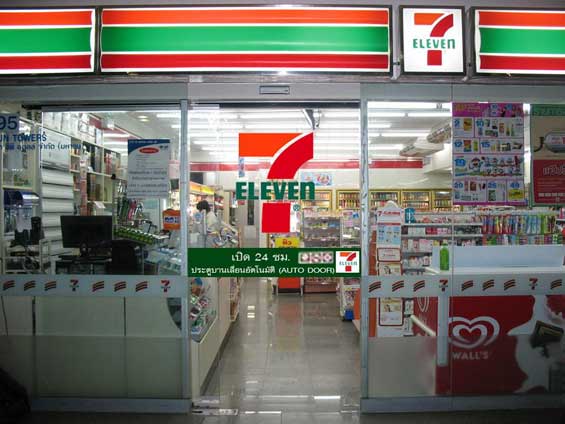
  • 7-Eleven Malaysia strikes upmarket

    7-Eleven Malaysia strikes upmarket

    Listed retailer 7-Eleven Malaysia says it is going to open 200 new shops across the nation this yr – and refurbish 200 extra. A 3rd of these might be within the Klang Valley, the guts of larger Kuala Lumpur.

    The enlargement and rejuvenation, estimated to value as much as RM90 million (US$24 million) is a part of a transfer upmarket because it seeks to distinguish the corporate from rival comfort retailer codecs.

    CEO Gary Brown says the corporate needs to create a extra inviting, heat surroundings in-store to draw extra clients.

    Newer shops opened in Malaysia function espresso, meals to organize onsite, tables and chairs, vibrant fitouts and a extra spacious surroundings.

    “We now have additionally included extra recent meals, use light-emitting diode lighting at our shops that are energy-saving in addition to organise on-going strategic promotions,” he informed a press convention after the corporate’s annual assembly this week.

    7-Eleven Malaysia has about 80 per cent of the Malaysian comfort retailer market, however is dealing with growing competitors from new native manufacturers.

    Its in depth retailer community positions itself as a possible supply service level for on-line retailers and courier companies. Brown says talks are underway to determine such ventures as one other supply of revenue for the enterprise – and as a drawcard for patrons who may purchase merchandise when accumulating or making deliveries.

    “As soon as concluded, the pilot undertaking is predicted to function by the fourth quarter of this yr at chosen shops,” he stated, with out disclosing additional particulars.

  • Don’t blame the graft clampdown

    Don’t blame the graft clampdown

    Don’t blame the graft clampdown for falling retail gross sales in China, Hong Kong and Macau, says a number one Shanghai retail professional.

    With a inhabitants of over 1.36 billion and with over 160 cities with a inhabitants of over 1 million, the alternatives that China presents retailers with are monumental. That’s why many worldwide retailers now contemplate it a precedence market.

    During the last 24 months, numerous the world’s most famous manufacturers have introduced that they’re experiencing a troublesome time in China and are both scaling again their operations or closing their China enterprise.

    So why are these retailers struggling when others proceed to develop a worthwhile enterprise?

    Within the report, ‘Nobody stated that it might be straightforward: Methods to crack the China Retail Market’, CR Retail’s MD James Rogers, has hung out analysing retailer’s methods and behavior, figuring out the important thing causes behind these failures.

    “Quite a lot of retailers regularly blame the anti-graft measures for the slowdown nevertheless it’s CR Retail’s view that these are solely partly accountable’ says Rogers.

    “We see the problems beginning quite a bit earlier with the retailers failing to understand the complexities and challenges concerned with opening there.”

    Based on the report, CR Retail consider that there are 15 questions that must be requested previous to getting into the market starting from figuring out one’s audience to figuring out whether or not the model will journey and, whether or not the buyer is definitely prepared.

    “When talking with retailers it’s astounding what number of new entrants haven’t considered a few of these points,” provides Rogers.

    “They consider the parable that a retailer can simply open a retailer just like what they function in different markets and the shoppers will come flooding in. Typically this couldn’t be farther from the reality.”

    There have been numerous examples of shops saying very aggressive enlargement plans however only a few truly obtain them.

    “When retailers announce their enlargement plans for the China market, it is rather shortly obvious how good an understanding they’ve of what lies forward.” says Rogers. “Retailers are sometimes drawn by the numbers and whereas the market is getting simpler to function in, the competitors stays fierce.”

    In 2014, China recorded on-line gross sales of US$427 billion making it the most important on-line retail market on the earth.

    “No matter your on-line technique at residence, if establishing your self in China, you can’t afford to disregard the eCommerce market. It’s a key pillar of China’s retail market.” provides Rogers.

    As with bodily bricks-and-mortar shops, China’s eCommerce market may be equally as difficult. One must firstly decide whether or not you’re to launch your personal native website or have your merchandise bought by way of a 3rd social gathering platform. In that case, which one? How are you to speak with the buyer and draw them to the place your merchandise are being bought?

    “The methods by which a retailer engages with the Chinese language shopper are totally different. A social media presence is vital, nevertheless there isn’t a Fb or Twitter. Retailers subsequently have to familiarise themselves with the native platforms,” continues Rogers.

    With China’s retail market nonetheless considered immature, Rogers advises retailers ought to assume long-term.

    “The US retailers are notably good at this in comparison with their European counterparts. They respect how lengthy it has taken to construct a robust enterprise at residence and are typically extra affected person. Whereas turning into spoilt for selection, the buyer continues to be studying. Rome wasn’t inbuilt a day and nor will a retailer’s China enterprise.

    “It ought to be remembered nevertheless, establishing a profitable presence in China will even drive gross sales in different worldwide markets. Subsequently conceding defeat and retrenching ought to be a final resort.”

    Endurance and a long-term technique are key to succeeding in China. Success won’t simply assist the native market however may even drive gross sales in retailer’s different worldwide markets.
  • Archipelago to Open Six New Harper Hotels in Indonesia

    Archipelago to Open Six New Harper Hotels in Indonesia

    Archipelago International’s harper portfolio will soon increase by six new hotels across Indonesia in the coming two years. Currently, the harper brand covers two hotels in two of Indonesia’s most prominent destinations, Bali and Yogyakarta, but by the end of 2017 the harper brand will have six new names under its belt: harper M.T Haryono – Jakarta; harper Purwakarta – West Java; harper Pasteur – Bandung; harperPerintis – Makassar; and harper Puncak Gate – West Java.

    Harper M.T Haryono – Jakarta is set to open in the 3rd quarter of 2015. The hotel is located on Jl. MT. Haryono Kav in Cawang, Jakarta and will feature 131 rooms, five meeting rooms, harper’s signature Rustik Coffee Shop, a swimming pool, gym and a spa.

    Also opening in the 3rd quarter of 2015 is harper Purwakarta – West Java. Located on Jl. Bungursari in Purwakarta-Jawa Barat, harper Purwakarta is a short stroll from the Cikampek / Dawuan / Sadang toll road and is surrounded by cultural and natural tourism spots, local eateries and the Pupuk Kujang Cikampek Golf Course. The hotel will offer 130 guest rooms and suites, nine state-of-the-art meeting rooms and a ballroom that can accommodate up to 700 delegates. Facilities include the signature Rustik Coffee Shop, an outdoor swimming pool with a kid’s pool and a convenient poolside restaurant, as well as 24-hour reception staff and room service, complimentary high-speed WiFi and the highest service standards in the region.

    Harper Pasteur – Bandung shall then open shortly after in the 4th quarter of 2015. Sitting in an ideal location on Jl. Dr. Djunjunan at the gateway to Bandung, harperPasteur offers easy access to the Paris Van Java Mall and the Husein Sastranegara Airport. The hotel will feature 256 rooms, 10 meeting rooms, harper’s Rustik Coffee Shop & Lounge as well as a swimming pool.

    Crossing the archipelago to Sulawesi, harper Perintis – Makassar also plans to open in the 4th quarter of 2015. The hotel will feature 159 rooms, a ballroom, four meeting rooms, the signature harper Rustik Coffee Shop & Lounge and a swimming pool. The hotel is located on Jl. Perintis Kemerdekaan only 30 minutes from Makassar’s city center and just 15 minutes from the international Sultan Hasanuddin Airport. Guests at the hotel will also enjoy close proximity to the growing tourist attractions in the area, such as Makassar’s shopping malls and restaurants, the city’s theme park and even the white sand beaches of Samalona Island and Kodingareng Keke, famous for their idyllic swimming, sunbathing, snorkelling and diving spots.

    Opening shortly after, harper Puncak Gate – West Java on Jl. Raya Pertanian, Ciawi Bogor, will feature 301 rooms, a ballroom, nine meeting rooms and the signature Rustic Coffee Shop & Lounge, as well as a spa, gym and swimming pool. Puncak is a popular weekend getaway for Jakartans and many tourists alike, most of whom are visiting for a taste of the fresh mountain air and the numerous natural attractions, including the Bogor and Cibodas Botanical Gardens; the Gede Pangrango National Park; the Plantations and the Safari Park.

    Archipelago International has also just signed the harper Solo – Central Java, scheduled to open in the 1st quarter of 2017. The hotel will feature 250 rooms, several meeting rooms and a swimming pool. The hotel will be located on Jl. Bridgen Katamso in Surakarta (Solo) Central Java, close to the acclaimed palace of Susuhunan Pakubuwono, Keraton Surakarta, and also the Javanese court of Mangkunegaran.

    “Indonesia has seen extraordinary economic growth over the past four to five years, and the hotel industry has predominantly been driven by the local market. The high demand for accommodation facilities is bolstered primarily by Indonesia’s position as one of Asia’s most popular tourist destinations, receiving 9.44 million foreign visitors in 2014, resulting from growth of 7.19% compared to the previous year. According to the Central Bureau of Statistics, much of this growth has arisen from catering to the middle-segment of the market, namely the 2, 3 and 4 star hotels. Nowadays in our increasingly anxious world, people want comfort and functionality, and it’s no secret today’s guests want to be reminded of home.

    That’s why harper’s modern-rustic design concept uses warm, rich colors to offer comfort in each room. harper Hotels convey a residential feel and a balanced functionality, offering unobtrusive service and never ending innovation – hotels for the astute traveler who values individualism and character. Our expansion in Indonesia is certainly one of our strategies, but we have always focused on quality rather than quantity,” said John Flood, President & CEO – Archipelago International.

  • Citigroup’s Retail Banking Reorg

    Citigroup’s Retail Banking Reorg

    The combined entities will be led by Jonathan Larsen, who is currently the global head of the company’s retail banking division. The newswire reported that the company has also named Anand Selvakesari head of consumer banking for Asia, a position held by Larsen for the past six years.

    Latin America’s consumer banking division will in turn be the province of Fabio Fontainha, who now helms consumer banking in Brazil.

    Separately, Dow Jones reported that the move represents an effort by the company to “shore up“ its mortgage operations. The changes were reportedly part of a memo penned by Stephen Bird, who was recently tapped to lead the consumer bank.

    Larsen’s new role helps put the spotlight on the increasing focus by Citi on its Asian consumer business, a segment that accounted for 21 percent of the company’s global consumer banking business. And, as Dow Jones said, Asia has traditionally been a launching pad of sorts, where Citi debuts new financial products and tests them before bringing them to other parts of the world.

    Dow Jones further reported that Larsen, who up until now has been based in Hong Kong, will now be based in both New York and Hong Kong. Larsen’s move essentially positions the executive as a replacement for Jane Fraser, who had been in charge of the company’s global mortgages and U.S. consumers divisions.

    The latest corporate shuffle at Citi comes after CEO Michael Corbat had repositioned executives across three continents, said Dow Jones. And that reassignment of executives came after Manuel Medina-Mora, who had been head of the consumer banking unit, announced his departure from the role. Bird’s memo and management changes mark his first executive-level moves since taking his current consumer banking job.

  • Saha group says Japan’s Lawson stores in Thailand to rise to 1000

    Saha group says Japan’s Lawson stores in Thailand to rise to 1000

    A joint venture of Thailand’s Saha Pathanapibul Pcl and Japan’s Lawson Inc aims to boost the number of ‘Lawson 108’ outlets in the Southeast Asian nation to 1,000 over the next three years from 40 now, a Saha executive said on Friday.

    Saha Pat, part of Saha Group, Thailand’s largest consumer products conglomerate, joined hands with Lawson, one of Japan’s top- three convenience store chains, to form joint venture Saha Lawson Co in 2012 to tap the Thai retail market.

    Saha Lawson will focus on fresh-cooked and ready to eat products, Saha Pat’s director Vathit Chokwatana told a conference. He did not reveal any investment numbers by the partners.

    Lawson is one of several Japanese retailers expanding business in Thailand, despite the Southeast Asian nation’s weak domestic consumption and slowing economy. Others include Tokyu Department Store and MaxValu supermarket, owned by AEON group.

    Lawson competes directly with CP All Pcl, Thailand’s largest convenience store chain with more than 8,000 7-Eleven outlets, and Family Mart, owned by Central Group, Thailand’s leading retailer.

  • Citi appoints Anand Selvakesari as Head of Consumer Banking Asia Pacific

    Citi appoints Anand Selvakesari as Head of Consumer Banking Asia Pacific

    Citi has appointed Anand Selvakesari as head of consumer banking for Asia Pacific. Anand will manage all of Citi’s consumer businesses in Asia across the 12 markets that Citi offers retail banking, wealth management, cards and mortgages in the region.

    Anand will report to Stephen Bird, Citi’s CEO for Global Consumer Banking and also has a matrix reporting line into Francisco Aristeguieta, Citi’s Asia CEO.

    Anand’s appointment is effective July 1 and he is taking over from Jonathan Larsen. Jonathan will focus on his role as global retail banking and mortgage head with the additional responsibilities of US Retail Banking and Mortgage.

    During his 23-year Citi career, Anand has led Citi’s consumer bank in China and India and was most recently Southeast Asia Cluster head for Consumer Banking.

    He was formerly Head of Consumer Banking for ASEAN & India. In this role he took charge of in December 2013, Anand was responsible for the consumer banking businesses in the ASEAN cluster, including Singapore, Malaysia, Indonesia, Philippines, Thailand and Vietnam as well as India.

    A Citi veteran, Anand began his career in India in 1991, and has been the India Consumer head. Prior to his role in India, Anand was Head, Consumer Banking, Citi China from 2008. He served as the Retail Banking Head in Taiwan from 2004 to 2006 and eight years in regional roles in Singapore, where he held various positions in Investments, Wealth Management and Retail Banking from 1996 to 2004.

  • China’s stock market takes a dive Friday

    China’s stock market takes a dive Friday

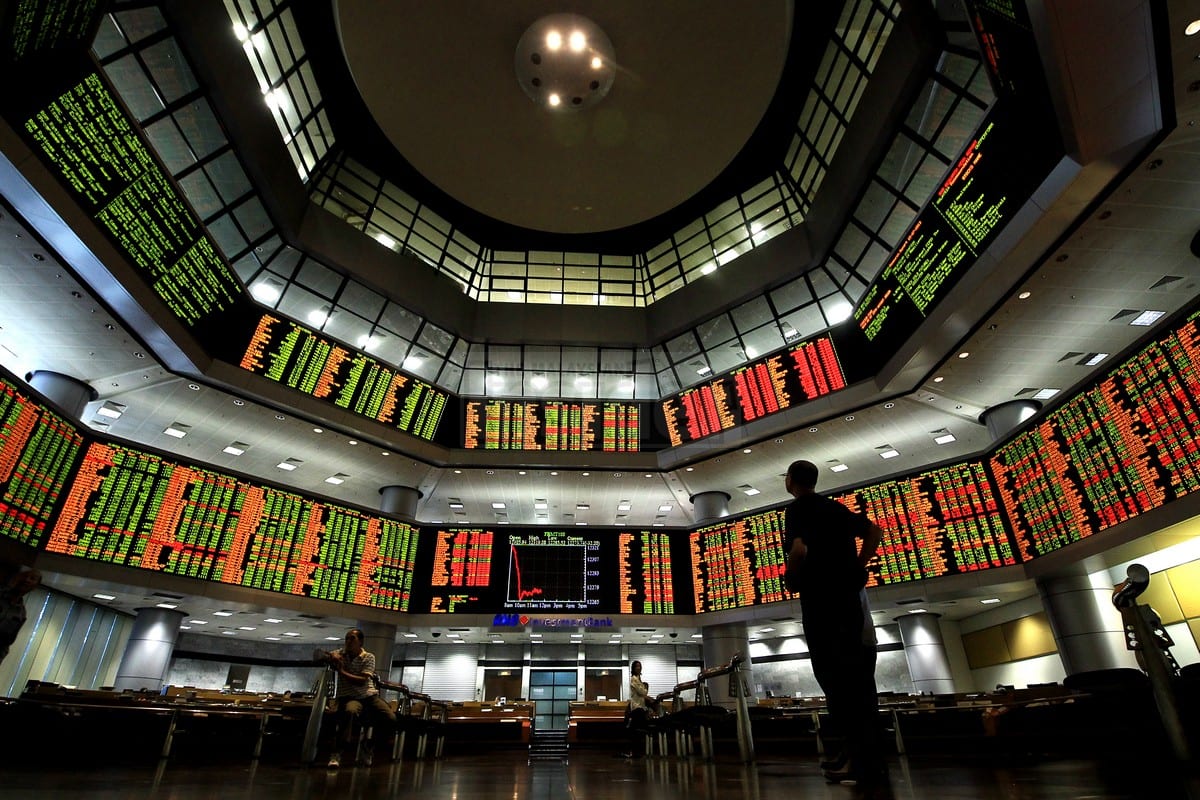
    Chinese investors watched in distress as stocks sank by more than seven percent in trading Friday, marking the biggest drop in five months and stoking fears of a peaked market, according to Bloomberg.

    For weeks, investors have worried about a looming end to China’s longest ever bull run, a market characterized by strong investor confidence, a sustained uptick in stock prices, and the expectation that the rise will continue. The country’s economic boom so far has lasted 935 days, Bloomberg reported Friday.

    The benchmark Shanghai Composite index dropped by 7.4 percent to 4,192.87, a 19 percent descent from this year’s June 12 peak, according to the Wall Street Journal.

    The dismal performance followed the Chinese markets’ worst weekly performance since 2008 a week ago, according to the BBC. The Shanghai Composite fell by 6.4 percent, and overall took a 13 percent drop during the week.

    “The concern is that a stock market collapse this year, as the rest of the Chinese economy is struggling to recover, might damage Chinese consumers’ confidence, their willingness to buy other things,” said Reuters Shanghai correspondent Pete Sweeney.

    In addition to affecting trade with foreign companies, losing consumer confidence could lead to sweeping consequences for China’s retail-dominated economy, according to analysts.

    Hans Goetti, Head of Investment in Asia at Banque Internationale A Luxembourg, told the Economic Times:

    The Chinese market has rallied tremendously this year but we have to remember one thing. It is a market that is dominated by retail investors. In fact, 80 percent of investments in China are done by retail investors and, accordingly, margin debt has gone to the stratosphere. This has led to some worries by the securities regulators to reduce margin debt, hopefully, without crashing the market. Now that is a tall order.

    Michala Marcussen, global head of economics at Société Générale, told Bloomberg that it was important to keep Friday’s events in perspective. “To my mind, what’s happening now is probably not a bad thing from a long-term perspective,” she said, citing the spike in China’s equity prices this year by almost 30 percent. “A bit of a healthy adjustment.”

    Ultimately, the “tremendous transitions” in the Chinese economy will continue to be a fundamental of the market going forward, Ms. Marcussen said.

    Reuters reports that the triggers for Friday’s tumble are far ranging, from “tighter cash supply” to “anxiety about policy direction.” Another concern: China’s initial public offerings (IPO) frenzy, which can perhaps best be evidenced by the jaw-dropping bids received by China National Nuclear Power Co., the country’s second-largest atomic power operator. The company, which had asked for $2 billion, raked in bids of $273 billion, according to Bloomberg. Reuters reports it eventually raised $2.1 billion — the country’s largest IPO since 2011.

    “The IPO boom in the Chinese market is such that more than 50 IPOs listed or were approved by the CSRC (China Securities Regulatory Commission) over the past two weeks,” reported the Economic Times.

    Going forward, “the big question for the Chinese authorities is whether they’re going to prop up the market,” said CNBC’s Sri Jegarajah. “There could be a 50-50 chance of some kind of intervention in the market, either directly or through policy support to shore up confidence.”

  • Bubble-burst in China to benefit Indian mart

    Bubble-burst in China to benefit Indian mart

    The crash in the Chinese stock market is likely to benefit India in terms of higher capital inflows in coming days.

    On Friday, Chinese shares plunged more than seven per cent amidst concerns of overvaluation after registering a 13.3 per cent loss last week.

    According to market experts, global investors are likely to allocate more funds to Indian equities, as the country is now one of the fastest growing economies in the emerging market universe.

    “India is now the best bet in the entire emerging market universe. India’s current account deficit (CAD) has come down, retail and wholesale price inflation is under control, monsoon is progressing well and interest rates are expected to come down in the medium term. So a combination of improving macro-economic factors coupled with the government’s effort to revive the investment cycle would help India attract higher capital inflows,” observed Ajay Bodke, chief executive officer (CEO), PMS, Prabhudas Lilladher.

    According to him, the rally in the Chinese equity markets was driven by an excessive exuberance on the part of retail investors.

    About four million retail investors in China had opened trading accounts in just the last one month, he said.

    Even after such a steep fall in the Chinese equities, analysts are still not convinced about the valuations.

    While asking its clients to refrain from buying Chinese shares, analysts at Morgan Stanley said, “Our stance on China ‘A’ shares is that this is probably not a dip to buy. In fact, we think the balance of probabilities is that the top for the cycle on Shanghai, Shenzhen and Chinext has now taken place”.

    According to them, increased equity supply, continued weak earnings growth in the context of economic deceleration, high valuations and high margin debt to free float market capitalisation are some of the major concerns for the Chinese equities.

    “During the last two months, global investors had pulled out money from the Indian markets to invest in Chinese equities. Some portion of that money will now come back to India,” said Ambareesh Baliga, a senior stock market analyst.

  • Citigroup combines retail banking and mortgage operations

    Citigroup combines retail banking and mortgage operations

    Citigroup Inc (C.N) will combine its retail banking and mortgage operations under Jonathan Larsen, according to an internal memo seen by Reuters, in the second senior promotion for a veteran of the bank’s Asian franchise this year.

    The U.S. bank’s Asia Pacific chief Stephen Bird in April became the global head of Citi’s consumer bank, in a move seen by analysts as rewarding the U.S. lender’s strategy in the region.

    Larsen, currently global head of retail banking, previously ran Citi’s Singapore unit and spearheaded the lender’s push in credit cards in Asia. Citi’s Asian franchise now has 12 of the lender’s 24 consumer banking markets globally, and contributes a fifth of global profits.

    “Citi Asia is a sign of where Citigroup as a whole potentially can go,” CLSA analyst Mike Mayo said in a research note prior to the announcements. The lender’s strategy in the region has been to move from targeting the mass market to richer ‘mass affluent’ customers, Mayo wrote.

    The appointments this week of Larsen and Bird, who oversaw that push in Asia to trim low-profit customers and target wealthier clients, signals Citi’s intention to pursue the strategy globally.

    In a separate memo also seen by Reuters on Thursday, Citi named Anand Selvakesari as head of consumer banking for Asia, a position Larsen has been holding since 2009.

    A Citi spokesman confirmed the contents of the memos.

    Fabio Fontainha, the head of consumer banking in Brazil, will assume additional responsibility for consumer banking in Latin America.

  • Sogo mum or dad plans retailer revamps

    Sogo mum or dad plans retailer revamps

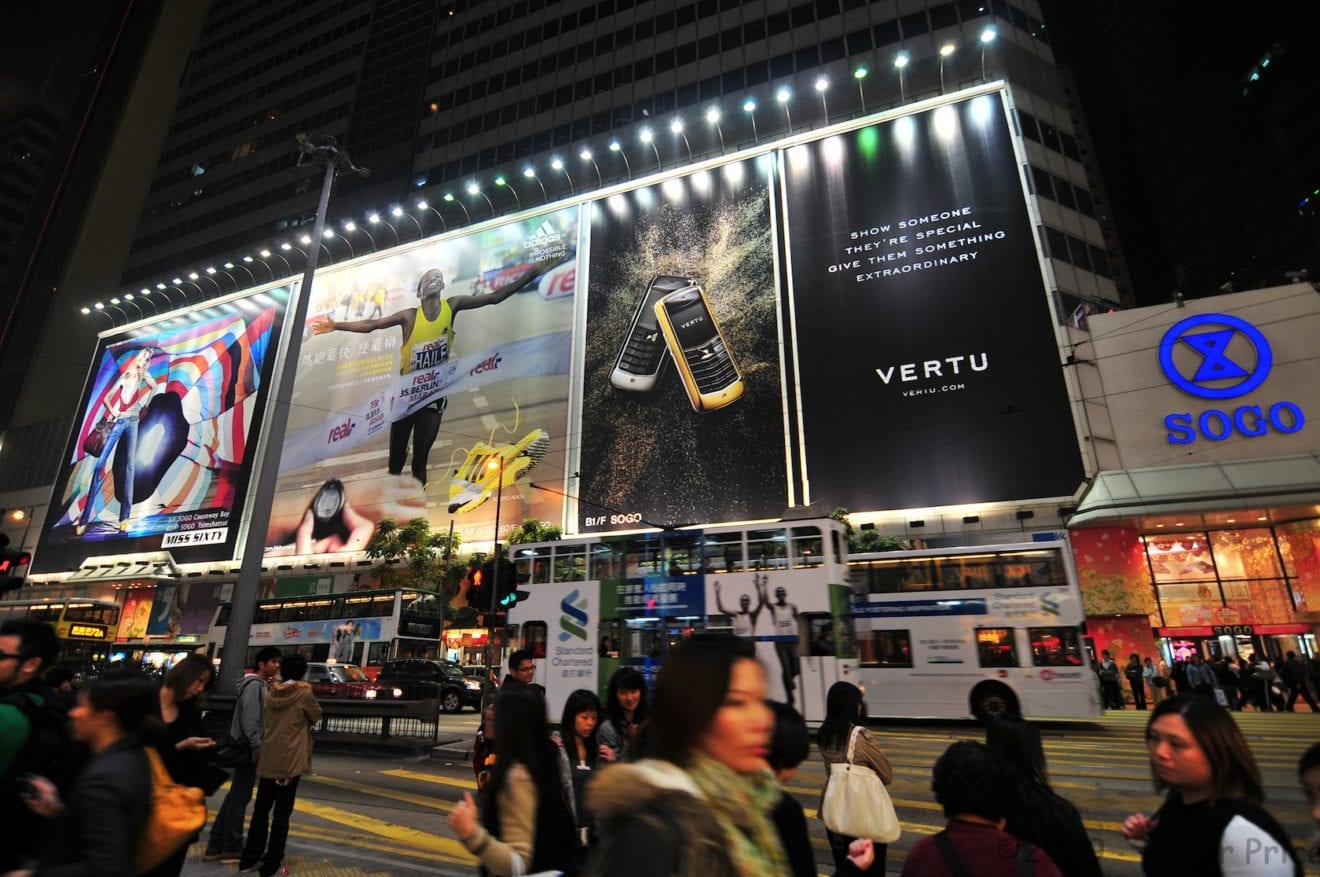
    Way of life Worldwide Holdings, the dad or mum of the Sogo division retailer in Hong Kong’s Causeway Bay, says it’s planning renovations and new department shops.

    Whereas it has not specified the place the revamps are deliberate, it’s probably to be in mainland China the place it at present has 4 shops.

    Way of life has secured US$300 million by means of the difficulty of 10 yr bonds which shall be used to repay financial institution financing and fund capital spending “referring to retailer renovation and new division retailer tasks sooner or later”.

    Hong Kong listed Way of life Worldwide has two Sogo shops in Hong Kong – the flagship in Causeway Bay near Occasions Sq., and one in Tsim Sha Tsui which was relocated and reopened late final yr.

    In mainland China, the corporate operates shops underneath the Jiuguang model. The Shanghai retailer was first established in 2004 with an analogous enterprise format to Sogo Causeway Bay. Additional shops opened in January and Might 2009 at Suzhou and Dalian

    Shenyang Jiuguang, Way of life’s fourth Jiuguang Retailer in mainland China, accomplished its first full buying and selling yr in 2014.

    The group’s business complicated challenge in Zhabei, Shanghai is presently underneath development and is preliminarily scheduled for completion in 2018, a part of a broader mainland China enlargement plan.

  • Tesco Malaysia to launch self-checkout lanes

    Tesco Malaysia to launch self-checkout lanes

    Tesco Malaysia has chosen NCR self-checkout know-how for introduction into its hypermarket community.

    The 2 corporations says the know-how will supply “a quicker and extra handy checkout choice” for its clients in Malaysia.

    “Clients will now have the liberty to scan, bag and pay for items themselves, with out having to attend in lengthy queues.” (Sure, the press assertion did say that; thus confirming Tesco has a customer support drawback – Ed).

    The Tesco retailer at IOI Metropolis Mall in Putrajaya, the chain’s latest, would be the website of the primary pilot deployment, to be adopted by Tesco KSL Metropolis in Johor.

    The NCR self-checkout answer works by a touchscreen that “intelligently guides consumers by way of the checkout course of with animated demonstrations for less complicated and quicker transactions”. NCR will present consulting, coaching and providers to make sure clean deployment.

    “We’re delighted to work with Tesco to increase the advantages of self-checkout to a different new market in Asia,” stated Michael Cawley, VP of Asia Pacific with NCR Retail.

    “By leveraging our strong international deployment experiences, we’re serving to retailers not solely to enhance their buyer providers and differentiate their in-store experiences, but in addition enhance their working prices.”

    Tesco first began utilizing NCR SelfServ checkout within the UK in 2002. The know-how is now out there at Tesco shops in Eire, the US, Central and Japanese Europe, South Korea and Thailand. NCR says its personal analysis exhibits self-checkout options can scale back wait occasions by as a lot as 40 per cent whereas almost two thirds of consumers say shops that provide the choice of self-checkout present higher buyer providers.

    NCR shipped extra self checkout models globally in 2014 than all different distributors mixed for the fifth consecutive yr, based on strategic analysis and consulting agency RBR.

  • VP Kalla opens Batik Nusantara 2015 exhibition

    VP Kalla opens Batik Nusantara 2015 exhibition

    Vice President M. Jusuf Kalla opened the “Gelar Batik Nusantara 2015” exhibition at the Jakarta Convention Center here on Wednesday.

    Organized by the Indonesian Batik Foundation and PT Mediatama Binakreasi, it will be held from June 24 to 28 with the theme, “Batik Uniting Nations.” The expo will showcase thousands of coastal batik motifs and those of the best Indonesian batik collectors.

    “The popularity of batik is more widespread now than ever before,” the vice president said in his opening address.

    Kalla noted that batik was no longer merely a traditional dress but had undergone innovations for the international market and had been adapted by several countries.

    He explained that innovations in batik first started being made on the island of Java, but now, it has evolved in various regions across the Indonesian archipelago.

    Furthermore, besides being a cultural factor that serves to unify the nation, batik has also developed in a number of neighboring countries such as India and Malaysia, the vice president remarked.

    In addition, he pointed out that since batik was recognized as a World Cultural Heritage by the UNESCO in 2009, its reach continues to increase.

    Kalla opined that as batik has become part of both official and casual clothing, there are challenges, as well, in terms of productivity and innovation.

    According to the vice president, batik has been transformed from a form of traditional art into a masterpiece of global standard. It is also one of the cultural products of Indonesia that people are proud of and want to preserve.

    Therefore, Kalla emphasized that the Gelar Batik Nusantara 2015 exhibition is expected to be able to open market opportunities and attract entrepreneurs, investors and institutions to develop batik as an international product.

  • Li & Fung sets up China retail JV

    Li & Fung sets up China retail JV

    Global exporter Li & Fung Ltd has formed a joint venture with two Chinese department store operators, with the aim of setting up as many as 300 stores and developing its own private labels, the Hong Kong firm said on Tuesday.

    The firm will own 20 percent of the joint venture, while Beijing Wangfujing Department Store Group Co and Shanghai Bailian will each hold a 40 percent stake.

    The joint venture, which will be called BaiFuLi Co, may help Li & Fung to make up for some of the business it recently lost from US retail giant Wal-Mart Stores Inc.

    Li & Fung reported an 11.8 percent fall in 2014 net profit in March.

    BaiFuLi will have a registered capital of 48 million yuan ($7.7 million).

    Li & Fung said developing proprietary brands would help the joint venture differentiate from rivals “amid increasing competition in a fast-evolving retail landscape.”

    The venture aims to develop between one and three private labels and up to six licensed brands over a three-year period, said the company.

    This could see the venture opening up to 300 stores and pulling in up to 1 billion yuan ($161 million) in sales.

  • Tangshan malls to open in spring

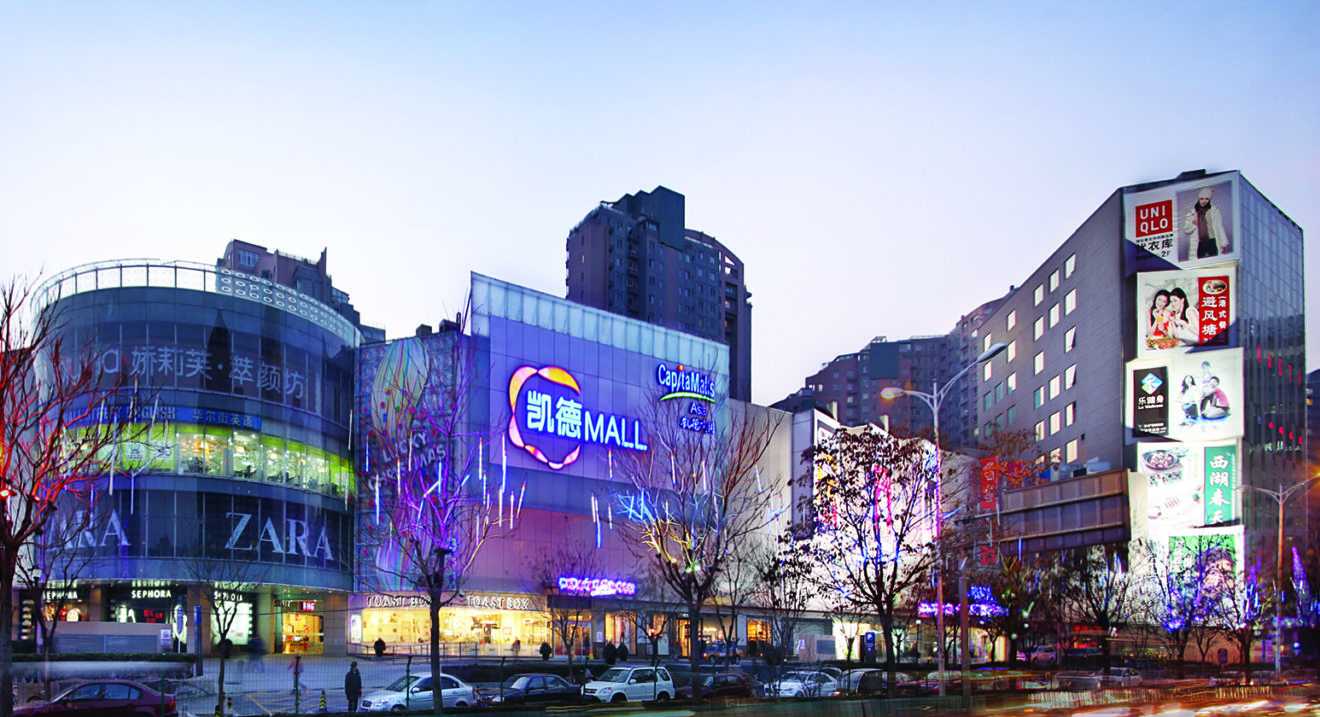
    LT Business Actual Property is in search of tenants for the buying malls of its large-scale business and residential complicated venture, Tangshan Lerthai Metropolis, within the Chinese language mainland metropolis of Tangshan.

    The Hong Kong based mostly developer says the department stores will open within the second quarter of 2016.

    LT is looking for well-known home and worldwide manufacturers as tenants to hitch Hong Kong Broadway, Baolongcang, Gome Electronics, Hai Di Lao Scorching Pot, Grandma’s Residence, Parkson division retailer and Xiabu.

    The primary part of Tangshan Lerthai challenge, which occupies a website space of roughly 157,000 sqm and has a gross flooring space of 680,000 sqm, has referred to as for a complete funding of RMB4 billion. LT Business holds purchasing malls there as funding properties which have a mixed gross flooring space of 180,000 sqm.

    Within the prime spot of the Fenghuang buying district in Tangshan, Tangshan Lerthai Metropolis is located east of Western Outer Ring Rd and north of Xinxibei Rd, and is positioned as a one-stop large-scale metropolis business complicated that includes a world purchasing centre, a tradition and leisure middle, a leisure and catering middle, a world enterprise middle, a world-class deluxe built-in challenge of economic and residential properties and a boutique house. The challenge goals to convey tradition, catering, leisure, leisure and buying underneath one roof, permitting individuals to expertise a multifaceted way of life and thus set the development for city dwelling.

  • Tesco Korea technique paying off

    Tesco Korea technique paying off

    Tesco’s obvious technique to attract out bidders for its Korean Homeplus operation is already paying off.

    Whereas personal fairness gamers have been apparently despatched invites to bid, the best way the information of the as but formally unconfirmed sale plan has unfold, has drawn two public declarations of curiosity.

    One is decidedly mischievous – from snack maker Orion, well-known for its “Choco Pie” dessert bought in supermarkets throughout Asia. Simply the place it might discover £6 billion to purchase Tesco Korea is unclear.

    The opposite is from Korea’s Hyundai Division Retailer (no relation to the automotive firm). Hyundai is value about US$three billion, so the probability of it pulling off a reverse takeover in its personal proper is slim. However it might make a worthy companion for a personal fairness investor, comparable to KKR, Carlyle, Affinity Fairness Companions, CVC or MBK, all of whom have been formally invited to bid. Native information, overseas capital and the looks of native possession to a finicky native shopper base would show a strong basis for progress and capital achieve.

    The top results of these two declarations creates the looks that there’s robust curiosity and demand within the Tesco Korea operation which, whereas worthwhile, faces challenges in sustaining market share.

    At the very least one of many events says it has acquired an info memorandum which tends to place past doubt Tesco Plc’s intentions.

    Tesco CEO Dave Lewis has already confirmed at Unilever he was unafraid of robust selections. And he’s dealing with many in his new position – his largest but to place Tesco Korea on the block.

    With a worth of circa £6 billion, it brings an entire new definition to the time period ‘hearth sale’. But when consumers are in search of a reduction given Tesco’s UK operational woes, they’ll be disenchanted.

    The method has been managed by HSBC and an obvious collection of leaks to information media, which, to date, are working properly, presents a protected and risk-free technique of testing the water. If the bids are available and the provides appear affordable, Tesco has a excellent news story of a robust return, a big discount in its debt and a stronger monetary base with which to proceed its residence market reforms and strengthen market share and income. If nobody significantly bites, Tesco can break its silence, deny a sale was ever on – and blame the media and market hypothesis for a misunderstanding.

    Our prediction: Tesco will promote the Korean operation and it’ll get a great worth for it, as a result of one or two or extra of these personal fairness gamers, working with a Korean associate with information of the retail business, will be capable of extract worth out of the enterprise that has hitherto eluded Londoners pulling strings from afar.