Category: General

Retail News Asia is committed to providing both local and global retailers with the latest General Retail news throughout the Asian market. This on a daily base.

  • DFS wins Myanmar contract

    DFS wins Myanmar contract

    Hong Kong based mostly international obligation free operator DFS has secured a 10 yr unique provide and merchandise deal for airport shops in Myanmar.

    The deal was negotiated with Singapore Windsor Holdings, which is increasing in a various vary of companies in Myanmar, together with serviced workplaces, telecommunications and tourism providers.

    By the top of this yr, DFS will function virtually 2000sqm of obligation free retail area at Myanmar’s two major airports – Naypyitaw, the capital, and Yangon, the previous capital and principal business centre.

    New retailers can be opened within the present departure and arrival terminals of Yangon Worldwide Airport.

    Singapore Windsor says these shall be outmoded by a bigger retailer when the brand new terminal at Yangon opens later this yr.

    That terminal is predicted to deal with 3 times the present passenger visitors of the prevailing airport.

    With merchandise from over 700 manufacturers promoting in 420 places, DFS Group is likely one of the largest obligation free retailers on the planet. Greater than 200 million individuals visited DFS shops final calendar yr.

  • Central Group Thailand eyes Turin retailer

    Central Group Thailand eyes Turin retailer

    Thailand’s Central Group says it’s planning to open a brand new division retailer within the Italian metropolis of Turin inside the subsequent two years.

    Central Group Thailand is already engaged in a gentle worldwide enlargement plan, having final yr opened its first division retailer in Indonesia and this yr having confirmed it’s in negotiations to purchase an unidentified German division retailer.

    Tos Chirathivat, the group’s CEO, was quoted by the Bangkok Submit newspaper saying the corporate is negotiating the rental of 10,000sqm in an undisclosed Turin website the place it’s going to open a La Rinascente division retailer. Central owns 11 La Rinascente department shops in Italy and has a 12th underneath development in Rome, which might make Flip its 13th location.

    Central Group Thailand additionally owns the Illum retailer in Denmark, at present underneath renovation.

    Tos informed the Bangkok Submit La Rinascente gross sales grew 13 per cent to euro 600 million within the first quarter of this yr. About one third of the gross sales are to vacationers, largely Chinese language.

  • Hong Kong retail gross sales slide eases

    Hong Kong retail gross sales slide eases

    Hong Kong retail gross sales in April slipped 2.2 per cent on a yr on yr foundation, proof that the decline in retail spending is stabilising.

    The Census and Statistics Division (C&SD) says the entire worth of retail gross sales in April 2015 is provisionally estimated at $38 billion. For the primary 4 months of 2015 taken collectively, complete retail gross sales decreased by 2.three per cent in worth in contrast with the identical interval in 2014.

    And after netting out the impact of worth modifications over the identical interval, the quantity of complete retail gross sales in April 2015 elevated by 2.four per cent over a yr earlier. The revised estimate of the quantity of complete retail gross sales in March 2015 elevated by zero.eight per cent and for the primary 4 months of 2015 taken collectively, complete gross sales elevated by zero.5 per cent in quantity in contrast.

    Retail gross sales efficiency remained subdued in April, primarily dragged by the marked fall within the gross sales of jewelry, watches and clocks and helpful presents, largely reflecting weaker customer spending on big-ticket gadgets. A authorities spokesman stated many different gadgets additionally confirmed sluggish gross sales efficiency.

    “But, shops promoting sure shopper sturdy items continued to register notable progress in gross sales and offered some buffer, primarily helped by the launch of sure smartphone fashions,” he stated.

    “The near-term retail gross sales efficiency will proceed to hinge on inbound tourism progress, though the secure labour market circumstances ought to render help to native shopper sentiment. We have to monitor intently whether or not the current slowdown in retail enterprise, in addition to the varied uncertainties within the exterior surroundings, would have an effect on the native financial system and job creation down the street.

    Jewelry, watches and clocks, and worthwhile presents gross sales decreased by an enormous 19.5 per cent in April in comparison with April 2014.

    Different declining classes have been attire (down 5.9 per cent in worth); commodities in supermarkets (down zero.9 per cent); medicines and cosmetics (down three per cent); commodities in malls (down three.6 per cent); different shopper items, not elsewhere categorised (down three.7 per cent); fuels (down 12.eight per cent); footwear and equipment (down three per cent); Chinese language medicine and herbs (down 7.7 per cent); and optical outlets (down zero.eight per cent).

    In distinction, the worth of gross sales of meals, alcoholic drinks and tobacco elevated by four.2 per cent in April. This was adopted by gross sales of electrical items and photographic gear (up eight.6 per cent in worth); miscellaneous shopper sturdy items (up 97.9 per cent); books, newspapers, stationery and presents (up four.1 per cent); and furnishings and fixtures (up zero.7 per cent).

    (Notice: these classes are listed in descending order of complete worth of gross sales; IE: the dimensions of the class).

    Extra detailed statistics are given within the Report on Month-to-month Survey of Retail Gross sales which could be downloaded free on the C&SD web site.

  • Tokyo is world’s hottest retail market

    Tokyo is world’s hottest retail market

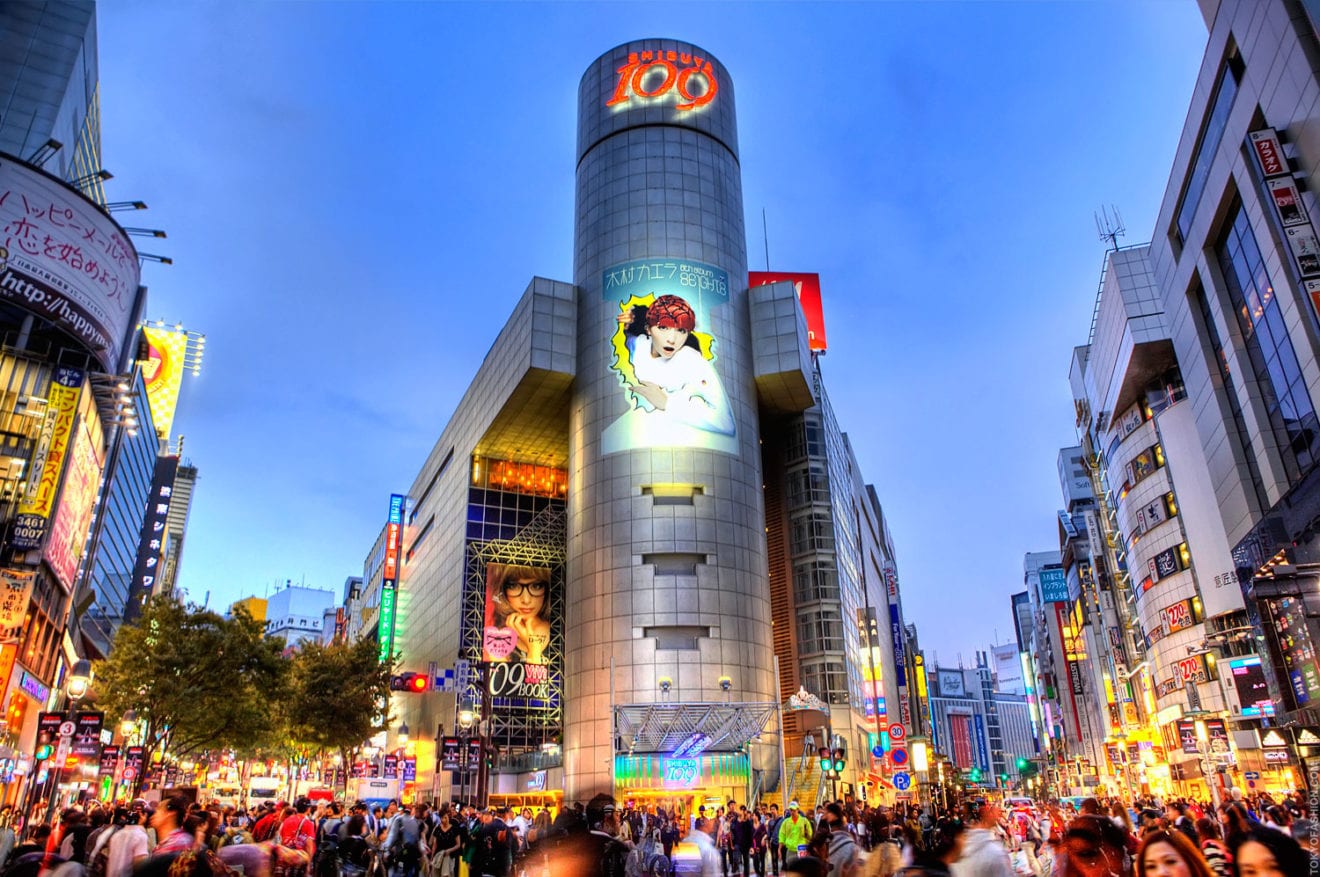
    Tokyo is the world’s hottest market for retail expansion, attracting 63 new brands last year as leasing momentum in core areas remained strong, despite mixed signals in the economy and an increase in the sales tax to eight per cent in April 2014, according to the latest report from CBRE Group, Inc., “How Global is the Business of Retail?” Toronto was the hottest market in the Americas, attracting 25 new international brands in 2014.

    According to the report – which tracks the target markets of new brands in 164 cities in 50 countries – US retailers are the most active when it comes to expanding into new global markets. In 2014, US retailers accounted for 26 per cent of cross-border expansion. Primary expansion targets for America’s retailers are Asia (41 per cent), Europe (33 per cent), and the Middle East and Africa (12 per cent).

    Italian retailers were the second most active, accounting for 14 per cent of cross-border expansion, followed by UK-based retailers (11 per cent) and French retailers (10 per cent). Globally, Europe accounted for 42 per cent of retailer expansion, followed by Asia with 39 per cent and the Middle East and Africa with 10 per cent. North America was only a target for three per cent of retailers.

    “The core elements of globalization, technology and demographic change, continue to have a dramatic impact on the business of retail. Demographic shifts in many countries have resulted in changes in both spending power and shopping habits. Technology enables retailers to enter markets and evaluate performance more swiftly,” said Brandon Famous, senior managing director, retail occupier advisory & transaction services, CBRE. “Consumer traveling patterns mean that many brands are well known before they even enter a market and the pent-up demand for the chance to purchase locally creates a ready-made market before entry.”

    Among the most active retail sectors globally, mid-range fashion retailers led the field, accounting for 21 per cent of global expansion, followed luxury and business retailers, with 20 per cent, and coffee and restaurant and specialist clothing, each with 16 per cent. When it comes to expansion into the Americas, luxury and business retailers were the most active at 26 per cent, followed by mid-range fashion representing 20 per cent of total activity, and specialist clothing representing 14 per cent.

    “Consumers continue to view the physical store as their preferred mode of purchase and perhaps more importantly, as a point of social interaction,” Famous added. “Consumers view shopping as a leisure activity and the continued expansion of brands and the development/improvement of shopping locations gives them the opportunity to embrace this.”

  • China’s Internet focus lifts online spending

    China’s Internet focus lifts online spending

    In a strategy known as ‘Internet Plus’, China is integrating the Internet, big data and other technologies with traditional industries, like retail. This is boosting China’s already vast e-commerce market further. As the government looks to use the Internet to create more spending – and jobs.

    Denny Liu returned to Beijing after graduating from Wharton Business School in the United States.

    Last year, he and his wife set up Le Chun – or Le Pur, in English – selling yogurt, using only natural ingredients.

    Before opening a physical store, they shared their story and mission online.

    “That story actually went viral for a little bit and that got us our first 5,000 seed users. Who are all yogurt lovers.We didn’t know any good milk sources around Beijing, so we threw it to our community and said ‘do you guys know any good milk source around’ and about 10 people gave us leads. When we designed our logo and picked out the store location, we asked our followers,” Liu said.

    With 40,000 followers on WeChat, the Internet has played a key part in Le Chun’s success.

    In less than a year, the startup is making a profit.

    Most of their sales are online. Thanks to word of mouth, from social media fans.

    Now, the government is backing them too. With 100,000 yuan or roughly 15,000 dollars in funding. No strings attached.

    China wants consumer spending to be a central part of the economy. But malls like this one don’t exist in every city. So it’s supporting online stores to get more Chinese shopping.

    “Clothes, computer stuff, food. I buy about 80 percent of my things online,” Student Quan Jiujiu said.

    Retail expert, Professor Xiangdong Liu, says official data shows that last year, China’s online sales hit 2.79 trillion yuan. Taking 10 percent of its total spending.  And overtaking America’s.

    He says the government’s Internet focus will encourage e-commerce further.

    “The government will invest more in Internet infrastructure, cutting costs for surfing online. It’s also setting up pilot projects, to make Internet companies better, as well as encouraging companies to open online services, by providing subsidies and lower taxes. The government’s approach is first to let them mature, then unveil more policies to manage them,” Professor Liu said.

    This is changing brick-and-mortar giants, like electronics retailer, GOME. It launched its online store in 2011. Now with a mobile platform and App.

    But while their online options give customers a bargain, it’s been tough business.

    “10 percent of our sales are online. We predict GOME’s online consumers will grow faster, to exceed 20 percent in three years. Online customers pay more attention to price, so goods online have simpler functions and are cheaper. But since prices online are cheaper, many online businesses are making a loss,” Wang Junzhou, president of GOME Electrical Appliances Holding Ltd., said.

    While keeping costs down for niche retailers, like Le Chun. The Internet is proving costly for mainstream players.

    That’s likely to test China’s e-tail industry, in the years ahead.

  • Taipei a target for global retail brands

    Taipei a target for global retail brands

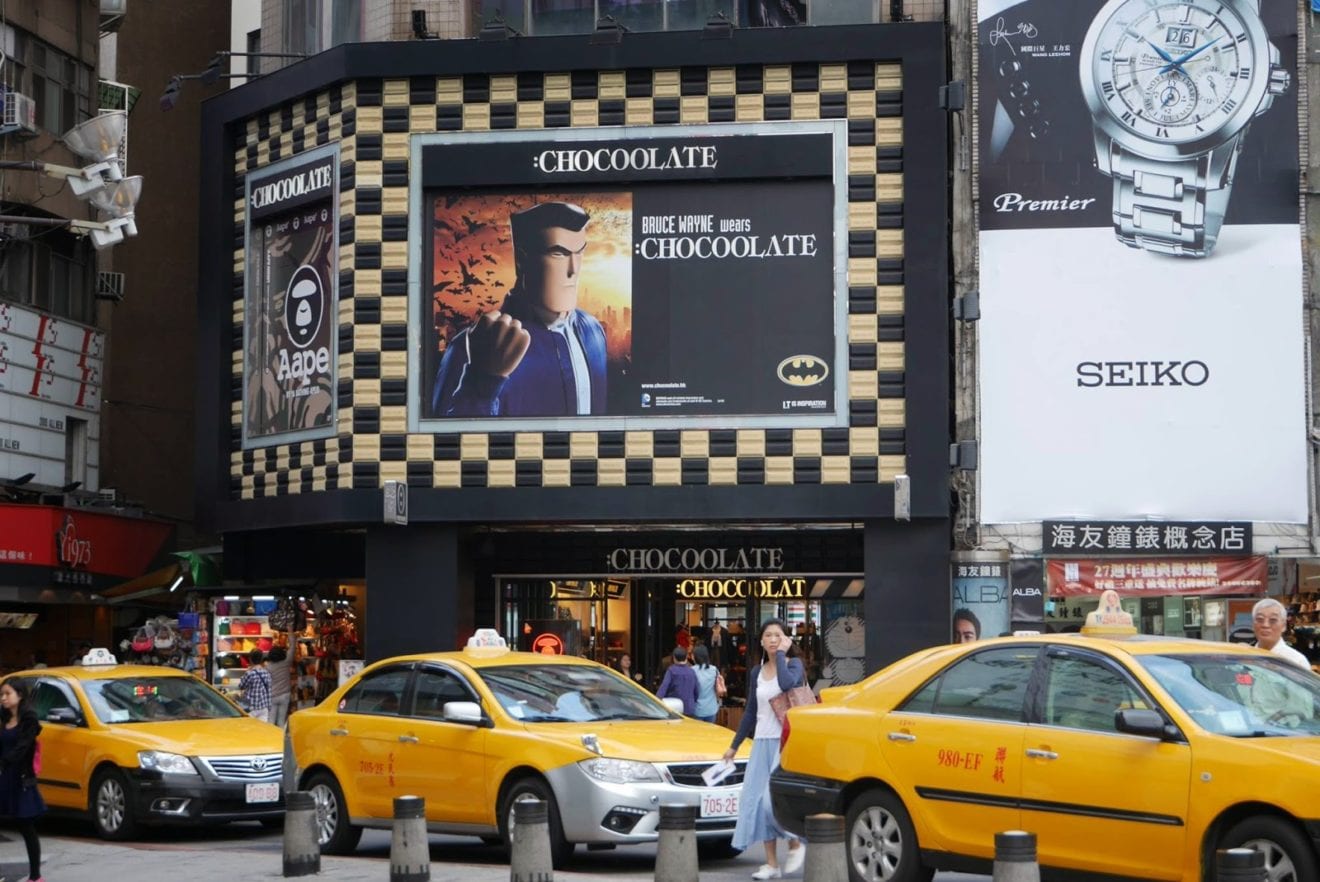
    Taipei ranked fourth as a target market for international retail brands last year as a willingness to try new dining and fashion is driving leasing activity across the Asia-Pacific region, a report by property consultancy CBRE Group Inc showed yesterday.

    The nation’s capital rose seven notches from its ranking last year, with 49 new brands establishing a presence in Taipei, compared with 29 in 2013, according to the annual report of hot target markets by CBRE.

    HOT SPOT

    The results left Taipei trailing only Tokyo with 63 entrants in first place, Singapore with 58 entrants in second and Abu Dhabi with 55 entrants in third, the survey found.

    “Taipei has become a hot spot for Japanese and [South] Korean fashion and cosmetics brands looking for overseas expansion,” CBRE Taiwan managing director Joseph Lin (林俊銘) said in the report.

    The property broker saw strong leasing momentum from mid-range and fast fashion retailers, with existing brands introducing new product lines such as GU, a Japanese fashion retail chain. New arrivals also included New York-based contemporary clothing company Alice + Olivia and US multinational clothing and accessories retailer The Gap Inc among others, the report said.

    OUTLET LOCATIONS

    High-profile units on main streets were in strong demand last year, and the lack of flagship prospects pushed retailers to seek opportunities in department stores, the major retail format in Taiwan, the report said.

    The number of new entrants located in shopping centers was relatively limited, but well-managed centers such as Breeze Center, Taipei 101 and ATT 4 FUN are gaining attention, the report said.

    The luxury and business fashion sectors contributed 20 percent of all new retail entrants to Asia-Pacific markets last year, the report said.

    The bulk of new entrants were second-tier luxury brands, since mainstream luxury groups are already well-established in the region, the report said.

    CAUTIOUS

    About 85 percent of luxury and business fashion retailers are looking at the region, although they are expected to adopt a cautious attitude toward expansion due to escalating operating costs, the report said.

  • Launches and Deals Announced at CommunicAsia, EnterpriseIT and BroadcastAsia 2015

    Launches and Deals Announced at CommunicAsia, EnterpriseIT and BroadcastAsia 2015

    Asia’s leading infocomm technology and broadcasting industry event maintains its position as platform of choice for companies to announce major launches and partnerships

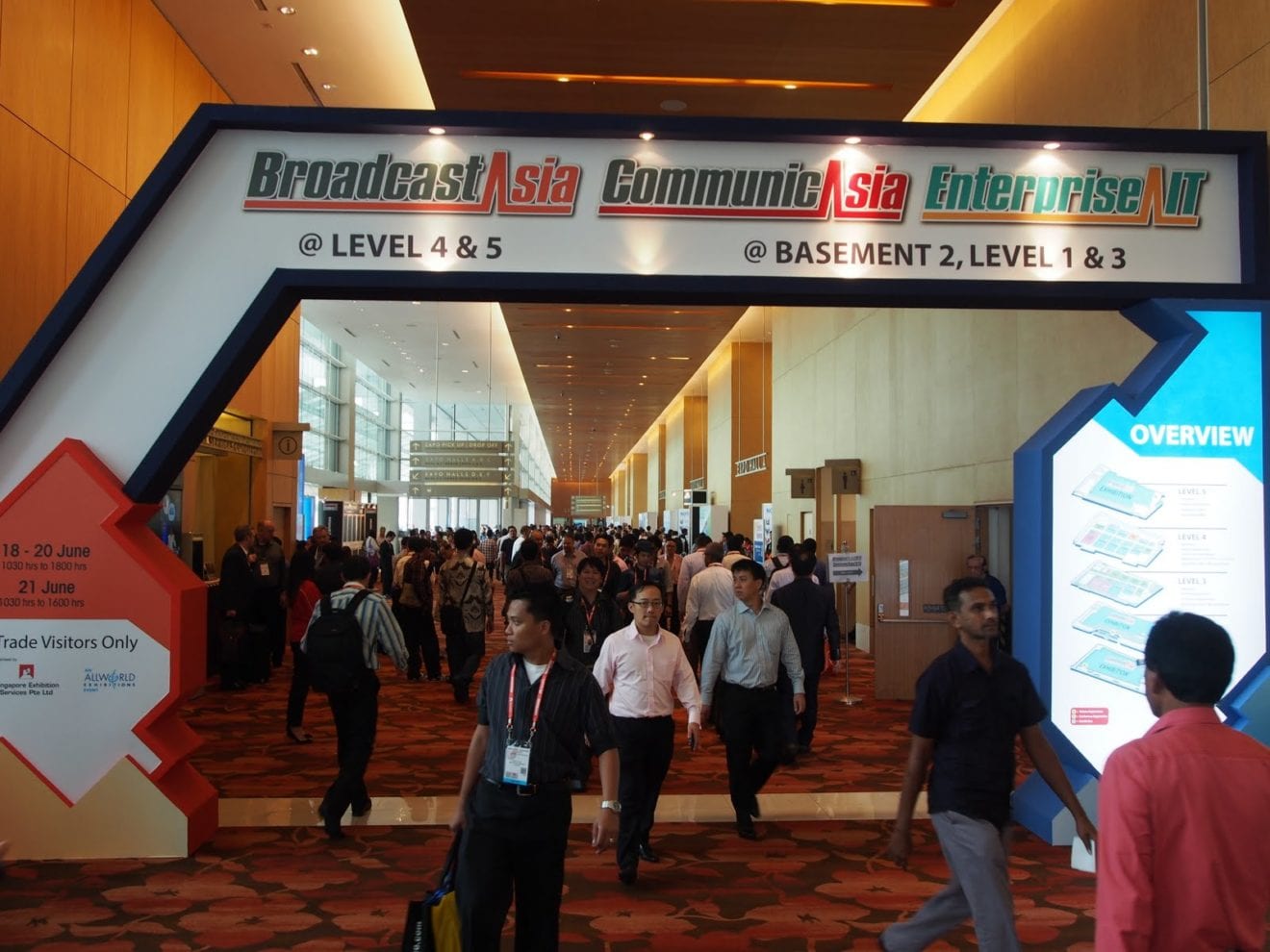
    Over the past four days, Marina Bay Sands has been abuzz with activity as CommunicAsia2015, EnterpriseIT2015 and BroadcastAsia2015 brought the movers and shakers of the infocomm technology (ICT) and broadcasting industry together under one roof.

    Dell, Panasonic, Samsung and Sony, household names renowned for their consumer electronics chose CommunicAsia, EnterpriseIT and BroadcastAsia to announce major launches in their B2B segments.

    Panasonic, an exhibitor at both CommunicAsia and BroadcastAsia, announced seven new business technology products and solutions for the Asia Pacific markets. These include the Toughpad FX-X1, a fully-rugged 5-inch tablet, the new AG-DVX200, the world’s first 4K integrated zoom lens camcorder and the world’s lightest 4K+ 3-Chip DLPTM Laser Projector alongside the latest in mobile surveillance technology, blu-ray data storage, and professional broadcast video equipment.

    “Asia Pacific is a fast-growing dynamic marketplace, and presents huge opportunities for Panasonic across all our B2B business segments from integrated solutions to audio visual products,” said Hiro Sakamoto, Managing Director of Panasonic System Solutions Asia Pacific. “Our commitment to delivering total end-to-end solutions in the region is an integral part of our growth strategy. CommunicAsia2015 and BroadcastAsia2015 was an ideal platform for us to launch new products and solutions for the Asia Pacific markets as part of our commitment to strengthen our B2B business.”

    At CommunicAsia, Dell launched its new Internet of Things Gateway, while at BroadcastAsia, Samsung unveiled the world’s first low temperature video wall, and Sony – their new HXR-NX100 professional camcorder.

    Handset makers Huawei, PHICOMM and RugGear also launched their flagships P8, P660 and GranTour Series – RG730 respectively at CommunicAsia.

    “CommunicAsia, EnterpriseIT and BroadcastAsia are cornerstone events in the Asia Pacific ICT and broadcasting industries. With experts and decision-makers from a wide range of fields, the events provide an important Asian platform for companies and industry leaders alike to announce new, best-of-breed launches, and deliver key announcements that not only signal a pivotal shift in how enterprises are embracing technology in the way business is conducted, it also demonstrates clearly how technology has become indispensable in the new generation of business growth strategies. We continuously aspire to deliver great, if not better, quality events as countries and regions make further inroads in their smart cities journey towards a hyper-connected digital world,” said Lindy Wee, Chief Executive of event organiser, Singapore Exhibition Services.

    “I had no idea how big CommunicAsia was. There are so many high profile companies and people here. It has been great to meet these people in person and develop new friendships and business relationships that are going to help my own business grow,” said CommunicAsia2015 Summit speaker and CEO of MCOI, Joshua Steimle.

    Smart Technologies to realise Singapore’s Smart Nation initiative Dr. Yaacob Ibrahim, Minister for Communications and Information announced at the opening ceremony of CommunicAsia, EnterpriseIT and BroadcastAsia that Singapore has entered the “build” phase of its Smart Nation initiative.

    In support of Singapore’s Smart Nation vision, local company ST Electronics launched the Intelligent Aggregation Gateway (iAG) Box – a key enabler to ubiquitous connectivity for smart cities. Facilitating sensor communication infrastructure on a single secure platform, the iAG box can be deployed in an urban environment to help with the management of a city’s key infrastructure for public safety, healthcare, transport, environment and utilities.

    Alongside major conglomerates, also playing a significant role in paving the way for Singapore becoming a ‘Smart Nation’ are start-ups like CtrlWorks, Neeuro and Zap!. At CommunicAsia, CtrlWorks showcased Axon, an intelligent robot powered by cloud robotics technology, easing manpower needs for areas such as logistics and hospitals. Neeuro pioneered an innovative EEG brainwave headgear that, when paired with Memorie – a mobile app with entertaining games suited for people of all ages, can train different aspects of the brain’s cognitive functions through completion of specific tasks, and enable them to apply the attained skills to daily activities. Another exciting product launch is Zap!, an ‘Uber’ courier service that offers less than two-hour deliveries from as low as S$5.

    Australian firms announced major deal at CommunicAsia2015

    On the international front at CommunicAsia, ICT companies from Australia marked a decade of participation. The 49-strong delegation from the Victoria region of Australia announced a range of new partnerships, expansions, licensing deals and international joint ventures centred on ICT health and medical technology industries. UnityHealth licensed its award winning eLearning platform, iTherapeutices, to Singapore based MIMS. Proximiti announced the expansion of company operations through two new regional hubs in Singapore and India. flexAnswer Solutions signed a five-year renewal contract with Changi Airport Group, and new contracts with seven Singapore government agencies.

    “Victoria has a strategy to help our ICT, health and medical technology companies to become part of global supply chains in knowledge creation, research, product development and commercialisation. The Andrews Labor Government is proud to be showcasing our state’s world class ICT capabilities at CommunicAsia2015, the most important ICT expo in South East Asia,” said Australian Minister of Training and Skills, Steve Herbert.

    Shifts in broadcasting economics addressed at BroadcastAsia2015

    With consumers increasingly taking control of where and when they want to access content, BroadcastAsia2015 responded by bringing together the latest in OTT and 4K technology, media asset management (MAM) and video analytics.

    ARRIS, a global innovator in IP, video and broadband technology gave BroadcastAsia attendees an exclusive first look of its 2015 Consumer Entertainment Index. It is one of the only global studies of its kind undertaken annually that looks at the evolution of entertainment through the lens of consumer engagement with content, connected devices, and each other.

    “This week at BroadcastAsia2015, we shared a first look of the findings of our ARRIS Consumer Entertainment Index. This event provided the perfect platform for us to talk about the evolving trends of consumers from across APAC. This year’s study revealed that while consumers’ consumption habits are changing, there are many frustrations, such as challenges with streaming and Wi-Fi connectivity, and experiencing quality mobile TV content through cellular and mobile Wi-Fi streaming services,” said Tim Gropp, Senior Vice President, Sales, Asia Pacific, ARRIS. “Understanding their concerns present significant opportunities for service providers. Beyond addressing these issues, businesses can look at developing new and differentiated offerings that would be most relevant to viewers.”

    “BroadcastAsia is THE meeting place for broadcasters in the region. The wide spectrum of products and variety of exhibitors allow me to choose the ideal digital solutions for our company’s ICT strategy,” said BroadcastAsia2015 visitor Alain Roger Poirier, Chief Operating Officer, Bloomberg TV Malaysia.

    Best Practices and Growth Potential – The Focus of Industry Discussions

    More than 1,000 industry leaders and professionals gathered at CommunicAsia2015 Summit, BroacastAsia2015 International Conference and the Creative Content Production Conference to discuss latest ICT trends, fundamental shifts in broadcasting economics, and digital media challenges.

    “BroadcastAsia2015 International Conference was a good combination of both technical and commercial aspects of cloud and virtualisation, as it applies to all video applications. Attendees were a good balance between IT, enterprises and those with broadcast experience,” said Ian Trow, BroadcastAsia2015 International Conference speaker and Senior Director of Emerging Technology and Strategy at Harmonic.

    “The social TV and second screen track was absolutely outstanding this year. 2014 and 2015 has seen some of the biggest changes in OTT, social media and the second screen and our panelists and speakers represented all different parts of the business. From gamification to analytics and video this year’s BroadcastAsia was truly enlightening when it came to understand the future of TV,” said BroadcastAsia2015 delegate and Senior Vice President of the Shorty Awards & Muck Rack, Natan Edelsburg.

    “The session was especially enlightening in terms of service providers’ business plans to leverage convergence to deliver cross platform services that are engaging to customers,” said Yuvarami T, Director, Media Development Authority, a CommunicAsia2015 Summit delegate.

    More than 48,000 attendees from 101 countries and regions, including visitors, exhibiting staff, conference speakers and delegates, and members of media, got to witness at CommunicAsia, EnterpriseIT and BroadcastAsia how technology could be harnessed to better connect cities, governments, enterprises and consumers.

    The event will return to Marina Bay Sands on 31 May – 3 June 2016.

    About CommunicAsia

    At CommunicAsia2015, the latest innovative technologies from Big Data, Business Analytics, Cloud technologies, IoT, to Zigbee will be unveiled. These advances are poised to change the way we live and work. www.CommunicAsia.com

    As Asia’s largest integrated ICT event, CommunicAsia2015 is held concurrently with EnterpriseIT2015 and BroadcastAsia2015.

    EnterpriseIT2015 is the leading event for businesses to source for the latest innovations and solutions that enable them to stay relevant in the rapidly digitalising and consumer-led business landscape. These innovations include connected home, smart office, wearable devices and technologies, mobile payment, mobile health and more. www.goto-enterpriseit.com.

    BroadcastAsia2015 is the largest representative integrated event for film, TV and entertainment industries. www.Broadcast-Asia.com.
  • Travel specialist DFS Group unveils store at Changi Airport

    Travel specialist DFS Group unveils store at Changi Airport

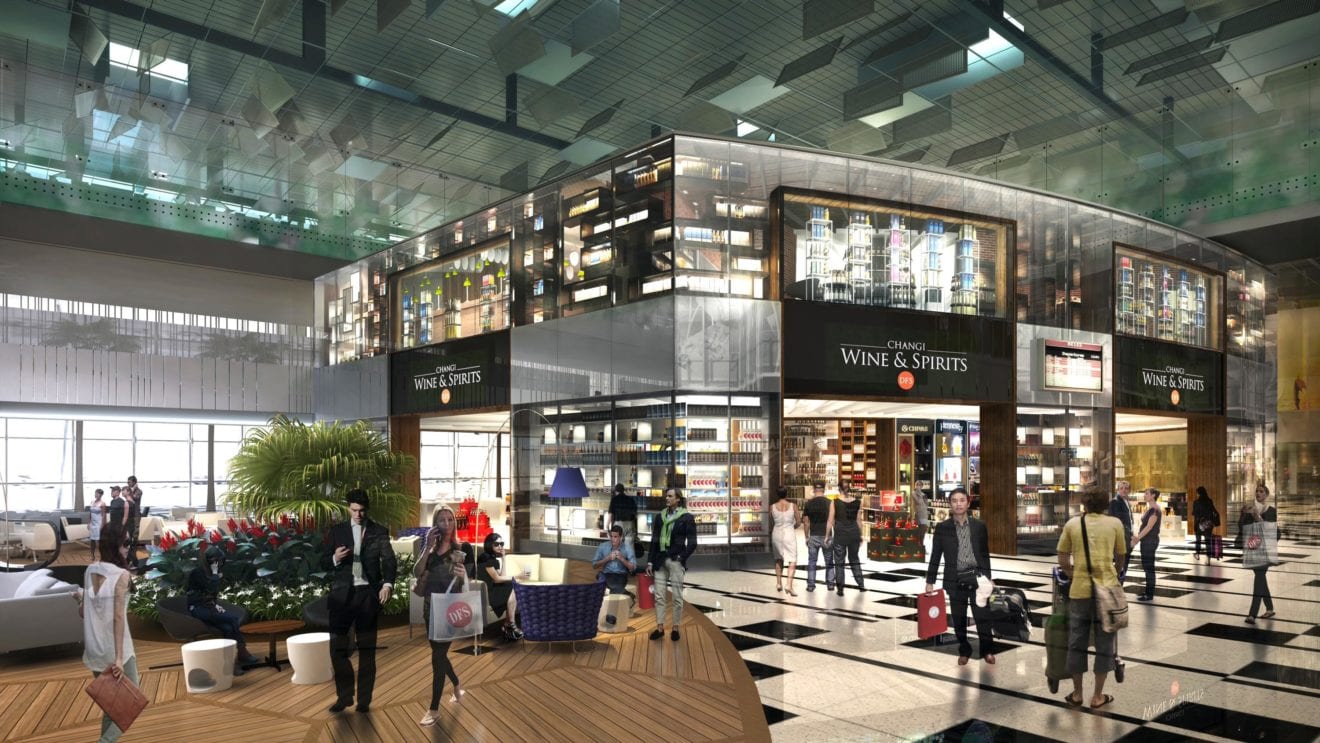
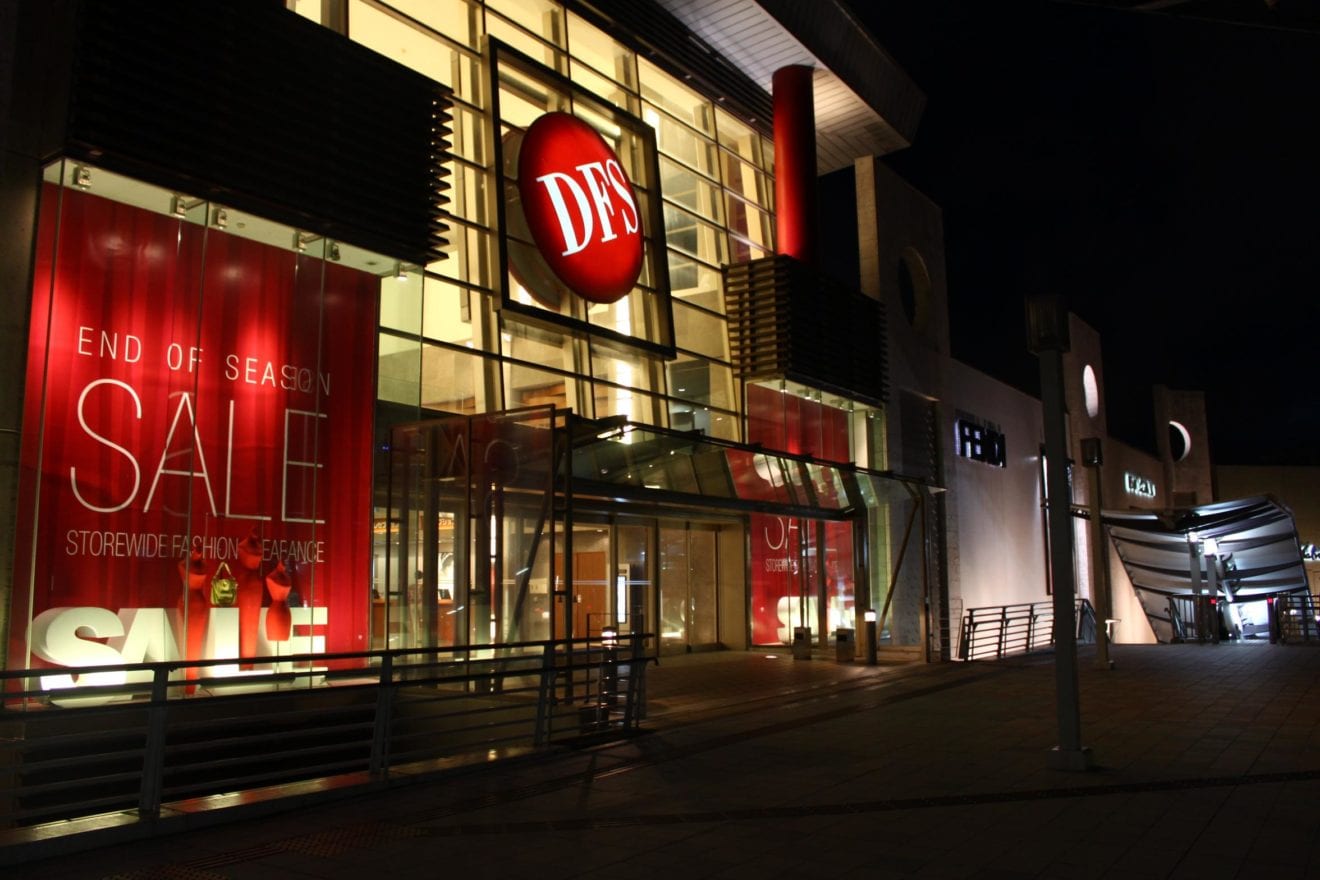
    Luxury travel specialist DFS Group has opened its largest global store: a wine, spirits and tobacco flagship at Singapore’s Changi Airport.

    The store, in the airport’s Terminal 3, covers 11,400 sq ft across two floors. Designed by award-winning interior designer Masamichi Katayama, the shop features the Raffles Long Bar, in collaboration with Singapore’s famous Raffles Hotel. The ground floor also includes atrium tasting bars and a private lounge.

    Drinks brands Absolut, Dom Pérignon, Glenfiddich, Hendrick’s, Hennessy, Johnnie Walker, The Macallan, Martell, and Penfolds are showcasing their heritage and products within individually designed boutiques.

    DFS Group chief executive and chairman Philippe Schaus said: “When we embarked on this unique project, we wanted to offer Singapore, the most renowned travel destination in Southeast Asia with the most modern airport, a wines and spirits store of a quality and richness unlike anywhere else in the world.

    “That is why we secured the collaboration of Masamichi Katayama to build this one-of-a-kind, two-level experiential store, drawing inspiration from the most stylish bars and restaurants around the world as well as from the traditional and historic cellars of France and Scotland.”

    Lee Seow Hiang, chief executive of Changi Airport Group, added: “The store – with its stunning façade and double-volume grandeur – is not only a design showpiece on its own, but the extensive range of products and unique boutiques truly enhance the overall retail experience.”

  • South Korea April department store sales barely rise

    South Korea April department store sales barely rise

    May 27 Sales at top South Korean department stores rose 1.3 percent in April from a year earlier, revised government data showed on Wednesday, turning from a fall in March but slightly weaker than a recent estimate. It was compared to a preliminary 1.5 percent gain estimate by the finance ministry early this month and a 5.7 percent fall in March.

    The sales data from department stores run by Hyundai Department Store, Lotte Shopping and Shinsegae Co is a useful guide on retail sales trends in Asia’s fourth-largest economy.

    The same industry ministry data showed annual sales at discount stores held steady in April from a year earlier, slightly better than a 0.2 percent fall previously estimated.

  • Japan’s Mitsui & Co picks up minority stake in Singapore retailer Triple

    Japan’s Mitsui & Co picks up minority stake in Singapore retailer Triple

    Mitsui & Co, one of Japan’s largest general trading companies, has invested in Singaporean apparel retailer Triple, taking a minority stake in the omni-channel sports and lifestyle retailer that operates brand stores, shop-in-shop operations, wholesale distribution and e-commerce in key Southeast Asian countries.

    Dating back to 1876, Mitsui & Co is a Japanese company largely involved in the energy sector, though it also has businesses in fields ranging from chemicals and iron and steel, to transportation and communications systems and food products and services. It operates over 140 offices in 65 countries.

    Triple was launched in September 2013, primarily as a wholesaler for American sportswear brand Under Armour. It maintains exclusive distributorship for the brand in nine Southeast Asian countries.

    According to Triple’s CEO, Michael Binger, talks between both parties had gone on for approximately six to eight months before the deal was completed on May 18. Binger also said that Mitsui and Triple were hoping to leverage on the partnership to drive their expansion into e-commerce.

    “Mitsui’s current strategy focuses on brand marketing in downstream sector, among which sports and lifestyle is the key category judging from the global trend. Establishing the retail network in rapidly growing market such as South-east Asia is regarded as the key element to leverage this brand marketing strategy. Triple’s participation is the best fit to these points” said Toshi Sakurai, general manager of the consumer service business department of Mitsui & Co (Asia Pacific).

    Triple has opened five Under Armour stores and shop-in-shop outlets in Singapore, three in the Philippines and three in Malaysia, all within shopping malls in prime locations. Store expansion in core markets – Singapore, Malaysia and Thailand – will see four additional store open in 2015 and five to six stores in 2016.

    Triple also plans to enter Indonesia, Brunei and Vietnam via a network of partner stores and shop-in- shop executions. They intend to open five to six new stores and approximately 10 shop-in-shop locations tin 2016. By end-2018, Triple forecasts it will have a total store network of approximately 35 locations, including shop-in-shop executions for the Under Armour brand exclusively.

    Leveraging on their current landlord relations, Triple also hopes to expand their selection of brands and increase their overall number of stores. The global apparel market is estimated to be worth around US$1.7 trillion, with 6 percent annual growth.

    Southeast Asia is particularly dynamic with a 10 percent annual growth rate. This is due to an expanding consumer market and the growth of middle-class consumers. Coupled with greater interest in health and wellness, the sportswear category has emerged as a key driver for the apparel market.

    Commenting on the deal, Binger said, “Triple sees Mitsui as a strong long-term strategic partner with good complementary strengths. Mitsui has a network of relations with brands that are not yet represented in South-east Asia, and with the wide business interests of Mitsui and Triple’s rapid growth, there will be other areas of cooperation, including logistics.”

  • One card to hold up to 20 retailers’ rebates

    One card to hold up to 20 retailers’ rebates

    For the last 30 years, Nets has been working towards turning Singapore into a cashless society, and it will continue to do so for the next 30 years and beyond, said its head honcho.

    The payment network, whose name stands for the Network for Electronic Transfers Singapore, has several plans up its sleeve this year – its 30th anniversary.

    Besides unveiling a virtual CashCard for motorists today, Nets developed a platform that will allow a single card to hold rebate dollars from different merhants, for instance.

    Consumers will also be able to top up their cards via an app by Nets, which already tracks transactions, by the end of this year.

    In an exclusive interview, Nets chief executive Jeffrey Goh said the firm is working with various food court operators to launch their prepaid cards on the FlashPay platform, like a co-branded Toast Box FlashPay card that was recently launched.

    The next step is to combine these various prepaid cards into one, through Nets retailer stored value programme (RSVP), he said.

    “Theoretically, one card can support up to 20 merchants and can be used for anything, even for loyalty points.”

    He has even thought about working with insurers to offer solutions when a card is lost, and the easy recovery of points or stored-value, for instance. Mr Goh said: “Consumers shouldn’t fear losing their card as everything is captured electronically and insurance can pay for it.”

    An app offered by Nets already reads a consumer’s transactions across all FlashPay cards he owns.

    Nets is going one step further, to allow consumers to top up cards using near field communication phones by the end of this year, with the service now in the testing stage, he said.

    The payment network may also revamp its e-payment portal to be faster and for a better customer experience.

    The aim is to turn Singapore into a cashless society, but Nets still has its challenges.

    At Bedok Interchange Hawker Centre and Beo Crescent Market and Food Centre near Havelock Road, stalls using Nets terminals have said FlashPay usage by customers was slow.

    Mr Goh said: “To change consumer behaviour takes about three to five years, and Nets is prepared to continue to invest in that, just like how paying bills via the AXS machine wasn’t a natural progression.”

    He said Nets main goal at its formation in 1985 was to drive cashless retail payments.

    “For the last 30 years, we’ve been quite successful; 70 per cent of retailers in shopping centres and 60 per cent of neighbourhood stores accept Nets.

    “It’s the last push now to get 90 per cent acceptance across the neighbourhood stores and shopping centres.”

    The plan is for every cash transaction to be replaced by Nets, he said.

    “My father’s generation used cash, our generation uses cards, and the next will definitely use virtual payments, so Nets is re-looking its strategy as it goes into the e-payments market,” Mr Goh said.

  • E-Land ready to rumble for a duty-free license

    E-Land ready to rumble for a duty-free license

    Just a few days shy of the deadline to apply for a Seoul duty-free business license, E-Land announced plans to join the fray.

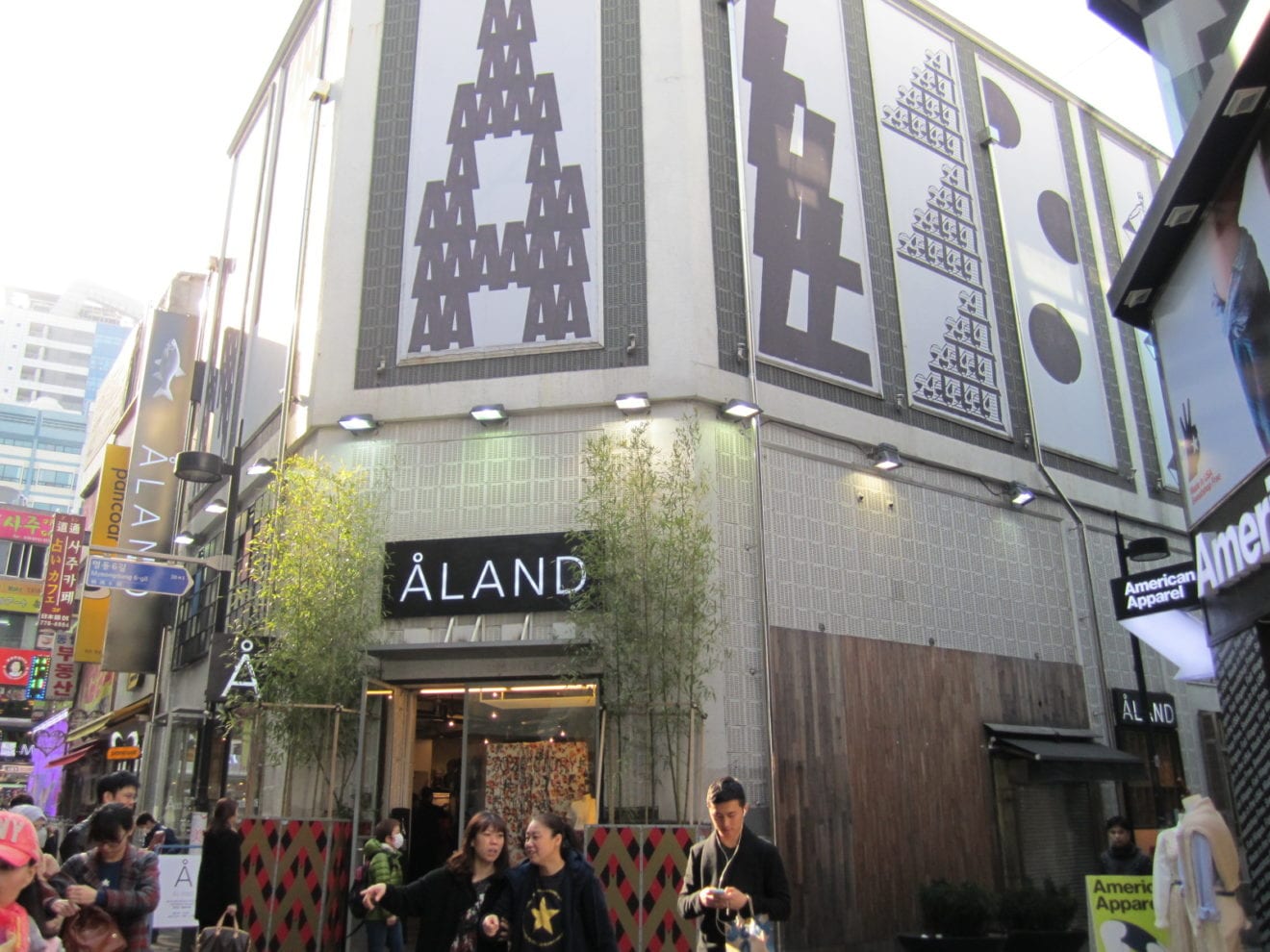
    The conglomerate, whose businesses span from retail and fashion to restaurants, said Thursday that it plans to build a duty-free shop at a property near the hip Hongik University area in Mapo District, northwestern Seoul, where it is currently working with GS Engineering & Construction to build a luxury hotel.

    The company will collaborate with the area’s 20,000 shop owners, street performers and artists to give a new perspective on duty-free shopping, setting itself apart from other competitors that have located their shops in larger, more commercial areas with other big-brand stores.

    It has plans to build an outdoor performance arena by the shop where young artists, independent bands and even K-pop stars will be invited to perform daily. E-Land will also work with the district’s well-known shops and restaurants to draw more foreign tourists to the neighborhood, the company said.

    It recently signed a memorandum of understanding (MOU) with Wanda Tourism and Dufry Duty Free for collaborations on its duty-free business. Wanda Tourism, a unit of Wanda Group, is one of the biggest tour agencies in China, and E-Land expects the partnership to help bring in more than 1 million VIP customers from the country per year. Dufry, a Swiss duty-free franchise and the world’s biggest duty-free store operator with over 2,000 worldwide, will share luxury retailing strategies with E-Land.

    “Around 70 percent of local duty-free sales come from the Chinese,” said an E-Land official. “As an influential brand in China with over 20 years of Chinese retail experience under our belt, we will expand the size of the local duty-free market.”

    The company currently operates 44 brands and 7,300 stores in China, ranging from restaurants to shops specializing in fast fashion brands.

    Competition for duty-free licenses is getting fiercer by the day, with almost every major conglomerate – including Lotte, Shinsegae, Hyundai, Samsung-affiliate Shilla, SK Networks and Hanwha – having submitted a bid.

    Sluggish sales at other retail outlets, including department stores and discount retail chains, have forced companies to shift their focus to duty free, which offers double-digit profit margins and growing sales. According to the Korea Customs Service, Korea’s duty-free market was worth 8 trillion won ($7.2 billion) as of last year, compared to 4.8 trillion won in 2010.

    Korea Customs Service is scheduled to make a decision about the licenses in July, two of which will be given to conglomerates and one to a midsize firm.

  • Bangkok retail lags in expansion

    Bangkok retail lags in expansion

    Space in core areas of Tokyo remained highly sought after despite the mixed signals in the economy and an increase in the sales-tax rate introduced in April, 2014.

    Singapore followed Tokyo with 58 new retail brands while Taipei came in fourth, climbing seven places from 2013’s new entrants’ rankings with 49 new brands last year compared with 29 the year before. Other cities in the region making up the top 15 markets included Hong Kong with 45 new entrants, Beijing with 34 and Manila with 24.

    London retained its position as the world’s most international shopping destination with 57.9 per cent of international retailers present there, which was closely followed by Dubai with 55.7 per cent of international retailers present and Shanghai with 53.4 per cent.

    James Pitchon, head of research and consulting at CBRE Thailand, said that in the first quarter of this year, the total Bangkok retail supply was 6.8 million square metres, increasing by 7.8 per cent year on year. The volume of occupied retail space increased by 4.8 per cent.

    The largest new retail development in the quarter was the 50,000sqm EmQuartier luxury shopping mall on Sukhumvit Road.

    Jonathan Hsu, head of occupier markets research for CBRE Asia Pacific, said the continued desire for expansion into new cities remained high for international brands.

    “We are seeing a great deal of expansion into Asia and in particular into Tokyo, Singapore and Taipei.”

  • Powa takes tablet POS to Japan

    Powa takes tablet POS to Japan

    As the demand for tablet and mobile-based point of sale solutions accelerates across the Asia Pacific region, Powa Technologies today announced that S-Cubism Technologies has become the first Japanese-based POS software provider to complete integration with its PowaPOS tablet-based hardware.

    The full-featured solution will use its EC-Orange POS for iPad and Windows, and is available from Billing System Corporation, a leading payment gateway and reseller. Billing System Corporation is also a reseller of PowaTag, Powa’s innovative mobile payment enablement application that turns any point of contact into a point of sale.

    “Powa has created the most sophisticated and revolutionary fixed tablet point of sale platform available, which will help us serve the growing demand for tablet-based solutions,” said Kenji Hosoda, CTO, S-Cubism Technologies. “The fully integrated hardware and advanced SDK combine to help us create a solution that will easily meet the needs of the Japanese retail marketplace.”

    PowaPOS is the first point of sale platform purpose built for tablet-based payments. Its fully integrated design rids merchants of the need for mismatched peripherals and provides industry-leading ease of set-up. Features include a built in thermal printer, 2D QR/barcode scanner, orientation sensor, as well as the optional PowaPOS Cash Drawer – all in a compact footprint and powered by a single cord. With its advanced SDK, PowaPOS is the only tablet-based platform to easily integrate with all POS software applications across all operating systems. The PowaPOS SDK also supports third party payment devices, including NFC/Apple Pay devices, and enables instant integration with PowaTag.

    “Powa Technologies’ PowaPOS and PowaTag solutions are truly revolutionary in the retail marketplace today,” said Toshihiko Eda, President & CEO of Billing System Corporation. “The innovative PowaPOS platform is the ideal component to help us deliver a complete POS and payments solution to existing customers, and open up new markets for us in Japan, as many retailers seek a tablet-based solution for the very first time.”

    EC-Orange POS is a next generation POS software solution, available for iPad and Windows tablets. Features include payment processing, inventory management, customer relationship management, promotions support, and sales analysis. With more than 4,200 stores across Japan already using EC-Orange POS, S-Cubism is one of the country’s leading POS software providers.

    “Powa’s partnerships with Billing System Corporation and S-Cubism Technologies provides retailers in Japan with a fully integrated tablet POS solution to run their businesses, complete with an unmatched ‘out of the box’ hardware experience,” said Zvi Mitlanski, SVP & GM, Asia Pacific, PowaPOS. “With this integration, PowaPOS continues to expand its global footprint, with a significant step forward in providing next generation tablet-based payments to the retail end-user in Japan.”

  • Pleasure Metropolis opens indoor road in China mall

    Pleasure Metropolis opens indoor road in China mall

    Pleasure Metropolis Property has launched China’s first cultural and artistic industry-themed indoor pedestrian road in Tianjin  Pleasure Metropolis’s Cheer Market.

    The road can also be the primary of its sort within the nation to have been situated inside a buying centre. The distinctive and ‘avant-garde fashion’, Cheer Market has been held up as a mannequin that different purchasing malls have been following in recent times in an try and buck the development of homogeneity and the affect of e-commerce in addition to to shoulder the company social duty actively.

    Pleasure Metropolis’s goal clients, aged between 18 and 35, are able to creating and appreciating artworks, together with these designs that are above the mass market’s style. Particularly, Cheer Market caters for the preferences and needs of the ‘yuppies’.

    Positioned as “an artwork road in a purchasing centre”, Cheer Market consists of delivery containers during which entrepreneurs arrange outlets and are free to train their creativity and originality of their inside ornament and design.

    As well as, the low lease and enormous share of revenues loved by the companies in Cheer Market and the place’s distinctive inventive atmosphere have attracted numerous artistic younger individuals to make their marks there. The freewheeling environment has given delivery to such creative zones as “Shen Shou Si” (Temple of Auspicious Animals) and “Secret Publish Workplace” which have turn out to be magnets for patrons.

    “Younger individuals are imbued with many unique concepts, however often can’t put them into follow as they face many various sorts of constraints, together with a scarcity of capital”, stated a graduate who’s a younger entrepreneur.

    “Nevertheless, they will realise their goals in Cheer Market, which is a seedbed for brand spanking new companies began by the younger due to its beneficial circumstances.”

    Tianjin Pleasure Metropolis’s GM Wu Jing says: “A purchasing centre ought to be energetic as an alternative of being mundane.”

    Situated on the fifth flooring of Tianjin Pleasure Metropolis, Cheer Market has now turned what was as soon as an inaccessible quiet nook with a big space into an indoor business road with a robust character and the very best income generated per sq. metre.

    The business property challenge distinguishes itself from Nanluoguxiang (South Lane of Gongs and Drums) of Beijing and Tianzifang, which is an arts and crafts enclave of Shanghai, by recreating outside streets inside a constructing.

    The identify “Cheer Market” was impressed by the youngsters’s e-book Nils Holgersson’s fantastic journey throughout Sweden of the Nobel Prize-winning author Selma Lagerlöf. The novel illustrates the protagonist’s private improvement by means of a collection of fantasy adventures, and evokes individuals with a ardour for all times to be happy to reside out their goals.

    Says Wu: “The importance of Cheer Market lies in its functionality to set off individuals’s want for creativity with freedom. Their hands-on expertise with the fascinating actions on the outlets there result in consumption. Cheer Market will assist appeal to clients to Pleasure Metropolis. It has blazed a path within the industry by bringing outside streets indoor and by providing clients a stimulating buying setting.”

    Pleasure Metropolis Property’s government director and GM Han Shi says Pleasure Metropolis Property aspires to develop into an organization that may thrive for greater than a century, and innovation would be the key to that.” 

    “Pleasure Metropolis is far more than a purchasing centre. It’s a vibrant and stylish place for spreading tradition. Pleasure Metropolis will set the development for the younger individuals’s way of life. It is going to endeavor to realize this goal via fixed innovation and by main the industry in enterprise administration.”

    Hong Kong listed Pleasure Metropolis Property is a business property itemizing firm underneath COFCO Company, enterprise of which overlaying business property, residential property, lodge, tourism property and regional complete improvement.