Category: General

Retail News Asia is committed to providing both local and global retailers with the latest General Retail news throughout the Asian market. This on a daily base.

  • WhatsApp announces passkeys support for Android users

    WhatsApp announces passkeys support for Android users

    Last week, Google announced that passkeys would become the default authentication method for its users on personal accounts. Within that announcement, Google also stated that passkeys support is growing, listing a few of the companies that had already enabled them on their apps and websites, with a mention of WhatsApp as one of the ones that would be adding compatibility soon.

    This confirmed earlier reports that WhatsApp had already tested this functionality with its beta users and would be tied to Google’s Password Manager. Today, WhatsApp finally announced that passkeys support is now official for its Android users who can now use their device’s screen lock method to unlock their accounts, such as their face, fingerprint, or device pin.

    Previously, WhatsApp had implemented an optional two-step verification pin and a fingerprint lock feature that users could set to trigger automatically after a set length of time. This type of authentication is not being removed from the app, but rather joined now by passkeys, offering an additional layer of security.

    Although passkeys support has now been made public by the company, it appears that the feature is not yet live on the latest stable version of the app (v2.23.20.76). However, it is definitely working in the latest beta (v2.23.21.12) for those enrolled in the WhatsApp beta program.

    The signup process is quick and straightforward as it is using the screen lock method that you already use on your phone. Additionally, through this signup process, you learn that your newly created passkey is indeed being stored in Google’s Password Manager, which makes it possible to use on other devices where you are signed in to your Google account. It is unclear at this time if an app update is forthcoming for the stable version of the app, or if the feature will be rolled out in stages via a server push.

  • Construction steel sales reach year-high in September

    Construction steel sales reach year-high in September

    Construction steel sales hit 958,500 tons in September, the highest in nine months, and posting positive growth for the first time this year.

    Sales went up 9% from August and 4% year-on-year, according to the Vietnam Steel Association.

    Industry leader Hoa Phat Group posted its biggest sales last month since the beginning of the year.

    The company saw construction steel sales rising 15% from August to 352,000 tons.

    Vnsteel saw sales rising 8% from August to 265,000 tons.The increase in construction steel demand came thanks to major infrastructure projects being developed such as North-South highways and airport upgrades.

    Steel prices have been steady throughout September and at the lowest level since 2020, which stimulated demand.
    But overall, the steel industry is still seeing low demand, the VSA said. In the first nine months 7.7 million tons of construction steel were sold, down 20% year-on-year. Exports fell 13% in the same period.

    Prices are set to remain at current levels until the end of the year, according to a KB Vietnam Securities forecast.
    A hike in domestic demand is expected early next year as property projects see difficulties in acquiring permits will be resolved, it added.

  • Gold prices hits high

    Gold prices hits high

    SJC gold price surged 1.14% to VND71 million per tael Saturday morning, affected by a jump in the global market.

    Gold ring price went up 0.95% to VND58.15 million per tael. A tael equals 37.5 grams or 1.2 ounces.

    Globally gold prices jumped more than 3% on Friday and were poised for their best week in seven months as the intensifying conflict in the Middle East sent investors scurrying for safe-haven assets.

    Zero-yield bullion got an additional fillip from expectations that the U.S. interest rates may have peaked.

    Spot gold was up 3.2% at $1,928.15 per ounce. U.S. gold futures settled 3.1% higher at $1,941.50. Prices were up 5.2% for the week.

    “Investors are fleeing to safe havens as the risks of Middle East tensions grow,” said Edward Moya, senior market analyst at OANDA.

    “If the geopolitical situation gets gloomier, there is a good chance that gold prices could go to the $2,000 levels this year. We have come from mid-$1,800s to mid-$1,900s, $2,000 is just a fraction of that.”

  • Unleashing the Potential of Affiliate Marketing in Asia With Indoleads 

    Unleashing the Potential of Affiliate Marketing in Asia With Indoleads 

    Affiliate marketing has emerged as a thriving digital marketing strategy in Asia, harnessing the region’s rapid technological advancements and growing e-commerce landscape. Let’s explore the multifaceted realm of affiliate marketing and how you can take advantage of it being a business owner or an aspiring affiliate marketer with an audience in Southeast Asia. 

    What is affiliate marketing everyone is talking about?

    Affiliate marketing is a performance-based marketing strategy in which companies (also called “merchants” or “advertisers”) reward affiliate marketers (also called “affiliates” or “publishers”) for promoting their products or services and driving desired actions, such as sales, leads, or conversions. 

    Here’s how affiliate marketing typically works:

    The affiliate marketer joins the advertiser’s affiliate program (also called “offer”) and starts promoting their products or services using various marketing channels, such as their website, blog, social media, email marketing, or paid advertising. They include their unique affiliate links in their promotional content and earn commissions for every targeted action performed by a new user or existing user, depending on the terms of the particular offer. 

    Although a lot of companies manage their affiliate programs by themselves, most of the world-known brands prefer working via reputable affiliate networks, like Indoleads. It’s much more efficient and allows businesses to focus on their operations rather than frowning over how to attract the best publishers. And it goes both ways – it’s much easier and less time-consuming for affiliates to work with a reliable network.  

    Here are some of major benefits for both businesses and affiliates to work via affiliate networks:

    • Expanded reach

    Affiliate networks have a vast network of affiliates, including influencers, bloggers, content creators, and website owners. For example, Indoleads has 60 000+ affiliates from all over the world with a variety of traffic resources. Partnering with an affiliate network allows businesses to tap into this extensive network and reach a broader audience that they might not have been able to reach otherwise.

    Affiliate networks act as intermediaries between affiliates and multiple businesses offering affiliate programs. Affiliates can browse through a wide selection of programs and choose the ones that align with their niche, interests, and target audience. This variety provides affiliates with more opportunities to find suitable products or services to promote. 

    • Streamlined management

    Affiliate networks provide a centralized platform for businesses to manage their affiliate programs. They handle various administrative tasks such as tracking affiliate activities, monitoring performance, and processing payments. This streamlines the management process and saves businesses time and resources.

    Also, affiliate networks simplify the payment process for affiliates. Instead of managing payments from multiple businesses individually, affiliates receive consolidated payments from the affiliate network. This streamlines the payment process, reduces administrative hassle, and ensures timely and reliable payments.

    • Access to quality affiliates and affiliate programs

    Affiliate networks often have a rigorous vetting process for affiliates, ensuring that they meet certain quality standards. This helps businesses partner with reputable affiliates who have demonstrated the ability to generate results and maintain professional standards.

    Similarly, affiliates get access to high quality hand-picked affiliate programs. For example, Indoleads collaborates only with reliable advertisers, that’s why its affiliates enjoy working with the most trusted companies and brands.  

    • Efficient tracking and reporting

    Affiliate networks offer robust tracking and reporting systems. They provide businesses with detailed insights into affiliate performance, conversion rates, sales data, and other key metrics. This data allows businesses to evaluate the effectiveness of their affiliate program and make data-driven decisions to optimize their campaigns.

    Access to accurate and real-time data helps affiliates analyze their results, identify successful strategies, and make informed decisions to optimize their marketing efforts. 

    • Customer care

    Affiliate networks often provide support, guidance, and resources to both businesses and affiliates, fostering a collaborative environment. This includes guides, and professional advice on various aspects of affiliate marketing. Indoleads’ affiliate managers are always there to offer assistance in optimizing affiliate campaigns and advise on traffic monetization. The blog contains a lot of useful information on digital marketing and e-commerce in different countries. 

    E-commerce Boom and Affiliate Marketing

    Southeast Asia is home to a population exceeding 492 million individuals and boasts over 400 million active internet users. In 2020, the COVID-19 pandemic prompted more than 40 million people in the region to engage in their first online purchases. Projected to reach $300 billion by 2025, Southeast Asia is the fastest-growing e-commerce market globally. M-commerce is experiencing significant growth in the region too. According to eMarketer, it is projected that by 2022, m-commerce will account for 80.33% of all e-commerce in the Asia-Pacific region.

    The expansion of e-commerce in the region can be attributed to the presence of major e-commerce marketplaces. Prominent online platforms like Lazada, Tokopedia, and Shopee dominate the Southeast Asian market, offering consumers access to a wide range of products across various categories. These platforms enable consumers to conveniently purchase almost any product they desire. 

    Asia’s e-commerce boom has played a pivotal role in the proliferation of affiliate marketing. As a result, businesses turned to affiliate marketing to enhance brand visibility, drive customer acquisition, and boost sales. No wonder all Southeast Asian e-commerce giants – Shopee, Lazada, Zalora, Tiki have their affiliate programs, which are available at Indoleads

    As e-commerce in Southeast Asia is set for even bigger success, this is the best time to start making your first steps in affiliate marketing whether you’re a business owner or you have a marketing channel and want to make your online presence profitable. Affiliate marketing is a great way to  monetize your content and engage with your audience through high quality affiliate programs. 

    But how to maintain the high quality of affiliate programs you’re running or the traffic you’re gaining through publishers?

    The answer is simple – Indoleads affiliate network!

    Why working with Indoleads? 

    Indoleads is a premium CPA network with 60 000+ affiliates and hand-curated affiliate programs from over 180 countries. Based in Malaysia and having offices in 5 other countries and regions, Indoleads has gathered the best digital marketing specialists who have years of experience in driving profitable growth for both brands and affiliates. 

    The network primarily focuses on e-commerce, online education, software, travel, and finance. Additionally, it actively develops other profitable niches like mobile offers, games, and dating.

    Indoleads has a diverse clientele consisting of major international and local brands. 2000+ affiliate programs are already on the platform, including legendary Shopee, Lazada, Zalora, and many others.

    If you’re waiting for a sign to get your hands on affiliate marketing – that’s it! Join Indoleads to start shaping the future of your online presence right now.


  • Malaysia’s Role in the Global Forex Market

    Malaysia’s Role in the Global Forex Market

    Discover how Malaysia is making vast changes in the currency market.

    Due to today’s technology, foreign exchange trading is now a global sensation available in almost every country.

    People worldwide participate in their local markets and shape the economy. One such example is Malaysia.

    But the Forex market is not only about currencies; people can trade in the price of oil, such as the XTIUSD pair, and much more.

    This article will cover how their action to, as Malaysians like to say it, convert matawang (currency) shapes the global market.

    How Does Malaysia’s Forex Market Look Like?

    All Forex markets have a regulatory system.

    Such is the case in Malaysia with their regulations. The regulatory system and a few other aspects mainly regulate the shape and growth of the market.

    Institutional Control

    Malaysia’s regulatory environment is primarily governed by Bank Negara Malaysia (BNM), the country’s central bank.

    BNM is critical in safeguarding the currency market’s stability and integrity. It creates regulations and standards and oversees the operations of Malaysian financial institutions and forex brokers.

    Regulatory Reforms that are Progressive

    In recent years, Malaysia has aggressively implemented regulatory changes to align its currency market with global norms.

    These changes include initiatives to increase transparency, risk management methods, and the efficiency of forex trading operations.

    Since its deregulation, retail traders and overseas investors have increased their engagement in Malaysia’s currency market.

    Currency Controls and Malaysian Ringgit Management

    The Malaysian Ringgit (MYR), the country’s currency, is closely monitored by Bank Negara Malaysia.

    It imposes currency restrictions and steps to manage Malaysian ringgit exchange rates, guaranteeing economic stability.

    The emphasis on MYR management impacts trading behavior in the forex market, making it critical for traders to monitor economic data and MYR-related policy moves regularly.

    Compliance with regulations and trader protection

    Malaysian regulations likewise promote trader protection. Forex brokers operating nationwide are subject to stringent compliance measures, such as capital adequacy and customer money segregation.

    These safeguards protect traders’ interests while lowering the possibility of fraudulent activity in the FX market.

    The Malaysian Ringgit in Forex

    As the foreign exchange market is mostly about currency, the Malaysian Ringgit is crucial to the functioning of the market.

    Let’s examine the key factors that make the MYR appealing to investors.

    MYR Exchange Rate Factors

    A complex interplay of economic, geopolitical, and market considerations impacts the exchange rate movements of the Malaysian Ringgit.

    Malaysia’s economic stability, trading links with neighboring nations, and volatility in global commodity prices impact MYR exchange rates.

    Furthermore, Malaysian political stability and more significant Southeast Asian economic trends might influence MYR performance in the FX market.

    To make sound judgments, traders interested in MYR currency pairings must be watchful and knowledgeable about these complex elements.

    MYR Trading Strategies

    Adopting appropriate trading methods is critical for traders hoping to capitalize on the MYR’s potential in their forex operations.

    The Malaysian Ringgit’s distinct qualities, response to specific economic indicators, and linkages with other currencies demand specialist methodologies.

    Some traders prefer MYR pairings because of their reduced volatility, while others take advantage of the currency’s sensitivity to commodities like palm oil and rubber.

    Understanding these subtleties and developing well-informed methods are critical for success when dealing with the Malaysian Ringgit in the volatile world of FX trading.

    Malaysian Forex Traders and Brokers

    The country’s impact on the world market is primarily due to its skilled forex traders and brokers.

    Although often underestimated, Malaysia’s FX market is quite developed and shines in the following aspects.

    Diverse Trading Community

    A diversified and active group of traders is at the core of Malaysia’s forex scene.

    Malaysian traders range from individual retail traders looking for opportunities in the foreign exchange market to institutional participants dealing with high quantities of currency trading.

    The variety has resulted in a thriving trading environment in which many methods, approaches, and tastes converge.

    Local and International Brokers

    Local brokers, often regulated by Malaysian authorities, provide traders with a thorough grasp of local market dynamics and MYR-related trading possibilities.

    On the other hand, international brokers provide a worldwide perspective by giving access to a broader selection of currency pairings, innovative trading platforms, and diversified financial instruments.

    Malaysian traders may choose from diverse brokerages, adapting their choices to their unique trading objectives and risk tolerances.

    Support and Education

    Brokers’ instructional offerings serve both newbie and seasoned Malaysian traders.

    These resources may include webinars, seminars, market research, and trading tools to help them improve their abilities and make better decisions.

    Many brokers also provide customer support in their native languages, offering accessibility and guidance for traders of various skill levels.

    Conclusion

    Malaysia’s impact on the global currency market is a testament to its evolution as a critical player in the ever-expanding world of forex trading.

    Through robust regulatory reforms, a focus on currency management, and a thriving community of traders and brokers, Malaysia has positioned itself as a noteworthy contributor to the global financial landscape.

    As the forex market continues to transcend, borders and technology facilitate broader participation, and Malaysia’s role underscores the interconnected nature of the financial world.


  • Update to iOS 17.1 brings an important change to the Action Button

    Update to iOS 17.1 brings an important change to the Action Button

    The iPhone 15 Pro and iPhone 15 Pro Max have the new Action Button above the volume rocker that replaced the Mute switch. With the new Pro models, the Action Button can be set to have a certain action take place when the button is pressed. To customize the button, the user goes to Settings > Action Button. The first Action that you can set the button to do is to act as a Silent mode switch that turns the Silent mode on or off which is exactly what the Mute switch used to do.

    Swipe to the left once and you get the next option, Focus, which silences notifications and filters out distractions. Other options appear as you swipe to the left including the ability to tap the button and open the camera, turn on the flashlight, start and stop recording a voice memo, use your phone as a magnifying glass, activate your favorite shortcut, use an accessibility feature, or have the Action Button take no action when pressed. When you find the Action option you want, just leave the appropriate icon showing on the image of the Action Button on the screen and leave the page.

    Cde discovered by 9to5Mac in iOS 17.1 beta 3, which was released to developers today, reveals that Apple is making a change to the Action Button. When the phone, using the proximity sensors, detects that it is in your pocket, the Action Button will require a longer press to activate. This prevents the feature from accidentally getting activated when the iPhone is inside your pocket.

    There is no setup required for the new feature to work and it will be automatically enabled for iPhone 15 Pro and iPhone 15 Pro Max users as soon as they install iOS 17.1 (once it is released). An accidental “pocket” activation of the Action Button on an iPhone 15 Pro series model could set off a shortcut that you’ve created that might disable the ringer, for example, turn off other features of the phone without you knowing, share your location and even share the last image you snapped.

  • Tax collections from Meta, Google, TikTok soar

    Tax collections from Meta, Google, TikTok soar

    Sixty-seven cross-border digital platforms, including Meta, Google, TikTok, and Microsoft have paid taxes of VND5.8 trillion (US$241.7 million) so far this year compared with VND3.5 trillion for 2022.

    The General Department of Taxation said it would urge other foreign service providers who have yet to declare and pay taxes to do so, and upgrade its electronic information portal to facilitate online payment.

    As of Sept. 18 some 350 e-commerce platforms had provided tax authorities with information about 191,000 organizations and individuals that did a total of VND44.5 trillion worth of business through them.

    Tax collections in the first nine months stood at VND1,050 trillion, down 5% from the same period last year, according to the department.

    Taxes on crude oil were down 20% at VND46 trillion.

  • Google Meet update adds 1080p video resolution for groups calls

    Google Meet update adds 1080p video resolution for groups calls

    After bringing the ability to install third-party add-ons directly within the app last month, Google Meet is now getting another useful feature that’s not really related to productivity: 1080p support for group calls.

    Previously only available for 1:1 Google Meet calls, full HD support is now being expanded to meetings with three or more participants. Those with 1080p cameras must select the higher resolution option before entering a meeting because it’s off by default.

    According to Google, 1080p is only sent when one or more users are pinning the 1080p-enabled user on a screen large enough to render the high-resolution video feed.

    For this to work smoothly, additional bandwidth will be needed to be able to send 1080p video. As expected, if the requirements aren’t met, the app will automatically adjust the resolution. Support for 1080p streaming in groups calls is now available on both Rapid and Scheduled Release domains.

    Google confirmed that the new feature is available for free to Google Workspace Business Standard, Business Plus, Enterprise Plus, Enterprise Essentials, Enterprise Standard, Enterprise Starter, Education Plus, and the Teaching and Learning Upgrade.

    The new feature is also available to Workspace Individual subscribers, but not to users with personal Google Accounts, at least for the moment.

  • Gold prices decline slightly

    Gold prices decline slightly

    SJC gold price dropped 0.07% to VND69.75 million (US$2,864.12) per tael on Tuesday morning.

    Gold ring price downed 0.08% to VND57.3 million per tael. A tael equals 37.5 grams or 1.2 ounces.

    Globally, gold prices held near their highest levels in more than a week on Wednesday as comments from U.S. Federal Reserve officials suggested that a recent surge in Treasury yields might reduce the need for more rate hikes, sending the dollar lower.

    Spot gold was up 0.1% at $1,860.97 per ounce by 0136 GMT, having hit its highest level since Sept. 29 on Tuesday. U.S. gold futures held their ground at $1,874.50.

    Bloomberg said Wednesday that a slump in gold prices to a seven-month low in India may stimulate demand in the current festive season, when people traditionally buy more coins and ornaments.

    Strong purchases during the October-December festival period, considered an auspicious time to own and wear gold, may underpin the global market.

  • Viber rolls out a new suite of business tools and they’re free

    Viber rolls out a new suite of business tools and they’re free

    Following WhatsApp, Viber announced a new set of business tools for small and medium-sized businesses. In an attempt to turn its app into a “communications hub for a wide range of businesses,” Viber is now rolling out several new features that will be available for free for small and micro businesses.

    Inspired by the company’s successful Viber Business Accounts for enterprise-sized level businesses, the free offering includes new features such as:

    • Public business profiles (Businesses can create a public, searchable business page featuring all essential information. The profile can be shared with customers inside the app or even with people who are not Viber users yet.)
    • 1:1 customer chats (Businesses can respond to customer requests right away over instant messaging.)
    • Discoverability through Viber search (Businesses can find and retain loyal customers on their preferred day-to-day conversations app, where customers can discover local products and services by searching for the business name or category.)
    • Dedicated chat folders (Businesses can conveniently store customer messages separately from personal messages with family and friends. Users will also have easy access to a separate Business Inbox folder for storing their conversations with businesses.)
    • Product catalog (Business owners can effortlessly add new products or services to their business page’s catalog. Customers can explore and inquire about the items by sharing the link to the product directly in the chat.
    According to Viber, these free business-oriented features will be followed soon by more services aimed at medium-to-large business accounts. It’s not clear if these will also be available for free, but it’s unlikely.

    The company’s new self-serve business accounts are only available in Greece and the Philippines for the moment, but they will be launched in additional countries soon.

    Viber also plans to add more useful features like broadcast messages, voice calls, as well as quick and automatic replies for small businesses. More importantly, Viber says that “tailored pricing plans” will be offered based on market feedback to expand the initial set of free self-serve business features.

  • How To Choose the Ideal Robot Vacuum for Your Home

    How To Choose the Ideal Robot Vacuum for Your Home

    Robot vacuums have revolutionized the way we maintain our homes by providing the utmost convenience with cleaning chores. However, with their ever-growing market, choosing the model that would perfectly fit your needs is a challenging task.

    To make your hassle easier, we have compiled this guide that outlines all you need to consider before choosing the right robot vacuum for your place.

    1. Suction Power

    To clean the proper way, a robot vacuum needs a strong suction power to collect debris and dust in your rooms. Measured in Pascals (Pa), the suction power is probably the main criteria and you might want to make sure it matches your needs (especially in large homes or for pet owners).

    Typical robot vacuums offer suction power ranging from 600 to 2700 Pa. Seek vacuums with adjustable suction settings to handle various flooring types efficiently, and find the right balance between price and performance when choosing a robot vacuum. Premium brands like Ecovacs offer devices with stronger suction power, usually around between 3000 and 8000 8000Pa. Pa, is particularly effective in homes with carpets, as it can efficiently remove dirt and debris deep within the carpet fibers, which is often challenging for conventional cleaning methods. Robot vacuums are worth the investment for their convenience, automated cleaning processes, and ability to handle various floor types efficiently, saving time for busy homeowners.

    2. Battery Life

    To ensure hassle-free cleaning, you should choose a robot vacuum model with a longer battery life. This is more important if you have a large house. Longer battery life ensures that it covers a larger surface area without recharging it over and over.

    Extended battery life also means reduced energy costs associated with recharging cycles. To decide on what battery life best suits your needs, evaluate your home’s size and estimate the time it will take to clean it.

    3. Customized Cleaning Modes

    Different cleaning modes enhance the robot cleaning vacuum’s adaptability and versatility. This is because different floors, including hardwood, tile, and various carpet types, require distinct cleaning approaches. Robot vacuums designed for multiple floors adjust their cleaning mechanisms, ensuring optimal performance on each surface while minimizing wear on your flooring materials.

    For example, a tile or hardwood floor wouldn’t require a lot of suction but needs mopping. Yet, carpeted floors would require strong suction power to pick up all the dirt and debris within their fibers.

    Customized cleaning modes ensure to tailor all your varying cleaning needs. They are basically setting presets for the robot vacuum cleaner that change by the press of a single button. As such, when your vacuum is cleaning different surfaces, it adjusts its settings based on the mode, and cleans the surface accordingly.

    So, for example, if you want to clean specific spots or want to pick up dirt along walls and edges, the robot vacuum’s spot and edge cleaning modes will allow you to do it.

    4. Navigational Technology

    Though all robot vacuum cleaners have navigational technology, some have more advanced versions of it—and that’s what you should consider getting. This means that the robot uses laser mapping or lidar technology to map out the room, helping it avoid collisions with walls and furniture and move seamlessly to every corner of the room.

    Advanced navigational features will also help the vacuum get to difficult-to-reach areas which would’ve been a challenging task with traditional vacuum cleaners, like the underside of your racks and sofas.

    And the best part? Advanced navigational technology often also consists of a cliff sensor that prevents your smart vacuum from falling off the stairs. This way, you’re not ending up with a broken vacuum, just because you used it on the first floor or a loft.

    5. Dustbin Capacity


    You need to take care of the dustbin capacity before buying the robot sweeper especially if you are cleaning a large home. A large bin would ensure that you’re not emptying the dustbin every few hours because it’s full and the cleaner has stopped picking up more dirt.

    An alternative option if you don’t find a vacuum cleaner with a large capacity is choosing one that has a self-emptying feature. Such robot vacuums move back to their dock once their dustbin is full. Then, they move the dust from their built-in bin to the bin in the dock. And finally, they go back to cleaning your house.

    The end result here is the same: you wouldn’t be emptying the bin yourself every few hours.

    6. Noise Levels

    Different models of smart vacuums have different noise levels. While some are as loud as traditional vacuums which may cause damage to ears, most have silent cleaning modes. Make sure to read reviews of the vacuum you’re eyeing to ensure it isn’t going to be too loud for you.

    It is a good idea to buy a floor vacuum robot that offers silent modes if you are planning to use it at night when everyone is asleep or if you have kids or pets that are easily disturbed by loud noises.

    7. Scheduling and Controlling Options


    One of the most important features to consider before choosing an ideal auto-cleaning vacuum is examining its scheduling and controlling options. Check if it allows app or voice integration since it would make your work a lot easier.

    You can control your robot sweeper with its app, asking it to start or stop cleaning while sitting anywhere. Then, app integration also allows you to schedule cleaning at a specific time during the day or the week, eliminating the need for commanding it every time you need to clean the house.

    Voice integration is another lifesaver technology that allows the robot to be controlled with voice. You wouldn’t even have to program it using the app to get the work done. All you need to do is connect them with smart home assistants and you are good to go.

  • Siam Piwat commits to using 100 per cent renewable energy by 2030

    Siam Piwat commits to using 100 per cent renewable energy by 2030

    Retail developer Siam Piwat Group has pledged to target net-zero greenhouse gas emissions by 2050, starting with a commitment to using 100 percent renewable energy by 2030.

    Siam Piwat – the owner and operator of Siam Paragon, Siam Center, and Siam Discovery, and a joint venture partner of IconSiam and Siam Premium Outlets Bangkok – says it wants to “lead the charge” in developing a smart ecosystem across its properties.

    As part of its net-zero journey, the company will sign a memorandum of understanding with world-class companies on sustainability by early next year as it works to reinforce its leadership in world-class sustainable destination development.

    “Siam Piwat has long been recognised by various world-class brands for centring its business on sustainable concepts and practices,” said Naratipe Ruttapradid, COO of Siam Piwat Co.

    “Guided by the vision to benefit society at large and elevate the quality of life for all, we strive to use our business as a platform of opportunities, for developing individual capabilities, and to ensure that all parties involved grow and succeed with us. We also prioritise environmental conservation everywhere we operate and promote resource efficiency and reutilisation.”

    Siam Piwat will develop partnerships with government bodies, universities, suppliers, local authorities and tenants to connect its business to people, society, and the environment as it accelerates projects that will power the business with clean energy. It anticipates this will push forward the Siam Piwat 360° Waste Journey to Zero Waste waste management program, and help develop the Bangkok commercial district of Pathumwan into a model of a smart eco-district.

    Naratipe said Siam Piwat wants to become Thailand’s first retail property developer to collaborate with the world’s premier brands and organisations on sustainability in pursuit of the United Nations’ sustainability goals and meet new global standard of business practice.

    Siam Piwat continues to be as committed as ever to leveraging its capabilities and business networks to create an urban model for environmental revitalisation and to drive the adoption of renewable energy and 360° waste management.

    Associate Professor, Dr Singh Intrachooto, a consultant and expert in the field of sustainability, has been a key driver and co-developer of Siam Piwat’s sustainability initiatives and eco-projects for more than a decade. He said Siam Piwat has long been a pioneer in championing sustainability and is now embracing new eco initiatives across its operations.

    Among the green initiatives that Singh has worked with Siam Piwat to develop are eco-projects aimed at transforming shopping centres into learning centres on sustainability, and Kheo Siam, a book explaining environmental issues in Thailand and worldwide, eco-trends, and Siam Piwat’s approaches to environmental management.

    He also played a pivotal role in advancing eco-community development and bringing to life Ecotopia at Siam Discovery – Asia’s first and largest eco-lifestyle retail hub. This initiative was born from Siam Piwat CEO Chadatip Chutrakul’s vision to empower communities and producers of eco-friendly product at all levels.

    “I can say with confidence that Siam Piwat has robust and concrete environmental practices that meet and often endeavour to surpass internationally accepted standards,” said Singh.

    Clean power towards net-zero

    Siam Piwat has incorporated environmental management into its business operations, starting with energy conservation and energy efficiency enhancement. For example, it has replaced lighting with LED bulbs to save energy and it uses AI-powered environmental control systems within its buildings.

    The company has expanded its use of clean energy – as can be seen from the installation of rooftop solar panels at IconSiam which produce more than 1 million kWh annually and reduce greenhouse gas emissions by about 550 tCO2e per year. Siam Piwat also collaborated with Gunkul Engineering to develop and install a rooftop solar PV system covering more than 20,000sqm at Siam Premium Outlets Bangkok, generating more than 4.8 million kWh of electricity annually and reducing greenhouse gas emissions by approximately 4300 tCO2e per year.

    Working with partners, Siam Piwat has installed electric vehicle charging stations to serve customers of its shopping centres.

    All these initiatives form part of Siam Piwat’s efforts to lower greenhouse gas emissions and contribute to the creation of a low-carbon society.

    Currently, the company is collaborating with several leading clean energy organisations in Thailand – including SCG Cleanergy, a subsidiary of the Siam Cement, and B.Grimm Power – to procure renewable energy, with the goal of enabling every shopping centre under Siam Piwat Group to successfully transition towards renewable energy and reduce its reliance on electricity generated from fossil fuels. The target is to increase the use of renewable energy compared to the total electricity consumption across all areas under Siam Piwat’s direct management to 30 per cent by 2026 and to achieve 100 per cent renewable energy in all areas by 2030.

    Meeting waste management challenges

    Meanwhile, Siam Piwat is working to address Thailand’s waste management challenges by promoting the optimisation of resource efficiency by way of circular economy through the Siam Piwat 360° Waste Journey to Zero Waste. This program aims to promote efficient waste management through setting up a Recycle Collection Center in collaboration with various partners to collect and sort cleaned waste for recycling to be repurposed or upcycled for added value.

    Some of the upcycled products are also available for sale in Ecotopia, the group’s retailer of green products inside Siam Discovery. Siam Piwat’s goal is to divert 50 per cent of its waste from landfill by 2030.

    Aware of Thailand’s growing volume of electronic waste (e-waste), Siam Piwat has partnered with Synnex’s Trusted by Synnex E-Waste program to set up collection points for e-waste in Siam Paragon.

    Strategy for the development of Pathumwan as a smart model

    Along with a focus on its own properties, Siam Piwat is working to involve various communities in the Pathumwan business community in the heart of Bangkok to help create a world-leading smart ecosystem.

    To this end, the company is collaborating with Associate Profesor Niramon Serisakul, director of the Urban Design and Development Center, Center of Excellence in Urban Strategies (UddC-CEUS) at the Faculty of Architecture, Chulalongkorn University.

    “Pathumwan is the epicentre of shopping destinations for Thai and international visitors of all ages,” said Niramon. “It offers a diverse range of shopping centres, department stores, and community malls – both vertical and horizontal – catering to every individual’s lifestyle.

    “The area is home to educational institutions, tutoring schools, offices, mixed-use buildings, and more, so Siam Piwat’s role as a leader in elevating Pathumwan into a smart eco-district will enhance its competitive edge and enable it to maintain its position as a premier creative economic district and a driver of Thailand’s economy.”

    Siam Piwat’s key mission is to advance sustainability in order to enable Thailand to achieve its sustainable development goals and create a better world for all.

  • AirAsia’s First Airline Partnership Expands its Presence in Indonesia

    AirAsia’s First Airline Partnership Expands its Presence in Indonesia

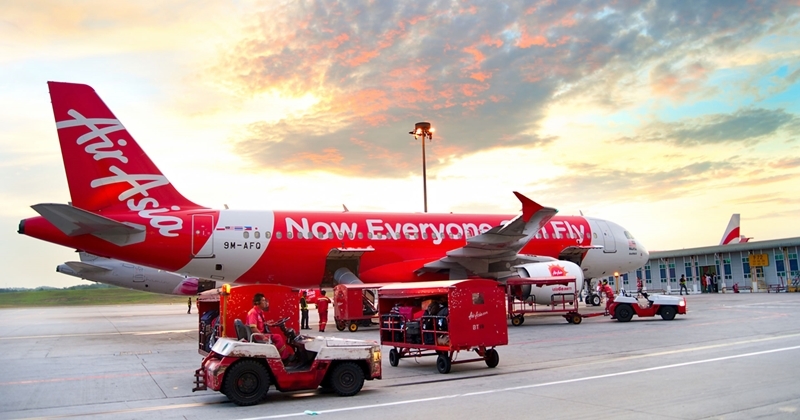
    AirAsia is joining the growing ranks of airlines partnering to expand their reach in Southeast Asia with a deal in the large Indonesian market.

    The discounter signed a memorandum of understanding at the end of September with Garuda Indonesia-subsidiary Citilink to establish its first-ever interline partnership. The tie-up could launch in the first quarter. The pact aims to expand connectivity between third- and fourth-tier destinations in Indonesia served by Citilink and international points in AirAsia’s network. And it comes just three months after Citilink agreed to sell flights via AirAsia’s Superapp.

    In addition to the passenger airlines’ tie-up, AirAsia-parent Capital A’s Teleport Everywhere logistics firm also plans to partner with Garuda Cargo on air freight.

    The pacts come amid a wave of new airline partnerships in Southeast Asia. Singapore Airlines has led the charge with, since April 2022, new or expanded tie-ups with Garuda, Thai Airways International, United Airlines, Vietnam Airlines, and Virgin Australia. Almost all of them focus on feeding travelers into Singapore’s global network. And Thai, in addition to its Singapore Airlines pact, has unveiled plans for a commercial partnership with Turkish Airlines.

    Partnerships are viewed by most airlines as a low-cost way to expand one’s network. The range in depth from a basic interline agreement that simply facilitates traveler connections to a codeshare where airlines place their own flight number on a flight operated by their partner and sell it as theirs, and a joint venture where two or more carriers operate as essentially one in a given market. The pacts also vary in cost and complexity — and potential financial benefit — in the same order: interline, codeshare, and joint venture.

    The new AirAsia-Citilink pact is the most basic when it comes to partnerships. The airlines only plan an interline agreement where “travelers would be able to check through baggage from origin to destination, on a single boarding pass, for seamless transfer through integrated services.” They did not say whether it could be a precursor to a deeper partnership in the future.

    The tie-up links Indonesia’s second-largest domestic airline by seats, Citilink, with the country’s largest international airline, Indonesia AirAsia, by seats, according to Cirium Diio schedules.

    In its statement on the planned partnership, AirAsia said the interline would include the full “breadth” of its international routes and not only ones to and from Indonesia. That means destinations like Ho Chi Minh City, Hong Kong, Seoul, and Tokyo are to be included.

    The focus on Indonesia makes a lot of sense. The country is the largest in Southeast Asia both in terms of population with more than 275 million people, and gross domestic product. And, owing to the country’s archipelago geography, most people have to fly — or take notoriously dangerous ferries — to get where they are going.

    That’s why many airlines want a bigger piece of the Indonesian pie, including AirAsia and Singapore Airlines.

    Of course, the opportunity in Indonesia is not new. AirAsia, in fact, tried to tap it with its own local subsidiary, Indonesia AirAsia. That airline continues to fly but, in terms of seats, is a small player in a crowded market that also includes Batik Air, Garuda, Malindo, and Lion Air.

    In addition to its home carrier in Malaysia, AirAsia has operating subsidiaries in Indonesia, the Philippines, and Thailand, as well as ties to the longhaul low-cost brand AirAsia X. It sold its Indian subsidiary, AirAsia India, to the Tata Group which owns Air India, last year. And AirAsia’s newest local airline, AirAsia Cambodia, plans to begin revenue flights in November.

    AirAsia aims to fully recover to pre-pandemic capacity levels by the end of the year.

  • Apple and Microsoft discussed selling Bing to Apple in 2020

    Apple and Microsoft discussed selling Bing to Apple in 2020

    You might already know that Google pays Apple some obscene amount of money to have Google’s search engine be the default option on the iPhone. But according to Bloomberg, in 2020 Apple and Microsoft held talks to discuss the possibility of Apple acquiring Microsoft’s Bing search engine. Apple’s Services VP Eddy Cue represented the Cupertino-based company in the talks. Bloomberg called the talks “exploratory” and said that they “never reached an advanced stage.”

    The talks with Microsoft stalled had much to do with the large amount of money Apple was receiving and still receives from Google each year. We’ve seen estimates of this payment ranging from $4 billion to as much as $20 billion. The DOJ believes the actual range is $4 billion to $7 billion annually. Apple did not want to lose this cash flow. Considering that Google is not in the business of giving away money, you can imagine how much the company and its parent Alphabet must make from being the default search engine on the iPhone.

    However, some of the reasons Apple had for not acquiring Bing had nothing to do with the big check Apple receives from Google every year. While it was the main reason, Apple was also said to be concerned that Bing could not compete with Google Search in quality and capabilities.

    Interestingly, when Microsoft first added Generative AI feature ChatGPT to Bing, there were rumors that Samsung would drop Google as its default search engine for the Galaxy line of handsets and replace Bing. Google has been the default search engine on Galaxy handsets since the first Galaxy S device was released in 2010. A month after this rumor started spreading, it was reported that Samsung decided to suspend an internal review dealing with this possible change.

    Google’s deal with Apple for its search engine has become part of the testimony heard during the trial now underway between the Justice Department and Google over antitrust issues. Microsoft VP Jon Tinter said under oath that in 2016 Microsoft CEO Satya Nadella met with his counterpart at Apple, Tim Cook, to discuss Bing replacing Google everywhere on iOS. Since Bing was much smaller than Google Search, Tinder said on the stand that Microsoft would have “had to offer Apple a far larger percentage of the revenue than Google.”

    As a result, a deal with Apple to replace Google Search with Bing would have resulted in a multi-billion loss for Microsoft. Executives at Microsoft met with the company’s Board to try and figure out how they could explain to stockholders why it was in the company’s best interest to take a hit on such a deal.

    Under oath, Tinder told the court, “In the short term, it would have been highly negative. We told the board we are considering making a multi-billion negative investment to support this. It was all around trying to make them confident that we could make the switch.” Two years later, in 2018, Microsoft and Apple discussed using Bing instead of Google on iPhone units outside of the U.S. But once again, nothing came of it. And after another two years had gone by, the aforementioned exploratory talks between the two tech giants about Apple acquiring Bing started and quickly ended.

    Even though Microsoft seems to acknowledge that Apple will never buy Bing, another Microsoft executive, Mikhail Parakhin, in charge of ads and web services at Microsoft, said that Apple makes more money from Bing than Bing does if only because keeping Bing around keeps Google worried enough to continue cutting those big checks to Apple. The guys in Redmond still continue to speak to Apple about replacing Google with Bing, with the last conversation taking place in 2021.

    From time to time, there have been reports about Apple developing its own search engine, and last November, designer Tom Hyoos shared on Twitter his design concept for an Apple search engine called ViewPoint.

    The DOJ vs. Google trial started on September 11th and will run for a total of 10 weeks. U.S. District Judge Amit Mehta is presiding over the trial and after a break in November, more papers will be filed with the court; the judge is expected to make a ruling early next year. If the judge rules against Google, another trial will be held to determine what penalties Google should face. The company might be required to break up some of its search-related businesses along with other business units that generate advertising revenue for the company.

  • Indonesia proceeds with ban on e-commerce transactions via social media

    Indonesia proceeds with ban on e-commerce transactions via social media

    Indonesia has banned e-commerce transactions on social media platforms, the trade minister said on Wednesday, in a move intended to protect traditional retail and which will mostly impact short video platform TikTok and its shopping platform.

    The government says the move is aimed at protecting offline merchants and marketplaces in Southeast Asia’s biggest economy, adding that predatory pricing on social media platforms is threatening small and medium-sized enterprises.

    Trade Minister Zulkifli Hasan told reporters the regulation, which takes effect immediately, is intended to ensure “fair and just” business competition, adding it was intended also to ensure data protection of users.

    He warned of letting social media become an e-commerce platform, shop, and bank simultaneously.

    The regulation also requires e-commerce platforms in Indonesia to set a minimum price of $100 for certain items directly purchased from abroad, according to the regulation document reviewed by Reuters, and all products offered should meet local standards.

    Zulfikli did not mention TikTok, although his deputy Jerry Sambuaga named TikTok’s “live” features as an example of people selling goods on social media.

    BMI, a unit of Fitch Solutions, said earlier on Wednesday that TikTok will be the only business affected by the transaction ban because its model relies on social e-commerce, although “it will not harm the digital marketplace industry’s growth.”

    A TikTok Indonesia spokesperson did not immediately respond to a request for comment on Wednesday. On Monday the spokesperson said the government should consider “the livelihood of more than six million” local sellers active on TikTok Shop.

    The company said its app had 325 million Southeast Asian users that were active every month, and 125 million of them were in Indonesia – on a par with its user figures for Europe and not too far behind the US, where it has 150 million.

    According to data from consultancy Momentum Works, Indonesia, with a population of more than 270 million, accounted for nearly $52 billion worth of e-commerce transactions last year. Of that, 5 percent took place on TikTok, principally through live-streaming, it said.

    Chinese tech company ByteDance owns TikTok.