Category: General

Retail News Asia is committed to providing both local and global retailers with the latest General Retail news throughout the Asian market. This on a daily base.

  • Investing in the Stock Market for Beginners: 9 Tips for Success

    Investing in the Stock Market for Beginners: 9 Tips for Success

    Thanks to technology, the stock markets have changed over the last couple of decades. Now, anyone with a smartphone, computer, or tablet can find a broker and make investments. Although it’s good that more people can access investment opportunities and make a profit, there are zero guarantees that an investor’s strategy will pay off. To have success investing in the stock market, you need to understand how it works.

    Education Comes First

    Before you do anything, you have to spend time educating yourself. This means learning the industry language and finding a suitable strategy. There are plenty of resources online for education, but you need to be aware that not all information online will be accurate. To avoid misinformation, it’s important to use a resource that has amassed plenty of positive reviews.

    Choose the Right Platform

    To interact with the stock market, you have to choose a platform. There are countless options out there and they all boast the best features and prices. With this in mind, when finding a stock trading platform, you have to carry out research to make sure that the features align with your goals. Additionally, you can verify the authenticity of a trading platform by checking reviews and official certifications.

    Use a Demo Account First

    Once you’ve found a trading platform that suits your needs, it’s a good idea to use a demo account before depositing real money. A demo account is attached to the live market and lets you trial your strategy using all of the features. If you’re making more losses than gains, it’s a good indication that you need to revisit your strategy to make adjustments.

    Starting Small

    After familiarizing yourself with your chosen platform and making sure that your strategy shows promise, it’s time to start investing with real money. Even though higher investments have the potential to bring back higher returns, it’s always a good idea to start small. As a benchmark, you shouldn’t be investing any more than 10-15% of your post-tax income.

    Diversify Your Portfolio

    Investing always comes with a risk, and this is much higher if all your portfolios are focused on the same market or asset. For example, if you only have investments in startup tech companies that are renowned for their volatility, you stand to lose. Whereas, if you have investments in startup tech, utilities, and commodities, it’s unlikely that every investment will fall at the same time.

    Focus on Long-Term Investments

    Creating a successful investment strategy involves determining long-term or short-term goals. In some cases, short-term investors can get carried away with unrealistic expectations for financial growth. Additionally, there’s plenty of research to demonstrate that short-term investors lose money because they’re competing against professionals and automated algorithms. When you first get started, it’s a good idea to focus on a long-term goal. Doing this allows you the flexibility to learn, lose, and rebuild your portfolio.

    Prepare for the Dip

    The stock market faces bull and bear runs, which influence the rise and fall of prices. At some point during your trading life, the value of your portfolio will fall on the dip, so you need to be prepared. Many rookie investors allow FUD (fear, uncertainty, and doubt) to creep into their trading strategy, which leads them to pull out of a position at a loss. However, if you prepare yourself mentally, you can make your way through the dip and wait for the market to recover; it almost always does.

    Stay True to Your Strategy

    Once you’ve created your strategy and started investing, it’s important to remain true to your rules. For example, if you’ve made it a rule to withdraw at no more than 15%, make sure you don’t get greedy by riding the highs. In most cases, the dip will be much harder, and you’ll be left waiting for it to rise again.

    This doesn’t mean you can’t ever change your strategy. Personal and market circumstances will change, and your current strategy may not be favorable. If this is the case, you should take the time to rebalance your portfolio and get started under your new strategy.

    Use Stop Loss and Profit Tools

    Before you open a position, always determine the profit you’re aiming for and the loss you’re willing to take. By doing this, you can set up stop loss and take profit commands, which are common tools provided by most trading platforms. By putting these in place, you don’t need to stay glued to your portfolio or the market charts because the withdrawal will take place automatically, allowing you to focus on researching new positions.

    Investing in the stock market is a great way to reach financial targets, but you need to know how everything works. Start by educating yourself, choosing a suitable platform, trialing your strategy, and starting with a small investment.


  • Coles opens its first automated distribution centre in Redbank, Queensland

    Coles opens its first automated distribution centre in Redbank, Queensland

    The first Australian Automated Distribution Centre (ADC) using global leading Witron technology is the largest of its kind in the Southern Hemisphere. Prime Minister Anthony Albanese MP, Queensland Premier Annastacia Palaszczuk MP, Coles Group Chairman James Graham, and Coles Group CEO Steven Cain are officially opening the ADC at Goodman’s Redbank Motorway Estate in Queensland this morning.

    This is the first of two Witron facilities to open here and comes after Coles Group’s biggest investment into technology in the company’s 109-year history. More than one billion dollars is being invested – with the second ADC opening in Kemps Creek, NSW in 2024.

    The ADCs are designed to create safer and more sustainable outcomes for team members and suppliers and better on-shelf availability for customers.

    The state-of-the-art facility in Redbank is located 30 kilometers southwest of Brisbane and will service 219 Coles supermarkets in Queensland and Northern New South Wales, as far north as Port Douglas and as far south as Laurieton in NSW.

    When operating at full capacity, the site can process up to four million cases per week, the equivalent of 32 million units sold in stores.   For a year, this is around 1.6 billion sales units.

    Chief Executive Officer Steven Cain said today is one of the most significant moments since Coles was founded in 1914 and five years in the making.

    “Modernising our operations is how we improve efficiency and availability in our stores and deliver higher service levels for our customers, team members and suppliers,” Mr. Cain said.

    “Our new ADCs can process twice the number of cases and hold twice the number of pallets compared to one of our current DCs. The ADCs enable us to reduce our total footprint, leading to a more productive and sustainable business model.”

    “Over 90 percent of the cases processed in these automated distribution centres will be processed fully by automation or ergonomically which will be a step-change for the safety of our team as it eliminates almost 18 million kilograms of manual handling in the supply chain each week once the ADC is running close to full capacity.”

    Coles Group Chairman James Graham AM said he would like to thank all those involved for their dedication to this very important project.

    “I’m proud of our team, partners and suppliers who’ve worked together for over five years to create this state-of-the-art facility. Over 3,000 people came together, contributing more than 2.5 million work hours to plan and design the facility, construct the building and install and commission the automation,” Mr Graham said.

    The Redbank ADC has LED and sensor lighting to reduce energy consumption and is fitted with a 180,000 litres of harvested rainwater storage for toilet flushing and landscape irrigation. There are plans for 3.5-megawatt solar installation, which will be among the largest rooftop solar solutions in the Coles network. To minimise food waste, the edible food that can’t be sold in the ADC will be donated to Coles community partner SecondBite.

    The Hon. Prime Minister Anthony Albanese MP said this world-leading technology will help advance supermarket supply chains.

    “This technology is not only a first for Australia, but also a win for the state of Queensland.  As we’ve seen during the pandemic and natural disasters, resilient supply chains are essential to feeding our nation and providing Australians with essential supplies,” Prime Minster Albanese said.

    “Coles is one of the biggest employers in this country and its team was pivotal in ensuring food security during challenging times. A facility like this one in Redbank shows how retailers and manufacturers can look to the future to improve the productivity, safety and sustainability of their operations for all Australians.”

    Queensland Premier the Hon. Annastacia Palaszczuk MP welcomed the significant investment in the strong Queensland economy.

    “The decision to invest in and build this Australian-first facility here in Queensland is a testament to the strength of the Queensland economy,” Premier Palaszczuk said.

    “Coles’ investment will drive productivity growth in Queensland while ensuring food security to one of the fastest growing regions in the country.”

    “It’s great to see Queensland lead the way with the arrival of world-leading technology at the Redbank Distribution Centre. The distribution centre will be powered by renewable electricity provided by Queensland’s publicly owned energy company CleanCo.”

    WITRON Logistik + Informatik CEO Helmut Prieschenk said Coles has partnered with the market leader in warehouse automation systems for major food retailers globally.

    “We have been engaged to build 93 automated distribution centres in 13 different countries, with the latest for Coles being the largest ambient system Witron has ever built,” Mr. Prieschenk said.

    “Witron will work with Coles to provide a technology focused, multi-disciplinary team for day-to-day operations, technical expertise and maintenance support.”

    Witron Founder Walter Winkler is extremely proud, that together with Coles, a powerful logistics platform has been created.

    “This ADC is for the benefit of the entire supply chain and will help the Australian grocery market by introducing the very best technology, and last but not least it creates great value to the Coles business,” Mr Winkler said.

    Coles thanks its partners and consultants Goodman Group, Richard Crookes Constructions and TMX Global for developing, building and managing the complex project to completion.

  • 7-Eleven Australia owners ready to sell

    7-Eleven Australia owners ready to sell

    The entire 7-Eleven business is for sale in Australia – just months after the iconic convenience store increased the price of its famous $1 coffee.

    Chairman of 7-Eleven Holdings Michael Smith said that on Monday shareholders decided the business was ready for new ownership.

    ‘The business has great momentum and a compelling strategy for growth across convenient food, the continued transformation of our total merchandise offer, digital and format innovation, and new stores,’ Mr Smith said.

    The entire 7-Eleven business in Australia, which comprises of about 750 stores nationwide, is up for sale (pictured, 7-Eleven store in St Kilda, Melbourne)

    Mr Smith reassured 7-Eleven customers claiming business is as ‘usual’ as the sale process is in its early stage and is expected to take several months.

    ‘Across our network of stores, it’s business as usual, and our focus is on our customers and being the first choice in convenience retailing in Australia’.

    Majority owner Russell Withers commented on behalf of 7-Eleven shareholders explaining the business started in 1977 with one store in suburban Melbourne.

    Mr Withers said the chain now boasts around 750 stores across Victoria, New South Wales, ACT, Queensland and Australia.

    He added that the chain processes 250 million transactions annually and employs more than 9,000 people across its corporate and franchise network.

    Chairman of 7-Eleven Holdings Michael Smith (left) said shareholders decided the business was ready for new ownership. Majority owner Russell Withers (right) said 7-Eleven has an ‘exciting outlook for growth

    However, the Withers and Barlow families decided the time was right to sell the chain to new owners with a view to future growth and success.

    ‘The company has made significant progress in recent years on a number of fronts and is performing well under a highly credentialed management team, with an exciting outlook for growth,’ Mr Withers said.

    The sale comes just months after the iconic convenience store increased the price of its famous $1 coffees and Slurpees. From October 4 last year, the price of a regular 7-Eleven coffee doubled to $2 and the stores large Slurpees increased to $1.50.

    A spokesperson from 7-Eleven confirmed the price of Australia’s favorite service station drinks rose due to inflated operational costs.

    ‘The changes are a result of increasing input costs for our products,’ 7-Eleven told Daily Mail Australia.

    The affected coffee varieties included the shop’s standard $1 coffee and its hot chocolates, iced coffees and ice cream coffee melts. The first 7-Eleven store opened in Melbourne’s Oakleigh in 1977, and opened the business’s first 24 hour store in 1978.

    The sale comes just months after the iconic convenience store increased the price of its famous $1 coffees (left) and Slurpees (right). From October 4 last year, price of a regular coffee doubled to $2 while Slurpees increased to $1.50

    7-Eleven is the largest convenience retailer on the eastern seaboard of Australia, with an estimated market share of about 38.5 percent.

    The business also claims to be the largest independent fuel retailer on the eastern seaboard, selling Mobil-branded fuel. he Withers and Barlow families brought the 7-Eleven brand to Australia after signing an area license agreement in 1976.

    The Withers Group also secured the Australian rights to Starbucks, bringing the coffee chain back to Aussie shores in 2014.

  • Meta’s ad platform experiences huge glitch wiping out some customers’ advertising budgets

    Meta’s ad platform experiences huge glitch wiping out some customers’ advertising budgets

    Facebook advertisers say that they experienced a strange glitch last weekend forcing them to pay as much as twice the usual ad rates. These advertisers were charged rates as high as hundreds of thousands of dollars for ads they claim that no one was able to view even though Facebook parent Meta denied this. This happened at 2 am last Sunday and for a brief period Meta removed all ads from its network and at the same time, it barely spoke with its advertising customers.
    The glitch affected mostly advertisers on Facebook, although some Instagram advertisers were also affected. A Meta spokesman said, “A technical issue that has now been resolved caused ad delivery issues for some advertisers.” Last Sunday not only did advertisers notice that they were being charged more than Meta was supposed to charge them for ads, but they also spent more money that budgeted for specific campaigns.
    Amazingly, complete advertising budgets were wiped out in just a few hours. And the ads were not being shown to any more users than usual and didn’t even drive more clicks despite all the money being drained from advertisers’ accounts. And as we mentioned earlier, some advertisers said their ads were not being viewed.
    The Meta spokesman added that the issue “resulted in some miscalibration for advertising campaigns that were focused on optimizing for certain sales objectives. This caused faster campaign spending, resulting in more variable costs. We do not have evidence that we charged customers for ads no one saw. If no impression occurred, the advertiser would not be charged.”
    Typically, a company might lay out money for a two-week ad campaign. Say the company budgeted $5,000 for the campaign. Meta would control exactly how much money would be spent and when it would be spent. Advertisers would have access to metrics showing how well the ad campaign was working but wouldn’t know anything beyond that. They can look at a status page that shows them when Meta’s systems are down.
    Meta allows the platform to spend 25% over the daily amount budgeted by each company. The Meta spokesman said, “We do not have evidence of exceeding this 25% increase on daily budgets amid the technical issue on Sunday, however.”
    The advertisers affected by the glitch were forced to make a tough decision. They could temporarily pause their ad campaigns or keep the status quo and hope that Meta would straighten things out. For small companies that depend on these ads to generate business, the problem could be a major one. Advertisers dislike making a big fuss and noise because Meta and Google own 50% of the digital advertising market.
    Long-time advertising consultant Barry Holt, who has a decade’s experience managing Facebook advertising campaigns, said, “We shouldn’t have to take action when Facebook has a bug. But for the small business who don’t have an ear at Facebook, there aren’t a lot of options. Meta is just counting on advertisers to bend over and take it.” Holt adds, “Meta is extremely opaque and always has been. All we get is a generic explanation that ‘we are aware of an issue.’ That’s better than nothing, but it’s not enough.”
    Meta has admitted that the events of last Sunday did happen and promised to initiate its “normal refund policies.” But as the ad consultant notes, this is not a quick, smooth, and painless process. “You can burn hours and resources complaining and begging them for refunds and credits. Sometimes it works, but it may not be worth the investment,” Holt said. “And when the restitution comes, it can be months later.”
    Media strategist Eric Seufert wrote in a tweet last week, “Meta’s ad platform experienced an irregularity today that saw many advertisers’ campaigns dramatically increase spend with poor performance. Meta’s communications about this situation with advertisers have been woefully inadequate. This is unacceptable and insulting.”


  • Google News smartphone app gets limited Material You makeover

    Google News smartphone app gets limited Material You makeover

    Google’s Material You design language has been used to update several Google apps including some very popular ones such as Google Maps, Gmail, and Google Photos. Now the Material You look is coming to the Google News smartphone app. The changes include a pill-shaped indicator highlighting the tab you selected at the page’s bottom. The dynamic theming feature, which changes the color of the app’s interface to match the dominant color of the wallpaper being used on an Android device, is not working yet as the app defaults to a blue color for accents.
    The tablet version of the Google News app has already been through the Material You makeover which added a navigation rail on the left-hand side with buttons for Headlines, Newsstand, Following, and For You. The same blue pill used to highlight the selected tab being viewed on the smartphone version is used to highlight the selected tab on the navigation rail.
    Remember that the Material You additions to the smartphone version of the Google News app has yet to be disseminated to everyone. It did hit the Google News app running on my Pixel 6 Pro running QPR3 Beta 3 but if you haven’t received this app version, you will soon.
    There is no indication from Google when the rest of the Material You features will be available to the Google News app. The app briefs you on top stories, shows you local news from your area, takes deep dives into stories with multiple perspectives, and even shows you stories based on your interests. If you want the Google News app on your Android phone, you can tap on this link to install it from the Play Store. Apple iPhone users c
  • Airlines buying planes for more int’l flights

    Airlines buying planes for more int’l flights

    Vietjet, Bamboo Airways and Vietravel Airlines are buying additional planes to open more international flights this year as the travel industry recovers from Covid.

    Vietravel Airlines, the youngest carrier in Vietnam, said it will receive three aircraft in the next quarter of this year to launch more international routes.

    The airline currently operates two routes between Hanoi/Ho Chi Minh City and Thailand’s Bangkok, and between Khanh Hoa Province’s Cam Ranh and South Korea’s Daegu.

    Bamboo Airways said it will obtain 6-8 planes from now through the end of the year, and an additional 10 planes in the 2024-2025 period.

    Vietjet Air will also receive 10 new planes this year, including three Airbus A321 ACFs this week, increasing its total to 87 by the year’s end while opening new routes to India, Japan and South Korea.

    Vietjet, which currently has 77 aircraft, including 5s A330s, 54 A321s and 18 A320s, operates over 100 domestic and international routes.

    Earlier this year, the Civil Aviation Administration of Vietnam asked the Ministry of Transport to allow domestic carriers to increase the size of their fleets to meet the market’s recovery needs.

    As of January, six domestic airlines were using 225 aircraft, nine less than the pre-pandemic level in early 2020.

    According to the administration, an average aircraft transports 250,000 passengers per year.

    With the domestic market forecast to reach 45.5 million passengers in 2023, the number of aircraft serving the domestic market alone is only 182.

    And to serve 13.6 million international passengers this year, airlines need 57 more planes.

    So analysts say that the total number of domestic airlines’ aircraft should increase to 230 in the first months of this year, and to 250 by the end of the year.

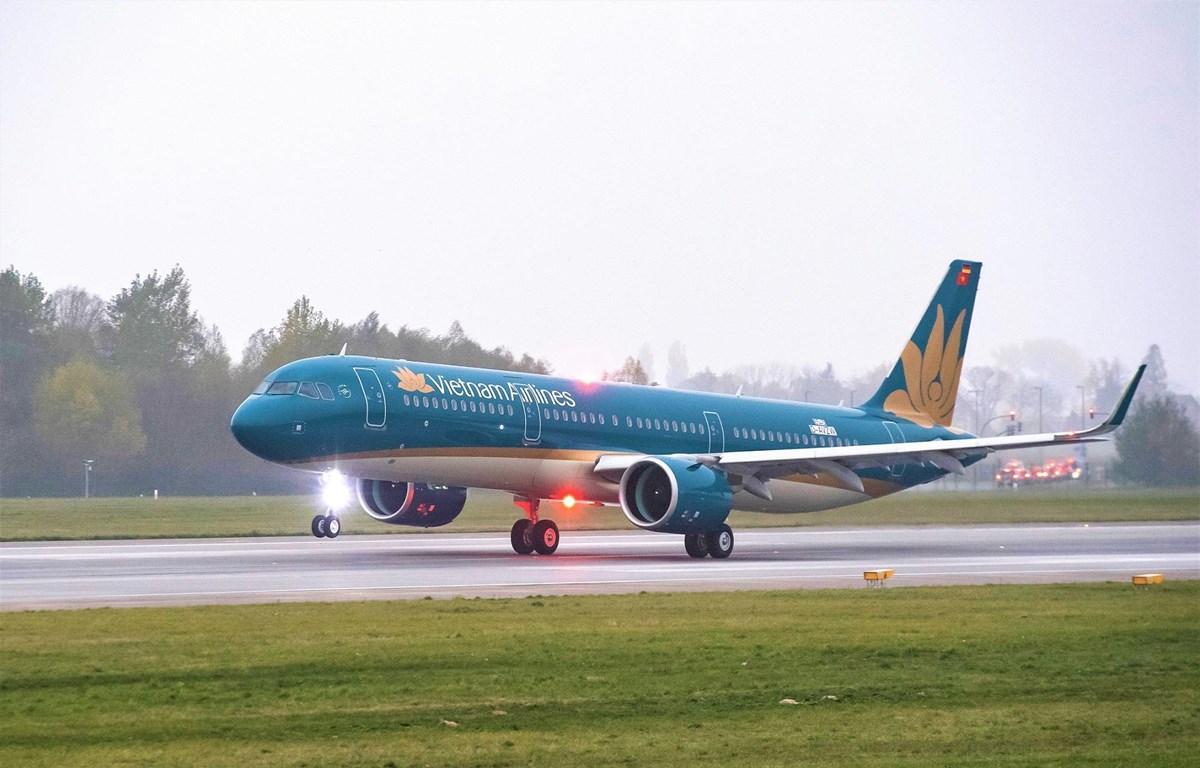
  • Vietnam Airlines posts profit in Q1

    Vietnam Airlines posts profit in Q1

    Vietnam Airlines posted a pre-tax profit of VND19.3 billion ($822,500) in the first quarter after losses in 12 consecutive quarters. The airline saw revenue doubling year-on-year to VND23.64 trillion, the highest quarter record since Q1 2020.

    It is near the pre-pandemic levels of 2019. The state-owned carrier however still posted a post-tax loss of VND37.3 billion.

    The pre-tax profit, however, is still considered a strong signal of recovery after the carrier plunged into major financial difficulties due to Covid-19.

    The airline said that in the first quarter of this year, the domestic market recovered, and China lifted its Covid-19 restrictions, which resulted in a surge in passenger numbers.

    There was also high occupancy on flights to the United States., Europe and Australia, it added.

    The company served 5.1 million passengers in the first quarter, up 63% year-on-year. A weaker U.S. dollar and lower-than-expected fuel prices also helped reduce costs.

    But Vietnam Airlines, which operates Pacific Airlines and Vietnam Air Services Company, still sees high risks in the future as the domestic market remains 40% lower than pre-pandemic.

    It added that global geopolitical tensions will likely still affect the aviation industry in 2024.

  • April’s consumer price index down

    April’s consumer price index down

    The consumer price index (CPI) in April decreased by 0.34% month-on-month, but increased by 2.81% year-on-year, according to the General Statistics Office (GSO).

    In the first four months of this year, the index rose by 3.84% y-o-y, mainly due to increases in prices of education, housing and construction materials, culture, entertainment and tourism, food, and electricity.

    In April, seven out of the 11 groups of main consumer goods and services witnessed price decreases, and the remainders saw rises.

    Notably, a 0.38% fall in the price of food and catering services caused a decline of 0.13 percentage point of the CPI.

    Gold prices in April were up 2.04% m-o-m, but down 1.09% y-o-y. In the January-April period, the prices rose by 0.66% y-o-y.

    Meanwhile, the USD price in April fell 0.89% m-o-m, but rose by 2.5% y-o-y, leading to a y-o-y increase of 3.21% in the first four months of this year.

    According to the GSO, this month, core inflation increased by 0.13% over the previous month, and by 4.56% over the same period last year. On average, in the first four months, it increased by 4.9% y-o-y, higher than the overall average CPI (3.84%).

  • Miniso opens new flagship store in Times Square, NYC

    Miniso opens new flagship store in Times Square, NYC

    Chinese discount variety store Miniso will open a flagship store in New York City next month, a move it describes as its biggest milestone since its foundation in 2013.

    The new store, located on the first floor of 5 Times Square, will offer customers almost 2000 different products.

    The new flagship will feature an updated design and nine distinct zones, including licenced collections, blind box collectibles, toys, plushies, fragrances, accessories, makeup tools, snacks, and gifts & stationery.

    According to Miniso, the overall design will be simple and clean, concentrating on licenced products from international brands like Sanrio, Hello Kitty’s parent, which will be included in the window design for the store’s launch. Miniso says it plans to bring more brand collaborations to the US market, including Peanuts, Barbie and Mario Bros.

    “The opening of the Times Square store is a crucial step towards our transformation and upgrade,” said Jack Ye, founder and CEO of Miniso.

    “Times Square is the Crossroads of the World and a hub of business, entertainment and culture. By making a physical presence in one of the busiest pedestrian areas, Miniso appeals to New Yorkers and visitors worldwide and responds to consumer demands for attractive, fun, useful, and affordable products.”

    Miniso unveiled its new worldwide strategy earlier this year, stating that it will convert into a lifestyle superbrand that brings joy to clients worldwide.

    In addition, the Chinese retailer also disclosed to expand into four new markets: Panama, Angola, Trinidad and Tobago, and Latvia, at the beginning of this month.

  • Vietravel Airlines to get three more planes in Q3

    Vietravel Airlines to get three more planes in Q3

    Vietravel Airlines is expecting to expand its fleet to six by adding three more aircraft in the third quarter following a plan set out from the early days of its establishment.

    The move in association with a recruitment program slated for May in Ho Chi Minh City aims to help the carrier be ready for its market expansion targets.

    The airline, which debuted in late 2020, is currently operating six domestic routes connecting Hanoi, Ho Chi Minh City and major tourist destinations of Da Nang, Phu Quoc and Quy Nhon, along with two international ones connecting Hanoi, HCMC and Bangkok.

    It is also partnering with a company from the Republic of Korea to provide 11 charter flights on the Daegu-Cam Ranh route in the period from March 28 to May 7 with one flight every five days.

    As of the first quarter of 2023, Vietravel Airlines had operated over 11,600 flights safely and carried close to 2.5 million passengers, with an average occupancy rate of 93.7%.

  • WhatsApp rolls out the ability to use one account across multiple phones

    WhatsApp rolls out the ability to use one account across multiple phones

    WhatsApp has recently introduced a new feature that allows users to use their WhatsApp account on multiple devices. This feature has been long-awaited and is now finally available for both Android and iOS users.

    Previously, users could only use their WhatsApp account on one Android or iOS smartphone at a time, but with the ability to extend it to your tablet, laptop, or desktop computer. This required that your smartphone be your main WhatsApp device and the others would be linked via WhatsApp Web or the official WhatsApp Mac app. This solution worked great for many, however, you still could not use the app in more than one phone and needed to unlink and relink your account any time you wanted to switch mobile devices, which was inconvenient and time-consuming for many users.

    Now, with the new update recently announced via the WhatsApp blog, you will be able to switch between devices without any hassle seamlessly. This is great news for those that frequently switch between phones, such as between Android and iOS, or who have both a business and a personal device.
    To use this feature, you will still need to designate a primary phone, just as you’ve been able to do in the past with up to four devices, except now one of those linked devices can be a secondary or backup phone. On your secondary phone, open WhatsApp and tap Agree & Continue, followed by selecting “link this device to an existing account.” This will provide you with a QR code that will need to be scanned by your primary phone.
    One of the great things about this feature is that your messages and other data are end-to-end encrypted and stored locally on each device. This means your conversations are still private and secure, even when using multiple devices. However, there are some limitations.
    A few of the limitations include the lack of live location and status features on companion phones. Additionally, if you fail to use your primary phone for over 14 days, your companion phones will be logged out as they depend on the primary phone for the connection. Lastly, linked companion phones will always show the message “This is a linked device. Learn more” in Settings.
    This update has already begun to roll out to users worldwide, and should be accessible to everyone in the next weeks. In addition, over the next several weeks, WhatsApp will be rolling out a new way to link companion devices, which involves the use of a one-time code instead of a QR code.
  • Our guide to Investing in Singapore 

    Our guide to Investing in Singapore 

    Singapore is often thought of as one of the most important financial hubs in the world. It also has one of the most diverse and quickly growing investment communities. If you want to invest in Singapore, you will find that the country has a lot of options and tools that can help you reach the level of financial success you require. In this article, we will discuss the many facets of investing in Singapore and present you with some useful advice to get you started.

    TradingView: Getting started with the trading platform 

    Before you start investing in Singapore, you need to make sure you have the right tools to help you make smart decisions. TradingView is a well-known and popular online trading platform that gives customers access to a wide range of financial data and research tools. TradingView gives users the ability to monitor charts in real-time, keep tabs on market trends, and access a plethora of technical analysis tools, all of which may assist them in making more educated choices about their investments.

    Opening an account with TradingView is simple, and once you have done so, you can start using the platform’s numerous tools and features right away. You can customize your trading dashboard so that it shows the information that is most important to your investment plan, and you can use the platform’s easy-to-use interface to make trades and keep track of your portfolio.

    Investing in the Singapore stock market 

    Buying shares of stock in one of Singapore’s numerous publicly listed firms is one of the most common ways that people invest their money in the nation. Singapore has a strong stock market and is home to a wide range of companies that do business in many different fields and markets.

    To get your foot in the door of the Singapore stock market, you will need to open a brokerage account with a reputable broker. The brokerage firms DBS Vickers, Phillip Securities, and UOB Kay Hian are among the most successful in all of Singapore. When you have registered for an account with the Singapore Exchange (SGX), you are allowed to begin making transactions and searching through the numerous stocks that are listed on the SGX.

     When investing in Singapore stocks, it’s important to do enough research and pick companies that match your investment goals and level of risk tolerance. Using the tools that TradingView gives you, you can do fundamental research to figure out a company’s financial health and growth potential. You can also use these tools to do technical analysis to keep an eye on market trends and find possible buying opportunities.

    Investing in the real estate market in Singapore

    Several investors have found success buying and selling homes in Singapore, a city-state. As a result, the real estate market in Singapore is another investment option that is quite popular. The real estate market in Singapore is well-known for being stable and transparent, which makes it an appealing choice for investors from both inside and outside Singapore.

    You have the option of investing in real estate directly by purchasing properties or indirectly by purchasing shares in real estate investment trusts (REITs), which are organizations that own portfolios of properties. Since buying property in Singapore can be hard and take a lot of time, it is important to work with a trustworthy real estate agent and do a lot of research before making a decision.

    Since they enable you to engage in a varied portfolio of properties without the need for enormous sums of funds, investing in real estate investment trusts (REITs) might be a more approachable way of investing in Singapore’s property market than other investment options. Mapletree Commercial Trust, Ascendas Real Estate Investment Trust, and Keppel DC REIT are three of the most successful real estate investment trusts in Singapore.

    Investing in the Singapore bond market

    Bonds provide one of several investment opportunities that can be pursued in Singapore. The bond market in Singapore is active, and investors may choose from a variety of government and business bonds to put their money into. Bonds are a low-risk investment option, so risk-averse investors who are searching for predictable returns often use bonds as their vehicle of choice.

    If you want to invest in Singapore bonds, you can work with a broker or buy into bond funds that hold portfolios of bonds. The LionGlobal Short Duration Bond Fund and the First State Investments Global Bond Fund are two excellent examples of the many bond funds that investors in Singapore have access to.

    Speculating on the market with exchange-traded funds (ETFs)

    Exchange-traded funds, often known as ETFs, are a common form of investing in Singapore due to the fact that they provide shareholders with access to a diverse portfolio of assets at a low cost and with little transaction expenses. ETFs are able to be traded on stock exchanges just like stocks, and they cover a broad variety of asset classes in addition to equities. These asset classes include commodities, bonds, and stocks.

    If you want to invest in exchange-traded funds, you’ll need to open a brokerage account in Singapore with a reputable broker who gives you access to the Singapore Exchange.The Nikko AM-Straits Trading Asia ex-Japan REIT ETF and the iShares MSCI Singapore ETF are two of the most popular exchange-traded funds that investors may purchase in Singapore.

    Investing in several mutual funds in Singapore 

    Another popular method of putting your money to work in Singapore is purchasing shares in a mutual fund. These funds provide investors with the chance to put their money to work in a diverse portfolio of assets that is overseen by experienced fund managers. There is a large selection of asset types covered by mutual funds, including equities, fixed income, and real estate, among others.

    To invest in mutual funds in Singapore, you can work with a broker or invest directly with fund companies such as Fidelity International or Aberdeen Standard Investments. It’s important to do plenty of research, choose mutual funds that match your investment goals and the level of risk you’re willing to take, and keep a close eye on how the funds are performing over time.

    Investing in new businesses inside Singapore

    The startup environment in Singapore is thriving, and the country is home to a large number of cutting-edge enterprises and entrepreneurs that are looking for funding to expand their operations. Investing in new businesses comes with both high risk and high reward, but it also has the potential to give you a huge return on your money.

    Anyone who wants to invest in Singapore’s startup scene can work with venture capital firms or angel investors who specialize in early-stage investments. If you want to invest in a business, you need to do your research. Also, it’s important to look closely at how the companies in question might grow and how they might do in the market.

    Conclusion

    If you’re an investor trying to reach your financial objectives and diversify your portfolio, investing in Singapore may provide you with a broad variety of chances to do both of those things. No matter whether you want to invest in stocks, real estate, bonds, exchange-traded funds, mutual funds, or new businesses, you can find a lot of information and resources to help you make smart decisions. 

    You will be able to keep up with the latest market trends and make more educated choices about your investments if you deal with a reliable broker and make use of tools such as TradingView. Keep in mind that you should always undertake extensive due diligence and choose assets that match your financial objectives and the amount of risk you are willing to take.

    In the end, investing in Singapore requires patience, discipline, and a willingness to take calculated risks. But if you take the right steps and show that you are committed to long-term growth, you may be able to build a diversified investment portfolio that will help you reach your financial goals over time. 


  • New Google Authenticator update enables one-time codes to be stored in your Google Account

    New Google Authenticator update enables one-time codes to be stored in your Google Account

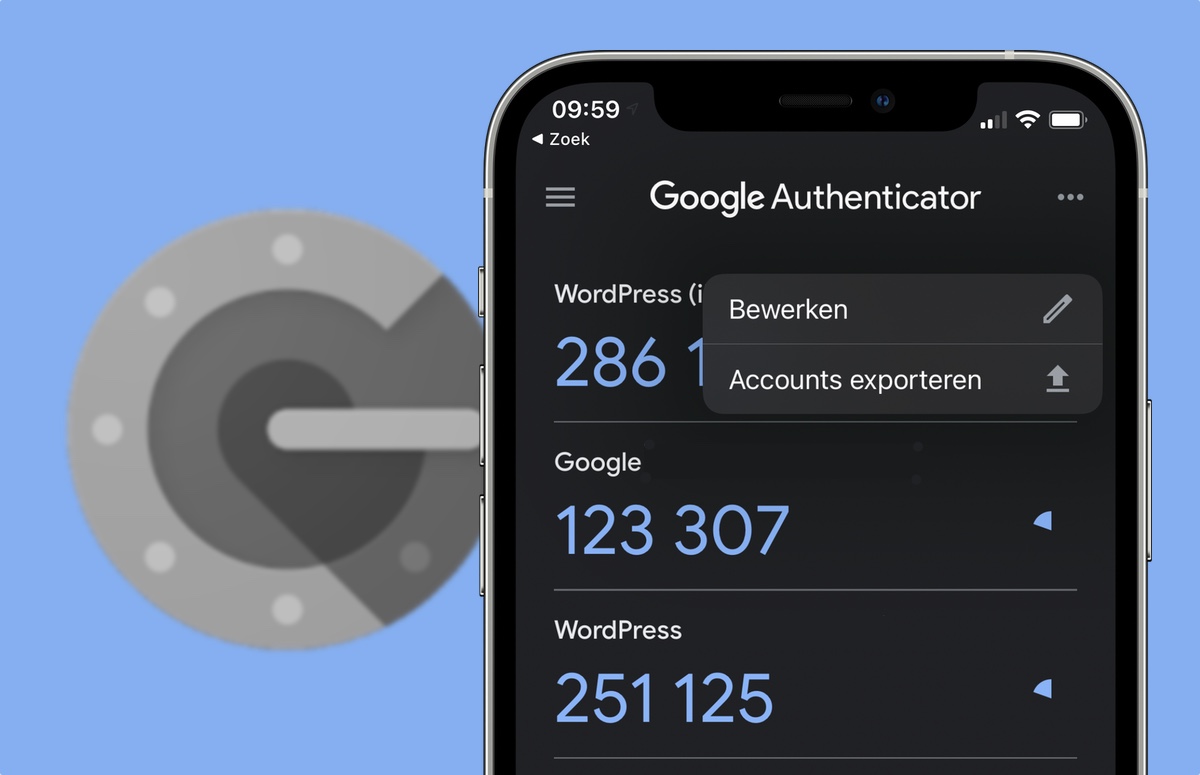
    Google Authenticator, the widely used two-factor authentication app, now allows users to sync their one-time codes in the cloud. This update aims to make it easier for users to switch between devices without losing their authentication data.
    The update was announced today via the Google Security Blog and it affects both the iOS and Android app. Previously, users had to manually transfer their codes from one device to another or disable and re-enable two-factor authentication when switching devices. This process could be cumbersome, especially for users who frequently switch between devices, replace their phones, or had their device stolen.
    The new cloud sync feature will automatically store users’ authentication data in the cloud, allowing them to access it from any device with the Google Authenticator app installed. To enable Google Account synchronization in Google Authenticator, users will need to open the app, tap the menu icon, select “Settings” and tap “Backup to Google Account,” then follow the on-screen instructions to sign in to their Google Account and enable backup.

    Once backup is enabled, one-time codes will be stored securely in the users’ Google Account, so if their device is lost or stolen, they can be restored simply by signing in on a new device and requesting to “Restore codes.”

    Google explains that with this update the company is making one-time codes more resilient by securely keeping them in users’ Google Accounts, improving user lockout protection and allowing services to rely on users maintaining access, which boosts convenience and security.

    Google has long promoted a number of methods for safe authentication across the web in addition to one-time codes from Authenticator, such as Google Password Manager and “Sign in with Google” options across the web. Additionally, Google has been collaborating with the FIDO Alliance to facilitate the move to using passkeys, instead of passwords, which will provide users with even more practical and secure authentication options.

  • Telegram update adds shareable chat folder, custom wallpaper, and more

    Telegram update adds shareable chat folder, custom wallpaper, and more

    Messaging app Telegram has just announced numerous improvements coming to its users in the following days. Shareable chat folders, custom wallpapers, better bots, fast scrolling for attachments, and many other new features and improvements are part of the latest Telegram update.

    Starting with the latest version of Telegram, users can share entire chat folders with just one link. It makes it infinitely easier to invite friends to groups, collections of news channels, and more. Not to mention that each chat folder supports multiple invite links allowing access to different chats.

    Now you can create custom wallpapers from your favorite photos and color combinations. These can be used in specific chats. Simply use the “Set Wallpaper” setting from the three dots menu on Android or open a profile and tap “Change Wallpaper” from the three dots menu on iOS.

    The latest Telegram update brings better bots, the developer announced today. They can now host web apps, which can be launched in any chat. Additionally, Telegram revealed that web apps can now support collaboration and multiplayer features for members when launched in a group.

    As mentioned earlier, the update makes scrolling for attachments faster, just like Shared Media. Finally, the update brings numerous improvements to various interfaces. For example, the Send When Online interface now requires fewer taps. Also, Telegram users can now create groups without adding members immediately, which is handy if they want to set up permissions and pin one or more messages first.

    More importantly, in groups of under 100 members that have topics enabled, you’ll now be able to see what time other group members read your messages. A much-needed quality-of-life improvement.

    If you’re using one of the newest iPhones, you’ll be happy to know that profile pictures in Telegram have a new animation when scrolling on profiles and info pages.

  • The tabs used to filter conversations in Google Messages have vanished

    The tabs used to filter conversations in Google Messages have vanished

    Underneath the search bar at the top of the Google Messages UI on Android used to be organizational category tabs that would allow users to run through chats and messages from “All,” “Personal,” and “Business.” This was a quick way to view only those messages that you wanted to see at a given time. Selecting “All” would show, well, all of the conversations you had in your messages conversation list while Personal and Business are pretty self-explanatory.

    This feature first surfaced in 2021 in India and Google said that it was to “roll out first to English users around the globe.” Now, the organizational category tabs are gone for many Messages users. They have vanished from the Google Messages UI as though they were deleted by the Magic Eraser. One interesting note though; 9to5Google said that all of the Pixel models it saw missing the feature were running Beta versions of Android and we don’t know if they meant the Android 14 Beta or the QPR3 Beta.

    Personally, my Pixel 6 Pro also does not show the category tabs anymore and my phone is running Android 13 QPR3 Beta 3. Is this the end of the organizational category tabs or is this a bug? Google is usually pretty good at telling users when it is removing a specific feature and why it is being removed. Still, it is possible that the tabs were not being employed that often by users and Google just felt it was better off to remove them.

    We should make it clear that not all Android users who favor using the Google Messages app are missing the organizational category tabs and Android users employing their carrier’s third-party messaging apps (like Verizon Messages, T-Mobile Messages, or AT&T Messages) wouldn’t be impacted at all. But most Android users know that RCS (Rich Communication Service), available with the Google Messages app, helps to deliver a better Android messaging experience.
    If you don’t have the Google Messages app (ahem, more precisely Messages by Google app) on your Android phone, feel free to tap on this link and install it from the Play Store.