Category: Living

Retail News Asia is committed to providing both local and global retailers with the latest Living news throughout the Asian market. This on a daily base.

  • China retail earnings up 8.5% during new year holiday – ministry

    China retail earnings up 8.5% during new year holiday – ministry

    China’s retailer and catering enterprises earned over 1 trillion yuan ($148.3 billion) during the Lunar New Year holiday, defying an economic slump to rise 8.5% from last year, the country’s commerce ministry said late on Sunday. The increase was down to the rapid growth in sales of new-year gifts, traditional foods, electronic products and local speciality products over a six-day holiday period ending on Saturday, the Ministry of Commerce said in a notice on its website.

    Domestic tourism during the new year break generated total revenues of 513.9 billion yuan, up 8.2% on the year, with the number of trips rising 7.6% to 415 million, the official Xinhua news agency said on Sunday, citing official data. ($1 = 6.7426 yuan)

  • Nintendo launches flagship store in Tokyo

    Nintendo launches flagship store in Tokyo

    Nintendo is opening a Tokyo flagship store, marking the iconic Japanese company’s first-ever domestic retail outlet. During Nintendo’s latest Corporate Management Briefing, the president of the Nintendo, Shuntaro Furukawa, announced the game company would be opening a store in the Japanese capital in 2019.

    The executive said that plans are set for Nintendo Toyko to be located in the tentatively named ‘Parco’, which is yet to be opened and will bow in the Shibuya district. The Nintendo store in Japan will have its own floor in a new department store and is targeted at teens and commuters.

    “We are hoping [the store] will be a new point of contact between consumers and Nintendo that a wide range of people, regardless of age, gender, or experience with games can enjoy,” explained Furukawa.

    The new store also hopes to attract shoppers to Nintendo Switch, which is struggling to draw a wider swath of users, according to Bloomberg. Last month, Nintendo cut its shipments forecast for the console, which can be used at home or on the go.

    “In addition to selling products such as video game systems, software and character-based merchandise, we plan to host events and offer opportunities to play games, and are preparing to make this shop a new base for communicating Nintendo information in Japan. We will announce further details on each of these initiatives at a later date.”

    Looking forward, Nintendo is also planning to open exhibits at Universal theme parks in Osaka, Orlando and Hollywood.

    Additionally, the company is looking to participate in more e-sports tournaments, where gamers get together and compete in stadiums

    Nintendo opened its first store in New York as Pokemon shop in 2005 in the city’s Rockefeller Centre, and has since rebranded as Nintendo New York.

    Nintendo Tokyo is scheduled to open in the fall of 2019.

  • Decathlon opens Singapore megastore

    Decathlon opens Singapore megastore

    French sports chain Decathlon opened its largest store in Singapore late last month, as the European retailer continues to build upon its popularity in the Asian market. Dubbed ‘Decathlon Singapore Lab’, the new experience store is located at Stadium Boulevard and covers 5,000 square metres of retail space, making it the biggest Singapore store. It is also opened 24 hours.

    In addition to Decathlon’s inventory of sports apparel, footwear and accessories, the new ‘Lab’ boasts a series of ‘experiential’ features including an indoor area of four different running surfaces wherein shoppers can test running shoes before purchasing, as well as a hiking path with a gravel surface for the testing products in-store.

    At a media briefing last month, Decathlon Singapore chief executive Yves Claude said the store has been named Decathlon Singapore Lab “because a lab is a disruptive and innovative place where we test new solutions.”

    The store also hosts an Active Health Lab in partnership with Sport Singapore, where users can take a free health assessment and there are free-to-play areas next to the store as well.

    To speed up the delivery process for shoppers, Decathlon has established an in-house conveyor built that transports products as soon as they are ordered online. Shoppers can also order online and collect their items at their preferred store within two hours for free.

    “We have to give new reasons for customers to come back to our store,” added Claude.

    The store is the latest in a string of ‘Decathlon Experience’ stores being rolled out across Singapore and is the fourth in the nation’s offering.

    Decathlon also has a 4,000-square-metre showroom in Joo Koon and two click-and-collect stores.

    In May last year, Decathlon signed a memorandum of understanding with Sport Singapore, which marked the announcement of this new Decathlon in Kallang.

    “We share a common purpose, which is to make sport accessible. They come with a good price point, high-quality products, (and) most importantly, they come with ideas on how to improve participation,” said Lim Teck Yin, Sport Singapore CEO.

  • Emirates to fill pilot gap with exodus from Etihad, Norwegian airlines

    Emirates to fill pilot gap with exodus from Etihad, Norwegian airlines

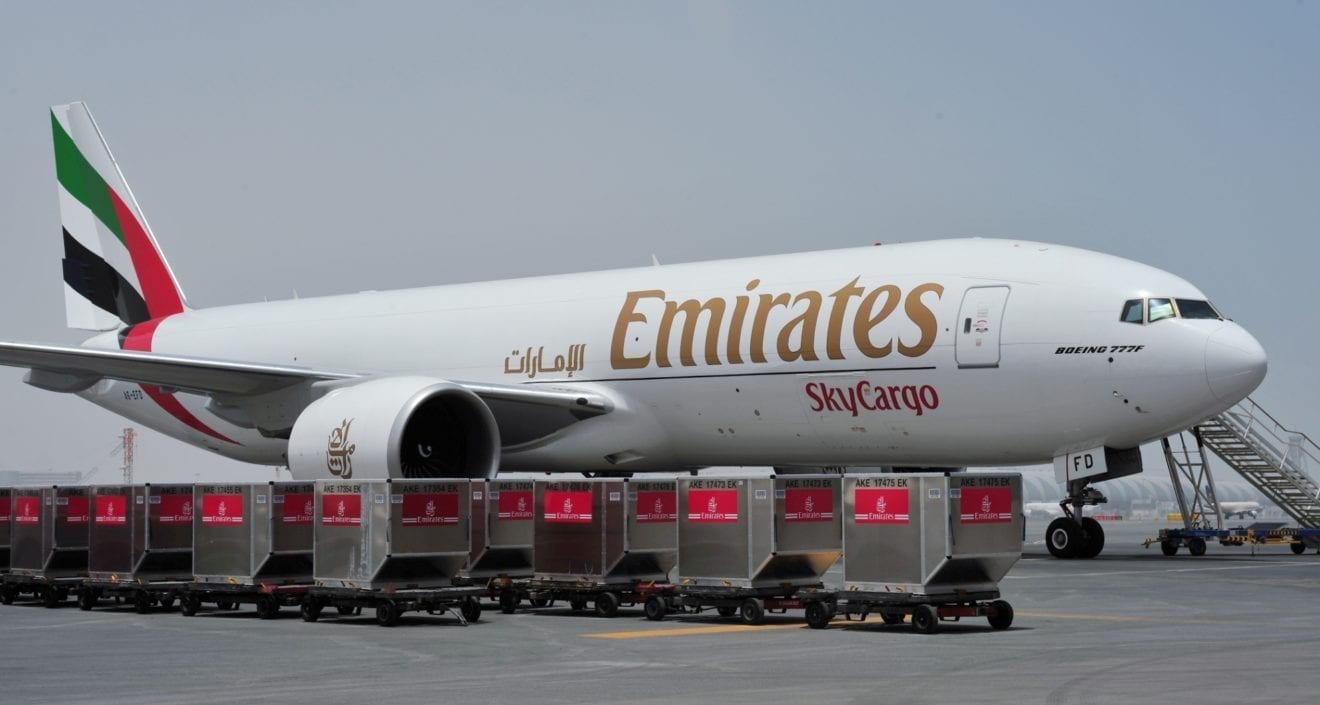
    Emirates, the world’s biggest long-haul airline, may feed its appetite for new pilots with recruits from ailing neighbor Etihad Airways and cash-strapped discounter Norwegian Air Shuttle ASA, according to an internal memo from the Gulf carrier. Hong Kong Airlines has also contacted Dubai-based Emirates about opportunities to temporarily transfer some cockpit crew, according to the document. Pilots at the unit of beleaguered HNA Group are Airbus SE-rated, meaning they could be trained to fly the Mideast company’s A380 superjumbos.

    “The current situation with several airlines in financial difficulty globally leaves Emirates in a good position to be sourcing and selecting good-quality pilots,” the memo says.

    It said the airline recruited 52 pilots last month, the highest number since August 2016, and that the number of viable applications it’s receiving “is higher than the number of candidates that can be invited.”

    Emirates declined to comment on the communication, which was dated Jan. 29 and appeared to be a meeting report. A spokeswoman said there are sufficient pilots for current operations, though the airline will “continue to welcome qualified candidates.”

    Norwegian Air said it’s not uncommon for members of any company’s workforce to seek opportunities elsewhere. Hong Kong Airlines couldn’t be reached during the Chinese New Year holiday, while Abu Dhabi-based Etihad didn’t respond to requests for comment.

    Hiring Challenge

    Emirates faces an annual hiring challenge to meet the needs of its expanding global network. President Tim Clark said last April that there would be a shortfall of 100 to 150 flight crew over 2018’s busy summer travel season.

    According to the memo, 499 crew have been deemed eligible to join from this coming April through the end of 2019.

    Applications from Norwegian Air and Etihad have been spurred by redundancies at the airlines, according to the Emirates memo.

    Norwegian, heavily indebted after one of the fastest growth spurts in aviation history, resorted to a 3 billion kroner ($354 million) rights issue last week after British Airways parent IAG SA walked away from a takeover bid.

    The Scandinavian carrier is also closing six bases and cutting routes to stem losses, proposing that pilots transfer to other locations.

    Etihad last June offered captains and first officers a two-year secondment, or temporary transfer, to Emirates. In January, it revealed plans to cut 50 pilot posts as it cancels jet orders and shrinks operations to stem losses.

    The Emirates memo said Hong Kong Air has identified a 10 percent surplus in pilot numbers. The carrier, whose debt-laden owner HNA is offloading $20 billion in assets, is being sued by a Macau-based lender for failing to pay $20 million in principal and interest, according to a court filing last month.


  • Chinese tourists prefer Australia, Japan and Singapore: Survey

    Chinese tourists prefer Australia, Japan and Singapore: Survey

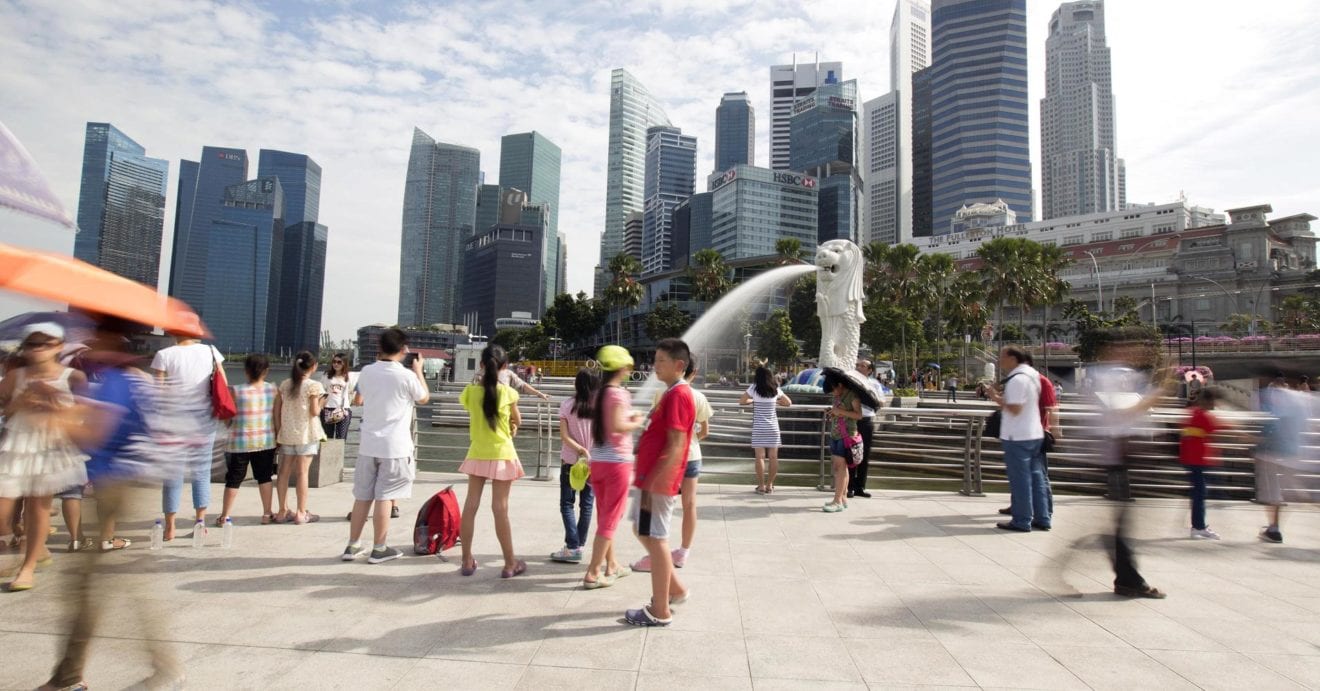
    Mainland Chinese tourists prefer visiting Australia, Japan and Singapore over Hong Kong, a survey has found, citing a preference for outdoor and nature activities in these places. Consultancy firm Kantar, which polled 300 people from Beijing, Shanghai, Guangzhou and Shenzhen, found that 52 per cent of respondents were interested in Australia as a holiday destination, followed by 40 per cent for Japan, 38 per cent for Singapore, and 35 per cent for Hong Kong.

    Some 22 per cent said they were keen to visit Taiwan, compared to 21 per cent who favoured South Korea, 15 per cent for Indonesia and 9 per cent for India.

    “Urban Chinese holidaymakers are looking for a diversity of experiences – nearly nine in 10 say that having lots to do is either important or very important to them,” stated the report, released last month.

    “The dominance of nature in the minds of urban Chinese leisure travellers may, at face value, present a challenge for retailers, malls, theme parks and other places.”

    The report stated that the trend could be an indication for businesses on potential growth directions.

    Despite Hong Kong not being the top destination for Chinese tourists in the poll, official figures showed visitor arrivals in the city – driven mainly by mainlanders – soared to a record high of 65.1 million last year, up 11.4 per cent from 2017.

    About 51 million tourists from across the border visited the city in 2018, a rise of 14.8 per cent from the previous year.

    But the Tourism Board has admitted that 2019 could be a “bumpy and unpredictable” year. Chinese tourists now see the city as a short-term destination, and they prefer Southeast Asia or Europe for long holidays.

    The board said Chinese tourists also craved “in-depth” travel in Hong Kong rather than the usual hotspots. One of the board’s strategies this year will be to attract mainland and overseas visitors to places such as the Geopark, the Ha Pak Nai mudflat in Yuen Long and Lau Fau Shan.

    The Kantar report also stated: “Hong Kong outperforms Singapore on most factors, but when it comes to perceptions of safety and cleanliness, Singapore dominates all [Asia-Pacific] markets, though it is held back by its lack of nature and outdoor [activities].”

    It acknowledged that Hong Kong had a “relative abundance of natural attractions” compared to the Lion City.

    On preferences for nature and outdoor activities in the eight destinations listed in the survey however, only 22 per cent of respondents indicated an interest in what Hong Kong had to offer, compared to 62 per cent for Australia, 42 per cent for Japan, 32 per cent for Indonesia, 31 per cent for Taiwan and 29 per cent for Singapore.

    In the category of sporting events, only 27 per cent said they were interested in those held in Hong Kong, with 47 per cent for Japan, 43 per cent for Australia, 30 per cent for Singapore, and 28 per cent for South Korea.

    Kantar’s group director, Mike Underhill, suggested that to boost Hong Kong’s attractiveness as a tourism haven, unique sporting events could be held, such as a mountain marathon.

    “I’m not saying it’s an easy thing to do, but if such an event is created, it will [capitalise on] an emerging trend among Chinese tourists to help grow a niche sector, thereby raising the perceived uniqueness of Hong Kong.”

    Jenny Zhang, 29, an accountant from Beijing, is among those for whom Hong Kong does not rate highly as a destination.

    “I would choose other places because I have visited Hong Kong several times already. But if I am in transit here to somewhere else, I would visit the city,” she said. “The world is huge and there are many places I have not been to. I love to see natural attractions and take in the culture of other places.”

    Asked to rank the eight destinations in the survey, Zhang placed Hong Kong in last place. Her top choices were Australia, Japan and Indonesia.

    But Chen Peng, 36, from Tianjin is among those who still enjoy coming to Hong Kong after visiting the city six times. This month, he took his daughter to Disneyland for the first time.

    “My wife loves Japan and so I would choose Japan as my top choice. For me though, Hong Kong is my No 1 choice,” he said.

    “When I come, I mostly go shopping with my wife and meet friends. I would go to Harbour City and Central.”

  • RM25b export target for wood-based products achievable: Malaysian Council

    RM25b export target for wood-based products achievable: Malaysian Council

    The Malaysian Timber Council (MTC) remains optimistic that Malaysia will achieve its RM25 billion export target for wood-based products by 2020 despite a fragile global trade and economy caused by the US-China trade war. “We believe that the RM25 billion target is still achievable notwithstanding the potential headwinds that may come along the way, for instance Brexit, US-China trade war and other regional conflicts,” MTC CEO Richard said.

    “The good part about the timber and wood industry is that a lot of Malaysian businesses are very innovative, and they respond to changes quite quickly, in terms of adjusting to the changing needs and demands and also the challenges of the industry as well as economy,” he added.

    To recap, the Ministry of Plantation Industries and Commodities (MPIC) had in 2017 reduced the wood-based exports target from RM53 billion to RM25 billion due to shortage of raw materials.

    Yu said the RM25 billion target is more “realistic”, noting that the previous RM53 billion target was first formulated prior to the 2008 global financial crisis.

    “The planning and the formulation of the strategy was before that (the financial crisis). At that point of time, even in terms of the exchange rate was pretty favourable to us from ringgit terms perspective.

    “And looking at last year’s numbers, I think to get another incremental of about RM1 billion-RM2 billion for another three years should be quite realistic,” he added.

    The timber industry’s contributed RM23.2 billion to the government coffers in 2017, up 4.8% compared to last year’s figures.

    As at August 2018, the export figures had reached RM14.57 billion, in which the wooden furniture, plywood, sawn timber, fibreboard and builders’ joinery and carpentry are the main revenue generators for the sector.

    However, Yu noted that there is concern raised by the industry players on the potential Chinese products dumping.

    “That will obviously have an effect on our exports. But I believe the Ministry of International Trade and Industry is monitoring this issue closely,” he said.

    At present, Malaysia exports timber and timber-based products in over 160 countries.

    Moving forward, Yu said the country’s commitment in maintaining its forest cover at above 50% will ensure that the timber industry remains sustainable in the long-term.

    The MTC was established in January 1992 to facilitate the local industry players and promote the development and growth of the timber industry.

  • AirAsia X Wants To Launch Flights From The US West Coast To Japan

    AirAsia X Wants To Launch Flights From The US West Coast To Japan

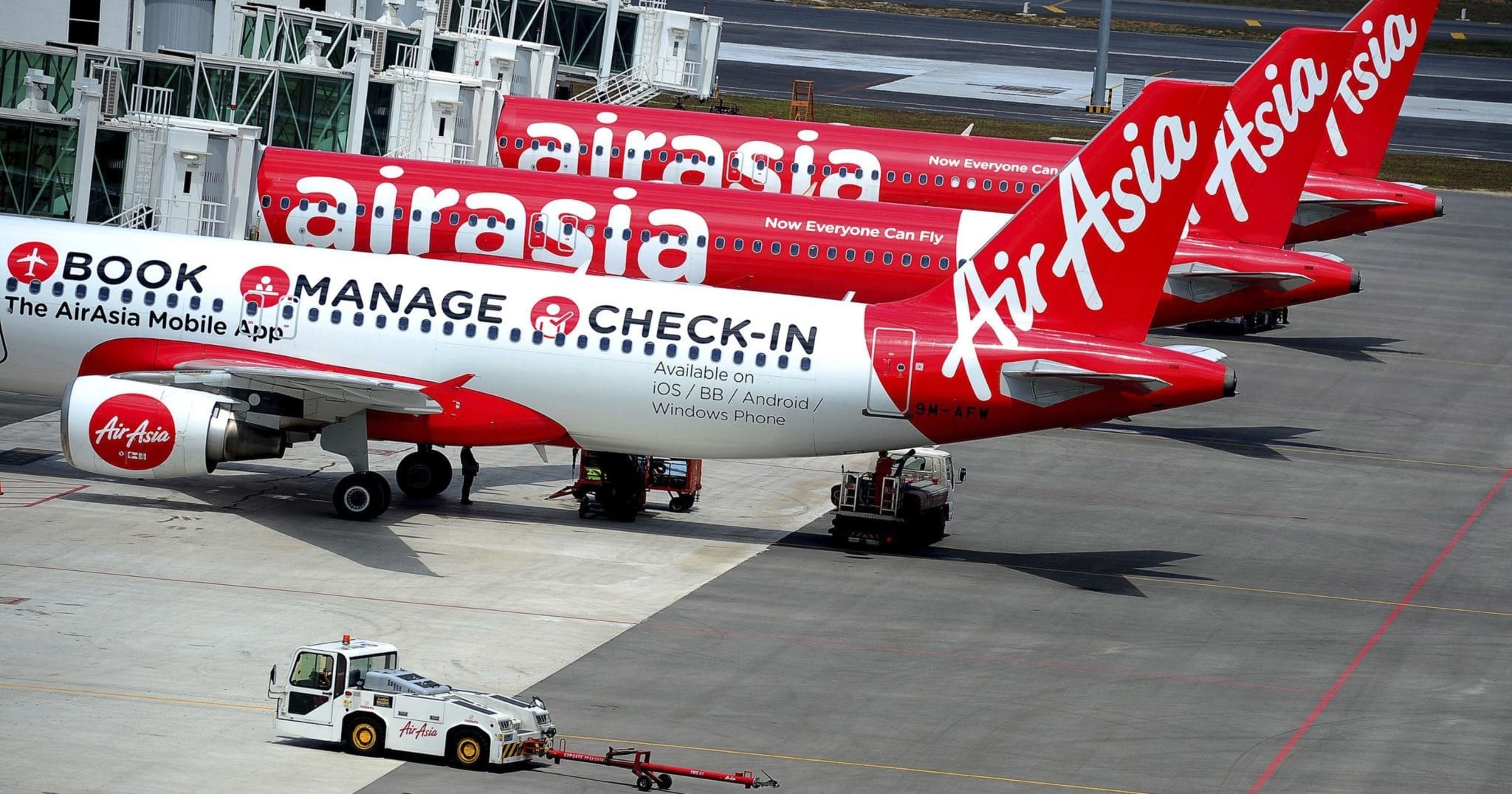
    Air Asia is the world’s largest and best low-cost carrier (They have won awards for the last 10 years). Air Asia X, their low-cost long haul carrier has built a route network spanning from the middle east to southern Australia. But many people in the US have never had a chance to fly on Air Asia, as the name would imply, have only ever been centered around South East Asia.

    Could Air Asia X routes from Japan to the US West Coast work?

    In a massive new rumor, Air Asia might be starting direct routes between Japan and the US West Coast onboard their fleet of brand new Airbus A330-900 aircraft. As none of the 66 new aircraft on order have been delivered yet, Air Asia X has been reluctant to place address the theory. They are however one of the first airlines to order the aircraft, and as deliveries have begun, we expect news sometime this year.

    Previously, the current fleet of older A330-300s has only been able to reach as far as Hawaii from Osaka, Japan (their range is 6,350 nmi (11,750 km)), limited by their ability to cross the Pacific ocean.

    But these new A330neo aircraft, with a range of 7,200nmi (13,334km), allow Air Asia X to reach destinations like Los Angeles and San Fransisco. This opens up a huge potential market for the company, and on the flip side, a cheap (and good) way for American’s to access Japan, and through transfer, South East Asia.

    What is the service like on Air Asia X?

    Whilst there has been no information yet on the fit out of the new Airbus A330-900 aircraft, we can hazard a guess based on their current A330-300 jets.

    There are three classes on board, a ‘premium’ business light class, a quiet zone and a normal economy class. There are also exit row seats scatted throughout.

    The business class features “flat beds” (They do not go entirely 90 degrees flat, but are more around 70-80 degrees), as well as included entertainment (via tablet), baggage allowance and food and beverages. They have around 60 inches of pitch and are 20 inches wide.

    There is every possibility that AirAsia will upgrade the seat truly lie flat in their newer aircraft.

    The quiet zone on board is a section of economy row seats at the front of the economy section that only allows adults and forbids loud noise. The economy section is laid out in a 3 by 2 by 3 configuration.

    Naturally, as it is a low-cost carrier, passengers will need to budget for seat selection, baggage, food and bring their own entertainment. The economy seats have 32 inches of pitch and are 16 1/2 inches wide.

    The real win, however, is the cost. Typically you would be looking at around $1000 USD return in economy to fly from Los Angeles to Osaka. Air Asia typically offers premium business for the cost of an economy ticket (which is well worth the upgrade) and economy for dirt cheap prices (through economies of scale). It is very likely that Air Asia will instantly undercut the market on these routes and be the cheapest to fly.

  • MAHB turned down our offer for mediation, says AirAsia

    MAHB turned down our offer for mediation, says AirAsia

    Air Asia has claimed that Malaysia Airports Holdings Berhad (MAHB) has turned down their offer of mediation, in a letter sent by the airport operator’s lawyers. The airline said that in an attempt to resolve the parties’ ongoing dispute over passenger service charges at  Kuala Lumpur International Airport 2 (klia2), they had proposed mediation to MAHB.

    “We regret that MAHB has refused AirAsia’s olive branch to resolve outstanding issues between us through mediation, particularly in light of MAHB’s recent statement that it is ‘optimistic that these matters can and will be resolved’,” said AirAsia Malaysia CEO Riad Asmat in a statement on Wednesday (Feb 6).

    “We will seek guidance from Malaysian Aviation Commission (Mavcom) on the next steps to address this situation. However, we reserve our rights to take all necessary actions to protect the interests of our guests and shareholders,” added Riad.

    Under the Malaysian Aviation Commission (Mavcom) Act 2015, MAHB and airline operators have an obligation to mediate any dispute, and legal action may only be used as a last resort when other efforts have failed.

    Last month, the budget airline sought more than RM400mil in counterclaims against MAHB in response to a suit filed by the airport operator last month over airport taxes.

    The counterclaims were for losses and damages experienced by AirAsia and its long-haul sister airline, Air Asia X Bhd, due to alleged operational disruptions at klia2, the airline had said.

    AirAsia claims that it agreed to move to klia2 after the government scrapped the initially approved plans for its own low-cost terminal in Labu, Negri Sembilan in 2008 following MAHB’s claim that it could build a similar terminal closer to KLIA with the same facilities and charges at the former Low-Cost Carrier Terminal (LCCT).

    The airport tax in klia2 was increased to RM73 from RM50 for non-Asean international passengers.

    Domestic passengers were not spared from the increase and now have to pay RM11, up from the previous RM6.


  • IKEA’s first India store sold more despite lower than anticipated footfall

    IKEA’s first India store sold more despite lower than anticipated footfall

    Swedish home furnishing multinational IKEA’s first India store here witnessed less than expected footfall during last six months but the spending by the buyers was more than what it anticipated, said a top company official on Thursday. IKEA’S Hyderabad store, which opened in August last year, said it was originally looking for 7 million footfall a year but it is now 5 million a year.

    “The ambition was to have more footfall. We imagined higher visitation but the same time we see many positive categories. People are buying more items and they are spending more money. We are selling more pieces. This is good for IKEA because we are volume driven company. They are spending and buying more than we anticipated,” said John Achilles, Hyderabad Store Manager, IKEA India.

    He told reporters that products with a volume of 80,000 square metres were sold but declined to share the numbers in terms of value.

    Terming the people’s response as amazing, Achilles said it was a great learning experience. “We learnt so much about market, so much about customers and about their buying habit.”

    According to Achilles, customers in India were price sensitive. “Low priced items are those selling in much higher volumes. People want great value for money for products both accessories and furniture.”

    Kallas spoon set, priced at Rs 15, the lowest at the store, has been the number one selling item during last six months. “We sold half a million of those in six months. There is no other store in the world that sold this kind of volumes,” he said.

    He said IKEA’s range of products were lowest in many categories in the market. While 95 per cent of the products sold in India were the same available at IKEA stores around the world, about five per cent were specifically meant for India. These products included spoons, “tawa” and other accessories.

    Achilles was talking to reporters on the sidelines of the launch of made in India textile collection, Anglatarar, by by IKEA.

    IKEA opened first store five years after the world’s largest single brand retailer received government approval in 2013 to invest Rs 10,500 crore to open 25 stores in India by 2025. The company last year revised the number of stores to 40 across all formats.

    Achilles said they would open the next store at Mumbai during 2019 while Bengaluru store would come up in next 24 months and this would be followed by New Delhi.

    On sourcing from India by IKEA, he said this had gone up to 19 per cent while it was less than 10 per cent before the launch of first store.

    The sourcing has to go up to 30 per cent in five years as prescribed by the government of India, the official said, adding that they were looking to go beyond 30 with ambition to reach 50 per cent.

    Mia Olsson, Country Communication and Interior Manager, IKEA India, said: “This collection mark the celebration of design aesthetics from both countries.” She termed it as a tribute to India.

    IKEA’s Hyderabad Stores Food Woes Resolved

    After a gap of nearly five months, vegetarian biryani returned to the menu of Swedish home furnishing retailer IKEA here on Thursday.

    In September last year, IKEA’s had stopped selling vegetarian biryani at its store here found a foreign object in a dish.

    “Today is the first day we have started reselling vegetarian biryani,” said John Achillea, Hyderabad Store Manager, IKEA India.

    He said that they were making this dish in house and it is available for Rs 99 like in the past.

    IKEA’s first India, which is completing six months in February, was earlier sourcing prepared veg biryani from Haldiram of Nagpur.

    The Greater Hyderabad Municipal Corporation (GHMC) had fined the IKEA store Rs 11,500 after a customer lodged a complaint that he found a caterpillar in veg biryani served to him at the IKEA restarurant.

    The furnishing giant subsequently removed the veg biryani from its menu and stated that it takes food safety and quality very seriously.

    IKEA opened its first India store here on August 9. It has a 1,000-seater restaurant.

  • Hiring persons with disabilities in India’s retail sector up by 53 percent

    Hiring persons with disabilities in India’s retail sector up by 53 percent

    Only 36 per cent of disabled persons in India are employed, of which 90 per cent are in the unorganized sector, said a new report by Trust for Retailers & Retail Associates of India (TRRAIN) here on Wednesday. The report – ‘Disability Employment: Indian Retail Changing Equations’ – said that as per Census 2011, the number of persons with disabilities was 2.21 per cent, or 26.8 million of the total population.

    However, the actual number in India could be between 5-10 percent, belying the Census figures, said TRRAIN.

    Around 50 per cent of the disabled population in the country was in the employable age of 20-59 years but jobs remain a problem for them as nearly 46 per cent are illiterate.

    Though 36 per cent are employed, almost 90 per cent have jobs only in the unorganized sector. And mainstreaming them could add around 5-7 to the country’s GDP, the report said.

    It noted that hiring persons with disabilities in the retail sector had gone up by 53 per cent between 2011 and 2018, but there was more scope to employ and mainstream them as there existed a positive correlation between customers and stores manned by the disabled.

    The report said that with 80 per cent jobs in retail ‘customer-facing’, employing the disabled PwDs serves the dual purpose of providing employment and sensitising the society at large about the challenges encountered by the disabled.

    The report was released at the 3rd Retail Inclusion Summit held here by TRRAIN founder B.S. Nagesh in the presence of big names from the retail industry.

    TRRAIN also runs an initiative ‘Pankh’ that trains and prepares disabled persons for employment opportunities in the retail sector.

  • Oil prices edge lower, tightening supply outlook supports

    Oil prices edge lower, tightening supply outlook supports

    Crude oil prices edged lower on Monday after sharp gains during the previous session but were supported by expectations of shrinking supply and signs that China-US trade tensions could ease. International Brent crude oil futures on Monday were down 20 cents, or 0.32% at 0339 GMT to $62.54 a barrel, after closing up 3.14% in the previous session to their highest close since Nov 21.

    US West Texas Intermediate (WTI) futures were at $55.13 per barrel, down 13 cents, or 0.24%, from their last settlement. WTI settled 2.73% higher in the last session at its highest close since Nov 19.

    Output declines from the Organization of the Petroleum Exporting Countries (OPEC) as they make good on their pact to curb a supply overhang were compounded by falling US oil rig counts and sanctions on Venezuelan oil sales.

    “While Venezuela’s output reportedly rose last month, fresh US sanctions on the country could see 0.5 to 1% of global supply curtailed,” said Vivek Dhar, commodities analyst for Commonwealth Bank of Australia in a note on Monday.

    The sanctions will sharply limit oil transactions between Venezuela and other countries and are similar to those imposed on Iran last year, experts said after examining details posted by the Treasury Department.

    OPEC oil supply fell in January by the largest amount in two years despite sluggish production declines from Russia, according to a Reuters survey.

    However, Russian oil output in January missed the target for the output cuts, Energy Ministry data showed on Saturday. Production last month declined to 11.38 million barrels per day (bpd), but that was only down by 35,000 bpd from its October 2018 level that is the baseline for the pact.

    Russian Energy Minister Alexander Novak has said the country’s overall cuts from the October baseline would total 50,000 bpd in January. Russia has pledged to reduce oil output by 230,000 bpd from October.

    US energy firms last week cut the number of oil rigs operating to their lowest in eight months as some drillers followed through on plans to spend less on new wells this year.

    “The collapse in oil prices late last year has resulted in more cautious spending by US oil explorers,” said Dhar.

    Meanwhile, hopes for thawing China-US relations have also helped ease concerns over slowing economic growth.

    “While the US and China have yet to reach a deal, markets were buoyed by reports that they have made significant progress,” ANZ Bank said in a research note.

    US President Donald Trump last week said he would meet with Chinese President Xi Jinping, perhaps twice, in the coming weeks to try to seal a comprehensive trade deal with Beijing, but acknowledged it was not yet clear whether a deal could be reached.

  • New shopping ambassadors at Hong Kong International Airport

    New shopping ambassadors at Hong Kong International Airport

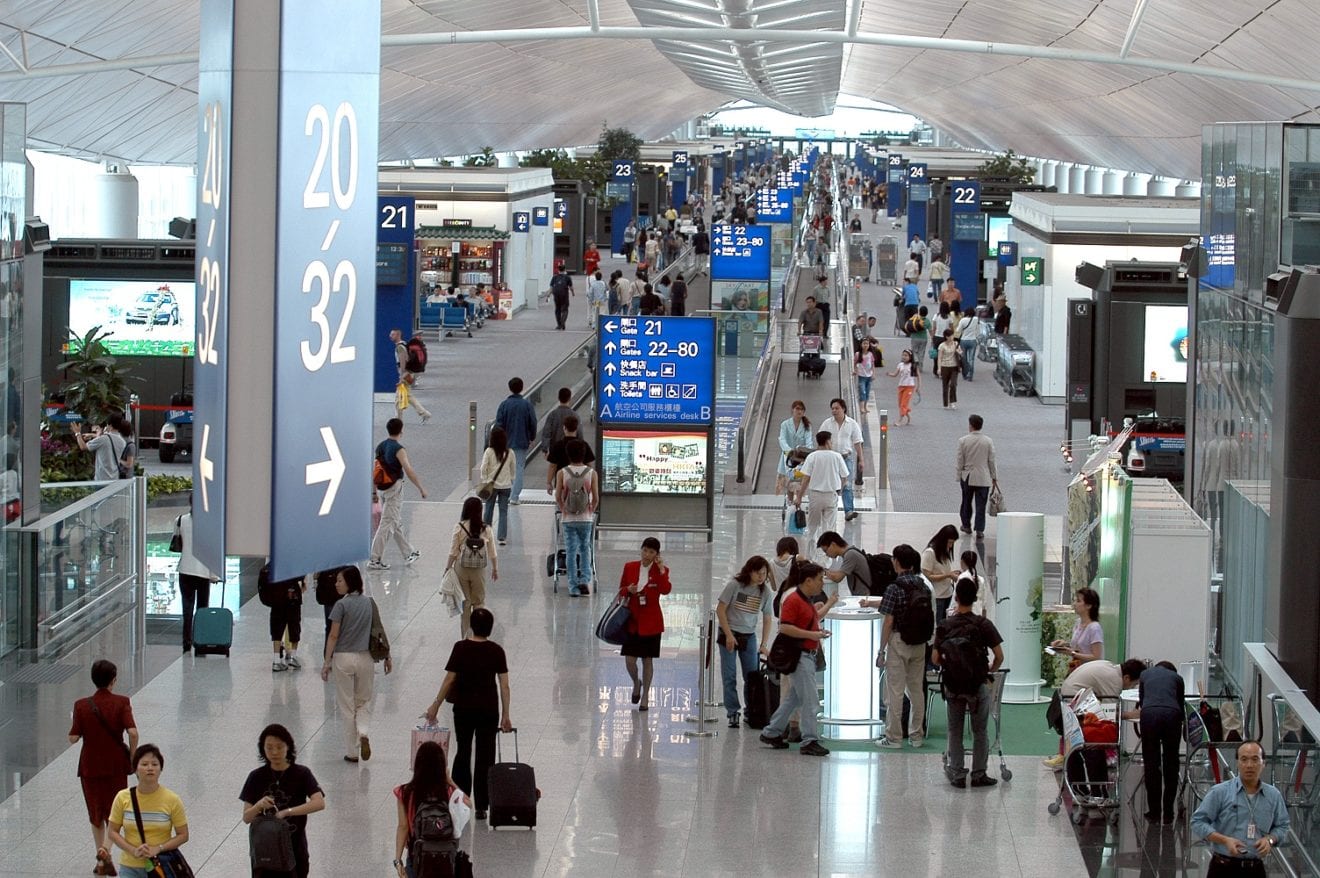
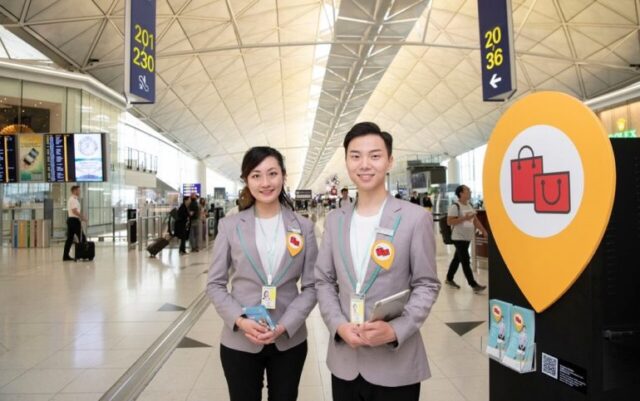
    Shopping for travelers will be even easier at Hong Kong International Airport (HKIA) with the introduction of Airport Shopping Ambassadors. The Airport Shopping Ambassadors are stationed at key locations within the airport’s retail areas. They are well acknowledged on shopping and dining offerings at HKIA, providing a friendly and personalized service to travelers. The ambassadors can provide helpful advice or last-minute shopping recommendations, as well as hot-picks, latest promotions and dining options from a wide range of global and local cuisine.

    Travelers can also receive personalised shopping and dining itineraries online, simply by filling in the Airport Shopping Ambassadors enquiry page on HKIA’s website https://www.hongkongairport.com. After completing the online request section, together with flight schedule and other information, travelers will be able to receive the ambassadors’ recommendations within 48 hours.

    HKIA is an international and regional aviation hub connecting about 220 destinations around the world, including 50 Mainland cities. HKIA achieved record-breaking passenger throughput of 74.7 million in 2018.

  • Indonesia Prepares New Strategy to Meet 2019 Tourist Arrival Target

    Indonesia Prepares New Strategy to Meet 2019 Tourist Arrival Target

    When President Joko “Jokowi” Widodo set out to double Indonesia’s foreign tourist arrivals within the five years of his presidency, many were skeptical. Now, the target seems to be within reach. Combined government efforts that included the massive development of airports and tourist destinations, aggressive digital promotions and a visa-free policy have, along with the weakening rupiah, attracted 16,2 million foreign tourists to Indonesia last year, which is 71 percent more than four years ago.

    Still, some setbacks were unavoidable. A series of volcanic eruptions, earthquakes and tsunamis over the past 12 months, as well as the tragic crash of Lion Air flight JT-610 into the Java Sea near Jakarta, resulted in the government missing its target to woo 17 million foreign tourists last year.

    Industry players worry that the bad image created by these disasters would take long to erase and thus undermine the country’s ability to attract 20 million foreign tourists this year.

    “Indonesia is situated on the Ring of Fire; we could not predict or prevent any disaster. What we need now, is to work extra hard to ensure that the world knows that when disaster strikes here, all tourists and local residents are well cared for,” said Elly Hutabarat, chairwoman of the Indonesian Travel Agent’s Association (Astindo).

    She cited Mexico as an example of a country that had just been hit by an earthquake, but still managed to quickly revive its tourism industry.

    “We see Mexico, which had just experienced an earthquake, is responsive and is able to give up-to-date information to the world. Such efforts are able to quickly revive their tourism industry,” Elly said.

    Border Tourism, Low-Cost Terminals

    The government has not given up, as the tourism industry could potentially generate $20 billion in foreign exchange revenue this year, which is crucial to plugging the country’s persistent current-account deficit.

    Guntur Sakti, head of communications at the Ministry of Tourism, said the government has implemented a strategy to meet this year’s tourist arrival target by developing border tourism, hub tourism and the renovation of airport terminals to cater to low-cost carriers.

    The government’s border tourism plan is aimed at making it easier, faster and cheaper for tourists to visit Indonesia from neighboring countries.

    Malaysia, Singapore and the Philippines also have a similar cultural heritage and history as Indonesia.

    “The potential from border tourism is massive, especially from neighboring countries,” Guntur said.

    Through the hub tourism strategy, the government expects to attract a larger number of foreign tourists that travel to the capitals of neighboring countries, specifically Bangkok, Kuala Lumpur and Singapore.

    The government estimates that more than 11 million foreign travelers – excluding Indonesians – transit at Singapore’s Changi Airport annually before continuing their travels to other countries for business or leisure. Guntur said this represents a massive potential for Indonesia.

    He added that tourists frequently transit in Singapore or other cities in the region because of limited direct flights to Indonesia from Europe, the United States and even parts of East Asia.

    For instance, about half of all Chinese tourists heading to Indonesia must transit in Singapore or Malaysia before reaching the archipelago, while 80 percent of tourists from Thailand and Malaysia are able to reach the country via direct flights.

    The government also plans to renovate several terminals at Soekarno-Hatta International Airport outside Jakarta to exclusively accommodate low-cost carriers.

    Terminal 1 at the airport will soon only cater to passengers of low-cost airlines traveling to domestic destinations, while Terminal 2 will cater to passengers of low-cost airlines on both domestic and international flights.

    Many countries have built terminals or even whole airports to specifically accommodate low-cost airlines. This lowers the airport’s operating budget, which in turn helps to reduce airport taxes and airline ticket prices, which ultimately attract more foreign tourists.

    Guntur said at least 70 percent of foreign tourists use low-cost carriers to travel to Indonesia.

    “To realize our strategy and attract more tourists, we are working with state-owned airport operator Angkasa Pura to renovate Terminal 1 and 2 at Soekarno-Hatta Airport. We’ve noticed many countries operate several terminals that cater to full-service carriers and low-cost carriers separately,” he added.

    The number of passengers traveling to Indonesia on low-cost carriers grows by about 55 percent annually, while the number of passengers arriving on full-service airlines only increases by about 7 percent per year, according to tourism ministry data.

    Ten New Balis

    The government also actively promoted its “10 New Balis” program last year to develop and promote several destinations beyond Bali, Indonesia’s most popular destination.

    The 10 New Balis include Mandalika in Nusa Tenggara, Thousand Islands in Jakarta, Tanjung Lesung in Banten, Tanjung Kelayang in Bangka Belitung, Borobudur Temple in Central Java, the Bromo Tengger Semeru National Park in East Java, Labuan Bajo in East Nusa Tenggara, Wakatobi in Southeast Sulawesi and Morotai in North Maluku.

    The project, spearheaded by the tourism ministry, has also established programs to develop each of the destinations by building 5,000 homestays, improving infrastructure, increasing financing for tourism to around Rp 2.5 trillion ($177 million), implementing sustainable tourism in 16 destinations, developing 10 special economic zones and developing nomadic tourism.

  • New integrated resort in China by Fosun

    New integrated resort in China by Fosun

    Fosun bets on integrated resorts to address the needs of Chinese travelers, who are showing interest in these types of experiences. Fresh from its Hong Kong initial public offering last month, Fosun Tourism Group is making good on its intention to use the proceeds to develop two new integrated resorts in China, announcing properties under the Thomas Cook Group brands Casa Cook and Sunwing.

    The two projects are in Lijiang, Yunnan province, famous for its UNESCO World Heritage old town, and Taicang, Jiangsu province, 30 minutes from Shanghai.

    Fosun Tourism chairman and CEO Jim Qian told Skift he is seeing different segments emerging in China’s domestic travel market. While this is already the norm in mature western markets, it’s just starting in China, and there’s a need to offer local travelers a choice of hotel brands and a variety of experiences, said Qian.

    In so doing, Fosun is turning to what’s in the family, its own Club Med and its Thomas Cook China joint venture. The Lijiang Albion International Resort will also have a Club Med, which has “a different positioning” from the boutique, design-led Casa Cook, he said.

    The whole development in Lijiang is spread over at 350,000 square meters (382,765 square yards). It is located near the Baisha old town, which lies closest to the majestic Yulong Snow Mountain, and is the only land permitted for massive development.

    How it will be sensitive to the tranquil and preserved ancient surroundings remains to be seen. For now, its website says it aims to attract mid- to high-profile guests by offering the total package, including a Club Med snow-themed resort, a guesthouses town, riverside shows, heritage towns, outdoor activities, health and wellness.

    “We will deliver a lot,” said Qian. “I believe in the future when a family goes on a holiday, they don’t just want to stay in the room.

    “Nowadays in China, we have more resort hotels in destinations such as Sanya, but most are actually business hotel brands moving from the city to the beach. I don’t think that kind of hotel is suitable for a family holiday. We will introduce the real beach or holiday resort to a destination.”

    Not much is known of Fosun’s other resort project in Taicang except that it is smaller at 145,000 square meters (158,570 square yards).

    Both are expected to be completed in stages from late 2020.

    Fosun Tourism, whose slogan is Everyday is Foliday (short for Fosun holiday), having tested destination development and management with its fully owned Atlantis Sanya, is keen to bring the experience to bear on the projects.

    “We have the experience in the construction of resort destinations, and we know how to make foreign brands suitable for the Chinese market,” said Qian.

    Fosun Tourism also believes the timing is good. It pointed out the per capita tourism expenditure in China in 2017 was about $575, which was below the global average of $741. “This implies the great potential for the growth of China’s tourism market,” it said.

    Besides, it claimed to be in a stronger position now, announcing ahead of its annual results to be released in March that it expects a net profit of at least 350 million yuan ($52 million) in 2018, compared with a net loss of 295 million yuan ($44 million) in 2017.

  • Vietjet to open Phu Quoc-Hong Kong route in April

    Vietjet to open Phu Quoc-Hong Kong route in April

    Budget airline Vietjet said Saturday it will launch direct flights between Phu Quoc Island and Hong Kong in April. The new route will operate four flights per week starting from April 19, Vietjet said. Each flight will take 2 hours and 45 minutes per leg. Dubbed “the Pearl Island”, Phu Quoc, located in the southern province of Kien Giang, has attracted strong investments in hotels and resorts in recent years.

    Vietjet said it wants to create traveling opportunities for locals and tourists, thereby contributing to trade growth between the two destinations. The largest private airline in Vietnam currently operates 40 domestic routes and 66 international routes.

    Vietnamese airlines have been launching new international flights in recent years, with the domestic market showing signs of saturation.

    The country’s aviation industry has seen increasing demand each year. It welcomed 12.5 million air passengers last year, up 14.4 percent from 2017, according to the General Statistics Office.

    Vietnam’s aviation traffic increased 16 percent on average each year from 2010 to 2017, data from the civil aviation regulator shows.