Category: Living

Retail News Asia is committed to providing both local and global retailers with the latest Living news throughout the Asian market. This on a daily base.

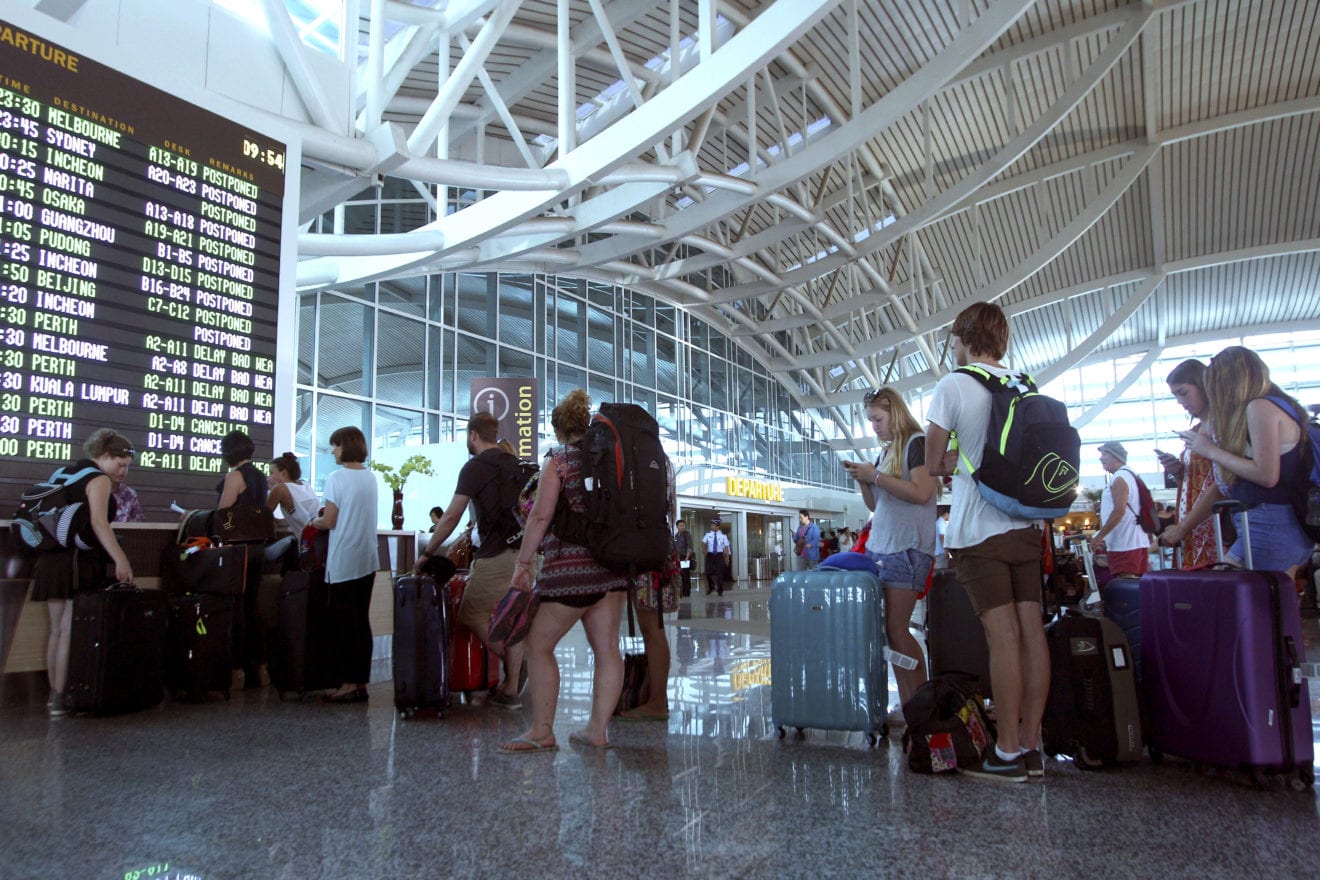
  • Indonesia Sees 8.5% Increase of Tourists until September ThisYear

    Indonesia Sees 8.5% Increase of Tourists until September ThisYear

    Indonesia recorded 8.36 million visits by foreign tourist until September this year or an increase of 8.5 percent year-on-year.

    Tourism Minister Arief Yahya said here on Thursday the increase gave greater optimism that the target of 12 million visits by foreign tourists to the country this year would be achieved.

    “In three consecutive months – July-August and September, the number of visits exceeded one million. We hope that the number would be larger in October, November and December,” the minister said.

    In September, there were 1,006,653 foreign tourist arrivals or an increase of 9.40 percent year-on-year from 920,128 in the same month last year, he said in a statement.

    Based on data from the Central Bureau of Statistics (BPS) and the Tourism Ministry, the number of foreign tourist visits in the first nine months of the year was 8,362,963 or 8.51 percent higher than 7,707,034 visits in the same period last year.

    In September, significant increase was recorded in the number of visits of tourists from Bahrain, up 46.84 percent, Egypt up 42.86 percent, China up 28.08 percent, India 26.61 percent, and France 18.92 percent.

    In the nine months period until September this year, the highest increase was recorded in the visits of tourist from Egypt up 48.72 percent, Bahrain up 46.33 percent, India 28.90 percent, China 24.15 percent, and France 23.15 percent.

    Minister Arief Yahya said international events would be increased especially in main gates – Bali, Jakarta, and Batam. in a bid to increase the number of visits of foreign tourists toward the end of the year.

    “Bali plans to organize tens of year end events to increase the number of visits . This year, Bali hopes to chalk up 4.8 million visits by foreign tourists or 45 percent of the total number of foreign visits to the country,” Arief Yahya said.

    Similarly, Bintan of the Riau Islands, which in November-December 2016 would host a number of events such as international sport tourism and entertainment to attract visitors especially from Singapore and Malaysia.

    This year Great Batam/Bintan hopes to chalk up 2.5 visits by foreign tourists.

    Arief said the island of Bintan is one of more potential tourist destinations in frontier areas, beside Manado, Papua, Entikong, and Atambua.

    The tourism Ministry has launched intensive promotional campaigns by organizing cultural festivals in a number of areas to attract foreign tourists in border areas.

    Recently the ministry held a Festival of Wonderful Indonesia (FWI) in Aruk, sub-district of Sajingan Besar, regency of Sambas, in West Kalimantan to attract visitors from Negeri Serawak, Malaysia.

    The tourism ministry, however, has focused more on luring larger number of Chinese tourist to visit the country. China has become the worlds largest tourism market.

    Earlier, Arief said Indonesia had been lagging behind in taking advantage of the Chinese market.

    Indonesia has succeeded only in recording 1.2 million or one percent of outbound Chinese, falling far behind Thailand, which already succeeded in attracting 8 million visits by Chinese tourists year.

    Therefore, the Indonesian Tourism Ministry has teamed up with Baidu, the largest Chinese searching engine company called as “Chinese Google” to create a program to promote tourism destinations in Indonesia.

    Baidu could create many programs to promote Indonesian tourist destinations from upstream to downstream , from branding , advertising to selling, Arief said.

    “It promised to increase the number of Chinese visitors to Indonesia up to 10 million arrivals in 2019,” Arief, who visited China recently, said.

    The 10 million arrivals of Chinese tourist would means 50 percent of the governments target of 20 million in number of foreign tourist visits to the country in 2019.
  • Big plans in store for Indonesia tourist destinations

    Big plans in store for Indonesia tourist destinations

    As tourism slowly takes its place as a new engine of economic growth, the government is making aggressive plans to improve and promote new tourist destinations.

    Morotai in Maluku, Labuan Bajo in West Nusa Tenggara and Tanjung Lesung in Banten are three names that may sound unfamiliar to the domestic and international community, but they are among the so-called 10 emerging tourist destinations that the government expects can be as famous as Bali.

    The other seven destinations are Tanjung Kelayang in Belitung, Wakatobi in Southeast Sulawesi, Lake Toba in North Sumatra, Bromo-Tengger-Semeru in East Java, the Thousand Islands in Jakarta, Borobudur in Central Java and Mandalika in West Nusa Tenggara.

    However, raising them to Bali’s level will take a lot of work, a fact acknowledged by the government, especially as it hopes to attract 20 million foreign tourists by 2019.

    In its latest Indonesia Economic Quarterly report, the World Bank states that implementation of this plan will require efforts on multiple fronts and infrastructure will play a crucial role.

    Indonesia currently ranks in the bottom half of countries on several infrastructure-related tourism competitiveness indicators, such as ground and port infrastructure, tourist service infrastructure, health and hygiene, information and communications technology (ICT) readiness and environmental sustainability.

    The Public Works and Public Housing Ministry, one of the government’s most strategic posts for infrastructure development, has stated that it will focus on infrastructure development for three destinations in the next two years, namely Lake Toba, Mandalika and Borobudur.

    An integrated master plan for the development is also being formulated by the Public Works and Public Housing Ministry and Tourism Ministry.

    “I hope with the integrated master plan, there will be cooperation between ministries and regional governments for the development of the three destinations,” Rido Matari Ichwan, the ministry’s regional infrastructure development agency (BPIW) head, said recently.

    The government has allocated Rp 1.6 trillion (US$122.74 million) in the state budget in 2016 and 2017 for various infrastructure projects in the three destinations, including road access, water system, drinking water, waste management and housing, among others.

    Data from the Public Works and Public Housing Ministry reveals that the development plan for Lake Toba includes the construction of toll roads connecting Medan-Kualanamu-Tebing Tinggi and Tebing Tinggi-Siantar-Parapat, access road to the Sibisa airport in Parapat and 14.3 kilometers of piping in Simalungun, among others.

    Development for Borobudur includes initiatives such as self-built housing development in Magelang, a toll road connecting Yogyakarta and Bawen, a regional drinking water system, and reconstruction and expansion of several roads.

    Meanwhile, Mandalika will see several works carried out, such as the Sulin bridge improvement, road expansion and maintenance, and irrigation network construction in central Lombok.

    Rido added that the ministry would also cooperate with the Transportation Ministry on the development of the airports in the new tourist destinations.

    In addition to state budget funds, the government is also seeking other funding sources. It is looking to obtain a US$200 million to $500 million loan from the World Bank to fund the infrastructure development in the three destinations.

    Discussions are taking place and the loan is expected to be ready for disbursement by July next year.

    Tourism Minister Arief Yahya previously stated that the government would also launch a limited participation mutual fund (RDPT) by next year, through which it sought to garner Rp 10 trillion to develop all 10 destinations.

    “We will use the funds to build amenities. They will be channelled first to the four special economic zones [and tourism destinations], such as Tanjung Kelayang, Tanjung Lesung, Mandalika and Morotai,” he said.

    The World Bank says the government will also need to attract private investment to finance its goals.

    Early indicators are promising, with total foreign and domestic direct investment in hotels and restaurants reaching nearly $1 billion in 2015, an increase of 45.5 percent compared to 2014, while the number of investment licenses approved in the hotel and restaurant sectors surged more than five times to 266 licenses in 2015 from 2014.

    Licensing simplification is one important aspect that will help spur more investment, according to the World Bank. “As a first step, it will be essential to establish an inventory of the number and type of business licenses needed [at the national and subnational level] to establish a tourism-related business,” he added.

  • Big C profit grows despite challenging economy

    Big C profit grows despite challenging economy

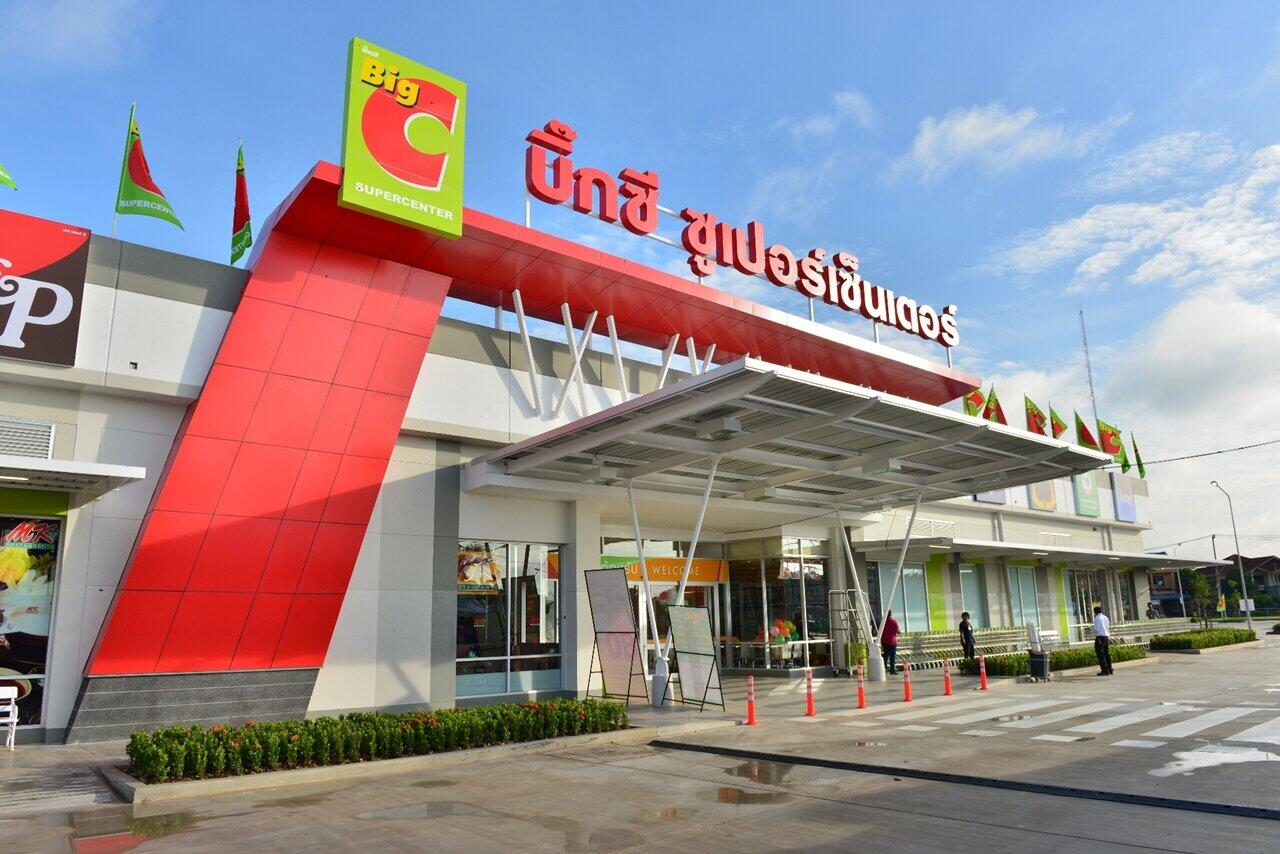
    Thai hypermarket operator Big C Supercenter boosted margins in the latest quarter despite the challenging economic climate.

    The company has reported continued resilient rental and service income growth, margin improvement across the board thanks to a focus on the quality of sales – delivering a “robust” Big C profit boost.

    The third quarter to September 30 was the first full reporting period of its new strategic focus on quality of sales rather than the absolute sales amount.

    “On our operations we continued our push to localise our offer in order to become the ‘Thai retailer with customers in our heart’ as we will be better positioned to serve local communities and their varying tastes,”explained Rumpa Kumhomreun, CFO & VP of accounting and finance, in a filing with the Thai SET. “Our work to capture synergies between BJC and Big C is continuing, and during the quarter we for example moved some of our private label tissue manufacturing to BJC. We also started serving Big C Soft Serve ice cream in pilot hypermarkets and Mini Big C stores. Our access to TCC “land bank” also made it possible for us to open an additional Big C Market store at Pantip Chiang Mai during the quarter.”

    The company also improved its online offer, rebranding its Cdiscount.co.th to Cmart.co.th, with over 70,000 SKUs available.

    Big C’s Total Revenues from retail sales, rental and service income, and other income, for the quarter reached Baht 25.892 billion – a decline of Baht 5.799 billion or 18.3 per cent over the same period last year. This decrease was driven by a retail sales decline of 20 per cent from the same period last year, and a same-store-sales decline of 22.6 per cent.

    “The significantly declining same-store-sales trend was driven by our strategic focus on the quality of sales rather than absolute sales volume,” said Kumhomreun.

    With a similar fall in expenses, however, Big C’s net income attributable to shareholders grew by 14.6 per cent to Baht 1.538 billion for the quarter, up Baht 196 million year-on-year.

    Gross profit margin reached 17.8 per cent for the quarter, representing an increase of 487 basis points from last year.

    Store expansion continued during the quarter in all store formats, with two hypermarkets opening in Phonphisai and Na Thawi, two Big C Market stores in Loei and Chiangmai, 23 Mini Big C stores including 15 franchise stores, and one Pure Drugstore. Those took the store count at the end of September to 128 large format stores (Big C Supercenter, Extra, and Jumbo), 59 Big C Market, 431 Mini Big C (including 21 franchise stores), and 142 Pure Drugstores.

  • Vudu picks Ooyala for new free streaming servic

    Vudu picks Ooyala for new free streaming servic

    Ooyala now powers the new advertising (AVOD) service, Vudu Movies on Us, from Vudu, Walmart’s subscription-free, premium video streaming service.

    Advertisers are now able to access Vudu’s millions of customers, reaching millions of streams every month across thousands of titles on connected devices.

    Ooyala is the exclusive technology provider for Vudu’s entire free-ad-supported service and is also representing the advertising inventory, helping them expand the business beyond the current leading transactional-based (TVOD) service.

    Vudu uses Ooyala Pulse, Ooyala’s holistic advertising platform, to manage every campaign running across its ad-supported service in real-time. With forecasting capabilities that come out-of-the-box with Ooyala Pulse, Vudu can see if campaigns are on track to reach their goals and impression commitments. If not, Vudu is able to adjust and optimize campaigns on the fly to ensure all campaigns are successful.

    Also, Ooyala is powering all video for Toca TV, the first video streaming service from Toca Boca.

    With Ooyala, Toca Boca now delivers its extensive video library of original and curated content to its global audience as the company moves into a new category of kids’ entertainment.

    To maximize viewership and return on every asset, they chose Ooyala as its technology partner to deliver personalized recommendations so its audience engages longer and gets the most value out of every video, everytime.

    Using Ooyala Discovery, Ooyala’s content recommendation technology, videos are served based on contextual factors such as like-viewing patterns on similar devices and geographical locations.

  • Singapore lauded as top cruise destination once again

    Singapore lauded as top cruise destination once again

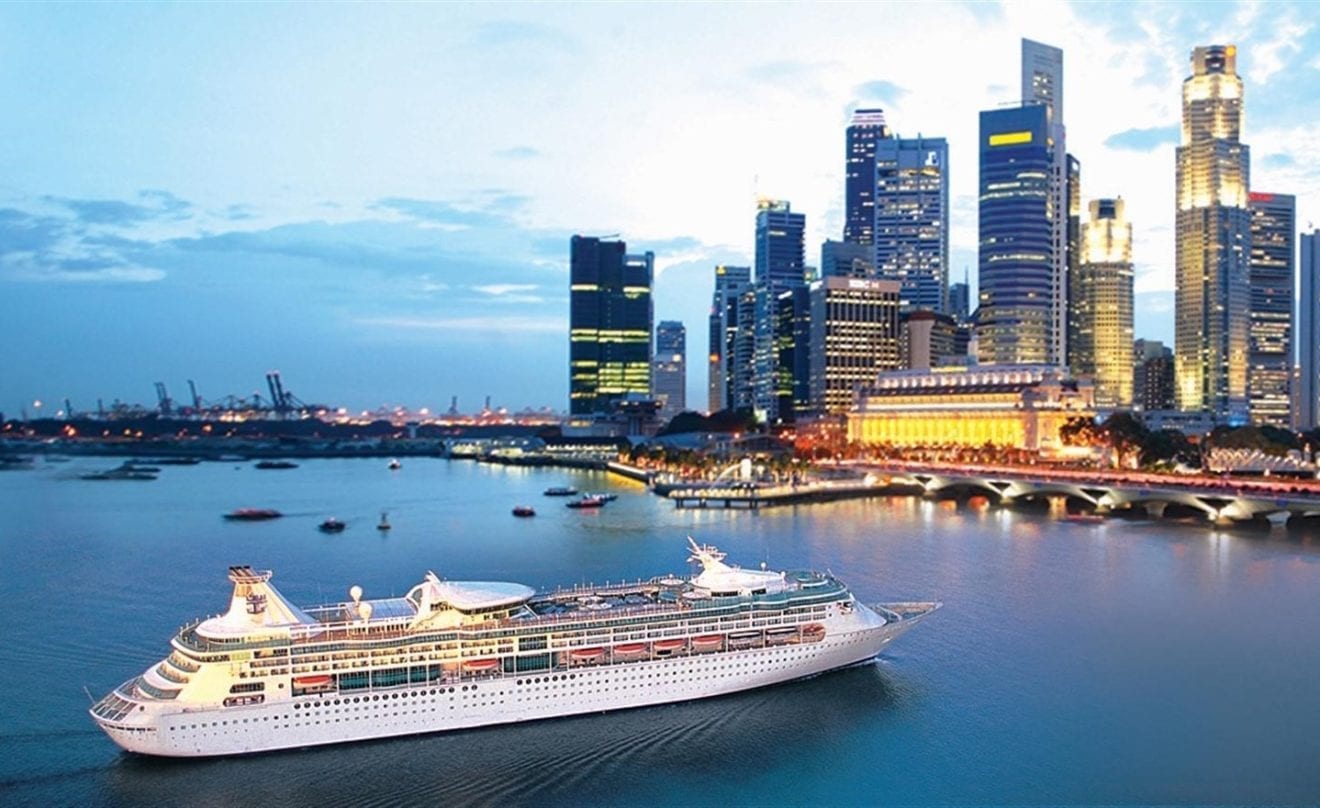
    Singapore was just named top cruise destination by industry experts for a second time in three years at the 10thSeatrade Cruise Awards last Thursday (Sep 22). This accolade is another feather in the cap for Singapore, which was voted as the top Asian port of call in the inaugural Cruise Critic Cruisers’ Choice Destination Awards earlier this month.

    “We are honoured that Singapore remains prominent in the minds of the cruise community as an attractive cruise hub. This is testament to our efforts to grow Singapore’s cruise industry and strong destination appeal,” said Miss Annie Chang, Director, Cruise, Singapore Tourism Board (STB).

    In growing Singapore’s appeal as a cruise destination, STB has been leveraging Singapore’s superb air connectivity, world-class berthing facilities at the Singapore Cruise Centre and Marina Bay Cruise Centre Singapore, and proximity to myriad cruise offerings in the region.

    Strengthening Singapore as a cruise hub

    The award also caps off years of developmental work that STB, cruise lines and trade partners had put in to grow the cruise industry in Singapore. Some of the initiatives include forging more than 10 marketing partnerships with cruise lines and trade partners to drive cruise passenger numbers, training more than 800 travel agents overseas to raise their capability to sell cruises from Singapore, and widening Singapore’s reach to consumers via multiple media platforms in six major source markets.

    STB also actively works with local trade partners to curate immersive and differentiated pre- or post-cruise experiences to enrich visitors’ stay in Singapore. In August 2016, STB organised a workshop for cruise operators to experience the unique offerings of local bookbinding atelier Bynd Artisan and homegrown scent artisans Je t’aime Perfumery. Participants tried their hands at creating bespoke leather nametags and scent blends of native orchid oils, seeding ideas of innovative experiences which may be offered to cruise passengers.

    Developing Southeast Asia as the cruising region of choice

    Being the ASEAN lead co-ordinator for cruise development in Southeast Asia, Singapore spearheaded initiatives such as the creation of the first Cruise Southeast Asian brand to promote the region in a unified voice. STB also developed tools such as a regional cruise port and attractions map to help cruise lines develop itineraries.

    These efforts have proved fruitful. Singapore experienced a 14% year-on-year increase in cruise passenger throughput in 2015, and major cruise line Royal Caribbean International will have their longest-ever homeporting season in Singapore starting October 2016.

    Said Ms Chang: “Singapore and Southeast Asia are set to ride the wave of growth for cruising in Asia and STB will continue to push the boundaries in establishing Southeast Asia as the cruise region of choice. As we mark ASEAN’s golden jubilee celebrations next year, we will embark on a VisitASEAN@50 campaign to encourage more visitors to experience cruising in Southeast Asia.”

  • Astro partners StarHub to offer Go Shop in Singapore

    Astro partners StarHub to offer Go Shop in Singapore

    Astro Malaysia Holdings Berhard (Astro), a leading media company in Malaysia, and StarHub Cable Vision Ltd. (StarHub), a leading info-communications company in Singapore, have entered into a partnership to offer Go Shop, a 24/7 shopping destination on TV, online and mobile to customers in Singapore. Starting in November, StarHub customers will be able to enjoy a new way of shopping via informative and entertaining demonstrations on Go Shop. Go Shop is Mandarin channel (StarHub TV Channel 110), which officers customers 24/7 shopping on StarHub TV, or via any device of their choice.

    Dato’ Rohana Rozhan, Group Chief Executive Officer of Astro said, “Since its launch in January 2015, Go Shop has been providing Malaysians the comfort and convenience of Home Shopping on all screens and devices. We are privileged to now extend this service to our sophisticated and affluent Singaporean neighbours through our partnership with StarHub. Our aspiration and promise is to strive to provide compelling product and value propositions, in an entertaining and informative way.”

    Tan Tong Hai, StarHub’s Chief Executive Officer said, “We are pleased to partner Astro for the launch of Astro Go Shop on StarHub TV. As an info-communications company, we see synergy in creating a seamless and immersive shopping experience for our customers, while providing a trusted platform for businesses to reach out to a wider pool of customers beyond their shores. We have every confidence that Astro Go Shop will be a successful venture that appeals to both consumers and businesses.”

    Grace Lee, CEO of Astro GS Shop (AGSS) said, “We are happy to partner with StarHub, a leading consumer brand in Singapore with deep insights into customers’ media consumption and purchasing habits. We look forward to a win-win collaboration with StarHub in scaling the Go Shop customer base regionally and offering Singaporean customers a new experience with the best global products and services from Korean, Singaporean and Malaysian brands.”

    Go Shop offers fun and entertaining 24-hour shopping experience where products and services are demonstrated, promoted and sold on multiple platforms, currently through Astro in Malaysia. Go Shop was launched in Malaysia in January 2015 on TV, online and mobile, and has attracted over 500,000 customers and a total of 75 million online and mobile page views in Malaysia.

    Customers in Singapore can enjoy Go Shop via StarHub’s Mandarin language Channel 110, www.goshop.com.sg, and the Go Shop mobile app, downloadable from Google Play Store for Android users and Apple app store for iOS users in November 2016.

    Go Shop in Singapore is operated by Astro GS Shop Singapore Pte. Ltd, a 100% owned subsidiary of AGSS, which is a joint venture between Astro Retail Ventures Sdn Bhd – a 100% subsidiary of Astro and GS Home Shopping (GS) Inc., the global leader in TV home shopping with international presence in South Korea, Malaysia, China, India, Indonesia, Vietnam, Thailand, Turkey and Russia.

  • Eros inks mobile billing integration deal with ME telcos

    Eros inks mobile billing integration deal with ME telcos

    Eros Now, the digital OTT platform of Eros International, now has mobile billing integration capabilities with major telecom operators in the United Arab Emirates and Qatar.

    Mobile billing integration is at the heart of Eros Now’s penetration strategy to enable consumers to experience Indian entertainment, which includes Bollywood and regional content across major networks and devices, and will further enhance the platforms ability to monetize its user base.

    The tie-ups in the Middle East are with the leading local telecom operators including Ooredoo in Kuwait and Qatar, and Du in the UAE. Additional telecom partnerships throughout the region are currently being negotiated.

    Consumption of Bollywood content, including Hindi movies, music and TV series in the Middle East has been on the rise along with it also becoming one of the leading regions in the world in terms of smart device adoption.

    With an increasing number of handheld device users, the trend of online content consumption has markedly increased in the region. The South Asian diaspora in both of these markets is estimated to be over half of the population, which represents over five million people.

    Also, Bollywood content continues to be popular with the local Middle Eastern population in dubbed and subtitled formats – both of which are offered on Eros Now.

    “Eros Now’s philosophy is to be platform agnostic and embrace the very best in technology as we continuously enhance our content offering,” said Rishika Lulla-Singh, CEO of Eros Digital. “Recognizing the growing demand among Middle Eastern viewers for online video content, especially Bollywood entertainment, these mobile partnerships will give consumers entertainment and easy pay access, whenever and wherever they want it.”

  • More outlets, more health

    More outlets, more health

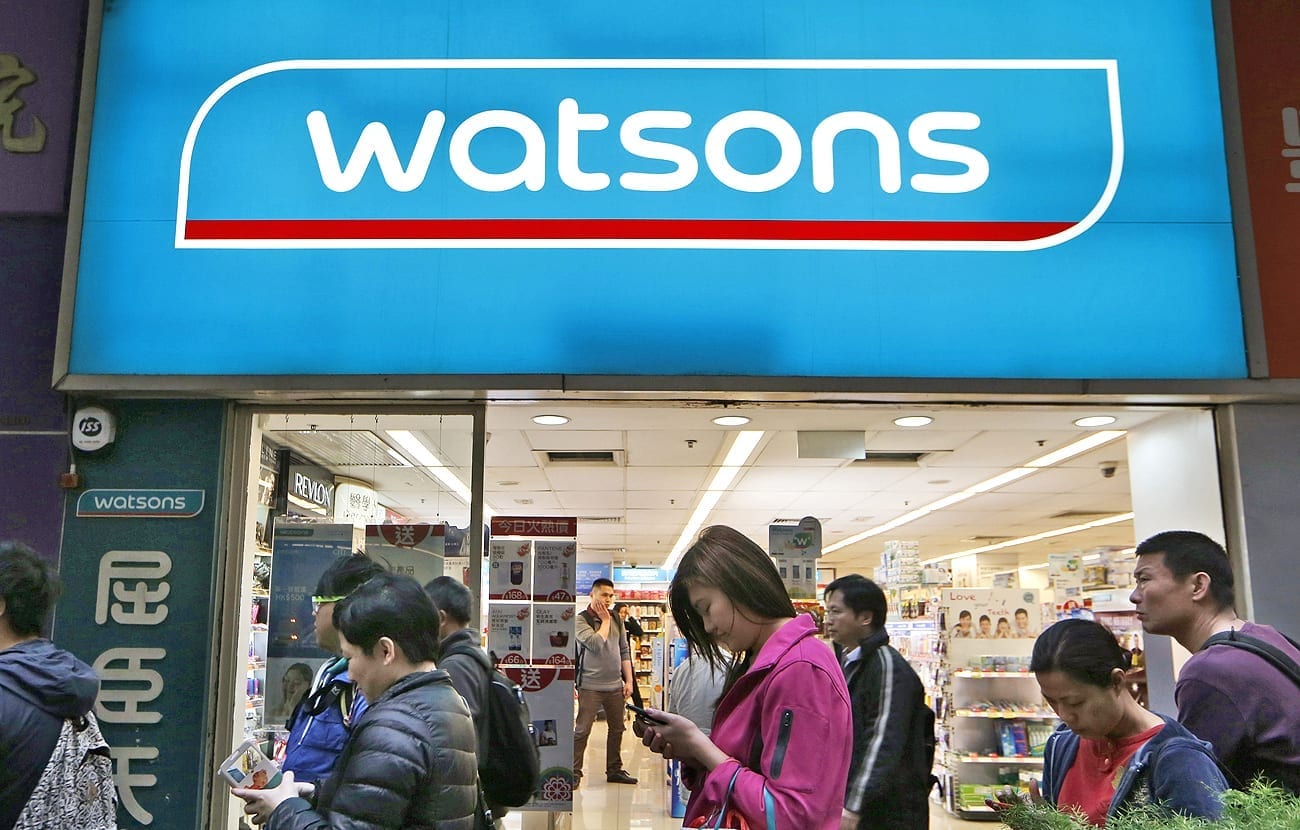
    Personal care retailer Watsons Personal Care Store (Philippines) Inc. is expanding its branch network by boosting its presence both in shopping malls and community locations.

    The company recently opened its 500th store and chose to celebrate this achievement in Cebu because of the store’s strong presence and high sales growth here.

    “In Cebu, we are growing in double digits,” said Sharon Presbitero, Watson’s Group marketing manager. Cebu has 31 Watsons outlets, majority of which are based in shopping malls.

    Watsons is set to open at least 30 more outlets before the end of this year, said Ma. Cecilia Canlas, the company’s marketing manager.

    Generics

    She said the company is planning to open 500 new outlets in the next two years.

    According to Presbitero, the company’s direction is to be highly visible in the community through its health care business, Watsons Pharmacy, which also carries the Watsons Generics brand.

    In the region, the Philippines is the only country where the company is more known as a beauty store, Presbitero said, but its roots in China are in pharmaceuticals.

    “We will be opening more community pharmacies in the country,” she said, noting that in the coming months,
    Watsons will be highly visible at street corners or busy markets, among other locations.

    While Watsons stores across the country already have pharmacy sections, Presbitero said that the company saw the need to open more pharmacy-centric outlets to serve communities that don’t have access to affordable yet high-quality medicines.

    Health line

    “Watsons now offers a wide range of health products from prescription to over-the-counter medicines and health supplements,” said Presbitero.

    Watsons in the Philippines launched Watsons Generics last year. About 10 to 12 Watsons outlets now have its presence in the community.

    Presbitero said the brand is gaining acceptance in the market as more consumers are now open to buying generic medicines versus the branded ones.

    “Before, we had to keep on pushing for consumers to buy generic medicines but as the years go by with market education and accessible information, it is the consumer now who looks for these generic medicines,” she said.

    The price of a generic medicine is 60 to 80 percent lower than that of a branded medicine. Watsons also offer vaccination services for flu, pneumonia, and cervical cancer, among others.

    Watsons Philippines is a joint venture of SM Prime Holdings Inc. and Hong Kong-based A.S Watsons & Co. Ltd.

    Watsons, which operates both in Europe and Asia, carries 13 retail brands in 25 markets. It also has a network of 12,800 stores in 37 countries.


  • Squeeze in Chinese tourists starts to bite

    Squeeze in Chinese tourists starts to bite

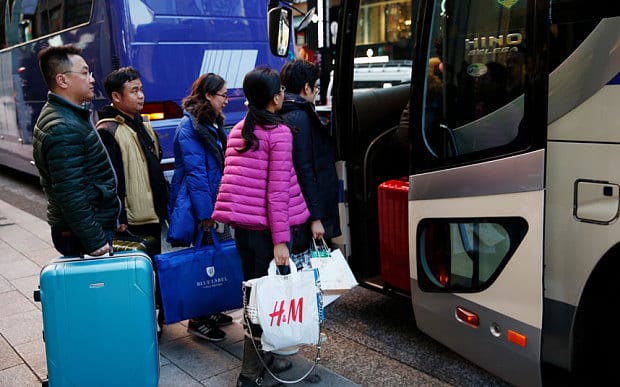
    The Chinese government’s forced reduction of tourists visiting Korea by 20 percent is already dealing a blow to businesses.

    “Even today, tourism offices in several provincial governments are acknowledging they are lowering the numbers of tourists going to Korea,” said an insider working in China’s tourism industry on Tuesday. “In several areas, there were even orders to send visitors to the Philippines instead of Korea.”

    chart

    Relations between China and the Philippines, which were sour for some time due to a territorial dispute in the South China Sea, recently softened after President Rodrigo Duterte visited China last week.

    Seoul’s ties with China have gotten frostier after it decided to deploy a U.S. missile defense shield that Beijing opposes.

    Businesses that rely on Chinese visitors are worrying that the decision will hit them hard. It hasn’t been long since they overcame the aftermath of last year’s Middle East respiratory syndrome (MERS).

    The first signal came from the stock market: shares of companies that could be hurt posted sharp declines Tuesday as news spread. Cosmetics leader AmorePacific fell 7.12 percent to 345,500 won ($305.06). LG Household and Healthcare lost 8.34 percent to 846,000 won. The impact was evident in tourism shares as well: Hotel Shilla lost 6.94 percent and HanaTour retreated 8.04 percent. All shares failed to recover Monday’s closing prices on Wednesday. Companies running group tours were most vulnerable.

    According to the Korea Tourism Organization, 2.4 million Chinese tourists came on group tours last year, 41 percent of the total number of Chinese tourists to Korea, which was approximately 6 million. As group tours are organized two to three months before departure, the decline is expected to really show by year’s end.

    “If Chinese group tours fall by 20 percent, the annual loss in relevant industries may reach a minimum of 2 trillion won,” said researcher Shen Jia at the LG Economic Research Institute. “If the decline spreads to individual tourists, the economic damage will deepen even further.”

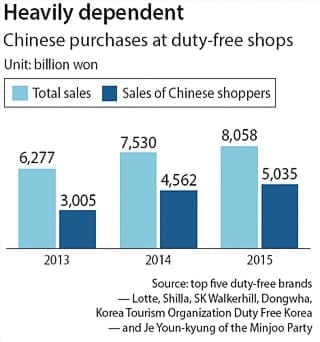
    Duty-free shops are nervous. Last year, the top five duty free operators – Lotte, Shilla, SK Walkerhill, Dongwha and Korea Tourism Organization’s Duty Free Korea – earned 5.4 trillion won in revenues from Chinese tourists, 62 percent of total sales of 8.6 trillion won.

    Through September of this year, Chinese tourists spent 3 trillion won at Lotte Department Stores. As soon as the news of the cutback spread Tuesday, duty-free stores organized emergency meetings with Chinese partners to devise some kind of a backup plan.

    There are currently nine duty-free shops in Seoul, with four more waiting to open next year. Competition in the duty-free industry is fierce, as it is one of the most robust retail markets in Korea. “A sudden drop in Chinese shoppers will cause considerable impact to both current and future duty-free operators,” said a spokesperson for Shilla Duty Free.

    Mid-priced hotels are nervous too. They are popular with group tours. “Half of the guests at business hotels in Myeong-dong or Dongdaemun are Chinese, and most are from group tours,” said Park Jong-mo, manager of the Ramada Hotel and Suites Seoul Namdaemun. “The market supply is rising, with new mid- and low-priced hotels being built in the city center. We’ll be seeing more vacant rooms.”

  • Philippine Airlines innovates in-flight retail

    Philippine Airlines innovates in-flight retail

    It used to be that some 20,000 feet above the ground, you browse a catalogue of duty-free merchandize to take home, chose some pretty standard stuff – cosmetics for the ladies, wine for the gentlemen, some cute airplane replicas for the kids, and maybe local goodies for the parents – and you have an instant take-home gift, paid for in cash and delivered to your seat with a smile by the friendly, in-flight crew.

    screenshot-2016-10-28-10-58-03

    Not anymore. In-flight retail has seen some highly innovative transformations in recent years – from offering huge discounts on luxury items to selling cars, bikes and even tractors inflight to home delivery to using the rewards cards for purchases.

    The Philippine Airlines recently embarked on its own transformation journey and re-imagine the retail experience in-flight and on the ground, starting off with turning the PAL Boutique, it’s in-flight catalogue, into a 24×7 online shopping site.

    With the newly launched website, shoppers can choose from a variety of products – from clothing and apparel, to electronics, travel essentials, beauty items and food. The site allows everyone to shop in the PAL Boutique store, not just those in the skies. It also features lifestyle merchandise such as hotel deals, car rentals, tours and recreation packages.

    Some of the items on sale at the online store are Sport 75, Heart 75, Southern shirts, Honeycomb polo shirts and hoodies as well as purse and tote bags by Team Manila. Press canvas wallets, heavy canvas Tote & Jotter notebooks, also by Team Manila, are likewise available.

    City Weekend, City Satchel, City Tourist, City Reach & City Envelope bag all by Fino, Amenity Kit by Bath Origins and Travel Wallet by Jacinto & Lirio as well as luggage tags and key chains are part of the product selection. Completing the line-up for travel aficionados is the myPALRoam, the global mobile hotspot that provides mobile data anywhere in the world.

    Collectible items include the Boeing 777 die-cast model, PAL bears by Natalya Lagdameo, PAL 75 anniversary fans and the PAL coffee table book. Chef Tony’s Butter Icing, Kesong Puti at Kondensada, Royal Peanut Butter and Tablea Tsokolate popcorns are also available for gourmet food lovers.

    The online shopping site is also linked to Mabuhay Miles, the company’s in-house rewards card and loyalty program. Every time a user shops at the online store, he or she earns corresponding rewards points. A 100-peso purchase ($2.07) at the PAL Online Boutique is equivalent to one mile.

    The online portal currently accepts Visa and Mastercard payments, but the online Boutique will soon accept Mabuhay Miles as payment.

    Marketplace solution

    PAL’s digital store is powered by the Voyager E-Commerce Marketplace (VEM) Solution, a cloud-hosted software-as-a-service (SAAS) platform with features catering to the needs of enterprises that want to bring their transactions online.

    The VEM Solution is a platform developed by Voyager Innovations, the digital innovations company of the PLDT Group and Smart Communications, the country’s biggest telecommunications company.

    Voyager Innovations VP for Digital Commerce Mitch Padua said VEM enables mid- to large-sized operators to build, manage and run world-class multi-merchant marketplaces. It provides platform that allows companies to easily sell online.

    “PAL Online Boutique is the product of a successful collaboration between PAL and Voyager Innovations. With just one click, a shopper can choose from premiere exclusive and co-branded items. If you are on the go, this online store is your shopping haven,” PAL Ancillary Business Unit VP Kevin Hartigan-Go said in a media statement during the launch of the service a few months back.

    Padua said the platform provides PAL an end-to-end solution – from the mobile app so that customers can view flight schedules, check in and purchase tickets to order management and customer care for their in-flight catalogue and online store to payment acceptance, which was provided by Voyager’s own payments company, PayMaya.

    “Airlines are the most progressive in terms of e-commerce,” he said at a recent media roundtable. “I think everyone buys tickets online. It makes sense for them (PAL) to not just sell tickets online but other things as well because they have a huge amount of traffic.”

    Citing a recent Google-Temasek study that within Southeast Asia, $88 billion is forecast on B2C transactions by 2025, Padua is optimistic there is a big opportunity for Philippine merchants, including online boutiques stores like PAL’s. “We are seeing about a billion dollars (in B2C transactions) now for the Philippines,” he said, adding that another study conducted by Visa hows nearly 9 out of 10  Filipinos connected to the Internet actually do online shopping.

  • These could be the world’s fanciest duty-free stores

    These could be the world’s fanciest duty-free stores

    Airport travelers shuffling between security checks and their boarding gate often grab duty-free perfume or a cut-price bottle of spirits before an international flight.

    But that’s far from the reality of some passengers at Singapore’s Changi Airport, who in some cases shell out more than $100,000 dollars for a bottle of their favorite tipple before hopping onto a flight.

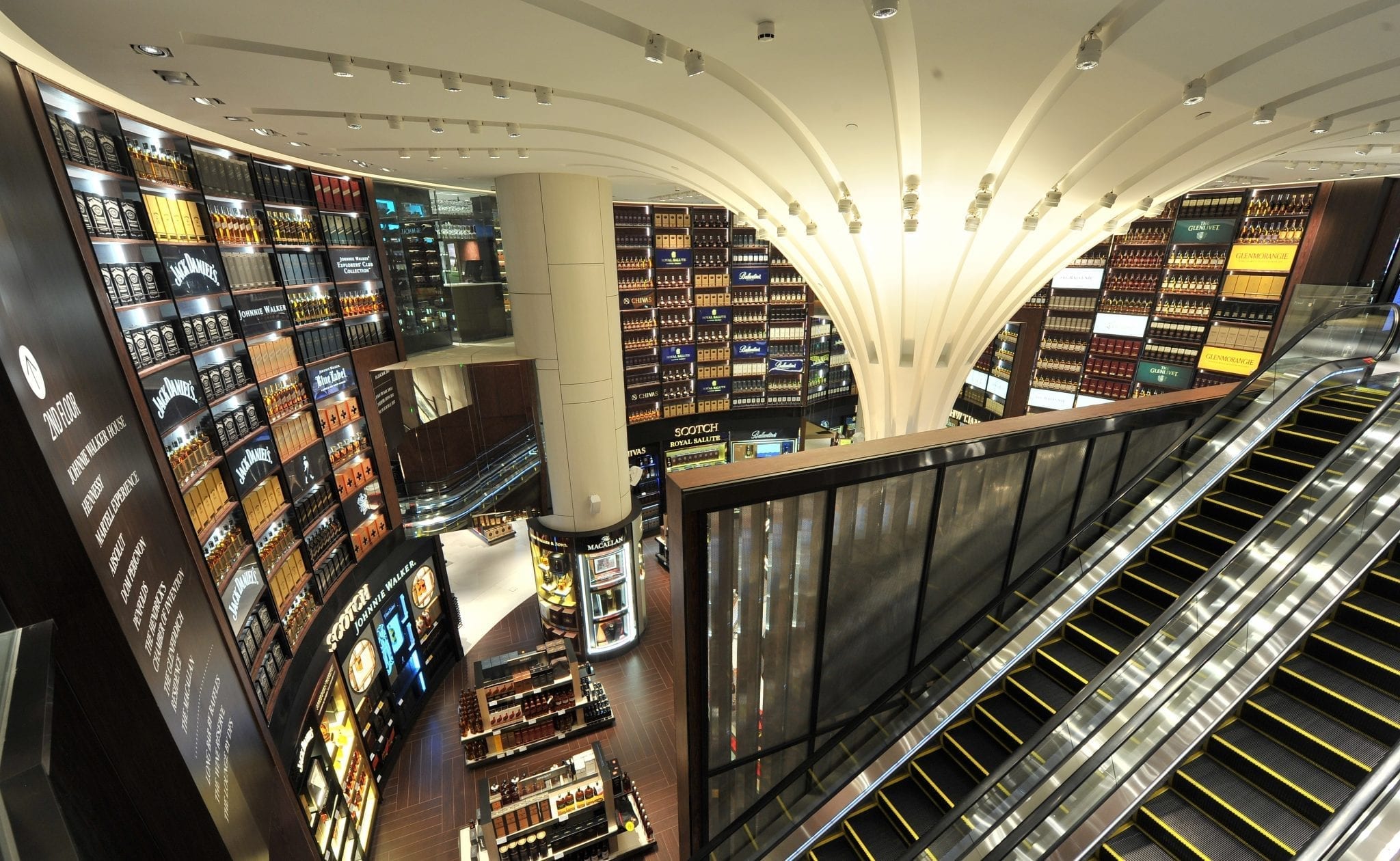
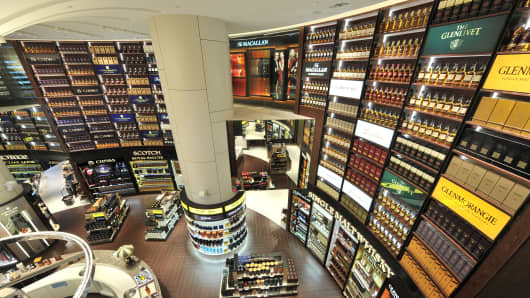
    High-end duty-free retailer DFS opened its new concept stores – complete with whiskey, wine, cigar and tobacco rooms, bartenders, complementary tastings and even virtual reality installations – in Changi’s Terminals 2 and 3 with precisely these customers in mind.

    “We drew inspiration from stylish restaurants and bars around the world when we created this space,” Wilcy Wong, DFS’s vice president of store operations in Singapore.

    He said there would be no hard sell when it came to the pricey products.

    “These days a lot of the customers are very knowledgeable themselves, so to be able to engage them and teach them something new is important,” Wong said.

    Not that the hard sell would be necessary; as well as knowledgeable, many customers are big spenders.

    DFS Wine & Spirits store at Singapore's Changi Airport
    DFS Wine & Spirits store at Singapore’s Changi Airport

    DFS staff recounted that one traveler recently bought a bottle of Glenfiddich 50-year-old single malt whisky priced at 43,910 Singapore dollars ($31,611) on a whim after passing the store. And that paled in comparison to the most expensive bottle ever sold at Changi, for S$250,000 ($180,000).

    Hong Kong-based DFS Group, which is majority owned by LVMH, has outlets at 17 major international airports, mostly in Asia, but has also staked flags in New York and San Francisco.

    The global travel retail market is estimated to grow to $85 billion by 2020, according to the Fung Business Intelligence Center, and Asia-Pacific is the largest single sector of the market, accounting for 39 percent, followed by Europe at 32 percent.

    This forecast growth is in contrast to the fall in retail mall traffic, particularly in the U.S., which has slumped as consumer spending lags and online shopping grows in popularity.

    Singapore’s Changi Airport, repeatedly ranked the best in the world by the influential Skytrax annual survey, hosts 55 million passengers a year, all of whom are classified as traveling internationally because Singapore is a city-state, and thus are free to buy duty-free items.

    DFS declined to provide any change in sales or foot traffic since opening of the new stores in Changi, but the concept has been praised by the retail and travel industry, winning “Best Shopping Experience” this year by Singapore’s Tourism Board, and Singapore’s Retailers Associations “Best Retail Concept of the Year”.

  • Tokyu Hands opening third Singapore store

    Tokyu Hands opening third Singapore store

    Japanese department store Tokyu Hands plans to boost its overseas sales, which now contribute 1 per cent of overall sales.

    Overseas income for its latest year totalled about 800 million yen (US$7.69 million).

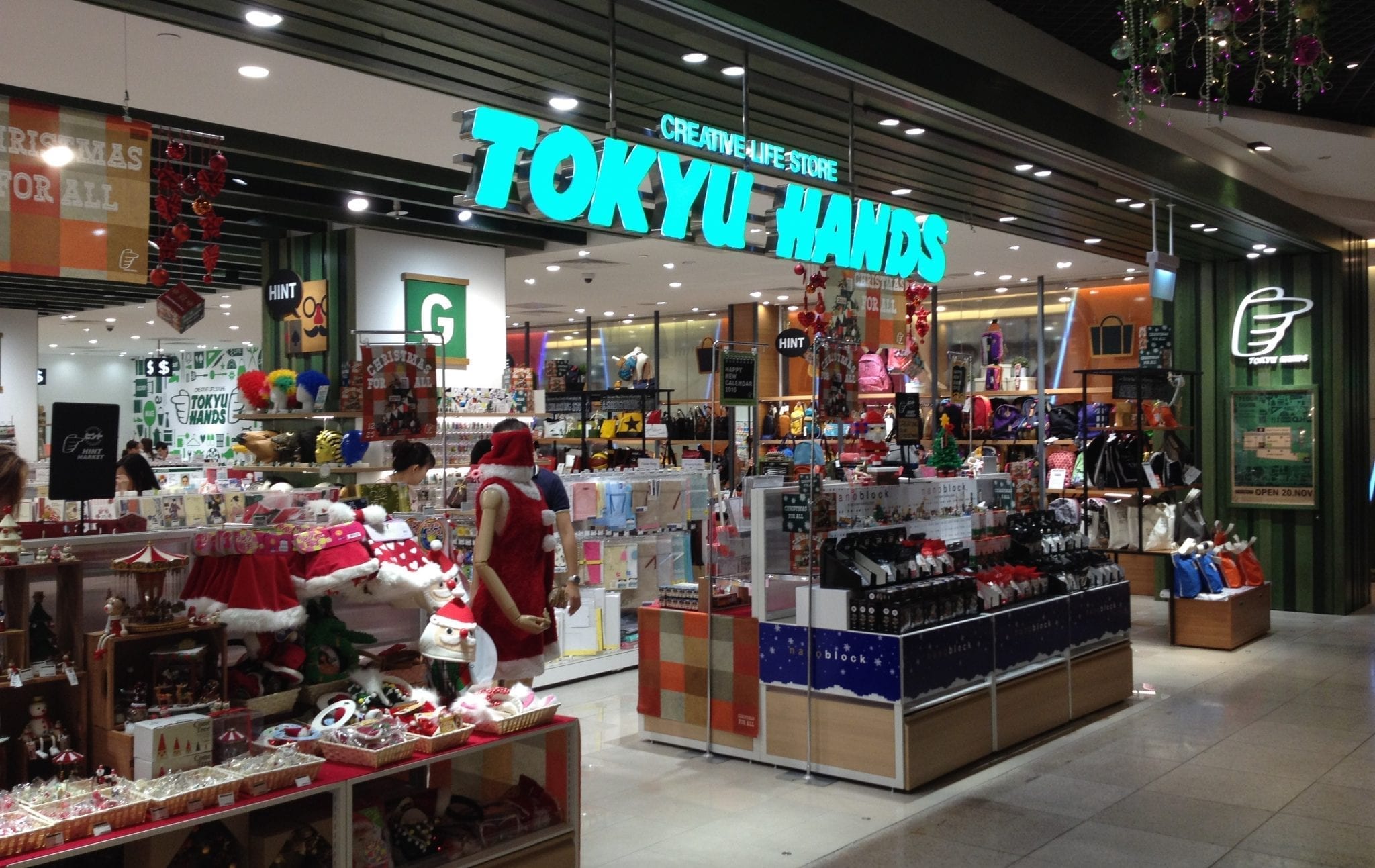
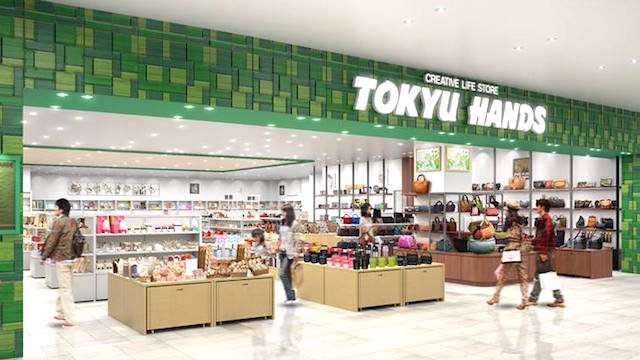
    A third store is opening next month in Singapore, where Tokyo Hands has had managed stores for two years, and next year the group plans to start trading in Malaysia.

    tokyu-hands-artist

    Tokyu Hands opened its first overseas branch in Taiwan in 2000 and now has 15 franchised stores on the island.

    Takenori Tsuji, who heads Tokyu Hands’ international business, says the Taiwan stores are mainly in Taipei with management entrusted to the franchisees, “but we consult on the selection of merchandise and store layout”.

    He says trends in Japan, such as aging consumers, have made it hard for the store to grow domestically.

    Tokyu Hands’ first directly managed store overseas opened in China in 2012, but closed it in January this year. Tsuji says this was a result of management difficulties.

    “It took more time and effort than expected to clear customs when we brought in products from Japan, making it hard for us to sell new products quickly.

    “Some sales people quit soon after being hired, and it was hard to train Japanese employees in the local area.”
    Six months after launching, the store had a temporary sharp drop in sales when relations between China and Japan worsened over the disputed Senkaku Islands. However, full-year sales were “reasonably good”.

  • Currency hurt Walgreens Boots Alliance sales

    Currency hurt Walgreens Boots Alliance sales

    Walgreens Boots Alliance sales figures have been an early victim of the strengthening dollar, especially against sterling in which the majority of which Boots’ sales are denominated.

    This dynamic has turned a 1.4 per cent international sales gain in local currency terms into a decrease of 10.9 per cent in the final accounts. In turn, this has diminished overall turnover growth to a paltry 0.4 per cent – markedly down on the 35 per cent uplifts posted a year ago when not yet annualised Alliance Boots’ sales were providing a healthy boost to the figures.

    Fortunately, thanks to some one-off expenses and losses on equity interest last year – neither of which reoccurred this year – the bottom line outcome is strong, with net income rising by well over 3130 per cent. Given that Walgreens is still in the process of driving synergy savings from the Boots Alliance merger it will generate further profit uplifts well into the next fiscal, even against a more challenging growth backdrop.

    It is inevitable, however, that the returns from cost savings and the streamlining of the business will diminish over time. And given that the prospects for a recovery in sterling look slim, the company will need to look to its domestic operation to drive future growth.

    On this front there are two pieces of somewhat disappointing news from today’s results.

    The first is the merger with Rite Aid which was scheduled to close in the second half of this year has now been extended into the next fiscal. There is no real mystery about this – it comes down to the glacial pace at which the Federal Trade Commission, which is examining the deal, moves. However, the extension means Walgreens will not be able to rely on Rite Aid to boost its numbers in the next quarter. Longer term, the deal will be value accretive, mostly thanks to the forecast $1 billion in synergy savings and to the productivity improvements Walgreens can bring to Rite Aid’s rather lacklustre stores.

    The second concern comes from Walgreens’ front of store sales numbers in the US, which fell by 0.3 per cent on a comparable basis and by 0.5 per cent in total. Such an outcome is discouraging given that these had been on an upward trajectory thanks to the improvements the company has been making in its beauty offer. Given that Walgreens has also marketed its general merchandise offer more heavily this year, it is disappointing not to see gains in customer traffic. That said, the numbers are up against some tough comparatives from last year and with the new beauty offer continuing to attract interest from consumers, these metrics will strengthen over the holiday quarter.

    The new fiscal year presents Walgreens Boots Alliance with more opportunities than it does challenges. As such, after a softer start expect to see strong growth in both sales and profits across the year as a whole.


    -Neil Saunders

  • Chinese Investors Consider GNC Acquisition

    Chinese Investors Consider GNC Acquisition

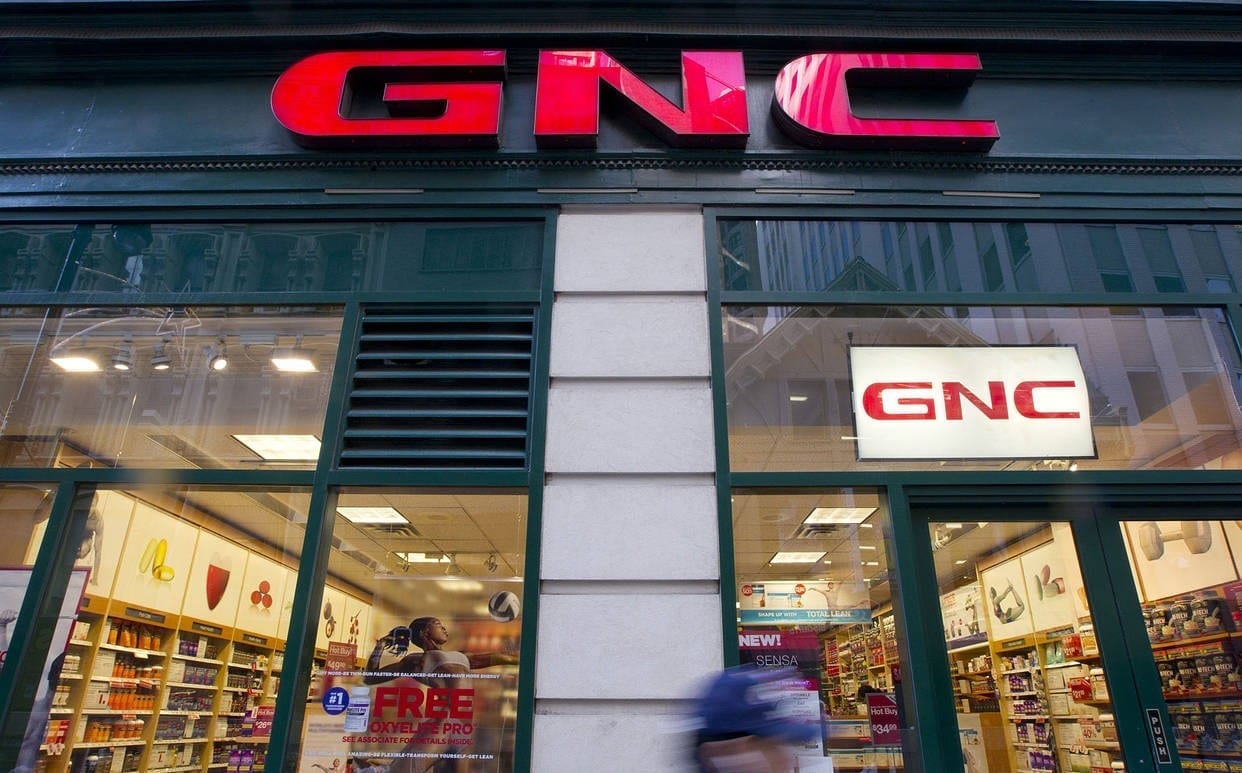
    GNC first popped up in Chinese towns and cities in 2011, with small stores within grocery stores, and now rumors are swirling the giant dietary supplement retailer might end up with a Chinese owner.

    The Wall Street Journal broke the news that GNC is up for sale and a pair of Chinese equity firms are among the interested parties. The journal reported any such acquisition could be worth US$4 billion, including debt—GNC’s market value is around $1.3 billion, with outstanding debt of around $1.4 billion.

    One of the prospective buyers named is Fosun Group, a Shanghai-based investment firm with holdings across insurance, financial, retail and other industries. Its motto is “Combining China’s Growth Momentum with Global Resources.” Fosun most recently bought the English football club Wolverhampton Wanderers and, through Fosun Pharmaceutical, acquired Indian pharmaceutical company Gland Pharma—a number of Chinese pharmaceutical firms are also interested in GNC.

    The other named suitor is Zhongzhi Capital (ZZ Capital), a Beijing- and Hong Kong-based asset management firm focused on media/entertainment, internet, high-end manufacturing, healthcare, financial, IT and logistics. Among its goals is to help overseas companies better penetrate the Chinese market.

    Speculation on the motivation of such firms interested in GNC to a Chinese buyer has centered on the growing trend of Chinese investors purchasing overseas vitamin and sports supplement companies to satisfy Chinese consumer demand for foreign nutrition brands in lieu of quality-challenged Chinese brands.

    Beijing-based Primavera Capital Group paid $238 million to purchase Australian nutrition contract manufacturer Vitaco Holdings in August 2016, and Binzhou, China-based Xiwang Foodstuffs Co. acquired Canadian supplement maker Iovate Health Sciences for $730 million in June 2016.

    GNC has opened around 60 store-within-store locations throughout China involving eight grocery chains. According to its 2015 annual report, released in February 2016, it had five locations  in China, including standalone franchise stores and a small regional retail office.

  • Opportunity Grows in Indonesia as Tourism Sector Blooms

    Opportunity Grows in Indonesia as Tourism Sector Blooms

    The government’s ‘Wonderful Indonesia’ campaign (which began in 2011) has transformed Indonesian tourism into a vibrant, lucrative, and rapidly growing industry. Alongside national ‘gems’ like the ancient Borobudur Temple, the divers’ haven of Raja Ampat, and the Komodo National Park, a host of new destinations are becoming established – among them Bintan, Maluku, and Lombok.

    Tourism is responsible for creating close to 10 million jobs, and last year the government allocated a further Rp.1.3 trillion (US$98.4 million) to promote tourism. That year it contributed 9.6% of total GDP – behind Indonesia’s top earners of oil, gas, coal, and palm oil.

    Minister of Tourism Arief Yahya announced that in 2019, tourism would be Indonesia’s biggest foreign exchange earner. By that time, he wants tourism’s contribution to national GDP to have doubled, bringing in US$24 billion annually.

    The objective to reach 20 million tourists by 2019 is equally ambitious. This year’s target is 12 million; the total last year was 9.73 million. To support these targets, the Asian Development Bank agreed to lend Indonesia US$10 billion over the next five years.

    Business tourism lags behind leisure tourism: in 2014, total business tourists (3.16 million) were half that of leisure tourists (6.27 million). Events like the 39th PATA (Pacific Asia Travel Association) Travel Mart, recently hosted in Greater Jakarta, reflect the potential for business tourism. That event attracted 1358 delegates from 63 countries, and the tourism ministry must work with businesses to bring more events like this to Indonesia in the future.

    Business tourism could facilitate the expansion of the hospitality industries, particularly high-class hotels and restaurants (and other venues suitable for conferences and exhibitions). The government recently altered its ‘Negative Investment List’ such that foreign investors have greater access to (and ownership of) strategic businesses – including in the tourism and hospitality industries. Substantial cash injections should boost economic growth, creating more jobs and facilitating more creative enterprise, to ensure Indonesia remains globally competitive.

    Travel outside of Bali remains challenging, and the infrastructure is in need of a significant revamp. The government has responded to this increased demand by announcing plans to expand current airports as well as construct new ones. This is an essential strategy: after the upgrade of Labuan Bajo airport, Komodo Island, home of the endangered Komodo dragon, is able to accommodate 1.5 million tourists annually (before, the number was 150,000).

    Potential hotspots: Bintan and Maluku

    Bintan, the largest island in the Riau Archipelago, is known for its natural beauty, boasting long stretches of pristine, white-sand coastline. It is near Singapore and the Malaysian state of Johor, and is primarily marketed at people living in, or visiting, Singapore. Bintan thus profits from the international traffic running through Singapore’s world-class Changi airport.

    Julia Suryakusuma notes that development of Bintan has been slow, and a substantial cash injection is needed to transform Bintan to the level at which it is able to compete with Bali. So as not to appear hollow, sterile and just ‘another’ island resort, she recommends that Bintan markets itself as an ecotourism destination, based around the indigenous community of Orang Laut, in Tanjung Berakit (to the northeast of the island). After all, the incorporation of local culture is what lies behind Bali’s success. Ecotourism is a growing sector in the tourist industry with huge business potential, although difficulty is sometimes faced in getting the locals to participate. It is increasingly popular with American tourists, an important market which has long eluded Indonesia.

    The far-flung region of Maluku, albeit a popular diving destination, is being promoted in a broader capacity as a key tourism site for eastern Indonesia. With this it has the potential to open up the regional economy, for the more remote islands of eastern Indonesia are relatively undeveloped in comparison to the western regions. Within Maluku, the Buru regency has been spotlighted as one of Indonesia’s ‘tourist icons’. Here, the Ministry of Tourism recently launched the Bupolo tour festival, where various cultural events were showcased, in a bid to attract more tourism.

    Lombok and Halal tourism

    Lombok, in West Nusa Tenggara, is also in the midst of a significant transformation. Mandalika Resort in Lombok is a vast complex being developed by the Indonesia Tourism Development Corporation (ITDC), the state-owned company responsible for the Nusa Dua complex in Bali.

    The government has allocated Rp.1.8 trillion (US$138.57 million) to develop Mandalika. Mandalika is now a special economic zone (SEZ), which means investors will be granted tax and fiscal incentives, as well as other business-related benefits; a factor which will undoubtedly encourage the proliferation of hotels, restaurants and bars over the next few years, as well as better and stronger infrastructure. According to the ITDC, it will be ready by 2018.

    However, Lombok is becoming known for a different reason. At the 2015 World Halal Travel Summit and Exhibition in Abu Dhabi, Lombok was recognised as the World’s Best Halal Tourism Destination and Halal Honeymoon Destination.

    Halal tourism is a growing sector, given the increasing number of Muslim tourists, and as the world’s most populous Muslim country Indonesia is strongly positioned to exploit that industry. The government has officially listed West Nusa Tenggara, West Sumatra and Aceh as Halal tourism destinations.

    The government announced it would be targeting more Arab tourists, particularly from Saudi Arabia. Saudi Arabia is the largest tourism contributor to Indonesia from the Middle East, with 147,074 visits in 2014. It was recently added to the list of countries for which visa entry is no longer required. The government also signed agreements with key Gulf airlines, including Qatar Airways and Emirates Airlines, to increase the frequency of direct flights to the archipelago.

    Given Indonesia’s determined promotion of tourism, economic opportunity is rife and investors should be aware.