Category: Living

Retail News Asia is committed to providing both local and global retailers with the latest Living news throughout the Asian market. This on a daily base.

  • Muji’s next bet is Southeast Asia, India with stores offering more than shopping

    Muji’s next bet is Southeast Asia, India with stores offering more than shopping

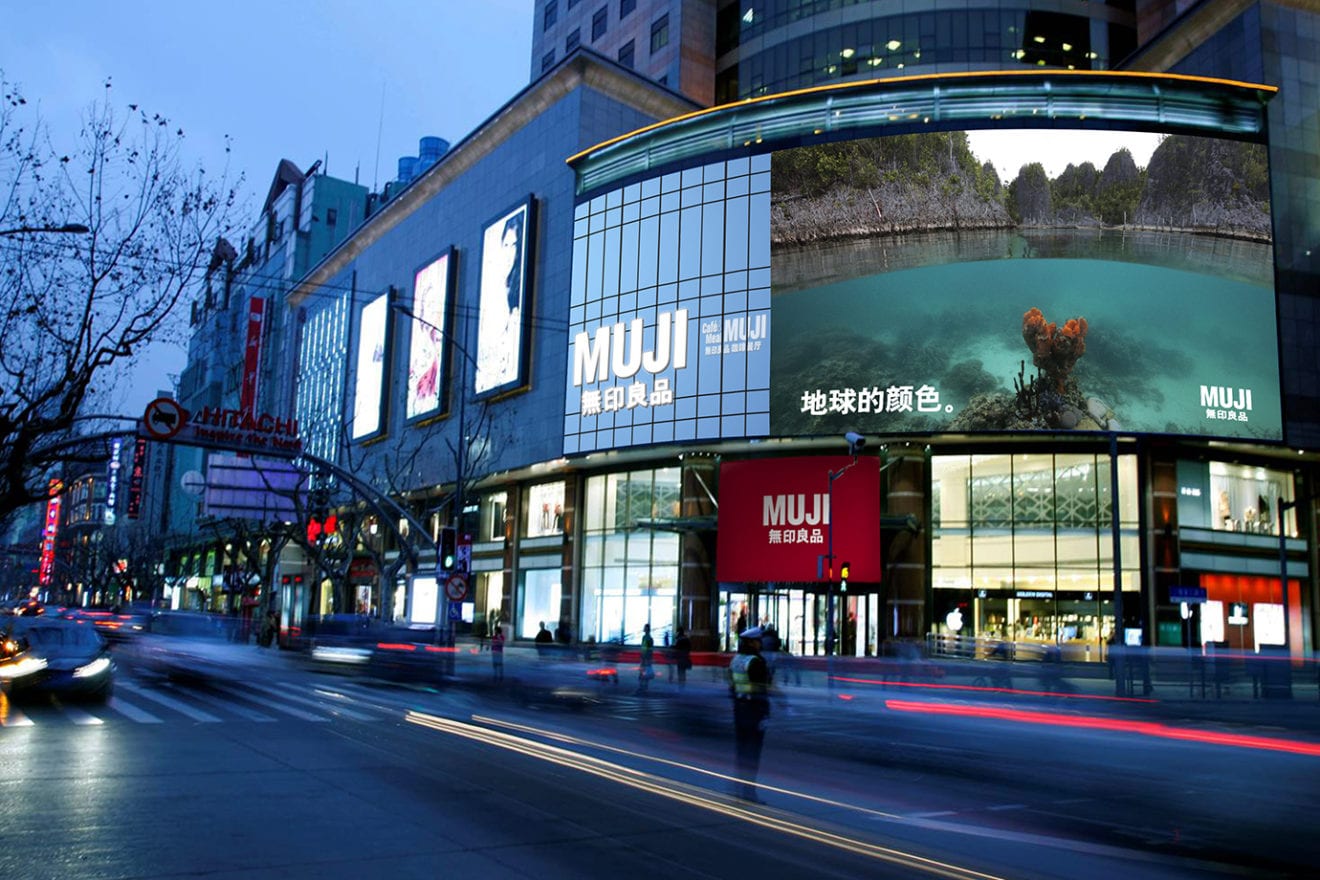
    Japan’s Ryohin Keikaku, operator of lifestyle retail store Muji, plans to introduce more in-store services and new concept stores in Southeast Asia, as consumers in the region gain more spending power and their spending habits become increasingly sophisticated.

    Satoru Matsuzaki, president of Ryohin Keikaku, told Nikkei Asian Review on Thursday that the company hopes to introduce “Muji Books” space, where curated books on themes such as fashion and interior design will be sold alongside Muji products, in its flagship outlet opening in Singapore next year.

    The new store will be the company’s largest outlet in Southeast Asia, and will serve as a showcase to introduce new in-store services in the region, such as home decor consultation, fashion styling and tasting events for new food products.

    The company just opened its 10th store in Singapore on Thursday. The 1,000 sq. meter outlet is the second in Singapore to house “Muji Cafe&Meal,” an eat-in space serving healthy meals and desserts. “We want to take this concept to other parts of Southeast Asia, such as Kuala Lumpur,” said Matsuzaki.

    The idea is to create a new retail experience to grasp the hearts of young consumers and gain a solid foothold in Southeast Asia’s retail scene. “Foreign brands come and go at a fast pace in Singapore,” Matsuzaki said.

    But he remained confident that there is a growing demand for Muji’s simple products as consumers in the region shift away from spending a fortune on luxury brands just to show off. “Consumers in this region are spending more on good-quality everyday items to enrich their everyday lives, and Muji can serve this need,” Matsuzaki said.

    Ryohin Keikaku’s Asia strategy has so far been centered around China, where the company plans to have 200 stores by the end of the year. While high-end brands are suffering from sluggish demand amid the economic slowdown, Muji stores in China have seen steady sales growth. The company has already has introduced Muji Books and cafes in China to cater to the changing consumer behavior.

    The company’s next bet is in Southeast Asia, where it runs a total of 38 stores in Singapore, Malaysia, Indonesia, Thailand and the Philippines. Southeast Asia’s store sales in the first six months of 2016 on an existing store basis logged double-digit growth year on year, faster than its growth rate in China. Stores in Singapore and Thailand are leading the pack.

    The company aims to open about two stores every year in each market in Southeast Asia, and is currently planning to enter Vietnam by the summer of 2017. A new store in Mumbai is set to open on Aug. 5, marking Muji’s first entry into India, followed by another store in Bangalore in September.

  • Philippines prepares for nationwide rollout of 911 hotline

    Philippines prepares for nationwide rollout of 911 hotline

    The Philippines’ Department of Interior and Local Government (DILG), operators, private organizations, media partners and other government agencies have started testing the nation’s new 911 emergency hotline.

    The new emergency hotline will be rolled out nationwide on August 1. The new service was made possible by an agreement signed by the the different government agencies including the DILG, Department of Information and Communications Technology (DICT), and National Telecommunications Commission (NTC).

    The agencies were responding to the instruction of newly elected President Rodrigo Duterte to designate a number people can call in response to a national disaster.

    Other signing agencies were the Foundation for Crime Prevention (FCP), Philippine Information Agency (PIA), and the Kapisanan ng mga Brodkaster ng Pilipinas (KBP).

    The agreement covers the transition to make the existing 117 hotline and the new 911 emergency hotlines accessible to call for the general public through each party’s respective networks.

    The DILG said the existing 117 hotline will be utilized for 911 hotline operation starting next month. The current hotline has 15 seats, 43 agents and database of Philippine National Police (PNP) units, including their mobile, local government Units and its emergency numbers and teleconference capability.

    Retired General Eliseo Rio Jr. of the Department of Information and Communications Technology (DICT) and currently consultant to 117, said that after August 1, the current 15 seats will increase to 30 and the existing 43 call center agents will be increased to 90.

    The country’s two leading telecommunications players – PLDT and Globe Telecom – both expressed support for the government project. In a statement, Globe’s Legal Counsel Froilan Castelo said the company is ready to comply with the government directive to provide access to 911 and 8888 numbers for government emergency hotline and complaint hotline.

    Globe has long used the 8888 number as its own customer hotline. However, the company will give way to the government request and will instead change to a new hotline number for its more than 57 million customers.

    At the start of the testing period last week, DILG Secretary Ismael Sueno reportedly called 911 twice using a landline and a cellular phone in the presence of officials from concerned agencies to see how the operation will flow.

    The test calls – as well as the simulation exercises that will be made between July 21 to July 31 – seek to close possible gaps that will be encountered once 911 goes public.

  • SES pilots satellite e-health program in Philippines

    SES pilots satellite e-health program in Philippines

    Satellite operator SES, the Luxembourg Ministry of Foreign and European Affairs, and the non-governmental organization (NGO) German Doctors have launched the satellite-based e-health platform SATMED in the Philippines.

    The solution was deployed at the German Doctors’ hospital in Buda, Marilog District in Davao City.

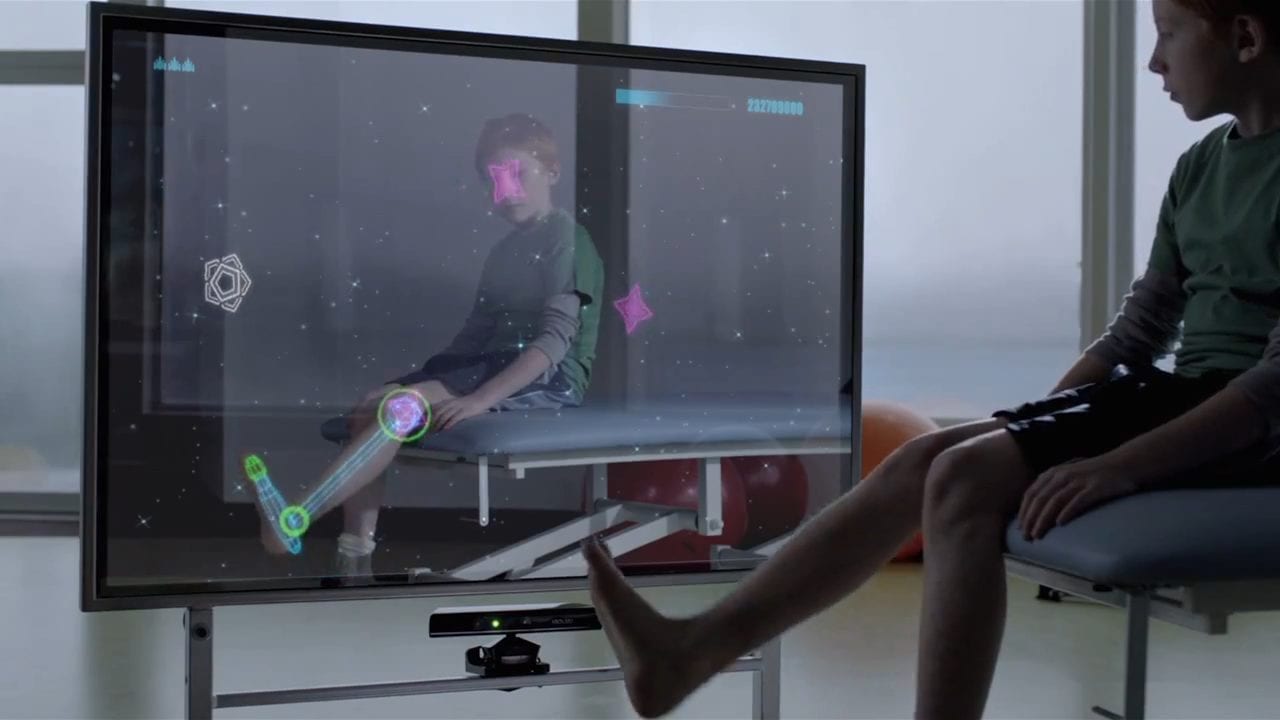
    SATMED can improve public health in developing countries by integrating medical applications and tools on a single platform over satellite broadband services. The solution was developed by SES Techcom Services, a wholly owned subsidiary of SES, and is funded by the Luxembourg government.

    The new SATMED solution deployed in Central Mindanao will enable German Doctors to use portable devices such as tablets to collect the patients’ data, which will be processed, aggregated and synchronized securely on SATMED’s cloud platform.

    A text messaging functionality will allow doctors to keep tabs on large groups of patients living in remote villages, whose main form of contact with the outside world is through mobile phones.

    SATMED will also enable German Doctors to communicate with doctors and medical experts around the world via video conferencing. Training of local medical professionals via SATMED’s e-learning solutions will be another opportunity.

    “The implementation of SATMED, through satellite connectivity, makes digital imaging, e-learning and consultation, and other e-health solutions, available to the local medical community,” said Glen Tindall, Vice President of Sales, Asia-Pacific at SES.

    Dietmar Schug, Managing Director of German Doctors, said that poor terrestrial connectivity in rural locations poses obstacles in analyzing and monitoring patients’ health problems, accessing their medical records and providing follow-up care.

    “More than 200,000 people are living within the catchment area of the Buda Community Health Care Center – about half of those coming from the indigenous population, who often have no access to medical care and whose lives are below the poverty line,” he said.

    “SATMED and its suite of medical applications opens up healthcare possibilities and boosts our efforts in making accessible, quality healthcare a reality for these remote communities.”

  • Netflix beams ‘Star Trek’ in 188 countries

    Netflix beams ‘Star Trek’ in 188 countries

    Netflix has signed a licensing agreement with CBS Studios International to be the exclusive premiere home of “Star Trek” in 188 countries, excluding the United States and Canada.

    Each episode of the new series will be available globally within 24 hours of its US premiere.

    The all-new Star Trek will begin production in Toronto in September for its January 2017 premiere. The iconic and influential global franchise will return to television for the first time since 2005 with a new ship, new characters and new missions, while embracing the same ideology and hope for the future that inspired a generation.

    “The launch of the new Star Trek will truly be a global television event,” said Armando Nuñez, president and CEO of CBS Studios International. “Star Trek is already a worldwide phenomenon and this international partnership will provide fans around the world, who have been craving a new series for more than a decade, the opportunity to see every episode virtually at the same time as viewers in the US.”

    In the US, the new Star Trek will launch with a special premiere episode on the CBS Television Network in January 2017. The premiere episode and all subsequent episodes will then be available in the United States exclusively on CBS All Access, the Network’s digital subscription video on demand and live streaming service.

  • Viacom unit debuts Nickelodeon block

    Viacom unit debuts Nickelodeon block

    Viacom International Media Networks (VIMN) Asia is expanding its collaboration with Vietnamese multimedia communication group International Media Corp (IMC), to launch the first Nickelodeon-branded block on IMC’s YouTV channel, available on satellite, cable and free digital terrestrial platforms in Vietnam.

    By the end of September, over 5 million Vietnamese households that access YouTV will be able to enjoy up to four and half hours of Nickelodeon’s world-renowned content every day during the after-school hours on weekdays and the mornings during the weekends.

    The multi-year deal includes Nickelodeon animation titles like SpongeBob SquarePants, Dora the Explorer, Teenage Mutant Ninja Turtles, PAW Patrol and select popular live action series like The Thundermans and Haunted Hathaways.

    “Nickelodeon blocks offer broadcasters a robust and varied entertainment solution for kids 4 to 14 years and we are delighted to partner with YouTV to bring our first Nickelodeon branded block to Vietnam,” said Mark Whitehead, VIMN Asia Pacific’s EVP and managing director.

    “We are excited that YouTV will be the first to exclusively carry a Nickelodeon block in Vietnam,” said IMC’s executive chairman Lam Chi Thien. “YouTV currently has a leading position in the Vietnamese market for families and this collaboration will provide significant added value for the kids’ programming line-up for our viewers.”

    IMC currently has an existing collaboration with VIMN as a licensee partner for MTV Vietnam.

  • Zee acquires Sarthak Entertainment for $17m

    Zee acquires Sarthak Entertainment for $17m

    Zee Entertainment Enterprises has decided to acquire fully Sarthak Entertainment, which operates Odia-language Sarthak TV.

    The acquisition shall be from current shareholders of Sarthak Entertainment, subject to requisite regulatory approvals, as an all-cash deal at a consideration of maximum of 1.15 billion rupees or about $17 million.

    With this acquisition, Zee has entered the rapidly expanding regional market in Odisha. Sarthak TV would complement Zee’s regional bouquet of channels that includes Zee Marathi, Zee Talkies, Zee Bangla, Zee Bangla Cinema, Zee Telugu, Zee Kannada and Zee Tamizh.

    “The acquisition of an already profitable, market leading venture is going to be a value accretive investment in line with our philosophy of enhancing shareholder value,” said Punit Goenka, managing director and CEO of Zee. “Sarthak will further add to our formidable bouquet of 33 channels in the domestic market.”

    “Being the oldest and market leading network in India, Zee would provide the perfect platform for Sarthak to grow further in the future,” said Sitaram Agrawalla, founder and managing director of the Sarthak Group. “With a history of successful operations, we are sure Sarthak will be a great value-add for Zee.”

  • APAC pay TV faces slowing growth

    APAC pay TV faces slowing growth

    The Asia-Pacific pay-TV industry is expected to grow at a 5.8% average annual rate from 2016 to 2021, according to Media Partners Asia (MPA).

    MPA projects pay-TV industry sales across 18 major markets in Asia Pacific to climb from $54 billion in 2016 to $72 billion by 2021, rising thereafter to $81 billion by 2025.

    The pace of pay-TV subscriber and revenue growth is slowing however, weakened by an economic slowdown and increasing competition from both legal and illegal alternatives.

    Pay-TV subscriber growth declined or substantially decelerated in Hong Kong, Indonesia, Malaysia and Singapore in particular.

    At the same time however, India and Korea remain two of the region’s largest and most scalable pay-TV opportunities. Revenue growth will also accelerate in Australia and the Philippines, largely thanks to subscriber growth.

    However, MPA analysts have lowered subscriber growth forecasts across much of Southeast Asia, especially for Indonesia, Malaysia and Singapore, although ARPU should remain resilient in both Malaysia and Singapore.

    The pay-TV industry in China, meanwhile, remains the largest in the region and is becoming increasingly digitalized. Pay-TV growth opportunities for broadcasters are limited however, due to increasing regulation as well as competition from free and paid online video services.

    Elsewhere in the region, subscription-based video-on-demand (SVOD) services have had a negligible impact on pay-TV so far, despite the global launch of Netflix earlier this year, in addition to increasing competition among lower-priced regional and local SVOD services.

  • Pokemon no-go for Indonesian civil servants

    Pokemon no-go for Indonesian civil servants

    Indonesian civil servants have been ordered not to play Pokemon Go at work in a bid to protect “state secrets”, the latest sign of a growing backlash in the country against the smartphone game.

    Resistance is mounting in official circles to Pokemon Go, with the military and police already having banned their personnel from seeking to catch virtual monsters while on duty, and the Jakarta presidential palace prohibiting the game around its premises.

    The top echelons of the security establishment have expressed fears that the game’s hi-tech capabilities could be used by foreign spies to access sensitive data-although security experts are sceptical there is any danger.

    A Frenchman was briefly detained this week after accidentally wandering onto an Indonesian military base as he hunted for monsters.

    Yuddy Chrisnandi, the minister for bureaucratic reform, has now sent a letter to all government departments across the archipelago, from ministries to the intelligence agency and local leaders, calling on them to ban staff from playing Pokemon Go.

    “We are taking preventative measures to maintain the state’s security and state secrets,” he said in a statement posted on his ministry’s website yesterday, addressed to the country’s approximately 4.5 million civil servants.

    “We cannot endanger the stability of the country.”

    Indonesians have been swept up in the frenzy for Pokemon Go, which has been a worldwide hit since its launch two weeks ago among hordes of users who have taken to the streets with their smartphones.

    While it is not available officially in Indonesia, gamers have managed to download unauthorised copies and have set out to hunt for virtual monsters everywhere from shopping malls to mosques.

    Some local leaders were already heeding Chrisnandi’s order, with the mayor of Bandar Lampung city on western Sumatra island threatening to fire civil servants caught playing the game.

    However there appeared to be resistance in other areas-the governor of Central Java province suggested the game could be used to attract more tourists.

    Pokemon Go uses smartphone satellite location, graphics and camera capabilities to overlay cartoon monsters on real-world settings, challenging players to capture and train the creatures for battles.

  • Indonesia the most favorite destination for Australian tourists

    Indonesia the most favorite destination for Australian tourists

    Indonesia has so far proven to be the most favorite destination for Australian tourists, overtaking New Zealand, Indonesian Ambassador to Australia Nadjib Riphat Kesoema said.

    “The variety of natural wealth and beauty, culture and world-class tourist facilities that the Indonesian government offers to tourists have become special attractions for Australian tourists,” he stated in a press statement released on Saturday.

    His remarks came when the Indonesian Tourism Ministry and the Indonesian Embassy in Australia were conducting a promotional activity at Hotel Hyatt in Canberra recently.

    Besides helping promote mutual understanding between the peoples of the two countries, the tourism sector can also create jobs in Indonesia, he added.

    He underlined that he supported the program to conduct tourism promotion in several Australian cities such as Canberra, Sydney, Melbourne and Brisbane.

    The program will serve as a venue for a meeting between Australian travel agents and their Indonesian counterparts directly, he said.

    The ambassador has called on Australian tourism companies to encourage Australian citizens to visit other Indonesian tourist destinations than Bali.

    Data from the Indonesian Embassy in Canberra showed that almost 85 percent of 1.2 million Australian tourists visited Bali in 2015.

    Nadjib offered potential visitors from Australia other tourist destinations such Toraja, Lake Toba, Raja Ampat, Labuhan Bajo, Tanjung Kalayang, Seribu Islands, Borobudur Temple, Mount Bromo, Wakatobi and Morotai Island.

  • China’s XL-Muse reinvents the bookstore

    China’s XL-Muse reinvents the bookstore

    Shanghai studio XL-Muse has come up with creative designs for two new stores for book retailer Zhongshuge.

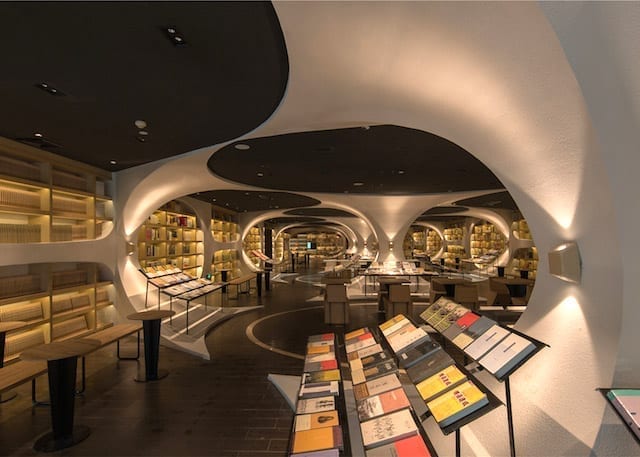
    Shelving reaches to the ceiling in the corridor of the Yangzhou Zhongshuge bookshop and is reflected by the floor below, emulating the effect of water. The designers took inspiration from the store’s waterside location in Zhen Yuan, as well as the area’s arched bridges, reports Dezeen.

    Zhongshuge book store Yangzhou 3

    “In the past, guided by water, many literati and poets visited and gathered here,” says XL-Muse. “The bridges were once the guiding factor of culture and commerce, and they represent the bookstore being the bond between humans and books.”

    The Yangzhou store is the latest interior XL-Muse has created for Zhongshuge. The studio previously created an oval reading room with stepped shelving for a branch that opened in Hangzhou in April. Black mirrored flooring and arched shelves create a tunnel of books. The Zhongshuge-Hangzhou bookshop also has mirrored ceilings and wraparound bookshelves, and a display room with columns shaped like tree trunks.

    Zhongshuge book store Yangzhou 1

    At the Yangzhou store, the concave shelving does not meet at the top, but is separated by a gap shaped like a lightning bolt across the middle of the ceiling. Reflected on the mirrored flooring, this gap is meant to act as a river, leading customers forward into the store.

    Zhongshuge book store Yangzhou 7

    The 1000 sqm space includes a reading room and a village-themed children’s area. The main reading room features curvaceous shapes in the form of sculptural, white pillars that curve inward from the ceiling.

    Zhongshuge book store Yangzhou 2

    Zhongshuge book store Yangzhou

    Shelving is a combination of traditional vertical styles and black metal stands arranged on a gentle slope that complements the curves of the pillars.

    Zhongshuge book store Yangzhou 6

    Meanwhile, the children’s picture book pavilion features shelves shaped like houses, towers, clouds and a hot-air balloon. The wooden shelving is painted in a spectrum of bright colours, and the ceiling lights are arranged to suggest a starry sky.

  • IKEA to Recall Unsafe Furniture in China

    IKEA to Recall Unsafe Furniture in China

    Swedish furniture giant IKEA will recall their unstable Malm furniture line of chests and drawers in China.

    The decision came after many vocal Chinese consumers complained that IKEA was discriminating them. The Malm line was still in Chinese stores amidst recalling over 29 million pieces of chests and drawers in Canada and the United States.

    The product recall in North America transpired two weeks ago, after being linked to the death of six children.

    When IKEA refused to recall their product from their Chinese outlets, consumers complained online and through government controlled media. Government controlled newspaper Xinhua accused IKEA of committing “blatant bullying.”

    The government-run General Administration of Quality Supervision, Inspection and Quarantine claimed that after meeting IKEA, the company decided to change their minds.

    Last Tuesday, the furniture company decided to recall about 1.7 million pieces from their stores. IKEA offered free home installation and an optional refund.

    IKEA’s spokeswoman, Xian Jiaxin, said, “IKEA is a very responsible company. Consumer protection is very important to us, which is how we came to this decision.”

    Many Chinese shoppers go to IKEA for their furniture needs. As a result, the Swedish company incurred a large amount of sales. By September 2015, total revenue totaled to $1.55 billion.

    The furniture company is determined to firm its hold in the vast Chinese retail market. Total retail sales annually is worth $4.5 trillion in China, which will soon exceed sales from the United States.

    Jeff Walters, managing director of the Boston Consulting Group said, “If you look across the world and you look where there is still significant growth in consumer spending, the answer is very much China. Of course any company is going to make sure it’s standing on the right side of regulation to have access to a market that size.”

    Many Chinese consumers are becoming more discriminating due to violation of rights in the past. Since then, government inspectors have been more stringent in regulation and inspection of goods and products.


  • HomeSquare’s 7th Annual Smart Buy Weeks Kicked Off last week

    HomeSquare’s 7th Annual Smart Buy Weeks Kicked Off last week

    HomeSquare, Hong Kong’s largest one-stop shopping mall for home furnishing is proud to bring back its Smart Buy Weeks event for the seventh year in a row. Taking place from July 17 to August 17, 2016, more than 58,000 pieces of furniture will go on sale for as little as $1, $100, or with discounts of up to 90%, making for a perfect opportunity for new homeowners to furnish their living space without breaking the bank. In all, Smart Buy Weeks will save consumers a total of up to HK$18 million!

    A press conference/opening ceremony for HomeSquare 7th annual Smart Buy Weeks was held today, officiated by Mr. Henry Lam, Sun Hung Kai Real Estate Agency General Manager (Leasing) and Ms. Yoki Hui, Sun Hung Kai Real Estate Agency Senior Leasing Manager.  They were joined by representatives from GoGoVan and YATA Department Store, Hong Kong Design Institute as well as international designer JLee Ho Lam to kick off the annual mega sales event.

    Mr. Henry Lam estimates that the 32-day Smart Buy Weeks this year would attract more than HK$1.23 million shoppers, a 10% increase from last year.  He also expects to see stronger footfall this year, with around 184,800 visitors on opening day alone and approximately 37,768 visitors on an average weekday, representing a 10% and 9% increase from last year respecively.  Mr Lam believes HomeSquare’s annual Smart Buy Weeks will attract around 101,959 daily visitors during public holidays and weekend, which would record 10% growth from last year.  The expected retail consumption per capita would be between HK$500 to HK$5,500, with those interested in interior design likely to spend up to HK$230,000 on average.   It is expected to generate  HK$224 million business turnover to tenants, representing a year-on-year increase of 12%.

    Mr Lam adds, “HomeSquare’s annual Smart Buy Weeks always endeavors to excel beyond customers’ expectations.  We strive to surprise shoppers with innovative themes and offers every year.   With Smart Buy Weeks going into its seventh year, we believe that just offering low prices is no longer enough for today’s sophisticated shoppers who pursue quality lifestyle in home design.  Therefore, HomeSquare, being a visionary leader in home furnishing industry, has invested HK$4 million on this annual campaign this year to bring a 360-degree all-encompassing lifestyle design experience to shoppers.  With support from different business parties, HomeSquare’s 7th Annual Smart Buy Weeks will present a recorded number of sales rebates to shoppers ever.  We have set an entirely new standard on all aspects of home life, from diversified shopping offers, home design ideas, shopping process, to post-sales service.

    In recent years, consumers have developed higher standards for home decor product design and quality.  They are no longer looking for “the best deal”, but the “best valued product”, meaning product price and quality are of equal importance to shoppers.  Sophisticated shoppers will do online research, compare brands and products, learn about the product’s design philosophies and product durability, among others.  Two areas that consumers have become increasingly interested in are brand heritage and the quality of material used. These concepts are more important to consumers, even ahead of price. Consumers are more willing to buy items from an established, respected brand because they know the item could last them well from 5 years to over a decade, in addition to vintage furniture gaining value in price as time goes on, hence the continual increasing interest in high-end furniture. HomeSquare’s Smart Buys Week focuses on the aforementioned trends, and have collaborated with renowned international brands that are known for their quality and craftsmanship, these include: Denmark’s BoConcept, French mattress brand Treca, Italy’s Cattelan Italia, and Decor Collection, which exclusively handles a myriad of European brands.

     Special offers by international brands at HomeSquare’s 7th Annual Smart Buy Weeks include: 

    Brand    Item    Discount Price Quantity
    BoConcept Groove Tray 90% HK$85 9 Pieces
    TRECA Treca French Bed 90% HK$2,540 1 Pieces
    Cattlelan Italia Baum Clothing Rack HK$1 HK$1 1 Pieces
    Décor Collection Thalya Chair HK$1 HK$1 1 Pieces

    HomeSquare 7th Annual Smart Buy Weeks has interpreted “360-degree all-encompassing lifestyle design experience ” via five aspects of special offers: 

     1: Nearly 60,000 products available to fit various tastes, different home decor needs and diversified shopping behaviors: 

    This year’s Smart Buy Weeks have garnered full support from Hong Kong’s home furnishing businesses, seeing 100% home tenants’ participation, including new join to Smart Buy Weeks and most sought-after brands, offering a total of more than 58,000 items available for both online and offline purchase.  Every item is sold at a major discount, from popular brand name goods to award-winning designer pieces, to meet the needs of shoppers with different tastes and needs.  To cater to the surging demand for online shopping, HomeSquare has launched a smartphone app exclusively for Smart Buy Weeks offering a quality, easy-to-use and secure online shopping experience.  Shoppers can select and pay for furniture all on their smartphones, making online shopping at HomeSquare as easy as a snap of the fingers.

    2: Hong Kong’s first 360-degree cinematheque offering valuable insights for building one’s home: 

    For this year’s Smart Buy Weeks, HomeSquare has invited LAAB Architect, the makers behind the amazing 309-sq-ft “transformer” apartment that was covered by CNN, as well as international creative artist Ms. JLee Ho Lam to share their respective insights on building a “Smart Home” and an “Art Home”. The immersive experience includes a virtual exploration of interiors and products that are part of Smart Buy Weeks.

    3: HomeSquare partners with GoGoVan for all-inclusive door-to-door delivery service: 

    During Smart Buy Weeks, GoGoVan’s team of professional drivers will be on hand to provide door-to-door delivery service. To ensure customers don’t have to wait long for service, HomeSquare has launched a “GoGoHome 30 Second Challenge” initiative — if a GoGoVan driver takes longer than 30 seconds to pick up the shopper, coffee is on us!

    4: HomeSquare teams up with partners to present the biggest surprises and most sales rebates for shoppers ever: 

    This year, HomeSquare has partnered with GoGoVan, HSBC Credit Card and YATA Department Store to launch the most number of promotions and surprising rebates for shoppers, including some new exclusive offers to shoppers.

     5: Hong Kong Design Institute stars show off the blueprint to build a happy home: 

    This year, HomeSquare will join hands with Hong Kong Design Institute to present “Think and Do” scholarship program.   The three students awarded the scholarship will share their insights on creating unity within the home via symmetrical layout and proportional settings in the Home 360 exhibition. In addition, JLee will share the secrets to crafting an “art home” with the use of special offered products of Smart Buy Weeks.

     Be The First To Experience Immersive 360-Degree Tour Of Two Distinctive Units 

    Following the opening ceremony, Mr. Henry Lam and Ms. Yoki Hui led a press tour of the 360-degree cinematheque, which screened films on the amazing 309-sq-ft “transformer” apartment designed by LAAB Architect, which was covered by CNN; as well as the “Home. Art. Home” presented by Ms. JLee Ho Lam.  Media were offered an exclusive preview of the 360-degree virtual exploration of interiors and products that are part of Smart Buy Weeks, letting media venture into, and explore the virtual space via VR goggles.  LAAB Architect introduced to the audience the “Small Home Smart Home” while JLee explained the eight tips on how to merge art and home decor in “Home. Art. Home”. With this VR experience, Smart Buy Weeks hopes to help visitors unlock the potential to building their homes.

  • APAC telehealth market to hit $1.79b by 2020

    APAC telehealth market to hit $1.79b by 2020

    Increased usage of mobile and broadband internet in the Asia-Pacific region are driving the adoption of new healthcare delivery models, new analysis from Frost & Sullivan shows.

    The research indicates that telehealth is helping to address challenges like rising costs, increasing incidence of chronic and infectious diseases, and ageing populations.

    The telehealth market in the region, which includes telemedicine, remote patient monitoring (RPM) and mobile health (mHealth), is estimated to reach $1.79 billion in 2020 from $1.02 billion in 2015, growing at a compound annual growth rate (CAGR) of 12%.

    Telehealth is helping to optimize costs, improve resource efficiency in primary care and aged care, drive medical tourism, and engage the young and healthy population in early intervention, prevention and wellness, the report finds.

    Governments in Asia-Pacific are also playing a significant role in driving technology development and adoption by investing in infrastructure, developing telehealth and eHealth roadmaps and creating policies that directly or indirectly attract investment in health technology.

    At a country level, telecoms are also working with governments to help build Smart Cities and Smart Nation infrastructure with telehealth as a key area almost always included in a Smart City plan. Such projects allow vendors to expand their presence and penetration into strategic industries and also bring in their experience and expertise from other regions to Asia-Pacific.

    However, while the demand for telehealth technologies is strong, vendors and healthcare providers in the region, have not been able to grow their businesses to the aspired scale and volume.

    “A number of pilots have failed to reach commercialization due to poor clinician adoption, an unfavourable regulatory environment and the lack of clarity around payment models,” said Natasha Gulati, Transformational Health Industry Manager, Frost & Sullivan Asia-Pacific.

    “Establishing a sustainable business model is the single most critical business challenge for market participants today and we are constantly working with our clients to introduce business model innovation in this domain,” she said.

    The report concluded that the region now needs to explore change management strategies that will drive adoption, especially among providers.

  • Over six million tourists visit Indonesia

    Over six million tourists visit Indonesia

    Some six million foreign tourists visited Indonesia since the issuance of presidential regulation number 21 of 2016 concerning visa-free facilities for foreign citizens from 169 countries, an official said.

    While 4,095,264 tourists came from 15 countries which have reciprocal agreements with Indonesia, 2,881,945 tourists came from 144 countries without any such pact with Indonesia, chief of the public relations services of the directorate general of immigration, Heru Santoso, elaborated at a meeting with journalists here on Friday.

    “Admittedly, the figure is still far from the government-set target of 20 million tourists per year, but I believe it will further increase in the future,” he stated.

    He noted that no tourists visited from 10 countries in this list of 169 countries. These ten countries are Antigua and Barbuda, Burundi, Czech Republic, Gabon, Haiti, Marshall Islands, Kiribati, Lesotho, Puerto Rico and Saint Lucia.

    “I think the promotion campaign still needs to be intensified,” he added.

    The directorate general of immigration also handled 135 criminal cases (pro justitia) in the first half of 2016, he said, adding at least three foreign nationals were involved in the cases.

    “They committed immigration related crimes. In 2015, five foreign nationals were involved in such cases,” he informed.

    The office also recorded 4,715 cases of immigration administration violation in the January-June 2016 period. The cases involved 117 citizens from countries eligible for visa-free facilities, he disclosed.

  • East Lampung to develop 11 tourism attractions

    East Lampung to develop 11 tourism attractions

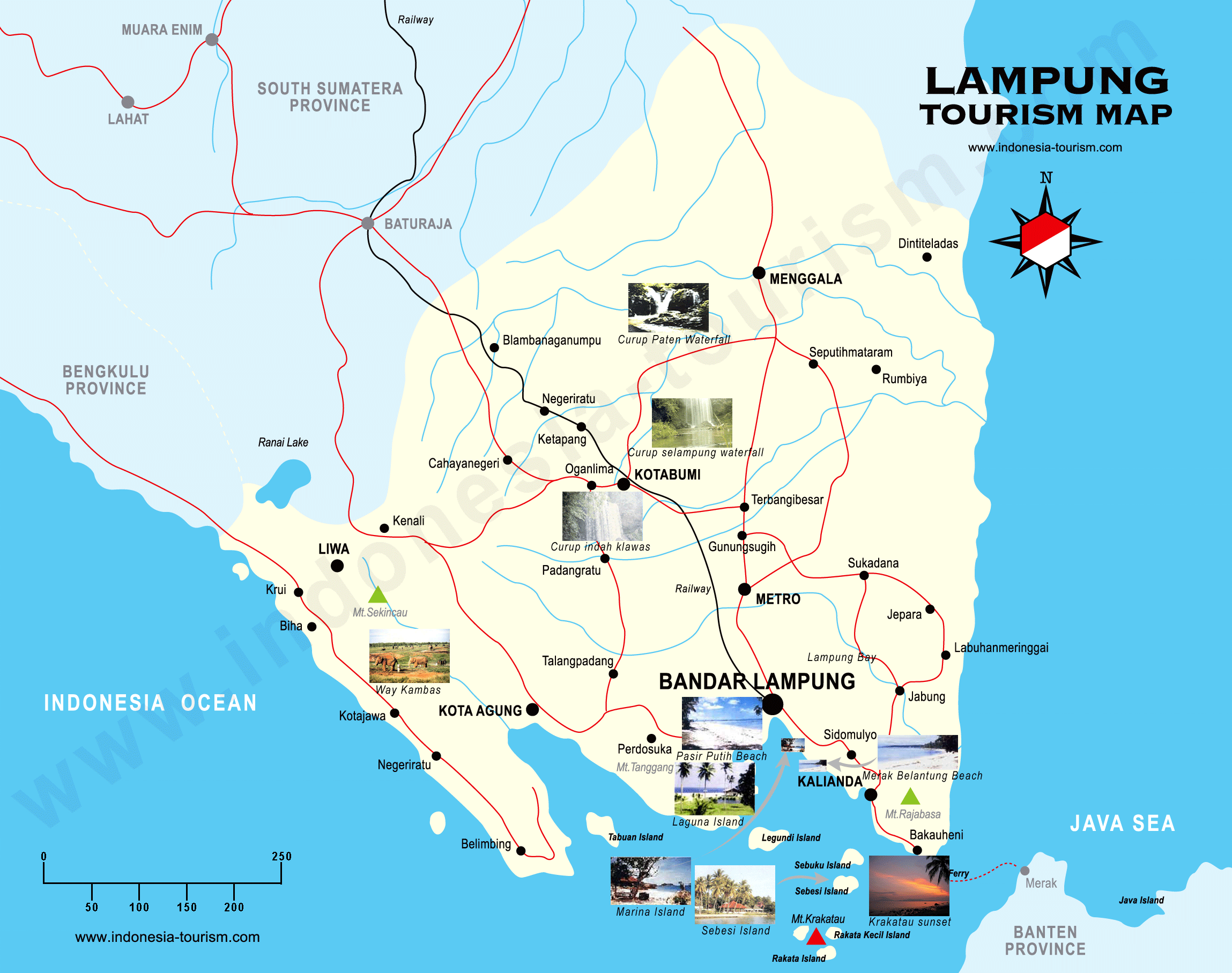
    The government of East Lampung District in Lampung Province, through the local Culture and Tourism Office, is making every effort to develop 11 tourism attractions in the district in its attempt to attract even more local and foreign tourists.

    “East Lampung district government is ready to develop 11 tourist attractions that include natural, marine, and cultural tourism,” local Culture and Tourism Office Chief Mastur remarked.

    Among many districts in the province, East Lampung is rich, beautiful and an interesting area with friendly people and a lot of tourist attractions.

    According to him, among the 11 tourist attractions to be developed include the Way Kambas National Park, Pugung Raharjo Archaeological Park, Kerang Mas beach, Lake Kemuning, Lake Beringin, agro tourism and cultural tourism.

    Of the 11 tourist attractions, Mastur said Kerang Mas beach in Labuhan Maringgai is now being developed.

    Once this beach development is completed, Lake Kemuning and Lake Beringin will also be developed in stages in an effort to attract 250 thousand tourists to East Lampung in 2016.

    “Our target is to see 250 thousand tourists visiting these tourist attractions this year,” Mastur said.

    Lampung province has 64 waterfalls, numerous small, beautiful islands, and seven leading tourist areas where supporting infrastructure facilities are being improved.

    The seven leading tourist areas are the Waikambas National Park; South Bukit Barisan National Park; Kiluan Bay; Tanjung Setia and Krui Marine Tourism; Siger Tower; Mount Anak Krakatau and Sebesi Island; and Bandarlampung Tourism Area.