Category: Living

Retail News Asia is committed to providing both local and global retailers with the latest Living news throughout the Asian market. This on a daily base.

  • Watsons stores lead 1000 openings for Hutchison

    Watsons stores lead 1000 openings for Hutchison

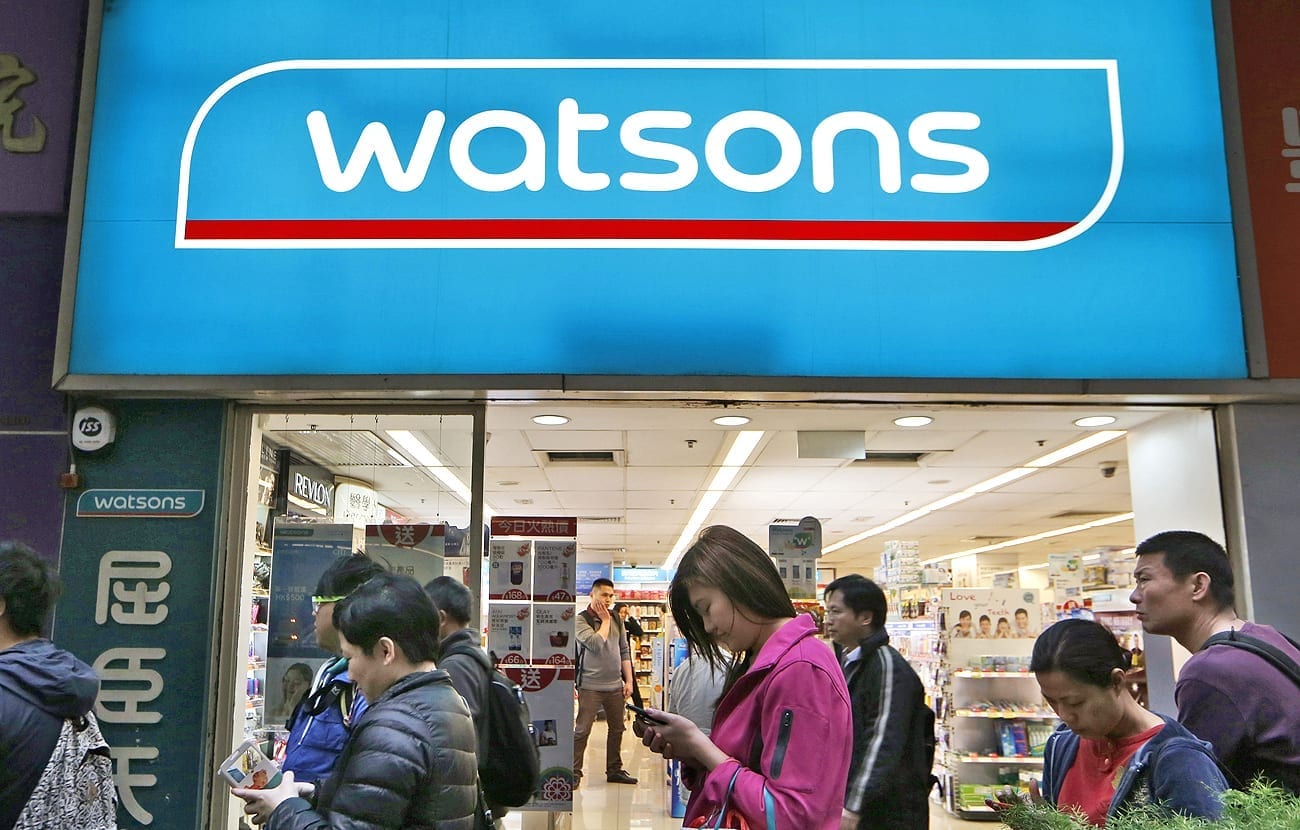
    Watsons stores account for the bulk of more than 1000 new stores to be opened by parent CK Hutchison this year.

    Hutchison said in its six month results released Friday it has added 257 stores to its global network already this year and 800 more would open by year-end. About two thirds of those will be Watson healthy and beauty outlets, mainly in China and Asia.

    CK Hutchison had more than 12,600 stores across 25 markets at the end of June. The vast bulk of those are Watsons stores, but the group also operates Fortress electronics stores, supermarket ParknShop and Watsons Wines.

    The group’s total retail revenue was HK$73.413 billion and net earnings were $5.338 billion, were all 2 per cent lower than the same period last year, results adversely affected by foreign currency translation to Hong Kong dollars.

    “Despite strong growth in the health and beauty segment, the retail operations in Hong Kong experienced mounting pressure from the severely reduced tourist arrivals and spending in the first half, which dampened the growth in the overall retail division,” Hutchison said in its half-year report.

    “In local currencies, revenue increased by 1 per cent, while EBIT increased by 2 per cent.”

    The Watsons health and beauty business represents 94 per cent of the retail division’s net income, which grew 6 per cent in local currencies. In Europe, EBIT grew 11 per cent, reflecting a 4 per cent increase in store numbers, 3.6 per cent comparable-store sales growth and generally improving margins.

    “In particular, health and beauty UK was a major growth contributor with an encouraging comparable store sales growth of 6.5 per cent for the period.”

    In Asia, despite the comparable store sales declining 3.1 per cent, the organic expansion of stores continued with a 15 per cent increase in store numbers against the same period last year, resulting net EBIT growth of 3 per cent in local currencies.

    “Watsons China’s total revenue was flat against the same period last year in local currency against a 17 per cent increase in stores numbers, as comparable store sales growth was negative 8.5 per cent due to weak retail market sentiment and competition from the eCommerce segment.”

    Despite these difficult conditions, EBIT growth was 3 per cent “from well-executed margin and cost management”, the company said.

    “Watsons China will continue to build up and expand its eCommerce platform to compete in the rapidly growing eCommerce segment.”

  • New Zealand’s Ministry of Health approves MS cloud services

    New Zealand’s Ministry of Health approves MS cloud services

    New Zealand’s Ministry of Health has officially approved the use of cloud services for advancing the country’s electronic health service capabilities.

    Specifically, Microsoft’s core cloud services Azure, Office 365 and Dynamics CRM Online have been deemed to meet the ministry’s requirements for storage of personal health information.

    Barrie Sheers, Managing Director for Microsoft New Zealand, said the government’s decision to use Microsoft’s Trusted Public Cloud services will be transformative for the eHealth agenda in New Zealand.

    “New Zealand’s health tech industry is today worth $1.3 billion to the local economy, and our country significantly punches above its weight on the international stage with health tech innovation,” he said.

    “With leading exporters like Orion Health and more than a hundred other smaller independent software vendors, the health tech sector in New Zealand is one that continues to grow and provide a burgeoning opportunity for export to the fast growing global health market.”

    With the advent of personalized medicine, genomics, intelligent sensors, advanced diagnostics and laboratory tests, data usage by health organizations will also increase as the sector builds ever more advanced models of the human body, according to Gabe Rijpma, senior director of health and social services Asia at Microsoft.

    “Being able to process all this data, store it, analyze it and make intelligent predictions on the results will usher in a new era of healthcare that will radically transform the way care is both diagnosed and delivered,” he said.

    Rijpma who is based at Microsoft NZ’s Christchurch office, said the local health tech sector has already been rapidly adopting the public cloud to develop futuristic solutions, but they have not been able to sell those solutions in international markets until now.

    “Now the local health tech sector will be able to use New Zealand as a fertile ground for new innovation and also deliver their world firsts here, too,” he added.

  • Airport offers Hello Kitty flight attendant

    Airport offers Hello Kitty flight attendant

    A Japanese airport is offering simulated around-the-world “jet” trips with a Hello Kitty flight attendant.

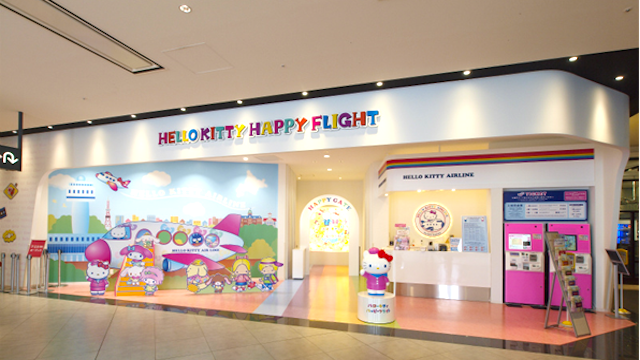
    Travel retail group Enleysha Co has opened the Hello Kitty’s Happy Flight amusement outlet along the connecting path on the third floor of the New Chitose Airport‘s terminal building in Hokkaido. It is the first Japanese attraction of its type, with the simulated trip taking visitors to meet Sanrio characters in international settings.

    Hello Kitty Happy Flight Japan airport 1

    The outlet includes a shop selling original products and Sanrio character merchandise, a Sanrio character cafe and a free space where children can play.

    Hello Kitty Happy Flight Japan airport 2

    Visitors enter a projection mapping theatre that presents Sanrio characters in Europe, the South Pole, America and Asia. There are also photo ops with the characters.

    On the third floor of the terminal, the attraction covers 1290 sqm along the Smile Road connecting path. There is an admission fee, and regular visitors can buy an annual passport.

  • Pertamina Rolls Out 98-Octane Fuel

    Pertamina Rolls Out 98-Octane Fuel

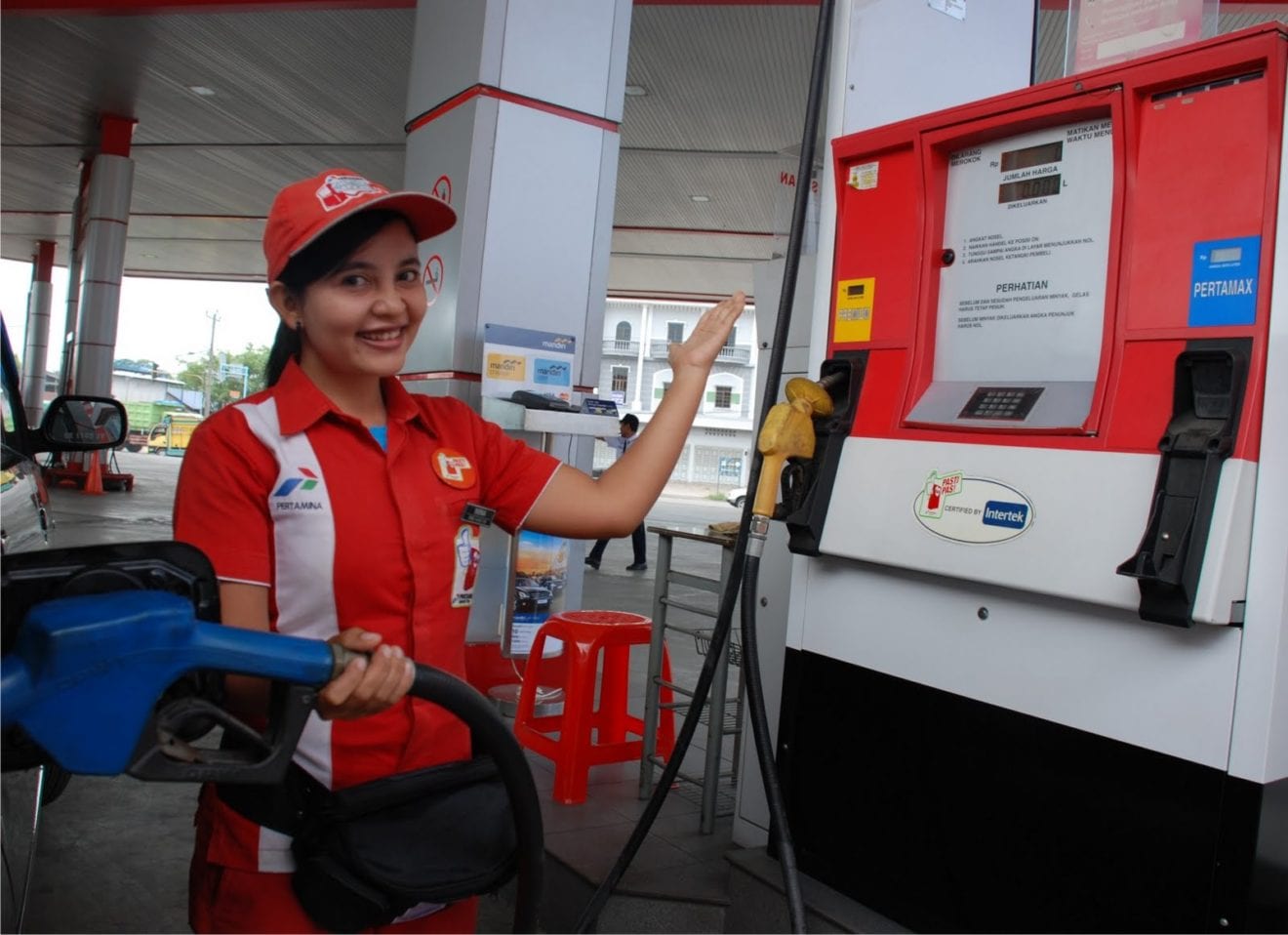
    State-owned oil company PT Pertamina has launched a new fuel, Pertamax Turbo. Vice President Corporate Communication, PT Pertamina, Wianda Puspongoro said the product is available at several gas stations in Jakarta.

    “It is now available on MT Haryono, Pramuka, Pantai Indah Kapuk and one other location,” Wianda told Tempo at an auto expo Gaikindo Indonesia International Auto Show 2016 at ICE BSD, Thursday.

    Pertamax Turbo is a fuel with an octane rating of 98. The fuel is released for those who need fuel with an octane rating of above 95, such as those owning turbochared vehicles.

    The first phase of its sales only include Jakarta. In the second phase, Pertamax Turbo will be distributed outside of Jakarta, such as East Java, Central Java and Sumatra. “We have no problem in the preparation for product [launch in other regions],” Wianda said.

    Wianda said Pertamax Turbo is priced at around Rp8,700 per liter. Wianda had yet to confirm whether Pertamax Turbo would replace Pertamax Plus. “We’ll see.”

  • GuestReady launches in Hong Kong, aims the short-term rental industry

    GuestReady launches in Hong Kong, aims the short-term rental industry

    Building on the global success of the sharing economy and its poster child Airbnb, a team of experienced entrepreneurs is building GuestReady.com to professionalise hosting on home-sharing platforms. The service, which is aimed at busy Airbnb hosts launches today in Hong Kong, Singapore, Kuala Lumpur, London, Paris, and Amsterdam.

    GuestReady’s set of services is aimed at real estate investors and hosts on Airbnb and it’s complementary platforms who are looking for help in managing their property. The startup provides a range of host services such as laundry, cleaning, check-in and check-out of guests, but more importantly, manages entire properties, which includes guest communication, maintaining listings on multiple short term rental sites, and ensuring the property generates the maximum possible yield.

    Airbnb and similar websites have become increasingly popular among leisure and business travellers who are looking for an alternative to long-term stays at hotels or serviced apartments. While traditional property agents focus on long-term rental and management of properties, GuestReady focuses on the underserved niche of short-term and vacation rentals.

    Lou Chan, Co-Founder and MD of GuestReady Hong Kong sees in this trend the big opportunity for GuestReady: “Hong Kong has long been the top choice for traveller, and the market naturally responds to it. According to a survey in 2015, 1 in 3 Hong Kong people who use the internet dip into sharing services like Airbnb. Supporting data also predicts that Asia-Pacific will become the world’s largest market for digital travel sales this year; alternate accommodation providers are set to cash in on this increasing traveller numbers.”

    “As the short-term rental industry is maturing, there is a natural need for more efficiency, professionalism, and standardisation. Especially with business travellers, the property and any service related to a stay need to be of immaculate quality. For non-professional hosts, this is hard to achieve, which is where we step in.”

    By launching GuestReady globally, the startup leverages location-specific advantages and taps into economies of scale to keep costs at bay. Chan, who previously was part of the founding teams of Rocket Internet’s Wimdu and Zalora, believes in the long-term success of platforms like Airbnb.

    The startup has been backed by Switzerland’s Swiss Founders Fund with an undisclosed sum. Romano Brandenberg, Venture Partner at Swiss Founders Fund, sees big potential in the growing and maturing short-term rental market. “Living and work patterns are becoming ever more mobile and the 12-month rental agreement or a room in a hotel is often not an adequate solution anymore for today’s business travellers, digital nomads or city hoppers. Short-term rentals offer a great alternative for these audiences” elaborates Brandenberg, and considers GuestReady a missing link in the industry to enable more property owners to become hosts.

    GuestReady.com launches today in Hong Kong and five other markets in Europe and Asia and is expected to roll into new countries soon.


  • 24 boats partcipating in Sail Indonesia arrive in Alor

    24 boats partcipating in Sail Indonesia arrive in Alor

    Twenty four boats of Sail Indonesia participants arrived in Alor, East Nusa Tenggara on Thursday afternoon, and will travel to a number of destinations in Alor District.

    “The Board of Alor District government and the community welcomed the Sail Indonesia participants today,” Secretary of the Department of Tourism and Creative Economy of Alor District, Adifa Yunus, told Antara before the opening of the 10th Alor Expo in Kalabahi on Tuesday.

    He said tens of participants from various countries will attend the 10th Alor Expo and undertake some cultural tourism Alor District for several days.

    “Sail Indonesia participants, who will be in Alor till August 13, will visit various tourist destinations which have natural beauty and a rich culture. They will also see some marine tourism in Pantar Strait,” he added.

    Rosemarie from Berlin, Germany, one of the participants who has been following Sail Indonesia from Darwin, Australia, observed that it was her first visit and she was deeply fascinated with the nature and culture of Alor.

    “I came for the first time with my husband on a Salmon boat from Kupang. Now I have arrived in Alor to follow the Alor Expo,” she told Antara before the opening of the 10th Alor Expo.

    During her stay in Alor, Rosemarie with her husband and other colleagues participating in the sailing event, will visit various tourist destinations in Alor and will especially try snorkeling in the Pantar Strait.

    “I have been hearing a lot from the people and the media about the underwater natural beauty of Alor and wanted to undertake snorkeling before heading off to any other place,” she informed.

    Rosemarie gushed that she was amazed with the local culture, and termed it a unique and exotic wealth.

    “This is a valuable opportunity I have got in life. Ever since I first came to Alor, I have witnessed firsthand the cultural and natural wealth that a traveler can find here,” she remarked.

    After a visit to various tourist destinations in Alor, she proceeded to Labuan Bajo, as did her other colleagues in the Sail Indonesia, to see the unique species of Komodo, called one of the wonders of the world.

    Sail Indonesia participants aboard 42 boats are currently visiting various tourist destinations in East Nusa Tenggara after they moved out of the city of Kupang. While 24 participant sail boats came to Alor, other participants are visiting various tourist destinations such as Labuan Bajo Flores, Wini in Pulau Timor and Sumba.

  • TrueMove to be ordered to set up Pokemon no-go zones

    TrueMove to be ordered to set up Pokemon no-go zones

    Thailand’s telecom regulator has summoned Pokemon master license holder True for urgent meetings today (9 August) and will order True to communicate with the franchise holder to set up Pokemon no-go zones.

    Dtac has confirmed it has also been summoned to give evidence about Pokemon to the NBTC. It is understood that AIS will also be present.

    NBTC secretary-general Takorn Tantasit further said that Pokemon have been appearing in inappropriate places such as hospitals, monasteries and government offices and this has led to chaos as players enter to try and catch them.

    Takorn said that Pokemon Go poses a threat to national security and has led to traffic mayhem.

    Royal Thai Police deputy spokesperson Pol Col Krisana Patanacharoen has called Pokemon Go a national security risk with people entering secure government facilities to hunt down Pokemon. He also said that anyone caught playing the game while driving will be prosecuted and fined.

    The only voice calling for reason came from Education Minister General Daopong Rattanasuwan. General Daopong said he would begin his own Pokemon Journey and play the game before passing judgement though he said it was unlikely he would order a ban on the game.

    “If you do not play Pokemon Go yourself, you will not understand the game. I have heard it is good for exercise,” the general said, referring to the distances of up to 10 km trainers have to walk in order to hatch a Pokemon egg.

    Earlier the Culture Minister Vira Rojpojchanarat came out against Pokemon in religious and historic sites as inappropriate and Election Commissioner Somchai Srisutthiyakorn said it was illegal to enter polling stations to catch Pokemon.

    On the other hand, the Sports and Tourism permanent secretary Pongpanu Svetarundra welcomed Pokemon Go and said that they would place Pokemon and Pokestops at key historic sites to promote tourism. The election commission also warned that catching Pokemon in polling stations is illegal.

    ICT Minister Uttama Savanayana has not made a formal comment for or against Pokemon, but he has spent the day re-tweeting news about Pokemon no-go signs across the globe which suggests he is also anti-Pokemon.

    What is clear is that none of the people in power in Thailand have any clue about how the actual game mechanics work. Nor has anyone clarified what rights, if any, True’s Pokemon license gives it over Niantic Labs’ Pokemon Go.

    NBTC secretary-general Takorn compounded his act of total cluelessness by saying that the game needed to be adapted to Thailand as Thai pavements are narrower than in Japan.

    Takorn clearly believes that Nintendo of Japan created Pokemon Go and placed the Pokestops. California-based Niantic, until recently a Google subsidiary, developed the game and the Pokestops are simply re-used sites from its other augmented-reality game, Ingress the vast majority of which are user-submitted.

    True is the master license holder of the Pokemon franchise in Thailand granted by the Pokemon Company back in December 2014. This includes merchandise and TV rights for TrueVisions, but not the right for a game which was made clear when they first held a press conference about the partnership.

    However the telco has recently said the license includes the rights to Pokemon Go, according to True’s head of content Peerathon Kasemsri. True CEO Supachai Chearavanont said there would be special in-game items for TrueMove subscribers and perhaps even a unique Thai Pokemon. None of that has happened.

    When Pokemon go was launched in Thailand through the Apple and Google stores, all telcos had equal access to the game.

    For its part, TrueMove is running a big Pokemon Go promotion campaign under a slogan, “True home of Pokemon” but other than offering an e-book and a Pokemon-branded data package for trainers (which is a simple 5 GB data package that is in any way special or tied to Pokemon Go), nothing exclusive has been launched yet to tap into its Pokemon franchise master license.

  • Pokemon no-go in Thailand

    Pokemon no-go in Thailand

    Thailand’s Culture Minister has warned people against playing Pokemon Go, especially in religious and historic sites while the Tourism and Sports ministry is seeking to use the game to promote the very same.

    Culture Minister Veera Rojpojanarat said Pokemon Go had many potential dangers and players should not spend too much time on it, spend too much money or put themselves in danger.

    “As for entering Buddhist Monasteries or historic sites to catch the [Pokemon] dolls [sic], I know Thai people have the common sense to know what is proper and what it is not,” he said.

    This is in contrast to the Tourism and Sports Ministry which has jumped on board the Pokemon Go bandwagon, though it does seem to lack knowledge on how the game works.

    Last week, Pongpanu Svetarundra, permanent secretary of the Ministry of Sports and Tourism, announced that rare types of Pokemon would be placed at tourist destinations that the ministry wanted to promote.

    He also said that Pokestops (in game places that give out items when within 40 meters) would be placed at famous tourist destinations to attract Gen-Y trainers/travellers.

    Meanwhile the Election Commission of Thailand has warned Pokemon Trainers against attempting to catch Pokemon in polling stations as Thailand went to the polls yesterday in a referendum where they overwhelmingly approved a new military-entrenched constitution.

    Election Commissioner Somchai Srisutthiyakorn said it was illegal to enter polling stations to catch Pokemon. Again in a case of not knowing how the game mechanics work, Somchai said, “in occasions that rare Pokemons emerge in any polling station, please stop playing it near these stations.”

    A trainer can attempt to catch a wild pokemon if it appears within a range of about 100m without having to actually go to the point where it appears on the map.

    Elsewhere Islamic leaders in Kuala Lumpur said today that Muslims should avoid playing Pokemon Go because the popular mobile game was harmful and could “lead to gambling.”

    Mufti of Federal Territories Zulkifli Mohamad al-Bakri, in a statement on Friday (Aug 5) said that the ruling was made at the Federal Territories Islamic Legal Consultative Committee meeting on Aug 1.

    “After studying the opinions of religious scholars and the fatwa (edict) issued, we agreed that the edict has a basis and that Pokemon Go and all the Pokemon characters should be avoided as it can bring harm.

    “The game promoted a search for power and deities with certain powers which could lead to gambling,” he said. Iran has also banned Pokemon Go, but on security grounds.

  • Number of Indian tourists to Bali up 55.83 percent

    Number of Indian tourists to Bali up 55.83 percent

    The number of Indian tourists to Bali reached 92,731 people, during the first semester of 2016, up 55.83 percent from 59,509 people during last years same period.

    Data from the Central Bureau of Statistics (BPS) showed that the tourist arrivals from India recorded the highest increase among ten countries contributing the largest number of tourists to Bali.

    The Indian tourist arrivals constituted 4.08 percent of the total foreign tourist arrivals reaching 2.27 million in Bali during the first semester, up 18.59 percent from 1.91 million in the same period in the previous year.

    The Bali Provincial Tourism Office has set a target of attracting as many as 4.2 million foreign tourists this year.

    In 2015, Bali received 4.001 million people, 6.24 percent more than previous year when 3.76 million people had arrived.

  • Shell Malaysia to open dozens of new stations to keep market lead

    Shell Malaysia to open dozens of new stations to keep market lead

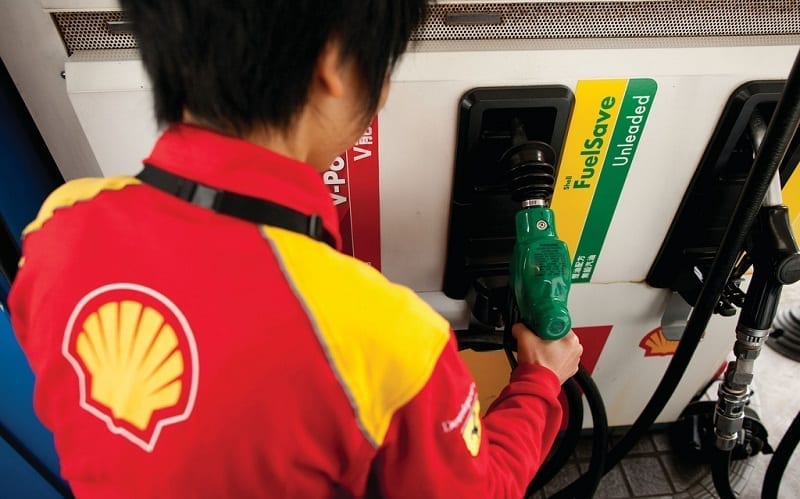
    Shell Malaysia Trading Sdn Bhd plans to open more than 20 new petrol stations to maintain its leadership in the retail fuel market in the country.

    About a third of these stations, according to theedgemarkets.com quoting Shell managing director Datuk Azman Ismail, have already been opened.

    Shell Malaysia is the number one fuel retailer in terms of market share and operates more than 900 stations nationwide.

    Apart from quantity, the company also strives to improve the quality of its services with the launch of ‘Welcome to Shell’ campaign, a three-year transformational program which aims to make the oil company the benchmark for hospitality on Malaysian roads.

  • Chinese tourists cancel trips to South Korea after THAAD

    Chinese tourists cancel trips to South Korea after THAAD

    Analysts warn of possible blow to tourism, retail industry

    A number of Chinese tourists are cancelling trips to South Korea in the wake of the country’s decision to deploy a missile defense system, a trend which experts say might lead to a blow to South Korea’s tourism industry if it continues, as the sector depends heavily on visitors from China.

    A Beijing while-collar worker surnamed Wang who planned to travel to South Korea in August told the Global Times that although she has already placed a non-refundable payment on a hotel, she was cancelling because of THAAD.

    “After all, there are still a number of travel destinations where I can go,” Wang said.

    Travel agencies in China and South Korea have also noticed the trend.

    Xu Xiaolei, manager of marketing at China’s CYTS Tours Holding Co, said that there have been a handful of clients who cancelled their bookings on a South Korea tour recently.

    “Also, compared with last year, the recruitment process for tours to South Korea during the Golden Week three-day holiday has been slow.” Xu told the Global Times on Monday.

    South Korean tourism industry officials, along with officials from travel agencies that specialize in hosting Chinese tourists in the country, have said that there are “a rising number of Chinese tourists cancelling reservations for August,” according to report on koreabizwire.com.

    The most recent cancellation was for the Chimaek festival, an annual celebration of fried chicken and beer that began on July 27 in Daegu, a city in southeastern South Korea.

    To attract Chinese tourists, the committee came up with a scheduled program in May and organized a train for incoming tourists from Seoul to Daegu, Korea JoongAng Daily reported on July 25.

    The number of Chinese tourists who signed up for the organized tour was 500 by early July, the report noted.

    But in the two weeks since South Korea announced the deployment of the Terminal High Altitude Area Defense (THAAD) anti-missile system, which has received intense backlash among the Chinese public, over 60 percent of the bookings have been cancelled, said the report. As a result, the committee has decided to offer a sightseeing bus instead of the originally planned train.

    Several days ago, Daegu’s 23-year-old sister city in China, Qingdao, East China’s Shandong Province, said it would not be participating in the festival due to “inappropriate timing,” the report noted, citing a Daegu city official.

    The Qingdao government also called off plans for a Daegu government exchange visit to the Qingdao Beer Festival, which started on July 29, amid public outcry to boycott South Korean products, the official said.

    Heavy reliance on Chinese tourists

    Recent years have witnessed a soaring number of Chinese tourists visiting South Korea.

    The number of Chinese arrivals grew 29.4 percent year-on-year to 3.82 million in the first six months of 2016, accounting for 48.8 percent of the country’s foreign visitors, the Korea Tourism Organization data showed.

    Wei Changren, CEO of Beijing-based Jinlu Consulting, told the Global Times on Monday that South Korea’s tourism and travel retail sector rely heavily on visitors from China.

    In the first half of 2016, an estimated 65 percent of the sales volume of Samsung Group’s Shilla Hotel and Resort, the country’s second largest duty free shop, was generated by Chinese visitors, up 45 percentage points over the same period last year.

    “About 70 percent of Chinese tourists travel to South Korea to shop. But average spending by Chinese tourists has decreased recently,” Zhu Zhengyu, an industry analyst with Enfodesk told the Global Times on Monday. “If the number of Chinese visitors continues to drop, the retail industry in South Korea will suffer.”

    Zhu’s opinion is echoed in a report published by Samsung Securities, which reveals that if the number of Chinese visitors shrinks by 1 percent, the operating profit of Shilla Hotel and Resort could fall by 2.6 percent.

    “Besides, considering the size of China’s economy and population, no other country can fill the vacancy if Chinese visitors go away,” Zhu said.

  • ‘Wonderful Indonesia’ campaign boosts tourism industry

    ‘Wonderful Indonesia’ campaign boosts tourism industry

    The government’s efforts to promote tourism in the archipelago with its Wonderful Indonesia campaign have had a positive impact, the president director of tour and travel company Panorama Sentrawisata said on Tuesday.

    Budi Tirtawisata said that in the first six months of this year, his company booked a 19 percent increase in gross revenue to Rp 2.38 trillion, from Rp 1.99 trillion in the same period last year, as more foreigners were drawn to Indonesia.

    “The government’s free visa policy is also contributing to growth in the tourism sector,” Budi told reporters at a press conference in Jakarta.

    Budi was upbeat the company’s business volume would increase, and possibly double, in the second half of 2016, compared to the first half, because more tourism activities were expected to take place in the period.

    “The peak season for tourist visits to Indonesia is during the summer, which occurs in the second half of the year,” Budi said, adding that more tourists would also visit the country during the Christmas holidays in December.

  • Mydin hypermarket chain founder dies at 88

    Mydin hypermarket chain founder dies at 88

    Mydin hypermarket chain founder Mydin Mohamed Ghulam Hussein died of old age at a private hospital in Kuala Lumpur today.

    His son, who is also Mydin Mohamed Holdings Bhd managing director, Ameer Ali Mydin, 60, said his 88-year-old father had died at 5.06pm.

    “My father was taken to hospital due to vomiting after he returned from (Mydin) outlet in (Jalan) Masjid India shortly after Zohor prayer time,” he said.

    He said the body would be buried after Zohor prayer on Wednesday at the Bukit Kiara Muslim Cemetery, after the return of his youngest son who is currently living in the United States.

    Born in Penang in 1928, Mydin Mohamed is survived by his wife Rowshan Bai, 80, and seven children.

    Ameer Ali said his father established the company in Kota Baru, Kelantan in 1957.

    “He was a highly disciplined person and punctual when dealing with others especially in business.

    “He often reminded his children to earn money in a ‘halal’ manner by running an honest business,” said the third child of the deceased.


  • Robinsons Retail buys stake in De Oro Pacific

    Robinsons Retail buys stake in De Oro Pacific

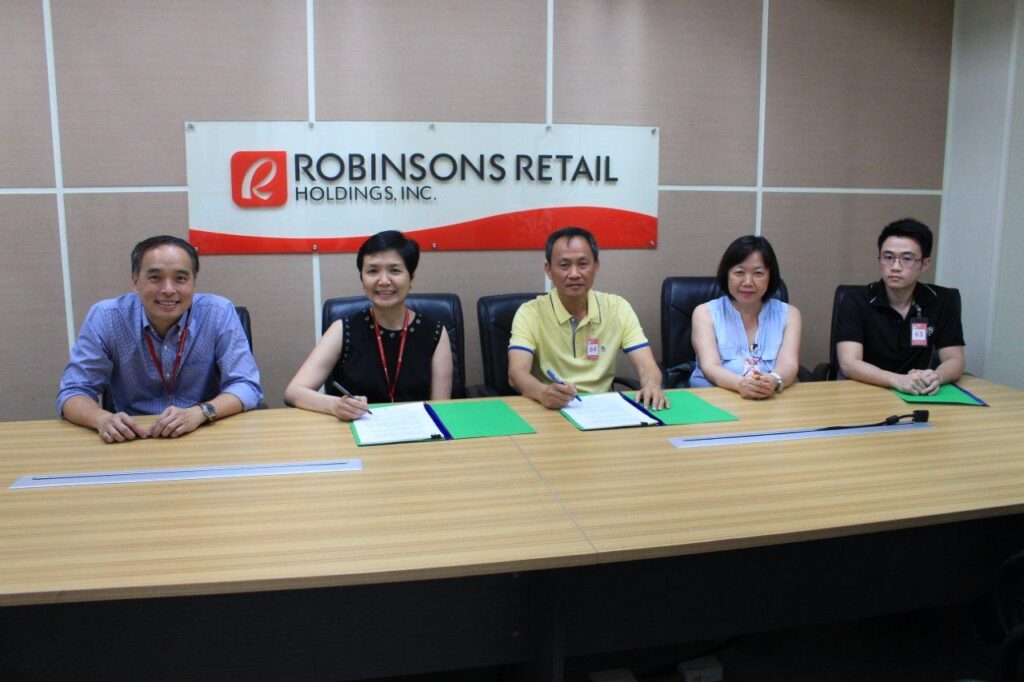
    Robinsons Retail Holdings Incorporated has acquired a majority stake in De Oro Pacific Home Plus Depot, a big box builders hardware depot with 3-store chain in Northern Mindanao.

    The Gokongwei-led firm told the Philippine Stock Exchange that its subsidiary RHI Builders and Contractors Depot Corporation’s acquisition will add to its big box hardware portfolio.

    contract-signing-

    De Oro Pacific Home Plus Depot started operating in 1993. The stores are located in Cagayan de Oro and Iligan City with combined gross floor area of approximately 9,400 square meters.

    The company also operates a 3,000-square-meter warehouse in Cagayan do Oro that supports the 3 De Oro Pacific Home Plus Depot stores.

    “The purchase of De Oro Pacific Home Plus Depot stores demonstrates the bullish stance of Robinsons Retail group in the do-it-yourself (DIY) business which is currently rising to the sustained growth of the construction sector driven by the huge backlog in residential building,” the company said.

    In June 2014, Robinsons Retail acquired RHI Builders and Contractors Depot, owner and operator of 17-big box hardware chain AM Builders Home Depot based in the Visayas.

    All stores have been renamed Robinsons Builders.

    As of end June 2016, Robinsons Retail operates 152 mall-based DIY hardware stores, including 132 Handyman Do It Best stores, 19 True Value stores, and two True Home stores.

    Robinsons Retail is one of the leading multi-format retail groups in the Philippines and enjoys market leading positions across all its business segments.

    It currently operates 10 retail formats under 6 business segments, including department stores, supermarkets, home improvement stores, convenience stores, drug stores, and specialty stores.

    For 2016, the group earlier said it plans to spend P5 billion in capital expenditures, up from P3.14 billion actual spending in 2015, as it plans to roll out more stores this year.

    The retail firm is also targeting same-store-sales growth of 2% to 3% and gross profit margin increase of between 10 to 20 basis points.

    As of end 2015, Robinsons Retail operates 1,506 stores with total gross floor area of 974,000 square meters.

  • Gome Electrical Appliances in transformation

    Gome Electrical Appliances in transformation

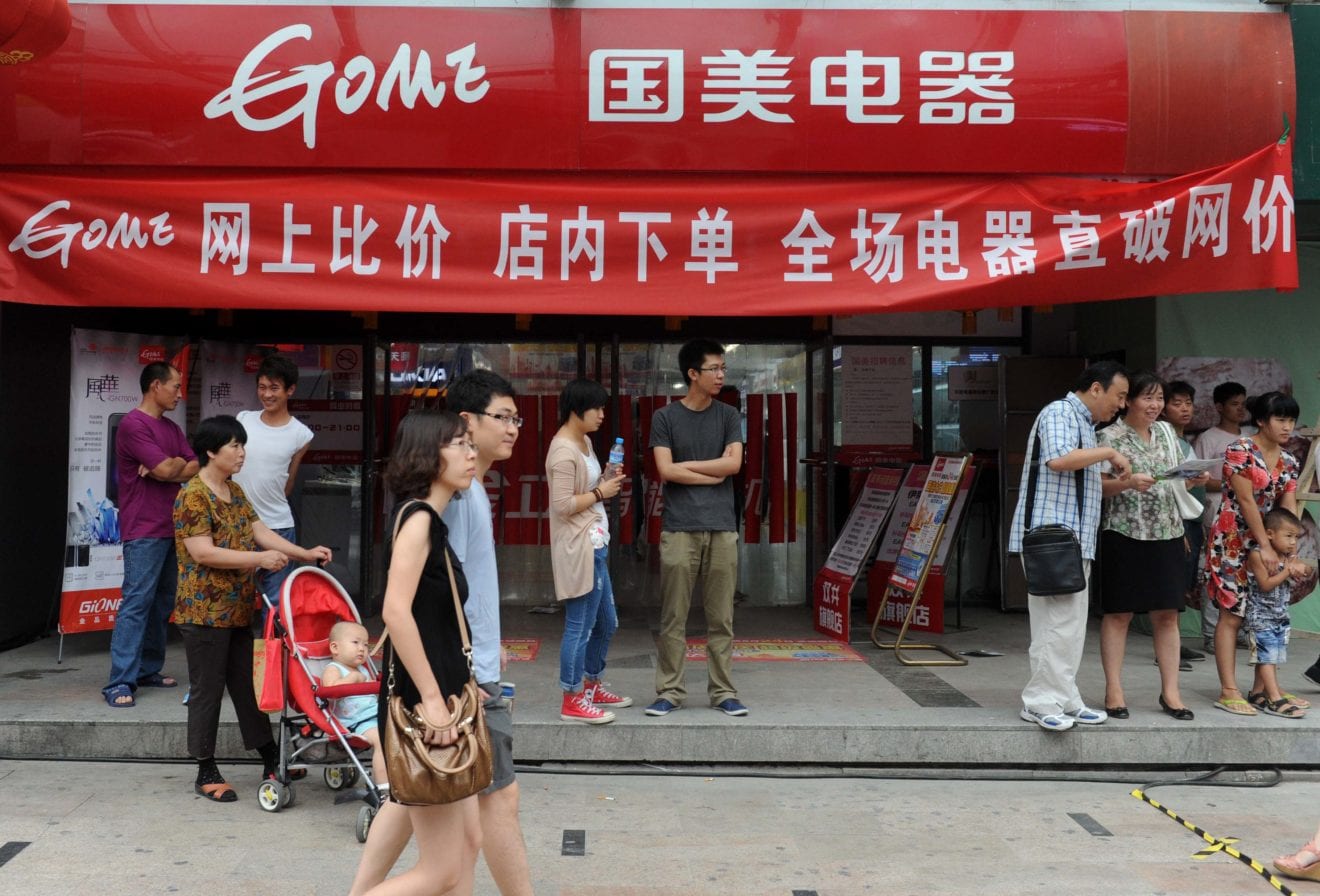
    A drop in profit resulting from the implementation of a strategic transformation plan is predicted by Gome Electrical Appliances Holding for its latest six months.

    The group says it expects its results will improve once the “Omni-Channel, New Scenario, Strong Linkage” strategic transformation has been completed.

    Based on a preliminary review of the latest management accounts of the group (including the data of Artway development and its subsidiaries), its total gross merchandise volume (GMV) for both online and offline is expected to grow by more than 15 per cent, with that of the eCommerce business expected to more than double.

    Sales revenue during the period is expected to grow by about 10 per cent, with a more than 60 per cent boost in revenue from the B2C sector of its online business. Revenue from offline stores is expected to grow by about 5 per cent.

    As some of the group’s major stores were under renovation, sales revenue is expected to decrease fall about 10 per cent.

    “The consolidated gross profit margin was lowered as a result of the continuing high-speed growth of the eCommerce business and the transformation of stores in the first-tier market,” says the group. This is expected to be about 16 per cent.