Category: Living

Retail News Asia is committed to providing both local and global retailers with the latest Living news throughout the Asian market. This on a daily base.

  • Spotify enables patron-exclusive podcasts via new Patreon integration

    Spotify enables patron-exclusive podcasts via new Patreon integration

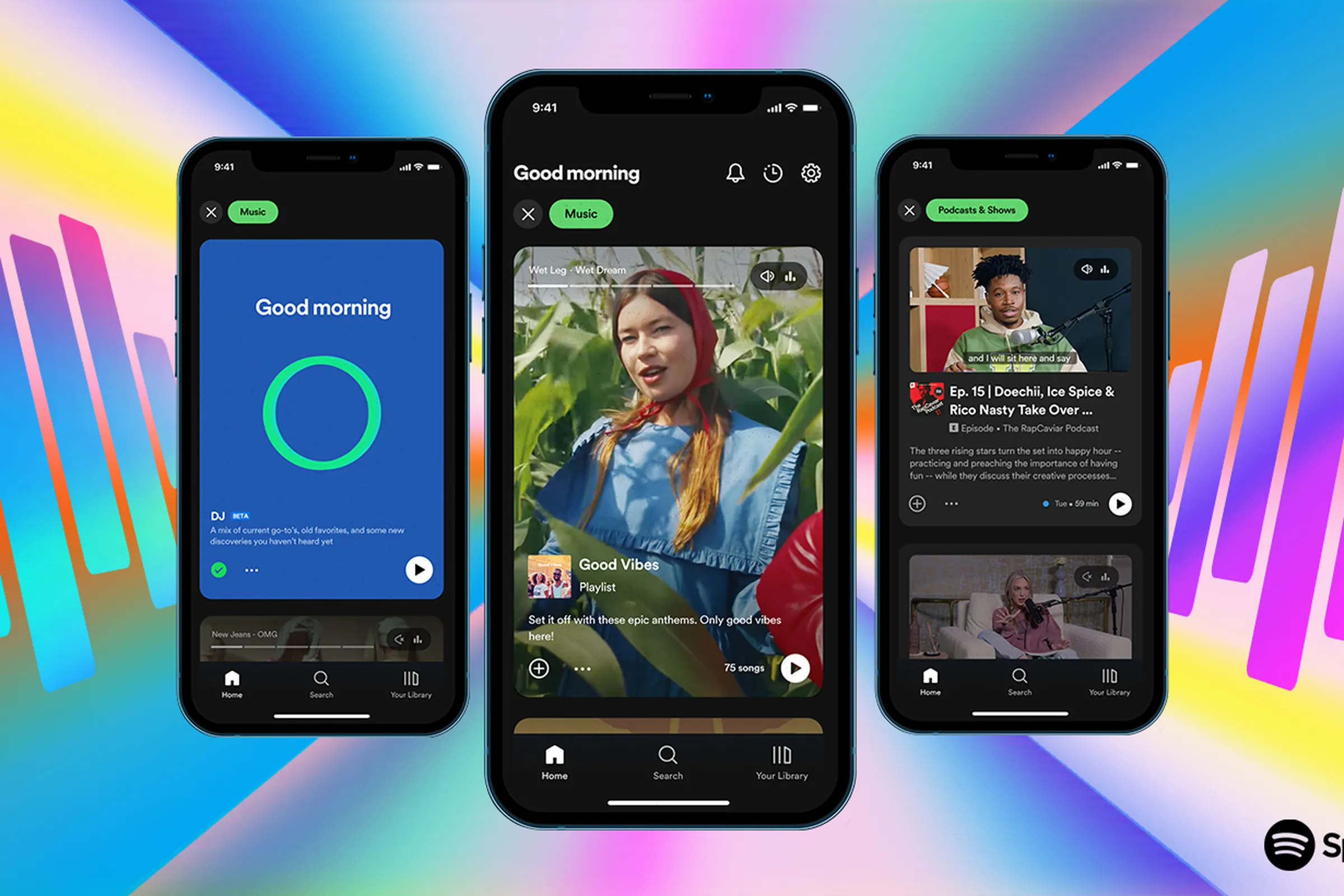
    Spotify is the most recent company starting to offer content creators financial incentives. The music streaming service announced this week that it has added Patreon integration to allow creators to monetize their content via exclusive podcasts.

    Patreon, a membership platform that offers the business tools for content creators to run a subscription service, was in the middle of a controversy early this month when major technical issues led to paused payouts and canceled subscriptions.

    Thankfully for the millions of creators using the platform, these issues have been solved (at least for many of them), so the company can now go live with the announcement.

    Starting today, connecting Spotify and Patreon accounts to access patron-exclusive podcasts direction from the music streaming service’s app is possible. This is a follow-up of Spotify’s March announcement that it’s teaming up with Patreon to allow creators to publish their subscriber feeds to Spotify via its API.

    “Many podcasters use Patreon to connect with their fans, and for the first time ever, they can link their accounts so fans can access and listen to these shows on Spotify. This partnership gives podcasters a new opportunity to reach Spotify’s global audience, over 551M users, to increase their income and grow their show,” said Gustav Söderström, Co-President and Chief Product and Technology Officer at Spotify.

    Patreon integration has been in testing for months at Spotify, as select creators have been enrolled in a beta program that helped them promote and gain new members to their Patreon through Spotify.

    Thanks to the new feature, Spotify users will be able to listen to all their favorite content in one place, while Patreon podcasters tap into new audiences on Spotify. The new partnership feels like a win-win situation, at least on paper.

  • Netflix is making rating shows and movies on mobile much easier

    Netflix is making rating shows and movies on mobile much easier

    Many of us, including myself, often forget to rate a show or movie after watching it. While not necessary, it can help improve your suggestion list. Now, Netflix is simplifying the process for users to rate movies and shows on mobile devices.

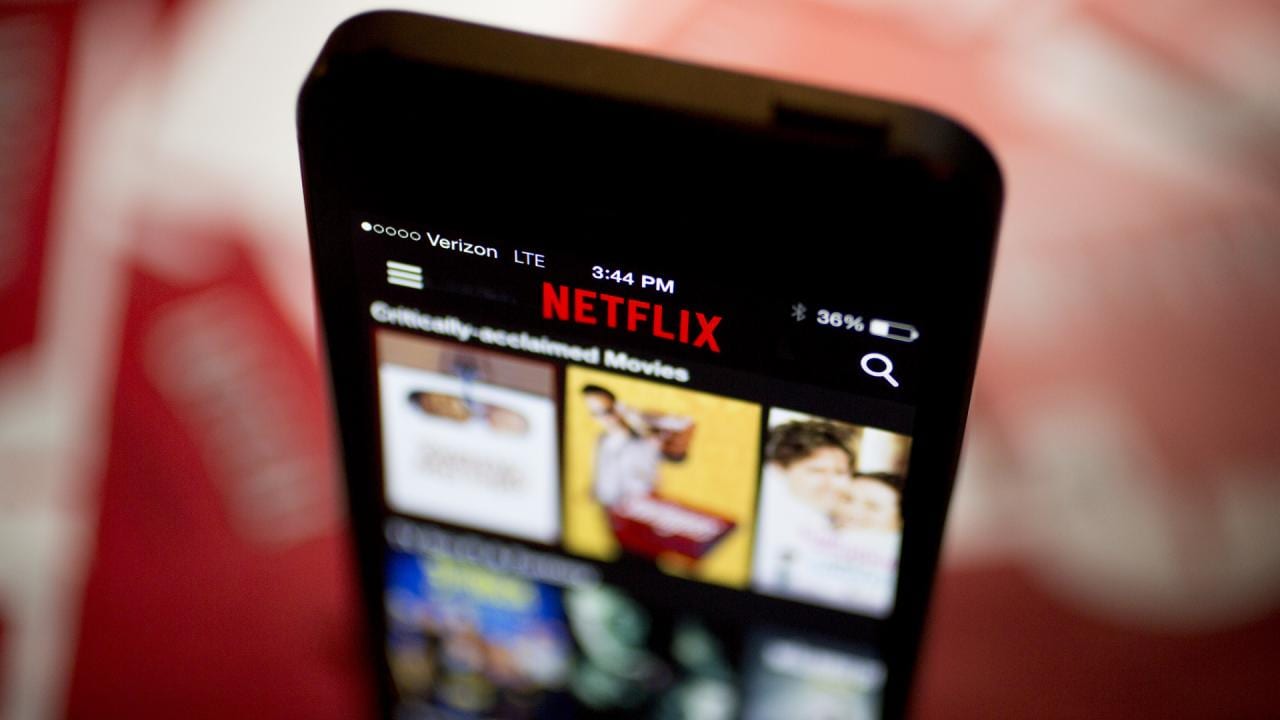
    Netflix has updated the rating feature on its mobile app, enabling you to rate a show while still watching it. Instead of returning to a show or movie page to give a thumbs-up or thumbs-down, you can now tap the screen while watching, whether it’s in the middle or at the end. You can click the thumbs buttons at the top and keep watching.

    The new update will probably encourage more users to use the feature, which will help Netflix suggest more personalized recommendations based on users’ watch history and what they have liked or disliked. Or, to put it in a few words, you are helping Netflix’s algorithm understand you better by rating what you are watching.

    The system that suggests new movies and shows on Netflix uses two different data sets to make personalized recommendations for what you might want to watch. The first data comes from what you’ve watched before and the kinds of genres you prefer, while the second is based on your ratings.

    On the mobile app, you can rate using three reaction buttons: a thumbs up, a thumbs down, and a double thumbs up button. The latter was introduced last year to teach Netflix’s algorithm not only which movies or shows you like or don’t like but also which you love.

    Based on which movies and shows received your double thumbs-up reaction, Netflix’s algorithms will better recommend similar ones. With the improved rating feature, now more user-friendly on mobile devices, starting to use it could lead to receiving more accurate and tailored suggestions.

  • Fuel imports rise over 60% this year

    Fuel imports rise over 60% this year

    Vietnam spent nearly $5 billion importing fuel in the first seven months of 2023, up 61% year-on-year, to ensure adequate supply as its biggest refinery Nghi Son is set to shut down for major maintenance.

    Its biggest import markets were South Korea, Singapore and Malaysia.

    Nghi Son in the central province of Thanh Hoa, which accounts for around 35-40% of domestic fuel supply, will undergo its first major maintenance since establishment starting from August 25. The maintenance will last around two months.

    The Ministry of Industry and Trade said it has carefully monitored fuel supply this year to prevent shortages.

    Vietnam exported 1.26 million tons of fuel worth around $1 billion in the first seven months of this year.

  • Citizen database helps reduce credit default risks

    Citizen database helps reduce credit default risks

    A trial credit scoring model that encompasses the national citizen database has proven useful for lenders as it reduces lending risks by up to 20%.

    The model, which is built on the standards of global credit scoring company FICO, is now almost complete with 18 citizen data fields, Vu Van Tan, deputy head of the citizen administration unit under the Ministry of Public Security, said at a meeting on August 7.

    The model was tested by MB’s consumer loan unit MCredit on 10,000 data fields, PVcombank with 20,000 fields, and fintech firm Datanest with 60,000 fields.

    These companies saw their credit risks reduced by 7-20%.

    “After the trial, these companies all want to encompass the model in their operations officially,” Tan said.

    Banks and the Ministry of Public Security have long been working together to authenticate and synchronize the personal ID and credit information of over 40 million bank customers.

    The partnership also helped banks to launch money withdrawal services using ID cards at ATM. Bank customers can also use their electronic ID account to confirm identity.

    But as this partnership had its limitations in building an effective credit scoring system, the Ministry of Public Security has collaborated with the Hanoi University of Science and Technology to build the trial model using FICO standards.

    Deputy governor of the State Bank of Vietnam Pham Tien Dung said that credit scoring in Vietnam is gaining popularity among banks as it helps them to predict the probability of getting their money back from a borrower, and this only works with a precise database.

    A representative of state-owned lender BIDV said that the authentication of a third-party organization, especially a state-owned entity, plays an important role in credit scoring, ensuring that the data bank employees have collected is precise.

  • Snapchat facing a possible $184 million fine

    Snapchat facing a possible $184 million fine

    Social media platforms don’t have it too easy these days, and Snapchat is no exception to that. Snapchat owner Snap Inc could face a formal investigation and, if found guilty, be fined some $184 million. All of this – over mismanaging and not enforcing strict enough policies to remove underage users from its platform.

    Ofcom is the UK’s communications regulator – last year it found out that in the UK, the most popular app for underage social media users was none other than Snapchat. According to their data, more than half (approximately 60%) of kids that are aged between 8 and 11 had “at least one social media account, often created by supplying a false date of birth”. UK’s data protection law states that social media companies need consent from the parents, if in need to process data of kids under 13.

    So far Snapchat has not issued an official statement on the matter of reducing the number of underage users. A Snap person says the company does strive towards ensuring that “digital platforms are age appropriate and support the duties set out in the Children’s Code”. Before starting an official investigation, ICO (Information Commissioner’s Office) has to gather information and may ask the company to aid the investigation.

    A report from Reuters in March claimed that Snapchat had only removed “a few dozen” under-13 accounts from its platform in Britain last year. Ofcom estimates Snapchat has “thousands of underage users”. If an investigation launches and if found guilty, Snap Inc could be fined an equivalent to up to 4% of its annual global turnover.

    On a side note, the NSPCC (National Society for the Prevention of Cruelty to Young Children), said that figures it had obtained showed that Snapchat accounted for 43% of cases in which social media was used to distribute indecent images of children.

  • TV boxes disappear as smart TVs and phones take over

    TV boxes disappear as smart TVs and phones take over

    The popularity of smart TVs and smartphones have left TV boxes, or set-top boxes, high and dry.

    This month a leading electronics retail chain stopped selling TV boxes. Others sell only two of them: Xiaomi Mi Box and Apple TV.

    Even a few years ago there were no less than five TV box brands with dozens of models.

    “The golden age of TV boxes in Vietnam was in 2017-18,” Tien Vuong, manager of a electronics store on Hang Bai Street, Hanoi, says. “Now there are few buyers and sales are less than a 10th of the peak time. Those who want low prices choose Xiaomi devices, while those who love the Apple ecosystem will buy Apple TV.”

    The set-top boxes mostly used the Android operating system and were Chinese or Vietnamese brands made in China.

    But since 2019 demand for them has steadily decreased.

    The appearance of Mi Box from Xiaomi at reasonable prices and excellent configurations has caused other Chinese brands to almost disappear.

    In China, the world’s largest TV box market, too sales have plummeted over the years, according to Chinese tech news site Gizchina.

    The first half of this year saw a year-on-year fall of 30% to 929,000 units. In 2016, some 14 million TV boxes had been sold.

    Soon after smart TVs appeared, set-top boxes were favored because they could make old TVs smarter and more convenient.

    Smart TVs had their own operating systems, but only high-end models had hardware good enough to satisfy users.

    So many people chose to spend VND1-2 million (US$42-84) to buy a set-top box instead of tens of millions on high-end smart TVs.

    Now, all TVs on the market are smart, and even the cheapest models are good enough to run YouTube, and OTT media services and applications like Netflix.

    All three popular TV operating systems, Google TV, webOS of LG and TizenOS of Samsung, have well-stocked software stores, enough for the entertainment needs of smart TV users.

    According to technology expert Nguyen Minh Tien, another reason for the gradual disappearance of TV boxes is that people are spending less and less time watching TV, and more and more time on smartphones.

    “People may still buy and use TV sets as a habit, but the demand for this product is not as high as before.”

  • IT talents sought after amid frozen labor market

    IT talents sought after amid frozen labor market

    Amid a season of low recruitment demand due to economic challenges, companies are still headhunting for experienced and high-skilled IT staff to speed up their digital transformation.

    Although many companies are scaling down their payroll, demand for IT experts remains high with the most popular recruitment positions being business administration, software development, cybersecurity, artificial intelligence, digital platform development and data analysis.

    Quang Trung Software City, a hub for IT businesses, has seen several companies such as Larion, TMA, Rakus, and SPS recruiting staff in recent weeks.

    An experienced manager at a business there said that companies were overpaying staff to ensure positions were filled even though it was not ideal.

    The gross income of programmers with more than three years of experience in Vietnam ranges from $2,100 to $6,000 per month, according to a survey by recruitment company IT TopDev last year.

    Recruiters say that the price range is the same this year as staff shortages remain.

    Companies expect IT experts to have design and analysis skills, along with team management and expertise in a particular sector such as finance or e-commerce. They are also required to have good communication and language skills.

    Truong Thien Kiem, a deputy director at recruitment firm Adecco Vietnam, said that the decline in orders this year had urged factories to increase automation and therefore hike their needs for high-skilled IT staff.

    Domestic companies must race with foreign enterprises who are also looking for the best IT experts.

    Thailand’s Kasikorn Business-Technology Group (KBTG) last month opened its Vietnam unit in Ho Chi Minh City, its third in Asia, to attract IT talent.

    The group plans to recruit 200 developers this year and will be partnering with universities to find suitable candidates.

    In May, representatives of seven Japanese companies in Hanoi showed up at a job fair at Hanoi University of Science and Technology to find graduate IT candidates.

    Recruitment demand is forecast to be high as Vietnam is estimated to need 600,000 developers this year and 800,000 next year, but the shortage could be between 175,000 and 195,000, according to TopDev.

    This is because only 35% of the 57,000 annual IT graduates meet business demand, it said, adding that beginners in the industry outnumbered seniors.


  • EVN eyes another round of electricity price hikes

    EVN eyes another round of electricity price hikes

    Vietnam Electricity has sought the Government’s permission to hike power tariffs soon saying production costs have risen sharply.

    The average electricity price was increased by 3% on May 4 to VND1,920.37 (8 U.S. cents) per kilowatt-hour (kWh).

    But the cost of production had surged by 9.27% last year to VND2,032.26, and so its financial situation has not improved even after the price hike, according to the state utility.

    EVN, the country’s sole power distributor, faces cash flow difficulties and is likely to default on payments to independent power producers.

    It has sought interest-free loans from the central bank to pay them.

    Over the past two years EVN has reduced spending on repairs by 10-50% due to the cash crunch, severely affecting the safety of the electrical network.

    EVN made a loss of over VND36.29 trillion in 2022, the Ministry of Industry and Trade said.

  • No special consumption tax on online games

    No special consumption tax on online games

    The government has rejected a proposal by the Ministry of Finance to slap a special consumption tax on online games and sought more scientific data to tax sugary drinks.

    But in a recent decision, it instructed its agencies to use other legal means to limit playing time.

    Earlier this year the ministry had suggested imposing the tax on online games as a means to dissuade people from playing them, saying they have negative impacts on players’ health and society.

    But industry insiders and experts criticized the proposal, saying gaming has the potential to become a new industry.

    The tax would decrease the competitiveness of Vietnamese game producers and cause them to move overseas, they said.

    The ministry had also proposed taxing sugary drinks since they cause obesity, but the government has asked for more scientific data to back that claim.

    It also tasked the ministry with studying the possibility of taxing e-cigarettes to ensure Vietnam’s international commitments would not be breached.

  • Spotify announces price hikes in over 50 countries, including the US and UK

    Spotify announces price hikes in over 50 countries, including the US and UK

    It looks like last week’s report regarding Spotify Premium’s price adjustments was accurate. As expected, Spotify announced today it will increase the prices of its Premium plan in over 50 countries, not just in the United States as the report claimed.

    The number one music streaming service in the US confirmed it has more than 200 million Premium subscribers worldwide, so in order to keep innovating it must adjust prices of the Premium plan. If you’re living in the United States, the new prices of the Premium plans are as follows:

    • Premium Single: $10.99
    • Premium Duo: $14.99
    • Premium Family: $16.99
    • Premium Student: $5.99

    These price adjustments are taking effect today, so if you’re an existing customer you’ll receive an email explaining what it means for your account. In addition to the price changes in the United States, Spotify announced that it’s changing Premium prices across a number of markets around the world.

    If you live in one of these countries, expect your Spotify Premium price to increase very soon: Andorra, Albania, Argentina, Austria, Australia, Bosnia and Herzegovina, Belgium, Bulgaria, Brazil, Canada, Chile, Colombia, Costa Rica, Cyprus, Denmark, Ecuador, Estonia, Spain, Finland, France, United Kingdom, Greece, Guatemala, Hong Kong, Croatia, Indonesia, Ireland, Israel, Iceland, Italy, Lithuania, Luxembourg, Latvia, Monaco, Montenegro, North Macedonia, Malta, Mexico, Netherlands, Norway, New Zealand, Peru, Portugal, Serbia, Sweden, Singapore, Slovenia, Slovakia, San Marino, Thailand, Türkiye, and Kosovo.

    The price changes in the countries listed above might be different than the price hikes in the US. But just for the sake of comparison, the Premium Single, Family and Student plans are going up by $1, while the Premium Duo plan price has been increased by $2. In any case, if you’re already subscribed, then Spotify should send you an email about the price increase, so you’ll know what to expect starting next month.

  • Netflix adds new feature to iOS, Android to help you quickly find content to watch

    Netflix adds new feature to iOS, Android to help you quickly find content to watch

    Netflix announced today that it is adding a new feature to its popular mobile phone app. Called My Netflix, this is a one-stop shop for both iOS and Android users that features shortcuts to help you find something to stream on the platform. The new My Netflix Hub will show you the content you recently downloaded, the movies and television shows you gave a thumbs up to, shows and movies you’ve saved to My List, trailers that you’ve viewed, what content you’re in the middle of watching, content you’ve recently viewed and more.

    With the My Netflix Hub, you can check it out wherever you are to get ideas of what to watch next including shows and movies that you’re in the middle of watching, or content that you’ve downloaded to view at any time. Even with the capabilities of the My Netflix Hub, you can always visit your Home tab or other parts of the app to see the entire Netflix library.

    The My Netflix Hub learns more about you the more you use it. So if you save more medical dramas or give a thumbs up to every episode of Grey’s Anatomy, you’re apt to find more medical dramas in the My Netflix Hub. The Hub is rolling out today to iOS users and will be available on Android devices early next month. Check to see if the My Netflix Hub has arrived by opening the app and looking for the tab on the bottom right corner of the display.
    If the My Netflix Hub hasn’t been added to your iOS Netflix app, you can try to manually update the app by opening the App Store and tapping on the profile picture in the upper right corner. You’ll see a list of apps that are in a queue to be updated. Scroll down until you see “Netflix” (that is, if it appears on the list) and tap on “Update.” Wait for the app to be updated before you open the Netflix app to check whether the My Netflix Hub has arrived on your iPhone. I can tell you that the update has hit the Netflix app on my iPhone 11 Pro Max running iOS 16.6.
  • TikTok launches text posts in an attempt to take on X

    TikTok launches text posts in an attempt to take on X

    Despite the social network bleeding users, Twitter’s owner, Elon Musk, took some questionable decisions over the weekend. After rebranding Twitter’s logo to “X” and promising to bring a bunch of new features that no one asked for, Musk’s is now facing another big problem: the stiff competition.

    Meta’s attempt to take on Twitter hasn’t been entirely successful, as Threads still needs a lot of features to offer a similar users experience. But another contender to take Twitter’s place has just made its first step toward fulfilling its plans.

    TikTok has just announced text posts, a new feature that offers users a Twitter-like experience. This will allow creators to share their stories and other types of content in a different, simpler way. The new feature is available starting today and doesn’t involve too many clicks to make it work.

    When you access the Camera page, you can now choose from three options: photo, video, and text. Tapping on the text option will direct users to the text creation page where they can type out the content of their post. It’s not as fast and smooth as tweeting a message but considering that TikTok is a video-first platform, this will have to do for now.

    In addition to creating posts, TikTok users can also customize their content by including Sound, tagging a location, enabling comments, and allowing Duets. It will enrich the text posts and make them more dynamic beyond what Twitter offers currently.

    For example, TikTok users can add stickers to their text posts, tags and hashtags, as well as background colors and sounds. On top of that, it’s also possible to save drafts and store them with other unpublished posts for later editing or discard them if you’re not content with how they end up.

    It’s a neat new feature that will probably not attract many of Twitter’s users, since Musk’s social platform caters to a different type of audience, but you might as well try in out before the ship sinks to have some alternatives to retreat to.

  • Spotify to raise prices of its Premium plan in the US

    Spotify to raise prices of its Premium plan in the US

    Spotify will no longer remain one of the few music streaming services in the US not to increase its subscription prices. Just about every other player in the market raised prices in the last year or so, while Spotify benefited from influx of customers that decided to switch services. Unfortunately, that didn’t last long, as Spotify is about to raise prices too.

    Spotify plans to raise the monthly subscription prices in the US by $1. That means that the price of the ad-free $9.99 plan will become $10.99 per month in the United States. Spotify is reportedly expected to announce as early as next week, but only for the US market.

    The bad news is price hikes will be announced for many other markets too in the following weeks, although it’s unclear where and when these changes will be introduced. Spotify has been keeping the price of its premium plan stuck on the $9.99 psychological threshold for quite some time, but that’s about to change for customers in the US.

    Currently, Spotify offers a free, ad-supported plan that provides access to over 80 million songs, podcasts and audiobooks, downloadable podcasts, the ability to take the music with your when traveling abroad (for 14 days only), and the option to pick and play any track on mobile (select playlists only).

    The Premium plan still costs $9.99 and doesn’t have the limitations that the free plan has. On top of that, it allows subscribers to download music and podcasts, play songs in any order, and listen to the highest music quality. Of course, there will be no ads running while listening to Spotify if you’re subscribed to the Premium plan.

    Students get 50% off Premium for up to 4 years, while Premium Duo offers two people living together the option to get their own Premium account for 1 discount price. Also, the Premium Family covers up to 6 people living together each getting their own Premium account for 1 discount price. The Family plan comes with Spotify Kids and explicit filter.

  • Netflix discontinues the Basic plan in the US and UK

    Netflix discontinues the Basic plan in the US and UK

    Netflix is going ahead with its strategy to completely remove the Basic plan to force customers into choosing more expensive plans or ads. Back in June, Netflix quietly removed the Basic tier in Canada, a move that was expected to extend to other regions in the coming months.

    Earlier today, Cord Busters noticed that that the Basic plan has been discontinued in the UK and US. New customers in these two countries will no longer be able to choose the cheapest Netflix plan starting today, although Basic tier subscribers get to keep their plan until they change to another tier.

    The information has been confirmed by Netflix on its support page: “the Basic plan is no longer available for new or rejoining members. If you are currently on the Basic plan, you can remain on this plan until you change plans or cancel your account.”

    Netflix launched its ad-supported tier in late 2022 as “Basic with Ads” for £4.99 / $6.99 per month, but its name was changed a few months ago when it received a few upgrades like video quality from 720p to 1080p and two simultaneous streams.

    The renamed Standard with Ads plan offered almost the same perks as the Basic plan, but with one big difference: it forced subscribers to watch several minutes of ads per hour. Other differences between the two plans are the number of simultaneous streams and the video quality.

    With the removal of the Basic tier, customers in the UK and US will now have to pay at least £10.99 or $15.49 per month if they want Netflix in their homes or on the go without having to watch ads. It’s pretty clear that Netflix wants more customers to choose its Standard with Ads tier rather than a plan that doesn’t run ads, unless it’s one that’s priced a lot higher.