Category: Living

Retail News Asia is committed to providing both local and global retailers with the latest Living news throughout the Asian market. This on a daily base.

  • Middle-aged workers struggle finding new jobs after layoffs

    Middle-aged workers struggle finding new jobs after layoffs

    Thanh Tung thought his job interview went well and his unemployment would finally end, but he was eventually turned down for the position because he was “too old.”

    The 37-year-old game artist in Go Vap District, HCMC was laid off at the beginning of the year, only a few months after he started working for a game design company.

    He was disappointed, but he didn’t feel rushed and pressured because he still had savings and income from his freelancing jobs, which he thought would be enough to cover his living expenses until he found a new job.

    But finding work was not as easy as he thought.

    After three months of job searching, he’d been able to land only a few screening calls and no potential employer had wanted to make an interview appointment with him. Compared to that, around 60% of the companies he applied to last year scheduled interviews with him.

    When he eventually got an interview with a game company, he was turned down because of his age. The chief marketing officer of the company, who was 27, said people of Tung’s age might “be stubborn and find it hard to adapt.”

    He disagreed with this comment, explaining that he was always willing to improve himself, and he could prove that during a probationary period, to which the interviewer said: “You seem to disagree with a lot of things we have discussed throughout our interview. I’m afraid that if we work together, you will not follow my orders.”

    Tung gave up. He now believed in age discrimination at the workplace. And future experience only confirmed things further.

    “Then I got a phone call from a friend of mine who was working as a headhunter,” he says. “That friend saw my profile and confirmed that my age was preventing me from getting called for interviews.”

    Many middle-aged workers are struggling to find jobs. Tra My, a former construction engineer, said she felt hopeless as she had been unemployed for over six months and had to attend a job fair as one of her many efforts to find a career opportunity. She also said she was learning a foreign language and studying software at age 45, hoping that doing so would increase her chances of finding a job.

    Van Quang, 53, was working as a delivery man for a third the salary of his previous job as a warehouse supervisor at a Hanoi-based supermarket. He chose the path after repeated failed attempts looking for vacancies similar to his former positions.

    Thanh Hien, 45, said that all of the job announcements she came across were looking for applicants under 35 only.

    Hien had never thought she would have to search for a job, as she had always worked at a state-owned company. But in March, her employer’s business problems forced Hien to get laid off.

    Hien tried to bargain by offering to cut her salary down to VND5.6 million (around $237), a third of what it had been.

    “But the company insisted on cutting down on middle-aged workers,” she recalls. “They asked me to sign another contract, in which my position was changed from an accountant to housekeeping staff.”

    Hien told the company she would consider the offer. She hadn’t even given her final decision yet when the company informed her they would lower her salary from VND5.6 million to VND4.9 million. She had no other choice than to quit.

    Age is one of the strongest barriers for those working in Vietnam. Among the job announcements by the 36 companies at the fair, 41% of them targeted the 18-25 age group and 35% targeted the 26-35 age group, compared to 24% targeting the 36 and over age group.

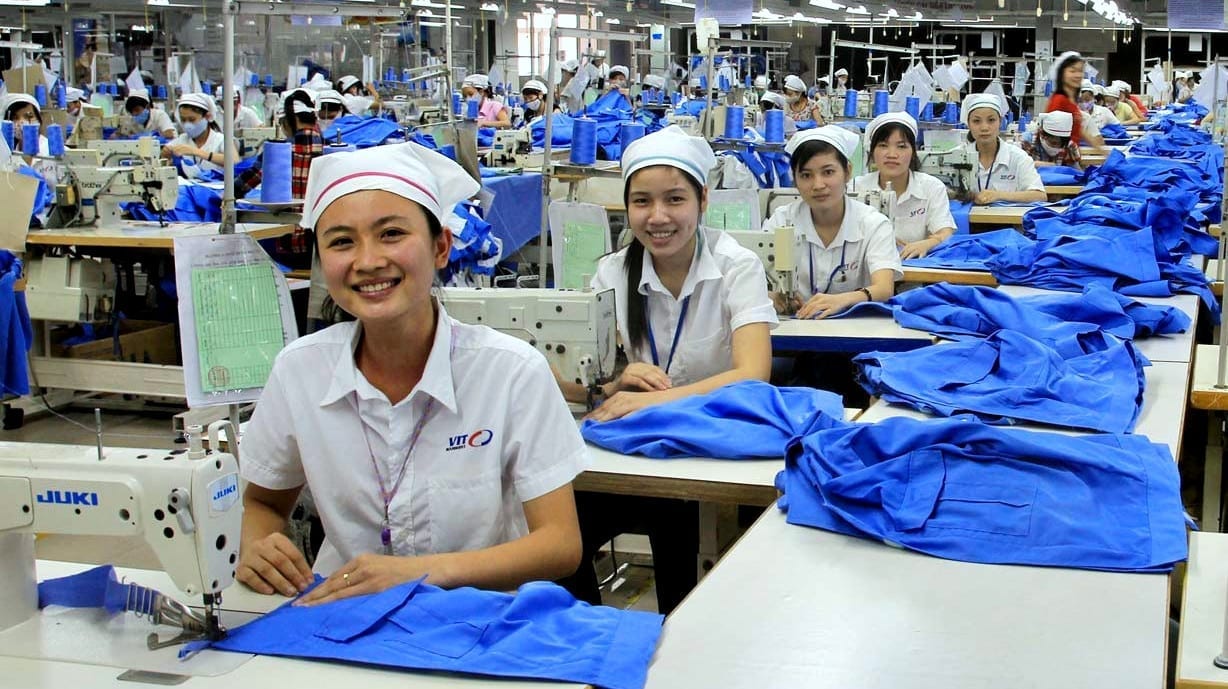
    There have been ongoing factory workers layoff in southern Vietnam, starting late-2022. According to data, the majority of the workers laid off were middle-aged females. For example, over 50% of those laid off at the HCMC-based company Pouyuen were over 40 and around 60% of them had worked at the company for at least 10 years.

    Responding to a survey conducted late-June, as many as 90% of the respondents answered “Yes” to the question: “Do you think workers aged between 35 and 40 in Vietnam struggle to get a job?”

    Pham Minh Huan, former deputy minister of Labor, Invalids and Social Affairs, considers age discrimination at workplaces a downside of the market-oriented economy, in which businesses have to optimize their human resources to maximize their productivity and minimize their costs, which in turn makes aged low-skilled workers the first target to be laid off.

    “Aged workers tend to have lower productivity while requiring higher salaries,” Huan explains. “Businesses that revolve around financial reward are likely to lay this group of workers off, even if they have contributed to the company for a long time.”

    Nguyen Phuong Mai, former CEO of Navigos Search, a recruiting service in Vietnam, says employing middle-aged workers has both strengths and challenges. On the one hand, employers don’t have to spend too much on training costs and could be able to make use of these workers’ experience. On the other hand, middle-aged employees may be less creative, less flexible, less familiar with technologies, and less likely to blend in with co-workers of younger generations.

    Mai says a story which she will never forget: “I once worked with an outstanding applicant who met all of the requirements that the company was looking for.”

    “But he still got turned down, as throughout his whole career up until that moment, he had worked for one company only, which was considered a sign that it may be hard for him to adjust and adapt.”

    Experts suggest that workers have to constantly improve their skills and be ready for every possible scenario regardless of their age, in order to be able to grab opportunities that come to them.

    Huan also says the government should create a varied labor market, so that middle-aged people could change their jobs more easily if they are laid off.

    He suggests businesses appreciate workers that have dedicated their youths to the companies and treat them with respect, including avoiding sudden layoffs without any kind of compensation.

    “Middle-aged people may find it challenging to start over, but that doesn’t mean it’s impossible,” he says.

    Tung’s recruiter friend pointed out things he needed to change in his Curriculum Vitae, including removing his year of birth and irrelevant degrees while emphasizing more his practical skills.

    He was also suggested to reply “I want to be an employee till I retire” when interviewers asked about his career goal, instead of showing his determination to achieve a leading position.

    Tung indeed got more calls for interviews after adapting his application documents based on his friend’s suggestions. His unemployment period ended in May. He now works for a foreign company that he says “values skills over age.”

    Hien is still looking for a new job. She says if things do not work out, she will consider lowering her requirements regarding salaries and benefits.


  • Australia, Germany replace Japan as Vietnamese’s labor hot spot

    Australia, Germany replace Japan as Vietnamese’s labor hot spot

    Tu worked in Japan for two years but left when the devaluing yen lowered the value of his savings, which he intended to use back home in Vietnam

    He eventually set his eyes on Germany.

    The reasons were quite simple: Germany was experiencing a lack of labor resources and was employing measures to attract more foreign workers, including more open visa policies and attractive salaries.

    As Germany’s labor minister Hubertus Heil said earlier this year, the country would lack around 7 million workers by 2035 “if we don’t do something.”

    So Tu was there ready to answer the call. “This time I want to challenge myself in Europe,” he said.

    The 30-year-old man was one of many Vietnamese workers who left Japan after finding their earnings there not attractive anymore. It was essentially a double consequence of the dropping value of the yen and rising inflation.

    Inflation in Japan hit a 40-year-high last October, and consequently, the price of everything from fuel to food rose, and many people could not afford essentials in their daily lives, reported Reuters.

    But rarely are workers who’ve returned home from Japan satisfied with their earnings in Vietnam either. Instead, they are now often opting to relocate to Europe or Australia, which are both taking bold government steps to compensate for their lack of workers

    Tu didn’t allow any delays in his plan. He started learning German as soon as he returned to Vietnam from Japan.

    He spent around eight hours a day studying the language and managed to acquire a German B1 certificate, then a German training visa, which allowed him to enroll in a three-year vocational training course in the country, as well as be eligible to stay for another two years after his course completion.

    He relocated and became one among about 1.25 million foreigners with such a visa in Germany, according to data provided by the German Federal Statistical Office.

    According to him, the agency he hired to assist him in his visa application procedure told him that they had assisted 100 Vietnamese people relocate to Germany this year, an increase from only around 20 last year.

    After working in Germany for a while, Tu said that it wasn’t only the financial earnings, but also the benefits offered to migrant workers that are more attractive in Germany compared to Japan.

    “I had to work between 11 and 12 hours a day when I was in Japan, compared to only eight hours a day, five days a week here,” he explained, adding that he could arrange his schedule and work in other restaurants during his days off to make extra money.

    Similar to Germany, Australia is a destination that many Vietnamese workers are interested in. Businesses in Australia are receiving hundreds of applications from Vietnam and other Asian countries a day.

    Duy Nam, a manager at a meat processing company in the Australian town of Broome, said he received hundreds of emails and text messages a day asking about the Australian visa application procedure. His own younger brother was contemplating immigrating to Australia as a migrant worker as well.

    He attributed the growing popularity of Australia among Vietnamese workers to the shortage of domestic workers, which was partly caused by the country’s lockdown during the peak of the pandemic.

    Now that the pandemic is under control, the Australian government is doing its best to attract foreign workers. It now grants the subclass 462 visa (also known as the Work and Holiday visa), which allows its holders to work during their stay in Australia, to up to 1,500 people a year. And the visa application procedure has shortened from a year to a couple of months or even weeks.

    Lightening immigration policies is not the only recent boon for migrant workers in Australia. Workers’ average hourly rate in Australia was A$27 (around $19) before the lockdown, but rose to A$55 during the peak of the pandemic. Because of that, earning an attractive income of as much as A$10,000 a month became possible for Vietnamese migrant workers.

    Compared to that, Vietnamese workers in Japan can only save “between VND12-16 million (around $507-$677) a month, compared to VND20-25 million before,” said Tien Thanh, 24, initially planned to migrate to Japan and work as an electrical appliances technician, but was discouraged by his friends.

    He then changed his mind and moved to Australia, which took him six months and four failed attempts to finally do.

    After reaching the country, he started looking for jobs with the help of social media, and was offered work on a farm in northern Australia a week after arriving in the country.

    “There are a total of around 200 people working in my farm, of which as many as 47 are Vietnamese.”

    Thanh is satisfied with his current monthly income in Australia. He earned the equivalent of VND24 million his first month, but after getting more familiar with the work, now he can earn more and save around VND70 million a month.

    Based on his calculations, he’ll be able to pay back the VND300 million his family borrowed to help send him to Australia, in half a year, and then save enough money to get his own house in Vietnam after three years.

    As attractive as the idea of working in Australia and European countries is, both Tu and Thanh warned those who are interested in it about the risk of being scammed.

    “I know this guy from Ha Tinh province who sold his house for $30,000 to pay an agent,” Thanh said. “Only after arriving here did he know he had only obtained a travel visa, and was not eligible to work.”

    Tu added that the German visa application procedure consists of many phases and requires a lot of documents, so applicants should be cautious if agencies they work with treat it lightly.

    “There are agencies that send people to remote areas without helping them find jobs, so you should be careful,” he said.

    Still, those who managed to leave Japan and come to countries that offer more competitive rewards seem optimistic about their future.

    “Even if I don’t get a permanent residence, I can still come back to Vietnam and work well with the experience and knowledge I gained here [in Germany],” Tu said.

  • Singapore company to buy out Vietnam’s FV Hospital

    Singapore company to buy out Vietnam’s FV Hospital

    Singapore-based Thomson Medical Group has agreed to buy FV Hospital in Ho Chi Minh City for US$381.4 million in what will be Vietnam’s biggest ever healthcare industry deal.

    The company, which has operations in Singapore and Malaysia, said in a press release Wednesday that it would acquire 100% of Far East Medical Vietnam Ltd, which owns the hospital.

    “The acquisition of FV Hospital deepens our commitment to the Southeast Asian healthcare sector, expanding our group’s presence across three of the region’s most important geographies in healthcare,” Kiat Lim, TMG’s executive vice chairman, said.

    FV Hospital provides the group with a strategic foothold in Vietnam and a gateway to future investments in the fast-growing market, he added.

    FV was founded by Dr Jean-Marcel Guillon in 2003 with a group of French physicians.

    Located in District 7, it has evolved into a full-service, one-stop provider of healthcare, including for people from Cambodia.

    It offers over 30 specialties and has over 1,600 staff, who include more than 200 Vietnamese and expatriate doctors.

    It also operates the FV Saigon Clinic in District 1.

    TMG said that the accelerating healthcare demand in Vietnam is fueled by a rising middle class, an aging population and growing expatriate numbers.

    It also sees Vietnam as a potential medical tourism destination, thanks to solid demand from neighboring countries like Cambodia, Laos and Myanmar.

    Thomson Medical Group was established in 1979 and is one of the largest private providers of healthcare services for women and children in Singapore.

  • Vietnam Electricity owes Petrovietnam $971M

    Vietnam Electricity owes Petrovietnam $971M

    Oil and gas giant Petrovietnam has liquidity issues because it has not been able to collect payables of VND23 trillion ($971 million) from state-owned utility Vietnam Electricity.

    Over VND14 trillion of the amount is past due, and this is having a major impact on its own business, the oil company said in its first-half financial report.

    EVN has financial problems after making a loss of VND19.5 trillion last year.

    Petrovietnam also said that the oil and gas industry has been hit by plunging prices amid economic challenges.

    In the first six months Petrovietnam produced nearly 12.7 billion kilowatt-hours of electricity, 4.5% higher than the target.

    Its crude oil output was 5.3 million tons of which it sold 83% domestically.

  • Spotify and Calm collaborate to bring transformative content to users worldwide

    Spotify and Calm collaborate to bring transformative content to users worldwide

    Calm, the meditation and sleep app with over 4 million users worldwide, has joined forces with Spotify in an unprecedented collaboration. This partnership aims to provide a range of transformative content from Calm to support individuals on their mental health journey. The content is now accessible on Spotify’s platform.

    The collaboration between Calm and Spotify is made possible through Spotify Open Access (SOA), an initiative introduced in 2021. SOA enables companies to offer paid content on Spotify, catering to different subscriber tiers. This means that users can access and enjoy paid content from other platforms, such as books or articles they have purchased, directly on Spotify.

    It is important to note that a Premium subscription to Calm is required to gain access to all its content on Spotify. Otherwise, only a limited set of stories and music is available for streaming on Spotify.

    Recognizing the challenge of finding time for mindfulness amidst daily life’s busy demands, Calm has partnered with Spotify, making some of its finest content readily available in the Spotify podcast catalog.

    With eleven Calm shows now on Spotify, individuals can benefit from a range of mental well-being support. The content includes some of the most popular sleep stories, meditations, mindfulness exercises, and more, all designed to facilitate better sleep, reduce stress and anxiety, and cultivate mindful habits.

    The strategic collaboration between Calm and Spotify brings significant advantages for both parties. Calm’s esteemed content gains access to Spotify’s vast user base of approximately 515 million monthly active users, amplifying its reach and impact.

    The partnership between Calm and Spotify provides an exciting opportunity for users to conveniently enhance their mental well-being. By leveraging the power of Spotify Open Access, Calm’s transformative content is now just a click away for individuals seeking relaxation, stress reduction, and better sleep.

  • Passenger, goods transport volume sees strong surge in H1

    Passenger, goods transport volume sees strong surge in H1

    The transport sector carried over 2.17 billion passengers in the first half of 2023, up 15.9% year-on-year, heard a conference hosted by the Ministry of Transport in Hanoi.

    In the review period, about 1.10 billion tonnes of goods were transported, up 15.9% compared to the same period last year.

    The volume of railway passengers has experienced a strong increase in the period, recording a revenue growth of 138.92% compared to the same period last year.

    The aviation sector has basically met the demand. Some international routes have gradually recovered to the pre-pandemic level. The Ministry of Transport has also implemented various solutions to reduce flight delays and cancellations, and better the quality of air transportation services.

    The maritime sector has paid attention to implementing a project to develop Vietnam’s shipping fleet; simplifying administrative procedures, strongly applying information technology and the national one-stop-shop mechanism for 11 administrative procedures at 22 maritime port authorities nationwide.

  • Spotify targets Gen Z Filipino and Indonesian listeners with local artists in new brand film

    Spotify targets Gen Z Filipino and Indonesian listeners with local artists in new brand film

    Spotify aims to connect with their Gen Z Filipino and Indonesian listeners through their new “Music That Finds You” campaign that illustrates the streaming platform’s personalized music discovery services.

    The campaign, which stars Pinoy hip-hop artists Nik Makino and Flow G and Indonesian rock band NOAH, will span across film, television, OOH, and digital assets.

    “Gen Z are voracious consumers of Spotify’s library of audio content,” said Jan-Paul Jeffrey, SEA head of marketing, Spotify.

    “They play more than 578 billion minutes of music in Indonesia and the Philippines and are more engaged with digital audio than any other generation,” he continued.

    The brand film which features Nik Makino and Flow G for the Philippines begins with an individual struggling to study for her college entrance exams. When she presses play on the Discover Weekly personalized playlist, a light, reminiscent of a bat signal, shines from her bedroom window

    The hip hop duo then ziplines through the city from the party they were at to the protagonist’s house to perform for her as she resumes her studying while bopping along with them.

    The brand film brings the magic of Spotify to life and showcases the cultural influence Spotify has on Gen Z listeners that witness how niche homegrown artists are able to amass streams on Spotify, according to a statement by the brand.

    “As the world’s largest global music streaming service, Spotify has the unique ability to reach youths plugged into culture and provide them with an avenue to foster more meaningful connections with artists and podcasters they love,” added Jeffrey.

    Similarly, the advertisement for Indonesia begins with an individual playing their Discover Weekly playlist before starting their morning when members from NOAH parachute out of an airplane filled with other artists.

    As NOAH rocks out with the protagonist in his front yard, the advertisement emphasizes the playlist’s capabilities to provide listeners with personalized music that will make their day better.

    Along with Discover Weekly, Spotify has Daily Mixes and their Time Capsule which are both tailored specifically to each individual listener, while features such as BLEND offer a social experience for any two listeners with a shared playlist.

    As Spotify improves its services for their listeners, last month the streaming platform announced that it would be conducting another round of layoffs, just a few months after its previous wave of job cuts.

    This particular wave affects the podcast division, wherein approximately 2% of Spotify’s workforce in this division will be let go.

    According to Spotify in a statement, it is expanding its partnership efforts with leading podcasters from across the globe, with a tailored approach optimized for each show and creator which marks a fundamental pivot for Spotify in order to support the creator community better.

  • Gasoline prices rise

    Gasoline prices rise

    Except for E5 RON 92, gasoline and diesel prices have risen by VND70-660 per liter starting 3 p.m. Tuesday.

    The price of the widely used RON95 went up 0.33% to VND21,490 (91 cents) per liter. Biofuel E5 RON92 decreased by VND60 (0.29%) to VND20,410.

    Diesel had a VND450 (2.48%) rise to VND18,610.

    Oil prices edged higher on Tuesday supported by supply cuts by the world’s biggest oil exporters and continued hopes for higher demand in the developing world in the second half of 2023.

    Supply cuts by top exporters Saudi Arabia and Russia set for August helped to lift the benchmark prices, which were also supported as the U.S. dollar fell to a two-month low.

  • European firms worry about power shortages in Vietnam

    European firms worry about power shortages in Vietnam

    The European Chamber of Commerce in Vietnam (EuroCham) has called on the government to focus on long-term plans to mitigate power shortages, which it fears are cyclical.

    Power shortages were among the concerns raised by EuroCham in its second quarter Business Confidence Index report.

    A survey of its member companies found the recent power shortage significantly affected their business.

    While the situation has improved thanks to the heavy rains in recent weeks, 60% of the companies said the shortage had created challenges for them, with 10% saying they have been seriously affected.

    According to EuroCham, reliable power supply is a central requirement for the business sector and overall economic resilience.

    The Government should focus on making long-term plans since power shortages are likely to occur in cycles, EuroCham president Gabor Fluit said.

    Between late May to mid-June this year the northern region was crippled by regular blackouts as electricity demand shot up even as hydropower, one of the two main sources, decreased due to drought.

    European businesses also said Vietnam’s infrastructure is poorer than that of many neighboring countries, with 53% rating it inadequate.

    But the bright spot is that the Government is taking active measures to address this problem like accelerating key infrastructure projects, they said.

    The survey also found that business optimism has increased slightly and Vietnam continues to be considered an attractive destination for foreign investors.

    Some 48% of respondents expected their companies’ direct investment in the country to rise sharply in the next quarter.

  • Gasoline prices drop

    Gasoline prices drop

    Gasoline and diesel prices declined in Vietnam Monday afternoon, following a similar trend globally.

    The popular RON95 gasoline dropped 2.68% to VND21,420 ($0.91) per litter after staying unchanged in the last two revisions by authorities.

    Biofuel E5 RON92 fell 1.91% to VND20,470 per liter.

    Diesel, after rising two times in a row, was 0.06% lower at VND18,160 per liter.

    Global fuel prices since June 21 have been falling due to a plunge in U.S. fuel reserves and concerns about central banks’ rate hikes, according to the Ministry of Industry and Trade and Ministry of Finance.

    RON92 fell nearly 1.5% to $86.78 per barrel while RON95 dropped 1.8% to $91.59. Diesel declined by 0.5% to $92.16.

  • Spotify reportedly plans to add music videos to its app

    Spotify reportedly plans to add music videos to its app

    Spotify is working on a new feature that will allow users of its music streaming services to watch and listen to full-length music videos in its app. While the company hasn’t confirmed the information, it’s common for Spotify to thoroughly test new features before making them official.

    According to a new report by Bloomberg, Spotify is considering adding music videos to its app, but that doesn’t mean that the feature is already being tested. The move is meant to put Spotify in a better position against competitors like YouTube and TikTok.

    Currently, Spotify is looking for partners that will help it bring music videos to its streaming service, at least according to people familiar with the company’s plans. If the rumor ends up being accurate, it will confirm what seems to be a trend for Spotify: complete focus on video content.

    Spotify is trying to keep up with other players in the market by adding features that proved to be very popular among users of competing services. In that regard, Spotify launches “clips” at the beginning of the year, a new feature that would allow artists using its music streaming service to publish videos shorter than 30 seconds as a means to keep in touch with their fans.

    After heavily focusing on podcasts until a few months ago, it looks like Spotify has turned its attention to video content in an attempt to appeal to different audiences. Either it will succeed or not, it depends on its approach and how well its partners will react to Spotify’s business proposal.

    Although it might not be something that will bring to many customers to the platform, it could convince those that are already subscribed to not consider switching to other music streaming services due to lack of new features.

  • TikTok adds content filtering tool to Family Pairing

    TikTok adds content filtering tool to Family Pairing

    TikTok is bringing one of the features that’s been available since last year, content filtering, to Family Pairing. Ever since the feature was released back in July 2022, the content filtering tool that allows TikTok users to filter out videos with words or hashtags was among the most popular features among the app’s users.

    Today, TikTok announced that parents will now finally be able to take advantage of content filtering tool since it will be added to Family Pairing. But this is not just a traditional port, as TikTok says it has partnered with experts to be able to adapt the content filtering tool to Family Pairing.

    It was very important for TikTok to strike “a balance between enabling families to choose the best experience for their needs while also ensuring we respect young people’s rights to participate in the online world.” On that note, the feature has been implemented in a way that allows teens to view by default the keywords their parents have added.

    These keywords will be represented in the app as a personalized layer on top of the Content Levels system, which is meant to prevent content with more mature or complex themes from reaching audiences between ages 13-17.

    The new content filtering feature is available to TikTok parents via the Family Pairing starting today, but make sure to update the app to the latest version.

  • YouTube could host mobile and desktop video games

    YouTube could host mobile and desktop video games

    YouTube is testing a product for playing online video games. YouTube’s plan to stretch beyond hosting video content and into sharing video games was the subject of an email sent to Google employees. The product already has a name, Playables, which will allow users to access games on mobile devices or desktop computers. The email invited Google employees to test the new gaming platform and the Journal did get a chance to view the email.

    One of the games mentioned is called Stack Bounce which is described as an arcade game that has players throwing a bouncing ball to smash layers of bricks. Users will be able to play the games instantly using the YouTube website, or via the YouTube mobile app for iOS and Android. Gamers already visit YouTube to watch live streams of video gaming competitions. YouTube competes with Amazon’s Twitch for viewers interested in watching others compete.

    By hosting games, YouTube would be getting into another aspect of the online gaming industry as the platform seeks to put a charge back into its lagging advertising revenue. Although the online gaming sector also has been struggling lately, a company spokesman said, “Gaming has long been a focus at YouTube. We’re always experimenting with new features, but have nothing to announce right now.”
    The Google Play Store does include mobile games available for Android users and developers who earn over $1 million a year must give Google up to a 30% cut of in-app transactions. It isn’t known how Google expects to profit from the new YouTube product. But even game developers are having a hard time making money in the post-pandemic world. And once-popular titles, such as Angry Birds, no longer generate the revenue stream that they once did.
    Last year Google announced that it was shutting down Stadia, a service that allowed users to stream games directly from the cloud to multiple devices. But the number of subscribers never took off and Stadia chief Phil Harrison saw the opportunity for YouTube to use Stadia’s technology to help the video streamer create a new revenue source.
    Some of the games being tested for YouTube are simple games that were popular a while back on services such as WeChat and Facebook. In other words, the games that YouTube might offer might not be the latest and greatest titles as Google leaves those for the Play Store and its 30% cut of in-app purchases. But these games might have a track record of being popular at one time making them interesting enough for online game players to still have an interest in playing them.
  • Australian homewares brand Anko expands in India with Flipkart

    Australian homewares brand Anko expands in India with Flipkart

    Australian Kmart-owned homewares brand Anko has teamed up with e-commerce giant Flipkart to expand its footprint in India.

    Indian shoppers can now peruse about 400 Anko products across multiple categories on Flipkart, and the company says it plans to increase its range in the near future.

    The Australian retailer announced its debut in India earlier this year and reported strong growth from both metropolitan and tier 2, and 3 cities.

    “This strategic alliance will allow us to reach a wider audience and meet the growing demand for high-quality and affordable homeware products across the country,” said Pulkit Bansal, country head at Anko India.

    “Through Flipkart’s Brand Mall, Anko will have a prominent presence with a dedicated presence across platforms, ensuring easy access for customers. Additionally, Anko products will be listed under Flipkart Plus assured listings, offering customers a guarantee of quality and reliability.”

    Anko is sold through more than 300 stores in Australia and New Zealand, as well as other international markets. The brand focuses on providing advanced shopping experiences with responsibly sourced products.

    Anko is Kmart Australia’s house brand. The Anko name was introduced in 2019 as part of Kmart’s 50th anniversary celebrations.

  • YouTube to launch first official shopping channel in South Korea

    YouTube to launch first official shopping channel in South Korea

    YouTube will launch its official shopping channel in South Korea for live commerce later this month for the first time in the world, people familiar with the matter said Wednesday.

    The new channel, set to open June 30, will provide a live commerce platform to companies and plans to livestream shopping content with about 30 brands at launch, according to the people.

    This is the first time YouTube is opening an official shopping channel in any country in the world.

    “YouTube is committed to building an engaging, informative and entertaining shopping experience for all users, including in Korea. To do this, we may experiment with a variety of YouTube Shopping features from time to time as we continue to work hard to optimize and deliver the best experience for our users,” a YouTube official told Yonhap News Agency, without providing details.

    Last year, YouTube rolled out a new shopping tab in its Explore section, allowing eligible creators to tag products in their livestreams or list products under their videos, and viewers to purchase those products.

    During Alphabet Inc.’s fourth quarter 2022 earnings call, Philipp Schindler, the chief business officer of the company, said Alphabet will focus on making YouTube more “shoppable,” as part of efforts to foster more creators, which will lead to more content and viewers, and ultimately more opportunities for advertisers.

    Alphabet is the parent company of Google and YouTube.

    “It’s still nascent, but we see lots of potential and making it easier for people to shop from the creators, brands and content they love,” Schindler said.