
In downtown Ho Chi Minh City, Vietnam’s largest bookstore yet, Hai An, has opened its doors. Spanning five stories, the store features a contemporary design with an ocean-inspired concept including an art installation in an atrium.
Category: Living
Retail News Asia is committed to providing both local and global retailers with the latest Living news throughout the Asian market. This on a daily base.
-

Tax evasion remains rife among online sellers
Many people earning huge incomes from online commercial activities do not pay tax until discovered by tax authorities. There were more than 1,100 individuals working as a software and online game developers in the capital, a study done by the Hanoi Department of Taxation in June found. They earned a combined VND4.8 trillion ($206 million) between 2017 and 2019, with one person earning VND140 billion ($6 million). No one paid any taxes until authorities discovered the extent of their earnings.
Sellers on Facebook and e-commerce platforms are also doing well thanks to a growing trend of online shopping. Recently authorities found a warehouse selling smuggled goods via Livestream with a turnover of VND650 billion ($27.8 million) in the last two years. The owner had not paid a single dong in taxes prior.
Tax officials said many businesses selling online have huge revenues but do not declare them or pay taxes. They include artists and celebrities, who, some claim have revenues of billions of dong.
According to the Ministry of Finance’s regulation, businesses or individuals with an annual income of VND100 million ($4,300) or more must pay value-added tax (VAT) and income tax.
But officials said assessing their incomes and collecting taxes from them is not easy. But things might be changing. New tax regulations that took effect in July gives the tax department the authority to ask banks for financial information about people who have income from online commercial activities.
Vu Manh Cuong, director of the General Department of Taxation’s inspection agency, said 45 commercial banks have been asked to provide information. “Tax evaders cannot escape forever and must pay up sooner or later once we obtain data from the banks.”
Those who do not declare and pay taxes also have to pay a fine of 0.03 percent per day for late payment.
According to the data provided by banks, in Hanoi alone, there are more than 18,300 organizations and individuals engaged in online sales with a total income of more than VND1.46 trillion ($62.66 million) from Google, Facebook, YouTube, and other platforms.
The tax agency has asked them to pay nearly VND14 billion in taxes. It was also able to identify many businesses offering rental services like Booking, Agoda and Airbnb with revenues of more than VND5 trillion in the first eight months of this year and collected taxes of VND93 billion.
Cuong added that the State Bank of Vietnam’s banking supervision and inspection agency has identified 23 cases with suspicious transactions, including those where account holders receive money for advertising online or from Google, Facebook, and YouTube on behalf of others.
On September 28 the inspection agency reported to the tax department about these suspicious bank transactions, and an investigation is ongoing.
The census, which is due to be completed next July, will also help take a step toward making it easier for tax authorities to identify individuals who evade taxes.
But experts remain apprehensive it would be difficult to collect tax from online sellers, especially since many consumers prefer to pay cash.
-

JV arrives to create US$7.9bn Chinese pharmacy giant
China’s Laobaixing and Yixintang Pharmaceutical Group are in advanced talks to create the country’s biggest drugstore chain via a share swap, three people familiar with the matter said.
Laobaixing’s founders, Xie Zilong and Chen Xiulan, are expected to have a bigger stake in the merged firm than Yixintang’s founder Ruan Hongxian, said two of the people. Shanghai-listed Laobaixing, formally known as LBX Pharmacy Chain Joint Stock Company and which boasts Tencent Holdings as a backer, has a market value of around US$4.4 billion, while Shenzhen-listed Yixintang is valued at about $3.5 billion.
The talks have been ongoing for more than three months, the two people said. One person said the firms are aiming to finalize and announce the deal in the coming days, adding that Laobaixing would remain the listed entity.
The sources declined to be identified as the discussions were not public. Laobaixing, Yixintang did not immediately respond to requests for comment.
Tencent, which took a 1-per-cent stake in Laobaixing to become a strategic partner this year, has endorsed the merger and is planning to work with the combined firm to speed up implementation of a “smart retail” strategy, according to two people.
The tech giant is looking at helping with the integration of their online and physical store businesses and will help drive traffic through its messaging service WeChat as well as other platforms, said one person.
Laobaixing, also backed by private equity firms FountainVest Partners and Primavera Capital, had 6.7 billion yuan ($1 billion) in revenue for the first half, while Yixintang had 6 billion yuan, filings show.
Together they exceeded the 8.6 billion yuan in first-half sales for a current industry leader, state-backed Sinopharm Holding Guoda Drugstores. Their combined number of stores at around 13,100 would also be more than double Guoda’s.
China’s drugstore market is, however, highly fragmented. According to market research firm Qianzhan, Guoda had a market share of 2.9 percent last year, ahead of Laobaixing with 2.6 percent and Yixintang with 2.4 percent.
Both Laobaixing and Yixintang sell pharmaceuticals, traditional Chinese medicine, nutritional supplements, and medical equipment. They also complement each other geographically with Laobaixing strong in central and eastern China while Yixintang has focused on the southwest of China, particularly it’s home province of Yunnan.
Laobaixing, established in 2001, is 33-per-cent held by its founders. For years it counted EQT as a key backer but the Swedish private equity firm sold its 25 percent stake to FountainVest and Primavera for $557 million a year ago.
Yixintang, founded in 1981, is 31-per-cent owned by founder Ruan.
-

Azimut Benetti Group Shines in the Asia-Pacific Area
The Asia-Pacific Area continues to play a strategic role in terms of Azimut Benetti Group sales. Thanks to its longstanding presence in key countries in the area, the company has an excellent reputation and unparalleled reach across the region. Reporting total sales worth over 150 million euros (the two brands’ results for the last 12 months), the Group is at the top of an ideal ranking of best performers in the area.
Despite the complexities caused by the global pandemic, Azimut Benetti has put in a particularly good performance, reporting a 10% increase in the results posted for this area last season with Benetti alone nearly doubling the number of units sold.
This result, which takes into account all of the most important markets in the region, including Hong Kong, Singapore, mainland China, Japan, Australia, and New Zealand, is driven by orders for boats over 24 meters, a segment in which the Group excels throughout the world.
In more detail, Azimut Yachts has sold and delivered eight yachts in the brand’s flagship Grande Collection (four 32 Metri, two 27 Metri, and two 25 Metri) with 5 more units in the same Collection in delivery in the next six months; Benetti has sold five units.
With regards to Azimut Yachts, significant contributions to achieving these excellent results were made by Marine Italia, the dealer for Hong Kong, Macau, Guangdong, and Taiwan, and by the new Australian dealer D’Albora, which has established a considerable presence in the region in the space of a single year, as well as opening up new markets on the country’s western coast.
Turning to Benetti, it is no surprise that Asia-Pacific owners have focused their attention on the new projects and on the Oasis 40M, a glamorous yacht of which a remarkable 12 units have been sold to date.
“For years Azimut Yachts has been leading the APAC market for a range of 34-120 foot yachts, supported by a very good network of local dealers, to strengthen the Azimut brand and to make sure that each customer feels valued and well looked after. We are especially proud of the results we have achieved this year. The sales results were especially positive in the range between 60 and 80 feet yachts and Grande Collection is clearly a beloved yacht in Asia. The glowing results were achieved with sales covering the whole Region from South East Asia to Oceania and with considerable sales in mainland China. Clients clearly recognized and rewarded the strengths of our products: an Italian design, the cutting-edge technology intrinsic to our boats, and of course, a solid family-owned group.” Says Enrico Chiaussa, Asia Pacific, Middle East & Africa Area Manager of Azimut Yachts
“APAC continues to be a key market for Benetti and we are pleased to see our efforts to constantly innovate and improve on the quality of our products and processes, along with the hard work of our employees and local partners, has paid off in a year that has provided unique challenges. As we move into the new season, we remain optimistic that demand for our luxury yachts will continue to soar and that the new aggressive production schedule and the new model introductions we have planned over the next 18 months will further strengthen our position as an industry leader in this exclusive market sector.“ Says Peter Mahony, APAC GM of Benetti Yachts.
-

Most citizens cannot afford ‘affordable housing’
Affordable housing in Hanoi and HCMC is out of reach for most citizens, mainly because of dwindling supply and rising prices. When he moved to Hanoi 13 years ago, Tran Thanh Ha nursed a common enough dream that he would one day own an apartment in the capital city.
Today, he realizes this is next to impossible. The 33-year old graphic designer with a monthly income of around VND25 million ($1,080) has been able to save about VND700 million since his early twenties but is still 50 percent away from the cheapest apartment in his favorite project, which is in the eastern district of Long Bien.
“With one child and another on the way, it is unlikely that my wife and I will be able to acquire the apartment for at least another 10 years. By that time the price will have surged to another absurd level.”
Ha is one of many people in Vietnam’s major cities who are seeing their dream of homeownership slip away as prices increase every year and the supply of affordable housing has almost disappeared from the market. Affordable apartments are those that are priced under VND20 million per square meter, according to the Ministry of Construction.
A recent report of the ministry says the demand for houses and apartments in the mid and high range only accounts for 20-30 percent, while the remaining 70-80 percent is for affordable housing.
The ministry report says residential property prices are “bloated, volatile and out of reach of most people” due to the lack of funding for social housing programs. It also says there is no channel for mobilizing long-term investment for these programs.
Data from real estate consultancy Savills shows that Hanoi apartment prices rose 10 percent year-on-year to $1,500 per square meter in the third quarter as new apartment supply fell to a five-year low.
Do Thu Hang, director of advisory services at real estate consultancy firm Savills Hanoi, said that the capital city is witnessing high residential pricing that far exceeds the income of most people, especially the young.
Data from the Ho Chi Minh City Real Estate Association (HoREA) shows that with a mid-priced apartment in Ho Chi Minh City costing around VND2.5 billion, it would take a family that can save VND100 million a year over two decades to acquire the unit.
Le Hoang Chau, chairman of the association, said that a sharp decline in supply in the 2018-2020 period has made it more challenging for low-income people to afford a house.
Other industry insiders say that most small apartments of 45-50 square meters are being sold for VND1.5-1.7 billion, 50-70 percent higher than five years ago.
This means that an apartment under VND1 billion has now become a thing of the past.
Nguyen Van Dinh, deputy chairman of VNREA, said that in the last two years, very few new apartment projects have been approved in Ho Chi Minh City, this has meant that the affordable segment barely exists in the market despite large demand.
Obstacles in acquiring permits have been the main roadblock for real estate developers. From 106 housing projects approved in 2016, the figure fell to 16 last year and 12 in the first six months of this year, according to HoREA.
There is a lack of transparency in the approval of projects that has left hundreds of projects struggling to acquire permits, it added.
It also said that only 21.81 percent of new supply between 2016 and H1 2020 was in the affordable segment.At an October 30 meeting, Deputy Construction Minister Le Quang Hung said his ministry was working on policies to ensure that the majority of the nation’s workforce, in the middle-income group, have the opportunity to buy an apartment.
The ministry has already proposed several measures to boost the supply of affordable apartments in Hanoi and HCMC. These include a 50 percent discount on land fees and preferential interest rates of 7-8 percent per annum for social housing projects.While apartments are currently required to have a minimum area of 45 square meters, the ministry is considering scrapping this requirement so smaller, cheaper apartments can be built.
The HoREA, meanwhile, has proposed that the government provides credit support to first-time homebuyers as well as incentive tax policies for the development of affordable housing.
As authorities try to find solutions to the housing problem, Ha and his wife are looking for another rented apartment in Hanoi to welcome a new baby, the only residential option for them in the increasingly crowded city.
“Without an inheritance from parents, homeownership in Vietnam is near impossible for people like me.”
-

HCMC serviced apartment rents hit five-year-low
The average rent for serviced apartments in HCMC has fallen to a five-year low as the Covid-19 pandemic stifles demand. The $23 per square meter per month price tag in the third quarter marks a 10 percent year-on-year fall, according to data compiled by real estate consultancy Savills.
Occupancy fell 19 percentage points to 65 percent as there were few international flights entering the country. Foreign businesspeople and experts are the main tenants of serviced apartments.
In the first nine months, registered foreign direct investment capital in HCMC dropped 28 percent year-on-year to over $3 billion.
Owners of over 20 percent of Grade B projects are offering discounts of up to 30 percent for long-term tenants or other perks like free utilities.
The supply of serviced apartments fell 7 percent year-on-year to 6,200 units, with one Grade B project withdrawing 164 units for renovation and a 31-unit Grade C project being converted into office space.
Eleven projects are expected to boost supply by another 1,300 units in the next four years.
-

No plans for Netflix office, servers in Vietnam at this time
Netflix does not have plans to open a representative office or place servers in Vietnam, but said it is working with authorities to meet tax obligations.
The U.S. streaming giant said in a statement Friday that it is for governments to decide the rules on tax, and Netflix complies with applicable laws, but these do not require the company to open a local office, nor to place servers locally.
It is “supportive of the implementation of a mechanism that will make it possible for foreign service providers like Netflix to collect and remit taxes in Vietnam,” it said.
A mechanism for this does not currently exist but should be set up in the near future, and it is discussing best practices with the authorities to make it practical for all, it added.
In other markets where it does not have a local office, it is still able to contribute to growth, remit taxes and protect consumers through simple offshore registration, it claimed.
This contradicts what a Vietnamese tax official recently said. Vu Manh Cuong, director of the General Department of Taxation’s inspection agency, said on Tuesday that Netflix had been working with the Ministry of Finance and the tax department to set up a representative office and servers in Vietnam to declare tax.
The department is working to assess Netflix’s revenues in Vietnam since its entry in 2016 for tax collection, he added.
The Cybersecurity Law requires all foreign businesses which earn an income from online activities in Vietnam to store their data in the country and file tax returns.
Authorities had earlier said that Netflix, which has around 300,000 subscribers in Vietnam and collects a monthly subscription of VND180,000-260,000 ($7.75-11.19), has never paid tax in the country.
Other Southeast Asian countries have also been making moves to tax Netflix and other Internet giants. Indonesia imposed a 10 percent value-added tax on sales on technology firms including Amazon, Netflix, Spotify, and Google in July, while Singapore has since January required subscribers to Netflix and other overseas digital services to pay a 7 percent goods and tax.
-

Most Vietnamese expect increased incomes
A recent survey by French market research firm Ipsos has found 61 percent of respondents expecting their earnings to improve in the next six months.
However, the survey also found 15 percent fearing a further decline in their incomes during the same period.
The impact of the second Covid-19 outbreak that started July 25 has been less severe than the first, the firm says in its report titled “Rebounding from Covid-19 in Vietnam” published Thursday.
The survey found 79 percent of Vietnamese respondents reporting a decrease in income, down 11 percentage points compared to data collected by the company in May 2020. The rate of respondents seeing their incomes drop by half also dropped to 6 percent from the earlier 12 percent.
The survey, conducted September 18-22, used online interviews to collect the opinions of 500 people. Participants were divided into three groups – low income: below VND7.5 million ($323.6) per month; average income: from VND7.5-23.5 million; and high income: above this level.
Ngan Ly, Ipsos Country Manager in Vietnam, said with a margin of error of about 4 percent, the survey results could be representative of the general trend in the country. She said that Vietnamese were more optimistic than citizens of other countries in the region in terms of economic prospects and personal incomes.
In the latest survey, only 1 percent said their income had increased, but when asked about the next six months, 61 percent expected improvements, with the high-income group reporting the best recoveries.
Most of the 15 percent who worried that their income might slip further were unskilled labor.
Many Vietnamese seem to remain optimistic about the future, but they were still concerned about the stability of their jobs. This prompted them to cut down their savings and investments in real estate, stocks, gold, loan and insurance schemes.
Their spending on entertainment and similar activities reduced by 45 percent.
Over 80 percent of respondents said they would be more careful when shopping, giving priority to essential needs like food and healthcare.
The new lifestyle that have emerged from the social distancing period has been sustained, with consumers more willing to stay at home and maintain a healthy lifestyle. Over 60 percent confirmed that they were using more healthy foods, nutritional supplements and have reduced the frequency of alcohol and tobacco consumption.
Shopping habits have also changed as people limit direct visits to markets and supermarkets and increased online shopping, the report said.
-

HCMC real estate business group wants Airbnb-like services legalized
The Ho Chi Minh City Real Estate Association has called for regulating accommodation-sharing services like Airbnb for better management and taxation.
Such services have become popular in Vietnam in recent years as they help meet the large demand for low-cost accommodation from tourists and fetch homeowners an income from spare apartments and rooms, it said in a report
HoREA pointed out that since this kind of business is still not regulated authorities are losing an opportunity to collect taxes and having difficulty managing it.
There have even been cases of people using accommodation provided by such websites for criminal activities, it said.
It called for modifying the law to allow homeowners to rent them as long as they register the business and pay taxes.
There were 40,000 Airbnb listings in the country in January this year compared to 1,000 in 2015, according to tourism development consulting firm Outbox Consulting.
HoREA also wanted restrictions on the number of days homeowners could rent out in a year and apartment management fees to be increased since it increases management work.
The number of Airbnb units in Ho Chi Minh City as of the last quarter was 13,200, down 37 percent year-on-year due to the Covid-19 pandemic, according to data from market research firm AirDNA.
In Hanoi, the figure was down 27 percent to 10,600.
-

Vietnam to tax Netflix’s local revenues
The General Department of Taxation has asked streaming giant Netflix to furnish details about its revenues in Vietnam since its entry in 2016 to assess its taxes.
The country’s Cybersecurity Law requires all foreign businesses which have income from online activities in Vietnam to store its data in the country and submit their business figures to tax authorities for collection, Vu Manh Cuong, director of the inspection agency under the department of taxation, said at a press briefing Tuesday.
“Netflix has been working with the Ministry of Finance and the General Department of Taxation to set up a representative office and servers in Vietnam to declare tax,” he added.
Netflix was not immediately available to comment.
Vietnamese authorities had earlier said that U.S.-based Netflix, which has around 300,000 subscribers in Vietnam and demand a monthly subscription of VND180,000-260,000 ($7.75-11.19), has never fulfilled any tax duty in the country.
The country in recent years has been making efforts to collect taxes from internet giants such as Facebook, Google and Netflix.
Its cybersecurity law, which came into effect this year, also requires foreign businesses to provide users’ data to the Ministry of Public Security if it asks in writing to facilitate investigation of any infringement of the new law.
The law bans internet users from organizing, encouraging or training other people for anti-government purposes.
Taxing Vietnamese for their online revenues is another priority of authorities.
Cuong of the taxation department said that in Hanoi alone there are over 18,300 organizations and individuals making a total of VND1.46 trillion from online sales via Google, Facebook and YouTube, according to data from 45 commercial banks, Tax authorities have so far collected nearly VND14 billion from them, he said.
He added that in the first eight months they also collected over VND93 billion from organizations and individuals making a total revenue of over VND5 trillion from online booking services such as Booking, Agoda and Airbnb.
Other Southeast Asian countries have also been making moves to tax Netflix and other internet giants. Indonesia in July imposed a 10 percent value-added tax on sales by technology firms including Amazon, Netflix, Spotify and Google, while Singapore since January has required subscribers of Netflix and other overseas digital services to pay a 7 percent goods and services tax.
-

Taxi giant lays off 1,300 employees
Vinasun has cut its staff by 1,300 in the first nine months as it restructures to reduce costs amid the Covid-19 pandemic. The staff cut has lowered the company’s salary costs by 35.5 percent year-on-year to VND80 billion ($3.4 million), saving it VND4.9 billion each month. It now has 4,480 employees.
However, lower salary costs have not been enough to offset Covid-19 impacts. The firm’s revenue in the first nine months plunged 52 percent year-on-year to VND734.7 billion, with business mostly frozen in April during the nationwide social distancing campaign.
It has posted a loss of VND185 billion so far this year, compared to a post-tax profit of VND94 billion in the same period last year.
It forecasts a post-tax loss of VND115 billion this year.
Company leaders have said they expect the recovery process to be slow due to a lack of foreign visitors. After Vietnam closed its borders and stopped international flights in March, only a few routes have resumed operations
-
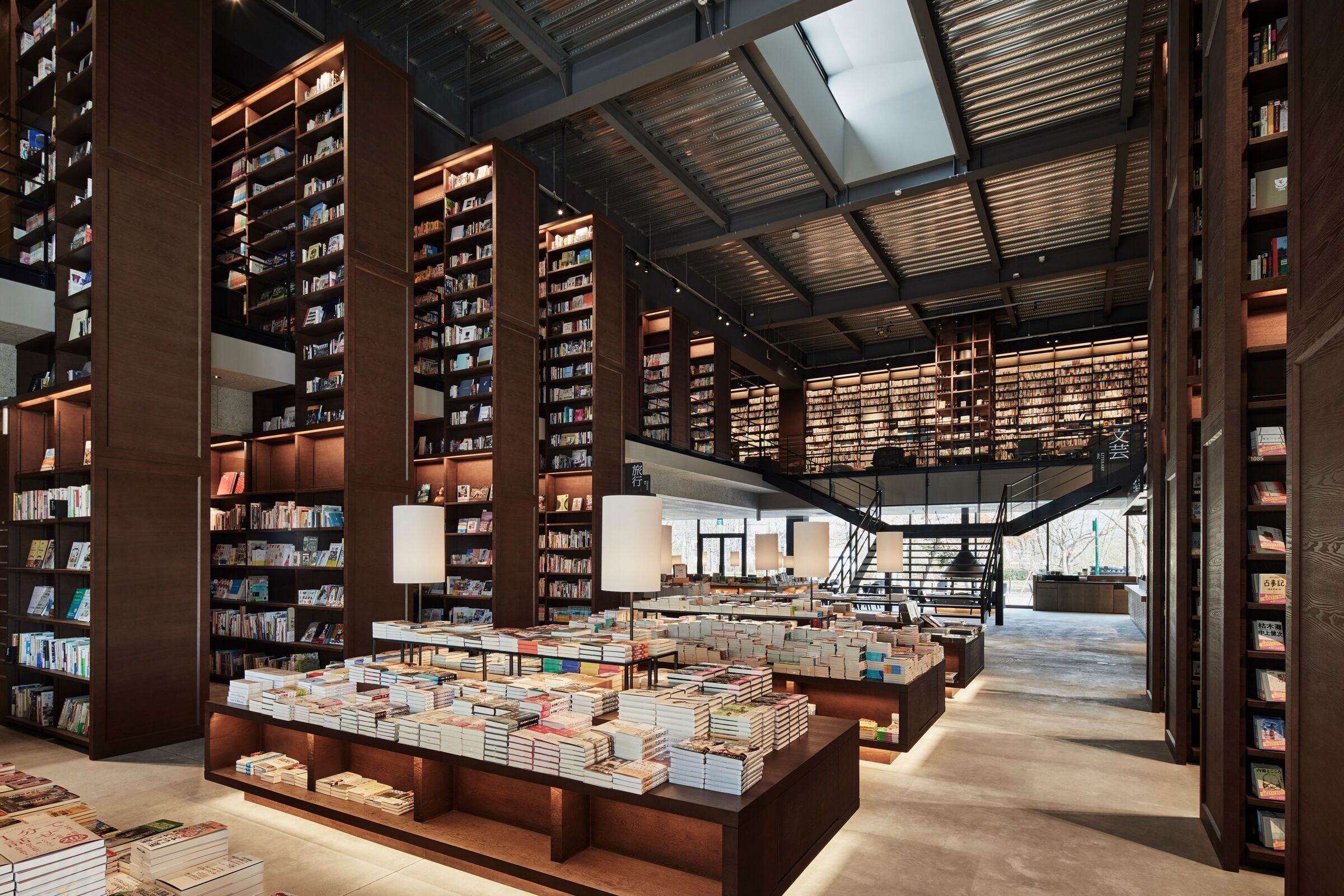
Japan’s Tsutaya Books opens first China outlet
Famed Japanese franchise Tsutaya Bookstore said at the ongoing Shanghai Book Fair that its first branch in the city is scheduled to open in December.
The bookstore chain has joined hands with major Chinese property developer Vanke to build an artistic outlet in the Changning District of Shanghai, which will be on a par with its famous branch in the Ginza Six shopping center and its flagship store in Daikanyama in Tokyo.
Takuya Nomura, general manager of Tsutaya Investment (Shanghai) Co., Ltd., said Tsutaya’s new store will be located in the Columbia Circle, a redeveloped culture park with preserved, old mansion-compound and industrial buildings, widely known for the Columbia Country Club in the 1920s.
The new two-story bookstore will cover an area of 2,000 square meters and provide a large collection of selected books and limited commodities, as well as rich experiential activities, according to Tsutaya.
The book retailer, an affiliate of the Tokyo-based culture and entertainment service group Culture Convenience Club Co., ran about 1,198 outlets around the world.
The new Shanghai outlet is aimed at providing Chinese readers with more lifestyle choices and enhancing the public’s perception of beauty, said Shohei Matsuo, producer of the new store, who also noted that more clerks will be recruited in China.
-

Dairy Farm sells Rose Pharmacy chain to Robinson Retail
Listed Robinsons Retail Holdings reported on Friday that it acquired local drugstore chain Rose Pharmacy Inc. through its subsidiary South Star Drug Inc.
In a disclosure, the Gokongwei-led retailer said South Star Drug and Dairy Farm International Holdings Inc. subsidiary Mulgrave Corp. B.V. (MCBV) signed a share purchase agreement to buy Rose Pharmacy.
Dairy Farm acquired a 49-percent share in Rose Pharmacy in 2015 before increasing it to 100 percent in November 2018.
“I am delighted that Rose Pharmacy will be part of our portfolio as it takes us back to our hometown in Cebu, where my father and JG Summit Holdings and RRHI founder John Gokongwei Jr. started as an entrepreneur. Mr. John also admired Rose Pharmacy for its strong brand reputation in the Visayas and Mindanao,” Robinsons Retail President and Chief Executive Officer Robina Gokongwei-Pe said in the disclosure.
“The deal also further bolsters our strategic partnership with Dairy Farm to strengthen our position in Philippine multiformat retailing. We first worked with Dairy Farm for the acquisition of Rustan Supercenters Inc. in 2018, which deepened our footprint in the premium supermarket space. Our acquisition of Rose Pharmacy yet again offers ripe opportunities for innovation through strategic synergies,” she added.
Rose Pharmacy was established as a family-run drugstore in Cebu City in 1952. It generated P9 billion in net sales last year and has over 300 branches in the Visayas and Mindanao.
“Rose Pharmacy is a very strategic addition to our drugstore portfolio with its highly regarded brand in VisMin and complementary network to South Star Drug’s strong presence in Luzon and Metro Manila,” South Star Drug Managing Director David Goh said.
“Together, we can leverage our scale and synergies to drive wider product assortment, better customer service and offer greater value to our customers across Philippines when they need it most,” he added.
-

Vietnam workers’ wage rises lowest in a decade
Average wages at multinationals and domestic enterprises in Vietnam respectively rose 6.5 percent and 5.2 percent this year, the lowest levels in a decade.
Over the past 10 years, average salaries in both groups had risen at least 8 percent a year, according to a report by human resources solutions firm Talentnet Vietnam and American human resources consulting firm Mercer.
The report surveyed 600 businesses in 16 different industries including technology, consumer goods, pharmaceuticals and manufacturing. Average wages were calculated off the firms’ total salary budget for each year.
According to the report, 14 percent of multinationals surveyed said there will be no increase in employee salaries this year, and 34 percent of domestic firms said the same. Six percent of multinationals and 3 percent of domestic enterprises also said they will continue to implement the same “austere” approach in wage policies next year.
In 2020, the sectors with the highest wage growth have been insurance with 8.7 percent, hi-tech with 8.5 percent, and pharmaceuticals with 8.4 percent. These are sectors least affected by the Covid-19 pandemic, Talentnet said.
Meanwhile, the oil and gas industry recorded the lowest salary growth rate at 2.1 percent, followed by banking with 5.6 percent, and processing with 6.5 percent.
Although almost all companies said they were tightening their purse strings, many said they are willing to give special bonuses to employees who play a key role in their business. As many as 69 percent of companies surveyed said they will pay such bonuses in a lump sum by year-end, while 13 percent said they were doing this quarterly, and another 13 percent were doing it monthly.
Due to specific industry characteristics, businesses surveyed in the financial sector including banks, consumer lending companies and fund management companies were handing out the highest performance-based rewards, with bonuses ranging between 20-20.4 percent of annual basic salary, the report said.
As of last year, Vietnam had one of the lowest average wages in the Asia-Pacific Region. An average Vietnamese worker earned $242 per month in 2019, compared to the regional average of $1,801, according to recruitment firm ManpowerGroup’s annual Total Workforce Index 2019.
-
Netflix and Zoom support coming to Facebook Portal
The Portal products are getting another update that’s actually useful to those who own one of Facebook’s devices. The most important change is the addition to Zoom support. Although late to the party, Facebook’s Portal smart display joins that plethora of similar devices that offer Zoom support.
Those who own a Portal Mini, Portal, or Portal+ in any of the countries where Portal is sold, will now be able to host video calls with up to 25 people on screen. On top of that, Facebook announced that it’s expanding the Story Time library with a new collection of stories.
In addition, AR support is now available for four Dr. Seuss classics: Hop on Pop, Mr. Brown Can Moo! Can You?, The Foot Book, and There’s a Wocket in my Pocket! Keep in mind that these stories are not yet available, but they will be released on Portal sometime this fall.
The ability to control AR Effects in Photo Booth with your voice via the “Hey Portal” command has been added too. You’ll also be able to take photos and videos with AR effects to share with friends and family via Messenger.
For those who own a Portal TV, Facebook has finally added Netflix support, although you’ll still need a streaming subscription to watch the shows. Netflix joins other video streaming services already available on Portal TV, including Amazon Prime Video, SHOWTIME, and SLING TV.
Finally, Facebook revealed that a new remote is now available for Portal TV owners, which features touch buttons for Prime Video, Facebook Watch, and Netflix. The new remote is shipping with Portal TV starting today and will arrive in brick and mortar stores in the coming weeks.