Category: Living

Retail News Asia is committed to providing both local and global retailers with the latest Living news throughout the Asian market. This on a daily base.

  • Michelin Guide Singapore 2019 to be Released in September

    Michelin Guide Singapore 2019 to be Released in September

    Michelin is proud to announce that the star selection of the Michelin Guide Singapore 2019 will be officially revealed on 17 September 2019 at the historically rich Capella Singapore.

    The selected establishments will be recognized at the star-studded Michelin Guide Singapore 2019 Star Revelation and Gala Dinner. The evening’s exquisite six-course dinner will be created by internationally renowned chefs from Michelin-starred establishments around the world.

    The roster of chefs this year includes names that gastronomes will be familiar with, including:

    • Guillaume Galliot (Caprice, 3 Michelin stars, Michelin Guide Hong Kong Macau 2019)
    • Kelvin Au Yeung (Jade Dragon, 3 Michelin stars, Michelin Guide Hong Kong Macau 2019)
    • Sebastien Lepinoy (Les Amis, 2 Michelin stars, Michelin Guide Singapore 2018)
    • Joshua Brown and Greg Bess (CUT by Wolfgang Puck at Marina Bay Sands, 1 Michelin star, Michelin Guide Singapore 2018)
    • Beppe de Vito (Braci, 1 Michelin star, Michelin Guide Singapore 2018)
    • Arisara ‘Paper’ Chongphanitkul (Saawaan, 1 Michelin star, Michelin Guide Bangkok, Phuket Phang-Nga 2019)

    Bringing together their expertise gained in the varied culinary regions of Europe and Asia, the chefs will be presenting a six-course dinner, with each chef showcasing the cuisine that they specialize in. Including French, Italian and Cantonese cuisine, the dishes will be served with an impeccable selection of wines.

    This year’s gala will reflect a trend seen across the world, sustainability, which is also in alignment with one of the Michelin Group’s key commitments: Sustainable Mobility. The company envisions a circular economy to preserve the planet’s resources by reducing, reusing, renewing and recycling the materials needed to produce the Company’s products and services, to avoid leaving a lasting environmental impact.

    To make this possible, one of its visions for the next 30 years is for its tires to incorporate up to 80 percent sustainable materials and for 100 percent of end-of-life tires to be recycled or reused as fuel.

    Fittingly, this year’s gala dinner is themed «Kitchens of Progression», signifying a shift towards sustainable dining and culinary practices. Chefs involved in the preparation are implored to procure ingredients from trusted suppliers and organizations that practice ethical and sustainable farming and be mindful about reducing food wastage – Michelin aims to make this a move in the culinary world, in line with another aspect of its business.

  • ‘Grooming men’ brings opportunities for retailers

    ‘Grooming men’ brings opportunities for retailers

    Men who lavishly invest in fashion and beauty – so-called grooming men -have emerged as new flagship customers for the South Korean retail industry.

    Those who open their wallets without hesitation to improve their appearance are working hard to groom themselves, a thought that was unimaginable in the past, with emphasis on whitening, anti-aging and waxing.

    In the first half of this year, men focused on anti-aging products that slow down aging, and waxing related products, according to an analysis by Gmarket, an online shopping site.

    In the same period, men purchased 53 per cent more eye cream, 94 per cent more hand-and-foot mask packs, and 12 per cent more eye and lip patches compared to last year.

    Younger grooming men preferred pack or patch products that can provide intensive care to specific parts of the body.

    An analysis of the increase in sales of hand-and-foot masks by age showed that purchases among those in their 20s and 30s were 4.6 times higher and 3.8 times higher, respectively, than the average. Meanwhile the share of eye- and lip-patch purchases among those in their 20s and 30s were 13 per cent and 62 per cent, respectively.

    Many men care about whitening and waxing, according to the survey. In the first half of this year, overall sales of waxing products rose 17 per cent from a year earlier, while men’s purchases increased by 130 per cent.

    The retail industry is welcoming the ‘grooming men.’

    The Hyundai Department Store operates a “Hyundai Men’s” boutique, where male customers can purchase all the necessary products within one store, including fashion, beauty and electronics, at its Trade Center and Pangyo branches.

    Thanks to such services, sales at the men’s boutique at the Pangyo branch in the first half of this year rose 15.1 per cent from the same period last year, compared to 10.6 per cent at its Trade Center branch.

    “Men’s interest in fashion and beauty can now be seen in daily life,” a retail industry source said, adding that investment in appearance is diversifying beyond fashion and accessories.

  • Flight Centre could see benefits from right-sizing

    Flight Centre could see benefits from right-sizing

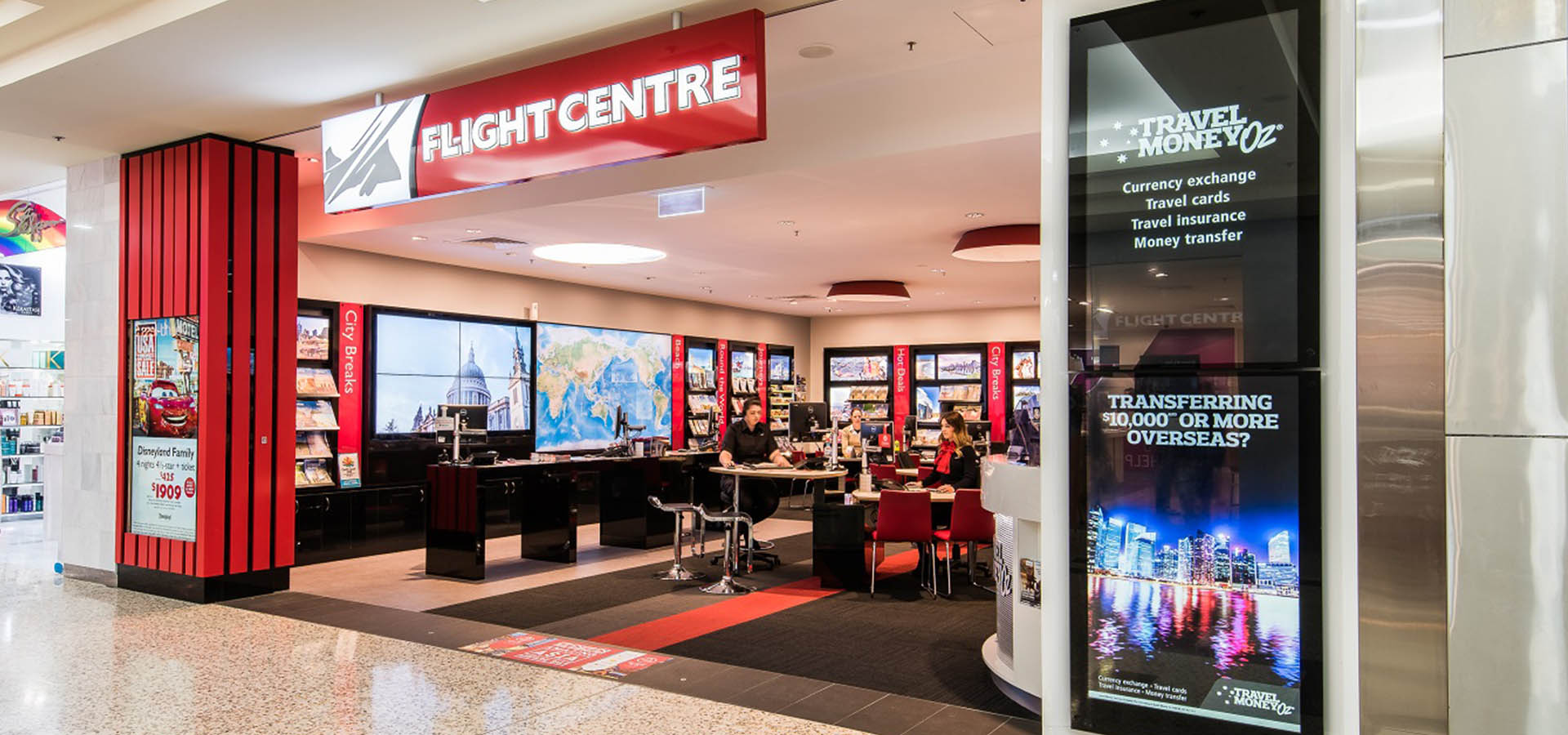
    Amid an industry-wide effort to right-size store networks, analysts at Citi have singled out Flight Centre as a business which could particularly benefit from such an effort.

    According to Citi analyst Bryan Raymond, approximately 10 per cent of Flight Centre’s store network could be culled – largely the result of a network consolidation which has led to many locations featuring several Flight Centre stores located closely together.

    “Following Flight Centre’s brand consolidation, 83 per cent of the ~950 store bricks-and-mortar network is now branded as Flight Centre. This has resulted in a high store density for a single brand, particularly as online penetration is rising,” Raymond said.

    “Our geospatial analysis of Flight Centre’s network has identified 259 Flight Centre branded stores that are located within 1km of another Flight Centre.

    “In our view, this creates an opportunity for store network consolidation to drive higher levels of profitability through lower rent and labour costs, and the expense of [total transaction value].”

    According to Raymond, this could drive an improvement of $8 million in profit before tax over two years.

    This could be particularly helpful for the brand as the Australian leisure bricks-and-mortar industry has seen a significant contraction in the last 12 to 18 months, falling from $106 million in FY18 to an estimated $29 million in FY19.

    A Flight Centre spokesperson told Inside Retail the travel retailer instead utilises this network to create more specialised business travel teams in CBD locations, and will offer “alternatives to Flight Centre” in shopping centres with multiple stores, such as the Universal Traveller brand.

    “We close some shops every year, relocate some others and, when good opportunities arise, we work closely with landlords to secure new sites and open new shops,” the spokesperson said.

    “Within Flight Centre brand in Australia, most of these openings in recent years have tended to be specialist shops and teams, rather than traditional Flight Centre shops.”

    However, many of the factors that led to the contraction of the leisure market are unlikely to continue into FY20 and FY21, Citi argues, with the leisure bricks-and-mortar industry forecasted to rebound by $5 million, to $34 million in FY20.

    Partially as a result of this market contraction, Flight Centre recently amended its guidance for the 2019 financial year from between $390 million and $420 million, to between $335 million and $360 million – roughly a 10 per cent decrease.

    “Our FY19 results will highlight the challenges we are addressing in Australia but will also underline two of our great strengths – our emergence as a world leader in corporate travel and our changing earnings profile,” Flight Centre managing director Graham Turner said.

    “While we expect Australian leisure results to improve as short-term operational improvement plans gain traction and as longer-term transformational strategies are implemented, we also expect these trends to continue.”

  • Ikea Malaysia to open in new Batu Kawan mall

    Ikea Malaysia to open in new Batu Kawan mall

    Ikea Malaysia is preparing to open the first phase of a shopping centre linked directly to its blue-box home furnishing store in Batu Kawan, Northern Malaysia.

    With around 20 tenancies, the new retail destination is aiming to bring a vibrant new mix of brands to the growing Aspen Vision City. The retail extension will open at the end of the year, with 85 per cent of the space now already leased to tenants including Sports Direct, Project Rock, 7-Eleven and Harvey Norman.

    Taking up 50,000sqft, Harvey Norman is taking its concept of a flagship superstore outside the Klang Valley for the first time.

    “We are grateful for the relationships we have built with long-term partners like Harvey Norman. Together, we can live up to our mission of creating vibrant meeting places for the many people – going beyond just shopping,” said Ikea Southeast Asia MD Christian Rojkjaer.

    Five Ikea stores in the region are anchors for shopping centres.

    “We look for tenants that meet the needs of the people in our community,” explained Ikea Southeast Asia mixed-use director Christian Olofsson. “In the four months since we opened Ikea Batu Kawan, we have seen that Penangites often visit on lunch breaks and during dinner time. So, we will focus on bringing in F&B outlets and convenient grab-and-go services. We also see the opportunity for other leisure, entertainment and sporting retailers to serve the growing township of Batu Kawan.”

    The integrated retail component to Ikea Batu Kawan is part of the master plan for Aspen Vision City, a joint-venture of Ikea Southeast Asia and Aspen Group.

    “Ikea is a major catalyst, attracting other businesses that want to be part of a modern and intelligent township of the future,” said Aspen Group president & group CEO Dato’ Murly Manokharan. “We want to create a convenient destination that is at the heart of a walkable community where people can work, shop, dine, study, and create positive memories together with their loved ones.”

  • Our Toy Stories carnival opens at Harbour City

    Our Toy Stories carnival opens at Harbour City

    Hong Kong’s largest shopping mall Harbour City is joining forces with Disney to celebrate the release of Disney and Pixar’s Toy Story 4.

    Until August 4, Harbour City will present a Toy Story-themed carnival with different games and challenges at Ocean Terminal Forecourt next to Star Ferry Pier and Ocean Terminal Deck.

    Fans can experience fun and immersive activities throughout the mall, including exhibits, kids’ workshops, a Toy Story 4 merchandise and dessert pop-up stores and a Summer Splash Photo Fun hotspot presented by Hong Kong Disneyland.

  • MPH Bookstore may quit Singapore

    MPH Bookstore may quit Singapore

    Malaysia’s MPH Bookstore may exit Singapore, closing its last outlet by September.

    The chain announced its plan to close Raffles City and Parkway Parade outlets on July 28 and September 1 respectively. But the company signalled it is open to replacing the two outlets with a single store if it can find the right location at the right rent.

    MPH is closing the stores due to high rental costs and intense competition from online booksellers.

    As a result, the chain has plans to “restructure and streamline its resources for new business plans”.

    “Most of these online retailers give between 15- and 25-per-cent discount. Another unfair advantage is they don’t have to charge GST,” MPH Bookstores area manager Ismail Osman said in April.

    He also revealed that sales at MPH had declined by 40 per cent over the last 10 years.

    MPH Singapore’s first flagship on Stamford Road closed in 2003, after nearly 100 years, due to declining sales.

    MPH’s closure news came one month after other bookstore chains such as Popular and Japan’s Books Kinokuniya also closed their outlets after more than 30 years trading.

  • Tidal launches Credits feature to highlight the people behind your favorite music

    Tidal launches Credits feature to highlight the people behind your favorite music

    Tidal has just announced it’s doing something nice for those behind the music industry who aren’t in the spotlight: songwriters, producers, engineers, band members and studio musicians, background vocalists, and programmers.

    The music streaming service launched a new Credits feature that will highlight those persons who contribute to the success of a song or album. Users of the music streaming service will be able to filter the tracklist according to these persons’ roles on tracks (i.e. composer or producer), release date, track title, or artist.

    Not everyone who contributes to the success of a song or album is given the proper credit, which is why TIDAL is introducing its new interactive Credits feature — to highlight those important behind-the-scenes contributors, while also displaying the other projects on which they’ve worked.

    The Credits feature comes with different role categories which can be used to filter your favorite music: songwriter, production, musician, and misc. The default setting to sort a tracklist is by popularity, but users will be able to change that.

  • Boots store of the future opens in London

    Boots store of the future opens in London

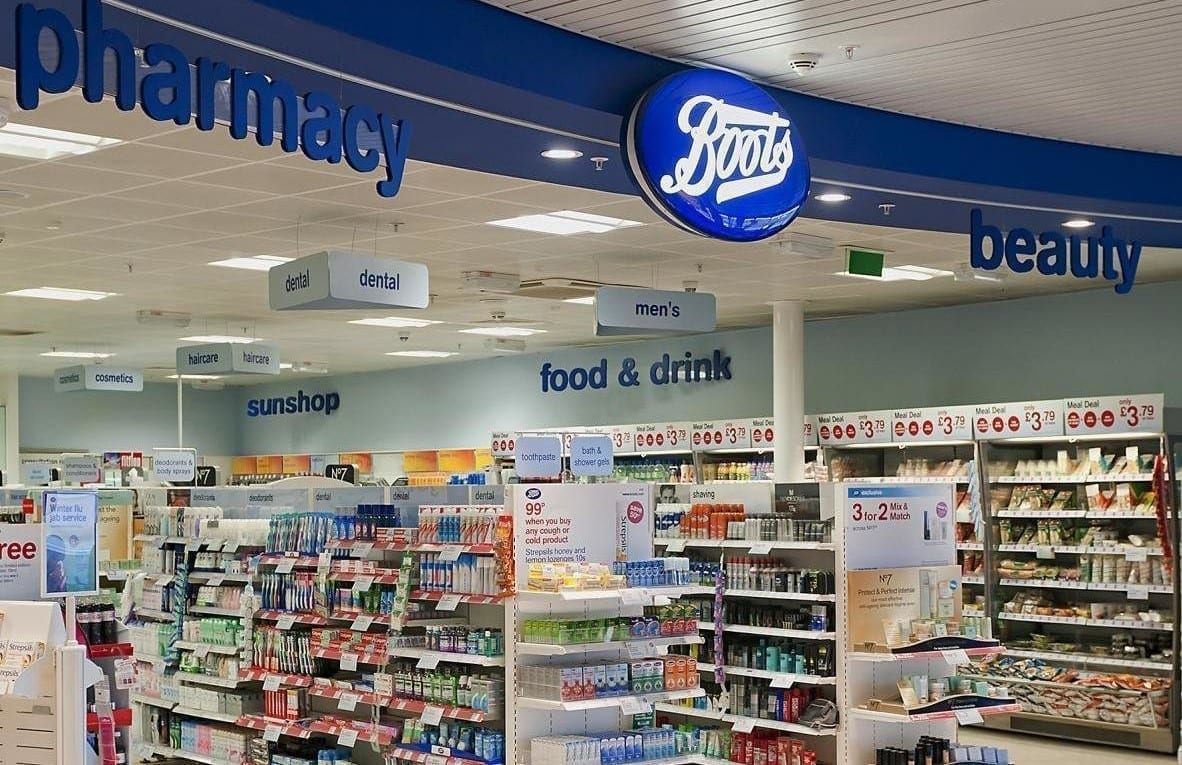
    Boots has launched its new format store in Covent Garden, foreshadowing expected upgrades in its international operations.

    The new format’s “Beauty and Wellness Halls” will introduce more than 300 brands, as well as innovative experiences and access to expert advice. They also feature Instagram points and two beauty studios.

    Covent Garden is now also home to Boots’ biggest-ever wellness range, with 32 new brands including Beauty Kitchen and Equi. There is a rehydration point for refilling water bottles and an Innocent bar for customers to pick up snacks, as well as express pickup lanes, extra advice and consultation spaces in the pharmacy section.

    This new opening has created 130 new jobs within the 28,524sqft store. No single-use plastic bags are being used on the premises; they have been replaced with unbleached paper bags in line with the firm’s commitment to reduce plastic use globally by more than 1000 tonnes this year.

    “Our new Covent Garden store starts a journey of reinventing Boots for the future,” said Boots UK and ROI MD Sebastian James.

    “The store is full of exciting beauty brands, ideas for living well and services to help you get better, all with the great care that Boots colleagues give. We will learn what people love and want from this shop and this will help us shape a blueprint for our whole 2500 store estate.”

  • Apple Music grows to over 60 million monthly users worldwide

    Apple Music grows to over 60 million monthly users worldwide

    Apple Music and Spotify continue to compete for world domination, as both music streaming services claim they have many millions of subscribers. Up until now, Spotify was the supreme ruler with more than 100 million subscribers worldwide reported two months ago.

    Before that, Apple said it has amassed 56 million subscribers by December 2018. Six months later, the number didn’t increase as much as one would expect. French media (via Music Business Worldwide) reports Apple’s SVP of Services, Eddy Cue said the music platform exceeded 60 million users.

    We’re referring to them as users since Apple confirmed the number includes free trialists, so we’re not yet sure how many are actually paying for the service, although we do know they should probably be at least 56 million as Apple pointed out six months ago.

    With the latest improvements to its Music platform added in the latest iOS 13 version, such as time-synced lyrics, Apple hopes to bring even more subscribers under its umbrella in the coming months. It remains to be seen whether or not the pace at which Apple Music is adding new subscribers each month is too slow to beat Spotify for the world’s largest music streaming service title.

    It’s also worth mentioning that Apple Music has more subscribers in the US than Spotify and that the latter announced it reached more than 200 million monthly users back in April.

  • Muji Launching new Store in Denmark

    Muji Launching new Store in Denmark

    Ryohin Keikaku Japan’s board of directors has resolved the establishment of a subsidiary in Denmark by Muji Europe Holdings – its regional headquarters in Europe – for further business development.

    Regarding the territory as a growing market in one of the most developed countries in the world – with the tenth highest GDP per capita and an estimated real GDP growth of 1.7 per cent this year – RKJ and MEH have decided to enter the Danish playing field with the expectation that their experience and know-how in the European market will help in running stores.

    Denmark geographically connects the European continent and Nordic countries and has a population of 5.83 million in a land area comparable to Japan’s third largest island, Kyushu. The country ranked second in the World Happiness Report according to the United Nations this year.

  • Perfect Shape Medical sales soar on network expansion

    Perfect Shape Medical sales soar on network expansion

    Hong Kong-headquartered Perfect Shape Medical has reported a 32 per cent increase in sales to HK$1.197 billion in the year to March.

    Profit for the company soared 64 per cent to $319 million.

    The company says the improved sales were in part due to the expansion of its network of new medical concept stores. Under the Perfect Shape brand, the company operates slimming and beauty services and sells slimming and beauty products in Hong Kong, Macau and Mainland China.

    Sales in Hong Kong rose 49 per cent to $879 million thanks to an increased spend per customer and the opening of new medical beauty concept stores.

    “As the group continues to grow, it has been closely examining the market trends,” the company said in its results statement. “To cater for different preferences of its customers, the group provided non-invasive medical beauty services to meet customers’ needs. The group has a first-mover advantage and positioned itself as a market leader in non-invasive medical beauty services in Hong Kong.”

    Revenue of $318 million from Mainland China and Macau contributed 27 per cent of the group’s total revenue. The group operates direct service centres in four mainland cities – Beijing, Shanghai, Guangzhou and Shenzhen – and in Macau. Its top-end centres can be found in prestigious shopping malls located in areas regularly frequented by high-end customers.

  • Kogan gets into energy retail market

    Kogan gets into energy retail market

    Online marketplace Kogan.com has announced it is entering into the energy retail market before the end of this year.

    The move is part of the retailer’s multi-year agreement with Powershop Australia, a part of the Meridian Energy group, to offer competitive power and gas services to Australian households under the brand Kogan Energy.

    David Shafer, Kogan executive director, said the partnership with Powershop will help reduce the cost of power and gas for many Australians and offer customers a seamless digital experience.

    “This partnership will enable Kogan.com to offer Aussies low cost power and gas, and a first-class customer experience using technology that will enable customers to easily track their energy usage at any time,” Shafer said.

    “Meridian Energy Group provides world class generation from some of Australia’s leading wind farms and hydro power stations, and Powershop Australia was ranked Australia’s Greenest Power Company from 2014-2018 by Greenpeace.”

    Kogan has already branched out from its core retail operations into mobile communications, home internet, insurance, super and travel.

  • Mitre 10 workers win living wage case

    Mitre 10 workers win living wage case

    Two Mitre 10 stores were told to pay their employees a living wage in a decision by the Employment Relations Authority (ERA).

    Called a landmark case, the decision was the first collective agreement in New Zealand that was determined by the ERA with a living wage being imposed on the employer, according to a statement by the First Union said.

    Members of the First Union who work at Mitre 10 Mega in Dunedin and Mitre 10 Mosgiel, which are both owned and operated by local Otago business Jack’s Hardware and Timber, will be given their first collective agreement which affords a living wage.

    Jack’s Hardware and Timber is just one of the many locally owned and operated businesses across New Zealand that make up the Mitre 10 NZ Ltd co-operative.

    According to First Union, the ERA determination has set a precedent for retail staff and has widespread implications for other retail sites in the country.

    The determination states that an employee who has some industry experience or skill that they utilise in their role should be paid no less than $21.00 per hour. For a worker with a trade qualification that increases to $23.00 per hour and the start rate is $19 per hour.

    Neil Finn-House, Jack’s Hardware and Timber Limited CEO, said he is pleased to have concluded collective agreement negotiations with First Union following the ERA hearing that has settled two final outstanding matters: minimum wage rates and duration of the contract.

    “Most kiwis will agree that it is important that local New Zealand owned and operated businesses are able to pay their employees rates that are locally comparable,” Finn-House said.

    “Our objective at the Hearing was to reach a fair outcome, consistent with market rates of comparable businesses in the South Island, which maintains our ability to reward and recognize our staff above and beyond the minimum pay rates that the collective will contain,” Finn-House said.

    Greg Hartford, CEO of Retail NZ, noted, however, that the new rate will see entry-level staff receive $1.30 an hour more than the legal minimum wage, and $1 more than the median wage paid in heartland South Island regions.

    “While both the Union and the employer are hailing today’s decision as a fair compromise, the rates set are higher than those being paid by comparable companies in the regional South Island market,” Hartford said in a statement.

    “When setting rates, all parties need to make sure that they are taking individual circumstances into account and that any comparisons made between businesses are comparing like for like. It is hard, for example, to compare wage rates paid by a small local store to those paid a large regional business, and it’s hard to compare a large regional business to a national or multinational chain.”

  • Popular bookstore at Thomson Plaza Closing Down

    Popular bookstore at Thomson Plaza Closing Down

    The Popular bookstore at Thomson Plaza has closed after 31 years.

    The outlet, which has traded since 1988, has been closed due to what the owners describe as “lease issues”.

    Popular invited its customers to share their memories of the Thomson Plaza store in a Facebook photo contest which will end tomorrow. Three winners will get SG$20 worth of Popular vouchers.

    The Popular chain is celebrating its 95th anniversary this year, but like all book retailers worldwide, the company is facing challenges from the growth of digital books and consumers moving to other media to read or entertain themselves.

    The top 95 spenders at the Popular bookstore at Thomson Plaza have been rewarded with complimentary three-year membership of the company’s loyalty program, valid also at UrbanWrite stores.

  • South Korean love hotels business booming and expanding

    South Korean love hotels business booming and expanding

    Yanolja’s gentrification of South Korean love hotels has brought the company a valuation of more than $1 billion from investors keen to capitalise on the globalisation of a novel approach to short-stay accommodation, its chief executive told Reuters.

    The budget hotel and online booking platform operator reached the valuation having secured $180 million from US peer Booking Holdings Inc and Singapore sovereign wealth fund GIC Pte Ltd, Yanolja confirmed on Tuesday.

    It aims to conduct an initial public offering (IPO) as early as next year, CEO Kim Jong-yoon said in an earlier interview.

    “I can proudly say we transformed the industry,” he said.

    Yanolja’s emergence coincides with a time of flux among hoteliers, as legislators are at loggerheads with market disruptors such as Airbnb Inc – through which private home owners can let rooms for short-term stay – while a government campaign to reduce working hours promises to free up more leisure time for short breaks.

    Love hotels have occupied a peculiar space in the broader market, offering privacy for as little as a few hours at minimal cost for, for instance, young couples living with their parents.

    Popular association with extramarital affairs, prostitution and hidden cameras, however, has sullied their reputation, exacerbated by their often garish decor and low-key lighting.

    Yanolja – meaning “Hey, let’s play” – sought to dispel any stigma with its bright, modern franchised love hotels, targeting millennial couples but also budget tourists seeking short-term accommodation.

    “Previously, many people were not able to go to love hotels out of embarrassment,” Kim said. “But we’ve drawn in guests even for travel. That’s the biggest change.”

    The firm, which began as an online search portal for love hotels, also lists hotel, pension and guest house rooms on its website at prices ranging from 50,000 won ($41.86) a night at budget hotel Ben-Hur to 200,000 won at five-star Hyatt.

    It has entered a strategic partnership with Booking whereby the latter’s Agoda brand can list Yanolja accommodation, while Yanolja customers will be able to book worldwide through Agoda and other Booking brands, Yanolja said in a Tuesday statement.

    Booking and GIC were not immediately available for comment.

    “It’s a unique example which breaks away from the traditional notion of love hotels,” said tourism professor Lee Hoon at Hanyang University in Seoul.

    “But the domestic market is not big enough. Yanolja can survive only if it goes global and scales up,” Lee said.

    Yanolja aims to expand in hotels in Southeast Asia where it invested $15 million in ZEN Rooms last year, bringing it into competition with Indian budget hotel operator Oyo, backed by Airbnb and Japan’s SoftBank Group Corp.

    “We are very keen to go global,” said Kim.

    Yanolja was founded in 2005 by former love hotel housekeeper and valet Lee Su-jin, whose search portal evolved into an advertising platform for love hotel operators seeking to replace customers lost after the 2004 passing of an anti-prostitution law.

    A decade later, Yanolja claimed to be the first company to offer a reservation platform for mobile phones for its own and others’ love hotels, a major shift in an industry which relied on walk-in customers.

    The platform allowed it to expand its target guests to shoe-string travellers from home and abroad, in a country where Airbnb-type options are limited to foreign guests. Listings later ballooned as hoteliers turned to Yanolja to fill rooms after a political dispute caused a drop in Chinese demand.

    South Korea’s online travel sales nearly doubled in five years through 2018 to $21.8 billion, showed Euromonitor data provided to Reuters. Sales by mobile made up nearly half of the total, the third-biggest proportion globally, Euromonitor said.

    Yanolja’s revenue nearly doubled to 188.5 billion won last year, from a year earlier, but the firm is still losing money on a consolidated basis, said CEO Kim. It aims to sell shares in an IPO by 2022 at the latest, he said.

    Yanolja plans to increase offerings and raise efficiency through technology such as artificial intelligence and the internet of things, in a hotel industry Kim deemed conservative.