Category: Real Estate

Retail News Asia is committed to providing both local and global retailers with the latest Real Estate news throughout the Asian market. This on a daily base.

  • Vietnamese Consumers Drive Demand as 4th Largest Foreign Buyers of Australian Homes

    Vietnamese Consumers Drive Demand as 4th Largest Foreign Buyers of Australian Homes

    In a recent seminar in Ho Chi Minh City, Deborah Wiltshire, Sales Director at The Gurner Group, revealed exciting insights into foreign investment trends in Australia’s booming real estate market. According to data from Australia’s Foreign Investment Review Board, foreigners acquired 5,360 residential properties totaling approximately A$4.9 billion (US$3.1 billion) in 2022-23, with Vietnamese investors showing a notable increase in activity.

    Vietnamese Buyers Increasing Presence

    The appetite for Australian properties among Vietnamese investors has surged, with purchases rising by 15% during the same period. Vietnamese nationals accounted for 8-10% of off-the-plan apartment acquisitions, highlighting a growing trend in this critical market segment.

    Data from Victoria, the top destination for Vietnamese international students in 2024, indicates that sales to Vietnamese buyers have jumped by 10-12% year-on-year. Notably, properties priced between US$800,000 and $1.2 million have emerged as the most sought-after options among these investors.

    Student Attraction Fuels Demand

    A report from CBRE, a leading property consultancy, outlines that 60% of Vietnamese purchases aim to provide accommodation and educational opportunities, while 30% are for investment purposes and 10% cater to migration needs. The city of Melbourne stands out as a prime hotspot due to its urbanization, robust economy, and rich cultural diversity.

    With over one million international student enrollments recorded last year, Melbourne attracts students mainly from China, India, Nepal, the Philippines, and Vietnam. This influx has positioned the city as the fastest-growing capital in Australia, promising further development opportunities.

    Growth Outlook Amid Challenges

    Michael Paproth, Business Manager at The Gurner Group, noted that Australia’s population is projected to grow by 1.8% annually over the next five years, outpacing growth in established economies like Canada and the U.S. However, he also warned that housing development is struggling to keep up with demand, predicting a shortage of approximately 28,000 apartments in the coming years.

    As restrictions limit foreign buyers from acquiring existing properties, off-the-plan purchases attract a relatively low tax rate of 10%, especially when compared to markets like Singapore, which imposes significantly higher rates.

    Rising Wealth and Demand

    Notably, Vietnam is witnessing a steady rise in its high-net-worth population, with around 5,500 individuals boasting a net worth exceeding US$10 million as of 2024. This growth, estimated at 5-18% annually prior to the pandemic, and 2.4-5% post-COVID, fuels demand for overseas properties, including those in Australia.

    Implications for the Retail Sector

    The intensified interest from Vietnamese investors not only signals a promising shift in foreign investment dynamics but also reflects evolving consumer trends that could reshape Australia’s retail and property landscapes. As consumer preferences evolve, retail businesses may look to adapt and align with this growing demand for international investment opportunities.
  • Porsche expands to property development in Asia

    Porsche expands to property development in Asia

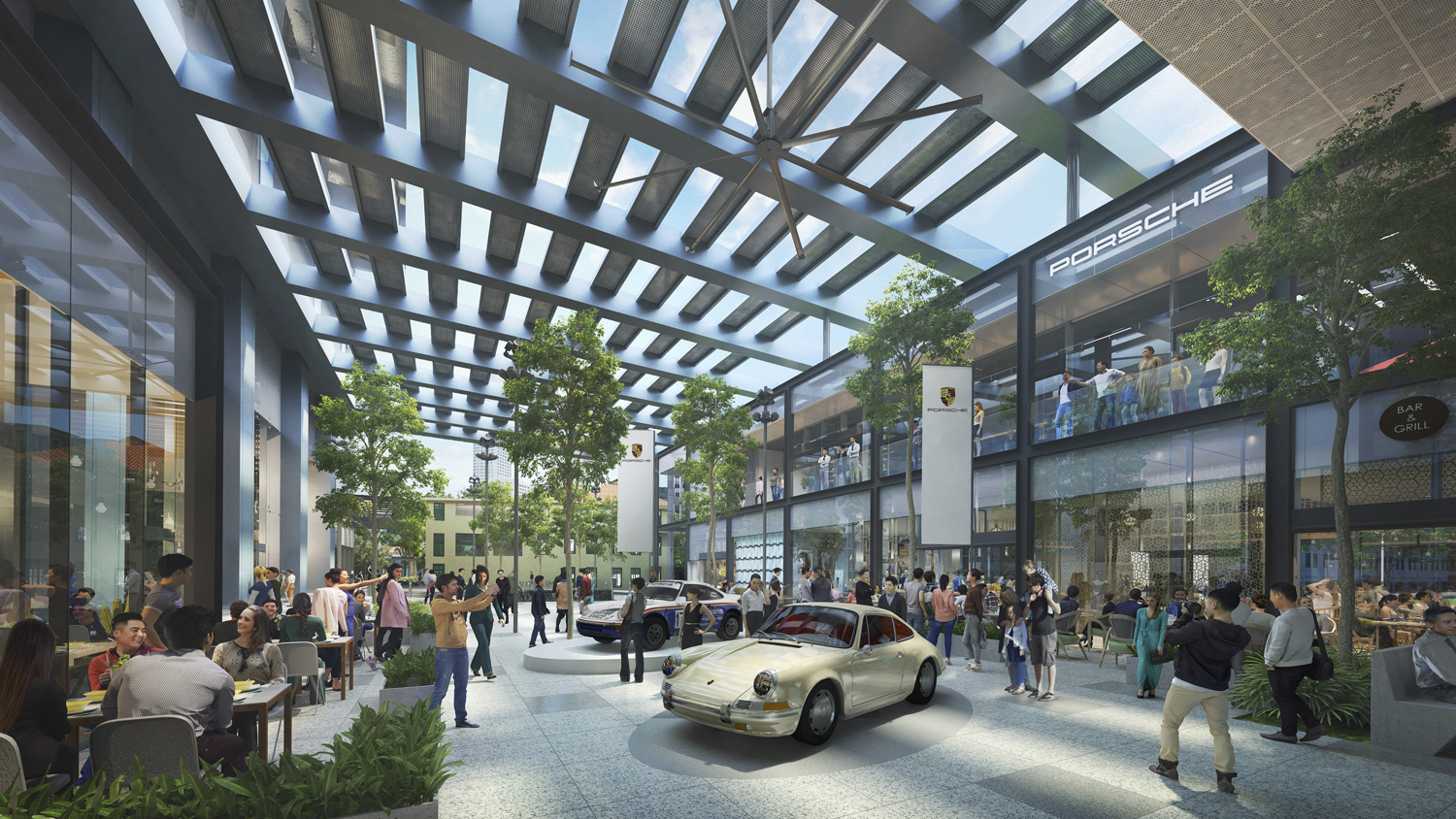
    German automaker Porsche is partnering local developers to build condos costing up to $40 million per unit in Bangkok as it expands to luxury property development in Asia.

    Its Porsche Design unit is collaborating with Anada Development in a 21-floor apartment block which will offer 22 units priced between $15 million and $40 million, according to Bloomberg.

    The building, to be completed by 2028, will be Porsche Design’s first in Asia. It has previously developed properties in the U.S. and Germany.

    Porsche’s building is among several projects in the luxury segment which is being developed in Thailand’s bustling capital where prices are considered to be more competitive then regional rivals.

    “Bangkok distinguishes itself by providing an affordable luxury experience that many global cities cannot rival,” said Leung.

    “In addition, Bangkok presents straightforward property ownership laws, a robust rental market and a healthy secondary resale market.”

    Hong Kong has seen property values plunging by 30% in the last three years, while in Singapore foreigners have to taxes up to 60% on purchases.

    A large portion of Thailand’s luxury property market is being snapped up by foreigners.

    Foreigners bought 33% of the luxury condominium units sold by CBRE Thailand in the first half this year, up from the 25% recorded in the same period last year, the property consultancy has said.

    Wealthy expats contributed to the growth in sales of luxury condos, unlike the broader property market, where most sectors have seen a decline in sales as banks declined a large number of housing loans, said Artitaya Kasemlawan, CBRE’s head of residential sales.

    “Sales of super luxury condo units stood at 86% in the first half of this year, while those in the branded residence segment (condominiums managed by 5-star hotel groups) enjoyed 90% sales,” she said.

    Super luxury condo units are those priced from BHT350,000 (US$10,300) per square meter or more.

    Limited supply explains the surge in sales as there were only three new luxury condo projects launched in Bangkok in the first nine months of this year, she added.

  • Singapore private home sales plummet to 16-year low in August

    Singapore private home sales plummet to 16-year low in August

    Singapore’s private home sales dropped to a 16-year low in August, reflecting weak buyer sentiment, although new launches and anticipated interest rate cuts are expected to drive demand in the coming months.

    Developers sold 208 units, down 47% year-on-year, according to Urban Redevelopment Authority data released Monday as cited by The Straits Times.

    “This is a record low for the month of August since 325 units were sold in August 2008,” Tricia Song, property consultancy CBRE’s head of research for Southeast Asia, was quoted as saying.

    The year 2024 is on track to be the weakest for annual new home sales since 2008, when 4,264 units were sold. Market sentiment has remained cautious since late 2023, Song added.

    In the first eight months sales reached 2,668 units, down 49% year-on-year.

    Most developers are waiting for home-buyers’ enthusiasm and more risk appetite to return, said Nicholas Mak, the chief research officer at property portal Mogul.sg, as reported by Bloomberg.

    Demand is set to be tested in the coming months, as 56.2% of developers anticipate a moderately or significantly higher number of units to be launched in the second half of the year, according to a June quarterly survey of senior executives in Singapore’s real estate and development industry.

    Analysts say that sales volumes are likely to recover in September, driven by several upcoming launches, potential improvements in the economy, and possible interest rate cuts.

  • Singapore second most transparent property market in Asia

    Singapore second most transparent property market in Asia

    Singapore ranked second in Asia for real estate market transparency and was rated as “highly transparent” for the first time.

    The city-state moved up one spot from last year to 13th place globally, achieving an overall score of 1.92, citing the Global Real Estate Transparency Index 2024 published by property consultancy JLL on Tuesday.

    The index evaluates market transparency by combining quantitative data and survey results from 89 countries and 151 city markets.

    An overall score from one to five is given to each city based on six factors including performance, regulatory and legal policies, market fundamentals, transaction process, corporate governance and sustainability efforts.

    A lower score indicates a higher level of market transparency. Scores below 1.96 are designated as “highly transparent,” while those above 1.96 are categorized into four other groups, ranging from “transparent” to “opaque.”

    The only other Asian market in the “highly transparent” group – the top ranking category – is Japan at the 11th spot, scoring 1.83.

    Singapore’s advancement to the highest group this year is attributed to its commitment to sustainability and efforts to enhance technology and digital services.

    Notable initiatives introduced by the city-state include mandatory climate-related reporting requirements for listed companies, effective from 2025, and the Real Estate Industry Transformation Map 2025, a roadmap that aims to future-proof the property industry by upskilling the workforce and enhancing the efficiency, security, and professionalism of property transactions.

    Globally, the U.K. is the most transparent property market this year with a score of 1.24, followed by France with 1.26 and the U.S. with 1.34, according to the index.

  • Hanoi retail space rents forecast to surge 18% this year

    Hanoi retail space rents forecast to surge 18% this year

    Rents for retail space could rise by 17-18% this year in downtown Hanoi and by 8-9% on the city’s outskirts, property consultancy CBRE has forecast.

    They might grow by 10% and 3% annually in the next three years, it added.

    CBRE said the average monthly rent in the downtown area in the first half was US$180 per square meter after rising by 11% from a year earlier.

    According to real estate agency Avison Young, in the second quarter the average retail rent rose by 15% in outlying districts. Ground-floor rents saw the highest average hike of nearly 15%.

    Reports from multiple real estate agencies and consultancies suggested that retail rents in the capital are on the rise due to low supply and growing demand from large international brands.

    In the first half it only saw one new project in Ha Dong District, which added 10,000 square meters of space to the market.

    Savills, another property consultancy, said the retail segment saw many transactions in the food and beverage sector in the second quarter.

    Japanese restaurant chain Pizza 4P, for instance, leased additional space to double the size of its current store in the Lotte Center Hanoi skyscraper.

    Gyu Shige, another Japanese restaurant, rented a property in Dong Da District to open its first store in Hanoi.

    As rents increase, the retail space occupancy rate in the city is inching down. According to Savills, it fell by two points year-on-year to 84% in the second quarter.

    David Jackson, CEO of Avison Young Vietnam, said tenants are shifting away from the downtown area to find cheaper and bigger places in the outskirts.

    Savills said six shopping malls and 11 ground-floor retail spaces would be launched in the next two years, mostly in Tay Ho, Dong Da and Hoang Mai districts.

  • Hanoi villas see price increases

    Hanoi villas see price increases

    The Hanoi real estate market in the first half of this year saw increases in villa and townhouse prices, although the market was still slow, according to a Savills report. In Hanoi, new villas in high-end market projects showed prices increasing by 9% quarter-on-quarter to VND178 million (US$7,007) per sq.m, said the report released on July 11.

    Townhouse prices decreased by 2% quarter-on-quarter to VND188 million per sq.m, with higher priced units already sold and only affordable units remaining. Shophouse prices increased by 3% quarter-on-quarter to VND288 million per sq.m due to the reduced availability of cheap shophouses and price adjustments.

    Primary prices remained high with less to incentivise the secondary market. Secondary villa prices were 8% lower than primary prices, while townhouses were 5% cheaper.

    However, “performance was slow”, said Mathew Powell, director, Savills Hanoi.

    Sales in the second quarter fell by 40% quarter-on-quarter, but rose by 5% year-on-year, reaching a total of 111 dwellings, and quarterly absorption was only 18%. Newly launched properties were 48% absorbed, fell by 15 percentage points quarter on quarter and 3 percentage points year on year.

    The majority of primary transactions were still in Ha Dong district with 61%, due to infrastructure projects aimed for completion such as Le Quang Dao road expected to operate in the last quarter of this year. Hoang Mai and Hoai Duc districts each followed with 14% and Thuong Tin had 9%.

    “Amended laws and infrastructure development are expected to begin to provide momentum,” added Powell.

    The real estate market is showing signs of recovery, thanks to the amended laws which were passed in early 2024 and effective early from August 2024, as well as infrastructure developments and large supply from mega projects in the next few years, according to Savills.

    Thirteen projects will supply a total of 2,951 dwellings by the end of 2024, the majority of which will be in Dong Anh district with 34% of future stock, Ha Dong follows with 19% and Hoai Duc with 16%.

    The report also stated that in the first half of the year, there were 128 new dwellings, up 38% quarter on quarter but down two% year on year.

    New stock came from two existing Ha Dong projects, An Quy Villa with 54 villas and Solasta Mansion with 51 villas, while An Lac Green Symphony in Hoài Đức supplied 12 new townhouses and Him Lam Thuong Tin in Thuong Tin district launched 11 new shophouses.

    Primary stock of 608 dwellings came from 16 projects, decreasing by 9% quarter-on-quarter and 24% year-on-year. Villas remained the main product with a 39% share of the available stock.

  • Singapore tops Asia-Pacific with highest private home prices

    Singapore tops Asia-Pacific with highest private home prices

    For the second year in a row, Singapore’s private residential homes were the most expensive in the Asia-Pacific region, with a median price of US$1.3 million in 2023.

    The price is the highest out of the 48 cities in 11 countries in the report published Tuesday by global non-profit research organization Urban Land Institute (ULI).

    Hong Kong, with a median home price of US$1.15 million, and Sydney, Australia, at US$1.06 million, followed closely.

    As for rental housing, the median monthly rent for two-bedroom private apartments in Singapore was also the highest at US$2,897, far surpassing Hong Kong (US$1,725) and Japan’s Tokyo (US$613) in the second and third spots, respectively.

    The city-state was also rated by ULI in last year’s report as the region’s most expensive private housing market, with a median price of US$1.2 million and a median rent of US$2,596.

    However, Singapore has the “most attainable” public housing in this year’s ranking list.

    The report showed that the country has a homeownership rate of nearly 90%.

    Affordability in home ownership is defined by a median home price to median annual household income ratio below 5.

    The median price of Housing & Development Board flats, which make up 90% of the city-state’s housing stock, has a ratio of 4.7, according to the report.

    Among the cities studied by ULI, Singapore boasts the highest median annual household income at US$97,124.

    The average private home price in Singapore has been rising in recent years. It went up 1.5% in the first quarter of this year after increasing 2.8% in the last quarter of 2023. It has jumped 34.5% since the first quarter of 2020.

  • DHL Group gets off to a solid start in 2024

    DHL Group gets off to a solid start in 2024

    The logistics company DHL Group got off to a solid start to the new fiscal year in 2024. As expected, there was no significant upturn in the global economy in the first quarter of 2024. Despite these conditions, the Group generated revenue of EUR 20.3 billion (Q1 2023: EUR 20.9 billion). As anticipated, the operating profit (EBIT) of EUR 1.3 billion was below the previous year’s level (Q1 2023: EUR 1.6 billion) but exceeded the same period of the pre-pandemic year 2019 (Q1 2019: EUR 1.2 billion).

    “We are in an unusually long phase of low momentum in global trade. In this environment, we continue to focus on consistent capacity and cost management. However, we also see further growth potential. The demand for omnishoring and e-commerce solutions remains high and our customers are becoming increasingly aware of sustainable logistics – we can clearly see this in the demand for GoGreen Plus. With our portfolio, we are ideally positioned to benefit from an upturn in global trade. Despite all the challenges, 2024 is a year of opportunities.”

    Measures to safeguard earnings and cash flow show an impact

    DHL Group had already anticipated the slowdown in global economic momentum in 2022 and successfully introduced appropriate measures to safeguard earnings and cash flow. These measures include consistent capacity and cost management as well as price adjustments. In the first quarter of 2024, gross investments (capex) amounted to EUR 483 million (Q1 2023: EUR 569 million).

    The Group continued to make targeted investments in the quality of its services and in structural growth trends such as omnishoring, e-commerce, sustainability, and digitalization. Free cash flow was EUR 608 million (Q1 2023: EUR 983 million; Q1 2019: EUR -256 million).

    In total, DHL Group generated consolidated net profit after non-controlling interests of EUR 743 million in the first three months of 2024 (Q1 2023: EUR 911 million). In the same period, basic earnings per share amounted to EUR 0.63 after EUR 0.76 in the first quarter of 2023.

    Group confirms forecast for 2024

    As expected, a broad and dynamic economic upturn failed to materialize in the first three months of the year. DHL Group continues to expect more positive global economic momentum in the second half of 2024. Overall, the Group confirms its forecast for the 2024 fiscal year and expects EBIT of between EUR 6.0 billion and EUR 6.6 billion and free cash flow, excluding acquisitions and divestments of around EUR 3.0 billion.

    In its medium-term forecast for 2026, DHL Group continues to expect an operating profit of between EUR 7.5 billion and EUR 8.5 billion.

    Express: Continued focus on revenue and cost management 

    At Express, the expected continued weak demand led to a slight decline in shipment volumes. The division is countering the sluggish market environment with productivity improvements, network optimizations, effective yield, and cost management.

    Global Forwarding, Freight: Decline in revenue due to lower freight rates

    The decline in revenue at Global Forwarding, Freight is primarily due to lower freight rates. The division once again recorded volume growth in air and ocean freight compared to the weak prior-year period. Air freight volumes rose by 5.1 percent, with the improvement primarily attributable to trade routes between Asia and Europe. Ocean freight volumes increased 6.6 percent compared to the same quarter of the previous year, with the volume of trade routes from Asia increasing in particular.

    Supply Chain: Stable revenue and earnings growth 

    The Supply Chain division recorded revenue growth in all regions and across various sectors, supported by new business wins, contract renewals and growing e-commerce business. Additional contracts with a volume of EUR 3.5 billion were concluded in the first quarter of 2024. In addition to the energy, retail, life sciences, and healthcare sectors, e-fulfillment solutions accounted for an important part of this. The annualized contract renewal rate remained at a consistently high level.

    eCommerce: Revenue surpasses prior-year level 

    The eCommerce division maintained its revenue growth trend. The EBIT development in the first quarter primarily reflects higher costs due in part to the ongoing investments in the expansion of the networks.

    Post & Parcel Germany: Strong parcel business ensures revenue and earnings growth 

    Although the reporting period contains 1.6 fewer working days, Post & Parcel Germany registered an increase in revenue. The positive development was solely attributable to Parcel, while the postal business continued to decline as expected. Due to the parcel business, the division’s operating profit was significantly higher than in the same quarter of the previous year, which was burdened by additional staff costs due to the wage dispute. The regulated mail business continues to suffer from the regulatory framework.

  • Hanoi apartment prices up 38% in 5 years

    Hanoi apartment prices up 38% in 5 years

    Hanoi apartment prices have risen by 38% from 2019 and prices have shot up even in buildings that are 5-10 years old, according to the Ministry of Construction.

    Many projects sell at over VND60 million ($2,367.80) per square meter, rising to even VND150 million in some places, it said in a recent report.

    The smallest apartment (40 sq.m) at Heritage West Lake to the northwest of West Lake is priced at VND3.8 billion.

    A 30-square-meter unit at Masterise West Height in the southwest of the city starts at VND1.8 billion.

    “Apartments continue to attract interest from buyers with residential needs and medium- and long-term investors,” the ministry said.

    Prices have been rising rapidly since the end of last year due to a widening gap between supply and demand. In the last six months, many projects have seen prices rise by 20-25%.

    According to property consultancy CBRE, prices on the secondary market jumped by 17% year-on-year in the first quarter, the highest increase ever recorded.

    The average price of old apartments is VND36 million per square meter. But no new apartment projects were launched during the first quarter.

    The Ministry of Construction wants the city People’s Committee to identify and punish speculators who have been driving up property prices.

    But analysts called it a futile quest and suggested it should be tackled with policies such as imposing taxes for ownership of multiple properties.

  • SM Prime to add 440,000sqm of retail space with four new malls

    SM Prime Holdings Inc (SMPH), one of the largest property developers in the Philippines, is set to open four shopping malls this year, adding 440,000sqm of retail space.

    The company plans to open SM City Caloocan, with 94,000sqm of gross floor area, in the first half of this year. In the second half, it intends to open SM City J Mall in Mandaue City, Cebu, SM City San Fernando La Union, and SM City Laoag, each spanning 111,000 to 123,000sqm.

    Aside from the new shopping malls, the property developer said it will refurbish and extend existing malls.

    “It’s an ongoing thing with SM Prime’s malls,” said Timothy Daniels, consultant for investor relations and sustainability at SM Investments Corp, the parent company of SMPH.

    “They always do it. They come back every few years, and they renovate and expand.”

    In 2023, SMPH reported a 33 per cent increase in net income to AU$1.09 billion from $826.16 million in 2022, as consolidated revenues jumped 21 per cent.

    Mall business accounted for 56 per cent of total sales, followed by residential business with 34 per cent, and other business segments, which include hotels, offices, and convention centres, with 10 per cent.

    Mall revenues totalled $1.97 billion last year, up 30 per cent from $1.5 billion in 2022. Operating income rose 28 percent to $1.03 from $801 million.

    In line with its expansion plan, SMPH has earmarked $3.3 billion for 2024 capital expenditures as it continues to explore acquisition opportunities and investments.

    Frederic DyBuncio, president and CEO of SM Investments, attributed the company’s success to Filipino consumers’ healthy spending patterns, particularly in fashion, dining, and entertainment.

    “SM’s performance as a group last year reflected our ability to stay close to our customers and address their needs regardless of uncertain economic conditions,” he added.

    SMPH currently operates 85 malls in the Philippines with 9.2 million sqm of gross floor area and eight malls in China with 1.6 million sqm of gross floor area.

  • Marriott eyes 20 new hotels, resorts in Vietnam

    Marriott eyes 20 new hotels, resorts in Vietnam

    International Marriott wants to open 20 more hotels and resorts in Vietnam to further tap the country’s great tourism potential, said its chairman and CEO Anthony Capuano.

    The potential is due to its geographical location and unique culture, which makes many tourists want to return to the country, Anthony Capuano said at a meeting with Prime Minister Pham Minh Chinh in Hanoi on Wednesday

    The U.S.-based hospitality company, which currently manages 16 hotels and resorts under eight brands such as JW Marriott, Le Meridien and Sheraton, plans to open more of them in Hanoi, Ho Chi Minh City, Da Nang City, and Phu Quoc Island.

    Chinh said Vietnam advocates rapid and sustainable tourism development, considering it an important economic sector, and his government creates the most favorable conditions for investors.

    He said Marriott should expand its investment with large projects that are appropriate for Vietnamese conditions and attractive to international tourists, collaborate for training and developing high-quality human resources, connect Vietnamese tourism with the rest of the world, and diversify tourism products and supply chains.

    Capuano promised him that Marriott would cooperate in these areas.

    Founded in 1927, the world’s largest hotel chain has 8,000 properties with nearly 1.5 million rooms in 139 countries and territories.

  • Novotel Saigon Centre Hotel owner reports biggest ever loss

    Novotel Saigon Centre Hotel owner reports biggest ever loss

    Thien Phuc International Hotel Company, which owns the four-star Novotel Saigon Centre Hotel in HCMC, has reported its biggest ever half-yearly loss of VND369.6 billion (US$15.4 million).

    The loss for the year’s first half was 50% higher year-on-year, according to its earnings report.

    It had racked up full-year losses of VND786 billion in 2021 and VND783 billion in 2022.

    At the end of H1 2023 Thien Phuc had total liabilities of VND8.695 trillion, including VND6.4 trillion in corporate bonds it had issued.Thien Phuc used to belong to Que Huong Liberty Corporation, one of the largest hotel operators in the city.

    In 2016, Que Huong Liberty sold its entire holding in Thien Phuc to Saigon Green View Investment Corporation.

  • Analysts expect property market to recover early next year

    Analysts expect property market to recover early next year

    The property market has overcome its most difficult period and will recover from early 2024, analysts concur.

    Speaking at the first-ever Autumn Real Estate Forum in Hanoi recently, Can Van Luc, chief economist at state lender BIDV and a member of the National Financial and Monetary Policy Advisory Council, said: “There are more opportunities [now] for the real estate market than challenges because it has overcome the most difficult period.”

    The central bank has reduced policy interest rates four times this year, leading to lower lending interest rates, and policies have been launched to support businesses and individuals such as debt restructuring and preferential credit for social housing, he said.

    He said that tax breaks have also helped companies overcome cash flow and liquidity difficulties. Tax exemptions, reductions and extensions this year are estimated to be worth VND200 trillion (nearly US$8.5 billion), he said. “These are unprecedented policies for businesses, including those in the real estate sector.”

    A lot of corporate bonds will fall due in March 2024, but the situation is under control, seems to be the consensus among analysts.

    Meanwhile, inflation and interest rates tend to gradually decrease, creating conditions for the central bank to loosen monetary policy.

    By August inflation was at 4.6% and the overnight interest rate had decreased to nearly the level of the beginning of 2021.

    The property sector also ranked second in attracting FDI with its US$2 billion accounting for nearly 10% of total inflows.

    Nguyen Van Dinh, president of the Vietnam Association of Realtors, said the market has improved.

    A number of new projects put properties on sale in the second quarter and there were 3,700 successful transactions, while there had almost been no new supply in the first quarter and only around 1,000 transactions, Dinh said.

    Between July and August there were another 5,000 transactions, 70% in the apartment segment. Supply is gradually increasing again mainly from 300 old projects.

    Many investors have restructured their products, lowering prices to attract buyers.

    Dinh said: “In the beginning of this year many developers and investors stopped launchingproducts because they were afraid no one would buy. But since the third quarter their confidence has returned.”

    Experts said the signs indicate the market would start recovering at the beginning of 2024. Luc forecast the economy to grow at nearly 6% in the third quarter and 7.5% in the fourth quarter, and the property market will perform better from the beginning of next year.

    He believed early 2024 would be a favorable time to make investment decisions as interest rates and land and housing prices are decreasing.

    Economist Dinh Trong Thinh said the market would see clear changes from the end of the first quarter and the beginning of the second quarter of 2024 when there is stronger supply of social housing.

    He said developers and buyers would focus on affordable housing rather than luxury projects like apartments, villas and resorts to ensure cash flow.

    Since the end of 2022 over 400 social housing projects have been under way. One of them, a project to build one million social and workers’ housing units is expected to contribute to the market’s recovery.

    According to the Vietnam Real Estate Research Institute, the market will make a V-shaped recovery starting in the middle of the second quarter of 2024.

    The supply of apartments is expected to soar by 20-25% annually during the recovery period in 2024-26.

    In Hanoi and Ho Chi Minh City, apartment supply during the period will be 70,000-85,000 units a year, equivalent to pre-pandemic levels.

    Experts admitted however that the market would continue to face challenges until 2030 since there is no national strategy for the housing market with a long-term vision.

    They said long-term challenges include overlaps in policies and legal mechanisms, a resource shortage, inflation and high interest rates, and modest quality of planning, infrastructure, market information, and human resources.

  • Capital Elite attracts South Korean investors

    Capital Elite attracts South Korean investors

    Capital Elite is a popular investment destination for Korean investors due to its prime location in Hanoi’s new CBD and diverse entertainment and leisure areas.

    The Vietnamese real estate market is attracting South Korean investors due to rapid infrastructure development, reasonable property pricing, and potential value appreciation.

    The proportion of foreign individuals interested in Vietnam’s real estate is increasing, with a particular focus on Korean investors.

    According to The Chosun Ilbo, Vietnam is the second most popular destination for real estate investment among Korean investors.

    Experts point out that it primarily stems from the high-profit potential and high-quality products, coupled with the participation of reputable developers, which have contributed to driving the investment trend. The relaxation of Vietnam’s housing law is also making it easier for foreigners to purchase property.

    Furthermore, the attractive market prices are a crucial factor in drawing the attention of Korean real estate investors.

    According to Le Thi Hang, CEO of Indochine Real Estate, with the same amount of money, they can purchase three high-quality apartments in Vietnam instead of investing in one apartment in their home country. This allows them to diversify their investment portfolio.

    Moreover, rental yields in Vietnam are quite favorable. Continuous infrastructure growth also brings excellent price appreciation potential to the real estate market.

    Renowned for their culture and lifestyle that leans towards apartment living, up to 79% of Korean customers opt for premium high-rise condominiums in major urban centers.

    One of the luxury apartment projects in Hanoi, Capital Elite is capturing the attention of the Korean community.

    Not only does Capital Elite boast a prime location right on Pham Hung Street, one of the most rapidly developing thoroughfares, but it also sits at the heart of the new CBD, the new economic hub of Hanoi, which is home to major administrative centers, headquarters of large corporations, and a variety of entertainment and leisure areas.

    As a result, residents enjoy seamless connectivity to a plethora of educational, healthcare, entertainment, and government facilities in the area, all within just a few minutes’ commute, making it a perfectly integrated living space.

    The My Dinh area is also a hub for a substantial expatriate community in the capital city. Capital Elite serves as one of the ideal destinations to meet the rising demand of Korean nationals living and working in Vietnam, a number that increases each year.

    Especially in the My Dinh-Me Tri urban areas, there is a concentration of affluent Korean residents.

    With the growing demand for housing, workspace, and entertainment for this group, the potential for both rental income and property appreciation is on the rise.

    In addition to its favorable location, on-site amenities and living spaces are also factors that investors pay special attention to.

    With a collection of 36 exclusive amenities, including a shopping center, international restaurants, a luxurious sky bar, all-season swimming pools, a jacuzzi, and a premium gym and fitness center, Capital Elite aligns perfectly with the notion of enjoying the most extensive amenities when living in an apartment for Korean residents.

    Furthermore, the project’s abundant amenities, along with the fact that 100% of the apartments cover over 100 square meters and have 3 bedrooms, ensure that it meets the standards of even the most discerning Korean guests.

    For further information, contact the Development & Project Management Unit for Capital Elite on the first floor of the CT4 Vimeco Building, Nguyen Chanh Street, Cau Giay District, Hanoi.

  • HCMC hotel business gloomy as foreign tourists keep away

    HCMC hotel business gloomy as foreign tourists keep away

    Hotels in Ho Chi Minh City are suffering from low occupancy rates due to a sharp drop in international visitor arrivals and domestic tourists’ preference for traveling to beaches.

    In May, amid a wave of hotel closures and conversions into office buildings, the Norfolk Hotel in District 1 with over 100 rooms stopped operating.

    In mid-June many hotels in tourist areas such as Bui Vien Street, Bui Thi Xuan Street and Le Thanh Ton – Ly Tu Trong in District 1 temporarily closed due to lack of customers.

    The latest accommodation market report by real estate consultancy Savills Vietnam said hotel occupancy rates in the second quarter were down 8 percentage points quarter-on-quarter.

    All segments suffered as foreign visitor arrivals to the city fell by 13% quarter-on-quarter. The rate of overnight guests in the city was only 19%, the lowest in the country.

    Hotels are currently relying on business guests since the city is a transit point between various provinces and cities.

    Troy Griffiths, deputy general director of Savills, said recovery in international tourism has been slower in Vietnam than other countries in the region.

    He pointed out that the number of visitors from China, the second biggest market, was 78% down in the first half from 2019, the year before Covid.

    Trang Minh Ha, chairman of investment firm North Stars Asia, said the third quarter, when it is the rainy season, is the low tourist season in HCMC, and so occupancy and room rates would continue to be low.

    The number of hotels that close permanently or temporarily could rise sharply, he said.

    The economic difficulties post-pandemic, boring and monotonous tourism products and Vietnam’s difficult visa policies have kept tourists away, he said.

    The city needs to strengthen programs on attracting visitors to compete with countries such as Thailand, Singapore and Indonesia, he said.

    “HCMC’s hotel industry is waiting for an optimistic signal from the economy for recovery. However, the market may have to wait until the end of 2024 for a solid positive signal.”