Category: Real Estate

Retail News Asia is committed to providing both local and global retailers with the latest Real Estate news throughout the Asian market. This on a daily base.

  • Singapore Sees 1.3% Rise in Industrial Leasing Volume for Q1: A Positive Trend Unfolds!

    Singapore Sees 1.3% Rise in Industrial Leasing Volume for Q1: A Positive Trend Unfolds!

    In a landscape marked by shifting economic climates, Singapore’s factory and warehouse segments maintained steady leasing activity in the first quarter of 2025. According to a recent report by Savills, the total number of tenancies soared to 2,902, reflecting a modest year-on-year increase of 1.3%. However, the data also reveals that businesses are treading carefully—adopting a “wait-and-see” approach as they reassess their real estate needs amid a more challenging business environment.

    Warehousing Holds Steady Amid Challenges

    “Companies are taking longer to make leasing decisions and are closely examining their space requirements,” the report indicated. Warehouse logistics emerged as the frontrunner in leasing performance, showcasing a 6.1% rise in tenancies compared to the previous year. In contrast, while demand for multiple-user factories remained robust with a 1.7% increase, the single-user factory segment experienced a significant decline, dropping 16.0% year-on-year.

    Shifts in Vacancy Rates Reveal Market Dynamics

    In a curious twist, the overall factory vacancy rate diminished despite the lackluster demand for factory space, thanks to a tightening supply chain. A notable reduction in the inventory of single-user factories led to a 0.6 percentage point drop in vacancies, leaving the rate at 11.4% in Q1. Meanwhile, multiple-user factory vacancies also dipped slightly to 8.7%, down from 9.0% in the previous quarter.

    On the flip side, warehouse space vacancies did see an uptick, rising by 1.0 percentage point to 9.5% in Q1. This increase stemmed from the completion of over 1.0 million square feet of new warehouse stock, including DB Schenker’s RedLion2 at 33 Greenwich Drive and a redeveloped logistics hub at 36 Tuas Road—a reminder that as one door closes, another one opens.

    Rental Trends Paint a Mixed Picture

    After a rental growth of 0.5% in the previous quarter, JTC’s rental index for all industrial properties continued its upward trajectory, persisting at the same rate in Q1 2025. Of particular note, JTC’s single-factory rental index experienced a more rapid increase of 0.8%, a contrast to its slower growth of 0.1% in the previous quarter. This elevation is attributed to the introduction of newly completed facilities featuring modern, high-tech specifications that demand premium rents.

    Despite the promising signs in single-user factory rentals, the overarching industrial rental growth remained subdued due to muted performance in both multiple-user factories and warehouses, which expanded by 0.3% and 0.6% respectively. In terms of market pricing, Savills noted a rebound in the monthly rents for prime multiple-user factories, which edged up to S$2.29 per square foot following a brief decline. However, with an anticipated influx of warehouse supply this year, landlords are adapting their strategies, leading to a 2.5% decrease in rents for prime warehouse and logistics properties, now at S$1.69 per square foot.

    Questions & Answers

    What is the overall trend in leasing activity for Singapore’s industrial properties?
    Leasing activity in Singapore’s industrial properties has shown modest growth, with a total of 2,902 tenancies recorded in Q1 2025, representing a 1.3% year-on-year increase, despite a cautious approach from businesses.

    Which segments saw the most demand in the first quarter?
    Warehouse logistics led the demand with a 6.1% increase in tenancies, while multiple-user factories also showed solid performance, growing by 1.7%. However, demand for single-user factories dropped sharply by 16.0% year-on-year.

    How have vacancy rates shifted in Q1 2025?
    The overall factory vacancy rate decreased to 11.4%, while multiple-user factory vacancies fell to 8.7%. Conversely, warehouse vacancies increased to 9.5%, partly due to the addition of over 1.0 million square feet of new warehouse stock.
  • Manila Set to Unveil 2,680 New Hotel Rooms by 2025: Exciting Growth in Hospitality Awaits!

    Manila Set to Unveil 2,680 New Hotel Rooms by 2025: Exciting Growth in Hospitality Awaits!

    According to a recent report by Colliers, the Philippine hospitality sector is on the upswing, bolstered by significant infrastructure improvements and an influx of international visitors. In 2024, the country welcomed nearly 5.95 million tourists, a figure ensuring it’s still catching up to pre-pandemic expectations. Despite not hitting the ambitious tourist arrival targets, spending reached a record-breaking PHP 760 billion, making the Philippines a leader in Southeast Asia regarding per-visitor expenditures.

    Emerging Opportunities for Developers

    With an optimistic outlook for the future, Colliers advises developers to keep an eye on emerging destinations, particularly with the newly approved 99-year land lease law making strides through the legislative process. This development is poised to attract foreign brands and facilitate the creation of integrated leisure hubs, providing a fertile ground for investment.

    Foreign Brands Join Forces with Local Developers

    In a striking trend, foreign hotel brands are aggressively expanding by forming partnerships with local developers in both established and up-and-coming markets. Major players such as Dusit, Wyndham, Accor, Marriott, and The Ascott Group are leading the charge. The ongoing integration of land lease extensions and Real Estate Investment Trusts (REITs) is anticipated to further drive investment, especially in tourism-centric townships and convention facilities.

    Rising Occupancy Rates Amid Construction Delays

    Metro Manila has seen its hotel occupancy rates rise to 64% in the latter half of 2024, with Average Daily Rates (ADRs) climbing by 2.7% year-on-year. As we moved into the first quarter of 2025, demand for Meetings, Incentives, Conferences, and Exhibitions (MICE) facilities remained robust, particularly in the Makati Central Business District, Fort Bonifacio, and the Bay Area. Four- and five-star hotels particularly benefitted from this increased demand, reflecting the resurgence in business travel. Though room supply struggled due to construction delays, the market anticipates the addition of 2,680 new rooms in 2025, primarily located in Makati and the Bay Area. Interestingly, outside the capital, occupancy rates soared to between 70% and 80% in areas like Clark and Cebu.

    A Bright Outlook for the Future

    Colliers anticipates consistent occupancy levels and a modest ADR increase of 3% in 2025, driven by rising foreign arrivals and thriving MICE activity. Developers are encouraged to collaborate closely with airport infrastructure projects to pinpoint future growth corridors and capitalize on the evolving travel landscape.

    Questions & Answers

    How has tourist spending changed in the Philippines recently?
    In 2024, tourist spending in the Philippines hit a record PHP 760 billion, making the country a leader in Southeast Asia for per-visitor expenditure.

    What major trends are influencing hotel development in the Philippines?
    Foreign hotel brands are actively partnering with local developers in both established and emerging markets, with new land lease laws set to stimulate investment in integrated leisure hubs.

    What are the expected occupancy rates for Philippine hotels in 2025?
    Colliers is forecasting stable occupancy levels and a 3% increase in Average Daily Rates in 2025, fueled by increasing international arrivals and strong MICE demand.

  • Luxury Home Prices in Hong Kong Set to Decline by Up to 5% – What Buyers Should Know!

    Luxury Home Prices in Hong Kong Set to Decline by Up to 5% – What Buyers Should Know!

    In the first half of 2025, Hong Kong’s luxury property market has seen a surge in activity, primarily driven by an influx of distressed units sold at attractive prices. This situation has piqued the interest of affluent buyers, eager to seize the opportunity to acquire high-value properties at reduced rates. William Lau, Senior Director and Head of Residential Agency at Knight Frank, observed that this trend is temporarily stabilizing luxury prices, especially for homes valued between HK$20 million and HK$40 million. Lau predicts a modest decline of 0% to 5% in this segment while properties exceeding HK$40 million are likely to hold their ground.

    Leasing Market Shines in Hong Kong’s Luxury Sector

    Contrasting the sales market, leasing has taken center stage, bolstered by rising demand from the Top Talent Pass Scheme, which attracts skilled professionals to the city. The unique attributes and scarcity of luxury properties have further fortified the leasing sector’s resilience. Notably, demand is robust in Mid-Levels, particularly for apartment units measuring between 800 and 1,000 square feet—ideal for families seeking that coveted extra storage space.

    With a strong leasing pipeline, Knight Frank expects luxury rents to rise by a steady 0% to 3% throughout the year. As the market realigns amidst these dynamics, investors and tenants alike are keenly eyeing this resurgence, hoping to capitalize on the evolving landscape of Hong Kong’s high-end real estate.

    Questions & Answers

    What factors are driving the recent activity in Hong Kong’s luxury property market?
    The increase in distressed properties available for sale, often at reduced prices, has attracted cash-rich buyers, providing investment opportunities in high-value segments.

    What is the forecast for luxury home prices in Hong Kong over the next year?
    Prices for residential homes priced between HK$20 million and HK$40 million may see a decline of 0% to 5%, while properties valued above HK$40 million are expected to remain stable.

    How is the leasing market performing compared to the sales market?
    The luxury leasing market has outperformed the sales sector, driven by demand from initiatives like the Top Talent Pass Scheme, with expected rent increases of 0% to 3% this year.

  • Kowloon Office Rental Market Set for 9% to 11% Decline in 2023: What’s Driving the Shift?

    Kowloon Office Rental Market Set for 9% to 11% Decline in 2023: What’s Driving the Shift?

    As the office market in Kowloon grapples with a substantial oversupply, the atmosphere has become increasingly cautious among tenants. Steve Ng, Executive Director and Head of Kowloon Office Strategy & Solutions at Knight Frank, pointed out that the first half of the year has been particularly challenging, with more than 6.7 million square feet of new and existing inventory flooding the market.

    Stagnation Reigns in Kowloon

    “Demand remains scattered, with only a handful of significant transactions occurring,” Ng remarked, highlighting a widespread sentiment of hesitation among tenants opting for a “wait-and-see” approach. As a result, the marketplace appears stagnant, with little sign of a turnaround.

    Declining Rents and Rising Vacancies

    In June 2025, Kowloon office rents experienced a year-on-year decline of 3.6%, dropping to less than HK$1 per square foot. This figure hints at a broader trend of weakness within the market. The office vacancy rate has increased modestly by 1.2%, affirming a lack of confidence in a potential recovery. Tenant sentiments reveal a prevailing wariness and anticipation of further drops, signaling that any signs of recovery might still be far off.

    Trade Pressures Loom Large

    Many tenants in Kowloon are entrenched in supply chain industries such as manufacturing, trading, and logistics. Despite a temporary pause in the US tariff conflict, ongoing trade pressures continue to rattle these sectors, leading to sustained weak demand for office space. With an oversupply that shows no signs of abating, we project a further decline in office rents in Kowloon, expecting a drop of 9% to 11% in 2025. Perhaps it’s time to think about converting those empty spaces into trendy pop-up shops or art galleries—there’s always a silver lining!

    Questions & Answers

    What challenges is the Kowloon office market currently facing?
    The market is dealing with an oversupply of over 6.7 million square feet and weak tenant demand, leading to a stagnant atmosphere and only a few significant transactions.

    How much have Kowloon office rents declined?
    As of June 2025, rents have fallen by 3.6% year on year, landing at less than HK$1 per square foot.

    What factors contribute to the expected rent decline in Kowloon?
    The combination of a supply glut and ongoing trade pressures in key industries will likely result in a projected rent drop of 9% to 11% by 2025.

  • Singapore Set to Welcome 1.2M Sq Ft of Exciting New Retail Space by 2028

    Singapore Set to Welcome 1.2M Sq Ft of Exciting New Retail Space by 2028

    As Asian retail continues to evolve at a rapid pace, recent data reveals a fascinating landscape reflecting both resilience and transformation. As of October 2023, retail in the region is showing signs of recovery post-pandemic, driven by an increase in consumer spending and innovative shopping experiences. With a blend of traditional brick-and-mortar stores and dynamic online shopping platforms, retailers are adapting to meet the demands of an ever-shifting market.

    Rising Consumer Confidence Fuels Growth

    In recent months, consumer confidence has surged, with many customers eager to return to shopping both online and in-store. E-commerce sales are soaring, thanks to an uptick in mobile shopping and personalized online experiences that cater to individual preferences. Retailers are harnessing data analytics to fine-tune their offerings, ensuring that they remain relevant in consumers’ eyes.

    Embracing Sustainability and Innovation

    Sustainability is no longer just a buzzword; it’s a crucial element shaping the retail sector. Brands across Asia are recognizing the importance of eco-friendly practices, incorporating sustainable materials and ethical production methods into their supply chains. Innovative brands are not just finding ways to reduce waste but are also engaging with their customers through transparent communication about their sustainability efforts.

    Technological Integration Transforms Shopping Experience

    The integration of cutting-edge technology is revolutionizing how consumers shop. From augmented reality fitting rooms to AI-driven customer service chatbots, retailers are creating seamless, engaging experiences that resonate with tech-savvy shoppers. This transformation is not just about efficiency; it’s about creating memorable experiences that keep customers coming back for more.

    In this dynamic environment, retailers that truly listen to their customers and embrace change are the ones poised to thrive. As the market landscape continues to shift, one thing is clear: the future of retail in Asia is bright, vibrant, and full of possibilities—much like a neon-lit street market after dark.

    Questions & Answers

    **What factors are driving the current growth in Asian retail?**
    Increased consumer confidence and robust e-commerce sales, alongside a blend of physical and online shopping experiences.

    How are retailers addressing sustainability today?
    Many brands are adopting eco-friendly practices, utilizing sustainable materials, and being transparent about their production methods.

    What role does technology play in the retail transformation?
    Technology enhances the shopping experience through innovations like augmented reality and AI, creating engaging and memorable interactions for consumers.

  • Bangkok’s Luxury Housing Market: Discover the Stunning Growth Since 2019!

    Bangkok’s Luxury Housing Market: Discover the Stunning Growth Since 2019!

    The residential landscape for luxury housing in Thailand is witnessing a remarkable transformation. A recent report by Knight Frank reveals that the number of luxury properties valued at 10 million baht and above has surged from 12,349 units in 2019 to an impressive 37,775 units today. This growth trajectory is set to continue, particularly from the latter half of 2024 through April 2025, reflecting an enduring demand for upscale homes in the market.

    Market Trends Indicate a Shift Towards Mid-Luxury

    The report highlights an intriguing trend: over the recent period, houses priced between 10 and 30 million baht made up a whopping 78% of new supply, with the 10 to 20 million baht segment alone capturing 48%. This strategic focus by developers on the mid-luxury market speaks to an increasing awareness of buyer sensitivities to interest rates and economic fluctuations.

    The Niche of Ultra Luxury

    On the other end of the spectrum, homes priced above 70 million baht accounted for less than 5% of new offerings. This stark contrast underscores the ultra-luxury market’s status as a specialized niche, necessitating bespoke strategies and access to premium locations to truly flourish.

    Where is the Luxury Housing Supply?

    When we zoom in on geographical distribution, Eastern Bangkok emerges as a leader, claiming 26% of the total luxury housing supply. Developers are drawn to this area, attracted by its proximity to expressways, Suvarnabhumi Airport, and burgeoning commercial hubs like Rama IX – Krungthep Kreetha – Lat Krabang. Following closely are the Western Suburb and Western Bangkok, which together account for 41% of the market—ideal spots for expansive low-rise developments showcasing comprehensive infrastructure.

    In stark contrast, the Downtown zone, with a mere 3% share, reflects the challenges posed by limited land availability and soaring costs, prompting developers to pivot towards more suburban options. Interestingly, the Southern and Northern Suburb areas represent the least supply, together making up less than 2%, signaling that these locales are currently off the luxury housing radar.

    In a city where skyscrapers often steal the limelight, it turns out that spacious low-rise developments are quietly stealing the show!

    Questions & Answers

    What does the recent Knight Frank report reveal about luxury housing in Thailand?
    The report shows that the supply of luxury housing priced at 10 million baht and above has grown significantly, from 12,349 units in 2019 to 37,775 units today, indicating robust long-term demand.

    Which segments of the market are developers focusing on?
    Developers are increasingly targeting the mid-luxury segment, particularly houses priced between 10 and 30 million baht, which accounted for 78% of new supply during the analyzed period.

    Where are the most sought-after areas for luxury properties?
    Eastern Bangkok stands out with 26% of the luxury housing supply, while the Downtown zone only captures a modest 3%, reflecting developmental shifts towards suburban locales.

  • Bangkok’s premium retail complex Park Silom set to open in June

    Bangkok’s premium retail complex Park Silom set to open in June

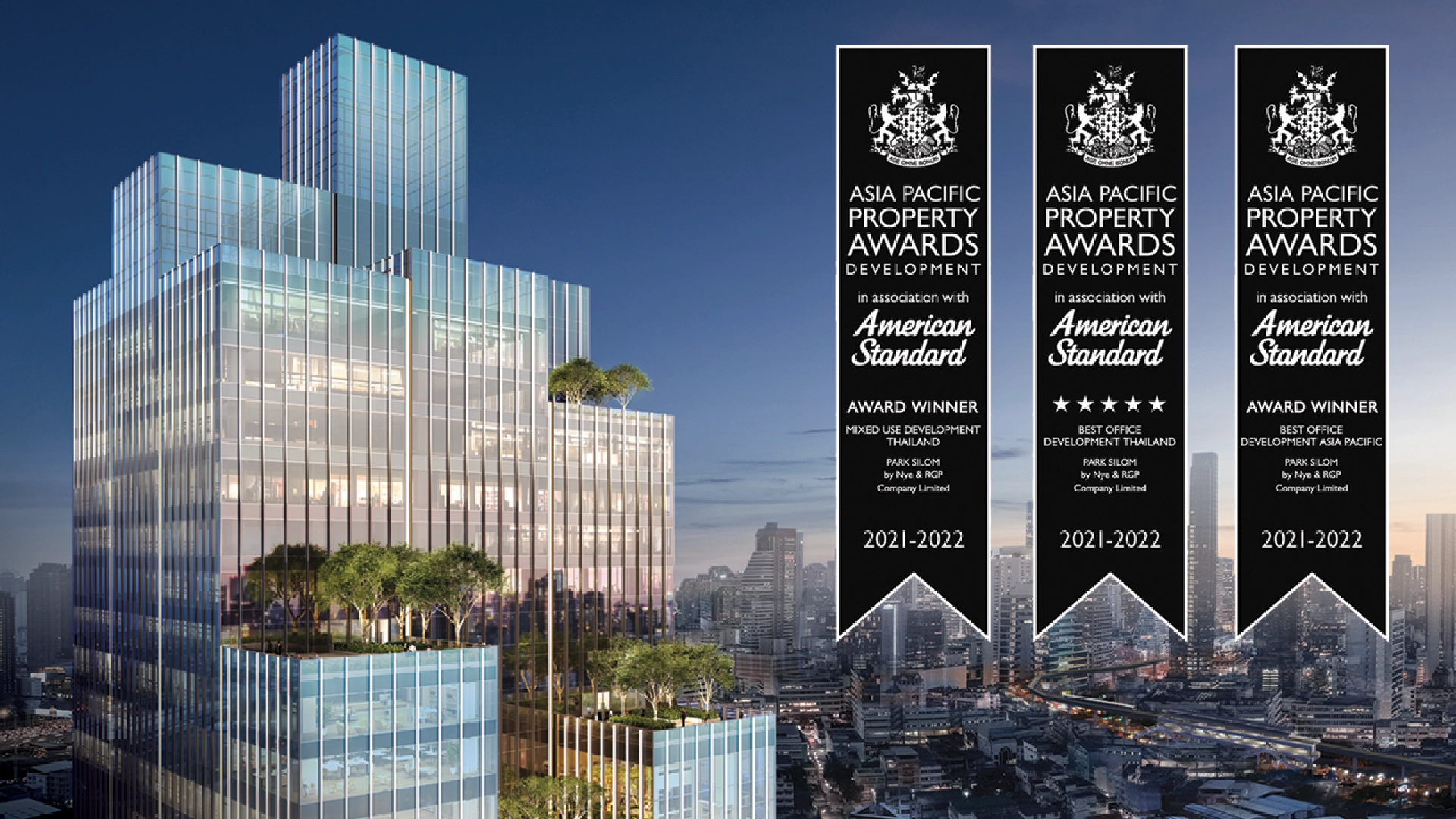
    Park Silom, a premium mixed-used complex in the heart of prime Bangkok’s CBD Silom, is a collaboration between Nye Estate, Minor International and Siam Piwat. Synergizing their prestigious expertise, the three forefront developers are driving Park Silom into a ‘Third Space Retail,’ offering a new retail experience to Silom under the concept “Everyday Indulgence for New Breed City Living.” The new 39-storey complex on a 6-rai plot in the center of Silom with its retail space spanning over 5 floors is meticulously designed to cater to the lifestyle needs of individuals with high purchasing power, including local working professionals and international tourists, by providing them with a unique and modern way of daily living in the city. The planned date for the soft opening is set to take place in June 2023.

    Ms.Ornruedi Na-Ranong, Executive Directorof NYE & RPG Development Company Limited, said: “The Park Silom project has been developed under NYE & RPG Company Limited, a   joint venture between Nye Estate and Minor International Public Company Limited. It is a 39- storey high-end office and retail complex that spans over 6 rai in Bangkok’s central Silom’s area. The idea behind its creation is based on the ‘New Breed of Silom’ vision which takes into accounts the needs and lifestyles of the people and communities in the Silom area. The determination is to transform this land into a space that caters to the diverse needs of city dwellers while also connecting and empowering the Silom community, which is renowned for its dynamic nature. It is truly a Symbol of Dynamism.”

    She continued, “We are collaborating with Siam Piwat Company Limited, a leading property and retail developer to handle the management of Park Silom retail assets and properties. The partnership is expected to provide a thrilling and well-balanced urban living experience for the residents of Park Silom and surrounding areas on a daily basis. The place serves multiple purposes such as work, shopping, and a hang-out spot during the day. Moreover, it can provide a unique and vibrant to unwind after work. The soft opening is scheduled in June 2023.”

    Chanisa Kaewruen, Head of Corporate Strategy Group of Siam Piwat,  said “Siam Piwat adheres to ‘The Visionary ICON’, a corporate vision that reinforces its leadership in creativity, and is known for its exceptional expertise in developing and managing globally respected real estate and retail destinations.” Siam Piwat is  a leading property and retail developer, the owner and operator of world-class destinations, such as Siam Paragon, Siam Center, and Siam Discovery, and a joint venture partner of ICONSIAM and                        Siam Premium Outlets Bangkok.

    She pointed out that through the collaboration, Siam Piwat will enhance the retail management of the retail space on the first five floors of Park Silom, which spans an area of 9,300 square meters. The Silom area will soon experience a new concept of retail space that combines the comfort of home with the convenience of a shopping complex. This ‘Third Space Retail’ will be designed under the concept “Everyday Indulgence for New Breed City Living.” The aim of the project is to connect lifestyles of working individuals and affluent Thai and international tourists. This will be achieved by catering to their daily urban living and lifestyle needs in innovative ways.

    “The research conducted on retail business and consumer behavior in Silom and its surrounding areas has revealed a business opportunity to address the needs of the Silom community and fulfill their lifestyle requirements. This location offers great potential due to its position as a hub for many leading organizations, financial institutions, enterprises, and multinational companies, along with its surrounding population of high purchasing power.”

    “Our project is primarily focused on the new generation of working professionals in the Silom and Sathorn areas, who possess a high level of purchasing power. These individuals have a desire for an urban lifestyle and enjoy a balanced work-life. Furthermore, they seek to lead a vibrant and enjoyable life, while also taking care of their physical and mental health. Families who reside in the Silom and Sathorn districts, with high financial capabilities, as well as those who commonly travel to the area for purposes such as visiting hospitals, or being parents to students at renowned schools in the area, are our secondary targets. These households reflect the urban lifestyle and modernity of city-dwellers, possessing both a large purchasing power and an exquisite taste.”

    “Within the retail area, there will be a selection of more than 80 leading brands covering lifestyles, fashion, and wellness of the highest quality. The dining zone boasts an array of eateries, ranging from celebrated restaurants to innovative concepts, as well as cozy cafes, coffee shops, bars, and bistros. This vibrant hub of culinary delights is the perfect spot for a delicious meal and a new hangout spot in Silom. The Food Market is a premium supermarket zone dedicated to offering quality products, as well as providing a platform for new brands and a space to support the lifestyle of the modern generation who strive for a work-life balance. This location is an ideal spot for both shopping and socializing, attracting both office workers and tourists from both inside and outside of Thailand, once the country reopens. It is a perfect gathering place for those looking to enjoy the best of both worlds,” said Ms. Chanisa.

    Covering the first five floors of the building, the retail space commences on the basement floor under the name of THE HELP & SERVICES which offers a variety of shops and services tailored to provide convenience to customers. These include 24-hour shops, parcel delivery services, supermarkets, and leading restaurants among others.

    The G Floor is divided into zones, with THE BALCONY providing a comfortable and inviting atmosphere for brunch and all-day dining. An ideal meeting place for those in the Silom area, THE BALCONY is the perfect spot to relax and converse throughout the day. THE CELLAR offers a relaxed meeting space for people to unwind after work. SIVADON COURTYARD is a sprawling green space of more than 1 rai in front of Park Silom, offering a place for relaxation and a new experience for the Silom community. With many activities tailored to meet the needs of local residents and visitors alike, this courtyard is “the new lung of Silom”.

    THE LOBBY on the lobby floor houses chic cafes for starting the day or transforming the atmosphere into an informal setting for young professionals to gather and meet. THE DINING ROOM provides professionally selected restaurants to meet everyday dietary needs and energy replenishment.

    The 2nd floor is home to THE DRESSING ROOM, a collection of fashion and beauty stores offering an array of cosmetics, clothing, and accessories, and much more.

    Located on the 3rd floor, THE CLUBHOUSE & SPA offers a collection of stores that specialize in beauty and health care, as well as other related items.

    “Siam Piwat, a world-renowned destination developer, has accumulated knowledge, experience, and expertise in various aspects of real estate development, retail, department store business, food and beverage business, marketing communication, and real estate asset management. Confident in our ability to revolutionize real estate development and retail, we can create a remarkable, one-of-a-kind retail experience in the Silom area, adding both value and success,” concluded said Ms. Chanisa.

  • Hong Kong world’s most expensive place to live

    Hong Kong world’s most expensive place to live

    Hong Kong tops the table of the world’s most expensive cities in terms of everyday cost of living. That’s according to a newly-published global survey by Mercer, a company specialising in sharing of ideas and information.

    Claiming six out of the top 10 spots, Asian cities dominate the list of most expensive locations for working abroad in the 2018 rankings.

    The Asian metropolis pushed the West African city of Luanda off the top spot. The Angolan capital now comes in at number six.

    Several European cities make the world list including London at 19, Copenhagen at 14, Geneva 11, Bern 10, and at world number three, Zurich is Europe’s move expensive city to live.

    The rankings are calculated based on the spending patterns among expats from different nationalities, comparing prices for similar brands and from similar retail outlets in both the home and the host city. In this way, a cost-of-living index can be compiled.

    One city of note this time around is the Portuguese capital Lisbon that has made the top 100 for the first time coming in at 93, a move up of 44 places.

    Some of the cheapest cities to live in Europe are in the east. They included the Bosnian capital Sarajevo, Serbia’s largest city Belgrade, Romanian and Bulgarian capitals Bucharest and Sofia, and the capital of the former Yugoslav Republic of Macedonia, Skopje.

    The survey shows some big differences depending on products. Coffee, for instance, varies wildly.

    In the South Korean capital, Seoul, a cup of coffee costs, on average around, 12 dollars, compared to four dollars in New York.

    A hamburger in Zurich is 15 dollars, but only five in Hong Kong, and seven in London.

    But when it comes to cinema tickets the British capital is way out in front at almost 25 dollars.

    Of course, you do not have to go to the cinema, but the chances are you do need to buy fuel for your car, and while Hong Kong comes out the most expensive Paris is not far behind. But when it comes to fuel prices, it seems we’re still too much in love with our cars to refuse.

  • New Zealand-based property group buys Entrada Shopping Centre

    New Zealand-based property group buys Entrada Shopping Centre

    New Zealand-based Cook Property Group has bought the Entrada Shopping Centre in the heart of Parramatta for $41.32 million, reflecting a yield of 5.7 per cent.

    The the 5,570sqm Coles-anchored centre, which was developed by Dyldam Developments in 2011, is located in a high profile corner position – and supported by a number of specialty retailers, medical centre and child care provider.

    The centre, which also includes 196 car parks, is underpinned by a 20-year lease to Coles and total weighted average lease expiry of 10 years.

    CBRE Retail Investments’ Justin Dowers, Nick Willis, Mark Wizel and Peter Vines negotiated the sale of the centre on behalf of Centennial Property Group.

    “The sale of Entrada Shopping Centre further highlights that the market is pricing strata retail investments at a similar level to freehold investments,” said Dowers.

    “This is related to the lack of freehold centres offered for sale, but also an increased level of confidence in how these centres perform and the acceptance of this retail platform from the customers.”

    Dowers said strata retail centres are generally developed in highly built up areas where major supermarkets have found it difficult to get a presence in.

    “The benefit for owners of these assets is that they generally provide consistent rental growth underwritten by population growth, and the competition risks are much less when compared to outer growth areas of major capital cities,” he said.

    Willis said the property’s position in Greater Western Sydney’s growth corridor underpinned strong buyer interest in the asset.

    “We received a lot of interest from interstate and international investors given their desire to obtain retail holdings in Sydney – and more specifically the western growth corridor, noting the forecasted population growth in this region,” Willis said.

    Ben Cook of Cook Property Group said the Entrada Shopping Centre is a good strategic fit for his Sydney portfolio.

    “The anchor tenant, Coles, is enjoying exceptional turnover growth as a result of the centre’s prime location,” Cook said. “The barrier to entry for a competing development is significant, Parramatta’s growth story is compelling and the income generated from the asset is mostly non-discretionary.”

    “This fits with my investment model of acquiring defensive assets in core Sydney locations, with excellent growth prospects,” he added.

    Willis said major growth precincts in Sydney’s west such as Parramatta and Westmead were benefitting from significant investment that was helping underpin demand for retail amenity.

    “Investors see this as an opportunity to gain exposure in Australia’s most exciting future cities,” Willis said.

    “With over $10 billion worth of development occurring including the Light Rail, Parramatta Stadium, Parramatta Square and the Westmead Hospital, coupled an estimated 30,000 new dwellings in the region, the future income potential of Western Sydney will continue to underpin investor confidence.”

  • Hong Kong Real Estate Sees Record-breaking Sales Amid Developer’s Financial Struggles

    Hong Kong Real Estate Sees Record-breaking Sales Amid Developer’s Financial Struggles

    All 138 units in the Wong Chuk Hang neighborhood were sold within just seven hours of their launch on Saturday morning, raising a staggering HK$1.53 billion (US$196 million), as reported by property agents in the South China Morning Post.

    Record-Setting Prices and Swift Sales

    The new apartments, which feature two to four bedrooms, were priced between HK$8.5 million and HK$37.2 million each. This pricing resulted in an average cost of approximately HK$21,000 per square foot (US$28,800 per square meter)—a remarkable record low for new homes in the area, according to Bloomberg. This price point was about 4.5% less than that of CK Asset Holdings’ Blue Coast project, which ignited a buying spree in the same locale last year.

    In a splendid turn of events, Deep Water Pavilia was developed by New World, the flagship real estate company of the billionaire Cheng family and one of Hong Kong’s “big four” developers, alongside Empire Group Holdings, CSI Properties, Lai Sun Development, and MTR Corporation.

    Investor Interest and Market Dynamics

    Louis Chan Wing-kit, the CEO of Centaline Property Agency, noted that the project has attracted both end-users and investors alike, thanks to its competitive pricing and prime location directly above a mass transit railway station. The allure was further cemented by the fact that around 40% of buyers were investors seeking rental income, a reflection of current market trends, as reported by Sammy Po Siu-ming, CEO of Midland Realty’s residential division for Hong Kong and Macau.

    The robust sales are a welcome financial boost for New World, which has been facing rising financial pressures. Just weeks prior, in late May, the developer announced it would defer US$77.2 million in coupon payments on four perpetual bonds due that month. New World became the second Hong Kong property firm to take such a step in recent years, highlighting the ongoing struggles within the city’s property market plagued by price declines, sluggish sales, and high-interest rates.

    New World faces significant challenges, holding one of the highest debt ratios among its competitors. The company is under increasing pressure to manage its HK$87.5 billion in borrowings, especially after pledging around 40 properties—including its flagship commercial complex at Victoria Dockside—as collateral.

    Navigating Succession and New Horizons

    Amidst these financial challenges, the Cheng family—Hong Kong’s third-richest clan with an estimated fortune of US$19.5 billion according to Forbes—finds itself navigating complex succession issues. The group underwent two CEO changes last year following a record HK$19.7 billion loss for the fiscal year ending June 2024, with Adrien Cheng, once seen as the heir apparent, stepping down. His successor lasted only two months, leaving many eyebrows raised about the family’s leadership stability.

    With these developments unfolding, it seems that the property’s rapid turnover is not just a fleeting trend, but perhaps the beginning of a new era in the Hong Kong real estate landscape.

    Questions & Answers

    What types of apartments were sold in Wong Chuk Hang?
    The sold apartments ranged from two to four bedrooms.

    How much money did New World raise from the sales?
    New World raised a total of HK$1.53 billion (US$196 million) from the sale of the 138 units.

    What financial challenges is New World facing?
    New World is dealing with high debts, including HK$87.5 billion in borrowings, and has deferred coupon payments on bonds amid a struggling property market.

  • Singapore’s Private Home Sales Dive 53% in May, with Just 312 Units Sold!

    Singapore’s Private Home Sales Dive 53% in May, with Just 312 Units Sold!

    In a striking turn of events, Singapore’s real estate market experienced a significant dip in new home sales in May 2025, hitting its lowest point in five months. The PropNex report reveals that only 312 new private homes were sold, excluding executive condominiums, a staggering 53% decline compared to April’s 663 units. While the year-on-year comparison shows a more optimistic picture with sales up 40% from May 2024, the current slump highlights a worrying trend.

    A Drought of New Projects

    This decline comes as no surprise, with May marking the first month in 2025 devoid of new project launches. Analysts noted that fresh projects typically stimulate monthly transactions, and a subdued launch activity in June suggests that developers’ sales may continue to lag. In fact, only 20 new units were made available in May, all from the previously launched project The Myst. This number is notably low, matching the weakest monthly launch figures since 2009, alongside December 2024’s 20 units.

    Market Dynamics: The Rest of Central Region Shines

    May’s sales data tells a nuanced story, especially in the Rest of Central Region (RCR), where 191 units changed hands—down 65% from April’s surge of 551 units, thanks largely to the launches of One Marina Gardens and Bloomsbury Residences. Impressively, the RCR made up about 61% of total transactions for the month, with One Marina Gardens leading the charge, selling 62 units at a median price of $2,975 per square foot. The Hill @ One-North also performed well, indicating that collaborations with neighboring projects, like Bloomsbury Residences, can create buzz and drive sales.

    A Slow but Steady Performance in the Outside Central Region

    Meanwhile, the Outside Central Region (OCR) saw a modest uptick with 106 new units sold, compared to 95 in April. Although this marked one of the slowest sales months in the OCR this year, it followed a strong uptake from earlier projects like Parktown Residence and ELTA. Hillock Green was the standout project, moving 17 units at a median price of $2,285 psf, while the majority of units at the six projects in the Lentor Hills estate were already sold.

    Core Central Region: A Tale of Two Markets

    Sales in the Core Central Region (CCR) remained uninspiring, with only 15 new units transacted. Watten House led this sub-market with four units sold at a median price of $3,255 psf. Interestingly, three units sold for over $15 million each, including a lavish 4,489-sq ft unit at 21 Anderson that fetched an astounding $24 million, a telling sign of Singapore’s high-end market’s resilience amidst the overall slowdown.

    Executive Condominiums Take a Hit

    The executive condominium segment faced challenges as well, with only 24 new units sold in May, down by 75% from April. Yet, hope springs eternal with the anticipation of the upcoming launch of 600-unit Otto Place EC in July 2025, fueled by a mere 38 unsold new ECs remaining on the market.

    As the market navigates this interesting phase, one wonders if the lack of fresh launches might unlock more innovative strategies from developers to reinvigorate sales. Who knows, perhaps a surprise project announcement could shake up the market in an unexpected twist!

    Questions & Answers

    What were the total new private home sales in May 2025?
    Only 312 new private homes were sold in May 2025, marking a sharp drop from the 663 units sold in April.

    Which area led the new home sales in May?
    The Rest of Central Region (RCR) led the sales, with 191 units transacted, accounting for about 61% of all transactions.

    How did the executive condominium segment perform?
    The EC segment saw a significant decline, with only 24 new units sold in May, down 75% from the previous month.

  • Mumbai’s Retail Market Set to Expand by 1.4 Million Sq Ft from 2026 to 2029!

    Mumbai’s Retail Market Set to Expand by 1.4 Million Sq Ft from 2026 to 2029!

    The Mumbai retail landscape is poised for an exciting transformation, with JLL analysts forecasting a vibrant expansion of premium malls packed with new local and global brands—all designed to elevate the shopping journey.

    Promising Growth on the Horizon

    As optimism reigns in the retail sector, JLL anticipates that around 1.40 million square feet of additional premium space will become available from 2026 to 2029, energizing the market with fresh offerings. “The retail sector is expected to see more traction across all submarkets due to upbeat market sentiment,” JLL has reported.

    Quarterly Trends Reveal a Surge

    The momentum in Mumbai’s retail market has gained significant traction, with a marked increase in demand quarter-on-quarter, attributed largely to the completion of three new malls in the first quarter of 2025. This resulted in a net absorption of 0.3 million square feet, with the Suburbs submarket seeing significant lease activity. Popular names such as Decathlon, Cinepolis, Timezone, Play N Learn, Lifestyle, and Enamor expanded their footprints across well-regarded malls during this period.

    New Malls Make Their Debut

    The retail scene welcomed three new centers in Q1 2025: Sky City Mall and Aurum Square Mall in the Suburbs, along with The Rise I in the Prime South submarket. Together, these venues added an impressive 1.35 million square feet of operational space this quarter.

    Rental Prices on the Climb

    As demand for prime retail environments continues to grow, rents have increased moderately, led by high occupancy rates and bustling foot traffic. Landlords are becoming more assertive in negotiations, aware that premium retail spaces are now commanding higher rates. Overall, rents and capital values saw an upward trend across the board, particularly in the Suburbs and Prime North submarkets, following the closure of an average-category mall and the robust performance of other high-end locations. Interestingly, yields dipped slightly as capital values surged ahead of rent increases.

    Mumbai’s retail scene is not just on the rise—it’s shaping up to be a shopper’s paradise filled with delightful experiences and encounters around every corner. Who knew retail could make such a strong comeback?

    Questions & Answers

    What new brands are entering the Mumbai retail market?
    Several exciting brands like Decathlon and Cinepolis are expanding their presence in Mumbai as new malls open up.

    How much retail space is expected to be added in the coming years?
    An estimated 1.40 million square feet of premium retail space is set to hit the market between 2026 and 2029.

    What factors are driving the increase in rental prices?
    The rise in rental prices is primarily due to high occupancy rates, increased demand for premium malls, and the completion of new retail spaces.

  • Pop Star Karen Mok Expands Her Real Estate Portfolio with $10.8M Luxury Apartment in Hong Kong

    Pop Star Karen Mok Expands Her Real Estate Portfolio with $10.8M Luxury Apartment in Hong Kong

    The Mid-Levels District in Hong Kong is buzzing with real estate activity as celebrity Karen Joy Morris finalized the purchase of a luxurious 2,153 square-foot, three-bedroom unit on Old Peak Road on June 12, as reported by the South China Morning Post. Nestled within the esteemed Dynasty Court—a prestigious residential estate comprising five blocks and 409 units—Morris adds a touch of star power to this prime locale.

    At 55, Morris is no stranger to the limelight. She boasts an impressive portfolio with 18 studio albums and over 40 film appearances to her name. Notably, she’s the first Hong Kong singer to claim China’s Golden Melody Award three times and the trailblazing female solo artist to grace Beijing’s National Stadium, famously known as the Bird’s Nest.

    Hong Kong pop diva Karen Mok holds a concert in Nanjing City, east China’s Jiangsu Province, 10 May, 2025. Photo by Imagechina via AFP

    The aftermath of a dramatic 45% decline in property prices due to rising interest rates has attracted an influx of affluent buyers to Hong Kong’s high-end real estate sector. Just last month, Shirley Peng, sister of former Chief Executive Tung Chee-hwa, made headlines by acquiring a lavish apartment in the same district for a staggering HKD119 million.

    In another noteworthy transaction, Ant Group executive vice-president Shao Xiaofeng and his wife, Li Jian, secured a sprawling 3,314 sq ft, four-bedroom detached house in Tai Tam’s Villa Rosa for HKD78 million, illustrating the trend toward luxurious living amidst market fluctuations.

    Despite struggles in the broader property market, Knight Frank’s Wealth Report 2025 suggests that Hong Kong’s ultra-luxury segment is on the verge of rejuvenation. The city remains a global hotspot for super-prime real estate, clocking in 166 ultra-luxury transactions last year, according to reports from Hong Kong Business.

    The first half of this year has seen an uptick in activity within the luxury market, driven by the availability of distressed units at reduced rates that lure cash-rich buyers on the hunt for high-value properties. Knight Frank predicts a potential 5% decline in residential homes priced between HKD20 million and HKD40 million, while properties exceeding HKD40 million are expected to hold their ground.

    In related news, JLL Hong Kong noted in a December report that luxury residential prices could dip about 5% this year, primarily due to oversupply. JLL Chairman Joseph Tsang emphasized that the current downturn isn’t merely cyclical; rather, deep-seated structural changes are reshaping market dynamics and asset values.

    To stir up buyer interest, some developers are adjusting their price strategies. Recently, New World Development Co unveiled 138 homes for sale at record-low prices in Southside. The response has been overwhelming, with over 4,500 eager buyers registered to make their move. With home prices nearing an eight-year low and more than 22,000 new units available as of March, local property agency Centaline sounds the alarm over potential market risks.

    In a city where glitzy talent and pricey real estate intersect, is the high-end property market ready to bounce back? Only time will tell, but for now, the luxury sector seems to be embracing a wave of change that could reshape Hong Kong’s landscape.

    Questions & Answers

    What significant purchase did Karen Joy Morris make?
    She purchased a 2,153 square-foot three-bedroom unit on Old Peak Road in the Mid-Levels District on June 12.

    How has the high-end property market in Hong Kong been affected recently?
    Despite a slump in the broader property market, the luxury sector is poised for recovery, with affluent buyers showing renewed interest in high-value properties at lower prices.

    What are some recent trends in the luxury property market?
    Developers are lowering prices to attract buyers, while properties over HKD40 million are expected to remain stable despite forecasts of a 5% decline for homes priced between HKD20 million and HKD40 million.

  • Phuket Beckons: Thai Developers Attract US and Chinese Buyers Amid Bangkok Market Slowdown

    Phuket Beckons: Thai Developers Attract US and Chinese Buyers Amid Bangkok Market Slowdown

    Phuket’s real estate market is poised for a significant influx of new properties, with approximately 10,000 new flats set to hit the market this year, according to property consultancy Colliers, as highlighted by the South China Morning Post. New project launches have started happening weekly, creating a buzz in the region.

    The Supply-Demand Conundrum

    However, the situation is complicated by a rising unsold inventory in Phuket, which stood at 4,982 units across 16 projects by the end of the fourth quarter last year. “Developers are counting on the upcoming high season to attract new buyers to the island,” commented Nasupha Suwansri, vice-president at Juwai IQI, a leading real estate broker managing over US$4 trillion in global listings.

    A Record Year for Launches

    The surge in new supply could further intensify the existing oversupply issue. Colliers reported a staggering 14,700 units launched across 56 projects last year, with only 64% finding buyers. This scenario reflects increasing competition among Thai developers, particularly as sales growth in Bangkok cools and mortgage rejection rates rise.

    Developers Shift Focus

    Many prominent Thai developers are shifting their focus to Phuket due to sluggish sales in Bangkok. Stuart Reading, managing director of group property development at Banyan Group Residences, noted, “There is an oversupply situation for certain projects in Phuket priced between US$100,000 and US$200,000. They are pushing many of these developments.” In contrast, Banyan, which has maintained its Phuket land bank for years, is taking a more measured approach and plans to unveil US$1 billion in luxury residential projects over the next two to three years, notably targeting Hong Kong buyers.

    Fostering Foreign Interest

    Meanwhile, T.H Group is optimistic about international investor demand for its Ayana project. They are hosting around 100 American passport holders—many of them Asian-Americans looking to retire in Thailand—for property viewings in both Bangkok and Phuket later this month. “This is the first time we have encountered such a large-scale American property viewing group,” shared Allen Su, Ayana’s project leader.

    The Dynamics of Foreign Investment

    Chinese buyers remain the largest group of foreign investors in Bangkok flats, but demand saw a 19% drop to 1,481 units valued at THB6.12 billion (US$187 million) in the first quarter. “The Bangkok condo market is recovering, but it presents a mixed picture,” remarked Kashif Ansari, co-founder and group CEO of Juwai IQI, noting that local buyers are cautious due to policy uncertainties while Chinese investors continue to be pivotal.

    In the first half of last year, Chinese buyers represented 39.5% of all foreign buyers in Thailand’s condo market, acquiring 2,872 units for THB13.2 billion, as per the Government Housing Bank and reported by Thai PBS. The popular locations for foreign buyers included Bangkok, Phuket, Chiang Mai, and Samut Prakan, indicating a diverse interest in Thailand’s real estate landscape. After all, who wouldn’t want a slice of paradise?

    Questions & Answers

    What is driving the increase in new flats in Phuket?
    Developers are launching around 10,000 new flats this year, hoping to capitalize on the high season to attract more buyers to the island.

    How is the unsold inventory affecting the market?
    The unsold inventory has climbed to nearly 5,000 units, contributing to concerns about oversupply and heightened competition among developers.

    Which foreign buyer group remains key to the market?
    Chinese buyers continue to dominate the foreign investment scene, comprising a significant portion of the market despite a recent dip in demand.

  • CapitaLand Development Kicks Off Construction on Exciting New Project: The Fullton

    CapitaLand Development Kicks Off Construction on Exciting New Project: The Fullton

    Nestled within the stunning Vinhomes Ocean Park 3 in Hung Yen Province, just east of Hanoi, The Fullton is set to make waves in Vietnam’s luxury housing market, boasting an estimated gross development value of around US$800 million. This impressive undertaking by CapitaLand Development marks a significant milestone as its inaugural luxury low-rise residential project in northern Vietnam.

    Groundbreaking Ceremony with Dignitaries

    The celebration of this ambitious project kicked off with a groundbreaking ceremony, graced by notable figures including His Excellency Jaya Ratnam, Singapore’s Ambassador to Vietnam; Tan Wee Hsien, CEO of CapitaLand Development Vietnam and International; and executives from Far East Organization. Their presence underscored the collaborative spirit behind this landmark endeavor.

    Phased Development Plan

    Spanning an expansive 25 hectares, The Fullton will unfold in two distinct phases. The first phase, aptly named The Fullton Edition, will consist of 342 residential units spread over 12 hectares, with a completion target set for 2026. In a subsequent phase slated for 2027, an additional 350 residences will be unveiled, contributing to a luxurious living experience.

    Prime Location for Easy Accessibility

    The project’s strategic location provides seamless access to the Northern Key Economic Region through major highways, including National Highway 5A and the Hanoi–Hai Phong Expressway. With future infrastructure developments, such as the anticipated Tran Hung Dao Street set to enhance connectivity, residents can expect not only convenience but also the tranquility of suburban living.

    Meeting the Demand for Quality Housing

    Addressing the rising demand for quality, low-density housing in northern Vietnam, Tan Wee Hsien highlighted that The Fullton caters especially to discerning homeowners and professionals in the Hanoi area. “With nearly 700 homes and shophouses, we aim to build a prestigious community with a range of villa types, including enclave, twin, and detached villas within a secure gated environment,” he elaborated. This marks CapitaLand’s first venture into Greater Hanoi, reflecting a promising growth trajectory bolstered by ongoing infrastructure enhancements and changing lifestyle preferences.

    A Symbol of Bilateral Relations

    Ambassador Ratnam noted the project’s role in strengthening the ties between Singapore and Vietnam, expressing confidence in the nation’s growth prospects. “The Fullton is not just about homes; it’s about contributing to Vietnam’s urban transformation,” he affirmed, indicating the project’s alignment with the country’s bustling urbanization efforts.

    Architectural Harmony with Nature

    Designed with aesthetic sensibilities, The Fullton features an array of meticulously crafted boutique townhouses and villas, echoing the terraced landscapes of Vietnam. Its architectural blueprint harmonizes with the natural greenery, providing an oasis of tranquility, contemporary luxury, and vibrant communal spaces.

    Community-centric Amenities

    Central to The Fullton is a lively 1.9-hectare park designed to nurture community spirit and promote wellness. With themed playgrounds, fitness areas, and serene gardens for yoga, it’s a hub for recreation for all ages. A standout feature is the private clubhouse, a rarity in low-rise residential spaces, offering a retreat-like atmosphere inspired by the surrounding landscape.

    Sustainability at Its Core

    Emphasizing eco-friendly initiatives, The Fullton includes electric vehicle charging, expansive green areas, and energy-efficient designs. These features reflect CapitaLand’s commitment to sustainable urban development, contributing positively to Vietnam’s ever-evolving urban fabric.

    The Vision Behind CapitaLand Development

    CapitaLand Development, representing CapitaLand Group’s robust global portfolio valued at SGD 21.5 billion (US$16.7 billion), is focused on leveraging its extensive real estate expertise across key markets. The firm’s ongoing project in Vietnam highlights over 30 years of investment and development, with achievements celebrated through numerous prestigious awards.

    As CLD aims to be the developer of choice, its vision is firmly rooted in creating quality spaces that enrich lives, enhance communities, and champion sustainability. After all, who wouldn’t want to live in a place where nature meets modern living?

    Questions & Answers

    What is the estimated value of The Fullton development?
    The estimated gross development value of The Fullton is approximately US$800 million.

    When is the completion date for the first phase of The Fullton?
    The first phase, The Fullton Edition, is expected to be completed by 2026.

    What unique features does The Fullton offer to its residents?
    The Fullton features a vibrant central park, a rare private clubhouse, and numerous eco-friendly amenities, all designed to promote community, health, and sustainability.