Category: Research

Retail News Asia is committed to providing both local and global retailers with the latest Research throughout the Asian market. This on a daily base.

  • What do Vietnamese people love to buy online?

    What do Vietnamese people love to buy online?

    In contrast, fast-moving consumer goods including cosmetics, food and other household products have been slower to gain in popularity among internet shoppers. For these, Vietnamese people still prefer to go to stores and seek advice from shop assistants.

    With Vietnam becoming more “connected” and nearly half of the population with easy access to the internet, Vietnamese purchasing habits are changing.

    “The online retail ecosystem is fast evolving. The whole retail experience is changing. Today’s shoppers are incorporating digital touch points along the entire path to purchase,” said Roberto Butragueño, associate director at Nielsen Vietnam.

    According to the survey, customer loyalty is varied. More than half of respondents who had purchased travel services or books/music/stationery online admitted they would buy those more often online than in store. Event tickets, which attract only one-fourth of online customer, have become the favorite destination for second time purchasing.

    However, once an online shopper does not necessarily mean always an online shopper. The story is different for fashion, electronics and cosmetics.

    The survey’s findings are based on more than 200 respondents with online access in Vietnam. Survey responses are based on claimed behavior, rather than actual metered data.

  • Mobile growth marketer expands to Japan

    Mobile growth marketer expands to Japan

    Growth marketer platform YouAppi is expanding into the Japanese market.

    With the official opening of YouAppi Japan, the company will be able to help Japan-based CMOs and those targeting the country to acquire users over online channels and identify fraud better.

    The company, founded in 2012, uses its OneRun platform for a variety of marketing functions for its clients, from discovery to user acquisition on video, social and other channels through app re-engagement.

    The platform features advanced anti-fraud functionality to help CMOs reduce their risks, and offers a single point for streamlining mobile media buying and combining machine learning with the company’s proprietary predictive algorithms that reportedly analyze over 250 terabytes of data every day.

    With Yoshie Nakabayashi at the helm as the country manager of YouAppi Japan, the company aims to help leading brands, agencies and publishers in Japan to improve their mobile experience.

    “A year after closing our B Funding Round which was earmarked for Asia, I’m excited that we delivered nearly 600% growth in the region in 2016, and are now opening a strategically important office in Tokyo,” YouAppi CEO and co-founder Moshe Vaknin said.

    According to the company, it ran 15,000 campaigns for 450 leading advertisers with 100 billion monthly impressions served around the world over the last four years.

  • Mobile banking to have nearly 3b users by 2021

    Mobile banking to have nearly 3b users by 2021

    Juniper Research predicts that by 2021, nearly 3 billion users will be using retail banking services on smartphones, tablets, PCs and smartwatches, up 53% from 2017.

    The new research titled “Retail Banking: Digital Transformation & Disruptor Opportunities 2017-2021” also predicts that usage will continue to rise as consumers increasingly opt for banks offering the convenience of rapid, multi-channel digital services. This means that banks will need to focus on providing a more frictionless digital experience to their customers, especially if they are to remain market leaders.

    According to Juniper while traditional banks have so far remained a step behind in delivering innovation and maintaining their competitive edge against new Fintech players, the situation is gradually changing.

    “Technology is currently the big differentiator for all types of banks; including traditional banks and the so-called challenger banks. Investments in banking technology reached record levels in 2016 and traditional banks are expected to focus on digital transformation initiatives”, added research author Nitin Bhas.

    Juniper predicts that in 2017, big banks will acquire challenger players including tech-startups and digital-only banks, and this will further accelerate the rollout of traditional players’ digital strategy.

    Juniper’s Digital Transformation in Banking Readiness Index analyzed leading global tier-1 banks to evaluate their digital transformation readiness scores and highlight their respective positioning within the digital innovation roadmap.

    Its list of leading banks for digital transformation include Banco Santander, Bank of America, Barclays, BBVA, BNP Paribas, Citi, HSBC, JP Morgan Chase, RBS, Société Générale, UniCredit and Wells Fargo.

    Juniper says these banks are progressing rapidly towards the final stages of digital transformation with heavy investments, have excellent digital portfolios, and are already witnessing significant cost savings.

  • Connected things on pace for 31% surge in 2017

    Connected things on pace for 31% surge in 2017

    Globally, 8.4 billion connected things will be in use in 2017, up 31% from 2016, and will reach 20.4 billion by 2020, according to projections from Gartner.

    Total spending on endpoints and services will meanwhile reach almost $2 trillion in 2017, the research firm predicts.

    Regionally, Greater China, North America and Western Europe are driving the use of connected things and the three regions together will represent 67% of the overall Internet of Things (IoT) installed base in 2017.

    The consumer segment is the largest user of connected things with 5.2 billion units in 2017, which represents 63% of the overall number of applications in use. Businesses are on pace to employ 3.1 billion connected things in 2017.

    “Aside from automotive systems, the applications that will be most in use by consumers will be smart TVs and digital set-top boxes, while smart electric meters and commercial security cameras will be most in use by businesses,” said Peter Middleton, research director at Gartner.

    In addition to smart meters, applications tailored to specific industry verticals — including manufacturing field devices, process sensors for electrical generating plants and real-time location devices for healthcare — will drive the use of connected things among businesses through 2017, with 1.6 billion units deployed.

    However, from 2018 onwards, cross-industry devices, such as those targeted at smart buildings — including LED lighting, HVAC and physical security systems — will take the lead as connectivity is driven into higher-volume, lower cost devices.

    In 2020, cross-industry devices will reach 4.4 billion units, while vertical-specific devices will amount to 3.2 billion units.

    While consumers purchase more devices, businesses spend more. In 2017, in terms of hardware spending, the use of connected things among businesses will drive $964 billion.

    Consumer applications will amount to $725 billion in 2017. By 2020, hardware spending from both segments will reach almost $3 trillion.

    Total IoT services spending (professional, consumer and connectivity services) is on pace to reach $273 billion in 2017.

  • Most cybercrime losses not fully recovered

    Most cybercrime losses not fully recovered

    Each year thousands of internet users fall victim to a cybercrime that leaves them out of pocket. Research from Kaspersky Lab reveals that over half (52%) of internet users who’ve lost money at the hands of cybercriminals have only got some, or none, of their stolen funds back.

    With the variety and sophistication of online financial threats against consumers growing, losses from online fraud, identity theft and hacking are now running at billions a year. And with many cases going unreported, the true economic cost is likely to be significantly higher.

    The research reveals how costly these attacks are for internet users, and how lucrative they’ve become for cybercriminals. On average, internet users lose $476 per attack and one-in-ten people surveyed said they lost more than $5,000.

    A large majority of internet users say they conduct financial operations online (81%) and just under half (44%) store financial data on their connected devices.

    As more users go online to manage their finances, more cybercriminals are looking for opportunities to cash in, making it important for users to have robust internet security in place to protect themselves and their money. Nevertheless, only 60% of internet users protect all their devices.

    Attitudes to online safety could be influenced by users mistakenly thinking lost money will be automatically refunded to them. Almost half (45%) say that they assume they will be reimbursed by banks for financial cybercrime without any problems, but as the survey shows, over half (52%) of people affected haven’t had all their stolen money returned.

    “Cybercriminals are continually looking for new ways to exploit and defraud consumers and that’s why it’s important for internet users to be on their guard at all times,” says Vyacheslav Zakorzhevsky, Head of the Anti-Malware Research Team at Kaspersky Lab.

    “Cybercriminals can conduct financial crimes via malware, phishing and more. Don’t assume you will always get all your money back if you become a target and funds are stolen from you. The best way to safeguard your finances online is to make sure you don’t become a victim, and for that we recommend specialist software that protects your identity and keeps sensitive data out of the hands of the cybercriminals.”

  • Public cloud services to hit $10b in APAC

    Public cloud services to hit $10b in APAC

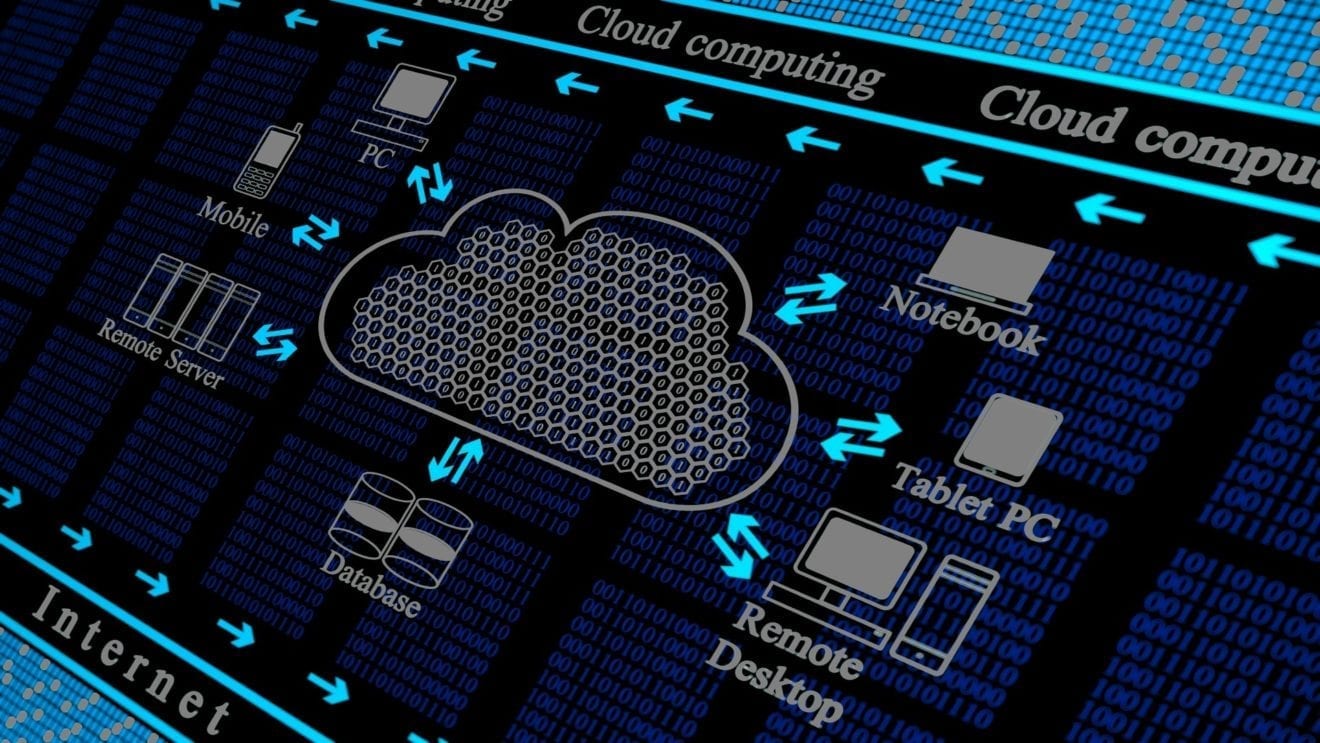
    The public cloud services market in the mature Asia Pacific region is forecast to grow 17.7% in 2017 to total $10 billion, up from $8.5 billion in 2016, according to Gartner.

    By 2019, Gartner predicts that total public cloud services spending in the mature AP region will rise to $13.6 billion.

    Public cloud services are shared, meterable, elastic and scalable multi-tenanted IT offerings delivered as a subscription-based service to external customers using internet technologies.

    Gartner categorizes Australia, New Zealand, Singapore and South Korea as the mature APAC market.

    The highest growth for the cloud services market in the mature APAC market comes from software as a service (SaaS) with a 28.5% increase in 2017, and platform as a service (PaaS) growing 26.7% this year.

    “The increase in SaaS and PaaS are indicators that migration of application and workloads from on premises data centers to the cloud, as well as development of cloud ready and cloud native applications, are fueling growth in the cloud space,” said Sid Nag, research director at Gartner.

    “Software vendors will continue to shift investments from on-premises license-based software to cloud-based offerings.”

  • Online shopping in China grows 26.2% in 2016

    Online shopping in China grows 26.2% in 2016

    Online retail sales in China reached 5.16 trillion yuan ($752 billion) in 2016, representing 26.2% growth from 2015—more than double the growth rate of overall retail sales, according to China’s National Bureau of Statistics, the agency charged with tracking economic data. Total retail sales amounted to $33.23 trillion yuan ($4.98 trillion) in 2016, up 10.4% year over year.

    While consumers made 15.5% of their total retail purchases online, the percentage was a bit lower for physical goods, at 12.6%. Overall sales of tangible goods amounted to 4.19 trillion yuan ($610 billion). The remaining nearly $145 billion in retail purchases was of digital goods, such as music and videos.

    The report guarantees China will further extend its lead over the United States as the world’s largest online retail market. U.S. e-retail sales totaled $341.7 billion in 2015, according to the U.S. Commerce Department, and is on track to grow at around 15% in 2016 to around $393 billion. The U.S. Commerce Department will report fourth quarter 2016 and full-year U.S. online retail sales on Feb. 17.

    Helping fuel China’s growth in online retail sales was the rapid integration of stores with online channels, the National Bureau of Statistics says.

    “We expect New Retail, a new form of [online-to-offline sales] promoted by Alibaba and supported by Chinese authorities, will shape the retail landscape for China going forward. Earlier in 2017, Alibaba announced the privatization of Intime Retail Group, which we believe would be a test case for its New Retail strategy. Also, other partnerships between physical stores are Alibaba and Sanjiang, JD.com Inc. and Yonghui Supermarket,” Esme Pau, an analyst at research company Fung Global Retail & Technology, tells Internet Retailer.

    Sales in stores grew 7.8% in 2016, a sizable jump from 5.5% growth in 2015. Specialty stores selling specific brands grew 4 percentage points faster than in 2015, but supermarkets and department stores lost market share, growing about 1.5 percentage points more slowly than in 2015.

    The government agency reported that Chinese consumers bought more premium products in 2016, including sporting goods, sport utility vehicles and electric automobiles. For example, sales of mobile devices grew nearly 12% in 2016. Online sales of food in China went up 28.5% in 2016 over the prior year, clothing sales increased 18.1% and sales of other goods rose 28.8%, the National Bureau of Statistics reported.

    The growth in online and offline retail reflects a still-healthy Chinese consumer economy, despite a slowdown in recent years. China’s gross domestic product grew by 6.7% in 2016, overtaking India, which registered a 6.6% increase in GDP, as the world’s fastest-growing major economy, according to the data released recently by The International Monetary Fund.

    Chinese consumers are fulfilling some of their demand for premium products by buying imported goods online. The number of Chinese consumers who purchased overseas products on Tmall Global, an online marketplace for imported goods, more than doubled in 2016, according to Tmall Global operator Alibaba Group Holding Ltd. Amazon.com Inc., one Alibaba’s main rivals in China, reported earlier that as of the end of August 2016 Chinese consumers had placed more than 10 million orders on the cross-border e-commerce shopping area of Amazon.cn, which launched in 2014.

  • IDC sees more strategic Philippine government ICT push by 2021

    IDC sees more strategic Philippine government ICT push by 2021

    The government will have a more strategic ICT push to enable technology adoption among organizations by 2021, research firm International Data Corporation (IDC) predicts.

    In its latest forecast for the country, IDC Philippines noted that with a new dedicated, centralized agency at the helm of the country’s ICT development, the government will be able to lay the much-needed groundwork to enable technology adoption for organizations.

    The country’s Department of Information and Communications Technology (DICT) was set up last June following the signing of the law creating the new Department by outgoing President Benigno Aquino before the presidential elections in May. The inaugural secretary of the department was appointed by Aquino’s successor, Rodrigo Duterte in June.

    The department is designated as the chief policymaking body involving the use of ICT in the country, and carrying the mandate of the previous Department of Science and Technology’s ICT Office, its first project was the rollout of more free WiFi connections in public places throughout the country and the crafting of a new national broadband plan. It has also been working to slash the processing time of permits for local telecommunications companies to speed up the rollout of infrastructure, especially in the countryside.

    Citing the latest findings of the United Nations E-Government Survey, IDC Philippines said the country already went up 24 notches to rank 71st out of 193 countries in e-government development.

    The research firm, however, sees major disruptions in the country’s ICT-BPO industry, which launched a new roadmap last October eyeing approximately $38.9 billion in revenues in five years from almost $25 billion in 2016.

    By 2020, IDC Philippines believes that the  ICT and BPO markets will be disrupted by the pivot and policy changes from the Duterte administration, as well as the election of Donald Trump in the US if the industry does not take critical steps safeguarding the country’s inherent growth drivers.

    The BPO industry is one of the great contributors to the total ICT spending in the country, which IDC sees as evolving to higher-value services around contact centers, medical transcription, software development, animation and game development, and global captive operations centers.

    “In the longer-term view, however, this may change due to the shift in pivot and policy changes from the Duterte and Trump administrations. This may lead to an impression of the country’s volatility and together with issues on manpower and availability of skill sets, it may result in the industry stagnating in the near future due to lack of new investments and expansionary plans from incumbents. Far-reaching measures to address key issues are of paramount importance this year,” said Jubert Alberto, Business Operations Head, IDC Philippines.

    In the private sector, the research firm predicts that 25 percent of the country’s top 1,000 companies will see the majority of their business depend on their ability to create digitally enhanced products, services, and experiences by 2020. It expects digital transformation (DX) to attain macroeconomic scale over the next three to four years.

    “The year 2020 will see Filipino companies level up their DX journey to a macroeconomic scale, as their ability to offer digitally transformed offerings and experiences becomes an important measure of competitiveness and success in the market,” said Karen Rondon, Research Manager for Enterprise Computing – Networking, IDC Asia-Pacific.

    Other predictions of IDC Philippines for 2017 are as follows:

    Filipino DX Teams. By 2018, 25 percent of Philippine organizations will have dedicated digital transformation/innovation teams.
    “These specialized ‘PH DX teams’ will be in charge of formulating plans both for internal and external applications of digital technology. These include identifying and using new technologies to improve operations, creating digital marketing strategies, developing their IT capabilities, and other related initiatives,” said Jan Edward Tañeca, Market Analyst – Imaging, Printing, Document Solutions (IPDS), IDC Philippines.

    Cybersecurity. By 2018, cyber security will become a tier-1 business priority receiving fixed capital spending for 30 of the top 1,000 companies in the Philippines.

    “In the coming years, enterprises will realize that rather than reacting to global security trends, the best-run businesses try to anticipate them. Thus, they will make cybersecurity a core part of their overall business strategy, taking into account the existing security industry trends and evolving criminal tactics and couple those factors with the organization’s risk tolerance, security program maturity, a holistic security strategy and, most importantly, business targets,” said Jan Edward Tañeca, Market Analyst – Imaging, Printing, Document Solutions (IPDS), IDC Philippines.

    Information-Based Products. By 2020, revenue growth from information-based products will be double that of the rest of the product/service portfolio for a quarter of the top 1,000 Philippine companies.

    “In the Philippines, companies in the telecommunications, retail, and banking industries, among others, have unlocked new opportunities in creating revenue through analyzing and making sense of the aggregated customer information. Some organizations that have explored these options benefited in the form of penetrating new markets and generating new revenue streams as the information may vary from customer data to consumer buying patterns,” said Nicolo Santos, Market Analyst – Imaging, Printing, and Document Solutions (IPDS), IDC Philippines. “This opportunity requires a constant effort for organizations to address data privacy and security issues, and government regulations that surround the collection, storage, use, and sale of consumer data.”

    Hyper-disruptive marketplaces. By 2019, 40 percent of customer-facing top 1,000 companies will experiment with augmented reality/virtual reality (AR/VR) as part of their marketing efforts.

    The potential impact of AR/VR across industries will become so big that by 2019, IDC sees 40 percent of the Philippines’ top 1,000 companies experimenting with these technologies to create their own unique experiential marketing strategies. “Consumer brands will be compelled to think out of the box and reinvent their marketing approaches – incorporating more AR/VR elements and placing emphasis on gamification – in a bid to gain the patronage and loyalty of consumers, especially young and tech-savvy millennials,” said Sean Agapito, Market Analyst – Client Devices, IDC Philippines.

    Customer-/Ecosystem-Facing Digital Services. By 2019, 65 percent of Philippine IT organizations will create new customer-facing and ecosystem-facing services to meet the business DX needs.

    “Failure to scale up the number of direct and indirect customers with whom an organization does business will lead to revenue shortfalls and uncompetitive cost structures. Improve profitability, we expect organizations to increase their use of virtual agents or digital assistants. Intelligent assistants will use artificial intelligence (AI)/cognitive technology to automatically adjust experiences to the users’ preferences and context,” says Alon Anthony Rejano, Market Analyst – IT Services, IDC Philippines.

    Digitalized Customer Support Interaction. By 2018, 60 percent of customer support interactions will be digitalized and occur in online communities. With an increasing proportion of the Filipino population – reaching nearly half of the country’s total population in 2016 – actively using social media, IDC expects more organizations to interact with customers through social and online communities. Online customer support not only helps solve customer problems but it also improves brand image.

    Additionally, a successful community will create brand champions or advocates and will not only recommend the product or the service to customers but will help solve customer problems on behalf of the brand. “This will make the theme of customer reciprocity strong moving forward. Also in the near future, more organizations will use IT to integrate existing customer services and support systems like integrating pre-built connectors, mining the community for insight into customers’ behavior, and proactively solve any emerging issues,” says Jerome Dominguez, Market Analyst – Client Devices, IDC Philippines.

    Next-Wave Sari-Sari Store. By 2020, 30 percent of Philippine sari-sari stores will evolve to become another channel for one-stop payments and remittance centers.

    Something unique in the Philippine retail scene will be the presence of sari-sari stores in different localities. IDC foresees a future where sari-sari stores, a Pinoy cultural phenomenon, can offer services such as payment of utility bills, e-loading, and buying of travel tickets can also be done through these neighborhood stores. Serving as complimentary touchpoints especially in the rural areas, sari-sari stores play a pivotal role in filling the “unbanked” gap in the countryside.

    Organizations looking to engage more in the rural areas will have a viable channel, as in alternative to building brick-and-mortar branches, which may be cost-prohibitive to most companies.

  • Mobile contributed 6.2% to Bangladesh GDP in 2015

    Mobile contributed 6.2% to Bangladesh GDP in 2015

    Mobile technologies and services generated 6.2% of the GDP of Bangladesh in 2015, a contribution that amounted to around $13 billion of economic value, according to GSMA Intelligence.

    In the same year, mobile operators and the ecosystem provided employment to more than 760,000 people across Bangladesh, the report further stated. One-third of this was created directly in the ecosystem, while the rest is generated indirectly in other sectors as a result of the demand for production inputs generated by the mobile sector.

    “GSMA Intelligence findings clearly demonstrate the substantial contribution that mobile makes to the Bangladeshi economy,” GSMA head of spectrum Brett Tarnutzer said.

    “By systematically pursuing a policy framework that increases certainty, acknowledges market realities and removes regulatory barriers to investment and innovation, the Bangladeshi government and its citizens stand to achieve so much in the coming years.”

    In terms of public contribution, the mobile ecosystem generated about 10% of the government’s revenue in 2015, valued at $2.42 billion through general taxation, mobile-specific taxes, and spectrum licenses.

    Mobile’s overall impact includes the direct impact of the mobile ecosystem as well as the indirect impact and the increase in productivity brought about by the use of mobile technologies.

    GSMA added that Bangladesh performs close to the regional averages across metrics of mobile market development, despite a lower income than neighboring countries. Bangladesh is above the Asian average in terms of unique subscriber market penetration at 53%, while only slightly below with regard to mobile internet penetration at 33% and 3G at 20% of all mobile connections.

    Thus, it sees the potential for further growth if a supportive policy environment is put in place.

    GSMA Intelligence expects that the economic contribution of the mobile industry in Bangladesh will continue to increase. In value-added terms, it is estimated that the ecosystem will generate $17 billion by 2020. This forecast relies on a favorable macroeconomic environment and on a moderate expansion in demand and supply in the mobile market, as the number of mobile internet users and mobile coverage both increase.

    Employment opportunities are also set to expand from 780,000 jobs in 2016 to 850,000 jobs in 2020, an increase of around nine percent during that period.

    The amount of spectrum, and the terms on which it is made available, fundamentally drive the cost, range, and availability of mobile services. To ensure that this mobile vision becomes a reality, it is imperative that the spectrum is allocated in a way that encourages the rapid deployment of mobile broadband infrastructure, resulting in high quality, affordable mobile services for consumers across Bangladesh,” added Tarnutzer.

  • Is big data losing steam in Australia?

    Is big data losing steam in Australia?

    The Australian big data and analytics market is forecast to grow from $244.1 million in 2015 to $585.1 million in 2019, according to IDC.

    Banking, retail and government sectors have made impressive strides into the analytics domain with an objective of driving market and competitive intelligence.

    While the numbers look attractive, big data adoption levels are yet to reach those of cloud and mobility. There is plenty of data and good intentions, but talent shortage continues to be a challenge which needs to be addressed.

    The assertion that Australia has always been an early adopter of technology is challenged when it comes to big data and analytics. While a few standout organizations are investing to build sophisticated data-science algorithms, many others are yet to categorize big data from technology fad to business advantage.

    Regardless of shape, size, structure and format, big data’s contribution to competitive differentiation for Australian businesses cannot be disputed. Social media and high device penetration present an enticing set of newer and richer data sources.

    To deliver results, scaled out architectural capabilities will be key, along investments to develop the skillsets, platforms and processes that are necessary to keep in pace with the rate at which data is created.

    “Undoubtedly, big data presents an opportunity for retailers to leverage customer data and buying patterns to maximize revenues,” said IDC industry analyst Jaideep Thyagarajan.

    “While lack of data standardization has inhibited big data investments in healthcare, legacy modernization efforts have paid off for the public sector and investments are picking up,” said Thyagarajan. “This enables the government to operate at a higher potential, thereby enhancing service delivery to citizens.”

  • Mobile to continue driving growth in Lunar New Year online shopping

    Mobile to continue driving growth in Lunar New Year online shopping

    Lunar New Year shopping is getting more mobile. Thirty-two percent of all e-commerce transactions happened on a mobile device while more than six in 10 consumers browsed on a combination of PCs and mobile devices, before making a final purchase on either device.

    These were among the findings based on an analysis of 65 million online transactions in Hong Kong, Singapore and Taiwan before, during and after Lunar New Year in 2016 conducted by performance marketing technology company Criteo.

    “Easy navigation and shorter checkout processes on mobile sites and applications, and multi-channel integration are key to improving retail sales before, during and after Lunar New Year in 2017,” it concluded.

    The company’s deep-dive into consumer browsing and buying activity revealed that in the two weeks before and after the first day of Lunar New Year, consumers browsed and purchased retail products more actively than before – an 81 percent increase in online visitors to e-commerce sites and a 68 percent increase in e-commerce sales.

    Two trends are expected to impact regional retailers during the Lunar New Year season this year.

    The first trend is that mobile devices will be used to make high value purchases. Criteo said that desktops were once the king of big-ticket purchases, but in 2017, consumers in Hong Kong, Singapore and Taiwan will feel equally comfortable purchasing expensive items on smartphones.

    The Average Order Value (AOV) on mobile applications was 27 percent higher than desktops in the second quarter of 2016. The AOV on mobile browsers was only 9 percent lower than desktop during the same period, according to Criteo’s 1H 2016 State of Mobile Commerce Report.

    The second trend is that retailers will see a high web influence on offline sales.

    Shoppers in Hong Kong, Singapore and Taiwan are becoming experts at “showrooming” – the phenomenon of looking at items at a brick-and-mortar store while checking the prices available online.

    In Singapore, while in physical stores, 62 percent of local shoppers are browsing similar products online and comparing prices to ensure they get the best deals, according to Edelman Intelligence’ Singapore Consumers Online Shopping Survey in September 2016.Sixty-nine percent of these consumers end up purchasing the same product or service online rather than offline.

    In Hong Kong and Taiwan, 32 percent and 47 percent of consumers are looking to make purchases online, rather than offline, according to Google’s 2016 Consumer Barometer.

    “Consumers have come to expect exclusive online collections and discounts during this period, timing their purchases so they have the best deals and new clothes or jewellery to symbolise the new beginning. They also tend to continue shopping indoors and online throughout all 15 days of Lunar New Year,” said Yvonne Chang, Executive Managing Director, Asia-Pacific, Criteo.

    “Given the fluid nature of online shopping behavior and intense competition, retailers must use advanced technology that delivers personalized engagement, based on each consumer’s buying habits, expressed interests and online surfing history to leverage this opportunity,” she added.

  • Australian Online Retailers Need to be Extra Vigilant

    Australian Online Retailers Need to be Extra Vigilant

    Thirty-nine of the world’s top 250 retailers now operate in Australia, up two from last year. Australian retailers are warned to be extra vigilant, with international retailers set to enter our retail market further in 2017, according to Deloitte’s 2016 Global Powers of Retailing report.

    With 16 percent of the world’s top 250 retailers currently operating in Australia, coupled with a relatively stable economy, significant discretionary spend and strong consumer demand for international products and brands, we can expect further disruption in the Australian retail market with new entrants highly likely.

    “Australian retailers will need to be vigilant in ensuring they are differentiating themselves from their competitors by offering the right product range and mix and delivering a service, in-store and online, that meets their customers’ expectations,” said David White, partner and national leader of Deloitte’s retail, wholesale and distribution group.

    At present, the Australian market remains relatively unsaturated by the world’s largest retail brands compared to the US and European markets, according to White. “In the last quarter of 2015 we learnt South African retailer Steinhoff  had secured a deal with UK department store Debenhams to sell a selection of its private label apparel through its Harris Scarfe stores. And, in its first venture outside of South Africa, Mr Price has entered the Australian fast-fashion market, branded MRP, with two stores in Melbourne.”

    Whilst new global retailers look to Australian shores, those already here continue to expand their operations, including Sephora and US retailer Williams-Sonoma, both set to continue their store expansion programs in 2016.

    Amazon, ranked 12th, is the number one e-commerce retailer globally according to the report, followed by Apple, China’s largest B2C online retailer JD.com and Walmart in the US. All but six of the Top 50 online retailers are based in the US (26 companies in total) or Europe (18). The majority of the e-50 (39 companies) are omnichannel with bricks-and-mortar stores as well as online and other non-store operations.

    China to Enter Soon

    With nearly half of the 39 Top 250 global retailers which operate in Australia based in the US, one country conspicuous by its absence is China. Whilst China has nine retailers in the Top 250, none currently operate in Australia.

    “Many of the products we buy are manufactured in China, however unlike other sectors we have yet to see Chinese retailers entering the Australian market directly,” said White. “The growth in the middle classes in China is already prompting a surge in consumer demand and Chinese developed brands. It is only a matter of time before we see these emerging retailers expanding their businesses more globally, including Australia.

    Deloitte’s retail report also highlights the impact of technology on the digital divide between online retail and in-store, and evolving consumer expectations. “Some retailers may underestimate the digital influence, while others recognise the real opportunity to capitalise on this ‘digital divide.’”


  • How does electronic waste get recycled?

    How does electronic waste get recycled?

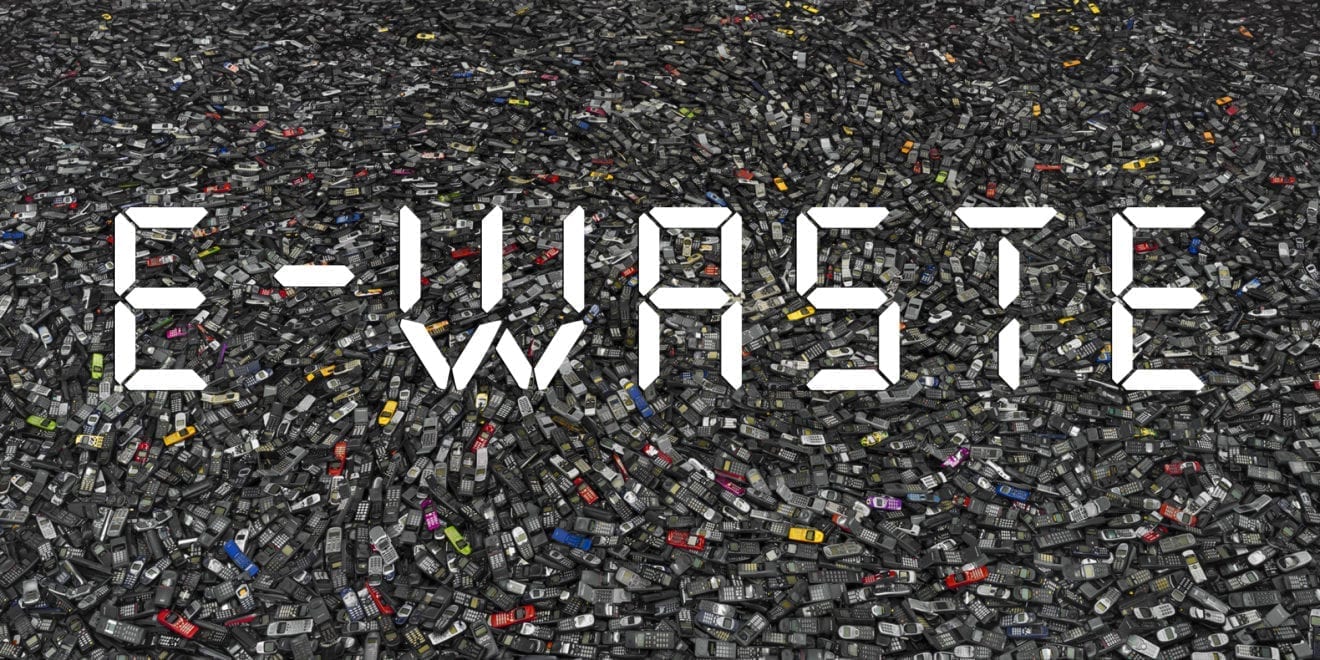
    The life cycle of electronics and electrical equipment (EEE) does not end when they stop working.If recycled properly, the precious metals found in electronic waste can go towards new EEE products.Discarded consumer electronics such as mobile phones, for instance, contain small amounts of precious and rare earth metals such as gold and silver.Scrapped cars and home appliances such as fridges and air conditioners also contain these rare metals, along with base metals of iron and zinc.In Singapore, there are several e-waste recycling initiatives for consumers.

    StarHub, for instance, partners recycling company Tes-Amm and logistics company DHL Delivery to place 328 specialised recycling bins in 277 locations under its Renew programme.Singtel has recycling bins placed at three of its shops for consumers to discard their used gadgets.Under the Project Homecoming initiative led by Canon and Epson, those with ink and toner cartridges can also drop them off at selected National Library Board locations.SORTED

    Once collected, the e-waste is sorted, labelled and dismantled according to their types – wires, LCD screens, hard disks and more.Measures, such as demagnetising hard disks, are taken to ensure data security.The e-waste is then exported to countries equipped to separate the metals through chemical processes.Once extracted, the metals are used in the manufacture of new products.

    Why recycle e-waste?

    When electronic waste is not disposed of properly, both the environment and public health suffer.This is because e-waste is very heterogeneous, National University of Singapore’s Associate Professor Tong Yen Wah explained.Apart from being made up of many types of components and materials, discarded electronics are also assembled in many ways, from simple devices like batteries to complex ones like smartphones.
    “All of these make e-waste very difficult to handle and recycle, and if their disposal is not done properly, these materials can get out and be circulated in the environment,” said the co-director of NUS’ Energy and Environmental Sustainability Solutions for Megacities programme.For instance, toxins from e-waste in landfills can seep into the groundwater that flows into rivers, causing water pollution.
  • Digital transformation and what it means for Indonesia

    Digital transformation and what it means for Indonesia

    Digital transformation will attain macroeconomic scale in Indonesia over the next 2-3 years, according to new predictions from IDC.

    The analyst firm says this will change the way enterprises operate and reshape the global economy. IDC calls this as the dawn of the DX Economy.

    “As digital transformation reaches macroeconomic levels, a DX economy will emerge and will become the core of what industry leaders do and operate,” says Mevira Munindra, research manager, Consulting of IDC Indonesia.

    “Essentially, to succeed, Indonesian enterprises must begin to think of the relevancy of their business in 10 years, and how they should react in the face of disruptive forces,” Munindra explains.

    Munindra also revealed the strategic top predictions that will unfold in 2017 and beyond and make the biggest impact to organisations in Indonesia:

    1. By 2019, 50% of IT organisations will create new customer-facing and ecosystem-facing services to meet the business DX needs.

    2. By 2018, lack of vision, credibility, or ability to influence will keep 80% of IT executives from attaining leadership roles in enterprise DX.

    3. By 2020, Indonesian firms will use open innovation to allocate expertise to 15% of new projects, aiming to increase their new product introduction success rates by over 50%.

    4. By 2020, nearly 20% of operational processes will be self-healing and self-learning — minimising the need for human intervention or adjustments.

    5. By 2018, online brand ambassadors and social media influencers will have more marketing power than traditional digital advertising, although this will subside through 2019 and beyond.

    6. By 2019, digital transformation investments will double, drawing funds away from store capital and profoundly changing the retail industry.

    7. By 2019, only 30% of manufacturers investing in digital transformation will be able to maximize the outcome; the rest are held back by outdated business models and technology.

    8. By 2019, cloud adoption will reduce infrastructure spend by 25% among top-tier banks.

    9. By 2019, 20% of local and regional governments will use IoT to turn infrastructure like roads, street lights, and traffic signals into assets instead of liabilities.

    10. By 2017, 90% of Indonesian cities will fail to take full advantage of Smart City data and digital assets due to a lack of process, project management, and change management skills.

    “In Indonesia, Digital Transformation is still not adequately represented within the enterprise, and this disparity in leadership will lead towards a delayed response towards market changes that will adversely impact business,” says Sydev Bangah, country manager at IDC Indonesia.

    “Timing is critical, and archaic thinking of riding-out trying economic times is no longer relevant, and should be addressed with process-led innovation,” Bangah  adds.

  • Asia’s smart home market to be worth $115b by 2030

    Asia’s smart home market to be worth $115b by 2030

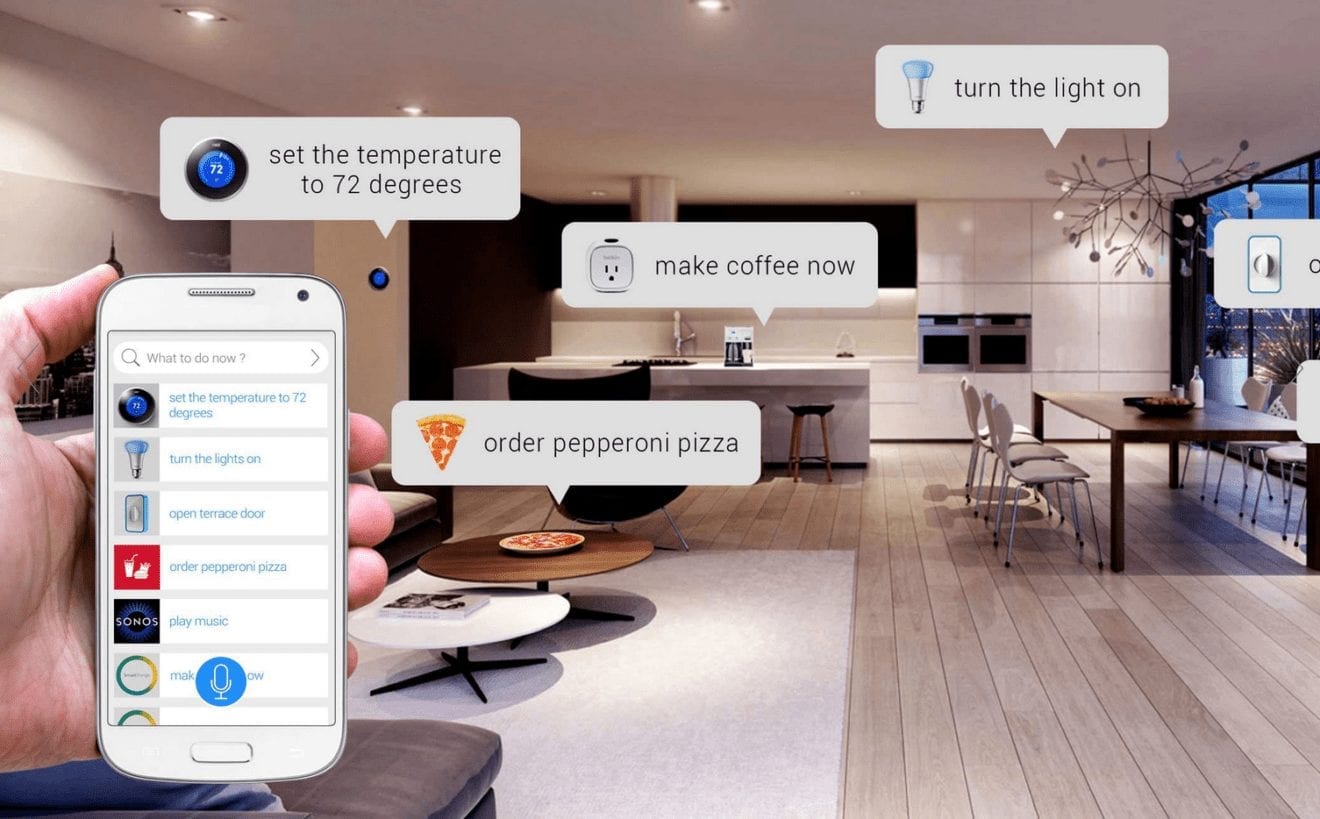
    Asia’s smart home market is on track to grow to $115 billion by 2030, accounting for 30% of the global market, according to a report released by global management consulting firm AT Kearney.

    The report, “The Battle for the Smart Home: Open to All,” noted that growth will be driven by China and Japan, with highly-connected economies such as Singapore, South Korea, and Taiwan also playing a key role.

    “Asia’s socio-economic landscape provides a great opportunity for the region to be a global driver of growth in the smart home sector over the next few years,” said Nikolai Dobberstein, partner and Asia-Pacific head of communications for media and technology at AT Kearney and a co-author of the report.

    “Japan, which is already among the top five global markets in terms of smart home penetration, will see continued growth driven by an ageing population enticing households to install health and wellness solutions. The opportunity in China is even greater with a phenomenal number of households seeing increased incomes, and a strong local manufacturing and technology ecosystem,” he added.

    Meanwhile, South Korea, Taiwan, and Singapore are all expected to have a high penetration of smart homes given the large proportion of high-income households and the data connectivity in these economies.

    The study noted that the idea of the connected, intelligent home is becoming a reality in Asia due to four major shifts that are accelerating market expansion.

    The first is connectedness and intelligence. The advancements in technology and processing power of smartphones has seen homes become much more connected. The addition of big data and artificial intelligence is also improving usability of smart home application drastically.

    Second is interoperability. The increasing interoperability among products from different manufacturers is making home applications more broadly useful to consumers. Advancement of APIs, industry alliances and efforts to standardize communication of applications are proliferating across the smart home ecosystem to drive progress.

    Product availability and cost are also factors. Nearly every aspect of home living is already covered by automated products, 80% of which are now commercially available in ‘smart’ form. Meanwhile, rapid cost reduction trends of key technology components is making smart home applications more affordable.

    Lastly, new monetization models of smart home applications are opening up to wider networks such as electricity grid, the internet, and real world service ecosystem.