Category: Telecom

Retail News Asia is committed to providing both local and global retailers with the latest Telecom & Telco news throughout the Asian market. This on a daily base.

  • Singtel to close copper-based ADSL networks

    Singtel to close copper-based ADSL networks

    Singtel has revealed plans to progressively shut down its copper-based ADSL networks as part of a push to accelerate fiber based service adoption to business and residential customers.

    The operator will shut down copper-based ADSL that supports broadband, TV, digital voice and private network services in stages during a process expected to be completed by early 2018.

    In addition, Singtel plans to cease copper deployment to commercial buildings that obtain temporary occupation permit (TOP) status from April 2018, and instead serve customers in the buildings using fiber-based networks. The company stopped deploying copper to new residential buildings in 2013.

    “We are pleased to make this technology adoption push in support of today’s digital economy and tomorrow’s connected Smart Nation. Fiber-based networks today [are] capable of offering far greater speeds and supporting a much wider range of services than the prevailing copper-based networks,” Singtel VP of consumer products for consumer Singapore Wong Soon Nam said.

    “Singtel will work closely with relevant stakeholders to ensure our customers will enjoy a smooth and fuss-free transition to the fiber network. We will also reach out to customers through various channels to make sure they are informed of the impending change and make available a range of affordable plans to cater to their varied communication needs.”

  • Supersnap International Opens the Most Advanced Data Center in Asia

    Supersnap International Opens the Most Advanced Data Center in Asia

    SUPERNAP International today announced the opening of one of the largest, most advanced data centers in the ASEAN region, SUPERNAP Thailand, The Bangkok Campus.

    The opening of the campus is a major catalyst for propelling the success of “Thailand 4.0” – the Thai government’s plan to transform the country into a high-value based economy through innovation and technology.

    This new multi-tenant carrier-neutral data center facility, located in the eastern province of Chonburi, plays an important role in the region as the critical infrastructure that powers the ability of businesses to succeed on the growing Internet of Things, Cloud and Artificial Intelligence markets. SUPERNAP Thailand is expected to be a catalyst for attracting more investment to the region and is poised to become the data center hub for Asia Pacific.

    SUPERNAP Thailand’s BANGKOK 1 data center is designed and built to the specifications of the industry-renowned, Tier IV Gold-rated Switch LAS VEGAS multi-tenant/colocation data centers in the United States. Its advanced design and diverse connectivity options are expected to enable clients to respond to rapid market growth and connect to global economies.

    “We welcome clients throughout ASEAN, APAC and the rest of the world to run their mission-critical IT infrastructure in what we expect will be one of the most secure, reliable and connected data centers in the world,” said Sunita Bottse, Managing Director of SUPERNAP Thailand. “Our high standards in uptime, security, efficiency and resiliency can be critical for corporations who operate 24 hours a day in every business line – including finance, e-commerce, oil and gas, transportation and health care.”

    The world-class SUPERNAP Thailand data center is one of the safest places to operate mission-critical IT infrastructure in the region. Its location 110 meters above sea level is outside of the flood zone and links to national and international telecommunications carriers enabling businesses to connect to key markets in Asia and around the world.

    SUPERNAP Thailand incorporates Switch’s patented designs that deliver highly efficient HVAC (heating, ventilation and air conditioning) technology enabling the facility to host high-density IT workloads. It is designed to achieve a target PUE range of 1.35-1.45 – a level more efficient than other data centers in ASEAN, which typically have PUE levels above 2. Its efficient design and plans for sourcing renewable energy helps SUPERNAP Thailand promote economic growth and technology development in a sustainable manner, directly in alignment with the sustainability goal of Thailand 4.0.

    The SUPERNAP Thailand data center in Chonburi is expected to include: 

    • 21,000 square meters of data center space with two data halls
    • 20 megawatts of power distributed through diverse 115 kilovolt transmission paths
    • Proprietary tri-redundant UPS power system
    • Up to 40 kilowatts of power per cabinet
    • Multi-carrier fiber couples with separate paths
    • Patented Switch SHIELD: dual independent roof decks rated to withstand 322 kph winds
    • 24/7 on-site network operations center (NOC), fire, safety and security
    • On-site, on-net member resources including conference spaces

    “Companies that have built their own data centers in the past are now realizing that they can mitigate risks and achieve better service level agreements (SLAs) by operating in SUPERNAP Thailand’s mission-critical colocation data center,” Sunita Bottse said. “Clients who tour the SUPERNAP Thailand data center experience first-hand the power and scale of the campus and what that means to their business growth.”

  • SoftBank, Huawei demonstrate 5G use cases

    SoftBank, Huawei demonstrate 5G use cases

    Japan’s SoftBank teamed up with Huawei to demonstrate various real-world use cases for 5G.

    The companies demonstrated real-time ultra high definition (UHD) video transmission with a throughput of over 800Mbps, as well as remote rendering via a GPU server using edge computing.

    During the video tests, SoftBank and Huawei installed a UHD camera outside the demonstration room, then compressed the data from the camera in real-time using an encoder and transmitted it via 5G to a UHD monitor via a decoder.

    Scenery was also captured via a 180-degree camera equipped with four lenses pointed in different directions. Captured input was sent to smartphones and tablets over the 5G network to create a 180-degree panoramic video image. Huawei said this technology can be applied to virtual or augmented reality.

    In addition, the demonstration involved remote manipulation of a robotic arm with an ultra-low latency of less than 2ms for near real-time control.

    The technology was used to allow a robotic arm to play a game of air hockey, detecting the position and projected trajectory of the puck and returning the shot to the human player.a

  • Nokia extends wireless portfolio

    Nokia extends wireless portfolio

    Nokia is extending its enterprise wireless networking portfolio with new small cells, Wi-Fi, multi-access edge computing and cloud packet core capabilities.

    The new components aim to allow businesses to manage and operate their own private wireless networks to support their digital transformation initiatives.

    The company’s new virtualized multi-access edge computing (MEC) solution will allow operators to deliver private LTE networks to enterprises over their 4G network, and to allow enterprises to run MEC over commercial-off-the-shelf servers.

    Nokia has also introduced a new compact outdoor AirScale Wi-Fi access point and added a hybrid access gateway capability to the Cloud Packet Core.

    “We want to support the evolution toward the fourth industrial revolution by giving companies the ability to leverage private wireless networks for their critical communications needs and rapidly ramp-up business applications that improve efficiency,” Nokia head of advanced mobile network solutions Thorsten Robrecht said.

    “We continue to evolve our end-to-end solutions and services to allow enterprises to transition towards digitalization in a smooth and cost-efficient way in preparation for 5G automation in the future.”

  • Singtel adds HOOQ to OTT video portal app

    Singtel adds HOOQ to OTT video portal app

    Singtel has expanded its OTT video portal app CAST to incorporate the video on demand streaming service HOOQ.

    HOOQ, a joint venture between Singtel, Sony Pictures Entertainment and Warner Bros, has a library of over 20,000 movies and TV series. It has launched across SEA and in India.

    Movies are available on the platform up to 90 days after cinema release, and TV series are telecast on the same day as the US.

    With its incorporation into CAST, the HOOQ content library can now be viewed on mobile devices, tablets or TV screens through Android TV or Chromecast.

    CAST users will be offered a three-month trial of HOOQ, after which they can subscribe on a 12-month contract for S$4.90 per month.  Access can also be purchased contract-free for S$7.90 per month.

    “Hollywood, Asian and kids’ content are extremely popular with our customers. We are pleased to offer HOOQ’s vast selection in the palm of their hands or comfort of their own homes,” Singtel managing director home consumer Goh Seow Eng said.

    “We will continue to expand CAST’s content library for our customers’ enjoyment.”

  • Telstra appoints new corporate affairs head

    Telstra appoints new corporate affairs head

    Telstra has promoted Carmel Mulhern to take on the added responsibility of the company’s corporate affairs group, in addition to her existing role as the company’s group general counsel.

    Mulhern will take over the role of group executive of corporate affairs from Tony Warren, who will leave Telstra on September 22 after serving the Australian incumbent for 15 years. Warren will take a newly created position as group general manager for communications and public affairs at ANZ Banking Group.

    In a statement, Telstra CEO Andy Penn said Mulhern is “a natural fit” for the expanded role.

    “Carmel has been at Telstra for 17 years and in that time has shown tremendous leadership protecting Telstra’s reputation and managing risk across our business,” Penn said. “Carmel is well suited to this new role, having a strong knowledge of government, a central role in Telstra’s most sensitive communications for many years, and a keen sense of corporate responsibility.”

    Megaport appoints Tim Hoffman CTO

    Megaport has tapped former Twitter global network head Tim Hoffman as its new chief technology officer.

    Hoffman will join the Australian interconnection services provider on October 1 and report directly to Megaport CEO Vincent English.

    “Tim was integral in leading the development of some of the most critical networks in New Zealand’s telecommunications infrastructure over the previous decade,” English said in a statement.

    “His tenure with Twitter enabled him to design a network that could deliver exponential growth. In the last year, Megaport has experienced record revenue growth of 298%, strong product and service uptake, and has expanded its global footprint.”

    Hoffman joined Twitter in late 2014, leading the global network team and was responsible for worldwide infrastructure, including all interconnection, backbone and content distribution infrastructure, and global data centers.

    Prior to that, Hoffman was a network engineer at CloudFare.

    Christopher Slaughter to step down as CASBAA CEO

    CASBAA said its chief executive Christopher Slaughter will step down from his role, effective December 31, after serving the industry association for five years.

    Slaughter will continue as CEO through the remainder of the year while the company searches for his successor.

    During his tenure as CEO, Slaughter has spearheaded structural reform of the organization, created new events, and delivered on CASBAA’s aim to represent, inform, and connect its membership, said CASBAA chairman Joe Welch.

    Slaughter was appointed CEO of CASBAA in October 2012, and had previously served as convention director in 2004.

    Before joining CASBAA, Slaughter held leadership roles in global and regional production, research, and news organizations, including  APV, The Yankee Group, CNBC, and Asia Business News.
  • IoT to be a $1.8tr revenue opportunity for cellcos

    IoT to be a $1.8tr revenue opportunity for cellcos

    The Internet of Things will represent a $1.8 trillion revenue opportunity for mobile operators by 2026, thanks in part by the early deployment of commercial low power wide area (LPWA) networks in licensed spectrum, according to the GSMA.

    Research conducted for the industry association by Machina Research found that new mobile IoT applications and services represent huge growth opportunities for mobile operators.

    To date 12 operators have launched 15 commercial mobile IoT services. These include China Mobile, China Telecom and China Unicom, South Korea’s KT and LG Uplus as well as Singapore’s M1.

    Operators are enhancing their  their licensed cellular networks with narrowband IoT (NB-IoT) and LTE machine-to-machine (LTE-M) technologies utilising global 3GPP standards.

    Mobile IoT networks are expected to have 862 million active connections by 2022, representing 56% of all LPWA connections.

    The largest revenue opportunities for the IoT include consumer demand for connected home ($441 billion), consumer electronics ($376 billion) and connected car ($273 billion) technologies.

    The connected energy market is meanwhile expected to reach $128 billion by 2026 as local governments and consumers seek smarter ways to manage utilities, and revenues from connected cities are on track to reach $78 billion by this time.

    “There is a real sense of momentum behind Mobile IoT networks in licensed spectrum, with multiple commercial launches around the world, as well as the availability of hundreds of different applications and solutions, but there is still much to be done,” GSMA CTO Alex Sinclair said.

    “Many operators are already reaping the benefits of deploying Mobile IoT and we encourage others to act now to capitalise on this clear market opportunity and further accelerate the development of the Internet of Things.”

  • ZTE debuts AI platform for intelligent networks

    ZTE debuts AI platform for intelligent networks

    ZTE has introduced a new AI solution to help operators build intelligent and automated AI networks.

    ZTE’s AI solution uses a unified AI platform that can provide diversified applications for cloud service and intelligent networks combined with chip and terminal hardware.

    The AI-based service application can provide voice and video services which are based on face recognition, human and vehicle identification, speech recognition and natural language processing technologies.

    Meanwhile the AI-based intelligent network application uses precision algorithms to provide intelligent network operations and maintenance and network optimization capabilities.

    The portfolio can also provide self-researching AI chip, robot modules and intelligent terminals such as smartphones and smart home controllers.

    “Complemented with high computing power, precision algorithm and data analytics capability, AI technology will lead to the evolution of highly intelligent autonomous, automatic, self-optimizing and self-healing networks,” ZTE said.

    “At this stage, operators and vendors are still proactively exploring and seeking more efficient, stable and accurate AI algorithms and solutions to reduce the operation labor cost and effectively improve operating income. [The platform can help] operators introduce new technologies and build next generation intelligent network more conveniently amidst the ongoing advancement of AI technologies.”

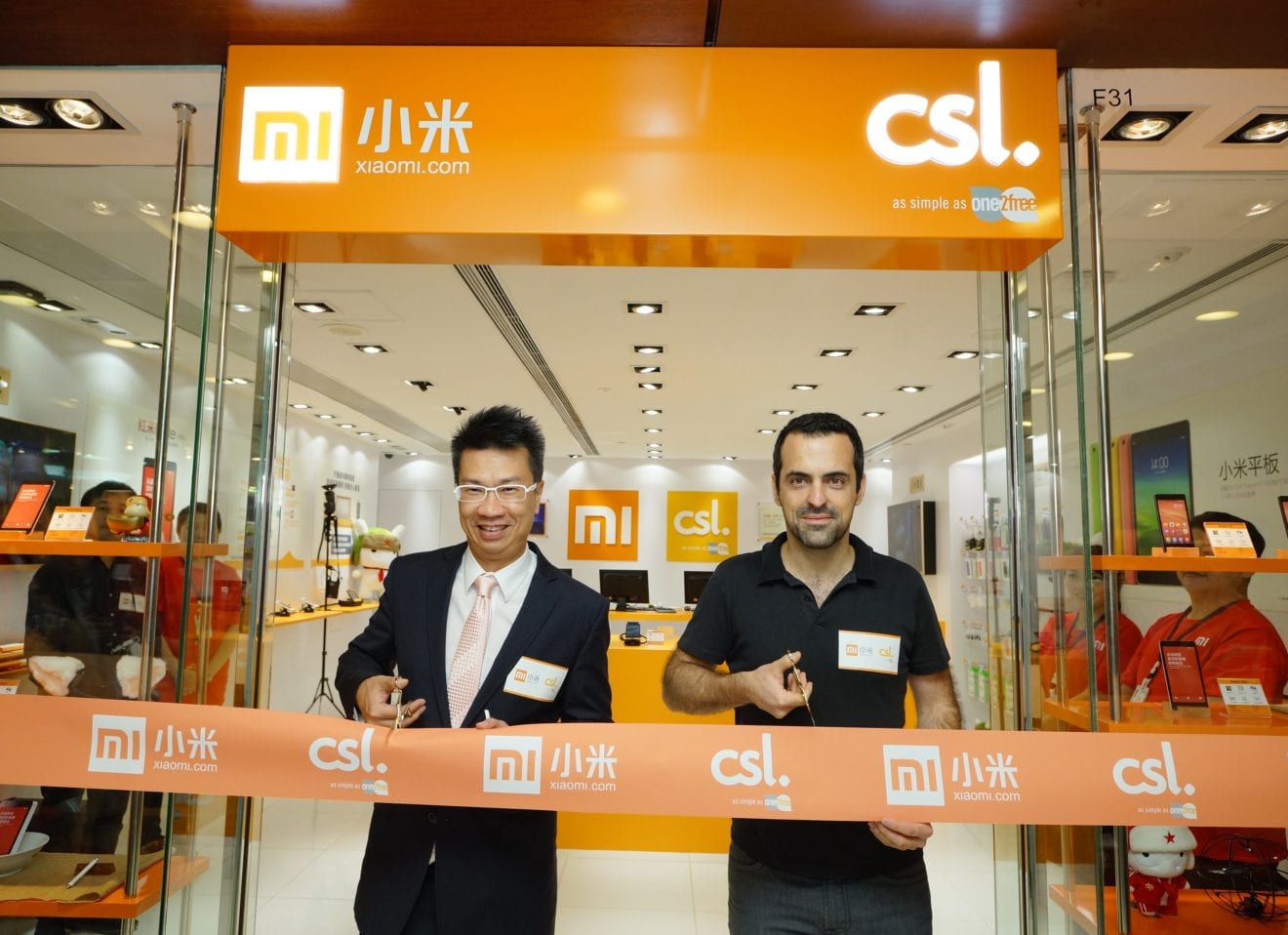
  • CSL launches inflight roaming day pass

    CSL launches inflight roaming day pass

    Hong Kong’s CSL has launched a new inflight day pass service offering a daily fixed charge for data roaming while on board a plane.

    CSL is offering the service for a promotional rate of HK$98, to be increased to HK$178 from October 1.

    The service will be available on supported aircraft of a number of major international airlines including Cathay Pacific, Air France, British Airways, Emirates and Singapore Airlines, and CSL plans to add support for additional airlines in the future.

    “Hong Kong people are frequent travelers and they want to stay connected wherever they go. To best serve our customers, we are proud to add aircraft as a new day pass destination,” commented Richard Midgett, managing director of CSL parent HKT’s wireless business.

    “Customers can even set their own preference of when to start using data and when to be reminded of their usage via the CSL app. Data roaming is made easy, worry free and economical, even in the air.”

    In-flight Wi-Fi is becoming a hot commodity internationally, with two in three APAC travelers responding to a recent Inmarat commissioned survey indicating that they feel that the service is no longer a luxury but a necessity. The survey found that 79% are willing to pay for inflight connectivity even on short leisure flights.

  • TOT wants telcos to be made to rent its pipes

    TOT wants telcos to be made to rent its pipes

    Thai state-owned operator TOT is calling on the government to use its legislative powers to force telecoms and broadcasting companies to move their overhead cables in Bangkok into TOT’s underground pipes.

    The operator has argued that the move will accelerate the government’s target of removing all overhead power and telephone cables in three provinces to 2019, compared to the 2021 currently scheduled.

    The move to remove overhead cables in Bangkok, Samut Prakan and Nonthaburi is being managed by five state agencies – the Metropolitan Electricity Authority (MEA), TOT, National Broadcast and Telecommunication Commission, Bangkok Metropolitan Administration and the Royal Thai Police.

    Under the plan, MEA will be responsible for replacing all overhead power lines with underground lines, while TOT will be responsible for providing an underground duct system and grouping all existing telecoms and broadcast cables into these ducts.

    But TOT has argued that it lacks the authority to compel operators to relocate their cables, and that only the government can make an order.

    TOT wants the operator to be legally forced to rent the company’s pipes in the Bangkok. The company currently charges telecoms companies a monthly fee of 18,000 baht ($543) per km to access this underground infrastructure.

    TOT currently owns around 2,000km of the 5,000km worth of underground pipes in the Bangkok metropolitan area, and is set to inherit a further 1,500km next month after True Corporation’s existing fixed line phone build-operate-transfer concession with the state-owned company expires.

    The report states that TOT is ready to expand its pipe capacity to cover all 5,000km if it is assigned the installation of underground cables as part of the project.

  • Huawei promos cloud alliances with operators at annual event

    Huawei promos cloud alliances with operators at annual event

    “In 1943, IBM’s Thomas Watson said the world market for computers would be about five,” said rotating CEO Guo Ping during his keynote at Huawei Connect 2017.

    That number is significant, said Guo, as he spoke of Huawei’s vision to build one of the five major world clouds it predicts will be created in the future. The concept is based on airline alliances—Ping said that his firm would build a “cloud alliance” in partnership with operators like BT, Deutsche Telekom, Telefónica and Orange.

    “Only 2-3 companies can do what we do, he said.” About 50% of people globally use Huawei networks.”

    In a later press conference, Guo reiterated a point he made during his keynote. “The biggest difference between Huawei & traditional OTT companies is that Huawei does not monetize user data,” he said. “We monetize our technology.”

    Guo also provided details on Huawei’s hybrid cloud solutions that target the needs of governments and enterprises. “Huawei Cloud builds on the company’s decades of experience in devices, networks, clouds, and other digital domains, and is better equipped to achieve synergy between devices and the cloud,” said the company in a statement.

    Zheng Yelai, president of Huawei’s Cloud Business Unit, mentioned case studies from 12 automobile companies (including Volkswagen and Mercedes-Benz), Philips, ICBC, and several Chinese government service platforms currently using Huawei Cloud and cloud services from Huawei’s partners.

    “Our people have an in-depth understanding of our customers’ business scenarios,” said Zheng. The aim is to “help enterprises go digital more smoothly, and help ensure the success of more companies who are willing to innovate,” he said.

    At the event, Huawei also announced the launch of its new Enterprise Intelligence cloud services, which the company will provide with a platform of general and scenario-specific solutions. “To prevent vendor lock-in, Huawei offers hybrid cloud solutions that enable integration with third-party public cloud platforms, including those from Amazon and Microsoft,” said Huawei in a statement.

    “Huawei has worked with its partners to build a cloud network that has global coverage, providing complete solutions that help Chinese companies go global, and that also help companies outside China enter the Chinese market,” said the firm.

    Yang Xiaoling, CDO of China Pacific Insurance Company (CPIC), also spoke on his firm’s use of Huawei technology—specifically, using OCR technology to handle health insurance claims. Customers are able to take photos of their medical documents and upload the images to CPIC’s system, which will automatically read them and create structured claims documents.

    Li Qiang, division chief from the Shenzhen Traffic Police Bureau, referred to his analysis of intelligent urban transportation as Shenzhen’s “Traffic Brain.” Li claimed a ten-fold increase in image screening efficiency by using Huawei’s AI platform. “The intelligent traffic solution jointly developed by Huawei and the Shenzhen Traffic Police Bureau was honored with the ‘2017 Innovative Road Traffic Offering’ award from the Chinese Road Traffic Safety Association,” said Huawei.

  • Australia to remove 2-GHz spectrum cap

    Australia to remove 2-GHz spectrum cap

    The Australian government has announced plans to remove the current cap on spectrum holdings in the 2-GHz band to allow all operators to bid for leftover spectrum from previous actions.

    But the government, acting on the advice of competition regulator ACCC, has elected to retain the current allocation limits in the 1800-MHz band.

    Meanwhile there will continue to be no allocation limits on holdings in the 2.3-GHz and 3.4-GHz bands, communications minister Mitch Fifield announced.

    The government plans to hold a multiband residual lots auction late this year, and has decided to hold a single auction process for all four bands rather than several smaller auctions.

    Telecoms regulator ACMA will conduct the auction on behalf of the government.

    The government has meanwhile proposed a new spectrum management reform that will replace current legislative arrangements with new legislation that seeks to streamline licensing for a simpler and more flexible framework.

    Under the proposed reforms, spectrum pricing will be reviewed to “ensure consistent and transparent arrangements to support the efficient use of spectrum and secondary markets.”

    The draft law is currently undergoing a second round of consultation before it is finalized and sent to parliament.

  • Smart upgrades LTE in Cebu region

    Smart upgrades LTE in Cebu region

    The Philippines’ Smart Communications has completed an upgrade to its LTE and 3G networks in Cebu, the nation’s second largest urban hub.

    The upgrade has increased median download speeds of Smart’s LTE service in Cebu to 17.6Mbps, compared to the operator’s nationwide average of 11Mbps, Smart said.

    By the end of the year, Smart plans to roll out LTE in more than 25 areas in the Cebu province, including some of the province’s most popular tourist areas. Smart is meanwhile introducing LTE support for customers of its Sun Cellular brand, which has a plurality of its subscriber’s in Cebu.

    This will be accompanied by network expansions elsewhere. Smart has set a target of covering 70% of the Philippines’ population with LTE by the end of the year.

    “Smart is committed to bring LTE to more areas in the Philippines and to make it available to even more Filipinos. We are encouraging our customers to check their SIMs and upgrade them so they can fully enjoy our improved network,” commented Mario Tamayo, SVP for network planning and engineering at Smart and parent company PLDT.

    “We are also partnering with device vendors to make more LTE-capable handsets, especially those utilizing the 700 MHz frequency, available for those who already have LTE SIMs but may not have an LTE device just yet.”

  • CK Hutchison hit with $5b tax bill in India

    CK Hutchison hit with $5b tax bill in India

    CK Hutchison Holdings has been hit with a 320.32 billion rupee ($5 billion) tax demand in India over the sale of its Indian mobile business to Vodafone a decade earlier.

    The demand includes a base tax claim of 79 billion rupees, as well as 164.3 billion rupees interest and a 79 billion rupee penalty, CK Hutchison said in a stock exchange filing.

    The company received an initial demand in February and a further notice earlier this month, the filing states. But CK Hutchison has received legal advice that the claim is not enforceable and is therefore expected to have limited impact on its finances.

    Indian tax authorities have been attempting to tax Vodafone over the 2007 sale for a long time, and the government even went so far as retroactively changing tax lawfollowing a Supreme Court decision ruling that the acquisition was not taxable as it involved two offshore holding companies.

    But Vodafone has long resisted paying and is currently involved in international arbitration seeking to have the demand revoked. Now authorities have opened a new front by attempting to tax the seller in the transaction.

    One of Vodafone’s arguments in resisting the claim has been that if the transaction is taxable it should be paid by the seller rather than the buyer.

    CK Hutchison said the legal advice it has received is that retroactively changing the tax law to circumvent the Supreme Court verdict is in violation of the principles of international law.

  • New Zealand expanding national fiber network

    New Zealand expanding national fiber network

    The New Zealand government plans to extend its Ultra-Fast Broadband (UFB) national fiber network to 190 more small towns.

    The government has announced plans to spend NZ$130 million ($93.4 million) to extend the network to 60,000 new households and businesses across the nation and complete the UFB deployment by 2022.

    A further NZ$130 million will be spent to expand the concurrent Rural Broadband Initiative (UFB) to bring non-fiber broadband to another 74,000 rural premises, and to extend mobile coverage to an extra 1,000km of rural highways as part of the Mobile Black Spot Fund.

    The RBI involves a combination of upgrades to existing fixed line infrastructure and fixed wireless infrastructure.

    “We started UFB in 2010 with the original goal of connecting 34 towns to world-class fibre-to-the-premises. Earlier this year we expanded it to 200 more towns and today’s announcement will bring us to 390,” New Zealand communications minister Simon Bridges commented.