Category: Telecom

Retail News Asia is committed to providing both local and global retailers with the latest Telecom & Telco news throughout the Asian market. This on a daily base.

  • Tech advancements in SEA driving demand for IoT

    Tech advancements in SEA driving demand for IoT

    The rapid technological developments in Southeast Asia have led to great demands for Internet of Things (IoT) technologies, according to a recent survey from Asia IoT Business Platform.

    The survey indicates that more than 70% of local enterprises and organizations are currently in the process of exploring or finding possible IoT solutions to be deployed or implemented. However, only 7% of them report benefitting from any IoT implementation.

    Enterprises and organizations cite cost, legacy systems, and complexity as the top three concerns in adopting IoT.

    Following the great interest in IoT technologies but low benefits from implementation, Irza Suprapto, director at Asia IoT Business Platform, noted that it is now important to understand the challenges that enterprises face in trying to deploy IoT in their businesses.

    “The challenges that enterprises face in implementing IoT will determine how they view the benefits of IoT implementation and in turn, affects the demand for IoT technologies. Therefore, this year, we are inviting IT leaders of local enterprises and organizations to share more about their IoT projects or their digital transformation vision, as well as the challenges that they face in deploying IoT. This is to ensure that their concerns and challenges will be addressed and IoT adoption rates in the region will continue to grow, instead of being stunted,” Irza added.

    The Asia IoT Business Platform series will be returning to Southeast Asia for the fourth consecutive year. The programs, which are organized by Industry Platform Pte. Ltd, will take place in major cities across the region, including in Bangkok, Kuala Lumpur, Manila, and Jakarta, in July and August.

    The programs will continue to facilitate the digital transformation of enterprises and organizations in Southeast Asia. It will also have an additional focus on addressing challenges and issues that organizations face in adopting and implementing IoT technologies.

    The prestigious programs will involve government officials, senior business leaders in the IoT and Machine-to-Machine (M2M) sectors, as well as local enterprises that are looking to explore business growth and improved business efficiency with IoT.

    “We are excited to return to major cities in ASEAN this year, after many successful editions in the past couple of years. Since 2014, we have seen business partnerships among stakeholders being forged to drive the IoT adoption growth in the region. IoT developments are also apparent, especially in the different smart city initiatives, and the different IoT projects implemented by local enterprises. We are glad to witness these promising developments,” said Suprapto.

    The Asia IoT Business Platform series across ASEAN will feature a line-up of esteemed speakers comprising IT leaders from local enterprises such as Sampoerna Strategic (Indonesia), Garuda Indonesia, Bank of Thailand , Charoen Pokphand (Thailand), Petronas (Malaysia), Tenaga Nasional Berhad (Malaysia), Philippine Ports Authority, Metro Cebu Development and Coordinating Board


  • Nokia to launch world’s fastest router

    Nokia to launch world’s fastest router

    Nokia has revealed plans to launch what it says will be the world’s most powerful network processor chipset, routing platform and router as part of its new IP routing portfolio.

    The company has unveiled new products based on its high-capacity FP4 silicon, featuring the first 2.4Tbps network processor, up to six times more powerful than processors currently available.

    A service router capable of supporting a 144Tbps configuration in a single shelf and an extensible petabit-class routing system scaling to 576Tbps in a single system using the new chipset will be launched in the fourth quarter.

    Nokia said these new platforms will be the industry’s first capable of delivering terabit IP flows, which will be a tenfold improvement over the existing 100Gbps links used for the internet’s backbone.

    The new routing platforms will have embedded packet intelligence and control technology that can be combined with Nokia’s Deepfield IP network analytics solution to minimize security threats such as DDoS attacks while improving network efficiency and 192.168.0.1 router management.

    “Nokia has managed to combine the raw horsepower required to run historic amounts of traffic between data centers with intelligent, secure and adaptable capabilities necessary for a cloud-connected environment,” ACG Research CEO and principal analyst Ray Mota commented.

    “The company has seemingly struck the right balance with silicon and systems innovations that address investment protection and now has the fastest router on the market.”

  • Yahoo signs off, completes sale to Verizon

    Yahoo signs off, completes sale to Verizon

    Yahoo’s chief executive Marissa Mayer resigned as Verizon finalized the $4.48 billion deal. Internet pioneer Yahoo ended its two-decade run as an independent company on Tuesday, completing the sale of its core online assets to telecom giant Verizon.

    Yahoo’s chief executive Marissa Mayer resigned as expected, as Verizon finalized the $4.48 billion deal integrating the Yahoo internet operations into a new unit called Oath, which includes another former sector leader, AOL.

    Tim Armstrong, former CEO of AOL, now holds the same title at Oath, a division in Verizon’s Media and Telematics organization.

    “We’re building the future of brands using powerful technology, trusted content and differentiated data,” Armstrong said in a statement.

    “We have dominating consumer brands in news, sports, finance, tech, and entertainment and lifestyle coupled with our market leading advertising technology platforms. Now that the deal is closed, we are excited to set our focus on being the best company for consumer media, and the best partner to our advertising, content and publisher partners.”

    Verizon has made no indication of how it will use the Yahoo brand — which is used by over a billion people worldwide — but indicated it is keeping the names Yahoo Sports, Yahoo Finance, Yahoo Mail and more.

    Some reports have said more than 1,000 jobs would be eliminated as a result of the merger, but statements from Yahoo and Verizon on Tuesday made no mention of any cuts.

    Yahoo’s sale caps a long decline from when it had a peak market value of some $125 billion in 2000.

    The original Yahoo group now becomes a holding company with stakes in Chinese internet giant Alibaba and Yahoo Japan.

    On Friday, it will change its name to Altaba Inc. and on Monday begin trading under the ticker symbol “AABA.”

    Mayer, who was unable to stem the decline of the iconic Silicon Valley company, is getting a departure package worth an estimated $186 million, according to regulatory filings.

  • Palo Alto sets up VC fund for security applications

    Palo Alto sets up VC fund for security applications

    Palo Alto Networks is forming a $20-million security venture fund to provide early stage investments to fuel development of security applications for the Palo Alto Networks Next-Generation Security Platform.

    The fund will be aimed at seed-, early- and growth-stage security companies with a cloud-based application approach.

    These companies can accelerate their routes to market for their respective technology by developing cloud-based applications built upon the Palo Alto Networks platform and the new Palo Alto Networks Application Framework, easily engaging the tens of thousands of Palo Alto Networks customer deployments.

    The fund expects to collaborate with Greylock Partners and Sequoia Capital to identify and evaluate innovative security applications for potential co-investment.

    By providing capital, the fund aims to enable entrepreneurs and security vendors to focus on developing high-value functionality for customers, instead of developing the infrastructure and data stores necessary to effectively deliver their applications and establish a foothold in the market.

    The investments in entrepreneurial security companies are designed to accelerate the development of new security applications for the Palo Alto Networks platform.

    Such applications will help customer organizations more easily access, evaluate, and adopt new advanced security capabilities and activate cloud-delivered security applications from different providers as their security needs change.

    “This new fund represents an essential part of our mission to help organizations prevent cyber breaches by inspiring and accelerating a groundswell of security innovation in a model that can be easily accessed and deployed by customer organizations,” Palo Alto Networks.SVP for business and corporate development Chad Kinzelberg said.

  • AIS upgrades to Netcracker’s revenue management solution

    AIS upgrades to Netcracker’s revenue management solution

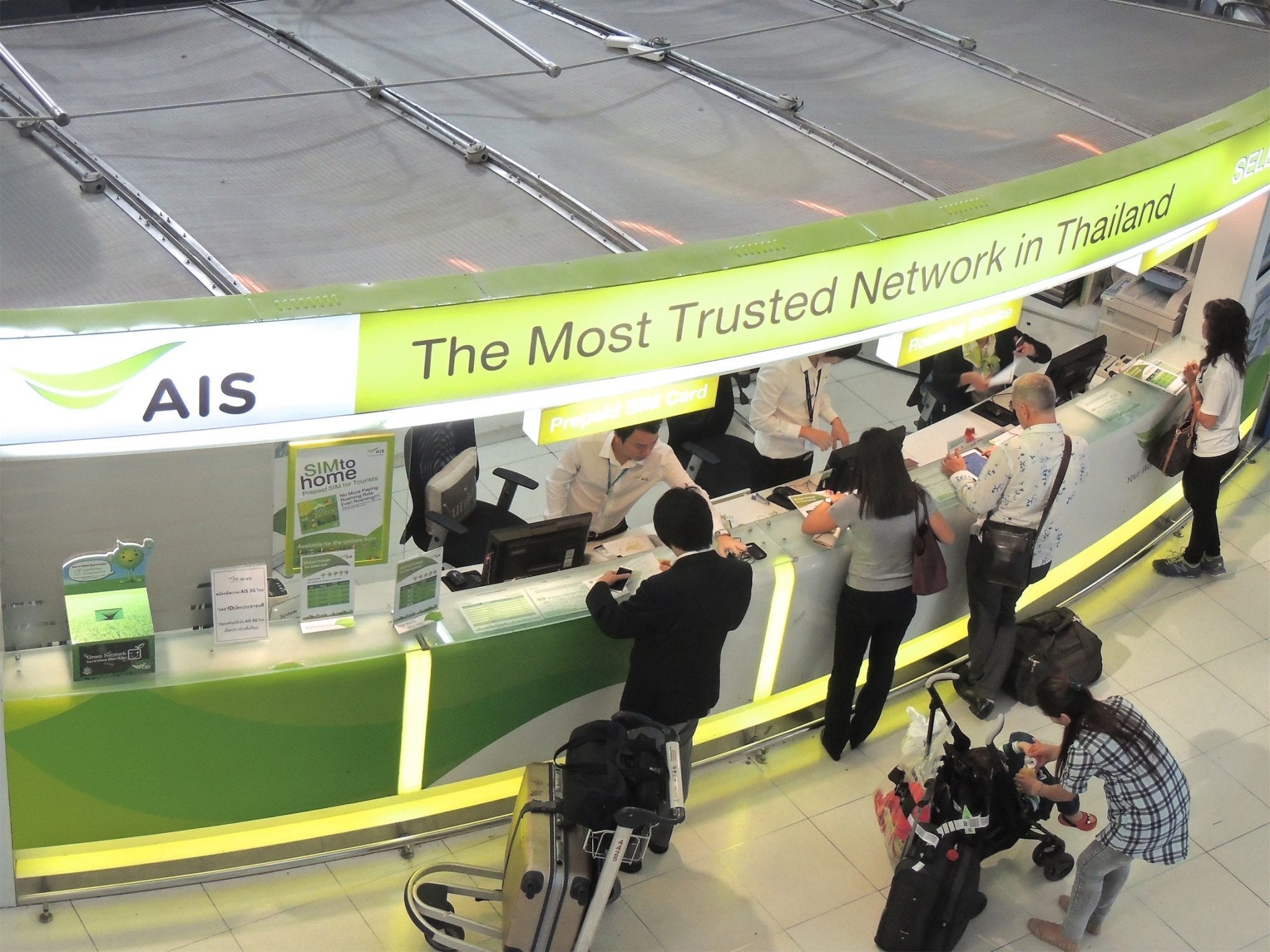
    Advanced Info Service (AIS) in Thailand is upgrading to Netcracker 12 to deliver a better digital customer experience and meet myriad internal business objectives.

    As part of the engagement, AIS has also extended its use of Netcracker’s Professional Services in order to ensure the long-term success of the platform.

    AIS is one of Thailand’s providers of mobile, fixed broadband and innovative digital services to approximately 41 million subscribers, advancing together with the evolution of the communications market to consistently meet the changing demands of the digital world.

    As Thailand’s needs for next-generation communications services increase, AIS’ use of Netcracker Revenue Management solution will enable it to deliver the best possible customer experience without disruption. Netcracker 12 will future-proof AIS’ systems, supporting its operations in the long term as digital and other complex services become more prevalent.

    Netcracker’s Revenue Management solution will also help AIS’ marketing and IT teams meet their sophisticated business and technical requirements, enabling more efficient and agile internal operations.

  • Airtel beats Jio by active customer adds in March

    Airtel beats Jio by active customer adds in March

    India’s largest operator Bharti Airtel beat out disruptive new entrant Reliance Jio Infocomm in April in terms of active subscriber additions for the first time since Jio launched services last September.

    Analysis from Goldman Sachs finding that Airtel added 2.6 million active subscribers for the month, according to India’s voice location register. This compares to just 400,000 for Jio.

    Data subscriber additions are also starting to increase for Airtel now that Jio is starting to charge for data, and the analysts believe that Jio could continue to face challenges with subscriber growth in the future – Jio’s active VLR additions have now been decelerating for four straight months.

    Jio’s active subscribers as a percentage of total subscribers have also been in decline, falling to only 71% in April, compared to nearly 98% for the market’s top three operators Airtel,  Voafone India and Idea Cellular.

    But the report cites sources close to Jio as stating that the company doesn’t give much significance to VLR figures and stating that its total base of paid customers actually increased by around 8 million during April to over 80 million.

  • Globe Telecom picks Canvas for automation

    Globe Telecom picks Canvas for automation

    Globe Telecom in the Philippines has turned to Canvas to become the platform that integrates service functionalities and help Globe automate its office processes.

    This move is expected to reduce costs, increase operational efficiency, and further enhance the operator’s commitment to environmental protection and conservation.

    More importantly, this will enable Globe to take on a bigger role in providing digital services such as billing, logistics and customer service as well as opening more avenues for access to the Internet of Things (IoT) for its customers, the telco said.

    In the near-term, as it streamlines internal processes, Globe expects to save more than 1.5 million administrative hours company-wide each year by digitizing various processes such as customer relationship management, billing and other administrative services.

    As part of their partnership agreement, Globe also intends to make Canvas more widely available to its business customer base, building on the early high adoption among some of the Philippines leading companies. Globe’s business customers are already using Canvas to realize benefits for their own customers such as an increased level of customer care and reduced costs for services.

    “As an enterprise, the digital transformation we have undertaken is part of our continuing commitment to adopting efficient and viable IT solutions that will improve the experience of our employees and customers,” said Ernest Cu, president and CEO of Globe.

    “This strategic partnership with Canvas allows us to offer our millions of business customers in the Philippines a chance at a transformation of their own with similar productivity gains and green benefits.”

  • Equinix expands collaboration with Alibaba Cloud

    Equinix expands collaboration with Alibaba Cloud

    Equinix has expanded its partnership with Alibaba Cloud  to cover interconnection in Hong Kong, Silicon Valley, Sydney and Washington DC.

    Equinix ptovide direct, scalable access to the Alibaba Cloud via its Equinix Cloud Exchange in its international business exchange (IBX) data centers in the four markets.

    Alibaba Cloud and Equinix first entered a partnership in 2015, initially to provide already provide access to the Alibaba Cloud from the Equinix Singapore IBX.

    The Equinix Cloud Exchange offers direct and private access to multiple cloud service providers. The service launched in Hong Kong in 2014.

    The US International Trade Administration predicts that the Chinese cloud computing market will grow at a 40% CAGR though to 2020, when it will reach US$20 billion.

    “The global reach of Equinix Cloud Exchange makes it simple for Alibaba Cloud to access new markets, Alibaba Cloud deputy GM Yeming Wang said. “We are pleased to provide greater value and bring our services closer to enterprises by leveraging Equinix’s powerful, on-demand cloud connectivity, and in particular to provide greater connectivity to the Chinese market.”

    Equinix VP of global technology partners and alliances Greg Adgate added that “Alibaba Cloud represents a significant partnership for Equinix as we continue to empower businesses around the globe to build secure, private clouds, without compromising network and application performance.”

  • Over 1m new mobile internet subs to be added daily

    Over 1m new mobile internet subs to be added daily

    The telecoms industry is on track to attract more than 1 million new mobile internet subscribers per day between now and 2022, according to the latest Ericsson Mobility Report.

    The report predicts that there will be 2.6 billion new mobile broadband subscribers added through 2022, with LTE set to become the dominant access technology in 2018, making it the fastest growing mobile technology in history.

    Ericsson noted that it has taken just five years for LTE to cover 2.5 billion people, compared to eight years for 3G. There were 250 million new LTE subscriptions added in the first quarter of 2017 alone.

    Total traffic over mobile networks meanwhile grew 70% over the 12 months ending in Q1 – the fastest year-on-year mobile data growth globally since 2013 – and is set to increase to eight times its current level by 2022, the report predicts. Recent growth has been driven by explosive increases in consumption in India.

    Global growth in demand for mobile data will also drive 5G deployment. The report predicts that there will be more than 500 million 5G subscriptions globally by 2022, not including IoT connections. By this time, 5G is expected to cover around 15% of the world’s population.

  • Spark taps Nokia to prepare network for 5G

    Spark taps Nokia to prepare network for 5G

    New Zealand’s Spark has contracted Nokia to upgrade the operator’s core infrastructure in preparation of 5G, ultra-fast broadband and the IoT.

    Spark will expand the capacity of its wireless network, which is primarily based on a Nokia IP/MPLS network, with a new router with terabit capacity.

    The three-year contract will see Nokia providing advanced IP and optical equipment and software for the Spark network. The agreement follows Spark’s recent launch of 200Gbps per wavelength fiber link using Nokia optical transport network technology.

    Spark general manager of partnering, procurement and vendor management Rajesh Singhh said the operator is committed to ensuring New Zealand is one of the first countries globally to be ready to adopt 5G. He said upgrading to 5G will help enable the government’s goal of improving broadband services in rural areas.

    “This strategic partnership is a key step for us to realize our vision of a data-driven future for New Zealand. Nokia is helping us to achieve worldwide leadership in preparing for 5G,” he said.

    “It will allow us to offer our customers the most advanced mobile and fixed broadband services anywhere, efficiently and securely.”

    “We are very pleased to continue our strategic partnership with Spark, which is committed to keeping New Zealanders at the cutting edge of technology,” added Kent Wong, head of Nokia’s Asia-Pacific IP business.

    “Spark’s investment will safely accommodate future growth as they benefit from Nokia’s global reach, expertise and agility. We are excited to help them be among the first customers to begin the move to 5G.”

  • SoftBank to trial 5G in Tokyo with ZTE

    SoftBank to trial 5G in Tokyo with ZTE

    Japan’s SoftBank and ZTE have teamed up to trial 5G over 4.5-GHz spectrum in metropolitan areas of Tokyo.

    SoftBank and ZTE will work to verify the performance of ZTE 5G end-to-end network equipment in sub 6-GHz spectrum under real-world conditions in a major, densely populated city.

    The two companies have been conducting joint R&D on foundational 5G technologies including massive MIMO (multiple-input multiple-output), and plan to further explore using the technology for 5G.

    “We have a long term partnership with SoftBank in key 5G technologies such as massive MIMO, and we are pleased to expand that work to accelerate 5G new radio readiness,” ZTE chief scientist Dr Xiang Jiying commented.

    “As a global leading provider of M-ICT mobile technologies, ZTE is making substantial investments in 5G and cooperating with industry partners to promote the maturity of the 5G ecosystem. We are confident that ZTE will be one of the first vendors to deliver end-to-end 5G solutions for our customers.”

  • Telstra acquires UK’s Company85

    Telstra acquires UK’s Company85

    Telstra has acquired Company85, a UK-based technology services business and provider of data center, workspace, cloud, security and network services.

    Christopher Smith, executive director of Telstra’s business technology services, said the acquisition was aligned to Telstra’s strategy to grow its technology services business internationally and would significantly enhance Telstra’s service offering for UK and European based business and government customers.

    “Company85’s offering is strongly aligned to the existing suite of technology consulting services we offer our Australian customers, and is consistent with the strategic investments we have made in Australia. Importantly, it aligns with our strategy to grow our services business in regions that are key hubs for multinational corporations,” Smith said. “We see the UK as a key market for our growing technology services business and a strong platform to expand into Europe.”

    Smith also said Company85 was highly regarded in the UK for its consulting and technical expertise, including the market-leading approach it has developed for standardizing and automating data center migrations.

    “Company85’s broad set of consulting capabilities will help us to differentiate our offerings in Europe. We will be able to engage in IT transformation conversations with prospective customers early in the proposal stage, which we believe will help to strengthen our position and create demand for our network services in the region,” Smith said.

    Company85 CEO Adrian Spink said the combination of Telstra’s world class network and global reach, with Company85’s technical expertise and strong relationships with CIOS and Chief Information Security Officers at leading organizations, would create exciting growth opportunities.

    “Being part of Telstra we see a tremendous opportunity to reach new customers and accelerate our international expansion,” Spink said.

  • BT unleash newest cloud service

    BT unleash newest cloud service

    BT has announced the launch of “BT Connect Intelligence InfoVista-as-a-Service,” a new application performance management solution delivered from the cloud.

    The company said the new solution adds a scalable “as-a-service” flexible pricing model to BT’s applications performance management portfolio, BT Connect Intelligence.

    It delivers InfoVista’s Ipanema technology via BT’s cloud infrastructure, integrating all the capabilities organizations need to orchestrate the performance of business applications running across their network, BT said.

    BT Connect Intelligence InfoVista-as-a-Service gives enterprises greater flexibility and cost control as they manage the experience of users accessing business-critical applications across the corporate network, regardless of how they connect and how much bandwidth they use. It also gives enterprises a more predictable view of costs as its user-based pricing is not affected by the growth of network bandwidth.

    The new solution is available globally to both BT’s existing network customers and organizations using other network providers.

    The software underpinning the solution is delivered from BT’s cloud infrastructure and its management is now possible over the Internet.

  • Maxis’ continuous plans to enhance network in Sarawak

    Maxis’ continuous plans to enhance network in Sarawak

    Maxis Bhd’s (Maxis) network expansion plans in Sarawak is an ongoing development, as it currently covers 89 per cent of the population with its 4G network.

    According to head of Sarawak region Alexius Bong, at this point in time, Maxis has no intentions to stop and will continue to expand “even to the smallest towns.”

    “Because you can’t hide the fact that people are consuming more data and you need that network to support (demand), it is definitely a focus in our plan to do that,” he revealed in an exclusive interview with The Borneo Post earlier this week.

    On plans to open more retail outlets in Sarawak, Bong stressed that Maxis is very focused on retail expansion and distribution footprint. It currently has nine Maxis centres and 15 dealer-operated retail stores in the state.

    “By this year end, we intend to add six more retail stores plus another 20 dealer-operated stores at the same time to increase our distribution footprint, it goes in tandem with our network,” he added.

    These plans will occur throughout Sarawak, with the focus now on secondary towns. Maxis also intends for customers to have the same experience whether they are visiting Maxis centres or dealer-operated outlets.

    Continuous network expansion will be one of the key areas Maxis focuses on in Sarawak this year.

    “We want to continue expanding our network, we have such a great product that syncs together with this,” Bong added.

    “At any one time, the focus of the network is not just the network itself – it ties back to the consumer.

    “With that, we want to ensure that whether it is prepaid, postpaid, or wireless broadband (WBB), we will continue to enhance our product proposition especially on internet offerings.

    “Of course, we will continue to expand our distribution and retail because market presence is significant in our business and is very important.”

    At the same time, Maxis would also like to relook at the small and medium enterprises (SMEs) in Malaysia and, how they can help SMEs digitalise the way they work.

    Head of prepaid, Navin Manian, highlighted that Maxis is also trying to give a much better experience by going purely digital for its customers.

    “It’s not just all product-centric, we also look into the customer experience,” Navin said.

    “So it’s a big drive now, for both postpaid and prepaid segments to move our customers from the old UMB usage behaviour to now the app and we have been doing very good in that space.”

    On the expected takeup rate for the prepaid segment in East Malaysia, Navin revealed that Maxis has been doing really well in the region over the past few years from a series of products that they have been launching.

    “We are very confident that this will continue a good growth trajectory for us here,” he added.

  • Vietnam, Indonesia have much faster internet speed than India

    Vietnam, Indonesia have much faster internet speed than India

    Ranked 89 globally, India’s average internet connection speed of 6.5 Mbps is slower than Vietnam and Indonesia, which are much faster, a report said on Friday.

    While Vietnam, ranked 58, had an average internet speed of 9.5 Mbps, Indonesia at rank 77 provided a speed of 7.2 Mbps, Global leader in content delivery network services Akamai Technologies’ “The State of the Internet Q1 2017 Connectivity” found.

    The report also said that India witnessed a 4 Mbps broadband adoption of 42 per cent in the first quarter of 2017 with a year-over-year change of 81 per cent.

    “Increases in connection speeds and broadband penetration have helped enable the internet to support levels of traffic that even just a few years ago would have been unimaginable,” David Belson, editor of the report, said in a statement.

    “One need only look to January’s US Presidential Inauguration, which broke traffic records for live coverage of a single news event delivered by Akamai, largely thanks to the combination of more viewers watching at increasingly higher levels of video quality,” Belson added.

    On a global level, the average connection speed was 7.2 Mbps – an increase of 15 per cent year-over-year – and average peak connection speed increased 28 per cent year-over-year to 44.6 Mbps in the first quarter of 2017.

    “While South Korea had the highest average connection speed globally at 28.6 Mbps in the first quarter, Singapore had the highest peak connection speed at 184.5 Mbps in the first quarter,” the report noted.

    The average mobile connection speeds ranged from a high of 26 Mbps in Britain to a low of 2.8 Mbps in Venezuela. Germany had the highest peak mobile connection speed at 200 Mbps in the first quarter.