Category: Telecom

Retail News Asia is committed to providing both local and global retailers with the latest Telecom & Telco news throughout the Asian market. This on a daily base.

  • Digital Realty expands to Japan

    Digital Realty expands to Japan

    Digital Realty has inaugurated Digital Osaka 1, its first data center in Japan, a 93,000 square foot facility providing 7.6 megawatts of IT capacity.

    Digital Realty also announced the acquisition of an adjacent land parcel for the development of a Digital Osaka 2 data center. Upon completion, the Osaka connected campus will support up to 27 megawatts of additional IT capacity.

    “Digital Osaka 1 was fully leased prior to the official opening, a reflection of the strong demand in the Japanese market for Digital Realty’s comprehensive data center solutions,” Digital Realty managing director for Asia Pacific Edward Higase said.

    “The development of our Osaka connected campus will enable us to further expand our world-class data center platform and support our customers’ rapidly growing demand here and around the world.”

    Japan has become one of the most highly sought-after markets for cloud data center locations, according to a Canalys report.

    Strict data sovereignty laws and high customer demand are some of the factors pushing cloud service providers to seek data centers in Japan, where personal data is increasingly required to be stored in facilities that are physically located within the country.

    “With the addition of Osaka to our global connected campus network, customers will soon have new opportunities to connect, extend their reach and find new business opportunities across our global data center platform,” Digital Realty CEO A. William Stein added.

  • China Telecom aims to make Shanghai a gigabit city

    China Telecom aims to make Shanghai a gigabit city

    China Telecom’s Shanghai branch Shanghai Telecom plans to deploy the first commercial FTTH network in China using 10G PON technologies, and aims to provide full 1Gbps fiber coverage across Shanghai over the next three years.

    Shanghai Telecom has contracted Huawei to help with the rollout, which marks an important step towards making Shanghai China’s first gigabit city, the vendor said.

    Shanghai Telecom was providing 1Gbps access for 269 communities in the city, and through the deployment aims to increase the average access rate for its network from 50Mbps to 280Mbps by the end of 2018.

    The operator is using its high-speed network to offer a range of home broadband services, such as multi-channel 4K video streaming, video calls and conferencing an video-based smart home services.

    Under the latest rollout, the company is adopting Huawei optical line terminals (OLT) and optical network terminals (ONT) capable of providing gigabit convergence, 4K video streaming to 16,000 concurrent households over a single subrack, 8K video streaming, VR applications and smart home services.

    Separately, Nokia has announced it has secured a contract to deploy millions of ONT home gateways in 29 provinces across China for China Mobile.

    China Mobile plans to deploy home gateway units based on Nokia’s solution to over 30 million users this year, and use established FTTH networks to extend internet coverage in the home and enable IoT communications between devices and sensors.

    “China Mobile is progressing fast as a converged telecommunications operator — with more than 31 million FTTH subscribers — and has proven it can successfully leverage its extensive fiber access network to deliver ultra-broadband applications such as 4K TV services and Gigabit access to customers across various provinces.,” IDATE principal analyst Roland Montagne commented.

    “With the addition of intelligent home gateway technology, China Mobile will be able to further differentiate its services, providing consumers with enhanced internet coverage in the home and a more seamless experience for connecting various devices and sensors.”

  • NEC opens big data analytics center in India

    NEC opens big data analytics center in India

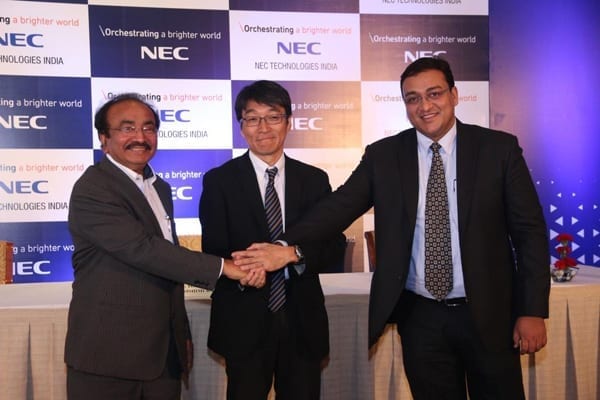
    Japanese technology major NEC Corporation plans to strengthen its big data analysis presence globally as well as in India.

    NEC Corporation and NEC Technologies India Private Limited (NTI) have announced the launch of a Center of Excellence for Analytics Platform and Solutions (COE-APS) for promoting solutions and services of NEC’s Big Data & Analytics Platform, Data Platform for Hadoop (DPH).

    The COE-APS will simplify digital transformation and act as a one stop shop for both customers and partners in the telecom, retail, banking, financial services, insurance and manufacturing sectors, as well as government organizations. The COE-APS will initially focus on markets that include Japan, India, Singapore, Philippines and Hong Kong, then gradually expand services throughout APAC and other regions.

    With the global big data and analytics market expected to reach $210 billion by 2020, NEC plans to organize a team of 100 professionals within the first few years, to support these operations.

    Hadoop alone is expected to reach US$50.2 billion by 2020. With the industry already facing a shortage in talent, specifically in Hadoop and analytics areas, the establishment of the COE-APS will help NEC to leverage India’s strong talent base.

    In recent years, the exponential growth in data processing is straining the capabilities of conventional databases and data warehouse solutions. With the advent of big data & analytics solutions, data is comprehensively and reliably analysed, thereby enabling customers to make well-informed decisions at the right time.

    In addition, the COE-APS will leverage the computational power and scalability of NEC’s specialized hardware for big data & analytics in order to flexibly handle the ever increasing demand for storage and computation by Hadoop.

    “The key to success for organizations today is to make fast and informed decisions by extracting insights out of the huge volumes of data that are available to them. The new Center of Excellence is an important step towards utilizing big data analytics and NEC’s Data Platform for Hadoop to provide benefits for government bodies and enterprises in India and across the world,” NEC SVP  Tomoyasu Nishimura said.

    “Going forward, we aim to continue driving digital transformation for industries of all sizes and markets.”

  • NTT may sell African operations

    NTT may sell African operations

    Japan’s NTT Corporation, parent company of NTT Communications, is reportedly considering the sale of its African operations and could seek around $800 million for the assets.

    NTT is evaluating a sale of the African operations it acquired through the takeover of Dimension Data in 2010, three people familiar with the matter.

    According to the sources one potential outcome of the process is an acquisition of NTT’s Johannesburg-based internet solutions business, a Dimension Data subsidiary, by MTN. The African mobile group is planning to expand into the enterprise internet services segment for further growth, and could use the acquisition to facilitate this expansion.

    Dimension Data’s management are also considering an offer to buy back the company and re-list it publicly, the sources added. NTT acquired Johannesburg-based Dimension Data for around $2.7 billion seven years ago.

    But in 2015 NTT put Dimension Data on notice over its poor performance after years of failing to generate a profit, indicating it may seek to divest the acquisition.

    A sale at this stage is far from guaranteed. The report states that no decision has yet been made on a sale, cites NTT’s MEA CEO as denying that NTT is looking to sell the business and adds that representatives from the Tokyo headquarters refrained from commenting.

  • A Chinese unicorn backed by Google ready to take on the Amazon Alexa

    A Chinese unicorn backed by Google ready to take on the Amazon Alexa

    China’s Google-backed artificial intelligence (AI) start-up, Mobvoi, could soon take on the world’s leading smart voice assistant technologies, according to the firm’s founder and CEO. Speaking at the Consumer Electronics Show in Shanghai, Mobvoi’s Li Zhifei told that the firm could “absolutely” compete with the likes of Amazon in the digital voice assistant market space.

    “We are just like Amazon‘s Echo … We are making our own device and putting the technology into this device but gradually we are also going to open this AI service into third parties so that we can empower more devices,” Li Zhifei told on Thursday.

    In Western markets, Google Assistant, Amazon Alexa, Apple’s Siri, and Microsoft’s Cortana are the dominant voice assistants. Amazon has continued to push Alexa across numerous products, while Google has rolled out Assistant across Android devices and its own Google Home device. Even Apple came out with its own smart speaker called HomePod this week.

    Though Mobvoi’s CEO acknowledged his signature chatbot device still has long way to go in order to improve its sophistication and compete on a global scale, he stressed the company was making a “huge amount of progress” in its development.

    The Beijing-based start-up was founded by a group of former Google research scientists five years ago and gained prominence after launching its flagship smartwatch, Ticwatch, in June 2015. The watch’s success led to a direct investment from Google and by May 2017, Mobvoi unveiled Tichome, its Chinese language chatbot designed to facilitate human-machine interaction.

    “In the last few years we have made a huge amount of progress in speaker recognition but we haven’t made much progress in natural language understanding, which makes the device not that smart (yet),” he added.

  • Korea moves towards scrapping basic mobile fees

    Korea moves towards scrapping basic mobile fees

    The South Korean government is increasing pressure to scrap monthly basic mobile service charges to reduce phone bills for customers.

    A presidential advisory committee has called on the Ministry of Science, ICT and Future Planning (MSIP) to draw up a plan for fulfilling these objectives.

    The monthly basic charge is currently 11,000 won ($10). These fees have historically been key drivers for telecoms industry profitability.

    A proposed abolition of basic monthly fees has been on the agenda for years, but the mobile sector has been opposed to the proposal, arguing that it could wipe out their profitability.

    The report states an unnamed industry official as stating that there is currently no appropriate alternative to the basic fees, and asserting that a better solution would be increasing the benefits offered to individual groups of customers.

    The hard-line stance marks an apparent reversal of the committee’s recent position that it is important that the interests of both the industry and customers are taken into account when evaluating reforms to regulations covering mobile price structures.

  • Alibaba to open data center in Indonesia amid tighter controls on local storage

    Alibaba to open data center in Indonesia amid tighter controls on local storage

    Alibaba Cloud, the cloud computing arm of Alibaba Group, announced today that it plans to establish a new data center in Jakarta, Indonesia. It’s scheduled to open before the end of Q1 next year.

    “Alibaba Cloud will significantly increase its computing resources in Asia, allowing greater support for small and medium enterprises,” the company said in a statement.

    It’s also opening a new center in India and recently announced similar plans for Malaysia.

    Alibaba Cloud operates globally. Other Asian countries like China, Japan, and Singapore already have similar facilities.

    Demand for local storage
    In Indonesia, international giants like Alibaba Cloud are answering the growing demand for reliable, scalable data storage.

    The entire industry is experiencing a boom. NTT Indonesia, a subsidiary of Japanese NTT Data Corporation, told trade publication Data Center Dynamics that it’s seeing “significant growth” since 2014 on the back of developments such as e-commerce and more frequent internet use.

    Amazon Web Services is popular with Indonesian companies, even though the firm does not operate data centers in the archipelago.

    But a 2012 government regulation (PDF) has recently been tightened – especially in the fintech sector. Indonesia’s Financial Services Authority at the end of last year introduced its own sub-regulation that says Indonesian’s financial data must not be stored outside the country without prior approval. This could encourage companies and startups to consider working with Indonesia-based servers.

    We’ve reached out to Alibaba Cloud to learn more about the location of the Indonesia-based center and when it will start operating.

  • China launches consultation on 5G spectrum

    China launches consultation on 5G spectrum

    China’s Ministry of Industry and Information Technology (MIIT) is launching a consultation regarding the planning and use of millimeter wave (mmWave) spectrum for the development of 5G networks.

    The MIIT is seeking industry advise on the planning and use of the 24.75-27.5GHz, 37-42.5GHz and other millimeter-wave bands, which “will be key spectrum for 5G systems”, the regulator said in a notice posted on Thursday.

    The public consultation is intended to collect feedback from the industry on such aspects as suggestions regarding the deployment status of the proposed frequency bands, future planning on the use of these bands for 5G system; the key technical problems (including RF devices, chips, test and measurement, etc.) for the deployment of these frequency bands, as well as feasible solutions and a spectrum roadmap.

    It also aims to identify any compatibility and co-existence issues between 5G networks on these bands and other wireless systems in adjacent bands.

    The consultation will close on August 7.

    Earlier the MIIT also launched a public consultation on the use of the 3300-3600MHz and 4800-5000MHz bands for 5G. The consultation released on Tuesday and to be closed on July 7, hints that China will allocate 3300-3600MHz and 4800-5000MHz spectrum for the deployment of 5G.

    While the MIIT has not yet announced the exact timeline for the release of 5G spectrum, the country’s three mobile operators China Mobile, China Unicom and China Telecom have announced plans for 5G trials, in preparation of a commercial launch in 2020.

    China Mobile, for instance, announced at Mobile World Congress in February that the operator will launch large-scale pre-commercial 5G trials in China in 2019.

  • 3 HK, GASH Point team on gaming services

    3 HK, GASH Point team on gaming services

    3 Hong Kong, the mobile division of Hutchison Telecommunications Hong Kong (HTHKH), has signed an agreement with GASH Point, an Asian digital entertainment payment platform, in its latest push to tap the growing gaming market.

    As part of the agreement, the pair will launch co-branded game points cards, ranging between HK$10 ($1.28) and HK$1,500. Users can use the cards to access 3,000 mobile and PC games, as well as digital content. Gamers could also be offered privileges such as special edition gaming equipment.

    The operator said customers can buy GASH game points and receive bonus game points amounting to not less than 5% of a purchase via 3 Hong Kong’s direct carrier billing service. Such transactions will be charged directly to a 3 Hong Kong customer’s mobile bill, thereby providing total peace of mind when making a purchase.

    Gamers holding a GASH Point account can access digital entertainment content via the Gash app. Such items include games such as Clash of Kings, MonsterStrike and the Xifeizuan Palace Game. The app also allows access to Japanese digital content via the DMM.com audio-visual gaming platform and the DLsite.com online shop dedicated to otaku, Japan’s anime and manga fandom scene.

    Kenny Koo, 3 Hong Kong’s director of roaming and service development, said the co-branded cards are expected to be introduced in July at the earliest.

    Koo said 3 Hong Kong is the first operator in the city to seal such a deal with Gash, and the company expects the collaboration with GASH Point will help boost mobile data usage and consumption of value added services.

    The collaboration with GASH Point is the company’s latest effort to build an integrated gaming platform for gamers. In May, 3 HK and Razer, a lifestyle brand for gamers, formed a strategic partnership to collaborate on a number of areas including co-branding, mobile devices and plans, and virtual currency distribution, as well as open RazerStore in Hong Kong.

    “We aim to become the telecoms operator of choice among gamers. The route to this goal involves collaboration with world-class partners, so we can offer the hottest gaming products and services, while delivering the latest eSports information,” the executive said.

    GASH COO Simon Lu said the collaboration with 3 Hong Kong provides local users with a convenient payment method and is “an important milestone” in its penetration of the Asian market.

    “This [partnership] will allow us to extend our operational scale, enhance the GASH application user experience, establish an online-to-offline (O2O) scenario and revamp GASH’s website in order to improve loyalty among members. What’s more, we will offer specially-tailored services, while developing more payment options and making an even greater diversity of digital entertainment content available to satisfy user demand and boost our membership numbers,” he said.

    Lu said there is a lot of potential in gaming market in Asia Pacific, which generated $46.6 billion of revenues in 2016, up 10.7% from the year before.

    GASH currently has presence in Hong Kong, Taiwan, Japan and Korea, with over 10 million registered users across these markets and an annual transaction of $300 million.

    Lu said Hong Kong currently contributes about 15% of the company’s total revenue and gamers in Hong Kong spend two and three times more than those in Taiwan.

    In addition to gaming, Lu said GASH and 3 Hong Kong will also explore in other areas such as co-organizing e-sports tournaments and digital entertainment content.


  • Gigabit LTE set to make up 30% of LTE subs by 2026

    Gigabit LTE set to make up 30% of LTE subs by 2026

    Gigabit LTE – a configuration of the LTE Advanced Pro standard – is on track to grow to account for 30% of total LTE subscriptions by 2026, according to ABI Research.

    The research firm predicts that Gigabit LTE will grow to nearly 2 million subscriptions by the end of this year, which will be less than 5% of total LTE Advanced Pro subscriptions.

    But the configuration is expected to grow to account for 70% of LTE Advanced Pro subscriptions and 30% of overall LTE subscriptions by 2026.

    ABI Research senior analyst Prayerna Raina said Gigabit LTE demonstrates that 4G still has a lot to offer.

    “Gigabit LTE… is a critical network milestone for operators in an increasingly competitive environment in the evolution to 5G,” he said. “It is essential for operators to support the ever-rising bandwidth needs of consumers, while also upgrading the network to support 5G networks in future.”

    The first Gigabit LTE service for mobile devices was launched in the US by Sprint in March. Australia’s Telstra meanwhile launched a Gigabit LTE mobile hotspot service in Sydney in February and is expected to support Gigabit LTE mobile devices as they become available.

    Market trends indicate that LTE Advanced and Gigabit LTE will coexist with 5G for some time, Raina said.

    “Today, operators globally are in various stages of upgrading their LTE networks. Over the next four to six years, we expect mobile networks to evolve considerably with the proliferation of LTE Advanced, LTE Advanced Pro, and Gigabit LTE on one hand and the launch of 5G on the other hand,” Raina said.

    “The vendor ecosystem is essential to this network evolution with device availability being critical for the service launch. It is, therefore, imperative for vendors to align their competitive strategies with the operators’ network transition timeline as well as alliances in the ecosystem.”

    LTE overall is meanwhile forecast to grow to account to around 30% of total mobile subscriptions this year and 50% by 2024, ABI Research forecasts.

  • Japan’s cellcos to invest over $45.5b in 5G

    Japan’s cellcos to invest over $45.5b in 5G

    Japan’s three major mobile operators plan to invest a combined 5 trillion yen ($45.5 billion) towards deploying 5G services nationwide, with NTT DoCoMo targeting nationwide coverage by as early as 2023.

    The Nikkei Asian Review reports that DoCoMo, KDDI and Softbank all plan to spend heavily on the commercialization of 5G, and are expected to work together on deployment to expedite the process.

    The report states that DoCoMo parent NTT has proposed to share 5G base stations with Softbank and KDDI to reduce the costs of a rollout. The two rivals are expected to agree, and particularly favor infrastructure sharing in urban areas.

    Meanwhile the three operators have a long-standing target of commercializing 5G in parts of Tokyo in time for the 2020 Tokyo Olympics and Paralympics. The operators also plan to start investing in 5G base station and related equipment as early as the 2019 financial year.

    The report notes that DoCoMo, KDDI and Softbank together spent over 6 trillion yen deploying 4G networks, but that the cost of the 5G migration will be less because some existing 4G base stations can be converted to 5G.

    The aggressive approach to rolling out 5G is reportedly motivated by slowing subscriber growth and growing competition from low-cost carriers.

  • Ericsson-led 5GCAR project to get EU funding

    Ericsson-led 5GCAR project to get EU funding

    A consortium of companies led by Ericsson known as the 5GCAR project will secure European Union funding as part of phase 2 of the 5G Infrastructure Public Private Partnership (5G PPP).

    The consortium, which also includes Huawei, Nokia and French operator Orange, will work to develop a 5G system architecture to provide optimized end-to-end vehicle-to-everything network connectivity.

    The 5GCAR Project will run for two years and have a budget of around €8 million ($9 million). It will employ around 30 full-time researchers.

    The EU has allocated a total budget of €154 million for phase 2 of the 5G PPP.

    According to Ericsson’s France head Franck Bouetard, the EU funding “will allow our initiative to further develop in order to meet the market needs by 2020. Having such projects in Europe is key in this worldwide race, as it will secure additional business and employment in the continent in the future.”

    The remaining members of the 14-partner consortium are Bosch, Centre Tecnològic de Telecomunicacions de Catalunya, Centro Tecnológico de Automoción de Galicia, Chalmers University of Technology, King’s College London, Marben, PSA group, Sequans, Viscoda and Volvo Cars.

  • PT Datacomm debuts hybrid cloud suite

    PT Datacomm debuts hybrid cloud suite

    PT Datacomm Diangraha, through Datacomm Cloud Business (DCB), has launched what it is touting as simple and secure hybrid cloud solutions for Indonesian enterprises.

    The new offering – which utilizes hybrid IT solutions from Hewlett Packard Enterprise (HPE) – aims to help Indonesian enterprise customers migrate to the cloud with technology that addresses the security and compliance standards stipulated by the Indonesian government.

    DCB aims to capitalize on the growing rate of cloud computing adoption to help, to help Indonesian enterprises source, manage and consume IT services. This includes the deployment of services across a mix of traditional IT, private cloud and public cloud (hybrid infrastructure) to create the optimal IT mix—where workloads are deployed and applications are sourced from the most appropriate platform, based on a customer’s unique requirements (e.g., performance, cost, compliance, location).

    The deployment, which includes HPE servers and all-flash storage, will provide flexibility for enterprise customers to choose the cloud deployment option that best suits their needs.

    Solutions provided by Datacomm Cloud Business will include private managed cloud, cloud management platforms, public cloud, disaster recovery-as-a-service and backup as-a-service.

    The offerings will be fully hosted in Indonesia to meet with Indonesian Government Regulation (PP) No. 82 in 2012 on data sovereignty requirements.

    “Through our participation in the HPE Partner Ready Service Providers Program, we are now empowered with the knowledge, expertise and technology innovation that can help our customers move beyond their traditional infrastructure and reap the benefits of the hybrid IT world,” Datacomm Cloud Business managing director Sutedjo Tjahjadi said.

    “Through our offerings, customers will be able to ensure they move at the speed of business while enjoying international service standards, meeting the Indonesian government local compliance requirement and having access to 24×7 local support as required.”

    DCB is expanding its investment in the cloud computing local infrastructure. DCB will also add two additional cloud node infrastructure projects between now and the end of the year in Bandung and Medan.

  • Airtel secures approvals for Telenor India merger

    Airtel secures approvals for Telenor India merger

    India’s Bharti Airtel is closer to completing its acquisition of Telenor’s Indian operations, after securing approval for the proposed merger from the Competition Commission of India (CCI).

    In a statement to the Bombay Stock Exchange (BSE), Airtel said CCI signed off on the proposed merger on Monday.

    The announcement comes hot on the heels of Airtel also receiving approval  from the Securities and Exchange Board of India (SEBI), BSE Limited and the National Stock Exchange of India Limited. Airtel and Telenor have also fild a joint application with the New Delhi Bench of the National Company Law Tribunal.

    Airtel arranged in February to acquire Telenor India’s existing operations in seven high-population telecoms circles. The acquisition will include Telenor’s all assets and 44 million customers in the circles, as well as an additional 4.3.4MHz of spectrum in the valuable 1800-MHz band.

    Airtel has also reportedly agreed to take on Telenor India’s outstanding spectrum payments, amounting to around 16.5 billion rupees ($256.1 million) , as well as other financial commitments by way of payment.

    India’s telecoms sector is going through a wave of consolidation triggered by the price war resulting from the entry into the market of Reliance Jio Infocomm.

    Reliance Communications recently announced it has been granted a seven month reprieve to its debt repayment obligations while it completes a planned merger with Aircel, and Vodafone India and Idea Cellular are pursuing a merger that will create India’s largest mobile operator by subscribers.

  • Qatar Airways taps Inmarsat for in-flight broadband

    Qatar Airways taps Inmarsat for in-flight broadband

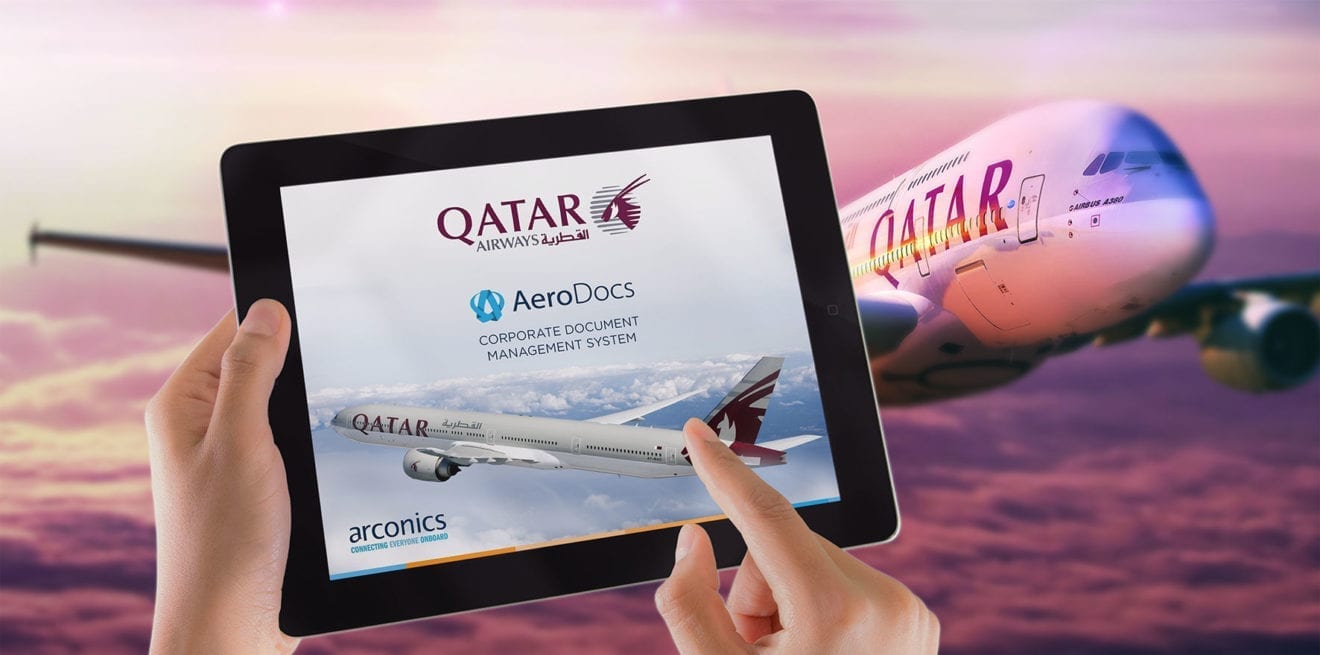
    Qatar Airways has become the first major Middle East airline to select Inmarsat’s new GX Aviation in-flight broadband solution for in-flight broadband.

    The Inmarsat solution will initially be available to Qatar Airways passengers on board more than 130 aircraft, consisting of Airbus A350s and Boeing 777s.

    GX Aviation technology has already been equipped on Qatar Airways’ latest Airbus A350s. Installations on the airline’s remaining Airbus A350s, together with the Boeing 777s, will start on a retrofit basis from this summer.

    GX Aviation is touted as the world’s first in-flight connectivity solution with reliable, seamless high-speed global coverage provided through a single operator. Inmarsat says the service allows airline passengers to browse the internet, stream videos, check social media and more during flights, with an on-board connectivity experience “on par with broadband services available on the ground.”

    “Broadband transformation on the ground is already well advanced and we are able to transfer that into the very challenging in-flight environment, working with Qatar Airways to make connectivity a success,” said Leo Mondale, president of Inmarsat Aviation.

    “Our networks are engineered with multiple layers for redundancy and global coverage. Our design philosophy is to scale up capacity over time to fit the route systems of our airline customers and reflect the industry’s real needs.”

    The service will integrate with Qatar Airways’ in-flight entertainment system and ensure that connectivity initiatives, such as its passenger app and aircraft technology, will be strengthened using dependable in-flight broadband. GX Aviation also complements the airline’s latest passenger experience innovations.

    Qatar Airways will connect to the GX network using exclusive JetWave terminals produced by Inmarsat partner Honeywell Aerospace. The terminals are designed for ease of installation and maintenance to assure the lowest downtime for any cabin connectivity solution in the market.

    The selection of GX Aviation follows a separate announcement that Qatar Airways has activated an advanced new space-based system, supplied by Inmarsat, to track all of its flights across the world.

    Inmarsat worked exclusively with Qatar Airways to develop this solution, which uses Inmarsat’s satellite technology to provide the exact real-time location of the airline’s aircraft in latitude and longitude.