Category: Telecom

Retail News Asia is committed to providing both local and global retailers with the latest Telecom & Telco news throughout the Asian market. This on a daily base.

  • NEC, Netcracker hold joint trial optical fibre network

    NEC, Netcracker hold joint trial optical fibre network

    NEC and Netcracker Technology have successfully conducted a trial, in collaboration with K-Opticom, for a system combining NFV and 10G-EPON technologies.

    The companies said the trial verified for the first time ever that virtualized customer premises equipment (vCPE) can be successfully applied to 10Gbps Internet connections.

    K-Opticom provides telecommunications services based on its independent optical fiber network. The company operates the “mineo” mobile phone service as a MVNO, and “eo denki,” an electric power retailing service for household use.

    VCPE provides CPE and other top-layer functions, such as Dynamic Host Configuration Protocol (DHCP) and Network Address Translation (NAT), from data centers via the Internet.

    Based on the results of this trial, further trials are being planned in preparation for the full-scale application of vCPE to 10Gpbs Internet services.

    Takamitsu Fukunaga, SVP for K-Opticom, said communication traffic volumes for home-use connections are increasing year by year, and K-Opticom estimates that these traffic volumes will continue to grow.

    “As a result, we are considering the provision of a 10Gbps service. We are engaged in continual efforts together with NEC to enable us to offer this service to our customers as soon as possible,” the executive said.

    NEC senior vice president Shigeru Okuya claimed the trial with K-Opticom is the industry’s first of its kind to validate that vCPE can be applied to 10G-EPON.

    “Moving forward, we will continue to proactively advance the development of solutions that contribute to the improvement of service quality for K-Opticom, and to make use of these results in providing SDN/NFV solutions globally,” Okuya said.

  • M1 profit falls 14.6% in Q1

    M1 profit falls 14.6% in Q1

    Singapore’s M1 has reported a 14.6% year-on-year decline in post-tax profit for the March quarter to S$36.3 million ($26 million), attributing the result in part to higher depreciation and interest costs.

    Operating revenue grew 1.2% to S$260.7 million, with service revenue remaining flat at S$201.5 million. Fixed line revenue growth reached 22.8% to S$30 million, offsetting declines in both international voice and roaming revenues.

    M1 added 8,000 fiber customers during the quarter, taking its total base to 168,000. In the mobile segment, M1 added 24,000 postpaid customers and 3,000 prepaid customers, with its total mobile customer base reaching 2.05 million.

    But mobile revenue declined 0.5% to S$158.4 million and international call services fell 9.9% to S$15.5 million.

    Monthly MOU also declined 5.6% to 203 for postpaid customers and 9.6% to 191 for prepaid users, while net ARPU fell 2.3% for postpaid users to S$49.50 and 4.5% for prepaid users to S$11.50.

    M1 estimates it ended the quarter with an overall mobile market share of 23.8%, with a postpaid share of 24.8% and prepaid share of 22.5%.

    While announcing the results, M1 CEO Karen Kooi said the new 700-MHz and 900-MHz frequencies acquired from Singapore’s recent major spectrum auction will allow the operator to “deliver an enhanced network experience cost effectively with optimal use of spectrum.

    “With the largest Wireless@SG network and our small cell/WiFi HetNet deployment at targeted locations islandwide, we are delivering a superior data experience in places where it matters most to our customers and laying the foundation for future dense grid 5G architecture,” she said.

  • How will telcos handle the video “cash cow”?

    How will telcos handle the video “cash cow”?

    Huawei hosted over 500 media and analysts to its 14th annual Analyst Summit, with a variety of executives discussing their roadmaps.

    “Huawei will remain committed to building more connections, enlarging data pipes, and driving digital transformation,” said rotating CEO Eric Xu in an opening keynote.

    Xu said that cloud services are already a basic business model. “Beginning in 2017, Huawei will focus on public cloud services. We will invest heavily in building an open and trusted public cloud platform, which will be the foundation of a Huawei Cloud Family.”

    This cloud-based unit “will include public clouds we develop together with operators, and public clouds that we operate on our own,” said Xu.

    William Xu, executive director and chief strategy marketing officer, said that digital transformation “opens up immense new potential for value-driven growth in traditional industries.” He said that ICT infrastructure is a pillar for economic growth, and that “the cloud in particular is key to unleashing the power of connectivity.”

    He said “Huawei recommends that countries and industries turn their attention to digital transformation as a driver for growth, and pursue greater development and investment opportunities in emerging fields like cloud computing, IoT, and big data.”

    Ryan Ding, executive director and president of products & solutions, said in his keynote that operators in some markets are beginning to monetize video services, with an early winner being high-definition streaming of sports events. Ding pegged video at “70% of [mobile] traffic” in the near future, with 1K (1080p), 2K and 4K options available depending on the operator.

    In a media roundtable interview, Ding offered more granular data on the future of mobile video, describing it as a “new cash cow for mobile operators.”

    “We believe that 2K on smartphones and 4K on TVs is the sweet spot,” he said, noting that “different countries have different situations.”

    Ding described sports as the most popular content worldwide, giving an example of Spanish pubs that draw punters with live 4K broadcasts of football matches. As he described it, the largest TV features traditional match coverage while additional displays show different views of the same match—an experience viewers won’t get at home. He also said Huawei’s X Lab Insights estimates the overall entertainment market opportunity alone at $650 billion worldwide by 2020.

    Ding isn’t bullish on videoconferencing, but sees opportunities in the video surveillance market. There are 1.3 million CCTV cameras in Beijing alone, he said. “Last year in China, operators deployed 40 million IPTV sets,” said Ding. “This number is comparable to the number deployed from 2005-2015.”

    The Huawei president of products & solutions urged operators to migrate legacy systems to the cloud, adding that those in China are better positioned for the move than operators in Europe who are more vested in their legacy systems.

  • Nokia studies business case for 5G

    Nokia studies business case for 5G

    With the 5G era fast approaching, Nokia has released the findings of a series of studies into the potential benefits and return on investment for the emerging mobile technology.

    The vendor said in-depth analysis of how 5G will perform in real networks found the technology can increase capacity by 40 times compared to 4G.

    This makes 5G the only commercially viable technology for the delivery of a true immersive VR video experience to large audiences, and deliver the performance required for advanced industrial applications.

    In terms of RoI, the analysis indicates that investments in 5G to the home will break even after four years if the monthly average revenue per user remains above €40 ($42.90).

    Investments in 5G events and hotspots, in locations such as stadiums meanwhile have a one year RoI period assuming at least five events per month.

    “While market news has recently focused on the announcement of 5G technologies that drive increased network performance, it’s important to discuss how these low latency broadband connections will translate into customer value,” Mobile Experts principal analyst Joe Madden said.

    “With the publication of the two new studies and its 5G Acceleration Services, Nokia is showing operators and enterprises how they will be able to benefit from early 5G deployment.”

    Nokia’s 5G Acceleration Services aim to help operators and enterprises identify how the move to 5G will enable them to deliver transformational new services and create new revenue streams.

  • ZTE back to black for the first quarter

    ZTE back to black for the first quarter

    After reporting a loss for 2016, ZTE swung back to a 1.21 billion yuan ($175.6 million) profit for the first three months of 2017 – a year-on-year increase of 27.8%.

    The vendor reported a 17.8% increase in revenue for the quarter to 25.75 billion, due to strong momentum across its networking and smartphone businesses.

    ZTE announced that its Pre5G products have now been deployed in over 40 networks in 30 countries. The company is on track to begin 5G pre-commercial deployments in the third quarter of 2018, with full commercial deployment starting in 2019.

    On the wireline front, ZTE said it is sustaining its momentum as one of the industry leaders in the PON segment.

    The company meanwhile reported more than 25% growth in shipments of set-top-boxes within its Big Video business, and a 70% growth in shipments for its self-developed NB IoT chipsets.

    ZTE swung to a 2.36 billion yuan ($34.3 million) net loss for 2016 as a result of its $829.3 million settlement deal with the US Department of Commerce over the company’s alleged sale of telecommunications equipment using US components to Iran, in violation of trade sanctions.

    At the time, ZTE CEO Dr Zhao Xianming said the company “acknowledges the mistakes it made, takes responsibility for them, and remains committed to positive change in the company.”

  • Telkomsel demonstrates FDD Massive MIMO

    Telkomsel demonstrates FDD Massive MIMO

    Indonesia’s Telkomsel has completed the market’s first FDD Massive MIMO demonstration as part of its 5G evolution roadmap.

    The operator teamed up with Huawei to conduct the demonstration, which achieved five times the capacity of traditional FDD LTE 2×2 MIMO.

    Since Telkomsel started building its network at the end of 2014, the operator’s LTE userbase has reached more than 19 million. The large number of concurrent users and Indonesia’s scarce spectrum resources will inevitably lead to network congestion in high-traffic areas, the companies said.

    In anticipation of congestion issues, Telkomsel and Huawei have established a joint innovation center focused on the research of high-capacity pre-5G network solutions such as Massive MIMO.

    “Telkomsel has always aimed to bring the best MBB experience to Indonesian users by leveraging on cutting edge technologies. Multi-antenna technology fully meets our requirements for improving  customer experience,” Telkomsel network director Sukardi Silalahi said.

    “Massive MIMO can increase the capacity without adding sites and spectrum, thus reducing the cost per bit. I am very satisfied with the demonstration results today.”

    He pledged to continue working with Huawei at the Joint Innovation Center to explore other network technology breakthroughs.

  • CAT to propose 2G tower JV with Dtac

    CAT to propose 2G tower JV with Dtac

    Thai state-owned operator CAT Telecom is seeking to enter a telecommunications infrastructure joint venture with private operator Dtac to allow it to continue generating revenue after its concession revenue dries up.

    CAT’s concession agreement with Dtac expires in September 2018, marking the end to the prior build-operate-transfer regulatory regime, whereby private operators paid a portion of their revenues to the state-owned operators. The market is instead transitioning to the more conventional spectrum licensing model.

    After this period CAT will be left without a sustainable revenue stream. Dtac will meanwhile need to transfer its roughly 13,000 2G mobile towers and base stations to CAT. As the deadline approaches, the CAT board is exploring establishing a JV with Dtac for the operation of CAT’s 2G mobile tower assets.

    Under the proposal, Dtac would need to invest nearly 10 billion baht () in exchange for a 51% stake in the venture, which would be named Telecom Tower Co. CAT would take the remaining 49% in exchange for transferring the tower assets to the venture.

    According to the report, the CAT board believes that such an agreement would be mutually beneficial, as it would allow CAT to earn new revenue from the venture, while Dtac would be able to guarantee service continuity after the concession expires.

    The proposal still requires approval from the Thai Cabinet, the report adds. CAT hopes that the venture will help it realize annual revenue of around 10 billion baht per year.

  • China Telecom, Huawei lead group exploring AI in networks

    China Telecom, Huawei lead group exploring AI in networks

    China Telecom and Huawei will lead a new industry working group exploring the use of AI in the deployment and optimization of telecoms networks.

    The European Telecommunications Standards Institute’s (ETSI) Industry Specification Group on Experiential Networked Intelligence (ISG ENI) held their first meeting last week, electing a new chair and vice chair.

    Huawei UK’s Raymond Forbes has been selected as chairman and China Telecom’s Haining Wang will serve as vice-chair.

    Other members of the group include Samsung, the China Academy of Telecommunications Research of MIIT, Verizon UK and Samsung R&D Institute UK.

    Forbes said the purpose of the group is to “improve operators’ experience regarding network deployment and operation, by using AI techniques.”

    Wang added that while SDN, NFV and network slicing technologies are helping networks become more flexible, the complexity of network management is not being reduced, but merely transferred from hardware to software. Experimental Networked Intelligence helps to address this complexity.

    ETSI ENI will work with other major standards groups including ETSI NFV, ETSI MEC, ETSI NGP, IETF, MEF, 3GPP and BBF on the development of the industry specification, and is inviting new members to join the group.

  • Cloud Services in Indonesia Provided by Japan’s Leading Network Solutions

    Cloud Services in Indonesia Provided by Japan’s Leading Network Solutions

    FPT Telecom of Vietnam and Internet Initiative Japan on Thursday launched a cloud computing service for individual, business and enterprise customers in Vietnam.

    FPT Telecom has called the new service, FPT HI GIO Cloud, the first full-scale, full-spectrum and quality cloud computing service in Vietnam. Nguyen Van Khoa, general director of FPT Telecom, which is part of leading Vietnamese information technology group FPT, stressed the new service would provide access computing services via a stable network.

    The product enables users to quickly launch virtual machines instead of investing in physical devices.”We will lead the market in Vietnam to tap demand for cloud computing,” General Director of IIJ Global Solutions Vietnam Ryo Matsumoto told Retail News.

    FPT Telecom aims to acquire around 4,000 enterprise customers within a year. FPT Telecom and IIJ also aim to tap individual customers in a country where 70% of the more than 90 million population is expected to have access to the internet by 2020.

    IIJ, one of Japan’s leading internet and network solutions providers, has already launched similar cloud services in Singapore, Indonesia, and Thailand. FPT Telecom and IIJ are looking to launch additional joint projects related to security and network management in the coming years, according to Matsumoto.

    In Vietnam global players such as IBM, Google, Symantec, Amazon, Oracle and Microsoft have launched their own cloud and joint services by teaming up with local telecom companies and using mobile broadband infrastructure. FPT and IIJ’s partnership will further intensify competition in this area.

    Vietnam ranked 14th in the Asia-Pacific region in the Asia Cloud Computing Association’s Cloud Readiness Index 2016, coming after Singapore, Malaysia, Thailand, the Philippines and Indonesia.

  • Virgin Media picks Netcracker for revenue management

    Virgin Media picks Netcracker for revenue management

    Virgin Media has expanded its relationship with Netcracker by selecting it as the managed services provider of choice for its Revenue Management solution.

    By using Netcracker’s Managed Services, Virgin Media will be able to scale more flexibly while reducing the cost of operations.

    This multiyear managed services engagement with Netcracker will open new opportunities for Virgin Media to deliver customized services for its business customers and improve scalability in terms of meeting increasingly complex customer demands.

    “Our longstanding relationship with Netcracker is built on trust and its proven ability to deliver and support complex business programs, which drove us to select it for this important initiative,” said Duncan Macdonald, executive director of technology and transformation at Virgin Media.

    “Netcracker has demonstrated and validated its managed services capabilities around the world and we are happy to extend our partnership in order to meet our objectives,” said Macdonald.

    Sylvain Seignour, chief customer officer at Netcracker, service providers are constantly evolving to meet new customer needs, which create complexities that can be mitigated through the use of managed services.

  • Japanese telco taps Redknee for 4G service upgrade

    Japanese telco taps Redknee for 4G service upgrade

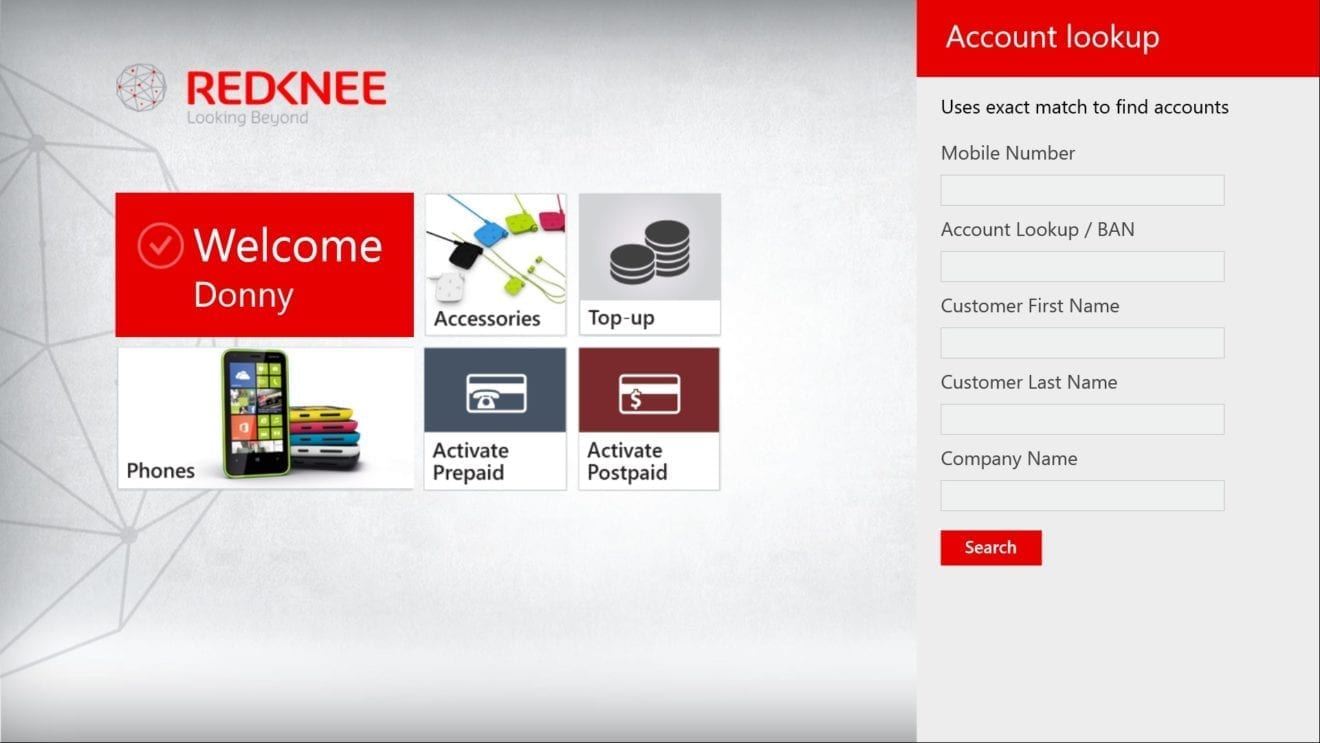
    A Tier 1 communication service provider in Japan has awarded Redknee Solutions has won a multi-million dollar.

    The operator is experiencing increasing demand for 4G services while its subscriber base expands rapidly. The solution will upgrade Redknee’s integrated policy and charging solution to support more than 30 million subscribers.

    The solution will also add support for new capabilities such as Voice-over-LTE (VoLTE). The win will see Redknee scale its solutions to meet the needs of a growing Tier 1 CSP while supporting 4G service offerings that require an agile and innovative approach to achieve customer satisfaction and success.
    Consumers are increasingly using data rich services such as HD voice and multimedia services, and this is prompting CSP’s to invest in new technologies that support increasing volumes of data and traffic. VoLTE is quickly being adopted because it can deliver faster onboarding, shorter call setup times, and improved spectral efficiency.

    “Redknee understands the importance of customer success. Redknee’s agile and scalable solutions support new technologies and service offerings, such as VoLTE, which allow our customers to improve quality of service, drive innovation, and deliver successfully to all of their subscribers,” said Danielle Royston, Redknee’s CEO.

  • ZTE, China Mobile complete NB-IoT field trial

    ZTE, China Mobile complete NB-IoT field trial

    ZTE and China Mobile have announced they have completed the operator’s first narrowband IoT (NB-IoT) field test in Guangzhou.

    The trial involved the validation of core network, service, terminals and wireless equipment for NB-IoT with both single mode and multi-mode networking.

    Testing concentrated on performance, including users’ data rate, delay and coverage enhancements. ZTE provided all the equipment for the trial, including virtual core network, 2T4R base stations and terminals using a ZTE custom-developed chip.

    China Mobile is conducting NB-IoT trials in four provinces – Guangzhou, Hangzhou, Shanghai and Fuzhou, and is working with only one vendor in each of these provinces to allow it to deeply study and verify various NB-IoT features.

    Guangdong Mobile’s field test is the largest-scale among the four provinces with nearly 200 sites constructed. ZTE said this trial was also the only field test to accomplish specified test items dedicated to the NB-IoT protocol, including all combinations of uplink channels and services specified in NB-IoT protocol standards.

    The trial also exclusively supported the sub-carrier interval of 3.75KHz and 15KHz simultaneously, marking the world’s first 3.75KHz test.

    ZTE separately announced it has completed verification for its emergency communication solution based on drone technology, in collaboration with the Quanzhou branch of China Telecom.

    The lightweight (15 kilogram) solution comprises a drone equipped with a ZTE Pico base station and customer premises equipment that can be easily transported and deployed to a rescue scene.

    The test demonstrated that the drone can complete preparation and be in the air within 10 minutes, and can deliver a downlink peak data rate of 30Mbps and a VoLTE speech quality mean opinion score of 3.3.

  • Jio accuses rivals of “unfair and deceptive” practices

    Jio accuses rivals of “unfair and deceptive” practices

    India’s Reliance Jio Infocomm has called on the market’s telecoms regulator to penalize incumbent operators Bharti Airtel, Vodafone India and Idea Cellular for allegedly violating regulations covering mobile plans in an attempt to prevent more customers from porting to the new operator.

    Reliance Jio has accused the operators of using “unfair and deceptive” methods to retain customers, including by offering custom retention offers for subscribers thinking of porting to Jio.

    Jio said these custom offers are being offered on a one-off basis to existing customers, and as such are not advertised publicly as required by the regulations.

    The operator has further argued that the custom offers violate regulatory norms limiting the number of prepaid and postpaid plans allowed to 25.

    Finally, Jio has accused the operators of providing “false and malicious” information regarding the quality of Jio’s network to customers via call center interactions.

    The operator is requesting that regulator Trai issue a ceast and desist order prohibiting the operators from continuing with the alleged actions.

    But Both Bharti Airtel and Vodafone India strongly denied to the Press Trust of India any allegation that they are in violation of the regulations.

  • IPC, 1-Net plan interconnected data center network

    IPC, 1-Net plan interconnected data center network

    Philippines cloud services and data center provider IPC (IP Converge Data Services) has teamed up with 1-Net in Singapore to provide its customers with an interconnected data center network.

    This collaboration enables both organization to extend their data center capacity for faster access and deployment of customers in the countries.

    IPC and 1-Net are both data center providers who operate carrier-neutral and telco-grade internet data centers in Philippines and Singapore respectively.

    This strategic partnership will strengthen the data center services of both providers, ensuring that customers’ data is securely stored. This will also enable enterprises to run mission-critical systems in our facilities while they grow their businesses in the two countries.

    The partnership will enable both IPC and 1-Net to deploy customers in both Philippines and Singapore with a single contract, allowing quicker deployment without the need to renegotiate service level agreements and contracts.

    “Our partnership with 1-Net virtually expands the data center footprint of both companies. Gaining access to data center facilities in Singapore enables our enterprise customers to extend their network into the more mature market in Singapore, and likewise offers the same benefit to regional players present in Singapore who are looking to expand into our bustling Philippines economy for business expansion,” said IPC Chief Executive Officer Reynaldo R. Huergas.

  • Cyient, Amdocs to implement GIS for NetLink Trust

    Cyient, Amdocs to implement GIS for NetLink Trust

    Cyient is collaborating with Amdocs to implement GE’s Geographical Information System (GIS), Smallworld, as part of the next-generation business/operations support system (NGBOSS) project for NetLink Trust.

    The NGBOSS project aims to improve the user experience for NetLink Trust’s customers with faster deployment of new fiber networks while reducing fault repair and outage times, as well as delivering improved service quality.

    As part of the overall solution, Amdocs will deliver a comprehensive BSS/OSS suite that includes an online portal, billing, order orchestration and service order management, workforce management, and service assurance components.

    Amdocs will assume the role of solution provider and will also act as the prime system integrator of third-party software and hardware. Cyient will install and configure GE Smallworld 5.1 GIS, enabling NetLink Trust to plan and design modules to model fiber to the x (FTTx), including homes and businesses.

    The project includes end-to-end operations support planning, operations, fulfillment and assurance teams, consolidation, as well as migration of the business processes and network data from existing systems to new systems without disturbing the current operations.

    Ongoing maintenance and support of the GIS subsystem/component will also be provided by Cyient in the effort to ensure that the implemented solution continues to provide NetLink Trust’s customers with an uninterrupted service.