Category: Telecom

Retail News Asia is committed to providing both local and global retailers with the latest Telecom & Telco news throughout the Asian market. This on a daily base.

  • Globe deploys Amdocs’ Revenue Guard

    Globe deploys Amdocs’ Revenue Guard

    The Philippines’ Globe Telecom will deploy a revenue assurance platform from Amdocs to help minimize revenue leakage risks.

    Globe has selected the Amdocs Revenue Guard service, which provides automated and analytics-driven revenue assurance.

    The service uses technology developed by cVidya, which Amdocs acquired for $30 million earlier this year. It combines revenue assurance and fraud management software tools with professional services including risk analysis consulting, business analytics, training and IT operations.

    Globe will use the service across its line of business, and plans to take advantage of the consulting and training services provided.

    Revenue Guard can be deployed on-premise or as a cloud services under a variety of operating models, including SaaS, revenue share and KPI models.

    “The entry of a company of Amdocs’ magnitude to the revenue assurance space with its acquisition of cVidya is yet another proof of the increased importance of this domain for the industry as the world becomes increasingly digital,” Globe CFO Rizza Maniego-Eala commented.

    “By integrating the Amdocs Revenue Guard service into our data lake, we will be able to centrally analyze and effectively share data across the different parts of our business, optimizing revenue while keeping operational costs to the absolute minimum. We see this as an additional milestone in our transformation to become a digital service provider.”

  • Singtel appoints Mark Chong group CTO

    Singtel appoints Mark Chong group CTO

    Singtel has made two key appointments to strengthen its management team as the Singapore-based telco continues its multi-year transformation.

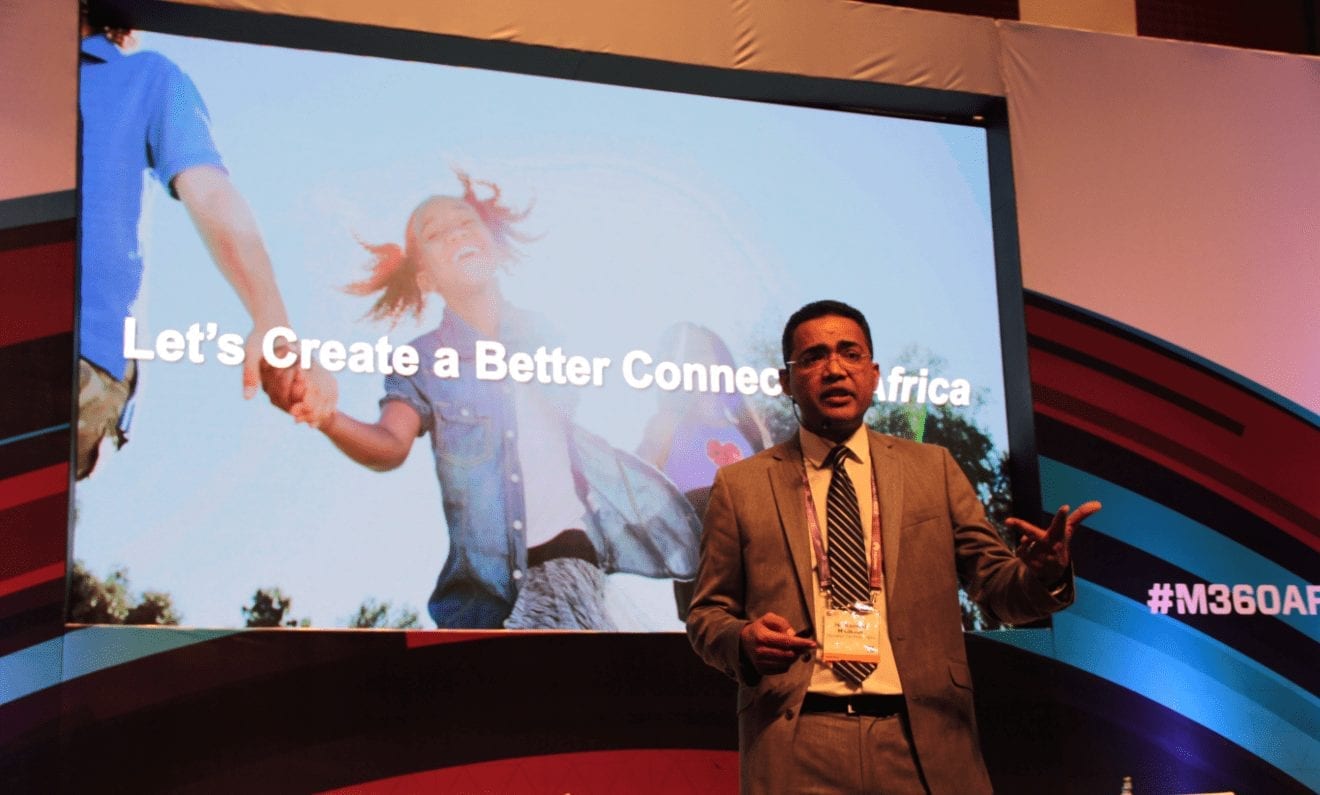
    Current CEO International Mark Chong (pictured) will take up the role of group chief technology officer, with Arthur Lang taking over his role, effective April 1, 2017.

    Chong will replace Tay Soo Meng, who is set to retire at the end of the financial year after serving Singtel for almost 50 years. Tay will take on an advisory role, the company said.

    In his new role, Chong will lead technology strategy and innovations across the group. Chong, a Singtel veteran of over 20 years, has held various key leadership positions, most notably EVP Networks in Singapore and COO of AIS in Thailand.

    Lang joins Singtel from CapitaLand Limited, where he was group chief financial officer for more than five years.  He will join the group in January with the task of growing Singtel’s regional associates across India, Indonesia, the Philippines and Thailand.

    Commenting on the appointments, Singtel Group CEO Chua Sock Koong said, “Given our global aspirations and a fast evolving business and technology landscape, we are reinforcing our leadership team as we prime our enterprise for our next phase of growth.”

    Both Chong and Lang, together with Samba Natarajan, CEO Group Digital Life, will join Singtel’s management committee, which oversees strategic direction and execution for the group.

  • Huawei announces mobile app X Labs

    Huawei announces mobile app X Labs

    Huawei has announced a new research platform that aims to bring together operators, technology providers and vertical industry partners to explore future use cases for mobile applications.

    The X Labs initiative will aim to encourage mobile operators to build application-centric networks and help establish an open industry ecosystem.

    The research platform is designed to explore three areas of mobile communications – people, verticals and the household, Huawei said. The mLab focuses on creating immersive user experiences for emerging mobile applications including live video, VR and AR.

    A second lab, vLab, focuses on ways mobile technology can enable digital transformation across all industries. The third is hLab, which will concentrate on connecting more households with smart home applications utilizing broadband connections.

    During a keynote speech announcing the initiative, Huawei rotating CEO Ken Hu said mobile applications are reshaping everything in the world.

    “I firmly believe that in the future, all services will be delivered through mobile applications,” he said. “I would say that we are living in a wild world of mobile applications.”

    Hu noted that when Apple’s App Store launched eight years ago, it had just 500 apps. It took just six years for that number to reach 1 million, and this figure doubled in another two years. Android app stores have even more apps – around 5 million.

    “At Huawei, we aim to support and enable the mobile ecosystem. We have made a lot of progress, and we want to do more,” he said.

  • Axiata Group 9M16 revenue grows 8.6%

    Axiata Group 9M16 revenue grows 8.6%

    Malaysia-based Axiata Group has reported an 8.6% growth in revenue for the first nine months of the year, due in part to strong growth from the South Asia region.

    Total revenue reached 15.8 billion ringgit ($3.55 billion), with ebitda up 13.4% to 6 billion ringgit. But net profit slumped 55.7% to 929 million ringgit due to one-off gains in the previous year, higher financing costs and increased forex losses from the weaker ringgit.

    For the third quarter, total revenue grew 2.8% quarter-on-quarter and 8.6% year-on-year to a record 5.5 billion ringgit, due largely to the performance of its newest acquisition, Nepal’s Ncell. Q3 represented the first full quarter of contribution from Ncell.

    Net profit reached 296 million ringgit, up 27.3% quarter-on-quarter but down significantly from 955 million a year earlier.

    Across Axiata’s operation, improvements were seen at domestic mobile unit Celcom and Indonesia’s XL for the third quarter, with service revenue at Celcom returning to growth after three consecutive quarters of declines.

    XL revenue grew 1.6% quarter-on-quarter and year-to-date net profit grew by over 100% mainly due to forex gains associated with the refinancing of XL’s US dollar debt to Indonesian rupiah.

    In South Asian markets, Ncell reported a 16.9% year-to-date profit growth, Sri Lanka’s Dialog posted a profit growth of 18.7% over the same nine-month period, but Bangladesh’s Robi reported a 1% decrease in normalized profit.

    “We are pleased with the improvements in revenue and EBITDA, although the Group performance continues to be affected by the weaker operating environment and increased competitive pressures across our markets,” Axiata chairman Tan Sri Azman Hj Mokhtar said.

    “We remain especially focused on management’s plans for recovery and turnaround strategies at XL and Celcom.”

    Axiata group CEO Tan Sri Jamaludin Ibrahim added that 2016 “2016 remains challenging for the group across most of our markets – particularly in Malaysia, Indonesia, Singapore and India where fiercer competition and rising capex have weighed in on overall performance and profitability.”

  • HKT to build fiber super highway for Hong Kong DCs

    HKT to build fiber super highway for Hong Kong DCs

    PCCW’s HKT has revealed plans to build what it is calling a “fiber super highway” connecting the Tseung Kwan O Industrial Estate (TKOIE) with the Chai Wan area.

    The Ultra Express Link will be a 3km high-capacity, low-latency subsea cable system spanning the Junk Bay. The cable system has a target ready for service date in 2017

    HKT group managing director Alex Arena said the system will provide additional diversity in connectivity for the multiple data centers in TKOIE, and serve to position the estate as Asia’s data center hub.

    “The building of Ultra Express Link demonstrates once again not only our leading position in solid fiber infrastructure in Hong Kong, but also our dedication to build Hong Kong into a regional data center hub,” he said.

    “The new cable, together with the existing extensive fiber infrastructure provided by HKT, will allow us to meet the rising demand for high speed and high capacity connectivity from data center operators.”

    Arena said HKT is the only operator to provide full fiber coverage in all data centers in Hong Kong with diversity paths in all data centers in TKOIE.

    HKT is a quadruple-play operator in Hong Kong serving both consumer and enterprise customers.

  • StarHub launches shopping channel

    StarHub launches shopping channel

    Singapore telco StarHub has launched a 24-hour Chinese language shopping channel called Go Shop in a deal with Malaysian pay-TV giant Astro.

    Singapore, 24 November 2016 – This festive season, StarHub TV customers can look forward to an exciting round-the-clock shopping destination right at their fingertips. Starting tomorrow, StarHub TV, in partnership with Astro Malaysia, will be launching Go Shop (StarHub TV Channel 110), a 24-hour, Mandarin shopping channel. Go Shop will also be made available on StarHub Go, StarHub’s video streaming service, by early next year.

    Customers in Singapore can now immerse themselves in a shopping experience that is differentiated, hassle-free and convenient, anytime anywhere. Through Go Shop’s fun and informative TV demonstrations, customers can understand the benefits of each product in-depth as well as the value of the offer. The well-researched product demonstrations are specially tailored to cater to the preferences and lifestyles of Singapore’s consumers.

    Targeted at StarHub’s audiences as well as connected online and mobile shoppers in Singapore, Go Shop offerspremium and trusted international brands such as Finn Esker, HappyCall, Kloken and Shogun across various product categories from Living, Beauty, Fashion, Kitchenware and Home Appliances. New product categories such as Digital Electronics, Health and Wellness, Sports and Leisure will be introduced progressively.

    Go Shop is a joint venture between Astro Retail Ventures, a wholly owned subsidiary of Astro Malaysia, and GS Home Shopping, the global leader in TV home shopping. GS Home Shopping has international presence in nine countries such as South Korea, Malaysia, China and Russia. To celebrate its launch in Singapore, Go Shop will be introducing some of its global best-selling items on StarHub TV. These include Age 20s, an award-winning Moisture Compact Foundation from Korea, Hurom Slow Juicer which comes with a low speed rotation to preserve nutrients, and the Roichen Cookware set, made with a safe and natural stone coating.

    To entice consumers, Go Shop will introduce special offers on TV through innovative bundling that cannot be found anywhere else. It aims to offer unbeatable value by combining the main product with other product lines to complement the core offering. For instance, a set of Laneige sleeping masks can be bundled with other items from the same skincare line for a complete, value-for-money deal. Consumers can also look forward to special festive offers from time to time.

    Commenting on the launch, Ms Lee Soo Hui, Head of Content & TV, StarHub, said: “Shopping is a favourite pastime of Singaporeans, whether it is online or at the mall. Go Shop’s extensive catalogue, accompanied with detailed product demonstrations, will enable our viewers to make informed decisions before making that purchase from the comfort of their living rooms. With the upcoming festive season, the timely launch of Go Shop on StarHub TV will enable customers to get a head start on their Christmas shopping!”

    According to Go Shop’s Chief Executive Officer, Grace Lee, “Go Shop is excited to expand our wings to serve customers in Singapore, after seeing our service grow rapidly in Malaysia. We offer a differentiated shopping experience that gives our customers choice, convenience and peace of mind through our entertaining and informative product demonstrations, reputation for providing trusted international brands and products as well as great value from innovative product bundling and free delivery in a matter of days.”

    To make a purchase on Go Shop, customers can order online via www.goshop.com.sg. Payment can be made via selected credit or debit cards. The products will then be delivered to the customer within two to three days with no additional shipping fee. In addition, customers can shop with peace of mind, knowing that sales support does not end at the point of purchase. A group of specially-trained agents called Personal Go Shoppers, will be offering their assistance online or through Go Shop’s hotline around the clock. To start shopping, tune in to Go Shop on StarHub TV channel Ch 110 at 9am tomorrow.

  • Verint acquires OpinionLab to push digital customer engagement

    Verint acquires OpinionLab to push digital customer engagement

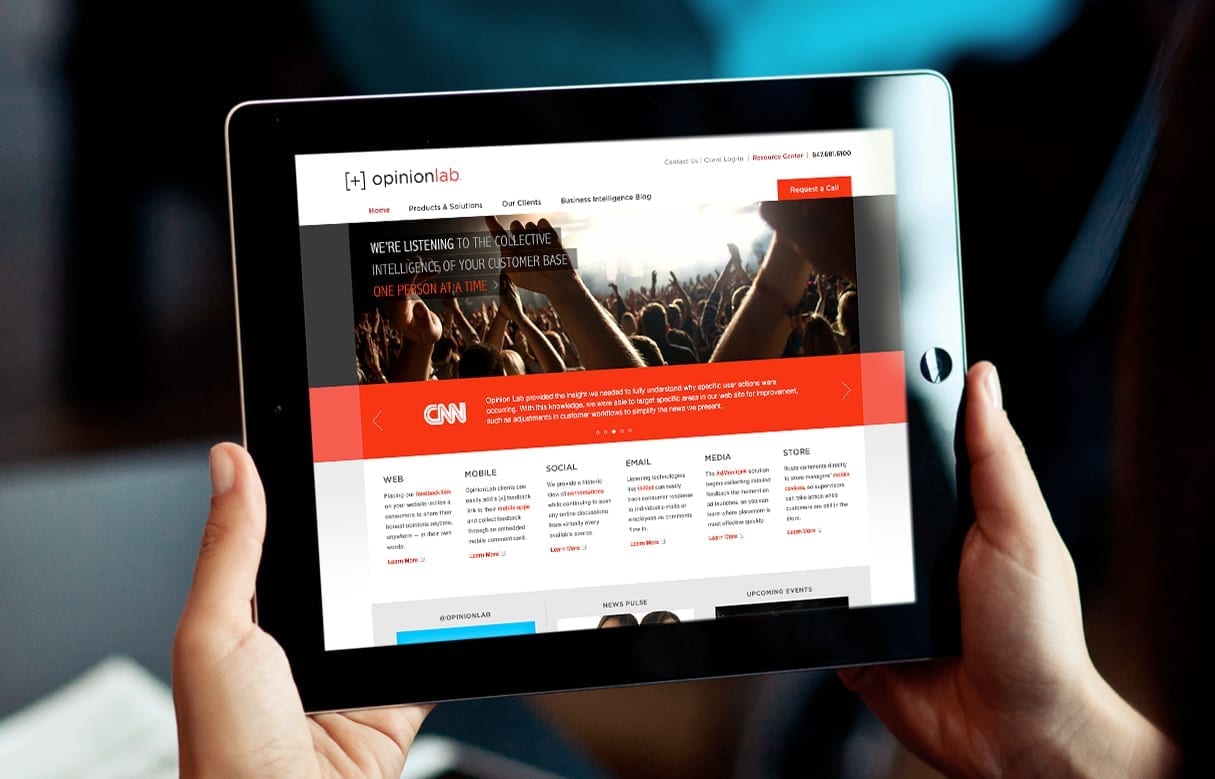
    Verint Systems has extended its Customer Engagement Optimization portfolio through its acquisition of OpinionLab, a provider of continuous voice of the customer listening solutions that drive smarter, real-time digital engagement.

    OpinionLab solutions are used by global brands to optimize web and mobile customer experiences and engagement.

    Voice of the Customer (VoC) solutions are becoming a strategic imperative, helping organizations measure and enhance experiences, satisfaction and loyalty.

    As more customer engagements follow a “digital-first” approach for conducting research and performing transactions, as well as solving problems, companies need to measure their customers’ digital experiences and quickly act on those insights to enhance both the customer experience and business performance.

    Through its acquisition of OpinionLab, Verint has extended its Customer Engagement Optimization portfolio to now include the ability to measure and act on digital customer experiences in-the-moment.

    With this addition, Verint has broadened its capabilities for listening, analyzing and acting on the VoC across all channels—digital, voice, text and social.

    “Capturing, analyzing and acting on the voice of the customer are critical for any organization in any industry,” says Elan Moriah, Verint’s president, for customer engagement solutions. “With the OpinionLab combination, we’re taking voice of the customer to a new level by giving organizations a complete solution for improving the customer experience across engagement channels.”

  • Idea to expand 4G to nine more circles

    Idea to expand 4G to nine more circles

    India’s third largest mobile operator Idea Cellular has revealed plans to expand its 4G network to nine additional telecoms circles by March next year.

    The operator plans to add around 57,000 new 4G cell sites this year alone.

    With the expansion, Idea Cellular plans to launch of 4G in the circles of Uttar Pradesh East and West, Gujarat, Mumbai, Bihar, Rajasthan, West Bengal, Assam and Jammu & Kashmir.

    This will take Idea’s total 4G footprint to 20 of India’s 22 telecoms circles. The 20 circles together account for 94% of Idea Cellular’s revenue and 90% of all industry revenue.

    Idea is using the spectrum it acquired in the recent $9.8 billion spectrum auction to pursue the 4G expansion.

    India’s 4G market is heating up due to the entry into the market of disruptive Pan-Indian 4G operator Reliance Jio Infocomm.

    Idea’s wireless broadband network currently spans 17 circles, with the operator aiming to achieve a total of 250,000 sites this financial year.

    To better compete against Reliance Jio, Idea is also increasingly pursuing a content strategy, starting with branded games. The operator plans to expand to movie and music services in the near future.

  • Malaysia’s MMU, Teradata ink pact on big data analytics skills

    Malaysia’s MMU, Teradata ink pact on big data analytics skills

    Multimedia University, Malaysia (MMU) and Teradata have announced a strategic partnership to collaborate on education and research in an effort to cultivate the next generation of data science professionals and experts in Malaysia.

    Through this co-operation, MMU will gain access to the Teradata University Network (TUN), a web-based portal that provides complementary teaching and learning tools used by more than 45,000 students around the world to share expertise, access knowledge as well as information on how to enhance both curriculum and align research to the current industry needs.

    Teradata University Network currently has over 5,500 registered faculty members, from over 2,400 universities, in 115 countries, with thousands of student users.

    A key to the success of Teradata University Network is that it is led by academics to ensure the content will meet the needs of today’s classrooms.

    Leveraging the partnership, MMU’s Faculty of Computing and Informatics will offer a Data Science Specialization as part of its Bachelor of Computer Science degree.

    This step was taken following the formalization of a Data Science Institute (DSI) at MMU last month designed to cater to both research and industry engagement of MMU’s expertise in this area.

    “This MoU facilitates greater input from a leading industry player, and Teradata has committed to provide experts to support exposure to our students and staff alike to its services and solutions,” said MMU president Ahmad Rafi Mohamed Eshaq.

  • Comptel unveils intelligent UIs for digital services LCM

    Comptel unveils intelligent UIs for digital services LCM

    Comptel has added a set of operational user interfaces (UIs) to its FlowOne V solution, tailored for specific user groups within service providers.

    The UIs are designed to increase productivity, empower the critical service orchestration processes behind frictionless delivery of end-to-end virtualized services, and accelerate time-to-market.

    FlowOne V incorporates virtualized network function (VNF) onboarding and service chaining, digital service design and orchestration, and dynamic, closed-loop service assurance.

    By providing a holistic, end-to-end view and orchestration of digital services, it allows operators to transform their current service delivery processes by connecting the cloud and physical resources (compute, storage, network) with business management processes and systems (customer care, billing, customer order management).

    With the addition of four new intuitive UIs called “Hubs,” FlowOne V translates the service orchestration process into routine tasks, specific to individual user groups.

    The UIs strengthen the solution with inbuilt intelligence, including the normalization of service terminology between multiple platforms to make them easily manageable and reusable components, and the validation of service specifications to avoid unnecessary mistakes.

    “Intuitive operational UIs are a key factor for increasing the speed at which services can be developed, verified, deployed and improved – consequently reducing time-to-profit and increasing customer satisfaction,” said Antti Koskela, EVP of Comptel.

    “By adding this new functionality to FlowOne V, we’ve created a new paradigm for operationally managing NFV and SDN, empowering service providers to more effectively specify, test and deliver services across virtual, physical and IT domains,” said Koskella.

    The four new UIs include DesignHub, OrderHub, LifecycleHub, and SystemHub.

  • Nokia unveils machine learning-powered customer experience solutions

    Nokia unveils machine learning-powered customer experience solutions

    Nokia has powered major updates to its Motive Customer eXperience Solutions (CXS) software portfolio, promising communications service providers with advanced machine learning capabilities to reduce costs and improve customer experiences.

    Nokia Motive Service Management Platform (SMP) 7.0 and Motive Care Analytics (CAL) 2.0 use machine-learning algorithms developed by Nokia Bell labs — advanced capabilities that give computers the ability to learn without being explicitly programmed.

    With support for machine learning in its CXS portfolio, Nokia aims to set a new standard for proactive care in the industry, dramatically improving the detection, troubleshooting and resolution of subscriber issues.

    Nokia Motive SMP 7.0 features Dynamic Intelligent Workflows, a new self-optimizing system that determines the ideal sequence of tasks that deliver the highest probability of resolving billing, subscription and network service issues in the shortest amount of time.

    By analyzing data from previous workflow executions, the network, customer premises equipment, and trouble tickets, this capability enables service providers to quickly find the optimal remediation to issues when subscribers contact help desk agents or use self-care.

    Nokia Motive CAL 2.0 is the first solution of its kind that automatically correlates customer help desk calls and self-care actions with network, service and third-party application topologies to identify call anomalies, such as unusual patterns in help desk calls that indicate the location of customer-impacting network and service issues.

    Together, Motive SMP 7.0 and Motive CAL 2.0 help service providers lower costs by reducing average help desk handling times 5% to15% and eliminating inappropriate truck rolls (dispatching a service technician to a customer location) related to network outages by as much as 90%.

  • YTL launches 4G LTE data, VoLTE services

    YTL launches 4G LTE data, VoLTE services

    YTL Communications in Malaysia has deployed Elitecore’s Revenue and Customer Management (RCM) Platform to roll out its 4G LTE high speed data & VoLTE services.

    The platform will enable the operator to roll out new business models like, HD Voice (VoLTE), Enterprise LTE and LTE Roaming, in addition to the Double Double buckets, one for wireless broadband and another for mobile internet, VoLTE and data services bundled with devices.

    YTL Communications said it is the only operator in Asia Pacific to commercially launch nationwide Voice over LTE (VoLTE) services.

    Elitecore’s NFV ready and Virtualized platform comprises of integrated policy and charging, 3GPP AAA, convergent billing, fulfillment, mobile self-care catering to voice, data and VAS services supporting multiple networks such as LTE, Wi-Fi and Wimax.

    “Elitecore’s product roadmap alignment with YTL’s business vision and proven experience in convergent billing and integrated policy and charging supports our growth strategy and helped us migrate from our legacy billing and operational support systems,” said Ali Tabassi, COO of YTL Communications. “The platform offers high agility for faster time-to-market and feature rich functionalities.”

    Elitecore said its RCM is a modular and feature ready platform that offers operators the speed and flexibility to roll out, new monetization and personalization use cases needed to innovate in next-generation data services. The platform promises significant contribution to capex and AMC cost reduction.

  • Australia’s nbn selects FTTC supplier

    Australia’s nbn selects FTTC supplier

    Australia’s nbn – the company building the National Broadband Network – has selected NetComm Wireless to supply equipment for the fiber to the curb (FTTC) proportion of the rollout.

    NetComm Wireless will supply the distribution point units for the deployment, which will be one of the world’s first wide-scale rollouts of FTTC technology.

    FTTC involves delivering fiber to the telecoms pit outside a building, using existing copper lines from the pit to the home. This technique brings fiber closer to the end-user than FTTN.

    NetComm Wireless, a Sydney-based equipment supplier, appears to have beaten out global vendors such as existing NBN partner Nokia for the contract.

    The agreement follows successful trials of FTTC in Sydney and Melbourne conducted by nbn, which achieved end-user speeds of 100/40Mbps using VDSL vectoring technology.

    “nbn is delighted to bring NetComm Wireless on board as a technology partner. We have tested FTTC over the past year and we’re confident we can now deploy the technology in areas where it makes better sense from a customer experience, deployment efficiency and cost perspective,” nbn Chief Network Engineering Officer Paul Ryan said.

    “Delivering FTTC will not only allow us to deliver speeds of up to 100/40Mbps using VDSL but will also allow us to offer even faster speeds in the future with some of the new technologies that are becoming available.”

    But industry groups such as Internet Australia have been sharply critical of the current government’s decision to switch from a planned all-FTTP deployment for the vast majority of the network to a multi-technology mix making use of existing copper last mile connections.

    Critics of the decision have argued that the multi-technology mix model will require further expense to upgrade rapidly aging copper with fiber for the last mile in 10-15 years if not sooner.

  • Microsoft extends CityNext project to Hong Kong

    Microsoft extends CityNext project to Hong Kong

    Microsoft has extended its global CityNext smart city initiative to Hong Kong and is seeking local partners to collaborate.

    Through the CityNext initiative, Microsoft is working with partners including system integrators to deliver smart city offerings to businesses and governments.

    Microsoft held an industry event in Hong Kong last week to discuss the transformative potential of intelligent systems and data analytics in smart city applications. Over 100 channel partners and potential customers attended.

    Speaking at the event, Microsoft Hong Kong national CTO Fred Sheu said the CityNext program will help governments deliver digital services to ensure their citizens enjoy healthier lives, as well as access to high-quality education and other critical needs.

    “Together with our partners, we can transform a city’s operations and infrastructure, engage citizens and accelerate innovation to create truly sustainable cities — where citizens, businesses and governments work alongside one another for a better tomorrow,” he said.

    “Through CityNext, we provide solutions that focus the most powerful modern technology — cloud, big data, mobile, and social technologies — on the city’s most pressing issues. For example, two critical components of any smart city are machine learning and IoT, which we are proud to offer to our partners via our much-heralded Azure cloud platform.”

    Microsoft CTO for data insights John Nisi added that the use of intelligent systems is helping businesses and governments re-imagine the value chain.

    “Modern businesses faced with economic uncertainty and disruptive competitors can leverage analytics and predictive data to create new revenue streams and opportunities that will allow them to thrive in the digital era,” he said.

    According to Sheu, more than 300 partners worldwide have already signed up for the CityNext program. In Hong Kong, over 10 partners have joined the program to provide smart healthcare, smart building, smart government and geographical information system (GIS) offerings and the like.

  • China Telecom Shanghai, Huawei test network slicing

    China Telecom Shanghai, Huawei test network slicing

    China Telecom Shanghai and Huawei have successfully jointly implemented access network slicing at a trial site.

    The trial solution involves slicing the access network into home, enterprise and campus connections, which will potentially allow the operator to use a single network to deliver all types of services.

    OLT hardware is shared by services, and all segments are isolated from each other in order to improve service reliability and network security.

    China Telecom Shanghai engaged Huawei to develop an access network slicing solution to address issues including insufficient equipment room space and runaway power consumption associated with rapid user base growth.

    “Traditional OLTs do not support the access of full services. Network slicing enables service isolation and optimizes resource utilization,” China Telecom Shanghai vice chief engineer Zhang Jun said.

    “Network slicing is our first step toward cloud. It is now being including in the related technical standards of China Telecom. In the future, we will cooperate with Huawei to further optimize network slicing.”

    The companies expect that network slicing will propel the development of gigabit networks. This will be essential to helping operators meet the enormous capacity demands of the cloud era.