Category: Telecom

Retail News Asia is committed to providing both local and global retailers with the latest Telecom & Telco news throughout the Asian market. This on a daily base.

  • BT to build cloud infrastructure for Randstad

    BT to build cloud infrastructure for Randstad

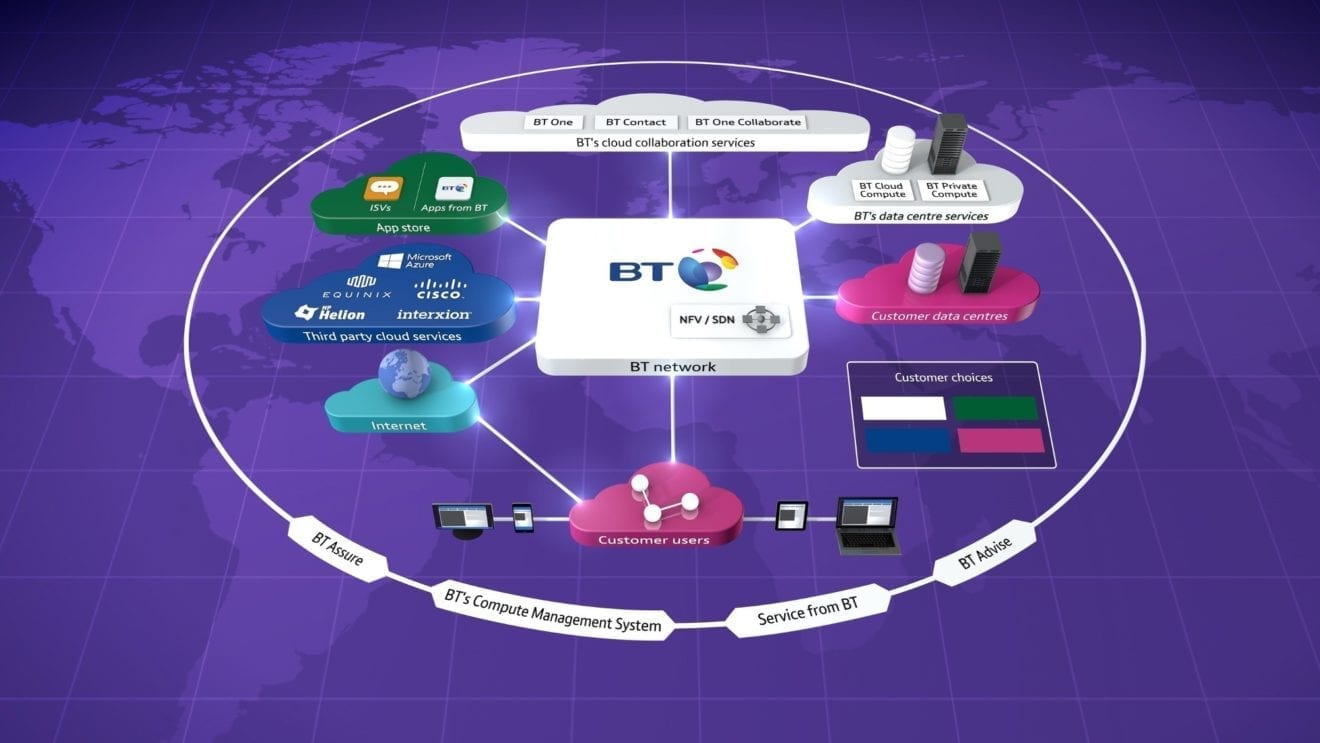
    HR services provider Randstad Group has contracted BT to build a new global IT infrastructure providing cloud connectivity to more than 3,500 sites worldwide.

    The network will connect 37 countries in Europe, North- and South-America, Middle East and Asia-Pacific.

    BT will consolidate, centralize and standardize Randstad’s network infrastructure, currently sourced from multiple domestic and regional providers. The new infrastructure uses BT’s IP Connect and Internet Connect services to combine the reliability and security of IP-based VPNs with the flexibility of internet connections.

    The network infrastructure will use BT’s Cloud Connect service to deliver high performance connectivity to multiple Amazon Web Services locations. In addition, BT One Cloud will deliver cloud-based voice services for Randstad’s 33,000 employees, hosted from data centers in Europe, North America and Asia. BT will also standardize Randstad’s in-office – fixed and wireless – networks.

    “We were looking for a global network and cloud services integration partner to help us gain more control over our network estate, increase efficiencies, maximize the benefits of the cloud and help accelerate our digital transformation,” said Bernardo Payet, general manager of Randstad Global IT Solutions.

    Payet said BT will take away the burden of managing a multitude of different suppliers and make it easier for us to implement new services for our employees and customers.

    “Our ambition is to be the leading global cloud services integrator, offering customers unparalleled choice, security, resilience, speed, flexibility and agility on their digital transformation journey,” BT Global Services president of Europe and global telecom markets  Corrado Sciolla said.

  • QVC Japan taps Verint to enhance quality assurance, customer experience

    QVC Japan taps Verint to enhance quality assurance, customer experience

    TV shopping firm QVC Japan is leveraging Verint Workforce Optimization in its in-country contact centers to drive operational improvements, as well as enhance the quality of calls and productivity of its customer service agents.

    QVC is also using and benefitting from Verint Speech Analytics, which continues to play an important role in its focus on customer engagement.

    Having used the Verint Workforce Optimization and Customer Analytics solutions for three years, QVC Japan is capturing, analyzing and acting on feedback from its customers to help ensure consistency in its service approach and deliver positive experiences.

    “QVC Japan was the first operation in the QVC global network to implement Verint’s workforce optimization and analytics solutions, and based on our positive results, we have gained a lot of attention,” said Masukawa, customer experience manager at QVC Japan.

    In particular, the combination of quality management and speech analytics helps us determine how best to maximize customer and other business insights coming into our operations and then apply them to new measures.”

    The QVC quality team was the first to introduce workforce optimization and speech analytics to the organization. In doing so, the business has increased quality scores, while enhancing productivity across its teams. Upon experiencing these results, QVC Japan’s customer experience division implemented the Verint Speech Analytics solution.

    By leveraging the data and valuable insights from the voices of its customers, the company says it is better able serve them, meet their expectations, and develop and launch compelling marketing initiatives and campaigns.

  • Airtel Q2 profit falls 4.9%

    Airtel Q2 profit falls 4.9%

    Bharti Airtel has reported a 4.9% decline in net profit for its fiscal second quarter, as the operator cut tariffs to prepare for competition from disruptive newcomer Reliance Jio Infocomm.

    India’s largest operator by subscribers reported a profit for the quarter ending September 30 of 14.61 billion rupees ($218.5 million).

    Revenue grew 5.6% year-on-year to 246.52 billion rupees, with India revenues up 10.1% to 192.19 billion rupees.

    But while total ARPU rose to 201 rupees from 193 rupees the year before, aggressive price cutting led to a decline in voice ARPU to 140 rupees from 132 rupees.

    Mobile data revenues grew 21% year-on-year to 45.36 billion rupees, thanks largely to a 62.2% year-on-year growth in Indian mobile data customers to 41.3 million. Mobile data revenues accounted for 24.7% of Indian mobile revenues for the quarter, up from 21.5% a year earlier.

    Africa revenues meanwhile grew 4.7% on an underlying bases. Airtel has divested its operations in Burkina Faso and Sierra Leone over the past two quarters, reducing its African footprint to 15 countries.

    “Our strong focus on enhancing customer experience and building a robust network has resulted in continued acceleration of revenue market share. Overall revenue momentum in India has been sustained during Q2 with a growth of 10.1% year-on-year,” Airtel CEO of India and South Asia Gopal Vittal said.

    “This is primarily due to the strong performance of our non-mobile businesses, which grew in aggregate at 18.8% year-on-year, albeit our mobile business has experienced a slowdown in growth due to free services being offered by a new operator.”

  • DDoS attacks caused StarHub broadband outages

    DDoS attacks caused StarHub broadband outages

    Singapore’s StarHub has blamed DDoS attacks originating from its customers’ own infected devices for two broadband outages over the past few days.

    At a press conference yesterday, StarHub announced the latest findings of an investigation into the outages on October 22 and 24.

    Both outages lasted for around two hours, leaving many home broadband customers unable to surf the web due to a spike in DNS traffic originating from infected machines.

    Because the traffic originated from StarHub’s own subscribers, it appeared legitimate. But when the attack was detected, StarHub manually filtered out the traffic from the infected devices to restore services for its other customers.

    StarHub announced it plans to send technicians to help customers clean up any infected devices at their homes.

    Singapore’s Cyber Security Agency and the Infocomm Media Development Authority have urged operators to strengthen their defense against DDoS attacks, and noted that this marks the first time Singapore has experienced such and attack on its network infrastructure.

    Darktrace managing director for APAC Sanjay Aurora said operators and ISPs are likely to find themselves increasing targets of attack.

    “The core infrastructure of telecommunications companies is a very desirable target for cybercriminals [but] gaining access is extremely difficult and requires deep expertise in specialist architecture,” he said.

    “What ISPs should be wary of, is the possibility of similar DNS amplification attacks on a more regular basis, given that they require relatively little skill and effort but can cause a large amount of damage. This makes them increasingly popular among hackers.”

    He said DNS-based DDoS attacks can impact networks by saturating bandwidth with malicious traffic, while also increasing volumes of support calls and negatively impacting  the customer experience and ultimately revenue.

    Aurora added that there is a possibility that the DDoS attack was caused by Mirai, the IoT botnet responsible for the recent DDoS attack against US-based DNS service provider Dyn. This attack used infected IoT devices.

  • Huawei applies machine learning to network control

    Huawei applies machine learning to network control

    Huawei has developed a prototype technology involving using machine learning to achieve intelligent, automated network traffic control.

    The vendor’s Noah’s Ark Laboratory has announced results of tests into Network Mind, a prototype technology designed to enable automatic detection and accurate prediction of traffic changes on a network, applying optimizations based on service changes.

    Huawei said Network Mind can facilitate the management of millions of network elements with millisecond response time.

    It uses cutting edge machine learning technologies such as online deep reinforcement learning and real-time big data mining

    The technology is being designed for operators and enterprises maintaining ultra-large networks. The prototype was first developed in December last year, and is being tested in collaboration with operators.

    Tests indicate that Network Mind is is up to 500% more efficient in realizing KPIs such as task completion or policy generation compared to existing template or heuristic algorithm-based optimization methods.

    Network Mind is also over 50 times more efficient when analyzing paths of large optical networks, which has the potential to reduce the time it takes to analyze use cases such as optical network failure prevention from 5 hours to as little as 6 minutes.

  • Ericsson appoints new CEO

    Ericsson appoints new CEO

    Ericsson has appointed long-time board member Börje Ekholm president and CEO, effective from mid-January.

    Ekholm will replace interim CEO Jan Frykhammar on January 16, who is standing in following the resignation of Hans Vestberg in July.

    Ekholm joins Ericsson from Patricia Industries, a division of Sweden’s Investor – Ericsson’s largest shareholder -where he is CEO. Prior to this he was CEO of Investor AB between 2005 and 2015, and has held positions at companies including Novare Kapital and McKinsey and Co.

    “I am very excited about this opportunity. As the networks and applications become even more important in a 5G connected world, our customers, and the industry, look for continuous innovation,” he commented.

    “I look forward to joining the great team at Ericsson and work closely with existing and new customers around the world in shaping the future of our industry.”

    Ekholm is also a board member of Alibaba and several other companies. He is based in the US, and will stay there when he takes the role. He will retain his position on the Ericsson board.

    Ericsson recently announced plans to cut 3,000 jobs in Sweden as part of the vendor’s ongoing cost cutting program.

  • SK Telecom Q3 profit falls 15.6%

    SK Telecom Q3 profit falls 15.6%

    SK Telecom has reported a 15.6% year-on-year decline in net profit for the third quarter to 322.1 billion won ($281 million), due to factors including the impact of Samsung’s Galaxy Note 7 recall.

    Operating revenue fell 0.4% to 4.24 trillion won due to a decrease in revenues at retail unit PS&M following the recall. ARPU also declined 2.1% year-on-year and 0.8% sequentially to 35,471 won.

    But revenue from SK Telecom and subsidiaries SK Broadband and SK Planet all increased quarter-on-quarter, and net income grew 10.7% over the same period due to equity-method income from semiconductor division SK Hynix.

    The operator added around 301,000 new subscribers during the quarter, taking its total to nearly 29.5 million. Of these, over 20.5 million are LTE subscribers, a penetration rate of 69.8% Monthly churn decreased by 0.1 percentage point to 1.4%.

    SK Telecom revealed that its mobile navigation T Map grew to reach 9.18 million monthly users by the end of September, around three months after its launch

    Looking ahead, the operator said it is focused on strengthening its core competitiveness as a mobile network operator, while using its nationwide LoRa and LTE-M IoT networks to deploy services that enhance customer convenience.

    “We expect that our strategy to fully open up major platforms including T Map and T Phone will lead to a successful outcome in the mid-to long-term,” SK Telecom CFO and head of strategy and planning Hwang Keun-joo said.

    “SK Telecom will accelerate its transformation into a next-generation platform company and keep developing customer-oriented products and services.”

  • Nepal Telecom receives 4G license

    Nepal Telecom receives 4G license

    Nepal Telecom has finally received a 4G operating license, clearing the company to launch services on January 1.

    Regulator the Nepal Telecommunications Authority has resolved to issue the license based on the detail rollout plan the operator submitted recently.   Nepal Telecom submitted the rollout plan after receiving initial approval for its 4G application earlier this month.

    With the decision, Nepal Telecom has become the market’s first operator to be cleared to launch 4G services. The operator will use the 1800-MHz spectrum it has been using for 2G services.

    Nepal Telecom plans to commence its rollout in the Kathmandu Valley area and Pokhara, before progressively expanding to other parts of the country.

    The operator had initially proposed to launch services on December 15, but the regulator has decided to delay the launch so the operator can smoothly complete the required preparatory works.

    Two other operators had applied for 4G licenses. One of these applications – submitted by Smart Telecom – has been rejected. The government has yet to make a decision on the second application, submitted by Ncell.

  • Aruba rethinks network procurement with NaaS

    Aruba rethinks network procurement with NaaS

    At the Aruba APAC Atmosphere 2016 conference held late last month in Singapore, Aruba Networks President Dominic Orr announced the launch of network-as-a-service, which supports the delivery of the company’s new Mobile First Platform.

    Core applications for Gen-Mobile era

    The core applications on Aruba Networks’ new Mobile First Platform are supported by its existing network infrastructure, including Wi-Fi, Bluetooth low energy (BLE), wired and WAN. The platform comprises network controls, network management, policy management, cloud networking, network analytics and location services. These applications supports the delivery of third-party IT services and business applications that form a mobile apps ecosystem.

    Examples of the IT services that are available on Aruba’s Mobile First Platform include Citrix, MobileIron (MDM and enterprise mobility services), splunk (operational intelligence), ArcSight (an HP company that provides cyber security), Okta (identity management and single sign-on), Check Point, Intel Security, Juniper, and Palo Alto Networks.

    As for business applications, the Platform also supports Skype for Business, AT&T, Aislelabs (enterprise mobile wallet marketing platform), kasada (cryptographic data firewall and our password-less authentication), RetailNext (in-store analytics), Envoy (visitor registration) and eventboard (visitor and room management).

    “The Gen-mobile has given rise to rapid IT forces like the internet of things (IoT) and mobility. This is not just about the use of next-generation devices, like the Wi-Fi-connected TV boxes like the Apple TV, but the applications on top,” said Anthony Wai, sales engineering director of Asia Pacific, Aruba Networks (a HPE company), in an exclusive interview.

    In a typical workplace environment, an organization needs to refresh the network infrastructure once every three to seven years. For example, they would need new routers and new switches to conform to new standards of the wireless network. In the past, when IT procurement was largely driven by IT, addressing user experience tended to be an afterthought. The situation today is reversed, however. “Many of the IT procurement decisions today are now user-driven. For example, the line of businesses (LoB) would first provide to their banking customers a banking application. They would then instruct IT to handle the infrastructure matters,” Wai said.

    Utility-like network procurement models

    To catch up with the fast pace of new mobile apps development and delivery, and the increasingly shortened cycle of network infrastructure upgrades, IT and the other LoBs would benefit from a flexible network services procurement model, such as network-as-a-service (NaaS), said Wai.

    “NaaS enables the subscription of network infrastructure services using an opex model instead of a capex model. By subscribing instead of acquiring these network services, customers can benefit from the latest technologies, and need not budget a sum of capex to invest in the next round of network technology upgrades,” Wai said.

  • Orange Business launches IoT and analytics suite globally

    Orange Business launches IoT and analytics suite globally

    Orange Business Services has announced the worldwide launch of Datavenue, its IoT and data analytics modular suite.

    Datavenue will help multinational and large national corporations seize the endless opportunities offered by the IoT revolution, the operator said.

    Already 56% of decision makers consider IoT as strategic. Use cases include improving safety and user experience within smart cities by connecting street lights or parking meters, as well as improving quality of life by connecting medical devices to monitor a person’s health remotely.

    Datavenue is supported by Orange Business Services’ 700 IoT and analytics experts worldwide, as well as data scientists, developers, consultants, statisticians and IoT security experts.

    Datavenue includes four modules:

    1. Select relevant objects and sources of data. Orange offers a range of certified and tested connected objects, such as sensors, cameras or modules to connect existing assets. Datavenue has a catalog of data that includes population movement analytics using anonymized data from mobile networks.
    2. Connect objects reliably with the most suitable and secured networks. A truck travelling cross borders or an agricultural sensor in a field would require different networks. To address the wide diversity of needs, Orange provides a range of connectivity options. These include future-proof global cellular networks and innovative capabilities, such as eUiCC, worldwide fixed and satellite networks, as well as low-power solutions, such as LoRa.
    3. Manage data to improve efficiencies and create enhanced services. For example, a construction company can monitor cranes worldwide to prevent problems and reduce maintenance costs. Managing data in real-time enables technicians to solve issues remotely or to arrive on site with the right material, reducing service interruptions. Orange offers both cloud-based and on-premises software solutions, encompassing remote device management, processing and visualization.
    4. Control key elements of enterprise transformation projects. Orange experts aim to provide end-to-end security and data protection, integration with information systems and service scalability. Throughout the entire project and beyond, customers can rely on Orange to ensure the solutions are future-proof and adapted to market evolutions.

    “We have developed extensive vertical expertise around IoT and data analytics in several sectors, including automotive, industry, smart cities, healthcare and smart homes,” Orange Business Services VP of IoT and analytics Olivier Ondet said.

    “Our solutions have already improved performance and employee safety through industrial machinery monitoring, enhanced patient care with remote assistance, and enriched citizen well-being with smart city services. This is now all being brought together to support the international launch of Orange Datavenue.”

    Datavenue was first launched in France in 2015. Orange today operates more than 10 million active B2B objects and processes 65 million items of technical data per minute – all fully compliant with data protection regulations.

  • Nokia to transform Globe’s fixed, wireless networks

    Nokia to transform Globe’s fixed, wireless networks

    The Philippines’ Globe Telecom has contracted Nokia to transform the operator’s fixed and mobile networks into a flexible cloud-based infrastructure ready for 5G and the IoT.

    Globe has signed two frame agreements  with the vendor – one covering wireless networks and the other for IP, optical and SDN technologies – to set the stage for the upgrade.

    Under the collaboration, Nokia will deploy its 4.5G Pro technology including 5G-ready base stations and small cells, in the Visayas and Mindanao regions. Some of the areas in these regions will be receiving broadband for the first time as a result of the deployment.

    Nokia will also set Globe up to support mobile edge computing and advanced carrier aggregation technologies on its network.

    The fixed agreement will involve the deployment of IP, optical and carrier SDN technologies across the Philippines, allowing the operator to deliver coverage to more regions, and to provide flexible data services over Nokia’s SDN platform to enterprise customers nationwide.

    “As the Philippines’ leading fixed and mobile service provider, we are devoted to improving people’s connected lives day-by-day. With Nokia’s innovative technologies, we are confident to lead the 5G and cloud network evolution,” Globe CEO Ernest Cu said.

    Last week, Globe’s rival PLDT announced that its wireless division Smart achieved data speeds of 1.4Gbps over LTE-A during a trial conducted with Huawei. The trial used five-carrier aggregation technology to achieve the blazing fast speeds.

    “It will take time for carrier aggregation on five frequencies to be deployed, largely because capable handsets are not yet commercially available. But the excellent results of these tests have encouraged us to roll out LTE-A using two or three component carriers which can already be utilized by several handset models in the market,” PLDT and Smart CTO Joachim Horn said.

  • Dtac, True slam new computer crime bill

    Dtac, True slam new computer crime bill

    Legal representatives from both TrueMove and Dtac have slammed the new computer misuse act for moving the burden of proof to ISPs to prove their innocence while True said that the Single Gateway government mass surveillance program was still alive and well.

    Speaking at a recent seminar entitled Online life: which way shall we go, Akarawit Jongsawasdiworakul from Dtac’s legal division said that unlike the US’ common carrier law, Thailand’s computer misuse act article 15 puts telcos at risk of criminal prosecution for the actions of their subscribers as service providers face the same criminal liability as their users for, say, an illegal posting.

    Dtac has to invest significant resources into monitoring its users to stay safe legally, resources that could have better been invested in 5G, he said.

    Unlike most aiding and abetting clauses in Thai law in which the aider gets two-thirds of the punishment, the computer misuse act doles out the same punishment to the service provider as it does to the criminal using it.

    However, the latest draft amendment is much worse. In trying to fix that glaring problem, the new version lays out a system where authorities can issue orders to service providers to block the offending post. The law then goes on to say that if the service provider can prove they complied with the order, then they are exempted from any punishment.

    Akarawit said that the computer misuse act shifts the burden of proof. Instead of the prosecution proving guilt, the service providers will now have to prove their innocence to a court.

    He also noted that under the current law, censorship orders must be only via a court order. The new version only needs an order from a “the official in charge” without any judicial oversight.

    Suporn Hornchaiya from True’s legal division, added that the definition of service provider is so vague that anyone with an unsecured WiFi hotspot would be subjected to the full force of the law.

    Suporn said that today authorities use article 20 to block websites, not just those which are a threat to national security or good morals which are allowed under the law, but also use it to block gambling websites and copyright infringement sites which is not allowed under the law. He noted that courts regularly grant blocking orders for the latter.

    Suporn said True has in the past appealed a court order, but the appeal was not accepted as the courts said that True was not an affected party to the blocking order.

  • ITU pushes G.fast speeds to 2Gbps

    ITU pushes G.fast speeds to 2Gbps

    ITU standards experts have doubled the access speeds achievable with the G.fast standard, achieving the capability of enabling data rates of up to 2Gbps over traditional copper telephone last mile connections.

    The new standard has achieved first-stage approval, and is expected to see final approval by the end of the year, the ITU said.

    The third amendment of the G.fast standard doubles the aggregate net data rate achievable to 2Gbps using spectrum up to 212 MHz.

    According to the ITU, the update tot he standard maintains spectral compatibility with VDSL2, offering operators the ability to switch customers between the connection technologies as their demand fluctuates.

    “The amendment extends G.fast’s application to coaxial cable, enabling the coexistence of G.fast and satellite signals in coaxial cable infrastructure,” the ITU said in its announcement.

    “The amendment also specifies a mechanism for dynamic time assessment, functionality that enables upstream or downstream transmission to exploit G.fast’s full aggregate net data rate.”

    In addition, the ITU has completed and achieved first-stage approval for standards detailing commonalties in SDN and automatically switched optical networks, tools to meet the expected synchronization demands of 5G systems, and the characteristics of next-generation optical fiber.

  • Bangladesh’s oldest cellco set to lose license

    Bangladesh’s oldest cellco set to lose license

    Bangladesh’s oldest mobile operator Citycell is on track to losing its license after failing to pay its required license and related fees.

    The CDMA-based Citycell had its spectrum revoked last week, and now the Bangladesh Telecommunication Regulatory Commission (BTRC) is seeking permission from the government to revoke the operator’s license.

    Citycell owes dues of 4.77 billion taka ($60.8 million), which include unpaid spectrum renewal fees, license fees, late fees and value-added tax.

    The Supreme Court had ordered Citycell to pay two thirds of the amount owed by October 19, but the operator only managed to pay 1.3 billion taka, and its spectrum was accordingly revoked the next day.

    The BTRC has been advising Citycell customers since the end of July to switch to another operator in preparation for the shutdown.

    Citycell commenced operations in 1993, but found itself relegated to a niche player as GSM outmatched CDMA by popularity. At its peak in 2011 the operator had around 1.9 million customers.

    Singtel is the largest shareholder in Citycell with a 44.54% share, while Far East Telecom has 17.51% of the company. These shareholders have been attempting to sell Citycell’s license for several years but have not found any buyers.

  • SmarTone deploying 4G at two new HK rail lines

    SmarTone deploying 4G at two new HK rail lines

    Hong Kong mobile operator SmarTone is extending its 4G coverage to two new MTR rail network extensions.

    The operator announced it has provided full turnkey multi-operator integrated radio systems to the new Kwun Tong Line Extension, covering the Whampoa and Ho Man Tin stations, under contract from MTR Corporation (MTRC).

    By the end of the year SmarTone also plans to extend 4G coverage on all South Island Line (East) stations.

    The mobile systems will incorporate the latest LTE-Advanced technologies including tri-band carrier aggregation.

    “With the extension of our 4G coverage, SmarTone customers enjoy an outstanding mobile experience on the new MTR Kwun Tong Line Extension. We have also been working closely with MTRC to upgrade and expand the capacity of the existing MTR urban lines, which include the high-traffic stations on the Island Line, Kwun Tong Line and Tsuen Wan Line,” SmarTone CEO Stephen Chau said.

    “SmarTone will continue to invest in spectrum and LTE-Advanced Pro / pre-5G technologies within the next few years to provide a superior customer experience and to evolve SmarTone’s network into an advanced, dynamic and cloud-based network architecture.”