Category: Telecom

Retail News Asia is committed to providing both local and global retailers with the latest Telecom & Telco news throughout the Asian market. This on a daily base.

  • Myanmar’s hyper growth era has ended according to Telenor

    Myanmar’s hyper growth era has ended according to Telenor

    Telenor Myanmar will shift focus towards data services as the era of rapid initial subscriber growth comes to a close.

    Telenor Myanamar CEO Lars Erik Tellmann told that the competitive environment is rapidly changing, with operators targeting internet service use.

    Since launching services in September 2014, Telenor Myanmar’s subscriber base has rapidly increased to 18 million, making the operator the second largest industry player. Myanmar’s telecoms market has been experiencing unprecedented growth after the sector was liberalized in 2011.

    But Tellmann said this growth has slowed significantly now that anybody who wants to own a SIM has now purchased one, so the fight is turning to existing customers. “Super hyper growth has flattened,” Tellman told.

    As of the third quarter, around 40% of Telenor Myanmar’s revenue was generated from data services. In a market with very low fixed line penetration and few PCs, smartphones are the primary way Myanmar consumers are accessing the internet, he said.

    Social media is helping drive increased data consumption, with Facebook, WhatsApp and Viber proving particularly popular in the market.
  • StarHub, Nokia achieve 4.3Gbps speeds over cmWave

    StarHub, Nokia achieve 4.3Gbps speeds over cmWave

    Nokia and Singapore’s StarHub have jointly demonstrated speeds of 4.3Gbps and 1ms latency using 5G centimeter wave (cmWave) frequencies.

    The company’s have been trialing Nokia’s AirScale integrated radio access network platform over StarHub’s live mobile network.

    The 5G demonstration was conducted at StarHub’s headquarters as part of the operator’s ongoing trials into future technologies to facilitate emerging use cases such as virtual and augmented reality streaming and e-health applications.

    Centimeter wave refers to carrier frequencies between 3-GHz and 30-GHz, which compares to millimeter wave frequencies above 30-GHz. These higher-band frequencies are expected to form a key component of future 5G networks.

    “5G, while still a distance away, will become reality in the time to come. Through our ongoing trials of new technologies such as Nokia’s integrated AirScale solution, we are exploring how we can use 5G technologies to enrich the lives of our customers,” StarHub head of network engineering Chong Siew Loong said.

    AirScale is designed to allow the simultaneous operation of multiple generations of network technologies, such as 3G, 4G and 5G. The platform promises 60% lower energy consumption and a smaller physical footprint compared to previous generation radio access technologies.

  • SpeedCast buys Harris CapRock for $425m

    SpeedCast buys Harris CapRock for $425m

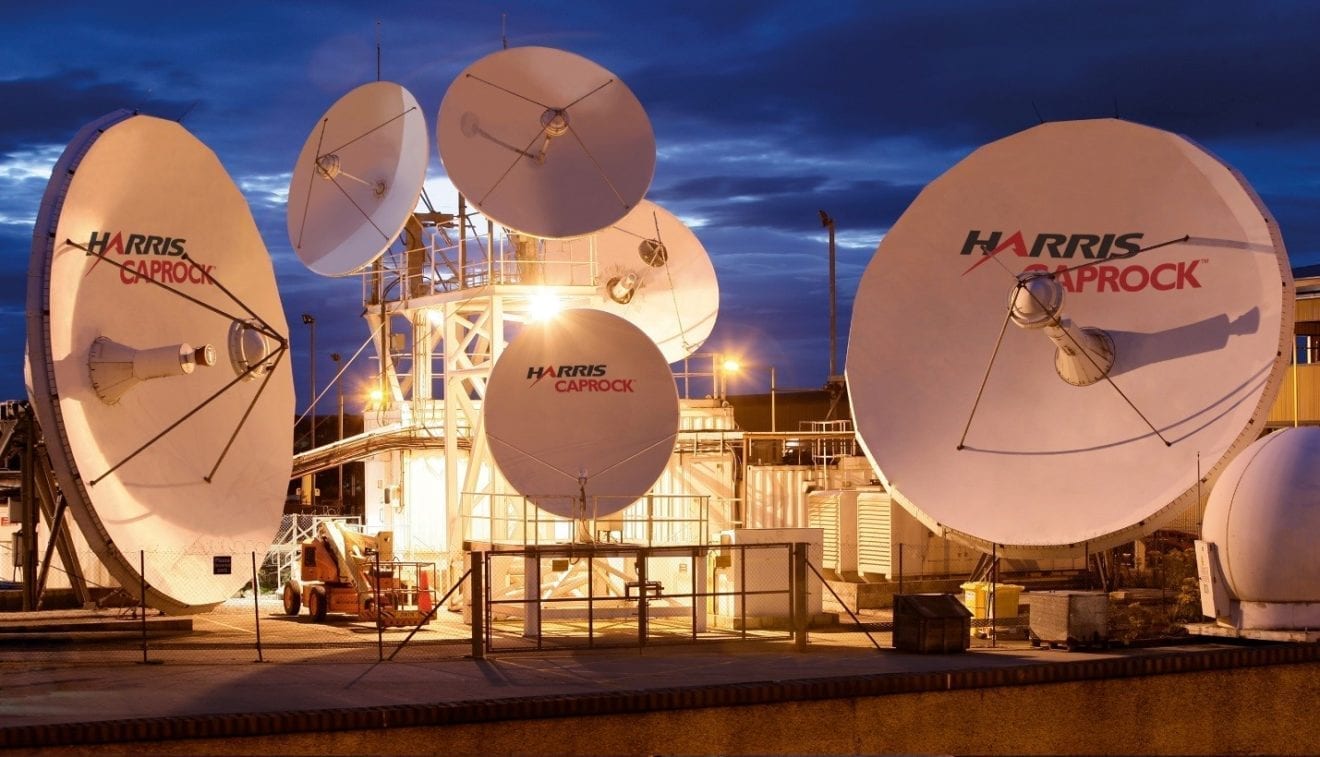
    Satellite services provider SpeedCast has arranged to acquire Harris CapRock for $425 million, to strengthen its presence in the maritime industry.

    CapRock also has a large presence in the energy industry, giving SpeedCast an avenue for future expansion.

    The combined company will service over 6,200 maritime vessels, hundreds of offshore edge and platforms, as well as enterprise and government customers worldwide.

    “The acquisition of Harris CapRock is a transformational opportunity for SpeedCast. With this acquisition SpeedCast becomes the global leader in the industry, with a scale that enables us to deliver world-class services and support in over 100 countries,” Speedcast CEO Pieere-Jean Beylier said.

    “Harris CapRock’s industry-leading product and technology portfolio also gives us the ability to deliver innovative new offerings to customers across the maritime, energy, enterprise, telecom and government segments.”

    He said the acquisition will also help SpeedCast expand its presence in the cruise ship segment of the maritime market, building on the company’s acquisition of Europe-based WINS Limited from Eutelsat Communications and Maltasat for €60 million ($66.3 million) earlier this year.

    The deal requires anti-trust and regulatory approval, and is expected to be complete by the end of the first quarter next year.

  • India’s Trai sets 512kbps broadband speed minimum

    India’s Trai sets 512kbps broadband speed minimum

    The Telecommunications Regulatory Authority of India (Trai) has instructed the market’s fixed line operators to guarantee a minimum download speed of 512kbps at all times.

    In a new directive, Trai set the minimum required speed to be considered broadband at 512kbs and ordered the nation’s operators not to reduce their speeds below this even when throttling customers for excess data use.

    ISPs as well as mobile broadband subscribers have also been told to provide information on data usage limits, connection speeds and capped speeds in any advertisements published in any media covering broadband plans.

    New and existing subscribers must also be informed of this information over email or SMS.

    Finally, operators will need to provide alerts to customers via these channels when their data usage reaches 50%, 90% and 100% of their allocation, and to maintain a portal or website to allow users to access their usage at any time.

    Operators including Bharti Airtel, Reliance Communications and Sistema Shyam Teleservices had urged the regulator to allow throttling to speeds of just 64kbps to prevent misuse of fixed broadband services. With the directive this request has now been rebuffed.

    But on the other hand, the government had previously considered setting 2Mbps rather than 512kbps as the minimum speed.

  • Smartfren launches carrier billing with Fortumo

    Smartfren launches carrier billing with Fortumo

    Indonesia’s Smartfren has launched direct carrier billing for the operator’s 12.5 million subscribers, in collaboration with mobile payments company Fortumo.

    The partnership will allow Smartfren to support carrier billing from Google Play and the Windows Phone Store, as well as select digital media and gaming companies.

    The World Bank estimates that only around 5 million of Indonesia’s 250 million citizens have a credit card, limiting most customers’ access to online content. By contrast over 65 million Indonesians own a smartphone.

    “With direct carrier billing supported by Fortumo, our subscriber will be able to purchase their in-app items and premium memberships as easy as deducting their own Smartfren balance or bill, and this is fully supported by our widest 4G LTE network for the best experience to enjoy the services,” Smartfren SVP of digital services Revie Sylvaina said.

    In August, Smartfren rival Indosat Ooredoo made a similar deal to bring Fortumo’s direct carrier billing services to its own mobile customer base. Fortumo has also recently announced partnerships with Tri in Indonesia and Globe Telecom in the Philippines.

  • Globe Telecom expands Cartoon Network app in Philippines

    Globe Telecom expands Cartoon Network app in Philippines

    Globe Telecom in the Philippines is providing a major enhancement to its Cartoon Network Watch and Play app, allowing customers to livestream Cartoon Network and on-demand content via a new authenticated service.

    Globe customers will soon be able to log in to the free app using their username and password to unlock an array of value-added services, which includes livestreaming the channel on devices, games and access to full episodes on demand.

    In addition, Cartoon Network Anything – a micro-network that presents short-form content – is now offered as part of the Globe app bundle.

    “This partnership creates a truly unique and enjoyable second-screen brand experience for kids to enjoy and for parents to trust,” said Phil Nelson, Turner’s managing director in Southeast Asia.

    Both apps let kids enjoy their favorite characters and shows whenever. Fueling their imagination, they allow them to be a hero with Ben 10 and the Omnitrix, rule the Candy Kingdom with Princess Bubblegum, flip out with The Powerpuff Girls, or embark on mathematical adventures with Finn and Jake whenever they want.

    “Together with Turner, we are able to give our customers a more wonderful digital entertainment experience on mobile,” said Dan Horan, Globe senior advisor for consumer business.

    Dedicated data usage for the apps will be offset via a data wallet system, available via users’ subscription plans, meaning they won’t have to worry about eating into their monthly allowance.

  • Oculeus introduces real-time fraud traffic blocking

    Oculeus introduces real-time fraud traffic blocking

    OSS/BSS vendor Oculeus has introduced real-time traffic fraud blocking capabilities to its Oculeus Anti-Fraud offering.

    The new capabilities are designed to eliminate or significantly reduce revenue losses caused by fraudulent traffic by conducting the fraud evaluation and blocking in real-time before the start of a call.

    The new functionality, introduced in the new version 5.0 of Oculeus Anti-Fraud, uses a SIP redirect server and pre-call fraud detection engine to monitor and evaluate pre-call attempts.

    “Combating fraud and finding a solution to stop the severe revenue losses that fraud is causing are high on the agendas of executives and account managers of most providers of voice-based communications services in all regions around the world,” Oculeus CEO Amd Baranowski said.

    “The new Live Traffic Fraud Blocking capabilities will uniquely help services providers prevent more fraud than ever, even before revenue losses occur.”

    Baranowski said demand for Oculeus’ anti-fraud solution is high in Asia, and that as well as traditional operators, the company is experiencing demand from OTT players.

    “As many OTT players expand their services and functionality, their exposure to fraud also grows,” he said.

    “For instance, when the incoming and outgoing calls from an OTT service interact with the telephony network, the OTT is exposed to fraudulent activity, especially to expensive call durations and destinations.

  • ZTE launches Big Video 4K+ solution

    ZTE launches Big Video 4K+ solution

    ZTE has launched its Big Video 4K+ solution for the European market, which includes ZTE’s latest smart terminals and Big Video-based smart home service.

    ZTE’s Big Video 4K+ solution consists of four sub-solutions, namely fixed-mobile convergence, intelligent operation, intelligent maintenance and 4K smart terminal.

    “The market consolidation is accelerating and it is important for operators to quickly integrate their fixed network and mobile networks to offer Big Video services that can address this increasing customer need,” said Cui Liangjun, VP of ZTE.

    “ZTE’s 4K+ solution provides fixed-mobile convergence to support the convergence of fixed and mobile service platforms, content delivery networks (CDN) and multi-screen terminals.”

    The solution is designed to meet diversified customer requirements and bring users an ultimate video experience with key features including unified platform, cloudized deployment, intelligent operation and maintenance (O&M), multi-screen access and ultra-high definition.

    The ZTE Big Video 4K+ solution provides intelligent operation and intelligent maintenance based on a big data platform. With powerful data mining and analysis, management, and scalability, the solution offers customers a visualized online maintenance management (OMM) portal and end-to-end intelligent fault location to improve terminal users’ video experience.

    Meanwhile, the intelligent operation platform supports precision marketing, targeted advertising, personalized EPG, as well as providing data support for innovative digital services required by industries such as medical care, education and travel. The solution’s big data based multi-dimension user analysis and modelling capability provides reference for users when making operation-related decisions.

  • DoCoMo 1H profit grows 27.8%

    DoCoMo 1H profit grows 27.8%

    Japan’s NTT DoCoMo grew its net profit for the six months ending in September by 27.8% to 405.41 billion yen ($3.87 billion), on the back of a 3.3% increase in revenue to 2.29 trillion yen.

    DoCoMo attributed the revenue growth in part to recovery of telecoms services revenue as a result of the growth in mobile data consumption of segments of its postpaid subscribe base.

    Expanding demand for smartphones and tablets and the growth in the number of DoCoMo Hikari fiber customers, as well as the operator’s smart life and other non-core businesses, also contributed to the gains.

    Total telecoms revenue grew 2.7% to 1.86 trillion yen. DoCoMo’s mobile subscriber base grew 6.5% to 72.9 million, with LTE customers up 19.6% to 41.28 million, while total docomo Hilari subscriptions grew to 2.53 million.

    ARPU increased 6.8% to 4.380 yen, driven by a 7.5% growth in data ARPU to 3,140 yen. But voice ARPU also grew by 5.1% to 1,240 yen, and MOU was up 3.8% to 136.

    Capex meanwhile reached 246.1 billion yen, up 12% from a year earlier, as DoCoMo invested in expanding the reach of its “premium 4G” service.

    Looking ahead to the full financial year, DoCoMo said the competitive environment has changed significantly, with competition intensifying due to the government’s pro-competition policy, the market entry by MVNOs and other factors. Technological developments have also brought about active competition and collaboration with players from other industries.

    But the company has raised its projected net income for the full year to 655 billion yen. This would compare to a net income of 548.4 million in the prior financial year. Revenue is meanwhile expected to grow to 4.61 trillion yen, from 4.57 trillion yen a year earlier.

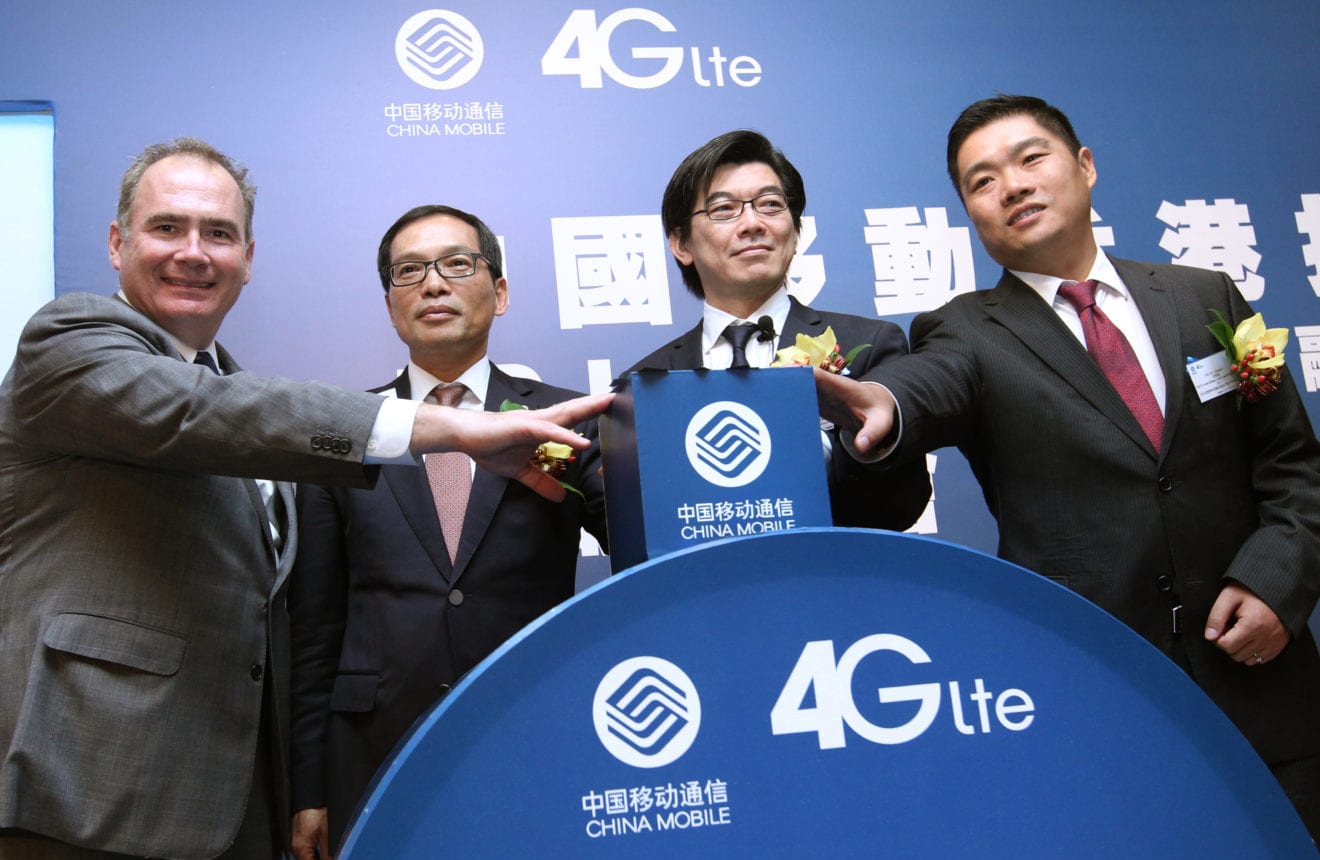
  • HKBN Mobile launches Greater China 4G plans

    HKBN Mobile launches Greater China 4G plans

    Hong Kong Broadband Network’s new Mobile Services MVNO division has launched a line of Greater China 4G plans for corporate customers who frequently travel between mainland China, Hong Kong, Macau and Taiwan.

    The new mobile plans include data allocations shareable across the four markets via a single SIM. HKBN is using China Mobile Hong Kong’s 4G network to provide the service.

    HKBN secured an MVNO a license in July, and launched mobile services in September, introducing a range of consumer plans including a HK$446 ($57.50) unlimited 4G service.

    The new corporate 4G plans range from HK$198 for 1GB of data shareable across the four markets to HK$448 for 10GB of data.

    Each plan comes with unlimited voice calls and SMS, as well as free call management value added services during the contract period and free use of the MobileOffice Plus app, which allows smartphone users to remotely make and receive calls from their designated business number from anywhere.

    “With increasing business travelling between Mainland China, Hong Kong, Macau and Taiwan, cross-border data services are in high demand,” HKBN chief commercial officer for enterprise solutions Billy Yeung said.

    “By partnering with CMHK, we are best positioned to offer our customers high-value and cost-effective Greater China service plans.”

  • New Zealand to extend rural broadband initiative

    New Zealand to extend rural broadband initiative

    The New Zealand government has allocated a further NZ$150 million ($107.1 million) towards improving broadband connectivity in rural areas.

    The government has announced the next phase of the rural broadband initiative (RBI), a project to boost broadband coverage and speeds in the 25% of the population not due to be covered by the concurrent Ultrafast Broadband (UFB) project.

    Under the second phase of the RBI program, improved broadband will be delivered to communities unable to access broadband speeds of at least 20Mbps. The first phase of the program improved speeds for around 293,000 rural users.

    In addition, the government’s mobile black spot fund (MBSF) will improve the availability of mobile services in areas lacking coverage, including state highways and tourist areas.

    There are more than 200 blackspots listed in the government’s request for proposals, but not all locations will received coverage.

    “My aim is to provide high-speed broadband to the greatest number of under-served rural New Zealanders within the funding available, and give regional communities access to high-speed broadband. We also want to improve the reach of mobile services to support safety on State Highways and enhance the visitor experience for tourists,” communications minister Amy Adams said.

    “We’ve set an ambitious goal of ensuring that by 2025, 99% of New Zealanders will have access to broadband peak speeds of at least 50Mbps, and everyone will have at least 10Mbps. We’re interested in seeing how proposals for delivering coverage under the RBI2 and MBSF programmes show an upgrade path in line with this vision.”

  • India to have nearly 1b mobile subs by 2020

    India to have nearly 1b mobile subs by 2020

    India has become the second-largest mobile market in the world, and is on track to reach nearly 1 billion unique subscribers by 2020, according to the GSMA.

    A new report from GSMA Intelligence indicates that by the end of June 2016, 616 million unique users had subscribed to mobile services in India, making the country the second-largest mobile market globally.

    India is also expected to see a significant increase in mobile subscriptions, broadband and connectivity with almost a billion unique mobile subscribers expected by 2020. This marks a period of rapid development of the country’s mobile economy, according to the study.

    The country overtook the US in 2016 to become the world’s second-largest smartphone market with an installed base of 275 million devices.

    According to the report, improving affordability, falling device prices and operator investments in network coverage and quality will help deliver an additional 330 million unique subscribers in India by 2020, lifting the country’s penetration rate to 68% per cent of the population, an increase from 47% in 2015.

    India is also seeing an technology shift to mobile broadband services. The number of 3G/4G mobile broadband connections is forecast to reach more than 670 million by 2020, 48% of the total connection base.

    There will also be an accelerating move to 4G over this period. The number of 4G connections is forecast to grow rapidly, growing from just 3 million at the end of 2015 to 280 million by 2020. In addition, the industry is set to invest heavily, with operator capex growing to $34 billion for the period 2016 to 2020.

    “With this report, all signs point to a period of tremendous growth for India’s mobile economy, which will strongly support and enable the government’s ‘Digital India’ initiative aimed at providing broadband connectivity to all,” GSMA director general Mats Granryd said.

    “To fully realize India’s tremendous market potential, review and reform in key areas, including modernizing regulation and long-term planning for spectrum allocation, would accelerate mobile broadband access and adoption across the country,” he adds.

  • Huawei to launch NB-IoT solution in early 2017

    Huawei to launch NB-IoT solution in early 2017

    Huawei has revealed plans to commercialize its end-to-end narrowband IoT solution early next year, to help operators expand their IoT services into new markets.

    The vendor plans to release the world’s first 3GPP standards-based NB-IoT commercial system-on-a-chip, Boudica, that can be deployed with the Huawei LightOS operating system.

    Huawei has meanwhile unveiled SoftRadio, a software suite to help developers access NB-IoT open labs via the internet.

    The solution will also involve eNodeB base stations, an IoT packet core supporting flexible deployment of Core in a Box and NFV, as well as a cloud-based IoT connection management platform with big data capabilities.

    The converged NB-IoT offering will be tested in a large commercial trial this quarter before being released to the market in early 2017.

    “NB-IoT has unique advantages in supporting IoT applications. Huawei will help carriers accelerate the commercial adoption of NB-IoT and the maturing of the industry chain,” Huawei VP of marketing and solutions Jiang Wangcheng said.

    “The IoT project and the success achieved so far fully demonstrate this commitment of ours.”

    Huawei’s launch plans were announced at the Huawei eco-CONNECT Europe 2016 conference held in Paris last week.

  • Sunil Bharti Mittal named GSMA chairman

    Sunil Bharti Mittal named GSMA chairman

    Sunil Bharti Mittal (pictured), founder and chairman of India’s Bharti Enterprises, has been named as GSMA chairman from January 2017 to December 2018.

    Mittal, the first Indian to be elected as chair of GSMA, will oversee the strategic direction of the organization, which represents nearly 800 of the world’s mobile operators, as well as more than 300 companies in the broader mobile ecosystem.

    Mittal will succeed Jon Fredrik Baksaas, who will step down from the board at the end of 2016, after holding this position for the past three years. He was elected as a member of the GSMA board in 2008.

    “I am delighted to be elected as chairman of the GSMA, and look forward to working closely with the rest of the board, the GSMA leadership team and our entire membership to address the critical issues facing our industry and our customers,” said Mittal.

    “I am excited about what the next chapter holds for us, as we work to connect everyone and everything to a better future. In my new global role, I am also excited to support the ongoing mobile broadband revolution in India to boost the Government’s Digital India Program and its vision of broadband access for all.”

    The GSMA has also elected the new members of the board and re-elected Mari-Noëlle Jego-Laveissiere, executive vice president, Innovation, Orange Group as a deputy chair for a two-year period.


  • China Unicom developing 5G VR streaming tech

    China Unicom developing 5G VR streaming tech

    The China Unicom Network Technology Research Institute is working on a new use case for advanced technologies including 5G and VR – panoramic VR streaming of live video using drone technology.

    China Unicom and wireless broadband technology provider Baicells are developing a prototype mobile edge computing VR live video technology using Artesyn Embedded Technologies’ MaxCore mobile edge computing acceleration platform.

    The technology uses the emerging panoramic video collage algorithm and transmission protocol to provide VR video streaming from drones equiped with 360-degree high-definition cameras.

    Users can manipulate their perspective in real-time, providing a more immersive live VR experience.

    “This end-to-end solution can be applied not only to concerts, sporting events, films and other entertainment industries, such as the Mid-Autumn festival, live CCTV broadcasts using VR panoramic technology, but it can also be applied to public safety, emergency communication, UAV inspection, and much more,” Baicells research director Mingyu Zhou said.

    “We believe China Unicom and Baicells’ joint research and development can help users experience live HD VR video transmissions more quickly and smoothly.”

    “MEC provides a distributed computing environment for application and service hosting, bringing cloud technologies closer to the RAN and ultimately, closer to consumers,” Artesyn marketing VP Linsey Miller added.

    “Carriers are telling us that for these applications they need telco-grade features, which is Artesyn’s expertise.”