Category: Telecom

Retail News Asia is committed to providing both local and global retailers with the latest Telecom & Telco news throughout the Asian market. This on a daily base.

  • Dialog Axiata revenue grows 19% in 9M16

    Dialog Axiata revenue grows 19% in 9M16

    Sri Lanka’s Dialog Axiata has reported a 19% increase in revenue for the first nine months of the year to 64 billion rupees ($430.9 million) as a result of a temporary suspension of value-added tax (VAT) and strong growth momentum across the operator’s business.

    Net profit for the period grew 71% to 7.8 billion rupees as a result of improving profit margins and significantly lower forex losses.

    Dialog Axiata increased its mobile subscriber base by 10% year-on-year to 11.3 million, mostly from prepaid services. The company also recorded 43,000 net additions to its subscription TV service.

    Broadband revenue for the nine-month period grew 27% to 6.76 billion rupees, but the broadband segment recorded a net loss of 62 million rupees due to aggressive fixed LTE and fiber expansion.

    Total group capex for the nine months reached 12.7 billion rupees, with the high-speed broadband investments dominating spending.

    Blended ARPU grew 3.8% during the third quarter to 406 rupees, while average minutes of use edged up by 1 minute to 133.

  • Singapore’s IMDA plans Li-Fi trials

    Singapore’s IMDA plans Li-Fi trials

    The Infocomm and Media Development Authority (IMDA) of Singapore has invited companies to participate in planned trials of Light-Fidelity (Li-Fi) technology.

    The authority will waive frequency fees associated with Li-Fi trials, and will offer companies interested in conducting the trials the ability to use an existing technical trial framework.

    Li-Fi is being developed as a potential Wi-Fi alternative capable of delivering speeds up to 100 times faster than the radio technology. The technology uses the visible light portion of spectrum between 400-THz and 800-THz.

    But unlike WI-Fi, Li-Fi cannot penetrate objects such as walls, so it would most likely serve as a complementary rather than a replacement technology.

    IMDA said there is a growing awareness of and interest in the technology in Singapore. In July, Temasek invested in Edinburgh-based pureLiFi, and companies including StartHub are working with pureLiFi to explore bringing the technology to the city state.

    As well as the potential in home and enterprise networking, Li-Fi opens up significant location-based advertising and navigational opportunities for businesses, IMDA said. Users of future Li-Fi enabled devices would be able to be beamed relevant information based on their locations.

  • Nokia to deploy first LTE-R network in Korea

    Nokia to deploy first LTE-R network in Korea

    Nokia has secured a contract to deploy the world’s first LTE-R (LTE-railway) LTE network in South Korea.

    The vendor will deploy the network on a railway line between Wonju and Gangneung as part of a line extension to prepare for next year’s Winter Olympics in PyeongChang.

    The network will support both operational and maintenance services on a high-speed commercial railway line operating at speeds of up to 250 km/h, providing high-speed connectivity between trains, stations and other railway facilities.

    Nokia said the project is intended to serve as a model for future deployments of LTE-R technology and help further define LTE-R standardization efforts.

    “South Korea has been a world leader in the use of mobile broadband technology to make public services of all kinds safer, more efficient and reliable,” Nokia head of Korea Andrew Cope said.

    “With a thirty-year history in the delivery of GSM-R mobile networking technology for railways, and as a pioneer in the development of LTE-R solutions, we are pleased to partner with KRNA to bring these cutting edge capabilities to the country as they prepare to host one of the world’s premier sporting events.”

  • Fujitsu Consulting India deploys SDN technology

    Fujitsu Consulting India deploys SDN technology

    Fujitsu Consulting India has deployed an end-to-end SDN infrastructure to support operations at its new 2,000-seat Global Delivery Center (GDC) in Pune and Bangalore.

    Fujitsu Consulting India selected Brocade’s SDN technology, partly due to the vendor’s open standard approach, which Fujitsu felt were critical to fully realizing the benefits of SDN.

    Brocade switches form the campus network core at the new Fujitsu GDC, offering 96 wire-speed 10 Gigabit Ethernet (GbE) ports per switch and the capability to integrate up to a dozen switches into a high-performance stack.

    The stack can be managed as a single device delivering up to 5.76 Tbps of aggregated stacking bandwidth.

    “Being successful in outsourced development requires more than just great design and programming talent. It also needs a high-performance IT infrastructure capable of keeping development teams productive 24×7, with the flexibility to emulate clients’ environments, which are of an increasingly hybrid-cloud nature,” Fujitsu Consulting India group head of IT and CISO Mohammed Shahed Khan said.

    “In putting together the specifications for our new Bangalore GDC and upgrade of the Pune GDC, it was clear that we would need to go beyond traditional networking to deliver the capabilities we see as essential to a successful future.”

  • PT Telkom has added a number of new wifi hotspots in Bali

    PT Telkom has added a number of new wifi hotspots in Bali

    The hotspots are under the network’s “Wifi.id.corner” program, which has users register for accounts and choose from a variety of packages that Telkom touts as affordable. 

    The new Wifi.id.corner spots are split between the island’s capital city, Denpasar, and north Bali city, Singaraja. 

    “In Bali, the fixed broadband services through Wifi.id.corner are spread across 200 locations. 170 of them are in Denpasar and 30 others in Singaraja, Buleleng,” quoted Nusra Suparwiyanto, executive vice president of PT Telkom Region 5 (East Java/Bali), as saying. 

    Suparwiyanto says Telkom is responding to the growing needs of Bali netizens with these 200 hotspots, which can be found in public spaces such as schools, universities, housing complexes, ports, and also city parks.

    Here’s the impressive part though—this wifi is supposed to be pretty darn fast. According to Suparwiyanto, the network is boasting speeds above 100 mbps—a speed we’re sure most of us aren’t familiar with in Bali. 

  • India’s parliament addresses call drop controversy

    India’s parliament addresses call drop controversy

    An Indian parliamentary panel has taken up the issue of call drops on new mobile operator Reliance Jio Infocomm’s network.

    The panel met with GSM industry body COAI – representing the market’s incumbent operators – and Reliance Jio to discuss the reasons for the high number of call failures.

    Reliance Jio has been engaged in a bitter dispute with operators over the issue of frequent call drops. Earlier this month, Jio said around 50% to 60% of calls from Jio users to the three largest mobile network operators Airtel, Vodafone and Idea Cellular were failing or dropping.

    While this has recently contracted to around 25%, this still represents a substantial number of call drops and call failures..

    Reliance Jio has accused the operators of not making enough points of interconnection available to meet the demand for its pan-India mobile services. But incumbents have blamed the company’s strategy of offering free calls, which has led to a surge in network traffic.

  • Philippines to hold auction for 3rd telco in mid-2017

    Philippines to hold auction for 3rd telco in mid-2017

    The Philippines’ telecoms regulator NBTC plans to hold a spectrum auction for a third entrant into the mobile market in mid-2017.

    The spectrum surrendered by incumbents Globe and PLDT as a condition of their acquisition of San Miguel’s telecoms assets will be bundled together for the auction.

    According to the report, spectrum in the 700-MHz, 2500-MHz, 800-MHz and 3500-MHz bands will be put on the block.

    Several groups have already expressed an interest in potentially participating in an auction to create a third operator. Conglomerate San Miguel had originally intended to fulfil this role, but negotiations with Australia’s Telstra to form a joint venture for the purpose fell through earlier this year.

    San Miguel subsequently sold off all its telco assets to the two incumbent operators for around $1.5 billion. The main motivation was to gain a part of the 700-MHz spectrum band, which San Miguel held the exclusive rights to.

    But as a condition of the acquisition Globe and PLDT were required to relinquish part of the 700-MHz band – as well as spectrum in the 850-MHz, 2500-MHz and 3500-MHz bands – to allow for the potential entry of a third competitor.

    Advocacy groups have expressed concern that the bundle of spectrum due to be put up for auction will not be enough to sustain a major third player, noting that PLDT and Globe between them own nearly 80% of the total available spectrum. Parts of the remaining 20% will be unusable due to the presence of guard bands.

  • Singtel Q2 revenue falls 2.3%

    Singtel Q2 revenue falls 2.3%

    Singtel has reported a 2.3% decrease in group revenue for its fiscal second quarter to S$4.08 billion (2.89 billion), as the company felt the impact of regulatory changes in Australia.

    Australian competition regulator ACCC’s decision last year to cut termination rates from 3.6 to 1.7 cents per minute impacted the performance of Singtel’s wholly-owned Australian subsidiary Optus. Excluding this impact, revenue would have grown 2% to S$4.28 billion.

    The impact of the rate cut contributed to Singtel reporting an 8% decline in its group consumer revenue, covering both Singapore and Australia. In Singapore, revenue fell 3% due largely to lower handset sales and a rise in penetration of lower-priced Android handsets.

    Group enterprise revenue by contrast grew 5% on the back of strong demand for cyber security and international data services.

    Net profit fell 6% year-on-year to S$972 million, due to exceptional gains recorded by Indian mobile affiliate Airtel in the previous corresponding quarter.

    Underlying net profit by comparison was stable for the quarter and up 3% for the first half of the financial year.

    Regional mobile associates’ pre-tax profit contributions grew 7% to S$679 million as a result of strong operating results from Airtel and Indonesia’s Telkomsel. The latter’s pre-tax profit jumped 22% as it reaped the results of investments in its voice, data and digital businesses.

    The group’s total customer base – including its mobile affiliates – grew 3% to 629 million subscribers.

    Singtel is currently projecting a low single digit decline in group operating revenue but stable ebitda for the full year.

  • Ooredoo to deploy Ericsson cloud-ready revenue system

    Ooredoo to deploy Ericsson cloud-ready revenue system

    Ooredoo Group has signed a five-year contract with Ericsson to implement the Swedish vendor’s revenue management system across the group’s operations in the Middle East, North Africa and Southeast Asia.

    Ericsson Revenue Manager, a cloud-ready convergent charging and billing system, provides Ooredoo with a number of advantages as the telco group updates its product portfolio and drives the development of digital innovation across its markets.

    Simple configuration reduces dependency on technical departments, makes it easier and faster to launch new services with tailored pricing and packages. This enables Ooredoo companies to offer customers new services and the products they need in minutes, rather than months, the companies said.

    The solution will also help Ooredoo more easily create digital services that spans beyond telecoms and integrates with partners from different industries.

    “Across our footprint, Ooredoo is aiming for data experience leadership, and placing renewed emphasis on empowering our customers and giving them the services they need when they need them,” said Waleed Al Sayed, deputy CEO at Ooredoo Group.

    Through this agreement with Ericsson, we will enable every Ooredoo operation to deliver fast, customer-oriented offers and launch new data products and services that support our growing portfolio of digital services and enables the growth of the Internet of Things.”

    Ooredoo will begin rolling-out the solution for Indosat Ooredoo, its largest operation in Indonesia, over the next month, before deploying across its other operations later this year and 2017.

    Upon the completion of the project, Ooredoo is expected to realize significant cost savings from replacing its existing systems and local agreements with a pioneering new group-wide license model.

  • TrueMove deploys Procera’s ScoreCard

    TrueMove deploys Procera’s ScoreCard

    Thai mobile service provider TrueMove has deployed Procera’s ScoreCard technology to monitor the quality of experience (QoE) its network is delivering to subscribers across 2G, 3G, and 4G LTE.

    ScoreCard is being used for raw QoE KPI intelligence and the visualization of network performance, thereby helping to guide capex investments and better service planning.

    TrueMove’s management can quickly use the data and visualization to further aid business investment decisions, maximize ROI, and reduce churn among the subscriber base.

    “Mobile operators are increasingly differentiating their offerings by delivering a differentiated experience to subscribers,” said Viriya Upatising, CIO at TrueMove.

    “Procera’s solutions enable TrueMove to see the actual experience delivered to their subscribers in real-time, and ScoreCard provides unique QoE KPIs and visualization that is ensuring the experience is a good one for all subscribers.”

    As higher bandwidth mobile devices, connected cars, and the Internet of Things (IoT) continue to proliferate, TrueMove needs better intelligence about the QoE delivered to subscribers to maximize the return on investment for its capex.

    ScoreCard has been deployed across TrueMove’s network to measure the quality of mobile broadband delivery. No Personally Identifiable Information (PII) is collected from the subscribers, but the overall quality of the broadband service is measured and fed back to a centrally deployed Procera Insights system.

    ScoreCard has already identified several areas of investment that will improve the QoE of the TrueMove network, and action has been taken to enhance the subscriber experience based on ScoreCard’s recommendations.

  • China Mobile deploys wideband Massive MIMO

    China Mobile deploys wideband Massive MIMO

    China Mobile Shanghai and Huawei have jointly deployed the world’s first wideband Massive MIMO site to help improve 4G network spectral efficiency.

    China Mobile has been focusing on the design of wideband Massive MIMO as part of its research on 5G. The technology been oriented specifically towards large-scale commercial use by the operator.

    Wideband Massive MIMO allows a single module to support the activation of three 2.6-GHz carriers, potentially allowing for a three-fold increase in the spectral efficiency of cells.

    The live deployment in Shanghai has achieved peak cell throughput rates of 72Mpbs using an uplink 8-stream capability configuration, as well as 630Mbps downlink.

    Huawei said the technology supports a smooth transition to CloudRAN architecture, while its in-house developed chips and optimization techniques helps provide processing capabilities four times higher than that of the industry standard.

    The technology is particularly suited to meeting specialized coverage requirements such as high-rise buildings.

  • Dtac taps Nokia to revamp core network

    Dtac taps Nokia to revamp core network

    Thailand’s Dtac has become the market’s first mobile operator to implement an SDN-ready IP/optical network using equipment from Nokia.

    Dtac is implementing the technology to replace its existing IP core routing and DWDM infrastructure, in order to achieve the capacity to serve Thailand’s fast-growing mobile subscriber base.

    The deployment also includes Nokia’s security gateway for Dtac’s LTE network.

    “Over the last two years we’ve seen demand for mobile broadband grow exponentially,” Dtac CTO Prathet Tankuranun said.

    “As we prepare for future advanced technologies we’ve made a strategic choice for an SDN-ready IP/Optical network because it gives us the control and agility needed to run an efficient network that can rapidly adjust to evolving demand patterns. This deployment with Nokia is an important next step in our migration towards full SDN automation.”

    Nokia Thiland head Sebastien Laurent added that the deployment “provides the foundation for an SDN-centric network and will allow dtac to implement on-demand services while also easing operation and maintenance demands.”

  • Ericsson deploys Elastic RAN for SoftBank

    Ericsson deploys Elastic RAN for SoftBank

    Ericsson has completed the first commercial deployment of its new Elastic RAN for Japan’s SoftBank, and entered an agreement to build a 5G trial network in parts of Tokyo with NTT DoCoMo and Intel.

    SoftBank has implemented Ericsson’s Elastic RAN at Tokyo station, one of the biggest train stations in the world.

    The deployment allows for an unlimited number of cells to be co-ordinated across a network to improve flexibility in the aggregation of different network carriers.

    Ericsson said tests indicate that downlink throughput has increased by up to 40% during peak hours for commuters using three-carrier aggregation compatible smartphones.

    “The Japanese market is highly developed, and our customers enjoy using the latest mobile broadband technologies with their smartphones and applications,” SoftBank SVP and deputy head of technology Hideyuki Tsukuda said.

    “We are excited to partner with Ericsson in the first introduction of the Elastic RAN solution to enable peak performance of the most advanced smartphones in the world, in the densest and most challenging areas of our network.”

    He said SoftBank plans to continue deploying the RAN across these dense urban areas.

    Ericsson separately announced an agreement with DoCoMo and Intel to build a 5G trial network in parts of the city from 2017.

    Ericsson will provide 5G radio, baseband, virtualized RAN and core networks, while Intel will contribute its chipset in user devices. The trial will use the 28-GHz spectrum band that the Japanese government is considering designating for 5G use.

  • StarHub launches device leasing service for SMEs

    StarHub launches device leasing service for SMEs

    StarHub has launched a new service that provides SMEs with the devices, software and technical support necessary to meet their IT needs at a monthly flat fee.

    The “device subscription service” was designed to help SMEs seeking to make a successful start quickly, raise productivity with an IT upgrade, or scale up operations by adding employees.

    StarHub has partnered HP to provide desktop and notebook PCs, as well as print devices for the new Device Subscription Service.

    SMEs can choose from a variety of price plans to access the right combination of devices that best address their needs over 24 or 36 months. All new and existing StarHub Business Fibre Broadband or Business Mobile customers can enjoy a limited-time offer of S$15 ($10.60) monthly savings for every Device Subscription Service plan subscribed.

    After this discount, the Office User plan charges S$43.00 per month for the use of an HP desktop while the Mobile User plan, priced at S$48.00 per month provides access to an HP notebook. A printing plan can also be selected for S$22 or S$35.00 per month depending on device.

    SME customers can subscribe to Device Subscription Service on top of StarHub’s Smart Office Suite, to enjoy a bundle consisting of fiber broadband, mobile connectivity, office phone service, and related hardware, software and IT support.

    All HP devices from Device Subscription Service will come pre-installed with Windows 10 Pro, McAfee internet security software and the option to subscribe to business productivity tool, Office 365, allowing customers to start sending emails and enjoying protection from cyber malware right from the point they turn on the devices, alleviating the hassle of purchasing and installing the software separately themselves.

    Device Subscription Service provides a dedicated technical helpdesk as well as next business day, on-site technical support for devices. This will also save customers the hassle of sending faulty devices to a service center for repair, allowing them to fully focus on their core business.

    “Rising business costs and hiring difficulty remain top concerns among local SMEs. With Device Subscription Service, StarHub can help SMEs manage these challenges effectively by lowering upfront IT investment as well as taking away the complexity of maintaining an IT team,” StarHub vice president of enterprise solutions, services and delivery Sebastian Tan said.

    “As the IT spending is incurred as a monthly expense rather than an upfront capital investment, SMEs will be able to better allocate resources towards growing their core business.”


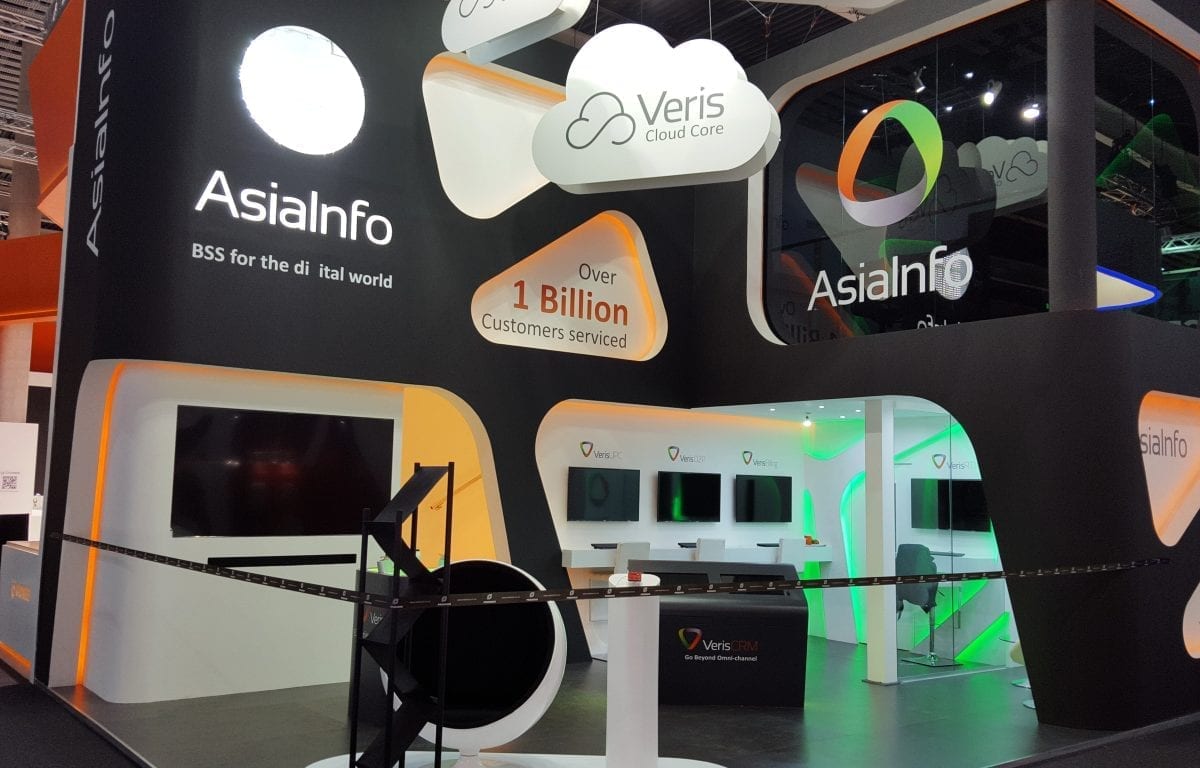
  • AsiaInfo strengthens cloud computing portfolio

    AsiaInfo strengthens cloud computing portfolio

    Chinese telecoms IT software company AsiaInfo has signed a strategic co-operation agreement with Alibaba Cloud, the cloud computing arm of Alibaba Group.

    The two companies said they will work together on projects and jointly promote China as a center of excellence for cloud computing services and innovation.

    The partnership will also see the pair share a wide range of resources and jointly build a more open cloud ecosystem to form the basis of a comprehensive portfolio of cloud-based services.

    AsiaInfo said the company is stepping up its transition from a supplier of IT solutions to telco service providers, to a specialist in enabling digital business transformation for operators, their partners and other enterprises.

    Cloud-based delivery platforms and exchanges play a key role in the company’s vision of the industrial and business-led Internet, and the partnership with Alibaba Cloud will enable the company to continue to develop and deliver advanced operator and business solutions, the company added.

    “We are entering a new era of the internet. An era where people and things become customers, where service providers and businesses become operators, and where cloud-based business technology platforms will form both the backbone and the brains of the digital network,” said AsiaInfo CEO Michael Wu.

    “Our partnership with Alibaba Cloud will ensure we stay at the forefront of developments and provide innovative and ground-breaking solutions to our customers.”