Category: Telecom

Retail News Asia is committed to providing both local and global retailers with the latest Telecom & Telco news throughout the Asian market. This on a daily base.

  • Australia may refarm 1.5-GHz, 3.6-GHz for MBB

    Australia may refarm 1.5-GHz, 3.6-GHz for MBB

    Australian telecoms regulator ACMA has proposed refarming spectrum in the 1.5-GHz and 3.6-GHz bands for mobile broadband, including potentially in future 5G networks.

    In a discussion paper, the regulator has proposed re-planning the spectrum bands in light of the international interest in utilizing them for mobile broadband by the ITU-R and APT, as well as individual countries. The regulator is seeking feedback from the industry and other stakeholders.

    ACMA said the bands are currently used for a range of other services – including satellite and fixed broadband services in the 3.6-GHz band, and defence use and fixed services in the 1.5-GHz band.

    “There are international standards that support 4G technologies in both the 1.5-GHz and 3.6-GHz bands. Importantly, the 3.6-GHz band is also being looked at internationally as an early band for 5G and the ACMA has decided to bring forward discussion of its future use,” ACMA chairman Richard Bean said.

    “This paper gives current users of the bands as well as potential new entrants an opportunity to help us better understand the issues relevant to each band. Their views will help us to determine what, if any, frequencies and geographical areas should be considered in a possible future re-farming of the bands for mobile broadband.”

  • Telstra close to launching Gigabit-class LTE

    Telstra close to launching Gigabit-class LTE

    Telstra has worked with Qualcomm, Ericsson and NETGEAR to develop the world’s first Gigabit-class LTE mobile device and Gigabit-class commercially ready LTE network.

    A new NETGEAR mobile router based on Qualcomm’s Snapdragon X16 LTE modem and Wi-Fi equipment will enable download speeds of up to 1Gbps over Telstra’s upgraded LTE network, which uses equipment supplied by Ericsson.

    Telstra now plans to conduct device, network and user testing ahead of a commercial launch, which is expected within the next few months.

    Combined, the equipment is capable of delivering Gigabit-level LTE speeds through a combination of 3x carrier aggregation, 4×4 MIMO on two aggregated carriers and 2×2 MIMO on the third, as well as 256-QAM.

    “We pride ourselves on our connectivity expertise and we continue that tradition today by completing the first commercialization of a Gigabit Class LTE network and device,” Telstra group managing director of networks Mike Wright said.

    “With the world’s first Gigabit Class LTE network, we have substantially improved our network capacity and increased real-world LTE download speeds, while also gaining a distinct advantage over competitors as we can now offer an entirely new class of LTE service.”

    Ericsson head of RAN products Per Narvinger added that “Telstra’s commercial ready Gigabit Class LTE network and device is an important milestone as it paves the path to 5G.”

  • Vietnam grants 4G licenses to three cellcos

    Vietnam grants 4G licenses to three cellcos

    Vietnam has granted 4G licenses to three of the market’s major mobile operators – MobiFone, military-run Viettel and state-owned VNPT.

    The operators have been granted permission to roll out LTE services over the 1800-MHz band.

    Each of the three operators have been piloting LTE and LTE-Advanced services in multiple cities, with Viettel launching a trial in late 2015, VNPT testing services since January this year and MobiFone commencing a pilot in July.

    The licenses will be allocated as part of Vietnam’s government-approved telecommunications development plan, which includes a target of covering 95% of the population with 3G and 4G services by 2020 as part of efforts to ensure nationwide coverage of broadband infrastructure.

    According to the report, major operators have indicated they will be ready to launch LTE soon after receiving the licenses. They will be valid until 2024.

  • China Mobile Hong Kong to upgrade network to 4.5G

    China Mobile Hong Kong to upgrade network to 4.5G

    China Mobile Hong Kong has contracted Huawei to fully upgrade the operator’s FDD/TDD converged LTE network to a 4.5G LTE-Advanced Pro network.

    The upgrade is aimed at offering customers a superior user experience and laying the groundwork towards a future 5G network evolution.

    In October last year, the 3GPP formally named LTE-Advanced Pro as the new LTE standard with the designation of 4.5G. China Mobile Hong Kong has commenced its network upgrade following a series of network optimization projects this year.

    “After stringent selection processes, we firmly believe that Huawei’s world leading network technology and equipment have made it the ideal partner for CMHK’s 4.5G network upgrade,” China Mobile Hong Kong director and CEO Sean Lee said.

    “We are very pleased to work with Huawei to upgrade our 4G mobile network to 4.5G for significant network capacity optimization and speed improvement, as well as achieving superior user experience for consumers and commercial customers.”

    Huawei president of carrier business Zou Zhilei added that the upgrade is aimed at reinforcing the operator’s market leading position.

    “Our advanced 4.5G technology will enable CMHK to capitalize on the emerging new devices, new businesses and new experiences, offering an excellent mobile video experience for customers in Hong Kong, as well as enhancing its capability in expanding enterprise and industry (B2X) segment,” he said.

  • Ericsson signs raft of content deals for Nuvu

    Ericsson signs raft of content deals for Nuvu

    Ericsson has signed a slate of deals with leading content distributors for its subscription video on demand (SVOD) service Nuvu, acquiring more than 2,500 hours of content from international distributors including Viacom (MTV, BET, Nickelodeon), MGM, CBS, Al Jazeera, DHX Media and Mattel.

    Titles include globally recognized hit TV franchises such as Hawaii Five-O, Next Top Model, CSI: Miami, Being Mary Jane, SpongeBob SquarePants, Bob the Builder, Vikings and many others along with a raft of premium Hollywood movies.

    Ericsson has also licensed dozens of pan-regional and local African TV series and movie content from distributors such as iRoko, Trace and Agwhyte International along with hundreds of music videos from the 960 Music Group, which is home to some of West Africa’s most influential music artists including P-Square, 2Baba and Yemi Alade.

    “We created Nuvu to help mobile operators in emerging markets to address a significant untapped market for video content,” said Thorsten Sauer, head of broadcast and media services at Ericsson. “Africa has some of the highest mobile adoption rates globally and there is a high demand for quality content from consumers.”

    Nuvu is a complete end-to-end SVOD service developed by Ericsson for mobile operators in emerging markets, which spans both the technology platform and the content licensing. The service leverages the company’s extensive over-the top capabilities based on Ericsson Managed Player and components of Ericsson MediaFirst TV Platform.

  • Hangzhou to harness Alibaba Cloud’s AI, analytics tools

    Hangzhou to harness Alibaba Cloud’s AI, analytics tools

    Alibaba Cloud announced at its recent Computing Conference that it will provide its AI, deep learning and data analytics capabilities for two new cutting-edge developments in China.

    Initiated by the Hangzhou government, the “Hangzhou City Brain” is set to address the city’s urban living challenges. As the hub to consolidate data and provide real-time analysis, the “Hangzhou City Brain” will rely on Alibaba Cloud’s AI program ET and big data analytics capabilities to perform real-time traffic prediction with its video and image recognition technologies.

    The project will support transportation departments’ efforts to ease traffic congestion and provide users with real-time traffic recommendations and travel routes.

    “By establishing the Hangzhou City Brain, Hangzhou is taking the lead in harnessing artificial intelligence and deep learning technologies to promote greater sustainability and improve the quality of urban living for Chinese citizens. Alibaba Cloud is proud to support and be part of this important development, “said Dr Jian Wang, chairman of Alibaba Group’s technology steering committee.

    With automated traffic system capabilities, intelligent adjustments of traffic lights will be performed on the spot; when a vehicle changes direction, the green light will automatically be extended. The pilot of world’s most advanced smart traffic management system in the Hangzhou’s Xiaoshan District, which started in September this year, has since seen an increase in traffic speed by 11%.

    The project is being led by the Hangzhou government in coordination with 13 firms including Alibaba Cloud. As part of the project, a research and development team of scientists from various companies has been formed.

    Forming the backbone of the “Hangzhou City Brain” data processing and analysis capabilities is Apsara, Alibaba Cloud’s large scale computing operating system, which is able to cluster millions of servers into a super computer and to support a multitude of cloud-based services by analyzing terabytes of data points. This computational engine is one of the largest of its kind in the world and uses propriety algorithms.

    Paving the way for astronomical data storage and analytics

    Aiming to leverage its technologies for astronomical data collection and analysis, Alibaba Cloud also announced at the Computing Conference its research collaboration with the National Astronomical Observatory of China (NAOC) on deep space exploration.

    The plans are to set up a data and research centre for astronomy, as well as a virtual solar observatory which will be supported by Apsara’s massive scalability and advanced capabilities to process astronomical data.


  • Alibaba Cloud picks Datapipe as global MSP partner

    Alibaba Cloud picks Datapipe as global MSP partner

    Alibaba Cloud has selected Datapipe as a global managed service provider partner, to help organizations entering China or Chinese companies venturing abroad adopt cloud environments.

    Under the partnership, Alibaba Cloud customers can look to Datapipe to plan, build and run their cloud environments. Datapipe will provide migration, management, and security of Alibaba Cloud solutions for computing, storage, database, CDN and big data.

    China-based Joyful Journey Travel is Datapipe’s first managed Alibaba Cloud client and is the first company to provide financial services to travelers in China.

    Datapipe’s team worked with Joyful Journey Travel to develop a solution based on Alibaba Cloud services including Elastic Computer Service instances, AsparaDB for Relationship Database Systems and Alibaba’s Cloud based CDN.

    “As a pioneer in managed cloud services the addition of Alibaba Cloud to Datapipe’s supported platforms and service capabilities was a natural step,” Datapipe VP of Asia Colin Chan said.

    “We look forward to working closely with Alibaba Cloud to help drive the global adoption of best practice enterprise cloud solutions.”

    “We’re pleased to welcome Datapipe as our global managed service provider partner,” Alibaba Cloud director of global marketplace alliances Unique Song added.

    “Datapipe’s experience in managing cloud environments for customers around the globe makes them well-positioned to help drive Alibaba Cloud deployments for customers in both China and overseas.”

  • Singtel expands MSS alliance with Akamai

    Singtel expands MSS alliance with Akamai

    Singtel announced it has expended its alliance with Akamai by becoming the world’s first telco provider to have its advanced security operations centre staff certified to deliver Akamai managed security services.

    The two companies teamed up last month to offer DDoS mitigation services based on Akamai’s Intelligent Platform to enterprises across APAC.

    Now this alliance has been expanded, with Singtel’s ASOC staff trained and certified to deliver professional managed and security services for Akamai’s web security portfolio in the region.

    Singtel is launching the capability for Singapore enterprises first before expanding it to other regional APAC markets.

    “This partnership augments our award-winning Managed Security Services by integrating our ASOC in Singapore with Akamai’s best-in-class cyber security solutions,” Singtel Group Enterprise managing director for cyber security William Woo said.

    “The partnership further strengthens our existing relationship with Akamai, taking it to a new level of collaboration to reinforce Singapore as a safe business hub, and the Asia Pacific as a region which is conducive for doing business.”

    Singtel operates a network of eight security operations centers across Asia, Europe and the US, including its advanced security operations center in Singapore.

  • AIS, Dtac enable cross-network VoLTE calls

    AIS, Dtac enable cross-network VoLTE calls

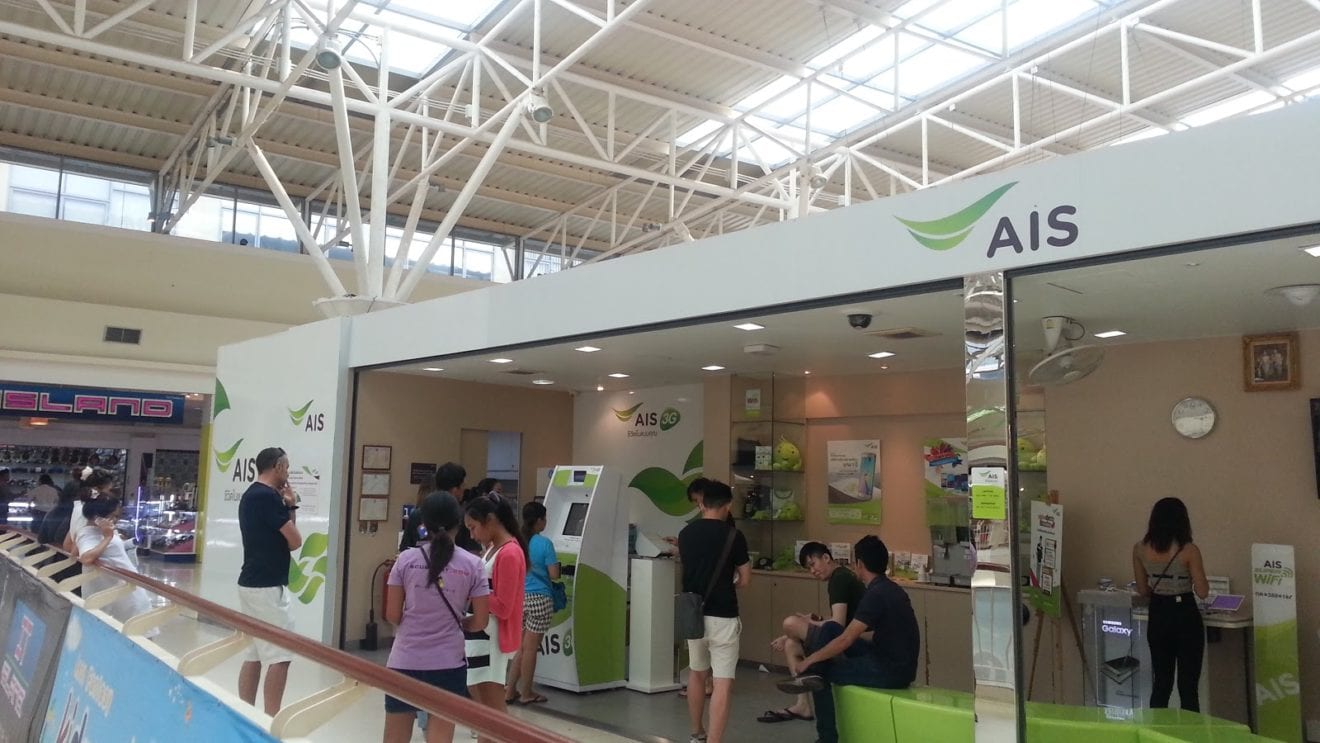
    In a first for the Asean region, Thai operators AIS and Dtac have teamed up to facilitate cross-network VoLTE calls.

    The operators enabled AIS-Dtac VoLTE calls last week and plans to implement cross-network 4G video calls from Tuesday.

    Cross-network VoLTE calls are being made available to both prepaid and postpaid customers at no additional cost.

    While each of Thailand’s top three mobile operators – AIS, Dtac and True Corp – recently launched VoLTE, the functionality had previously only been available for within-network calls.

    Industry watchers believe the move may be an attempt by market leaders AIS and Dtac to fend off competition from fast-growing challenger True Corp. But the Nation quotes True Corp’s chief commercial officer Kittinut Tikawan as stating that the company is confident it can negotiate simila deals with both AIS and Dtac.

    The move will also pave the way for the launch of the iPhone 7 and iPhone 7 Plus in Thailand later this month.

  • Bharti Airtel launches VDSL vectoring

    Bharti Airtel launches VDSL vectoring

    India’s Bharti Airtel has launched a new VDSL vectoring service the company has branded V-Fiber, capable of delivering speeds of up to 100Mbps.

    The company’s new service has been launched in Chennai, and is being rolled out across Airtel’s national broadband network – which spans 87 cities.

    Airtel will offer the service to its existing customers at no additional cost, except for the cost of an upgraded modem. For new subscribers, Airtel will offer an unlimited three month trial offer.

    The operator will now also offer all its fixed broadband subscribers unlimited voice calling at no extra cost, and is providing a rewards program to allow broadband customers to get 5GB of additional mobile data per month if they are also subscribed to Airtel’s mobile services.

    As part of Project Leap, Airtel’s nationwide network transformation initiative, the company is meanwhile augmenting its 550,000km of domestic and international fiber capacity to improve latency and customer service and meet growing demand for data services.

    “India is witnessing an explosive growth in data usage and a lot of in-home data consumption is happening over fixed broadband that offers consistent speeds. Airtel has always innovated ahead of the curve and offered its customers best-in-class broadband technology and experience,” Airtel director of operations Ajai Puri said.

    “With ‘V-Fiber’ and our national optic fiber backbone, we are all set to offer a future ready network for tomorrow’s digitally connected homes. This solution, besides reducing our carbon footprint, offers a very quick and convenient upgrade to the customer.”

    Airtel is bracing for the anticipated impact of the planned entry into the fixed broadband market of Reliance Jio Infocomm, the disruptive pan-Indian 4G service provider with an extensive existing fiber footprint.

  • Google, Facebook to build LA-HK cable

    Google, Facebook to build LA-HK cable

    The internet giants Google and Facebook apparently agree on at least one thing this month: that the world’s infrastructure is in need of another trans-Pacific cable system. They are teaming up with privately held Pacific Light Data Communication and TE Subcom to build the Pacific Light Cable Network, or PLCN.

    The new cable system will be a direct link between Los Angeles and Hong Kong. It will span some 12,800km between the two cities, potentially offering one of the lowest latencies available.

    PLCN will also incorporate the latest optical technologies, which means the total theoretical capacity will be the largest transpacific route so far – up to 120Tbps in all. It is expected to be launched commercially in the summer of 2018.

    It was just a few months or so since the that the FASTER cable, also backed by Google, came online between Japan and Oregon. The PLCN cable system will give them some diversity both by route and by landing station.

    For Facebook, this is the most public position on a transpacific cable they have taken. But in the Atlantic they are part of the group building the Marea cable system between Bilbao and Virginia Beach.

    TE Subcom will be doing the actual laying of the cable, of course. But I wonder who is behind the privately held PLDC over in Hong Kong.

  • Nokia deploys network for Kuala Lumpur rail line

    Nokia deploys network for Kuala Lumpur rail line

    Nokia has deployed a mission-critical advanced communications network for Kuala Lumpur’s new railway line.

    The Kelana Jaya light rail transit (LRT) line extension is now supported by an advanced communications network  supporting high-speed voice, data and video traffic.

    The network the railway operations and passenger services for the line’s 13 new stations, which see a combined 350,000 passengers daily.

    Nokia also provided systems integration services to enhance safety and security through remote diagnostics and automated functions; constant situation awareness with video surveillance; Supervisory Control and Data Acquisition (SCADA); monitoring systems; telephone and radio communications services; automated fare collection (AFC); and public address and passenger information systems.

    The project was completed in conjunction with CMC Engineering Sdn Bhd.

    “As one of the National Key Results Areas (NKRA) under the Malaysian government transformation program (GTP), the Kelana Jaya LRT Line Extension project is another important government initiative to deliver an effective and seamless public transportation system for the Greater Kuala Lumpur area,” CMC Engineering CEO.Hazwan Alif Abdul Rahman said.

    Stuart Hendry, head of global enterprise and public sector for Asia Pacific at Nokia, said railway operations can benefit enormously from modern communications networks.

  • ACCC likely to continue regulating ADSL access

    ACCC likely to continue regulating ADSL access

    Australian competition regulator the ACCC has made a draft decision to continue regulating access to Telstra’s wholesale ADSL network for a further five years.

    Former government monopoly Telstra is required to provide access to its ADSL network to competitors due to its dominant position in both the wholesale and retail ADSL markets. When a commercial agreement cannot be reached, Telstra must provide access at regulated prices.

    The ACCC had been investigating whether regulated access was still necessary given the progress of the rollout of the national broadband network (NBN).

    “Telstra retains its dominant position in both the wholesale and retail markets for the supply of ADSL fixed-line broadband services on a national level,” ACCC commissioner Cristina Cifuentes said.

    “Continuing regulation will ensure network providers continue to have access to Telstra’s copper network at reasonable prices. This will encourage them to continue competing in the retail market to develop and offer different ADSL broadband products to meet the needs of customers as they prepare to shift to the NBN.”

    A final decision on the matter is expected in early 2017, before the current access declaration expires.

  • India’s GCX expands cloud ecosystem

    India’s GCX expands cloud ecosystem

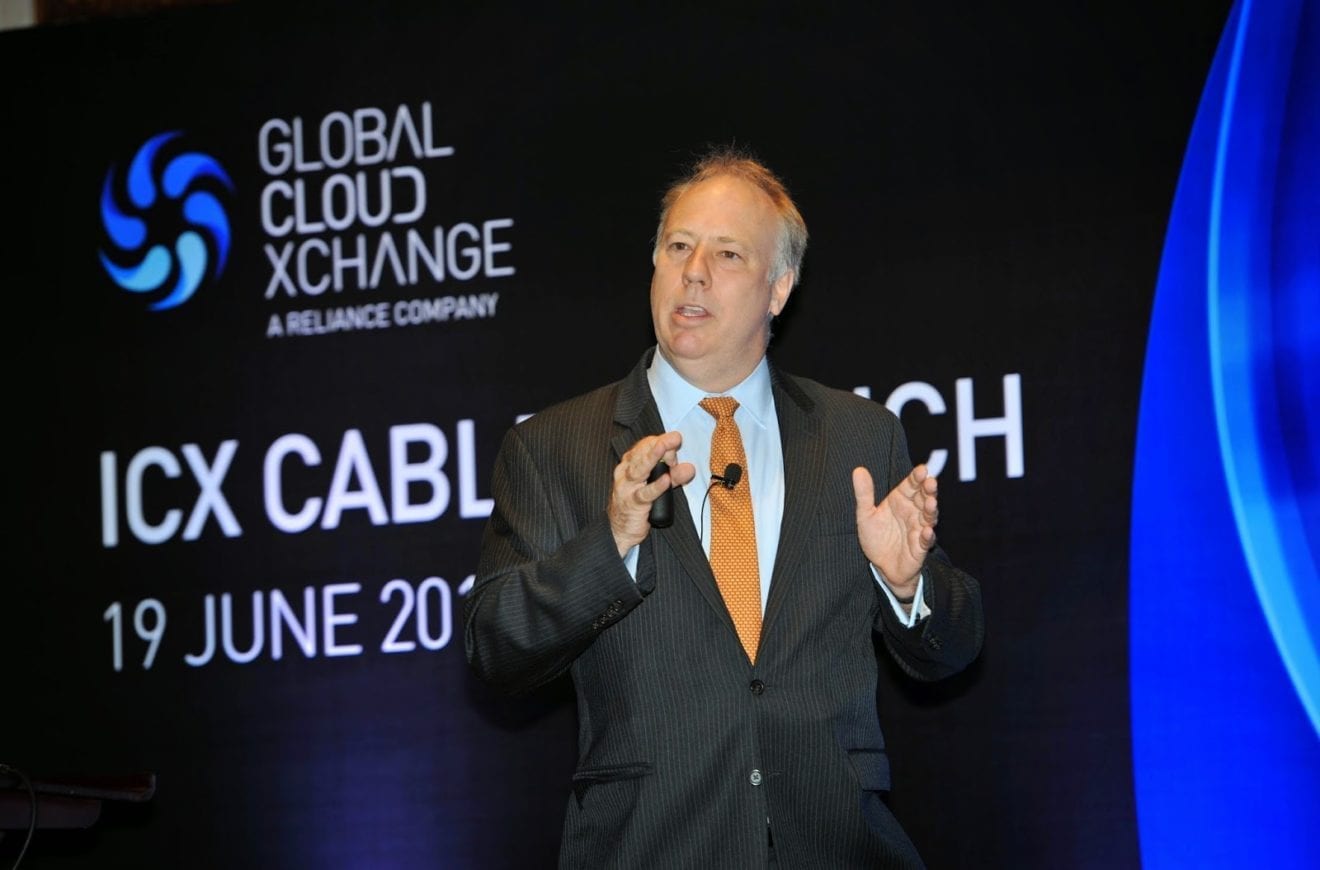
    Reliance Communications subsidiary Global Cloud Xchange (GCX) has expanded its cloud ecosystem with the addition of support for Microsoft Azure ExpressRoute.

    The company is offering access to ExpressRoute via its CLOUD X Fusion service in Chennai.

    CLOUD X Fusion allows enterprises to use Ethernet or MPLS VPN to privately connect their on-premise network or data center directly to Microsoft’s cloud platforms.

    Besides Chennai, CLOUD X nodes have been launched in Delhi, Mumbai, Bangalore and Hyderabad, as well as Hong Kong, California, London and New York.

    “As India enterprises enter a new era of digital globalization, they require sophisticated new levels of support to tap into opportunities from the convergence of Big Data and the IoT, to the latest augmented reality apps,” RCom and GCX SVP of global product management Braham Singh said.

    “Through the interconnection of CLOUD X Fusion and Microsoft Azure ExpressRoute, customers will benefit from the added flexibility and global reach to be more competitive as we look at new opportunities from the ‘Digital India’ initiatives.”

  • Workz Group launches world’s smallest SIM OS

    Workz Group launches world’s smallest SIM OS

    Telecoms subscriber products manufacturer Workz Group has announced the launch of what it says is the world’s most lightweight SIM OS.

    The Z-OS operating system is around 40% smaller than other SIM operating systems on the market, providing operators with greater opportunity to add VAS and revenue-generating features to subscriber SIM cards.

    Z-OS was soft-launched in May and has been tested in various markets, demonstrating the ability to support secure over-the-air management of applications.

    The product complies with major SIM standards defined by the ISO, ETSI, 3GPP, Global Platform, Oracle Java card, SIM Alliance and the GSMA as well as its proposed eSIM specification, and is designed to be compatible with both Java and native products.

    Z-OS is available from all major chipset manufacturers and is interoperable with all mobile network technologies.

    It is being offered in conjunction with Workz’s latest SIM product, the 3-in-1 seamless half SIM, which is designed to use 50% of the plastic of a traditional SIM card and work on any handset by allowing users to select which SIM module size to push out.

    “We’re very proud to develop the world’s most efficient SIM operating system. The Z-OS is a significant technological advancement which allows us to provide network operators with more customized applications on the SIM card to engage subscribers,” Workz CEO Brad Taylor said.