Category: Telecom

Retail News Asia is committed to providing both local and global retailers with the latest Telecom & Telco news throughout the Asian market. This on a daily base.

  • ASN, Bell Labs set 65Tbps subsea cable speed record

    ASN, Bell Labs set 65Tbps subsea cable speed record

    Alcatel-Lucent Submarine Networks and Nokia Bell Labs have set a new transmission record over a 6,600km single mode fiber for transoceanic cable systems.

    The lab trial achieved a total transmission speed of 65Tbps using submarine grade dual band erbium doped fiber amplifiers.

    The trial used Bell Labs’ new probabilistic constellation shaping (PCS) modulation technology. PCS is designed to maximize the distance and capacity of high-speed transmission in optical networks, by using non-uniform transmission of constellation symbols to increase resilience to noise and other impairments.

    “The future digital existence where everyone, everything and every system and process is connected will require a massive increase in network capacity and the ability to dynamically optimize this capacity,” Nokia CTO and Bell Labs president Marcus Weldon said.

    “Probabilistic constellation shaping extends the limits of current optical transmission by utilizing novel modulation techniques to dramatically improve the performance and capacity needed for the new digital era that will be enabled by the Future X Network.”

    The same technology was used in September to achieve speeds of 1Tbps per channel https://www.telecomasia.net/content/bell-labs-achieves-1tbps-over-fiberover Deutsche Telekom’s terrestrial optical network during trials with the operator’s T-Labs and the Technical University of Munich.

    A capacity of 65Tbps is 13,000 times the capacity of the first subsea amplified transatlantic system in 1995.

  • CITIC Telecom to acquire Acclivis

    CITIC Telecom to acquire Acclivis

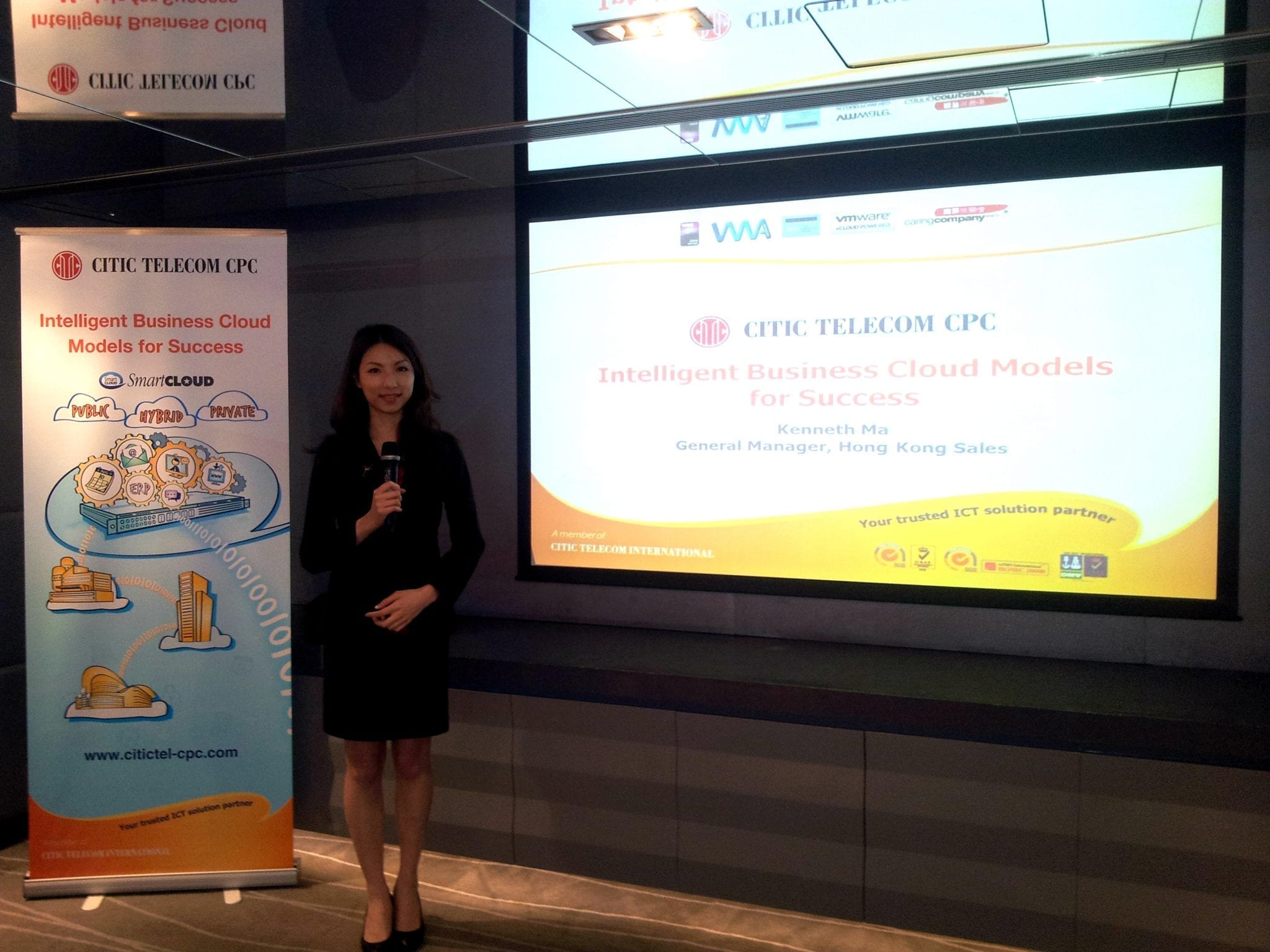
    Hong Kong’s CITIC Telecom International has expanded its presence in Southeast Asia with the acquisition of a 100% stake in cloud infrastructure services provider Acclivis.

    Acclivis mainly operates cloud facilities in the markets of Singapore, Indonesia, Malaysia and Thailand. The company also owns the ISP Pacific Internet in Singapore and Thailand.

    CITIC Telecom said the acquisition will transform the company into one of the few trans-regional one-stop ICT services providers in Southeast Asia, and will create synergies with the company’s subsidiaries including CITIC Telecom CPC.

    “Acclivis is a technology company that has strong technological capabilities and unique advantages. It operates internet service via Pacific Internet in the region and its businesses and the services we offer to our corporate customers have apparent strategic synergies,” CITIC Teleom CEO Dr Lin Zhenhui said.

    “The acquisition will enable us to expand our services to internet service, cloud computing and management services, support our transformation geared towards the mobile and internet arenas and expansion of the Southeast Asia market, giving us another rapid growth driver.”

    The deal still requires the approval of Acclivis parent DeClout, but pending this is expected to be completed by the end of the year.

    CITIC’s current development strategy is focused on “taking roots in the Mainland market while accelerating expansion and geographic coverage in the international market with Hong Kong and Macau serving as bases and connections.”

  • Equinix completes second phase of TY5 data center in Tokyo

    Equinix completes second phase of TY5 data center in Tokyo

    Equinix has completed the second phase expansion of its 10th International Business Exchange (IBX) data center in Tokyo, the TY5.

    Phase two adds an additional 375 cabinets to the facility, bringing the total capacity of the data center to 725 cabinets. The second phase expansion follows the opening of TY5 in March of this year and brings the total investment in the facility to $43 million.

    This announcement highlights Equinix’s continued investment in Asia-Pacific, as well as demand from local and global companies wanting to benefit from leading interconnection services in Japan, particularly across the cloud and financial sectors.

    Equinix plays a critical role in supporting the interconnected era, underpinning digital economies and enabling businesses to accelerate their performance for continued success and growth. In 2016, it has opened four new IBX data centers in Dallas, São Paulo, Sydney and Tokyo, creating more capacity for global companies to connect with their partners, customers and employees.

    The expansion of TY5 follows Equinix’s acquisition of Bit-isle, a leading Japanese data center and managed service provider, which more than doubled the company’s footprint in Japan. The move means both domestic and international enterprise customers can now benefit from Equinix’s increased presence in the country, spanning 10 data centers in Tokyo and two in Osaka.

    The completion of the phase two expansion will support growing customer demand for carrier neutral data centers with direct connectivity to Equinix’s financial ecosystem in TY3. TY5 is in close proximity to the Japan Exchange and Tokyo Commodity Exchange, providing financial services companies with reliable, low-latency connectivity to key financial institutions and business partners.

    TY5 enables domestic and multinational companies to expand into the growing Japan market, providing them with access to over 1,400 domestic and international network providers within Platform Equinix.

    Platform Equinix now includes over 146 data centers in 40 markets around the world.

    TY5 was recently awarded the LEED Green Building Rating System Gold Certification for its high building standards.

    The award recognizes best-in-class building strategies and practices across seven categories: sustainable sites, water efficiency, energy and atmosphere, materials and resources, indoor environmental quality, innovation in design and regional priority.

  • Axiata has no plans to downsize regional operations

    Axiata has no plans to downsize regional operations

    Axiata Group has no plans to downsize its operations in any of its eight markets, according to CEO Jamaludin Ibrahim.

    Last months, reports suggested that the company is considering selling stakes in its Indonesian, Cambodian and Sri Lankan operations, leading to speculation that the company may seek to exit the markets.

    But Kamaludin said Axiata Group is a long-term investor in each of its operating countries, the Khmer Times reported. Regardless of if the company does plan to reduce its stakes in the regional operations, the group will maintain majority ownership.

    He also told  that if the company does decide to reduce its 83.3% stake in Sri Lanka’s Dialog Axiata, money raised will be reinvested back into Sri Lanka for another venture.

    We quote Axiata’s group chief strategy officer repeating the same sentiment for funds raised through any divestment of Cambodia’s Smart Axiata.

    According to last month’s reports, Axiata was said to be seeking buyers for stakes worth up to $700 million in the regional subsidiaries. The reports indicated that the potential sales are part of efforts to reduce the group’s debt, although Axiata executives are declining to comment on this aspect.

    But Kamaludin said Axiata Group invests around $600 million to $700 million per year in expanding its regional operations.

  • Ericsson, Equinix enter hybrid cloud alliance

    Ericsson, Equinix enter hybrid cloud alliance

    Ericsson and Equinix have developed a joint offering designed to help enterprises capture the true benefits of hybrid and multi cloud adoption.

    The offering leverages the Equinix Cloud Exchange (ECX) and the Apcera platform from Ericsson.

    The initial target enterprises will be finance and insurance companies in Southeast Asia and Oceania to help solve their challenges on data compliance and regulation and at the same time give the agility that enterprises need.

    The finance and insurance industry have strict compliance regulations on data and this limitats their ability to pursue a multi-cloud strategy. Ericsson and Equinix’s joint offering will address this challenge by enabling enterprises to deploy any application on any cloud infrastructure with high performance and secure connections that meet compliance regulations.

    “To be able to meet the market demand for hybrid cloud and multi cloud, Ericsson is delighted to partner with Equinix,” commented Ludvig Landgren, VP for network applications and  cloud infrastructure at Ericsson Southeast Asia and Oceania.

    “We will jointly support enterprises, initially addressing South East Asia and Oceania customers, moving workloads and data across multiple clouds using one port with on-demand, automated connectivity.”

    The initial deployment is scheduled for December, 2016.

  • Omantel taps Redknee for multi-play monetization

    Omantel taps Redknee for multi-play monetization

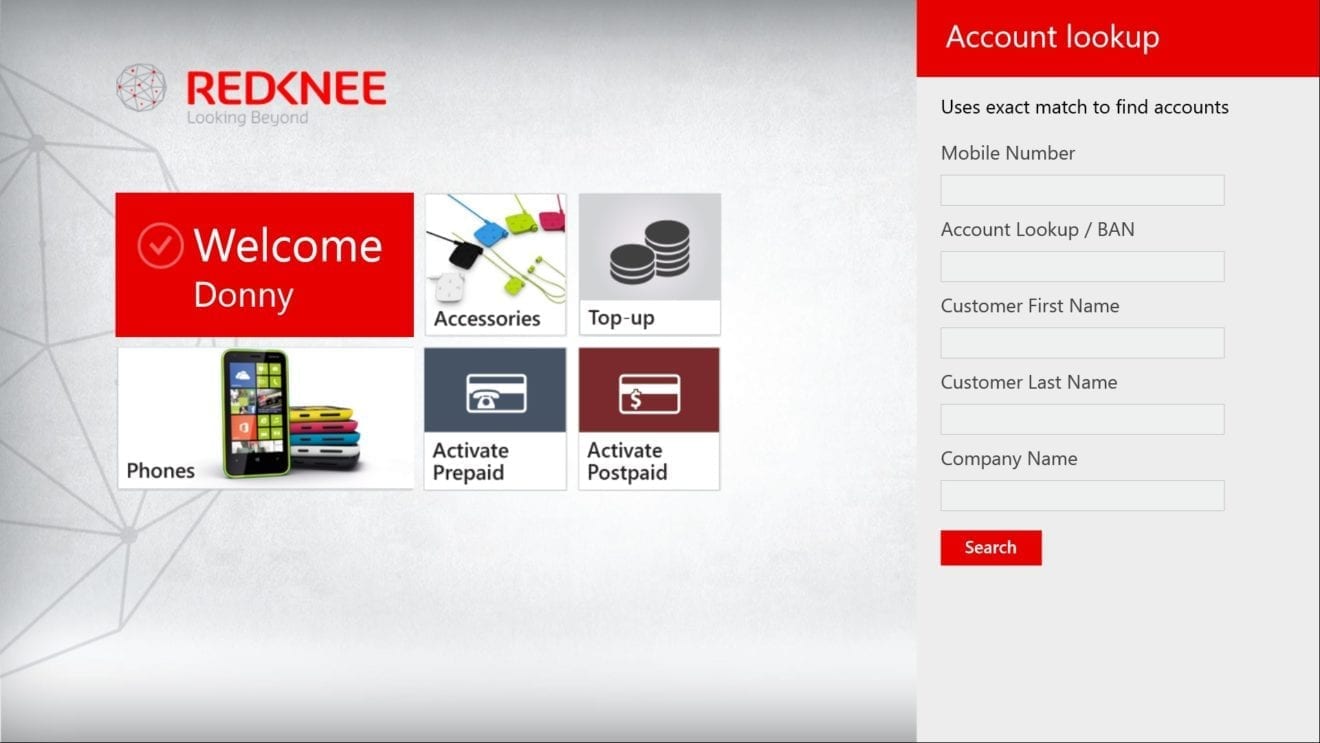
    Omantel, a communication service provider (CSP) in the Middle East, has implemented Redknee Unified, a converged multi-play billing, charging and customer care platform from Redknee Solutions.

    The successful implementation of Redknee Unified transformed Omantel’s IT infrastructure across multiple lines of business including mobile, fixed, IPTV, Internet, and cable.

    Redknee Unified reduces time to market and provides Omantel with the flexibility it needs to create new product offerings and connect with different customer groups to generate greater business value.

    Redknee said the solution is an agile, flexible and scalable real-time converged rating, charging and billing solution that is easy to deploy and which delivers an enriched customer experience across multiple industries including telecommunications, utilities, transportation, connected homes, and IoT.

    By leveraging Redknee’s experience with large scale BSS transformation projects, Omantel was able to consolidate multiple systems and processes onto one platform to create cost savings and operational efficiency.

    Redknee Unified also simplifies price plan configurations across the business and improves competitiveness by offering multi-play solutions that are tailored to Omantel’s customer base.

  • IIJ, TCCT launch joint cloud services in Thailand

    IIJ, TCCT launch joint cloud services in Thailand

    Internet Initiative Japan and Thai data center and IT infrastructure provider TCC Technology (TCCT) have jointly launched a new cloud service in Thailand named Leap GIO Cloud.

    The new service is being operated by Leap Solutions Asia (LSA), a joint venture between the two companies.

    Targeted at local Thai companies and Japanese enterprises doing business in the market, Leap GIO Cloud encompasses both public and private cloud services.

    The public cloud service can be self-provisioned and billed on an hourly or monthly basis, while the private cloud service is being offered for a monthly fee.

    LSA has also secured SAP certifications for hosting services, cloud services and SAP HANA operations services, and will use these certifications to offer support for implementing and operating SAP BASIS in the cloud.

    LSA was established in April  as a 60/40 joint venture majority-owned by TCCT.  The joint venture aims to become a market leader in Thailand’s cloud sector.

  • Huawei Marine to build backbone network for PNG

    Huawei Marine to build backbone network for PNG

    Huawei Marine has secured a contract to build a national subsea cable backbone network for the Papua New Guinea government.

    The company will work with PNG DataCo, an operator established by the Papua New Guinea government, to construct a national backbone network linking major coastal centers and islands in the nation.

    The 5,457km cable network will provide domestic connectivity across the nation’s 14 largest cities, as well as international connectivity via a link to Jayapura in Indonesia.

    With a design capacity of 8Tbps, the cable will be designed provide more than 70% of Papua New Guinea’s domestic bandwidth requirements. Currently domestic telecoms capacity largely relies on satellite and microwave communications due to the country’s unique geography.

    “This new system is very important to Papua New Guinea as it not only includes a new submarine cable network but also provides internet gateways and data centers,” DataCo managing director Paul Komboi said.

    “This will improve the whole ICT infrastructure in the country and greatly increase network coverage, capacity and the availability of Internet and broadband services to end users.”

    He said Huawei Marine was selected for the project through a competitive tender process.

  • Indonesia’s Indosat Ooredoo & XL Axiata Suspected of Cartel Practices

    Indonesia’s Indosat Ooredoo & XL Axiata Suspected of Cartel Practices

    Muhammad Syarkawi Rauf, Chairman of the KPPU, informed that there are indications that both telecommunication operators – both listed on the Indonesia Stock Exchange (IDX) – are (1) coordinating to determine prices, (2) coordinating to divide geographical areas for their products, and (3) coordinating to restrict the output of their products. These allegations are the result of the establishment of their joint venture One Indonesia Synergy.

    Turina Farouk, Vice President Corporate Communication of XL Axiata, said the company cannot respond yet to the KPPU’s summon as XL Axiata is yet to receive the full details of the case. However, regarding One Indonesia Synergy Farouk said this joint venture is not a vehicle used to engage in cartel practices but is part of cost efficiency efforts for the development of their 4G LTE network. Farouk added that One Indonesia Synergy is not operational yet as it awaits several permits from authorities.

    Cooperation is a strategy of Indosat Ooredoo and XL Axiata to make their operations more efficient in the future. Indonesia’s telecommunication sector is dominated by state-controlled Telekomunikasi Indonesia.

    Indosat Ooredoo and XL Axiata each own a 50 percent stake in joint venture One Indonesia Synergy. Alexander Rusli, President Director and CEO of Indosat, said One Indonesia Synergy will offer consultation services for both companies’ cooperation in telecommunication networks, for example the so-called multi operator radio access network.

  • Duterte may break Philippine telecoms duopoly

    Duterte may break Philippine telecoms duopoly

    Philippine president Rodrigo Duterte has threatened to break up the market’s telecoms duopoly if incumbent operators Globe and PLDT do not improve their services.

    Duterte has indicated he may bring in competitors from China unless consumer complaints about poor service quality and slow internet speeds are addressed.

    According to sources quoted in the report, when Australia’s Telstra tried to enter the Philippines market last year, the company was met with a hostile reception from the former Aquino administration, with the company told that the president supports PLDT and Globe and that cases seeking to delay its entry into the market will be filed in court.

    But Duterte has by contrast taken a more antagonistic approach to the oligarchs controlling PLDT and Globe, and is more receptive to disrupting the duopoly.

    China’s state-owned operators are likely to jump at the chance to enter the Philippines market, and if the Philippine Competition Commission blocks the planned sale of conglomerate San Miguel Corp’s 700-MHz spectrum to Globe and PLDT, Chinese operators would have a go-to partner for a Philippine venture.

    Philippine consumers have long complained about the market’s slow internet speeds. Akamai’s recent State of the Internet report measures the Philippines’ average speed at 4.3Mbps, well below the global average of 6.1Mbps.

  • 60 companies apply for MVNO licenses in India

    60 companies apply for MVNO licenses in India

    India’s Department of Telecom (DoT) has published a list of 60 companies applying for an MVNO license in various cities.

    The companies have between them applied for 70 state, city or sub-district specific licenses across 11 of India’s 22 telecoms circles.

    The DoT is offering MVNO licenses under a unified license arrangement, with an entry fee of 75 million rupees ($1.1 million).

    MVNOs seeking to offer services on a pan-India basis will need to pay a 1.5 million rupee license fee and a 10.25 million rupee fee for a national and international long distance license.

    There were no applications for the Bangalore circle and only one each for Punjab, Maharashra, Rajasthan and Tamil Nadu. By contrast, Gujarat received 22 applications, Mumbai received 12, Uttar Pradesh got 11 and there were eight in Delhi.

    Some companies applied for more than one city or circle specific license, with Mumbai’s Telenet Services making seven applications.

    MVNOs will be able to partner with multiple operators, but with the exception of data services, will be able to have only one MNO provider per access service type.

  • ITU Telecom World 2017 to be held in South Korea

    ITU Telecom World 2017 to be held in South Korea

    South Korea’s Ministry of Science, ICT and Future Planning will host next year’s ITU Telecom World conference in the city of Busan.

    The event will take place on September 25-28. It will include an international exhibition designed to showcase new technologies in areas including smart cities, 5G, IoT, automation and AI.

    An accompanying forum will involve high-level discussions exploring the technologies, policies and strategies driving the digital economy, as well as the ICT-related efforts to meet the UN’s Sustainable Development Goals.

    In addition, the annual ITU Telecom World Awards will recognize innovation in ICT solutions with social impact from companies of any size, from SMEs ranging up to large corporations.

    “The Republic of Korea has been a terrific partner of ITU for many years,” ITU secretary-general Houlin Zhao said.

    “Busan will be a great setting for ITU Telecom World 2017 to continue our mission of promoting cross-sector partnerships in ICTs to achieve the Sustainable Development Goals.”

    ITU Telecom World 2016 will take place in Bangkok on November 14-17.

  • Australia’s second NBN satellite targets remote areas

    Australia’s second NBN satellite targets remote areas

    Last week’s successful launch into orbit of the second broadband satellite of Australia’s national broadband network, Sky Muster II, is expected to provide fast broadband services for rural and remote areas in the country.

    An estimated 400,000 Australian homes and businesses are set to benefit.

    “This service is already helping to improve healthcare outcomes by connecting remote patients to city specialists, delivering access to a new world of educational opportunities for kids in the bush and increasing productivity for local small businesses,” said nbn’s CEO Bill Morrow.

    “We are ensuring that no Australian is left behind by providing access to fast broadband for those who need it the most,” he added.

    Minister for Communications Mitch Fifield and Minister for Regional Communications Fiona Nash welcomed the launch, saying it will help bridge the digital divide between the cities and the country.

    The Australian government has invested $2 billion in two purpose-built broadband satellites and a network of ground stations that make up the Sky Muster service. The first satellite, Sky Muster, was launched in October last year.

    “Services went live in April this year and already, almost 31,000 homes and businesses are experiencing the benefits of nbn’s world-class satellite broadband,” Fifield said.

    The satellites are expected to revolutionize many services that rural Australians rely on, such as distance education for students in remote areas, and will be a game changer for rural business and agriculture.

    “As a farmer from rural NSW myself, I know how crucial fast and reliable broadband is for rural, regional and remote Australia,” Minister Nash said.

    The satellites offer download speeds of up to 25 Mbps and upload speeds of up to 5 Mbps. With a total capacity of 135 Gbps, the new satellites are a vast leap forward from the 4 Gbps of capacity provided by the previous government’s interim satellite service.

  • Korea and Singapore’s broadband lead narrows

    Korea and Singapore’s broadband lead narrows

    South Korea continued to have the highest average connection speed in the world at 27 Mbps while Singapore maintained its position as the country with the highest average peak connection speed at 157.3 Mbps.

    These were among the findings of the Akamai Technologies’ Second Quarter, 2016 State of the Internet Report.

    Both countries, however, registered declines in average connection speed and average peak connection speed, respectively, at 7.2% (South Korea) and 7.1% (Singapore) compared to the first quarter.

    Meanwhile, the global average connection speed decreased 2.3% quarter over quarter to 6.1 Mbps, while the global average peak connection speed increased 3.7% to 36 Mbps. The 10 Mbps broadband adoption rate grew 0.7% quarter over quarter, but 15 Mbps and 25 Mbps broadband adoption rates fell 0.8% and 2.1%, respectively.

    In Asia-Pacific, the report noted that 14 of the 15 surveyed countries had average connection speeds above the 4 Mbps broadband threshold. Indonesia registered a 148% gain in average connection speed in the second quarter and the only country to see its speed double compared to the previous year.

    In the mobile space, Akamai reported that average mobile connection speeds ranged from a high of 23.1 Mbps in the United Kingdom to a low of 2.2 Mbps in Venezuela. The report noted that in the upcoming quarters, it expects to see mobile speeds continue to climb as 4G LTE becomes deployed more broadly worldwide.

    In Asia-Pacific, South Korea (11.1 Mbps) also led the world in average mobile connection in the second quarter of 2016, followed by New Zealand (9.8 Mbps), Japan (9.5 Mbps), Taiwan (9.3 Mbps), Australia (8.9 Mbps), and the Philippines (8.5 Mbps).

  • Huawei achieves 27Gbps 5G speeds with Polar Code

    Huawei achieves 27Gbps 5G speeds with Polar Code

    Huawei announced it has achieved downlink speeds of 27Gbps using Polar Code, a new innovation in 5G channel coding technology.

    During a field trial in both static and mobile environments, Huawei was able to demonstrate that polar code technology can simultaneously meet the typical use cases of the ITU’s 5G definition, which involves speeds in the tens of gigabits, 1ms latency and billions of connections.

    The company said polar code demonstrated three times the spectrum efficiency compared to current RAN networks.

    Polar code is designed to allow significantly higher spectrum efficiency than current cellular access technologies and to enable decoding with linear complexity.

    On the encoding side, polar code can optimize channel capacity close to the Shannon Limit, the theoretical highest capacity of a communications channel before noise introduces faults.

    The field trial also took into account the use of millimeter-wave and multiple parallel sessions based on short and large packet sizes.

    Last week Huawei and Canada’s Telus also announced the results of 5G lab trialsachieving peak speeds of 29.3Gbps, close to 200 times faster than the current LTE standard. The trials at the Telus and Huawei 5G Living Lab in Vancouver were designed to simulate real-world conditions.