Category: Telecom

Retail News Asia is committed to providing both local and global retailers with the latest Telecom & Telco news throughout the Asian market. This on a daily base.

  • Indian, Australian satellites to launch next week

    Indian, Australian satellites to launch next week

    Arianespace will launch two satellites next week that will provide communications capacity in Australia and India respectively.

    In the early hours of October 5, Arianespace will launch Sky Muster II, the second communications satellite for Australia’s national broadband network (NBN), and the GSAT-18 for the Indian Space Research Organization (ISRO).

    Sky Muster II will be used to provide NBN services in particularly remote and rural regions of the country. The satellite – along with the Sky Muster I, which launched in September last year – will be used to cover roughly 3% of the population.

    GSAT-18 will be used to provide telecommunications services in India, along with ISRO’s current fleet of 14 telecoms satellites.

    In other satellite news, Singtel has completed one of the first commercial installations in the APAC region for Inmarsat’s maritime-focused high speed satellite broadband service Fleet Xpress.

    Singtel completed he installation on “K” Line Ship Management Singapore’s massive container ship Houston Bridge, the companies announced. The ship management company will use Fleet Xpress for big data analysis to improve operational efficiencies such as monitoring engine performance.

    “The launch of Fleet Xpress marks a new page in maritime communications with continuous connectivity and guaranteed performance across the world’s oceans,” Inmarsat Marine chief sales officer Gerbrand Schalkwijk said.

    “We have a long standing relationship with Singtel, who are one of our leading partners in Asia, and we look forward to continuing this partnership for many years to come.”
  • Hawaiki picks US landing partner for subsea cable

    Hawaiki picks US landing partner for subsea cable

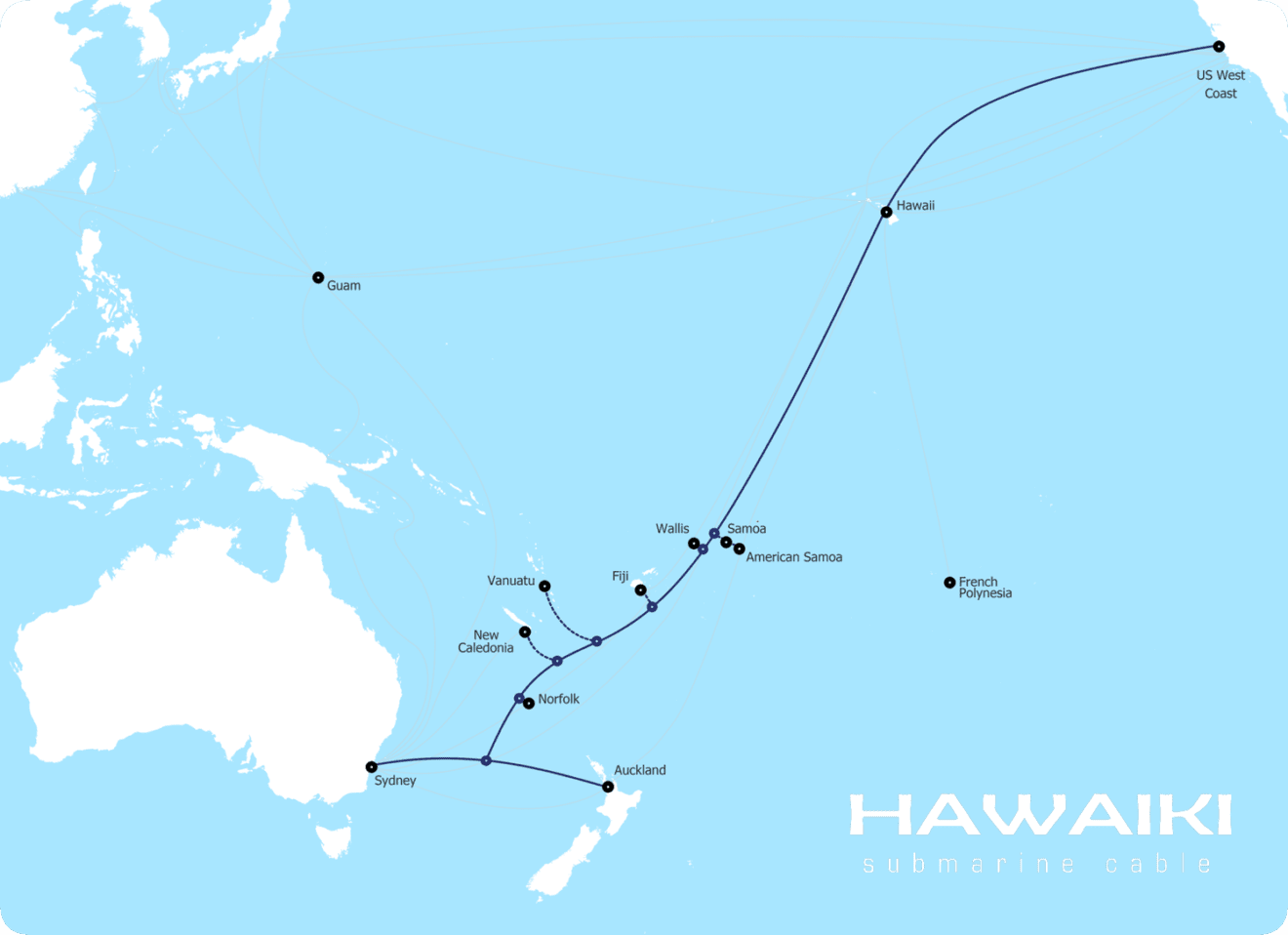
    Hawaiki Submarine Cable, the New Zealand based company building a cable between Australia, New Zealand, Hawaii and the continental US, has selected its landing and operating partner in the US state of Oregon.

    Hawaiki has signed a landing party agreement with Alaska Communications after completing the maritime survey of the 4,000km segment between Oregon’s Pacific City and Honolulu.

    The completed cable will span 14,000km and deliver more than 30Tbps of total capacity, making it the largest link between the US and Australia/New Zealand.

    “Oregon is probably the best state on the US West Coast to land a submarine cable. The

    coast is relatively safe, the state permitting process is efficient and most importantly, our

    customers like Oregon’s diversity and easy access to US networks and data centers,” Hawaiki SVP for Noth America Gina Bohreer said.

    “As part of the US permitting process for international submarine cable, Hawaiki has

    subsequently submitted its application to the Federal Communication Commission.”

    The company has already signed on anchor customers including AWS  and major Australian fixed-line ISP group TPG Telecom.

    Construction of the Hawaiki cable is expected to be complete in mid-2018.

  • Samsung, HPE team on telco cloud

    Samsung, HPE team on telco cloud

    Samsung and Hewlett Packard Enterprise (HPE) have sealed a partnership to jointly provide carriers with integrated network functions virtualization (NFV)infrastructure and virtual network functions (VNF) solutions.

    Under the partnership, the companies will work together to merge Samsung’s carrier network and HPE’s IT telecoms expertise.

    The integrated solutions will help carriers facilitate the transformation of their networks from monolithic, proprietary appliances to cloud-based networks enabled by NFV.

    As part of the partnership, Samsung will join the HPE OpenNFV Partner Program as a carrier-grade network equipment provider.

    “We see profound potential on joining the HPE OpenNFV Partner Program to ensure a variety of choices for carriers in selecting NFV providers, along with the commercially-proven NFV solution we developed in 2015,” said Woojune Kim, vice president and head of strategy group in next generation communication team at Samsung Electronics.

    The program is a broad ecosystem of NFV technology, application and service partners that have tested and validated solutions on ETSI-compliant HPE OpenNFV infrastructure.

    “HPE and Samsung have already collaborated successfully behind the scenes on NFV projects that are transforming communications service providers and their old school networks to agile telco cloud environments ready to satisfy the ever increasing demands of their customers while reducing cost,” said Werner Schaefer, vice president & general manager, NFV, HPE.

    “By formalizing our partnership with Samsung, we further expand our work to bring NFV benefits to the CSP ecosystem.”

    The partnership also includes a joint go-to-market strategy with ready-to-install third party solutions. Carriers can choose from various third party offerings, already verified by the HPE OpenNFV Partner Program, such as virtual private-LTE network service, vCPE and SD-WAN.

    The pair will also provide telcos with NFV systems integration services to help ensure new technologies are implemented, the companies said.

  • Cloudera, CenturyLink offer Big Data as a Service

    Cloudera, CenturyLink offer Big Data as a Service

    Cloudera has expanded its partnership with CenturyLink to deliver big data as a service to enable customers gain value from all their data.

    As part of being a preferred partner, CenturyLink’s Global IT Services is delivering a fully managed big data solution powered by Cloudera Enterprise.

    This combined big data offering will exponentially speed time to deploy Cloudera Enterprise and also simplify some of the management complexities from Hadoop operations, so that customers can spend more time working with data and generating new insights that drive business growth.

    “In addition to offering a platform for big data management and analytics in the cloud, we are also focused on delivering value-added use cases that run on this platform and help our customers become more agile and responsive,” said Gary Gauba, president of CenturyLink Cognilytics.

    By leveraging Cloudera Enterprise, CenturyLink will gain a more complete view of its customers across all its systems, products, and diverse interaction channels. This entails integrating all existing data sources and ingesting real-time data.

    CenturyLink will use the Cloudera platform to perform advanced analytics in the areas of SDN as well as network virtualization to proactively monitor and further optimize its global communications network.

    Tom Reilly, CEO of Cloudera, said CenturyLink’s big data-as-a-service offerings will make concepts like advanced analytics, machine learning, and real-time data more available and accessible to more people.

    CenturyLink’s big data-as-a-service solutions are under development and expected to be generally available later this year. Cloudera managed services by CenturyLink are now generally available.

  • Nepal set to approve 4G launches

    Nepal set to approve 4G launches

    Nepal’s telecoms regulator will soon approve two of the three applications it has received from operators seeking to operate 4G services.

    The Nepal Telecommunications Authority’s (NTA) Frequency Management Department has recommended that the regulator allow both Nepal Telecom and Ncell to launch 4G services.

    But the department rejected the proposal of a third operator, Smart Telecom, after finding that the operator failed to meet certain prerequisites. Eligibility was determined based on factors an operator’s current services and its performance under the Unified License issued to it.

    As soon as the NTA board passes the recommendation, Nepal Telecom and Ncell will be able to launch 4G services.

    The operators have been requesting to launch 4G for months, by repurposing the 1800-MHz spectrum currently being used to provide 3G services.

    But the NTA was not able to approve the proposals until the government passed amendments to the existing radio frequency policy. The ICT ministry has now endorsed the amendments to the policy.

    According to the report, Nepal Telecom has asserted it will be able to launch 4G services within two months of receiving a license.

  • AIS ramps up fiber competition

    AIS ramps up fiber competition

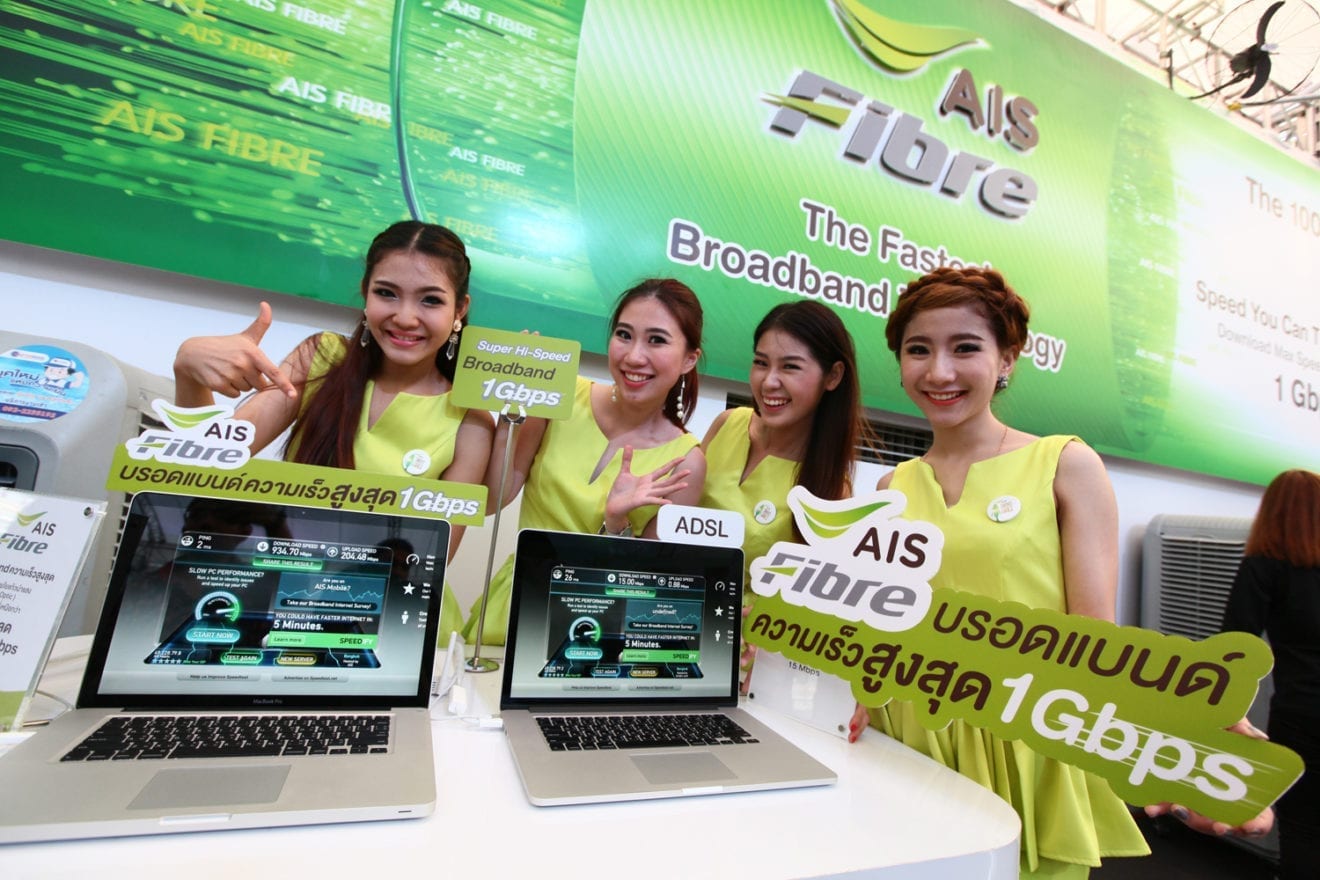
    Thailand’s top mobile operator AIS is gearing up to launch what it says will be the country’s fastest fiber broadband services.

    The operator aims to attract 300,000 users to its fiber service this year, increasing to 2 million by 2019.

    The operator first entered the fiber broadband fray in April and has already been shaking up the market. The company currently has around 200,000 subscribers to its existing fiber services, a roughly 2% share of the total market.

    Now the company aims to disrupt the market further, with plans to offer an entry-level 20Mbps service for 590 baht ($17) per month, comparable to the prices of ADSL broadband services.

    AIS will also offer 50Mbps services for 888 baht per month and 100Mbps services for 1,888 baht per month. All packages will include free WiFi routers, free AIS internet TV and free installation.

    With the new packages AIS has increased its target monthly fiber net additions to 45,000, up from a previous target of 30,000-35,000.

  • Teradata boosts customer experience with behavioral insights

    Teradata boosts customer experience with behavioral insights

    Teradata now offers the Teradata Customer Journey Analytic Solution, a complete set of capabilities for discerning the behavioral paths of each individual customer.

    The solution determines the next best interaction and delivering a consistent, personalized brand experience through every channel and touch point. It also uses Teradata’s consulting services, as well as technologies that enable real-time customer data integration, advanced behavioral analytics and multi-channel marketing automation.

    Further, the solution enables CMOs who want to truly understand each individual customer experience to move beyond old school one-to-one marketing tactics that rely on purchases and traditional customer profiling.

    The insights resulting from Teradata’s Customer Journey Analytic Solution enable marketers to optimize objectives such as response and conversion rates, service delivery, churn, and customer satisfaction – leading directly to high-impact business outcomes such as increased revenue and customer retention.

    Customers today require every interaction with a brand to be consistent, but also personalized and relevant. This is despite the ever-expanding range of channels that make building a complete picture of each individual customer extremely challenging.

    “Managing every customer as an individual, based on their interactions with your company, requires not only the integration of different types of data but understanding it through the application of complex multi-genre analytics,” said Dan Harrington, EVP for consulting and support services of Teradata. “Even the best-known companies feel this is a ‘boil the ocean’ project – making sense of billions of events for millions of customers, in real time.”

  • Thailand may toughen tax rules for ICTs

    Thailand may toughen tax rules for ICTs

    The Thai government is considering toughening tax rules for international internet and technology companies, including mobile and internet commerce companies.

    The head of Thailand’s Revenue Department told that the government has set up a working committee for finding solutions for collecting tax from Google and other technology giants.

    Laws and regulations that haven’t been updated in 50 years could be amended to address the digital economy, the report states. The working committee is expected to report by the end of the year.

    Countries in Southeast Asia are increasingly pursuing higher taxes from large internet and technology companies, with Indonesia pursuing the company for five years of back taxes, and Australia recently getting stricter on companies with annual earnings of over A$100 million ($76.4 million).

    Large multinationals have been booking their regional profits in Singapore to take advantage of the city state’s lower tax rate and incentive programs. But Singapore’s finance ministry recently stated that it does not condone the artificial shifting of profits.

  • Singtel expands collaboration with Palo Alto

    Singtel expands collaboration with Palo Alto

    Singtel and Australian subsidiary Optus have expanded their respective managed security services portfolios with a managed advanced threat protection service using Palo Alto’s security platform.

    The new services are designed to monitor, isolate and prevent suspicious applications from breaching an organization’s networks or endpoint devices, and to provide advanced threat intelligence capabilities for enterprise customers.

    Singtel’s managed security services business unit Trustwave provides services through a global network of eight security operations centers, integrated with Singtel’s Global Threat Intelligence.

    Singtel employs 2,000 security professionals worldwide, including its SpiderLabs cyber response team.

    “As a leading global Managed Security Services Provider, we are committed to strengthening our capabilities to protect organisations against sophisticated, evolving cyber threats. Through our collaboration with Palo Alto Networks, we have developed an innovative cyber security service which takes a holistic and preventive approach towards cyber threats,” Singtel CEO group enterprise Bill Chang said.

    “Together with our Trustwave managed security service, the trained cyber security experts at our Advanced Security Operations Centre can forestall cyber attacks and use the information of any neutralised malware to update our global threat intelligence to benefit other regions.”

    Optus’ enterprise unit Optus Business meanwhile plans to launch its own managed advanced threat protection services over the Palo Alto platform.

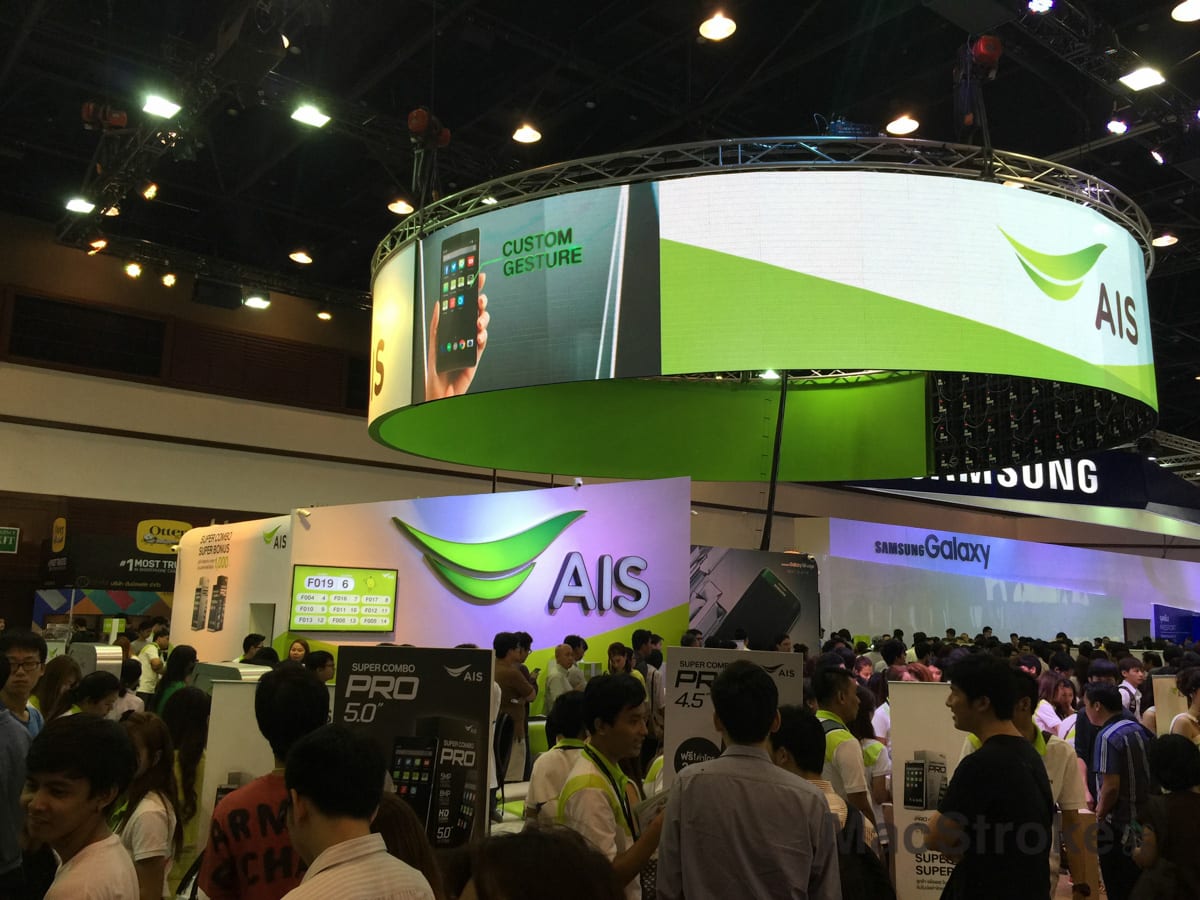
  • AIS to roam on TOT’s 2100-MHz spectrum

    AIS to roam on TOT’s 2100-MHz spectrum

    Thai state-owned operator TOT has reportedly signed a six-month trial contract with AIS subsidiary Advanced Wireless Network (AWN) covering roaming on TOT’s 2100-MHz spectrum.

    A TOT source told that AWN has agreed to pay a 325 million baht ($9.4 million) monthly roaming fee for use of 80% of TOT’s 2100-MHz spectrum allocation.

    The six-month trial is being conducted with a view to potentially entering into a permanent arrangement. AWS is expected to pay a 3.9 billion baht annual roaming fee under such a deal.

    TOT plans to allocate the remaining 20% of its 2100-MHz spectrum to other interested operators, according to the report. AIS already holds 15MHz of spectrum in the 2100-MHz band.

    State-owned TOT has been steadily losing 3G subscribers to its 2100-MHz service, and is under pressure to find new revenue streams following Thailand’s transition from a concession model for spectrum allocations to a more conventional auction model.

    In June, AWN also agreed to lease TOT’s 900-MHz network and towers for a combined 5.6 billion baht annually.

    TOT also holds 60MHz of 2300-MHz spectrum, and plans to use this to offer a wireless broadband service in conjunction with a strategic partner. The partner is due to be selected shortly.

  • DTAC service center flagship store ‘dInfinite’ at Siam Paragon

    DTAC service center flagship store ‘dInfinite’ at Siam Paragon

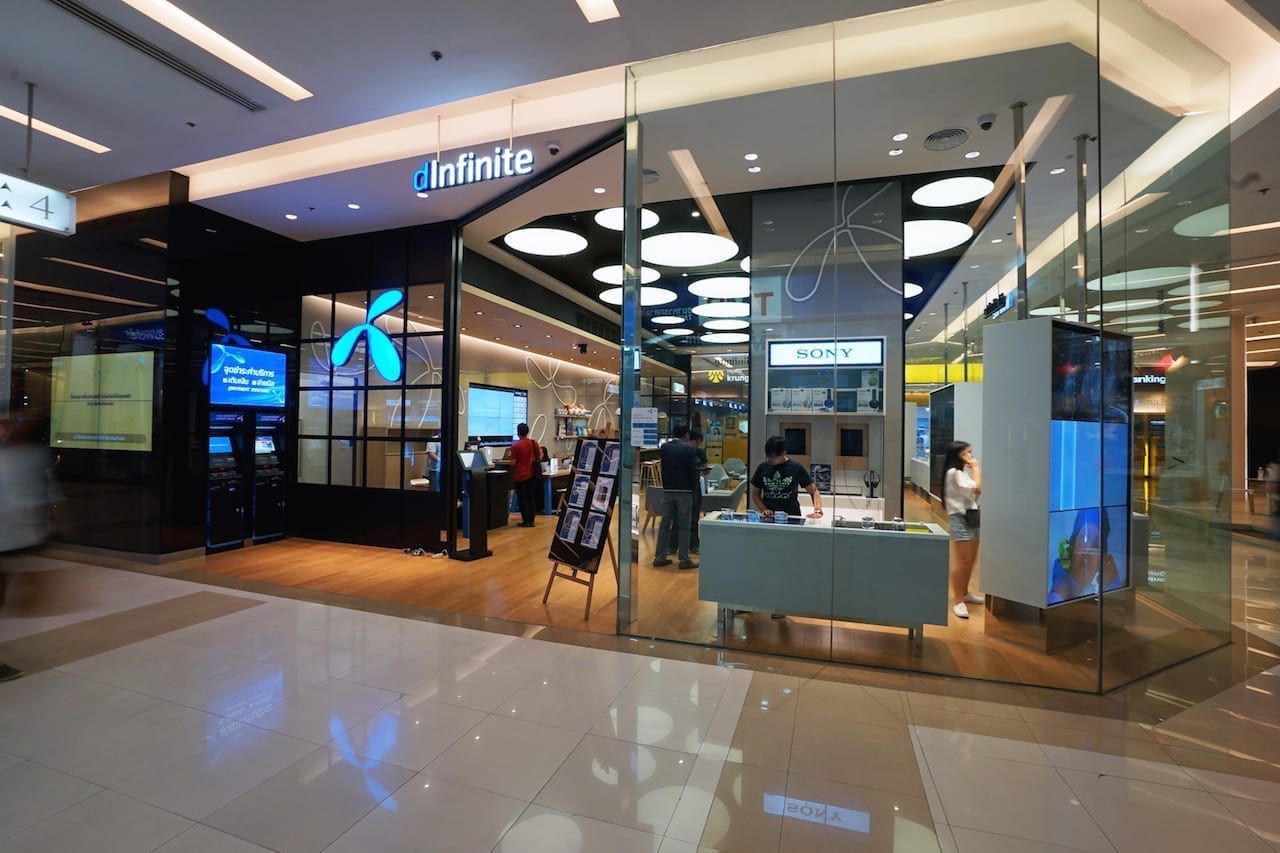
    The new dtac service center flagship store, dInfinite, was launched at Siam Paragon Department Store with the concept ‘the endless digital experiences’. The store has been re-designed to enhance the customer experience through the use of digital services.

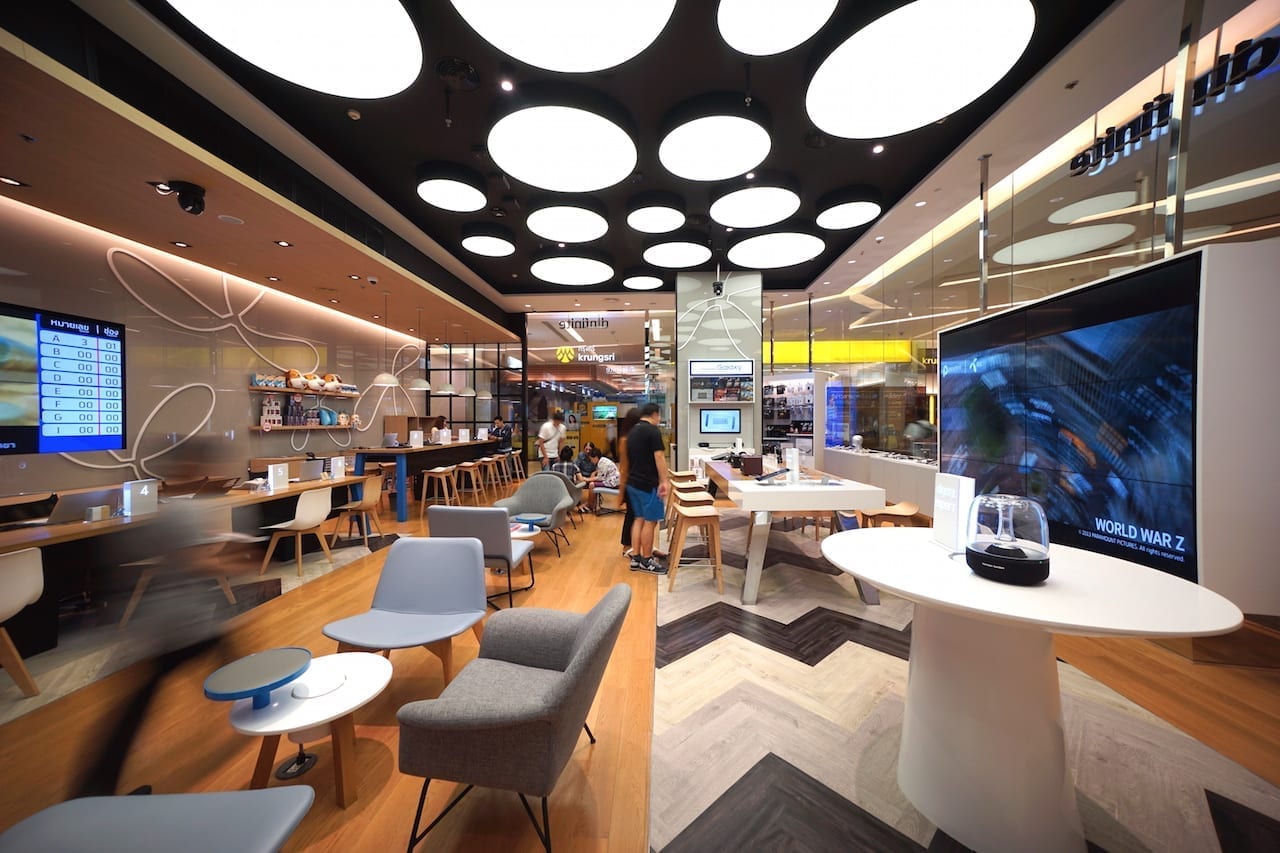
    The service center was designed by Whitespace Ltd., a professional retail design company. The key service area has been arranged to serve two main functions: counter service and consultation. The layout reflects of how retail stores have changed overtime; the transaction counter is no longer a key area as e-service, Speedy Queue, allows customers to easily queue online and to check out anywhere in the store.

    dsc00985edit-copy_s

    Rather than waiting in line to pay ones bill, customers are urged to spend their time discovering, testing, and experiencing dtac’s newest devices. Cutting-edge smart phone models are available for customers to interact with at the Smart Table. The latest trends of gadgets and accessories are also available for customers to tryout in the Experience Corner.

    Moreover, the dInfinite flagship store delivers convenience and entertainment through the use of digital devices including a touchscreen e-brochure wall with the most up-to-date dtac promotions and at the Knowledge Table big screen tablets are used to live-stream entertainment via dtac Music Infinite and Primetime apps.

    When customers walk into dInfinite, they will feel at home and welcomed by the casual and warm ambience of the store. The cozy mood and tone is enhanced by custom-made wood furnishings, comfortable seating, wood floors and a black and gray color palette. Circular lights on the ceiling and the use of the dtac logo symbol on the walls throughout the store adds a sense of energy and excitement as well as reinforces the brand.

  • StarHub trialing mesh network on buses

    StarHub trialing mesh network on buses

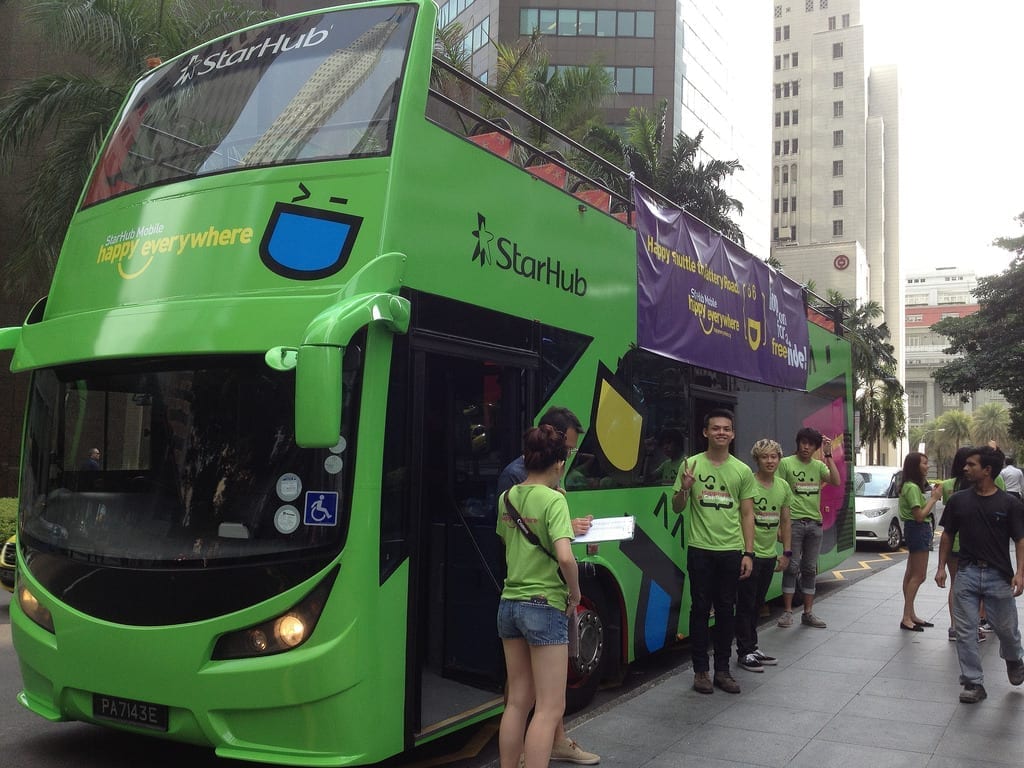
    Singapore’s StarHub has teamed up with the National University of Singapore, charter bus company ComfortDelGro Bus and “Internet of Moving Things” company Veniam for a mesh network of connected vehicles pilot.

    The trial at the university’s Kent Ridge campus is involving using buses as mobile WiFi access points connected to one and other and to fixed points in buildings on campus.

    Wireless mesh access points on the buses are being powered by a combination of 4G, WiFi and dedicated short range communications (DSRC) technology.

    The approach is designed to extend WiFi coverage will providing connectivity for a large number of IoT devices.

    Stephen Lee, Head of StarHub i3 (Innovation, Investment, Incubation), said companies will also be able to use the anonymized data generated to address Singapore’s logistic and transportation challenges.

    “This mesh platform at NUS allows StarHub to explore how we can use data generated from the platform to help companies in the logistics and transport sectors improve their operations and planning,” he said.

    “We look forward to working with more commercial partners to expand the network to other parts of Singapore and find new ways to analyse and utilise the data collected in order to address various urban concerns and challenges facing the transportation and logistics industry.”

  • Telenor India said to consider merger with Tikona

    Telenor India said to consider merger with Tikona

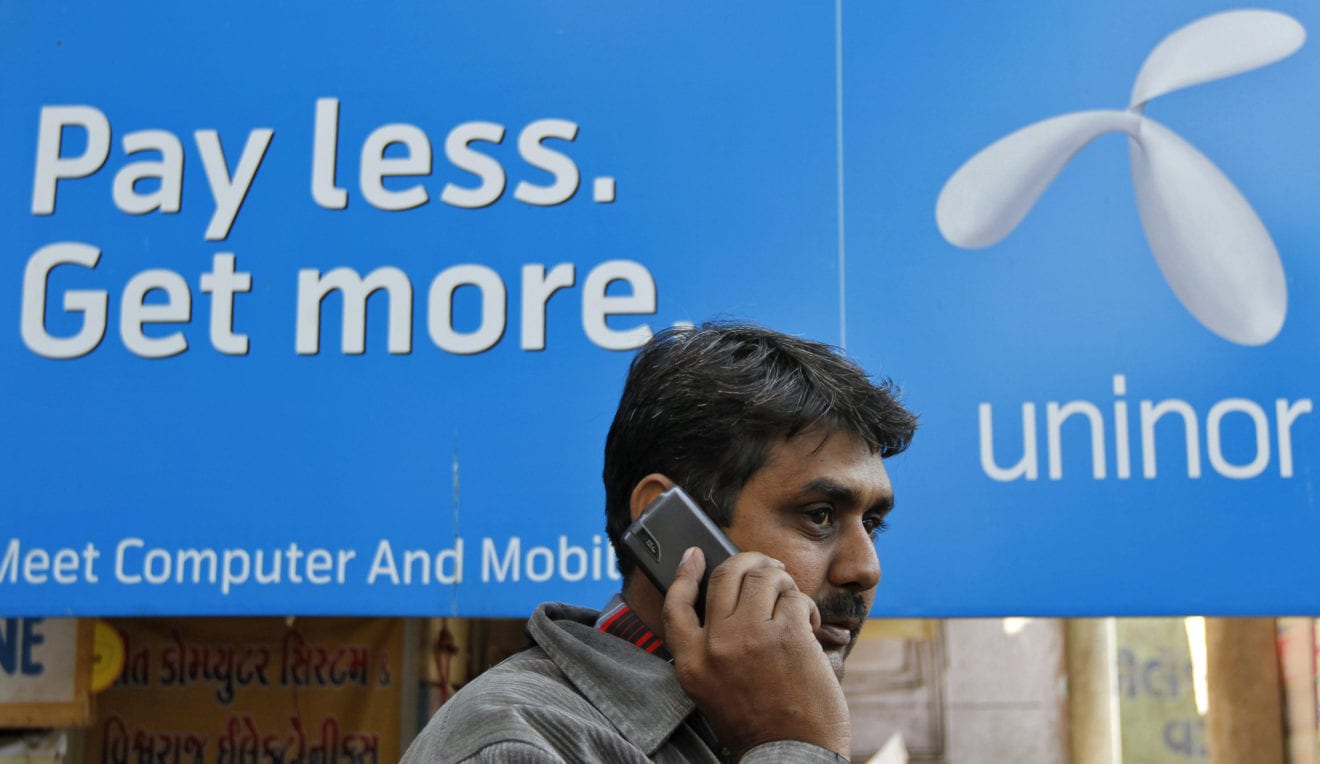
    Telenor India is reportedly exploring a merger with wireless broadband provider Tikona Digital Networks to stay afloat in an increasingly competitive market.

    Both companies are in active discussions regarding a potential merger, citing multiple unnamed sources.

    The focus on the negotiations is a merger of the two operators’ data businesses, and Telenor’s voice operations could be kept separate, according to the report.

    Tikona holds 2300-MHz 4G spectrum and has operations in five of India’s 22 telecom circles, including three in which Telenor is also present. Telenor provides mobile services in six circles.

    A potential merger would also serve as another way for Telenor to secure the spectrum it needs to expand its operations, including effectively rolling out 4G to compete with disruptive newcomer Reliance Jio and the incumbent operators. The operator’s current spectrum holding is limited to 1800-MHz.

    In July, Telenor announced it has decided to sit out of the upcoming major Indian spectrum auction due to high reserve prices, and said the company has been “evaluating our options in India,” leading to speculation that Telenor may exit the Indian market.

    Both Telenor and Tikona have declined to publicly comment on “speculation.”

  • Ooredoo plans stake sale in Indonesian unit Indosat

    Ooredoo plans stake sale in Indonesian unit Indosat

    Ooredoo plans stake sale in Indonesian unit Indosat. Ooredoo is exploring options including a sale of its controlling stake in Indonesia’s phone carrier PT Indosat as the Qatari phone company seeks to raise cash and focus on its more profitable Middle Eastern markets, according to people familiar with the matter.

    The carrier could sell its 65 per cent stake in Indosat to another phone company willing to expand in the region, the people said, asking not to be identified because the deliberations are private. The holding has a market value of about $1.4 billion. No final decision has been made and deliberations are still at a preliminary stage, the people said.

    Ooredoo said it has no intention of selling its interest in Indosat, according to a statement dated September 20 on its website. Indosat shares rose as much as 2.9 per cent, the most in a week, in Jakarta trading on Wednesday.

    Ooredoo, which has operations spanning Algeria to Myanmar, is also considering a sale of its indirect stake in Singapore’s StarHub, people with knowledge of the matter said in July. Ooredoo is majority owned by the Qatar Investment Authority sovereign wealth fund and other government related entities. Investment funds in many Middle Eastern countries are raising cash through asset sales to combat declining oil prices.

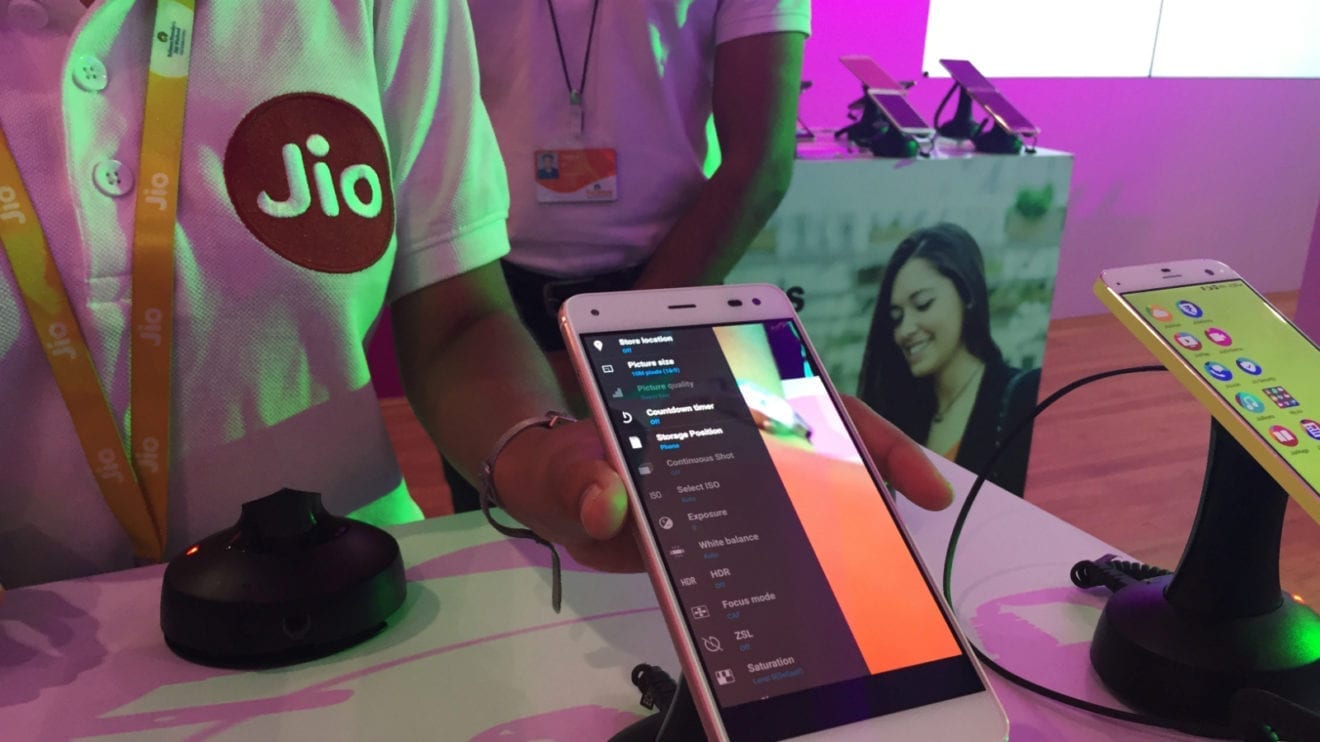
  • India’s Jio fights with incumbents over PoIs

    India’s Jio fights with incumbents over PoIs

    India’s Reliance Jio Infocomm is in an ongoing battle with the nation’s three incumbent operators over interconnection capacity.

    Jio, a newcomer to the mobile scene, is accusing Bharti Airtel, Vodafone and Idea Cellular of refusing to provide enough PoIs to handle the volume of calls between Jio customers and those of the incumbents.

    The operator said that as of mid-September, Airtel had provided just 651 operational E1s, Vodafone just 467 and Idea just 526. In the past 15 days, Airtel had provided one new E1 to Vodafone’s five and Idea’s three.

    Jio said based on industry practices, the operator estimates it requires an interconnection capacity of 4,000 to 5,000 E1s per operator. The shortfall is resulting in over 100 million call failures per day between Jio and the three incumbent operators combined.

    “The continued denial of requisite PoI’s is in clear violation of the License conditions and TRAI regulations on quality of service by the incumbent operators,” the company said.

    “The deliberate move to not provide sufficient interconnection capacity, as is apparent from the above numbers, is clearly aimed at hindering RJIL’s entry into the sector and is depriving Indian customers from enjoying superior HD voice services being offered by RJIL.”

    But in an interview with the Hindu Business Line, Bharti Airtel chairman Sunil Bharti Mittal has insisted  that the company has already provided 2,100 PoIs, and said the process is ongoing.

    He also downplayed the conflict with Jio, stating that the fight between the disruptive start-ups and the incumbents has already been de-escalated.