Category: Telecom

Retail News Asia is committed to providing both local and global retailers with the latest Telecom & Telco news throughout the Asian market. This on a daily base.

  • Axiata may sell up to $700m in shares in three units

    Axiata may sell up to $700m in shares in three units

    Malaysia’s Axiata Group is said to be seeking buyers for stakes in its Asian telecoms assets worth up to $700 million as part of efforts to reduce debt.

    The group may sell around 11% of Indonesia’s XL Axiata and up to 30% each of Sri Lanka’s Dialog Axiata and Cambodia’s Smart Axiata, Bloomberg reported, citing unnamed sources.

    According to the report, Axiata is seeking to cut down its debt, which had grown to 21.5 billion ringgit ($5.2 billion) as of the end of June.

    Axiata Group currently owns 83.3% of Dialog Axiata, 95.4% of Smart Axiata and 66.4% of XL Axiata, on top of its operations in Bangladesh and Pakistan and minority stakes in Singapore and India.

    In a statement responding to the report, Axiata said the company “continuously reviews various strategic options to enhance shareholders’ value.”

    The company confirmed that it has been exploring options to optimize its balance sheet since the middle of last year, “potentially including, but not limited to, the portfolio rebalancing and review of shareholding across subsidiaries.”

    But Axiata added that any reports are “speculative” unless and until any transactions are entered into and disclosed to the market.

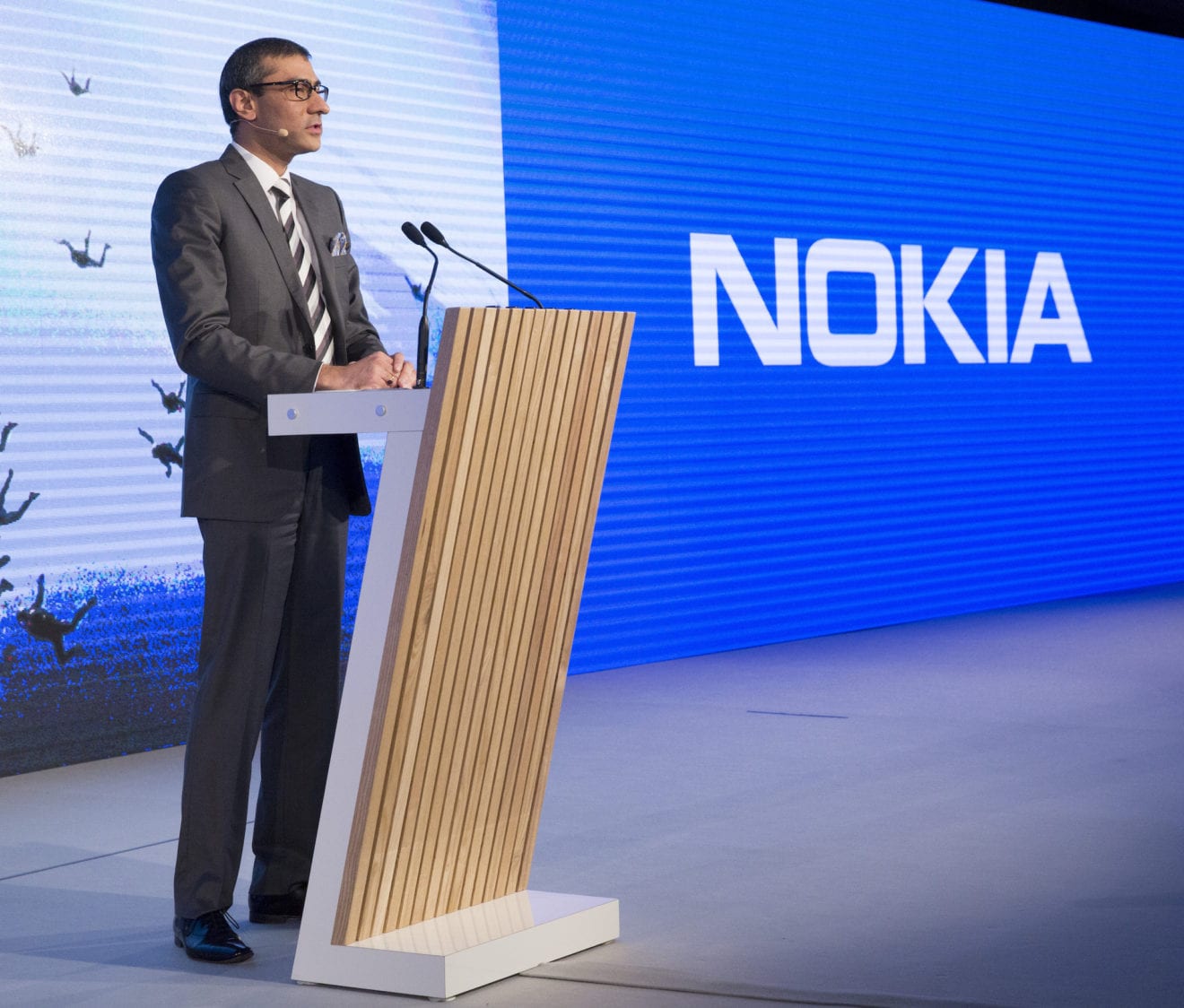
  • Nokia launches Mission Critical Comms Alliance

    Nokia launches Mission Critical Comms Alliance

    Nokia has joined a consortium of operators, public authorities and first response agencies in forming an alliance to formalize standards for the use of LTE in public safety.

    The Mission Critical Communications Alliance will work to inform and guide policy makers on the benefits of LTE in providing critical communications services.

    Vodafone Hutchison Australia and Japan’s Mobile Radio Center are among the founding members of the new alliance.

    “Having worked with the various Governments in the public safety field for over 60 years, we are happy to facilitate a broad group of stakeholders in the global public safety community to drive the adoption of LTE in critical communications,” Nokia chief customer operations officer Ashish Chowdhary said.

    “The Mission Critical Communications Alliance will work towards realizing the unique benefits of LTE in public safety, enabling national, regional and local authorities to provide a higher level of safety and security for their citizens, while creating innovative new business models for service providers.”

    The move comes shortly after Nokia and SK Telecom jointly announced the development of a portable public safety LTE system that is compact enough to fit in a backpack, and can provide 5km coverage and accommodate up to 400 users.

  • SoftBank to deploy LoRaWAN network

    SoftBank to deploy LoRaWAN network

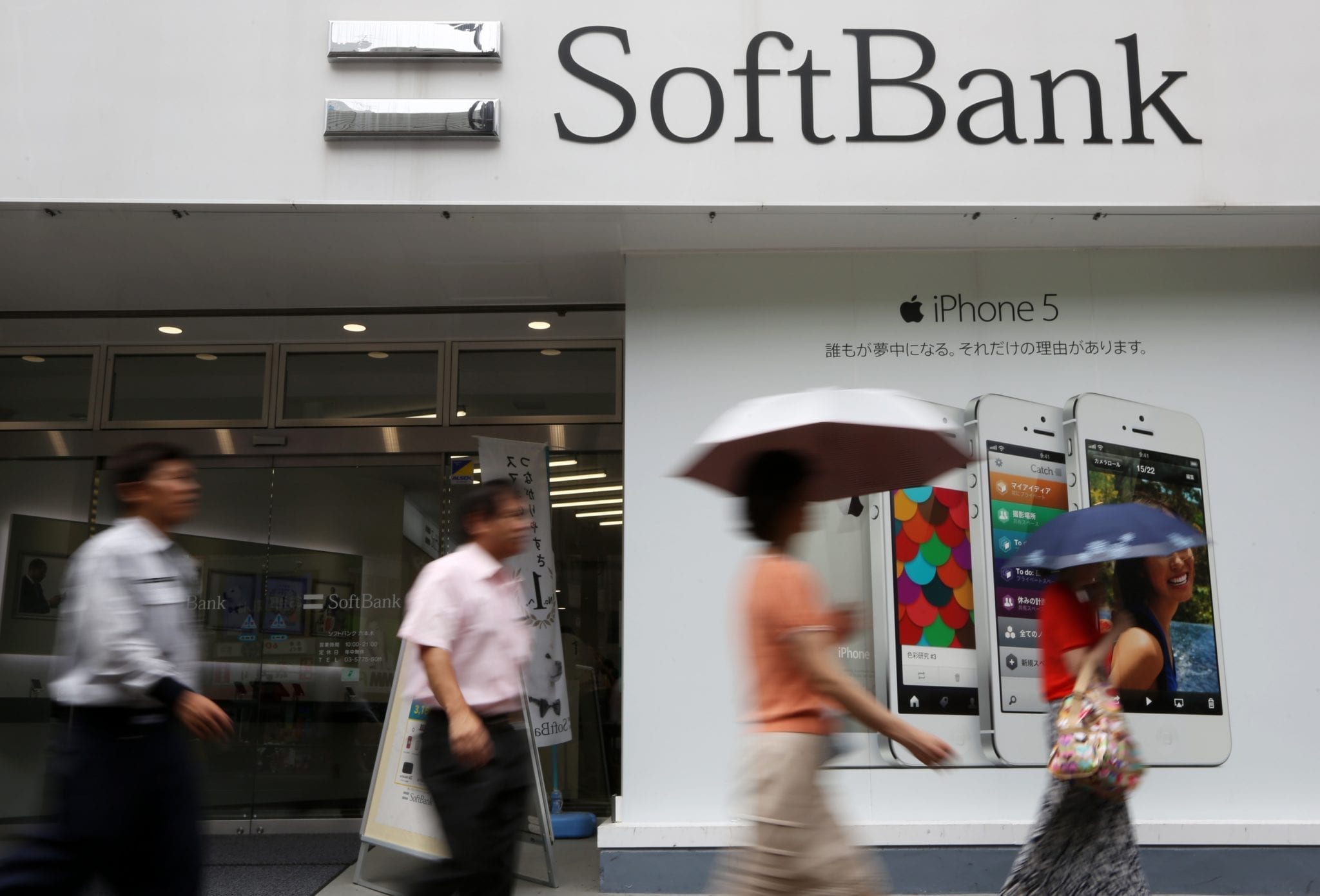
    Japan’s SoftBank has revealed plans to roll out a LoRaWAN low power wide area (LPWA) network in the current financial year.

    The operator plans to use the network to provide end-to-end IoT services, ranging from device and application support to consulting.

    SoftBank will target the service at industry sectors that require low cost, low power network construction, including equipment monitoring and control for commercial buildings, automated gas and water meter reading, senior and child monitoring, infrastructure monitoring and logistics.

    In collaboration with LPWA specialist Actility, Hon Hai Precision Industry and LoRa technology developer Semtech Corporation, Softbank will aim to build a LoRaWAN ecosystem in Japan.

    Softbank said the LoRaWAN deployment represents the first stage of the company’s plans to usher in the IoT era.

    The company eventually aims to deploy the full set of LPWA networks, including Cat-M1 and narrowband IoT (NB-IoT), to ensure its IoT network can operate in different environments.

    LoRaWAN uses the unlicensed 920-MHz band in Japan and was designed to meet the low cost and efficiency requirements for the IoT. Main features include devices with battery life of at least 10 years, support for numerous simultaneous connections and a communication range of multiple kilometers.

    Specifications for LoRaWAN are developed by the LoRa Alliance, a collaboration between 391 IoT-related companies worldwide.

  • Telstra, Ericsson achieve five-carrier LTE aggregation

    Telstra, Ericsson achieve five-carrier LTE aggregation

    Telstra and its technology supplier Ericsson claim to have achieved a world-first with a test that used four separate radio frequency spectrum bands with five carriers for very high long term evolution-advanced (LTE-A) bit rates.

    The trial at an undisclosed location used Telstra’s production network, with a Cobham Aeroflex TM500 4G network testing device as the receiver.

    It used 20 MHz each in the 700 MHz, 1800 MHz and 2100 MHz ranges, as well as two 20MHz bands in the 2600 MHz frequency range, for a total of 100MHz aggregated bandwidth.

    Five carriers and 100MHz are the maximum under the current LTE-A specification.

    Ericsson utilised high encoding rate 256 quadrature amplitude modulation (QAM) for the signal to provide better peak data speeds.

    Using the stateless user datagram protocol (UDP), the trial achived 950Mbps downlink speeds.

    With the more commonly used transmission control protocol (TCP), Ericsson and Telstra hit 843Mbps against the Speedtest website, the two telcos said. They declined to reveal the latency of the connection or the distance over the air for the signal.

    Telstra operations managing director of networks Mike Wright said that was “a widely accepted view that 4G should achieve peak speeds in the range of 1Gbps”.

    In reaching such high speeds, Wright said it could be argued that LTE technology was finally moving beyond the 4G barrier.

    “The demonstration of 1Gbps end to end capability shows the advanced state of these standards and our ability to rapidly bring them into commercial service in order to deliver increased capacity in our network to meet growing demand,” he said.

    “In addition to Telstra consumer customers, we are preparing our networks for growth in business use, as well as emerging technologies, which rely on our ability to deliver high capacity and low-latency solutions.”

    There are currently no handsets or devices capable of working with the combined five carrier LTE signal, and Telstra would not say when or whether it is planning on launching commercial services.

  • Community IoT network goes live in Australia

    Community IoT network goes live in Australia

    Australia’s Federal Minister for Communications and the Arts and Senator Mitch Fifield recently inaugurated a new IoT network intended to help the local community explore the potential of the technology.

    Jointly developed by the IoT Alliance Australia (IoTAA) and KPMG, the Barangaroo Community Network will allow up to 1,000 IoT devices within a three- to five-kilometer range to connect to the internet for free for prototyping, testing, solution development and learning.

    The gateway, operating in the Industrial and Scientific Spectrum at 915-MHz, will support up to 1000 IoT devices.

    Research undertaken for IoTAA projects shows that the IoT if harnessed, has the potential to add up to A$120 billion ($90.5 billion) to the Australian economy by 2025.

    “This represents an uplift of up to 2% in Australia’s GDP across a range of environments including factories, retail outlets smart cities and homes, motor vehicles, other transport modes and even human health and fitness – IoT is a pervasive disruptor,” said Communications Alliance CEO and Chair of the IoTAA Executive Council, John Stanton.

    The inaugural IoT “State-of-the-Nation” workshop and networking event held in Sydney was attended by more than 200 stakeholders from industry, government, the start-up community, academia and the consumer sector.

    It showcased the diverse range of initiatives underway within the IoTAA, the peak body representing a diverse group of more than 125 organizations, dedicated to empowering industry to grow Australia’s competitive advantage through IoT.

    IoTAA is hosted and supported by the University of Technology, Sydney (UTS) at its Broadway Campus in Sydney.

    “IoTAA’s mission is not only about grabbing opportunities – it is also about managing the risks to network integrity and personal privacy that could occur if we are not vigilant and well prepared,” Stanton said.

  • Softbank, Wireless City kick off 5G project

    Softbank, Wireless City kick off 5G project

    Softbank and its affiliate company, Wireless City Planning, have officially launched the ‘5G Project’.

    As the first phase of the project, which was announced in Tokyo last week, Softbank plans to roll out commercial services based on Massive MIMO technology from September 16, a move which Softbank says will make it the world’s first cellco to provide such services.

    Under the plan, SoftBank will be deploying the technology across 100 base stations in 43 cities across Japan, of which 30-40% will be deployed in downtown areas of the Tokyo capital.

    At the media conference for the launch last week, Shubun Kitahara, director of the network planning department of SoftBank’s mobile technology division, tested at four locations in downtown Tokyo, which showed that massive MIMO increased communications speed by 6.7 times on average.

    According to Softbank, corresponding terminals only need to support SoftBank 4G (compatible with TD-LTE). The service is also available on the SoftBank 4G terminals customized for Y!mobile.

    Aiming for 5G commercialization in 2020, Softbank last year signed separate research collaboration agreements with Huawei and ZTE covering the development of stopgap technologies on the road towards 5G.

    SoftBank has teamed with ZTE to help develop networking equipment based on ZTE’s Pre5G technology, such as the vendor’s Massive MIMO base stations.

    Massive MIMO base stations have the capacity to support more than 100 antenna elements, allowing up to eight users to transfer data simultaneously.

    SoftBank already has cooperation agreements covering Massive MIMO as well as ultra-dense networks and multi-user shared access technology.

  • Malaysia-Singapore-Indonesia cable commissioned

    Malaysia-Singapore-Indonesia cable commissioned

    A new subsea cable company has contracted Huawei Marine Networks to deploy a 250km cable system connecting Malaysia, Singapore and Indonesia.

    Super Sea Cable Networks (SEAX) has commissioned construction of its SEAX-1 cable, which will connect Mersing on the eastern seaboard of Peninsular Malaysia with Singapore’s Changi and Indonesia’s Batam.

    Construction of the 24-fiber-pair system is expected to be complete by the end of next year. SEAX’s market focus will be wholesale operators in emerging markets, including Tier 1, Tier 2 and Tier 3 carriers who want to own but not operate cable systems.

    SEAX’s five-year plan is to target, Thailand, the Philippines, Cambodia, Vietnam and Myanmar in addition to Malaysia and Indonesia.

    The company has a facilities-based operator license in Singapore, an affiliate company in Indonesia and is partnered with telecoms infrastructure provider SACOFA in Malaysia.

    “SEAX-1 passes through one of the busiest region in the Asia Pacific region, where bandwidth demands are increasing exponentially,” SEAX CEO Joseph Lim said.

    “We believe this new submarine cable system will relieve bandwidth pressures on existing infrastructure and continue to provide this region with high-speed, reliable connectivity that will fast-track its growth.”

    Indonesia’s PT Telkom last week contracted NEC to build a subsea cable system connecting six large Indonesian islands with Singapore.

  • Huawei, Intel chiefs talk the future of ICT

    Huawei, Intel chiefs talk the future of ICT

    In today’s digitally intelligent world, the age of enterprises shoring up their singular competitive advantages is over. With industries converging and consumer requirements constantly evolving, today’s businesses need to be more open, flexible, and build on their “ecological advantages” as well.

    This was the key message delivered by Huawei CEO Guo Ping during his keynote speech at Huawei Connect 2016.

    “Today we are in the cloud era, and while we do not yet know what things will be like in the future, one thing is sure—every modern industry system will become interconnected and complicated,” Guo said.

    “As data, IoT, mobility and cloud entities develop, businesses that are not even connected with one another will have more interactions. Hence, advantages will not only come from within the organization as has traditionally been the case, but also by the effective use of its external resources.”

    Guo predicted that in the many complicated scenarios that industries such as transportation, healthcare, and education will face, companies in these sectors will eventually develop and evolve toward an open ecosystem.

    The same can be said for the ICT industry, whereby in the cloud era the sector has already transformed from a single vertical industry and into an enabler of digital transformation. A report from the World Economic Forum revealed that in 10 years, the opportunities brought upon by the digital transformation of industries will reach $100 trillion, with the world seeing the rise of even more new applications.

    “Vertical integration of the value chain is a thing of the past,” stated Guo. As the ICT industry cultivates a new ecosystem, the Huawei CEO believes it will have three key features—open, dynamic, and symbiotic—wherein enterprises, big or small, “can take part in this interdependent, symbiotic, and regenerative community of common interests, as long as it has its own unique value and makes its own unique contribution.”

    As for Huawei’s role in this cloud-driven ecosystem, Guo stressed his company’s primary principle is to prioritize “creating a bigger pie (market) over fighting for a larger piece of a shaky pie.”

    “It’s the path we must take to build our future ecological advantages,” stated the CEO. “Our responsibility as an industry leader is to leverage our core competency, and use insights gleaned from our customers as basis of development to increase the size of the market. We don’t emphasize on whether the resources will be owned by us, but instead we emphasize on would be what can we leverage and effectively connect with external resources to bring the future together.”

  • New Zealand’s Chorus plans 1Gbps wholesale fiber service

    New Zealand’s Chorus plans 1Gbps wholesale fiber service

    New Zealand fixed line operator Chorus has revealed plans to extend 1Gbps wholesale fiber services across its entire share of the Ultrafast Broadband (UFB) network from next month.

    The operator will make wholesale residential and SME broadband services available nationwide on any UFB connection within Chorus’ UFB rollout area.

    The UFB is New Zealand’s national fiber broadband network, designed to cover 80% of the New Zealand population by 2022. Chorus won 70% of the contracts to deploy the fiber network from Crown Fibre Holdings, the government-owned company set up to manage the project.

    Chorus said it plans to offer residential wholesale gigabit broadband services to retailers at an introductory price of NZ$60 ($44) per month – increasing to $65 per month after June 2017 – and a business service for NZ$75 per month.

    These prices still require approval from Crown Fibre Holdings, but if this approval does not come by the end of September services will still launch on a trial basis.

    With current technology Chorus said the gigabit broadband service will offer real-world downlink speeds of between 900Mbps and 970Mbs and uplink speeds of up to 500Mbps. This compares to an average download speed across Chorus’ networks of just 35Mbps.

    Chorus began offering Gigabit broadband services in the city of Dunedin in February 2015.

    “We are delighted that other fiber providers have joined Chorus in championing gigabit residential and business services,” Chorus CEO Mark Ratcliffe said.

    “Making New Zealand a true ‘Gignation’, beyond the 5,000-plus connections we have in Dunedin, should see us catapulted up the league tables of broadband speed rankings and reinforce the high quality of the broadband infrastructure we’re rolling out.”

  • Telkom set to become international telecommunications hub

    Telkom set to become international telecommunications hub

    PT Telekomunikasi Indonesia Tbk (Telkom) said it is optimistic it would play the role of international telecommunication infrastructure hub with the development of its Indonesia Global Gateway Cable System (IGG).

    “We are developing IGG and it is now in process. Tekom will have significant role. We have program to become an international hub,” Vice President for Corporate Communication of Telkom, Arif Prabowo said here on Thursday.

    Arif said the IGG would link Indonesia and Europe and the United States.

    In 2018, it is expected that construction of the networks between Indonesia and Europe would be completed with the landing point in Dumai and the landing point for submarine cable between Indonesia and the United States would be in Manado, he said.

    “The two lines would connect with each other to support domestic and international data traffics,” he said.

    Separately , General Manager for Submarine Network Division of NEC Corporation Toru Kawauchi said in a statement that his company had signed a contract with Telkom for the IGG development.

    “NEC is chosen again by Telkom as the supplier of optic fiber submarine cable system with a speed of 100Gb/s IGG, which would link nine big cities in Indonesia with Singapore and two international submarine cable systems Dumai and Manado,” Toru Kawauchi said.

    IGG is a submarine optic fiber cable system consisting of cables with a speed of 100 Gigabit per second (Gbps) x 80 wavelength (wl) x 4 optic fiber pair (fp), around 5,300 kilometers long which will link big cities in Indonesia such as Dumai, Batam, Jakarta, Madura, Bali, Makassar, Balikpapan, Takaran and Manado, with Singapore.

    After the completion of the IGG project in early 2018 , the cable systems will not only increase connectivity between big cities in Indonesia, but also would provide direct links between the two international submarine cable systems — one from Europe with landing point in Dumai, and another from the West Coast of the United States with landing points in Manado.

  • Wharf T&T said to attract at least seven bidders

    Wharf T&T said to attract at least seven bidders

    At least seven companies, including HKBN and SmarTone, have submitted bids for Wharf Holdings’ Hong Kong telecoms division Wharf T&T, according to reports.

    The private equity copanies including KKR, MBK Partners and TPG Capital Management have also submitted bids for the company.

    The sale is looking likely to reach a price of $1 billion to $1.2 billion, according to the report. HKBN is currently the front-runner in the auction, but may face antitrust scrutiny and will require shareholder approval for the purchase, so its bid is less certain than others’.

    Wharf T&T is Hong Kong’s second largest enterprise fixed line telecoms operator in Hong Kong, and also has subsidiaries providing residential broadband, eBusiness and IT services.

    Parent company Wharf Holdings put its telecoms business up for sale in June following a strategic review of its communications, media and entertainment division.

    Last year Wharf T&T generated an ebitda of around $100 million, the sources said.

  • Telkom contracts NEC for new subsea cable

    Telkom contracts NEC for new subsea cable

    Indonesia’s PT Telkom has contracted NEC to build a cable system connecting six of the nation’s large islands with Singapore.

    The Indonesia Global Gateway Cable System will link the islands of Sumatra, Batam, Java, Bali, Kalimantan and Sulawesi.

    As well as providing enhanced connectivity between nine major Indonesian cities, the cable will link to Singapore and provide direct connectivity with two international subsea cables that land in Europe and the US respectively.

    The 100Gbps, eight wavelength, four fiber pair cable system will span around 5,300km in total. It is scheduled for completion in early 2018.

    “NEC is honored to be selected once again by Telkom as the supplier of an optical fiber submarine cable system, the advanced 100Gb/s IGG system,” NEC general manager for submarine networks Toru Kawauchi said.

    “Since first building an optical fiber submarine cable system for Telkom in 1991, NEC has continuously helped to expand Indonesia’s domestic connectivity, the Papua Cable System (SMPCS) being the latest such contribution.”

    The Sulawesi Maluku Papua Cable System connects eight provinces in eastern Indonesia – East Nusa Tenggara, Maluku, North Maluku, North Sulawesi, Papua, Southeast Sulawesi, South Sulawesi and West Papua.

    The nine cities that will be connected via the IGG system are Dumai, Batam, Jakarta, Madura, Bali, Makassar, Bilikpapan, Takaran and Manado.

  • Singtel extends free WiFi offer to fiber subscribers

    Singtel extends free WiFi offer to fiber subscribers

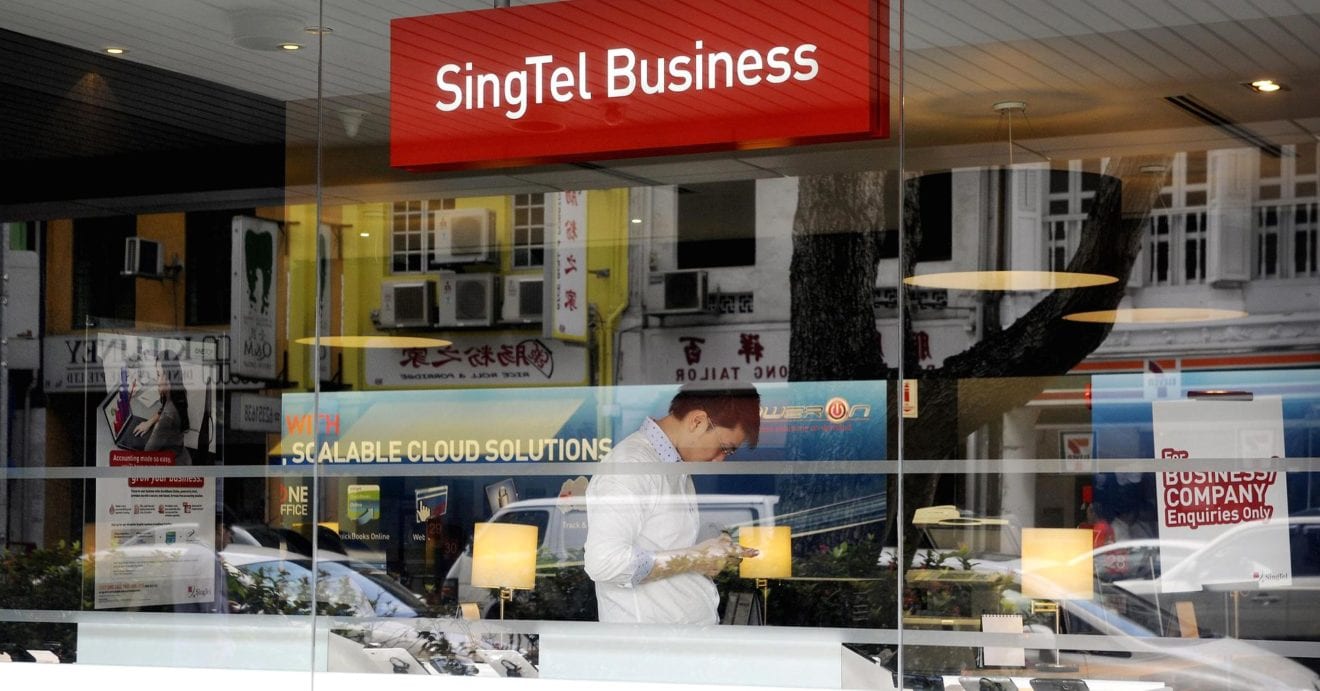
    Singtel has revealed plans to extend its free unlimited out-of-home WiFi offer to new and existing fiber broadband customers.

    The operator has been providing Singtel WiFi services for free for the operator’s mobile customers, and has decided to expand access to the service based on its popularity with mobile subscribers.

    Fiber broadband subscribers will be eligible for unlimited data usage at Singtel’s more than 900 WiFi hotspots island-wide. The company said the unlimited usage offer will last until the end of September 2017.

    Customers will be able to access the network on any WiFi-enabled device. After a one-time activation the service offers seamless logins at all WiFi hotspots.

    Singtel asserts that its WiFi network offers five times faster speeds compared to conventional WiFi services. Hotspots have been deployed across the island, including in MRT public transport stations and McDonald’s restaurants.

    “We are pleased to offer our fiber broadband customers extra value on their plans and affordable options to stay connected,” Singtel managing director of home consumer Singapore Goh Seow Eng said.

  • Thai cellcos must register SIMs or lose licenses

    Thai cellcos must register SIMs or lose licenses

    Thailand’s telecoms regulator NBTC has warned operators that they will have their operating licenses immediately revoked if they fail to register prepaid SIMs sold from now on.

    The regulator has also warned that operators may be fined if phones with an unregistered SIM are sued for illegal activity.

    According to the NBTC, the regulator still gets new entries to its online customer information registration system that state “not registered,” despite introducing mandatory SIM registration more than a year ago.

    NBTC secretary-general Takorn Tantasith has stated that there will be “no more warning messages from now on,” and that operators allowing prepaid customers to use services without registering their details will have their licenses revoked immediately.

    The warning comes in the wake of a spate of recent bombing attacks in the south of the nation, and follows a meeting between the NBTC and more than 20 mobile operators and MVNOs to discuss the issue.

    According to a source quoted for the report, there were 36 mobile numbers involved in the recent bombing, and three of these had not been registered.

    Regulators are also proposing introducing special tracking SIMs for foreigners as part of Thailand’s SIM registration policy.

  • Singapore’s ViewQwest expands to Malaysia

    Singapore’s ViewQwest expands to Malaysia

    Singapore ISP ViewQwest has expanded into the Malaysian market, entering a high-speed fiber broadband joint venture with Malaysian telecoms engineering services company Televenture.

    ViewQwest has launched fiber and managed services for enterprises within Kuala Lumpur’s Golden Triangle commercial hub, Bangsar South and Cyberjaya.

    The joint venture will also offer ViewQwest’s suite of enterprise networking and managed services, including the Direct Cloud Connect Service to allow Malaysian enterprises to access cloud services including AWS, Microsoft Azure and Google Cloud which are regionally hosted in Singapore.

    By the end of the year the company plans to launch a 1Gbps fiber service for residences in the same locations, which ViewQwest expects will be the fastest residential broadband service in the nation.

    The company will also offer value-added services including Freedom DNS, which is designed to allow customers to access geoblocked media content such as Amazon Prime, Hulu and BBC iPlayer.

    “We hope to enable businesses in Malaysia to adopt more cloud services by bringing down the cost of bandwidth and to empower consumers to enjoy gigabit-speed internet from their homes. There is also a huge market to tap for businesses who want to have improved connectivity between the two closely-linked nations,” ViewQwest CEO Vignesa Moorthy commented.

    “[Singapore’s] NG-NBN lets any ISP deliver services to 1.4 million homes without the debilitating cost of building its own fibre network infrastructure. Now we have the confidence to export our expertise and experiences from running a nationwide ISP service with uber high speeds of up to 10Gbps to other parts of the world.”