Category: Telecom

Retail News Asia is committed to providing both local and global retailers with the latest Telecom & Telco news throughout the Asian market. This on a daily base.

  • Axiata may lift stake in Singapore’s M1

    Axiata may lift stake in Singapore’s M1

    Malaysia’s Axiata Group is considering increasing its stake in Singapore’s M1 as a strategic investment.

    Axiata CEO Tan Sri Jamaludin Ibrahim told that the company would “seriously consider” lifting its stake in M1 “if the price is right”.

    Axiata is already M1’s largest shareholder with a 28.5% stake. M1’s second largest shareholder Keppel Corp’s parent company Temasek Holdings is meanwhile reportedly considering selling Keppel’s stake in the operator.

    But the prospect of heightened competition in Singapore’s mobile market arising from the award of the nation’s planned fourth mobile license may limit the attraction of a potential deal.

    Jamaludin told that the company is not pursuing any major mergers and acquisitions, noting that even if the group wanted to expand into another country, the opportunity is not there.

  • Nokia launches 5G Acceleration Services

    Nokia launches 5G Acceleration Services

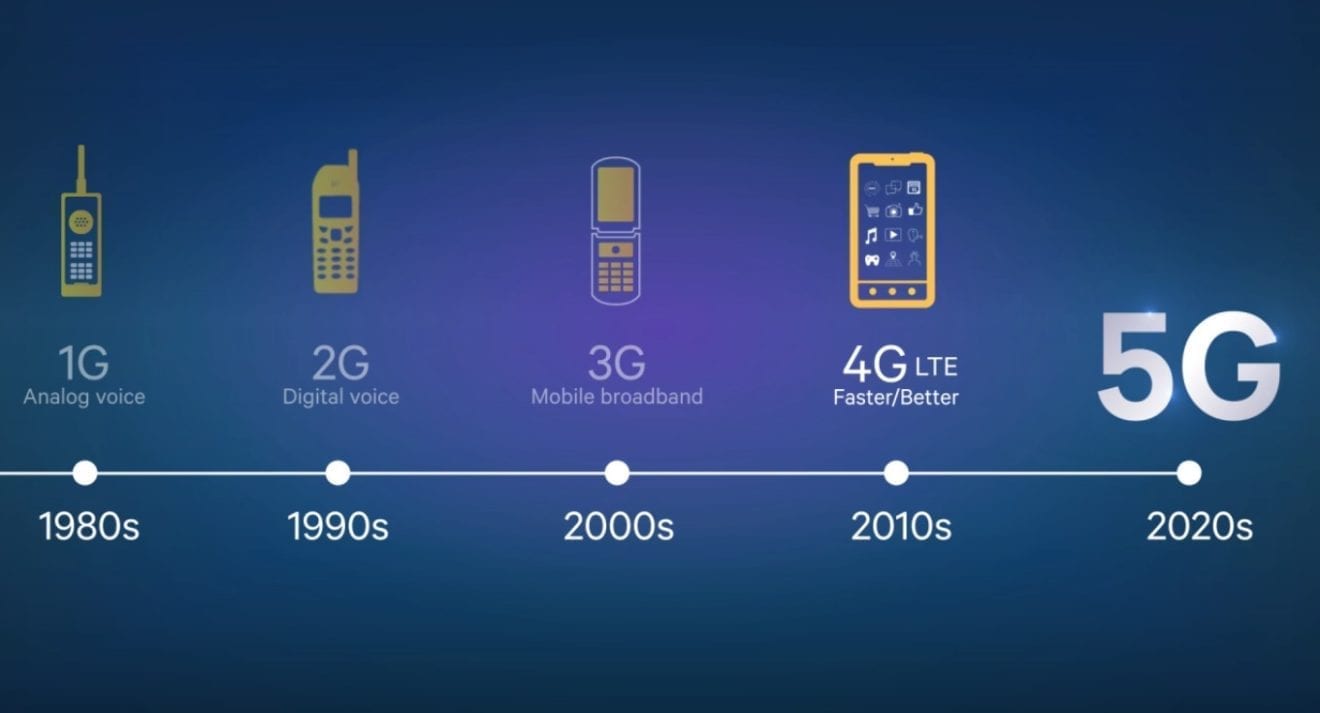
    Nokia has launched a new service designed to help operators develop a plan for their 5G transformation.

    The new Nokia 5G Acceleration Services will help operators carry out the required business, network and operational transformation to prepare for a 5G programmable world.

    Operators will be able to develop a tailored transformation plan, prepare and design multi-vendor 5G networks and define the pace of investment and adoption of new technologies.

    Services will include collaborative customer workshops, technical and economic analysis, a 5G spectrum assessment, technology workshops and radio access network design support.

    IDC research director for EMEA Telecommunications commented that industry adoption of 5G will take a different path compared to 4G.

    “For one thing, this time the use cases are developing ahead of the technical standard. That’s healthy for the industry, but will also require networks to support myriad performance profiles fairly rapidly,” he said.

    “Operators thus have to make sure that their 5G evolution plans incorporate both upgrades to their networks and advancements in their operational capabilities. If they can start to monetize new use cases while still migrating toward 5G, so much the better.”

    At CTIA Super Mobility 2016, tomorrow, Nokia CEO Rajeev Suri plans to lay out the ways the vendor is preparing operators for the coming of 5G – including by commercially launching 4.5G Pro network technologies – and to highlight emerging use-cases for 5G.

  • Telkom launches innovation services in Indonesia

    Telkom launches innovation services in Indonesia

    Multimedia Nusantara (TelkomMetra), a unit of Telekomunikasi Indonesia (Telkom), has launched innovative service MediaHub to support the content and advertising industry in Indonesia.

    “Telkom is offering an integrated solution, not limited to telecoms but also takes part as the platform that delivers value to content that is delivered through its main connectivity business,” said Muhammad Awaluddin, director of enterprise and business service at Telkom Indonesia.

    MediaHub is said to be the first one to facilitate content providers, advertising agencies, Ministry of Communication and Informatics (Kominfo), the Indonesian Broadcasting Commission (KPI) and pay TV operators in developing safe and convenient contents.

    The service will also support in a new way of generating revenue and cost efficiencies for content providers and pay TV operators.

    Supported by over than 20 years of experience in playout technology from SmartCast, MediaHub through Metrasat, provides practical solutions as content aggregation and distribution services to overcome the obstacles over content distribution and its monetization in Indonesia.

    As a partner for the Indonesian Broadcasting Commission, MediaHub with its playout and ad-insertion system enables the selected content in dedicated feed to comply the regulation of broadcasting in Indonesia and ready to distribute them in any required formats to pay TV operators.

    Through its plug and play system, MediaHub provides efficient process to be the only pay TV ad network to support content business and local productions.

  • M1 adds three managed security partners

    M1 adds three managed security partners

    Singapore’s M1 has added three cybersecurity vendors to its list of managed security partners, as part of efforts to enhance its suite of cloud-based cybersecurity offerings.

    The three vendors are Red Sentry, Palo Alto Networks and Proficio, who join Trend Micro, Blackberry and Radware as partners in M1’s cybersecurity solutions suite.

    Red Sentry will provide cyber security consultancy services including vulnerability assessment and penetration testing while Palo Alto Networks will offer its next-generation firewall.

    Proficio will provide a 24/7 network monitoring service, courtesy of its recently opened security operations centre (SOC) in Singapore. The cloud-based services are hosted out of M1’s data center in Singapore.

    The offerings are available to M1’s business fiber broadband customers, with SMEs expected to benefit most from the cybersecurity suite’s pay-as-you-use model.

    According to M1’s chief corporate sales and solutions officer Willis Sim, customers who sign up for services in the cybersecurity solutions suite need only deal with a single M1 client servicing representative, regardless of the number of services subscribed to.

    To encourage uptake, M1 is offering promotional packages for early adopters. Registered businesses who either recontract or sign up for 24-month business fiber broadband contracts will be offered free VSA and three months subscription to Palo Alto’s virtualized next-generation firewall.

    A free 12-month subscription to Proficio’s SOC service will also be offered to customers on 24-month contacts.

    Customers will be able to opt out of any managed security service at any time without incurring financial penalties.

  • Myanmar’s Golden 11 taps eSites to power fiber nodes

    Myanmar’s Golden 11 taps eSites to power fiber nodes

    Myanmar wholesale telecoms infrastructure provider Golden 11 will deploy a hybrid power system from Flexenclosure to support the deployment of fiber transmission nodes in remote areas.

    Golden 11 constructs fiber networks, towers and data exchange facilities across the nation. The company will use Flexenclosure’s eSite technology to power and integrate the company’s fiber network where needed.

    The eSite hybrid power system is designed for base station sites in areas where grid power is unreliable or unavailable, using any available combination of battery, grid, renewable and genset power sources.

    The eSites Flexenclosure is providing for the contract have dedicated space for fiber transmission equipment, which will allow Golden 11 to take advantage of the technology.

    “In the remote areas of Myanmar where grid power must be complemented with innovative power solution to ensure resilience and permanence of telecommunication services, we needed a tried and tested solution to ensure consistent power for our network transmission nodes,” Golden 11 director of service delivery Clement Larroque said.

    “With Flexenclosure’s strong local team in place and eSite proven in the Myanmar market, they were the clear and undisputed choice for us.”

  • Australia may require mobile network sharing

    Australia may require mobile network sharing

    Australian competition regulator ACCC has launched an inquiry into whether to mandate the establishment of a wholesale mobile roaming service, particularly in regional areas.

    The regulator is considering declaring a wholesale domestic mobile roaming service, which mobile providers could use to provide coverage in areas where they do not operate their own network.

    The inquiry will seek to evaluate how consumer demands for mobile service are evolving and whether this differs in regional and urban areas.

    In addition, the ACCC will evaluate the likely investment plans of established mobile operators absent a declaration, as well as whether there are any barriers to extending the reach of mobile networks.

    While the ACCC has previously considered mandating the provision of mobile roaming in regional areas in 1998 and 2005, ACCC chairman Rod Sims said much has changed since this time.

    “Network coverage is clearly a key feature of a mobile service, and each of the mobile network operators has extended its networks since we last looked at this issue in detail,” he said.

    “We do think it’s time we look at the issue again in detail, and examine some of these key matters, including consumer demand, network investment, and barriers to competition. We consider the most efficient way to do that is to consider all of the issues carefully through a declaration inquiry.”

    But he stressed that the regulator has not yet formed any opinion as to whether the declaration is needed, and that the inquiry could instead find that consumers would be harmed by the introduction of such a requirement because it could give mobile operators less incentive to invest in expanding their networks.

  • Three apply for Singapore’s fourth cellco auction

    Three apply for Singapore’s fourth cellco auction

    Singapore’s MyRepublic has been joined by Australian ISP TPG Telecom and the recently-formed airYotta in submitting bids to become Singapore’s fourth mobile operator.

    The three companies have submitted expressions of interest in participating in an upcoming new entrant spectrum auction.

    MyRepublic has been clear in its intentions of bidding for the license for some time, but TPG Telecom is a surprise entrant.

    The new airYotta meanwhile has been formed by former executives from Consistel subsidiary OMGTel, which had previously expressed an interest in taking part in the auction but had not done so by the deadline.

    In a statement airYotta said it is backed by a fund fully financed by an investor dedicated to wireless ventures, and plans to deploy Singapore’s first LTE-A Pro network if its bid is successful.

    MyRepublic meanwhile aims to deploy a “pre-5G” network using HetNet technologies such as small cells, to help improve speeds, connectivity and latency.

    In a stock market filing, TPG confirmed it has applied to take part in the auction.

    “If TPG successfully prequalifies it will be able to bid for 2 lots of 2×5 MHz of 900-MHz spectrum and 8 lots of 5MHz of 2.3-GHz spectrum,” the company said.

  • Ericsson to launch 5G New Radio in 2017

    Ericsson to launch 5G New Radio in 2017

    Ericsson has announced plans to commercially launch the first 5G New Radio (NR) equipment in 2017, a key enabling technology for future 5G networks.

    The 5G NR radio supports Ericsson’s Massive MIMO and Multi-User MIMO 5G plugins. It uses advanced antennas and a large number of steerable ports to support these new technologies, as well as beamforming, another expected component of 5G networks.

    In addition to being 5G ready the 5G NR supports LTE, so it will be deployable in today’s networks. They support Gigabit speeds for LTE and advanced TDD beamforming.

    New network builds will be supported by Ericsson’s new Industrialized Network Rollout Services offering, which involves providing configuration, installation, integration, shakedown and handover in a single site visit.

    China Mobile Research Institute deputy head Huang Yuhong has welcomed the planned launch.  “Massive-MIMO, also known as 3D MIMO, is an important milestone in China Mobile’s technology roadmap from 4G to 5G,” he said.

    “We are very happy that Ericsson’s new radio product is coming to market soon to meet our needs and enable us to integrate 5G technologies into our existing networks.”

    “Mobile operators, today, are clearly focused on the race to 5G commercialization, while also continuing to invest in their existing LTE networks,” Current Analysis VP of consumer and infrastructure services Peter Jarich added.

    “With a new 5G radio and LTE offerings which echo key 5G concepts – small cells, licensed-unlicensed band combinations, Cloud RAN, network densification, spectrum optimization – Ericsson’s new portfolio additions and Ericsson Radio System innovations provide a compelling way forward.”

  • Philippine court freezes PCC probe into SMC sale

    Philippine court freezes PCC probe into SMC sale

    The Philippines’ Court of Appeals has halted the Philippine Competition Commission’s (PCC) investigation into Globe and PLDT’s joint acquisition of San Miguel Corporation’s telecoms assets.

    The court has agreed to a request by PLDT to grant temporary relief while the case is before the courts, issuing a preliminary injunction against the competition regulator’s proe.

    Accordingly the PCC will be prohibited from continuing the investigation into the acquisition until further notice.

    The court agreed with PLDT’s assertion that the “deemed approved” status assigned to the acquisition gives PLDT a right to be protected from the investigation.

    But before the injunction can take effect, PLDT will be required to submit a 1 million peso ($21,500) cash bond to address any damages the regulator will suffer if the court decides that PLDT is not entitled to an injunction.

    Globe and PLDT arranged in May to acquire San Miguel’s telecoms assets for a combined $1.5 billion, finally giving the incumbent operators access to the 700-MHz spectrum they had been seeking for a long time.

    But the PCC announced in July it plans to conduct a full investigation into the deal to evaluate the potential impact on competition. Both PLDT and Globe responded by petitioning the court seeking to have the “deemed approved” status upheld, and these actions were later consolidated into one case.

    Despite the ongoing case, the operators have wasted no time taking advantage of the new spectrum, with Globe recently announcing it had deployed more than 150 compatible 700-MHz base stations in the past three months.

  • Thailand aims to rethink Thaicom concession

    Thailand aims to rethink Thaicom concession

    Thailand’s ICT ministry plans to renegotiate the terms of Thaicom’s satellite concession, in the wake of a recent Supreme Court ruling against the amendment allowing Shin Corp to reduce its minimum holding in the company.

    The court recently found former ICT Minister Surapong Suebwonglee guilty of criminal malfeasance over the agreement to amend the terms of the concession, and sent him to jail for a year.

    Shin Corp was allowed to reduce its stake in what is now Thaicom to 40% from 51%, which the court found was against telecoms law. The court held that the move unfairly boosted Thaicom’s competitiveness and put the business at risk of foreign dominance.

    As a result of the ruling the ministry plans to device a new investment model for the satellite industry to replace the licensing regime.

    The government is considering four investment options – turning Thaicom into a state enterprise, a public-private joint venture majority owned by the state, a more flexible public-private joint venture model or the existing licensing model with higher fees.

    Negotiations with Thaicom are expected to be complete by early next year. The current concession, which involves fees amounting to 20.5% of revenue, is due to expire in 2021.

    Thaicom operates three of its satellites under the concession regime, while two more are operated under an NBTC licensing system involving a license fee of 5.75% of total revenue.

  • Telstra taps drones to improve network repair times

    Telstra taps drones to improve network repair times

    Australia’s Telstra has revealed plans to use drone technology to improve network resilience and disaster readiness during the tropical state of Queensland’s upcoming storm season.

    The operator will use drones as an “eye in the sky” to help technicians inspect local base stations following a storm or cyclone, checking for damage before technicians are deployed on-site for repairs.

    According to Telstra, this will decrease the time needed to conduct repairs following a natural disaster related outage.

    Drones from 3D Robotics fitted with sophisticated cameras and capable of flying up to 120 meters high will be used to look for damage to network assets.

    Telstra previously used a drone to check for damage to mobile infrastructure following bushfires in another state in late 2015.

    “With more than 8,500 mobile network sites around Australia, delivering coverage spanning 2.4 million square kilometers, our mobile network is the largest in the country,” Telstra group managing director for networks Mike Wright said.

    “The maintenance of our network is key to ensuring customers get the best possible service available and using drones is revolutionizing the way we inspect base stations.”

  • SmarTone FY16 profit falls 15%

    SmarTone FY16 profit falls 15%

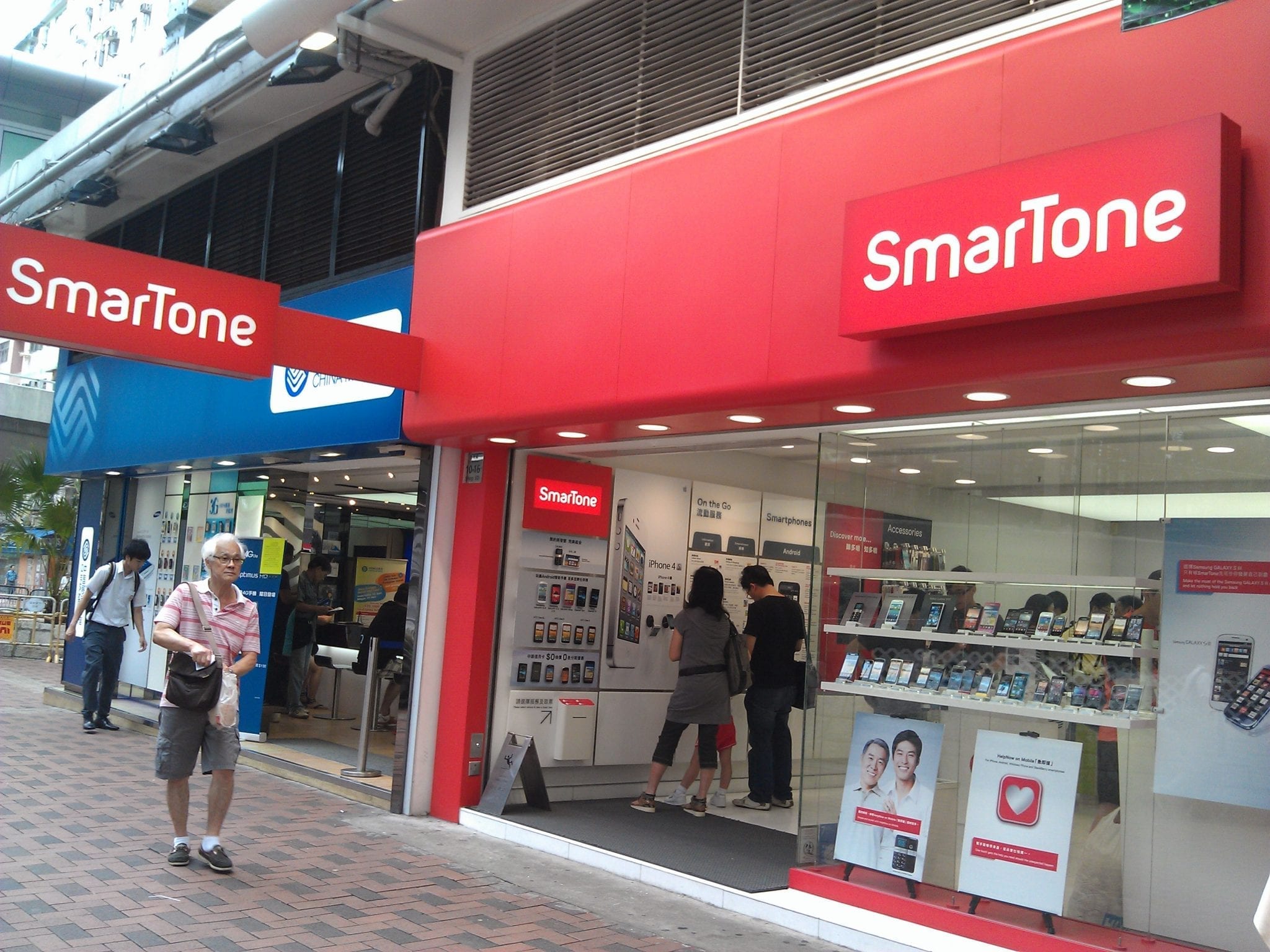
    Hong Kong’s SmarTone has reported a 15% slump in net profit for the financial year ending in June, as the company felt the brunt of the ongoing maturation of the smartphone market.

    Net profit declined to HK$797 million ($102.7 million), as handset earnings crashed 77% back to historical levels due to the impact of this maturation on the smartphone segment.

    Group total revenue fell 2% to HK$18.36 billion, with service revenue also declining 2% due in part to lower roaming and pre-paid revenue.

    But net of handset subsidy amortization service revenue stayed flat at HK$4.79 billion due to underlying growth in the operator’s local postpaid business.

    Hong Kong customer numbers grew 1% to 1.97 million, with postpaid churn remaining unchanged at 0.9%. Mobile postpaid ARPU meanwhile rose 2% to HK$301.

    While SmarTone noted that the Hong Kong telecoms market remains competitive, the operator expressed optimism about its prospects for the current financial year. SmarTone’s financial report notes that the company is “well-placed to capture industry opportunities and bring value to both customers and shareholders in the long term.”

  • Airtel to help multinationals enter India

    Airtel to help multinationals enter India

    India’s Bharti Airtel has launched a new suite of end to end networking and connectivity services for global companies looking to set up businesses in the market.

    The new India with Airtel services are aimed at improving the ease of setting up a business in India by offering companies a complete suite of fixed, mobile and added services.

    Besides telephony, India with Airtel combines global and domestic data capacity and connectivity services, VSAT, VPN, data center and cloud cervices, VAS and payment/billing integration, M2M and managed services, among others.

    “Given the impetus from the government’s ‘Make in India’ and ‘Digital India’ initiatives, India is fast becoming a definite strategic market for multinationals across the globe,” Airtel CEO for global voice and data business Ajay Chitkara said.

    “Given Airtel’s integrated product portfolio, we believe that we are uniquely placed to seamlessly serve the connectivity needs of companies looking to set up businesses in India. Also, companies can leverage Airtel’s deep understanding of the Indian market and leverage our vast customers and distribution network.”

    Airtel’s domestic mobile network covers around 95.6% of India’s population, and its global network spans around 225,000 route kilometers of subsea cable capacity, covering 50 countries across 5 continents.

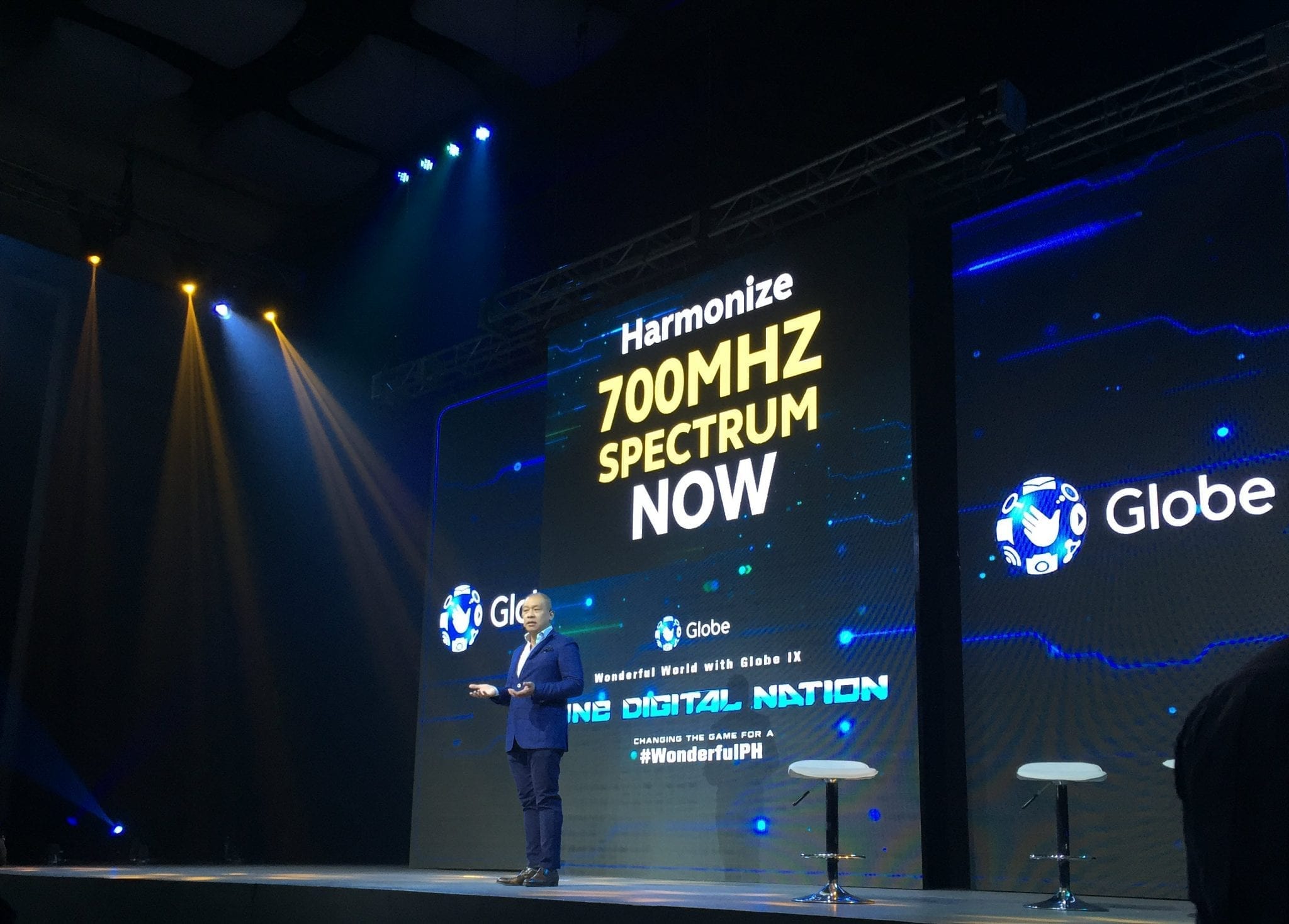
  • Globe fast-tracking LTE 700 rollout

    Globe fast-tracking LTE 700 rollout

    The Philippines’ Globe Telecom is fast-tracking the rollout of LTE over its recently-acquired 700-MHz spectrum.

    The operator revealed it has recently rolled out more than 150 700-MHz base stations, mostly in Metro Manila.

    The new sites cover major business districts and populated areas in the country. Globe launched its first 700-MHz base station Quexon City in June, and the company said its LTE 700 sites now cover the majority of the city.

    Globe is planning an initial rollout of 200 compatible LTE 700 base stations, and has committed to deploying around 4,500 multiband, multimode software defined radio base stations covering 95% of municipalities and cities in the country.

    “We are confident that more and more of our customers will experience improved services as adoption of LTE-capable devices increases and as we continue to deploy LTE 700 in more sites,” Globe senior vice president for network technical group program governance Joel Agustin said.

    “This is consistent with our strategy of continuously improving internet services using the previously idle 700 MHz spectrum that the NTC now allowed us to co-use.”

    Globe acquired rights to co-use the 700-MHz spectrum after joining with rival Smart to acquire San Miguel Corporation’s telecoms assets for a combined 69.1 billion pesos ($1.5 billion) earlier this year.

  • Huawei, Indonesian partners build cloud platform

    Huawei, Indonesian partners build cloud platform

    PT Huawei Tech Investment (Huawei Indonesia) has worked with Accenture, Cloudera, Anabatic, IDPRO, Infosys and Telkomsigma to build a new cloud ecosystem.

    The new solution, FusionSphere 6.0, was launched during the recent Huawei Cloud Conference Indonesia.

    FusionSphere 6.0 is an enterprise-class cloud operating system that helps customers deploy virtual servers, private clouds, public clouds, hybrid clouds, cloud desktops and NFVI.

    The ecosystem brings the concept of open source which used in components, architecture, and ecosystem enabling customers to have more choices in software. Huawei FusionSphere 6.0 keeps pace with the open-source OpenStack community, complies with the native OpenStack standards, and supports OpenStack APIs.

    Third-party applications developed based on native OpenStack can run on Huawei FusionSphere 6.0 without having to make changes.

    The platform is designed to help enterprises overcome the challenges faced during different stages of IT transformation, making enterprise business and workflow more effective and efficient in the deal with changes in the market, lowering investments on IT assets and human resources.

    “Huawei enthusiastically built a win-win cloud ecosystem with partners,” Huawei Indonesia CEO Liu Haosheng said.

    “We would like to share our successful practices in the global ICT sector, and to use the most innovative and competitive ICT technologies, products, and solutions to support our strategic business partners in Indonesia , creating values and benefits for their users in the cloud era.”

    At the conference, Huawei Indonesia also shared its successful practices in cloud transformation in cooperation with Accenture, as partners, for Telkomsigma.

    This successful practice in cloud transformation embodies Huawei Indonesia’s commitment to do innovation together with partners in an effort to build an open cloud ecosystem to help customers accelerate the transformation toward cloud solutions.